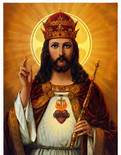
In Praise of Persistent Women like Medea Benjamin, Elizabeth Warren, and Amy Goodman (Sunday Homily)

Widow-and-Unjust-Judge

Readings for 29th Sunday in Ordinary Time: EX 17: 8-13; PS 121: 1-8; 2 TM 3:14-4:2; LK 18: 1-8; http://usccb.org/bible/readings/102013.cfm

Medea Benjamin is a peace activist and founder of Code Pink. In May of this year, she interrupted a speech by President Obama about the closing of Guantanamo Bay. Four times during his speech, she reminded the president that as chief executive he had the power to close the prison as he had promised during his campaign of 2008. The president was forced to acknowledge Benjamin’s point, but held that the issue was more complicated than she made it out to be. Clearly her outspokenness called for great courage and exposed to an international audience President Obama’s failure to keep his word. It pressured the president to change policy.
_____
Elizabeth Warren is the Democratic Senator from Massachusetts. Elected to the Senate in 2012, she is the first female senator from Massachusetts. Ms. Warren is a tireless consumer advocate and the first female Senator from Massachusetts. During her campaign, she called attention to the hypocrisy of “self-made men” claiming they owed nothing to government or community to explain their success. She said,

“There is nobody in this country who got rich on his own. Nobody. You built a factory out there — good for you. But I want to be clear. You moved your goods to market on the roads the rest of us paid for. You hired workers the rest of us paid to educate. You were safe in your factory because of police forces and fire forces that the rest of us paid for.….Now look. You built a factory and it turned into something terrific or a great idea — God Bless! Keep a Big Hunk of it. But part of the underlying social contract is you take a hunk of that and pay forward for the next kid who comes along.”
_____
Amy Goodman is a television journalist and host of “Democracy Now: the War and Peace Report” – a daily news hour on the Pacifica Radio and Television network. In the face of mainstream media’s refusal to cover significant grassroots events and issues, Ms. Goodman’s program has been called “probably the most significant progressive news institution that has come around in some time” (by professor and media critic Robert McChesney.) In addition to OpEdNews, “Democracy Now” is an invaluable daily source of information for the well-informed. It is an example of what can be accomplished for peace and social justice in the face of overwhelming odds.
_____

Keep in mind the examples of Medea Benjamin, Elizabeth Warren, and Amy Goodman as we attempt to understand today’s liturgy of the word. Our readings raise the issue of prayer, and what it means (in Jesus’ words) to “pray always without ceasing.”

Actually, the readings compare what might be termed “men’s way of praying” with women’s. At least in today’s readings, men pray that God might intervene to slaughter their enemies. In contrast, the woman in today’s gospel confronts the power structure of her day as her way of praying. That is, she persistently works to bring her world into harmony with God’s justice.

Take that first reading from Exodus. . . . Did it make you raise your eyebrows? It should have. It’s about God facilitating mass slaughter. It tells the story of Moses praying during a battle against the King of Amalek. It’s a classic etiology evidently meant to explain a chair-like rock formation near a site remembered as an early Hebrew battleground.

“What means this formation?” would have been the question inspiring this explanatory folk tale. “Well,” came the answer, “Long ago when our enemy Amelek attacked our people, Moses told Joshua to raise an elite corps of fighters. During the course of the ensuing battle, Moses watched from this very place where we are standing accompanied by his brother Aaron and another friend called Hur.

Moses raised his hands in prayer during the day-long battle. And as long as he did so, Joshua’s troops got the better of Amalek’s. But Moses would get tired from time to time; so he’d lower his hands. When he did so, Amalek’s troops got the better of Joshua’s.

“To solve the problem, Aaron and Hur sat Moses down on this stone you see before us. They held up his arms during the entire battle. That strategy saved the day. Joshua won his battle “mowing down Amelek and his people.”

So here we have a God who responds to ad hoc prayers and reverses history so that one group of his children might “mow down” another group of people he supposedly loves. Hmmm. . . .

In today’s gospel, Jesus has another approach to prayer. For him, prayer is not an ad hoc affair – about changing God’s mind. Rather, praying always represents the adoption of an attitude that consistently seeks justice for the oppressed. Praying always means living from a place that won’t let go of justice concerns like those that drive Medea Benjamin, Elizabeth Warren and Amy Goodman.

To illustrate that point for his own time, Jesus tells a comic parable about a persistent woman. (Remember, he’s speaking to people who have no power in a legal system, which, like ours favors the wealthy and powerful.)

“Imagine a judge,” Jesus said. “He’s like most of the judges we know. He doesn’t give a damn about the God of the poor, and he doesn’t care what people like us think of him.” (Already Jesus’ audience is smiling seeing a funny story coming.)

“But then along comes this widow-woman. Like all of us, she’s poor, and as usual, the judge pays no attention to her.” (Jesus’ audience recognizes the syndrome; they nod to each other.)

“But this woman’s a nagger,” Jesus says. (Now his audience is snickering and chuckling.)

“She just won’t let go. And she’s strong and aggressive besides. She comes back day after day insisting that she get justice against her adversary. And as the days go by, she gets more and more insistent – and threatening. So much so that the judge starts getting worried about his own safety.

(Laughter from the crowd . . .)

“’While it is true,’ he says to himself, ‘that I neither fear God nor respect any human being, because this widow keeps bothering me I shall deliver a just decision for her lest she finally come and strike me.’”

In other words, this macho judge is afraid of this poor widow; he’s afraid she’ll come and beat him up!

Can you imagine Jesus saying that without smiling broadly – and without the crowd roaring in laughter?

Anyway, here’s Jesus point: “If an unjust judge responds to the prayer of the poor like that, how do you suppose the All-Parent will respond when we ask for justice? The All-Parent will respond swiftly, Jesus says, because that’s who God is – the one who (as Martin Luther King put it) has established an arc of history that bends towards justice.

Prayer, then, is about reminding ourselves of that fact, trusting and having faith that in the long run justice and truth will prevail. Taking that position in the face of overwhelming evidence to the contrary, takes great faith that’s harder and harder to find.

So Jesus ends his parable with the rhetorical question, “When the Son of Man returns, do you think he’ll find that kind of faith anywhere?”

What I’m suggesting here is that today we’re more likely to find that kind of faith, that kind of prayer, that kind of persistence in women rather than men. The example of social activist Medea Benjamin encourages us to find our voices in defense of the voiceless in U.S. prison camps throughout the world. Politician, Elizabeth Warren, calls us to pray always by calling into question received truths like those surrounding “self-made men.” Amy Goodman and her “War and Peace Report” inspire us to renounce ideas of God that call us to “mow our enemies down.”

Thank God for persistent women! We men have an awful lot to learn from them.

Islam as Liberation Theology: Muhammad as a Prophet for Our Times (Part One)

Islamic World

I remember as I was finishing my teaching career of 36 years at Berea College in Kentucky that I experienced a spectacular failure regarding Islam.

In the light of the then-recent events of 9/11/01, I had moved that all students be required to study Islam either in a separate required course or as part of an already existing course (on writing or Western Civilization). After a brief discussion, my proposal was put to a vote. It received two (!) “Yeas” and about 148 “Nays” from a faculty of 150. “Next order of business . . . “

Despite going down in flames like that, I still think my proposal was a good one. That’s because ignorance of Islam lies close to the heart of our country’s highly questionable (not to say bogus) “War on Terror.”

Even more importantly, as a liberation theologian, I see “Islamists” as part of world-wide movement of poor people to use their religious traditions as a force for freedom rather than control and slavery. In fact, I consider this movement as the most important intellectual and social development since the writing of the Communist Manifesto in 1848. Grasping that fact and the true nature of Islam should be Job #1 for teachers and peace advocates.

Perhaps, like the Berea faculty, you find that assertion difficult to buy. And why shouldn’t you? Even in its Christian form, “liberation theology” has been misrepresented and distorted beyond recognition. Why shouldn’t we expect even more of the same for its Islamic counterpart?

So let me explain. Begin with the context of my proposal.

Once again, it came in the immediate aftermath of 9/11. On all sides Islam was being vilified as foreign, primitive, terrorist, and anti-female. U.S. military personnel regularly desecrated the Koran.

And their leaders like Lt. Gen. Wm. G. Boykin, were asserting the superiority of “our God” over “their God.” Republicans who otherwise ridiculed feminists as “femi-nazis” suddenly became champions of women’s liberation as they attacked Islam for preventing women from driving cars and wearing mini-skirts.

All of that made me suspicious. I knew a little about Islam from my poor attempts at teaching an introductory course part of whose intent was introducing freshman students to “world religions.” We had read Huston Smith’s The Religions of Man. If nothing else, Smith taught me that Islam, Judaism, and Christianity are sister faiths. There is no distinction between “their God” and “our God.” All three were “religions of the book.” At the very least, all recognized Jesus as a great prophet.

I had also taught Malcolm’s Autobiography. His embrace of Islam had called my attention to the attraction of Islam for poor people as an alternative to enslaving interpretations of Christianity. Malcolm’s passion for the Nation of Islam easily connected with my own for liberation theology – i.e. with the reading of the Judeo-Christian tradition from the perspective of those committed to the welfare and destiny of the world’s poor.

I remembered that somewhere in the literature of liberation theology, I had read that Islam was today’s most prominent example of a ”religion of the poor and oppressed.” As such Islam was influencing far greater numbers of the world’s poor than had Christianity’s liberation theology which was largely defeated by the U.S. military in what Noam Chomsky has called “the first religious war of the 21st century.” That religious conflict had pitted the U.S. government against the Catholic Church in Latin America.

Understanding Islam as today’s foremost expression of the liberating power of faith made the 1979 uprising in Iran a movement inspired by “liberation theology.” It did the same thing for other movements for liberation throughout the Asia and Africa. With all their triumphs and distortions, they too were movements against colonialism and its neo-colonial aftermath. In the name of God, they all stood against the exploitation and oppression of the East by the West.

That’s true, of course, for our contemporary “Arab Spring.” After all, did you think all those students and others protesting in Tahrir Square had suddenly left behind their devotion to Islam? What do you think motivated them? Had they suddenly become secularists? More obviously, what moved the “Islamic Brotherhood” to oppose the U.S. puppet Mubarak? Or why do you think the Egyptians elected the Brotherhood to lead their country?

Obviously, the motivation was largely found in Islam and in the realization that their faith as exemplified in the life and writing of the prophet Muhammad champions the Arab world’s poor in their struggle against the rich who have hijacked both Christianity in the West and Islam in the East.

It’s that liberationist understanding of Islam that the West must distort and vilify just as it did Christian liberation theology when it threatened to radically alter the political landscape of Latin America from the Medellin Conference of 1968 to the assassination of El Salvador’s most prominent liberation theologians in 1989.

It’s time to set the record straight in no uncertain terms. (That after all was the thrust of my proposal that evening on the faculty floor.) Reading Karen Armstrong’s Muhammad: Prophet for Our Time can help. In fact, Armstrong’s book would be required reading in the course I proposed. Without ever mentioning liberation theology, it reveals Muhammad as the champion of the poor and oppressed that Christianity’s liberation theology shows Jesus to have been.

(More about this in next Monday’s post.)

Why Am I Here in India? (Sunday Homily)

Religion in India

Readings for 28th Sunday in Ordinary Time: 2 KGS 5: 14-17; PS 98: 1-4; 2TM 2”8-13; LK 17: 11-19. http://usccb.org/bible/readings/101313.cfm

My wife and I have been in India now for six weeks. Peggy’s working as a Fulbright researcher at the University of Mysore here in the country’s south. I’m here . . . I’m only now realizing why.

To tell the truth, I had come to India more or less reluctantly. I mean since retirement I had traveled a great deal including six months in Costa Rica, five months in South Africa, and now the prospect of 4 ½ months here in India. So perhaps understandably, I was feeling tired of living out of a suitcase.

I wondered then, why Life, why life’s circumstances had brought me here to what many consider the “Soul of the World” – an ancient culture with deep, deep spiritual roots?

I thought about that for a long time. Then I concluded that the opportunity here is absolutely golden for spiritual growth.

That’s why I’m here then, I concluded. Life is telling me I need to grow and break away from patterns of living and thought that have unconsciously become too comfortable and stifling.

And what resources there are in India for assisting in that project! There are spiritual masters here, teachers of meditation and yoga. (For example, Sunday I have an appointment with a Past Life Review teacher.)

In addition, Indian food (not my favorite) challenges me to adjust my palate. Cows walk the streets. Dress is different as well. Music too seems completely foreign (but delightful), as Peggy and I have discovered in attending a kind of “Indian Woodstock” festival of traditional Indian chanting, drumming, flute and violin playing during the two-week festival of the god Ganesh. And the traffic. . . . I’ve never seen anything as wild. No rules at all that I can see. I doubt if I could learn to drive here.

All of this is forcing me to expand my horizons and break away from what spiritual masters here call “samskaras” – habitual patterns of perceiving, thinking and living.

That’s what spiritual masters do for a living – they challenge old ways of thinking. It’s what the prophet Elisha did in this morning’s first reading, and what Jesus does in today’s gospel selection. Both readings reveal God’s love for those our cultural norms classify as strange and even evil.

Our first reading centralizes the prophet, Elisha, who worked in Samaria for 60 years in the 9th century BCE. That, of course, was a full 100 years or more before Samaritans emerged as Israel’s bête noir.

Nonetheless, it is true that Naaman may have been even more detestable to Elisha’s contemporaries than Samaritans eventually became to the Jews. That’s because Naaman was a captain in the army of the King of Aram who at the very time of the officer’s cure was attacking Elisha’s homeland. Elisha’s cure of Naaman would be like extending free healthcare to a known al-Qaeda “terrorist” today.

In other words, Naaman is a foreigner and an enemy of Elisha’s people. On top of that he’s a leper, which supposedly further marks him as an object of God’s disfavor. Despite all these disqualifications, the greatest prophet in Israel cures him.

The narrative’s point: there is indeed only one God, and that God loves everyone, even our designated enemies. That was a stretch for the people of Elisha’s time. It’s a stretch for us.

Still, the point is picked up in today’s responsorial psalm. Remember the refrain we sang together this morning: “The Lord has revealed to all the nations his saving power.” According to the psalmist, then, God is not tied to one land. God’s saving power is evident in every place on earth. As the psalmist put it, “All the ends of the earth have seen God’s salvation.”

God belongs to everyone. Everyone belongs to God.

By Jesus’ time, nearly 800 years after Naaman’s cure, Israel still wasn’t buying that message. In fact, they had narrowed God’s presence to particular locations within the land of Israel. Orthodox Jews believed God was present on the Temple Mount in Jerusalem, and could only be really worshipped in the Temple there. Samaritans, on the other hand, believed that the place to worship Yahweh was on Mt. Gerizim, where they said Abraham had nearly sacrificed his son, Isaac.

In other words, Samaritans embodied a sectarian battle among the descendants of Abraham over where to worship God – was it on the Temple Mount or on Mount Gerizim?

Jesus completely ignores the debate. He cures a Samaritan along with nine other lepers – presumably all Jews.

The story is simple: the lepers approach Jesus. He tells them to “show yourselves to the priests.” It’s not clear what Jesus had in mind. Some say there was a law requiring cured lepers to be certified by the priests. Others say Jesus’ intention was to confront the priests, to assert his identity (as his mentor, John the Baptist had done) as the people’s high priest.

In any case, the lepers leave in search of the priests, and on the way are cured. As we well know, only the Samaritan leper returns to thank Jesus. Why? Was it that the priests had persuaded the others not to return, since they were convinced that Jesus was possessed?

On the other hand, the priests would probably have refused to see the Samaritan, because of their deep prejudice.

So the Samaritan turns out to be the hero of the story, not the priests or those who listen to them. Just like Naaman, the one in the story most open to God was the character most alienated from reigning cultural norms.

And that brings me back to my opening point – to my hopes about India. Recently I was reading an article by an Indian scholar of religion who identified Jesus as an Indian yogi. The author suggested that the reason the priests and the people of Jesus’ time and culture could not understand him was that his approach to life and God was completely alien to them.

It was a mystical philosophy more akin to the Far East – to India – than to Middle Eastern Palestine. Put briefly Jesus’ mystical philosophy can be summarized in the words “Aham Sarvum! Sarvum Aham!” –“I AM ALL. ALL is ME.” In fact, Jesus’ basic approach can be summarized as follows:

1. There is a spark of the divine within every human being.
2. That spark can be realized, i.e. energize every aspect of our lives in the here and now.
3. It is the purpose of life to live from that place of divine presence.
4. Once we do so, we will recognize God’s presence in every human being and in all of creation.

Or as John the Evangelist has Jesus say:

1. “I am in the father, and the father in me.” [John 14.10]
2. “I am in my father, and ye in me, and I in you.” [John 14.20]
3. “I and my Father are One.” [John 10.30]

In other words, the guru (Jesus), the disciple, and God are all One. Separation of God and Her creation is nothing but illusion (MAYA). ALL IS ONE.

All of this confirms for me what I’ve learned from Eknath Easwaran, my Indian teacher of meditation over the last 15 years: at their summit all the world’s Great Religions come together in the mystical vision just articulated.

If all of this is true, what does all of this mean for us today? I think this at least:

• There are many ways to understand God.
• Sectarianism is foreign to the Divine Reality.
• God loves our mortal enemies and performs miracles on their behalf just as God did in the example of Naaman.
• More specifically, God loves al-Qaeda fighters and the ones we call “terrorists” just as much as (S)he does us. Our enemies represent God’s presence and so do we. We should treat them as though this were true.
• God loves those we classify as unclean, unworthy, ungodly, and untouchable.
• More specifically, God loves people with AIDS; God loves the foreigner, the outcast. They represent the presence of God and so do we. And because of our tendency to reject them, they are somehow closer to God than we are.
• It’s good to step outside the reach of our culture’s categories, at least once in a while.

Asian Journal: Maggie, Kerry and our Grandchildren Finally Arrive

Mysore

Our daughter, Maggie, and her family arrived in Mysore yesterday morning. They were exhausted after grueling plane trips (from Tuscany) with their three small children [Eva (almost 5), Oscar (almost 3), and Orlando (1)] minus their au pair who (following her emergency appendectomy) returned to Mexico in the middle of their trip. Maggie and Kerry sorely missed her help on the plane with a crying baby and the predictable needs of the other two.

Poor kids!!

The stories of their ticket, baggage, and ground transportation problems, were horrific. They were all completely spent.

So Peggy and I were not surprised when they showed obvious disappointment at the digs we had found for us here in Mysore.

Since our arrival here a month ago, Peggy and I had looked at over 30 potential dwellings. None of them were satisfactory. Either they were too cramped or unkempt, or they were far from Mysore’s center and the Montessori school we all wanted Eva and Oscar to enter. So we settled for a large dwelling about two blocks distant from the “ABC Montessori School” we all liked very much.

Our dwelling is a family residence that has been cut up into five apartments to such an extent that the ground floor resembles an old-time motel. It’s located on a street that is quite noisy with large vehicles roaring by at all hours.

When Peggy and I first saw it, we were not impressed. Neither was Maggie after we sent her photos of the place. However, after reviewing those thirty other places, the “motel” took on the appearance of the Ritz.

Of course Maggie and Kerry didn’t have the “benefit” of the search that became the focus of our first month in Mysore. So their first impression, I’m convinced, was the same as ours had been a month ago. The disappointment on their faces couldn’t be disguised. Peggy and I shared their chagrin.

However, we’re confident that in time they might see the “Ritz” qualities here. Again, it’s close to our grandchildren’s school. It’s near shops and some nice restaurants we’ve discovered. It’s relatively clean and well-maintained – though overpriced for us “Americans” who, we’re aware, have been given a “special” deal.

Did I mention that less than half a block away is Mysore’s best ice cream parlor? That was enough for the complete contentment of Eva and Oscar. Yesterday (again, the Lehnerd-Reilly’s first day here) I took the two of them to the “Corner House” (the ice cream parlor’s name) twice for double dip cones!

Today will be Eva and Oscar’s first day in school. I look forward to their tales.

The End of U.S. Empire Is Simply a Matter of Time: Reflections on a Peace Vigil in St. Peter’s Square (Sunday Homily)

Empire's End

Readings for 27th Sunday in Ordinary Time: HB 1:2-3, 2:2-4; PS 95: 1-2, 6-9; 2 TM 1:6-8, 13-14; KJ 17L 5-10. http://usccb.org/bible/readings/100613.cfm

Last month, just as the United States seemed about to launch a disastrous war against Syria, Peggy and I had the privilege of gathering in St. Peter’s Square in Rome with thousands and thousands of other believers praying for peace. We filled the huge square in an inspiring demonstration of deep faith attempting to address impending catastrophe.

We prayed that the United States would come to its senses and realize (as Pope Francis put it) that violence only begets violence, and war only begets war. There is no other way to peace than by forgiveness, reconciliation, and a dialog that respectfully includes all stakeholders – the al-Assad government, its opponents, al-Qaeda, Iran, and (representing the rest of the world) the United Nations. (Let’s face it: apart from its membership in the U.N., the United States is not a real stake holder in this conflict so distant from its shores.)

So there we stood for hours praying the rosary together, listening to readings from Holy Scripture and the writings of St. Theresa of the Child Jesus. We recited litanies, sang familiar hymns, listened to the pope speak, and passed long minutes of quiet meditation and personal prayer. (It was amazing to experience so many people being so quiet for so long.) Preceding Benediction of the Blessed Sacrament, a harpist played, and choirs chanted. On huge TV screens, we saw the pope’s eyes tightly closed in prayer. We saw cardinals, bishops, priests, nuns, rich and poor, men and women, young and old, praying for peace. The vigil lasted from 7:15 p.m. till midnight.

It was entirely inspiring and uplifting.

But as I participated with as much faith as possible, I couldn’t help thinking: What good is all of this doing? As the reigning imperial power, the United States government and its brutal military are completely secular and tone-deaf to such demonstrations. They have absolutely no awareness of, much less respect for, the spiritual, moral, or faith dimensions of life.

Instead, from its highest levels, United States’ policy is entirely controlled by power-lust, money and by the personal, class and national interests of its so-called “leaders.” They laugh at popes and believers with their silly prayers and naïve talk of forgiveness, reconciliation, dialog, diplomacy, and beating swords into plowshares. Power and money rule their world. “God” is entirely irrelevant, except as one more tool in the arsenal – this time to persuade the people they despise to support policies driven by their selfish interests and realpolitik.

Even more fundamentally, I wondered: Is God Himself tone-deaf to demonstrations like these? “He” and the Blessed Virgin (who often seemed to overshadow God and Jesus in this intensely Catholic gathering) won’t really do anything to prevent the blood-bath that’s threatening.

Can they even do anything, I wondered? I couldn’t remember the last time they did. They didn’t answer prayers to prevent U.S. inflicted slaughter in Vietnam, Central America, Iraq, or Afghanistan. They didn’t do anything about the Jewish Holocaust (at the hands of Christians no less!). Can they answer our prayers for peace? Or are they as impotent as we are?

Today’s liturgy of the word seems to address those questions. It’s about faith and what we mean by that term. More specifically, the readings call us to revise our understandings of God – from the “Man Upstairs” micromanaging the world and intervening to prevent wars like the tragedy in Syria.

Instead, the readings invite us to see God as the One who empowers us to figuratively transplant trees and relocate mountains by simply saying “Move from here to there.” On the other hand, our readings call us to be slow, patient, persevering and trustful in the face of our desires for instant solutions to imperial madness.

In today’s first reading, the prophet Habakkuk apparently believes in the Man Upstairs. Faced by imperial hubris, he openly and impatiently questions that God.

Towards the beginning of the 6th century BCE, the prophet was witnessing the rise to power of the Chaldeans (or Babylonians). Like the U.S. today, that particular empire ruled by means of a sickening and genocidal violence.

“Are you blind to their wanton destruction?” Habakkuk cries out to God. “Why don’t you do something?”

And then comes the unexpected divine response: “Don’t worry, Habakkuk; things will get a lot worse before they get better!”

What kind of response was that? God seems to be answering Habakkuk’s challenge with one of his own. Change your idea of God, s/he seems to be saying. “I’m not the Man Upstairs. My modus operandi is not to eliminate the Babylonians according to your time table. Be patient. Change your idea of God.

The reading from Habakkuk is complemented by the discussion of faith in Luke. It’s about faith too. At the beginning, the apostles say to Jesus, “Increase our faith.” What do you suppose they meant by that? What do we mean when from the bottom of our hearts we echo their request as so many thousands did last month in St. Peter’s?

Is it our desire – was it that of the apostles – to have fewer questions about the virgin birth, Jesus’ divinity, the existence of God, or papal infallibility? Is it our prayer that we become more convinced that God can prevent and stop wars like the slaughter in Syria? Is that what we mean by faith – believing things about God, Jesus, or the doctrines of the church? Does faith mean believing that God will defeat the apparent omnipotence of the rich and powerful who themselves would occupy God’s throne?

Or is faith the power we achieve when, like Jesus, we realize that the divine dwells within us – that we are in effect God? That faith would lead us to act like Jesus and to share in his unshakeable commitment to God’s Kingdom of peace, forgiveness, and reconciliation despite setbacks and complete failure before the might of the Romans who killed him.

Yes, that’s the kind of faith Jesus had. As Paul says today in 2nd Timothy, such faith is synonymous with courage. It is identical with the power of God as revealed in Jesus – a human being who could cure the sick, drive out evil spirits and even raise the dead.

Problem is, Jesus didn’t use that power to dismantle the Roman Empire, block its destruction of Jerusalem, or even prevent his own death by Roman decree. Despite the miraculous powers the gospels attribute to him, he seemed impotent before imperial Rome, even though like the rest of his contemporary Jews he struggled for its replacement with the Kingdom of God. To repeat: in the end, he was empire’s victim and died an apparent failure overwhelmed by realpolitik.

What does that tell us about Jesus-inspired faith? At least the following:

• Faith is not about believing doctrines or things about God and Jesus.
• Rather, it’s about commitment to the Kingdom of God – to a world ruled by love, community values, justice, and peace, despite the apparent futility of our best efforts before empire governed by power-lust, greed, and violence.
• The prayer “Increase our faith” is about deepening commitment to God’s Kingdom in terms of patience with God’s time table without reducing our efforts to thwart imperial ambitions in the here and now.
• In other words, faith is about the long haul, about God’s time, compared with which our notions of time are laughably brief and insignificant. (In God’s time, empire of Babylon, the Roman Empire, the British Empire, and the American Empire are mere blips on the screen of evolution and eternity.)
• We should take comfort in realizing that in the divine long haul, God’s law of karma (“We reap what we sow”) is at work to answer our prayers for peace and the defeat of empire.
• According to that law, the U.S. will ultimately reap the harvest of violence and destruction its policies so consistently disseminate.
• The world will see the humiliation of the United States for which its majority so ardently longs.
• No, for followers of Jesus, God is not impotent before U.S. violence, destruction, brutality and hypocrisy.
• It’s simply a matter of time.

God’s time. Evolutionary time. Kingdom time.

What then Should We Do? Gandhi’s Answer

gandhi12

My most recent blog post, “Going to the Movies in Bangalore: ‘Elysium’ and the Surveillance State,” elicited a couple of comments that bear thinking about. It might help to do so in the light of Mahatma Gandhi’s birthday, which we’re celebrating today here in India (Oct. 2nd).

One very good friend acknowledged that “Elysium” indeed described the kind of planet and surveillance state towards which the United States is rapidly pushing the world. She wondered, “What can we do about it?” — especially in light of the fact that politicians (even those with the promise Obama once represented) seem incapable of exercising the kind of leadership necessary to avoid the Elysium syndrome.

Another friend observed that the type of working class revolution I said “Elysium” suggests is counterproductive. Inevitably, he said, revolution leads to an ultimately destructive cycle of violence that gets us nowhere. A better alternative would be to adopt Jesus’ non-violence as our bedrock philosophy, eliminate materialism from our lives, reform consumption patterns, and simplify lifestyles. He wrote, “I think we need something that actually changes the love of power and which makes even a poor life acceptable. Hence my hope in the Gospel of Peace of the pacifist Jesus.”

My friend’s reference to the acceptability of a “poor life” is what Gandhi proposed as well. Famously, he said that the world has plenty to meet human need, but not human greed. It’s today’s greedy lifestyle that impoverishes our world and creates the urban moonscape reality portrayed in “Elysium.”

Gandhi combatted greed in three ways. First of all, he fostered an interior life animated by the practice of meditation and constant repetition of his mantram (“Rama, Rama” – Joy, Joy). In so doing Bapu raised his own awareness of the unity of all life – and the insanity of seeing others as enemies. Secondly, Gandhi exemplified simple living by reducing his own material needs to an absolute minimum. When he died, what he left behind was assessed at a worth of less than $100. Finally, Gandhi worked tirelessly to change a political reality that others thought impossible to alter. They laughed at his optimism and confidence that India could be liberated from the British Raj. Yet he mobilized this country’s huge population to drive from its soil the most powerful and extensive empire the world had ever seen.

Key to Gandhi’s success was detachment – detachment from addiction to results. As long as we refrain from meditation, simple living, and political activism because we think such measures are useless or doomed to failure, our road to the reality portrayed in “Elysium” is straight, broad, and inevitable.

We are not alone. There are seven billion of us in the world. It’s hard for us to measure the impact of the infinitesimal part we play in synchronizing our daily activities with the arc of history that Dr. King observed bends inevitably towards justice.

Jesus, Gandhi, King . . . These should be our models for courageous, hopeful living. The rest is in the hands of God.

Going to the Movies in Bangalore: “Elysium,” Snowden, Manning and Assange

Elysium

“Elysium,” the film starring Matt Damon and Jody Foster showed up in India this past weekend. My wife, Peggy, and I happened to be in Bangalore to celebrate her birthday. So we went to see the film – our first time at the movies since arriving in India about three weeks ago. (We intend to stay here another three months as Peggy’s Fulbright at Mysore University takes its course.)

“Elysium” has been panned by some as convoluted in plot, over-the-top in its acting, and filled with typically Hollywood violence as indestructible and robotic adversaries clash in hackneyed, interminable and highly unlikely fight scenes.

I however found “Elysium” strangely intriguing when viewed from our setting in India and in the context of our government’s furor over information leaks. From that perspective, “Elysium” was evocative of the Bhagavad Gita in pitting its protagonist against overwhelming odds in a fight to the finish for human liberation.

More specifically, “Elysium” played out in comic book fashion the battle of Edward Snowden, Chelsea Manning, Julian Assange and other information “criminals” against the overpowering state apparatus of a militarized, out-of-control and venal federal government.

To begin with, take the film’s setting – Los Angeles in 2054. The streets of Bangalore were a good prep for the film. Like L.A. in the film, they are polluted, over-crowded, and dirty. However, unlike the imagined L.A. of the future, Bangalore finds itself going in two directions at once, not simply downhill.

Bangalore is situated somewhere between decay and an undisciplined version of globalized commercialization. It features “branded stores” like The Gap, Nike, KFC, Pizza Hut, and Dominos alongside stalls and shops overflowing with goods of all description. The treatment of workers on this sub-continent (as exemplified in the recent factory collapse in Bangladesh), is not unlike workers take-it-or-leave-it dilemma in the film.

Then consider the film’s plot. It’s about Max, a factory employee (played by Matt Damon) who is injured on the job as he’s exposed to a fatal dose of radiation. With five days to live, he must find his way to “Elysium,” a human-fabricated planet floating above the earth. There the rich live in idyllic conditions, where life-saving medical care is readily available. “Elysium’s” story is about Max’s quest to reach for that star. Damon does so by stealing government secrets.

Meanwhile the government responds with extreme violence. It pursues Max in ways reminiscent of the U.S. pursuit of Snowden, Manning and Assange. Its security apparatus hunts him down relentlessly. He is pursued by an implacable, incredibly powerful mercenary agency. He is threatened by drones. Finally, he sacrifices his life so that the information he divulged might set others free.

All of this happens in an oppressive culture characterized by:

• Dominance of the military-industrial complex that completely subordinates politicians to business moguls.
• A high unemployment rate that makes it a privilege for workers to be exploited in the workplace as opposed to remaining jobless.
• A medical system that provides healthcare only to those who can pay for it.
• Total surveillance of everyone involved.
• Fail-safe border patrol that entirely eliminates refugees by killing those attempting to cross borders illegally.
• A highly brutal police force that acts with robot brutality, absolute lack of compassion, and over-all impunity.
• The use of drones to hunt down and eliminate dissenters.
• Women (personified in the Jodie Foster secretary of defense) who despite finally holding high office prove to be more heartless than their male counterparts.

So in the end, “Elysium” is about the fate of a low-level corporate employee like Edward Snowden. The secrets Max reveals show the Department of Defense violating Elysium’s own constitution that supposedly governs a highly polarized society and keeps the reins of power in the hands of a rich minority. While protecting and empowering the minority, the rules in place deprive the majority of the rights of citizenship.

The disclosure of the planet’s governing secrets not only exposes abuse of power, but ends up dethroning the elite, while enabling ordinary people to claim the rights that belong to them in virtue of their humanity. “Elysium” is about information as the key to revolution.

Very little of this is perceived by movie critics. A movie review in The Indian Times saw “Elysium” as just another Hollywood action flick. Without explanation, it remarked that “conspiracy theorists” might find it interesting, and that the film said something about immigration and health care.

I’m suggesting that “Elysium” says much more than that. It perfectly describes the direction in which our culture is traveling. It represents a story of hope. It’s about the triumph of the working class against overwhelming odds. “Elysium” is about the power of information and the heroism of people like Snowden, Manning, and Assange. As a cautionary tale, the film is a call to support whistle-blowers against our own corrupt “leadership.”

Too bad all that de rigueur Hollywood overlay of violence, chases and predictability obscures “Elysium’s” valuable message.

Dives & Lazarus: a liberation theology catechism (Sunday Homily)

Lazarus

Readings for the 26th Sunday in Ordinary Time: AM 6: 1A, 4-7; PS 146: 7-10; ITM 6: 11-16; LK 16: 19-31 http://usccb.org/bible/readings/092913.cfm

Today’s liturgy of the word provides us with a catechism of liberation theology – Christianity’s most important theological development in the last 1500 years, and the West’s most important social movement of the last 150 years.

I have come to those conclusions over a period of more than forty years studying liberation theology. My interest began in Rome during my graduate studies there, 1967 through 1972. There I first heard Peru’s Gustavo Gutierrez speak. (Fr. Gutierrez is considered the father of liberation theology.)

Subsequently I read Gutierrez’s book, A Theology of Liberation (1971) and was completely taken by it. Reading the book gave me the feeling that I was hearing Jesus’ Gospel for the very first time.

You might ask, what is liberation theology? To answer that question fully, please look at my blog entries under the “liberation theology” button. I’ve written a series on the question. In my blogs, you’ll find that I always define it in a single sentence. Liberation theology is reflection on the following of Christ from the viewpoint of the world’s poor and oppressed. That’s the class of people to which Jesus himself belonged. They constituted the majority of his first followers.

When read from their viewpoint, accounts of Jesus’ words and deeds – the entire Bible for that matter – take on depths of meaning and relevance to our contemporary world that are otherwise inaccessible to people like us who live in the heart of the wealthy world. From the viewpoint of the poor, God passes from being a neutral observer of earth’s injustices to an active participant with the poor as they struggle for justice here on earth. Jesus becomes the personification of that divine commitment to the oppressed. After all, he was poor and oppressed himself. The Roman Empire and its Temple priest collaborators saw to that.

My interest in liberation theology deepened as my teaching career developed at Berea College in Kentucky from 1974 to 2010. There I was encouraged to continue my study of liberation theology. So I spent extended periods in Brazil, Nicaragua, Costa Rica, Honduras, Guatemala, Cuba, Mexico, Zimbabwe, South Africa, India and elsewhere studying under liberation theologians, dialoging and publishing with them. The poor in all of those countries were suffering from the aggression the United States directed against them.

Meanwhile at Berea, I found the conclusions of liberation theologians validated by the college’s very fine scripture scholars. They had almost no acquaintance with liberation theology, and yet what they were teaching perfectly harmonized with its central tenets. It’s just that they stopped short of drawing what seemed to me the obvious political conclusions from their work.

More specifically, Berea’s scholars identified the Exodus (Yahweh’s liberation of slaves from Egypt) as God’s original and paradigmatic revelation. The whole tradition began there, not in the Garden of Eden. Moreover, the Jewish prophetic tradition emphasized what we now call “social justice.” Even more, Jesus of Nazareth appeared in the prophetic tradition, not as a priest or king. Jesus directed his “ministry” to the poor and outcasts. The Gospel of Luke (4: 18-19) has Jesus describing his program in the following words:

“The Spirit of the Lord is upon me, because he has anointed me to bring good news to the poor. He has sent me to proclaim release to the captives and recovery of sight to the blind, to let the oppressed go free, and to proclaim the year of the Lord’s favor.”

After his death, Jesus’ followers continued along those lines. They lived communally, having sold all their worldly possessions and distributed the proceeds to the poor.

All of that finds vivid expression in today’s liturgy of the word. As I said, it’s a kind of catechism of liberation theology. The reading from Amos the prophet describes the sin that most offends God – wealth disparity in the face of extreme poverty. Amos decries a “wanton revelry” on the part of the wealthy that sounds like the “American Way of Life” or the “Lives of the Rich and Famous” that we Americans find so fascinating. The prophet describes a rich class that lives like King David himself – in luxurious houses, overeating, drinking wine by the bowlful, and generally ignoring “the collapse of Joseph,” i.e. the poverty of their country’s most destitute. For that, Amos says, the rich will ultimately suffer. All their wealth will be confiscated and they will be driven into shameful exile.

In railing against the rich and defending the poor, Amos was calling Judah back to the worship of Yahweh whose attributes are described in today’s responsorial psalm. There God is depicted as loving the just and thwarting the ways of the wicked. The psalm describes Yahweh as securing justice for the oppressed, giving food to the hungry, and setting captives free. He gives sight to the blind and protects resident aliens, single mothers and their children.

Then today’s excerpt from 1st Timothy outlines the characteristics of those who worship that God by following in Jesus’ footsteps. They keep the commandment which is to do unto others as we would have them do unto us. According to St. Paul, that means pursuing justice and living with devotion, faith, love, patience, and gentleness.

Finally, the gospel selection from Luke chapter 16 dramatizes the sinful relationship between rich and poor and the destinies awaiting both. Luke tells the story of the rich man and “St. Lazarus” who is honored by the poor throughout Latin America.

It is significant that Lazarus is given a name in Jesus’ parable. Usually we know the names of the rich, while it is the poor that remain anonymous. Here matters are reversed. To remedy this anomaly, tradition has assigned the wealthy man a name. He’s called Dives, which is simply the Latin word for rich man.

For his part, Lazarus is quintessentially poor, hungry, and lacking medical care. His sores are open and the only attention they receive are from dogs that lick his wounds. Meanwhile, Dives seems completely unaware of Lazarus’ presence, though the beggar is standing at his very doorstep. Within the sight of Lazarus, the wealthy one stuffs himself with food to such a degree that the scraps falling from his table would be enough to nourish the poor beggar. But not even those crumbs are shared. How could Dives share? He doesn’t even know that Lazarus exists.

So the two men die, and things are evened out. The rich man goes to hell. We’re not told why. Within the limits of the story, it seems simply for the crime of being rich and unconsciously blind to the presence of the poor. For his part, Lazarus goes to the “bosom of Abraham,” the original Hebrew patriarch.

Lazarus is rewarded. Again, we’re not told why. Within the story, it seems simply because he was poor and Yahweh is partial to the poor, just as he was to the slaves God intervened to save when they were starving in Egypt.

Seated with Abraham, Lazarus feasts and feasts at the eternal banquet hungry people imagine heaven to be. Dives however is consumed by flame in the afterlife. Fire, of course, is the traditional symbol of God’s presence, or purification, and of punishment. This seems to suggest that after death, both Dives and Lazarus find themselves in the presence of God. However what Lazarus experiences as joyful, Dives experiences as tormenting.

And why? Simply, it seems, because Dives was rich, and Lazarus was poor.

Does the parable tell us that what awaits us all after death is a reversal of the economic conditions in which we now find ourselves? The first will be last; the last first. The rich will be poor, and the poor will be rich. That in itself is highly thought-provoking.

In any case, Yahweh is presented as champion of the poor in this parable, just as in the reading from Amos, in today’s responsorial psalm, and in Paul’s letter to Timothy. And according to liberation theologians, that’s the central characteristic of God throughout the Judeo-Christian tradition. God is on the side of the poor and hates obscene wealth disparity.

You can well imagine how such insight inspired the poor and oppressed throughout the world when it emerged as “liberation theology” following the Second Vatican Council. Poor people everywhere (and especially in Latin America) took courage and were inspired to demand social justice from the rich who had been ignoring them in the New World since the arrival of Columbus 500 years earlier. In fact, Liberation theology motivated social movements more powerfully than any thought current since the publication of the Communist Manifesto in 1848.

And that’s why the reigning empire, the United States of America took action against liberation theology. It initiated what Noam Chomsky calls “the first religious war of the 21st century.” It was a war of the United States against the Catholic Church in Latin America – yes against the Catholic Church. The war killed hundreds of thousands of priests, nuns, lay catechists, social workers, union organizers, students, teachers, and journalists along with ordinary farmers and workers.

Today’s liturgy of the word reminds us not to let the United States have the final word. We are called to divest ourselves of our wealth and to take notice of St. Lazarus at our gates. God is on the side of the poor, not of the rich.

Who Will “Punish” Us? Photographs and Testimony about United States’ Use of Chemical Weapons

White Phosphorus

It is extremely interesting to compare the U.S. response to the use of chemical weapons in Syria and its suppression of evidence of similar weapons use by the U.S. and U.K. in Fallujah in March and November of 2004.

We all know about the U.S. reaction to the use of chemical weapons in Syria.

In the face of denials by the Syrian government, and on evidence that remains secret and other indications provided by photographs, testimonies of eye-witnesses, accusations of the al-Qaeda-affiliated rebels, and deductions derived from consideration of the delivery mechanisms necessary to launch such weapons, the U.S. government was determined to “punish” the al-Assad government for the heinous crime of using chemical weapons.

Such circumstantial evidence was considered more than sufficient for president Obama and secretary of state Kerry.

In his speech to the nation on Tuesday, September 10th president Obama paid particular attention to the photographic evidence of chemical weapons use by the al-Assad government. Specifically he reminded us of the child victims involved.

The pictures Mr. Obama was referring to included this one:

chemical weapons Syria

And this one:

syria chemical weapons 2

And this one:

Syria chemical weapons 3

But what about the U.S.-inflicted atrocities behind photos like this one?:

Fallujah 1<a

Or this one?:

Fallujah 2

Or this one?:

Fallujah 3

According to a study published in 2010,”Beyond Hiroshima – The Non-Reporting Of Fallujah’s Cancer Catastrophe,” those are pictures of the deaths and birth defects directly resulting from “American” use of depleted uranium and chemical weapons including white phosphorous in Fallujah in 2004.

And it’s not simply a question of birth defects.

According to the same study infant mortality, cancer, and leukemia rates in Fallujah have surpassed the rates recorded among survivors of the U.S. atomic bombing of Hiroshima and Nagasaki in 1945. Following the Fallujah offensives, the rates in question rose by 60%. Dr Mushin Sabbak of the Basra Maternity Hospital explained the rises as resulting from weapons used by the U.S. and U.K. “We have no other explanation than this,” he said.

And the problem extends far beyond Fallujah. Increased cancer rates and astronomical rises in birth defects have been recorded in Mosul, Najaf, Basra, Hawijah, Nineveh, and Baghdad. As documented by Mozhgan Savabieasfahani, an environmental toxicologist at the University of Michigan, there is “an epidemic of birth defects in Iraq.” She writes,

“Sterility, repeated miscarriages, stillbirths and severe birth defects – some never described in any medical books – are weighing heavily on Iraqi families.”

Australian anti-war activist, Donna Mulhearn, who has travelled repeatedly to Fallujah, talking with Iraqi doctors as well as affected families, added to the list:

“babies born with parts of their skulls missing, various tumors, missing genitalia, limbs and eyes, severe brain damage, unusual rates of paralyzing spina bifida (marked by the gruesome holes found in the tiny infants’ backs), Encephalocele (a neural tube defect marked by swollen sac-like protrusions from the head), and more.”

Several highly remarkable aspects of the situation just described immediately present themselves. For one there is the almost total silence of the media about the crimes of the U.S. and U.K. Then there is the lack of outrage by president Obama and secretary of state Kerry. And what about those members of Congress so concerned about damage and pain to unborn fetuses? (I mean, what we have here in effect is a massive abortion operation by the United States in an entirely illegal war which has already claimed more than a million mostly civilian casualties.)

However, what is most remarkable about the contrast between responses to Syria and Iraq is the continued surprise of “Americans” by reprisal attacks by Muslims, which continue to be identified by our media as irrational and evil “terrorist attacks.”

That is, on the one hand, the U.S. feels free to self-righteously rush to judgment and “punish” the suspected perpetrators of the Syrian attacks. But on the other, it hides, classifies, and otherwise suppresses photographs and scientific reports testifying to its own much worse crimes. Once again, those outrages are carried out against unborn fetuses, living children, women, the elderly and male adults – the very same population cohorts that so concern our “leaders” when they are attacked by designated enemies.

The logic is inescapable. What’s good for the goose is good for the gander. If the U.S. is outraged by the killing of innocents and feels the need to “punish” the suspected perpetrators, someone else the right to treat the United States in the same way. (We might not know of the crimes of our government and military, but the whole Arab world knows!)

So we shouldn’t be surprised by a Boston Marathon “massacre,” or by militants seizing hotels or malls and killing randomly.

That’s the cost of hypocrisy, double standards, wars of aggression, and the use of outlawed weapons of mass destruction. In war ghastly offensives elicit ghastly counter-offensives.

The Rich Are Funny (Sunday Homily)

Rich Man

Readings for 25th Sunday in Ordinary Time: AM 8:4-7; PS 113: 1-2, 4-8; I TM 2:1-8; LK16: 1-13 http://usccb.org/bible/readings/092213.cfm

Jesus loved telling stories that made fun of rich people. He’s at it again in this morning’s gospel.

You can imagine the delight such parables brought Jesus’ audiences of poor peasants, fishermen, beggars, prostitutes, and unemployed day laborers. They surely chuckled as he spun tales about “stewards” who couldn’t dig a hole in the ground if their life depended on it or who were mortified at the very thought of begging. They’d laugh about rich landowners storing up grain and dying before they had a chance to enjoy their profits. They knew what Jesus meant when he mocked pathetically avaricious landlords getting angry when their money managers failed to increase their bank accounts while the boss was away attending parties. They’d shake their heads knowingly when Jesus mocked heartless employers who reaped where they didn’t sow.

Jesus’ listeners would have found today’s story especially entertaining. After all it featured an accountant who cheated his wealthy employer. And then the rich guy ends up appreciating the accountant’s dishonesty. Men and women in Jesus’ audience would have nudged each other and smiled knowingly at the tale.

“That’s the way those people are,” they’d laugh. “They’re so dishonest; they can’t help appreciating corruption in others, even when it means they’re getting screwed themselves!

“Yeah, the rich stick together,” the crowds would agree. “Their greed and dishonesty is the glue. They know: today it’s you getting caught with your hand in the till. Tomorrow it might be me. So let’s not be too hard on one another.

“Ha, ha, what a joke they are!”

In today’s first reading, the prophet Amos uses a different tactic to decry the rich. Instead of humor, Amos straight out lambasts them for “trampling on the needy,” and exploiting poor farmers. They’re so eager to make money, Amos charged; they can’t wait till the Sabbath ends so they can resume their dirty work. Then first chance they get, the crooks manipulate currencies and rig scales in their favor and short-change the buyer. They sell shoddy products and underpay workers. God will never forget such crimes, Amos angrily declares.

Our responsorial psalm agrees with the prophet. The psalmist reminds us that God is not on the side of the rich, but of the poor. In fact God so honors the lowly that (S)he considers them royalty. “He seats them with princes” the psalmist says. Yahweh rescues the lowly from their greedy exploiters.

So Jesus ridicules the rich with humor, while Amos wrings his hands over their crimes with righteous indignation. Both approaches highlight the basic truth put so memorably by Jesus when he says in today’s reading from Luke that we have to choose between money and the biblical God who champions the poor. It’s one or the other. We can’t serve two masters.

“So be like the rich guys in today’s story,” Jesus adds with a twinkle in his eye. He searches the crowd for the pickpockets, the “lame” and “blind” beggars. He looks for the hookers and tax collectors.

“Stick together,” he says. Then he winks. “And that dishonest money you depend on . . . Spread it around and help us all out.

“Better yet, give it to the Resistance Movement and you’ll get one of those rich guys’ houses when the Romans are gone and the Kingdom comes.”

Everyone laughs.