IS Our Next War against Cuba? Who Really Threatens Whom?

Readings for 21st Sunday in Ordinary Time: Isaiah 22:19-23; Psalm 138:1-2, 2-3, 6, 8; Romans 11:33-36; Matthew 16:13-20

This week, the United States once again identified Cuba as a grave threat to our national security.

Think about that. I have in connection with this Sunday’s readings about keys that open and close the gates of life and death.

Start by considering the hell that the U.S. has created to starve Cubans into submission to the United States empire.

Cuba’s Plight

Cuba is an impoverished island of approximately ten million people. It has no fleet stationed off Florida, no military bases surrounding the United States, and no economic blockade preventing Americans from obtaining food, fuel, and medicine. Its electrical system is collapsing. Its people endure blackouts, food shortages, inadequate medical supplies, and transportation increasingly paralyzed by lack of fuel. And all of this has been caused by our government.

Nevertheless, Secretary of State Marco Rubio’s department recently issued a hundred-page report titled Cuba: The Capital of 21st Century Communism. It accuses that struggling island of mounting a vast subversive campaign against the United States—one allegedly connected with the George Floyd protests, campus activism, peace organizations, socialist groups, and even journalists such as Amy Goodman.

This week Melissa Ford Maldonado of the America First Policy Institute went further. Her report calls Cuba “The Dictatorship Next Door” and a “massive national security threat.” It recommends “sustained maximum pressure,” a permanent U.S. military presence in the Caribbean, weakening Cuba’s government, and restoring “American dominance” throughout the hemisphere.

Retired Lieutenant Colonel Daniel Davis sees where such rhetoric can lead. He asks: Is Cuba to become our next war?

Who”s the Threat?

But first we should ask: Who is threatening whom?

The United States has nearly thirty times Cuba’s population. Its economy is hundreds of times larger. Washington maintains a naval base on Cuban territory at Guantánamo—against the wishes of Cuba’s government. For more than sixty years, it has subjected the island to an embargo condemned almost unanimously by the United Nations General Assembly. Now it is tightening that blockade while ordinary Cubans endure hunger, blackouts, and economic collapse.

And yet Cuba is called the threat.

It is as though Goliath, armed from head to foot and standing on David’s chest, cried out that the boy beneath him was threatening his life.

That reversal of victim and aggressor is essential to empire. The powerful portray those who resist them as dangerous. Enslaved people become threats to enslavers. Colonized people become threats to colonizers. Palestinians become threats to the nuclear-armed state occupying their land. And an impoverished Caribbean island becomes a “massive threat” to the most heavily armed nation in history.

Cuba’s unforgivable offense is not that it intends to invade the United States. It is that Cuba maintains relations with China, Russia, Iran, and other governments Washington calls adversaries. According to that logic, the United States may establish alliances and military bases across the planet, but Cuba may not choose its own friends. The entire Western Hemisphere is treated as Washington’s property.

George Kennan’s Memorandum

That is also the logic behind hostility toward BRICS and the emerging multipolar world. The United States contains only about 4.3 percent of humanity, but its rulers still claim the right to determine everyone else’s economic relationships. Cuba must remain isolated. China must be contained. BRICS must not challenge the dollar. Formerly colonized nations must not become independent enough to close the gap between themselves and their former masters.

George Kennan stated that purpose honestly in a top-secret 1948 memorandum. The United States then possessed approximately half the world’s wealth with only 6.3 percent of its population. Our task, he wrote, was to create “a pattern of relationships” allowing us “to maintain this position of disparity.”

Not eliminate the disparity. Maintain it.

Today’s Readings

That confession helps us understand today’s readings. They concern palace officials, keys, gates, authority, and the difference between power used for the people and power used to protect privilege.

The first reading concerns Shebna, “master of the palace.” He is a high official, keeper of the keys, accustomed to opening doors for some and closing them against others. Immediately before today’s passage, Isaiah condemns him for carving an impressive tomb for himself. Shebna has converted public office into private privilege. So God tells him, “I will thrust you from your office and pull you down from your station.”

That warning addresses every president, secretary of state, bishop, CEO, and ruling class. No one owns authority. It remains legitimate only insofar as it serves the community. When officials use power to enrich themselves, exalt their nation, punish opponents, or preserve an unjust “position of disparity,” they become Shebna.

Eliakim is appointed in his place. God puts “the key of the House of David” upon his shoulder. But the key is not given for personal enrichment. Eliakim must become “a father to the inhabitants of Jerusalem”—protecting the household, especially its weakest members.

The criterion for judging government, then, is not military supremacy or the number of countries it can intimidate. It is whether government feeds the hungry, heals the sick, welcomes migrants, protects children, and permits weaker nations to control their own resources and destinies. By that standard, a policy deliberately intensifying deprivation in Cuba stands condemned.

Today’s responsorial psalm makes the criterion unmistakable: “The LORD is exalted, yet the lowly he sees, and the proud he knows from afar.” The powerful notice generals, investors, contributors, and fellow officials. But God sees the lowly. The psalmist invites us to look at history from that same perspective—from below, through the eyes of those who pay for decisions made in palaces.

That brings us to the Gospel. Jesus asks, “Who do you say that I am?” Significantly, he asks the question at Caesarea Philippi, a place identified with imperial power. In the shadow of empire, Peter identifies not Caesar but an impoverished Jewish teacher as God’s chosen one: “You are the Christ, the Son of the living God.”

“Christ” is not Jesus’ surname. It means Messiah—God’s anointed agent of liberation. Peter is saying that God’s saving presence is found not in Caesar’s palace, imperial wealth, or occupying armies, but in the peasant Jesus and the grassroots movement forming around him.

However, Peter does not yet understand what kind of Messiah Jesus will be. In the verses immediately following today’s reading, Jesus predicts that the political and religious establishment will kill him. Peter objects. In response Jesus calls him “Satan.” Peter has the right title but the wrong understanding. He still imagines divine power too much like conventional power.

Jesus will not defeat Caesar by becoming another Caesar. He feeds hungry crowds, heals the sick, forgives debts, welcomes the excluded, challenges religious hypocrisy, and confronts exploitative power. His community is organized not around domination but around service, sharing, forgiveness, and the dignity of those society considers disposable.

As Eliakim receives the key to the House of David, Peter receives “the keys to the kingdom of heaven.” Once again, the keys represent delegated responsibility. Peter does not own the kingdom. Neither does the Church. Its task is to open what domination has closed: food to the hungry, medicine to the sick, shelter to refugees, dignity to the humiliated, truth to those deceived by propaganda, and political agency to the voiceless. This is the thrust of Jesus’ program announced in Luke 4: 14-30.

The Gates of Hell

Jesus’ promise follows: “The gates of the netherworld shall not prevail.” We often picture the Church defending itself against attacking gates. But gates do not attack. Gates keep prisoners inside. Jesus commissions his community to break them open.

The gates of hell today include war, hunger, racism, sanctions, unpayable debt, ecological destruction, and propaganda that transforms victims into enemies. For Cuba, they take the form of fuel deprivation, economic strangulation, medical shortages, blackouts, and threatened military intervention. Those gates were built by human beings. They can be opened by human beings.

Paul offers a final warning: “How inscrutable are his judgments and how unsearchable his ways!” No nation, party, economic system, or Church possesses God. That includes the United States, despite its pretensions to be exceptional or indispensable. God is not America’s counselor, chaplain, or military ally.

Nevertheless, God’s mysterious ways have a recognizable direction. The God whom no empire can possess sees the lowly, removes Shebna, entrusts authority for service, and becomes visible in the crucified Jesus.

Conclusion

So today’s question is not merely, “Who do you say that Jesus is?” It is also: What kind of world does our answer create?

If we proclaim Jesus as Christ while worshipping empire, strangling Cuba, protecting inequality, and keeping the poor locked behind the gates of hell, our doctrinal answer may be correct. But our practical answer is false.

The Church stands upon rock only when it helps break those gates open.

Chapter 34: “Pope John Paul III Encyclical on Sex”

This is the final chapter of my novel, The Pope’s Secret. (For previous chapters, just scroll down.)

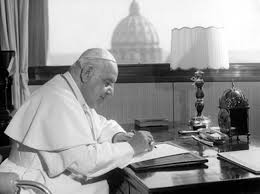
This concluding chapter takes the form of a papal encyclical by the fictitious pope, John Paul III. Though some younger readers might still object to its contents as excessively traditional, the encyclical represents the type of publication I wish popes were capable of authoring. Because of its importance, I’m including the full written text in this posting along with the recorded version above. Here’s what Pope John Paul III wrote:

Chapter Thirty-Eight

To the Young People of the World: An Encyclical About Sex

It is altogether fitting that this – in all probability the final encyclical of my papacy – should be addressed, with great fatherly affection, to the young people of the world.  As a man of advanced years, I write with an immense sense of urgency and affection. My hope is that what I share with you will help you avoid the errors and destructive behavior which has become the hallmark of the modern world. 

Recent tragic experiences among my brother priests have unexpectedly forced upon me new personal insights about the topic of this encyclical. They prompt me to rethink my own life, and my teaching on human sexuality.  My wish is to communicate those thoughts and teachings in a series of direct and honest pastoral counsels, which I list below.  These counsels will be straight from my heart, informed by my own experience, and expressed without obscurity or equivocation.  Their practicality has a twofold intention: first, to offer direct guidance to you, my dearest sons and daughters, and, secondly, to create a context of freedom for those who will soon gather for the Third Vatican Council.  As part of their agenda, I want the council fathers and mothers to explore freely in the light of scripture and tradition, the points which I will express here all-too-briefly.

To begin with, let me extend my deepest compassion to every one of you.  You are challenged, as the members of my generation never were, by the enticements and deceptions of a modern consumer culture. It inundates you with words and images, songs and mass media advertising which glorify the commodification of life itself.  Indeed, the most precious of human relationships – love between women and men – has been transformed simply into one more product, to be bought and sold at the lowest price possible.  Nothing could be further from the Creator’s intention.

To deal with the overwhelming temptations and confusions which inevitably result from such commercialization, it is imperative that each of you becomes clear about the place sex has, will have, and should have in you own life.  This is a matter for serious reflection, reading and conversation (especially with your parents, or someone else you may trust).

Your own conclusions about the place of sex in your life will depend on what you think life itself is for.  This is not easy to determine.  TV, magazines, movies, popular songs, novels, and your less thoughtful friends will tell us one thing.  The thoughtful people of history (Jesus, St. Francis, Theresa of Avila, John of the Cross, Oscar Romero, Mother Teresa, and the insightful holy women and men of other religious traditions) will tell you something else. So, to begin with, you must decide where and with whom you stand. That will determine all else.

If you are like most people in the world we have inherited, you will agree that life is for “having fun” and enjoying pleasure, for making money, accumulating possessions, achieving fame, and avoiding pain.  With this orientation, sex is just one more source of personal pleasure – perhaps the greatest source. So, the important thing is to obtain as much of it as you can for yourself, and, if possible, for your partners.  One’s sexual conquests are proofs of personal worth, aliveness, status, femininity, and manhood.  One should never pass up a potential sexual conquest or say “no” to sexual pleasure.  This approach is especially seductive for us males.  It leads us to approach women as “creatures for us.”  They are sexual objects.  As such, they are fair game for exploitation, voyeuristic gaze, jokes and derision.

The other approach (of the people I called “thoughtful”) begins from an entirely different place.  It says that human beings are more than their bodies, more than sophisticated animals.  In fact, it says, we are principally spiritual beings.  The thoughtful people I’m referring to make four important claims about the purpose of life.  They say: (1) within each one of us resides a spark of the divine, the presence of God’s Spirit, our real Self, (2) we can come to an awareness of this fact and live from that divine place with love, patience, kindness, humility, simplicity, generosity and pure intention, (3) it is the purpose of life to do so, and (4) once we realize our own unity with the divine, we will recognize that same spark in every other human being and in all of creation, treating them accordingly.  These were the convictions of Jesus, the Christ. Males who adopt this approach will see women as persons like themselves with hopes, ambitions, talents, and vulnerabilities.  Women will be seen as delightful companions and men’s equals – entirely worthy of honor, respect, support, love and (when appropriate) protection.

This more thoughtful approach to the meaning of life has led me to summarize its observations and to make recommendations.  My observations include the following:

√ Sex is the second most powerful physical drive human beings possess. After self-preservation comes propagation of the species.

√ As such a powerful force, undisciplined sex has severely damaged the lives of an extraordinary number of otherwise mature and apparently successful people, along with the lives of their families and loved ones. You have only to read the daily newspaper to see this.  Reports of rapes, incestuous relationships, unwanted pregnancies, marital infidelities, abortions, acquisition of STDs, and/or involvement with prostitution and addiction to pornography show that undisciplined sex can be ruinous. Above all, the scandal of the sexual abuse of children by some of our own priests illustrates this point.  All of these instances show how necessary it is to be in charge of ourselves in this area of life – as well as in others that are potentially addictive (food and drink, drugs, work, money, personal ambition…).

√ Obsession with sex passively (guilt or fear) or actively (compulsive thoughts or actions) is harmful.

√ It is important to deal with sexuality in an open, honest, rational, and prayerful way.  If not, it will come back to haunt you.  Either reckon with it as a young person or reckon with it later.  The longer one postpones coming to terms with sex, the more likely it is that the postponement will result in crooked or compulsive (that is unfree) sexual expression.  By “reckoning with” sex and “coming to terms” with it, I mean thinking about it, evaluating it and deciding about its place in your life.

√ Members of the opposite sex are extremely attractive to most of us.  This is entirely wonderful and a precious gift from God.  However, it is very easy to objectify those for whom we experience sexual attraction – to treat them as “things,” rather than as persons of equal value, and comparable hopes, anxieties, and destinies.  This is especially noteworthy for men relative to women, because the male-dominated culture of the West objectifies women for commercial purposes in sex-related ways.  I urge you to reject that mindset and practice.

√ As for those who find members of the same sex attractive sexually, I can say very little.  However, I do trust Scripture scholars who have found that the Bible has very little, if anything, to say on the topic.  It is certain that the Bible does not at all address problems of “sexual orientation,” which is an entirely modern concept.  I also trust those who claim same-sex attraction when they testify that they have no more chosen their sexual orientation than have heterosexuals.  My heart goes out to such individuals because they are so misunderstood and persecuted in the West.  I confess as well that the church bears much responsibility for their suffering.  Of course, within homosexual orientation, the same guidelines for personal relationships apply as are relevant to heterosexuals. (See below.)

√ Sexual thoughts, use of pornography, and self-stimulation are not matters of sin requiring punishment. However, they can represent self-centeredness, loss of personal control, poisoning of the mind, and objectification of persons. Such diversions from life’s true purpose can easily become addictive, time-consuming, costly, and unhealthy.

√ Once one becomes sexually active, it is extremely difficult not to have sex a part of subsequent relationships.

√ The more partners one has, the easier it is to treat those involved as sex objects, to deceive and exploit them. We must never forget that apart from their spiritual impact, all sexual relationships establish undeniable chemical bonds between those who engage in them. Thoughtless multiple sexual relationships can desensitize one to those bonds and cause heartbreak and pain. 

√ Sexual involvement early in a relationship prevents men and women from getting to know one another personally, intellectually, and spiritually. That is, the sexual dimension of a man/woman relationship is easy. However, it should be the last element in a much more complicated and difficult progression of “knowing” that goes from (1) meeting to (2) knowledge of the person’s history and background, and to (3) knowledge of the person’s thoughts and values, to (4) knowledge of the person’s spirit and spiritual orientation. 

     √ Sexual intercourse finds its proper place only within the context of stable, permanent commitments. However, it is extremely easy to deceive oneself about such pledges. Mere self-seeking can too easily masquerade as “love” or “commitment.” Almost inevitably such deception leads to heartbreak and deep personal wounds. This shows the wisdom of our tradition when it confines full sexual expression to the marriage context.

     √ Postponing sexual gratification and involvement with other people is possible. Demonstrating this possibility (despite the reigning culture’s denial) is one of the great services provided by those who have received the vocation to the celibate life.  They demonstrate for all to see that one does not really “need” to be sexually active to lead a happy and meaningful life.

√ Postponement of sexual involvement is highly desirable.  Sex complicates life and relationships very much.  (Think of your friends who are already sexually involved.)  Young people do not need such complications while they are still in school attempting to make the most of their studies and athletic potential. Personally, I am very happy that I was free of that while I was finishing my studies and excelling in sports. I did not miss anything and gained a great deal.

     √ Saying “no” to early sexual involvement is a greater sign of maturity and strength than saying “yes.”

     √ It is important to develop in oneself the ability to say “no” to sexual gratification. Eventually one’s marriage and family may depend on it.

            √ Child molestation (along with rape and incest) is abhorrent. Those who engage in such activity urgently require exposure and treatment. This applies to the members of the clergy who have sinned grievously in this area.

             √ Abortion remains a concern extremely close to my heart. At this juncture in my life, it is important to reaffirm the church’s concern for human life, and life in general, in all its manifestations and stages. However, too often in the past, the church has transformed abortion into an  issue centralizing female responsibility. Instead, it must be seen as society’s problem. It is therefore entirely objectionable for the faithful to be protective of human life within the womb, and not to maintain the same concern after pregnancies have been brought to term. It is wrong for Christians to insist that abortion be outlawed, without at the simultaneously supporting public programs providing healthcare, housing, education, childcare, and a living wage. In other words, Christians are responsible for creating a welcoming atmosphere for all children.

More particularly, for too long, men (and churchmen with no direct experience of women’s sexuality) have tried to instruct and regulate women on this topic. However, despite such uninformed pronouncements, women have for eons dealt with it using their unique knowledge and wisdom. Accordingly, abortion has always been part of women’s special insight, practice, and lore.

Since abortion is nowhere mentioned in the Bible, we are thrown back on such feminine wisdom and practice based as it is on biology and logic in order to reach conclusions about abortion’s morality.

Intuitively at least, women’s biology tells them that spontaneous abortions are nature’s way – the way their female bodies work. They recognize that about ten to twenty percent of known pregnancies end in miscarriage (i.e., before the 20th week of gestation) – not to mention pregnancies that are unknown.

Logically, that spontaneous phenomenon reveals something about the divine plan of creation. It suggests that before at least the 20th week of pregnancy, the fetus cannot be considered a human person.  

And even subsequently, there is no reason to think that the Divine’s infinite wisdom and power cannot reincarnate any aborted soul in another body when the time is right according to the mother’s judgment.

The bottom line here is that men (especially celibate men) have little to say on this topic., Women must have the final word.  

RECOMMENDATIONS

     √ Be careful, my dear friends, about the thoughts, images, song lyrics, and other influences you allow into your minds. Our holy tradition teaches that the thoughts we think, the images we put into our minds (sexual, violent, consumptive. . .) shape who we are.  Being careful about what we allow into our minds is simply part of taking responsibility for our own selves and destinies.  Repeated thoughts lead to actions; repeated actions create habits; habits shape character; character determines destiny.

     √ Form as many friendships as possible without complicating them with sex. Sex gets in the way of the real knowledge (personal, intellectual, and spiritual) I described earlier in this letter.

     √ Socialize “defensively.” That is, avoid situations which will lead to the premature involvements, commitments and expectations that go along with sex. Meet your companion’s parents.  Go out in groups.  Plan your outings.  Keep busy during the time together (movies, concerts, lectures, sports events . . .)  Return home on time.  Say goodbye on the doorstep, not in a car or remote location. 

     √ Realize that sexual involvement is a process, which progresses in stages – holding hands, kissing, touching, touching intimately (another name for foreplay) and intercourse.  Once started, it is progressively more difficult to stop and turn back.

     √ If despite what I have written here, you decide to have sexual intercourse, never do so without protection.  I say this for your own benefit.  Literally, it is a question of life and death.

CONCLUSION

   My dearest sons and daughters, there is much more to be said about all I’ve addressed in this letter.  What I’ve shared here is, I think, common sense.  It is also reflective of Christian perspective in the Roman Catholic tradition.  Perhaps that tradition does not have for you the same value that it continues to have for me.  In the end, you must decide whether you want to subscribe to it or not – whether you want to accept what it offers as “wisdom” or not.  Personally, I have done so.  That doesn’t mean that I have not made mistakes in my life. Like you and everyone else, I have committed many errors.  However, I do recognize the tradition’s wisdom and am struggling to stay on the path it describes.

            My hope is that sharing like this has some meaning for you.  Please consider it carefully.  At the very least, recognize it for what it is – the Holy Father’s poor attempt to give some guidance to the sons and daughters he cares so deeply about.

With heartfelt affection and love,

            John Paul III, Pope

Chapter 32: Conclusion “Damiana Sets the Pope Straight”

Please excuse me for forgetting to attach the audio file to yesterday’s posting.

Anyway, here’s what I thought I was publishing yesterday. This is the concluding chapter of my novel, The Pope’s Secret. But wait, there’ll be another chapter and epilogue.

For previous chapters, just scroll down.