What Really Happens after Death? (Conclusion of a two-part series)

Last week I raised the question of what really happens after death. My jumping off point was last Easter’s Time Magazine article by Jon Meacham called “Rethinking Heaven.” There the author contrasted what he called a “Blue Sky” approach to heaven (a kind of Disneyland up above) with a “God’s Space” understanding (bringing God’s Kingdom to earth). I remarked that the “God’s Space” approach seemed more believable and adult than the “Disneyland” heaven. However, the alternative to Disneyland didn’t really help us understand what happens after we breathe our last.

Tony Equale’s blog (http://tonyequale.wordpress.com/) does help. For Equale (a Roman Catholic ex-priest) heaven has little to do with the pearly gates. At the same time he explains more starkly what entering God’s space after death might really entail.

To begin with, Equale says, we must admit our ignorance. We have little idea about heaven or what happens after death. It’s all speculation. Even Jesus himself said precious little about the afterlife, much less about the specifics of a heaven. In any case, anything the Bible might have to say about the afterlife is expressed in religious language which is of necessity highly metaphorical.  It gestures towards something else.

What we do know about Jesus is that his own understanding of death was shaped by his belief in God’s universal love. He had absolute trust in God as a loving Father. Jesus believed that God’s unfailing trustworthiness took away the “sting” of death, so that dying became irrelevant; whatever was to happen could be trusted as the best outcome possible. As a result, death had no dominion over him.

Moreover the heroism of Jesus’ witness was to actually “prove” his claims about God by staking everything on them. Here we’re not talking about a rationalistic proof, but about something existential. In effect Jesus said, “Do you want me to prove I’m right? O.K. then, I will.” So he courted death by doing the things God’s love demands (siding with the poor and oppressed) – a choice that usually brings assassination to any prophet. That was his proof. “You see,” he insisted, “God can be trusted; death is irrelevant in the face of God’s love.” A way of putting that metaphorically is to say that Jesus rose from the dead.

According to Equale, belief in resurrection in those terms — in terms of real flesh and blood people choosing to risk their lives because they trust God’s love – mostly unraveled within a few generations of Jesus’ execution.  Its place was taken by a mixture of Roman and Egyptian ideas about disembodied souls in a “Blue Sky” heaven familiar to three year olds, to Dante, Raphael, and Michelangelo.

According to Equale, where does that leave us? With one choice only, he says – either to trust or not to trust the source of our existence, which Jesus claimed is absolutely loving.  However, even if we make the choice to trust, the reality of God’s love might not be as we want it to be. Tony writes:

“But what if the reality is …that at death we are dissolved back into the elements from which we were formed, to be reused over and over until the whole meets … another implosion to singularity and another big bang — a new universe. What if our little heads and our little hearts are not equal to the unfathomable magnanimity of a “Father” who, more like a “Mother,” wishes to share, and share, and share Herself (and us as part of Herself) endlessly, … we might even add, purposelessly … for the sheer joy of it … to share being-here with ever new things and new “people” with a generosity and self-donation beyond our capacity to imagine … or endure? . . . Do we want to go to that heaven? Are we really as convinced that “God is Love” if it would mean that much love? . . . Do we love our existential source and the universe it has made, as it is — or only as we want it to be?”

These words are reminiscent of the insights of Eckhart Tolle. Tolle says there is no doubt that life continues after death. One has only to enter an untended forest to see that live trees are surrounded by dead leaves, branches, and fallen and decaying trees.  However, closer examination of the dead matter reveals that in every case, the distinction between “dead” and “alive” is misleading. The fallen leaves, branches, and trees are teeming with life. In biblical terms, their lives have been changed not taken away. Of course, it will be the same with our bodies as they decay and molder in their graves. Life will continue in our bodies too. And who knows where that life will end up – in what communities or “people?” Death is always followed by rebirth – and perhaps by rebirth in the cosmic sense of passing again through an entire evolutionary process.

As for our consciousness . . .  That too will persist – insofar as it achieved unity with the source of the profound intelligence that pervades the universe. (The reference here is, for example, to the intelligence manifest in a single human cell. The information contained in that unit is enough to fill one hundred books of six hundred pages each.) That such Source Consciousness is present is evident from the fact of our own awareness. Ours comes from somewhere. As scholastic philosophers put it “nihil ex nilhilo fit” (nothing comes from nothing).  In as much as we have achieved unity with the Consciousness that pervades the universe, “our” consciousness will surely continue. All other consciousness passes away – most of it, experience shows, even before we die.

So the ultimate question about heaven is not whether it is up in the blue sky or in “God’s space” here on earth. It’s not even a question of our attitudes towards climate change, HIV/AIDS or world hunger.  Rather, it’s a question of death and surrender.

In confronting death, in explaining it to our children, are we willing to admit our absolute ignorance?  And if we claim Christian commitment, are we prepared to think of Jesus’ resurrection as a call to complete trust in God come what may? Are we disposed to surrender our very lives, as Jesus did despite threats from those who routinely kill prophets, because of our conviction that death is irrelevant in the face of God’s love and promise? And are we ready to do that even if God’s love is so great that we find it incomprehensible, purposeless, confusing, and even disappointing to the ideas of a three year old like Eva?

Finally, are we willing to make our own the prayer of the medieval mystic, Rabia al-Basri [a woman and Muslim (717-801)]?

“Lord, if I love you because I desire the joys of heaven,

Close its gates to me.

And if I love you, because I fear the pains of hell,

Bury me in its depths.

But if I love you for the sake of loving you,

Hide not your face from me.”

Step Five: Writing the Tradition Down (Monday Mini-Class on Historical Jesus)

(This is the eleventh in a series of “mini-classes” on the historical Jesus. Together the pieces are intended to assist those who wish to “dig deeper” into the scholarly foundations of postmodern faith and to understand the methodology behind the postings on the blog site.)

Only in the fifth step of its development was the Christian tradition written down. The other four steps were (1) the actual life of Jesus, (2) the resurrection experience of Jesus’ first followers, (3) their kerygma or basic proclamation of belief in Jesus as God’s self-revelation, and (4) a nearly half-century oral tradition about what Jesus said and did.

The earliest written records we have of Christian faith come from Paul of Tarsus, who claimed to be an apostle even though he never met the historical Jesus. The basis of his claim was the fact that he, like the apostles who had lived with Jesus, had met the risen Lord. As we saw earlier, the form of Paul’s meeting was completely visionary; he saw a bright light and heard a voice. According to contradictory accounts attributed to him, the voice and light may or may not have been heard or seen by Paul’s companions. (Compare Acts 9:3-9 and 22: 6-21.)

Paul’s entries into the Christian testament all take the form of letters to home churches he had founded. The earliest of the letters dates from about the year 50 CE – approximately 15 years after Jesus’ crucifixion. None of Paul’s letters attempt to report what Jesus actually said or did before his death. Instead Paul presents a Jesus who was crucified, rose from the dead, and sent his Spirit. In other words, Paul completely ignores the historical Jesus. Consequently his letters are of no help to those interested in the topic at hand.

It was only about the year 70, as eyewitnesses of Jesus life were dying off that the Jesus tradition began to take written form. The Gospel of Mark came first. Mark’s work is usually dated between 65 and 70 – either shortly before or immediately after the Romans destroyed Jerusalem and its temple in the culmination of the Jewish War (64-70).

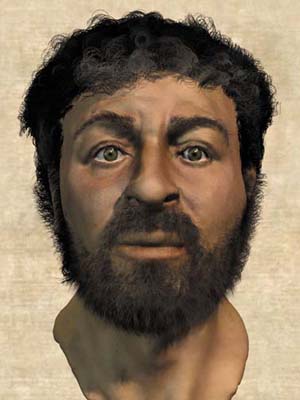
As the inventor of the literary genre “gospel,” Mark was not attempting to write a life of Jesus. Neither were any of those who subsequently adopted Mark’s literary form. They all leave too much out for that to be their purpose. For instance, none of them tell us what Jesus looked like. In fact, Mark says nothing about Jesus till the Nazarene appears for baptism on the banks of the River Jordan. In that appearance, Jesus is a fully grown adult apparently about the age of 30. This means that Mark has no birth story about Jesus. Surprisingly, neither does he include any appearances of the risen Jesus. (Scholars agree that the appearance accounts in Chapter 16 of Mark are later additions.) This signifies that Mark either didn’t know of these events, or he didn’t think them important enough to include in his account!

Rather than lives of Jesus, “gospels” are faith documents. They are “propaganda” in the strict sense of the word – accounts to be propagated or spread abroad to convince readers of the transcendent significance of Jesus. In other words, the gospels are not objective accounts of what Jesus said and did. Instead they are faith testimonials. Their chapters might describe events perceived as miraculous and wonderful to the authors. However, those same events would not necessarily have been perceived as such by observers not sharing the faith of the gospel writers.

Mark’s gospel provided a basis for the gospels of Matthew and Luke. [These 3 gospels are often called “synoptic” (from the Greek meaning to share a viewpoint) since they are so similar.] Matthew wrote about 10 or 15 years after Mark. Luke’s gospel was published five or ten years after Matthew. Matthew was writing for a Jewish audience; Luke for one that was largely non-Jewish, i.e. gentile.

Since both Matthew and Luke include Greek translations of Jesus’ Aramaic words identical with Mark’s, scholars conclude Matthew and Luke directly copied much of Mark’s gospel. (Otherwise, as any translator knows, the Greek translations would not be identical.) Here and there both Matthew and Luke made changes in Mark’s accounts of Jesus’ words to adjust to their audiences and contexts. They also supplemented Mark’s account with their own material. For instance, both added birth and infancy stories along with genealogies (both of which greatly differ from one another). In addition, scholars posit that Matthew and Luke must have had access to a lost collection of Jesus’ sayings [called Quelle (the German word for source)]. Thus Matthew and Luke were working from Mark, from the Quelle, and from other material peculiar to each of them.

Besides the variations just noted, understandings of Jesus himself also differ greatly between Mark, Matthew and Luke. The differences between the three reveal a deepening understanding of Jesus’ identity as years went on. This is evident for instance if we compare the synoptics’ account of Jesus curing Peter’s mother-in-law. In Mark’s gospel, Jesus helps the woman from her bed and she is cured (1:29-31). In Matthew’s account, he merely touches her to effect the cure (8:14-15). In Luke’s version, a mere word from Jesus suffices; there is no physical contact (4:38-41).

The Gospel of John written between the years 90 and 100 CE, contains the most highly developed “Christology” (understanding of Jesus’ identity) of the four gospels in the Christian Testament. In John, time after time, Jesus is referred to as “I Am” – the very name of the Jewish God revealed to Moses. For instance, John has Jesus say, “Before Abraham was, I am” (Jn.8:58).  This means that unlike the synoptics John’s gospel describes a 3 stage Christology. He pictures a Jesus pre-existent in heaven, descending to earth, and then returning to heaven. Mark, Matthew and Luke understand Jesus as a 2 stage savior who lives as a human being and then ascends to heaven where he is established as Lord.

The problem is that over the centuries, John’s 3 stage [Logos (or Word of God) Christology] has swallowed up the other understandings. In the popular mind, this has created huge barriers for those wishing to contact the historical Jesus. That is, John’s writing provides the basis for understanding Jesus as a pre-existent God who merely pretended to be a human being. Of course, this approach makes pointless any quest of a human, historical Jesus.

Next Week: the Council of Nicaea erases the historical Jesus for good.

Give Up Church for Lent!

Readings for 2nd Sunday in Advent: Bar. 5: 1-9; Ps. 126: 1-6; Phil. 1: 4-6, 8-12; Lk. 3: 1-6 http://www.usccb.org/bible/readings/120912.cfm

In my town of Berea, Kentucky, a kind of religious revival is taking place. A spirited group of people across denominational lines meets once a month to experiment with and “Ecumenical Table Fellowship.” It’s a community of Christians without benefit of clerical leadership meeting to reflect on our common biblical tradition in the light of what Vatican II called “the signs of the times.” The group breaks bread liturgically in the spirit of Jesus’ Last Supper and of the early church. Roman Catholics are prominent in the group. They are discouraged by today’s conservative pre-Vatican II “restorationism” that emphasizes the power of the church hierarchy and ordained priesthood at the expense of Vatican II’s emphasis on the priesthood of the faithful.

Some in the group agree with spiritual theologian, Matthew Fox that their church leadership is in schism against the spirit of the Second Vatican Council, which remains the official teaching of the Catholic Church. Pope John Paul II, Benedict XVI, and the conservative bishops they have appointed are the culprits in schism. These clerics are defensive of hierarchy and the power of an exclusively male priesthood. They devalue lay leadership and the prominent biblical stories of Exodus and Return from Exile that are highlighted in today’s liturgy of the word where they are contrasted with “the priestly story” that currently plagues the Catholic Church.

The great Jesus scholar, Marcus Borg, reminds us that amid the literally hundreds of stories in the Bible, there are three “macro-stories” that give coherence to the Jewish Testament and its Christian counterpart. The first and most important is the story of Exodus. Its’ a tale of liberation from slavery and journey to a “Promised Land.” For the ancient Hebrews, the Exodus was grounded in an actual historical event, the release of slaves from their oppression under the pharaohs of Egypt perhaps 1200 years before the birth of Jesus.  It was the Exodus that provided the ancient Hebrews with their first experience of their God, Yahweh.  For them, Yahweh’s fundamental identity was the One Who Liberates from Oppression. In our day, the macro-story of Exodus has become central for third world people living under the harsh realities of U.S. imperialism.

The second Old Testament macro-story is Exile and Return. It too was grounded in history. In the year 587 BCE, the Hebrews were conquered by Babylon (modern Iraq). The Babylonians transported the Hebrew elite to Iraq till the Persian King Cyrus released them after conquering Babylon in 539.The story of exile and return shaped the ancient Israelites almost as much as the Exodus story. Like oppression and slavery, that narrative represents a human archetype that all of us can relate to it in one way or another.  The archetype evokes the feelings of grief, sadness and displacement reflected in one of the psalms of exile, “By the rivers of Babylon, there we sat down and wept when we remembered Zion.” The Advent Hymn “O Come Emanuel” expresses the same feelings in its own reference to the Babylonian Exile: “O Come O Come, Emanuel, and ransom captive Israel, that mourns in lonely exile here.”  For one reason or another, all of us feel somehow exiled, sad, and displaced.

The third macro-story of the Jewish Testament comes from priestly sources. It is not grounded in a particular historical event, but in temple ritual and worship. It is the story of sin, guilt and of forgiveness mediated by the priestly class, their sacrifices, rules, rituals and prayers. Judging from the attitudes of Israel’s prophets and especially of Jesus, the priestly narrative is far less important than either Exodus or Exile. In fact, along with many other prophets, Jesus expressed harsh criticism and even hostility towards priestly pretensions and business-as-usual within the temple precincts. And yet, the priestly narrative has carried the day in terms of dominant Judeo-Christian spirituality. “Jewish guilt” and “Catholic guilt” are legendary. Jesus is primarily understood as the one who “died for our sins.” God’s wrath and the threat of hell are staples of Sunday sermons and of Christian neuroses.

The focus of today’s liturgy of the word is Exile and Return in sharp contrast to the Priestly Story of sin, guilt, sacrifice and forgiveness. The first reading from the Book of Baruch was probably written about 150 BCE when Israel was under the sway of the Seleucid Greeks. However the book is presented as though it were written 400 years earlier during the Babylonian Exile – as if it were addressed to the exiles then. Baruch’s real audience however was the Jews at war with the Greeks. His real intention was to encourage his contemporaries in their resistance to Greece – promising them that the rough road they were then traveling would soon be made smooth by Yahweh –   the one who frees the oppressed and brings exiles back from captivity.

In today’s gospel, Luke presents John the Baptist in terms of both Exile and Return and Exodus. Luke sees John as fulfilling the words of the prophet Isaiah nearly 600 years earlier. By anchoring John’s appearance in Isaiah, Luke is implying that John represents a continuation of Isaiah’s work of announcing the end of exile. This was a bold claim for Luke, since many Jews of his day believed that prophetic voices – nearly always lay people – had forever fallen silent. But here is John presented as fulfilling Isaiah’s words. He is making the rough way smooth. He’s leveling mountains and filling in valleys.  At the same time, John’s proclamation as presented by Luke has overtones of the priestly story. Luke shows John proclaiming a baptism of repentance for forgiveness of sin.

But here it is important to note the Exodus dimensions of John’s work. He is presented as preaching and baptizing specifically outside the temple and sphere of the priests. In fact, John appears in the wilderness – in the desert. For Jews, this would not only have evoked overtones of the Exodus macro-story, it would also have signaled a subversive significance in John’s work. After all, the “desert” or “wilderness” was the place where contemporary resistance movements were spawned. As scripture scholar, Ched Myers points out, Luke could not have picked a narrative “coordinate” further removed from the temple. For Luke the regeneration of prophecy was happening not in Baruch’s Zion but at the margins of Jewish society – in the desert where it all began with the Exodus. In other words, Luke presents John’s ministry as a complete break with the priestly establishment which controlled the mechanisms of social redemption from their power base in Jerusalem.

All of this raises questions for thoughtful Christians in the context of our own exilic sadness as we face the contemporary irrelevance of what happens in our own “temples.”  Is it time to move out of that realm now dominated by schismatic popes, bishops and priests and to relocate where our worship tradition began – in homes with Eucharists led by lay people?

Perhaps we’re not yet ready to substitute an Ecumenical Table experience for weekly Mass. But we could supplement Sunday Mass with such fellowship once a month. Alternatively, what if an Ecumenical Table were offered each Sunday at the very time of our parish Mass (9:00 am at St. Clare’s in Berea)?  That would give parishioners a choice. At least on occasion they could attend the Ecumenical Table and compare it with “business as usual.”

Another idea: Lent is fast approaching (Ash Wednesday is Feb. 13th). Might Lent not be a good time to “give up” church, and for six weeks and experiment with this alternative form of worship?

In today’s excerpt from his letter to Philemon, Paul prays that the church meeting at Philemon’s house might be given discernment to distinguish what is really important. Today’s liturgy of the word suggests that Exodus from business as usual and return from the Exile of pre-Vatican II Restorationism might be more important than honoring the priestly order that has dominated Catholic consciousness for too long.

Let’s consider trying to recapture Philemon’s home church experience and see what happens – if only for Lent’s six weeks. At the very least, the absence of people at Sunday Mass might get the attention of our bishop and pastor. It might help them realize that something’s amiss!

(Discussion follows)

What Happens after We Die? Rethinking Heaven

(Recently a friend asked me to post something on death and the afterlife. That’s a topic I think about very often. Here’s the first in a two-part blog on life-after-death.)

“We’re all going to die some day, Eva. Mommy will die. Daddy will die. Gaga and Baba will die too.”

“Baba’s going to die?”

“Yes, Baba will die too one day.”

“No, not Baba. Baba will never die. No!”

That touching conversation took place recently between my daughter, Maggie, and her daughter (our granddaughter) Eva. Eva was three then. She calls me “Baba.” She calls her grandma “Gaga.” And Eva was trying to come to grips with death – its inevitability, and the way it touches the ones we love. In that she’s like the rest of us. Death and what happens afterwards is and has always been a great mystery, something of a threat, and an object of denial. We don’t even want to think about it.

Earlier this year, Time Magazine’s Easter edition confronted all of that head-on. So did a friend of mine, Tony Equale, a former priest who blogs at http://tonyequale.wordpress.com/. Tony’s Easter blog was called “We Say That ‘God’ Is Love . . .” The Time article opened the question of heaven in a nicely popular way. However, it successfully avoided shedding light on the question of what really happens after we die. Tony Equale’s piece involved no such evasion. Its answer was clear, extremely thoughtful and challenging.  But it also left me undeniably uncomfortable. I’m not sure I liked the heaven Tony suggested awaits us.

The Time Magazine cover story was a piece by Jon Meacham called “Rethinking Heaven.” Basically, it compared two approaches to the afterlife. The one Meacham termed the “Blue Sky” approach would be familiar enough even to three-year-old Eva and to most Christians for that matter. After death, good people go up in the sky to “heaven,” where they live with God, Jesus, and all the people they love happily ever after.

The other approach favored by Meacham himself and attractive to what he sees as the “younger generation, teens, college aged who are motivated . . . to make a positive difference in the world” is a metaphor for “how you live your life.” “What if,” Meacham asks, “Christianity is not about enduring this sinful, fallen world in search of a reward of eternal rest? What if the authors of the New Testament were actually talking about a bodily resurrection in which God brings together the heavens and the earth in a wholly new, wholly redeemed creation?”  In the words of N.T. Wright, a New Testament scholar, and the former Anglican Bishop of Durham, England, “’heaven isn’t a place where people go when they die.’ In the Bible, heaven is God’s space, while earth (or if you like, ‘the cosmos’ or ‘creation’) is our space. And the Bible makes it clear that the two overlap and interlock.”

A person of faith, the Time Magazine author adds, must decide which “heaven” to believe in. The decision makes a difference. The “Blue Sky” approach makes life on earth and issues such as climate change and HIV/AIDS less important. The alternative makes stewardship imperative. The alternative makes it important to follow “Jesus’ commandment in Matthew 25 to feed the hungry, welcome the stranger and clothe the naked as though they had found Jesus himself hungry, homeless or bereft.”

Like Meacham, I find the “God’s space” approach to heaven on earth more believable and adult than the “Disneyland in the Sky” understanding. Just as I’m convinced that some people endure hell here on earth (the victims of Abu Ghraib come to mind), so also there are people in “heaven” (like Mother Theresa or the Dali Lama). But still, what about death? What happens afterwards? If it’s not Disneyland, what can we expect or hope for? That’s where my friend Tony Equale comes in.

(Next Wednesday: Our Fate after Death)

A Long Oral Tradition: Step four in the development of early Christian faith

(This is the tenth in a series of “mini-classes” on the historical Jesus. Together the pieces are intended to assist those who wish to “dig deeper” into the scholarly foundations of postmodern faith and to understand the methodology behind the postings on the blog site.)

The first three stages in the early development of the Christian tradition – Jesus’ life, the primitive Christian community’s resurrection experience, and the initial proclamation (kerygma) – were followed by a period of about 40 years of oral tradition. During that time, stories about what Jesus said and did were spoken and not written down. This nearly half-century of oral tradition represents the fourth of the five stages in the development of early Christian faith that this series of weekly “mini-classes” is attempting to address. (Find the previous nine postings under the “Historical Jesus” category below the masthead of my blog.)

It is inevitable, of course, that oral tradition varies considerably. Even a group of ten or so people consecutively whispering a single message to their neighbors, can end up changing that message beyond recognition by the time it reaches the last message-recipient. Despite the fact that surviving eyewitnesses surely provided a degree of reality-check, imagine what happened to Jesus’ words and deeds over a half-century as his Aramaic words were translated into Greek, Latin and other languages by people working purely by memory. Imagine what happened to memories of his deeds when they were narrated outside of Palestine by storytellers who were not eyewitnesses, had no knowledge of Jesus’ language, and who possessed little acquaintance with Palestinian geography, Jewish customs, or of Hebrew Scriptures. Imagine what happened to Jesus’ message as Christian storytellers tried to make it relevant to “pagans” who had no knowledge of Judaism. The storytellers would have exploited perceived similarities between Jesus preaching and what the storytellers’ audiences already believed in their own religious traditions. [The Acts of the Apostles provides an example of Paul attempting such cross-cultural explanation (17: 16-34).] Soon Jesus would be explained to Romans in terms of their “mystery cults” with their “dying and rising gods.” As a result, Jesus would be perceived like the sun god, Mithra, whose birthday was December 25th. All such dynamics would have (and did) introduce variations from what the historical Jesus actually said and did.

In the case of Christianity, the obvious confusions of oral tradition were further complicated by the “resurrection factor.” By this I mean that Christians’ belief in Jesus’ resurrection and in the living presence of his Spirit was powerful enough to convince them that the risen Lord continued speaking through community members endowed with the gift of “prophecy.”  They thought that Jesus was still addressing their problems even years after his death. Problems in question had to do with worship, community leadership, resolution of disputes, and everyday matters such as paying taxes, marriage and divorce. So the words of Jesus dealing with such issues and spoken through prophets found their way into the oral tradition about Jesus’ words. Understandably, it soon became impossible to remember which were the words of the historical Jesus and which the words of the risen Christ. Evidently, that distinction wasn’t of much importance to the early Christians. They placed both types of utterance in the same category. All of that further complicates the work of those trying to discern the actual words and deeds of the historical Jesus.

Next week: Step Five: writing down the tradition

The Environmental Cliff: Who’s Responsible? (Share this blog w/ your kids)

Readings for 1st Sunday of Advent: Jer. 33:14-16; Ps. 25:4-5, 8-9, 10, 14; 1 Thes. 3: 12-4:2; Lk. 21: 25-28, 34-35 (http://www.usccb.org/bible/readings/120212.cfm)

You probably know that we’re standing on the brink of a “fiscal cliff.” At least that’s what our politicians are saying. They insist that we’re heading for apocalyptic disaster. For them “fiscal cliff” means that if Democrats and Republicans can’t come to an agreement about taxes and deficit reductions before the end of the year, automatic tax increases and cuts in social spending will occur. And according to the Congressional Budget Office (CBO), that combination of tax increases and spending reductions is likely to plunge us into another deep recession. The politicians want us to think the sky is about to fall. Apocalypse is about to happen unless we stop spending on seniors and children, on our nation’s infrastructure, green technology and public transportation.

______

The annual United Nations Conference on Climate Change began last Monday [Nov. 26] in Doha, Qatar. In preparation for the meeting, the World Bank published an 84 page document on climate change. It’s called “Turn Down the Heat: Why a 4 Degrees C Warmer World Must Be Avoided.” According to the report, a four degree rise in planet’s temperature will produce disastrous heat waves and droughts, along with severe floods.  Hundreds of millions of people will be forced to abandon their homes in coastal areas and on islands that will be submerged as the sea rises. The Amazon rainforest will disappear, and monstrous storms will destroy whole cities and communities.  Health and emergency systems will collapse. Mass chaos will ensue, and the worst medical disaster since the Black Plague will strike the human race. (The Black Plague, you’ll recall killed 30-40% of Europe’s population.)  According to “Turn Down the Heat,” radical measures are required to deal with this impending crisis. These include immediate and unprecedented investment in green technologies and mass transportation systems.  And yet our politicians do nothing; they actually want to cut back on such expenditures! In the recent presidential debates, the phrase “climate change” was not even mentioned, much less debated. Quite the opposite: the two candidates strove to one-up each other in swearing allegiance to coal, oil, uranium and other dirty fuels that will only make the global warming worse.

______

This is the third week in a row that the lectionary has given us readings from apocalyptic literature. As I mentioned a couple of weeks ago, apocalypse was not about the end of the world. Instead, it was resistance literature, written in code during times of extreme persecution by powerful imperial forces like Greece and Rome. The code was understandable to “insiders” familiar with Jewish scripture. It was impenetrable to “outsiders” like the persecutors and their police against whom apocalypse was written.

Apocalypse differs from ordinary prophecy in that it addresses periods of deep crisis, when the whole world appears to be falling apart. Neither prophets nor apocalyptics were fortune tellers. Instead, they were their days’ social critics. They warned of the disastrous consequences that inevitably follow from national policies that deviate from God’s will – i.e. from policies that harm God’s favorites: widows, orphans, immigrants, the poor – and (we might add) the planet itself.

Perhaps the best example of apocalypse in our own history is what happened to the indigenous populations of North and South Americans when the Europeans arrived. The coming of white people signaled the end of the “Indian” world. Everything changed for the Mayans, Aztecs, Cherokee, Iroquois, and so many other Original Peoples in our hemisphere. For them the times were apocalyptic. The indigenous world would never be the same. And our ancestors were the agents of its destruction.

Something similar had happened for the Jews when Luke was writing his gospel around the year 85 of the Common Era. Jerusalem had been completely destroyed by the Romans in the Jewish War (64-70 CE). The Romans had brutally razed the city and the temple that had been rebuilt after the Babylonian Exile. For Jews that was something like the Death of God, for the Holy City and its Temple were considered God’s dwelling place. The event was apocalyptic.

In today’s gospel, Luke has Jesus predicting that destruction using specifically apocalyptic language. Luke’s Jesus says “There will be signs in the sun, the moon, and the stars, and on the earth distress among nations confused by the roaring of the sea and the waves. People will faint from fear and foreboding of what is coming upon the world, for the powers of the heavens will be shaken.

What can such apocalyptic message mean in our own day faced as we are with false “fiscal cliffs” distracting us from the fact that we’re standing on the brink of an unfathomable environmental cliff?

Yes, the fiscal cliff is a mere distraction – a completely human and remediable fabrication. And dealing with it by reducing the government’s ability to spend on green technology and public transportation succeeds only in bringing us closer by the minute to the exceedingly real environmental precipice.

I mean, no law of nature is at work in the budget crisis. The Bush tax cuts, which the Republicans are desperately trying to preserve, were advertised as temporary from the outset. In fact, they are the chief cause of the federal deficit, and are scheduled to disappear automatically at the end of 2012 – with or without agreement by the two parties. Social Security is completely off budget. It’s not paid for by income taxes, but by payroll taxes. So tinkering with Social Security will have no impact at all on the federal deficit. Meanwhile the CBO assures us that reductions in Medicare and/or Medicaid expenses will have minimal effect on the federal deficit.

And yet we’re all supposed to be waiting for “apocalypse” to happen, as if the federal deficit wouldn’t be ameliorated by simply letting the Bush tax cuts for the wealthy expire as originally intended, and by closing the tax loopholes that allow the rich to shelter their capital gains offshore in places like the Cayman Islands, and that permit huge multi-national corporations to pay no U.S. taxes at all.  As for Social Security; according to the CBO, it will remain solvent till at least 2035 if nothing at all is done about its reformation. And any problems that develop thereafter can be easily solved by having the rich pay like the rest of us on their entire incomes  even after their first $100,000. (Presently, they pay Social Security taxes only to that point, and then are let off the hook.)

Meanwhile, the real threat to our planet is the environmental cliff that our “leaders” refuse to address. And who’s responsible for that crisis? Prominent religious leaders would have us believe it’s God. He (sic) is punishing us for Roe v. Wade, for legalizing same sex marriages, or for allowing women access to contraception. Let’s face it: that’s nonsense. It turns Jesus’ embodiment of the God of love on its head. It turns God into a pathological killer – a cruel punishing father like too many of our own dads.

Others would say the culprit preventing us from addressing climate change is government. Now that’s closer to the truth. Our elected politicians are truly in the pockets of Big Oil, the Banksters, and other fiscal behemoths whose eyes are fixed firmly on short-term gains, even if it means their own children and grandchildren will experience environmental apocalypse.

But we can’t simply blame government. We elected these people. We have to organize to make sure they take seriously the mandate they’ve received. That mandate is to make the economic system work for all of us not just for the 1%. To make it work, we must first recognize that an economic system that destroys the planet is a complete failure. The Doha Conference is fairly shouting that message.  Our economic model is not working! In the long run, we have to organize to make our elected officials obey us, the People, rather than the business giants.

In the short run, we ourselves have to change our consumption habits. The Christmas season represents the perfect time to do that. What if this Christmas – three weeks from now – we supported each other in refusing to exchange all that plastic crap and those colorful pieces of cloth sewed together by slave labor and shipped at great environmental expense from the other side of the planet? What if we gave all that “gift” money to Greenpeace instead – or to the Heifer Project, or to Costa Rica’s Casa del Sol?

Our families and friends – even our children – would understand. I promise they would if we discussed it with them. They really don’t want or need that plastic junk either.  This is a wonderfully teachable moment. And it allows us to actually be the change we would all like to see in the world – at this apocalyptic moment when we stand on the brink of an Environmental Cliff. As would-be followers of Jesus, do we really have a choice?

(Discussion follows)

Nikki Giovanni: Thug Poet!

Nikki Giovanni came through Berea two weeks ago. She’s the great African-American poet who began brightening our world in the 1960s with her poetry and social criticism. At 69 years of age she continues spreading her light. She did it again at a Berea College convocation and in at least two other Berea venues.

When I saw her she dispensed advice on all manner of topics:

Cancer: Nikki is a cancer survivor. She’s had a lung removed, and has learned to make cancer her neighbor. You don’t “battle” cancer, she said. If you do, you know who’s going win that one – cancer every time. Instead, you make friends with the disease and learn to live with it, and try not to make it angry with you. Men can get breast cancer too, she reminded us. Get any lump checked out immediately. Act immediately too on any cancer diagnosis. Don’t delay treatment.

Second opinions: If you’re diagnosed with cancer, be sure to seek a second opinion. But do so far away from the location of the first diagnosis. If your second opinion comes from the same location as the first, the diagnosis is sure to be the same as well.

Obama’s Re-election: So you’re unhappy that a black man is the President. He won! Get over it!

Raising children: I’ve done my work as a mother. I don’t need to hear about my children’s problems. That’s what their best friends are for. I’m not my child’s best friend; I’m his mother. Don’t phone me with complaints or bad news. If it’s not good news, I don’t want to hear about it.

Education: It should be free for everyone — as it is at Berea College. Nikki loves her University of Virginia, and is proud to be associated with it. It has lots of money, and sometimes uses it well.

Phone calls in the middle of the night: Phone calls after midnight never bring good news. Don’t answer the phone then. The bad news will still be bad in the morning.

Taxing the rich: Why do billionaires resist taxes? They don’t need any more money. Take away 30% of what they have, and they’ll still be billionaires – or at least multi-millionaires. Take away 30% of millionaires’ wealth, and they’ll still be rich. Take away 30% of what those making $100,000, and they’ll be quite well off too. But take away 30% of what those making $30,000 earn, and you’ve sunk them into poverty.

Male Violence: “Men,” she said, “It’s not a good idea to hit women.” If you do, you’re not only mistreating your woman, you’re teaching lessons to your children. You’re son will conclude, “Oh, that’s the way men treat the women they love.” Your daughter will conclude, “Oh, that’s the treatment I can expect from the men I love and who say they love me.” And the cycle will continue.

Tupac Shakur: Nikki sees him as one of the great poets of our time. He stood for something. Yes, he was a “thug.” “I love thugs,” she said; “they’re always the victims of pursuit by the police. And on principle I’d always rather stand with the ones being chased than with the chasers.”

Nikki Giovanni also read her poetry about yellow jacket bees, her son Thomas, her “Mommy” who died five years ago, her first acclaimed poem, “Nikki-Rosa,” and phone calls after midnight. She spoke of the “Thug Life” tattoo she wears on her left forearm. She put it there in honor of Tupac Shakur, the great African-American rapper and social critic who was shot dead in 1996. Tupac, she reminded us was one of the great men of our era.

I loved Nikki’s talk. My eyes welled up more than once while she was  speaking. That always happens to me (and continues to embarrass me) whenever I recognize something as true.

Nikki Giovanni is true.

Kerygma: Step Three in the Development of Early Christian Belief

(This is the ninth in a series of “mini-classes” on the historical Jesus. Together the pieces are intended to assist those who wish to “dig deeper” into the scholarly foundations of postmodern faith and to understand the methodology behind the postings on the blog site.)

As we’ve seen in previous postings in this series, there were five basic steps in the development of early Christian belief. First there was the life of the historical Jesus. Second came the “resurrection experience” which fundamentally changed his followers’ perception of his identity.  Third was the earliest Christian proclamation of belief – called “kerygma,” the Greek word for proclamation. That third step is the focus of today’s study.

How was Jesus originally presented to unbelievers by his followers? Scholars have isolated specific texts that answer that question. That is, such texts represent the earliest faith-forms of the primitive church. This means that the fragments antedated the letters of St. Paul, whose earliest entries in the Christian Testament date from about the year 50 just fifteen years or so after Jesus’ death. As already indicated, Paul’s letters are themselves the earliest of the New Testament texts – coming well before the gospels of Mark, Matthew and Luke. By way of contrast, the kerygmatic texts date perhaps from the same year as Jesus’ death – or very close to it. They are therefore especially revealing and insightful in terms of what the earliest Christians believed. Let’s consider two of those texts today.

According to scholarly perception, one of the first kerygmatic texts is found in Luke’s Acts of the Apostles, Chapter 2, verses 22-24, 32-33, and 38. There Peter fresh from an extraordinary Pentecost experience in the Upper Room, addresses Jerusalem pilgrims gathered in the Holy City for the Jewish feast fifty days after Passover. The essence of Peter’s proclamation about Jesus runs as follows:

Men of Israel, hear me: I am speaking of Jesus of Nazareth, singled out by God and made known to you through miracles, portents, and signs, which God worked among you through him, as you well know. By the deliberate will and plan of God he was given into your power, and you killed him using heathen men to crucify him. But God raised him to life again, seeing him free from the pangs of death, because it could not be that death should keep him in its grip . . . Now Jesus has been raised by God, and we are all witnesses. Exalted at God’s right hand he received from the Father the promised Holy Spirit, and all that you now see and hear flows from him.  . . . Repent . . . and be baptized, every one of you, in the name of Jesus the Messiah; then your sins will be forgiven and you will receive the gift of the Holy Spirit.

Here we find the proclamation of a human miracle worker who had been given his miraculous powers by God who seems to be Jesus’ superior rather than Jesus being his equal. Jesus was the agent through whom God worked miracles and signs. He carried out God’s plans which included assassination by the Jews in collaboration with the Romans. As God’s anointed, Jesus was raised to life by God. God exalted him, and gave the Holy Spirit to him – after his death and resurrection. Now restored to life Jesus has communicated to his followers the Holy Spirit he himself has just received.  Those who believe should change their ways and be baptized, joining the community of believers.

Later on that community is described as faith-filled, highly egalitarian and holding all things in common. Note the specifics in the following two texts also from Acts. They are relevant to the question of the earliest perceptions of Jesus by his followers:

All the believers agreed to hold everything in common: they began to sell their property and possessions and distribute to everyone according to his need. One and all they kept up their daily attendance at the temple, and, breaking bread in their homes, they shared their meals with unaffected joy, and they praised God and enjoyed the favor of the whole people. And day by day the Lord added new converts to their number. (Acts 2:44-47)

Now the whole company of believers was united in heart and soul. Not one of them claimed any of his possessions as his own; everything was held in common. With great power the apostles bore witness to the resurrection of the Lord Jesus, and all were held in high esteem. There was never a needy person among them, because those who had property in land or houses would sell it, bring the proceeds of the sale, and lay them at the feet of the apostles to be distributed to any who were in need. (Acts 4: 32-35)

In other words, a type of primitive communism or communalism was the practical response of earliest Christians to their experience of the risen Lord and the gift of his Holy Spirit. Put otherwise, it doesn’t seem an exaggeration to say that early Christians saw Jesus and his teachings as communistic. Certainly their response is miles from the spirit of capitalism, private ownership, and competition.

Another version of Christian Kerygma is found in the letter of Paul to the Christian community in Philippi. More specifically, in Philippians 2: 6-11 scholars find what they identify as a hymn fragment evidently sung by Christians in that community. It goes like this:

He was in the form of God; yet he laid no claim to equality with God,

But made himself nothing, assuming the form of a slave.

Bearing the human likeness sharing the human lot

He humbled himself, and was obedient, even to the point of death, death on a cross.

Therefore God raised him to the heights and bestowed on him the name above all names,

That at the name of Jesus every knee should bow – in heaven, on earth, and in the depths –

And every tongue acclaim, “Jesus Christ is Lord,” to the glory of God the Father.

This hymn fragment insists on the humanity of Jesus and on the identification of God in Jesus with the dregs of human nature – with slaves and victims of state execution.  Ironically, the hymn says, such identification led to the highest exaltation and to the establishment of Jesus as Lord in a cultural situation where lordship was claimed by the Roman emperor. In that sense, the earliest Christians proclamation was simply “Jesus is Lord.” The implication here is that the emperor is not Lord.

Where does all of this leave us in terms of understanding “the dogma of Christ?” It helps us see that Jesus was understood to be a man who became divine following his death and resurrection, whatever might have been the historical content of “resurrection.” He identified with the least of all humans (slaves) and was obedient to God. Following his resurrection, Jesus was given God’s Holy Spirit and was “exalted” by God. In other words, Jesus was fully human before his death, and was worshipped as divine only afterwards.

This is the way the earliest Christians perceived Jesus.

Next Week: Step four: a long oral tradition.

Jesus before Pilate: His heroic refusal to name names

Readings for “Christ the King:” Dn. 7:13-14; Ps. 93:1-5; Rv. 1:5-8; Jn. 18:33b-37 http://www.usccb.org/bible/readings/112512.cfm

This is the feast of Christ the King. In today’s gospel reading, Jesus declares his kingship during his interrogation before the Roman governor, Pontius Pilate. Standard interpretations of the scene (such as in Mel Gibson’s “The Passion of the Christ”) present Pilate as a spiritually sensitive seeker.  It seems that Pilate had some appreciation of Jesus’ innocence and was trying desperately to free him from the rabid hatred of his Jewish adversaries.

So Pilate’s questioning of Jesus takes on a theological tone. His questions though arrogant are intellectual almost gentle and respectful. They seem sparked by genuine curiosity. Pilate asks, “Are you the king of the Jews?” In the end Pilate ponders the imponderable, “What is truth?”

The standard account goes on to say that only his personal weakness causes the Roman procurator to have Jesus scourged – to appease the fanatical Jewish leaders demanding Jesus’ blood. Yes, he was weak, but in the end the Jews were the ones principally responsible for Jesus’ death.

That’s the familiar picture: Pilate the intellectual, spiritually sensitive, looking for a way to set Jesus free, but too weak to assert his authority in the face of powerful and hateful Jewish leaders.

Problem is, the picture is profoundly at odds with the historical record. It also ignores the real reason representatives of empire engage in interrogation. As for the procurator’s personal character, Philo, Flavius Josephus, and Tacitus, tell us that Pontius Pilate was an absolutely brutal man. He had no fear of Jewish leaders. He despised them. In fact he took pains to provoke them. For instance, he knew the Jewish prohibition against idolatry and the making images, and yet he routinely paraded through the streets of Jerusalem statues of the Roman emperor who claimed to be a God. On several occasions, Pilate had his soldiers enter the Jerusalem Temple itself provocatively profaning it by their very presence.

No, Pilate was brutal. And his questioning of Jesus in today’s gospel had nothing to do with theological interest. He cared not at all for Jesus or establishing innocence. Quite the opposite. Pilate was just doing his job. If the questioning actually took place at all (and it’s doubtful that it did), it was at the hands of an imperial administrator doing what administrators do in all such circumstances from first century Jerusalem to twenty-first century Kabul. They arrest, interrogate, torture, and execute.

After all, Pilate had in his presence a man identified by local informants as a terrorist. In fact, this one (like innumerable others Pilate had questioned) claimed to be King of the Jews – obviously an insane “rival” to Caesar. What a laugh – an uneducated laborer from Nazareth!  So Pilate would have been all about arresting this “militant,” interrogating him for information about accomplices, torturing him when the initial interrogation failed, and then butchering the fool.

Moreover Jesus’ silence before Pilate had nothing to do with humility. It was instead about Jesus’ refusal to name his accomplices. So the torture began. To humiliate him, the soldiers stripped him naked – again, standard operating procedure then and now. For the soldiers this was fun.  No doubt they made crude jokes about Jews and circumcision. (Do you hear echoes of Abu Ghraib here?)

Still Jesus said nothing. So they beat him nearly to death. Thirty-nine lashes (almost no one survived that). And yet Jesus refused to name names. So they gave him the “crown of thorns” treatment. It was like water-boarding today. Still nothing – no names. It was entirely heroic on Jesus’ part.

Then they applied the final torture – the “third degree” following the first two: the scourging and “crown of thorns.” This was the ultimate torment reserved for insurrectionists – crucifixion. They’d send a detachment of soldiers to copy down any final disclosures. But Jesus said nothing to help them. His silence and acceptance of suffering and death literally saved his friends. They had been disloyal to him, explicitly denied him; they had been cowardly and weak. They had sinned against Jesus. Yet he gave his life for them. His friends would never forget that. Jesus’ heroic death saved them from their sins. It saved them from Pilate.

However, the truth is that Pilate was probably not aware of any of this. He was used to applying the third degree. The record shows he had crucified literally thousands in his time. A lot of them had claimed to be messiahs sent from God.  For him executing such delusionaries was no big deal. In fact, scripture scholar John Dominic Crossan suggests that Pilate took no notice at all of Jesus. The whole world was not watching, Crossan says. Jesus wasn’t even a blip on Pilate’s screen. The “trial before Pilate” was probably pro forma at best – possibly even a fabrication of the early church to shift blame for Jesus’ death from the Romans to the Jews. After all, by the time John wrote his gospel in the final decade of the first century, Christians were anxious to court favor with Rome. In the meantime, they had been excommunicated from Judaism, and had nothing to lose by alienating Jews.

Strange then that we should be celebrating Jesus as a king today who became a victim of torture and extra-judicial capital punishment. But that’s really the point. I mean our faith tells us that Jesus was the kind of king who reigns in the Kingdom of God where everything is turned upside-down.  Jesus’ kingdom, God’s Kingdom, is truly not of this world. For instance, Jesus says, its citizens don’t respond to violence the way empire or the kingdoms of this world do. Its ethic is not an eye for an eye and a tooth for a tooth. Or as Jesus put it, “If my kingdom were of this world, my followers would be fighting to keep me from being handed over . . . .“  No, in the Kingdom of God non-violence reigns. And in his behavior before Pilate, Jesus himself shows the way.

As for the personal character of Jesus’ kingship . . .  God’s head of state is not what at all what the world expected. In the eyes of Roman imperialists, Jesus represented the dregs of humanity. He was a Jew – a people the Romans despised. He was poor and probably illiterate. He was unemployed and traveled about with slackers who had given up gainful employment. At least one of his companions (Simon the Zealot) was a self-declared insurrectionist. Jesus was known as a glutton, drunkard and companion of sex workers. And he was irreligious. The holy men of his own people had excommunicated him and accused him of being possessed by the devil.  Some king indeed!

And yet, according to today’s first reading from the Book of Daniel, this king as “Son of Man” will stand in judgment over all the world’s empires from the Egyptians to the Romans and beyond. According to today’s reading from Hebrews, Jesus’ blood is his “Red Badge of Courage.” It will be his ID card when he returns to judge and destroy the empires that routinely kill people like him. Paradoxically however, what destroys the empires in question is Jesus’ non-violence, his refusal to name names, his followers’ refusal to employ violence even to save their king, his own acceptance of death rather than retaliate.

What a mystery that is! And how difficult it is for us to accept and live by Jesus’ radical non-violence. We so believe in violence, force, guns, and bombs. However until we accept non-violence, we will, like everyone else, continue making this world a version of hell rather than of God’s kingdom.

How can we reverse our belief in violence and embrace Jesus’ alternative? What does non-violence look like in our families, in the workplace, in politics and economics?

(Discussion follows.)

“The Book of Mormon” or “F_ _K You, God!”

Thanksgiving week, my daughter and son-in-law took us to see “The Book of Mormon” in New York City. When first I heard of the plan last summer, I wasn’t enthusiastic. A musical comedy about Mormons? Why would we want to see that? Then I heard that the book, music and lyrics were written by Trey Parker, and Matt Stone (of South Park fame) along with Robert Lopez, a co-creator of Cable TV’s Avenue Q. That irreverent trio gave me hope. So our family started listening to the soundtrack on CD. The music turned out to be catchy, clever, memorable, and poignant. It left us all humming – and laughing. The story was funny and moving as well, but somehow still respectful and even reverent. After seeing the play, I realized that “The Book of Mormon” also communicates an insightful understanding of Christianity and its development.  Even more importantly, it highlights Mormonism’s mythology that reminds playgoers of truths that can indeed change lives – as Mormons claim.

The “Book of Mormon’s” story centers on two young “elders,” Kevin Price and Arnold Cunningham. All of us have met these over-sincere 19 year olds, dressed in black trousers, white short-sleeved shirts and black ties. They knock on our front doors regularly. Kevin is the all-American boy – handsome, energetic, supremely self-confident – and self-centered. Meanwhile, Arnold is dumpy bespeckled and totally admiring of his companion. The two young missionaries been assigned to Uganda. Neither one of them knows where that country is located or even that it’s in Africa. When they realize that their destination is ‘the dark continent,” their minds are filled with “Lion King” images complete with its “Hakuna Matata” problem-free philosophy – “no worries for the rest of your days.”

Instead Price and Cunningham find a completely problem-filled culture. They’re told there are war, poverty, and famine. There’s drought; eighty percent of the people have AIDS; and young girls are forced to get circumcised. In the meantime, Ugandan men are busy raping virgins and even babies on the belief that such intercourse will cure their AIDS. The people’s response? Far from “Hakuna Matata,” it’s “Hasa Diga Eebowai” – “F_ _ k you, God!”

The All-American, Elder Price, is turned off by such blasphemy and by the resistance of Ugandans to Mormonism. Soon he’s checked out for the more comfortable make-believe of Orlando’s Disneyworld,  Meanwhile, Arnold Cunningham is engaged by Uganda’s problems, and finds himself using his empathy and imagination to adapt Mormonism the problem of female circumcision.

Lo and behold, he claims to discover that Joseph Smith actually did address the problem of clitorectemy. All this brings him close to the lovely Nabulungi, whom he initiates into the Latter Day Saints’ community. She and Arnold’s double entendre duet, “Baptize Me,” turns out to be a wonderfully moving love song.

The musical ends with Ugandans being converted to the faith of Latter Day Saints – but to a version that’s fully adapted to their reality. Their concluding number, “Hello” reprises the play’s opening song, but this time in Ugandan form meaningful to an exploited and poor people who long to be freed from war.  Besides this, Arnold Cunningham has become a key figure for the converts on a par with Joseph Smith and Brigham Young.

The Arnold Cunningham story is really the reversal of Christianity’s story and its development over the centuries.  In effect, the historical Jesus was a Ugandan – poor, oppressed, a “marginal Jew” on the edge of empire, out of sight, out of mind to the world’s movers and shakers. Then empire and its hangers-on elevated him to the status of “the Christ.”  He became Europeanized addressing concerns he never centralized – like the after-life’s heaven and hell. Finally, he was Americanized as the champion of the U.S. version of a “City on a Hill.” Only with the advent of liberation theology and the Jesus Seminar was the historical Jesus rescued and rediscovered in his identity as empire’s victim, not its champion. That in itself is a fascinating story – too long to pursue here.

Here though it is appropriate to celebrate the insights preserved in the mythology of Mormonism that “The Book of Mormon” centralizes.  It’s actually a beautiful myth – the story of a man with the most ordinary name possible, Joe Smith – obviously an “everyman.” This average Joe finds riches right in his backyard – gold out there under a tree. It’s like the rabbinic tale of the prayer-shawled pious Jew walking the floor of his tiny cabin praying for riches, while beneath the path he’s tracing on his floor lies a strong box filled with treasure.

Actually, Joe Smith finds a great deal more than gold. For right in his own backyard he discovers that a revelation from God has been written on the golden tablets he finds. The revelation tells how Jesus Christ, the very Son of God, belongs to every culture – even to a late comer like the United States. Jesus actually came to America, Joe finds out.  All life began here. Paradise was actually in Missouri somewhere.

What could be more meaningful (and true) than that? Treasure in your backyard; revelation close to home; your own land as the center of the earth and history? Like so many myths, it’s all true, even if none of it actually happened.

“The Book of Mormon” is well worth seeing – and thinking about. Taken seriously, its story which “blasphemously” rejects a God responsible for life’s tragedies can really change your life.