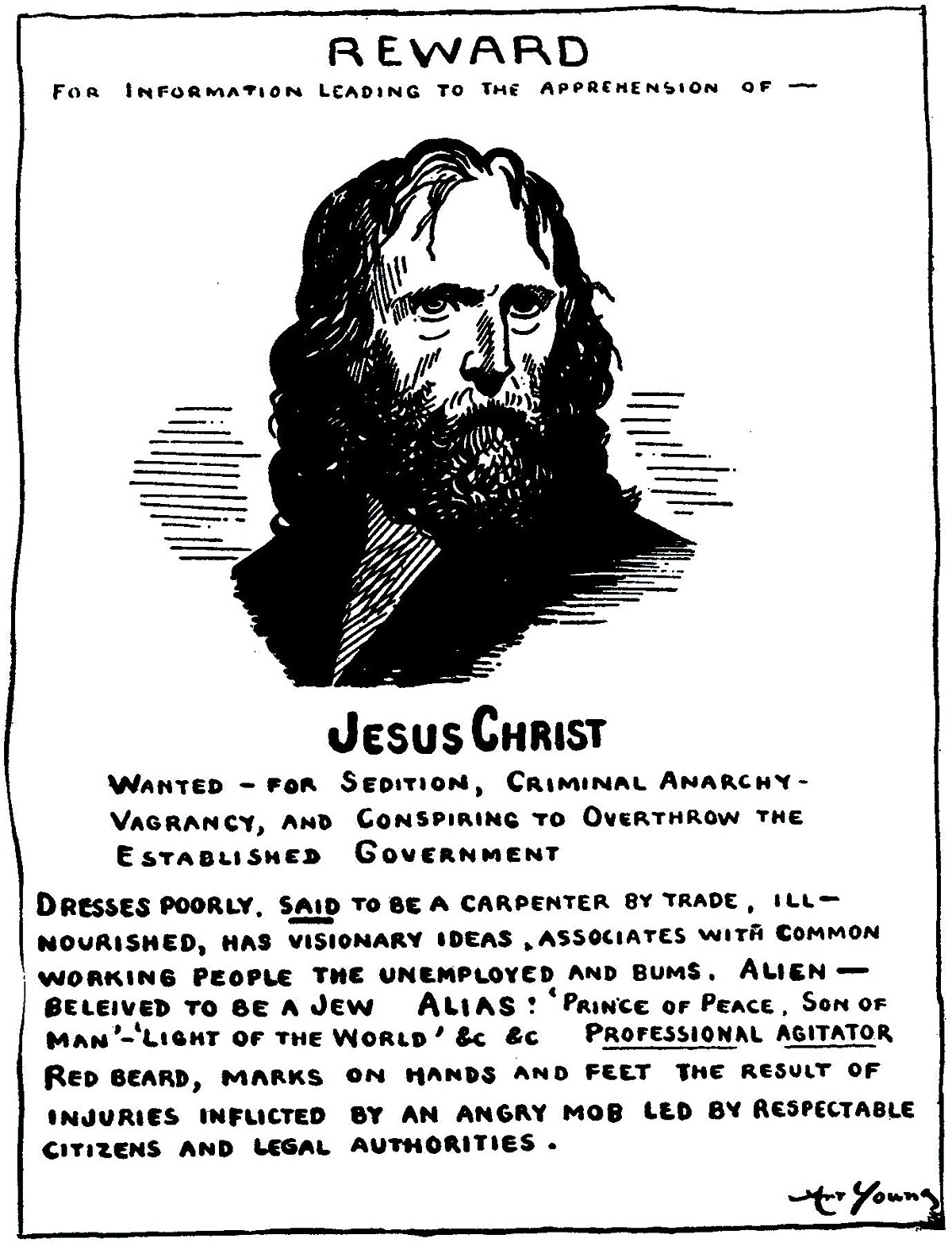
Homily for the Fourth Sunday of Advent Based on Lk. 1:24-39 (?)

(For this week’s homily, I’ve invited my good friend and resigned priest, John Capillo to share his thoughts. In his formal priestly days John worked in the archdiocese of Brooklyn in New York, and in El Salvador. A prophet and  father of  four grown children, John has spent his informal priestly days in public service — most notably working for the Kentucky Environmental Foundation. He is a wonderful teacher, and has often visited my classes and those of my bride, Peggy. I know you will love his words below.)

Mary set out
and traveled to the hill country in haste
to a town of Judah,
where she entered the house of Zechariah
and greeted Elizabeth.

Recall the previous scene in Luke.  Who is this Mary who sets off?  What is her state of mind?

She has been greeted by the angel Gabriel

who tells her that she is favored,

and that the LORD is with her.

She is troubled.

Let’s let her talk.


“What does it mean that the LORD is with  me?

I do not understand the greeting,

What do you mean I am favored?”

And the angel’s lines:

“Don’t be afraid,

you are not alone,

you are loved.

And I want to tell you something,

Sit down.

Breathe deeply,

Stay calm

Remember.   You are loved.”


And then the bomb shell,

blowing up all plans and status and expectations:

“You are to conceive and give birth to a son who will be great,

the Son of the Most High

A king like David,

who will reign forever.”


“Whoa.  Back up a bit. Let me think this through.

You are saying that I am favored and I am going to become pregnant?

But I am only betrothed to Joseph and if I am judged to be pregnant out of wedlock I can be stoned.

Am I hearing you correctly?

And I am to have a son who will be a king like David, complete with sword and shield, going off to war?

And he will reign over the House of Judah which is now reigned over by the Romans, and contested by the Zealots?

And who did you say you were, a messenger from God?

Maybe I am nuts, seeing visions, hearing voices.”


And in an understatement that lives with lack of understanding, she says,

“How can this be?

You gotta be kidding?

Do you know who you are talking to?

I am a young girl who does not even have a husband, and in this world that is no small potatoes.”


But the story goes on.

The angel says,

“Oh, I did not tell you how this is going to work, how you are going to explain this to

to your mother who raised you to be a good girl

to your father, who has this betrothal deal with Joseph,

to Joseph, who is expecting a wife who is a virgin,

to the priests who will be ready to stone you,

to the governor, who will see your son as a pretender to the throne,

and to the Empire, that now rules and with an iron fist.

Just tell them that the Holy Spirit has come upon you, and the power of the MOST high will over shadowed you, and your son will be the Son of GOD.’


And Mary’s response?

‘Wow! You are not kidding around.  This is the whole enchilada.  And you think that I can pull this off.

And the only explanation that I get is that the Holy Spirit will come upon me and the power of the most high will overshadow me.

And you are waiting for an answer?

OK,

I accept.

I hope my mother understands that I made this decision because I had a vision and heard voices

I will hope my father is not ripping mad.

I hope that Joseph will still have me,

God knows what I will do about the governor and the Empire

and I will deal with this kingship thing and swords and overthrowing when the time comes.

Are you sure that you understand that you are dealing with a little poor kid from the wrong side of the tracks of a runt of a city in no-where’s-ville. I am not trying to give you any lip about this, but just to let you know.

But if you are for real, I am game.  I suppose you will get back to me about the details.

Oh and you say Elizabeth is pregnant, old barren Elizabeth. And that because nothing is impossible with God,

I gotta get up there and talk to her about all this.”


And so we start today’s episode.


Mary goes right away to Elizabeth’s.  It is a woman thing.

And Elizabeth is all excited,

filled with the Holy Spirit.

And her baby is jumping up and down,

gleefully,

in her womb.

And Elizabeth says,

all excited,

full of anima,

speaking like one possessed,

“Blessed are you who believed,

you who took the promptings as real,

who trusted her intuition,

who trusted her muse, her logos, her inner voice.

What a joy it is to know that you are willing to take what you heard out for a spin;

willing to step off the edge

to go with the flow

to glide in the air

to dance in the back room,

to put aside the fearfulness that her mother has,

to defy the anger that her father has ,

to test the love that Joseph has,

to stand up to the priests, the governor, the Empire

all because you saw a vision and heard voices.

You are one special person, and one great friend.

Give me a hug, squirt.”


That’s the miracle.  That’s the call. We are up to it, aren’t we?

John the Baptist’s Desert Revival and Pope John XXIII’s Aggiornamento

Third Sunday of Advent Readings: Zep. 3: 4-18a; Is. 12: 2-6; Phil. 4: 4-7; Lk. 3: 10-18.  http://www.usccb.org/bible/readings/121612.cfm

The lead article in the November 11th edition of our diocesan newspaper, Crossroads, published a sermon by the bishop of our Lexington diocese, Ronald W. Gainer. It had been given on Saturday November 3rd at the Cathedral of Christ the King in Lexington – the Saturday before the General Election. Bishop Gainer called attention to a new and “dangerous, corrosive change . . . at work in the soul of our nation.”  “In recent decades,” the bishop said, “forces are working overtime . . . to eliminate religion and God from the nation’s soul.” According to Bishop Gainer, those forces ignore the consistency of the Church’s moral teaching over the centuries – about “the sacredness of every human life.” Those teachings recognize certain acts as “intrinsically evil.” These include “abortion, euthanasia, assisted suicide and embryonic stem cell research. Being against the intrinsically evil means standing up for the sanctity of marriage between one man and one woman, the God-given right to freedom of religion, and against the evil of racism. There is nothing wrong with being a single-issue voter, the bishop emphasized; and abortion is the pivotal single issue for Catholics. The bishop concluded that political “candidates who refuse to oppose the evils he listed or who actively support them disqualify themselves from receiving Catholics’ support in the voting booth.”

Curiously, Bishop Gainer’s list of “intrinsic evils” did not include priests raping children. As a result, his remarks came off as out-of-touch, triumphalistic, self-serving, dishonest, and tired. We had heard it all before: “They’re wrong; we have never erred. ‘They’ are persecuting us. Only one issue is important, abortion. Vote Republican, even if that means economic disaster for the poor at home or abroad” (e.g., in the wars and drone strikes which also went unmentioned in the bishop’s remarks).

______

A little over a month ago, I attended the concluding Mass at the “Call to Action Conference” (CTA) in the Grand Ballroom of the Galt House in Louisville, Kentucky. CTA is the annual meeting of progressive Catholics who are trying to follow the spirit of the Second Vatican Council. (Vatican II set an agenda of church renewal and reform when the world’s Catholic bishops met in Rome from 1962-1965.) About 1000 people were present at CTA’s concluding liturgy. It reminded me of what spirited worship is like. Our good friend, John Wright Rios was the music leader with a group he assembled of about 15 instrumentalists and singers. There were drums, guitars, piano, trumpet and dancing. Hymns were in English and in Spanish with words projected on four large flat screens. The liturgy featured women in prominent roles, including three of the five concelebrants. Sister Simone Campbell of “Nuns on the bus” fame and who had spoken at last summer’s Democratic Convention gave the homily. What she said was insightful, inspiring, funny, and challenging. It made me see what the church is missing by insisting on an all-male, highly in-bred clergy. Sister Campbell spoke of the deep-seated divisions in our country and the need for universal love even of our enemies. She addressed the spiritual poverty and hunger experienced by all of us including leaders in the church, in politics, in our schools and universities. Poverty and hunger of body and spirit was the focus of Jesus’ work as described in the gospels. The church needs more Jesus, she said, and less triumphalism and pride.

______

Today’s readings are about religious revival and about the renewed recognition of God’s presence in our midst. In the first and third reading, the message is delivered by severe critics of temple worship – Zephaniah and John the Baptist. Zephaniah was a religious reformer from the seventh century BCE (just before the Babylonian Exile). He was known as the champion of “the poor of the land” (2:3; 3:12), and a fierce critic of Assyrian imperialism and the adoption of Assyrian religious ideology by Israel’s ruling elite. He accused the priests of his day of abandoning Yahweh in favor of Baal and Astarte. The outspoken Zephaniah threatened to drive out the priests and cleanse the temple by force.

Then in today’s gospel, John the Baptist picks up Zephaniah’s theme more than five hundred years later. Luke pictures John at the Jordan River – far from Jerusalem’s temple and its priesthood. John is leading a religious revival in the desert – the place of Israel’s birth long before there was any temple. Like Zephaniah, John is a layman. And his words to the religious leadership are harsh. In Luke’s verses immediately preceding today’s excerpt, he calls the crowd a “brood of vipers.” Matthew’s version is more specific. He says that curse was hurled at the Sadducees and Pharisees, the religious leadership of the day. According to John, they are snakes in the grass.

John contrasts the failed leadership of these men with God’s leadership present in the person of Jesus of Nazareth. Jesus, of course, turns out not to be a priest or rabbi either, but a workingman from Nazareth. Yet according to John, Jesus is more powerful and more worthy than John himself. As a lay leader, Jesus will bring not only the Holy Spirit, but a cleansing fire. He will separate the wheat from the chaff – what is essential from what is not – what is nourishing from what is not – the kernel of truth from its encasements. Those shells are now outdated, John says. We are about to enter a new era. Chaff, John declares, is good for nothing but burning in the hottest fire imaginable. He calls the crowds to the kernel of truth: share their surplus with the poor.

This year we celebrate the fiftieth anniversary of the Second Vatican Council.  It was a movement of reform and revival in the spirit of Zephaniah and John the Baptist. Pope John XXIII was the 1960s embodiment of their prophetic tradition. He summoned that meeting of the world’s bishops and used the word aggiornamento to describe the Council’s project. Aggiornamento meant updating.

Pope John’s vision was one of church revival and reform that connected Jesus with the actual lives and problems of people and the world – especially the poor. Those lives are characterized by either unemployment or overwork, by low wages, poverty, over-priced healthcare, misogyny, racism, inaccessible education, scant prospect of retirement, and by the train of evils introduced by climate change, inflated “defense” budgets and wars largely initiated by the United States.

Today’s readings suggest that serving the world (the church’s mission as identified by Vatican II) involves addressing those problems – the kernel instead of the chaff. Doing so leaves no place for triumphalism, infallibility or wallowing in self-pity about how the church is being mistreated and misunderstood by a hostile world. It does however mean trying to address the very good reasons the world might have for being hostile.

Neither is service of the world advanced by focusing on matters (as important as they might be) far removed from daily life. Identifying Christianity with opposition to stem cell research, gay marriage, contraception, and revoking Roe v. Wade is old and tired. It’s a form of denial that distracts from Jesus’ essential concern for the poor and their problems. It is to mistake chaff for wheat. So is silence about the church’s checkered past, its fallibility, errors, crimes against humanity, and scandals as prominent as priests’ rape of children.

“Call to Action”  attempts to recapture the spirit of Vatican II, separate wheat from chaff, and address the “signs of the times.” The “prayers of the faithful” following Sr. Campbell’s homily addressed war, poverty, climate change and the other problems I’ve just mentioned. The response of the people was not the usual “Lord, hear our prayer,” but “Aggiornamento!”

Let that be our response to Zephaniah, John the Baptist, and Jesus today. Aggiornamento!

What might aggiornamento mean for us today?

(Discussion follows)

Give Up Church for Lent!

Readings for 2nd Sunday in Advent: Bar. 5: 1-9; Ps. 126: 1-6; Phil. 1: 4-6, 8-12; Lk. 3: 1-6 http://www.usccb.org/bible/readings/120912.cfm

In my town of Berea, Kentucky, a kind of religious revival is taking place. A spirited group of people across denominational lines meets once a month to experiment with and “Ecumenical Table Fellowship.” It’s a community of Christians without benefit of clerical leadership meeting to reflect on our common biblical tradition in the light of what Vatican II called “the signs of the times.” The group breaks bread liturgically in the spirit of Jesus’ Last Supper and of the early church. Roman Catholics are prominent in the group. They are discouraged by today’s conservative pre-Vatican II “restorationism” that emphasizes the power of the church hierarchy and ordained priesthood at the expense of Vatican II’s emphasis on the priesthood of the faithful.

Some in the group agree with spiritual theologian, Matthew Fox that their church leadership is in schism against the spirit of the Second Vatican Council, which remains the official teaching of the Catholic Church. Pope John Paul II, Benedict XVI, and the conservative bishops they have appointed are the culprits in schism. These clerics are defensive of hierarchy and the power of an exclusively male priesthood. They devalue lay leadership and the prominent biblical stories of Exodus and Return from Exile that are highlighted in today’s liturgy of the word where they are contrasted with “the priestly story” that currently plagues the Catholic Church.

The great Jesus scholar, Marcus Borg, reminds us that amid the literally hundreds of stories in the Bible, there are three “macro-stories” that give coherence to the Jewish Testament and its Christian counterpart. The first and most important is the story of Exodus. Its’ a tale of liberation from slavery and journey to a “Promised Land.” For the ancient Hebrews, the Exodus was grounded in an actual historical event, the release of slaves from their oppression under the pharaohs of Egypt perhaps 1200 years before the birth of Jesus.  It was the Exodus that provided the ancient Hebrews with their first experience of their God, Yahweh.  For them, Yahweh’s fundamental identity was the One Who Liberates from Oppression. In our day, the macro-story of Exodus has become central for third world people living under the harsh realities of U.S. imperialism.

The second Old Testament macro-story is Exile and Return. It too was grounded in history. In the year 587 BCE, the Hebrews were conquered by Babylon (modern Iraq). The Babylonians transported the Hebrew elite to Iraq till the Persian King Cyrus released them after conquering Babylon in 539.The story of exile and return shaped the ancient Israelites almost as much as the Exodus story. Like oppression and slavery, that narrative represents a human archetype that all of us can relate to it in one way or another.  The archetype evokes the feelings of grief, sadness and displacement reflected in one of the psalms of exile, “By the rivers of Babylon, there we sat down and wept when we remembered Zion.” The Advent Hymn “O Come Emanuel” expresses the same feelings in its own reference to the Babylonian Exile: “O Come O Come, Emanuel, and ransom captive Israel, that mourns in lonely exile here.”  For one reason or another, all of us feel somehow exiled, sad, and displaced.

The third macro-story of the Jewish Testament comes from priestly sources. It is not grounded in a particular historical event, but in temple ritual and worship. It is the story of sin, guilt and of forgiveness mediated by the priestly class, their sacrifices, rules, rituals and prayers. Judging from the attitudes of Israel’s prophets and especially of Jesus, the priestly narrative is far less important than either Exodus or Exile. In fact, along with many other prophets, Jesus expressed harsh criticism and even hostility towards priestly pretensions and business-as-usual within the temple precincts. And yet, the priestly narrative has carried the day in terms of dominant Judeo-Christian spirituality. “Jewish guilt” and “Catholic guilt” are legendary. Jesus is primarily understood as the one who “died for our sins.” God’s wrath and the threat of hell are staples of Sunday sermons and of Christian neuroses.

The focus of today’s liturgy of the word is Exile and Return in sharp contrast to the Priestly Story of sin, guilt, sacrifice and forgiveness. The first reading from the Book of Baruch was probably written about 150 BCE when Israel was under the sway of the Seleucid Greeks. However the book is presented as though it were written 400 years earlier during the Babylonian Exile – as if it were addressed to the exiles then. Baruch’s real audience however was the Jews at war with the Greeks. His real intention was to encourage his contemporaries in their resistance to Greece – promising them that the rough road they were then traveling would soon be made smooth by Yahweh –   the one who frees the oppressed and brings exiles back from captivity.

In today’s gospel, Luke presents John the Baptist in terms of both Exile and Return and Exodus. Luke sees John as fulfilling the words of the prophet Isaiah nearly 600 years earlier. By anchoring John’s appearance in Isaiah, Luke is implying that John represents a continuation of Isaiah’s work of announcing the end of exile. This was a bold claim for Luke, since many Jews of his day believed that prophetic voices – nearly always lay people – had forever fallen silent. But here is John presented as fulfilling Isaiah’s words. He is making the rough way smooth. He’s leveling mountains and filling in valleys.  At the same time, John’s proclamation as presented by Luke has overtones of the priestly story. Luke shows John proclaiming a baptism of repentance for forgiveness of sin.

But here it is important to note the Exodus dimensions of John’s work. He is presented as preaching and baptizing specifically outside the temple and sphere of the priests. In fact, John appears in the wilderness – in the desert. For Jews, this would not only have evoked overtones of the Exodus macro-story, it would also have signaled a subversive significance in John’s work. After all, the “desert” or “wilderness” was the place where contemporary resistance movements were spawned. As scripture scholar, Ched Myers points out, Luke could not have picked a narrative “coordinate” further removed from the temple. For Luke the regeneration of prophecy was happening not in Baruch’s Zion but at the margins of Jewish society – in the desert where it all began with the Exodus. In other words, Luke presents John’s ministry as a complete break with the priestly establishment which controlled the mechanisms of social redemption from their power base in Jerusalem.

All of this raises questions for thoughtful Christians in the context of our own exilic sadness as we face the contemporary irrelevance of what happens in our own “temples.”  Is it time to move out of that realm now dominated by schismatic popes, bishops and priests and to relocate where our worship tradition began – in homes with Eucharists led by lay people?

Perhaps we’re not yet ready to substitute an Ecumenical Table experience for weekly Mass. But we could supplement Sunday Mass with such fellowship once a month. Alternatively, what if an Ecumenical Table were offered each Sunday at the very time of our parish Mass (9:00 am at St. Clare’s in Berea)?  That would give parishioners a choice. At least on occasion they could attend the Ecumenical Table and compare it with “business as usual.”

Another idea: Lent is fast approaching (Ash Wednesday is Feb. 13th). Might Lent not be a good time to “give up” church, and for six weeks and experiment with this alternative form of worship?

In today’s excerpt from his letter to Philemon, Paul prays that the church meeting at Philemon’s house might be given discernment to distinguish what is really important. Today’s liturgy of the word suggests that Exodus from business as usual and return from the Exile of pre-Vatican II Restorationism might be more important than honoring the priestly order that has dominated Catholic consciousness for too long.

Let’s consider trying to recapture Philemon’s home church experience and see what happens – if only for Lent’s six weeks. At the very least, the absence of people at Sunday Mass might get the attention of our bishop and pastor. It might help them realize that something’s amiss!

(Discussion follows)

The Environmental Cliff: Who’s Responsible? (Share this blog w/ your kids)

Readings for 1st Sunday of Advent: Jer. 33:14-16; Ps. 25:4-5, 8-9, 10, 14; 1 Thes. 3: 12-4:2; Lk. 21: 25-28, 34-35 (http://www.usccb.org/bible/readings/120212.cfm)

You probably know that we’re standing on the brink of a “fiscal cliff.” At least that’s what our politicians are saying. They insist that we’re heading for apocalyptic disaster. For them “fiscal cliff” means that if Democrats and Republicans can’t come to an agreement about taxes and deficit reductions before the end of the year, automatic tax increases and cuts in social spending will occur. And according to the Congressional Budget Office (CBO), that combination of tax increases and spending reductions is likely to plunge us into another deep recession. The politicians want us to think the sky is about to fall. Apocalypse is about to happen unless we stop spending on seniors and children, on our nation’s infrastructure, green technology and public transportation.

______

The annual United Nations Conference on Climate Change began last Monday [Nov. 26] in Doha, Qatar. In preparation for the meeting, the World Bank published an 84 page document on climate change. It’s called “Turn Down the Heat: Why a 4 Degrees C Warmer World Must Be Avoided.” According to the report, a four degree rise in planet’s temperature will produce disastrous heat waves and droughts, along with severe floods.  Hundreds of millions of people will be forced to abandon their homes in coastal areas and on islands that will be submerged as the sea rises. The Amazon rainforest will disappear, and monstrous storms will destroy whole cities and communities.  Health and emergency systems will collapse. Mass chaos will ensue, and the worst medical disaster since the Black Plague will strike the human race. (The Black Plague, you’ll recall killed 30-40% of Europe’s population.)  According to “Turn Down the Heat,” radical measures are required to deal with this impending crisis. These include immediate and unprecedented investment in green technologies and mass transportation systems.  And yet our politicians do nothing; they actually want to cut back on such expenditures! In the recent presidential debates, the phrase “climate change” was not even mentioned, much less debated. Quite the opposite: the two candidates strove to one-up each other in swearing allegiance to coal, oil, uranium and other dirty fuels that will only make the global warming worse.

______

This is the third week in a row that the lectionary has given us readings from apocalyptic literature. As I mentioned a couple of weeks ago, apocalypse was not about the end of the world. Instead, it was resistance literature, written in code during times of extreme persecution by powerful imperial forces like Greece and Rome. The code was understandable to “insiders” familiar with Jewish scripture. It was impenetrable to “outsiders” like the persecutors and their police against whom apocalypse was written.

Apocalypse differs from ordinary prophecy in that it addresses periods of deep crisis, when the whole world appears to be falling apart. Neither prophets nor apocalyptics were fortune tellers. Instead, they were their days’ social critics. They warned of the disastrous consequences that inevitably follow from national policies that deviate from God’s will – i.e. from policies that harm God’s favorites: widows, orphans, immigrants, the poor – and (we might add) the planet itself.

Perhaps the best example of apocalypse in our own history is what happened to the indigenous populations of North and South Americans when the Europeans arrived. The coming of white people signaled the end of the “Indian” world. Everything changed for the Mayans, Aztecs, Cherokee, Iroquois, and so many other Original Peoples in our hemisphere. For them the times were apocalyptic. The indigenous world would never be the same. And our ancestors were the agents of its destruction.

Something similar had happened for the Jews when Luke was writing his gospel around the year 85 of the Common Era. Jerusalem had been completely destroyed by the Romans in the Jewish War (64-70 CE). The Romans had brutally razed the city and the temple that had been rebuilt after the Babylonian Exile. For Jews that was something like the Death of God, for the Holy City and its Temple were considered God’s dwelling place. The event was apocalyptic.

In today’s gospel, Luke has Jesus predicting that destruction using specifically apocalyptic language. Luke’s Jesus says “There will be signs in the sun, the moon, and the stars, and on the earth distress among nations confused by the roaring of the sea and the waves. People will faint from fear and foreboding of what is coming upon the world, for the powers of the heavens will be shaken.

What can such apocalyptic message mean in our own day faced as we are with false “fiscal cliffs” distracting us from the fact that we’re standing on the brink of an unfathomable environmental cliff?

Yes, the fiscal cliff is a mere distraction – a completely human and remediable fabrication. And dealing with it by reducing the government’s ability to spend on green technology and public transportation succeeds only in bringing us closer by the minute to the exceedingly real environmental precipice.

I mean, no law of nature is at work in the budget crisis. The Bush tax cuts, which the Republicans are desperately trying to preserve, were advertised as temporary from the outset. In fact, they are the chief cause of the federal deficit, and are scheduled to disappear automatically at the end of 2012 – with or without agreement by the two parties. Social Security is completely off budget. It’s not paid for by income taxes, but by payroll taxes. So tinkering with Social Security will have no impact at all on the federal deficit. Meanwhile the CBO assures us that reductions in Medicare and/or Medicaid expenses will have minimal effect on the federal deficit.

And yet we’re all supposed to be waiting for “apocalypse” to happen, as if the federal deficit wouldn’t be ameliorated by simply letting the Bush tax cuts for the wealthy expire as originally intended, and by closing the tax loopholes that allow the rich to shelter their capital gains offshore in places like the Cayman Islands, and that permit huge multi-national corporations to pay no U.S. taxes at all.  As for Social Security; according to the CBO, it will remain solvent till at least 2035 if nothing at all is done about its reformation. And any problems that develop thereafter can be easily solved by having the rich pay like the rest of us on their entire incomes  even after their first $100,000. (Presently, they pay Social Security taxes only to that point, and then are let off the hook.)

Meanwhile, the real threat to our planet is the environmental cliff that our “leaders” refuse to address. And who’s responsible for that crisis? Prominent religious leaders would have us believe it’s God. He (sic) is punishing us for Roe v. Wade, for legalizing same sex marriages, or for allowing women access to contraception. Let’s face it: that’s nonsense. It turns Jesus’ embodiment of the God of love on its head. It turns God into a pathological killer – a cruel punishing father like too many of our own dads.

Others would say the culprit preventing us from addressing climate change is government. Now that’s closer to the truth. Our elected politicians are truly in the pockets of Big Oil, the Banksters, and other fiscal behemoths whose eyes are fixed firmly on short-term gains, even if it means their own children and grandchildren will experience environmental apocalypse.

But we can’t simply blame government. We elected these people. We have to organize to make sure they take seriously the mandate they’ve received. That mandate is to make the economic system work for all of us not just for the 1%. To make it work, we must first recognize that an economic system that destroys the planet is a complete failure. The Doha Conference is fairly shouting that message.  Our economic model is not working! In the long run, we have to organize to make our elected officials obey us, the People, rather than the business giants.

In the short run, we ourselves have to change our consumption habits. The Christmas season represents the perfect time to do that. What if this Christmas – three weeks from now – we supported each other in refusing to exchange all that plastic crap and those colorful pieces of cloth sewed together by slave labor and shipped at great environmental expense from the other side of the planet? What if we gave all that “gift” money to Greenpeace instead – or to the Heifer Project, or to Costa Rica’s Casa del Sol?

Our families and friends – even our children – would understand. I promise they would if we discussed it with them. They really don’t want or need that plastic junk either.  This is a wonderfully teachable moment. And it allows us to actually be the change we would all like to see in the world – at this apocalyptic moment when we stand on the brink of an Environmental Cliff. As would-be followers of Jesus, do we really have a choice?

(Discussion follows)

Jesus before Pilate: His heroic refusal to name names

Readings for “Christ the King:” Dn. 7:13-14; Ps. 93:1-5; Rv. 1:5-8; Jn. 18:33b-37 http://www.usccb.org/bible/readings/112512.cfm

This is the feast of Christ the King. In today’s gospel reading, Jesus declares his kingship during his interrogation before the Roman governor, Pontius Pilate. Standard interpretations of the scene (such as in Mel Gibson’s “The Passion of the Christ”) present Pilate as a spiritually sensitive seeker.  It seems that Pilate had some appreciation of Jesus’ innocence and was trying desperately to free him from the rabid hatred of his Jewish adversaries.

So Pilate’s questioning of Jesus takes on a theological tone. His questions though arrogant are intellectual almost gentle and respectful. They seem sparked by genuine curiosity. Pilate asks, “Are you the king of the Jews?” In the end Pilate ponders the imponderable, “What is truth?”

The standard account goes on to say that only his personal weakness causes the Roman procurator to have Jesus scourged – to appease the fanatical Jewish leaders demanding Jesus’ blood. Yes, he was weak, but in the end the Jews were the ones principally responsible for Jesus’ death.

That’s the familiar picture: Pilate the intellectual, spiritually sensitive, looking for a way to set Jesus free, but too weak to assert his authority in the face of powerful and hateful Jewish leaders.

Problem is, the picture is profoundly at odds with the historical record. It also ignores the real reason representatives of empire engage in interrogation. As for the procurator’s personal character, Philo, Flavius Josephus, and Tacitus, tell us that Pontius Pilate was an absolutely brutal man. He had no fear of Jewish leaders. He despised them. In fact he took pains to provoke them. For instance, he knew the Jewish prohibition against idolatry and the making images, and yet he routinely paraded through the streets of Jerusalem statues of the Roman emperor who claimed to be a God. On several occasions, Pilate had his soldiers enter the Jerusalem Temple itself provocatively profaning it by their very presence.

No, Pilate was brutal. And his questioning of Jesus in today’s gospel had nothing to do with theological interest. He cared not at all for Jesus or establishing innocence. Quite the opposite. Pilate was just doing his job. If the questioning actually took place at all (and it’s doubtful that it did), it was at the hands of an imperial administrator doing what administrators do in all such circumstances from first century Jerusalem to twenty-first century Kabul. They arrest, interrogate, torture, and execute.

After all, Pilate had in his presence a man identified by local informants as a terrorist. In fact, this one (like innumerable others Pilate had questioned) claimed to be King of the Jews – obviously an insane “rival” to Caesar. What a laugh – an uneducated laborer from Nazareth!  So Pilate would have been all about arresting this “militant,” interrogating him for information about accomplices, torturing him when the initial interrogation failed, and then butchering the fool.

Moreover Jesus’ silence before Pilate had nothing to do with humility. It was instead about Jesus’ refusal to name his accomplices. So the torture began. To humiliate him, the soldiers stripped him naked – again, standard operating procedure then and now. For the soldiers this was fun.  No doubt they made crude jokes about Jews and circumcision. (Do you hear echoes of Abu Ghraib here?)

Still Jesus said nothing. So they beat him nearly to death. Thirty-nine lashes (almost no one survived that). And yet Jesus refused to name names. So they gave him the “crown of thorns” treatment. It was like water-boarding today. Still nothing – no names. It was entirely heroic on Jesus’ part.

Then they applied the final torture – the “third degree” following the first two: the scourging and “crown of thorns.” This was the ultimate torment reserved for insurrectionists – crucifixion. They’d send a detachment of soldiers to copy down any final disclosures. But Jesus said nothing to help them. His silence and acceptance of suffering and death literally saved his friends. They had been disloyal to him, explicitly denied him; they had been cowardly and weak. They had sinned against Jesus. Yet he gave his life for them. His friends would never forget that. Jesus’ heroic death saved them from their sins. It saved them from Pilate.

However, the truth is that Pilate was probably not aware of any of this. He was used to applying the third degree. The record shows he had crucified literally thousands in his time. A lot of them had claimed to be messiahs sent from God.  For him executing such delusionaries was no big deal. In fact, scripture scholar John Dominic Crossan suggests that Pilate took no notice at all of Jesus. The whole world was not watching, Crossan says. Jesus wasn’t even a blip on Pilate’s screen. The “trial before Pilate” was probably pro forma at best – possibly even a fabrication of the early church to shift blame for Jesus’ death from the Romans to the Jews. After all, by the time John wrote his gospel in the final decade of the first century, Christians were anxious to court favor with Rome. In the meantime, they had been excommunicated from Judaism, and had nothing to lose by alienating Jews.

Strange then that we should be celebrating Jesus as a king today who became a victim of torture and extra-judicial capital punishment. But that’s really the point. I mean our faith tells us that Jesus was the kind of king who reigns in the Kingdom of God where everything is turned upside-down.  Jesus’ kingdom, God’s Kingdom, is truly not of this world. For instance, Jesus says, its citizens don’t respond to violence the way empire or the kingdoms of this world do. Its ethic is not an eye for an eye and a tooth for a tooth. Or as Jesus put it, “If my kingdom were of this world, my followers would be fighting to keep me from being handed over . . . .“  No, in the Kingdom of God non-violence reigns. And in his behavior before Pilate, Jesus himself shows the way.

As for the personal character of Jesus’ kingship . . .  God’s head of state is not what at all what the world expected. In the eyes of Roman imperialists, Jesus represented the dregs of humanity. He was a Jew – a people the Romans despised. He was poor and probably illiterate. He was unemployed and traveled about with slackers who had given up gainful employment. At least one of his companions (Simon the Zealot) was a self-declared insurrectionist. Jesus was known as a glutton, drunkard and companion of sex workers. And he was irreligious. The holy men of his own people had excommunicated him and accused him of being possessed by the devil.  Some king indeed!

And yet, according to today’s first reading from the Book of Daniel, this king as “Son of Man” will stand in judgment over all the world’s empires from the Egyptians to the Romans and beyond. According to today’s reading from Hebrews, Jesus’ blood is his “Red Badge of Courage.” It will be his ID card when he returns to judge and destroy the empires that routinely kill people like him. Paradoxically however, what destroys the empires in question is Jesus’ non-violence, his refusal to name names, his followers’ refusal to employ violence even to save their king, his own acceptance of death rather than retaliate.

What a mystery that is! And how difficult it is for us to accept and live by Jesus’ radical non-violence. We so believe in violence, force, guns, and bombs. However until we accept non-violence, we will, like everyone else, continue making this world a version of hell rather than of God’s kingdom.

How can we reverse our belief in violence and embrace Jesus’ alternative? What does non-violence look like in our families, in the workplace, in politics and economics?

(Discussion follows.)

Urinating on Corpses and Burning Holy Books

Readings for 33rd Sunday in Ordinary Time : Dn. 12: 1-3; Ps. 16:5, 8-11; Heb. 10:11-14; Mk. 13:24-3 http://usccb.org/bible/readings/111812.cfm

In January of this year six U.S. soldiers had themselves videotaped while they urinated on Taliban corpses in Afghanistan. In a separate incident three other soldiers started widespread riots after they publicly burned copies of the Holy Koran. Then in September the posting of an on-line film depicting the Prophet Mohammed as a deviant terrorist was blamed for other anti-US protests throughout the Muslim world costing the lives of a U.S. ambassador and three staff workers.

_____

In the year 168 C.E., the Greek emperor, Antiochus IV Epiphanes  invaded Palestine and devastated Jerusalem. He hated Judaism and defiled the Jerusalem Temple by offering a pig on its altar. He also erected an altar to Jupiter in the Temple.  Patriotic Jews called it “the abomination of desolation.” While occupying Palestine, Antiochus also destroyed all the copies of Scripture he could find, and made it a capital offense to possess such manuscripts. It was against Antiochus IV and the Greek occupation of Palestine that the Bible’s Book of Daniel (excerpted in today’s first reading) was written.

­_____

On September 8th of the year 70 of the Common Era, after a six-month siege, the Roman Emperor Titus, with four Roman legions finally captured the city of Jerusalem from its Zealot defenders. Moving from house to house, the Romans destroyed everything within reach, including the City’s Temple. Palestine would not again belong to the Jews until 1947. It was the destruction of Jerusalem by the Romans that Jesus predicts in today’s Gospel excerpt from Mark.

_____

Today’s liturgy of the word is shaped by apocalyptical writings – from the Book of Daniel in the first instance, and from Mark, chapter 13 in the second. The writings speak of wars and rumors of wars, of unprecedented suffering for all of humankind, of false messiahs and false prophets, and of the “Son of Man” coming on clouds of glory to render a final judgment.

Most of us think of such writing as describing the end of the world. And why not? That thinking is fostered and exploited by a whole industry of evangelical preachers like John Hagee who appear regularly on our television screens. The approach is foundational to the publishing success of the Left Behind series of books by Tim LaHaye and Jerry B. Jenkins.

A unifying thread throughout all such understandings of apocalypse is their idea of God, who turns out to be a pathological killer. That is, the mayhem and disaster depicted in apocalypse becomes something God does to the world and the human race to bring history to a close. According to the preachers and books I’ve just mentioned, apocalypse describes a final battle between Good and Evil. The battle will be fought in the Middle East on the Plain of Armageddon. Two billion people will die as a result – including 2/3 of the Jewish people.  The remaining 1/3 will be converted to Christianity because God’s final violent revelation will be so awe-inspiring and convincing. A “Rapture” will then occur, taking all faithful followers of Christ into heaven, while leaving behind the rest of humanity for a period of “tribulation.” In all of this, God is the principal actor. As an angry father, he is finally taking his revenge for the disobedience and lack of faith of his ungrateful children – whom he loves!

Problem is: all of that is dead wrong and blasphemous in  terms of the God of love revealed by Jesus. The Rapture story, for instance, appeared for the first time only in the 19th century. In fact, apocalypse is not about the end of the world. It is about the end of empire – the Greek Empire of Antiochus IV Epiphanes in the case of Daniel, and the Roman Empire in the case of Mark. The mayhem and unprecedented suffering referenced in both readings is not something God does to the world, but what empire routinely does to people, their bodies, souls and spirits, as well as to the natural environment.

Because it has ever been so with empire, today’s excerpt from Mark calls for a complete end to the politics of violence and domination. That meant obeying the command of Jesus to reject empire, but also to refuse alignment with Zealot nationalists. As the Romans under Titus approached Jerusalem between 66 and 70, Zealot recruiters traveled throughout Palestine calling on Jewish patriots to defend their homeland by joining guerrilla forces. Jesus’ counsel instead was for his followers to flee to the mountains (Mark 13:14-16). They were to do so not out of cowardice, but from apocalyptic conviction that God’s order of justice could not be established by the sword. Obeying Jesus’ direction meant that Christians were not only threatened by Romans but by Jews who accused Jesus’ followers of treason.

How should those readings affect us today whose Commanders-in-Chief repeat the crimes of the Seleucid Antiochus IV and the Roman Titus – both of whom thought of themselves as doing God’s work in destroying what they despised as a superstitious, primitive, tribal, and terrorist religion? (Yes, that’s what they thought of Judaism!) How should the readings affect us whose soldiers destroy holy sites, burn holy books and desecrate corpses just as their Roman counterparts did?

Today’s readings recommend that we adopt an apocalyptic vision. That means refusing to defend the present order and allowing it to collapse. It means total rejection of U.S. imperial ambitions and practices. It means refusing to treat as heroes those who advance the policies of destruction and desecration inevitably intertwined with imperial ambition. It means letting go of the privileges and way of life that depends on foreign conquest and vilification as “terrorists” of patriots defending their countries from invasion by U.S. forces. It means determining what all of that might signify in terms of our consumption patterns and lifestyles, and supporting one another in the counter-cultural decisions such brainstorming will evoke.

So in a sense, apocalypse is about the end of the world. The entire Jewish universe was anchored in the temple. Its defilement by the Greek Antiochus IV, its complete destruction by the Roman Titus seemed like the end of the world to the Jews. The threat of westernizing the Arab world might seem that way to the occupied Muslim world today.  And the end of the American Way of Life premised on resource wars under cover of a “war on terrorism” might strike us as the end of everything we hold dear.

However, the apocalyptic message of hope is that the passage of empire and nationalism is not really the end. Instead it represents an opportunity for a new beginning. In the words Mark put in Jesus’ mouth this morning, “Do not be alarmed . . . This is but the beginning of the birth-pangs.”

How might we support one another in letting go of imperialism, nationalism and the lifestyles dependent on them?

(Discussion follows)

“Widow’s Mite” or “Don’t Put That Money in the Collection Plate!”

Readings for 32nd Sunday in Ordinary Time: IKgs. 17: 10-16; Ps. 146:7-10; Heb. 9: 24-28; Mk. 12: 38-44 http://www.usccb.org/bible/readings/111112.cfm

In the election season just passed, some politicians were pushing for a “flat tax.” They called attention to the “unfairness” of a tax system which has rich people paying more than everyone else. The asked, why not tax everyone the same?  That would be fair. Today’s gospel reading says something about that idea of fairness.

_____

About a month ago, the great theologian and spiritual teacher, Matthew Fox, passed through our town in Berea, Kentucky. Matt is an ex-Dominican priest who was forced by Pope Benedict XVI to leave the Dominicans and to cease publishing. Fox’s crime, like that of more than a hundred theologians in the past twenty years, was being too energetic in teasing out the implications of the Second Vatican Council for the world we actually live in. According to Matthew Fox, the anti-Vatican II stance of present church leadership places the present pope (and the one who preceded him) in schism. It’s the duty of Catholics, Fox says, to withhold financial support from the church until popes and bishops once again embrace the official teaching of the church, which remains the doctrine of Vatican II. Today’s gospel reading also says something about that.

_____

The gospel reading just referred to is the familiar story of “The Widow’s Mite.” Jesus and his friends are visiting Jerusalem for the Passover Feast during the final week of his life. They are in the Temple. On the previous day, they had all taken part in (and perhaps led) a demonstration there against the temple priesthood and its thievery from the poor. I’m talking about Jesus’ famous “cleansing of the temple.” Soon the temple priesthood and scribal establishment will offer a reward of thirty pieces of silver for information leading to Jesus’ arrest. Judas will soon find himself seriously considering collecting that reward.

In the meantime, Jesus continues instructing his disciples on the corruption of the Temple System. In the episode before us, he takes a position, Mark says, “opposite” the temple treasury. The treasury was the place where Jews paid the tithe required by the law as interpreted by the priesthood Jesus despises. It was a “flat tax” applying the same to rich and poor.

Ever class-conscious, Mark points out that “many rich people” somehow made it clear to all that they were putting in large sums. Then a poor widow came along and furtively put in a penny. Jesus calls attention to the contrast: “large sums” vs. “two small copper coins, which are worth a penny.”

“It’s all relative,” Jesus says.  “Truly I tell you, this poor widow has put in more than all those who are contributing to the treasury. For all of them have contributed out of their abundance; but she out of her poverty has put in everything she had, all she had to live on.” Jesus then leaves the temple in disgust.

There are two ways for homilists to explain this incident in the context of today’s Liturgy of the Word. Remember, it began with a reading from I Kings and its story of the great prophet Elijah and the widow of Zarephath.

Elijah was hungry. He encountered a single mom gathering sticks to make a fire to eat her last meal with her son. They were starving, and she had only a handful of flour and a few drops of oil to make some bread before she and her son would die of hunger. The prophet asks that instead she make him some food. Obediently, she does so. And strange to say, after feeding Elijah, the widow discovers that her flour and oil never run out. She somehow has an endless supply. She and her son are saved.

Then in today’s second reading, Jesus is contrasted with the temple priesthood. The temple priests, the author of Hebrews says, were required to repeatedly offer sacrifices in the Temple year after year. In contrast, Jesus entered the heavenly “Holy of Holies” but once, offering there not the blood of bulls and lambs, but his own blood. Jesus is the true high priest.

The standard way of treating these readings would run like this: (1) The widow of Zarephath gave the Holy Man all she had to live on and was materially rewarded as a result; (2) the widow in the Temple donated to the temple priests “all she had to live on” and was rewarded with Jesus’ praise; (3) follow the examples of the widow feeding Elijah and the widow giving her “mite;” (4) donate generously to your priest (a successor of the Great High Priest in Hebrews) and you will be richly rewarded either here, in heaven, or in both places.

That’s a standard treatment we have all heard. However, it has severe problems. To begin with, it ignores the liturgical response to the Elijah story taken from Psalm 146. That excerpt from Psalms sets a back-drop for the entire Liturgy of the Word and provides a key for interpreting not only today’s readings, but the entire Bible. The psalm reminds us that the poor are God’s Chosen People. God’s concern for the poor is not with their generosity towards God but with God’s securing justice for them. As the psalm says, God gives food to the hungry, sets captives free, gives sight to the blind, protects immigrants, and sustains the children of single moms. God loves those concerned with justice for the poor, the Psalm says. God loves prophets like Elijah and Jesus. On the other hand, God thwarts the ways of the wicked – those who, like the scribes and high priests, exploit God’s favored poor.

All of that represents a “red thread” running through the entire Judeo-Christian tradition. It offers us a key for interpreting the story of Elijah as well. It changes the emphasis of the story from the widow’s generosity, to God’s provision of food for the hungry and God’s concern for the children of single mothers.

With that key in mind, we are alerted to circumstances in today’s gospel story that summon us to interpret it differently from the standard treatment.

We are reminded that the episode takes place in an elaborate context of Jesus’ assault on the temple system. In effect, the context is Jesus’ symbolic destruction of the temple itself. Yes, there was that “cleansing” I referenced. But there was also Jesus’ prediction of the deconstruction of the building itself. “Not one stone will be left here upon another; all will be thrown down” (13:1-2). Then there was that strange incident of Jesus cursing a fruitless fig tree as he was entering the temple precincts (11:12-14; 20-24).  The fig tree was the symbol of Israel. Here again Jesus pronounces a judgment on an entire system that had become corrupt and forgetful of the poor who are so central to God’s concern.

That judgment is extended in Jesus’ teaching immediately before the episode of the widow’s mite.  Again, Jesus takes a position “opposed” to the temple treasury and says, “Beware of the scribes . . . They devour widows’ houses and for the sake of appearance say long prayers.” As scripture scholar, Ched Myers points out, Jesus was probably referring to the practice of turning over to scribes the estates of deceased husbands. The surviving wives were considered incapable of administering a man’s affairs. For his troubles, the scribe-trustee was given a percentage of the estate. Understandably fraud and embezzlement were common. In this way, religion masked thievery from society’s most vulnerable.

With Jesus’ accusation ringing in their ears, a case-in-point, a poor widow, arrives on the scene. She pays her tithe – the flat tax – and leaves penniless. Jesus can take no more. He leaves the temple in disgust.

According to this second interpretation, Jesus is not praising the generosity of the widow. Instead, he is condemning the scribes, the priests, the temple and their system of flat taxation. Jesus’ words about the widow represent the culminating point in his unrelenting campaign against hypocrisy and exploitation of the poor by the religious and political leadership of his day.

We would do well to keep today’s gospel in mind when evaluating “Christian” politicians calling for a “flat tax” in the name of the “fairness” of taxing everyone at the same rate.

We would do well to keep today’s gospel in mind – and the example and words of Matthew Fox –  when the collection plate passes in front of us on Sunday or when our pre-Vatican II priest urges us to follow the example he finds in the story of the widow’s mite.

The Highest Mystical Truth: We and Our Neighbors Are Identical with God

Readings for 31st Sunday in Ordinary Time: Dt. 6:2-5; Ps. 18:2-4, 47, 57; Heb. 7: 23-28; Mk. 12: 28b-34 http://usccb.org/bible/readings/110412.cfm

The focus of today’s liturgy of the word is the Hebrew prayer called the Shema. The prayer was the centerpiece of both morning and evening prayer services for the Jewish community throughout its history. It was taught to children as their bedtime prayer. The dying were encouraged to make it their final words as they shed their bodies to leave this world. In the King James Version the Shema’s beginning exhortation reads:

“The first of all the commandments is, Hear, O Israel; The Lord our God is one Lord: And thou shalt love the Lord thy God with all thy heart, and with all thy soul, and with all thy mind, and with all thy strength: this is the first commandment.”  

Today’s first reading details the origin of the Shema. The legend goes that Moses himself taught the prayer to the Hebrews at Mt. Sinai. It was a thanksgiving prayer for their liberation from slavery in Egypt. Of course, the Exodus was the first experience the ancient Hebrews had of the God they came to know as “Yahweh.” Their response to Yahweh’s signature blessing was to be complete love and commitment.

In today’s reading from Mark’s gospel, Jesus quotes the Shema in response to the scribe’s question about the greatest of the commandments. What is the greatest commandment the scribe asks? Jesus’ answer:

“The first is, ‘Hear O Israel: the Lord our God, the Lord is one; you shall love the Lord our God with all your heart, and with all your soul, and with all your mind, and with all your strength.’ The second is this, ‘You shall love your neighbor as yourself.’ There is no other commandment greater than these.”

 While many of us might be unfamiliar with the term “Shema,” its concept is certainly familiar enough for us. It’s what many of us learned from our catechism or Sunday school lessons.  The first commandment is to love God with all our hearts, souls, minds, and with all our strength. The second commandment is to love our neighbors as ourselves.

What’s especially noteworthy in Jesus’ response is his linking of love of God with love of neighbor and love of self. That is, the Shema itself identifies love of God as the greatest of the commandments. It stops there. Jesus’ contribution was to connect love of God with love of neighbor and self, which was not part of the prayer Moses taught in this morning’s Deuteronomy reading.

True enough, Moses had given the command “You shall love your neighbor as yourself,” in Leviticus 19:18. But that was not part of the Shema. By connecting the two, Jesus was following the rabbinical practice of “equal category.” That practice had rabbis linking identical phrases from Sacred Scripture and according them moral equivalency.

Here the phrase in question is “You shall love.” It appears both in the Shema and in the Leviticus reference I’ve just made. The bottom line here is that Jesus is placing love of God and love of neighbor on equivalent levels.  For Jesus, love of God and love of neighbor are morally the same. That’s a radical teaching.

But so is the inclusion of “self” in the equation. In fact, the inclusion of “self” is the key to uncovering the meaning of Jesus’ new teaching.  In his response to the scribe, Jesus equates God, neighbor and self. God deserves all our love. Our neighbor is somehow equivalent to God. But so is our very own self.

In this teaching, Jesus reveals his identity as the great Hebrew mystic he was. Mystics, you’ll remember, are those spiritual teachers and practitioners who recognize the presence of God in themselves, in others and in all of creation. In fact, mystics teach that God is our real Self, and what we identify with our names, birthdays, gender, nationalities, and the work that we do are only our “apparent selves” – the way the Great Self has chosen to manifest itself in the world. Our apparent self will die one day and be entirely forgotten in a generation or two. The Great Self will never die; the Great Self is God.

All of this means that God, we and our neighbors are one. In loving God (the Great Self) we love our Self and the Self of our neighbor all at the same time. In hurting our neighbor we not only offend God, but we deeply hurt ourselves. When we kill our neighbor in war or in capital punishment, we are actually committing a form of suicide. This is the highest mystical truth there is. Indeed, the mystics teach, there is nothing else to know in life.

But there’s more. Mark does not want us to miss the point about what the mystic Jesus considered most important in life.  So he has the dialog between Jesus and the scribe continue. After Jesus references the Shema, the scribe says, “You are right, Teacher; you have truly said that ‘he is one, and besides him there is no other’; and ‘to love him with all the heart, and with all the understanding, and with all the strength,’ and ‘to love one’s neighbor as oneself.’ – this is much more important than all whole burnt offerings and sacrifices.” That is, the scribe specifically places love of God and neighbor far ahead of formal worship.

And Jesus agrees with him. Mark says Jesus admired the wisdom of the scribe’s answer. He says, “You are not far from the kingdom of God.”

So what we’re doing here in church is of only secondary importance. So is what we believe about God — doctrines and articles of faith. Those are means to an end. The end, today’s readings remind us is love of God, neighbor and self. All three are one.

Please think about that. (Discussion follows)

Beggars, Takers and Faith Healing

Today’s Readings: Jer. 31:7-9; Ps. 126: 1-6; Heb. 5:1-6; Mk. 10: 46-52

(http://www.usccb.org/bible/readings/102812.cfm)

A few weeks ago a “secret” video was released involving presidential candidate Mitt Romney. The video showed Mr. Romney speaking with deep-pocketed campaign supporters and, in effect, addressing the issue of blind beggars – one of whom is centralized in this morning’s gospel reading.

According to Mr. Romney, 47% of Americans “never take personal responsibility and care for their lives.”  The Republican candidate’s running mate, Paul Ryan, called such people “takers.” He estimated that 30% of Americans fall into that category. In language associated with the philosophy of Ayn Rand, a hero of Mr. Ryan (whom our diocesan paper Crossroads describes as a “devout Catholic”) just under half of us are “moochers” and “unproductive eaters.”

I’m sure many of those who tried to silence the blind Bartimaeus in this Sunday’s gospel selection thought of him in those terms. After all, he was a beggar – and a pushy one at that. When they tried to silence him he just shouted out louder, “Jesus, Son of David, have pity on me!”

In fact, Bartimaeus shouted so insistently that Jesus heard above the din of the crowd, and asked that the beggar be brought to him.

And what did Jesus say? Did he say, “What’s wrong with you, Bart? Why don’t you get a job? Don’t you care about yourself? Take some responsibility, man. I’m tired of seeing takers like you just sitting around all day producing nothing and eating at the expense of others! Someone, call the police and get this guy off the street. And as for the rest of you, follow my example of ‘tough love’.”

Of course Jesus didn’t say such things. As compassion itself and as a prophet, Jesus instead followed in the footsteps of Jeremiah whose words were proclaimed in this morning’s first reading. There Jeremiah was a spokesperson for a God announcing good news specifically to women, their children, the exiled, blind, and lame. As today’s readings from the Book of Psalms recalls, that God makes those people’s dreams come true, and turns their tears to laughter, not to guilt and shame.

So Jesus’ real words to Bartimaeus were “What do you want me to do for you?”

Bartimaeus answers, “My teacher let me see again.”

The Great Faith Healer responds, “Go, your faith has made you well.”

It was a simple as that. Then we’re told the beggar immediately regained his sight and followed Jesus “on the way.”

Note that Jesus’ prophetic example was enough to change the attitude of the crowd. One minute they were “sternly” ordering Bartimaeus to be quiet. But as soon as Jesus said “Call him here,” they changed their tune. Their words became encouraging and enthusiastic. They said to Bartimaeus, “Take heart; get up; he is calling you.”

Someone has said, “If you want to become invisible, become poor.”  That means that where the poor – where blind beggars like Bartimaeus – are concerned most of us are blind. We just don’t see them. Above all, we don’t see our own condition as beggars. I mean all of us are in many ways “takers.” No matter how we may protest our self-sufficiency, we did not “build it” without help from others. And that’s true even of the “donors” Mitt Romney was begging from.

Elizabeth Warren who is running for a Massachusetts Senate seat against Scott Brown put it best. She said,

“There is nobody in this country who got rich on his own. Nobody. You built a factory out there – good for you. But I want to be clear. You moved your goods to market on the roads the rest of us paid for. You hired workers the rest of us paid to educate. You were safe in your factory because of police forces and fire forces that the rest of us paid for. You didn’t have to worry that marauding bands would come and seize everything at your factory . . . Now look. You built a factory and it turned into something terrific or a great idea — God bless! Keep a big hunk of it. But part of the underlying social contract is you take a hunk of that and pay forward for the next kid who comes along.”

Prophetic words like that can cure our blindness and establish solidarity with those the self-made see as takers, moochers and useless eaters.

The reason we are here this morning is to have our liturgical encounter with the faith-healer, Jesus of Nazareth. He can cure our blindness to the ones who in our tradition are closest to God’s heart – the exiles, beggars, blind, lame and the mothers who hold up half the sky that blesses us all.

Let our prayer this morning be that of Bartimaeus, “My teacher, let me see again.” I am blind and a beggar. Let me see with your eyes, Jesus. Let my faith in you make me well. I want to follow you “on the way” you have trod.

Women Show the Way to Fullness of Life (Not to Heaven)

Readings for the 29th Sunday in Ordinary Time: Is. 53:10-11; Ps. 33:4-5, 18-19, 20, 22; Heb. 4: 14-16; Mk. 10:35-45 http://usccb.org/bible/readings/102112.cfm

Marcus Borg, the great Jesus scholar, talks about his list of the “Ten Worst Contributions of Religion to Human Culture.” Topping that list, he says, is popular Christianity’s belief in the afterlife. When asked about the other nine, Borg says he can’t remember what they are. . . .

Second on my own list (perhaps even first) would be the idea that God has designated men to be rulers of the world and church, while women are to be seen and not heard. Today’s liturgy of the word addresses both of those items in Religion’s Worst Ideas.

Take that first one about heaven and hell. Borg sees belief in the afterlife is so harmful because it has led to a law and rule-based Christianity that centers on “going to heaven” as a reward for “keeping the commandments.” Such quid pro quo thinking, he says, is a complete distortion of Christianity.

Borg reminds us that the afterlife is not at all the focus of Christian belief – nor of Jewish “Old Testament” faith for that matter. In fact, ideas about life after death didn’t surface in Judaism till well after the Babylonian Exile six centuries before the birth of Jesus – probably as a result of contact with the Persians.  And the first unambiguous biblical reference to meaningful survival of the individual after death comes only in the book of Daniel which was written about 150 years before the birth of Jesus. That means that Adam, Noah, Abraham, Isaac, Jacob, Moses, and none of the prophets were motivated by desire for heaven or escape from hell. Those ideas were simply not part of their mental landscapes.

Instead, for those tribal people, faith in the God of Abraham, Isaac, and Jacob was about land – the Land of Canaan which was celebrated as God’s gift to his favored People. The word “salvation” then meant a Palestine free from occupation by imperialists, be they Egyptians, Assyrians, Babylonians, Persians, Greeks, or Romans.

With that in mind, consider today’s readings and their references to “long life,” “fullness of days,” and “greatness” for the “Suffering Servant” who is “crushed” and loses his life on behalf of others. The words are reminiscent of Jesus’ pronouncement that sacrificing one’s life was the way to save it. Conversely, trying to “save one’s life” was the sure way to lose it.

Those are mysterious words. What might they mean: by giving one’s life for others, one actually achieves long life and fullness of days? How can one have long life and fullness of days when he or she is dead? (You can see how that question would lead subsequent generations of Christians to adopt the “afterlife” hopes of Greco-Roman, Persian and Egyptian cultures to answer that question.)

Given Jesus’ centralization of God’s Kingdom, the answer of Jesus (and that of Second Isaiah) seems to have been that self-sacrificial non-violent resistance to all forms of imperial domination provides such a powerful example and inspiring force that the community rises with new energy, life, and fullness of life when the suffering servant is inevitably killed by imperial forces.

For Mark’s community, that had proven true in the case of Jesus; its members experienced Jesus’ presence more intensely and more meaningfully following his execution than before. For us, we can see the same truth illustrated in the cases of Mahatma Gandhi, Martin Luther King, Oscar Romero, and Rachel Corrie and Karen Silkwood. After their deaths, and arguably because of their deaths, they exercise more influence on us today than they did while they were alive. That’s the mystery Jesus gestures towards in today’s reading.

What can this mean for us? For one, it calls us to recommit ourselves to non-violent resistance of the anti-kingdom forces among us. That’s our political task as we live out our lives in the belly of empire’s beast here in the United States.

But Jesus’ words about servanthood show us that such resistance should permeate our lives at the domestic every-day level as well. (And here’s where the point about women comes in.)  In both cases, the political and domestic, the kingdom is not brought on by exercising the kind of “power over” that characterizes empire, and that apparently motivates the request of the Sons of Zebedee in this morning’s Gospel. The Zebedee boys have a typically patriarchal approach; they’re asking Jesus to let them exercise “power over” others.  This typically male idea sees force and violence as the solution to most problems.

Instead, the approach of “servanthood”—of putting the needs of others first – is typically feminine. And in Mark’s Gospel from beginning to the end it is women who are referred to in servant language. In the beginning of Mark (1:31), the first act of Peter’s mother in law upon being cured by Jesus is to serve food to her benefactor and his companion. And at the end Mark (15:41) Mary Magdalene along with another Mary and Salome are identified beneath Jesus’ cross as “those who used to follow him and provide for him when he was in Galilee.”

All of that suggests, as scripture scholar Ched Myers has said, that Jesus here is proposing the notion of “servant leadership.” It suggests that the practical content of that concept is typically embodied not in men, but in women.

In fact, I think, it suggests that in a patriarchal system like ours (politically, domestically, and in the church) the only ones fit to exercise leadership are women. Typically, they are the ones who shed light on the meaning of “servant-leader” and of fullness of life. And they do so in ways that those bad ideas of heaven and “power-over” simply cannot.   What do you think?

(Discussion follows)