(Easter Homily) Pope Francis: Of Course Jesus Arose; Resurrection Is A Law of the Universe!

Francis Easter

Readings for Easter Sunday: ACTS 10: 34A, 37-43; PS 118 1-2, 16-17, 22-23, COL 3L 1-4; JN 20: 1-9. http://usccb.org/bible/readings/042014.cfm

On this Easter Sunday, it’s appropriate to address the reality of Jesus’ resurrection. Did he really rise from the dead? Or is that doctrine simply a remnant of childhood like belief in the Easter Bunny or Santa Claus? And for those of us concerned with social justice, what can the Bible’s resurrection stories possibly mean?

This reflection tries to address those questions.

In response to the one about the factuality of Jesus’ resurrection, let’s look at what the Christian tradition itself tells us. It indicates that the resurrection accounts are not based on the physical resuscitation of a corpse. The experiences portrayed in tradition were more visionary and likely metaphorical.

As for the sociopolitical meaning of Jesus’ rising from the dead, Pope Francis addresses that question quite meaningfully in his Apostolic Exhortation, Evangelii Gaudium.  Life is stronger than death, he reminds us. Despite appearances, vital forces will always triumph in the end. But we’ll get to that presently.

First however consider the nature of the resurrection traditions themselves. They were inspired by women and emerged from the bleakest depths of despair not unlike what many progressives might be feeling today as our fondest hopes appear further than ever from fulfillment – as a rogue U.S. empire wreaks havoc and its savage economy destroys the planet.

Think about it.

Following Jesus’ death, his disciples returned to business as usual – fishing most prominently. It was their darkest hour. Yeshua, the one on whom they had pinned their hopes for the liberation of Israel from Roman domination was dead. Their world had ended.

But then unexpectedly, women among them reported an experience which effectively raised Jesus back to life (MT 28:1-10; MK 16: 1-8; LK 24:1-11). He was more intensely present, they said, than before his execution. Their tales changed everything.

But what was the exact nature of the resurrection? Did it involve a resuscitated corpse? Or was it something more spiritual, visionary and prophetic?

In Paul (the only 1st person report we have – written around 50 C.E.) the experience of resurrection is clearly visionary. Paul sees a light and hears a voice, but for him there is no embodiment of the risen Jesus. When Paul reports his experience (I COR 15: 3-8) he equates his vision with the resurrection manifestations to others claiming to have encountered the risen Christ. Paul writes “Last of all, as to one untimely born, he appeared also to me.” In fact, even though Paul never met the historical Jesus, he claims that he too is an “apostle” specifically because he shared the same resurrection experience as the companions of Jesus who were known by that name. This implies that at best the other resurrection appearances might also be accurately described as visionary rather than as physical.

The earliest Gospel account of a “resurrection” is found in Mark, Ch. 16. There a “young man” (not an angel) announces Jesus’ resurrection to a group of women (!) who had come to Jesus’ tomb to anoint his body (16: 5-8). But there is no encounter with the risen Jesus. In fact, Mark’s account actually ends without any narrations of resurrection appearances at all. (According to virtually all scholarly analysis, the “appearances” found in chapter 16 were added by a later editor.)

In Mark’s original ending, the women are told by the young man to go back to Jerusalem and tell Peter and the others. But they fail to do so, because of their great fear (16: 8). This means that in Mark not only are there no resurrection appearances, but the resurrection itself goes un-proclaimed. This in turn indicates either that Mark didn’t know about such appearances or did not think them important enough to include!

Resurrection appearances make their own appearance in Matthew (writing about 80) and in Luke (about 85) with increasing detail. But always there is some initial difficulty in recognizing Jesus. For instance Matthew 28: 11-20 says, “Now the eleven disciples went to Galilee, to the mountain to which Jesus had directed them. And when they saw him they worshipped him; but some doubted.” So the disciples saw Jesus, but not everyone present was sure they did. In Luke 24: 13-53, two disciples walk seven miles with the risen Jesus without recognizing him until the three break bread together.

Even in John’s gospel (published about 90) Mary Magdalene (the woman with the most intimate relationship to Jesus) thinks she’s talking to a gardener when the risen Jesus appears to her (20: 11-18). In the same gospel, the apostle Thomas does not recognize the risen Jesus until he touches the wounds on Jesus’ body (JN 26-29). When Jesus appears to disciples at the Sea of Tiberius, they at first think he is a fishing kibitzer giving them instructions about where to find the most fish (JN 21: 4-8).

All of this raises questions about the nature of the “resurrection.” Once again, it doesn’t seem to have been resuscitation of a corpse. What then was it? Was it the community coming to realize the truth of Jesus’ words, “Whatever you do to the least of my brethren, you do to me” (MT 25:45) or “Wherever two or three are gathered together in my name, I am there in their midst” (MT 18:20)? Do the resurrection stories reveal a Lord’s Supper phenomenon where Jesus’ early followers experienced his intense presence “in the breaking of the bread” (LK 24:30-32)?

Regardless of whether one believes in resurrection as resuscitation of Jesus’ dead body or as a metaphor about the spiritual presence of God in communities resisting empire and serving the poor, the question must be answered, “What does resurrection mean?”

It’s here that Pope Francis helps us. In The Joy of the Gospel (JG), he relates the resurrection accounts, (whatever their factual basis) to our own despair – just as real and hopeless as that of Jesus’ bereft disciples. Francis writes to encourage us who might be worn down and hopeless in the face of a world:

  • Pervaded by consumerism and pleasure-seeking without conscience (JG 2)
  • Governed by merciless competition and social Darwinism (53)
  • Economically organized by failed “trickle-down” ideologies that idolize money (54, 55)
  • Controlled by murderers (53) and thieves (57, 189)
  • Torn apart by wars and violence (99)
  • Rooted in growing income inequality which is the root of all social ills (202), including destruction of the environment and its defenseless non-human animate life (215)

In the face of all that, here’s what Francis says:

“Christ’s resurrection is not an event of the past; it contains a vital power which has permeated this world. Where all seems to be dead, signs of the resurrection suddenly spring up. It is an irresistible force. Often it seems that God does not exist: all around us we see persistent injustice, evil, indifference and cruelty. But it is also true that in the midst of darkness something new always springs to life and sooner or later produces fruit. On razed land life breaks through, stubbornly yet invincibly. However dark things are, goodness always re-emerges and spreads. Each day in our world beauty is born anew, it rises transformed through the storms of history. Values always tend to reappear under new guises, and human beings have arisen time after time from situations that seemed doomed . . Christ’s resurrection everywhere calls forth seeds of that new world; even if they are cut back, they grow again, for the resurrection is already secretly woven into the fabric of this history . . . May we never remain on the sidelines of this march of living hope! (276, 277)

Here the pope says that the power and meaning of Jesus’ resurrection is not found in the past. Neither is there reference here to the resuscitation of the Lord’s body. Instead, the pope explains the resurrection in terms of a story that calls attention to the persistent power of Life itself:

* Of nature and spring after a long cold winter

* Of goodness in a world that seems governed by evil

* Of light where darkness reigns unabated

* Of justice where injustice is simply taken for granted

* Of beauty where ugliness is worshipped as its opposite

* Of hope over despair

* And of activists who refuse to stand on the sidelines

No need for despondency, the pope says. Despite appearances, Life and its irresistible forces are on our side! They will not – they cannot – be controlled even by imperial agents of death as powerful as the Rome that assassinated Jesus or the United States whose economic and military policies are butchering the planet.

Even post moderns, skeptics and agnostics can embrace a story with a message like that.

After all, it’s spring! Life goes on! Jesus has indeed risen!

(Sunday Homily) The Torture Report: Cheney Channels King David in the Struggle over Historical Narrative

Cheney

Readings for 4th Sunday of Advent: 2nd SAM 7:1-5, 8-12, 14A, 16; PS 89: 2-5, 27-29; ROM 16: 25-27; LK 1: 21-38 http://usccb.org/bible/readings/122114.cfm

Strange that according to a poll last week, more than half the “American” people think torture is permissible. I say “strange” because nearly 80% of Americans consider themselves “Christian.” And Jesus himself was a victim of torture. On the other hand, can you imagine Jesus torturing anyone?

You’d think the similarities between the Romans’ treatment of Jesus and the “Americans’” treatment of countless innocent victims would make devout Christians less accepting of torture.  Maybe they’d oppose torture on principle, as a matter of faith.

Or perhaps it’s that they just agree with ex-VP, Dick Cheney. After all, he wouldn’t consider “torture” what the Romans’ enhanced interrogation techniques (EITs) did to  Jesus  – not the prolonged beating we all witnessed portrayed in Mel Gibson’s “The Passion of the Christ,” not the crowning with thorns, not forcing a beaten man to carry his own instrument of execution, not driving nails into his hands and feet, not leaving him for hours struggling for breath on a cross whose chief agony was bringing the victim to the point of asphyxiation (like waterboarding) and beyond.

According to Mr. Cheney, that punishment would have crossed the line to torture only at the point when death proved imminent. Unfortunately, as with untold (literally) victims of U.S. enhanced interrogation, that line was crossed in the case of Jesus.

But in the end, as supporters of U.S. Empire, “American” Christians probably understand and forgive what the Romans did. After all, like its U.S. counterpart, the Roman Empire was under siege on all sides. And the Jews were particularly rebellious. And Jesus (in Roman eyes) gave every indication of leading a rebellion. An empire’s got to do what an empire’s got to do – even if it means killing the innocent like Jesus.

I think however that there’s something more than compassion failure at work here.  The “more” is the power of propaganda. That’s something addressed in today’s liturgy of the word. There the author of 2nd Samuel whitewashes the brutal King David and turns him from something like a mafia don into a national hero. In today’s gospel selection, even the evangelist, Luke buys the distortion. He makes Jesus the successor of David.

I’ll get to that in a moment. But let me first finish with the torture document. You see, (as Glen Greenwald has pointed out) it’s no wonder that “Americans” can’t identify with the tortured much less connect them with Jesus.

That’s because since the Report’s release on December 9th, the mainstream media (MSM) has treated us to an endless parade of torturers and torture enablers explaining away the conclusions of the Senate’s years-long study.  We haven’t heard a word from the victims of torture or from the families of those whose sons and daughters were killed at the hands of sadistic representatives of our government.

The result of this one-sided silencing of the victims has been to rob them of their humanity – of their very existence.  Given the deafening silence, why would we feel compassion for people who don’t even exist? Out of sight, out of mind.

Imagine how better informed we’d be if on “Meet the Press” or somewhere Mr. Cheney had to defend his policies against his victims – many of whom, Greenwald reminds us (because he has interviewed them) are incredibly articulate. Perhaps the victims might suggest waterboarding the ex-VP to see if he really believes that practice doesn’t sink to the level of torture.

According to University of Wisconsin –Madison Professor Alfred McCoy (the author of Torture and Impunity) this erasure of victims is all part of a five-stage policy on the question of torture. After the Abu Ghraib scandal broke in 2004, the first step was identifying the low level perpetrators with “bad apples.” The second stage kept rumors of more widespread torture at bay in the name of national security. Thirdly, President Obama adopted the “let’s look forward, not backward” approach. Fourthly came the move to exonerate all those guilty of torture or enabling the practice. Finally we’ve reached the stage which emerged last week: vindication before the bar of history of all those connected with U.S. torture.

Again, that’s where the battle has been joined today; we’re struggling over historical narrative. This is the stage all empires come to eventually as their crimes inevitably come to light. It’s what we witness in today’s liturgy of the word and the white-washing of Israel’s King David. The example is instructive. It suggests practical responses to the Torture Report at both the level of faith and political action.

You see, there are really two separate king David traditions in the Bible. One presents the good David, the other, the bad. The good David is the one largely presented in I Chronicles 10:14-29:30. He also appears in today’s first reading from 2nd Samuel and in the responsorial psalm.

This David is pious, and wants to build a temple for God. According to the story, God is pleased, and rewards him with everything a king could want: victory over his enemies, immortal fame, prosperity for his people, thriving descendants, and a dynasty that will last forever.

Then there’s the bad David who begins to appear in I Samuel, chapter 16. This David is a murderous tyrant. He rebels against Saul, Israel’s first king. He’s a womanizer, a murderer and an object of popular hate.  Far from lasting forever, his dynasty ends with the death of his successor, Solomon. He’s the David whose death-bed instructions are worthy of any Mafia godfather. To Solomon he says, “Take care of my friends, Sol – and my enemies too (wink, wink). You know what I mean?” (IKGS 2: 1-9)

Besides that, the bad David bastardizes the Mosaic Covenant and its protection of widows, orphans, and resident aliens and turns it into a tool of the ruling classes – from Moses’ “I will be your God and you will be my people,” into David’s “You are my son, the king of Israel, and your dynasty will last forever.”

Of course, the bad David has been swallowed up by popular memory of its competing tradition. David is uniformly remembered by the majority of believers as the man “after God’s own heart.” As I said, in today’s familiar gospel selection, Luke falls into that trap. He makes Jesus (through his foster father, Joseph, no less) the successor of David. And this even though Jesus as portrayed by Luke is no friend of the Temple or of kings and emperors. Rather he is the friend of the beneficiaries of the Mosaic Covenant – the widows, orphans, aliens, prostitutes, tax collectors, lepers, Samaritans. His values do not include enemies (much less victory over them) or prosperity, fame, or everlasting dynasties.

Recognizing this struggle over which narrative will prevail sheds light on the Torture Report. It enables followers of the simple man from Nazareth to judge that the struggle even before the bar of biblical history has been won by the likes of Cheney and Bush. It has been won by the bad David.

Our conclusion: we must not allow that to happen as we fight over whose story should prevail concerning the latest revelations about the powerful organized crime syndicate known as the CIA.

So what should we do?  Our response should be at two levels.

At the level of faith believers should be exposed to the historical Jesus I’m attempting to present in these homilies. We neglect those powerful myths at our own peril. Even the uninformed can understand them.  This means that the Jesus’ story represents a powerful tool for raising consciousness about torture (and other issues of social justice).

It’s true that the MSM might not expose the story of the tortured to that 80% of “Americans” who claim to be Christian. However, if those with the responsibility for explaining the sacred texts assume that responsibility and do their homework, there’s no reason why those wishing to follow Jesus can’t understand that:

  • Jesus himself was a victim of torture at the hands of an empire very like the United States.
  • He taught universal love.
  • He was non-violent
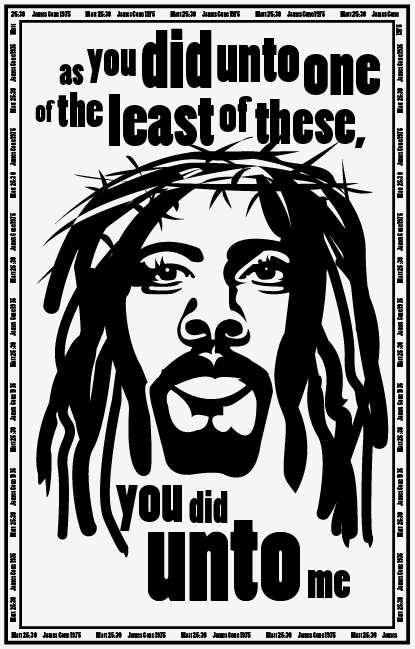
  • He said he considers what’s done to the least of the human race as done to him.
  • He said we should love our enemies.

At the political level we should:

  • Urge outgoing senator Mark Udall (D Colorado) to use his senatorial privilege of unlimited free speech to release the entire unredacted torture document.
  • Pressure the media through phone calls and letters to the editor to present the other side of the torture story including interviews with torture victims and with the families of those whose sons and daughters, husbands and wives were killed under CIA torture.

The Church’s Disastrous Domestication of Jesus (Sunday Homily)

King of the Universe

Readings for the feast of “Our Lord Jesus Christ, King of the Universe”: 2 SM 5: 1-3, PS 122: 1-5; COL 1: 12-20; LK 23: 35-43. http://usccb.org/bible/readings/112413.cfm

Today the Catholic Church celebrates the feast of “Our Lord Jesus Christ, King of the Universe.” The contrast between the feast’s grandiose title and the readings prescribed for the occasion illustrate a basic reason behind the irrelevance of the church (and Jesus) to the post-modern world. It’s irrelevant to the social and economic transformations necessary to redeem the church’s overwhelmingly Third World membership from globalized oppression.

The contrast I’m referring to involves the great makeover of Jesus of Nazareth changing him from the leader of an anti-imperial revolutionary movement into a pillar of the exploitative status quo.

Let me put it this way: through 4th century sleight of hand, the Jesus who sided with the poor and those oppressed by empire – the one who promised a new heaven and earth belonging to the simple and poor, and who was executed as a terrorist by Rome – was made to switch sides. He was co-opted and domesticated – kicked upstairs into the royal class. He became not only a patron of the Roman Empire, but a “king” complete with crown, purple robes, scepter and fawning courtiers.

Following that transformation, kings and popes (now themselves transformed into gaudy temporal rulers) claimed to govern by divine right on behalf of Jesus as his representatives and vicars. In this way, the poor and oppressed (who then and now constitute the world’s majority) lost their paradigmatic leader, example and advocate. Jesus became instead a key part of the apparatus oppressing them.

Reza Aslan’s recent best-seller, Zealot, attempts to rescue the revolutionary historical Jesus from the distortions of the royal classes just mentioned. Aslan connects his salvage project specifically with today’s account of Jesus’ crucifixion in Luke, Chapter 23. In doing so, the author pays particular attention to Jesus’ cross, to the Roman inscription identifying Jesus as “King of the Jews,” and to the dialog between Jesus and the two “thieves” presented as sharing his fate.

According to Aslan, all three – cross, inscription and dialog – mark Jesus as a dangerous revolutionary “terrorist” rather than a domesticated upholder of the given order. That terrorist remains as threatening to today’s dominant empire, the U.S.A., as he was to imperial Rome. So he continues to be erased from history and by “feasts” like today that mask his true identity.

Take the cross first. It was the mode of execution reserved primarily for insurrectionists against the Roman occupation of Palestine. The fact that Jesus was crucified indicates that the Romans believed him to be a revolutionary terrorist. How could it have been otherwise, Aslan asks? After all, Jesus was widely considered the “messiah” – i.e. as the one, like David in today’s first reading, expected to lead “The War” against Israel’s oppressors.

Moreover, he proclaimed the “Kingdom of God,” a highly politicized metaphor which could only be understood as an alternative to Roman rule. It would return Israel, Jesus himself promised, to Yahweh’s governance and accord primacy to the poor and marginalized. The Romans drew logical conclusions. Put otherwise, the Roman cross itself provides bloody testimony to the radical threat the empire saw personified in Jesus.

That threat was made specific in the inscription the Romans placed over the head of the crucified Jesus. It read, “King of the Jews.”

Typically, those words are interpreted as a cruel joke by the Roman procurator, Pontius Pilate – as if he were simply poking fun at those who saw Jesus as the worthy successor of Israel’s beloved King David.

However, according to Reza Aslan, nothing humorous was intended by the inscription. Instead it was a titulus. Every victim of crucifixion had one – a statement of the reason for his execution. The motive for Jesus’ crucifixion was the same as for the many others among his contemporaries who were executed for the same crime: aspiring to replace Roman rule with home rule – with an Israel governed by Jews instead of Romans. The titulus on Jesus’ cross, along with the cross itself identify him as the antithesis of what he eventually became, a Roman tool.

And then there are those two thieves. Aslan says they weren’t “thieves” at all. That’s a mistranslation, he points out. A better translation of the Greek word, lestai , would be “bandits” – the common designation in the first century for insurrectionists. And there probably weren’t just two others crucified the day Jesus was assassinated. There may have been a dozen or more.

And, no, the whole world wasn’t watching either. As scripture scholar John Dominic Crossan observes, Jesus would have represented hardly a blip on the screen of Pontius Pilate. And Jews would have averted their eyes from the spectacle depicted in this morning’s gospel. They wouldn’t want to see “one more good Jew” suffering the fate of so many heroic patriots.

In this context the dialog between Jesus and two of the terrorists crucified with him takes on great significance. Actually, it documents the beginning of the process I described of changing Jesus’ image from insurrectionist to depoliticized teacher.

Think about it. Luke’s account of Jesus’ words and deeds was first penned about the year 85 or 90 – 20 years or so after the Roman-Jewish War (66-70 C.E.). By then the Romans had utterly defeated the Jews, destroyed Jerusalem and its temple as well as slaughtered the city’s population including practically all of the eyewitnesses of Jesus’ messianic campaign. Virtually the only Christians left standing were foreigners – gentiles living in population centers like Rome, Alexandria and Antioch. Few of these had any understanding of or sympathy for Judaism much less for Jewish politics and its liberation movements.

Besides that, in the war’s aftermath, both Jews and Christians sought to distance themselves from the socio-political expectations that had brought on the disaster of the Jewish War. So Judaism tried to transform itself from a Temple-centered religion to one focused on the local synagogue and rabbinic teaching – both overwhelmingly concerned with simply preserving the culture and identity of a people in diaspora.

For their part, Christians became anxious to show the Roman world that it had nothing to fear from their membership.

One way of doing that was to distance the dying Jesus from the Jewish insurgents and their terrorist actions against their oppressors. So in Luke’s death-bed dialog among three crucified revolutionaries, one of the terrorists admits that Jesus is “under the same sentence” as he and his comrade in arms. Given what Aslan said about crucifixion, that fact was undeniable. All three had been sentenced as insurrectionists.

But now comes the distancing between Jesus and Israel’s liberation movements. Luke has the “good thief” (read good terrorist) say, “. . . indeed we have been condemned justly, for the sentence we received corresponds to our crimes, but this man has done nothing criminal.”

In other words, Luke (writing for a post-war Roman audience) dismisses insurrection as “criminal,” and removes Jesus from association with such crime – a fact endorsed, Luke asserts, by insiders like the honest lestai crucified with Jesus. Luke’s message to Rome: the killing of Jesus was a terrible mistake; he meant no harm to Rome. And neither do we, his followers.

Loss of the radical revolutionary Jesus is not a trivial matter in terms of Christianity relevance to a world ruled by a nation that styles itself as Rome’s worthy successor. Like its ancient archetype, the U.S. (and a majority of first-world Christians) found the historical Jesus so threatening, that it determined that Jesus’ followers deserved the same fate as their crucified Master. For this we have the evidence of the war that the U.S. fought against liberation theology when it first emerged following the conclusion of the Second Vatican Council (1963-65).

Liberation theology committed the unforgiveable sin represented by this homily. It was guilty of connecting the Jesus of history described by scholars like Aslan to post-colonial independence movements and struggles against the neo-colonialism spearheaded by the U.S. and its oligarchical clients in the Third World.

In that struggle Pope John Paul II and his henchman, Josef Ratzinger, threw in their lot with a neo-imperial Ronald Reagan. It was deja-vu all over again: Reagan as Pilate and J.P.II and Ratzinger as the temple priesthood. It was the deja-vu of the church melding its interests with Rome towards the end of the 4th century.

More specifically, the two reactionary popes looked the other way and actively supported Reagan’s policies that assassinated hundreds of thousands of Christians (200,000 in Guatemala alone!) who found the radical Jesus threateningly relevant to their struggles in Latin America, Africa, and South Asia.

To balance liberation theology’s threat, Reagan patronized Evangelical Christians who eventually morphed into the Tea Party. It finds Aslan’s understanding of Jesus anathema. Meanwhile, John Paul II and Ratzinger “cleaned house,” eliminating every single progressive bishop from the hierarchy and transforming seminaries into hot houses to nurture a pre-Vatican II reactionary clergy.

Recently Pope Francis delivered a long-winded, very general and content-less speech to the National Council of Bishops in Brazil. That group used to head a church that was a hot-bed of liberation theology I’ve been describing here. The term was never mentioned in the new pope’s remarks. Instead, he presented John Paul II and Pope Ratzinger as champions of Vatican II.

He’ll have to do better than that to fulfill his aspiration towards making the church relevant to the poor he professes to care so much about.

He’ll have to confess the Church’s sins against liberation theology and revive the cult of the historical Jesus – instead of the depoliticized imperial “King of the Universe” today’s feast calls to mind.

Saving Jesus from Paul and John (Sunday Homily)

rebel_jesus2

Readings for the 4th Sunday after Easter: Acts 13:14; Ps. 100: 1-2, 3-5; Rev. 7:9, 14B-17; Jn. 10: 27-30. http://www.usccb.org/bible/readings/042113.cfm

As I’ve been reporting here, a group of about 25 people met weekly during Lent for an intensely rewarding study of “The Historical Jesus.” The group included members of our local Catholic church in Berea, Kentucky along with an equal number from our Ecumenical Table in nearby Richmond. In the aftermath of that experience, I find it impossible to read selections like those in today’s liturgy of the word without making connections with our little seminar.

For instance, today’s readings remind me that would-be followers of Jesus might more accurately call ourselves “Paulists” rather than “Christians.” That observation is sparked by the tension between Paul and “the Jews” in this morning’s selection from Acts. The tension reminds us that our belief system has been shaped more by Paul of Tarsus than by Jesus of Nazareth who was himself a Jew. The same holds true for the gospel selection from John the Evangelist with its emphasis on Jesus’ divinity (“I and the Father are one”). As a result of the influence of Paul and John, our faith tends to be other-worldly and de-politicized. Our Jesus tends to be one-dimensionally divine rather than the enlightened very human rabbi who graced the Palestinian landscape 2000 years ago. Let me explain.

To begin with it’s important to point out that we know more about Paul than we do about the historical Jesus. And we know more about the historical Jesus than did the rabbi from Tarsus. The reasons why are simple. On the one hand, most of the Christian Testament is written by or heavily influenced by Paul. The New Testament, then, is more Pauline than Christian.

On the other, Paul never met the historical Jesus and shows almost no knowledge of Jesus’ words and deeds in his epistles. Meanwhile, scholarship based on manuscript discoveries at Nag Hammadi in Upper Egypt in 1945 and at the Dead Sea in 1947 (the famous Dead Sea Scrolls) has yielded unprecedented knowledge of the historical Jesus. That means we know more about the rabbi from Nazareth than did Paul.

Think about the Pauline nature of the faith we’ve inherited. There are 27 books in the “New Testament.” Thirteen of those 27 are letters written by Paul. Then there’s the “Acts of the Apostles” which really is a travelogue about the mission and adventures of Paul written by Paul’s companion, Luke the evangelist. Luke also wrote his own Gospel, which, of course, was heavily influenced by his mentor. Finally, as the earliest entries in the New Testament, Paul’s epistles (written from about 50 to 64 CE) evidently exercised great influence on the other evangelists Mark, Matthew and John who wrote much later.

That means that nearly half of the New Testament (13 of 27 entries) is comprised of letters attributed to Paul. Fifty-five percent (15 of 27 entries) was written by Paul or Luke. And more than 66% (18 of 27 entries) was arguably more influenced by Paul than by Jesus.

I say “more influenced by Paul than by Jesus” because what we have in Paul’s letters, the Acts of the Apostles and in the gospels themselves are proclamations about Jesus rather than the proclamation of Jesus. Remember, Jesus’ proclamation was about the Kingdom of God, “Repent, the Kingdom of God is at hand.” In contrast, the New Testament’s proclamations about Jesus are “Jesus is Lord.”

The differences between these two “gospels” are enormous and they are, as I indicated, illustrated in today’s readings on this fourth Sunday after Easter. Today’s selection from John’s Gospel (written about 70 years after the crucifixion of the Enlightened Yeshua) has Jesus discoursing about himself. He speaks of himself as a “shepherd” leading his sheep and about offering them “eternal life.” He concludes by claiming to be God’s Son equal to the Father. “I and the Father are one,” he says. (The historical Jesus could never have made such statements without being stoned by his fiercely monotheistic Jewish audience.)

However, Jesus’ discourse as reported in John’s gospel is completely coherent with the gospel of Paul. Paul, I repeat, never met the historical Jesus. In fact, as we all know, before his famous conversion on the road to Damascus, he was a persecutor of Christians. He pursued them on behalf of the Sanhedrin, the Jewish high court, which worked hand-in-glove with the Romans.

The Romans were hunting down Christians for the same reason they arrested and executed Jesus – because he was perceived as the Jewish Messiah whose overriding responsibility was the overthrow the Roman occupation of Palestine. With good reason, the Romans considered Jesus’ followers to be subversives.

In other words, the Romans, their Sanhedrin collaborators, and their point-man, Saulous (Paul’s name before his conversion) were cooperating in a counter-revolutionary program that targeted Jesus’ nationalistic followers.
Those followers had actually lived with Jesus. They were Jews primarily – members of a Jerusalem community gathered around Jesus’ brother, James, the apostles, and Jesus’ “inner circle” of followers including many women and numbering perhaps 120 people or more. Together they constituted a group of reformed Jews. Many of them had been eye-witnesses of Jesus’ deeds and followers of his teachings.

Those teachings centralized a new understanding of “the Law” which Yeshuaists called “the Way.” It emphasized love and forgiveness over fear, punishment and a purity code that divided people into “clean” and “unclean.” It emphasized justice for the poor and oppressed and freedom from foreign domination. The Jerusalem community of The Way recognized Jesus as the True Prophet predicted in their scriptures – a wonder-working Messiah and liberator who would usher in an era reminiscent of the Exodus from Egypt under the great rebel Moses. This Jewish messiah was human (the Son of Man) not a divine Son of God.

Paul, as I said, had never met the Son of Man. His writings show neither knowledge of Jesus’ deeds nor of specific teachings which were so important to the Jewish Yeshuaist community. Instead, Paul preached a kind of mythological Jesus who was entirely recognizable to the gentile audiences which interested him. Paul’s Jesus was born, crucified, risen and ascended to heaven. Evidently, Paul considered nothing between Jesus’ birth and death worth reporting.

For Paul’s gentile audience, any wonder-working “messiah” had to be a divine incarnation like the gods Romans and Egyptians worshipped — Mithra, Isis, Osiris, the Great Mother God. These “dying and rising gods” descended from heaven, lived for a while on earth, died, and then rose from the dead. Typically, they offered “eternal life” beyond the grave to believers who ate sacred meals together sharing the gods’ body and blood in the form of bread and wine. These are the terms Paul used to explain Jesus to his gentile audiences.

As reformed Jews, the Jerusalem community along with most unreformed (non-Yeshuaist) Jews had trouble with such explanations which offended their strictly monotheistic beliefs. How could Jesus be uniquely “one with the Father?” That sounded like two Gods and was entirely offensive and unacceptable.

Moreover, Paul’s version of the gospel seemed to remove the Kingdom of God to an other-worldly heaven. It left the Romans in charge of Palestine ruled by a god (the Roman emperor) who was a rival of Yahweh, who, for good Jews, alone was God and who alone was the legitimate ruler of the Palestinian homeland. Such a gospel along with Paul’s background of cooperation with the Romans made all Jews (Yeshuaist and orthodox) deeply suspect of Paul. They remained adamant in their hope of the “Second Coming” of Jesus who would finally defeat the Romans and introduce God’s Reign to replace Caesar’s.

We pick up the tension between Paul’s message aimed at gentiles and the anti-imperial faith of Jews (including Yeshuaists) in today’s readings. In the selection from Acts, Paul proclaims his version of Jesus. And “the Jews” respond as expected. To them Paul’s (and John’s) understanding of Jesus as God’s only Son, his understanding of salvation as “eternal life” rather than messianic liberation from foreign domination was completely blasphemous. So Paul and Barnabas end up “shaking the dust” of Antioch’s streets from their feet against “the Jews.”

Eventually, Paul’s gospel (with the deeply engrained seeds of anti-Semitism) ends up triumphing completely. This is because the base of the Jerusalem Yeshuaist community (the inner circle referenced earlier) was completely destroyed during the Jewish war with Rome (64-73). In the absence of strong Yeshuaist leadership, the way was thus opened for the triumph of a divine Jesus proclaiming himself (rather than God’s Kingdom) and offering an other-worldly “eternal life” rather than a new revolutionary social order characterized by love, forgiveness, justice, and room for everyone.

That other-worldly “Christianity” was finally canonized by Constantine in the fourth century (325 at Nicaea). Afterwards, in his zeal for uniformity of belief, the emperor and his church accomplices ordered the destruction of documents reflecting anything other than the Pauline and Johannine understandings of Jesus. The rest is history. The historical Jesus was lost. We’ve been worshipping a Roman Mithra instead of a prophetic Enlightened Jewish Jesus ever since.

Luckily disobedient monks ignored Constantine’s order to destroy manuscripts reflecting understandings of Jesus other than Paul’s. That happened at the Dead Sea and at Nag Hammadi.

Thank God for their crime! At this late date it has directed our focus away from the Gospel about Jesus to the Gospel of Jesus. It calls us to work not for an after-life heaven, but for God’s Kingdom in the here and now.

Did Jesus Really Rise from the Dead?

resurrection

Did Jesus really rise from the dead? Or is belief in his physical resurrection childish and equivalent to belief in the Easter Bunny or Santa Claus?

I suppose the answer to those questions depends on what you mean by “really.” Let’s look at what our tradition tells us.

Following Jesus’ death, his disciples gave up hope and went back to fishing and their other pre-Jesus pursuits. Then, according to the synoptic tradition, some women in the community reported an experience that came to be called Jesus’ “resurrection” (Mt. 28:1-10; Mk. 16: 1-8; Lk. 24:1-11). That is, the rabbi from Nazareth was somehow experienced as alive and as more intensely present among them than he was before his crucifixion.

That women were the first witnesses to the resurrection seems certain. According to Jewish law, female testimony was without value. It therefore seems unlikely that Jesus’ followers, anxious to convince others of the reality of Jesus’ resurrection, would have concocted a story dependent on women as primary witnesses. Ironically then, the story’s “incredible” origin itself lends credence to the authenticity of early belief in Jesus return to life in some way.

But what was the exact nature of the resurrection? Did it involve a resuscitated corpse? Or was it something more spiritual, psychic, metaphorical or visionary?

In Paul (the only 1st person report we have – written around 50 C.E.) the experience of resurrection is clearly visionary. Paul sees a light and hears a voice, but for him there is no embodiment of the risen Jesus. When Paul reports his experience (I Cor. 15: 3-8) he equates his vision with the resurrection manifestations to others claiming to have encountered the risen Christ. Paul writes “Last of all, as to one untimely born, he appeared also to me.” In fact, even though Paul never met the historical Jesus, he claims that he too is an “apostle” specifically because he shared the same resurrection experience as the companions of Jesus who were known by that name. This implies that the other resurrection appearances might also be accurately described as visionary rather than physical.

The earliest Gospel account of a “resurrection” is found in Mark, Ch. 16. There a “young man” (not an angel) announces Jesus’ resurrection to a group of women (!) who had come to Jesus’ tomb to anoint him (16: 5-8). But there is no encounter with the risen Jesus. In fact, Mark’s account actually ends without any narrations of resurrection appearances at all. (According to virtually all scholarly analysis, the “appearances” found in chapter 16 were added by a later editor.) In Mark’s original ending, the women are told by the young man to go back to Jerusalem and tell Peter and the others. But they fail to do so, because of their great fear (16: 8). This means that in Mark there are not only no resurrection appearances, but the resurrection itself goes unproclaimed. This makes one wonder: was Mark unacquainted with the appearance stories? Or did he simply not think them important enough to include?

Resurrection appearances finally make their own appearance in Matthew (writing about 80) and in Luke (about 85) with increasing detail. Always however there is some initial difficulty in recognizing Jesus. For instance Matthew 28: 11-20 says, “Now the eleven disciples went to Galilee, to the mountain to which Jesus had directed them. And when they saw him they worshipped him; but some doubted.” So the disciples saw Jesus, but not everyone was sure they did. In Luke 24: 13-53, two disciples walk seven miles with the risen Jesus without recognizing him until the three break bread together.

Even in John’s gospel (published about 90) Mary Magdalene (the woman with the most intimate relationship to Jesus) thinks she’s talking to a gardener when the risen Jesus appears to her (20: 11-18). In the same gospel, the apostle Thomas does not recognize the risen Jesus until he touches the wounds on Jesus’ body (Jn. 26-29). When Jesus appears to disciples at the Sea of Tiberius, they at first think he is a fishing kibitzer giving them instructions about where to find the most fish (Jn. 21: 4-8).

All of this raises questions about the nature of the “resurrection.” It doesn’t seem to have been resuscitation of a corpse. What then was it? Was it the community coming to realize the truth of Jesus’ words, “Whatever you do to the least of my brethren, you do to me” (Mt. 25:45) or “Wherever two or three are gathered together in my name, I am there in their midst” (Mt. 18:20)? Do the resurrection stories reveal a Lord’s Supper phenomenon where Jesus’ early followers experienced his intense presence “in the breaking of the bread” (Lk. 24:30-32)?

Some would say that this “more spiritual” interpretation of the resurrection threatens to destroy faith.
However, doesn’t such perception of threat reveal a quasi-magical understanding of faith? Does it risk limiting faith to belief in a God who operates outside the laws of nature and performs extraordinary physical feats that amaze and mystify? Doesn’t it reduce the significance of resurrection belief to simply another “proof” of Jesus’ divinity?

But faith doesn’t seem to be principally about amazement, mystification and proof analogous to the scientific. It is about meaning.

And regardless of whether one believes in resurrection as resuscitation of a corpse or as a metaphor about the spiritual presence of God in communities serving the poor, the question must be answered, “What does resurrection mean?”

Surely it meant that Jesus’ original followers experienced a powerful continuity in their relationship Jesus even after his shameful execution. Their realm of experience had expanded. Both Jesus and his followers had entered broadened dimensions of time and space. They had crossed the threshold of another world where life was fuller and where physical and practical laws governing bodies and limiting spirits no longer applied. In other words, the resurrection was not originally about belief or dogma. It was about a realm of experience that had at the very least opened in the context of sharing bread – in an experience of worship and prayer.

Resurrection meant that another world is possible — in the here and now! Yes, that other world was entered through baptism. But baptism meant participation in a community (another realm) where all things were held in common, and where the laws of market and “normal” society did not apply (Acts 2:44-45).

In order to talk about that realm, Jesus’ followers told exciting stories of encounters with a revivified being who possessed a spiritual body, that was difficult to recognize, needed food and drink, suddenly appeared in their midst, and which just as quickly disappeared. This body could sometimes be touched (Jn. 20:27); at others touching was forbidden (Jn. 20:17).

Resurrection and Easter represent an invitation offered each of us to enter the realm opened by the risen Lord however we understand the word “risen.” We enter that realm through a deepened life of prayer, worship, community and sharing.

I for one feel a need to think together about practical responses to an Easter invitation understood in this way.

Christianity is the Enemy of Humankind (Reflections on the Historical Jesus)

To the least

Last night I concluded a Lenten series of classes on the historical Jesus. As always, the course had its ups and downs. But it was faithfully attended by about 25 soul mates who, like me, remain fascinated by and somehow in love with Jesus of Nazareth.

At last evening’s final meeting, one of the participants – a fierce unflinching seeker of truth, asked the question in the back of everyone’s mind. “So what?” she asked. “If, as we have learned here, Jesus has been distorted beyond recognition by the early church (and especially by Paul and Constantine) why should we believe any of it?”

What a good question! It has forced me to pull together (for myself!) what I have learned from this latest round of studies of the historical Jesus. Let me express them in as clear an unvarnished a way as possible both positively and critically.

First of all, my positive learnings . . . . The study forced me to face the fact that the historical Jesus, un-obscured by later developments is the touchstone for authentic Christian faith. That is, the Jesus of history (vs. the Jesus of later doctrines) trumps all other conceptualizations in terms of being normative for Christian faith. The teachings of the historical Jesus were extremely simple: God is love. God is bread. Salvation consists in sharing food – bread and wine. A world with room for everyone (the Kingdom of God) is entirely possible. Empire is the anti-thesis of love and sharing. It uses religion to enslave. It finds Jesus message of liberation abhorrent. Empire is the enemy.

Second of all, my critical learnings . . . . If anything the Christian Testament makes it extremely difficult to locate the normative historical Jesus. In fact, the canonical gospels often contradict the basic revelations of Jesus. When this happens, those contradictions have to be faced, learned from, and set aside as merely illustrative of the way history and religion are routinely distorted by the rich and powerful. It is evidence of what people either used to believe before Jesus’ revelation, or what they came to believe when the faith of Jesus subsequently interacted with and was domesticated by other cultures and times.

More particularly, examination of the gospels makes it abundantly clear that following the destruction of Jerusalem in the Jewish-Roman War (66-73), the Jesus of history increasingly receded from Christian perception. In his place a Jesus of faith came to prominence. The two are at odds with each other. The Jesus of history strove to liberate the poor. The Jesus of faith became the servant of empire and the rich who run it.

The Jesus of history was a mystic, prophet, teacher, healer, and movement founder. He was intent on reforming Judaism whose leaders had sold Judaism’s soul to the Roman Empire transforming it into a religion of laws, rituals and obedience to the powerful. This Jesus called himself the “Son of Man,” not the “Son of God.” He was perceived by the poor as a “messiah” who would deliver his people from Roman domination. He proclaimed a new social order which he referred to as the “Kingdom of God.” There Rome’s domination model of social organization would be replaced by a sharing model. In God’s kingdom everything would be reversed: the rich would be poor; the poor would be rich; the first would be last; the last would be first; prostitutes and “the unclean” would enter the new order before priests, the rich and the famous.

And although he shied away from accepting the conventional messianic identity associated with “The War” (against the Romans), Jesus’ program of “Good News for the poor” along with his healings and exorcisms confirmed that identification in the eyes of the marginalized and oppressed. It did the same for the Romans and their collaborators to such an extent that they ended up executing him as an insurgent.

The memory of this Jesus of history was preserved and celebrated by the Jerusalem community called “The Way” before its eradication in the horrendous Roman-Jewish War of 66 to 73CE. In obedience to Jesus, they adopted a communal life where food, drink, and material possessions were shared and held in common. Following Jesus’ death, some were even hoping for his “second coming” in their own lifetimes to complete the task of empire-destruction his execution had prevented him from fulfilling.

This prophetic Jesus was replaced by the Jesus of faith who emerged in the post-war world after the Jerusalem church and its leadership had been slaughtered by Rome. At this point, “The Way” (Jesus’ version of reformed Judaism) was replaced by “Christianity.” This religious movement was non-Jewish. It derived from the teaching of Paul of Tarsus (in Turkey) who never met the historical Jesus, and who thought of him in terms of God’s unique and only Son. Paul was a thoroughly Romanized Jewish rabbi intent on acquainting non-Jews with the Jesus he experienced in the visionary psychic experience recorded as his conversion on the Damascus Road.

By ignoring the Jesus of history, Paul’s experience and subsequent preaching laid the foundation for an understanding that centralized a Jesus understood as God’s only Son – a divine being who would have been (and was!) completely unacceptable to the fiercely monotheistic Jews. At the same time, this domesticated Jesus was not threatening to Rome. In fact, he was completely familiar to Romans resembling the “dying and rising gods” of Roman-Greco culture who offered “eternal life” beyond the grave rather than an anti-imperial Kingdom of God in the here and now. In other words, the Jesus of history was co-opted beyond recognition by the Roman Empire.

So what’s the take-away from the study of the historical Jesus? I think the following extremely important lessons:

1. History is unreliable. It has been distorted and manipulated by the powerful to suit their own needs. (If taken seriously, this in itself is an invaluable lesson.)

2. Hard work is required to find historical truth – not just about Jesus but about what happened yesterday!

3. Empire is the enemy. It is a system of robbery whereby the rich and powerful steal resources from the poor they oppress. It is entirely contrary to the will of God (the Principle of Life). It represents a “preferential option” for the rich and powerful. It is absolutely ruthless in its eternal war against the world’s poor and in falsifying history for its own benefit.

4. Those who resist empire can expect to be tortured and assassinated. Nonetheless, from time to time courageous and insightful prophets arise from the non-rich and non-powerful with Good News for the poor. Their very simple message: fullness of life is to be found not in empire, but among the poor and simple of the world (God’s people). Salvation, these prophets teach, consists in sharing the simple realities of bread and wine. In effect: God is Bread.

5. Among the west’s best known prophets of Jesus’ God are Moses, Jesus himself, Gandhi, Bartolommeo de las Casas, Karl Marx, Martin Luther King, Malcolm X, Dorothy Day, and the nameless martyrs (so many of them women!) inspired over the last fifty years by liberation theology.

6. Most people are in denial about these simple facts. They are powerfully assisted in their denial by politicians, scholars, priests, and the media who make the teachings of the prophets extremely complicated. They have transformed the prophets’ message about sharing bread and fullness of life in the here and now into “religion” and a promise of life after death. As such, religion is the enemy of humankind. Christianity is the enemy!

7. Those who accept these learnings should leave institutionalized “religion,” band together, internalize the teachings of the historical Jesus and change the world!

Lenten Reflection: The Ash Wednesday after the Pope’s Resignation

ash-wednesday-1[1]

Well, it’s Lent. Today is Ash Wednesday. My question is what does that mean for activists who are aspiring to follow in the footsteps of the great prophet, dissident, teacher of unconventional wisdom, story-teller, mystic, and movement founder, Yeshua of Nazareth?

The question is obscured by long centuries of covering up those identities in favor of Jesus’ overwhelming identification as “Son of God.” That title swallows up all the rest and makes it difficult, if not impossible to engage in what Thomas a Kempis called “The Imitation of Christ.”

But for the moment, suppose we set aside “Jesus the Christ,” and concentrate on that man his mother named Yeshua. He lived in a time not unlike our own, in a province occupied by an empire similar to ours. He found such occupation unbearable, and devoted his public life to replacing the “Pax Romana” with what he called the “Kingdom of God.” There the world would be governed not by Roman jackboots, or by the law of the strongest, but by compassion and gift – even towards those his culture saw as undeserving.

The latter was “Good News” for the poor and oppressed among whom he found himself and his friends – laborers, working girls, beggars, lepers infected with a disease not unlike AIDS, and those fortunate enough to have government work as toll gatherers. He ate with such people. He drank wine with them. Some said he got drunk with them. He defended such friends in public. And he harshly criticized their oppressors, beginning with his religion’s equivalents of popes, bishops, priests, ministers, and TV evangelists. “Woe to you rich!” he said. “White-washed tombs!” he called the religious “leaders.”

What does it mean to follow such an activist and champion of the poor this Ash Wednesday February 13, 2013?

I would say it means first of all to ask that question and to pray humbly for an answer.

Other questions for this Lent: Does following Jesus mean taking a public stance against empire and “church” as he did? Does it mean praying for the defeat of U.S. imperial forces wherever they wage their wars of expansion and aggression? Does it mean discouraging our daughters and sons from participating in a disgrace-full military? Does it mean leaving our churches which have become the white-washed tombs of a God who through failed church leadership has lost credibility and the vital capacity to effectively summon us beyond our nationalism, militarism, and addiction to guns and violence? Does it mean lobbying, making phone calls on behalf of and generally supporting those our culture finds undeserving and “unclean?”

Does it mean for Catholics that we somehow make our voices heard all the way to Rome demanding that any new pope save the church from itself by rejecting the anti-Vatican II schismatic tendencies of the last two popes, healing the wounds of the pedophilia crisis, reversing the disaster of “Humanae Vitae’s” prohibition of contraception, allowing women to become priests, eliminating mandatory celibacy as a prerequisite for ordination, and recognizing and honoring the contributions of Catholic women like the members of the Leadership Conference of Women Religious (LCWR)?

Yes, I think, it means all of those things. But Lent also calls for self-purification from the spirit that arrogantly locates all the world’s evils “out there” in “those people.” In its wisdom, the grassroots church of Hildegard of Bingen, Francis of Assisi and St. Clare, of Daniel and Phil Berrigan, Dorothy Day, Martin Luther King, Oscar Romero, Ignacio Ellacuria, Jean Donovan, and Matthew Fox calls us to deepen our interior lives for purposes of sharpening our discernment about how to contribute towards replacing empire with God’s Kingdom. All of those saints, remember, were condemned by the hierarchy just the way Yeshua was in his own day.

Six weeks is a relatively long time for the purification necessary to eliminate undesirable patterns in our lives and to replace them with habits exemplified in the lives of the saints I’ve just mentioned. It’s plenty of time for working on our addictions to the pursuit of pleasure, profit, power, and prestige. Each of us knows what behaviors in our own lives are associated with those categories. So it’s time to get to work.

As for myself . . . besides using this period for training my senses, I intend to recommit myself with renewed fervor to my daily practice of meditation, my mantram (“Yeshua, Yeshua”), spiritual reading, slowing down, one-pointed attention, spiritual companionship, and putting the needs of others first – the eight-point program outlined by Eknath Easwaran in his book Passage Meditation. I’m going to keep a spiritual journal this Lent to make sure I stay focused.

I’m also joining some friends of mine in a resolution to give up church for Lent. We’re doing so in favor of a six week experiment with an “Ecumenical Table” — a lay-led liturgical gathering often featuring a woman as homilist and Eucharistic Prayer leader. Though some in the group will also continue to attend their normal churches, the experiment may help us discern how to finally cope with the white-washed tombs of God I mentioned earlier.

And then there’s our parish Lenten Program I’ll be facilitating. It’s called “The Quest of the Historical Jesus: from Jesus to Christ.” It will be devoted to discovering the carpenter Yeshua behind the Jesus Christ of the gospels. In the light of our discoveries, we’ll unpack the liturgical readings for the following Sunday in hopes of making those Lenten liturgies more meaningful and challenging.

Additionally, my wife Peggy and I will also be working hard on our communication and have decided to devote significant time each evening to listening to each other in a loving respectful way.

In these ways I hope to pass my most fruitful Lent ever, to be truly able to rise with Yeshua to a new level of Kingdom-commitment on Easter Sunday.

More Happiness in the Barrios than in the Suburbs

Moon-lightening

Here is a thoughtful comment on my posting of February 6th, “Why Bother with the Historical Jesus?” It’s authored by a friend of mine, Jim Cashman (photo above), who studied with me for three years at St. Columban’s Major Seminary in Milton, Massachusetts when I was there from 1961-1967. Jim was an exchange student from Ireland, where he was ordained in 1964. Like most of us from that era, he left the priesthood after the Great Awakening which followed the Second Vatican Council (1962-’65). Jim writes:

In my view if all we have is subjective and “bias” and hence doubtful history on Jesus, then the more digging one does, especially based on modern science, the better it is for us getting to the reality on Jesus. The Jesus uncovered by science is vastly superior to the faith or propaganda-based version. I have always been dubious about taking anything on faith. It leads to too many wars! What we seek is the truth not support for our environmental brainwashing.

The thing which I regard as above debate is the focal point of your blog. I’m referring to the nature or qualities of God. Factually we know so little about that – maybe nothing. Given that reality, it seems better not to think of Jesus as the son of god or of God being Jesus, but as simply reflecting the nature of God. That seems to be the important point you make. I never had any hang-up/special needs for the divinity of Jesus or the virginity/motherhood of God. I do not feel it is central to the Jesus message. It might be central to Catholicism, but not to understanding of the meaning of my life. Why the hell am I here?

What I find central is that Jesus (like many of the prophets), reflects the core nature of God and that is Love. I feel this Love is not what we think it is. It’s not charitable foundations or helping old folks like me cross the street?

Maybe as Paul hints we are not yet sufficiently evolved or “spiritual” to accept Jesus’ very simple revelation about the nature of God as Love. Now we known in part; then we shall know fully – even as we are fully known. From Krishna to Christ this is the common unifying thread of human development: giving without any payback or satisfaction!. All of this contradicts where we are in the world of greed, self interest and now the ultimate decadence – endless ‘shopping.’

If we all take from nature only enough for what we need, then the poor we could “always have with us” – as equals. Even with the little they have, the stats show there is more happiness in the barrios than in the suburbs.

The worst outcome we could have from the present move against the hypocrisy of Rome (and Washington) is that we achieve “renewal” and leave the real task – the search for truth, for another millennium.

Keep pushing out the boundaries, Mike; we are at the early stage of evolution. And in your downtime you might find this of interest:
http://archive.org/details/ACanticleForLiebowitz The irony like. “1984”, is chilling. Jim

PS – the “stream” may need some manual help in this dramatized audio edition.

Why Bother with the Historical Jesus?

I’m about to offer a Lenten course on the historical Jesus to the members of my faith communities – to my fellow parishioners at St. Clare’s Catholic Church in Berea, Kentucky, and to an “Ecumenical Table” fellowship I attend.

A course on the historical Jesus? A friend of mine asked why. After all, everyone knows we can’t know much about the Jesus of history. Virtually all we have for sources are the highly subjective gospels produced by several Christian communities long after Jesus had died. And close examination of those gospels show them to be unreliable in terms of modern ideas about history. At best they’re propaganda intended to win converts to Christianity. They contain lots of made-up stories and words attributed to Jesus long after the fact. If that’s all we have, how can we really say anything about the Jesus of history? And what does it matter?

Many highly credentialed and very credible scholars have seconded my friend’s skepticism. Theologians as weighty as Rudolf Bultmann and Karl Barth have said in effect “fagedaboudit.” It’s not for nothing that St. Paul concentrated on Jesus’ death, resurrection and glorification “at the right hand of the Father.” And he was writing less than 20 years after Jesus’ death. For Bultmann and Barth (and it seems for Paul) that’s all Christians have to know. Jesus words and deeds actually matter very little.

Still, others have disagreed – most notably the four canonical evangelists (Mark, Matthew, Luke, and John) and the authors of more than 20 “gospels” discovered since the middle of the 20thcentury at the Dead Sea and Nag Hammadi in Palestine. They found it necessary to record what Jesus said and did.

Modern scholars on a par with Barth and Bultmann have followed suit. Albert Schweitzer, liberation theologians, and members of the Jesus Seminar have insisted that it’s necessary and possible to know what Jesus said and did. He after all (and not what later believers made of him) was the definitive Symbol of God. His every word and action is full of meaning in terms of revealing God’s identity. In that sense, Jesus is not God. Rather God is Jesus. Without the historical revelation of what Jesus said and did, we would have very little idea of who God is.

In order to know what Jesus revealed, it is therefore necessary to decipher the symbols of God that Jesus’ words and deeds provide. And besides, the Judeo-Christian tradition as a whole claims to be historical. It’s not mythological like Greco-Roman religious systems. So the historical Jesus is important as a final criterion of faith. We impoverish that faith by relying merely on Jesus’ death, resurrection and glorification as related by Paul and others.

Not only is it necessary to know what Jesus said and did in order to know the fullness of revelation of God that Christians find in him. It is also possible to do so – at least according to “Jesus scholars.” They have developed an elaborate set of criteria for separating the events of Jesus life that surely took place from those made up by the early Christian community. Similarly, their standards help readers identify what Jesus actually said from the words that early Christians put into Jesus’ mouth.

Chief among such criteria is the standard of “embarrassment.” That means that events and sayings that would have caused embarrassment to the early Christian community must have happened, otherwise early believers wouldn’t have recorded them. The crucifixion of Jesus is a case in point. And so is his baptism at the hands of John the Baptist – as well as his association with outcasts and “unclean” sinners. Jesus’ baptism gives the impression that John was superior to Jesus. His crucifixion was a huge stumbling block for those trying to convince people that he was the Messiah. Nobody would have made up such events from whole cloth. They were too embarrassing.

Still doubts remain about the historical Jesus – as they do by the way for all historical characters and events all of which become obscured by rumor, myth, falsehood, and the agenda of those writing the “history.”

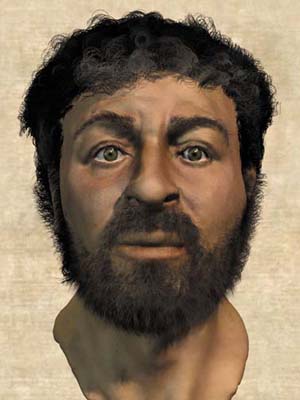
What we can know a great deal about is Jesus’ historical context. In fact knowledge of Jesus’ context is knowledge about him. Take for instance the work of forensic archeologists. They can tell us what the people of Jesus time and place looked like – something none of the gospels offer. Forensic archeologists tell us that he stood about 5’1 and weighted about 110 pounds, and looked like this:

SON OF GOD

Not like this:

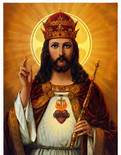
th[7] (2)

The bottom line here (and in the course I’ll offer) is that the work of the Jesus Seminar and others involved in quests for the historical Jesus is extremely helpful, but not crucial. What is crucial is to read the gospels we have with as much knowledge of context as we can. The gospel reading that results is called “historical literal.” It takes the gospels at their word keeping in mind what we can know of the author’s intentions, literary strategy, theology, and context (social, political, economic, religious . . .).

Reading the gospels with such new knowledge in mind yields an extraordinary picture of an individual the likes of whom mainstream history routinely ignores, denigrates and erases from the collective memory — a poor man who inspired other poor people to realize that they meant a lot more to God than their rich and powerful contemporaries.

Save the Dates! A Lenten Series on the Historical Jesus

SON OF GOD

Today’s blog posting is an announcement of a Lenten course I will be offering beginning on February 20th. The course is sponsored by The Ecumenical Table of Madison and Fayette Counties and by the Berea College Women and Gender Studies program. It is open to all, and will be held in the Women and Gender Studies Center of Berea College on Wednesdays, Feb. 20th and 27th and on March 6th, 20th and 27th. (The Center is located on the second floor of Phelps-Stokes Chapel.) Sessions will run from 7:00 to 8:30. Here are the details:

From Jesus to Christ
The Quest of the Historical Jesus
(A Lenten Series for Seekers of an Adult Faith)

Course Description: This is a five-session Lenten experience of presentations by Mike followed by extensive group discussion. Its purpose is to enrich this Lent’s observance by helping participants to “meet Jesus again for the first time” – as thoughtful adults. To this end, participants will be introduced to the centuries-long “Quest of the Historical Jesus” and its importance to understanding Jesus and his relevance for our contemporary world – particularly to church, spirituality, and engagement with world issues. The course will focus on the Gospel of Mark (the earliest of the four canonical gospels). Reflection on Mark will be facilitated by reading and discussion of Ched Myers’ “Binding the Strong Man,” a series of Lenten reflections first published in Sojourners Magazine. (Texts will be supplied). Mike’s blog-site series on the historical Jesus and on Mary Magdalene will give additional input (http://www.mikerivageseul.wordpress.com/). The hope is that along with course sessions, a prayerful reading of Mark’s gospel accompanied by the other sources will provide inspiring and provocative Lenten reading for all. Presentations will be supplemented by excerpts from the PBS series, “From Jesus to Christ.”

Session Content

Wed. Feb. 20: Paradigms of Faith: four approaches to the Bible and faith
Wed. Feb. 27: The Quest of the Historical Jesus: history, principles,relevance
Wed. Mar. 6: Stages in the Development of the Christian Tradition:Jesus to Christ
Wed. Mar. 20: The Gospel of Mark: Its purposes and political import
Wed. Mar. 27: Finding our Places in the Church: the church as caravan

Typical Session Organization

1. Film Clip: “From Jesus to Christ” (10 minutes)
2. Presentation by Mike (30 minutes)
3. Questions and responses (15 minutes)
4. Break (5 minutes)
5. Discussion of Myers’ reading (30 minutes)

Please mark these dates on your calendar. Make this Lent purposeful and focused.