Mali for Dummies (Part One: General Background)

Are you confused by what’s happening in Mali? Welcome to the club. We’re probably all puzzled and feel like dummies overwhelmed by information pieces that provide a welter of names, dates, organizations and explanations that are complicated, contradictory and vague. As a result, we probably accept the “official story” behind France’s U.S. – supported intervention in Mali as promulgated by our own State Department, France, Algiers and others.

That story goes that “we” are fighting AQIM (al-Qaeda in the Islamic Maghreb) which has suddenly materialized in Mali as part of a world-wide terrorist offensive that justifies the “Global War on Terrorism.” Well, if it’s a fight against al-Qaeda, we might reason, I guess I have to be for it.

I too felt drawn to just throwing up my hands and participating in the dummy syndrome of simply surrendering to government de-contextualized muddle and propaganda. But then I remembered what I’ve been reading in Oliver Stone’s and Peter Kuznick’s The Untold History of the United States. I recalled what I studied in Howard Zinn’s People’s History of the United States, and in Walter Rodney’s How Europe Underdeveloped Africa. I drew on my recollections of Eduardo Galeano’s The Open Veins of Latin America.

All of those taught me that the real justifications for invading the former colonial world rarely coincide with the stated rationale. It’s virtually never about democracy or protecting national sovereignty (though it might be about “maintaining regional stability” in lands where the median income is less than $2.00 per day!) Instead developed-world intervention is invariably connected with continuing the process of transferring wealth and commodities from the resource-rich south to the “developed” north. It’s about keeping the rich south subservient and impoverished.

In fact, as pointed out by J.W. Smith of the Institute for Economic Democracy, there’s a pattern to all interventions like the one we’re witnessing in Mali. In its starkest form, the pattern runs like this:

1. Any country (or group within a country) attempting to break for economic freedom
2. By establishing government representing the interests of its own people rather than those of the former Mother Country
3. Will be accused of communism or terrorism
4. And will be overthrown by military intervention
5. Or by right wing (often terrorist) elements from within the local population
6. To keep that country within the ex-mother country’s sphere of influence
7. So that the former colonists might continue to use the country’s resources for the invaders own enrichment,
8. And that of the local elite.

To put a finer point on all of that, the sources I have mentioned have taught me that the West is not interested in democracy or in the freedom of its former colonies. That’s proven by examining a short list of dictators the West (particularly the United States) has supported. The list includes Bonzer (Bolivia), Mobutu (Zaire), the Duvaliers (Haiti), Rios Montt (Guatemala), the Somozas (Nicaragua), Resa Palavi (Iran), Saddam Hussein (Iraq), Suharto (Indonesia), Pinochet (Chile), Fujimori (Peru), Diem (Vietnam), Marcos (Philippines), Noriega (Panama), Al Saud family (Saudi Arabia), Batista (Cuba).

All of these are robbers and thugs. In fact, colonialism is little more than a system of robbery intended to transfer raw materials and agricultural produce from the resource-rich colonies to the “Mother Countries.”

European and American colonists initially achieved control of the colonies by military power. The power was used indiscriminately, viciously and “necessarily” since the colonies were overwhelmingly inhabited by tribal peoples who typically did not share western values. You just couldn’t do business with most of them. After all, they usually believed that their land belonged to their God and cannot be treated simply as another commodity. So at least since 1492 the West has engaged in a world-wide genocidal process of eliminating and neutralizing tribal peoples. We’re witnessing the latest chapter of that process today in Mali.

Because of the business-averse tendencies of most tribal people, the colonial process also involved identification of individuals or groups within tribes who were willing to sell out their brothers and sisters. Alternatively it consisted in identifying and exploiting rivalries between tribes. In either case the point was to employ cooperative local elites (frequently, it turns out, Christian and lighter skinned) who were richly rewarded for controlling and using violence to oppress their own people or rival peoples on behalf of the colonists. In other words, the favored locals ended up being mercenary puppets of the colonists during the colonial era.

Following the end of formal colonialism (1950s and ‘60s), the departing colonists typically tried to keep their puppets in control by rigging “free” elections to elect “the willing” who would continue doing business with their former masters on favorable terms. Colonial powers also arbitrarily drew up gerrymandered borders delineating colonist-created “countries” that separated tribal peoples from fellow tribe members. This was done in order to segregate natural allies from one another and to set them against each other in competing states. The result was the creation of artificial “countries” like Mali and Niger whose boundaries have little meaning for the tribal families they separate, while the primary loyalties of those families remain to their tribes.

The processes and consequences of all this are being demonstrated in Mali today as the French, attempt to reassert control of rebels in their former resource-rich colony.

(On Wednesday we’ll review the particulars.)
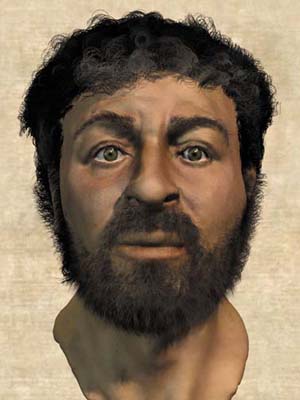
Save the Dates! A Lenten Series on the Historical Jesus

SON OF GOD

Today’s blog posting is an announcement of a Lenten course I will be offering beginning on February 20th. The course is sponsored by The Ecumenical Table of Madison and Fayette Counties and by the Berea College Women and Gender Studies program. It is open to all, and will be held in the Women and Gender Studies Center of Berea College on Wednesdays, Feb. 20th and 27th and on March 6th, 20th and 27th. (The Center is located on the second floor of Phelps-Stokes Chapel.) Sessions will run from 7:00 to 8:30. Here are the details:

From Jesus to Christ
The Quest of the Historical Jesus
(A Lenten Series for Seekers of an Adult Faith)

Course Description: This is a five-session Lenten experience of presentations by Mike followed by extensive group discussion. Its purpose is to enrich this Lent’s observance by helping participants to “meet Jesus again for the first time” – as thoughtful adults. To this end, participants will be introduced to the centuries-long “Quest of the Historical Jesus” and its importance to understanding Jesus and his relevance for our contemporary world – particularly to church, spirituality, and engagement with world issues. The course will focus on the Gospel of Mark (the earliest of the four canonical gospels). Reflection on Mark will be facilitated by reading and discussion of Ched Myers’ “Binding the Strong Man,” a series of Lenten reflections first published in Sojourners Magazine. (Texts will be supplied). Mike’s blog-site series on the historical Jesus and on Mary Magdalene will give additional input (http://www.mikerivageseul.wordpress.com/). The hope is that along with course sessions, a prayerful reading of Mark’s gospel accompanied by the other sources will provide inspiring and provocative Lenten reading for all. Presentations will be supplemented by excerpts from the PBS series, “From Jesus to Christ.”

Session Content

Wed. Feb. 20: Paradigms of Faith: four approaches to the Bible and faith
Wed. Feb. 27: The Quest of the Historical Jesus: history, principles,relevance
Wed. Mar. 6: Stages in the Development of the Christian Tradition:Jesus to Christ
Wed. Mar. 20: The Gospel of Mark: Its purposes and political import
Wed. Mar. 27: Finding our Places in the Church: the church as caravan

Typical Session Organization

1. Film Clip: “From Jesus to Christ” (10 minutes)
2. Presentation by Mike (30 minutes)
3. Questions and responses (15 minutes)
4. Break (5 minutes)
5. Discussion of Myers’ reading (30 minutes)

Please mark these dates on your calendar. Make this Lent purposeful and focused.

Unconditional Support for Israel? Even God Couldn’t Pass that Test!

Bible

In last week’s debate about Chuck Hegel’s nomination for Secretary of Defense, the phrase “unconditional support for Israel” surfaced as the expressed or implied criterion for Senate approval of nominee Hegel. Individuals like Elliot Abrams and organizations such as the American-Israel Public Affairs Committee (AIPAC) implicitly used that criterion to criticize the nominee for failing to offer such support despite Mr. Hegel’s unblemished record of voting for Israel’s interests. In doing so the AIPAC and its allies were evidently hoping to find receptive ears in the conservative Christian community which typically constitutes Israel’s strongest support-group on the grounds that the Jews are God’s “Chosen People.”

However, even passing acquaintance with the Bible shows that God himself (sic) never offered “unconditional support” of Israel, nor did the prophets, or Jesus of Nazareth. In fact, the Bible’s stories are largely accounts of Israel’s infidelities, of prophetic criticism of those failures, of their severe punishment by God. (Prophets, of course, were routinely denounced, persecuted, and killed for not offering unconditional support to the Jewish state.)

Usually divine punishment came in response to neglect and mistreatment of those who arguably represent God’s real “chosen people,” viz. the poor and oppressed – the widows, orphans, and resident immigrants. In fact, it might be argued that the Jews were God’s chosen people only insofar as they made up a paradigm of the poor and oppressed when Jacob’s descendents were enslaved in Egypt and exiles in Babylon. Given that understanding, the Palestinians today far better fit the profile of “chosen people” than do Zionist Jews.

Imagine the changes that would take place in U.S. domestic and international politics if Christians adopted the understanding of chosen people as the country’s and world’s poor and oppressed. Imagine if they demanded that nominees for Secretary of Defense or of President (!) show evidence of unconditional support for inner city children, the homeless, LGBTQs, AIDS victims, and the billions on our planet living on less than $2 a day. Imagine if they recognized Mother Earth herself as oppressed by U.S. consumption patterns and demanded the reforms necessary for her unconditional support.

If Christians made such demands (as we should), our country, our world would be an immeasurably better place. Because we do not, but concentrate instead on a nationalistic understanding of chosen people, Christians end up aggravating the world’s problems rather than pointing the way to solutions.

It’s time to change, read the Bible through the eyes of the poor and oppressed, and make demands accordingly.

Jesus Decides to Redeem His Wasted Life (Sunday’s Homily)

Readings for Feast of Baptism of the Lord: http://www.usccb.org/bible/readings/011313.cfm

Today is the Feast of the Baptism of the Lord. In that context, let’s think about baptism and the differences between the understandings we’ve inherited and those reflected in the practice of John the Baptist and Jesus of Nazareth. Those differences hold practical implications for our own lives as we wrestle with a faith that may have lost meaning for us, and as we struggle with the relative smallness and insignificance of our lives.

To begin with, think about traditional beliefs about baptism. If you’re like me, you may find them hard to swallow. A friend of mine, theologian Tony Equale, has recently pointed out that theology doesn’t really determine worship patterns. Instead superstitious temple and church rituals have shaped our beliefs. Practice determines belief, not the other way around. (See http://tonyequale.wordpress.com/2013/01/03/the-religiosity-of-the-people/)

What my friend means is that theology’s job has traditionally been to rationalize what people actually do in their efforts to tame life and achieve contact with the numinous, the mysterious, and the transcendent. They sacrifice chickens, behead bullocks, or vivisect lambs and then burn the animals’ carcasses. The smoke thus ‘feeds’ the Gods who are believed to need nourishment, placation, and cajoling in order to do the will of the people and their priests. Those congregations actually turn out to be more intelligent than the God who must be informed of their needs and what is best for their welfare. That’s superstition.

Catholic beliefs around baptism and the “sacrifice of the Mass” are cases in point. They were actually formed by the People’s credulous practice of baptism which was informed more by ancient ideas of all-powerful angry Gods than by Jesus’ radical teaching that God is Love. I mean early on, in a time of very high rates of infant mortality, popular belief came to see infant baptism as necessary to somehow save deceased children from a hell created by a threatening God.

This practice of the people rather than reflection on the words and deeds of Jesus led St. Augustine at the beginning of the 5th century to theorize that people have been born guilty – at enmity with God. Augustine thought that since children were condemned even before any personal sin on their parts, they must be born in sin. And that must be, Augustine reasoned, because they had inherited sin from their forebears and ultimately from the first human beings, Adam and Eve. Because of that “original sin,” God is justly angry with humans.

Now, as I said, the ancients believed that sacrifice was necessary to placate an angry God like that. So, in the Roman world, where sacrifice was understood in the terms I’ve just explained, Jesus’ death eventually became to be seen as a sacrifice whose primary purpose was to secure God’s approval of the Roman state. In this way, the “Mass” was transformed from a memorial meal to a re-enactment of Jesus’ sacrificial death. It was moved from a table with friends gathered around sharing food, to a “sacrifice” performed at an “altar” by a priest with his back turned to the people who watched the show from afar.

This Mass differed very little from what Romans were used to before Christianity became the state’s official religion in 381. In fact, it is entirely possible that ordinary people saw no difference between the “Mass” and the religious ritual they had been accustomed to when Jupiter or Mithra were worshipped as the official Gods of Rome. In other words, Christianity was transformed by the Roman Empire rather the empire being transformed by Christianity. There was a “theogony,” a battle of the Gods, between Jupiter and the Bible’s Yahweh; and Jupiter won. We’ve been worshipping him ever since.

How different all this is from what happens to Jesus at the baptism which today’s liturgy of the word celebrates! (And that brings me to my point about meaning in our seemingly wasted lives.) In today’s gospel, there is nothing suggesting “original sin.” Nor is Jesus presented as the incarnation of a God who needs to be mollified by sacrifice. Rather, Jesus comes as a disciple of John. (Scripture scholars tell us that John’s words about his inferiority before Jesus were inventions of the early church in a Jewish context where many still believed that John rather than Jesus was the long-awaited Messiah.)

So at the age of 30 or so, this young peasant from Nazareth presents himself for a ritual washing at the prophet’s hands in the legendary Jordan River. In Israel’s idealized past, that river had been crossed by slaves escaped from Egypt who on the river’s opposite shore found the “Promised Land” that became their national home. Eventually that crossing came to be understood as transforming a motley horde of renegade slaves into a unified nation of free people at the service of the God who had liberated them from demeaning servitude.

John’s practice of baptism in the Jordan (far from the corruption of the priests’ Temple and its endless sacrifices) summoned his Jewish contemporaries to reclaim their ancient identity that had been lost by the priests and scribes who had sold out to Roman re-enslavement of a once proud and liberated people.

John’s was a revivalist movement of Jewish reform. Those presenting themselves for baptism were expressing a desire to return to their religious roots and to alter their lives in a profound way.

Evidently, that’s why Jesus came to be baptized too. This country boy who (according to Luke’s “infancy narratives”) had begun his life with such promise is now about 30 years old. Perhaps in view of his parents’ expectations of him, his life so far seemed wasted. Perhaps he had resolved to finally make a difference. In any case, by approaching John in the Jordan’s waters, he expresses an intense need for change in his life. He wants to be John’s follower.

So John performs his baptismal ritual. And the miraculous happens. An epiphany occurs for Jesus. He hears a voice. It informs him that he is a child of God. Immediately he sets out on a vision quest to discover what those words might mean. Forty days of prayer and fasting bring on the visions – of angels and devils, of temptations, dangers and possibilities.

In the light of his desert experience, Jesus chooses not only to follow John as the leader of a reform movement. He chooses as well to follow Moses as the liberator of an enslaved people. He has truly crossed the Jordan. So he brings his message to the captive poor. Like him, they too are children of God — God’s specially chosen people. God’s kingdom belongs to them, he says, not to their rich oppressors. The poor must not allow themselves to be misled by the stultifying and domesticating doctrines of the priests and scribes. That was the thrust of Jesus’ teaching.

Coherent acts follow Jesus’ words. He discovers wondrous healing powers within himself. By touch, by faith, by his friendship, he cures stinking lepers, dirty beggars, street walkers who have lost their self-respect, the deaf, the dumb, the blind and lame. Jesus eats food with the social outcasts and street people of his day, sharing nourishment the way God does – without cost or expectation of reciprocation. Jesus finds himself explaining the mysterious, transcendent and ineffable in unforgettable stories that capture the imaginations of simple people hungry for the spiritual sustenance that he offers – that he embodies. No wonder his early followers tried to imitate Jesus by choosing John’s baptism as a sign of membership in their community and by following the Master’s example of sharing food the way God does in their re-enactment of the Lord’s Supper.

That was the understanding of baptism and Lord’s Supper that the first generations of Christians embraced. But it didn’t last long. Within a few generations (and especially after Christianity became the official religion of the Roman Empire at the end of the 4th century) the superstitions I referenced earlier had replaced the understanding and practice of Jesus and the Baptist. Soon baptism became an instrument for saving babies from original sin and hell. Soon the Lord’s Supper became the “Holy Sacrifice of the Mass” differing very little in ritual and spirit from offerings to Jupiter and Mithra.

Today’s liturgy of the word calls us beyond all of that. It summons us to follow Jesus who shows us the way to truly change our lives. Change comes by leaving behind the superstitious faith that supports empires past and present. Transformation comes when we share our food with each other and with the poor. It happens by committing ourselves to the “other world” represented by God’s Kingdom that has room for everyone, not just for the 1% served by our own churches, priests, scribes and their superstitious rituals.

Today’s liturgy of the word summons us to the banks of the Jordan to stand with Jesus and to hear God’s voice calling us from what has been so far wasted in our lives. Like Jesus, we are daughters and sons of God. We are beloved by the God of Love. Jesus’ example reminds us that It’s not too late to change our commitments and way of life.

After all (if we take our tradition literally) Jesus redeemed the insignificance of his own life in a single meaningful year – or maybe it was three.

Shame on NPR: Elliot Abrams Is Not a Trustworthy Authority

nprlogo_138x46

Have you noticed the rightward drift of National Public Radio? I think it’s unmistakable. That hasn’t caused me to adopt Mitt Romney’s position on the station’s defunding. However NPR’s validation of spurious right wing commentators has led me to petition my local station (WEKU) to replace “All Things Considered” with Amy Goodman’s “Democracy Now!” After all, the right has enough air space with its nearly absolute domination of AM radio.

Case in point: On yesterdays “All Things Considered,” Melissa Block interviewed Elliot Abrams about the pending appointment of Chuck Hegel, the former senator from Nebraska, as Secretary of Defense. Though a Republican, Hegel has been tapped by President Obama for this important cabinet post. His Republican credentials however have not prevented him from being opposed by neo-conservatives like Abrams who see him as “anti-Semitic.”

Abrams’ charge is based on Hegel’s criticism of “the Jewish lobby.” Apparently, the ex-senator is suspect not only for his use of that somehow objectionable phrase, but for pointing out that he had been elected a senator from Nebraska, not from Israel.
Additionally Abrams contests Hegel’s appointment because of the former Vietnam veteran’s seeming reluctance to endorse possible military action against Iran over its alleged nuclear ambitions. Hegel is suspect because he sees diplomacy and dialog as less destructive and more productive than yet another war in the Middle East.

Before voicing such opinions, Abrams was introduced as a former advisor to Presidents Reagan and George W. Bush, and as Senior Fellow at the Council on Foreign Relations. What the NPR interviewer didn’t say was that Abrams himself is part of “the Jewish lobby.” He is also a convicted felon. Abrams, you’ll recall, was found guilty of criminal activity for his role in the Iran-Contra affair and was later pardoned by George W. Bush.

Also unmentioned was Abrams’ role as point-man in Reagan’s wider illegal U.S. policy in Nicaragua costing the lives of nearly 100,000 Nicaraguan peasants at the hands of U.S.-supported terrorists. I remember quite well his interviews during the 1980s when he endorsed Reagan’s ridiculous characterization of the vicious Contras as “the moral equivalent of the Founding Fathers.” He also repeatedly (and falsely) described the Sandinistas as “totalitarian, Communist dictators.”

Despite such discredits, Block treated Abrams as a trustworthy objective authority from just another Washington think-tank. In reality, she might just as well have been interviewing Oliver North, G. Gordon Liddy or Rush Limbaugh.

That NPR should validate Abrams’ commentary without reminding its audience of such important elements of Abrams’ biography is inexcusable. Similarly unpardonable is Ms. Block’s failure to ask the obvious: (1) Is there a “Jewish lobby” or not? (2) Might Abrams be considered part of that lobby? (3) Was Hegel wrong in identifying himself as primarily responsible to his Nebraskan constituents rather than to Israel? (4) Why has Israel (unlike Iran) not signed onto the Nuclear Non-Proliferation Treaty? (5) If Iran should be sanctioned and threatened for its alleged nuclear ambitions, why not Israel for its de facto possession of hundreds of nuclear weapons?

NPR habitually ignores such obvious questions. “Democracy Now!” never does. That’s why I tune in more often to the latter than the former.

Returning Home by “Another Way” (Not Herod’s or the Priests’)

Readings for Epiphany Sunday: Is. 60:1-6; Ps. 72: 1-2, 7-8, 10-11, 12-13; Eph. 3:2-3a, 5-6; Mt. 2: 1-12 http://www.usccb.org/bible/readings/010613.cfm

Today we celebrate the feast of Epiphany. The word epiphany means the appearance or manifestation of God. Today’s feast recalls the time when wise men from the East traveled through Palestine seeking the long-awaited manifestation of God announced in today’s reading from the prophet Isaiah. He and today’s responsorial Psalm 72 tell us a great deal about that God. S/he’s not what small-minded believers expected or even wanted.

That’s why Herod “and all Jerusalem with him” were “troubled” when they unexpectedly met the travelers who were seeking a manifestation of the universal God that Isaiah had foreseen. The God Herod and the Jerusalem establishment knew and loved was nationalistic favoring Jews, the Hebrew language, and the Holy Land. He was pleased by Jewish customs and worship marked by animal sacrifice and lots of blood. So the nationalists were “troubled” when the universalists came seeking the Palestinian address of a newborn king transcending boundaries of all kinds. The wise men claimed that the very cosmos (the Star!) had revealed God’s Self to them even though they were not Jews. Evidently, they realized God not only transcended themselves and their countries, but planet earth itself. All creation somehow spoke of God to everyone who would listen.

The prophet Isaiah, Psalm 72, and Paul’s letter to the Ephesians agree with the wise men. All of them speak of a Divine Being who is universal, not belonging to a particular nation or religion. Recall what today’s reading said: This God is recognizable and intelligible to all nations regardless of their language or culture. The Divine One brings light to the thick darkness which causes us to limit God to privileged nations, races, and classes. The universal God brings peace and justice and champions of the poor, oppressed, lowly and afflicted. The newly manifested deity leads the rich (like the three kings) to redistribute their wealth to the poor (like Jesus and his peasant parents). This God wants all to have their fair share.

Matthew’s story says that Jesus manifested such a God. Jesus was the complete revelation of the God of peace and social justice – a world-centered, a cosmic-centered God.

Herod’s and Jerusalem’s response? Kill him! A universal God like that threatened Jerusalem’s Temple and priesthood. The Epiphany meant that such a God was not to be found there exclusively. This God would not be tied down to time or place. What then would become of priestly status, temple treasure, the Jerusalem tourism industry?
Epiphany also threatened Herod’s position. Recognizing a divinity who led the rich to transfer their treasure to the poor threatened class divisions too. A God on the side of the poor would embolden the lazy and unclean to rebel against those who used religion to keep the under-classes in line and resigned to their lot in life.

No, for Herod and his allies there could only be one solution: ignore the Star’s cosmic message, present a friendly ecumenical face to these stupid foreigners, derive the crucial information from them, and then kill off as many impoverished babies as possible hoping in the process to stop God’s threatening, unacceptable Self-disclosure.

Symbolically (and lamentably), Herod’s and Jerusalem’s response to the “troubling” universalist consciousness of the Eastern wise men mirrors that of our culture and church. Both keep us at the stage of childish ego-centrism – or at best, at the stage of nationalism, which makes us see the other and the other’s understanding of God as somehow foreign and threatening. Both culture and faith prevent us from growing up. Ironically, that’s a kind of infanticide. It’s a form of psychological murder that freezes us at immature stages of consciousness and so prevents us from developing along the lines celebrated in today’s feast of Epiphany.

Epiphany calls us to wake up – to grow up and to return home as the Magi did “by another way” that was not the way of nationalism, wealth, power-over or cooperation with kings, priests and empire.

STOP THE WARS:Thoughts on Afghanistan

Lately I’ve been reading Oliver Stone’s and Peter Kuznick’s The Untold Story of U.S. History. It’s a terrific read.  In fact, I gave hardback copies to all the members of my family for Christmas. The book’s final chapter on the Obama administration devotes lots of space to Afghanistan. In brief, here’s what it says:

There is no way the U.S. can “win” in Afghanistan. In fact, no one knows what “winning” might mean. That’s because the exact purpose of continued presence in Afghanistan is unclear. Originally, it was to dislodge the al Qaeda brain trust and fighters from the country. Now, we’re told, fewer than 100 such “terrorists” remain there. Most al Qaedans are now based in Pakistan. So the mission has morphed into preventing the Taliban from regaining control of the country. Most likely, the real reason for hostilities is Afghanistan’s vast mineral resources which are of supreme interest to multinational mining corporations.

In any case, the U.S. continues its military operations that impoverish not only the Afghan people, but our own country.  In other words, the United States is pouring vast sums of money down a rat hole – money that could be better used to address problems at home. It’s amazing that Republicans and Democrats alike are calling for austerity measures here while wasting trillions (!) there on a hopeless cause. If they truly want to balance the budget, STOP THE WARS!

For its part, the Karzai government is hopelessly corrupt. The would-be president was “elected” by a massively fraudulent process recognized as such by practically all observers. Graft constitutes the very purpose of seeking office in Afghanistan. Bribery is a way of life. Banking scandals involving Karzai’s relatives have rocked the country and enriched his family.  At one point, Karzai even threatened to join the Taliban.

Meanwhile, President Obama has lacked the courage and integrity to own his position as Commander in Chief and stop the war. Virtually everyone outside his hawkish Secretary of Defense, Robert Gates, and Generals Petraeus and McChrystal has advised him to do so. Yet Obama’s obsequiously deferred to the military brass at every turn, and has doubled down on a losing cause with troop surges and waffling on withdrawal deadlines.

All of this reveals the genius and success of Osama bin Laden’s strategy to repay the United States for its crimes against the Muslim world. The day after 9/11 bin Laden enumerated those transgressions quite clearly. They had nothing to do with “hating our freedom.” Instead he pointed to more than eight decades of the West’s exploiting the political economy of the former Ottoman Empire, to unqualified U.S. support of Israel in its oppression of the Palestinians, and to its desecration of Muslim holy places of Mecca and Medina by stationing foreign troops there following the First Gulf War.

Bin Laden wreaked his havoc in New York and in Washington’s Pentagon for a reported cost of $50,000. That’s what preparation and implementation cost to hijack those airplanes and fly them into the World Trade Center and Pentagon. In response, the United States has fought two illegal wars at the cost of more than $4 trillion, bankrupting itself in the process. It has disgraced itself by violating international law in its refusal to prosecute the war criminals responsible for such atrocities.

The U.S. has also shredded its own Constitution by suspending habeas corpus, routinely violating the 4th Amendment’s protections against unlawful search and seizure, and claiming the right to execute even its own citizens without trial. Additionally, the United States has also lost any claim to its alleged “exceptionalism” by its practices of torture and rendition and by routinely employing brutal death squads in Iraq and Afghanistan and their remotely controlled counterparts in its programs of drone assassinations in at least five countries. In the meantime, bin Laden’s strategy has American soldiers killing themselves more efficiently than their al-Qaeda enemies.

In other words, on an investment of $50,000 bin Laden has brought the U.S. economy to its knees, undermined its self-confidence, defeated the U.S. military, and has ruined the reputation of a country once widely admired throughout the world. And the bleeding continues; the returns are still coming in. So much for the protection of “defense” budgets currently shelling out more than a billion dollars each day!

What to do about such suicidal madness? It’s as simple as one, two three: (1) STOP THE WARS.  (2) Reinvest in U.S. infrastructure and job programs the millions wasted each day fighting Afghanistan’s heroic people who polls show want the U.S. out of their country. (What we call “terrorists” are defending their own borders from foreign invaders and brutal occupiers. They are the very people our government organized and funded as “freedom fighters” when they were terrorizing the Russians with the same tactics now being used against U.S. troops.) (3) Reconfigure U.S. military policy, cutting the Pentagon’s budget by at least 50% so that its purpose becomes defending our borders rather than the interests of multinational corporations which couldn’t care less about the United States or its people.

The Dysfunctional Holy Family

Readings for Holy Family Sunday: Sir. 3: 2-6, 12-14; Ps. 128: 1-5; Col. 3: 12-21; Lk. 2: 41-52 http://usccb.org/bible/readings/123012.cfm

Today is the feast of the Holy Family. We’re used to thinking of it as a cozy group of 3, Jesus, Mary and Joseph living in ideal circumstances, the way we picture them in our nativity crib scenes. Or we imagine Jesus’ early life as we find it depicted in medieval paintings of the carpenter Joseph’s workshop. There we often find a loving haloed and elderly foster-father instructing Jesus in his trade while Mary smiles in the background.

However, if we take seriously the “infancy narratives” coming from Matthew and Luke, we must draw the conclusion that Jesus’ home life was more complicated than that. You might even say that it was “troubled” right from the beginning. So for the moment, let’s suspend disbelief surrounding the historicity of the narratives about Jesus’ early years. Let’s try instead to unpack the stories at face value. Doing so, I think, shows them to be quite relevant to our own experiences – especially to that of our family dysfunctions and to our own experiences of being no one, without face, identity, or power before the world’s problems.

To begin with, think about Jesus’ family, the focus of today’s liturgy of the word.  It wasn’t perfect. The holy family was larger than we’re accustomed to imagine. Joseph and Mary probably had 7 or 8 children. According to the gospels, Jesus’ brothers’ names were James, Joseph, Judas, and Simon. Jesus is also said to have had at least 2 unnamed sisters. On the one hand, a large family like that would have been helpful to peasant farmers, if Mary and Joseph had any land. On the other hand, a family of 9 or 10 people would have been hard to maintain for rural peasants living in a backwater like Nazareth. It is likely then that hunger and struggling to make ends meet was a major part of Jesus’ early experience.

Jesus’ country was also war-torn at the time when he was born, and that certainly impacted his family. At approximately the moment of his conception, the Romans had razed the city of Sepphoris, located just an hour’s walk from Nazareth. Sepphoris was the capital of Galilee where Nazareth was located. Galilee was a hotbed of resistance to Rome’s occupation of Palestine. And a rebellion had erupted in Sepphoris about the year 4 BCE. That meant that the countryside would have been crawling with Roman soldiers at the time of Jesus’ conception. Inevitably, many young Jewish girls would have been raped by the occupying forces. Some see that fact as lending credence to an anti-Christian tradition claiming that Jesus was the product of rape of Jesus’ mother, Mary by a Roman soldier called Panthera.

In any case, Mary’s out-of-wedlock pregnancy would have raised many eyebrows in the rural village of Nazareth. Town gossips would have snickered and talked behind their hands about the young girl’s “virginal conception.” We know for certain that Mary’s mysterious pregnancy put Joseph in crisis. According to tradition, he suspected she had been unfaithful and thought her condition reason enough to break off their engagement. We also know that Mary chose to leave town “in haste” and travel to the hill country of Judah to her Cousin Elizabeth’s home – possibly to get some distance from small village talk.

Once that problem was resolved, the holy family’s troubles continued.  There was the matter of Jesus’ homelessness at the time of his birth. For the occasion, Joseph and Mary had to make do with a filthy stable with all of its animal droppings, noises, smells, vermin, rodents and cold.

And things got worse after that. The story goes that the local king Herod ordered an infanticide of all children under the age of 2 in the area surrounding the place of Jesus’ birth.  For Mary and Joseph, avoiding such unspeakable violence meant fleeing to Egypt in the middle of the night. It also meant trying to survive as immigrants in that far-off country – not speaking the language or knowing the customs, or feeling at home among those prejudiced against foreigners.

Once back in Palestine, things apparently settled down. However, the episode in today’s gospel reveals tension in the holy family that will resurface later in the gospels.

“The Finding in the Temple” is a coming of age story. At the age of 13, all Jewish boys would accompany their parents for the first time as a “genuine Israelite.” Each would then become a man, “one who goes up to the temple.” In Jesus’ time, the 13th year was anticipated by a year as a kind of preparation for the “big step” into adulthood.  Coming from a place like Nazareth, the boy from the country would have been dazzled by the splendor of the Temple with its colonnades, precious woods, unending polished steps, gold and silver candelabra. It would have been easy for him to wander away with other boys and become lost in it all.

His parents find him, we are told, easily conversing with learned men from the city whose manners, accents and clothing would have been intimidating to Jesus’ simple parents. And yet here was the country boy Jesus astounding the city people with the incisiveness of his questions and the wisdom of his answers. No doubt, the rural parents waited till they were out of earshot of their “betters” till they gave Jesus the dressing down they thought he deserved. The scolding may have lasted the entire three-day journey back to Nazareth.

His parents, we’re told in this morning’s reading, did not understand their son. We find out later on that the lack of understanding continued. At one point in Mark’s gospel, his mother and his siblings are described as thinking Jesus was out of his mind (Mk. 3: 34-35). This led to a formal estrangement between Jesus and his family. He more or less disowned them. When Jesus was told that his family has come to rescue him from his madness, he said in effect, “My mother – my family? That’s not who those people are. Instead, you (the outcasts, beggars, insurrectionists, prostitutes, unemployed, and ne’er do wells, who were his companions) – you are my real family, my real people.”

And yet today’s gospel concludes that Jesus went back to Nazareth with them. He advanced, Luke tells us in age and wisdom and grace before God and his neighbors. And that’s it. We hear no more about him for 20 years or so. He disappears. He becomes nobody.

And that brings me to the other part of today’s reflection – being a nobody. What does Jesus’ disappearance, his “hidden life,” tell us about the human condition?  According to our faith, Jesus was the full embodiment of God. Presumably, then, he had infinite power at his disposal. His world was as filled with problems as ours. There was Roman imperialism and the occupation of Palestine with its brutality, torture, rape, exploitation and oppression. There was political corruption among Jesus’ own people as the leaders of his time climbed into bed with the Romans. There was extreme poverty alongside obscene wealth. There was religious corruption. There was disease and ignorance.  And yet as far as the record is concerned, this embodiment of God did nothing.  For 97% of his life, Jesus did absolutely nothing!

Why? Do you think it might have been because, like us, he could do nothing significant about all those problems? And even when around the age of 30 he did finally emerge as a more or less public figure, what did he really do? He spoke some inspiring words, healed a few people, and worked some miracles that his contemporaries dismissed as parlor tricks. He provoked the authorities in a temple demonstration for religious purity and social justice, was arrested, tortured and executed as an insurrectionist.  That was pretty much it as far as his “public life” was concerned. Afterwards, the world pretty much continued as it had before his arrival.

I somehow find comfort in both Jesus’ family dysfunctions and in his “nobodiness.”  None of our families are perfect. Unexpected pregnancies, suspicions and jealousies dividing couples, financial struggles, problems with neighbors and gossip, displacement, lost and alienated children – it all seems about par for the course. I’m not even sure that Mary and Joseph didn’t wonder at times where they went wrong. There was a lot for them to process in their pillow talk as they saw their son hanging out with the wrong crowd, apparently losing his faith, and then getting into political problems they didn’t understand. My God, he finally ended up on death row! The black sheep of the family . . . .

And then there are our own little lives and their apparent lack of meaning. In the end, we’re nobodies, all of us. That’s what death makes apparent as we lose our physical form and minds and all that we worked for. We’re nobodies.  Few will remember us or think of us after we’re gone. We’re born, get married, have children, buy and sell a few items, and then die. And what became of all our hopes and dreams? What does it all mean?

Does it mean that it’s all O.K.; it’s all good? Does it mean “that’s life” – what it’s about? In fact, our vocation is to be precisely nobody instead of constantly striving to be Somebody. In the end, death discloses the truth about our vocation. It is the same as Jesus’ vocation. And that is to be open, faceless channels that disclose the presence of God in our very ordinary lives with their family dysfunctions and personal failures. It is to rise above such limitations or rather to use them to express the unbounded love of an apparently powerless God to those around us – especially to our family members who might not even understand.

Summary and Conclusions about the Historical Jesus (Part Two)

(This is the fourteenth in a series of “mini-classes” on the historical Jesus. Together the pieces are intended to assist those who wish to “dig deeper” into the scholarly foundations of postmodern faith and to understand the methodology behind the postings on the blog site. Today’s post is the last of a two-part conclusion of the series.)

In searching for the historical Jesus, it helps to remember that we know much more about the object of our quest than ever before. Mid-twentieth century discoveries at the Palestinian locations Qum Ran and Nag Hamadi have yielded manuscripts that have acquainted scholars with previously unknown sources about Jesus. Just as importantly, developments in the fields of history, linguistics, and archeology have made us more knowledgeable about Jesus’ historical context than any previous generation. Acquaintance with such context constitutes actual knowledge about Jesus and the people with whom he interacted.

Similarly, the disciplines like sociology, economics, psychology, and political science have developed principles that describe how individuals within given networks typically act in particular circumstances. One such standard might be termed the “principle of analogy. It holds that: We should ordinarily expect to have happened in the past what routinely happens in the present as described by the social sciences.  For instance, we know that Jesus grew up under Roman oppression. About the time of his birth, the recently unearthed capital of Galilee (Sepphoris – just six miles from Nazareth) was destroyed by Roman soldiers trying to wipe out insurgent patriots. Sociologists tell us (and imperial armies act upon this knowledge) that such wars of resistance end up involving virtually the entire local population. This means that Jesus and his family were likely involved as well. All such extra-biblical information helps us better understand the historical Jesus.

Such determinations also coincide with two interpretative guidelines that have emerged from third world scholarship over the last forty years or so. One standard is called the “preferential option for the poor.” The other is “the hermeneutical privilege of the poor.” Both signal a source of knowledge of the historical Jesus that is often neglected and even denigrated by mainstream biblical scholarship.

The option for the poor highlights the biblical fact that the God of the Bible in general and of the Christian Testament in particular takes sides with the poor in their ongoing struggle with the rich. In the Jewish Testament this taking sides is evident in two of what Jesus scholar, Marcus Borg, terms the tradition’s three “macro-stories.” These are the Bible’s primary stories that fired the imaginations of Jewish people and early Christians. They are the tales that gave coherence to their interpretations of life, their relationships with God, and of sacred scripture itself. The first two of these macro-stories tell of the Exodus and the Exile. The third is what Borg refers to as the Priestly Story.

Both the Exodus and Exile stories reveal God’s preference for the poor – 13 century slaves in Egypt and 6th century exiles in Babylon. They show God’s preference for slaves over their slave-masters and for prisoners of war over their captors. For its part, the priestly story prioritizes temple worship and the priesthood. It is a narrative of sin, guilt and forgiveness mediated by an ordained priesthood. The priestly story was the object of criticism by the prophets of the Jewish Tradition including Jesus of Nazareth.

Above all, the New Testament’s Jesus story is one of God’s preferential option for the poor. In that story God is understood as literally siding with the under-classes. First and foremost, it is no accident that the Divine chooses as its site of revelation a poor person rather than a figure of royalty or priesthood. Theologically and sociologically speaking, this point of incarnation represents God’s fundamental disclosure about divine commitment. Such commitment is underlined by the words and practice of Jesus as described in all the sources of the Christian Testament. In the gospel traditions, Jesus’ program consists in bringing Good News to the poor (Lk. 4: 16-21). The Kingdom of God, he insists, belongs to the poor and persecuted (Mt. 5: 3& 10). Moreover, the beneficiaries of Jesus’ acts of healing and exorcism are overwhelmingly the poor and outcast (Mk. 1: 41; 6:34; 8:2; Mt. 9:36; 14:14 15:21-28; 15:32; 17:14-29; 20:29-34; Lk. 7: 13-14, 17: 11-19 . . .). The Final Judgment will be based on one’s attitude and actions to relieve the sufferings of the hungry, thirsty, naked, sick, and imprisoned (Mt. 25: 31-46).

All of this means that God’s Chosen People are the poor. (Hebrew slaves in Egypt are merely the paradigmatic example of such divine preference.) What we know more than anything about the historical Jesus is his embodiment of God’s choice. Jesus is the symbol par excellence of the divine one’s preferential option for the poor.  For our purposes here, this divine fundamental option provides an interpretative principle for locating the authentic words and deeds of the historical Jesus.  Words and deeds attributed to Jesus’ favoring the poor over the rich are probably authentically his. Words and deeds placing the rich or privileged classes favorably must be interpreted in the light of their impact on the poor who are the primary beneficiaries of Jesus proclamation and practice.

God’s preferential option for the poor leads us to the second important tool of discernment. It is helpful not so much for locating the authentic words and deeds of Jesus but for interpreting them in his spirit – for getting at the underlying ideas and values of his words and actions. This is the principle of the hermeneutical privilege of the poor. This principle recognizes that the poor (i.e. our contemporaries closest in sociological position to the primary intended recipients of Jesus’ Good News) find themselves in a better position to interpret the words and deeds of Jesus than do the non-poor.

For example, when the well-to-do read Jesus’ words, “Blessed are you poor, for yours is the Kingdom of God” (Lk. 6:20), they are likely to unconsciously substitute Matthew’s less radical version (and therefore less likely to have come from the historical Jesus), “Blessed are the poor in spirit, for theirs is the kingdom of heaven” (Mt. 5:3). As a result, the well-off are prone to spiritualize even the surprising Lucan text. For them Jesus’ words become a promise of an after-life heaven for those who though rich are not attached to their wealth.  However, when the poor read Luke’s words, they take it as a divine pledge that God is on their side in their struggles with the rich.  Luke’s Jesus assures them that the future belongs to them precisely because they are poor, and that God’s kingdom will bring happiness to them and their children on this side of the grave.