Not Even God Gave Unconditional Support to the Jews –And None at All to Their Imperial Backers

Readings for 29th Sunday in Ordinary Time:Isaiah 45: 1, 4-6; Psalm 96: 1-10; 1st Thessalonians 1: 1-5b; Matthew 22: 15-21

During Apartheid-Israel’s genocidal assault on Palestine, we’re privileged to be confronted each week with readings from the “holy books” of the Judeo-Christian tradition. Muslims of course also consider those sources as divinely revealed.

Since Apartheid-Zionists invoke that shared tradition to justify their policies, let’s examine them closely.

This week’s selections are particularly relevant to the current ongoing slaughter inflicted by Apartheid-Israel because they raise questions concerning God’s so-called “chosen,” and of their relation to imperialism and colonialism – all concepts that figure prominently in what’s unfolding today in Palestine.

The central idea in today’s readings is that those who side with empire cannot pretend to belong to Israel’s God. There can be no dual citizenship simultaneously in empire and God’s Kingdom.

That simple idea applies both to Apartheid-Zionists and their American supporters whose imperial identity and unconditional support for Zionism makes them Apartheid-Americans.

Instead, today’s readings reveal that it is non-Jews who because they liberate captives from empire, qualify as God’s “chosen” – even as messianic.

They are the ones who belong to the Kingdom proclaimed by the Jewish Prophet Yeshua whose program (as he put it) was to bring good news to the poor, sight to the blind, liberty to captives, and a Jubilee Year centralizing debt forgiveness (Luke 4: 18).. Being “chosen” was not a question of ethnicity, he said, but of doing the right thing in favor of the oppressed and poor.

Today’s Gospel selection from the Jewish Matthew is also strongly anti-imperial as well as anti-hypocritical. It deals with the question of paying taxes to Caesar.

Let me show you what I mean by (1) recounting the most relevant shocking facts unfolding in the Middle East while the whole world is watching; then (2) sharing my “translations” of the readings for this 29th Sunday in Ordinary Time; (3) pointing out their relevance for Apartheid-Israelis and their U.S. enablers as together they ethnically cleanse the Gaza Strip, and finally (4) drawing some conclusions about the entire situation.

Israel-Palestine Today

Thursday night U.S. President Joe Biden pledged unwavering, unconditional support of Apartheid-Israel.

Assuming his leadership of NATO colonial powers (against the rest of world opinion) he proclaimed that Apartheid-America is:

  • What holds the world together,
  • Is universally loved,
  • Exceptional,
  • Indispensable,
  • All-powerful,
  • And unconditionally allied with Apartheid-Israelis,
  • Who in the face of Hamas’ pure evil,
  • Are admirably strong and resilient.

The president made these claims just after having:

  1. Claimed (without any investigation or citing any evidence) that Hamas (“the other team” as he put it) not Apartheid-Israel was the one responsible for the war crime of destroying a large Gazan hospital at the cost of at least 600 Palestinian lives, not to mention the seriously injured,
  2. Rejected (according to Alexander Mercouris) proposals to empower an independent investigation into that claim,
  3. Been slapped in the face by Arab leaders who refused to meet with a U.S. president.
  4. Vetoed a UN Security Council proposal calling for a humanitarian pause in Apartheid-Israel’s bombing campaign which had already claimed 3000 Palestinian victims, more than half of whom were women and children.

In the face of such hypocrisy, Mr. Biden’s claims about Apartheid-America appear pathetic, out-of-touch, and almost laughable. The aging president appeared to “protest too much.”

But over-protest is what declining empires have always done. Before their fall, they routinely divinize themselves, claim omnipotence, and pretend to be interested in peace.

That’s what the Roman Empire did. Or as Tacitus put it: “They create a wasteland and call it peace.” Romans even minted coins identifying the counterpart of Mr. Biden – Mr. Caesar – as God himself.

Imperial subjects have always seen right through such idolatry, drivel, and tired slogans. In response, they laugh, or cry, or like Hamas kill those who sympathize with or cooperate with apartheidism and its imperial supporters.

In today’s Gospel selection, Yeshua takes the humorous approach. He tricks his opponents into admitting their own hypocrisy. Going against their own rules, they’re exposed as bearers of idolatrous images on the occupiers’ coins.

Let’s look at the readings. What follows are my “translations” in the light of the remarks I’ve just made. Check out the originals here to see if I got them right.

Today’s Readings

Isaiah 45: 1, 4-6

600 years before Jesus, the Christ,
The LORD chose a non-Israelite,
Cyrus, king of Persia,
As His Anointed!

Yes, He tapped Cyrus,
As his “Christ,”
Because that non-believer liberated 
Israeli captives
From their Babylonian Captivity.

And this 
Though Cyrus 
Knew nothing of “The LORD,”
But merely did the right thing,
By freeing the enslaved.

This means that 
The all-powerful
Divine Parent 
Doesn’t care 
About “nationalities”
Or nation states
About “Israel” or “Persia,”
But only about justice and liberation
Of the downtrodden!

Psalm 96: 1-10

For such holy Carelessness
Because the Divine One
Loves us all,
Regardless of our origins
Or intellectual beliefs,
We are all grateful and happy!

1st Thessalonians 1: 1-5b

For instance,
Paul’s community in Thessalonica
Found location in Greece,
Not Israel.
It housed both Jews and Gentiles.
Their identity was based
On commitment to peace,
And on faith expressed 
By sharing solidarity 
With the poor
Identified by Yeshua
As God’s favorites
And liberating them
As the whole point
Of his prophetic work.

Matthew 22: 15-21

Jeshua's opponents
The populist Pharisees
And Roman puppet Herodians
Knew nothing of 
God’s universal love.
While denouncing idolatry,
They hypocritically
(And against their own law) 
Carried Roman coins,
Identifying Caesar
(Not the Divine One)
As God.

So, the trickster Yeshua 
Turned the tables on them all,
Charging
That such hypocrisy
Meant that they
Belonged to Caesar,
Not to God!

For Yeshua,
Paying taxes wasn’t the issue.
Religious hypocrisy was.

The irreverent 
Construction worker
From nowheresville Nazareth 
Was so funny,
And such a smart debater!

Conclusion

The title of this homily is meant to highlight what I’ve just said. It underlines the fact that no nation – not Israel, not our own, not anybody’s – deserves “unconditional support.”  

That’s because nation states are just fictions. Think about it. They are devices used by the rich and powerful (who often have stolen “their” land from indigenous people) to artificially separate a single people for purposes of dividing, ruling, and self-enrichment by way of practices like the taxation Jesus refused to endorse.  Here by “single people,” I’m talking about humanity itself.

As for the indigenous themselves, every tribe believes it was divinely chosen (and in some sense, I guess they are). All indigenous people believe that the land their ancestors originally inhabited is exceptional and directly given to them by some Divinity.

And of course, in the case of Israel-Palestine, Apartheid-Israelis are not “the indigenous” and never were. They arrived in Palestine in 1948. They were European colonizers from places like Poland, Romania, Hungary, Russia (and lately) from the United States. And as Chomsky points out, any ownership claims based on 2000-year-old religious mythology can have no serious political standing in the modern world. To claim otherwise borders on the superstitious and ridiculous.  

Moreover, even Zionists’ Exodus traditions admit that more than 3000 years ago, invading Hebrews from Egypt took part of Palestine from indigenous Canaanites and others by force of arms. I’m referring to Hittites, Amorites, Perizzites, Hivites, Jebusites, Geshurites, Maacaathites, and Philistines. All of those represent the indigenous ancestors of the Palestinians whose presence in the Holy Land long predated the arrival of Hebrews.

The bottom line is, however, that In the end, God or Source, the Ground of Being, the Divine Mother, Truth, or Life Itself (however you understand Ultimate Reality) doesn’t give a damn about ethnicity or race or national identity – except when they are used by imperial agents to divide and rule.

In fact, the Holy Books of the Judeo -Christian tradition make that point again and again. Most of the Bible’s books record the infidelities of Israel’s leadership and God’s punishment for their routine infidelity. This morning’s readings are no different. Neither are the events unfolding in Apartheid-Israel today.
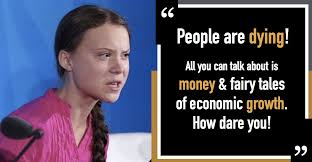
A Frightening Child & Prayer to Save the Environment

Readings for the 29th Sunday in Ordinary Time:  EX 17: 8-13; PS 121: 1-8; 2 TM 3: 14-4:2; HEB 4: 12; LK 18: 1-8

Were you inspired by Greta Thunberg? I couldn’t get over her courage.

Imagine: a child of 16 years suddenly thrust beneath the blinding spotlight of the world’s stage – speaking confidently with a pope and with heads of state, addressing huge crowds and the United Nations itself. All of that would frighten me. How about you?

And she called them all to task. “How dare you!” she repeated again and again to the world’s movers and shakers whose programs for addressing climate change fell far short of the goals set by climate scientists. “Don’t listen to me,” she repeated; “listen to the scientists.” In other words, align yourselves with what Mother Nature, Life Itself, and the Universe are telling us.

And, of course, you saw the effects of her audacity. Millions were mobilized across the planet.

What started as a one-girl protest before the Swedish parliament swiftly became a thing.

Youngsters everywhere, including my own grandchildren, walked out of class and imitated Greta’s defiance. My five-year-old grandson challenged us all for driving a Volvo van whose gas engine, he said, is destroying the environment. “We should be driving an electric car instead” he objected. A five-year-old!

As someone pointed out, it’s a “Children’s Crusade” against capitalism’s worship of Moloch.

And what fear it inspired in the powerful! This wisp of a girl exercising the super-powers of concentration and focus conferred by an Asperger’s condition that would have others hiding under a rock, suddenly had the movers and shakers shaking with fear. Some ganged up on her, attacked her parents, and even belittled the teenager as mentally deficient. Their cowardly desperation showed that they were more afraid of her than she of them.

All of that is relevant to today’s liturgy of the word. It’s about prayer understood as Greta- Thunberg-like alignment with Life’s processes. Regardless of what we might call it, such re-orientation can change the world and cause powerful enemies of justice to tremble even before those they see as the weakest among us.

More specifically, today’s readings trace biblical understandings of prayer from a voodoo-like practice intent on harming one’s enemies to the alignment with Life’s purposes just described. Here’s the way they run according to my own “translation.” Judge for yourself to see if I’ve got them right. You can read the originals here

 Long ago
When Israel’s primitive faith
Still pictured God
As a Man O’ War,
They magically imagined
A Yahweh persuaded
To slaughter their enemies
By Moses’ adoption
Of Wiccan postures,
Magic rocks
And feats of
Super-human endurance.
 
PS 121: 1-8
 
They were right,
Of course,
To intuit
That the Creator
Is eternally helpful
In protecting
The lives
And chosen paths
Of his creatures
Providing sunlight by day
And moonlight by night.
Divine power
Is always disposed
To help
The oppressed.
 
2 TM 3: 14-4:2
 
However, the mystic Paul
Had already
Ventured far beyond
His forebears’ voodoo.
Though he recognized
Israel’s written tradition
As inspired,
He also
Identified Jesus
As its ultimate interpreter.
For the Master,
Life’s Author
Was no Man O’ War
But a loving, patient, encouraging
Father.
 
HEB 4: 12
 
Deep in our hearts
We already knew
This to be true.
Thank you!
 
LK 18: 1-8
 
The comic Jesus
Even joked about
Those who thought
Of God as a cruel judge
Susceptible
To tiresome entreaties
And cowering before
Poor widows who
Might cuff him
About the ears
If he didn’t
Answer their petitions.
Better, he said
To “pray always”
In a quiet way
That matches
God’s unwavering disposal
To secure justice
For the oppressed.
No Man O’ War
No exhausting prayers
No Mosaic sorcerer
Here!

There are salutary lessons in those readings.

According to their vision, prayer does not mean persuading some Man in The Sky to change his mind to match our capricious whims. Instead, it’s the process of aligning our minds with the Universal Love that underpins all of reality and that in practice expresses itself in justice for widows, orphans, and immigrants – the traditional biblical protegees of God’s concern. Prayer is a habit of mind that doesn’t call for words or supplications, but for awareness of the places in life where love-as-justice is breaking in.

That love remains nearly invisible because of human attempts to obscure it with tropes about rugged individualism, survival of the fittest, dog-eat-dog reality, and “nature red in tooth and claw.” Such worldly wisdom normalizes fear. Unlike Greta Thunberg, ordinary people adopting that normality become frightened and immobilized before terror -inspiring kings, presidents, bosses and judges.

Jesus’ parable of the widow and the judge turns that familiar dynamic on its head. It calls us to “pray always” in the sense earlier described. Then, once our minds are aligned with God’s loving purposes, we’re called to imitate the widow who insistently sought justice not from God, but from the judge “who neither feared God nor respected any human being.”

In other words, Love understood as Justice for the oppressed will drive us (as it did Greta and her Children’s Crusade) to petition, protest, demonstrate, and engage in the type of direct action that threatens such agents of injustice. Jesus’ joke about the judge’s fear that a poor widow might do him physical harm makes his point that the selfish ones who exercise power over us are more afraid of us than we of them.

So, today’s readings suggest, align with justice and then join Greta in the streets. Be as courageous as she. Become as a little child (MT 18:3). Frighten the hell out of those judges, presidents and worshippers of Moloch! Save the planet!  

In Praise of Persistent Women like Medea Benjamin, Elizabeth Warren, and Amy Goodman (Sunday Homily)

Widow-and-Unjust-Judge

Readings for 29th Sunday in Ordinary Time: EX 17: 8-13; PS 121: 1-8; 2 TM 3:14-4:2; LK 18: 1-8; http://usccb.org/bible/readings/102013.cfm

Medea Benjamin is a peace activist and founder of Code Pink. In May of this year, she interrupted a speech by President Obama about the closing of Guantanamo Bay. Four times during his speech, she reminded the president that as chief executive he had the power to close the prison as he had promised during his campaign of 2008. The president was forced to acknowledge Benjamin’s point, but held that the issue was more complicated than she made it out to be. Clearly her outspokenness called for great courage and exposed to an international audience President Obama’s failure to keep his word. It pressured the president to change policy.
_____
Elizabeth Warren is the Democratic Senator from Massachusetts. Elected to the Senate in 2012, she is the first female senator from Massachusetts. Ms. Warren is a tireless consumer advocate and the first female Senator from Massachusetts. During her campaign, she called attention to the hypocrisy of “self-made men” claiming they owed nothing to government or community to explain their success. She said,

“There is nobody in this country who got rich on his own. Nobody. You built a factory out there — good for you. But I want to be clear. You moved your goods to market on the roads the rest of us paid for. You hired workers the rest of us paid to educate. You were safe in your factory because of police forces and fire forces that the rest of us paid for.….Now look. You built a factory and it turned into something terrific or a great idea — God Bless! Keep a Big Hunk of it. But part of the underlying social contract is you take a hunk of that and pay forward for the next kid who comes along.”
_____
Amy Goodman is a television journalist and host of “Democracy Now: the War and Peace Report” – a daily news hour on the Pacifica Radio and Television network. In the face of mainstream media’s refusal to cover significant grassroots events and issues, Ms. Goodman’s program has been called “probably the most significant progressive news institution that has come around in some time” (by professor and media critic Robert McChesney.) In addition to OpEdNews, “Democracy Now” is an invaluable daily source of information for the well-informed. It is an example of what can be accomplished for peace and social justice in the face of overwhelming odds.
_____

Keep in mind the examples of Medea Benjamin, Elizabeth Warren, and Amy Goodman as we attempt to understand today’s liturgy of the word. Our readings raise the issue of prayer, and what it means (in Jesus’ words) to “pray always without ceasing.”

Actually, the readings compare what might be termed “men’s way of praying” with women’s. At least in today’s readings, men pray that God might intervene to slaughter their enemies. In contrast, the woman in today’s gospel confronts the power structure of her day as her way of praying. That is, she persistently works to bring her world into harmony with God’s justice.

Take that first reading from Exodus. . . . Did it make you raise your eyebrows? It should have. It’s about God facilitating mass slaughter. It tells the story of Moses praying during a battle against the King of Amalek. It’s a classic etiology evidently meant to explain a chair-like rock formation near a site remembered as an early Hebrew battleground.

“What means this formation?” would have been the question inspiring this explanatory folk tale. “Well,” came the answer, “Long ago when our enemy Amelek attacked our people, Moses told Joshua to raise an elite corps of fighters. During the course of the ensuing battle, Moses watched from this very place where we are standing accompanied by his brother Aaron and another friend called Hur.

Moses raised his hands in prayer during the day-long battle. And as long as he did so, Joshua’s troops got the better of Amalek’s. But Moses would get tired from time to time; so he’d lower his hands. When he did so, Amalek’s troops got the better of Joshua’s.

“To solve the problem, Aaron and Hur sat Moses down on this stone you see before us. They held up his arms during the entire battle. That strategy saved the day. Joshua won his battle “mowing down Amelek and his people.”

So here we have a God who responds to ad hoc prayers and reverses history so that one group of his children might “mow down” another group of people he supposedly loves. Hmmm. . . .

In today’s gospel, Jesus has another approach to prayer. For him, prayer is not an ad hoc affair – about changing God’s mind. Rather, praying always represents the adoption of an attitude that consistently seeks justice for the oppressed. Praying always means living from a place that won’t let go of justice concerns like those that drive Medea Benjamin, Elizabeth Warren and Amy Goodman.

To illustrate that point for his own time, Jesus tells a comic parable about a persistent woman. (Remember, he’s speaking to people who have no power in a legal system, which, like ours favors the wealthy and powerful.)

“Imagine a judge,” Jesus said. “He’s like most of the judges we know. He doesn’t give a damn about the God of the poor, and he doesn’t care what people like us think of him.” (Already Jesus’ audience is smiling seeing a funny story coming.)

“But then along comes this widow-woman. Like all of us, she’s poor, and as usual, the judge pays no attention to her.” (Jesus’ audience recognizes the syndrome; they nod to each other.)

“But this woman’s a nagger,” Jesus says. (Now his audience is snickering and chuckling.)

“She just won’t let go. And she’s strong and aggressive besides. She comes back day after day insisting that she get justice against her adversary. And as the days go by, she gets more and more insistent – and threatening. So much so that the judge starts getting worried about his own safety.

(Laughter from the crowd . . .)

“’While it is true,’ he says to himself, ‘that I neither fear God nor respect any human being, because this widow keeps bothering me I shall deliver a just decision for her lest she finally come and strike me.’”

In other words, this macho judge is afraid of this poor widow; he’s afraid she’ll come and beat him up!

Can you imagine Jesus saying that without smiling broadly – and without the crowd roaring in laughter?

Anyway, here’s Jesus point: “If an unjust judge responds to the prayer of the poor like that, how do you suppose the All-Parent will respond when we ask for justice? The All-Parent will respond swiftly, Jesus says, because that’s who God is – the one who (as Martin Luther King put it) has established an arc of history that bends towards justice.

Prayer, then, is about reminding ourselves of that fact, trusting and having faith that in the long run justice and truth will prevail. Taking that position in the face of overwhelming evidence to the contrary, takes great faith that’s harder and harder to find.

So Jesus ends his parable with the rhetorical question, “When the Son of Man returns, do you think he’ll find that kind of faith anywhere?”

What I’m suggesting here is that today we’re more likely to find that kind of faith, that kind of prayer, that kind of persistence in women rather than men. The example of social activist Medea Benjamin encourages us to find our voices in defense of the voiceless in U.S. prison camps throughout the world. Politician, Elizabeth Warren, calls us to pray always by calling into question received truths like those surrounding “self-made men.” Amy Goodman and her “War and Peace Report” inspire us to renounce ideas of God that call us to “mow our enemies down.”

Thank God for persistent women! We men have an awful lot to learn from them.