The Dysfunctional Holy Family

Readings for Holy Family Sunday: Sir. 3: 2-6, 12-14; Ps. 128: 1-5; Col. 3: 12-21; Lk. 2: 41-52 http://usccb.org/bible/readings/123012.cfm

Today is the feast of the Holy Family. We’re used to thinking of it as a cozy group of 3, Jesus, Mary and Joseph living in ideal circumstances, the way we picture them in our nativity crib scenes. Or we imagine Jesus’ early life as we find it depicted in medieval paintings of the carpenter Joseph’s workshop. There we often find a loving haloed and elderly foster-father instructing Jesus in his trade while Mary smiles in the background.

However, if we take seriously the “infancy narratives” coming from Matthew and Luke, we must draw the conclusion that Jesus’ home life was more complicated than that. You might even say that it was “troubled” right from the beginning. So for the moment, let’s suspend disbelief surrounding the historicity of the narratives about Jesus’ early years. Let’s try instead to unpack the stories at face value. Doing so, I think, shows them to be quite relevant to our own experiences – especially to that of our family dysfunctions and to our own experiences of being no one, without face, identity, or power before the world’s problems.

To begin with, think about Jesus’ family, the focus of today’s liturgy of the word.  It wasn’t perfect. The holy family was larger than we’re accustomed to imagine. Joseph and Mary probably had 7 or 8 children. According to the gospels, Jesus’ brothers’ names were James, Joseph, Judas, and Simon. Jesus is also said to have had at least 2 unnamed sisters. On the one hand, a large family like that would have been helpful to peasant farmers, if Mary and Joseph had any land. On the other hand, a family of 9 or 10 people would have been hard to maintain for rural peasants living in a backwater like Nazareth. It is likely then that hunger and struggling to make ends meet was a major part of Jesus’ early experience.

Jesus’ country was also war-torn at the time when he was born, and that certainly impacted his family. At approximately the moment of his conception, the Romans had razed the city of Sepphoris, located just an hour’s walk from Nazareth. Sepphoris was the capital of Galilee where Nazareth was located. Galilee was a hotbed of resistance to Rome’s occupation of Palestine. And a rebellion had erupted in Sepphoris about the year 4 BCE. That meant that the countryside would have been crawling with Roman soldiers at the time of Jesus’ conception. Inevitably, many young Jewish girls would have been raped by the occupying forces. Some see that fact as lending credence to an anti-Christian tradition claiming that Jesus was the product of rape of Jesus’ mother, Mary by a Roman soldier called Panthera.

In any case, Mary’s out-of-wedlock pregnancy would have raised many eyebrows in the rural village of Nazareth. Town gossips would have snickered and talked behind their hands about the young girl’s “virginal conception.” We know for certain that Mary’s mysterious pregnancy put Joseph in crisis. According to tradition, he suspected she had been unfaithful and thought her condition reason enough to break off their engagement. We also know that Mary chose to leave town “in haste” and travel to the hill country of Judah to her Cousin Elizabeth’s home – possibly to get some distance from small village talk.

Once that problem was resolved, the holy family’s troubles continued.  There was the matter of Jesus’ homelessness at the time of his birth. For the occasion, Joseph and Mary had to make do with a filthy stable with all of its animal droppings, noises, smells, vermin, rodents and cold.

And things got worse after that. The story goes that the local king Herod ordered an infanticide of all children under the age of 2 in the area surrounding the place of Jesus’ birth.  For Mary and Joseph, avoiding such unspeakable violence meant fleeing to Egypt in the middle of the night. It also meant trying to survive as immigrants in that far-off country – not speaking the language or knowing the customs, or feeling at home among those prejudiced against foreigners.

Once back in Palestine, things apparently settled down. However, the episode in today’s gospel reveals tension in the holy family that will resurface later in the gospels.

“The Finding in the Temple” is a coming of age story. At the age of 13, all Jewish boys would accompany their parents for the first time as a “genuine Israelite.” Each would then become a man, “one who goes up to the temple.” In Jesus’ time, the 13th year was anticipated by a year as a kind of preparation for the “big step” into adulthood.  Coming from a place like Nazareth, the boy from the country would have been dazzled by the splendor of the Temple with its colonnades, precious woods, unending polished steps, gold and silver candelabra. It would have been easy for him to wander away with other boys and become lost in it all.

His parents find him, we are told, easily conversing with learned men from the city whose manners, accents and clothing would have been intimidating to Jesus’ simple parents. And yet here was the country boy Jesus astounding the city people with the incisiveness of his questions and the wisdom of his answers. No doubt, the rural parents waited till they were out of earshot of their “betters” till they gave Jesus the dressing down they thought he deserved. The scolding may have lasted the entire three-day journey back to Nazareth.

His parents, we’re told in this morning’s reading, did not understand their son. We find out later on that the lack of understanding continued. At one point in Mark’s gospel, his mother and his siblings are described as thinking Jesus was out of his mind (Mk. 3: 34-35). This led to a formal estrangement between Jesus and his family. He more or less disowned them. When Jesus was told that his family has come to rescue him from his madness, he said in effect, “My mother – my family? That’s not who those people are. Instead, you (the outcasts, beggars, insurrectionists, prostitutes, unemployed, and ne’er do wells, who were his companions) – you are my real family, my real people.”

And yet today’s gospel concludes that Jesus went back to Nazareth with them. He advanced, Luke tells us in age and wisdom and grace before God and his neighbors. And that’s it. We hear no more about him for 20 years or so. He disappears. He becomes nobody.

And that brings me to the other part of today’s reflection – being a nobody. What does Jesus’ disappearance, his “hidden life,” tell us about the human condition?  According to our faith, Jesus was the full embodiment of God. Presumably, then, he had infinite power at his disposal. His world was as filled with problems as ours. There was Roman imperialism and the occupation of Palestine with its brutality, torture, rape, exploitation and oppression. There was political corruption among Jesus’ own people as the leaders of his time climbed into bed with the Romans. There was extreme poverty alongside obscene wealth. There was religious corruption. There was disease and ignorance.  And yet as far as the record is concerned, this embodiment of God did nothing.  For 97% of his life, Jesus did absolutely nothing!

Why? Do you think it might have been because, like us, he could do nothing significant about all those problems? And even when around the age of 30 he did finally emerge as a more or less public figure, what did he really do? He spoke some inspiring words, healed a few people, and worked some miracles that his contemporaries dismissed as parlor tricks. He provoked the authorities in a temple demonstration for religious purity and social justice, was arrested, tortured and executed as an insurrectionist.  That was pretty much it as far as his “public life” was concerned. Afterwards, the world pretty much continued as it had before his arrival.

I somehow find comfort in both Jesus’ family dysfunctions and in his “nobodiness.”  None of our families are perfect. Unexpected pregnancies, suspicions and jealousies dividing couples, financial struggles, problems with neighbors and gossip, displacement, lost and alienated children – it all seems about par for the course. I’m not even sure that Mary and Joseph didn’t wonder at times where they went wrong. There was a lot for them to process in their pillow talk as they saw their son hanging out with the wrong crowd, apparently losing his faith, and then getting into political problems they didn’t understand. My God, he finally ended up on death row! The black sheep of the family . . . .

And then there are our own little lives and their apparent lack of meaning. In the end, we’re nobodies, all of us. That’s what death makes apparent as we lose our physical form and minds and all that we worked for. We’re nobodies.  Few will remember us or think of us after we’re gone. We’re born, get married, have children, buy and sell a few items, and then die. And what became of all our hopes and dreams? What does it all mean?

Does it mean that it’s all O.K.; it’s all good? Does it mean “that’s life” – what it’s about? In fact, our vocation is to be precisely nobody instead of constantly striving to be Somebody. In the end, death discloses the truth about our vocation. It is the same as Jesus’ vocation. And that is to be open, faceless channels that disclose the presence of God in our very ordinary lives with their family dysfunctions and personal failures. It is to rise above such limitations or rather to use them to express the unbounded love of an apparently powerless God to those around us – especially to our family members who might not even understand.

Summary and Conclusions about the Historical Jesus (Part Two)

(This is the fourteenth in a series of “mini-classes” on the historical Jesus. Together the pieces are intended to assist those who wish to “dig deeper” into the scholarly foundations of postmodern faith and to understand the methodology behind the postings on the blog site. Today’s post is the last of a two-part conclusion of the series.)

In searching for the historical Jesus, it helps to remember that we know much more about the object of our quest than ever before. Mid-twentieth century discoveries at the Palestinian locations Qum Ran and Nag Hamadi have yielded manuscripts that have acquainted scholars with previously unknown sources about Jesus. Just as importantly, developments in the fields of history, linguistics, and archeology have made us more knowledgeable about Jesus’ historical context than any previous generation. Acquaintance with such context constitutes actual knowledge about Jesus and the people with whom he interacted.

Similarly, the disciplines like sociology, economics, psychology, and political science have developed principles that describe how individuals within given networks typically act in particular circumstances. One such standard might be termed the “principle of analogy. It holds that: We should ordinarily expect to have happened in the past what routinely happens in the present as described by the social sciences.  For instance, we know that Jesus grew up under Roman oppression. About the time of his birth, the recently unearthed capital of Galilee (Sepphoris – just six miles from Nazareth) was destroyed by Roman soldiers trying to wipe out insurgent patriots. Sociologists tell us (and imperial armies act upon this knowledge) that such wars of resistance end up involving virtually the entire local population. This means that Jesus and his family were likely involved as well. All such extra-biblical information helps us better understand the historical Jesus.

Such determinations also coincide with two interpretative guidelines that have emerged from third world scholarship over the last forty years or so. One standard is called the “preferential option for the poor.” The other is “the hermeneutical privilege of the poor.” Both signal a source of knowledge of the historical Jesus that is often neglected and even denigrated by mainstream biblical scholarship.

The option for the poor highlights the biblical fact that the God of the Bible in general and of the Christian Testament in particular takes sides with the poor in their ongoing struggle with the rich. In the Jewish Testament this taking sides is evident in two of what Jesus scholar, Marcus Borg, terms the tradition’s three “macro-stories.” These are the Bible’s primary stories that fired the imaginations of Jewish people and early Christians. They are the tales that gave coherence to their interpretations of life, their relationships with God, and of sacred scripture itself. The first two of these macro-stories tell of the Exodus and the Exile. The third is what Borg refers to as the Priestly Story.

Both the Exodus and Exile stories reveal God’s preference for the poor – 13 century slaves in Egypt and 6th century exiles in Babylon. They show God’s preference for slaves over their slave-masters and for prisoners of war over their captors. For its part, the priestly story prioritizes temple worship and the priesthood. It is a narrative of sin, guilt and forgiveness mediated by an ordained priesthood. The priestly story was the object of criticism by the prophets of the Jewish Tradition including Jesus of Nazareth.

Above all, the New Testament’s Jesus story is one of God’s preferential option for the poor. In that story God is understood as literally siding with the under-classes. First and foremost, it is no accident that the Divine chooses as its site of revelation a poor person rather than a figure of royalty or priesthood. Theologically and sociologically speaking, this point of incarnation represents God’s fundamental disclosure about divine commitment. Such commitment is underlined by the words and practice of Jesus as described in all the sources of the Christian Testament. In the gospel traditions, Jesus’ program consists in bringing Good News to the poor (Lk. 4: 16-21). The Kingdom of God, he insists, belongs to the poor and persecuted (Mt. 5: 3& 10). Moreover, the beneficiaries of Jesus’ acts of healing and exorcism are overwhelmingly the poor and outcast (Mk. 1: 41; 6:34; 8:2; Mt. 9:36; 14:14 15:21-28; 15:32; 17:14-29; 20:29-34; Lk. 7: 13-14, 17: 11-19 . . .). The Final Judgment will be based on one’s attitude and actions to relieve the sufferings of the hungry, thirsty, naked, sick, and imprisoned (Mt. 25: 31-46).

All of this means that God’s Chosen People are the poor. (Hebrew slaves in Egypt are merely the paradigmatic example of such divine preference.) What we know more than anything about the historical Jesus is his embodiment of God’s choice. Jesus is the symbol par excellence of the divine one’s preferential option for the poor.  For our purposes here, this divine fundamental option provides an interpretative principle for locating the authentic words and deeds of the historical Jesus.  Words and deeds attributed to Jesus’ favoring the poor over the rich are probably authentically his. Words and deeds placing the rich or privileged classes favorably must be interpreted in the light of their impact on the poor who are the primary beneficiaries of Jesus proclamation and practice.

God’s preferential option for the poor leads us to the second important tool of discernment. It is helpful not so much for locating the authentic words and deeds of Jesus but for interpreting them in his spirit – for getting at the underlying ideas and values of his words and actions. This is the principle of the hermeneutical privilege of the poor. This principle recognizes that the poor (i.e. our contemporaries closest in sociological position to the primary intended recipients of Jesus’ Good News) find themselves in a better position to interpret the words and deeds of Jesus than do the non-poor.

For example, when the well-to-do read Jesus’ words, “Blessed are you poor, for yours is the Kingdom of God” (Lk. 6:20), they are likely to unconsciously substitute Matthew’s less radical version (and therefore less likely to have come from the historical Jesus), “Blessed are the poor in spirit, for theirs is the kingdom of heaven” (Mt. 5:3). As a result, the well-off are prone to spiritualize even the surprising Lucan text. For them Jesus’ words become a promise of an after-life heaven for those who though rich are not attached to their wealth.  However, when the poor read Luke’s words, they take it as a divine pledge that God is on their side in their struggles with the rich.  Luke’s Jesus assures them that the future belongs to them precisely because they are poor, and that God’s kingdom will bring happiness to them and their children on this side of the grave.

Summary and Conclusions about the Historical Jesus (Part One)

(This is the thirteenth in a series of “mini-classes” on the historical Jesus. Together the pieces are intended to assist those who wish to “dig deeper” into the scholarly foundations of postmodern faith and to understand the methodology behind the postings on the blog site. Today’s post is the first of a two-part conclusion of the series.)

In the early first century BCE, a prophet called Jesus of Nazareth is said to have lived in Palestine. We find record of his existence not only in the 4 canonical gospels of Mark, Matthew, Luke, and John, but also in as many as 200 other “gospels” that were rejected as “heretical” by early church authorities. Additionally, there are references to Jesus’ existence and execution in sources outside the Bible including the Jewish historian Josephus, and the Roman historian, Tacitus.

All of this is quite remarkable, since Jesus was not a member of the ruling classes, but a common working man from a very remote village in a remote province of the Roman Empire. The ancients (and even our contemporaries) did not usually keep records of such people. Moreover, Jesus’ contemporaries were mostly illiterate and not able to leave documentary records themselves. In fact, far from being a member of the literate royal or priestly classes, the Jesus of the gospels is presented as alienated from such groups. He was excommunicated by the religious authorities of his community and finally condemned and executed by the civil and imperial powers of his day. Given Jesus’ social insignificance on the one hand and the abundance of record about him on the other, there can be little question about the actual existence of the historical person, Jesus of Nazareth.

However, the historical details of Jesus’ life are another matter. Strictly speaking, we have no historical records of Jesus’ life. What we have instead are “gospels” which are faith documents highly colored by the beliefs of their authors. In fact, the purpose behind the gospels is not primarily to convey biographical detail, but to present the figure of Jesus as seen in a light that was not apparent to most of the people who witnessed his life – the light of faith. Additionally, evidence shows that the authors of the gospels were not above inventing words and deeds they attribute to Jesus in order to make their point about his being the Son of God.

In chronological perspective, what we have in the gospels is a kind of layered “onion” based on an historical event (the life of Jesus) but subsequently enhanced by a “resurrection” experience, by an overwhelming infusion of a “Holy Spirit” (on Pentecost), by an initial proclamation (called “kerygma”), by a long oral tradition of nearly 50 years, and by the eventual writing down of that tradition adapted for communities in vastly different historical circumstances.

In addition those traditions were melded with   “pagan” elements provided by contact with the Greco-Roman world. (This is not even to mention other elements that were eventually syncretized with Christianity. These came, for example, from Germanic nature religions after the 5th century fall of the Roman Empire. They came as well from sources as distant as Egypt, India, and China as Christianity blended its own spiritualities with religious traditions from those geographical locations.)

After peeling that onion, the question remains, “Are the peels all we have left?” Is it impossible to know anything at all of the historical Jesus? The question is important for believers since what Jesus really said and did and not the later interpretative traditions determines the content of the actual revelation embodied and communicated in Jesus of Nazareth. Jesus words and deeds are the final court of appeal when discrepancies or contradictions arise concerning the doctrinal or moral content of Christian faith.

For instance, did the God Jesus revealed favor the poor over the rich? Was the Kingdom of God Jesus preached more open to the values of socialism or of capitalism? Must followers of Jesus espouse non-violence or are the teachings of Jesus compatible with modern warfare or violence of any kind? Should taxes be paid to the state? Is divorce permitted or not? Did Jesus really claim to be God’s unique son? Is he the “only way” to the Father? And what about the virgin birth and infancy narratives; did the events allegedly behind them actually happen?

To answer such questions and in general to “get at” the historical Jesus, scholars have developed those “tools of discernment” described earlier in this series. The criteria include multiple attestation, embarrassment, discontinuity, rejection and execution, and coherence. “Multiple attestation” refers to traditions about Jesus’ words and deeds found in two or more of the canonical gospels and/or in several non-canonical sources. The criterion of “embarrassment” applies to elements the Jesus tradition includes even though such inclusion runs counter to the apparent intention of the author.(For instance, presenting Jesus as baptized by John gives the impression that Jesus was subordinate to the Baptist.) “Discontinuity” refers to words or deeds of Jesus that cannot be derived from either the teachings of Judaism or from the early church. [An example of discontinuity would be Jesus’ rejection of voluntary fasting for his disciples (Mk. 2: 18-22).] The standard of “rejection and execution” is based on the historical fact of Jesus’ crucifixion (established by the criteria of embarrassment and multiple attestation).  It authenticates words and acts of Jesus that alienated, infuriated and outraged the religious and political authorities of his day – that led to his execution. (A Jesus who does not alienate people, especially the powerful, cannot be the historical Jesus.) The standard of “coherence” applies to gospel inclusions that agree with the previously described criteria.

(Series Conclusion on Wednesday)

Homily for the Fourth Sunday of Advent Based on Lk. 1:24-39 (?)

(For this week’s homily, I’ve invited my good friend and resigned priest, John Capillo to share his thoughts. In his formal priestly days John worked in the archdiocese of Brooklyn in New York, and in El Salvador. A prophet and  father of  four grown children, John has spent his informal priestly days in public service — most notably working for the Kentucky Environmental Foundation. He is a wonderful teacher, and has often visited my classes and those of my bride, Peggy. I know you will love his words below.)

Mary set out
and traveled to the hill country in haste
to a town of Judah,
where she entered the house of Zechariah
and greeted Elizabeth.

Recall the previous scene in Luke.  Who is this Mary who sets off?  What is her state of mind?

She has been greeted by the angel Gabriel

who tells her that she is favored,

and that the LORD is with her.

She is troubled.

Let’s let her talk.


“What does it mean that the LORD is with  me?

I do not understand the greeting,

What do you mean I am favored?”

And the angel’s lines:

“Don’t be afraid,

you are not alone,

you are loved.

And I want to tell you something,

Sit down.

Breathe deeply,

Stay calm

Remember.   You are loved.”


And then the bomb shell,

blowing up all plans and status and expectations:

“You are to conceive and give birth to a son who will be great,

the Son of the Most High

A king like David,

who will reign forever.”


“Whoa.  Back up a bit. Let me think this through.

You are saying that I am favored and I am going to become pregnant?

But I am only betrothed to Joseph and if I am judged to be pregnant out of wedlock I can be stoned.

Am I hearing you correctly?

And I am to have a son who will be a king like David, complete with sword and shield, going off to war?

And he will reign over the House of Judah which is now reigned over by the Romans, and contested by the Zealots?

And who did you say you were, a messenger from God?

Maybe I am nuts, seeing visions, hearing voices.”


And in an understatement that lives with lack of understanding, she says,

“How can this be?

You gotta be kidding?

Do you know who you are talking to?

I am a young girl who does not even have a husband, and in this world that is no small potatoes.”


But the story goes on.

The angel says,

“Oh, I did not tell you how this is going to work, how you are going to explain this to

to your mother who raised you to be a good girl

to your father, who has this betrothal deal with Joseph,

to Joseph, who is expecting a wife who is a virgin,

to the priests who will be ready to stone you,

to the governor, who will see your son as a pretender to the throne,

and to the Empire, that now rules and with an iron fist.

Just tell them that the Holy Spirit has come upon you, and the power of the MOST high will over shadowed you, and your son will be the Son of GOD.’


And Mary’s response?

‘Wow! You are not kidding around.  This is the whole enchilada.  And you think that I can pull this off.

And the only explanation that I get is that the Holy Spirit will come upon me and the power of the most high will overshadow me.

And you are waiting for an answer?

OK,

I accept.

I hope my mother understands that I made this decision because I had a vision and heard voices

I will hope my father is not ripping mad.

I hope that Joseph will still have me,

God knows what I will do about the governor and the Empire

and I will deal with this kingship thing and swords and overthrowing when the time comes.

Are you sure that you understand that you are dealing with a little poor kid from the wrong side of the tracks of a runt of a city in no-where’s-ville. I am not trying to give you any lip about this, but just to let you know.

But if you are for real, I am game.  I suppose you will get back to me about the details.

Oh and you say Elizabeth is pregnant, old barren Elizabeth. And that because nothing is impossible with God,

I gotta get up there and talk to her about all this.”


And so we start today’s episode.


Mary goes right away to Elizabeth’s.  It is a woman thing.

And Elizabeth is all excited,

filled with the Holy Spirit.

And her baby is jumping up and down,

gleefully,

in her womb.

And Elizabeth says,

all excited,

full of anima,

speaking like one possessed,

“Blessed are you who believed,

you who took the promptings as real,

who trusted her intuition,

who trusted her muse, her logos, her inner voice.

What a joy it is to know that you are willing to take what you heard out for a spin;

willing to step off the edge

to go with the flow

to glide in the air

to dance in the back room,

to put aside the fearfulness that her mother has,

to defy the anger that her father has ,

to test the love that Joseph has,

to stand up to the priests, the governor, the Empire

all because you saw a vision and heard voices.

You are one special person, and one great friend.

Give me a hug, squirt.”


That’s the miracle.  That’s the call. We are up to it, aren’t we?

How Empire Eliminated the Historical Jesus for Good

(This is the twelfth in a series of “mini-classes” on the historical Jesus. Together the pieces are intended to assist those who wish to “dig deeper” into the scholarly foundations of postmodern faith and to understand the methodology behind the postings on the blog site.)

According to the biblical scholarship we’ve been reviewing over the last dozen weeks or so, Jesus of Nazareth stood with the poor, and announced a future of justice for them. Jesus also resisted the empire which, as we’ll see presently, eventually dramatically diminished the importance of the Jesus of history. Examination of Jesus’ resistance to empire and empire’s co-opting of the Nazarene’s life and words is the point of this posting on the historical Jesus.

That Jesus stood with the poor and favored them is obvious. He was a simple worker, the son of an unwed teenage mother, and theologized as an immigrant in Egypt. He healed sick people, fed the hungry, and cast out evil spirits. He announced and embodied a new reality for the poor. In the “reign of God” justice would replace exploitation; the positions of rich and poor would be reversed, and a sharing ethic would take the place of competition and oppression. To put it in terms of faith: a poor person was the site God chose to reveal God’s Self to the rest of us. That in itself constitutes a stupendous revelation.

Being a poor person in Palestine, and especially coming from the revolutionary Galilee district, Jesus himself was understandably anti-empire. The best illustration of Jesus’ resistance is in the famous story of his temptations in the desert. We all know the story with its rich blend of historical fact, symbolism, and explicit and implied scriptural references. Jesus has just been baptized by John. A voice has told him that he is somehow the “Son of God.” He goes out to the desert to discover what that might mean. On this vision quest, he prays and fasts for 40 days. The visions come. He is tempted by Satan. In Matthew’s account, the culminating vision is imperial (4:8-9). Satan takes Jesus to a high mountain. He shows Jesus all the kingdoms of the earth – an empire much vaster than Rome’s. Satan says, “All of this can be yours, if only you bow down and worship me. Jesus, of course, refuses. He says, “Be gone, Satan! It is written, the Lord God only shall you adore; him only shall you serve.” In other words, Jesus rejected empire in no uncertain terms.

Jesus’ opposition to empire is extremely important to understanding how Christianity lost contact with the historical Jesus over 1500 years ago, when it became pro-rich and pro-empire. That’s what happened to the faith of Jesus under Constantine when Christian “orthodoxy” emerged. Christianity lost its soul. Or to put it more starkly: it actually began worshipping Satan at that point.

Here’s what I mean. Jesus rejected the temptation to empire as we’ve just seen. But in the 4th century, circumstances made it necessary for the emperor Constantine and his successors to repeat unwittingly Satan’s temptation – this time to the leadership of the Christian church. They could allow Christianity to become the official religion of the Roman Empire. All they had to do was to accept empire, give it religious legitimacy – become the state religion. Jesus had said “No!” to a similar temptation back there in the desert. Fourth century church leadership said “Yes!” and in doing so, in effect said “yes” to Satan worship – the necessary precondition of accepting empire. They also abandoned the Jesus of history and his this-worldly message. In the process, they reduced Jesus to a mythological figure and Christianity to a Roman mystery cult. Let me explain.

Think about the historical circumstances that led Constantine to be concerned with Christianity at all. Like all oppressors, he realized that religion represented an incomparable tool for controlling people. If an emperor can convince people that in obeying him they are obeying God, the emperor has won the day. In fact it is the job of any state religion to make people believe that God’s interests and the state’s interests are the same.

What Constantine saw in the 4th century was that as Rome expanded and incorporated more and more Peoples with their own religions, Rome’s own state religion was losing power. At the same time, Christianity was spreading like wildfire. And it was politically dangerous.  The message of Jesus was particularly attractive to the lower classes. It affirmed their dignity in the clearest of terms. Often the message incited slaves and others to rebel rather than obey. Rome’s knee-jerk response was repression and persecution. But by Constantine’s day, Rome’s repression had proved ineffective. Despite Rome’s throwing Christians to the lions for decade after decade, the faith of Jesus was more popular than ever.

Constantine decided that if he couldn’t beat the Christians, he had to join them. And he evidently determined to do so by robbing Christianity of its revolutionary potential. That meant converting the faith of Jesus into a typical Roman “mystery cult.”

Now mystery cults had been extremely popular in Rome. They were “salvation religions” that worshipped gods with names like Isis, Osiris, and Mithra. Mithra was particularly popular. He was the Sun God, whose feast day and birth was celebrated on December 25th.  Typically the “story” celebrated in mystery cults was of a god who descended from heaven, lived on earth for a while, died, rose from the dead, ascended back to heaven, and from there offered worshippers “eternal life,” if they joined in the cults where the god’s body was eaten under the form of bread, and the god’s blood was drunk under the form of wine.

To convert Christianity into a mystery cult, Constantine (who wasn’t even a Christian at the time) convoked a church council – the Council of Nicaea in 325. There the question of the day became who was Jesus of Nazareth. Was he just a human being? Was he a God and not human at all? Was he some combination of God and man? Did he have to eat? Did he have to defecate or urinate? Actually those were the questions. For Constantine’s purposes, the more divine and otherworldly Jesus was the better. That would make him less a threat to the emperor’s very this-worldly dominion.

The result of all the deliberations was codified in what became known as the Nicene Creed. Maybe you know it by heart. It runs like this:

We believe in one God,

the Father, the Almighty

maker of heaven and earth,

of all that is, seen and unseen.

We believe in one Lord, Jesus Christ,

the only Son of God,

eternally begotten of the Father,

God from God, Light from Light,

true God from true God,

begotten, not made,

of one Being with the Father.

Through him all things were made.

For us and for our salvation

he came down from heaven:

by the power of the Holy Spirit

he became incarnate from the Virgin Mary, and was made man.

For our sake he was crucified under Pontius Pilate;

he suffered death and was buried.

On the third day he rose again

in accordance with the Scriptures;

he ascended into heaven

and is seated at the right hand of the Father.

He will come again in glory to judge the living and the dead,

and his kingdom will have no end.

We believe in the Holy Spirit, the Lord, the giver of Life,

who proceeds from the Father and the Son.

With the Father and the Son he is worshipped and glorified.

He has spoken through the Prophets.

We believe in one holy catholic and apostolic Church.

We acknowledge one baptism for the forgiveness of sins.

We look for the resurrection of the dead,

and the life of the world to come. Amen.[

The Nicene Creed can be so familiar to us that we don’t notice what it does. In the part italicized above, it jumps from the conception and birth of Jesus to his death and resurrection. It leaves out entirely any reference to what Jesus said and did. For all practical purposes it ignores the historical Jesus and pays attention only to a God who comes down from heaven, dies, rises, ascends back to heaven and offers eternal life to those who believe. It’s a nearly perfect reflection of “mystery cult” belief. In effect Jesus becomes a harmless Mithra. The revolutionary potential of Jesus’ words and actions relative to justice, wealth and poverty are lost. Not only that, but subsequent to Nicaea, anyone connecting Jesus to a struggle for justice, sharing and communal life is classified as heretical. That is, mystery cult becomes “orthodoxy.” Eventually, the example and teaching of Jesus becomes heresy – especially later on when “communism” becomes a threat to Rome’s modern imperial successors.

Please think about that.

Next week: Series Conclusion

John the Baptist’s Desert Revival and Pope John XXIII’s Aggiornamento

Third Sunday of Advent Readings: Zep. 3: 4-18a; Is. 12: 2-6; Phil. 4: 4-7; Lk. 3: 10-18.  http://www.usccb.org/bible/readings/121612.cfm

The lead article in the November 11th edition of our diocesan newspaper, Crossroads, published a sermon by the bishop of our Lexington diocese, Ronald W. Gainer. It had been given on Saturday November 3rd at the Cathedral of Christ the King in Lexington – the Saturday before the General Election. Bishop Gainer called attention to a new and “dangerous, corrosive change . . . at work in the soul of our nation.”  “In recent decades,” the bishop said, “forces are working overtime . . . to eliminate religion and God from the nation’s soul.” According to Bishop Gainer, those forces ignore the consistency of the Church’s moral teaching over the centuries – about “the sacredness of every human life.” Those teachings recognize certain acts as “intrinsically evil.” These include “abortion, euthanasia, assisted suicide and embryonic stem cell research. Being against the intrinsically evil means standing up for the sanctity of marriage between one man and one woman, the God-given right to freedom of religion, and against the evil of racism. There is nothing wrong with being a single-issue voter, the bishop emphasized; and abortion is the pivotal single issue for Catholics. The bishop concluded that political “candidates who refuse to oppose the evils he listed or who actively support them disqualify themselves from receiving Catholics’ support in the voting booth.”

Curiously, Bishop Gainer’s list of “intrinsic evils” did not include priests raping children. As a result, his remarks came off as out-of-touch, triumphalistic, self-serving, dishonest, and tired. We had heard it all before: “They’re wrong; we have never erred. ‘They’ are persecuting us. Only one issue is important, abortion. Vote Republican, even if that means economic disaster for the poor at home or abroad” (e.g., in the wars and drone strikes which also went unmentioned in the bishop’s remarks).

______

A little over a month ago, I attended the concluding Mass at the “Call to Action Conference” (CTA) in the Grand Ballroom of the Galt House in Louisville, Kentucky. CTA is the annual meeting of progressive Catholics who are trying to follow the spirit of the Second Vatican Council. (Vatican II set an agenda of church renewal and reform when the world’s Catholic bishops met in Rome from 1962-1965.) About 1000 people were present at CTA’s concluding liturgy. It reminded me of what spirited worship is like. Our good friend, John Wright Rios was the music leader with a group he assembled of about 15 instrumentalists and singers. There were drums, guitars, piano, trumpet and dancing. Hymns were in English and in Spanish with words projected on four large flat screens. The liturgy featured women in prominent roles, including three of the five concelebrants. Sister Simone Campbell of “Nuns on the bus” fame and who had spoken at last summer’s Democratic Convention gave the homily. What she said was insightful, inspiring, funny, and challenging. It made me see what the church is missing by insisting on an all-male, highly in-bred clergy. Sister Campbell spoke of the deep-seated divisions in our country and the need for universal love even of our enemies. She addressed the spiritual poverty and hunger experienced by all of us including leaders in the church, in politics, in our schools and universities. Poverty and hunger of body and spirit was the focus of Jesus’ work as described in the gospels. The church needs more Jesus, she said, and less triumphalism and pride.

______

Today’s readings are about religious revival and about the renewed recognition of God’s presence in our midst. In the first and third reading, the message is delivered by severe critics of temple worship – Zephaniah and John the Baptist. Zephaniah was a religious reformer from the seventh century BCE (just before the Babylonian Exile). He was known as the champion of “the poor of the land” (2:3; 3:12), and a fierce critic of Assyrian imperialism and the adoption of Assyrian religious ideology by Israel’s ruling elite. He accused the priests of his day of abandoning Yahweh in favor of Baal and Astarte. The outspoken Zephaniah threatened to drive out the priests and cleanse the temple by force.

Then in today’s gospel, John the Baptist picks up Zephaniah’s theme more than five hundred years later. Luke pictures John at the Jordan River – far from Jerusalem’s temple and its priesthood. John is leading a religious revival in the desert – the place of Israel’s birth long before there was any temple. Like Zephaniah, John is a layman. And his words to the religious leadership are harsh. In Luke’s verses immediately preceding today’s excerpt, he calls the crowd a “brood of vipers.” Matthew’s version is more specific. He says that curse was hurled at the Sadducees and Pharisees, the religious leadership of the day. According to John, they are snakes in the grass.

John contrasts the failed leadership of these men with God’s leadership present in the person of Jesus of Nazareth. Jesus, of course, turns out not to be a priest or rabbi either, but a workingman from Nazareth. Yet according to John, Jesus is more powerful and more worthy than John himself. As a lay leader, Jesus will bring not only the Holy Spirit, but a cleansing fire. He will separate the wheat from the chaff – what is essential from what is not – what is nourishing from what is not – the kernel of truth from its encasements. Those shells are now outdated, John says. We are about to enter a new era. Chaff, John declares, is good for nothing but burning in the hottest fire imaginable. He calls the crowds to the kernel of truth: share their surplus with the poor.

This year we celebrate the fiftieth anniversary of the Second Vatican Council.  It was a movement of reform and revival in the spirit of Zephaniah and John the Baptist. Pope John XXIII was the 1960s embodiment of their prophetic tradition. He summoned that meeting of the world’s bishops and used the word aggiornamento to describe the Council’s project. Aggiornamento meant updating.

Pope John’s vision was one of church revival and reform that connected Jesus with the actual lives and problems of people and the world – especially the poor. Those lives are characterized by either unemployment or overwork, by low wages, poverty, over-priced healthcare, misogyny, racism, inaccessible education, scant prospect of retirement, and by the train of evils introduced by climate change, inflated “defense” budgets and wars largely initiated by the United States.

Today’s readings suggest that serving the world (the church’s mission as identified by Vatican II) involves addressing those problems – the kernel instead of the chaff. Doing so leaves no place for triumphalism, infallibility or wallowing in self-pity about how the church is being mistreated and misunderstood by a hostile world. It does however mean trying to address the very good reasons the world might have for being hostile.

Neither is service of the world advanced by focusing on matters (as important as they might be) far removed from daily life. Identifying Christianity with opposition to stem cell research, gay marriage, contraception, and revoking Roe v. Wade is old and tired. It’s a form of denial that distracts from Jesus’ essential concern for the poor and their problems. It is to mistake chaff for wheat. So is silence about the church’s checkered past, its fallibility, errors, crimes against humanity, and scandals as prominent as priests’ rape of children.

“Call to Action”  attempts to recapture the spirit of Vatican II, separate wheat from chaff, and address the “signs of the times.” The “prayers of the faithful” following Sr. Campbell’s homily addressed war, poverty, climate change and the other problems I’ve just mentioned. The response of the people was not the usual “Lord, hear our prayer,” but “Aggiornamento!”

Let that be our response to Zephaniah, John the Baptist, and Jesus today. Aggiornamento!

What might aggiornamento mean for us today?

(Discussion follows)

What Really Happens after Death? (Conclusion of a two-part series)

Last week I raised the question of what really happens after death. My jumping off point was last Easter’s Time Magazine article by Jon Meacham called “Rethinking Heaven.” There the author contrasted what he called a “Blue Sky” approach to heaven (a kind of Disneyland up above) with a “God’s Space” understanding (bringing God’s Kingdom to earth). I remarked that the “God’s Space” approach seemed more believable and adult than the “Disneyland” heaven. However, the alternative to Disneyland didn’t really help us understand what happens after we breathe our last.

Tony Equale’s blog (http://tonyequale.wordpress.com/) does help. For Equale (a Roman Catholic ex-priest) heaven has little to do with the pearly gates. At the same time he explains more starkly what entering God’s space after death might really entail.

To begin with, Equale says, we must admit our ignorance. We have little idea about heaven or what happens after death. It’s all speculation. Even Jesus himself said precious little about the afterlife, much less about the specifics of a heaven. In any case, anything the Bible might have to say about the afterlife is expressed in religious language which is of necessity highly metaphorical.  It gestures towards something else.

What we do know about Jesus is that his own understanding of death was shaped by his belief in God’s universal love. He had absolute trust in God as a loving Father. Jesus believed that God’s unfailing trustworthiness took away the “sting” of death, so that dying became irrelevant; whatever was to happen could be trusted as the best outcome possible. As a result, death had no dominion over him.

Moreover the heroism of Jesus’ witness was to actually “prove” his claims about God by staking everything on them. Here we’re not talking about a rationalistic proof, but about something existential. In effect Jesus said, “Do you want me to prove I’m right? O.K. then, I will.” So he courted death by doing the things God’s love demands (siding with the poor and oppressed) – a choice that usually brings assassination to any prophet. That was his proof. “You see,” he insisted, “God can be trusted; death is irrelevant in the face of God’s love.” A way of putting that metaphorically is to say that Jesus rose from the dead.

According to Equale, belief in resurrection in those terms — in terms of real flesh and blood people choosing to risk their lives because they trust God’s love – mostly unraveled within a few generations of Jesus’ execution.  Its place was taken by a mixture of Roman and Egyptian ideas about disembodied souls in a “Blue Sky” heaven familiar to three year olds, to Dante, Raphael, and Michelangelo.

According to Equale, where does that leave us? With one choice only, he says – either to trust or not to trust the source of our existence, which Jesus claimed is absolutely loving.  However, even if we make the choice to trust, the reality of God’s love might not be as we want it to be. Tony writes:

“But what if the reality is …that at death we are dissolved back into the elements from which we were formed, to be reused over and over until the whole meets … another implosion to singularity and another big bang — a new universe. What if our little heads and our little hearts are not equal to the unfathomable magnanimity of a “Father” who, more like a “Mother,” wishes to share, and share, and share Herself (and us as part of Herself) endlessly, … we might even add, purposelessly … for the sheer joy of it … to share being-here with ever new things and new “people” with a generosity and self-donation beyond our capacity to imagine … or endure? . . . Do we want to go to that heaven? Are we really as convinced that “God is Love” if it would mean that much love? . . . Do we love our existential source and the universe it has made, as it is — or only as we want it to be?”

These words are reminiscent of the insights of Eckhart Tolle. Tolle says there is no doubt that life continues after death. One has only to enter an untended forest to see that live trees are surrounded by dead leaves, branches, and fallen and decaying trees.  However, closer examination of the dead matter reveals that in every case, the distinction between “dead” and “alive” is misleading. The fallen leaves, branches, and trees are teeming with life. In biblical terms, their lives have been changed not taken away. Of course, it will be the same with our bodies as they decay and molder in their graves. Life will continue in our bodies too. And who knows where that life will end up – in what communities or “people?” Death is always followed by rebirth – and perhaps by rebirth in the cosmic sense of passing again through an entire evolutionary process.

As for our consciousness . . .  That too will persist – insofar as it achieved unity with the source of the profound intelligence that pervades the universe. (The reference here is, for example, to the intelligence manifest in a single human cell. The information contained in that unit is enough to fill one hundred books of six hundred pages each.) That such Source Consciousness is present is evident from the fact of our own awareness. Ours comes from somewhere. As scholastic philosophers put it “nihil ex nilhilo fit” (nothing comes from nothing).  In as much as we have achieved unity with the Consciousness that pervades the universe, “our” consciousness will surely continue. All other consciousness passes away – most of it, experience shows, even before we die.

So the ultimate question about heaven is not whether it is up in the blue sky or in “God’s space” here on earth. It’s not even a question of our attitudes towards climate change, HIV/AIDS or world hunger.  Rather, it’s a question of death and surrender.

In confronting death, in explaining it to our children, are we willing to admit our absolute ignorance?  And if we claim Christian commitment, are we prepared to think of Jesus’ resurrection as a call to complete trust in God come what may? Are we disposed to surrender our very lives, as Jesus did despite threats from those who routinely kill prophets, because of our conviction that death is irrelevant in the face of God’s love and promise? And are we ready to do that even if God’s love is so great that we find it incomprehensible, purposeless, confusing, and even disappointing to the ideas of a three year old like Eva?

Finally, are we willing to make our own the prayer of the medieval mystic, Rabia al-Basri [a woman and Muslim (717-801)]?

“Lord, if I love you because I desire the joys of heaven,

Close its gates to me.

And if I love you, because I fear the pains of hell,

Bury me in its depths.

But if I love you for the sake of loving you,

Hide not your face from me.”

A Long Oral Tradition: Step four in the development of early Christian faith

(This is the tenth in a series of “mini-classes” on the historical Jesus. Together the pieces are intended to assist those who wish to “dig deeper” into the scholarly foundations of postmodern faith and to understand the methodology behind the postings on the blog site.)

The first three stages in the early development of the Christian tradition – Jesus’ life, the primitive Christian community’s resurrection experience, and the initial proclamation (kerygma) – were followed by a period of about 40 years of oral tradition. During that time, stories about what Jesus said and did were spoken and not written down. This nearly half-century of oral tradition represents the fourth of the five stages in the development of early Christian faith that this series of weekly “mini-classes” is attempting to address. (Find the previous nine postings under the “Historical Jesus” category below the masthead of my blog.)

It is inevitable, of course, that oral tradition varies considerably. Even a group of ten or so people consecutively whispering a single message to their neighbors, can end up changing that message beyond recognition by the time it reaches the last message-recipient. Despite the fact that surviving eyewitnesses surely provided a degree of reality-check, imagine what happened to Jesus’ words and deeds over a half-century as his Aramaic words were translated into Greek, Latin and other languages by people working purely by memory. Imagine what happened to memories of his deeds when they were narrated outside of Palestine by storytellers who were not eyewitnesses, had no knowledge of Jesus’ language, and who possessed little acquaintance with Palestinian geography, Jewish customs, or of Hebrew Scriptures. Imagine what happened to Jesus’ message as Christian storytellers tried to make it relevant to “pagans” who had no knowledge of Judaism. The storytellers would have exploited perceived similarities between Jesus preaching and what the storytellers’ audiences already believed in their own religious traditions. [The Acts of the Apostles provides an example of Paul attempting such cross-cultural explanation (17: 16-34).] Soon Jesus would be explained to Romans in terms of their “mystery cults” with their “dying and rising gods.” As a result, Jesus would be perceived like the sun god, Mithra, whose birthday was December 25th. All such dynamics would have (and did) introduce variations from what the historical Jesus actually said and did.

In the case of Christianity, the obvious confusions of oral tradition were further complicated by the “resurrection factor.” By this I mean that Christians’ belief in Jesus’ resurrection and in the living presence of his Spirit was powerful enough to convince them that the risen Lord continued speaking through community members endowed with the gift of “prophecy.”  They thought that Jesus was still addressing their problems even years after his death. Problems in question had to do with worship, community leadership, resolution of disputes, and everyday matters such as paying taxes, marriage and divorce. So the words of Jesus dealing with such issues and spoken through prophets found their way into the oral tradition about Jesus’ words. Understandably, it soon became impossible to remember which were the words of the historical Jesus and which the words of the risen Christ. Evidently, that distinction wasn’t of much importance to the early Christians. They placed both types of utterance in the same category. All of that further complicates the work of those trying to discern the actual words and deeds of the historical Jesus.

Next week: Step Five: writing down the tradition

“Widow’s Mite” or “Don’t Put That Money in the Collection Plate!”

Readings for 32nd Sunday in Ordinary Time: IKgs. 17: 10-16; Ps. 146:7-10; Heb. 9: 24-28; Mk. 12: 38-44 http://www.usccb.org/bible/readings/111112.cfm

In the election season just passed, some politicians were pushing for a “flat tax.” They called attention to the “unfairness” of a tax system which has rich people paying more than everyone else. The asked, why not tax everyone the same?  That would be fair. Today’s gospel reading says something about that idea of fairness.

_____

About a month ago, the great theologian and spiritual teacher, Matthew Fox, passed through our town in Berea, Kentucky. Matt is an ex-Dominican priest who was forced by Pope Benedict XVI to leave the Dominicans and to cease publishing. Fox’s crime, like that of more than a hundred theologians in the past twenty years, was being too energetic in teasing out the implications of the Second Vatican Council for the world we actually live in. According to Matthew Fox, the anti-Vatican II stance of present church leadership places the present pope (and the one who preceded him) in schism. It’s the duty of Catholics, Fox says, to withhold financial support from the church until popes and bishops once again embrace the official teaching of the church, which remains the doctrine of Vatican II. Today’s gospel reading also says something about that.

_____

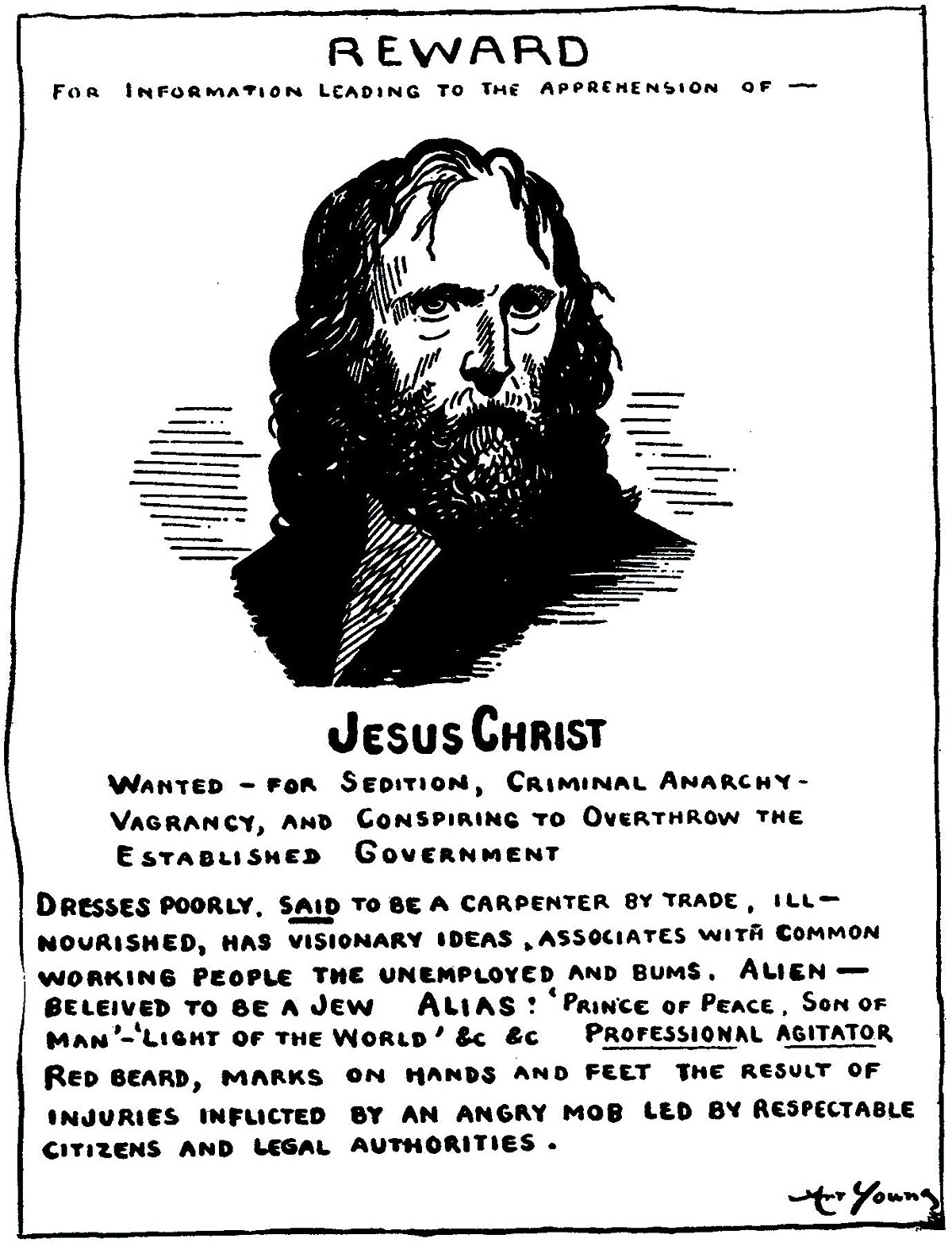
The gospel reading just referred to is the familiar story of “The Widow’s Mite.” Jesus and his friends are visiting Jerusalem for the Passover Feast during the final week of his life. They are in the Temple. On the previous day, they had all taken part in (and perhaps led) a demonstration there against the temple priesthood and its thievery from the poor. I’m talking about Jesus’ famous “cleansing of the temple.” Soon the temple priesthood and scribal establishment will offer a reward of thirty pieces of silver for information leading to Jesus’ arrest. Judas will soon find himself seriously considering collecting that reward.

In the meantime, Jesus continues instructing his disciples on the corruption of the Temple System. In the episode before us, he takes a position, Mark says, “opposite” the temple treasury. The treasury was the place where Jews paid the tithe required by the law as interpreted by the priesthood Jesus despises. It was a “flat tax” applying the same to rich and poor.

Ever class-conscious, Mark points out that “many rich people” somehow made it clear to all that they were putting in large sums. Then a poor widow came along and furtively put in a penny. Jesus calls attention to the contrast: “large sums” vs. “two small copper coins, which are worth a penny.”

“It’s all relative,” Jesus says.  “Truly I tell you, this poor widow has put in more than all those who are contributing to the treasury. For all of them have contributed out of their abundance; but she out of her poverty has put in everything she had, all she had to live on.” Jesus then leaves the temple in disgust.

There are two ways for homilists to explain this incident in the context of today’s Liturgy of the Word. Remember, it began with a reading from I Kings and its story of the great prophet Elijah and the widow of Zarephath.

Elijah was hungry. He encountered a single mom gathering sticks to make a fire to eat her last meal with her son. They were starving, and she had only a handful of flour and a few drops of oil to make some bread before she and her son would die of hunger. The prophet asks that instead she make him some food. Obediently, she does so. And strange to say, after feeding Elijah, the widow discovers that her flour and oil never run out. She somehow has an endless supply. She and her son are saved.

Then in today’s second reading, Jesus is contrasted with the temple priesthood. The temple priests, the author of Hebrews says, were required to repeatedly offer sacrifices in the Temple year after year. In contrast, Jesus entered the heavenly “Holy of Holies” but once, offering there not the blood of bulls and lambs, but his own blood. Jesus is the true high priest.

The standard way of treating these readings would run like this: (1) The widow of Zarephath gave the Holy Man all she had to live on and was materially rewarded as a result; (2) the widow in the Temple donated to the temple priests “all she had to live on” and was rewarded with Jesus’ praise; (3) follow the examples of the widow feeding Elijah and the widow giving her “mite;” (4) donate generously to your priest (a successor of the Great High Priest in Hebrews) and you will be richly rewarded either here, in heaven, or in both places.

That’s a standard treatment we have all heard. However, it has severe problems. To begin with, it ignores the liturgical response to the Elijah story taken from Psalm 146. That excerpt from Psalms sets a back-drop for the entire Liturgy of the Word and provides a key for interpreting not only today’s readings, but the entire Bible. The psalm reminds us that the poor are God’s Chosen People. God’s concern for the poor is not with their generosity towards God but with God’s securing justice for them. As the psalm says, God gives food to the hungry, sets captives free, gives sight to the blind, protects immigrants, and sustains the children of single moms. God loves those concerned with justice for the poor, the Psalm says. God loves prophets like Elijah and Jesus. On the other hand, God thwarts the ways of the wicked – those who, like the scribes and high priests, exploit God’s favored poor.

All of that represents a “red thread” running through the entire Judeo-Christian tradition. It offers us a key for interpreting the story of Elijah as well. It changes the emphasis of the story from the widow’s generosity, to God’s provision of food for the hungry and God’s concern for the children of single mothers.

With that key in mind, we are alerted to circumstances in today’s gospel story that summon us to interpret it differently from the standard treatment.

We are reminded that the episode takes place in an elaborate context of Jesus’ assault on the temple system. In effect, the context is Jesus’ symbolic destruction of the temple itself. Yes, there was that “cleansing” I referenced. But there was also Jesus’ prediction of the deconstruction of the building itself. “Not one stone will be left here upon another; all will be thrown down” (13:1-2). Then there was that strange incident of Jesus cursing a fruitless fig tree as he was entering the temple precincts (11:12-14; 20-24).  The fig tree was the symbol of Israel. Here again Jesus pronounces a judgment on an entire system that had become corrupt and forgetful of the poor who are so central to God’s concern.

That judgment is extended in Jesus’ teaching immediately before the episode of the widow’s mite.  Again, Jesus takes a position “opposed” to the temple treasury and says, “Beware of the scribes . . . They devour widows’ houses and for the sake of appearance say long prayers.” As scripture scholar, Ched Myers points out, Jesus was probably referring to the practice of turning over to scribes the estates of deceased husbands. The surviving wives were considered incapable of administering a man’s affairs. For his troubles, the scribe-trustee was given a percentage of the estate. Understandably fraud and embezzlement were common. In this way, religion masked thievery from society’s most vulnerable.

With Jesus’ accusation ringing in their ears, a case-in-point, a poor widow, arrives on the scene. She pays her tithe – the flat tax – and leaves penniless. Jesus can take no more. He leaves the temple in disgust.

According to this second interpretation, Jesus is not praising the generosity of the widow. Instead, he is condemning the scribes, the priests, the temple and their system of flat taxation. Jesus’ words about the widow represent the culminating point in his unrelenting campaign against hypocrisy and exploitation of the poor by the religious and political leadership of his day.

We would do well to keep today’s gospel in mind when evaluating “Christian” politicians calling for a “flat tax” in the name of the “fairness” of taxing everyone at the same rate.

We would do well to keep today’s gospel in mind – and the example and words of Matthew Fox –  when the collection plate passes in front of us on Sunday or when our pre-Vatican II priest urges us to follow the example he finds in the story of the widow’s mite.

Lessons Drawn from Modern Scripture Scholarship: (Part 3 in a Series on the Historical Jesus)

(This is the third in a series of Monday “classes” for those wishing to deepen their understanding of the historical Jesus and the biblical sources of their faith.) 

Last week we reviewed the history of modern scripture scholarship. The significant events recorded there have made a difference. For instance, since the seventeenth century, scientific method has greatly influenced biblical studies. New fields of study developed over the last 300 years and applied to the Bible have yielded unprecedented insight. These academic disciplines include archeology, linguistics, political science, economics, sociology, psychology, comparative religion . . . New literary discoveries (including the Dead Sea Scrolls, the Gnostic documents of Nag Hamadi) have provided previously unknown versions of canonical texts as well as alternative gospel narratives suppressed since the fourth century. Obviously then we have more information about the Bible than any generation before us. This information has changed the way scholars view Sacred Scripture. It has led them to draw important conclusions that they didn’t tell you about in Sunday school, and still haven’t shared from the pulpit.

Let me name just a few of the conclusions I personally have drawn from my reading, studying, and teaching the sources I’m referring to. I’ll try to do so in the most direct unvarnished way I can. Obviously chapters might be written on each point:

1.       The Bible is not the inerrant or inspired Word of God valid for all time. Rather, the Bible represents the word of men (sic) who were trying to make sense of life in the light of their religious faith and the knowledge that was available to them at the time. The Bible is conditioned by history. It is full of historical and geographical errors, as well as understandings of God that are contradictory, primitive, repulsive, and not in line with the teachings of Jesus. Nonetheless many parts of the Bible can be considered “inspired” – just as parts of Shakespeare might be so considered.

2.       The Bible is not a single book with chapters, but a library of books. Literary types in the Bible include myth, legend, debate, fiction, law, parable, allegory, miracle stories, letters, gospel, apocalypse, and prophecy to name a few.  These entries were written and revised by many authors in many drastically different historical contexts. Moreover to mistake the literary form of any text is to mistake the meaning.  For example to read the myths contained in the Book of Genesis as though they were history is to miss the profound truths those myths contain. To read the fictional story of Jonah and to focus discussion on whether a human can live for days in the belly of a whale is to similarly miss the story’s powerful point about receptivity to prophecy.

3.       The ancient idea of history was different from our modern idea. Ancient history did not have the benefit of digital recorders or phone cameras. Words and accounts of events were published long after the fact. So speeches and events often had to be “reconstructed” according to what historians imagined took place or thought appropriate. Moreover, unlike their modern counterparts, ancient historians were more interested in the meaning of the events they reported than in accurately recording what happened. Hence we should not be surprised when events are exaggerated or otherwise enhanced to bring out the authors’ “lessons.”

4. The Bible should not be read a-historically, but contextually. The Bible was not written for us. Hence it is a mistake to read it “a-historically” (i.e. as it were written in a historical vacuum by writers who had us in mind). Rather, biblical entries were composed for the communities their various authors were addressing over a period of more than a thousand years.  The books should therefore be read “contextually,” i.e. with their historical circumstances and the intentions of their authors in mind. Of course, biblical inclusions do contain meaning for us. However discovering that meaning in circumstances vastly different from those characterizing their original composition is risky business, and must be done with caution and humility.

5.       Biblical content should be judged according to the “Principle of Analogy.” This principle states that “We should not ordinarily expect to have happened in the past what is presumed or proven to be impossible in the present.” Application of this principle causes scholars to “demythologize” miraculous events such as the Crossing of the Red Sea or the Feeding of the 5000. Doing so doesn’t mean that believers can’t or shouldn’t take at face value the accounts in question. However it does make it possible for skeptics in a secular society to honor such accounts without having to take them literally.

6.       The Jesus of history is different from the Christ of faith. Examination of Gospel sources shows that faith about Jesus of Nazareth developed and deepened over time. During his life Jesus made prophetic proclamations about the Kingdom of God – what the world would be like if God were king instead of Caesar. That was the Gospel of Jesus: “Repent the Kingdom of God is at hand.” After his death and the experience of “resurrection,” the Gospel of Jesus was replaced with the Church’s Gospel about Jesus: “Jesus is Lord.” Moreover, following the resurrection experience, faith in Jesus “real presence” in the community had church members believing that he continued addressing those communities’ problems through Christians endowed with the gift of prophecy. And so, gospel writers had no trouble placing those post-resurrection prophetic words into the mouth of the pre-resurrection Jesus.

7. Criteria are available to discover the Jesus of history. The difference between the Jesus of History and the Jesus of Faith has made scholars (for example in the “Jesus Seminar”) wonder just what it was that the historical Jesus said and did. They have developed criteria for separating the words and deeds of the pre-resurrection Jesus from those of the post-resurrection Christ. Those criteria will be the focus of next week’s “class.”