It’s Christmas & Jesus Remains Buried in the Rubble

It’s Christmas again.
And Jesus is still under the rubble
In Gaza
(Just like last year).

He’s on an operating table
There
Having his infant arms and legs
Sawed off
Without anesthesia.
Screaming for his
Already dismembered mother
Who’s been blown away
By the U.S. and Israel.
He’ll never kiss her again
Or feel her warm embrace.

All but forgotten
By holiday revelers
With mindless
“Merry Christmases!!”

Meanwhile Zionists weaponize the Bible
So the slaughter might continue.
Christians do the same
Singing maudlin carols
They don’t understand
And buying silly trinkets
In Wal-Mart.
As if God were Santa Claus,
A billionaire,
Or a racist killer.

Worse still:
As if God were
A genocidal Amerikan!

It’s as if Yeshua were not
Piss poor
And homeless at birth
Considered by imperialists
As no more than an “animal”
Among stable asses and oxen,
The son of a disgraced
Unwed teenage mother,
An underpaid construction worker,
A drunken friend of prostitutes
Houseless as an adult
The sworn enemy
Of the Jewish power establishment
And the rich
That wanted that child
From nowheresville
Slaughtered.

(Good Christians don't like people like that)

As if Yeshua were just another
Palestinian street rat,
And not
An unwelcome refugee in Egypt,
A terrorist in Roman eyes,
Their inmate on death row,
A victim of torture
And capital punishment.

“Good riddance,”
The Romans said
Just like us.

And the whole world
Wasn’t watching then either.
Few noticed
Or cared.

But should we open our eyes
We’d see a Yeshua
So much more
Than that.

He came to serve the poor.
He said.
God’s kingdom would be theirs
So would the entire earth.
Not Elon’s or Gates’ (Luke 6:24)
Or Amerika’s
Who’s blindness and arrogance
Deserves eternal damnation
Rather than the accolades
The world bestows on
Such fools
Along with Herod and Pilate
Anas and Caiaphas.

______

The pastor of Bethlehem’s
Christmas Church said
Something like that
In his own Christmas sermon
This year
Just like the one
Few noticed
When he said it
Last year.

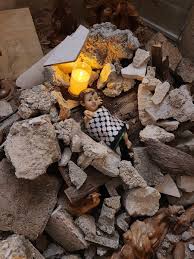
Here’s his Xmas creche
Here’s Pope Francis with his Jesus 
In a keffiyeh-lined crib:
This year
Listen
To these holy men
And to Yeshua’s silenced voice
In the Sacred Land
Of Palestine.

Once again,
The real
Christmas Story
Is unfolding
There
Before our very eyes.

Christmas Cancelled in Bethlehem

Last week, Christian church leaders in the city of Bethlehem announced the cancellation of traditional Christmas festivities in the place traditionally associated with the Jesus’ birth.

And this for at least two obvious reasons. For one, the genocidal killings by colonial settlers in Palestine’s occupied West Bank have made it impossible for tourists to come to Bethlehem.

For another, Palestinian residents of Bethlehem have themselves cancelled festivities in an act of solidarity with their brothers and sisters in Gaza victimized by Apartheid Zionists and their partners in genocide, the United States of America.

But there’s a third reason as well – a theological one that needs highlighting this Christmas weekend.

The motive was explained last Friday on Amy Goodman’s “Democracy Now.” Ms. Goodman began with a clip of the Reverend Isaac Munther, a Lutheran pastor in Bethlehem.

Standing before a nativity scene with the figure of Jesus in a keffiyeh surrounded by rubble, Rev. Munther said:  

“Christmas is a ray of light and hope from the heart of pain and suffering. Christmas is the radiance of life from the heart of destruction and death. In Gaza, God is under the rubble. He is in the operating room. If Christ were to be born today, he would be born under the rubble. I invite you to see the image of Jesus in every child killed and pulled from under the rubble, in every child struggling for life in destroyed hospitals, in every child in incubators. Christmas celebrations are canceled this year, but Christmas itself is not and will not be canceled, for our hope cannot be canceled.”

Elaborating on that theme, Reverend Mitri Raheb, the president of Bethlehem’s Dar al-Kalima University, offered an explanation that echoed the liberation theology perspective on Palestine that my wife and I encountered in the summer of 2006, when we visited the Sabeel Liberation Theology Center in Jerusalem.

Dr. Raheb is the author of a book with a revealing title, Decolonizing Palestine: the Land, the People, the Bible. Here’s what he said:

“The Christmas story actually is a Palestinian story, par excellence. It talks about a family in Nazareth, in the north of Palestine, that is ordered by an imperial decree of the Romans to evacuate to Bethlehem, to go there and register. And this is exactly what our people in Gaza has been experiencing these 75 days. It talks about Mary, the pregnant woman, on the run, exactly like 50,000 women in Gaza who are actually displaced. Jesus was born actually as a refugee. There was no place at the inn for him to be born, so he was put in a manger. And this is exactly what also the kids that are coming to life these days in Gaza are experiencing. You know, most of the hospitals are damaged, out of service, and so there is no delivery places for all of these pregnant women in Gaza. And then you have the bloodthirsty Herod that ordered to kill the kids in Bethlehem to stay in power. And in Gaza, over 8,000 kids, they have been murdered for Netanyahu to stay in power.

And you have this message that the angels declared here, “Glory to God in the highest, peace on Earth,” which was actually a critique of the empire, because glory belongs to the Almighty and not to the mighty. And the peace that Jesus came to proclaim is not the peace, the Pax Romana, the peace that is based on subjugation and military operation, but on human dignity, equality and justice. And this is actually what we call for. And I have to say I find it really a shame that in this season, where every church hears these words, “peace on Earth,” that the United States is vetoing even a ceasefire. It’s a shame.”

Yes, shame on all of us taxpayers and voters.

So much for “Merry Christmas!” this 2023.

Christmas: When Religion Is Capitalism and Market Is Our God

Recently I got involved in a debate about the relevance of religion. A fellow contributor to OpEdNews took the position that because its myths can be interpreted to support either right or left-wing political positions, the myths themselves are meaningless and so is religion itself.

Accordingly, the latter, he said, should be rejected entirely in favor of 18th century rationalism like that expressed by Thomas Paine. For my debate partner, a world without myth is a richer, more peaceful (!), less problematic one.

I can’t get that argument out of my mind especially at this Christmas season.

The position in question ignores the fact of class struggle and that any document worth its salt be it the Bible, the Declaration of Independence, the Constitution, or the writings of Paine himself will be subject to conflicting interpretations by forces of the left and right. Far from rendering meaningless the documents just referenced, the conflicts only underline their importance and power.  

Nowhere does that become clearer than in the cases of mythology, poetry, and art. No holiday better underlines the power of myth and the battle over its interpretation than Christmas.

Capitalism’s Christmas

Of course, right-wing interpretations of Christmas have carried the day in America for well more than a century – perhaps always. I’m talking about the holiday’s commercialization. It unveils the true religion of America. It discloses the fact that ours is perhaps the world’s most prominent religious fundamentalist culture.

That’s hard for many to see because America’s religion is a masked capitalism that pretends to be secular. However, capitalism’s God is real and all powerful. It’s called Market. In the Freudian sense, it’s a fetish – a human creation treated like a conscious subject with an infallible mind and will of its own. Market decrees who’s rich, who’s poor, who lives, and who dies. It directs our holy wars. For true believers to transgress its decrees for instance by advocating socialism is heretical and punishable by war, death, and excommunication in the form of economic sanctions. (Cuba is a case in point.) 

Market’s accompanying supporting myths are powerful too. All of them, of course are unprovable and unfalsifiable. They involve tales of a guiding “Invisible Hand,” Natural Order, a basically competitive Human Nature, Bulls, and Bears, free markets, trickle-down, democracy, the richest country in the world, and “America as leader of the free world.” No amount of contrary evidence can disprove such fairy tale convictions for Market’s faithful. That means that despite protests to the contrary, it’s all religion. It’s all myth.

Even those who insist on “the reason for the season” routinely reduce the religious meaning of Christmas to maudlin reflections on cute babies, mangers, shepherds in bathrobes, and church services that do nothing to challenge capitalism, commercialization, and the God called Market. Popular Christianity’s silence on the point ends up endorsing the whole embarrassing mess and its entrenched superstitions.

And so, Christmas is dominated by Market’s epiphanies such as Black Friday, “shopping days till Christmas,” special sales, plastic toys, meaningless gifts, and the deity’s final decree whether the season was economically successful or a flop. It’s all about Santa Baby, Rudolf, and Jingle Bells. Not a mention here of the Jesus Myth and its fundamental challenge to all of that.

(By the way, that the Bible’s Christmas story is a myth says nothing about its truth. In fact, from time immemorial, humans everywhere have employed myth to express the deepest truths about life that would otherwise remain ineffable – arguably the most important ones that escape our five senses. They’ve used mythological markers like those appearing in the Christmas story – divine signs, virgins conceiving, angel appearing, special stars shining, sorcerers perceiving hidden meanings, symbol-laden gifts, dreams, evil kings, and narrow escapes.)

Christmas Truth

And so, what’s the truth of Christmas? For those of us who recognize class struggle, as well as the truth and power of mythology, it’s about:

  • A houseless working-class family
  • Living in an insignificant country (maybe like Yemen)
  • Under a hated occupying empire (certainly like the United States)

It’s about:

  • An unwed teenage mother
  • Driven by state violence to seek refugee status in Egypt
  • Whose son grows up to become a poor street preacher
  • Without home or visible means of support
  • Announcing a Kingdom without Caesar
  • Where the poor will and rich will exchange positions
  • And all debts are forgiven

It’s about:

  • The child growing up to be an enemy of the state
  • And of its supporting religious establishment
  • To become a victim of torture
  • And capital punishment
  • But the founder of a renewed Jewish community
  • Where there are no poor
  • Or private property
  • But where everyone holds all things in common
  • Until that community too is destroyed
  • By the reigning imperial state (in 70 CE)
  • Only to be co-opted by that empire (in 325)
  • To become its most enthusiastic supporter
  • Down to our own day.

Conclusion

Sometimes I feel myself almost hating Christmas. Even within my own family, I can’t mention the meanings just listed without eyes rolling in my adult children’s heads – without being accused of negativity and politicizing an otherwise happy holiday. Let’s keep Christmas meaningless is the unspoken injunction.

It’s like the debate I mentioned at the outset. There the unspoken imperative is to close our eyes to the reality of class struggle. It is to surrender the most meaningful language we have – that of myth, poetry, image, art, and history – to the forces of the right to support their own capitalist religion, their own Market God, and their hideous distortion of one of mythology’s most powerful stories.

But I’m reluctant to do so. Like the entire Jesus story, Christmas is about a new political reality (the Kingdom of God). It’s about a coming Great Reversal where the rich will be poor and the poor rich. It’s about debt forgiveness, and about living a communal ideal that is far closer to what capitalism treats as the heresy of communism than to the masked religious creed supporting the destructive idolatry of the Great God Market.

Christmas Is Blasphemy: Put Mithra Back in Xmas

Now that we’re in the Christmas season, I thought it might be time to reprint some Xmas reflections from the past. Here’s one that, though obviously dated, still applies. I published it first in 2016.

Last year at this time, two very different religious leaders – one considered left of center, the other a fundamentalist preacher – converged in agreement about the meaninglessness of Christmas. They both concurred: except as a secular winter festival, Christmas is religiously meaningless.

On the left, Pope Francis called the Christian world’s upcoming Christmas celebration a “charade.” He said there’d be parties, gift exchanges, and family gatherings in the name of celebrating Jesus’ birth, but it would all be absurd pretense.

That’s what charade means: an absurd pretense intended to create a pleasant or respectable appearance.

And the pope was right. Starting around Thanksgiving, so-called Christians pretend to honor “the Prince of Peace” – the one who took no one’s life, but sacrificed his own rather than take up arms — who was himself a political refugee – conceived out-of-wedlock – brown-skinned, poor, and living under imperial occupation – the one who would be a victim of torture and capital punishment – who was all the things that good Christian supporters of Donald Trump and of the U.S. War on Terror hate and despise.

That’s right. our culture despises Jesus and all he really stands for.

And that’s where the fundamentalist preacher comes in.  He agrees with the pope – well kind of.

About the same time Pope Francis was talking charade, Rev. Joshua Feuerstein, denounced Starbucks for hating Jesus. The good reverend was outraged by the coffee giant’s holiday cups which display no specific reference to Jesus. That’s a sign, Feuerstein said, that Starbucks agrees with the movement to remove Christ from Christmas. Starbucks hates Jesus. So let’s boycott Starbucks!

On the one hand, could anything be more absurd? The world is burning. Our way of life is destroying God’s creation. Our country is waging war against the poor everywhere – in Afghanistan, Iraq, Libya, Yemen, Somalia . . . We supply weapons to all sides in the endless war our “leaders” have declared. And our man was worried about Starbucks’ drinking cup! He denounced Starbucks for simply recognizing what is: Jesus has long since been removed from Christmas.

On the other hand, there was wisdom in Rev. Feuerstein’s accusations. And it’s not just Starbucks that “hates Jesus;” it’s our entire culture – including our churches. In that sense, Feuerstein agrees with Francis. However, hating Jesus has nothing to do with coffee cups. As I said, it means despising those Jesus identified with in the Gospel of Matthew (25:31-46) – the poor immigrant refugee from our endless bombing campaigns, the hungry street person, the homeless beggar, the imprisoned desperado, the coatless person we pass on our way into Starbucks.

So what to do to avoid making this Christmas an empty charade?

We can start by recognizing that Christmas is a winter festival and nothing more. Every culture has them. They are times for ice sculptures, bright lights, reunions with family, for feasting, drinking, parties and exchanges of gifts. All of that distracts us from the oncoming season’s dark and cold – and from our destruction of God’s planet.

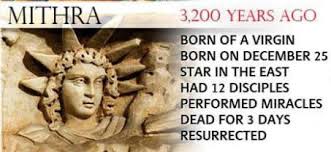
That’s the way it was in ancient Rome too. Rome had its Saturnalia. In fact, December 25th was the birthday of the Sun God, Mithra, who was a favorite with Roman legionnaires. In that sense, Mithra’s birthday was a military holiday – a celebration of empire and its wars. Our militarized culture should be at home with that.

So let’s end the charade. Have fun.  Eat, drink, and be merry. That’s what winter festivals are about. But forget the blasphemy of associating Jesus with any of it. Raise your Starbuck’s cup and toast a happy feast of Mithra!

The Christmas Story: Fact or Fiction?

Grandchildren are wonderful. And so are Christmas pageants.

Last Sunday, just minutes before the curtain went up on our church’s annual play, one of the shepherds (my seven-year-old grandson Orlando) approached me with an urgent question seemingly from out of the blue. “What’s the evidence (he used that word) that Jesus ever lived? How do we know,” he asked, “that he existed at all? Huh? Huh? Where’s the evidence?”

Caught off guard, I replied, “Well, that’s complicated. I suppose we have as much evidence as for any figures from the ancient past. How do we know, for instance, that Julius Caesar ever existed?”

With that, Orlando ran off to tend the sheep.

But of course, my answer – except for the first part about complications – was completely inadequate. It revealed how we elders have dodged sharp questions from our children and grandchildren long enough. We’ve not been honest with them in answering burning queries concerning the very meaning of life and the nature of the sources we claim to be inspired. As a result, we’ve driven them away into a world that is consequently (as Caitlin Johnstone has so delicately put it) completely F**ked. That is, we’ve filled their minds with fictions that pretend to explain the world but that won’t finally hold water.

Let’s face it: we don’t have nearly the evidence for Jesus’ existence that we have for Caesar’s. And there’s good reason for that hard reality – reason that cuts to the very heart of so many questions about figures from yesteryear and even about our contemporaries. It’s the reason we need “people’s histories” like Howard Zinn’s.

Fact is, we never know much about poor people from any historical period (including our own). And Jesus left no direct record. He wrote nothing. Possibly he was illiterate.

Moreover, the record-keepers of Jesus time (and the Romans were exquisite about records – that and building roads and killing people) just weren’t interested in the nobodies they ruled, especially in marginal provinces like Israel – and especially from towns like Nazareth, a true nowheresville.

Yes, the Romans kept records about their puppet kings and temple collaborators. But even those flunkies weren’t interested in the others, much less about the innumerable insurgents they routinely offered for execution with the special process Rome reserved for terrorists –  crucifixion.

Despite the impression we get from the Christian Gospels (which were written long after the fact) the whole world wasn’t watching Jesus’ trial and execution, much less his birth. No, there probably wasn’t any trial at all. And Jesus’ body was likely thrown into a common grave after it was consumed by buzzards and dogs.

So, actually, my response to Orlando’s question (if he were capable of understanding it) should have been: “If you’re asking about the birth of Jesus and the story you’re about to perform on stage . . . No, we don’t have any evidence that it happened in the way you’ll portray it.

“In fact, the story you’re enacting probably didn’t take place at all. Most likely, there were no angels or shepherds, magi or guiding star.

“I say that because only Luke and Matthew tell stories like that. They’re not found in Mark (the earliest of the Gospels) nor in John, the last one of the four. This means that Mark and John either didn’t know of what scholars call “the infancy narratives” (including the virgin birth) or they didn’t think the tales important enough to include. And if the Christmas stories actually occurred, neither of those possibilities is very likely.

“You see, the infancy narratives are what scholars call Midrashim or Aggadah — interpretative parables based on ancient Jewish texts like Isaiah 7:14, which reads: ‘a virgin (actually a young girl) shall conceive, and bear a son, and shall call his name Immanuel.” The stories are invented to make a theological point – in this case, that from the beginning Jesus embodied a special manifestation of Israel’s God, Yahweh.”

Personally, I remember when I was first introduced to Midrashim and Aggadah – when I was much older than my seven-year-old grandson. That was something like 55 years ago, when at about 24 years of age, I was beginning my seminary study of ancient biblical texts. I still remember my shock at learning that the story of the Wisemen was Midrashic fiction. What? No magi? No star? No gold, frankincense and myrrh? My mind quickly raced ahead. What then about Jesus’ resurrection? Could that be Midrash too? I was deeply threatened and devastated.

And it took me a long time to come to terms with the faith-implications I saw so clearly then. However, that was the beginning of my ability to think critically even about the most threatening questions I could imagine. There is nothing, I concluded, that cannot be asked. Truth is truth; we can’t be afraid of it, no matter where it leads. God (however we might imagine him or her or It) cannot be contradicted by truth. (But all that’s another story.)

Of course, Orlando wouldn’t be able to understand any of this. And at this point, he doesn’t care. Instead, he’s just learned about historical “evidence” and is testing out that idea. But some day, he may be interested – as most readers are at this point. He’ll wake up some day (as I did much later in life) with adult questions. But because our churches and elders who know better, treat adults as children, he’ll end up throwing the baby out with the bathwater.

But what is the baby we’re talking about?  It’s the point-of-faith conveyed in all the infancy narratives. It’s that “God” or History or Life Itself is for everyone – not just for the analogues of Rome and its Temple mannequins.

No, God is present in unwed teenage mothers. God appears in babies born in smelly rat-infested hovels. God’s there in immigrants and refugees fleeing genocidal tyrants like Herod. God is present on death row – in tortured insurgents and victims of capital punishment. And some of them (like Jesus himself, Gandhi, King, Dorothy Day and Malcolm) are more alive and influential today than ever they were when they walked the earth. Resurrection is real.

The Jesus stories convey all these things. Yes, all those supporting stories – including the infancy narratives – are true.

Some of them might even have happened.

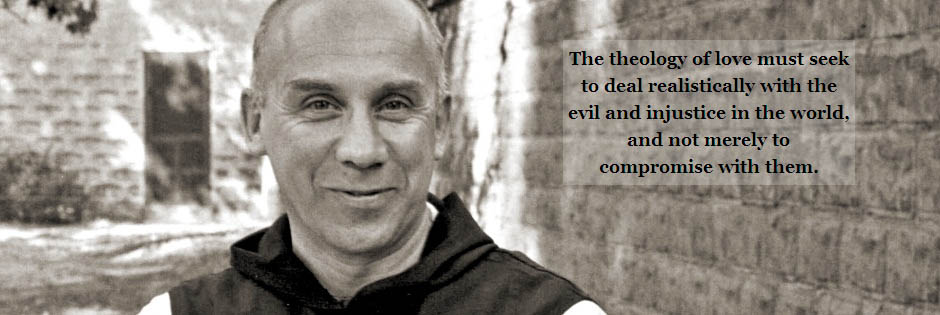
Towards Christmas in the Spirit of Thomas Merton

Merton

Readings for Third Sunday in Advent: IS 61:1-2A, 10-11; LK 1: 46-50; 53-54; I THES 5: 16-24; JN 1: 6-8, 19-28.

Five years ago, I had an important spiritual experience that’s relevant to today’s liturgy of the word. I had the privilege of visiting the hermitage of St. Thomas Merton, the great Trappist mystic. (See my reflections here.)

It all happened in New Haven, Kentucky, just down the road from the Maker’s Mark distillery – far from any great urban centers and nearer to places with names like Bardstown, Paint Lick, and Gravel Switch. The experience inspired counter-cultural thoughts about Christmas. It made me struggle with the question (still unresolved for me): is it possible to once and for all break with this annual orgy of consumerism so counter to the gospel’s commitment to the poor?

At Fr. Louis’ Gethsemane, twenty of us sat in a circle in his living room absorbing the Life Force that still hovers over his simple cinderblock cabin. Trappist Brother Paul, the convener of the Merton Study Group responsible for the event, marvelously channeled “Louie’s” spirit by reading Brother Paul’s own poetic reflection on Matthew’s words, “Blessed are the poor in spirit.”

Paul’s thoughts connected nicely not only with Merton, but with this morning’s readings for this third Sunday of Advent. There, John the Baptizer, his predecessor Isaiah, and Jesus’ own mother Mary reiterate the essential connection between Jesus’ gospel and standing in solidarity with the poor not only in spirit, but in actual fact. As Christmas approaches, the sentiments of the Baptizer, Isaiah and Mary suggest counter-cultural ways of commemorating the birth of the prophet from Nazareth.  I wish I and my family were strong enough to entertain them seriously.

For me those culturally eccentric suggestions began emerging when in the course of his remarks, Brother Paul recalled Sister Emily Dickinson’s words that reflect the mystical dimension of Matthew’s (and presumably Jesus’) understanding of both spiritual and physical poverty. As for the former, Brother Paul defined spiritual poverty as the emptiness reflected in Monk Dickinson’s words,

“I am nobody.

Who are you?

Are you nobody too?

. . . How dreary to be somebody.”

Those words almost paraphrase what John the Baptist says in today’s Gospel selection. When asked who he is, the one identified by Jesus as the greatest man who ever lived (MT 11:11) says in effect, I am a poor man in Emily Dickinson’s sense. I’m a nobody – merely a voice out of nowhere. I am “a voice crying out in the wilderness.”  Only an empty vessel can be filled with the Holy Spirit.

So forget about me, John says, and focus on the one who is to come. His words will set you on fire that will sear everything in you that is not of the Spirit Jesus embodies – everything that separates you from your brothers and sisters, especially material wealth. That kind of self-denial and openness to Jesus’ Holy Spirit is the very definition of Matthew’s spiritual poverty.

And the specific message of the One to come?  (And here’s where material poverty enters the picture.)  Jesus announces the Divine Spirit’s preferential option for the actually poor and its rejection of the materially rich. That bias towards the actually poor is reflected in today’s first reading. As remembered by Luke in Jesus’ preview of his own career, the words of the prophet Isaiah read:

The Spirit of the Lord is upon me, because he has anointed me to bring good news to the poor. He has sent me to proclaim release to the captives and recovery of sight to the blind, to let the oppressed go free, to proclaim the year of the Lord’s favor.” (LK 4: 16-22)

Here Jesus’ focus is real poverty and people subject to captivity and oppression.

As for the Holy Spirit’s rejection of the rich, that is clearly stated in the revolutionary poem attributed to Jesus’ mother and read today as our responsorial hymn. Mary describes her understanding of God with the following words:

“The Mighty One . . . has shown strength with his arm; he has scattered the proud in the thoughts of their hearts. He has brought down the powerful from their thrones, and lifted up the lowly; he has filled the hungry with good things, and sent the rich away empty.”

These are truly revolutionary words about dissolving the ideological mind-sets that unify the rich (“the thoughts of their hearts”), about overthrowing the powers that be (removing them from their thrones), about ending hunger, and rejecting wealth on principle.

The class consciousness reflected in this categorical rejection the rich as such reminds us that in the eyes of Jesus’ mother and (the record shows) of her son, there is something intrinsically wrong with any wealth that differentiates rich from poor. This implies that for Mary and Jesus, poverty is not the opposite of wealth.  Rather, the opposite of wealth is God’s justice – a new order possible in this here and now, in this “year of the Lord’s favor,” as Jesus puts it. There, the rich will be necessarily unseated and the poor will have their fill.

If all of this is true – if God’s salvation means eliminating differences between rich and poor – what are we to do in this world of income gaps, torture, racism and militarized police?  The question is particularly apt at this Christmas season. And Thomas Merton’s monastic spirit along with the testimony of his ascetic counterpart, John the Baptizer, implies answers.  It suggests that at the Christmas season we might do well to:

  • Generally withdraw our allegiance from the cultures of New York and Los Angeles and in spirit draw closer to Paint Lick, Gravel Switch – and Merton’s Gethsemane.
  • Consciously simplify our Christmas celebration this year.
  • On the feast commemorating the birth of a homeless child whose mother saw so clearly the opposition between wealth and justice, imitate John’s simple vestment (and that of the Trappists) by giving our gifts of clothes not to the already well-attired, but to the poor.
  • Imagine what would happen if we took those gifts so carefully wrapped and placed beneath our tree and simply gave them away unopened and at random to poor people and their children as we meet them on the street.
  • In the spirit of John the Baptizer, located far from Jerusalem’s temple, boycott church this Christmas, especially if your community (after distributing its de rigueur Christmas baskets) ignores Mary’s summons to social revolution in favor of “Christmas as usual.”
  • Instead make up our own liturgy (around the Christmas tree) to replace the normal orgy of material gift-exchange.
  • Boycott entirely this year’s “white Christmas” and (in the light of the Black Lives Matter movement) celebrate Kwanzaa instead – telling our children why this year is different.
  • Make a Christmas resolution to at last get serious about changing our lives in 2021 by beginning (or intensifying) the regular practice of prayer (or meditation) in the spirit of John the Baptist, Jesus, his mother and Thomas Merton.
  • Realize that inevitably the cultivation of spiritual emptiness (“nobodiness”) resulting from such regular spiritual practice will lead us to serve others in a way that will address the seemingly intractable problems of poverty (both spiritual and material), hunger, captivity and oppression.

I’m not suggesting that any of this would be easy. Going counter-cultural, especially around an event like Christmas, involves a certain self-emptying. It involves detaching from cultural expectations (not to mention those of our children and other family members). In some sense, it means becoming nobody in front of those who expect us to do what everyone else is doing. In other words, going counter-cultural at Christmas conflicts with what Sister Emily calls our dreary attempts to be somebody.

In fact, the cultural pressures are so strong, that it might be impossible for most of us to withdraw cold-turkey from Christmas as we’ve known it. Still, if we desire to be change agents like John the Baptist, Isaiah, Mary, Jesus and Thomas Merton, we’ve got to start somewhere.

I’m still trying to inch towards something like I’ve just described. Do you have any suggestions that can help me move more quickly?

Mary’s “Virginity”: Its Warning about Donald Trump and Sexual Assault by the Military (Sunday Homily)

sexual-assault

 Readings for 4th Sunday in Advent: IS 7:10-14; PS 24 1-6; ROM 1: 1-7; MT 1: 18-24.

Do you ever wonder what effect Donald Trump’s proclivity for sexual assault might have on the problem of military rape? After all, his racist, sexist, and xenophobic comments along with his personal behavior have already emboldened copycat words and actions by many of his followers including schoolchildren. Will Mr. Trump similarly embolden enlisted men and officers to follow the example of their Commander-in-Chief?

That question becomes relevant on this Fourth Sunday of Advent because the readings for today emphasize Jesus’ “virgin birth.” Such emphasis resurrects a persistent tradition identifying Mary’s “miracle” as the result of military rape.

If that tradition were true, what light would it shed on the problem of rape in the military in connection with the example of its Commander-in-Chief?

Let me put that question in context by offering some background for today’s reading from Matthew along with a reference to the selection from Isaiah traditionally seen as a prophecy of Jesus’ virginal conception.

To get from here to there, try to understand the situation of Joseph and Mary as young marrieds in a context of imperial aggression. They’re a teenage couple; they are poor and living in an occupied country. Joseph is a jack-of-all-trades – that’s what the Greek word we translate as “carpenter” meant in first century Palestine. Like everyone from his class, he was unemployed most of the time. But he’d fix your leaking roof if you hired him. When he could, he’d harvest grapes and wheat for local landlords.

And he was probably deeply involved with the local insurgency against Roman occupation. (Nearly every impoverished patriot is in such situations.) Additionally, the only commentary we have on Joseph’s character is Matthew’s single word “just.” He was a just man. (By the way, his son, James – the one who headed the Jerusalem church following his brother’s death – was also known as “James the just.”) In the Hebrew culture of Jesus’ day, justice meant taking the side of the powerless. It appears to have been a central value Joseph passed on to his children.

As resisters, Joseph’s kind would have been considered terrorists by the Romans. In fact, the very year in which Jesus was likely born (6 BCE) Galilee’s countryside would have been crawling with Roman soldiers fighting against people like Jesus’ supposed father. The occupiers were busy laying siege to the city of Sepphoris, the capital of Galilee – a mere hour’s walk from Joseph’s village.

There the insurgency had taken a decisive stand against Rome’s puppet, King Herod. And like Americans in Iraq’s Fallujah under “Mad Dog” Mattis, the Romans were determined to make an example of the city by laying it waste utterly. Before their final offensive, that involved night raids, kicking in doors, and raping young Jewish girls. (All forces of occupation – including our own today – know the drill.)

In any case, according to that persistent tradition about her “virginity,” that’s where Mary came in. She was a young teenager about 12 or 14. Although she eventually became Joseph’s “dream girl” (MT 1:18-25), she was probably linked with him by the village matchmaker perhaps when they were both still toddlers. They had not yet begun to live together, because they were probably waiting for Mary to come officially “of age” – able to bear children.

Be that as it may, Mary suddenly finds herself pregnant out of wedlock. Can you imagine her worry? Innumerable teenage girls can relate to her panic – and disgrace. Obviously, Mary did not want to be just another of her community’s “virgins.” [Matthew’s term “parthenos” (virgin) to refer to Mary was often connected with children of unknown paternity. Such offspring were disparagingly called “virgins’ kids.” “Virgin” is what (behind their hands) local matrons called an unwed mother.]

According to the story, Joseph too shared Mary’s disgrace and embarrassment. He wanted a divorce (i.e. release from his commitment to marry). And he probably demanded it with the anger and recrimination that are inevitably associated with the dreaded “d” word.

Joseph’s anger, suspicion, and thoughts about divorce may also have come from his hatred of the Romans. (And here comes that persistent tradition about Mary’s “virginity.”) It even remembers the rapist’s name. According to Celsus’ “True Doctrines” written about 178 C.E., the rapist was called “Panthera.” That was also the name of one of the Roman legions involved in that siege of Sepphoris.

Such suspicious circumstances around Jesus’ questionable conception also find some support in John’s gospel, where Jesus is called a “Samaritan” (8:48). That was a harsh term equivalent to our “bastard.” Additionally, Mark refers to Jesus simply as “Son of Mary” (6:3) – a quite unusual reference in a culture where children were identified by their father’s name.

With all of that in mind, and if Celsus’ tradition has merit, it’s easy to understand how the thought of taking up with a girl defiled by a Roman “pig” (what Jews called the occupiers) probably turned Joseph’s stomach. No wonder he wanted a divorce.

That is, if the tradition has merit . . .  You see, we can take our pick here. And that brings me to the point about the historical veracity of the stories around Jesus’ birth: all of the traditions are entirely questionable as far as historical fact is concerned.

For instance, the familiar account of Jesus’ virgin birth is found only in two of the canonical gospels (Matthew and Luke). Mark and John make no mention of it. That means that they either didn’t know about the tradition, or Mark and John didn’t think it important enough to include. (By the way, if Jesus’ conception was as miraculous as we’ve always been taught, how likely is either of those alternatives?)

And then there’s that business – recounted in today’s first reading – about Isaiah’s supposed prediction of Jesus’ virginal conception. Matthew takes Isaiah’s words completely out of context.

Actually, Isaiah’s not referring to Jesus at all, but to his own time more than 500 years earlier. And the Hebrew term he uses is not the equivalent of “virgin.” That’s a mistranslation. The word the prophet employs simply means “young girl.” Isaiah’s prediction is that a “young girl” of his own time will conceive. The prophet’s words had nothing to do with Jesus or virgin birth.

The point here is we’re not dealing with “history” in the story of Jesus’ virgin birth. Instead we’re confronted with a miraculous “birth story,” – a literary genre that characterizes accounts of virtually all “Great Men” in the ancient world. Its point is that God’s Spirit entered into Jesus from the very outset – long, long before his actual birth.

In that light, historically speaking, rape is a much more likely explanation of Jesus’ conception than intervention by the Holy Spirit. Think about it. That’s simply a fact.

How then was Jesus begotten? If Joseph was his father, we understand how Jesus was so concerned with social justice. And through this pre-birth story we can hear (once again!) a summons to learn from Joseph the way Jesus and his brother James did. It’s also a reason for re-evaluating our culture’s drumbeat of indoctrination against “terrorists.” Jesus came from a family the Romans would have considered terrorist.

If Panthera humiliated Jesus’ mother (and Joseph), and Jesus was the product of rape – and if rape is an inevitable strategy of war – then that’s an additional reason for pressuring the U.S. military to aggressively investigate and punish perpetrators of military rape. It’s also a reason for refusing to honor the U.S. military in general, for opposing war, working for peace, and appreciating Jesus’ solidarity with the poorest of the poor.

Finally, it’s yet another cause for reflection on the unsuitability of Mr. Trump as Commander-in-Chief. Predictably, his example will embolden soldiers to objectify, demean and rape the ones the president-elect termed“fat pigs, dogs, slobs, and disgusting animals.” It is certain that the Roman military made similar characterizations of Jewish girls like Jesus’ mother.

The bottom line here is that (as Pope Francis would have it) if we’re not resisting war, military culture in general, its Commander-in-Chief and working for peace, our observation of this Christmas season is pure theater and sham.

Christmas Is Blasphemy: Put Mithra Back in Christmas!

mithra

Last year at this time, two very different religious leaders – one considered left of center, the other a fundamentalist preacher – converged in agreement about the meaninglessness of Christmas. They both concurred: except as a secular winter festival, Christmas is religiously meaningless.

On the left, Pope Francis called the Christian world’s upcoming Christmas celebration a “charade.” He said there’d be parties, gift exchanges, and family gatherings in the name of celebrating Jesus’ birth, but it would all be absurd pretense.

That’s what charade means: an absurd pretense intended to create a pleasant or respectable appearance.

And the pope was right. Starting around Thanksgiving, so-called Christians pretend to honor “the Prince of Peace” – the one who took no one’s life, but sacrificed his own rather than take up arms — who was himself a political refugee – conceived out-of-wedlock – brown-skinned, poor, and living under imperial occupation – the one who would be a victim of torture and capital punishment – who was all the things that good Christian supporters of Donald Trump and of the U.S. War on Terror hate and despise.

That’s right. our culture despises Jesus and all he really stands for.

And that’s where the fundamentalist preacher comes in.  He agrees with the pope – well kind of.

About the same time Pope Francis was talking charade, Rev. Joshua Feuerstein, denounced Starbucks for hating Jesus. The good reverend was outraged by the coffee giant’s holiday cups which display no specific reference to Jesus. That’s a sign, Feuerstein said, that Starbucks agrees with the movement to remove Christ from Christmas. Starbucks hates Jesus. So let’s boycott Starbucks!

On the one hand, could anything be more absurd? The world is burning. Our way of life is destroying God’s creation. Our country is waging war against the poor everywhere – in Afghanistan, Iraq, Libya, Yemen, Somalia . . . We supply weapons to all sides in the endless war our “leaders” have declared. And our man was worried about Starbucks’ drinking cup! He denounced Starbucks for simply recognizing what is: Jesus has long since been removed from Christmas.

On the other hand, there was wisdom in Rev. Feuerstein’s accusations. And it’s not just Starbucks that “hates Jesus;” it’s our entire culture – including our churches. In that sense, Feuerstein agrees with Francis. However, hating Jesus has nothing to do with coffee cups. As I said, it means despising those Jesus identified with in the Gospel of Matthew (25:31-46) – the poor immigrant refugee from our endless bombing campaigns, the hungry street person, the homeless beggar, the imprisoned desperado, the coatless person we pass on our way into Starbucks.

So what to do to avoid making this Christmas an empty charade?

We can start by recognizing that Christmas is a winter festival and nothing more. Every culture has them. They are times for ice sculptures, bright lights, reunions with family, for feasting, drinking, parties and exchanges of gifts. All of that distracts us from the oncoming season’s dark and cold – and from our destruction of God’s planet.

That’s the way it was in ancient Rome too. Rome had its Saturnalia. In fact, December 25th was the birthday of the Sun God, Mithra, who was a favorite with Roman legionnaires. In that sense, Mithra’s birthday was a military holiday – a celebration of empire and its wars. Our militarized culture should be at home with that.

So let’s end the charade. Have fun.  Eat, drink, and be merry. That’s what winter festivals are about. But forget the blasphemy of associating Jesus with any of it.

Raise your Starbuck’s cup and toast a happy feast of Mithra!

Christmas Is Blasphemy: Take Jesus Out of Christmas!

Starbucks

Recently two very different religious leaders – one considered left of center, and the other a fundamentalist – converged in agreement about the meaninglessness of Christmas. And they both hit the nail on the head. Christmas is bunk. It’s blasphemous to associate Jesus with the holiday.

From the left, Pope Francis called the Christian world’s upcoming Christmas celebration a “charade.” He said there’d be parties, gift exchanges, and family gatherings in the name of celebrating Jesus’ birth, but it would all be absurd pretense.

That’s what charade means: an absurd pretense intended to create a pleasant or respectable appearance.

And the pope is right. Starting around Thanksgiving, so-called Christians pretend to honor “the Prince of Peace” – the one who took no one’s life, but sacrificed his own rather than take up arms – the one who was himself a political refugee, conceived out-of-wedlock, brown-skinned, poor, and living under imperial occupation – the one who would be a victim of torture and capital punishment – who was all the things that good Christian supporters of Donald Trump and of the U.S. War on Terror hate and despise.

That’s right. our culture hates Jesus and all he really stands for.

And that’s where the fundamentalist preacher comes in.  He agrees with the pope – well kind of . . .

About the same time Pope Francis was talking charade, Rev. Joshua Feuerstein, denounced Starbucks for hating Jesus. The good reverend was outraged by the coffee giant’s holiday cups which display no specific reference to Jesus. That’s a sign, Feuerstein said, that Starbucks agrees with the movement to remove Christ from Christmas. Starbucks hates Jesus. So let’s boycott Starbucks!

On the one hand, could anything be more absurd? The world is burning. Our way of life is destroying God’s creation. Our country is waging war against the poor everywhere – in Afghanistan, Iraq, Libya, Yemen, Somalia . . . . We supply weapons to all sides in the endless war our “leaders” have declared. And our man is worried about Starbucks’ plain red drinking cup! He denounces Starbucks for simply recognizing what is: Jesus has long since been removed from Christmas.

On the other hand, there’s wisdom in Rev. Feuerstein’s accusations. And it’s not just Starbucks that “hates Jesus;” it’s our entire culture – including our churches. In that sense, Feuerstein agrees with Francis. However hating Jesus has nothing to do with coffee cups. As I said, it means despising those Jesus identified with in the Gospel of Matthew (25:31-46) – the poor immigrant refugee from our endless bombing campaigns, the hungry street person, the homeless refugee, the imprisoned desperado, the coatless person we pass on our way into Starbucks.

That’s the one our culture hates – mostly led by “Christians.”

So what to do to avoid making this Christmas an empty charade? How avoid the blasphemy of pretending that Christmas has anything at all to do with Jesus?

I hardly know how to answer that question. I suppose we can start by recognizing that Christmas is a winter festival and nothing more.

But that’s not nothing. Winter festivals are great. They’re fun.  Every culture has them. They are times for ice sculptures, bright lights, reunions with family, for feasting, drinking, parties and exchanges of gifts. All of that distracts us from the oncoming season’s dark and cold.

That’s the way it was in ancient Rome too. Rome had its Saturnalia. In fact, December 25th was the birthday of the Sun God, Mithra, who was a favorite with Roman legionnaires. In that sense, Mithra’s birthday was a military holiday – a celebration of empire and its wars – the antithesis of everything Jesus stood for.

So let’s end the charade. Have fun.  Eat, drink, and be merry. That’s what winter festivals are about. And forget the blasphemy of associating Jesus with any of it.

Raise your red cup and toast a happy feast of Mithra!

(Sunday Homily) Towards a Counter-Cultural Christmas: Becoming Nobody

Santa garbage

Readings for Third Sunday in Advent: IS 61:1-2A, 10-11; LK 1: 46-50; 53-54; I THES 5: 16-24; JN 1: 6-8, 19-28. http://usccb.org/bible/readings/121414.cfm

As I mentioned in my previous blog, I had an important spiritual experience last Sunday. It was the privilege of visiting the hermitage of St. Thomas Merton, the great Trappist mystic. It all happened in New Haven, Kentucky, just down the road from the Maker’s Mark distillery – far from any great urban centers and nearer to places with names like Bardstown, Paint Lick, and Gravel Switch. The experience inspired counter-cultural thoughts about Christmas. It made me struggle with the question (still unresolved for me): is it possible to once and for all break with this annual orgy of consumerism so counter to the gospel’s commitment to the poor?

At Fr. Louis’ Gethsemane, twenty of us sat in a circle in his living room absorbing the Life Force that still hovers over his simple cinderblock cabin. Trappist Brother Paul, the convener of the Merton Study Group responsible for the event, marvelously channeled “Louie’s” spirit by reading Brother Paul’s own poetic reflection on Matthew’s words, “Blessed are the poor in spirit.”

Paul’s thoughts connected nicely not only with Merton, but with this morning’s liturgy of the word on this third Sunday of Advent. After all, in today’s readings, John the Baptizer, his predecessor Isaiah, and Jesus’ own mother Mary reiterate the essential connection between Jesus’ gospel and standing in solidarity with the poor not only in spirit, but in actual fact. As Christmas approaches, the sentiments of the Baptizer, Isaiah and Mary suggest counter-cultural ways of commemorating the birth of the prophet from Nazareth.  I wonder if I and my family are strong enough to entertain them.

For me those culturally eccentric suggestions began emerging when in the course of his remarks, Brother Paul recalled Sister Emily Dickinson’s words that reflect the mystical dimension of Matthew’s (and presumably Jesus’) understanding of both spiritual and physical poverty. As for the former, Brother Paul defined spiritual poverty as the emptiness reflected in Monk Dickinson’s words,

“I am nobody.

Who are you?

Are you nobody too?

. . . How dreary to be somebody.”

Those words almost paraphrase what John the Baptist says in today’s Gospel selection. When asked who he is, the one identified by Jesus as the greatest man who ever lived (MT 11:11) says in effect, I am a poor man in Emily Dickinson’s sense. I’m a nobody – merely a voice out of nowhere. I am “a voice crying out in the wilderness.”  Only an empty vessel can be filled with the Holy Spirit.

So forget about me, John says, and focus on the one who is to come. His words will set you on fire that will sear everything in you that is not of the Spirit Jesus embodies – everything that separates you from your brothers and sisters, especially material wealth. That kind of self-denial and openness to Jesus’ Holy Spirit is the very definition of Matthew’s spiritual poverty.

And the specific message of the One to come?  (And here’s where material poverty enters the picture.)  Jesus announces the Divine Spirit’s preferential option for the actually poor and its rejection of the materially rich. That bias towards the actually poor is reflected in today’s first reading. As remembered by Luke in Jesus’ preview of his own career, the words of the prophet Isaiah read:

The Spirit of the Lord is upon me, because he has anointed me to bring good news to the poor. He has sent me to proclaim release to the captives and recovery of sight to the blind, to let the oppressed go free, to proclaim the year of the Lord’s favor.” (LK 4: 16-22)

Here Jesus’ focus is real poverty and people subject to captivity and oppression.

As for the Holy Spirit’s rejection of the rich, that is clearly stated in the revolutionary poem attributed to Jesus’ mother and read today as our responsorial hymn. Mary describes her understanding of God with the following words:

“The Mighty One . . . has shown strength with his arm; he has scattered the proud in the thoughts of their hearts. He has brought down the powerful from their thrones, and lifted up the lowly; he has filled the hungry with good things, and sent the rich away empty.”

These are truly revolutionary words about dissolving the ideological mind-sets that unify the rich (“the thoughts of their hearts”), about overthrowing the powers that be (removing them from their thrones), about ending hunger, and rejecting wealth on principle.

The class consciousness reflected in this categorical rejection the rich as such reminds us that in the eyes of Jesus’ mother and (the record shows) of her son, there is something intrinsically wrong with any wealth that differentiates rich from poor. This implies that for Mary and Jesus, poverty is not the opposite of wealth.  Rather, the opposite of wealth is God’s justice – a new order possible in this here and now, in this “year of the Lord’s favor,” as Jesus puts it. There, the rich will be necessarily unseated and the poor will have their fill.

If all of this is true – if God’s salvation means eliminating differences between rich and poor – what are we to do in this world of income gaps, torture, racism and militarized police?  The question is particularly apt at this Christmas season. And Thomas Merton’s monastic spirit along with the testimony of his ascetic counterpart, John the Baptizer, implies answers.  It suggests that at the Christmas season we might do well to:

  • Generally withdraw our allegiance from the cultures of New York and Los Angeles and in spirit draw closer to Paint Lick, Gravel Switch – and Merton’s Gethsemane.
  • Consciously simplify our Christmas celebration this year.
  • On the feast commemorating the birth of a homeless child whose mother saw so clearly the opposition between wealth and justice, imitate John’s simple vestment (and that of the Trappists) by giving our gifts of clothes not to the already well-attired, but to the poor.
  • Imagine what would happen if we took those gifts so carefully wrapped and placed beneath our tree and simply gave them away unopened and at random to poor people and their children as we meet them on the street.
  • In the spirit of John the Baptizer, located far from Jerusalem’s temple, boycott church this Christmas, especially if your community (after distributing its de rigueur Christmas baskets) ignores Mary’s summons to social revolution in favor of “Christmas as usual.”
  • Instead make up our own liturgy (around the Christmas tree) to replace the normal orgy of material gift-exchange. (More about this in a later posting.)
  • Boycott entirely this year’s “white Christmas” and (in the light of Mike Brown, Eric Brown and Tamir Rice) celebrate Kwanzaa instead – telling our children why this year is different.
  • Make a Christmas resolution to at last get serious about changing our lives in 2015 by beginning (or intensifying) the regular practice of prayer (or meditation) in the spirit of John the Baptist, Jesus, his mother and Thomas Merton.
  • Realize that inevitably the cultivation of spiritual emptiness (“nobodiness”) resulting from such regular spiritual practice will lead us to serve others in a way that will address the seemingly intractable problems of poverty (both spiritual and material), hunger, captivity and oppression.

I’m not suggesting that any of this would be easy. Going counter-cultural, especially around an event like Christmas, involves a certain self-emptying. It involves detaching from cultural expectations (not to mention those of our children and other family members). In some sense, it means becoming nobody in front of those who expect us to do what everyone else is doing. In other words, going counter-cultural at Christmas conflicts with what Sister Emily calls our dreary attempts to be somebody.

In fact, the cultural pressures are so strong, that it might be impossible for most of us to withdraw cold-turkey from Christmas as we’ve known it. Still, if we desire to be change agents like John the Baptist, Isaiah, Mary, Jesus and Thomas Merton, we’ve got to start somewhere.

Do you have other ideas about where or how to start? If so, please share them. And what about that alternative Christmas celebration involving the whole family on Christmas morning? Can you help with any suggestions there?