The Advent Project of Pope Francis (and Jesus): A World without War by Christmas! (Sunday Homily)

Evangelii-Gaudium-Image

Readings for First Sunday in Advent: IS 2: 1-5; PS 122: 1-9; ROM 13: 11-14; MT 24: 37-44 http://usccb.org/bible/readings/120113.cfm

Isn’t it amazing how quickly the world changes? At times radical transformation happens so rapidly that we can miss the significance of events unfolding right before our eyes. One of those events occurred last week. Pope Francis astonished the world by publishing a revolutionary platform (Evangelii Gaudium) for his papacy, church and world. In doing so he is the first world leader among the global elite to call corporate globalization by its true name (systematized murder). As a result, 1.2 billion Catholics suddenly find themselves challenged about the free market, “trickle-down” theory, world hunger and poverty, the roots of terrorism, the unacceptability of war, the surveillance state and obsession of the rich with “defense” and “security.” All of those familiar elements were thoroughly rejected by the pope.

If Catholic Christians (and other fellow-travelers) were to embrace the pope’s message, history’s door would suddenly fling itself open to truly radical change. It would mean for the first time since the 4th century Christians would embrace “the way” of Jesus as opposed to that of Caesar, Constantine and their Euro-American successors. A world at peace would at last be possible.

Today’s liturgy of the word, this first Sunday of Advent, invites us to envision such an unabashedly utopian world. Evangelii Gaudium makes that vision even more compelling and somehow brings it within reach.

Yes, a utopian world! It’s the Judeo-Christian vision. It’s the vision of Pope Francis.

Take the initial reading for this first Sunday of Advent. There the prophet Isaiah identifies Jerusalem as a Center of Peace. He does so in the most unlikely of circumstances – at a time when the city and the entire Kingdom of Judah (as well as the Northern Kingdom of Israel) finds itself under imminent threat from the Assyrian Empire. The threat obscured the vision of Isaiah’s contemporaries –but not the prophet’s.

Despite the fog of war, Isaiah can still see Jerusalem (and the world) as he wants them to be – as he thinks God wants them to be. Jerusalem suddenly becomes a harbinger of a place and time when war will completely disappear from the face of the earth. Then, Isaiah says, resources for battle will be reinvested in agriculture and forestry. Swords will be turned to plows and pruning hooks. No nation will rise against any other. Military training camps will be abolished. An era of light, the prophet promises, will have dawned with Jerusalem (City of Peace) as its center.

Urban renewal with a vengeance will result. That’s what today’s responsorial psalm (# 122) says. It had us chanting “Let us go rejoicing to the house of the Lord.” The psalm goes on: Let us go to Jerusalem for it is not only a City of Peace, but of the prosperity that inevitably follows the abolition of war and the reinvestment of military resources. Jerusalem’s infrastructure is completely rebuilt. It is as if (in the psalmist’s words) peace had penetrated the city’s very walls and the stones of its buildings. It’s the result of people reinvesting resources in peace, internalizing peaceful aspirations, and adopting the mantra “May peace be within your walls, prosperity in your buildings . . . “Peace be within you!” Action follows thought.

In Chapter 13 of his Letter to the Romans, Paul agrees. He takes up Isaiah’s theme of peacemaking as “walking in light.” If you insist on arming yourselves, he says, let it be with light. This is a reference to the Enlightened Jesus. “Walking in Light,” Paul says, means embodying the Christ’s very presence. So Paul urges us to “Put on the Lord Jesus Christ” – as if he were a garment – so that all who see us find themselves looking at Princesses and Princes of Peace. Paul contrasts walking in light with working in darkness – idolizing pleasure along with competition, jealousy, blind consumption, and drunken oblivion that saps awareness of who we really are. These are the very evils Pope Francis identified as underlying corporate globalization’s systematized oppression.

Finally today’s gospel excerpt from Matthew calls us away from business as usual – the business of war. It challenges us to choose between destroying ourselves and working for the advent of God’s Kingdom.

We stand on the cusp of a new era, Jesus insists – a new beginning as radical as the new world facing Noah after the Great Flood. As then, today’s order is about to be destroyed, Jesus warns. (And it was, when Rome invaded Israel and turned Jerusalem to a pile of rubble.)

It doesn’t have to be that way, the Master insists. Instead of war’s destruction, there could be universal peace. Jesus called it “The Kingdom of God” – what the world would be like if the Parent of All were King – instead of Caesar, the great patron of war and oppression. Like Isaiah’s, Jesus’ vision too is utopian. In God’s Kingdom each treats the other as kin – as sister, brother, friend, and lover. The Golden Rule applies. The earth’s resources are shared, not horded or carelessly destroyed. There are no poor, because everything is shared in common, just as happened in the idealized community of Jesus’ earliest followers (Acts 2:44, 4:32, 5:9).

That Kingdom (or its opposite – it’s up to us) will arrive sooner than we expect, Jesus promises, “like a thief in the night.” This means most might not even know a new era has dawned till after the dreams that sleepwalkers cherish have disappeared. If they don’t wake up, it may even seem that the somnambulants’ very selves have been “taken” – like the man in the field and the woman at the mill Jesus mentions. They simply vanish while their minds and hands are focused on work that then becomes irrelevant.

Like Jesus (and Pope Francis), Noah tried to warn such people about the karma they were creating for themselves. But they were asleep – in denial really – concerned merely with eating, drinking, starting families and laboring as though Noah’s warnings were nonsense.

But then . . . la deluge!

Of course, most progressives hearing all of this today are about as believing as Noah’s audience – or Jesus’ for that matter. We find it hard to believe that real positive change can happen to our world. The evil surrounding us seems so permanent; its forces so overwhelming. But that’s only because we’re asleep. “Wake up!” is the message of Isaiah, the psalmist, Paul and Jesus.

It we do so, it immediately becomes apparent that eras really do change – and sometimes for the better. And I’m not just referring to Evangelii Gaudium. Think about it. All of a sudden, it seems:

• The Soviet Union dissolves – unexpectedly in a matter of weeks. No one saw it coming.
• Someone in the neo-colonial world decides “enough!” and 9/11 happens. In a single day, everything changes. With minimum expenditure, in one fell swoop empire’s victims begin dismantling an “indestructible” behemoth.
• Similar frustrations erupt throughout the empire in rebellions that the imperialists are powerless to control. It’s called an “Arab Spring.” Alternatively, the rebellions are characterized as “terrorism.”
• The Big Brother, who controls by watching us, suddenly becomes the object of our scrutiny and surveillance, and empire’s credibility is lost seemingly overnight. (Thanks, Edward Snowden.)
• In response, empire’s order crumbles before our eyes with its “leaders” themselves doing most of the destroying. That is the elite respond to attacks by looting the empire’s treasuries while they still can. They dismantle everything that made the empire proud. They destroy the basis of their country’s wealth – its infrastructure, the “freedoms of its citizens,” their jobs, the empire’s very Constitution. (Meanwhile, those responsible for 9/11 stand in the wings and laugh.)
• Nature itself cooperates and sympathetically unleashes its fury on a way of life that interferes with her laws. Mountains are literally moved as ice and glaciers melt. The corresponding world-wide deluge gives new meaning to Jesus’ reference to Noah in this morning’s gospel selection.
• Suddenly the imperial order finds itself discarded on the ashbin of history along with its counterparts – most recently Great Britain and the Soviet Union.

Will our future simply be more of the same with some other empire replacing the old one? Or will the world’s 1.2 billion Catholics and 2.5 billion Christians in total finally wake up, truly follow the Enlightened Jesus, and transform the world – as the pope has invited us to do?

That’s the Advent project set before us today!

What will you do this week – what will I do – to hasten the advent of the world without war that Isaiah, Paul and the Prince of Peace imagined?

(Discussion follows.)
Going to the Movies in Bangalore: “Elysium,” Snowden, Manning and Assange

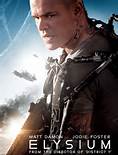
Elysium

“Elysium,” the film starring Matt Damon and Jody Foster showed up in India this past weekend. My wife, Peggy, and I happened to be in Bangalore to celebrate her birthday. So we went to see the film – our first time at the movies since arriving in India about three weeks ago. (We intend to stay here another three months as Peggy’s Fulbright at Mysore University takes its course.)

“Elysium” has been panned by some as convoluted in plot, over-the-top in its acting, and filled with typically Hollywood violence as indestructible and robotic adversaries clash in hackneyed, interminable and highly unlikely fight scenes.

I however found “Elysium” strangely intriguing when viewed from our setting in India and in the context of our government’s furor over information leaks. From that perspective, “Elysium” was evocative of the Bhagavad Gita in pitting its protagonist against overwhelming odds in a fight to the finish for human liberation.

More specifically, “Elysium” played out in comic book fashion the battle of Edward Snowden, Chelsea Manning, Julian Assange and other information “criminals” against the overpowering state apparatus of a militarized, out-of-control and venal federal government.

To begin with, take the film’s setting – Los Angeles in 2054. The streets of Bangalore were a good prep for the film. Like L.A. in the film, they are polluted, over-crowded, and dirty. However, unlike the imagined L.A. of the future, Bangalore finds itself going in two directions at once, not simply downhill.

Bangalore is situated somewhere between decay and an undisciplined version of globalized commercialization. It features “branded stores” like The Gap, Nike, KFC, Pizza Hut, and Dominos alongside stalls and shops overflowing with goods of all description. The treatment of workers on this sub-continent (as exemplified in the recent factory collapse in Bangladesh), is not unlike workers take-it-or-leave-it dilemma in the film.

Then consider the film’s plot. It’s about Max, a factory employee (played by Matt Damon) who is injured on the job as he’s exposed to a fatal dose of radiation. With five days to live, he must find his way to “Elysium,” a human-fabricated planet floating above the earth. There the rich live in idyllic conditions, where life-saving medical care is readily available. “Elysium’s” story is about Max’s quest to reach for that star. Damon does so by stealing government secrets.

Meanwhile the government responds with extreme violence. It pursues Max in ways reminiscent of the U.S. pursuit of Snowden, Manning and Assange. Its security apparatus hunts him down relentlessly. He is pursued by an implacable, incredibly powerful mercenary agency. He is threatened by drones. Finally, he sacrifices his life so that the information he divulged might set others free.

All of this happens in an oppressive culture characterized by:

• Dominance of the military-industrial complex that completely subordinates politicians to business moguls.
• A high unemployment rate that makes it a privilege for workers to be exploited in the workplace as opposed to remaining jobless.
• A medical system that provides healthcare only to those who can pay for it.
• Total surveillance of everyone involved.
• Fail-safe border patrol that entirely eliminates refugees by killing those attempting to cross borders illegally.
• A highly brutal police force that acts with robot brutality, absolute lack of compassion, and over-all impunity.
• The use of drones to hunt down and eliminate dissenters.
• Women (personified in the Jodie Foster secretary of defense) who despite finally holding high office prove to be more heartless than their male counterparts.

So in the end, “Elysium” is about the fate of a low-level corporate employee like Edward Snowden. The secrets Max reveals show the Department of Defense violating Elysium’s own constitution that supposedly governs a highly polarized society and keeps the reins of power in the hands of a rich minority. While protecting and empowering the minority, the rules in place deprive the majority of the rights of citizenship.

The disclosure of the planet’s governing secrets not only exposes abuse of power, but ends up dethroning the elite, while enabling ordinary people to claim the rights that belong to them in virtue of their humanity. “Elysium” is about information as the key to revolution.

Very little of this is perceived by movie critics. A movie review in The Indian Times saw “Elysium” as just another Hollywood action flick. Without explanation, it remarked that “conspiracy theorists” might find it interesting, and that the film said something about immigration and health care.

I’m suggesting that “Elysium” says much more than that. It perfectly describes the direction in which our culture is traveling. It represents a story of hope. It’s about the triumph of the working class against overwhelming odds. “Elysium” is about the power of information and the heroism of people like Snowden, Manning, and Assange. As a cautionary tale, the film is a call to support whistle-blowers against our own corrupt “leadership.”

Too bad all that de rigueur Hollywood overlay of violence, chases and predictability obscures “Elysium’s” valuable message.

Why I’m Not Celebrating July 4th This Year

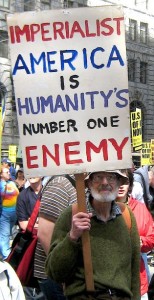
Anti-Americanism

I remember in 1972, I was asked to give a 4th of July speech in some church context which I’ve since forgotten. I was a 32 year old Roman Catholic priest then. And my remarks were critical of the U.S. role in Vietnam and in the Third World in general.

Before I began however, an officer from the local VFW led everyone in the Pledge of Allegiance. I remember how he prefaced his part with a long July 4th introduction. He praised the flag for being “unsullied in emblemizing mankind’s struggle for freedom, unparalleled in standing in defense of human rights and the pursuit of justice, blessed by God above all others as the flag of his New Chosen People.”

It was enough to turn my stomach.

My nausea was induced by what I knew the U.S. was doing in Vietnam, Laos and Cambodia. Like everyone else, I knew about Mai Lai, Agent Orange, the Phoenix Program, the Pentagon Papers and merciless illegal bombings of civilians.

My revulsion was also fired by my growing awareness of what the United States was doing in the Third World in general and especially in Latin America where the liberation theology I was studying was powerfully shaping consciousness throughout the hemisphere. Its insistence on historical and structural analysis had caused a paradigm shift in my own perception. Increasingly, I was seeing the United States as the Sandinista Anthem would later phrase it, “the enemy of mankind.”

Somehow I got through my speech without having anyone walk out. I still wonder why.

These days I’m feeling even more alienated than I did more than 40 years ago. Contemporary realities have actually turned me against July 4th celebrations.

Afghanistan, Iraq, Abu Ghraib and the use of drone technology to execute U.S. citizens and anyone in the world without due process are only part of the syndrome this time around. It’s what we’ve recently learned from Ed Snowden, Bradley Manning and Julian Assange that make flag-waving and Pledges of Allegiance so repulsive. Now when I see fireworks, I can only think of Dick Cheney and the “Shock and Awe” pyrotechnics we all saw on CNN when Our Great Country used lies and false pretenses to attack a sovereign nation that had never done us any harm. As Allen Greenspan said in effect, Iraq’s curse and crime was having huge supplies of high grade crude.

As for celebrating our Great Constitution, Snowden’s revelations coupled with a mere reading of the Fourth Amendment are enough to give anyone pause: “The right of the people to be secure in their persons, houses, papers, and effects, against unreasonable searches and seizures, shall not be violated, and no warrants shall issue, but upon probable cause, supported by oath or affirmation, and particularly describing the place to be searched, and the persons or things to be seized.” Yes, the Constitution’s fine; but increasingly it’s a dead letter.

Similarly, my willingness to celebrate American democracy is tempered these days by memories of the 2000 “election” of George W. Bush through the intervention of his brother who happened to be governor of Florida with the power to deliver the White House to his dear sibling. The machinations of brother Jeb and a crony Supreme Court would have been comical in any Banana Republic scenario. Having it occur in the United States was more than embarrassing. Subsequent insistence on our privilege to monitor and invalidate elections elsewhere in the world has made us the international laughing stock we’ve hoped to make countries like Venezuela and Iran.

And then there’s Republican redistricting, voter suppression, Citizens United, and the recent SCOTUS evisceration of the Voting Rights Act. What’s that you say about free elections?

The crowning glory of all this embarrassment is our country’s willingness to end life as we know it on Planet Earth by blocking every serious attempt to reverse climate change. President Obama’s recent tepid declarations notwithstanding, the U.S. persists in catastrophic denial of what every serious scientific study reiterates: we are on the road to destruction with the “America” blazing the trail.

Our country’s willingness to end life as we know it on our marvelous planet (not to mention our wars and arms industry) is reason enough to believe that Mother Earth would be better off if the U.S. just dropped off the map. Think about it: the earth would be better off without the United States’ pollution, wars and “Way of Life.”

That’s why I’ll do no flag waving or banner display. I’ll recite no Pledges of Allegiance, nor stand for the Star Spangled Banner. Patriotic speeches and other jingoistic claptrap will draw no applause from me.

It’s all gotten so bad and such a matter of public record that it might even make my VFW friend turn over in his grave.

The Environmental Cliff: Who’s Responsible? (Share this blog w/ your kids)

Readings for 1st Sunday of Advent: Jer. 33:14-16; Ps. 25:4-5, 8-9, 10, 14; 1 Thes. 3: 12-4:2; Lk. 21: 25-28, 34-35 (http://www.usccb.org/bible/readings/120212.cfm)

You probably know that we’re standing on the brink of a “fiscal cliff.” At least that’s what our politicians are saying. They insist that we’re heading for apocalyptic disaster. For them “fiscal cliff” means that if Democrats and Republicans can’t come to an agreement about taxes and deficit reductions before the end of the year, automatic tax increases and cuts in social spending will occur. And according to the Congressional Budget Office (CBO), that combination of tax increases and spending reductions is likely to plunge us into another deep recession. The politicians want us to think the sky is about to fall. Apocalypse is about to happen unless we stop spending on seniors and children, on our nation’s infrastructure, green technology and public transportation.

______

The annual United Nations Conference on Climate Change began last Monday [Nov. 26] in Doha, Qatar. In preparation for the meeting, the World Bank published an 84 page document on climate change. It’s called “Turn Down the Heat: Why a 4 Degrees C Warmer World Must Be Avoided.” According to the report, a four degree rise in planet’s temperature will produce disastrous heat waves and droughts, along with severe floods.  Hundreds of millions of people will be forced to abandon their homes in coastal areas and on islands that will be submerged as the sea rises. The Amazon rainforest will disappear, and monstrous storms will destroy whole cities and communities.  Health and emergency systems will collapse. Mass chaos will ensue, and the worst medical disaster since the Black Plague will strike the human race. (The Black Plague, you’ll recall killed 30-40% of Europe’s population.)  According to “Turn Down the Heat,” radical measures are required to deal with this impending crisis. These include immediate and unprecedented investment in green technologies and mass transportation systems.  And yet our politicians do nothing; they actually want to cut back on such expenditures! In the recent presidential debates, the phrase “climate change” was not even mentioned, much less debated. Quite the opposite: the two candidates strove to one-up each other in swearing allegiance to coal, oil, uranium and other dirty fuels that will only make the global warming worse.

______

This is the third week in a row that the lectionary has given us readings from apocalyptic literature. As I mentioned a couple of weeks ago, apocalypse was not about the end of the world. Instead, it was resistance literature, written in code during times of extreme persecution by powerful imperial forces like Greece and Rome. The code was understandable to “insiders” familiar with Jewish scripture. It was impenetrable to “outsiders” like the persecutors and their police against whom apocalypse was written.

Apocalypse differs from ordinary prophecy in that it addresses periods of deep crisis, when the whole world appears to be falling apart. Neither prophets nor apocalyptics were fortune tellers. Instead, they were their days’ social critics. They warned of the disastrous consequences that inevitably follow from national policies that deviate from God’s will – i.e. from policies that harm God’s favorites: widows, orphans, immigrants, the poor – and (we might add) the planet itself.

Perhaps the best example of apocalypse in our own history is what happened to the indigenous populations of North and South Americans when the Europeans arrived. The coming of white people signaled the end of the “Indian” world. Everything changed for the Mayans, Aztecs, Cherokee, Iroquois, and so many other Original Peoples in our hemisphere. For them the times were apocalyptic. The indigenous world would never be the same. And our ancestors were the agents of its destruction.

Something similar had happened for the Jews when Luke was writing his gospel around the year 85 of the Common Era. Jerusalem had been completely destroyed by the Romans in the Jewish War (64-70 CE). The Romans had brutally razed the city and the temple that had been rebuilt after the Babylonian Exile. For Jews that was something like the Death of God, for the Holy City and its Temple were considered God’s dwelling place. The event was apocalyptic.

In today’s gospel, Luke has Jesus predicting that destruction using specifically apocalyptic language. Luke’s Jesus says “There will be signs in the sun, the moon, and the stars, and on the earth distress among nations confused by the roaring of the sea and the waves. People will faint from fear and foreboding of what is coming upon the world, for the powers of the heavens will be shaken.

What can such apocalyptic message mean in our own day faced as we are with false “fiscal cliffs” distracting us from the fact that we’re standing on the brink of an unfathomable environmental cliff?

Yes, the fiscal cliff is a mere distraction – a completely human and remediable fabrication. And dealing with it by reducing the government’s ability to spend on green technology and public transportation succeeds only in bringing us closer by the minute to the exceedingly real environmental precipice.

I mean, no law of nature is at work in the budget crisis. The Bush tax cuts, which the Republicans are desperately trying to preserve, were advertised as temporary from the outset. In fact, they are the chief cause of the federal deficit, and are scheduled to disappear automatically at the end of 2012 – with or without agreement by the two parties. Social Security is completely off budget. It’s not paid for by income taxes, but by payroll taxes. So tinkering with Social Security will have no impact at all on the federal deficit. Meanwhile the CBO assures us that reductions in Medicare and/or Medicaid expenses will have minimal effect on the federal deficit.

And yet we’re all supposed to be waiting for “apocalypse” to happen, as if the federal deficit wouldn’t be ameliorated by simply letting the Bush tax cuts for the wealthy expire as originally intended, and by closing the tax loopholes that allow the rich to shelter their capital gains offshore in places like the Cayman Islands, and that permit huge multi-national corporations to pay no U.S. taxes at all.  As for Social Security; according to the CBO, it will remain solvent till at least 2035 if nothing at all is done about its reformation. And any problems that develop thereafter can be easily solved by having the rich pay like the rest of us on their entire incomes  even after their first $100,000. (Presently, they pay Social Security taxes only to that point, and then are let off the hook.)

Meanwhile, the real threat to our planet is the environmental cliff that our “leaders” refuse to address. And who’s responsible for that crisis? Prominent religious leaders would have us believe it’s God. He (sic) is punishing us for Roe v. Wade, for legalizing same sex marriages, or for allowing women access to contraception. Let’s face it: that’s nonsense. It turns Jesus’ embodiment of the God of love on its head. It turns God into a pathological killer – a cruel punishing father like too many of our own dads.

Others would say the culprit preventing us from addressing climate change is government. Now that’s closer to the truth. Our elected politicians are truly in the pockets of Big Oil, the Banksters, and other fiscal behemoths whose eyes are fixed firmly on short-term gains, even if it means their own children and grandchildren will experience environmental apocalypse.

But we can’t simply blame government. We elected these people. We have to organize to make sure they take seriously the mandate they’ve received. That mandate is to make the economic system work for all of us not just for the 1%. To make it work, we must first recognize that an economic system that destroys the planet is a complete failure. The Doha Conference is fairly shouting that message.  Our economic model is not working! In the long run, we have to organize to make our elected officials obey us, the People, rather than the business giants.

In the short run, we ourselves have to change our consumption habits. The Christmas season represents the perfect time to do that. What if this Christmas – three weeks from now – we supported each other in refusing to exchange all that plastic crap and those colorful pieces of cloth sewed together by slave labor and shipped at great environmental expense from the other side of the planet? What if we gave all that “gift” money to Greenpeace instead – or to the Heifer Project, or to Costa Rica’s Casa del Sol?

Our families and friends – even our children – would understand. I promise they would if we discussed it with them. They really don’t want or need that plastic junk either.  This is a wonderfully teachable moment. And it allows us to actually be the change we would all like to see in the world – at this apocalyptic moment when we stand on the brink of an Environmental Cliff. As would-be followers of Jesus, do we really have a choice?

(Discussion follows)