Series on Critical Thinking, Part One: It’s Not What You Think!

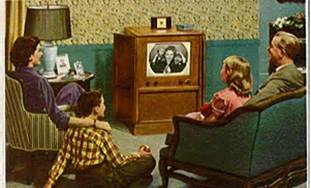
Plato's tv cave

This is the first in a series on critical thinking. Its immediate inspiration was the controversy on this blog site sparked by my April 16th entry on the Boston Marathon bombing (see below on this site). Many of the most critical responses showed that their authors did not understand where I was coming from in terms of my own remarks about severity and the “blowback” nature of the tragedy in Boston. I had written that the Boston tragedy was minor compared to the havoc wrought virtually every day in the Muslim world by U.S. drone attacks. Moreover those attacks by U.S. weapons of mass destruction evoked anger and desire for revenge on the parts of their victims. So “Americans,” I suggested, should expect more tragedies like Boston.

In truth, my point of departure was not (as some critics alleged or implied) anti-Americanism or insensitive gloating over the sufferings of the Marathon victims. Far from it, I love the United States; it is my place of birth; I consider myself highly patriotic. Like most people in the world, my heart went out to the dead, maimed and injured in Boylston Square.

However, I am also a teacher of critical thinking and have been for more than 40 years. During that time I’ve developed criteria – 10 of them – for thinking critically about history, politics, economics and religion. For me the essence of critical thought entails the ability to judge oneself (and one’s country) as objectively as possible (i.e. without ego-centrism or ethnocentrism). To that end, the criteria I’ve developed include

1. REFLECT SYSTEMICALLY
2. EXPECT CHALLENGE
3. REJECT NEUTRALITY
4. SUSPECT IDEOLOGY
5. RESPECT HISTORY
6. INSPECT SCIENTIFICALLY
7. QUADRA-SECT VIOLENCE
8. CONNECT WITH YOUR DEEPEST SELF
9. DETECT SILENCES
10. COLLECT CONCLUSIONS

As anyone can see, such criteria are not those one ordinarily finds in critical thinking textbooks – at least not those historically employed at Berea College where I taught for more than 36 years. Standard approaches provide tools for analyzing the thinking process itself. They instruct students in logic, common fallacies, and how to evaluate statements, evidence, statistics and information. Diagrams used to illustrate this understanding of critical thinking often look like the following:

critical-thinking

In many ways “thinking about thinking” accurately describes the project pictured above. According to this understanding, thinking critically is about thought processes and their logic. Once articulated and clarified, the new understandings are applied to cases such as abortion, capital punishment, immigration, and war. Without doubt, this understanding of the discipline is valuable and necessary for any serious scholarship or indeed for responsible citizenship.

However, the problem with this kind of thinking is that it can ignore questioning its own “parameters of perception.” It can work within cultural, institutional and ideological premises that largely remain unquestioned. It can proceed quite successfully without seriously questioning or even acknowledging the possibility of alternatives to existing ideologies, laws, institutions, power relationships, and customs. One can think about the Marathon bombing, for instance, without considering the accuracy of one’s accepted historical narrative about the role of the United States in the world or about the “institutional violence” that might have provoked the atrocity.

By way of contrast, critical thinking as explored in this series will address such neglected elements. The operative image here will be Plato’s Cave. Its representation looks like this:

PlatoCave

About 2500 years ago Plato described the human condition as characterized by a tragic absence of critical thought as I’m proposing it here. We live, Plato said, like people in a cave where they’ve been imprisoned all their lives. They remain there chained in a way that prevents them from moving about. They face a wall unable to move even to see directly the others who like them are chained alongside. However the wall the prisoners face is not blank. This is because a fire burns behind the captives and casts their shadows on the wall much as a movie projector would in a dark theater. And that’s their only image of themselves – shadows.

However other shadows appear on the wall as well. They are cast by people walking behind the prisoners along the “roadway” pictured above. The walkers carry statues of all kinds of things – animals, trees, gods . . . . Viewing those shadows, the prisoners think that life is unfolding before them. Moreover, the “wise” among the prisoners – the teachers – become very good at describing the shadows and at predicting the sequence of their appearance. In terms relevant here, their discourses are taken as expressions of “critical thought.” However, their wisdom describes shadows in an artificial world.

Eventually one of the prisoners escapes the cave and discovers the real world and the sun which makes life possible. The escapee returns to the cave to inform the prisoners of this discovery. The escapee’s intention is to introduce real “criticism.” Far from welcoming him, the other prisoners threaten to kill him.

Plato, of course, was writing about his mentor, Socrates whom the citizens of 5th century BCE Athens actually did kill for teaching what I’m calling here “critical thinking.” They interpreted his project as “corrupting the youth,” because it called into question the “doxa” of their day. The Greek term, doxa, referred to the “of course” statements that go unquestioned everywhere. Our culture is full of them: “The United States” is the best country in the world.” Of course it is! “Ours is the highest standard of living.” Of course! “’We’ are good; ‘they’ are evil.” Of course!

The critical thinking I intend to pursue here is about critiquing doxa; it’s about questioning parameters of perception; it’s about escaping the cave.

More specifically, what I intend to expose here attempts to provide tools for subjecting society’s underlying narratives, along with its economic and political structures and ideologies to careful yet easily accessible analysis. Moreover, it starts not from a place of supposed neutrality, but from a place of commitment to a world with room for everyone. Commitment in one form or another is inescapable.

Consequently this approach to critical thought not only analyzes reasons for such commitment; it evaluates as well ideologies that contradict that vision. This approach will be historical and involve examination of “official” and “competing” narratives about the past. It will treat violence as a multi-dimensional phenomenon connected with structures of political economy, the struggle for survival, and police enforcement of “rules of the game” that benefit some and hurt others. The approach centralized here will give key importance to spirituality and the clear articulation of conclusions about the world and the historical patterns at work there.

My approach will also recognize that some of the best and most engaging stimuli for critical thought are can be found in popular culture’s most powerful and engaging medium, Hollywood film, as well as from outstanding documentaries. So most blog entries on this topic will include film illustration.

My hope is that readers will find these Wednesday blog entries interesting and helpful and worthy of their “critical” feedback.

Announcing a New Wednesday Series on Critical Thinking: is anyone interested?

Critical thinking

During the last couple of weeks my blogs have addressed the Boston Marathon bombings. I’ve suggested the application of elementary principles to clarify thinking about such tragedies. One of them I’ve termed the “principle of reciprocity.” The meaning I’ve assigned the term has to do with the application of a single standard to all cases involving response to tragedies like the Boston bombing on the one hand and U.S. drone attacks on the other.

Reciprocity is related to judgments about nuclear weapons. If the U.S., Israel, Pakistan, and India are allowed to possess them, so should North Korea and Iran. The principle of reciprocity holds that what I judge as good for me should be good for you as well; what is bad for me is bad for you. Any child can understand such a guideline. It’s what we learned in Kindergarten and Sunday school.

Yet our “leaders” seem incapable of grasping what is perfectly clear even to children.

The principle of reciprocity and its implicit challenge to “American” exceptionalism has elicited energetic response on the part of some who have read the blogs as anti-American, insensitive and judgmental. Those responses in turn have led me to perceive a need on my part to explain in a more detailed manner just where I am coming from. The idea would be to help others come to grips with their own principles of critical thought. (We all have them whether we’re aware of it or not.)

You see, over my 36 years of teaching at Berea College in Kentucky, I’ve taught many courses on critical thinking. And this has led me to bring to consciousness my own approach to the discipline. That approach has centralized what I’ve learned in my years of study under Third World thinkers – especially under liberation theologians in Brazil, Costa Rica, Nicaragua, Cuba, and Zimbabwe.

If you’re wondering what I mean by “liberation theology,” just click on the entries in that category located just below the masthead of this blog site. In a single sentence, “liberation theology” is reflection on the following of Jesus of Nazareth from the viewpoint of those committed to the liberation of the world’s poor and oppressed. I consider it the most important theological development of the last 1700 years and the most important intellectual movement of the last 150 years – going back to the publication of the Communist Manifesto in 1848.

I guess what I’m saying is that my understanding of critical thinking comes from a faith perspective.

In any case, inspired by what I’ve learned, my teaching has led me to develop ten principles for critical thinking. I’ve used feature film clips to illustrate what I’m talking about. I’d like to share those principles and clips with readers in bite-sized portions, in Wednesday blogs over the next several weeks.

I hope there will be an audience out there to follow along. If so, please make a simple “I’m on board” comment below. If there’s no audience, at least my entries will serve as a vehicle for talking to myself in order to clarify my own thinking.

The same holds true for my observations about Hitler, his victory in what liberation philosopher,Enrique Dussel calls “the Second Inter-capitalist War,” and the resurfacing of Hitlerism in the United States over the last 35 years. During the coming weeks, on Fridays, I’d like to give an account of that sad and highly threatening process and its relevance to our own day. Is anyone out there interested in following a series on the topic? I wonder.

None of this would change what I consider the anchor of this blog site. In my view, what holds the whole thing down are my Sunday homilies. My project there is to do my small part to rescue interpretation of the Christian tradition from the political right and religious fundamentalists, and to provide reflections on Sunday liturgical readings from the viewpoint of liberation theology as referenced above.

If any of this interests you, please sign up as a “follower” of this blog, so that you’ll receive automatic notification of the Monday, Wednesday, and Friday posts. If you’re reluctant to sign on as a “follower,” do something to remind yourself to check in from time to time. Your critical feedback will be greatly appreciated.

I await responses.

The Holocaust Museum And the Search for Truth

jesus_in_abu_ghraib

What keeps us from recognizing the truth when it’s staring us in the face? That’s the question that occurred to me as I visited the Holocaust Museum last week when I was in DC. The answer is complex. Dealing with its ramifications challenges us to remember what we learned in kindergarten and what many of us were taught in church.

Last week’s visit was my second time through the Holocaust Museum. Its four floors of display, film, recordings, and horrific material memorabilia are dedicated to keeping alive the nightmare of the systematic murder of millions of communists, socialists, Jews, trade union leaders, priests, ministers, nuns, homosexuals, gypsies, and disabled along with other “dysfunctionals” and enemies of the state.

This time Peggy and I along with our youngest son, Patrick (age 26) spent most of our time on the fourth floor. It details Hitler’s rise to power. How did the German people allow that to happen, I wondered? They were Europeans. They were “modern,” producers of great philosophers, theologians, poets, novelists, musicians, scientists, and industrialists. Even more puzzlingly, they were largely Christian living in a major birth-center of the Reformation.

And yet they allowed the prison-camp system to emerge. They allowed Hitler to declare war on the world. The majority claimed ignorance of the gassings and incinerations. But surely, no one was unaware of the vilification of the ovens’ victims. Hitler’s speeches were filled with denunciations of “Jewish madness.” The phrase not only reflected anti-Semitism, but was code for the political left inspired at its core by the Jewish Testament – those communists and socialists that Hitler (and the ruling classes across Europe and the United States) hated and feared more than anything else.

And when Hitler declared war on the world, good Christian Germans lined up to fight for God and country. As Elie Wiesel reminds us, Catholic prison guards gassed Jews during the week, and then went to confession on Saturday and received Holy Communion at Mass on Sunday.

Reviewing all of that in the Holocaust Museum made me uncomfortably aware that the specter of Adolf Hitler is stalking our world today. It actually pains me to say that this time the shadow is cast by the United States. As I write, the “Americans” have established the control of the world that Hitler sought. In effect, Hitler (or more accurately Hitlerism) won that Second Inter-capitalist War.

In fact, since 9/11 the U.S. has declared a Hitler-like war on the world. It recognizes no inhibiting law, and will brook no rival. Its law of the jungle prevails. The war’s enemy: the poor who demand a fair share of the resources located where they live. Acting as the Hessian armed force of multinational financial interests, the United States identifies, arrests, tortures, and eliminates those who insist that the oil, minerals, natural resources, and agricultural produce of their countries belongs to them and not to the foreign interests on whose behalf the United States polices the world.

Part of the police-world the “Americans” have established is unending war; another is the world-wide prison system like the one at Guantanamo Bay, Cuba. The prisons are entirely reminiscent of Auschwitz, Buchenwald, Belsen, and Dachau, though government secrecy keeps us in the dark about the true extent of the clandestine hell-holes. They are centers of torture and degradation that beggar description. They are filled with Muslims, not with Jews. (Ironically Palestinian Jews are spearheading the attack on Muslims. It’s not for nothing that the Palestinians are called “the Jews’ Jews.”)

As for the unending war, according to the highly decorated ex-CIA agent John Stockwell, over the last 60 years, “The Third World War against the Poor” has claimed far more lives than the horrendously iconic figure of six million. In Vietnam alone more than 2 million Vietnamese were slaughtered. In Iraq, the figure of pointlessly butchered reaches beyond 1 million in a war of aggression which the U.N. terms the highest of international crimes.

And yet, our contemporaries, like the good Christians of Berlin and Cologne, are mostly in denial about the extent of the police state that has taken form especially since 9/11. Most deny (at least by their silence) the very existence of secret prisons, torture of suspects, the plain fact of political prisoners, death squads, and systemic cruelty.

Where does that denial come from? Where did it come from as Hitler rose to power? Part of the answer is that the process of take-over was gradual. It took years as Hitler advanced from army corporal, to political prisoner, to best-selling author of “Mein Kampf,” to Member of Parliament, to Chancellor, to dictator.

Similarly, the mission creep of the U.S. National Security State has been gradual as we’ve seen our government claim (and be granted by the judiciary) the right to spy on its citizens, search them without probable cause, imprison them without charge, torture them without limit, and ultimately kill them without trial. In the face of all that, like our German counterparts, most of us have stood dumbly by and have even applauded our oppressors as they expropriate us of our constitutionally guaranteed rights.

Another source of denial is the disruption that truth-telling causes in our own lives. As Paul Craig Roberts has recently pointed out, telling the truth disturbs career trajectories and can even disrupt family relationships. That makes fathers and mothers, ministers and priests, politicians and pundits close their eyes and moderate their speech. Roberts says,

“The power elite, especially the liberal elite, has always been willing to sacrifice integrity and truth for power, personal advancement, foundation grants, awards, tenured professorships, columns, book contracts, television appearances, generous lecture fees and social status. They know what they need to say. They know which ideology they have to serve. They know what lies must be told—the biggest being that they take moral stances on issues that aren’t safe and anodyne. They have been at this game a long time. And they will, should their careers require it, happily sell us out again.”

What to do about this state of affairs? For one we must learn to think critically. At the very least, that means applying daily to what we see and hear the “law of reciprocity.” It’s something even a child of seven can understand, though it seems beyond the capacities of our “leaders” to grasp.

One meaning of the law of reciprocity is that what is good for me is good for you; what is bad for you is bad for me. This means that if the U.S. would consider it unacceptable for Pakistanis to drone their enemies on “American” soil, it unacceptable to drone “American” enemies on Pakistani soil. If it’s wrong for Iranians to have nuclear weapons, it is also wrong for Israel or the United States to have them.

The law of reciprocity makes one wonder what the United States would do if a foreign drone so much as appeared unbidden in American airspace much less if it did its destructive work on the ground.

Besides observing the elements of what we were all taught in kindergarten, it would also help to heed what most of us have heard in church all our lives. That those German prison guards could do their crematorium work during the week and receive communion on Sundays seems somehow contradictory to the teachings of Jesus, don’t you think?

What about the guards at Guantanamo or Abu Ghraib, the soldiers in Fallujah or Haditha, or the drone pilots sitting at the consoles in their air-conditioned theaters? How are they different from the Germans we condemn?

Help me figure this one out. The question is disrupting my life.