Readings for the 24th Sunday in Ordinary Time: Sirach 27: 30-28:7; Psalm 103: 1-4, 9-12; Romans 14: 7-9; Matthew 18: 21-35.
This week’s readings are about forgetting and unforgetting. They emphasize our tendencies to remember, rehearse and perversely treasure wrongs done to us, while denying, ignoring or dismissing those we’ve done to others. The wrongs in question can be both personal and/or political.
For today, let’s leave aside the myriad personal grievances we all nurse.
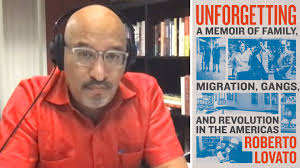
Instead, let me focus on political resentments and point out that this week’s selections are especially relevant to an interview many of us may have seen last week on Amy Goodman’s Democracy Now. The telecast spent time with Salvadoran journalist Roberto Lovato who has just published his own memoir called Unforgetting: A Memoir of Family, Migration, Gangs, and Revolution in the Americas.
Problems at the Border
In tune with our readings, the book addresses the topic of our collective amnesia about the true causes of immigration problems and their uncomfortable cure. In Lovato’s case, both remembering and forgetting connect more than four decades of destructive U.S. policy in Central America with the refugees and asylum seekers at our southern border mostly from El Salvador, Guatemala and Honduras. Those three countries, Lovato pointedly recalls, were absolutely destroyed by counter-insurgency wars that go all the way back to 1932.
Without “unforgetting” those disasters, the author insists, we can understand neither the border crisis nor the gang phenomenon that causes it.
To begin with, Lovato reminds us why almost no one outside El Salvador remembers “la matanza” of ‘32. Instead, that massacre along with its more recent reprise at El Mozote in 1981, have been shoved down our Orwellian memory hole by the U.S. and Salvadoran states whose very job is to destroy records and manufacture the mass amnesia that afflicts American culture.
Similarly, very few of us connect our contemporary border crisis with U.S. Central American policy during the 1980s. Virtually no one links the Central American policies of the Carter, Reagan, Bush I, Clinton, Bush II, Obama, and Trump administrations to immigrant prisons and baby jails.
Nonetheless, on Lovato’s analysis, the connections are there for the rescue. La matanza, he says, was one of the most violent episodes “in world history in terms of the numbers of people killed per day, per week, in a concentrated place.” The massacre at the hands of a U.S. supported military government killed thousands upon thousands of mostly indigenous Salvadorans.
As for El Mozote, some can still remember that horrendous U.S. crime where nearly 1000 unarmed Salvadoran villagers were slaughtered by U.S.-trained forces.
In fact, El Mazote encapsulates the entire disaster of American policy towards Central America foreshadowed in la matanza and resumed with a vengeance all during the 1980s. Under its aegis, entire towns were destroyed; homes were set ablaze and jobs destroyed; families were decimated; sons and husbands were killed; wives and daughters were systematically raped; union leaders, social workers, and teachers along with liberationist priests and nuns were assassinated without pity.
Disgracefully, much of the destruction was financed by CIA operations that flew narcotics from Central America to Florida and carried guns and ammunition back to U.S.-supported terrorist troops in Salvador, Guatemala, and Honduras – not to mention the Contras in Nicaragua.
And of course, in the aftermath the militarily decommissioned terrorists continued their lucrative involvement with narcotics. They became the drug gang kingpins and foot soldiers who in turn have driven so many families northward.
All of that, Lovato repeats, must be “unforgetted” if we North Americans are to have any hope of solving our problems of immigration, gangs, drugs, and social justice. Our country owes extensive reparation to Central Americans.
Today’s Readings
So, with all of that in mind, please consider this Sunday’s selections. On the one hand, they centralize the divine amnesia of Jesus’ Great Father-Mother God regarding our personal and communal shortcomings that some refer to as “sin.” On the other hand, our Divine Parents’ compassionate forgetfulness is contrasted with our own petty preoccupation with the way we imagine others have somehow done us wrong.
Sirach, the Psalmist, Paul, and Jesus all remind us of how easily we forget the way we’ve abused “strangers” (like those at our border) whom the Master identified as our very sisters and brothers. Ironically, unforgetting them is the karmic key to our own forgiveness and liberation.
In any case, what follow are my “translations” of today’s biblical excerpts. You can find the originals here to see if I’ve got them right.
Sirach 27: 30-28:7: Karma is a Law of the Universe. LIFE will treat you as you treat your neighbor. If you’re vengeful, you’ll inevitably experience others’ revenge. If you’re always angry, life will seem cruel. But if you’re forgiving, Life itself will forgive you. So, forget about your own fictitious wounds. Instead practice forgetful mercy, forgiveness, and compassion. After all, life is short. Vendettas will mean nothing to you on your deathbed.
Psalm 103: 1-4, 9-12: Our Divine Mother herself sets the example. She is patient, forgiving, kind, generous and compassionate. She doesn’t remember any of our faults – not even grave “sins” we fear may have destroyed our lives. Far, far from such guilt, it’s as if she never witnessed our shortcomings at all.
Romans 14: 7-9: Practicing such forgetfulness, none of us will have anything at all to fear from death which will simply be surrender to the One in whom we have always lived and moved and had our being. This is what Jesus himself showed us by the example of his own life.
Matthew 18: 21-35: When Peter asked him about the limits of forgiveness, Jesus said there are none at all. “Or maybe” (he joked) “you can stop forgiving after the 490th time – but be sure to keep track, Peter, as I know you will. Don’t let yourself go over 500.” (He said that with a gentle smile.) “In any case, remember what Sirach said about karma. If you’re generous to others, Life will treat you kindly; If not, you’re creating your own tragic misfortune – and that of your entire family. It’s you, not God who creates your inevitable destiny.”
Conclusion
Yes, Karma is a law of the universe. All the world’s great spiritual traditions teach that simple profound truth. What we do to others will eventually come back to haunt us. There’s no getting around it.
The problems experienced at our borders are simply blowback from our country’s own criminal missteps in the world. While we imagine that we’re threatened and wronged by those at our border, simple unforgetting reminds us that we’re actually the ones who have victimized the ones seeking refuge and asylum. Actually, we have nothing at all to forgive them. Instead, we owe them enormous repair.
No, it’s the ones at our border who have so much to forgive us. So far, they’ve been generous in doing so – well beyond the 500-mark specified by Jesus. Both our karmic liability and our debt of gratitude to our southern siblings are huge.
We’re indebted to Roberto Lovato for helping us unforget all of that.
 About Things That Matter