Readings for the First Sunday of Advent: Isaiah 63: 16B-17, 19B; 64: 2-7; Psalm 80: 2-3, 15-16, 18-19; I Corinthians 1: 3-9; Mark 13: 33-37
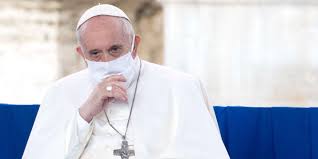
Last week, Pope Francis wrote a beautiful Covid-19 reflection in the New York Times (NYT).
He recalled how the pandemic’s unsung heroes reminded him of his own brush with death when he was just 21 years old. At that tender age, he was hospitalized with a pulmonary infection that ultimately cost him part of a lung.
At the height of his crisis, two nuns working as nurses in his Argentine hospital ignored doctors’ prescriptions and doubled the dosage of penicillin and streptomycin in one case and increased his pain killers on the other. Their courage in doing so, the Pope is convinced, saved his life.
Generous, courageous souls like the two religious sisters who helped him then have reemerged, Francis noted, during the pandemic. They’re the “saints next door.” They’ve saved innumerable lives as nurses, doctors, caregivers. They’re the essential workers who in many countries have regularly been applauded at doorsteps and windows with genuine gratitude and awe.
The selflessness of such heroes has sometimes cost them their lives. But many among those champions sacrificed freely knowing as Francis put it, that “it is better to live a shorter life serving others than a longer one resisting that call.” They represent the antibodies to an infection among us far more dangerous than Covid 19 – the virus of indifference.
Writing pointedly in the premiere U.S. newspaper, Francis identified that more dangerous virus with governments that have not put the well-being of their people first. Instead, they have “shrugged off the painful evidence of mounting deaths.” They’ve pandered to groups opposing travel restrictions, social distancing and facemasks as if such measures constitute “some kind of political assault on autonomy or personal freedom!” Francis said that worship of that kind of liberty has become for many a kind of ideology obstructing all understandings of common good.
In Francis’ view, such selfish shortsightedness shows that Covid-19 is merely one of the pandemics currently afflicting our planet. Hunger, violence and climate change are others. All of them lack perspective and generosity.
Responding effectively means attuning our sensibilities to the pain of others who have been deprived of life’s basic needs – work, food, housing and human dignity. Responding means recognizing that we’re never saved alone; we are bound by human solidarity and reciprocity.
Reading the pope’s words, I couldn’t help thinking of parallels between them and our readings for the first Sunday of Advent. Together, they call us to reverse course – to wake up from our collective stupor to the presence of what some call God in the neighbors, heroes and martyrs whom Francis’ words identify so poignantly.
What follow are my “translations” of the readings in question. Please check the originals here to see if I’ve got them right.
 Isaiah 63: 16B-17, 19B; 64: 2-7

 We have lost our way;
 We’ve hardened our hearts;
 We no longer even know
 What faithfulness means.
 We feel somehow unclean,
 Polluted and aimless.
 Yet, we long to see more deeply
 To reality’s very heart
 As never before.
 Reunion with You, Divine Mother
 Is what we ultimately crave –
 To be refashioned
 As if we were clay
 In your lovely hands.

 Psalm 80: 2-3, 15-16, 18-19

 So, please show us your face.
 Save us from ourselves.
 Strengthen us.
 Bring us home.
 Demonstrate again
 Your care for us
 As a shepherd guarding her flock,
 As a gardener tending her vine.

 I Corinthians 1: 3-9

 Oh, wait
 You’ve already done that
 Haven’t you?
 You’ve answered our prayer
 In Yeshua, the Christ.
 His loving kindness
 And revolutionary teachings
 Bring clarity, insight
 And serene understanding.
 They restore
 Meaning to our communal lives.

 Mark 13: 33-37

 Above all
 (Like the Buddha)
 Yeshua commanded us
 To wake up
 To see
 What sleepers miss:
 Constant divine manifestations
 At our very doorstep
 When we expect
 Them least
 Morning, noon and night.
 About Things That Matter