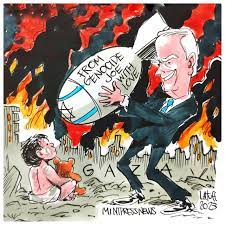
Apartheid Israel’s war in Gaza along with “Genocide Joe’s” unconditional support for the holocaust there have set me thinking not only about Israel’s settler colonialism, but about colonialism in general and resistance to its depredations. The rebellion is unfolding before our eyes without most of us even noticing it in those terms.
I mean, not only Gazans have risen against continued European and American control of their destinies. In practice, the insurrectionist impulse is shared by colonized people across the planet. They’re moving from empire’s periphery to imperial centers everywhere. It’s what our politicians call “the immigration crisis.”
Consequently, I think it’s time to rethink and reframe what’s happening at our southern border. More than that, it’s time to reframe the question of immigration worldwide.
Let me try.
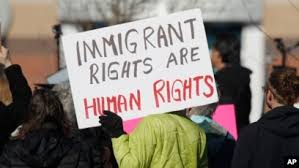
The Gazan rebellion has made me realize that planet-wide migration is not primarily a question of law, immigration reform, sacrosanct borders, and preventing the entrance “illegals” by walls and militarization of crossing points. Instead, it’s an issue of recognizing global population shifts from the Global South (Latin America, Africa, and South Asia) to the developed West for what they are:
A human rights movement (literally!) against artificial borders imposed by government’s representing the world’s white minority that comprises only about 12% of the global population, and yet insists on controlling the entire planet. (For instance, during the 19th century and afterwards, white Europeans arbitrarily created entire countries as part of their “divide and rule” policies in Africa, the Mideast, and elsewhere.)
An unprecedented rebellion against such exercise of white supremacy, control, and border determination.
A largely intuitive demand by workers that they be given the same rights as capital to move freely across borders
A kind of reconquista (reconquering) of geographical space stolen from ancestral peoples.
And even though few participants in the movement are aware of its historical significance and scale, the movement cannot be stopped. No matter what the white European and “American” elites might do, the migrants will keep coming.
That’s because the immigrants, refugees, and asylum seekers are implicitly operating from a largely unconscious grasp of the fact that the white European-American order is the root of the problem. The whole system has no moral ground to stand on. It conflicts with fundamental values that transcend and invalidate national borders.
Here my primary reference is to the UN Universal Declaration of Human Rights (UDHR).
In 1948, that Declaration recognized that human beings simply by virtue of having been born have inherent entitlements (yes entitlements!) that include rights to food, shelter, clothing, health care, education, meaningful work, a living wage, and to insured retirement at the end of their lives. That’s what The Declaration says.
And yet, the experience of the colonized is that whenever their governments have tried to implement policies to secure such rights for their people, the former colonizing powers [who btw form the core of the North Atlantic Treaty Organization (NATO)] under the leadership of the United States identify such governments as “communist.” They subject the offending authorities to regime change and to sanctions that work directly against the guarantees of the UN Declaration. The result is poverty, misery, hunger, unemployment, prison, torture, and death for millions of peasants, teachers, social workers, union organizers, and religious leaders.
Moreover, the white colonial elite have arrogated to themselves the supposed authority to unilaterally declare that the UDHR is only “aspirational.” For them it’s an abstract ideal that lacks the enforcement apparatus required for its implementation. [The U.S. has insured that the document will remain unenforceable by refusing to ratify the protocols guaranteeing its social provisions. In fact, it has withheld its ratification of the UDHR in general. Remember, it is a tiny minority of the world’s population (the whites) who impose such interpretation.]
Well, the current worldwide population shifts show that the globe’s non-white majority is no longer willing to recognize the authority of those who claim to be their betters. For the “invaders,” their human rights transcend the jurisdictional barriers erected on the whims of the white elite robber barons, bankers, lawyers, Wall Street tycoons, and their political appointees.
Again, nothing can stop the momentum of this drive — of this literal movement — for human rights. It’s a question of the world’s majority voting with their feet.
As for what to do about problems at our southern border . . .. The answer is relatively simple.
Sign off on the Declaration, including its “socialist” protocols.
Respect and promote the UDHR to enable and encourage Latin Americans to live free from want and fear without leaving their beloved homelands.
Accordingly, remove all sanctions from countries (like Cuba, Nicaragua, and Venezuela) that enact policies implementing the UDHR’s social justice protocols.
In general, stop interfering in the internal affairs of other countries.
Abandon regime-change aspirations.
Grant to labor the same rights that capital has to freely cross borders to where the money can be made. (Either that or restrict capital’s ability to cross borders with the same zeal applied to migrant workers.)
Divert the billions upon billions now spent at the border on walls and militarization of U.S. Customs and Border Protection to the rebuilding and repair of Latin American nations (such as Guatemala, El Salvador, and Honduras) for the catastrophic damages from “America’s” ruinous policies of the past and present.
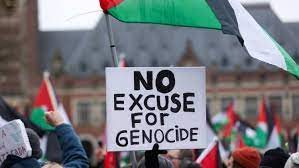
This past week, the world held its breath as South Africa’s top legal team pressed its case before the International Court of Justice (ICJ). The lawyers argued that the state of Israel is guilty of genocide by prosecuting its war against the people of Gaza.
On Thursday, the South Africans made their case in exquisite detail. It cited chapter and verse proving, the lawyers said, that Israel not only committed acts of genocide, but that according to its leaders’ own admissions, Israel did so with full genocidal intent.
On Friday the Israeli defense team gave their reply. It basically held that all of Israel’s actions including the deaths of 30,000 Palestinians (at least half of them children and women) are justified by the Hamas attacks of October 7th, 2023.
Final resolution of the case may take months or even years. Now however, we await the court’s preliminary directives.
Whatever those judgments and injunctions might be, the very fact that the world was forced to listen to the South African case against Israel represented a victory for the Palestinians and an education for the world at large – especially for the United States. That’s because the U.S. mainstream media (MSM) has largely excluded the Palestinian viewpoint from public awareness. In fact, to give sympathetic voice to the Palestinian perspective has been all but criminalized here.
Accordingly, since October 7th, Americans have been subjected to nonstop Israeli propaganda that presents the conflict in Gaza as though it began on October 7th — as though it was initiated without provocation by blood thirsty terrorists driven by irrational anti-Semitism.
So understood, that scenario gives to Israel the right to overlook international law and to follow a “morality” of revenge, collective punishment, ethnic cleansing, and even genocide. It is a “morality” completely supported by the United States.
The argument here is that such morality can have only highly disastrous effects.
To show what I mean, allow me to (1) summarize the case so eloquently argued by the South African legal team, (2) lay out Israel’s exceptionalist morality, (3) put the entire case in historical perspective, (4) apply Israel’s logic to that case, and (5) conclude with specific recommendations about legal responses to Israel’s policies.
South Africa’s Case
The case of the South African legal team was argued convincingly. It was founded on international law. The argument implied and/or specifically held that:
Illegal occupiers enjoy no right to self-defense.
Neither does any regime practicing apartheid. Apartheid is a war crime.
On the contrary, it is the illegally occupied who have the right of self-defense against their occupiers and any system of apartheid. That right includes taking up arms against the perpetrators in question.
No provocation, no matter how egregious justifies direct attacks on civilians.
In all cases, any response to terroristic attacks must observe the principle of proportionality. That is, Article 51 Section 6 of the UN Charter states that revenge attacks against civilian populations are strictly forbidden.
So are forced relocations of entire populations, deprivation of food and water to civilian populations, attacks on hospitals, medical personnel, schools, refugee camps, places of worship, and members of the press.
By ignoring such legal restrictions, the South African lawyers argued, Israel is guilty of genocide defined in law as “the deliberate killing of a large number of people from a particular nation or ethnic group with the aim of destroying that nation or group.” The lawyers bolstered their case with statements from Zionists all the way from soldiers in the Israeli Defense Force (IDF) to the country’s prime minister declaring their genocidal intentions.
Israel’s Syllogism of Genocide
In reply to the accusations just cited, Israeli lawyers laid out their case arguing that Israel’s right to self-defense justified all the actions listed by the South African barristers. The Israeli case and exceptionalist “morality” implies the quasi-syllogism immediately below:
Following unprovoked violent attacks on civilians by an enemy, the right to retaliate in self-defense overrides all moral principles and international law.
a) More specifically, it exempts the offended from all legal strictures against killing civilians including babies, infants, children, women, and the elderly in any way connected with attacks by the enemy in question.
b) In such cases, ethnic cleansing and genocide become morally justifiable.
2. But on October 7th, 2023, the Palestinian terrorist organization called Hamas violently attacked Israeli civilians near the Gaza border resulting in the deaths of more than 1000 Israelis (including many civilians) with over 2500 wounded.
3. Hence, according to the above-stated moral principle, Israel’s right to retaliate in self-defense overrides all other moral principles and international law. It exempts Israel from any legal strictures against killing civilians including babies, infants, children, women, and the elderly in any way connected with attacks by the enemy in question.
Such moral reasoning apparently makes sense to the political leaders of Israel and to most Israeli citizens. It also has been embraced by the political class of the United States, by its mainstream media (MSM), and by many U.S. citizens. For them, Israel’s right to self-defense reduces any talk of genocide (and of ceasefire) to anti-Semitism.
Arguably, this is because the relevant reasoning processes of those just mentioned begin on October 7th, 2023. Hamas struck first, they argue. It is therefore responsible for the violence now directed against it. Hamas has only itself to blame.
Historical Perspective
However, following Israeli logic, the situation changes, if the one’s thinking begins not on October 7th, 2023, but more than 100 years ago. That’s when European Jews supported by Great Britain committed what Pakistan’s UN envoy Munir Akram called the “original sin” in Palestine.
It was in 1917 that Great Britain exercising illegal imperial power issued its infamous Balfour Declaration. Without moral right and absent consultation of the indigenous of Palestine, the decree created a national home for Jewish Europeans from Russia, Poland, Lithuania, Latvia, Estonia, and other countries where they had a long history subjected to anti-Semitic pogroms and persecutions.
Of course, the indigenous of Palestine experienced the arrival of European settler colonists with the same sort of resentment and sporadic resistance that Native Americans experienced when white conquerors from Europe arrived on the shores of Abya Yala. The latter came with their religious prejudices too, every bit as strong as those of Zionist fundamentalists. Like the latter (as recalled by Enrique Dussel in his Invention of the Americas) the settler colonialists from Europe considered the indigenous “human animals.” As sub-humans, they automatically forfeited their resources to the civilized new arrivals with their “holy Catholic faith.” It granted them rights to the “new world” ratified by the pope himself, the very representative of God on earth.
Palestinian resentment and resistance were compounded in 1948, when following the horrors of Hitler’s Holocaust, European Jews flooded Palestine. The settler colonists destroyed 531 Palestinian towns and villages, stole the homes of their inhabitants, committed more than 70 massacres, and killed more than 15,000 Palestinians in the process.
It’s no wonder that the Palestinians remember the sequence of events as The Nakba (the Catastrophe). It’s also no wonder that Palestinians aided by key elements of the Arab world fought two wars of resistance in 1967 and 1973 as well as implementing two major campaigns of largely peaceful resistance (Intifadas) against the settler colonists from 1987-1993 and from 2000-2005.
To all this, Israel responded with overwhelming violence taking thousands of Palestinian lives. The most recent non-violent campaign, the Palestinian’s “Great March of Return” in 2018 saw 214 protestors (including 46 children) killed by Israeli sniper fire. More than 36,100 (including almost 9000 children) were also wounded. Virtually none of this received due attention in the U.S. MSM.
Noam Chomsky summarizes the atrocities just described using the Israeli phrase “mowing the lawn.” That refers to the Israeli practice (at least since 2005) of periodically invading, bombing, and imprisoning (often without charge) thousands of Palestinian civilians. Chomsky enumerates the steps as follows:
A truce accord between Israel and Hamas is established.
Hamas lives up to it.
Israel violates it.
Israel escalates the violation.
This elicits a Hamas response.
The reaction provides a pretext for what Israel calls “mowing the lawn” – i.e. one of its major periodic attacks on Palestinians.
Then comes the western propaganda: “Poor Israel is attacked by rockets. What can it do? They must defend themselves.”
If Hamas Followed Israel’s Moral Logic
Keeping in mind the history just recounted as well as Israel’s “moral” logic about self-defense and dispensation from observing international law and prohibitions against revenge, collective punishment, ethnic cleansing and even genocide, Hamas was perfectly within its rights to perpetrate its acts of violence on October 7th. In fact, those acts compared to Israel’s can be characterized as restrained and moderate.
In any case, following Israel’s logic, here’s how Hamas’ quasi-syllogism might run:
Following violent attacks on civilians by an enemy, the right to retaliate in self-defense overrides all moral principles and international law.
a) More specifically, it exempts the offended from all legal strictures against killing civilians including babies, infants, children, women, and the elderly in any way connected with attacks by the enemy in question.
b) In such cases, ethnic cleansing and genocide become morally justifiable.
2. But for the past 100 years and more, Israel has violently attacked Palestinians resulting in the deaths of thousands of Palestinian civilians with many other thousands wounded and maimed.
a) Hence, according to Israeli “moral principles,” Hamas’ right to retaliate in self-defense overrides all moral principles and international law.
b) More specifically, it exempts Hamas from any legal strictures against killing civilians including babies, infants, children, women, and the elderly in any way connected with attacks by the enemy in question.
3. And so, Hamas can claim the moral right to ethnically cleanse Israel of its entire population and to commit acts of genocide against it.
Conclusion
Of course, the point here is not to argue for the genocide of anyone. It is only to underline the absurdity and danger of Israel’s (and the United States’) blatant disregard of international law and common-sense morality.
It is also to make the point that Israel’s logic cuts both ways. If its attacks on Gazans are justified by Palestinian atrocities, Palestinian attacks on Israel are even more justifiable. That is, it might be argued that the Palestinians as victims of Israel’s “original sin” and repeated atrocities over the last 100 years have much more right to revenge than their colonial occupiers.
In any case, if Israel and its U.S. enablers are found guilty of genocide by the ICJ, the country’s leadership, and its weapons suppliers (including the U.S. President and Secretary of State) should be placed under arrest.
So should those identified as responsible for the planning and execution of Israel’s particularly egregious war crimes. All should be tried following the example of the post-World War II trials of Nazi war criminals at Nuremberg. Those convicted should be executed or given lengthy prison sentences as were the German war criminals found guilty during the Tribunal held from 1945-1948.
Happy New Year to everyone. The last four years (with COVID and all) have been rough.
Let’s hope that 2024 will be better, despite the continued war in Ukraine and the horrific and ongoing genocide in Gaza. But before I get to that, let me share a personal note about my own privileged life.
I’m writing from Clearwater Beach Florida, where Peggy and I arrived last Saturday (December 30th). Like so many retirees, we’re seeking refuge from winter weather, and we find Clearwater to our liking. For a fourth or fifth year, we’re renting in a 10-story high-rise condo complex on a beautiful beach comfortably far from the honky tonk part of this small town. We’re about a mile’s walk from a state park called “Honeymoon Island.”
As some may have noticed, my blogging has been spotty lately. That’s largely because I’ve been recovering from knee replacement surgery which I underwent on November 8th. Recovery has been rapid for me. In fact, my replaced left knee now feels better than my right knee, which I intend to undergo an identical procedure sometime in April.
Peggy also had a knee replaced – about five weeks before my procedure. So, we’ve been busy helping each other convalesce. You know what they say: “A couple that has surgery together. . ..”
So much for such medical issues that I find myself talking about much more than I should.
Now, what about this New Year?
Sorry: my reflections are not happy. In fact:
I even find it hard to say the words “Happy new year!”
Don’t you?
I can’t stop thinking about the thousands and thousands of children, women, and old people being mercilessly slaughtered by the genocidal Zionists.
Or about the one many now refer to as “Genocide Joe” for his arming and otherwise supporting the Israeli war criminals. Who could vote for such a demon?
More than 22,000 massacred so far.
Again, more than half children, women, and old people.
I dreamt about them last night.
I’m wondering why the Pope and other religious leaders have not been more outspoken denouncing apartheid Israel’s atrocities that include collective punishment, population transfer, starvation, water deprivation, unrelenting attacks on hospitals, ambulances, schools, UN facilities, and members of the press.
Every item on that list is a war crime.
Where in all of this is “Love your enemies,” “Do unto others as you would have them do unto you,” “Whatever you do to the least of my brethren, you do unto me”?
It’s such a disgrace. It makes me wonder about the value of religion at all.
I’m also scandalized by the way war has become such a central part of U.S. policy. It’s now a first resort instead of a last one. And somehow, we all accept that as normal.
I mean our “leaders” now talk casually about use of nuclear weapons, and about war with Iran and China.
What for?
No thought of diplomacy. It’s simply a lost art.
And what about the U.S. with 4.2% of the world’s population overriding the expressed desire of virtually the entire world to simply stop the killing in Gaza?
Reluctance to call for a cease fire? What’s that about?
And did you see that Brown University report that since 2001, the United States has been responsible for as many as 4.5-4.7 million deaths in the war zones it has created?
And that’s just since 2001. Millions and millions before that!
Are we and the other colonial powers any better than the Nazis?
It’s hard not to draw the conclusion that “our” government (like Israel’s) is simply a criminal enterprise much, much worse than any Mafia you care to imagine.
That’s our tax dollars at work.
That’s us!
That’s U.S.
The only hopeful thing I can think of in this desperate situation is that THE TRUTH IS COMING OUT:
We are not the world’s good guys.
Quite the opposite.
Now the whole world unmistakably sees us for who we are.
The undeniable evidence is there in the ruins of Gaza.
In those piles of dead Palestinian babies, their mothers, and grandparents.
We are exactly in the position to which Adolph Hitler aspired.
The irony is that our Zionist allies are now the genociders and so are we and the collective West.
Our country is genocidal.
We’re basically white European colonizers who believe in our racial superiority and with less than 15% of the world’s population want to control the other 85%.
It looks like Hitler won that war, doesn’t it?
Fanon‘s Wretched of the Earth are now rising up to reverse his victory.
Last week, Christian church leaders in the city of Bethlehem announced the cancellation of traditional Christmas festivities in the place traditionally associated with the Jesus’ birth.
And this for at least two obvious reasons. For one, the genocidal killings by colonial settlers in Palestine’s occupied West Bank have made it impossible for tourists to come to Bethlehem.
For another, Palestinian residents of Bethlehem have themselves cancelled festivities in an act of solidarity with their brothers and sisters in Gaza victimized by Apartheid Zionists and their partners in genocide, the United States of America.
But there’s a third reason as well – a theological one that needs highlighting this Christmas weekend.
The motive was explained last Friday on Amy Goodman’s “Democracy Now.” Ms. Goodman began with a clip of the Reverend Isaac Munther, a Lutheran pastor in Bethlehem.
Standing before a nativity scene with the figure of Jesus in a keffiyeh surrounded by rubble, Rev. Munther said:
“Christmas is a ray of light and hope from the heart of pain and suffering. Christmas is the radiance of life from the heart of destruction and death. In Gaza, God is under the rubble. He is in the operating room. If Christ were to be born today, he would be born under the rubble. I invite you to see the image of Jesus in every child killed and pulled from under the rubble, in every child struggling for life in destroyed hospitals, in every child in incubators. Christmas celebrations are canceled this year, but Christmas itself is not and will not be canceled, for our hope cannot be canceled.”
Elaborating on that theme, Reverend Mitri Raheb, the president of Bethlehem’s Dar al-Kalima University, offered an explanation that echoed the liberation theology perspective on Palestine that my wife and I encountered in the summer of 2006, when we visited the Sabeel Liberation Theology Center in Jerusalem.
Dr. Raheb is the author of a book with a revealing title, Decolonizing Palestine: the Land, the People, the Bible. Here’s what he said:
“The Christmas story actually is a Palestinian story, par excellence. It talks about a family in Nazareth, in the north of Palestine, that is ordered by an imperial decree of the Romans to evacuate to Bethlehem, to go there and register. And this is exactly what our people in Gaza has been experiencing these 75 days. It talks about Mary, the pregnant woman, on the run, exactly like 50,000 women in Gaza who are actually displaced. Jesus was born actually as a refugee. There was no place at the inn for him to be born, so he was put in a manger. And this is exactly what also the kids that are coming to life these days in Gaza are experiencing. You know, most of the hospitals are damaged, out of service, and so there is no delivery places for all of these pregnant women in Gaza. And then you have the bloodthirsty Herod that ordered to kill the kids in Bethlehem to stay in power. And in Gaza, over 8,000 kids, they have been murdered for Netanyahu to stay in power.
And you have this message that the angels declared here, “Glory to God in the highest, peace on Earth,” which was actually a critique of the empire, because glory belongs to the Almighty and not to the mighty. And the peace that Jesus came to proclaim is not the peace, the Pax Romana, the peace that is based on subjugation and military operation, but on human dignity, equality and justice. And this is actually what we call for. And I have to say I find it really a shame that in this season, where every church hears these words, “peace on Earth,” that the United States is vetoing even a ceasefire. It’s a shame.”
Of course, you’re all following the news, I know. It’s so discouraging, isn’t it? Ferguson, Gaza, Iraq, and (now) Syria – again. . . .
It all reflects such one-dimensional thinking. I mean it gives the impression that in the eyes of public officials from the militarized cop in the street to the POTUS himself, the only solutions to social problems are found in shooting, tear gas, torture, and Hell Fire Missiles? Solving social problems requires locking people of color behind “the Gates of Hell” referenced by Jesus in today’s Gospel reading.
In every case, diplomacy and negotiation seem out of the question. In fact, it’s a vanished art. Who needs it? After all, those damn “others” – be they African Americans in occupied Ferguson, Palestinians in Gaza’s mammoth concentration camp, or the ISIS militants – can’t possibly have legitimate grievances. They simply must be brought to heel by force – shooting, bombing, and killing their children and youth. We’re made to believe that alternatives such as dialog and working out problems by discussion and compromise are signs of weakness. So violence is the first resort. It’s the order of the day in a world ruled by machismo, revenge, violence, and the law of the strongest.
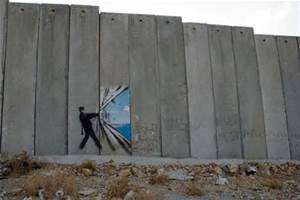
When we’re not bombing, we’re building walls with locked gates. Our “gated communities” and locked doors wall us off from unsightly ghettos and the realities of the world’s poor mostly non-white majority. Better to confine Palestinians in fenced off open-air concentration camps like Gaza, where there’s literally no exit. Then from time to time you “mow the lawn,” i.e. shoot the non-Jews like fish in a barrel – even though most of them are children, women, and aged people.
Better to build a wall along the Mexican border and then lock the gates, throw away the key and pretend that such barriers solve the problem of farmers and their children driven off their land by globalization, poverty and gangs. Better to justify it all by invoking the Ultimate White Privilege: “I feared for my life!” (We whites are the only ones who can get away with that one.)
All that brings us to today’s Liturgy of the Word. It’s about God’s interest in matters like those just enumerated – about politics, oppression and the liberation of non-white people like Jesus, Gazans and residents of Ferguson, Missouri. It’s about breaking bonds and opening the gates of hell so that every Inferno can be transformed into the Kingdom of God. It’s about refusing to be discouraged even though the flow of history make Jesus’ prayer, “They Kingdom come” seem like an impossible dream.
Start with today’s first reading. There the prophet Isaiah has God telling a courtier named Shabna to step down in favor of a man called Eliakim. Little is known about either one. The reason for including the reading today is apparently to establish today’s central point that God is concerned with the world of politics, and that God is ultimately in charge of what happens in that sphere. There can be no separation of politics and religion in the divine dispensation.
The responsorial psalm continues the “this worldly” theme set by the first reading. It had us all singing “Lord, your love is eternal. Forsake not the work of your hands.” Once again, emphasis on “the work of God’s hands” reminds us of God’s commitment to this world – including ghettos, the Gazan concentration camp, and rich people making life unbearable for the world’s largely non-white poor. The psalm goes on to praise Yahweh for divine kindness, truthfulness, encouragement of the weak, care for the impoverished, and God’s alienation from their proud oppressors – again all connected with life here and now.
Then in today’s Gospel selection, we find a reprise of the very reading we shared last June 27th (just two months ago on the “Solemnity of St. Peter and Paul”). We practically know this passage by heart.
The reading centers on three titles associated with Jesus of Nazareth – Son of Man, Son of God, and Christ. All three names are politically loaded – in favor of the poor rather than the privileged and powerful.
Jesus asks his friends, “Who is the Son of Man in history and for us today?” (Scripture scholars remind us that the “Son of Man” is a figure from the Book of Daniel. He is the judge of all those who oppress the People of God whether they’re Egyptians, Assyrians, Babylonians, Medes, Persians, Greeks or Romans. He is “the human one” as opposed to a series of monstrous imperial beasts which the author of Daniel sees arising from the sea against God’s poor.)
So Jesus’ question boils down to this: who do you think has taken the strongest stand against Israel’s oppressors? Jesus’ friends mention the obvious heroes, Elijah and Jeremiah. But in the end, they settle on a contemporary political prisoner in King Herod’s version of Abu Ghraib. He’s John the Baptist who was Jesus’ mentor. (According to Jesus, John was the greatest of all the prophets of Israel.) He’s the Son of Man, they say.
Having set that anti-imperial tone, Jesus then asks the question, “What about me? Who do you say that I am?” No question could be more central for any of us pretending to follow the Teacher from Nazareth. How we answer determines the character of the path we walk as Jesus’ would-be disciples in a world filled with Fergusons, Gazas, Hell Fire Missiles and militarized cops. Our answer determines whose side we are on – that of Messrs. Netanyahu, Obama and Officer Wilson or of the Palestinians, Iraqis and Michael Brown.
Matthew makes sure we won’t miss the political nature of the question. So he locates its asking in Caesarea Philippi – a city Herod obsequiously named for his powerful Roman patron. Herod had commemorated the occasion by minting a coin stamped with the emperor’s countenance and identifying him as “the Son of God.” Caesar was also called “the Christ,” God’s anointed. Good Jews saw all of that as idolatry.
So Peter’s answer, “You are the Christ, the Son of the Living God” has the effect of delegitimizing Caesar and his empire. It’s also a swipe at King Herod. Peter’s response couldn’t be more political. Jesus, not Caesar is king, God’s anointed, the Son of God.
Neither could Peter’s words be more spiritually meaningful and heartening for those of us discouraged by events in Ferguson, Gaza, Iraq, and Syria.
The encouragement is found in Jesus rejoinder about the “gates of hell” and the “keys of the kingdom.” Jesus says, “Blessed are you, Simon son of Jonah . . . I will give you the keys of the kingdom of heaven . . . whatever you bind on earth will be bound in heaven, and whatever you loose on earth will be loosed in heaven.”
What powerful words of encouragement! For those who would join Jesus on “The Way” to God’s Kingdom, they disclose the very key to life’s meaning. In effect, Jesus says, “Here’s the key to opening ‘the gates of hell’ and transforming life’s Infernos into God’s kingdom: all our actions – even apparent failures like my coming crucifixion – have cosmic significance. Don’t be discouraged even when the agents of hell end up killing me – as they inevitably will.”
In other words, we may not be able to see the effect of resisting empire and its bloody agents in the short term. But each act has its effect. God’s Kingdom will come.
In today’s second reading, Paul elaborates the point. He said it’s not always apparent what God is doing in the world. After all, the ways of Transcendent Reality are deep and beyond comprehension – even by the wisest human beings. We may not be able to see God’s (political) purposes at close range. But ultimately their inscrutable wisdom will become apparent (ROM 11: 33-36).
Or as Martin Luther King put it: “The arc of the moral universe is long, but it bends towards justice.”
All of us need to embrace that wisdom, refuse discouragement and continue doing what we can to resist the forces of empire and unlock those “Gates of Hell.”
In today’s Gospel, we hear Matthew’s account of Jesus walking on water – or rather, of Peter’s refusal to follow Jesus’ example of walking on the waves.
The account is relevant to the man in the Vatican who believes he is Peter’s successor. Israel’s month-long siege of Gaza invited Pope Francis to “walk on water” – to follow the example of Jesus in confronting demons. However uncharacteristic timidity left the pope sinking below the waves, out of sight and ear shot, cowering before Monsters like Obama and Netanyahu.
Let me explain. First off, consider today’s Gospel reading.
The story goes that following Jesus’ feeding of the 5000 (last week’s Gospel episode), Jesus forces the apostles to get into their boat and row to the other side. [The text says, “Jesus made (emphasis added) the disciples get into a boat and precede him to the other side.” Perhaps these experienced fishermen (as opposed to the land lubber, Jesus) saw a storm was coming and were reluctant to set sail despite Jesus’ urgings.]
In any case, a storm does come up and the apostles fear they are about to drown. You can imagine them in helpless tears.
Then they see a figure walking on the water in the midst of high threatening waves. At first they think it’s a ghost. Then they realize that it’s Jesus. He’s walking on the raging waters.
Peter, the impetuous leader of the apostles, doubts what he sees. So he says, “Prove to me that it’s you, Jesus; let me walk on the waves just as you’re doing.” Jesus says, “Join me then over here.” So Peter gets out of the boat and, like Jesus actually walks on water for a few steps.
Then, despite the evidence, he begins to doubt. And as he does so, he starts sinking below the water line. “Save me, Lord,” he cries out again. Jesus stretches out his hand and saves Peter. Then he asks, “Where’s your faith, man? Why is it so weak? Why did you doubt?”
Of course, this whole story (like last week’s “Loaves and Fishes”) is one of the dramatic parables Matthew composed. If we get caught up in wondering whether we’re expected to believe that someone actually walked on water, we’ll miss the point of this powerful metaphor. It’s about Jesus’ followers doing the unexpected and irrational in the midst of life-threatening crisis.
You see, Matthew’s Jewish audience shared the belief du jour that the sea was inhabited by dangerous monsters – Leviathan being the most fearful. And fearlessly walking on water was a poetic way of expressing what Matthew’s community believed about Jesus, viz. that he embodied the courage and power to do the completely unexpected in the midst of crisis and subdue the most threatening forces imaginable – even the most lethal of all, the Roman Empire.
Jesus’ invitation to Peter communicates the truth that all of us have the power to confront monsters if we’ll just find the courage to leave safety concerns behind even in the most threatening conditions, to confront life’s monsters, and join Jesus in the midst of its upheavals.
Problem is we easily lose faith and courage. As a result, we’re overcome by life’s surging waves and by the monsters lurking underneath them.
And that brings me back to Pope Francis and his ambiguous response to the slaughter that took place in Gaza over the last month.
We expected more. Over the course of his still-young papacy, Francis has demonstrated wonderful courage attempting to join Jesus on the world’s dangerous waves.
• He’s adopted a comparatively simple lifestyle.
• He’s condemned neo-liberalism and growing income inequality.
• His apostolic exhortation, “The Joy of the Gospel” implicitly endorsed the liberation theology his two immediate predecessors had tried to kill.
• More specifically, he adopted liberation theology’s “preferential option for the poor” as the leitmotif of his papacy.
• In that spirit, his famous “Who am I to judge” gave hope to the LGBTQ community.
• He helped head off President Obama’s plans to bomb Syria.
That last precedent led me to expect more in the context of Gaza. I was in St. Peter’s Square for Francis’ hours-long vigil for peace. There the Pope did as much or more to head off U.S.’ insane plans to bomb Syria as did Russia’s President Putin. Along with Putin, Francis was the hero who subverted the monstrous plans of Obama and his State Department.
But there was no peace vigil for the Gazans. Instead two weeks ago the Pope broke down in tears as he delivered his Sunday remarks from the balcony over St. Peter’s Square. He said:
“Never war, never war! I am thinking, above all, of children who are deprived of the hope of a worthwhile life, a future. Dead children, wounded children, mutilated children, orphaned children, children whose toys are things left over from war, children who don’t know how to smile.” This was the moment when the tears came. “Please stop,” said Francis. “I ask you with all my heart, it’s time to stop. Stop, please!”
The words were powerful; the tears were powerful. But unlike the prayer vigil before a potential Syrian fiasco, they remained largely unreported. Nevertheless, for those with ears to hear, the Pope was lamenting Israel’s killing of Palestine’s innocent. (No Jewish children were killed during the Gaza massacre.) However, to overcome the Media’s deafening pro-Israel tilt, the Pope needed to be stronger and more specific.
Yes, his papacy has daringly left the safe harbor and courageously sailed into the storm. Yes, Francis clearly sees Jesus as his role model demanding courage in the face of today’s unprecedented winds and waves. Indeed Francis has gotten out of the boat to trample underfoot the beasts and monsters roiling the seas all around us. But in the case of Gaza, instead of walking confidently on the waters, he sunk in apparent timidity before the threatening monsters, Obama and Netanyahu.
But what more could he have done? What sort of miracle did I expect?
Well, he could have given courage to all of us who are far less daring than he; he could have performed a miracle more stupendous than actually “walking on water” by:
• Owning the fact that as the leader of 1.2 billion Roman Catholics, with far more power than Jesus had, he was truly able to end Gaza’s slaughter.
• Announcing plans to travel to Gaza in the midst of Israel’s monstrous campaign.
• Before leaving, specifically naming Israel’s assault on civilians as sinful.
• Identifying the U.S. as equally culpable with Israel for crimes against humanity.
• Actually traveling to Gaza in a white papal helicopter (even in defiance of Israel’s predictable prohibitions) and landing in the midst of Gaza’s devastation.
• Celebrating Mass in Gaza on a pile of rubble and refusing to leave till the Israelis stopped their slaughter.
• If the slaughter continued, traveling to the key sites of bombing and shelling.
“Impossible!” you say? Such an act would offend Israel and upset Israel-Vatican relations. Ditto for the U.S.
Hmm. Is the pope a politician or a prophetic religious leader? Please use your imagination and spin out what would have happened if the pope walked on water as just outlined. What do you think?
In any case, those much less courageous than Francis need his example so the rest of us might venture forth to walk on water in our own far less powerful ways.
Yes, in today’s Gospel, Jesus invites us all to do the impossible. Why are we doubting? Where is our faith?

 About Things That Matter