Marianne Williamson’s Campaign Harnesses the Miraculous Power of Critical Consciousness

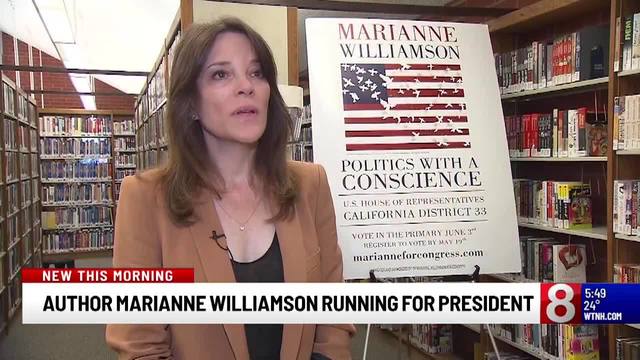
The Washington Post recently ran a long article on Marianne Williamson’s presidential campaign. It was the first acknowledgement of Ms. Williamson’s political efforts that I’ve seen in the mainstream print media.

The article was written by Anna Peele who not only introduced her readership to Marianne Williamson. She also indicated how Ms. Williamson offers an essential element no other Democratic candidate can possibly supply. 

In fact, Marianne Williamson’s candidacy addresses the psychological and spiritual concerns at the root of voters’ issues regardless of their party affiliation or religious orientation including those self-identifying as “spiritual but not religious” and even agnostic and atheistic.

By doing so, Williamson effectively rescues for the left the power of spirituality that has been the exclusive province of right-wing Republicans for the last 50 years and more. Unlike Republican Christians who use religion to defend the status quo, Ms. Williamson links profound spirituality and critical consciousness at their deepest levels. The consciousness ends up distancing itself 180 degrees away from our country’s reigning ideology about history, economics, politics, and personal responsibility.

At the beginning of her article, Ms. Peele admitted she had never previously heard of Marianne Williamson, whom she first understood in terms of a “self-help author and motivational speaker” as well as the spiritual advisor of Oprah Winfrey. Peele was intrigued by Williamson’s own job-description as “creating miracles” – something the author admits she wanted to believe in, especially given the state of our nation and world under President Trump.

Seeking that miracle, Peele confessed during her first encounter with Williamson that she was anxious about our country’s future. She mentioned her own anger and fear.

She was surprised by Williamson’s response. It was in summary: “Toughen up. We’re not porcelain dolls, you know. We need to get real and absorb with courage and endurance the hard knocks delivered up by Trump’s kind. After all, we’re following in the footsteps of Civil Rights heroes and the suffragettes who risked their lives resisting the old policies currently resurrected in today’s Oval Office. It’s time to roll up our sleeves and get to work!”

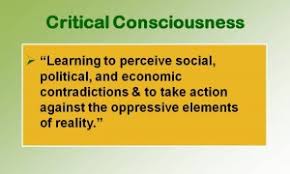
Peele’s admits that she found that initial exchange actually inspiring. It bordered, she said, on the very miracle she had been seeking. The journalist’s vision, she says, had changed – of both Marianne and her campaign. (And that by the way, is what the term “miracle” means in Williamson’s vocabulary – a radical transformation of perception. It’s about developing critical consciousness.)

From there, Peele’s article describes Williamson’s January 28th formal announcement of her candidacy and her basic theme. It’s that America’s real problem is not with the likes of Donald Trump, but with us, our juvenile preoccupations with our personal lives, our resulting political disengagement, and our surrender of political terrain to corporations and the one-percenters.  “It is time for us to rise up, the way other generations have. Cynicism is just an excuse for not helping. Whining is not an option . . . We need to identify the problems in this country. Then we need to identify with the problem solvers.”

Williamson identifies herself as one of those problem solvers. In fact, she portrays her upbringing and 30- year career as a spiritual teacher as uniquely qualifying her for addressing the fundamentally spiritual problem underneath our country’s current dysfunction. No one else, she says, demonstrates that qualification or of even recognizes the problem as such.

Now 66 years old, Williamson comes from a Jewish family headed by a stay-at-home mother and by a father who practiced immigration law. When his daughter was just 13, Mr. Williamson took his entire family to Vietnam during the height of the war. His intention, Williamson says, was to “make sure the military-industrial complex would not ‘eat my kids’ brains’.” She never forgot that childhood lesson about the reality of war and its horror. It made her but a life-long anti-war activist.

But Marianne Williamson is not just some aging hippie activist with a past devoted to sex, drugs, and rock-and-roll. That was only part of it, she quips. “The rest of the day, we stopped a war.”

In 1975, Williamson’s activism found its theoretical grounding in what has since become a spiritual classic, A Course in Miracles (ACIM).  The book was allegedly “channeled” by Helen Schucman, who described the dictating voice as that of Jesus, the Christ. Williamson calls the book “basically Christian mysticism.” (I would call it a course on developing critical consciousness.) In any case, the book changed her life. On its basis, she began a spiritual practice that gave her that earlier-mentioned radical vision of the world.

Eventually, Williamson composed what she calls “ACIM Cliff Notes” – A Return to Love.

Oprah Winfrey loved it. It became a New York Times best-seller. And Williamson’s new career as a spiritual teacher was born. However, her spiritual teaching distinguished itself from others like Eckhart Tolle (whom Williamson considers an enlightened spiritual master) and Deepak Chopra by its continued commitment to the brand of anti-war social justice deeply instilled by her father.  

Williamson’s activism led her to launch Project Angel Food in 1989. It delivered meals to HIV/AIDS patients too ill to feed themselves. In 2014, she ran for Congress in California’s 33rd district. In 2010, 2012, 2015 and 2017, she organized “Sister Giant” seminars to raise political consciousness especially among women and to motivate them to run for public office.

In 1997, Williamson demonstrated her political acumen by publishing Healing the Soul of America. It’s a 256-page book that has become (in its 20th anniversary edition) her basic stump speech. In Healing, she exhibits her knowledge of American history, her firm grasp of economic realities, and her acute sensitivity to “the signs of the times.” Williamson writes, “When this book was first published in 1997, I wrote that there was a storm ahead, or an awakening ahead. Alas, that storm is upon us. But even now, in the midst of our national turmoil, there is an awakening as well.”

Ironically, a sort of awakening led to the election of Donald Trump in 2016. In Williamson’s analysis, that outcome was an expression of deep popular despair on the part of a population worried for decades about making ends meet, sending their children to college, and paying skyrocketing medical bills. “It was either going to be an authoritarian populist or it was going to be a progressive populist,” she says. “Now, the person we got is clearly a con artist and someone who lacks basic respect for democratic norms.”

Donald Trump however isn’t the problem according to Williamson; he’s merely a symptom of an underlying condition that other candidates are not qualified to heal. Those others, Ms. Williamson is fond of saying, approach the presidency as technical administrators. They even talk about running the government “like a business.” But government is not a business to be governed by some bottom line. Instead, it’s more like a family where all the children are equally important.

Moreover, the job of president isn’t primarily administration. (There are plenty of well-qualified technicians that presidents can nominate to fill cabinet posts.) No, the chief task of the president is setting a tone; it’s motivation, inspiration, and supplying vision. Franklin Roosevelt realized that. “The role of the president, at this time in our history,” Williamson says, “has more of a visionary function. FDR said that the administrative functioning of the president is secondary; the primary role of the president is moral leadership.”

None of this is to say that Marianne Williamson is vague about policy proposals. She shares many of them with the others just referenced:

  • A Green New Deal
  • Medicare for all
  • Increase in minimum wage
  • Gun control
  • Criminal justice reform
  • Overhaul of public education
  • Raising taxes on the rich

To this list now familiar among progressive candidates, Williamson dares to add the issue of reparations to the black community for the wounds of slavery to which she traces so many of our nation’s current ills. Such repair, she estimates, would cost $100 billion to be administered across fields by a board of African-American leaders over a period of 10 years. Williamson says that without addressing the problem of racism and its fundamental causes, the soul of our country will remain deeply traumatized.

Despite the mine field that the reparations proposal represents, the Post article observes that Marianne Williamson would be a formidable debate opponent for someone like Donald Trump. Unlike the latter, she can speak eloquently for hours without written texts of teleprompters.

After every lecture, she answers questions of all sorts from audiences about faith, politics, religion, race relations, economic problems – and the meaning of life. She’s never at a loss for words. Moreover, by her own account, she’s used to being called a “lightweight thinker, New Age con artist, a b_ _ _ _ — if you really know her.” Can you imagine, Anna Peele suggests, Marianne answering one of Trump’s insults with a magnanimous reflection on the state of his own soul? Wouldn’t that would be fun to witness?

As Williamson puts it, Trump “is a master of false narrative. And if you come back at him with anything other than the deepest truth, he will eat you alive. But if you do respond from a place of deepest truth, he is completely disempowered. I plan to speak to the consciousness of the American mind. Where he has harnessed fear, I’m seeking to harness love. Where he has harnessed bigotry and racism and anti-Semitism and homophobia, I’m seeking to harness dignity and decency and compassion. And that does not defeat. It overrides.”

Anna Peele’s Washington Post article suggests (correctly, I think) that our country needs the change in consciousness and communication of deepest truth of which Marianne Williamson speaks. By addressing that level, she promises to answer a need that the left has traditionally proven incapable of confronting.

That inability has not hampered the political right. They’ve understood the power of faith to motivate people to political action. On the left, African-Americans have a similar understanding, though in the opposite political direction. The same is true of liberation theologists in the Global South – and (dare I say it) of militant Muslims.

In summary, Mary Ann Williamson’s use of the term “miracle” for the achievement of critical consciousness along with her courageous invocation of spiritual traditions from her own Judaism as well as from Christianity, Islam, Buddhism, and New Age understandings of Ultimate Reality promises to enrich enormously the upcoming selection of Donald Trump’s progressive opponent.

And she may prevail. As Anna Peele attests, Ms. Williamson is good at creating miracles.    

Announcing: A New Series on Presidential Candidate, Marianne Williamson

[The quadrennial election-season is upon us. Accordingly, today’s posting is the first in a series on Marianne Williamson and her candidacy for President of the United States. The series will explore parallels between her platform (as articulated in her 20th anniversary edition of “Healing the Soul of America”) on the one hand and “A Course in Miracles” (ACIM) on the other. Postings to follow will also connect ACIM and Williamson’s policies with liberation theology – the most important theological development of the last 1500 years, and the inspiration for the Global South’s most effective social movement since the middle of the 19th century. The thesis here will be that Marianne Williamson is actually a U.S. liberation theologian, but in the tradition of 19th century abolitionists, as well as that of women suffragists, Martin Luther King, and Mohandas Gandhi. As such, her candidacy promises our country the revolutionary impetus that liberation theology provided for the profound socio-political changes Latin America has experienced over the last six decades.  Apart from more formal explanations of this thesis, the latter’s point will be made in the form of weekly Sunday homilies reflecting on the narratives of Jesus’ words and deeds as presented in each week’s liturgical readings.]

Marianne Williamson for President! She’s a Liberation Theologian

On Monday, January 28th, Marianne Williamson declared herself a candidate for President of the United States. In making her declaration, this great spiritual leader, who has a larger social media following than any Democratic candidate declared so far, implicitly proposed addressing in 21st century, non-religious ways the spiritual hunger that Williamson and others in the “higher consciousness community” consider endemic to the human condition, whether that hunger is recognized or not.

However, the difference between Williamson and others in that community is that she consistently applies her spiritual insights to the public sphere. And as we shall see shortly, she does so in a manner that completely respects the convictions of Christians, Jews, Muslims, Sikhs – and atheists, along with those who describe themselves as “spiritual but not religious.”

Because of its inclusive approach, Ms. Williamson’s candidacy promises to build on the accomplishments of 19th century abolitionists, and on those of 20th century women suffragists, and participants in the American civil rights movement. The abolitionists and many suffragists were highly committed Quakers. And, of course, King was a Baptist minister.  Following in their footsteps, Williamson promises to at last offer progressives (and the country at large) entry into a sphere that conservatives – Christian fundamentalists to be exact – have controlled at least since the 1980s. It’s the essential realm of faith and spirituality.

Failure to enter that sphere has hamstrung the left whose “enlightened” tendency has been to reject and ridicule rather than embrace what many consider the deepest dimension of being human. That tendency has not simply cost progressives votes on election day. Even more fundamentally, it has incapacitated them by its implied blindness to the spiritual hunger shared even by humans in general. Put otherwise, Williamson is confronting the right on its own turf.

In daring to do so, she is boldly following in the footsteps of Martin Luther King who demonstrated the ability of faith to awaken critical thinking capacities belonging to ordinary people. King as well as Malcolm X, and the abolitionists that preceded them all tapped into the undeniable power that religious language, symbols and metaphors possess to actually motivate ordinary people to work for social justice and profound political change. The same, of course, is true of Mahatma Gandhi and the liberation theologians of the Global South. In fact, I’ll argue in future postings that Marianne Williamson could easily be classified as a liberation theologian.

Before I get to that however, please recognize that during her campaign Williamson does not plan to wear her identity as spiritual teacher on her sleeve. And that’s her strength too. Instead, she’ll employ her spiritual consciousness and conviction fostered by years of spiritual discipline to guide her campaign in the right direction which will inevitably call for deep psychological – not to say – spiritual – transformation for all of us.

Recently, she described that transformational direction in an extended interview with CNN’s John Berman. Williamson said her most prominent issues would be:

  • Medicare for All
  • A permanent tax cut for the middle class
  • Free education for all children (including tuition for public colleges)
  • Government support for children’s services
  • A Green New Deal

Those, of course, are proposals similar to what have been proposed by Elizabeth Warren and Bernie Sanders, whom Williamson supported in 2016.

Why then run, Berman asked, before Sanders and Warren have officially announced? Won’t her campaign be somewhat redundant in the face of two veteran politicians who, he intimated, have a much better chance of getting elected?

Williamson’s response was significant in that it clearly underlined not so much her competitive edge even over candidates like those just mentioned, but the added value her candidacy represents. Ms. Williamson wants to expand the conversation, she said, to address the psychological and spiritual issues underlying what she sees as the severe disease that mortally threatens the American body politic. As long as those remain unaddressed, conversation and policy proposals, however excellent and whatever their sources, will remain at less-helpful superficial levels. It will be like watering the leaves of a plant, when its roots remain dry and shriveling.

And what root causes is Williamson referring to? Basically, she says, it’s an amoral economic system. It is capitalism-as-we-know-it that has focused on short term gains while allowing market forces instead of common-sense spiritual principles (as elementary as the Golden Rule and democracy) to assume their irreplaceable and decisive roles in the organization of our country’s politics.

Such assumption now has millions of children living in chronic despair and trauma. (Williamson always begins with child welfare.) The system has also created layers of racism and fostered wars across the planet. It has made our country destructively expert at waging wars but unwilling to wage peace.

Williamson reminded her interviewer that Franklin Roosevelt considered the administrative aspects of the presidency as secondary to the moral leadership the position affords. She pointed out that her 35 years of naming and addressing such moral dimensions of public policy is what qualifies her to exercise the moral leadership F.D.R. referenced. That’s Williamson’s competitive edge. It’s her added value. It’s what no other Democratic candidate offers so clearly.

When asked about paying for her program, Williamson chuckled. She asked: Isn’t it interesting that interviewers always raise that tired canard? When it comes to giving a $2 trillion tax break to billionaires, very few, she said, will ask, “Where will the money come from?” Even less do they raise that question when it comes to fighting wars – not even wars like the one against Saddam Hussein in Iraq that was entirely illegal and based on lies.

Marianne Williamson had a similar response when asked about the reparations she advocates for African-American descendants of slaves. She’s proposing a fund of $100 billion for the purpose. It would be paid out over a period of 10 years to finance economic and educational projects to benefit the community in question.

There are precedents for this she added. After World War II, Germany paid out $89 billion in reparations to Jewish organizations in the country. President Reagan signed into law the American Civil Liberties Act to similarly repair harm done to every survivor of the internment camps set up for the Japanese-Americans during the same World War. Moreover, following our nation’s Civil War, General Tecumseh Sherman proposed giving every freed slave 40 acres and a mule. Instead, former slaves were given the Black Code Laws that plagued them till the mid-1960s. It’s time, Ms. Williams said, to make good on Sherman’s reparational promise which was never kept.

From all of this, you can see that Marianne Williamson with her huge social media following is a serious candidate. For people of faith and advocates of social justice without a shred of religious faith, she presents a strong antidote to the religious right that has cornered the field of language, symbols, and metaphors by which most people in the world make sense of the world.

Williams knows that field inside-out. She recognizes that surrendering that field to reactionary forces is what renders progressives relatively weak before the 75% of Americans who identify as Christians. In the spirit of the abolitionists, women suffragists, and civil rights activists – in the spirit of Gandhi and liberation theologians – she wants to reclaim that turf and the specifically moral influence missing in the Democratic White House since the FDR era.

(Next week: My Meeting with Marianne Williamson. )

France’s Yellow Vests: Their Program Should Be Our Program

As I reported recently, I spent my Christmas vacation tracking down and studying France’s “Yellow Vest” movement. In December, New York Times columnist Thomas Friedman did something similar. However, as expressed in his piece, “The End of Europe,” his conclusions mirror old threadbare thinking about social transformation. Most tellingly, while honoring the voices of the Yellow Vests as grassroots activists, Friedman’s responses exclude the very democratic input the Yellow Vests demand. Instead, he looks to government and business leaders to save what he termed “the idea of Europe.”    

My own conclusions are the reverse. I see the Yellow Vests as advocating a democratically radical, comprehensive and bottom-up approach to what distresses our world. In fact, the issues and demands of the Yellow Vests suggest proven reforms that are clearly feasible, since they’ve worked in the past. The economic and political restructurings implicit in their working-class demands could save our planet and create the other world that all progressives sense is possible. Consciously or unconsciously, the Yellow vests propose a program worthy of support by us all.    

Friedman & the Yellow Vests

According to Friedman, France represents the last barrier against the disintegration of Europe itself. Across the European Union (EU), England is committing collective suicide (because of Brexit), Germany is turning inward, and Italy (along with Greece) is in full rebellion against EU austerity measures. Meanwhile, the United States incipient withdrawal from the world increasingly leaves the continent without its traditional life insurance policy against “predatory threats from the East.” That insurance is needed now more than ever in a world where Russia is again asserting its power, and where China promises to become the center of the world.

However, Friedman says, the Yellow Vest Movement reveals that France itself is in danger of disintegration. The movement has arisen because the country’s working poor and anxious middle class have not benefitted from the liberal order of political-economy characterized by globalization, technological development, and mass migration of workers from the former Soviet Union and from France’s colonial empire. In the face of such developments, the poor have been completely marginalized, while robotics, artificial intelligence, outsourcing and competition from Chinese imports have made it increasingly difficult for middle class wage-earners to sustain accustomed life styles.

For France, all of this has been complicated by the ineptitude of its president Emmanuel Macron. On Friedman’s analysis, Macron has done the right things, but in an arrogant top-down, “let them eat cake” manner. The right things have included giving tax breaks to the rich, while imposing austerity (and job re-training programs) on workers. Austerity has meant raising taxes on diesel fuel, reducing pensions, and making it easier for employers to fire their workers.

In other words, Friedman approves of the very policies that have given rise to the “Yellow Vests” in the first place. For him, it’s just that austerity’s necessarily bitter pill wasn’t administered with the proper bedside manner.

And, according to the New York Times columnist, there is no apparent alternative. In the face of globalization, he holds that old solutions (simply cutting or raising taxes) cannot work. Instead, he vaguely calls for cities and local leaders to become “more nimble.” In his words, that means forming coalitions of business leaders, educators, and small entrepreneurs who can compete locally, regionally, nationally and globally.

That’s it. That’s Friedman’s analysis and solution.

Entirely absent from his considerations is any mention of “Yellow Vests” (i.e. working class) involvement in the solutions he finds so elusive.  That is, Friedman’s own approach, like that of Macron is entirely top-down. Like Macron he seems tone deaf to the “Yellow Vest” demand for inclusion in decision-making processes.

Necessary Changes in Consciousness

But what would such inclusion entail?

It would first of all necessitate changes in the very consciousness exhibited in the Friedman piece. These changes would include recognition of:

  • The Fundamental Failure of Capitalism: Friedman begins his article by celebrating capitalism. He writes “Ever since World War II, the liberal global order. . . has spread more freedom and prosperity around the world than at any other time in history. . .” Granted, such triumphalism might have been defensible (for those ignoring, for example, U.S. interventions in the Global South) before the dawn of the climate and immigration crises. However, today its uncritical hubris is embarrassing as the system’s train of destruction stretching back to capitalism’s dawning are seen as threatening the very continuation of human life as we know it. We can now see that capitalism has not really been successful. Quite the opposite. Persisting in lionizing the system while ignoring its run-away destruction prevents serious analysts from imagining the fundamental changes necessary to address the system’s basic failure. Apparently, it prevented Friedman from doing so.
  • Yellow Vest Criticism of Neo-liberalism: What consciously or unconsciously irks the international working class about neo-liberal globalization is the fact that the reigning economic model accords rights to capital that it steadfastly denies or severely restricts in the case of labor. It grants capital the right to cross borders wherever it will in pursuit of low wages and high profits. Meanwhile, it insists that labor, an equally important element of the capitalist equation, respect borders and/or severe restrictions on its mobility. Evidently, this is because the authors of the system (politicians, corporate boards, and lawyers) realize that freer movement of labor especially from the East or Global South would outrage constituents and consumers within industrialized countries in the developed world. The “Yellow Vests” prove that such outrage has taken hold in France and threatens to spread across the continent as workers from Europe’s former colonies extend and appropriate for themselves the logic of “free trade” heretofore acted upon only by capitalists and denied to labor. The immigration crisis is the result.

Necessary Reforms

As noted earlier, the Friedman article throws up its hands in surrender before the changes he describes as perhaps signaling the end of Europe. He writes, “Here is what’s really scary, though. I don’t think there are national solutions to this problem — simply cut taxes or raise taxes — in the way there were in the past.” So (to repeat) our author is left with the standard neo-liberal policies earlier described – trickle-down tax cuts for corporations and austerity for workers – implemented by the usual suspects with no mention of worker input.

None of that will work for the Yellow Vests. They want their voices heard. They want democracy at all levels. Such democratic ideal suggests changes far beyond the tired nostrums offered by Friedman – or perhaps even imagined by the French protestors themselves. These might include:

  • Democratized International Trade Agreements: Trade agreements like the European Union or NAFTA for that matter need to be negotiated with workers taking part. That means that the real EU question isn’t whether or not Great Britain should renegotiate its Brexit. The real issue is the reformulation of the EU Charter itself. The whole thing has to be rethought with the circle of negotiators widened to include all stakeholders. This means going beyond politicians, corporate heads, and lawyers to include trade unionists, environmentalists, indigenous peoples, educators, social workers, women, and representatives of children. In the process, each stake-holding group must have equal votes to complement their intellectual input. The same holds true for NAFTA.
  • Democracy at Work: Workers like the Yellow Vests spend most of their lives at work. Hence, their demands for democracy suggest, that any concept of self-governance must be broadened from the exercise of voting franchise every few years to include democracy at work. In its most effective form, democracy there takes the form of worker-owned cooperatives, where workers decide what to produce, where to produce it, and what to do with the profits. Enterprises of this type would never elect to pollute their neighborhoods, to pay outlandish salaries to administrators, to move their firm to a foreign country, or to lay off workers because of technological advance (all Yellow Vest complaints). Introducing such change is entirely possible. For instance, since 1985 Italy has taken steps to favor cooperative ownership. According to the country’s Marcora Law any company going out of business must extend to workers the right of first refusal in the case of a firm’s transfer of ownership.
  • Democratization of the New Technology: Democratic movements like the Yellow Vests need not be Luddite vis a vis the introduction of new technology. Instead, they might welcome any “labor saving” technologies. However, the point of such introduction would not be to down-size the labor force, but to shrink time spent on-the-job. For too long computers and artificial intelligence have been used by employers to cut labor costs and increase profits rather than to expand worker free time. By contrast, worker-friendly technological policies could make widespread job-sharing possible to eliminate unemployment. Four-hour workdays could replace present overwork. It could become possible to work only 6 months per year, or to take sabbaticals every few years without any reduction in pay.
  • A Green New Deal: Part of eliminating unemployment entails implementation of a Green New Deal (GND) to address climate chaos in ways that mirror Roosevelt’s original New Deal to combat the disastrous effects of the Great Depression. Prominent among the GND’s provisions must be the contemporary equivalent of the old Civilian Conservation Corps – this time to accomplish the environmental ends that the economy’s private sector is unwilling or unable to achieve.  
  • A Marshall Plan for the Former Colonies: To reverse the influx of immigrant workers, the former colonial powers must stop the wars and environmental policies that end up creating refugees and migrants in the first place. This means, first of all, ending their resource-wars and the failed war-on-terrorism. Secondly, however, the old colonists need to implement a New Marshall Plan in Latin America, Africa, and South Asia, where centuries-long resource-extraction policies have created the very poverty, hunger, and unemployment that has transformed the Global South from a natural paradise to a cauldron of social inequities. Besides being a remedy for the migration crisis, a grand Marshal Plan for the Global South is a matter of reparations.
  • Implementation of the NIEO: Specifically, reparations should entail something like the implementation of the New International Economic Order (NIEO) demanded by the Group of 77 within the United Nations in 1974. The New Order would grant Global South countries the power to control multinational investments within their borders. Recognizing that no country has ever achieved “development” as a mere supplier of raw materials to already industrialized countries, the order would require the latter to make large transfers of capital to the former colonies in the form of money and technology. It would also guarantee stable prices for raw materials from previously colonized nations in exchange for finished products (like tractors and computers), with the prices for the latter indexed to the established value of the raw materials.
  • Implementation of A New World Information and Communication Order (NWICO): As recognized by the UNESCO McBride Report in 1980, the former colonies need not only a new economic order, but one in which special attention is given to the international flow of information. The Global South needs a world information system that gives its inhabitants themselves the ability to portray and understand their own reality rather than being dependent on their former keepers for information about their lives, cultures and politics.     
  • Deep Cuts in Military Spending: All of this would be financed by higher taxes on the world’s 1% and by developed world cuts in military spending. Such increases and cuts would (1) recognize that the present war on terror is an utter failure, and (2) divert money now spent on attacking countries in the less developed world to constructive projects there such as rebuilding homes, schools, hospitals, power plants and water purification systems. Arguably, this would do more to combat terrorism than wars and bombing campaigns which many see as aggravating the problem of global terror. Again, this is a question of reparations.  

Conclusion

The elegance of the just-listed responses to France’s Yellow Vests and to the crisis of the neo-liberal order the protestors are rebelling against is that they are not new. In the cases of the New Deal and Marshall Plan, they enjoy a proven track record. At the same time, the prescriptions are much more detailed than the abstract cliches reflected in Thomas Friedman’s endorsements of neo-liberal austerity and “more nimble” decision-makers drawn from the professional classes.

Instead, the suggestions just listed have been with us since the 1930s (in the case of the New Deal), since the 1940s with the Marshall Plan, and since the mid’70s and early ‘80s with the proposed NIEO and NWICO. For their part, as Richard Wolff points out, worker co-ops have been hugely successful, for instance in the Mondragon Corporation in Spain and throughout the world, including France and the United States. Across the globe, worker cooperatives already employ 250 million people and in 2013 represented $3 trillion in revenue. Meanwhile, a huge body of literature from the 1960s and early ‘70s described a world in which computers and robotics would be used not to one-sidedly increase corporate profits, but to provide lives of leisure and enjoyment for ordinary people.

None of this is unrealistic, dreamy or impractical. In other words, we have the Yellow Vests to thank for helping us recall that another world is not only possible, but that we’ve already experienced it!