Homily for the Fourth Sunday of Advent Based on Lk. 1:24-39 (?)

(For this week’s homily, I’ve invited my good friend and resigned priest, John Capillo to share his thoughts. In his formal priestly days John worked in the archdiocese of Brooklyn in New York, and in El Salvador. A prophet and  father of  four grown children, John has spent his informal priestly days in public service — most notably working for the Kentucky Environmental Foundation. He is a wonderful teacher, and has often visited my classes and those of my bride, Peggy. I know you will love his words below.)

Mary set out
and traveled to the hill country in haste
to a town of Judah,
where she entered the house of Zechariah
and greeted Elizabeth.

Recall the previous scene in Luke.  Who is this Mary who sets off?  What is her state of mind?

She has been greeted by the angel Gabriel

who tells her that she is favored,

and that the LORD is with her.

She is troubled.

Let’s let her talk.


“What does it mean that the LORD is with  me?

I do not understand the greeting,

What do you mean I am favored?”

And the angel’s lines:

“Don’t be afraid,

you are not alone,

you are loved.

And I want to tell you something,

Sit down.

Breathe deeply,

Stay calm

Remember.   You are loved.”


And then the bomb shell,

blowing up all plans and status and expectations:

“You are to conceive and give birth to a son who will be great,

the Son of the Most High

A king like David,

who will reign forever.”


“Whoa.  Back up a bit. Let me think this through.

You are saying that I am favored and I am going to become pregnant?

But I am only betrothed to Joseph and if I am judged to be pregnant out of wedlock I can be stoned.

Am I hearing you correctly?

And I am to have a son who will be a king like David, complete with sword and shield, going off to war?

And he will reign over the House of Judah which is now reigned over by the Romans, and contested by the Zealots?

And who did you say you were, a messenger from God?

Maybe I am nuts, seeing visions, hearing voices.”


And in an understatement that lives with lack of understanding, she says,

“How can this be?

You gotta be kidding?

Do you know who you are talking to?

I am a young girl who does not even have a husband, and in this world that is no small potatoes.”


But the story goes on.

The angel says,

“Oh, I did not tell you how this is going to work, how you are going to explain this to

to your mother who raised you to be a good girl

to your father, who has this betrothal deal with Joseph,

to Joseph, who is expecting a wife who is a virgin,

to the priests who will be ready to stone you,

to the governor, who will see your son as a pretender to the throne,

and to the Empire, that now rules and with an iron fist.

Just tell them that the Holy Spirit has come upon you, and the power of the MOST high will over shadowed you, and your son will be the Son of GOD.’


And Mary’s response?

‘Wow! You are not kidding around.  This is the whole enchilada.  And you think that I can pull this off.

And the only explanation that I get is that the Holy Spirit will come upon me and the power of the most high will overshadow me.

And you are waiting for an answer?

OK,

I accept.

I hope my mother understands that I made this decision because I had a vision and heard voices

I will hope my father is not ripping mad.

I hope that Joseph will still have me,

God knows what I will do about the governor and the Empire

and I will deal with this kingship thing and swords and overthrowing when the time comes.

Are you sure that you understand that you are dealing with a little poor kid from the wrong side of the tracks of a runt of a city in no-where’s-ville. I am not trying to give you any lip about this, but just to let you know.

But if you are for real, I am game.  I suppose you will get back to me about the details.

Oh and you say Elizabeth is pregnant, old barren Elizabeth. And that because nothing is impossible with God,

I gotta get up there and talk to her about all this.”


And so we start today’s episode.


Mary goes right away to Elizabeth’s.  It is a woman thing.

And Elizabeth is all excited,

filled with the Holy Spirit.

And her baby is jumping up and down,

gleefully,

in her womb.

And Elizabeth says,

all excited,

full of anima,

speaking like one possessed,

“Blessed are you who believed,

you who took the promptings as real,

who trusted her intuition,

who trusted her muse, her logos, her inner voice.

What a joy it is to know that you are willing to take what you heard out for a spin;

willing to step off the edge

to go with the flow

to glide in the air

to dance in the back room,

to put aside the fearfulness that her mother has,

to defy the anger that her father has ,

to test the love that Joseph has,

to stand up to the priests, the governor, the Empire

all because you saw a vision and heard voices.

You are one special person, and one great friend.

Give me a hug, squirt.”


That’s the miracle.  That’s the call. We are up to it, aren’t we?

John the Baptist’s Desert Revival and Pope John XXIII’s Aggiornamento

Third Sunday of Advent Readings: Zep. 3: 4-18a; Is. 12: 2-6; Phil. 4: 4-7; Lk. 3: 10-18.  http://www.usccb.org/bible/readings/121612.cfm

The lead article in the November 11th edition of our diocesan newspaper, Crossroads, published a sermon by the bishop of our Lexington diocese, Ronald W. Gainer. It had been given on Saturday November 3rd at the Cathedral of Christ the King in Lexington – the Saturday before the General Election. Bishop Gainer called attention to a new and “dangerous, corrosive change . . . at work in the soul of our nation.”  “In recent decades,” the bishop said, “forces are working overtime . . . to eliminate religion and God from the nation’s soul.” According to Bishop Gainer, those forces ignore the consistency of the Church’s moral teaching over the centuries – about “the sacredness of every human life.” Those teachings recognize certain acts as “intrinsically evil.” These include “abortion, euthanasia, assisted suicide and embryonic stem cell research. Being against the intrinsically evil means standing up for the sanctity of marriage between one man and one woman, the God-given right to freedom of religion, and against the evil of racism. There is nothing wrong with being a single-issue voter, the bishop emphasized; and abortion is the pivotal single issue for Catholics. The bishop concluded that political “candidates who refuse to oppose the evils he listed or who actively support them disqualify themselves from receiving Catholics’ support in the voting booth.”

Curiously, Bishop Gainer’s list of “intrinsic evils” did not include priests raping children. As a result, his remarks came off as out-of-touch, triumphalistic, self-serving, dishonest, and tired. We had heard it all before: “They’re wrong; we have never erred. ‘They’ are persecuting us. Only one issue is important, abortion. Vote Republican, even if that means economic disaster for the poor at home or abroad” (e.g., in the wars and drone strikes which also went unmentioned in the bishop’s remarks).

______

A little over a month ago, I attended the concluding Mass at the “Call to Action Conference” (CTA) in the Grand Ballroom of the Galt House in Louisville, Kentucky. CTA is the annual meeting of progressive Catholics who are trying to follow the spirit of the Second Vatican Council. (Vatican II set an agenda of church renewal and reform when the world’s Catholic bishops met in Rome from 1962-1965.) About 1000 people were present at CTA’s concluding liturgy. It reminded me of what spirited worship is like. Our good friend, John Wright Rios was the music leader with a group he assembled of about 15 instrumentalists and singers. There were drums, guitars, piano, trumpet and dancing. Hymns were in English and in Spanish with words projected on four large flat screens. The liturgy featured women in prominent roles, including three of the five concelebrants. Sister Simone Campbell of “Nuns on the bus” fame and who had spoken at last summer’s Democratic Convention gave the homily. What she said was insightful, inspiring, funny, and challenging. It made me see what the church is missing by insisting on an all-male, highly in-bred clergy. Sister Campbell spoke of the deep-seated divisions in our country and the need for universal love even of our enemies. She addressed the spiritual poverty and hunger experienced by all of us including leaders in the church, in politics, in our schools and universities. Poverty and hunger of body and spirit was the focus of Jesus’ work as described in the gospels. The church needs more Jesus, she said, and less triumphalism and pride.

______

Today’s readings are about religious revival and about the renewed recognition of God’s presence in our midst. In the first and third reading, the message is delivered by severe critics of temple worship – Zephaniah and John the Baptist. Zephaniah was a religious reformer from the seventh century BCE (just before the Babylonian Exile). He was known as the champion of “the poor of the land” (2:3; 3:12), and a fierce critic of Assyrian imperialism and the adoption of Assyrian religious ideology by Israel’s ruling elite. He accused the priests of his day of abandoning Yahweh in favor of Baal and Astarte. The outspoken Zephaniah threatened to drive out the priests and cleanse the temple by force.

Then in today’s gospel, John the Baptist picks up Zephaniah’s theme more than five hundred years later. Luke pictures John at the Jordan River – far from Jerusalem’s temple and its priesthood. John is leading a religious revival in the desert – the place of Israel’s birth long before there was any temple. Like Zephaniah, John is a layman. And his words to the religious leadership are harsh. In Luke’s verses immediately preceding today’s excerpt, he calls the crowd a “brood of vipers.” Matthew’s version is more specific. He says that curse was hurled at the Sadducees and Pharisees, the religious leadership of the day. According to John, they are snakes in the grass.

John contrasts the failed leadership of these men with God’s leadership present in the person of Jesus of Nazareth. Jesus, of course, turns out not to be a priest or rabbi either, but a workingman from Nazareth. Yet according to John, Jesus is more powerful and more worthy than John himself. As a lay leader, Jesus will bring not only the Holy Spirit, but a cleansing fire. He will separate the wheat from the chaff – what is essential from what is not – what is nourishing from what is not – the kernel of truth from its encasements. Those shells are now outdated, John says. We are about to enter a new era. Chaff, John declares, is good for nothing but burning in the hottest fire imaginable. He calls the crowds to the kernel of truth: share their surplus with the poor.

This year we celebrate the fiftieth anniversary of the Second Vatican Council.  It was a movement of reform and revival in the spirit of Zephaniah and John the Baptist. Pope John XXIII was the 1960s embodiment of their prophetic tradition. He summoned that meeting of the world’s bishops and used the word aggiornamento to describe the Council’s project. Aggiornamento meant updating.

Pope John’s vision was one of church revival and reform that connected Jesus with the actual lives and problems of people and the world – especially the poor. Those lives are characterized by either unemployment or overwork, by low wages, poverty, over-priced healthcare, misogyny, racism, inaccessible education, scant prospect of retirement, and by the train of evils introduced by climate change, inflated “defense” budgets and wars largely initiated by the United States.

Today’s readings suggest that serving the world (the church’s mission as identified by Vatican II) involves addressing those problems – the kernel instead of the chaff. Doing so leaves no place for triumphalism, infallibility or wallowing in self-pity about how the church is being mistreated and misunderstood by a hostile world. It does however mean trying to address the very good reasons the world might have for being hostile.

Neither is service of the world advanced by focusing on matters (as important as they might be) far removed from daily life. Identifying Christianity with opposition to stem cell research, gay marriage, contraception, and revoking Roe v. Wade is old and tired. It’s a form of denial that distracts from Jesus’ essential concern for the poor and their problems. It is to mistake chaff for wheat. So is silence about the church’s checkered past, its fallibility, errors, crimes against humanity, and scandals as prominent as priests’ rape of children.

“Call to Action”  attempts to recapture the spirit of Vatican II, separate wheat from chaff, and address the “signs of the times.” The “prayers of the faithful” following Sr. Campbell’s homily addressed war, poverty, climate change and the other problems I’ve just mentioned. The response of the people was not the usual “Lord, hear our prayer,” but “Aggiornamento!”

Let that be our response to Zephaniah, John the Baptist, and Jesus today. Aggiornamento!

What might aggiornamento mean for us today?

(Discussion follows)

Urinating on Corpses and Burning Holy Books

Readings for 33rd Sunday in Ordinary Time : Dn. 12: 1-3; Ps. 16:5, 8-11; Heb. 10:11-14; Mk. 13:24-3 http://usccb.org/bible/readings/111812.cfm

In January of this year six U.S. soldiers had themselves videotaped while they urinated on Taliban corpses in Afghanistan. In a separate incident three other soldiers started widespread riots after they publicly burned copies of the Holy Koran. Then in September the posting of an on-line film depicting the Prophet Mohammed as a deviant terrorist was blamed for other anti-US protests throughout the Muslim world costing the lives of a U.S. ambassador and three staff workers.

_____

In the year 168 C.E., the Greek emperor, Antiochus IV Epiphanes  invaded Palestine and devastated Jerusalem. He hated Judaism and defiled the Jerusalem Temple by offering a pig on its altar. He also erected an altar to Jupiter in the Temple.  Patriotic Jews called it “the abomination of desolation.” While occupying Palestine, Antiochus also destroyed all the copies of Scripture he could find, and made it a capital offense to possess such manuscripts. It was against Antiochus IV and the Greek occupation of Palestine that the Bible’s Book of Daniel (excerpted in today’s first reading) was written.

­_____

On September 8th of the year 70 of the Common Era, after a six-month siege, the Roman Emperor Titus, with four Roman legions finally captured the city of Jerusalem from its Zealot defenders. Moving from house to house, the Romans destroyed everything within reach, including the City’s Temple. Palestine would not again belong to the Jews until 1947. It was the destruction of Jerusalem by the Romans that Jesus predicts in today’s Gospel excerpt from Mark.

_____

Today’s liturgy of the word is shaped by apocalyptical writings – from the Book of Daniel in the first instance, and from Mark, chapter 13 in the second. The writings speak of wars and rumors of wars, of unprecedented suffering for all of humankind, of false messiahs and false prophets, and of the “Son of Man” coming on clouds of glory to render a final judgment.

Most of us think of such writing as describing the end of the world. And why not? That thinking is fostered and exploited by a whole industry of evangelical preachers like John Hagee who appear regularly on our television screens. The approach is foundational to the publishing success of the Left Behind series of books by Tim LaHaye and Jerry B. Jenkins.

A unifying thread throughout all such understandings of apocalypse is their idea of God, who turns out to be a pathological killer. That is, the mayhem and disaster depicted in apocalypse becomes something God does to the world and the human race to bring history to a close. According to the preachers and books I’ve just mentioned, apocalypse describes a final battle between Good and Evil. The battle will be fought in the Middle East on the Plain of Armageddon. Two billion people will die as a result – including 2/3 of the Jewish people.  The remaining 1/3 will be converted to Christianity because God’s final violent revelation will be so awe-inspiring and convincing. A “Rapture” will then occur, taking all faithful followers of Christ into heaven, while leaving behind the rest of humanity for a period of “tribulation.” In all of this, God is the principal actor. As an angry father, he is finally taking his revenge for the disobedience and lack of faith of his ungrateful children – whom he loves!

Problem is: all of that is dead wrong and blasphemous in  terms of the God of love revealed by Jesus. The Rapture story, for instance, appeared for the first time only in the 19th century. In fact, apocalypse is not about the end of the world. It is about the end of empire – the Greek Empire of Antiochus IV Epiphanes in the case of Daniel, and the Roman Empire in the case of Mark. The mayhem and unprecedented suffering referenced in both readings is not something God does to the world, but what empire routinely does to people, their bodies, souls and spirits, as well as to the natural environment.

Because it has ever been so with empire, today’s excerpt from Mark calls for a complete end to the politics of violence and domination. That meant obeying the command of Jesus to reject empire, but also to refuse alignment with Zealot nationalists. As the Romans under Titus approached Jerusalem between 66 and 70, Zealot recruiters traveled throughout Palestine calling on Jewish patriots to defend their homeland by joining guerrilla forces. Jesus’ counsel instead was for his followers to flee to the mountains (Mark 13:14-16). They were to do so not out of cowardice, but from apocalyptic conviction that God’s order of justice could not be established by the sword. Obeying Jesus’ direction meant that Christians were not only threatened by Romans but by Jews who accused Jesus’ followers of treason.

How should those readings affect us today whose Commanders-in-Chief repeat the crimes of the Seleucid Antiochus IV and the Roman Titus – both of whom thought of themselves as doing God’s work in destroying what they despised as a superstitious, primitive, tribal, and terrorist religion? (Yes, that’s what they thought of Judaism!) How should the readings affect us whose soldiers destroy holy sites, burn holy books and desecrate corpses just as their Roman counterparts did?

Today’s readings recommend that we adopt an apocalyptic vision. That means refusing to defend the present order and allowing it to collapse. It means total rejection of U.S. imperial ambitions and practices. It means refusing to treat as heroes those who advance the policies of destruction and desecration inevitably intertwined with imperial ambition. It means letting go of the privileges and way of life that depends on foreign conquest and vilification as “terrorists” of patriots defending their countries from invasion by U.S. forces. It means determining what all of that might signify in terms of our consumption patterns and lifestyles, and supporting one another in the counter-cultural decisions such brainstorming will evoke.

So in a sense, apocalypse is about the end of the world. The entire Jewish universe was anchored in the temple. Its defilement by the Greek Antiochus IV, its complete destruction by the Roman Titus seemed like the end of the world to the Jews. The threat of westernizing the Arab world might seem that way to the occupied Muslim world today.  And the end of the American Way of Life premised on resource wars under cover of a “war on terrorism” might strike us as the end of everything we hold dear.

However, the apocalyptic message of hope is that the passage of empire and nationalism is not really the end. Instead it represents an opportunity for a new beginning. In the words Mark put in Jesus’ mouth this morning, “Do not be alarmed . . . This is but the beginning of the birth-pangs.”

How might we support one another in letting go of imperialism, nationalism and the lifestyles dependent on them?

(Discussion follows)

“Widow’s Mite” or “Don’t Put That Money in the Collection Plate!”

Readings for 32nd Sunday in Ordinary Time: IKgs. 17: 10-16; Ps. 146:7-10; Heb. 9: 24-28; Mk. 12: 38-44 http://www.usccb.org/bible/readings/111112.cfm

In the election season just passed, some politicians were pushing for a “flat tax.” They called attention to the “unfairness” of a tax system which has rich people paying more than everyone else. The asked, why not tax everyone the same?  That would be fair. Today’s gospel reading says something about that idea of fairness.

_____

About a month ago, the great theologian and spiritual teacher, Matthew Fox, passed through our town in Berea, Kentucky. Matt is an ex-Dominican priest who was forced by Pope Benedict XVI to leave the Dominicans and to cease publishing. Fox’s crime, like that of more than a hundred theologians in the past twenty years, was being too energetic in teasing out the implications of the Second Vatican Council for the world we actually live in. According to Matthew Fox, the anti-Vatican II stance of present church leadership places the present pope (and the one who preceded him) in schism. It’s the duty of Catholics, Fox says, to withhold financial support from the church until popes and bishops once again embrace the official teaching of the church, which remains the doctrine of Vatican II. Today’s gospel reading also says something about that.

_____

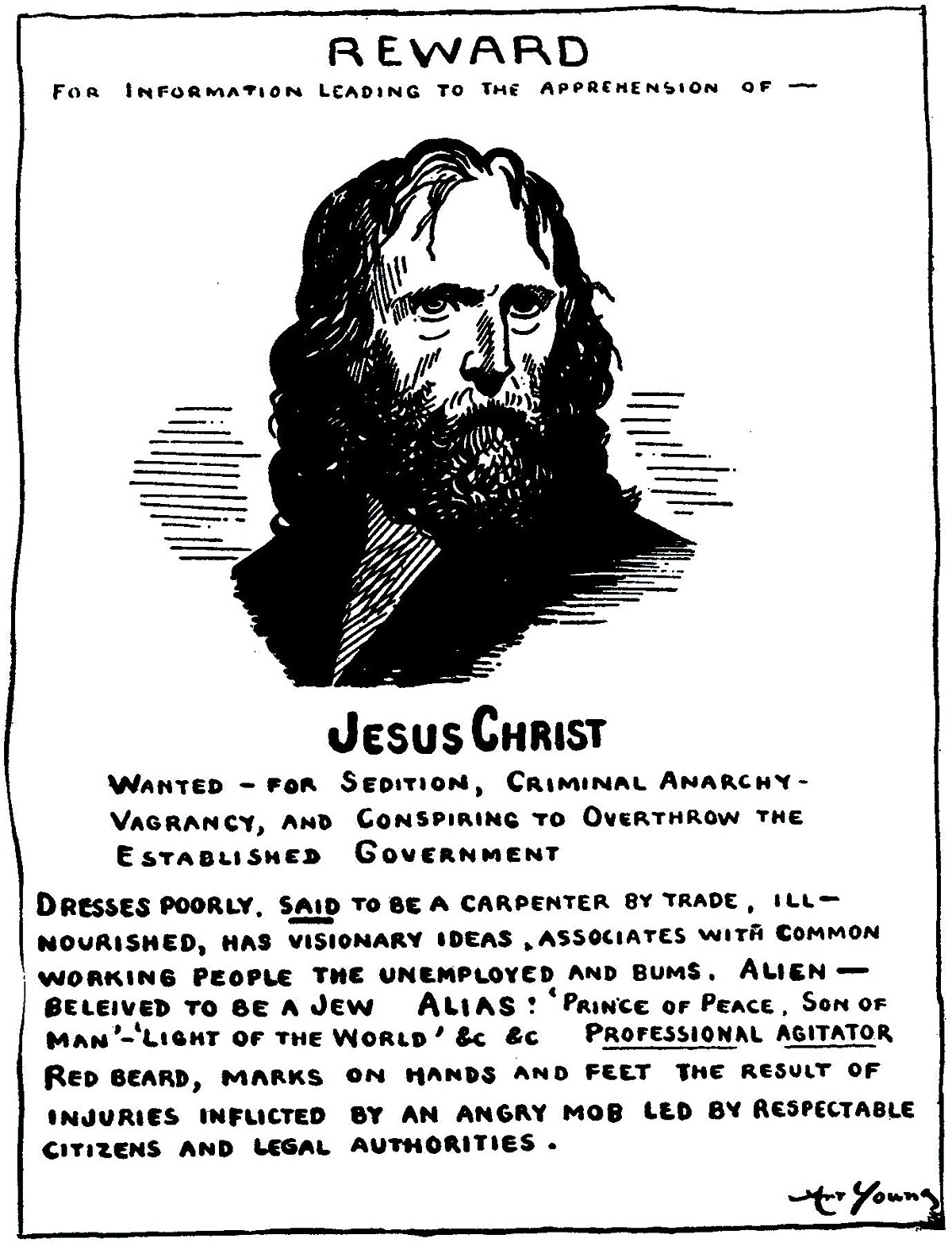
The gospel reading just referred to is the familiar story of “The Widow’s Mite.” Jesus and his friends are visiting Jerusalem for the Passover Feast during the final week of his life. They are in the Temple. On the previous day, they had all taken part in (and perhaps led) a demonstration there against the temple priesthood and its thievery from the poor. I’m talking about Jesus’ famous “cleansing of the temple.” Soon the temple priesthood and scribal establishment will offer a reward of thirty pieces of silver for information leading to Jesus’ arrest. Judas will soon find himself seriously considering collecting that reward.

In the meantime, Jesus continues instructing his disciples on the corruption of the Temple System. In the episode before us, he takes a position, Mark says, “opposite” the temple treasury. The treasury was the place where Jews paid the tithe required by the law as interpreted by the priesthood Jesus despises. It was a “flat tax” applying the same to rich and poor.

Ever class-conscious, Mark points out that “many rich people” somehow made it clear to all that they were putting in large sums. Then a poor widow came along and furtively put in a penny. Jesus calls attention to the contrast: “large sums” vs. “two small copper coins, which are worth a penny.”

“It’s all relative,” Jesus says.  “Truly I tell you, this poor widow has put in more than all those who are contributing to the treasury. For all of them have contributed out of their abundance; but she out of her poverty has put in everything she had, all she had to live on.” Jesus then leaves the temple in disgust.

There are two ways for homilists to explain this incident in the context of today’s Liturgy of the Word. Remember, it began with a reading from I Kings and its story of the great prophet Elijah and the widow of Zarephath.

Elijah was hungry. He encountered a single mom gathering sticks to make a fire to eat her last meal with her son. They were starving, and she had only a handful of flour and a few drops of oil to make some bread before she and her son would die of hunger. The prophet asks that instead she make him some food. Obediently, she does so. And strange to say, after feeding Elijah, the widow discovers that her flour and oil never run out. She somehow has an endless supply. She and her son are saved.

Then in today’s second reading, Jesus is contrasted with the temple priesthood. The temple priests, the author of Hebrews says, were required to repeatedly offer sacrifices in the Temple year after year. In contrast, Jesus entered the heavenly “Holy of Holies” but once, offering there not the blood of bulls and lambs, but his own blood. Jesus is the true high priest.

The standard way of treating these readings would run like this: (1) The widow of Zarephath gave the Holy Man all she had to live on and was materially rewarded as a result; (2) the widow in the Temple donated to the temple priests “all she had to live on” and was rewarded with Jesus’ praise; (3) follow the examples of the widow feeding Elijah and the widow giving her “mite;” (4) donate generously to your priest (a successor of the Great High Priest in Hebrews) and you will be richly rewarded either here, in heaven, or in both places.

That’s a standard treatment we have all heard. However, it has severe problems. To begin with, it ignores the liturgical response to the Elijah story taken from Psalm 146. That excerpt from Psalms sets a back-drop for the entire Liturgy of the Word and provides a key for interpreting not only today’s readings, but the entire Bible. The psalm reminds us that the poor are God’s Chosen People. God’s concern for the poor is not with their generosity towards God but with God’s securing justice for them. As the psalm says, God gives food to the hungry, sets captives free, gives sight to the blind, protects immigrants, and sustains the children of single moms. God loves those concerned with justice for the poor, the Psalm says. God loves prophets like Elijah and Jesus. On the other hand, God thwarts the ways of the wicked – those who, like the scribes and high priests, exploit God’s favored poor.

All of that represents a “red thread” running through the entire Judeo-Christian tradition. It offers us a key for interpreting the story of Elijah as well. It changes the emphasis of the story from the widow’s generosity, to God’s provision of food for the hungry and God’s concern for the children of single mothers.

With that key in mind, we are alerted to circumstances in today’s gospel story that summon us to interpret it differently from the standard treatment.

We are reminded that the episode takes place in an elaborate context of Jesus’ assault on the temple system. In effect, the context is Jesus’ symbolic destruction of the temple itself. Yes, there was that “cleansing” I referenced. But there was also Jesus’ prediction of the deconstruction of the building itself. “Not one stone will be left here upon another; all will be thrown down” (13:1-2). Then there was that strange incident of Jesus cursing a fruitless fig tree as he was entering the temple precincts (11:12-14; 20-24).  The fig tree was the symbol of Israel. Here again Jesus pronounces a judgment on an entire system that had become corrupt and forgetful of the poor who are so central to God’s concern.

That judgment is extended in Jesus’ teaching immediately before the episode of the widow’s mite.  Again, Jesus takes a position “opposed” to the temple treasury and says, “Beware of the scribes . . . They devour widows’ houses and for the sake of appearance say long prayers.” As scripture scholar, Ched Myers points out, Jesus was probably referring to the practice of turning over to scribes the estates of deceased husbands. The surviving wives were considered incapable of administering a man’s affairs. For his troubles, the scribe-trustee was given a percentage of the estate. Understandably fraud and embezzlement were common. In this way, religion masked thievery from society’s most vulnerable.

With Jesus’ accusation ringing in their ears, a case-in-point, a poor widow, arrives on the scene. She pays her tithe – the flat tax – and leaves penniless. Jesus can take no more. He leaves the temple in disgust.

According to this second interpretation, Jesus is not praising the generosity of the widow. Instead, he is condemning the scribes, the priests, the temple and their system of flat taxation. Jesus’ words about the widow represent the culminating point in his unrelenting campaign against hypocrisy and exploitation of the poor by the religious and political leadership of his day.

We would do well to keep today’s gospel in mind when evaluating “Christian” politicians calling for a “flat tax” in the name of the “fairness” of taxing everyone at the same rate.

We would do well to keep today’s gospel in mind – and the example and words of Matthew Fox –  when the collection plate passes in front of us on Sunday or when our pre-Vatican II priest urges us to follow the example he finds in the story of the widow’s mite.

Women Show the Way to Fullness of Life (Not to Heaven)

Readings for the 29th Sunday in Ordinary Time: Is. 53:10-11; Ps. 33:4-5, 18-19, 20, 22; Heb. 4: 14-16; Mk. 10:35-45 http://usccb.org/bible/readings/102112.cfm

Marcus Borg, the great Jesus scholar, talks about his list of the “Ten Worst Contributions of Religion to Human Culture.” Topping that list, he says, is popular Christianity’s belief in the afterlife. When asked about the other nine, Borg says he can’t remember what they are. . . .

Second on my own list (perhaps even first) would be the idea that God has designated men to be rulers of the world and church, while women are to be seen and not heard. Today’s liturgy of the word addresses both of those items in Religion’s Worst Ideas.

Take that first one about heaven and hell. Borg sees belief in the afterlife is so harmful because it has led to a law and rule-based Christianity that centers on “going to heaven” as a reward for “keeping the commandments.” Such quid pro quo thinking, he says, is a complete distortion of Christianity.

Borg reminds us that the afterlife is not at all the focus of Christian belief – nor of Jewish “Old Testament” faith for that matter. In fact, ideas about life after death didn’t surface in Judaism till well after the Babylonian Exile six centuries before the birth of Jesus – probably as a result of contact with the Persians.  And the first unambiguous biblical reference to meaningful survival of the individual after death comes only in the book of Daniel which was written about 150 years before the birth of Jesus. That means that Adam, Noah, Abraham, Isaac, Jacob, Moses, and none of the prophets were motivated by desire for heaven or escape from hell. Those ideas were simply not part of their mental landscapes.

Instead, for those tribal people, faith in the God of Abraham, Isaac, and Jacob was about land – the Land of Canaan which was celebrated as God’s gift to his favored People. The word “salvation” then meant a Palestine free from occupation by imperialists, be they Egyptians, Assyrians, Babylonians, Persians, Greeks, or Romans.

With that in mind, consider today’s readings and their references to “long life,” “fullness of days,” and “greatness” for the “Suffering Servant” who is “crushed” and loses his life on behalf of others. The words are reminiscent of Jesus’ pronouncement that sacrificing one’s life was the way to save it. Conversely, trying to “save one’s life” was the sure way to lose it.

Those are mysterious words. What might they mean: by giving one’s life for others, one actually achieves long life and fullness of days? How can one have long life and fullness of days when he or she is dead? (You can see how that question would lead subsequent generations of Christians to adopt the “afterlife” hopes of Greco-Roman, Persian and Egyptian cultures to answer that question.)

Given Jesus’ centralization of God’s Kingdom, the answer of Jesus (and that of Second Isaiah) seems to have been that self-sacrificial non-violent resistance to all forms of imperial domination provides such a powerful example and inspiring force that the community rises with new energy, life, and fullness of life when the suffering servant is inevitably killed by imperial forces.

For Mark’s community, that had proven true in the case of Jesus; its members experienced Jesus’ presence more intensely and more meaningfully following his execution than before. For us, we can see the same truth illustrated in the cases of Mahatma Gandhi, Martin Luther King, Oscar Romero, and Rachel Corrie and Karen Silkwood. After their deaths, and arguably because of their deaths, they exercise more influence on us today than they did while they were alive. That’s the mystery Jesus gestures towards in today’s reading.

What can this mean for us? For one, it calls us to recommit ourselves to non-violent resistance of the anti-kingdom forces among us. That’s our political task as we live out our lives in the belly of empire’s beast here in the United States.

But Jesus’ words about servanthood show us that such resistance should permeate our lives at the domestic every-day level as well. (And here’s where the point about women comes in.)  In both cases, the political and domestic, the kingdom is not brought on by exercising the kind of “power over” that characterizes empire, and that apparently motivates the request of the Sons of Zebedee in this morning’s Gospel. The Zebedee boys have a typically patriarchal approach; they’re asking Jesus to let them exercise “power over” others.  This typically male idea sees force and violence as the solution to most problems.

Instead, the approach of “servanthood”—of putting the needs of others first – is typically feminine. And in Mark’s Gospel from beginning to the end it is women who are referred to in servant language. In the beginning of Mark (1:31), the first act of Peter’s mother in law upon being cured by Jesus is to serve food to her benefactor and his companion. And at the end Mark (15:41) Mary Magdalene along with another Mary and Salome are identified beneath Jesus’ cross as “those who used to follow him and provide for him when he was in Galilee.”

All of that suggests, as scripture scholar Ched Myers has said, that Jesus here is proposing the notion of “servant leadership.” It suggests that the practical content of that concept is typically embodied not in men, but in women.

In fact, I think, it suggests that in a patriarchal system like ours (politically, domestically, and in the church) the only ones fit to exercise leadership are women. Typically, they are the ones who shed light on the meaning of “servant-leader” and of fullness of life. And they do so in ways that those bad ideas of heaven and “power-over” simply cannot.   What do you think?

(Discussion follows)

“Ephphatha” Be Opened (Twenty-Third Sunday in Ordinary Time)

Today’s readings: Is. 35:4-7a; Ps. 146:7-10; Jas. 2:1-5; Mk. 7:31-37

Recently Bill Moyers wrote an insightful column picked up by the alternative news and commentary website AlterNet. The article highlighted the clip from President Obama’s 2008 campaign speech we just watched (see immediately above).

Moyers’ piece was about the invisibility of the poor in the United States. We can’t see them, he wrote, not because they’re not there; the numbers of U.S. poor are actually growing by leaps and bounds. According to the federal government, a family of four making less than $28,800 is considered poor. This year the number of Americans at or below that level is expected to reach 66 million. And they’re facing the prospect of an incoming government bent on shipping jobs abroad, cutting unemployment benefits, further restricting food stamps, eliminating Medicare as we know it, and “reforming” Social Security to the point of its elimination.

In the light of such prospects, Moyers asks Candidate Obama’s question, how can we allow this to happen? How especially, Moyers asks, can someone like President Obama allow this to happen?  After all, he should know better. He was a community organizer in Roseland, one of the poorest most despair-driven neighborhoods on Chicago’s South Side. In Dreams from My Father, Mr. Obama calls his work there “the best education I ever had.” The experience motivated him to attend Harvard to gain the knowledge and resources he needed to return to Roseland and make an even bigger difference than he did before. “I would learn power’s currency,” he wrote, “in all its intricacy and detail” and “bring it back like Promethean fire.”

Since writing those words, Mr. Obama, of course, has become President. However since his election he has not given a single speech about poverty. It’s difficult to do so, his staff says. If you talk about the poor, the middle class says, Hey, what about us?  And the 1% who lay out fat campaign contributions say So what?

Today’s liturgy of the word, addresses the question of blindness to poverty, of deafness to the voices of the poor, and the inability to speak with or about them. Taken together, the readings for today implicitly and explicitly call us to open our eyes and ears and to be the voice of the voiceless. Jesus’ healing Aramaic word “Ephphata” (Be opened) is central here. We’re called to open ourselves to the poor.

The first reading from 2nd Isaiah addresses the captives in Babylonia in the 6th century before the Common Era. Following their defeat in 581 the cream of Israel’s society were held captives by their Babylonian conquerors. Speaking as one of them, and acting as a prophet of hope, Isaiah promises that the “Babylonian Exile” will soon come to an end. Then everything will be wonderful, he assures his readers. The desert will bloom. The blind will see; the deaf will hear, and the mute will speak. The inclusion of this reading in today’s liturgy implies that Jesus and his works of healing on behalf of the poor is the fulfillment of Isaiah’s prophecy.

Isaiah’s sentiments are reinforced by the responsorial psalm. To Isaiah’s insight it adds the specific identification of Yahweh as the God of the poor and oppressed. According to the psalm, Yahweh sets captives free, secures justice for the oppressed, feeds the hungry, and protects immigrants, widows and orphans. Yahweh is on the side of the poor, the psalmist says. Hard as the words might sound to us, God prefers the poor to the self-satisfied rich – to people like us.

Today’s second reading – from the Letter of James continues the theme of the responsorial psalm. James warns against showing partiality for the rich. “Don’t be judgmental about the poor,” he warns. They after all are the ones God is partial towards. “God chose the poor,” James says, “to be heirs of the kingdom.”

All of this celebration of the poor as God’s people reaches its zenith in today’s Gospel selection. There Jesus cures a poor man who is deaf and who cannot speak. There are at least three noteworthy elements to this cure. Considered as a whole, all three are connected with the topic of poverty and its absence from public perception and discourse.

The first thing to note is that this episode is almost certainly an accurate reflection of something Jesus actually did. The detail about Jesus’ curing ritual – his use of spit, his loud sigh, and the quasi-magical Aramaic word he used (ephphatha) to effect the cure indicate the account’s authenticity. In this passage, the healer Jesus is acting like what indigenous Mayans in Guatemala call a “curandero” – a traditional healer, or what unsympathetic outsiders might term a “witch doctor.”

The second noteworthy element of today’s story is where it occurred – in the Gentile region of Palestine. Here we have Jesus (and this is one of the recurring themes of Mark’s Gospel) treating non-believers – people outside the Jewish community – the same as those inside. Jesus constantly crossed such boundaries. And he usually got in trouble for doing so. But he continued those boundary-crossings because he found more receptivity among non-believers than among would-be people of faith.

The third noteworthy element of this story goes along with the previous one. It’s the response of the non-believers to the Jesus’ cure of the deaf-mute. Tremendous enthusiasm. Despite his best efforts, Jesus couldn’t keep quiet the people who witnessed the cure. Once again, this reaction stands in sharp contrast to Jesus’ own disciples who in Mark’s account never quite “get it.”

The rich liturgical context for the account of Jesus cure of the deaf-mute including  Isaiah’s promise to the exiles and  James’ words about God’s preferential option for the poor directs our attention towards the social meaning of Jesus healing action in chapter 7 of Mark’s Gospel. It indicates what curing blindness, deafness and impediments to speech might mean for us today.

We are called, the liturgy suggests, to be opened to the invisible poor among us and to cross forbidden boundaries to meet them. We are summoned not only to see them, but to hear what they are saying. They, after all, possess what theologians call a “hermeneutical privilege,” i.e. the most reliable and accurate insight into what really ails our society, our culture, the world. This means that if we truly listen, we can learn more about the world from the homeless person on the street than from all the learned tomes in our libraries or from the pop-sociology we find on the New York Times best-seller list – or for that matter from our politicians, bishops and popes. [Isn’t it ironic that Christians today should be the ones downgrading the poor implying (with atheist Ayn Rand, the hero of the religious right) that they are “lazy,” “moochers,” and “useless eaters?”]

On top of that, the suggestion today is that as followers of Jesus, we have to drop the “Hey what about us?” attitude Bill Moyers referenced and that keeps President Obama from addressing the issue of poverty. Poverty and God’s poor are biblical categories. Following Jesus means putting our priorities aside so the poor may be served. This means trying to be the voice of the poor in the places from which they are excluded, but to which we have access. We are being directed to overcome our reluctance (inability?) to break the silence about poverty. Here I’m not just talking about letters to the editor, attending public meetings, joining the “Occupy Movement,” or phoning our President, senators and congressional representatives. I’m also speaking about conversations around our family dinner tables, at the water cooler, in the locker room, and in our schools.

Following Jesus, we can’t allow the enemies of the poor and those who are indifferent to them to twist the Gospel. We can’t allow them to carry the day as if Jesus and the Biblical tradition so well reflected in today’s liturgy shared our culture’s prejudice against the poor.

Today in response to our biblical readings let our prayer be “Ephphatha! Lord, open our eyes, our ears, and our hearts. Loosen our tongues” — not only to speak the truth about poverty (as President Obama did in 2007), but to act on that truth ourselves and stimulate our elected leaders to do their part.

Please consider these thoughts as you listen to the beautiful prayer-song, “Ephphatha.”

______

Don’t miss tomorrow’s third installment on Mary Magdalene: “The Magdalene Code”

Faith Is a Subversive Activity: Solemnity of the Nativity of St. John the Baptist

Sunday’s Readings:  Is. 49: 1-6; Ps. 138: 1b-3, 13-14ab, 14c-15; Acts 13:22-26; Lk. 1:57-66, 80

Today we celebrate the Solemnity of the Nativity of St. John the Baptist. The liturgy this morning focuses on vocation, prophecy, and the greatest of the Old Testament prophets, John the Baptist, Jesus’ own cousin. This is an important day because John’s ministry highlights faith as a subversive activity. His birthday calls us to adopt such faith in the midst of pedophile scandals, devaluation of women, official support of right-wing politics, and absence of visionary leadership on the part of those who hold the highest ecclesiastical offices.  

To grasp what I mean, begin by considering the Christianity we’ve inherited and its view of Jesus in relation to John the Baptist. Like most matters of faith, we have it backwards. Our understanding begins with Pope Benedict XVI and then runs to the Second Vatican Council, the Council of Trent, St. Thomas Aquinas, St. Augustine, Paul, and ends with Jesus. That line gives us a church-centered Jesus concerned with esoteric doctrines and above all with the sexual preoccupation that has traditionally afflicted our patriarchal church officials.

 A more biblical approach begins in the other direction. It runs from Adam to Abraham, Moses, David, the prophets, John, and finally to Jesus. It knows nothing of what comes after Jesus with all of its distortions, misconceptions, and patriarchal abuses. The Jesus that emerges here is not at all church-centered. He is less “Christian” and more focused on the Jewish tradition which is what Jesus knew. Jesus of course, was a Jew, not Christian at all. That more biblical approach helps us see both John and Jesus as engaged with their world specifically as prophets – as possessors of a subversive charism sorely needed by our world in severe crisis and in a church that finds itself in irreversible decline.

Already in today’s second reading, we see the more domesticated understanding of John emerging in Paul whose letters represent the earliest entries we have in the Christian Testament. Paul’s vision is what most of us are familiar with. For Paul, Jesus was the Son of David. John the Baptist heralded his coming as Messiah. He groveled before Jesus at the River Jordan when Jesus came to be baptized. “I am not worthy to loosen the strap of your sandal,” he says “You should be baptizing me; I shouldn’t be baptizing you.” For Paul, John ends up being purely instrumental for Jesus.

Paul’s view finds elaboration in the four canonical Gospels. There we can get the impression of the prophet as a kind of first century Billy Graham out there in the desert. His concern with Herod’s marriage to his brother’s wife makes him sound rigidly moralistic and focused on sex – just the way the Church’s teaching has been all these years.

That’s not the John who emerges if we put him in that biblical context running from Adam through Moses, and the prophets. It’s not the John who discloses himself if we consider his historical context. In that perspective John becomes Jesus’ mentor and even his rival. In a sense, he becomes the founder of a Christian movement that understood faith as synonymous with religious and political subversion.

I mean John was a prophet before anything else – a reformer of Judaism. In today’s Gospel, Luke says John grew up in the desert. And that’s where he later realizes his vocation as a sharp-tongued social critic – the essence of prophetic identity. In the desert John led a flourishing reformist sect. As Luke says, people from all over Palestine came to listen to him. His message wasn’t that of Benedict XVI or Billy Graham. Rather, it was the one Jesus took up after John’s execution by King Herod, the Roman puppet. “Repent, the Kingdom of God is at hand.”  (The Kingdom of God, remember, is what the world would look like if God, not Caesar were king.)

John’s location in the desert wilderness is important for understanding the Jewish revival he was leading there. The desert was the original place of refuge for God’s people when they escaped from their first captivity in Egypt.  It was the spawning place for insurgency movements against the Romans who occupied Palestine in the first century.

Above all, the desert was not Jerusalem. It was not the temple. So Jewish religious authorities were deeply suspicious of John and hostile towards his movement. John was not one of them — not a priest or rabbi. He was an outspoken prophet operating at the margins of society. He was radically free from social obligations and expectations as defined by standard Judaism and by the Roman Empire. Literally, he was an outlaw (one living outside the law). Even his clothing and diet showed that.

Additionally, John’s criticism of Herod was seen as politically subversive.  One of Herod’s great rivals was a king called Aretas of Nabatea. Herod had divorced Aretas’ sister in order to marry the wife of Herod’s brother Philip. The people were outraged, and took that marriage issue as a cause of criticism and rebellion. Their concern was not inspired by some first century anticipation of Victorian “moral” scruples. Herod’s divorce and remarriage showed how much their supposed king had strayed from their own culture and had adopted the Roman oppressors’ ways. 

John sided with the people in their criticism. So Herod saw him as stirring up rebellion. He therefore had John arrested. Eventually, of course, he beheaded the prophet. That’s when Jesus then stepped in and took over John’s reform movement.

Jesus seems to have been completely devoted to John. In all the Gospel traditions he presents himself for baptism at John’s hands. The appearance of inferiority implied in that gesture is unmistakable. So the Gospel authors had to reverse that impression by that groveling I mentioned earlier. This was especially true since even forty years after the Baptist’s beheading, many still thought of him as the Christ. What I’m saying is that “Jesus Christianity” found a rival for itself in “Johannine Christianity”

 But despite their desire to emphasize Jesus’ superiority to John, the Gospel authors find themselves compelled to recall that baptism of Jesus at John’s hands. They also record that Jesus lauded John as the greatest of all the Jewish Testament prophets. Even more significantly, they associate Jesus’ message so closely with that of John the Baptist that Jesus is repeatedly understood both by his enemies and his disciples as John redivivus (come back from the dead). Some even see in Jesus’ final cry on the cross, “Eloi, Eloi, lama sabacthani!” as a cry to John (himself as Elijah redivivus), “John, John, why have you forsaken me?”     

All of that is to say that John and Jesus are like twins inseparably joined at the hip. And what does that mean for us?

It means that Christianity (Jesus or Johannine) must be prophetic. Remember though what biblical prophets were. They were not fortune tellers concerned with predicting the future. They were social critics with two tasks. The first was to denounce serious departures from the faith of Abraham and Moses. Their second function was to announce a new future – that another way of living out the Jewish faith was possible. That way stood in sharp contrast with the understanding of Judaism embraced by their chief priests, the scribes and Pharisees.  

Being prophetic today suggests that we open our eyes to the similarities between the situations of John and Jesus on the one hand and our own on the other. Both prophets found themselves involved with a faith that had sold out to the Romans, and their puppets (like Herod). It was a faith that identified with keeping arcane rules and social distinctions.

For John and Jesus, that had nothing to do with the faith that had begun in the desert outside of Egypt. In their eyes, it was time to move back to the desert, away from the temple, and reclaim their faith from corrupt “leaders.”

I’m suggesting that our church today has moved as far from the Gospel of Jesus and John as had the high priests and scribes of their day moved from the tradition of Abraham and Moses.

Isn’t it time for us to move back to the origins of the prophetic traditions we celebrate this day – returning in effect to the place where it all began. For John and Jesus that was the desert – away from the temple. For us, it’s home churches and lay-led liturgies like those that characterized the primitive Christian community.

In the subversive spirit of John the Baptist, we’ve got to let the corrupt Vatican and our local bishops know that we are no longer following them, no longer supporting them.  There are many ways of doing that.

Can you think of any?  (Discussion follows)