As things stand now, I’m not going to vote in the general election in November 2020. What choice do I have?
Now that Bernie’s dropped out, It’s between two mentally impaired dirty old men – Donald Trump on the one hand, and Joe Biden on the other. Both are showing clear signs of dementia.
Trump stands accused of sexual assault by multiple women. Biden has a still unanswered but very credible similar charge outstanding. And no one in Biden’s party or in the press will even raise that accusation for discussion. (Trust me: Trump will! So, goodbye, Uncle Joe.)
And both men are serial liars. With Trump, that is a foregone conclusion. But Biden’s a liar too.
In one of his previous candidacies, his history of plagiarism made him surrender his bid. He’s lied about his education and his achievements in law school. Then there are those lies about his civil rights activism, about his history with Nelson Mandela, and about his attacks on Social Security. He just makes stuff up.
And neither one of them – neither Trump nor Biden – can put two sentences together without confirming their dementia. Every time he opens his mouth, Trump sounds like the doddering Mafia Don he is. He slurs his words, repeats himself, and can’t even remember what he just said. He hasn’t a worthwhile thought in his head. Never has.
Biden’s even worse! His sentences wander; he forgets what he’s talking about; he constantly leaves his audiences wondering, “What?” Or “That’s (to put it nicely) simply embarrassing!”
In a country of more than 350 million people, is this the best we can do? Are these our best and our brightest?
(However, I have to say that debate between these buffoons will make great television. It will be highly amusing and comical. But that’s what politics in this country has come to. It’s all Kabuki theater; it’s a cruel joke.)
That’s another reason I’ll not vote in November. The political system in general is completely broken. The politicians that are supposed to represent me have nothing to do with my concerns. They’ve completely sold out. They represent no one but their rich cronies. (Now I know how people in the Soviet Union must have felt in the late ‘80s.) The system just isn’t worth my participation.
And that goes for AOC, Ilhan Omar, the rest of the so-called “squad “(and Bernie too). In the most recent bailout, they all caved. They gave grandstanding speeches about the injustice of it all. But in the end, they voted against us, didn’t they? Their loyalties are to party and career, not to me or to you. We have NO ONE to represent us.
Democracy in this country is dead. The system is completely rigged. They don’t even want us to vote. The obstacles they’ve set in terms of the electoral college, gerrymandering, disenfranchisement, crooked voting machines, interminable lines, and Citizens United make a mockery of the entire process.
And please don’t try to shame me into voting because of the Supreme Court. That body is totally corrupt as well – completely politicized. No justice there – not even a glimmer of hope. Only clowns like the sexual predator Clarence Thomas (whom Biden ended up supporting over Anita Hill), the accused rapist Brett Kavanaugh, and a coward like John Roberts (who, remember hardly spoke a word while presiding over the recent sham impeachment hearings). The SCOTUS has no credibility at all. It’s irreformable. So, dear Ruth, you may go in peace.
The hell of it is that we don’t have any time for reform. Mother Nature won’t allow it. Climate change is breathing down our necks. What are the scientists giving us – 10 more years – or is it 8? You can now subtract 4 from that number. Neither Trump nor Biden will do what needs to be done. (Remember, Joe told his corporate friends, “Nothing fundamental will change.”)
And no one cares. I mean, with COVID-19, we can make the entire world stop. But with the far worse threat of climate change: not so much. It’s all business as usual. And it’s all nuts.
But in a way, maybe that’s the only ray of hope we have – from Mother Nature. While our system won’t object to climate destruction, maybe Our Great Mother just won’t allow this madness to go on. In any case, it’s now up to her. She will have her way.
It’s all so discouraging on this morning after Bernie’s surrender. In the face of it all, and as things stand now, that’s why I’ll boycott this election in November.
Readings for 4th Sunday of Lent: 1 Samuel 16: 6-7, 10-13A; Psalm 23: 1-6; Ephesians 5: 8-14; John 9: 1-41
This week’s liturgy of the word centralizes the concepts of blindness and darkness on the one hand and vision and light on the other. The constellation of readings is extremely relevant to our situation during this election season and time of Coronavirus.
Taken together, they claim that in the end, the processes of the Loving Universe (aka God) differ sharply from the choices of “the world.” While the world chooses the rich and powerful to lead, God chooses the least. What the world calls “seeing” is really blindness enshrouded in darkness. What it calls blindness is deeply perceptive and surrounded in light.
I’ll get to those readings in a minute. But before I do, consider their relevance to our culture’s own highly cultivated blindness.
On Our Blindness
Yes: from birth we’re taught to deny what’s staring us all in the face. We’re actually trained to be blind by our parents, culture, teachers and holy men. That imposed condition is exhibited today as we confront the world’s current pandemic crisis brought on by the Coronavirus.
Think of how our politicians both Republican and Democrat want us to deny what we’ve all seen with our own eyes.
Begin with the Republicans and Mr. Trump. (This is quite amusing.) Mr. Trump actually wants us to believe that he deserves a grade of “A” for dealing with the crisis that surfaced last December and which he ridiculed, belittled, and mocked all the way up until last week. Despite that clear record, the man’s dared to say, “This is a pandemic. I felt it was a pandemic long before it was called a pandemic.”
What?
Then there was Joe Biden’s admonition last week that we all close our eyes to the achievements of the Cuban revolution. This man was shocked and appalled by Bernie Sanders recognition regarding Cuba that “. . . (I)t’s simply unfair to say everything is bad.”
“No,” Biden insisted, since Cuba is a “brutal dictatorship,” it’s somehow wrong to recognize the truth acknowledged even by the vice president’s own mentor (Barack Obama). Obama said, “The United States recognizes progress that Cuba has made as a nation, its enormous achievements in education and in health care.” Biden doesn’t want us to see any of that.
But there’s more – even apart from the arguable fact that for nearly 20 years, the most brutal human rights violations in Cuba have been carried out by the United States in its heinous hellhole known as Guantanamo Bay.
Cuba’s Enlightened Humanity
The “more” is that Cuba is exhibiting much greater humanity and skill in dealing with the Coronavirus than is the United States. That is, even in this time of pandemic, “we” not only refuse to lift sanctions on Cuba, Iran, Venezuela, and the other countries we’re punishing for crimes very similar to our own and even surpassed by “friends” such as Israel, Saudi Arabia, Brazil and the Philippines. We’re actually intensifying the sanctions in the case of Iran while it’s an epicenter of the coronavirus pandemic. Evidently, for our leaders, there’s no recognition of human solidarity that transcends political considerations. They want us to forget that we’re all in this together – to be blind.
Meanwhile, Cuba has given docking privileges to a British cruise ship (and medical treatment to its passengers and crew) after those same privileges were refused elsewhere – even by Great Britain’s former colonies. Cuban authorities gave permission, they said, out of “humanitarian concerns” and the need for “a shared effort to confront and stop the spread of the pandemic.”
But Cuba’s response to the Coronavirus goes far beyond a one-off act of compassion. The country’s entire healthcare system is better equipped than ours for dealing with recurring epidemics like COVID-19, SARS, MERS, Ebola, Zika, and flu. And it’s not just a question of a Caribbean version of Medicare for All.
No, Cuba has a whole army of doctors to care not only for its own people, but also stands ready to respond to crises outside its borders. And it has done so repeatedly – even during the COVID-19 pandemic. The country also offers free medical education to students from the United States, provided they pledge themselves to serve their local communities on their return home. Moreover, every barrio in the country has a doctor known by name, because she makes house calls!
Add to this Cuba’s highly developed system of urban and community gardens, its use of animal-intensive rather than carbon-intensive plowing, and its generally low-carbon economy, and you’ll see why it’s better equipped than we are to deal with food shortages caused by a breakdown of the commercial supply chain during emergencies like the one we’re now experiencing.
Then there’s the Cuban education system vilified here as propagandistic – as though ours were not. Besides the exemplary literacy program implemented at their revolution’s outset, Cubans study colonialism, imperialism, and the way capitalism works to cause, profit from and exacerbate inevitable human disasters like pandemics, hurricanes, world hunger, and climate change. The 60-year blockade and quarantine imposed on the island along with the presence of the Guantanamo Bay prison camp provide teachers with close-to-home illustrations of capitalism’s brutality. Meanwhile, our version of schooling (even at doctoral levels) never touches such matters. So, whose system is propagandistic?
The bottom line here is that far from being a brutal dictatorship, Cuba presents us with a model of response not only to COVID-19, but to healthcare in general, climate change, and education. It’s just that we’ve been made so blind by our political “leaders,” teachers, and priests that we cannot see it.
Today’s Readings
With all of that in mind, consider today’s liturgical readings and what they have to say about seeing, insight, and light on the one hand blindness, superficiality and darkness on the other. Again, the selections could hardly be more relevant in this election season and time of COVID-19. Here are my “translations” of the texts. Once again, I urge you to read them for yourself here.
1 Samuel 16: 1B, 6-7, 10-13A
The Spirit of Life chooses national leadership from the least in the working class: The prophet Samuel was a great seer gifted with divine insight. Sent to the home of Jesse in Bethlehem, he sought Israel’s new King not from among the wealthy, but from a herdsman’s seven sons. However, his sharp prophetic perception found none of them worthy. “Have you no other son?” the prophet asked. “Well,” Jesse said, “David, my youngest is out in the field tending the sheep. But surely, he can’t be . . .” “Bring him to me,” the prophet growled. So, the youngest entered, red-faced and handsome. Seeing with God’s eyes, Samuel proclaimed, “This indeed is God’s chosen.” He then anointed David’s head with oil. And God’s Spirit rushed in upon the unsuspecting youth.
Psalm 23: 1-6
We can trust such choices by the Great Spirit: This is true because ultimately the Holy Spirit is humanity’s shepherd; there is nothing, then, to fear. She has created for us peaceful pastures near gentle refreshing waters. She is our guide and encouragement even in moments of darkness when we are overwhelmed by threatening circumstances. Her spirit nourishes us and protects us from all enemies and has done so throughout our entire lives. Who could ask for more?
Ephesians 5: 8-14
Trusting the insights of seers like Jesus confers salvific vision: Thanks to the enlightened Jesus (and other seers), our once darkened lives are now filled with light, goodness, justice and truth. We can finally see! In fact, we can become light itself. So, when shameful evil comes into our presence, it is exposed as such; it is transformed into light and quite disappears. Seeing with enlightened eyes is like awaking from a deep sleep or even rising from the dead.
John 9: 1-41
An illustration of how Jesus, his example and teaching can cure our blindness: As Light of the World, Jesus demonstrated the very meaning of enlightenment, when he met a beggar who was blind from birth (a metaphor for each of us). Living in blind darkness, Jesus said, is not the result of sin, but is part and parcel of the human condition. Escaping such shared handicap means overcoming the “wisdom” of the crowd, parental formation and religion itself. It means making choices based on personal experience of divine insight and then following Jesus (or some other enlightened avatar).
Conclusion
Wow! What clear direction at this crucial time! Seeing with God’s eyes reveals a world 180 degrees opposite the one endorsed by our culture, politicians, and even most church leaders. One hundred-eighty degrees!! If they say white, think black. If they say true, think lie. If they say peace, think war. We will not go far wrong adopting the working principle that our leaders lie whenever they move their lips. And that’s the truth.
Specifically, at this time of national choice and raging pandemic, the readings suggest that all of us are blind and zombie-like; we’re the walking dead. We can’t see what’s staring us in the face.
Contradicting today’s first reading, we reject worker-friendly leadership in favor of billionaires and corporate lackeys.
Blind as we are, we’re easily convinced by serial liars like Trump and Biden that up is down and that greed is good.
We actually still believe that even after Vietnam, Iraq, Fallujah, Abu Ghraib, Guantanamo, Yemen, prison camps and baby jails on our southern border – after alliances with the likes of Bolsonaro, Duterte, MBS, Netanyahu . . . — we can still lecture the world about our need to combat “brutal dictatorships.”
We still believe that our election system – even after retention of the Electoral College, Citizens United, gerrymandering, voter suppression, hackable voting machines, and mile-long lines on election days – is still somehow the world’s gold standard for democracy.
Above all, we still impossibly believe that capitalism is at all capable of functioning effectively at times of crisis like the ones we’re facing now. (Here in mid-March, it can’t even produce Coronavirus test kits equivalent to what China’s been using since December!) Somehow the belief in capitalism’s superiority persists even when the record shows that in time of war, natural disaster, and predictable systemic failures, we always resort to socialism. In fact, the rich demand it! That’s because socialism is less rigid and more efficient!
In the case of Cuba, we can’t even recognize that a poor socialist country, oppressed and impoverished by 60 years of U.S. quarantine and blockade has shown itself more flexible, generous and humane than its uber-rich capitalist neighbor to the north.
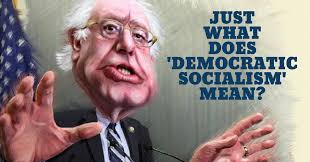
Last Tuesday (March 10th), opinion columnist, Thomas Friedman published and OpEd In the New York Times. It was entitled “Joe Biden, Not Bernie Sanders Is the True Scandinavian.”
There, Friedman argued that despite Mr. Sanders’ frequent references to Denmark as the standard for “democratic socialism,” the country is actually a hotbed of free market capitalism. Hence, Biden’s more balanced views on trade, corporations and unions make him more “Scandinavian” than his rival. Hence too, Biden’s free market capitalism is vastly preferable to Sanders’ socialism with its proposal of a totally planned economy.
To prove his point, Friedman’s crucial focus was not so much on Denmark as on three well-worn rhetorical questions addressed to the senator from Vermont:
Does money grow on trees or does it come from heroic capitalist risk-takers who deserve their profits because of the jobs they provide? And shouldn’t they be rewarded accordingly?
Aren’t at least some capitalist entrepreneurs admirable, or are they all examples, as Sanders would have it, of “corporate greed and corruption?”
What’s better at producing jobs and prosperity, a free enterprise economy or one based on central planning? (It was here that the question of Denmark came sharply to the fore.)
All three questions were entirely disingenuous and misleading. Let me explain.
In Praise of Risk Takers
To begin with (and to answer Friedman’s first question) money obviously doesn’t grow on trees and capitalist risk-takers do, of course, play an important role in the provision of jobs and prosperity. And risk deserves corresponding reward. All true.
However, what Friedman neglects to mention is that capitalists aren’t alone in highly productive risk-taking. No, far from being passive beneficiaries of entrepreneurial courage and largesse, workers and the risks they take clearly confer huge benefits on their employers. Hence, if their employers’ gambles deserve reward, so do their own.
By this I mean not only the obvious – viz. that capitalist enterprises would never succeed without workers. I mean as well that the capitalist system actually forces employees to be more adventuresome risk-takers than their employers. While the latter typically risk only their money, workers within the system risk their very lives and the existential welfare of their families.
Think about it. In preparing themselves to enter the world of work, college students bet four years or more of their lives as well as thousands of dollars in borrowed money on the wager that their “major” (be it Economics, Business, English, Math, Science, Pre-Med, etc.) will actually someday land them a job. That’s a gamble that benefits not only employers, but the rest of us as well.
Moreover, if they’re fortunate enough to land a job, the graduates’ work often forces them to change location to places far from their families and friends. That too involves leave-takings, courage and high-stakes risk.
And if their gamble does not pay off (unlike their employers) there’s no Chapter 11 for them to invoke. Thanks to politicians like Joe Biden, they still have to pay back those college loans, and/or live far from the support of their extended families.
It’s similar for those who do not go to college. Every day, countless numbers of them risk their very lives in jobs whose dangers are far more threatening than losing money in a failed business venture. So, if roofers fall from a great height, if fishermen are swept overboard, or if carpenters cut off a finger or hand, they often have no benefits to sustain them while recovering or to insure their eventual return to the workforce. All of that represents acceptance of risk that benefits employers. It contributes far more to economic prosperity than dangers involved in the process of securing loans in the comfort of a banker’s office or in a simple telephone call.
So, no, Mr. Friedman, money does not grow on trees. It comes from employers risking their money. However, in at least equal measure it derives from the risks taken by their employees. The latter deserve guaranteed reward that can fittingly come from government’s repaying them with as much abundance as it currently extends to their employers.
A Corrupt System
As for Friedman’s question about greed and corruption. . . Is Sanders correct in saying that all capitalists are somehow consumed by avarice?
Of course not. And it’s clearly deceptive to accuse Mr. Sanders of saying so. And this even though we have ample evidence that many capitalists (including our current president) are indeed wildly greedy and deeply unethical.
The truth is that many more of them are no more acquisitive and dishonest than the rest of us.
However, the capitalist system itself is indeed corrupt. That’s because it rewards immorality in the form of underpaying workers, environmental destruction, and acceptance of huge income inequalities in the face of widespread hunger and poverty.
For starters, consider how the dynamics of an unregulated wage market forces workers to accept the lowest remuneration possible. This is especially true in job categories deemed “unskilled.” Because of such classification, and absent minimum wage guarantees, capitalist theory rewards such occupations (belonging to waitpersons, cleaners, grocery clerks, vegetable pickers, etc.) with wages as close as possible to what’s absolutely necessary to keep body and soul together. (It’s why, for instance, Wal-Mart workers often end up qualifying for food stamps – a form of socialism, as Mr. Sanders rightly observes.)
Generous employers who decide to exceed the market-determined minimum will typically find themselves undersold by competitors who more obediently follow the dictates of unfettered markets. Because of wage differentials with their rivals, the generous ones will soon find themselves shuttering their enterprises and witnessing from afar the success of their more tight-fisted counterparts.
It’s similar with the environment. Competitive market forces reward producers who choose to externalize their costs. Meanwhile, market forces penalize conscientious manufacturers who for example, put scrubbers on their smokestacks or filters on corrosive effluents otherwise polluting nearby bodies of water.
This is because the use of environmentally friendly technologies cost money. They necessarily raise costs of production. They disadvantage those who implement them as they compete with their marketplace opponents who lack environmental conscience. Such destructive outcomes result not from personal greed and corruption, but from systemic failure.
And finally, in an unregulated market, the underpayment of workers along with the externalization of environmental costs (as well as colonial theft of resources) inevitably and historically results in wide income gaps that can only be described as unconscionable.
To illustrate this point, it suffices to cite a single now-familiar statistic that Mr. Sanders often does call out: three American entrepreneurs own as much wealth at the bottom half of U.S. wage earners. And this in a context where an estimated 48.8 million Americans, including 16.2 million children, live in households that lack the means to feed themselves on a regular basis.
Almost anyone with a conscience would be justified in calling such a system “greedy and corrupt.” However, the application of those epithets is justified not principally by the shortcomings of entrepreneurs, but by the capitalist system itself.
Capitalism vs. Socialism
And that brings us to Thomas Friedman’s final question to Bernie Sanders. Despite its acknowledged shortcomings, isn’t capitalism the best we can do? Is Sanders really claiming that planned economies are more productive than their free market alternatives?
Of course, Mr. Sanders says no such thing. This is because despite their rhetoric of “democratic socialism” and “free market economy,” the senator from Vermont no more champions an entirely planned economy than Friedman does an economy without any regulation at all.
In reality, both have no alternative but to advocate some form of mixed economy. That’s because mixed economies are the only game in town. Except for black markets (which almost everyone recognizes as criminal), no economy in the world can function without heavy regulation. And Mr. Sanders’ version of “democratic socialism” is nothing more than Rooseveltian New Dealism, which ironically was required during the 1930s to save capitalism itself.
More specifically, the New York Times columnist praises Denmark’s “broad social safety net” its “expanded welfare state, high level of taxation, as well as its spirit of cooperation between all stakeholders. All these taken together with free markets explain for him the country’s enviable living standards.
For his part, what Sanders demands repeatedly is not the dissolution of corporations, but that they play by the rules and pay their fair share of taxes.
None of this implies however that Friedman and Sanders want the same mixed economies.
Instead, they differ in argument about whom the economies they favor should be mixed in favor of. Friedman wants an economy mixed in favor of the opulent risk-takers he lionizes along with the rest of mainstream media and education. Ignoring worker risk-taking, he evidently believes in shopworn trickle-down theory.
Nevertheless, Friedman’s economic class has shown again and again that it is not averse to socialism when the stock markets crash, when their opulent sea-side homes are destroyed by natural disasters, or when national survival demands “war socialism” complete with ration cards and patriotic slogans about sharing.
Sanders on the other hand, wants an economy mixed directly in favor of working classes and the impoverished. Rather than trickle-down, his ideal might be called percolate-up. It’s a theory that (in watered-down form) has actually worked throughout Europe in the form of post-WWII welfare states, in Denmark, and (yes!) in the United States under FDR.
Conclusion
So, what’s the formula that might deliver the world from the ills of low wages, environmental destruction, and huge income gaps between rich and poor?
In the light of the inevitability of mixed economy, any answer to that question must strike a compromise between economies mixed in favor of the rich and those mixed in favor of working classes and the poor.
The formulation of that compromise would run as follows: “As much market as possible with as much planning as necessary.”
Yes, maximize incentives that might motivate capitalists to innovate, produce, and create jobs. That’s what Thomas Friedman, Joe Biden, and Denmark’s entrepreneurial classes seek.
But also recognize and implement the interventions in the marketplace necessary to ensure the emergence of a world with room for everyone. That’s really all Bernie Sanders is after: As much market as possible, with as much planning as necessary to ensure that kind of capacious planet.
In the end, this is not a debate about who or what is more Scandinavian. It’s about recovering what experience under FDR and Europe’s welfare states have shown is entirely feasible.
Readings for the Second Sunday of Lent: Genesis 12: 1-4A; Psalms 33: 4-5, 18-22; 2nd Timothy 1: 8b-10; Matthew 17: 1-9
The sudden revival of Joe Biden’s candidacy on Super Tuesday represents a victory for cautious centrists in the Democratic Party. They’re afraid of Bernie Sanders and his self-proclaimed revolution on behalf of the working class, low income earners, and the environment threatened by the devastations of climate change. They fear Sanders strategy of “Going for Broke.”
That strategy came in for criticism a few days ago from Paul Krugman in his New York Timesop-ed called precisely that: “Bernie Sanders Is Going for Broke: Is maximalism the best political strategy?”
In the light of today’s liturgical readings for this Second Sunday of Lent, the phrase “going for broke” has special meaning. The day’s Gospel selection recounts the familiar story of Jesus’ “Transfiguration,” where on a high mountain, the Master’s appearance is transformed (enlightened) before three of his apostles as he dialogs there with Moses and Elijah. Today, I’d like to give that dramatic parable a unique spin and explain it in historical context — as liberation theologians might. I’ll retell the story in terms of Jesus establishing a go for broke strategy for himself and his followers on their paths of faith.
Before I get to that, however, consider Krugman’s rejection of that approach.
Krugman’ Rejection of Maximalism
The jumping off point for his criticism of “maximalism” was a Sanders ad centralizing Barack Obama’s praise for the Vermont senator over the years. Krugman argued that such association is disingenuous since (in Krugman’s words) Sanders’ approach is a “go for broke maximalism” as opposed to Obamism which the columnist described as accepting “incremental, half-a-loaf-is-better-than-none politics.”
Echoing traditionalist appeals for gradualism in the face of the Civil Rights and Women’s Suffragist movements (not to mention Republican talking points), Krugman alleged, that Sanders’ maximalism is unrealistic. After all, it includes “complete elimination of private health insurance and a vast expansion of government programs that would require major tax increases on the middle class as well as the wealthy.” And Sanders would do all of this, the columnist argued, on the theory that it would win over white working-class constituents and bring a surge of new voters.
Krugman concluded “unfortunately, no evidence supports this political theory.”
Apart from the fact that Sanders’ strategy actually does find historical precedent in Roosevelt’s New Deal in the 1930s (as Krugman himself argued on “Democracy Now” a week earlier), the columnist’s words ignore the fact that only a “go for broke” strategy can save the planet at this moment of climate emergency.
Simply put, the planet cannot endure another four years of Bidenesque gradualism (much less of Trumpian denial). Instead, the required strategy is what Sanders and progressive Democrats have proposed as the Green New Deal, which Biden, Krugman, and establishment incrementalists studiously ignore.
Jesus’ Embrace of Maximalism
This Sunday’s Gospel reading announces Jesus’ strategy of maximalism in the face of his people’s unprecedented crisis in the early years of the first century. (Actually, however, Jesus’ crisis is dwarfed by the one the entire human race faces today.)
Be that as it may, consider Jesus’ maximalism. Today’s reading finds the young carpenter from Nazareth on his way to Jerusalem, where he knows something extremely risky is about to happen. Yet he’s determined to be part of it. The risky action has to do with the temple and the collaboration of its leaders with the Roman Empire.
The temple has become worse than irrelevant to the situation of Jesus’ people living under Roman oppression. What happens there not only ignores Jewish political reality. The temple leadership has become the most important Jewish ally of the oppressing power. And Jesus has decided to address that intolerable situation despite inevitable risks of failure.
Everyone knows that a big demonstration against the Romans is planned in Jerusalem for the weekend of Passover. There’ll be chanting mobs. The slogans are already set. “Hosanna, hosanna, in the highest” will be one chant. Another will be “Hosanna to the Son of David!” “Hosanna” is the key word here. It means “save us!” (The Romans won’t notice that the real meaning is “Save us from the Romans.” “Restore an independent Israel – like David’s kingdom!”) It was all very political.
Jesus has heard that one of the main organizers of the demonstration is the guerrilla Zealot called Barabbas. Barabbas doesn’t call what’s planned a “demonstration.” He prefers the term “The Uprising” or “the Insurrection” (Mk. 15:6-8).
Barabbas has a following as enthusiastic as that of Jesus. After all, Barabbas is a “sicarius” – a guerrilla whose solemn mission is to assassinate Roman soldiers and their Jewish collaborators. His courage has made him a hero to the crowds. (Scripture scholar, John Dominic Crossan compares him to the Mel Gibson character in “The Patriot.”)
Jesus’ assigned part in the demonstration will be to attack the Temple and symbolically destroy it. He plans to enter the temple with his friends and disrupt business as usual. They’ll all loudly denounce the moneychangers whose business exploits the poor. They’ll turn over their tables.
As a proponent of non-violence, Jesus and his band are thinking not in Barabbas’ terms of “uprising,” but of forcing God’s hand to bring in the Lord’s “Kingdom” to replace Roman domination. Passover, the Jewish holiday of national independence could not be a more appropriate time for the planned demonstration. Jesus is thinking in terms of “Exodus,” Israel’s founding act of rebellion.
And yet, this peasant from Galilee (even like Paul Krugman and establishment Democrats) is troubled by it all. What if the plan doesn’t work and God’s Kingdom doesn’t dawn this Passover? What if the Romans succeed in doing what they’ve always done in response to uprisings and demonstrations? Pilate’s standing order to deal with lower class disturbances is simply to arrest everyone involved and crucify them all as terrorists. Why would it be different this time?
So before setting out for Jerusalem, Jesus takes his three closest friends and ascends a mountain for a long night of prayer. He’s seeking reassurance before the single most important act of his life. As usual, Peter, James and John soon fall fast asleep. True to form they are uncomprehending and dull.
However, while the lazy fall into unconsciousness, the ever alert and thoughtful Jesus has a vision. Moses appears to him, and so does Elijah. (Together they represent the entire Jewish scriptural testament – the law and the prophets.) This means that on this mountain of prayer, Jesus considers his contemplated path in the light of his people’s entire tradition.
According to the Jews’ credal summary in Deuteronomy 26, their whole national story centered on the Exodus. Fittingly then, Jesus, Moses, and Elijah “discuss” what is about to take place in Jerusalem. Or as Luke puts it, “And behold, two men were conversing with him, Moses and Elijah, who appeared in glory and spoke of his exodus that he was going to accomplish in Jerusalem.” Jesus’ Exodus!!
It is easy to imagine Moses’ part in the conversation. That would be to remind Jesus of the chances Moses took when he led the original Exodus from Egypt. That might have failed too. Nevertheless . . .
Elijah’s part was likely to recall for Jesus the “prophet script” that all prophets must follow. That script has God’s spokespersons speaking truth to power and suffering the inevitable consequences.
Elijah reminds Jesus: So what if Barabbas and those following the path of violence are defeated again? So what if Jesus’ non-violent direct action in the temple fails to bring in the Kingdom? So what if Jesus is arrested and crucified? That’s just the cost of doing prophetic business. Despite appearances to the contrary, Jesus’ faithful God will somehow triumph in the end.
Conclusion
Is there a message for us here as Bernie Sanders (the most honest politician our country has produced in generations) calls us towards a maximalist response to a world-wide crisis so much worse than the one that faced Jesus’ people under Roman domination?
I think there is.
Today’s readings tell us that God’s People are not to be led by frightened little men who place security and their own careers above compassion for the poor, the oppressed, and Mother Nature Herself. Faith is not primarily about cooperating with denialists, settling for half-a-loaf or about gradualism advocated by the rich and their comfortable allies. The crisis facing the human race is unprecedented. It calls for maximalism far beyond what Krugman criticizes in Sanders. At the very least, it calls for a Green New Deal, which Krugman could not even bring himself to mention.
No: faith is not at all about gradualism. It’s about risk on behalf of God’s creation and the poor, who will suffer most from the ravages of climate change.
Yes, Mr. Krugman, there are people like you and Mrs. Biden who say they are concerned, but who cancel out such claims by fearful, self-defeating caution and cowardly willingness to sacrifice even the lives of their children and grandchildren for a near-term, more-of-the-same future. There, Mr. Biden has promised his corporate supporters, “Nothing fundamental will change.”
Such people cannot claim to be followers of the prophetic Jesus of Nazareth. In our present crisis, those of us who do are called to adopt nothing short of the maximalism Paul Krugman fears.
Readings for the 13th Sunday in Ordinary Time: I KGS 19: 16 B, 19-21; PS 16: 1, 2, 5, 7-11; GAL 5: 1, 13-18; I SM 3:9; JN 6: 68C; LK9: 51-62
So, we all watched Thursday’s debate in which Marianne Williamson finally participated and showed the country who she is. And she was magnificent. She demonstrated what her spiritual guidebook, A Course in Miracles calls a refusal to be insane. She embodied that still small voice of conscience – the voice for God – that today’s liturgy of the word distinguishes from the world’s madness.
To begin with consider the madness we witnessed Thursday night. It was a perfect reflection of our insane country, of our insane world, of our insane electoral system. There they were: ten of our presumably best and brightest aspiring to occupy what we’re told is the most powerful office in the world. They shouted, talked over their opponents, self-promoted, bragged, and put their opponents down. They offered complicated “plans” that no one (including themselves) seemed to understand. They ignored the rules of the game, recited canned talking points, and generally made fools of themselves – and of viewers vainly seeking sincerity, genuine leadership and real answers. Except for that brief exchange about busing between Kamala Harris and Joe Biden, it was mostly embarrassing.
And then there
were the so-called moderators who allowed the circus to spin so completely out
of control. They issued stern warnings about time limits, frequently set them
strictly at “thirty seconds,” but then proceeded to allow speakers to go on for
three minutes or more. The celebrity hosts were completely arbitrary in addressing
their questions unevenly. They repeatedly questioned some of the candidates and
ignored others.
Meanwhile,
there was Marianne Williamson off in the corner almost completely out of sight
and generally ignored by the hosts. When they finally deigned to notice her
polite attempts to contribute, no one seemed to know what to do with her comments.
There was never any follow-up or request for clarification. Instead, what she
said seemed completely drowned out by the evening’s “excitement,” noise, general
chaos, and imperative to change topics. It was as if she were speaking a
foreign language. I mean, how do you respond to that “still small voice of
conscience” that says:
Immigration problems should be understood in historical context; their roots are found in U.S. policy in Central America especially during the 1980s. Such comment invites further discussion. None took place.
Removing children from their parents’ arms is kidnapping; putting preschoolers in concentration camps is child abuse. Such crimes should be treated accordingly. What retribution did Marianne have in mind? The question went unasked.
Health care “solutions” should address environmental questions about chemicals in our foods, water, and air that make Americans sick. The response: “My next question for Vice-President Biden is . . .”
Government programs should be expressions of love, not fear.
As
expected, the pundits who afterwards declared “winners” and “losers,” generally
put Marianne in the latter category. Their criteria for that judgment were just
what you’d expect: Who was louder? Who was more aggressive, more interruptive? Who
spoke for more minutes? Who more effectively transgressed the debate “rules”
and thereby showed leadership and dominance?
None of this could be further from the spiritual principles Marianne Williamson has espoused for the last 40 years. That spirituality, like Elijah’s, Elisha’s, Paul’s, and Jesus’ in today’s liturgical readings holds that the problems that plague our world have simple answers that have nothing to do with bombast, filibusters, or spectacle. However, the world rejects out of hand the solutions of that still-small-voice of conscience as unrealistic and “out there” in the realm of the irrelevant and impractical. Such blind dismissal is what Paul in today’s reading calls “flesh;” it’s what Jesus elsewhere rejects as “worldly.”
So, in an
effort to put Thursday’s debate in perspective, let me begin by describing where
Marianne is coming from; then I’ll get to the relevant readings.
A
Course in Miracles
For more than forty years, the foundation of Marianne Williamson’s life and teachings has been A Course in Miracles (ACIM). It’s a three-volume work (a text, 365 daily exercises, and a manual for teachers) that was allegedly (and reluctantly) channeled by Helen Schucman, a Columbia University psychologist and atheist in the three or four years leading up to 1975, the year of the trilogy’s publication. It has since sold millions of copies. Williamson has described ACIM as “basic Christian mysticism.”
The book’s
a tough read – certainly not for everyone, though Williamson insists that
something like its daily spiritual discipline (a key term for her) is necessary
for living a fully human life bent on serving God rather than self. Its guiding
prayer is “Where would you have me go? What would you have me do? What would
you have me say, and to whom?”
Even
tougher than the cryptic text itself is putting into practice the spiritual
exercises in Volume II whose entire point is “a complete reversal of thought.” According
to ACIM’s constant reminders, we are all prisoners in a cell like Plato’s Cave,
where everything the world tells us is exactly the opposite of God’s truth.
To counter such deception, A Course in Miracles has the rare disciple (possessing the discipline to persevere) systematically deconstruct her world. It begins by identifying normal objects like a lamp or desk and helping the student realize that what s/he takes for granted is entirely questionable. Or as Lesson One puts it: “Nothing I see in this room [on this street, from this window, in this place] means anything.” The point is to liberate the ACIM practitioner from all preconceptions and from the illusory dreams the world foists upon us from birth. Those illusions, dreams and nightmares are guided by fear, which, the course teaches, is the opposite of love. In fact, ACIM teaches that fear and love are the only two energetic forces in the entire universe. “Miracles” for A Course in Miracles are changes in perception – a paradigm shift – from fear to love. For Marianne, Donald Trump’s worldview is based primarily on fear; her’s is based on love (which means action based on the recognition of creation’s unity).
According
to Williamson’s guide, time, space, and separation of humans into separate
entities are all entirely illusory. Such distinctions are dreams that cause all
the world’s nightmares, including all the topics addressed in Thursday’s debate.
For instance:
The
illusion of time has us all living in past and future while ignoring the
present – the only moment that actually exists, has ever existed, or where true
happiness can be found. This means, for example, that inspirational figures
like Jesus are literally alive NOW just as they were (according to time’s illusion)
2000 years ago. His Holy Spirit is a present reality.
The
dream of space has us taking too seriously human-made distinctions like borders
between countries. Yes, they are useful for organizing commerce and travel. But
the world as God created it belongs to everyone. It’s a complete aberration and
childish to close off borders as inviolable and to proudly proclaim that “From
now on, it’s only going to be America first, America first!”
Similarly,
the dream of separation between humans has us convinced that “we” are here in
North America, while refugees are down there at our southern border. According
to ACIM however, “There is really only one of us here.” This means that I am female,
male, white, black, brown, straight, gay, trans, old and young. And so are you.
Others are not simply our sisters and brothers; they are us! What we do to
them, we do to ourselves.
With such
clarifications in mind, the solution to the world’s problems are readily
available and far easier to understand than complicated health care systems or
carbon trading. The solutions are forgiveness and atonement. But for ACIM,
forgiveness does not mean overlooking another’s sins and generously choosing
not to punish them. It means first of all realizing that sin itself is an
illusion. It is an archery term for a human mistake – for missing the mark –
something every one of us does.
Forgiveness,
then, amounts to nothing more than realizing that truth and acting accordingly –
as though the forgiven one were our Self (because s/he is!). In a world of
complete deception, it means accepting the truth that the ones our culture
blames – like immigrants, refugees, people of color, the poor, Muslims, and members
of the LGBTQQIA community – are not only completely innocent. Accepting them as
our very Self represents the source of our personal and political salvation.
In this
light then, prisons (for particularly dangerous people) become re-education
centers for rehabilitation, not punishment. This means that even pathological
criminals like Trump, Pence, Pompeo, and Bolton can helpfully be sequestered
for a while and then returned to society as reformed, productive people. (I
know that’s hard to believe; but it could happen!)
Yes, for
Williamson, the goal of it all (of life itself!) is atonement – At-One-Ment – practical
realization of a world with room for everyone with illusory distinctions either
ignored, or played with, or celebrated in the spirit of party and game. Practically
speaking, atonement looks like reparations not only to the descendants of
African slaves, but to countries we have destroyed like those Marianne
referenced in Central America – but also like Iraq, Afghanistan, Iran, Cuba,
and a host of others. Instead of dropping bombs on them or applying sanctions,
we should, in effect, be showering them with schools, hospitals,
infrastructure, technological assistance, and money. It’s all part of the
reparations due.
Imagine
what that kind of foreign policy would accomplish and how much cheaper it would
be than the trillions we’re now wasting on weapons and war.
As her
books, Healing the Soul of America and A Politics of Love show, Williamson
stood ready to share such convictions last Thursday night. But she was never
asked. And we’re all poorer as a result.
Today’s
Readings
So how is all of that related to this Sunday’s readings? They’re about the contrast between the world’s wisdom – its way of debating, judging, condemning, and praising – and God’s way of interacting with one another and with creation itself. Check out the readings for yourself here and see what you think. My “translations” follow to clarify their cumulative point:
I KGS 19:16B, 19-21

 We are called
 To be prophets
 Like Elijah
 And his disciple-successor
 Elisha
 A wealthy farmer
 Who understood
 That God’s call
 Required renouncing
 Everything the world
 Holds dear:
 Family, possessions,
 And independence
 In order to
 Comfort the afflicted
 Afflict the comfortable
 And feed the hungry.

 PS 16: 1-2, 5, 7-8, 9-10, 11

 For what ultimately
 Belongs to us
 Is not
 The world’s
 Corruption and condemnation
 But the God
 We deeply are
 Who is our very
 Food and drink,
 The ability to see
 Even amidst
 The world’s darkness,
 The source of calm,
 Gladness, and health
 Who shows
 The path to life,
 Joy, and unending delight.


 GAL 5: 1, 13-18

 As Elisha realized:
 World and Spirit
 Are completely opposed.
 Paul terms
 Those worldly values
 “Flesh.”
 It demands
 Slavery and consumption
 Of one another!
 What God values
 Is Christ’s “Spirit.”
 Demanding
 Nothing more
 Than love
 Of the other
 Who is
 (Believe it or not)
 Our very Self.

 I SM 3:9, JN 6: 68C

 Deep down
 We know
 All of this
 Is true.

 LK 9: 51-62

 Jesus did too.
 So, on the way
 To ultimate destiny
 He rejected
 The world’s spirit
 Of xenophobia, revenge,
 Ethnocentrism –
 And Hell-Fire missiles.
 Instead, he identified with
 The homeless,
 With life, not death,
 And with the Spirit
 Of Elisha
 Who also
 Left plow and oxen
 For the sake of
 God’s reign.
Conclusion
Please think about those readings in the light of what we witnessed on the debate stage a few nights ago. The other candidates represented what Paul calls “flesh” – you know: the world’s wisdom and way of doing things involving corruption, condemnation, devouring one’s opponent, xenophobia, and addiction to those Hellfire missiles. Meanwhile Marianne seemed bemused by it all. Her few thoughtful remarks said far more than the ones filibustering, pointlessly arguing, self-promoting.
As she says herself, Ms. Williamson is not in this campaign to run against anyone. She’s there to run with her fellow Democrats and to help Americans decide which candidate is best.
I think that candidate is Marianne. She deserves better consideration and a closer hearing than she received on Thursday. Like Elijah, Elisha, Jesus, and Paul, she is a voice for our Deepest Self. She was the winner.




 About Things That Matter