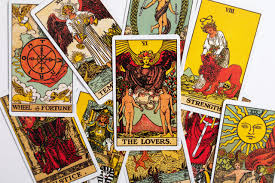
Believe it or not, even though I’m a Catholic liberation theologian, I’ve also become Tarot card reader. And this despite the teachings of my beloved meditation mentor, Eknath Easwaran, who always characterized Tarot as “Terror Cards.”
In fact (pace Sri Easwaran), it’s much more focused than that. I’m now using my ability to read Tarot as a fund-raising project for an impoverished women’s cooperative in Guanacaste, Costa Rica.
Let me address all that by first explaining my understanding of Tarot cards. Then I’ll show you how Tarot fits in with Catholic theology and my fund-raising project. Finally, I’ll issue an invitation to read your cards.
My Introduction to Tarot
To begin with, I was introduced to Tarot during a year-long sabbatical that my family spent in Spain. There in Andalusia, I unexpectedly fell in with a group of street musicians and gypsies. Most of them made only five or ten dollars a day as buskers. As self-described troglodytes, they lived in caves without running water or electricity. They explained the cards and their interpretations to me in ways that made me drop my preconceptions and defensiveness. If you’re interested, you can read about all that here, here, here, here, here, and here.
In any case, I learned that Tarot cards represent a divinatory tool usually understood as helping “querents” (seekers) answer existential questions connected with work, relationships, anxieties, and what the future might hold. As expressed by Tarot master Joe Monteleone, those consulting the cards typically want to know about getting paid, getting laid, and staying unafraid, so they might reach a happy conclusion of their parade through life.
But as Monteleone insists, Tarot cards are about much more than getting paid, laid, overcoming what makes us afraid. In fact, the 78 cards of the Tarot deck represent a dynamic book about you, me, and anyone who opens the “book.” Tarot cards are dynamic because as packets of the universal energy filling the universe, they meld, tap into and blend with the energy packets of those reading and seeking guidance from the Tarot cards. Put otherwise, like the cards themselves, each of us is a bundle of energy that can select from the deck individual cards addressing our true identities and the granular circumstances of our lives.
Accordingly, the Tarot book is divided into chapters addressing the archetypes just mentioned, as well as spirit, relationships, thoughts, and our physical circumstances such as work, money, and health. All those elements come to light in suits of wands (for spirit and creativity), cups (for relationships), swords (for ideas), and coins (for physical circumstances). Additionally, a final chapter (called “court cards”) explores relationships with important others in our lives under images of pages, knights, kings, and queens.
As those images indicate, the relevant cards are replete with references to history, mythologies, sacred scriptures, astrology, and akashic records.
Relative to all that, I’ve discovered that my background in the classics, history, poetry, and theology has prepared me well for reading Tarot cards. So, I’ve done it for family members and friends who have recognized (and have helped me see) my ability to interpret card meanings.
In fact, while still in Spain, I did so for two professional readers, who subsequently encouraged me to “go professional.” Since returning home, I’ve even read for my therapist (whom I consider my spiritual director), and she has very generously sent my way several “clients” for whom I’ve read on ZOOM and SKYPE.
[Oh, and recently during a three-month stay in Florida I read for many absolute strangers poolside at the Regatta Beach Club in Clearwater Beach. (Subsequently, however, I was informed by the Club’s authorities that such activity “for monetary gain” was forbidden.)]
What the authorities in Florida didn’t understand is that I’m forwarding ALL “monetary gain” to a women’s cooperative in Costa Rica. For clarification, here’ a flyer I’ve made to explain my project: https://acrobat.adobe.com/id/urn:aaid:sc:US:173ab9ae-7e78-406a-87e0-d8b16002fe46
As the flyer indicates, our (very poor) Costa Rican friends manufacture simple solar ovens and instruct their neighbors how to make them. They also maintain a large organic garden that provides food for themselves and their neighbors. (By the way, our friends in the co-op find themselves amused that I as a deinstitutionalized priest and theologian should be delving into the occult on their behalf.)
Theological Connections
It turns out, however, that no one should see any contradiction between Tarot cards, priesthood, and/or theology. That was brought home to me several months ago when I came across a book called Meditations on the Tarot: a journey into Christian Hermeticism. The book was published anonymously in 1985.
[By the way, the word “Hermeticism” refers to the teachings of Hermes Trismegistus, a reputed contemporary of Moses who lived 1600 years before Christ. Hermes explored the relations between human experience and the divine. Many have seen him as the wisest man who ever lived. It turns out that ancient Fathers (and Mothers) of the Christian Church have long explored connections between Hermes and the Judeo-Christian tradition. They are the Christian Hermeticists referred to in the title of Meditations on the Tarot.]
In any case, I found the enthusiastic endorsements on the book’s cover to be astounding.
They came from the Trappist abbot Thomas Keating (the colleague of Ken Wilber of Spiral Dynamics fame), from another Trappist Basil Pennington, as well as from the mystic and leader of the Christian ashram movement, Bede Griffiths. Even more surprisingly, the book’s afterword was penned by the great Catholic theologian and cardinal of the church, Hans Urs Von Balthasar.
The endorsements from all four men contained superlatives such as “the most extraordinary work I have ever read” (Pennington); “simply astonishing” (Griffiths), and “the greatest contribution to date toward the rediscovery and renewal of the Christian contemplative tradition of the Fathers of the Church and the High Middle Ages” (Keating). Cardinal Von Balthasar’s afterword praises the “formidable power of his (i.e. the anonymous author’s) spiritual vision.”
What surprised me about such testimony was not only that monks, mystics, theologians, and even a cardinal knew anything about Tarot cards at all, but that they knew them well and saw them as tools for spiritual growth. My interest in reading cards had put me in good company indeed.
My Work as a Tarotista
So, I decided to become a card reader — a Tarotista. Here’s how I do it:
- I receive a reading request in which the querent identifies the session’s focus (e.g., a relationship, a question about work, income, children, about a fork in life’s road, etc.)
- We set a time to meet on SKYPE.
- I ask the querent to hold her hand to her heart, while I press the tarot cards against my own heart and pray something like this: “O, Great Mother-Father let my sister’s energy and light (channeled through me) meld with the energy and light of these cards. Let the cards chosen reveal her current life’s situation, the deep unconscious source of her circumstances, the more proximate and probably conscious source, her present motivation, her immediate future, the image that she has of herself, the external influences on her life, her hopes and fears, and finally her destiny if she continues on her present path.”
- I typically do a 10-card reading and we discuss it for an hour.
- As suggested above and depending on the “spread” I use, the 10 cards in question usually identify (1) the querent’s present situation, (2) the challenges to that situation, (3) the situation’s deep (usually unconscious) roots, (4) it’s more proximate origins, (5) the querent’s true motivations for presenting the question, (6) what the immediate future holds, (7) the querent’s present image of herself, (8) the context influencing her question, (9) the querent’s hopes and fears, and (10) the outcome to be expected if the querent stays on her present path.
- Finally, I write up a detailed summary and email it to the querent.
With good success, I’ve also simply:
- Received a request with identification of the area of inquiry.
- Done the prayerful reading ahead of time.
- Emailed the reading to the querent.
- Met with the querent online for a one-hour discussion.
- Wrote up a summary of the entire process.
Conclusion
The summaries I’ve just mentioned are important, so that the querent might recall, review, and meditate upon the outcome of the Tarot reading.
The amount of time I invest in the process just described is approximately three hours. For this, I ask a donation of $100 for that women’s co-op. So far, I’ve been able to help them substantially.
So that’s my new endeavor. In future postings here. Next time I’ll give an example of my reading style by imagining that Joe Biden asked for a reading about Gaza.
 About Things That Matter