Readings for 2nd Sunday of Easter: ACTS 2: 42-47; PSALMS 118: 2-4, 13-15, 22-24; 1st PETER: 1: 3-9; JOHN 20: 19-31
Last week, on Easter Sunday, I presented Jose Mujica as a model president. Mujica, I pointed out, was the president of Uruguay from 2010 to 2015. He had been a Marxist Tupamaros (Robinhood) guerrilla since his student days. He was arrested, imprisoned and tortured for 12 years – 3 of them spent in solitary confinement at the bottom of a well. As president, he introduced profound changes in Uruguayan politics. As I noted, he took steps towards the legalization of all drugs in an effort to defeat the country’s drug gangs.
But perhaps Mujica’s most impactful step came in the example he offered national chief executives everywhere in his rejection of the typical presidential lifestyle. He gave away 90% of his yearly salary to the poor and dedicated that money to providing housing for the country’s homeless. He sold the presidential limousine in favor of retaining his old Volkswagen beetle. He continued living with his wife in his run-down peasant farmhouse.
In my frustration over this year’s Hobson’s choice between Trump and Biden, I couldn’t help thinking: what if we chose a U.S. president who did something like that? What if, instead of looking for leadership to billionaires like Trump or lifelong politicians like Biden, we elected someone like Jose Mujica – a peasant, a worker, a radical thinker? How would that change American politics? How would that change the world?
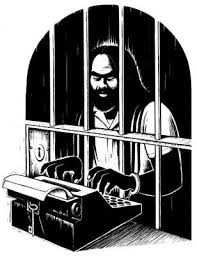
What if we elected someone like Mumia Abu-Jamal? Abu-Jamal, of course, is the Marxist Black Panther journalist who had spent years as a political prisoner on death row. Allegedly he killed a Philadelphia police officer in 1981 – a charge he has always vehemently denied. In any case, he regularly publishes insightful, edgy comment from prison and is often interviewed on NPR and programs like “Democracy Now.” What if Mumia were our president?
I raise those questions because they’re suggested by the readings for this second Sunday of Easter. They expose us to the shocking fact that resurrection for the first Christians turned everything completely upside-down. They actually embraced communism and recognized as their leader a worker, a victim of capital punishment from death row. Yes, they embraced the communist ideal that inspired both Mujica and Mumia Abu-Jamal.
Today’s Readings
The readings are brilliant and timely in that they not only give us an insight into the primitive Christian community. They also urge us to turn our politics upside-down. They do so first by offering an abstract description of the original Christian community, and then by fleshing out that description with narrative about a key encounter of a skeptic with the risen Christ who embodies the basis of the communist vision – identification with society’s victims and despised.
Here are my “translations” of those readings. You can find the originals here to see if I’ve got them right:
ACTS 2: 42-47: The first Christians were communists. Following the teachings of Jesus, they prayerfully shared meals each day and all their possessions – from each according to ability to each according to need. Their example was so awe-inspiring that everyone loved them, and their numbers grew rapidly.
PSALMS 118: 2-4, 13-15, 22-24: Christian communalism was a dim reflection of the benevolence of Life Itself as demonstrated in nature and throughout human history. No one truly owns anything; it’s all GIFT. Though unrecognized by the world, renouncing private property is the rejected cornerstone of human community – the key to surmounting every human problem. Accepting this truth, even in the worst of times, those committed to justice manifest super-human strength, courage, and joy.
FIRST PETER: 1: 3-9: It’s as if they were all born again into a new creation filled with hope that is stronger than death itself. Talk about inheritance! Communal sharing has made us richer than kings and their vast storehouses of gold. We’ve experienced the very goal of history – even though the world’s opposition to our sharing obscures the fact that we are on the right path – the one blazed by Jesus himself (and the other great divine incarnations). There is no other portal to human happiness.
JOHN 20: 19-31: Fear of the world, its violence and opposition to Jesus’ communalism has intimidated us into denying his way. Yes, we’re all denialists like the one they called “The Twin” (Didymus). He is our double in rejecting in absentia Jesus’ Holy Spirit of peace and forgiveness, of sharing and community that make peace possible. Correcting false perception means recognizing Christ himself in those the world has wounded and assassinated for daring to follow him.
Christian Communism
Please do read for yourselves today’s first reading, ACTS: 2: 42-47. It’s significant that on this week after Easter, the passage immediately directs us not to “spiritual” concern with heaven and the afterlife, but to material property, land and the primacy of the marginalized in organizing community life. Here’s a fuller description of the way the early Christians lived. You’ll find it in ACTS, Chapter 4:
“Now the whole group of those who believed were of one heart and soul, and no one claimed private ownership of any possessions, but everything they owned was held in common. With great power the apostles gave their testimony to the resurrection of the Lord Jesus, and great grace was upon them all. There was not a needy person among them, for as many as owned lands or houses sold them and brought the proceeds of what was sold. They laid it at the apostles’ feet, and it was distributed to each as any had need.” (Acts 4:32-35).
Note that the description immediately connects the interior lives of believers (heart and soul unity) with communizing the group’s possessions. They sold their land and houses, pooled the resulting resources and redistributed wealth on the basis of need. All of this was an expression, the passage says, of early Christian belief in the new way of life expressed in the term “resurrection.” Communism was the logical, practical expression of following Jesus’ teaching. Doing so brought the community grace, i.e. favor with God and with those outside their community.
How different that understanding is from what, in effect, we’ve been taught since infancy about capitalism as somehow God’s way. It’s as if the above passage read:
“Now the whole group of those who believed entered into competition with one another. They fiercely guarded their possessions and considered private property as sacred. With great power the apostles gave their testimony to the dog-eat-dog world Jesus described as God’s Kingdom. So, they all viewed the “needy” as lazy and unproductive. They evicted them when they defaulted on rent and then tore down their hovels to enrich themselves and develop gentrified neighborhoods. In this way, Jesus’ early followers became rich and prosperous, while the poor got their just deserts – poverty and misery.”
I’m not exaggerating. That emphasis on private property, on the law of the jungle, and justifying a resulting gap between rich and poor is embraced by many Christians as if the godly life Jesus endorsed could be described exactly as above.
Jesus’ Place in Communism
Now switch your attention to the Gospel reading for today. It brings us inside the first Christian house church whose communism was described abstractly in the reading from the Acts of the Apostles. It shows Jesus’ closest followers affirming the enduring relevance of their hero as a leader remarkably like Mumia Abu-Jamal. He’s dark-skinned and condemned under false charges by the state. He not only comes from death row; he was actually a victim of torture and capital punishment. And yet, he somehow lives and continues to teach his way to community happiness!
Recall the scene. Jesus’ closest friends are in hiding, imprisoned by fear of the Romans who had just executed their great teacher and of their traitorous fellow countrymen – the Temple priests and scribal establishment – who cooperated with the foreign occupiers.
So, the doors are locked and bolted. Jesus’ inner circle feels threatened, lost and betrayed by their own naivete in following a quixotic revolutionary who had filled them with such hope for the arrival of the Kingdom of God.
Inevitably, however, conversation must have turned to Jesus, his teachings and to rehearsal of the tragic events of the Passover weekend just completed. And those memories evoke Jesus’ presence, even for the iconic skeptic, Thomas called Twin (Didymus) and “Doubting.”
Thomas is really our Twin in his reluctance to believe that salvation can come from an executed criminal – or, perhaps more accurately, that life is stronger than death. And yet, like Karl Marx, he discovers that the deliverance of the human race comes from below, from a despised member of the working class, not from above and the royal or priestly classes so admired by the mainstream.
Conclusion
Thomas’ reluctant faith and that of his community as presented in today’s readings, call us to a twofold realization. The first is that our entire way of life is on the wrong track. Happiness and the good life (escape from out profound unhappiness) are not found in individual pursuit of wealth as the capitalist story of Jesus would have it.
No, it’s found in radical sharing that has us orienting community life towards the welfare of the least among us – as was the practice of the first Christian community. (That is, as I’ve shown elsewhere, mixed economies are all we have. But they should be mixed in favor of the poor in percolate-up ways rather than in favor of the rich with trickle-down policies.)
The second Thomistic (and Marxist) realization is similar. It’s that we’ve been looking for community leadership in all the wrong places. Our leaders need to come not from David’s palaces, not from Temple priests, but from the streets, from carpenters’ workshops, and even from death row.
Imagine, if we embraced the communism exemplified in today’s readings as our guiding North Star. Imagine if instead of Trump or Biden, Jose Mujica or Mumia were our president. Imagine if we could overcome the denialism of our twin, Thomas the Doubter. That’s the kind of radicality followers of Jesus are called to.

 About Things That Matter