Netanyahu’s Bible Is Not about God

The ongoing genocide in Gaza at the hands of Apartheid Israel has brought the question of biblical interpretation from the margins to the center.

The impetus to do so has come from Benjamin Netanyahu. Think of his pronouncements about his Amalek strategy justifying his attacks in Gaza. Couple that with his IOF (Israel Occupation Force) song and dance celebrating the same. It has all raised the perennial question of the very nature of the God of the Jewish Testament.

And the question is simple. It was articulated by the ancient fathers of the Christian community – men like Irenaeus, Justin Martyr, and the hereticated Marcion of Sinope. All of them wondered how anyone with a drop of humanity or possessed of the most elementary moral compass could believe in a God who commanded complete genocides directed specifically against women, children, infants, cattle, and sheep?

Of course, similar questions might be addressed today to Bibi Netanyahu or Genocide Joe Biden. Where’s your humanity? Have you completely lost your moral compass? What kind of God would justify your crimes?

So, let’s examine the question of Apartheid Israel’s genocidal God. Let’s think about divinity bereft of moral compass. Start with facing the fact that the Hebrew Bible might not be about God at all. Next look at the powerful beings who are presented there. And finally, consider Jesus’ attitude towards the so-called God of Israel.  

No God in the Hebrew Bible

On this first and second points, I’m following the direction of scholars like the Australian Paul Wallis and the Italian biblical scholar Mauro Biglino. They question entirely the traditional interpretations of the biblical God.

According to Biglino and Wallis, the Hebrew Bible’s genocidal God is no God at all. In fact, the Hebrew Testament itself is not about God. Instead, close examination reveals that it is about “Elohim,” i.e., “Powerful Ones.”

These were Beings from Beyond who in the ancient world vied for control of our planet. Stories of such paleo-contacts with extraterrestrials (ETs) are found throughout revered texts across the planet from China to Egypt, and Babylon; from the Philippines to the Mayan Popol Vu. In fact, every ancient civilization holds that we came from above – from the sons of the stars.

Most often these foreign entities appear in reptilian forms or as fire-breathing dragons, Sometimes they possess wings. At others, the Powerful Ones appear in human form and are recognized as giants, witches, magicians, governors, lawgivers, as “Sons of God” or simply as kings whose specific names were forgotten, but who were remembered as divine. Still elsewhere the Powerful Ones take the form of “angels,” (messengers from beyond) or demons. Invariably, they possess super-human powers.  

In biblical texts these “Powerful Ones” had names such as El, El Shaddai, Elion, Baal, Ruach, Ashera, and Yahweh. Together they comprised a family that included 70 sons of El. Among them Yahweh was an inferior subordinate of his father who apportioned to his offspring control of various geographical regions. Yahweh’s assignment was to protect the nation of Israel. (Note El’s name in the term Yisra-El itself.)

Only at the beginning of the first millennium BCE was El replaced by Yahweh as the supreme and only God. That is, Jewish polytheism and henotheism morphed into monotheism for the first time around 530 BCE – after the Babylonian exile. It was then that Judah’s elite in the persons of Ezra, Josiah (640-609 BCE), and Nehemiah reformulated the nation’s longstanding traditions. Their patriarchal work removed, downplayed, and/or reinterpreted all references acknowledging the existence and power of Gods from above other than Yahweh, Judah’s national deity.

Put otherwise, the Jewish biblical tradition was rewritten with the name Yahweh pasted over references to the Elohim as if Israel had always been monotheistic. This is how Yahweh became responsible for the genocides of El Shaddai and other “divinities” who lacked human feeling or moral compass.  

The reformers took special pains to erase references to goddess worship. Against great resistance, Israel’s beloved goddess Ashera was consigned to the biblical memory hole.

Not God for Yeshua

The impoverished and imperialized prophet, Yeshua of Nazareth, had little to do with the Yahweh pasted over the traditions of the Elohim. Nowhere does he even refer to God using that name.

On the contrary, the prophet was highly critical of and even rejected any understandings of an exclusively national God, much less as one who commanded the slaughter of enemies.  

Instead, Yeshua spoke of God as a Universal Father and as the One his disciple Paul of Tarsus described as the Source of the universe and everything in it – as the One in whom we live and move and have our being (Acts 17:28).

For Yeshua and his disciples, God was international, universal, and unconcerned with Temple worship and sacrifice. This eventually led Yeshua’s followers to reject not only Judaism’s limited understandings of God, but Judaism and its law in general.

Still, the Christian tradition continued to embrace the Jewish Testament as part of the Holy Bible as though Jesus was a worshipper of Yahweh. It did so because Christians understood Jesus as fulfilling Jewish testament prophecies.

The resulting process of distortion was straight forward. Christianity started out as a sect of Judaism that followed the teachings of the Jewish prophet, Yeshua. After his execution around 30 CE, his followers inspired by his international and universal vision had grown geographically and numerically far beyond the Jewish community. Their movement had spread to all parts of the Roman Empire to become a largely gentile association that for various reasons even came to despise its Jewish origins.

These international characteristics led to the Bible’s becoming a world book by the 4th century CE.  For it was then that the Roman Emperor Constantine’s Edict of Milan legalized Yeshua’s Jewish movement now called “The Way.”

The change was necessary because the Roman Empire’s unifying religion (also for various reasons associated with the increasing cultural diversity of its subjects) had lost credibility across its ever-expanding territories. It needed an international unifying religious ideology that would uphold the belief that the Emperor was supported by divine authority.

So, in the early 4th century and after long years of persecuting “Christians,” the Empire’s Office for Religious Affairs (under Constantine) decided to legalize the sect that had become more universal than what the Roman pantheon had come to represent. Eventually, by 380 CE Christianity became Rome’s official religion (under Theodosius).

Afterwards, widely diverse beliefs about the identity of Yeshua of Nazareth (and about the Bible and its tales) were streamlined into official doctrines, while alternative understandings were condemned and punished as heresies.

Thus Jesus became understood as a worshipper of the Elohim-become-Yahweh with all their contradictions, instead of as a prophet who rejected all but the Mosaic tradition as championed by Israel’s prophets and as universal father and spirit in whom we live and move and have our being.

Conclusion

To summarize: the Bible is not a world book written for humankind in general. Instead, it is a memoir of a small marginal and relatively insignificant group in the ancient Mideast called “Hebrews.” It was written for them, not for Christians.

Neither is the Bible about a universal “God.” Rather, it is about various kings and generals and Powerful Ones from the world above. In their various ancient pre-literate oral traditions Hebrews called them “Elohim,” “El,” “El Shaddai,” “Ruach,” “Baal,” “Ashera,” and “Yahweh.” The Powerful Ones included generals and kings who were often gradually elevated to divine status, just as happened with kings in other Mideastern cultures. Many of these Elohim were cruel and violent colonizers interested only in accumulating herds, gold, and virgin girls to improve their DNA.

“Yahweh” was the member of the Elohim to whose protection the Hebrew people were assigned, while (according to pre-literate traditions) other peoples were assigned other protectors drawn from the supra-human “Powerful Ones” who might even have been extra-terrestrials referenced in their own ways by virtually all ancient traditions across the planet.

In the 6th century BCE under Josiah, the Hebrew religion was streamlined and was rendered monotheistic. Biblical texts were rewritten as though Yahweh had always been the only God recognized by Israel.

In effect, what’s recorded in the Jewish Testament is a “Battle of the Gods,” i.e., contradictory, and incompatible understandings of powerful entities presented side-by-side with the inconsistencies ignored.

Today’s Palestinians in Gaza are the latest victims of the cruelest of the biblical Elohim.
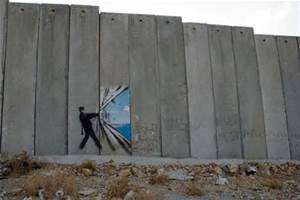
(Sunday Homily) The ‘Gates of Hell’ from Ferguson to Gaza

Wall Palestine

Readings for 21st Sunday in Ordinary time: IS 22: 19-23; PS 138:1-3, 6,8; ROM 11: 33-36; MT 16: 13-28. http://usccb.org/bible/readings/082414.cfm

Of course, you’re all following the news, I know. It’s so discouraging, isn’t it? Ferguson, Gaza, Iraq, and (now) Syria – again. . . .

It all reflects such one-dimensional thinking. I mean it gives the impression that in the eyes of public officials from the militarized cop in the street to the POTUS himself, the only solutions to social problems are found in shooting, tear gas, torture, and Hell Fire Missiles? Solving social problems requires locking people of color behind “the Gates of Hell” referenced by Jesus in today’s Gospel reading.

In every case, diplomacy and negotiation seem out of the question. In fact, it’s a vanished art. Who needs it? After all, those damn “others” – be they African Americans in occupied Ferguson, Palestinians in Gaza’s mammoth concentration camp, or the ISIS militants – can’t possibly have legitimate grievances. They simply must be brought to heel by force – shooting, bombing, and killing their children and youth. We’re made to believe that alternatives such as dialog and working out problems by discussion and compromise are signs of weakness. So violence is the first resort. It’s the order of the day in a world ruled by machismo, revenge, violence, and the law of the strongest.

When we’re not bombing, we’re building walls with locked gates. Our “gated communities” and locked doors wall us off from unsightly ghettos and the realities of the world’s poor mostly non-white majority. Better to confine Palestinians in fenced off open-air concentration camps like Gaza, where there’s literally no exit. Then from time to time you “mow the lawn,” i.e. shoot the non-Jews like fish in a barrel – even though most of them are children, women, and aged people.

Better to build a wall along the Mexican border and then lock the gates, throw away the key and pretend that such barriers solve the problem of farmers and their children driven off their land by globalization, poverty and gangs. Better to justify it all by invoking the Ultimate White Privilege: “I feared for my life!” (We whites are the only ones who can get away with that one.)

All that brings us to today’s Liturgy of the Word. It’s about God’s interest in matters like those just enumerated – about politics, oppression and the liberation of non-white people like Jesus, Gazans and residents of Ferguson, Missouri. It’s about breaking bonds and opening the gates of hell so that every Inferno can be transformed into the Kingdom of God. It’s about refusing to be discouraged even though the flow of history make Jesus’ prayer, “They Kingdom come” seem like an impossible dream.

Start with today’s first reading. There the prophet Isaiah has God telling a courtier named Shabna to step down in favor of a man called Eliakim. Little is known about either one. The reason for including the reading today is apparently to establish today’s central point that God is concerned with the world of politics, and that God is ultimately in charge of what happens in that sphere. There can be no separation of politics and religion in the divine dispensation.

The responsorial psalm continues the “this worldly” theme set by the first reading. It had us all singing “Lord, your love is eternal. Forsake not the work of your hands.” Once again, emphasis on “the work of God’s hands” reminds us of God’s commitment to this world – including ghettos, the Gazan concentration camp, and rich people making life unbearable for the world’s largely non-white poor. The psalm goes on to praise Yahweh for divine kindness, truthfulness, encouragement of the weak, care for the impoverished, and God’s alienation from their proud oppressors – again all connected with life here and now.

Then in today’s Gospel selection, we find a reprise of the very reading we shared last June 27th (just two months ago on the “Solemnity of St. Peter and Paul”). We practically know this passage by heart.

The reading centers on three titles associated with Jesus of Nazareth – Son of Man, Son of God, and Christ. All three names are politically loaded – in favor of the poor rather than the privileged and powerful.

Jesus asks his friends, “Who is the Son of Man in history and for us today?” (Scripture scholars remind us that the “Son of Man” is a figure from the Book of Daniel. He is the judge of all those who oppress the People of God whether they’re Egyptians, Assyrians, Babylonians, Medes, Persians, Greeks or Romans. He is “the human one” as opposed to a series of monstrous imperial beasts which the author of Daniel sees arising from the sea against God’s poor.)

So Jesus’ question boils down to this: who do you think has taken the strongest stand against Israel’s oppressors? Jesus’ friends mention the obvious heroes, Elijah and Jeremiah. But in the end, they settle on a contemporary political prisoner in King Herod’s version of Abu Ghraib. He’s John the Baptist who was Jesus’ mentor. (According to Jesus, John was the greatest of all the prophets of Israel.) He’s the Son of Man, they say.

Having set that anti-imperial tone, Jesus then asks the question, “What about me? Who do you say that I am?” No question could be more central for any of us pretending to follow the Teacher from Nazareth. How we answer determines the character of the path we walk as Jesus’ would-be disciples in a world filled with Fergusons, Gazas, Hell Fire Missiles and militarized cops. Our answer determines whose side we are on – that of Messrs. Netanyahu, Obama and Officer Wilson or of the Palestinians, Iraqis and Michael Brown.

Matthew makes sure we won’t miss the political nature of the question. So he locates its asking in Caesarea Philippi – a city Herod obsequiously named for his powerful Roman patron. Herod had commemorated the occasion by minting a coin stamped with the emperor’s countenance and identifying him as “the Son of God.” Caesar was also called “the Christ,” God’s anointed. Good Jews saw all of that as idolatry.

So Peter’s answer, “You are the Christ, the Son of the Living God” has the effect of delegitimizing Caesar and his empire. It’s also a swipe at King Herod. Peter’s response couldn’t be more political. Jesus, not Caesar is king, God’s anointed, the Son of God.

Neither could Peter’s words be more spiritually meaningful and heartening for those of us discouraged by events in Ferguson, Gaza, Iraq, and Syria.

The encouragement is found in Jesus rejoinder about the “gates of hell” and the “keys of the kingdom.” Jesus says, “Blessed are you, Simon son of Jonah . . . I will give you the keys of the kingdom of heaven . . . whatever you bind on earth will be bound in heaven, and whatever you loose on earth will be loosed in heaven.”

What powerful words of encouragement! For those who would join Jesus on “The Way” to God’s Kingdom, they disclose the very key to life’s meaning. In effect, Jesus says, “Here’s the key to opening ‘the gates of hell’ and transforming life’s Infernos into God’s kingdom: all our actions – even apparent failures like my coming crucifixion – have cosmic significance. Don’t be discouraged even when the agents of hell end up killing me – as they inevitably will.”

In other words, we may not be able to see the effect of resisting empire and its bloody agents in the short term. But each act has its effect. God’s Kingdom will come.

In today’s second reading, Paul elaborates the point. He said it’s not always apparent what God is doing in the world. After all, the ways of Transcendent Reality are deep and beyond comprehension – even by the wisest human beings. We may not be able to see God’s (political) purposes at close range. But ultimately their inscrutable wisdom will become apparent (ROM 11: 33-36).

Or as Martin Luther King put it: “The arc of the moral universe is long, but it bends towards justice.”

All of us need to embrace that wisdom, refuse discouragement and continue doing what we can to resist the forces of empire and unlock those “Gates of Hell.”

(Sunday Homily) Dear Pope Francis: Gaza Needed More than Tears; Next Time, Please “Walk on Water”

Walk on Water

Readings for 19th Sunday in ordinary time: I KGS 19: 9A, 11-13A; PS 85: 9-14; ROM 9: 1-5; MT 14: 22-23 http://www.usccb.org/bible/readings/081014.cfm

In today’s Gospel, we hear Matthew’s account of Jesus walking on water – or rather, of Peter’s refusal to follow Jesus’ example of walking on the waves.

The account is relevant to the man in the Vatican who believes he is Peter’s successor. Israel’s month-long siege of Gaza invited Pope Francis to “walk on water” – to follow the example of Jesus in confronting demons. However uncharacteristic timidity left the pope sinking below the waves, out of sight and ear shot, cowering before Monsters like Obama and Netanyahu.

Let me explain. First off, consider today’s Gospel reading.

The story goes that following Jesus’ feeding of the 5000 (last week’s Gospel episode), Jesus forces the apostles to get into their boat and row to the other side. [The text says, “Jesus made (emphasis added) the disciples get into a boat and precede him to the other side.” Perhaps these experienced fishermen (as opposed to the land lubber, Jesus) saw a storm was coming and were reluctant to set sail despite Jesus’ urgings.]

In any case, a storm does come up and the apostles fear they are about to drown. You can imagine them in helpless tears.

Then they see a figure walking on the water in the midst of high threatening waves. At first they think it’s a ghost. Then they realize that it’s Jesus. He’s walking on the raging waters.

Peter, the impetuous leader of the apostles, doubts what he sees. So he says, “Prove to me that it’s you, Jesus; let me walk on the waves just as you’re doing.” Jesus says, “Join me then over here.” So Peter gets out of the boat and, like Jesus actually walks on water for a few steps.

Then, despite the evidence, he begins to doubt. And as he does so, he starts sinking below the water line. “Save me, Lord,” he cries out again. Jesus stretches out his hand and saves Peter. Then he asks, “Where’s your faith, man? Why is it so weak? Why did you doubt?”

Of course, this whole story (like last week’s “Loaves and Fishes”) is one of the dramatic parables Matthew composed. If we get caught up in wondering whether we’re expected to believe that someone actually walked on water, we’ll miss the point of this powerful metaphor. It’s about Jesus’ followers doing the unexpected and irrational in the midst of life-threatening crisis.

You see, Matthew’s Jewish audience shared the belief du jour that the sea was inhabited by dangerous monsters – Leviathan being the most fearful. And fearlessly walking on water was a poetic way of expressing what Matthew’s community believed about Jesus, viz. that he embodied the courage and power to do the completely unexpected in the midst of crisis and subdue the most threatening forces imaginable – even the most lethal of all, the Roman Empire.

Jesus’ invitation to Peter communicates the truth that all of us have the power to confront monsters if we’ll just find the courage to leave safety concerns behind even in the most threatening conditions, to confront life’s monsters, and join Jesus in the midst of its upheavals.

Problem is we easily lose faith and courage. As a result, we’re overcome by life’s surging waves and by the monsters lurking underneath them.

And that brings me back to Pope Francis and his ambiguous response to the slaughter that took place in Gaza over the last month.

We expected more. Over the course of his still-young papacy, Francis has demonstrated wonderful courage attempting to join Jesus on the world’s dangerous waves.

• He’s adopted a comparatively simple lifestyle.
• He’s condemned neo-liberalism and growing income inequality.
• His apostolic exhortation, “The Joy of the Gospel” implicitly endorsed the liberation theology his two immediate predecessors had tried to kill.
• More specifically, he adopted liberation theology’s “preferential option for the poor” as the leitmotif of his papacy.
• In that spirit, his famous “Who am I to judge” gave hope to the LGBTQ community.
• He helped head off President Obama’s plans to bomb Syria.

That last precedent led me to expect more in the context of Gaza. I was in St. Peter’s Square for Francis’ hours-long vigil for peace. There the Pope did as much or more to head off U.S.’ insane plans to bomb Syria as did Russia’s President Putin. Along with Putin, Francis was the hero who subverted the monstrous plans of Obama and his State Department.

But there was no peace vigil for the Gazans. Instead two weeks ago the Pope broke down in tears as he delivered his Sunday remarks from the balcony over St. Peter’s Square. He said:

“Never war, never war! I am thinking, above all, of children who are deprived of the hope of a worthwhile life, a future. Dead children, wounded children, mutilated children, orphaned children, children whose toys are things left over from war, children who don’t know how to smile.” This was the moment when the tears came. “Please stop,” said Francis. “I ask you with all my heart, it’s time to stop. Stop, please!”

The words were powerful; the tears were powerful. But unlike the prayer vigil before a potential Syrian fiasco, they remained largely unreported. Nevertheless, for those with ears to hear, the Pope was lamenting Israel’s killing of Palestine’s innocent. (No Jewish children were killed during the Gaza massacre.) However, to overcome the Media’s deafening pro-Israel tilt, the Pope needed to be stronger and more specific.

Yes, his papacy has daringly left the safe harbor and courageously sailed into the storm. Yes, Francis clearly sees Jesus as his role model demanding courage in the face of today’s unprecedented winds and waves. Indeed Francis has gotten out of the boat to trample underfoot the beasts and monsters roiling the seas all around us. But in the case of Gaza, instead of walking confidently on the waters, he sunk in apparent timidity before the threatening monsters, Obama and Netanyahu.

But what more could he have done? What sort of miracle did I expect?

Well, he could have given courage to all of us who are far less daring than he; he could have performed a miracle more stupendous than actually “walking on water” by:

• Owning the fact that as the leader of 1.2 billion Roman Catholics, with far more power than Jesus had, he was truly able to end Gaza’s slaughter.
• Announcing plans to travel to Gaza in the midst of Israel’s monstrous campaign.
• Before leaving, specifically naming Israel’s assault on civilians as sinful.
• Identifying the U.S. as equally culpable with Israel for crimes against humanity.
• Actually traveling to Gaza in a white papal helicopter (even in defiance of Israel’s predictable prohibitions) and landing in the midst of Gaza’s devastation.
• Celebrating Mass in Gaza on a pile of rubble and refusing to leave till the Israelis stopped their slaughter.
• If the slaughter continued, traveling to the key sites of bombing and shelling.

“Impossible!” you say? Such an act would offend Israel and upset Israel-Vatican relations. Ditto for the U.S.

Hmm. Is the pope a politician or a prophetic religious leader? Please use your imagination and spin out what would have happened if the pope walked on water as just outlined. What do you think?

In any case, those much less courageous than Francis need his example so the rest of us might venture forth to walk on water in our own far less powerful ways.

Yes, in today’s Gospel, Jesus invites us all to do the impossible. Why are we doubting? Where is our faith?