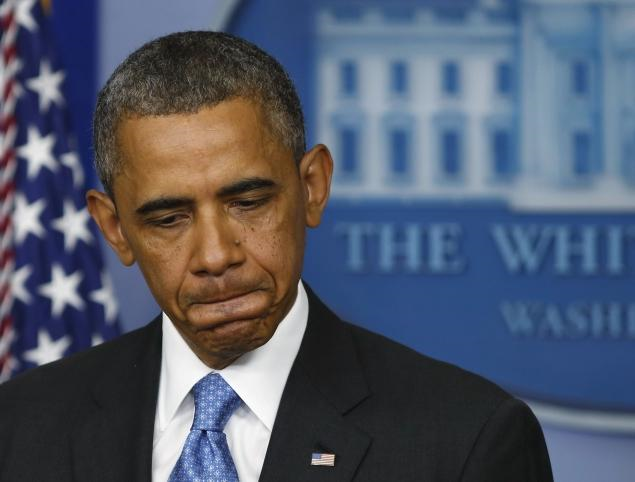
President Obama Should Have Said: “George Zimmerman Could Have Been Me!”

Obama Zimmerman

Last Friday President Obama startled Washington reporters and the world by expressing his thoughts about the Trayvon Martin verdict. That decision acquitted George Zimmerman of criminal guilt for killing an unarmed teenager in Sanford, Florida.

In his remarks, Mr. Obama spoke sentimentally of his own experience of racism, and about the dangers of Stand Your Ground laws. He cited the need to consider context in order to understand African-American rage over the Zimmerman verdict. Famously he said Trayvon Martin could have been him 35 years ago.

In fact, the President would have spoken more honestly had he identified with George Zimmerman.

Professor Cornel West (Union Theological Seminary) suggested that in an interview on “Democracy Now.” True, he found the Zimmerman verdict disturbing not simply because Trayvon Martin’s death went unpunished, but because it revealed what has been termed a “George Zimmerman Mentality.” That mind-set shaped by racism, fear, suspicion, and vigilantism has long afflicted our country in general and whites in particular even in this supposedly post-racial era.

More specifically, West charged that Stand Your Ground laws based on States Rights are ultimately aimed at controlling the black community. I would add that they are the modern equivalent of legalized lynching. In practice, the laws permit armed whites who feel themselves threatened by dark-skinned people to shoot those they deem threats to their security. Whites standing their ground have no legal requirement to retreat from the situation even if an escape route is available. The Zimmerman mentality represents lethal violence as a preferred option rather than a last resort.

Ironically, the Stand Your Ground, shoot-first attitude happens to be a key element of Mr. Obama’s own drone program. Sharing Zimmerman’s attitude of fear and racism, its “signature strikes” have been responsible for the deaths of at least 221 totally innocent dark-skinned children who happened to be nearby when Mr. Obama chose to fire his own weapon at those merely suspected of being or associating with “terrorists.” In effect, all of those children were Trayvon Martins who would be alive today had they not been in the wrong place at the wrong time when a man with a weapon perceived a threat from a profiled target.

Such observations made me wonder what key passages in Mr. Obama’s remarks would have sounded like if they were slightly altered to substitute references to Muslims, suspected terrorists, and innocent victims of drones for his original words about Trayvon Martin and African-Americans.

With those substitutions key sections of Mr. Obama’s text would have read as follows (I have placed my additions in italics to distinguish them from the President’s actual words):
______

“The reason I actually wanted to come out today is not to take questions, but to speak to an issue that obviously has gotten a lot of attention over the course of the last week, the issue of the 221 children I have recently killed by my drone policy. . .

“First of all, you know, I — I want to make sure that, once again, I send my thoughts and prayers, as well as Michelle’s, to the families of the drone victims, and to remark on the incredible grace and dignity with which they’ve dealt with the entire situation. I can only imagine what they’re going through, and it’s — it’s remarkable how they’ve handled it. . .

“But I did want to just talk a little bit about context and how people have responded to it and how people are feeling. You know, when Trayvon Martin was first shot, I said that this could have been my son. On second thought, I would have done better to identify with George Zimmerman. Another way of saying that is that I am George Zimmerman today.

“And when you think about why, in the Muslim community at least, there’s a lot of pain around what happened here, I think it’s important to recognize that the Muslim community is looking at this issue through a set of experiences and a history that — that doesn’t go away. . . .

“And you know, I don’t want to exaggerate this, but those sets of experiences inform how the Muslim community interprets what happened one night in _________ (Name the country – Afghanistan, Iraq, Pakistan, Somalia . . .). And it’s inescapable for people to bring those experiences to bear. . . .

“Now, this isn’t to say that the Muslim community is naive about the fact that Muslim young men are disproportionately involved in resistance to U.S. policy, that they are disproportionately both victims and perpetrators of violence. It’s not to make excuses for that fact, although Muslims do interpret the reasons for that in a historical context.

“We understand that some of the violence that takes place in poor Muslim communities around the world is born out of a very violent past in relation to the United States, and that the poverty and dysfunction that we see in those communities can be traced to a very difficult history.”
______

Now the substitutions I’ve made may strike you as awkward. But I’m sure you get my idea.

The point is that Mr. Obama has no moral ground to stand on in lamenting George Zimmerman’s violence or the ridiculous nature of Stand Your Ground Laws. Rather than identifying with Trayvon Martin, the President would have done better to note his similarities to George Zimmerman. Rather than wringing his hands over Stand Your Ground laws, the President should have recognized the identical logic that informs his own drone murders.

Mr. Obama thinks like Zimmerman; he profiles like that vigilante; he patrols the world with Zimmerman’s lethal intent. Even more to the point, the President pulls the trigger even more quickly and irresponsibly than the armed vigilante from Sanford.

President Obama is the poster child for the George Zimmerman Mentality, for Stand Your Ground and its disdain for dark skinned people.

When the Government Turns Criminal: Edward Snowden and the Good Samaritan (Sunday Homily)

Snowden

Readings for 15th Sunday in Ordinary Time: DT. 30: 10-14; Ps. 69: 14, 17, 30-31, 34, 36-37; Col. 1: 15-20; Lk. 10: 25-37. http://www.usccb.org/bible/readings/071413.cfm

In his recent book about the parables of Jesus (The Power of Parable: How Fiction by Jesus Became Fiction about Jesus), John Dominic Crossan poses the question: What happens to your world when the “best” people act badly and only the “worst” do what is right?

That scenario seems to be playing itself out in the case of Edward Snowden.

Snowden, you recall, is the NSA contractor and CIA employee who last month disclosed a vast secret program of U.S. government spying on its own citizens and on individuals, corporations, and governments throughout the world.

The program (Prism by name) seems to violate the Fourth Amendment of the U.S. Constitution which reads: “The right of the people to be secure in their persons, houses, papers, and effects, against unreasonable searches and seizures, shall not be violated, and no Warrants shall issue, but upon probable cause, supported by Oath or affirmation, and particularly describing the place to be searched, and the persons or things to be seized.”

Snowden made his disclosures three months after James Clapper, the Director of U.S. intelligence had denied its existence in testimony (under oath) before the Senate Committee overseeing the U.S. intelligence program. Snowden’s disclosures also followed hot on the heels of President Obama’s publically expressed concern that China was illegally spying on the U.S. in exactly the same way (though on a smaller scale) that the U.S. turns out to have been spying on China and its own allies.

For his troubles in exposing such lies, hypocrisy, and violations of the Constitution, Snowden himself has been designated a spy, traitor, and enemy of the United States – categories applied to its worst enemies. As a pariah in his own country, he has fled the United States and sought asylum in various countries including China, Russia, Cuba, Nicaragua, Venezuela, Ecuador, and Bolivia. Snowden (and human rights organizations such as Amnesty International) alleges that if extradited to the U.S. he is unlikely to receive a fair trial, but instead to be tortured and indefinitely imprisoned like other whistleblowers such as Bradley Manning.

All of the countries just mentioned have histories less-than-friendly to U.S. interests, which they have each described as criminally imperialistic. Other “good” countries such as France and Germany have (under great pressure from the United States) refused Snowden asylum.

Meanwhile, James Clapper has not been charged with perjury, and President Obama has managed to deflect attention away from constitutional violations to the search for the fugitive Snowden.

In other words, the Snowden Affair presents us with a “Spy,” “Traitor,” and “Terrorist Sympathizer” obeying his conscience in his exposure of government crime. He has done the right thing. Meanwhile, the President of the United States, himself a constitutional lawyer, has been caught violating the Constitution, and the Director of Intelligence has been exposed as a perjurer. And on top of that, friendly countries often lauded by the United States as models of democracy refuse to respect International Law governing asylum seekers. Only the “bad countries” are willing to honor that law.

In this situation, the question Crossan posed earlier finds uncomfortable relevance: “What happens to your world if a story records that your “best” people act badly and only your “worst” person acts well?”

As I said, Crossan asks that question in the section of his book commenting on “The Good Samaritan” which is the focus of the gospel selection in today’s Liturgy of the Word.

The parable, of course, is very familiar. Almost all of us know it nearly by heart. Typically sermons find its point in simply calling us to be “follow the Samaritan’s example, treat everyone as your neighbor, and help those you find in trouble.”

That’s a good point, of course. But Jesus’ own intention went beyond simply providing an example of a good neighbor. More profoundly, it focused on the hypocrisy of “the good” and the virtues of designated enemies. As such, the story calls us to transcend those socially prescribed categories and look at actions rather than words of both the “good” and “bad.”

More specifically, the hero of Jesus’ story is a Samaritan. According hero status to such a person would be unthinkable for Jesus’ listeners. After all, Samaritans were social outcasts belonging to a group of renegade Jews who (by Jesus’ time) had been separated from the Jewish community for nearly 1000 years. They had also polluted the Jewish bloodline by intermarrying with the country’s Assyrian conquerors about 700 years earlier.

Jews considered Samaritans “unclean;” they were traitors, enemy-sympathizers, heretics and even atheists. They rejected Jewish understandings of Yahweh and the Temple worship that went along with it.

And yet in the story, Jesus finds the Samaritan to be more worthy, more pleasing in God’s eyes than the priest or Levite. That’s because the Samaritan’s actions speak much louder than the word “Samaritan” would allow. He is compassionate; so Jesus approves.

In the meantime, the priest and the Levite lack compassion. Their actions condemn them.

They say that slightly more than 50% of the American people think Edward Snowden is a traitor and spy. And this despite the fact that his accusers have advanced no evidence to that effect – and despite polls that indicate a solid majority believing that the government’s surveillance program is objectionable if not clearly unconstitutional.

Today’s parable invites us to reconsider – not just Snowden, but our very understanding of the world and its categories of “good” and “evil.”

Perhaps we’re looking for the real criminals, traitors, spies, and terrorists in exactly the wrong places.

“Thank You, Lord, for Not Making Me a Woman” (Sunday Homily)

Adultery

Readings for 5th Sunday of Lent: Is. 43:16-21; Ps. 126:1-6; Phil. 3: 8-14; Jn. 8: 1-11. http://www.usccb.org/bible/readings/031713-fifth-sunday-lent.cfm

Ten days ago, President Obama reauthorized the Violence against Women Act of 1994. This time the bill was expanded to cover lesbian, transgender and bisexual women. It also recognized the special circumstances of Native American women and of immigrants who according to government statistics are more likely to be raped and/or beaten than other women.

Some of our Catholic bishops disagreed with the legislation. In part, they said recognizing the rights of LGBT women undermined the “meaning and importance of sexual difference.” The changes, they said, might be “. . . exploited for purposes of marriage redefinition.” After all, they reasoned, “. . . marriage is the only institution that unites a man and a woman with each other and with any children born from their union.”

All of that is important because in today’s gospel, Jesus quietly decrees his own Violence against Women legislation. Better put, he literally performs (acts out) his own Violence against Women anti-legislation. His defiance of biblical law marks out a position quite different from the one taken by the bishops just mentioned.

Here’s what I mean: Jewish law punished adultery with death by stoning. That was a biblical requirement – one that many Muslims today still honor in their fundamentalist interpretation of the Bible. However the Jewish patriarchy applied that law differently to men and women. A man, they said, committed adultery only when he slept with another married woman. But if he slept with a single woman, a widow, a divorced woman, a prostitute or a slave, he remained innocent. A woman, on the other hand committed adultery if she slept with anyone other than her husband.

Of course, great injustices were committed in the name of this law. Often rumors and outright lies led to the death of innocent women. In many cases, the ones throwing the stones of execution were men who had spent their whole lives deceiving their wives.

Jesus calls attention to such hypocrisy and double standards in today’s gospel episode. All the elements of last week’s very long parable of the Prodigal Son are here. Jesus is teaching in the temple surrounded by “the people” – the same outcasts, we presume, that habitually hung on his every word.

Meanwhile, the Scribes and Pharisees are standing on the crowd’s edge wondering how to incriminate such a man? As if ordained by heaven, an answer comes to them out of the blue. A woman is hustled into the temple. She’s just been caught in flagrante – in the very act of adultery. What luck for Jesus’ opponents!

“Master,” they say, “This woman has just been caught in the act of adultery. As you know, the Bible says we should stone her. But what do you say?” Here Jesus’ enemies suspect he will incriminate himself by recommending disobedience of the Bible’s clear injunction. After all, he is the compassionate one. He is especially known for his kindness towards women – and others among his culture’s most vulnerable.

But instead of falling into their trap, Jesus simply preaches a silent parable. He first scribbles on the ground. Only subsequently does he s speak — but only 18 words, “Let the one among you who is without sin be the first to throw a stone at her.”

A wordless parable . . . . What do you suppose Jesus was scribbling on the ground? Was he writing the names of the guilty hypocrites who had cheated on their wives? Was he writing the laws the Scribes and Pharisees were violating? Some say he was simply drawing figures in the dust while considering how to reply to his opponents?

The first two possibilities seem unlikely. How would this poor country peasant from Galilee know the names of the learned and citified Scribes and Pharisees? It is even unlikely that Jesus knew how to write at all. That too was the province of the Scribes. The third possibility – that Jesus was absent-mindedly drawing figures in the dust – is probably closer to the mark.

However, it seems likely that there was more to it than that. It seems Jesus was performing some kind of symbolic action – that mimed parable I mentioned. By scribbling in the dust, he was wordlessly bringing his questioners down to earth. He was reminding them of the common origin of men and women?

Both came from the dust, Jesus seems to say without words. The creation stories in Genesis say both men and women were created from dust and in God’s image – equal in the eyes of God. “In God’s image God created them. Man and woman created he them,” says the first creation account (Genesis 1:27). By scribbling in the dust, Jesus was symbolically moving the earth under the feet of the Scribes and Pharisees. He was gently but strongly asserting that they had no ground to stand on. They were hypocrites.

Then his 18 word pronouncement offers Jesus’ own standard for judging the guilt of others. According to that standard, one may judge and execute only if he himself is without sin. This, of course, means that no one may judge and execute another. All of us are sinful.

What genius in this silent parable! As usual, Jesus outsmarts his interlocutors. They ask him an incriminating question. He refuses to answer, but instead turns their own question against them. They want to know about guilty women and the patriarchal law governing their sexuality. Instead, Jesus’ scribbling redirects the question to something more basic – the very ground his opponents are standing upon and to God’s first law regarding human beings, both men and women. Equality precedes patriarchy and its law, Jesus says without even uttering a word.

And that brings us back to our Catholic bishops and their reasons for opposing the Violence against Women Act. As you recall, they were concerned about the “meaning and importance of sexual difference.” Jesus own Violence against Women Act points in the opposite direction – towards sexual similarity and the original unity of men and women that transcends biology.

Later on St. Paul will give clearer expression to Jesus’ basic insight. In today’s epistle, he claims that his understanding of everything has changed since he began living “in Christ.” In Galatians 3: 26-28, he’ll get even more specific. He’ll say “In Christ there is neither Jew nor Greek, there is neither slave nor free, there is neither male nor female; for you are all one in Christ Jesus (Galatians 3:26-28).

Have the bishops thought about the implications of these biblical words in terms of same-sex marriage? If in Christ there are no males or females, but only persons, does that not mean that any human beings who love one another (regardless of their merely biological differences) may marry?

And finally, Jesus’ silent rearranging of “ground” along with his 18 words seem to call into question the very foundation of the bishops’ right to authoritatively pronounce on sexual matters. They, after all, are the ones who denied, covered-up, and excused sexual deviance on the part of the clergy they were responsible for overseeing – and whose overriding (public) concern has centered on sexual purity. Does that not dictate that the bishops and their priests have no ground to stand upon in the field of sexual morality? Isn’t it time for them to silently slink away along with their Scribe and Pharisee counterparts, and to replace judgmentalism with Jesus’ forgiveness and compassion?

Jesus’ silent assertion of gender equality along with the words Paul adds to Jesus’ mime direct all of us to reconsider our double standards and preconceptions about men and women. Paul’s words in Galatians are especially important. They reverse a prayer first century Jewish men would recite each morning. The prayer went, Blessed are you, Lord, for making me a Jew and not a Gentile, for making me free and not a slave, and for making me a man and not a woman.”

Certainly, Jesus was taught that prayer by his pious father, Joseph. Perhaps for most of his life, Jesus recited that prayer on a daily basis. But something must have happened to him to change his faith. We’ll never know what that “something” or someone was.

We do know however what happened to Paul; as he says this morning he entered “into Christ.” And that turned all his previous perceptions “to rubbish” – including evidently his fundamentalist understandings of biblical law like the one commanding the stoning of adulterous women or alleging the superiority of men.

After all, if Jesus thought like the Catholic bishops I mentioned, he would have thrown the first stone. He alone in that group was without sin. He would have thought, “Forgiving this woman will seem like condoning adultery. And condoning adultery might lead to abortions of the pregnancies that result. Not throwing the first stone will also lessen the authority of the Bible which clearly justifies punishing women for adultery. I’ve got to do it.”

Luckily for the woman taken in adultery (and for the rest of us), Jesus wasn’t a fundamentalist – or a Roman Catholic bishop. He was an opponent of Violence against Women.