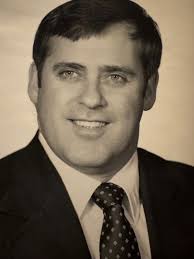
In Memoriam: Tom Shea (1938-2024)

I lost a dear friend last week. His passing made me cry. 

His name was Tom Shea and I knew him for 70 years – ever since I entered St. Columban’s high school seminary in 1954 at the age of 14. Tom was 16 then, a junior while I was a freshman. Even in such a small school of only about 100 students, juniors didn’t have much to do with freshmen.

Still however, I admired him greatly. Everybody did. He was so smart and such a great athlete. He was a strong-armed quarterback, a terrific basketball guard, a hard-throwing pitcher, excellent at any racket sport, especially good at ice hockey, a super golfer, and even (I was told) a respectable Irish hurler. He was also a crafty poker and bridge player. With all that, he never took himself that seriously and had a great sense of humor.

However, I didn’t really get to know Tom till I got to the major seminary years after high school. Even there it took a while. At the age of 21, I arrived still working on my bachelor’s philosophy degree. Meanwhile, at 23 Tom had already begun his 4 years of graduate theology work. By the time I began my theological studies, he was almost ready for ordination. That happened for him in 1964. He was ordained on December 22nd of that year – 60 years (almost to the day) before his final transition.

Besides playing with and against him on various athletic fields, the only time I remember speaking seriously with Tom in the major seminary was during the Second Vatican Council (1962-1965). I asked him for advice on what to read to catch up with the drastic changes occurring because of that historic event. I forget what he told me. But I remember following his instructions.

Because Tom was so smart, our missionary group, the Society of St. Columban, had singled him out for professorship in the seminary. They wanted him to teach Sacred Scripture. So, after his ordination, they sent him off to Catholic University in Washington, DC to get a preliminary master’s degree in theology. After two years there, he’d go on to Rome (and Jerusalem) for his terminal degree in biblical studies.

That’s when Tom and I really connected.

I was ordained in 1966. And as with Tom, the Columbans wanted me to teach in the major seminary. My field would be moral theology instead of biblical studies. But Tom and I would go off to Rome together to study – he for 3 years, and I for 5.

And oh, what a ride that would be! In Europe, we’d vacation together, ski many of Europe’s great resorts, and as brothers and colleagues sort out the details of our personal and political lives.

It began with both of us living at St. Columban’s major seminary in Milton, MA the summer before we left for the Eternal City. That was in 1967. I forget what Tom was doing in Milton. I was completing a summer course in Hebrew at Harvard. But every night the two of us drove over to Boston’s West Roxbury to play basketball with “the brothers.” We were the white boys who could ball with any of them. (I remember one night the Celtics’ Satch Sanders was there watching.)

The basketball connections continued in Rome. Both of us ended up playing in something like a G League there for a team affiliated with Rome’s professional club, Stella Azzurra. We scrimmaged against them a time or two. And it was all great fun — a great way to learn Italian culture and make Italian friends. Our Stella Azzurra team was coached by Altero Felice who later had a basketball arena named after him. We considered Altero a good friend and father figure.

While in Rome, Tom and I were also invited by Giulio Glorioso [the Italian equivalent (we were told) of Babe Ruth] to play baseball for the Rome team. (We had worked out with them one spring.) I remember the Saturday afternoon Giulio came to the Columban residence to try to persuade us to play ball that summer.

For better or worse, we passed up that offer in favor of studying German two of our summers in Europe at the University of Vienna. (German at that time was still considered essential for any serious theologian or scripture scholar.)

In a sense, both Tom and I grew up in Rome. Following Vatican II, everything was called into question. Over Pasta e Faggioli and salsiccia dinners in the Columban house at Corso Trieste 57, the 20 or so of us graduate students (all ordained priests from Ireland, Great Britain, Australia, New Zealand, Scotland, Tasmania – and we two Yanks) debated fundamental topics never open to question before Vatican II: God (Is there such a being?), Jesus (Was he somehow God? But how?), the nature of the church (Was Luther a heretic or a saint?), the priesthood (Was it necessary?). And what about mandatory celibacy? The discussions were unforgettable and life-changing.

Our friendship continued and deepened to eventually include our wives, Dee (Tom’s bride) and Peggy (mine). We spent several year-end celebrations together. And once we got together in Costa Rica for a long weekend at an all-inclusive resort. Peggy and I attended the wedding of their eldest son, Tommy in Chicago. Tom and Dee came to our daughter Maggie’s wedding in 2007 in Kentucky. Peggy and Dee remain fast friends.

The four of us got together for the last time a year-and-a-half ago in Florida. By then Tom had already been slowed by heart and lung problems. But his sense of humor never faded. Neither did his life-long interest in and commitment to spiritual growth.

Yes, Tom Shea was a close friend of mine. We grew up together for nearly three-quarters of a century, often acting as each other’s counsellor, advisor and confessor — every minute accompanied by stories and laughter.  As Peggy recently pointed out to me, his down-to-earth wisdom and example saved  me  in effect from a closed system and lonely life that otherwise would have throttled me.

So, thank you, Tom Shea for being such a good fellow traveler. You were wise, generous, humble, and always brilliant. I’m grateful for the gift of your impactful life. We’ll see each other again soon, I know.
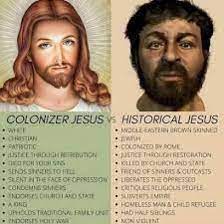
Too Much Christ, Not Enough Jesus

Recently, a friend (also a former priest) allowed me to read a master’s dissertation he wrote while in Rome 40 years ago. As a 34-year-old Kiltegan missionary with experience in Africa, my friend (now in his early 70s) was exploring the meaning of the term “conversion.” It was a query, I suspect, sparked by his personal struggle with questions raised by his own discomfort with missionary work aimed at converting “pagan” Africans to Christianity.

Reading my friend’s dissertation recalled my own similar struggles as a member of the Catholic missionary group, the Society of St. Columban. Like the Kiltegans, the Columbans emerged from Ireland in the first half of the 20th century. My group’s original work was converting Chinese rather than Africans. As I was completing my graduate studies in Rome, I too had my own doubts about the Columbans’ project.

So, for me reading my friend’s work was a trip down memory lane. His thesis addressed the work of theologians I remember admiring during the late 1960s.

I’m talking about the revered thinkers Bernard Lonergan, Karl Rahner, and a lesser-known Jesuit theologian, William Lynch. I recall so well puzzling over their dense prose as it tried to make sense of the Judeo-Christian tradition in the light of the Second Vatican Council (1962-1965). Who was Jesus, they asked, and what was his relationship to the “modern world?” As I said, my friend’s question to them was about their understanding of the term “conversion?”

Lonergan’s, Rahner’s, and Lynch’s answers to such questions revealed their developed world perspectives. Lonergan was a Canadian; Rahner a German; Lynch, an American. All three were heavily influenced by existentialist and Heideggerian philosophy that at the time contrasted so refreshingly with the Thomistic approach of pre-conciliar theology that heavily relied on Thomas Aquinas and medieval scholastic philosophy. 

However, I (and theologians in general, including, I presume, my friend) have long since moved beyond the impenetrable, abstract, thought of the three theologians in question. Influenced by Jesus scholarship and by liberation theology, the reflections of today’s scholars are much more biblically and historically grounded – much more reliant on concrete social analysis than on existential speculation.

Let me try to show what I mean.

Lonergan, Rahner & Lynch

Without venturing too far into the deeper weeds of their relevant speculations, here’s how Lonergan, Rahner and Lynch approach the question of conversion:

  • Lonergan: Conversion is acceptance of truth rather than the world’s falsehoods. Its end point is awakening from an uncomprehending slumber. Its heightened consciousness yields a changed attitude towards the problem of evil, which is ultimately theological before the world’s otherwise incomprehensible tragedies. Conversion emerges from one’s unique experience of God which is analogous to falling in love. It is not rational; it is not dependent on argument. Conversion simply happens as a gift from God to one inexplicably grasped by the reality of Christ crucified, dead, and risen.
  • Rahner: Conversion is the owning of one’s human nature which is absolute openness (potentia obedientialis) to ultimate reality (aka “God”). Conversion is the process of becoming receptive to what the world discloses about itself against the backdrop of the Ground of Being.  That receptivity is modeled in the person of Jesus the Christ.  
  • Lynch: Conversion represents a radically changed way of experiencing the world. The world of the convert revolves around a different center than it does for the unconverted. He or she perceives and embraces the fact that all of creation is driven by eros – by the basic life-force that informs everything that is. For Lynch, Jesus understood that fact and because of living its truth, represents the ultimate version of humanity. He reveals to human beings who they are.

All these insights are profound and helpful to academics seeking a deeper understanding of the term conversion. And, as I earlier indicated, I once found them to represent the apex of theological reflection. I agreed, that (1) human beings are basically asleep to life’s deeper dimensions, (2) conversion entails awakening and (3) finally embracing a shared human nature as fundamental openness to Ultimate Reality that some call “God.” (3) Accepting that reality involves perceiving the Life Force (eros) that informs and unites all of creation. (4) Such perception gives the lives of the converted a new center not shared by “the world,” but (5) embodied instead in the person of Jesus the Christ crucified, dead, and resurrected.

That’s what I once believed. But that was before I encountered Jesus-scholarship and liberation theology. It was before (precisely as a Global South advocate) I took seriously the imperative to change the world rather than explain it to intellectuals.

Jesus Scholarship & Liberation Theology

Jesus-scholarship and liberation theology agree that conversion involves awakening to a reality other than that generally accepted by “the wisdom of the world.” But it understands awakening as development of class consciousness. Theological awakening moves the center of reflection from imperial locations such as Rome, Canada, Germany, and the U.S. to the peripheries of neo-colonies and the slums of Sao Paulo, Managua, and Mexico City.  

For liberation theologians, reality is not fundamentally theological or philosophical, but historical, economic, political, and social. It has been created by phenomena that Raul Peck says summarize the last 500 years of western history. Three words, he tells us, encapsulate it all – civilization (i.e., white supremacy), colonialism, and extermination. Those terms and the bloodstained reality they represent rather than abstract theological speculation, summarize the real problem of evil. That problem is concrete, material, and historical, not primarily theological. It is not mysterious, philosophical, or even theological.

Accordingly, liberation theology’s reflections start with the real world of endemic poverty, climate change, and threat of nuclear war. Closer to home, they begin in biblical circles where poor slum dwellers ask why there’s no electricity or plumbing – why their children are threatened by gang members and drug dealers. Only as a second step does theological reflection enter the picture. In reading the Gospels, the poor (not developed world theologians) discover the fact that Jesus and his community faced problems similar to their own. In the process, they find new relevance in the narratives of Jesus’ words and deeds.

This leads to a third step in liberation theology’s “hermeneutical circle” – planning to address community problems and to the identification and assignment of specific tasks to members of the reflection group in question. Will we demonstrate in front of city hall? Who will contact the mayor? What about community policing?

Answering and acting on questions like those represent the third step in liberation theology’s circle of interpretation. They are a form of reinsertion into community life. That reengagement then begins the circle’s dynamic all over again.

In summary then, liberation theology begins with social analysis that defines the context of those who (regardless of their attitudes towards theology) would not merely understand the world but are intent on transforming it in the direction of social justice. That by the way is the purpose of liberation theology itself – highlighting the specifically biblical stories whose power can change the world. Accordingly, liberation theology is reflection on the following of Christ from the standpoint of the world’s poor and oppressed who are committed to the collective improvement of their lives economically, politically, socially, and spiritually.

And this is where Jesus enters the reflective process in ways that traditional theologians (even like Lonergan, Rahner, and Lynch) end up avoiding. For liberation theologians, Jesus is not merely crucified, dead, and risen. He also had a life (traditional theology’s “excluded middle”) including actual words and deeds before the eventuation of those culminating events.

In other words, Jesus is not primarily the transcendent Universal Christ. He is an historical figure who (as William Lynch correctly has it) relocates the center of the world and history. However, as just seen, he moves that center from the privileged terrain of Rome or the United States to their imperialized provinces and colonies. For liberation theology, kings and emperors are not the center of history, but people like the construction worker from Nazareth. That’s the astounding revelation of Jesus. It turns one’s understanding of the world upside-down.

Put still otherwise, (according to biblical stories whether considered historical or fictional) Jesus represents God’s unlooked-for incarnation in the earth’s wretched. He was the son of an unwed teenage mother, an infant refugee from infanticide, an asylum seeker in Egypt, an excommunicate from his religious tribe, a friend of drunks and street walkers, and a victim of torture and capital punishment precisely for opposing Rome’s colonial control of Palestine.

Conclusion   

Yes, I remember admiring the likes of Lonergan, Rahner, and Lynch. But they no longer speak to me. Their abstract words, tortured existential questions, and impenetrable grammar obscure the salvific reality so easily accessible and fascinating in the character of Jesus belonging to the Gospel stories – and to those impoverished and oppressed by what bell hooks calls the white supremacist, imperialist, capitalist patriarchy.

Unfortunately, however, the world and its theologians have always been reluctant to recognize that figure for what he was. The change he requires is too drastic. It would mean taking sides with the wretched of the earth.

Instead, theologians even like Lonergan, Rahner, and Lynch have preferred to focus on Christ crucified, dead and resurrected without the biblical narrative of the construction worker’s words and deeds that stand 180 degrees opposite truths taken for granted in the world’s imperial centers.

But it is precisely that down-to-earth Jesus that our world today needs more than an abstract Universal Christ. Conversion to that despised and rejected messiah means rejecting identification with empire’s pretensions and goals. It means taking to the streets with the  Sunrise and Black Lives Matter movements. It means running the risk of sharing with Jesus his own fate as a victim of arrest, torture, and even capital punishment.

That’s what Jesus meant by urging his followers to take up the cross and follow him.