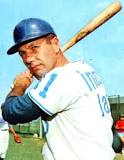
Music, eventually acting, public speaking, and especially sports all came to play important roles throughout my life. All except acting became prominent for me in Rome too. Here, I’ll describe the forms they took once I escaped the seminary hothouse. All of them – music, public speaking and sports – contributed to my “disorder box” in a life and self-understanding that was changing and opening up to a world much wider, more complex, and far more interesting than the one I had known up until ordination.
Music
Like most teenagers in the 1950s, I paid close attention to the Top Forty there at the beginnings of Rock ‘n’ Roll. I loved Bill Haley, Connie Francis, Elvis Presley, Patti Page, the Everly Brothers, Buddy Holly, Jo Stafford, Chuck Berry, Little Richard and all of that crowd. Each week in the high school seminary, we all eagerly awaited clippings from home declaring the order of the day’s most popular songs.
Then, in the ‘60s and ‘70s I fully embraced folk music stars like Joan Baez and Bob Dylan. When hootenannies were popular on TV and in everyone’s living room, I took up the guitar.
I recall my first public coming-out with the guitar. It was at a St. Columban’s Day celebration in the major seminary in November of 1966. I had only been playing for maybe six months. Yet, I actually had the gall to get on stage and “sing” Woody Guthrie’s “Talkin’ Guitar Blues.” It turned out to be a huge hit and thereafter, any time a guitar was passed around a group, I was asked to perform that song. It was fun to do.
Along those lines, one of the most delightful features of my years in Rome were the frequent dinner parties held in our house. They always ended with a songfest. Such special occasions were frequent since our house rector was the Roman liaison between the Society of St. Columban and the Vatican. So, we often had international dignitaries and associated friends and acquaintances over for elaborate dinners (including interesting women). Archbishops, bishops, and government officials were frequent guests. All of these occasions ended up in our community room where we’d retire for cognac and cigars, and where we residents (and some guests) would perform our party pieces – like “Talkin’ Guitar Blues.” My first taste of cognac actually took my breath away. But I quickly got used to that.
Acting
Late in my seminary career, I also discovered acting. My first role probably came during my second year of theology studies – i.e. two years after we all got our bachelor’s in philosophy. I guess I was 24 at the time. Mine was a bit part as “old Jim” in “The Boys in 509.” It was a comedy that originally was “The Girls in 509.” But the title and content were adjusted for obvious reasons. (Though in previous productions, some in the seminary proved to be quite good and comically convincing with their female impersonations. Eventually however, for some unexplained reason, such quasi-trans roles were discontinued.)
In any case, success as old Jim led the next year to a prominent role in Agatha Christie’s “The Mousetrap.” There I played Detective Sergeant Trotter, the character who actually done the dastardly deed in Christie’s famous who-done-it.
The following year, I had the lead role in “Brother Orchid.” Everything was going swimmingly until the final scene, when I was to take a drink before uttering a final crucial line. The water went down the wrong pipe and I virtually lost my voice. I ended up talking in a whisper that no one could hear. I was so totally embarrassed by the fiasco that I skipped the after-party celebration. That was not a good decision. . .
Luckily, acting and theater (other than attending movies and plays) weren’t part of my life in Rome.
Public Speaking
Late in my seminary career, I came to realize that I was an effective public speaker. That was important in Rome, where we were expected to preach – in Italian.
Like most people, I had always hated the thought of addressing a crowd. In fact, my earliest memory of trying to do so (in grammar school) was that I’d get laughing fits that just wouldn’t quit. It happened every time.
I got over that in the high school seminary, where we took various courses in public discourse and had to deliver occasional papers before our “Literary, Scientific and Debating Society” and at “Catholic Students’ Mission Crusade” meetings. By the time we got to the major seminary, those courses became “homiletics” – how to preach. However, I was never very good at any of it. It was the usual story – nervousness, awkward gestures, speaking too fast, not preparing thoroughly enough. The complete disaster.
Then came a breakthrough. It occurred after I had a pretty severe accident skiing at the Blue Hills Ski Area near the major seminary in Milton. I had taken a fall there that nearly broke my leg. Well, the next time my speaking turn came up in class, I told the story in a way that had everyone laughing. I described coming down the hill absolutely out of control, dodging other skiers and snow-making machines, and finally falling disastrously and limping home. For some reason, everyone loved it. And there was no stopping me afterwards. Later, I remember someone a couple of years ahead of me calling me a “gallery man” after I gave a paper at some meeting or other. I guess I was becoming precisely that.
Eventually though, it all led me to work hard at preaching. I never read from a text. Instead, I’d more or less commit to memory what I had written out. Then I reduced the text to very brief notes – just words and phrases – which I held on a small paper in the palm of my hand – in case I got stuck. I would rehearse the talk six times and go from there. In almost every case, the final product would come out much better than my last rehearsal. I always used the same method – even for long and crucial talks like my dissertation defense my final year in Rome. I had learned to preach, to speak in public. That ability stood me in good stead not only in Rome but for more than 40 years while teaching at Berea College. (More about that later.)
Basketball
As for sports, I’m convinced I never would have made it through the seminary if it weren’t for sports. I loved them and from the beginning was fascinated by baseball, football, basketball, boxing, running, ice hockey, skiing, fishing, and golf. I did them all. Basketball and baseball surfaced as important in Rome as well.
From about the age of 10, boxing was one of my favorite sports. My dad and I watched “the fights” on TV every Monday, Wednesday, and Friday. Before that, I remember listening to radio broadcasts of fights between Joe Louis and Jersey Joe Walcott.
Personally, I even went so far as to secure an application to participate in Chicago’s “Golden Gloves” competition when I was in 8th grade. My mother went along with it till the last moment. Then she put her foot down. “No, Mike, I don’t think that’s a good idea,” she said. I got the message. In retrospect, my mother surely knew best. I can just imagine getting knocked silly by some much tougher kid from Chicago’s South Side.
As I mentioned earlier, sports were compulsory in the high school seminary. And I always felt sorry for the ones who weren’t athletically inclined and who often seemed tortured by having to swing a bat or run up and down the basketball court.
It was the opposite for me. (As a high school junior, I was even assigned the drill-sergeant role of calisthenics leader in the seminary gym each morning. “C’mon, you guys,” I’d shout, “quit jackin’ around and do real push-ups – all the way down! C’mon let’s do it!”). I was especially good at basketball and baseball – which, again, you’ll see below served me well in Rome.
That hadn’t always been the case. In seventh grade, I tried out for the St. Viator’s basketball team, but didn’t make it. So that summer, I practiced every day on the Independence Park courts near our home on Chicago’s Northwest side. Our family couldn’t afford to buy me a basketball, so every day I borrowed a volleyball from a neighbor kid and spent afternoons shooting and dribbling with that. It paid off.
Then the spring before I left for Silver Creek, I discovered the jump shot. In 1954 that was new. Till then, no one shot jumpers. But then I saw it for the first time. It happened during a telecast of the Chicago City Basketball tournament — a game between two South Side high schools, DuSable and Dunbar. I still remember that DuSable had a player called “Sweet Charlie Brown.” He did it all. I decided to learn to shoot like him. Besides his jumper, I liked what we came to call his “Hesi,” i.e. his hesitation layup which involved leaping and maneuvering the ball deceptively to avoid defenders before laying it trickily in the hoop. Then there was Bob Cousy of the Boston Celtics and his behind-the-back dribbles. At that time, no one else did that sort of thing. I wanted to do it too. No one as yet was dribbling through their legs.
In any case in Rome, the other Yank in our house, Tom Shea, was a better athlete than me. Tom was a junior my first year in the high school seminary, so I really didn’t get to know him till the summer before our departure for the Holy City. There he was to study Sacred Scripture eventually finishing his work in Jerusalem.
Both Tom and I loved basketball and baseball. And the summer before our departure for Rome, we got to know each other a lot better as a result. The two of us were staying at the major seminary in Milton. I forget what Tom was doing, but I was taking a required course in Hebrew at Harvard.
Each evening after supper, we’d drive over to Boston’s West Roxbury section to play in b-ball pick-up games there. The courts were always crowded with really good African American players. (One night, even the Celtics power forward Satch Sanders showed up. He was exactly Tom’s age.) In those contests, Tom and I would always end up on the same team in what turned out to be take-no-prisoners contests. And we always held our own. We did that the whole summer. Obviously, it was unforgettable for me.
I mention that because the basketball dynamic carried over to Rome. Every year there, Tom and I ended up playing in the city’s developmental league. Our first team was affiliated with Rome’s then professional team (Serie A at that time), Stella Azzurra sponsored by Ramazzotti liqueur. Sometimes we’d scrimmage against the pros who were really good of course.
Every team in Italian professional basketball was allowed one foreign player. For a time, Bill Pickens filled that role for Stella Azzurra, and Tom and I got to know him pretty well. Bill was 6’9” tall and weighed 275 pounds. He had been drafted by the Atlantic Hawks and had also played pro football for the Kansas City Chiefs.
(Bill drove a Maserati and once told me about chasing down some Italian guy who had cut him off in traffic. Any of us can imagine the terror of the poor man faced with this angry Yankee giant.)
Another U.S. player for Stella Azzurra (I forget his name) was arrested for possession of over a kilo of hashish. I became his “chaplain,” visited him regularly in prison and smuggled letters written on toilet-paper to his girlfriend and others. I often wonder what would have happened to me had I been caught.
The bottom line here is that basketball greatly enriched my stay in Rome. I still remember the team meals together following away games. I recall attending basketball games in Rome’s Palazzetto dello Sport and feeling so welcome because of all the greetings from fans, players, coaches and referees. Great fun.
Baseball
Then there was our near brush with fame in baseball. Tom was a great pitcher and shortstop. I played left field and had a decent arm. Tom hit with power. I was a singles and doubles guy.
Well, somehow (I’ve forgotten how) we ended up working out regularly with Rome’s Lazio entry in the Italian professional baseball league. We’d chase flyballs with the other players, hit fungoes, and take our turns in the batting cage.
Once in an exhibition game with Tom playing shortstop, I was in left field with a man on third and one out. I fielded a decently hit fly ball and the runner on third tagged up. I threw a perfect on-the-fly strike to cut the runner down. He should have been out by a good bit. But the throw went right through the catcher. He missed it. Really disappointed.
Nevertheless, the two of us impressed somebody. I say that because a few Saturdays later Tom and I got a visit from none other than Giulio Glorioso, the Babe Ruth of Italian baseball.
No kidding. I think Glorioso was managing the Lazio club at the time, and he wanted to know if Tom and I could play with the Rome team that summer. He told us we’d be traveling by train up and down Italy for away games.
Tom and I really didn’t know who Glorioso was at the time. We hemmed and hawed, but in the end said no. Instead, our plan had been to travel that summer to Vienna to study German at the university there. We stuck with that.
Regretfully by doing so, we missed out on that once-in-a-lifetime experience. Had we accepted, I’d still be telling the story. Oh wait, I guess I just did that.
(Next time: Rome and disorder around celibacy)

 About Things That Matter