Wells, Walls, and Manufactured Thirst

Readings for the Third Sunday of lent: Exodus 17:1–7, Romans 5:1–2, 5–8, John 4:5–42.

The readings for this Third Sunday of Lent deal with the very human question of thirst. They raise the question, what are we thirsting for — ultimately?

Our politicians give us a glib answer. They tell us that our thirst is for security — from the threatening humans that surround us. The nation is dying we are told. We have lost our greatness. We are being overrun. Scarcity is closing in.

“Make America Great Again” is not just a slogan; it is an appeal to a deep anxiety — the fear that there is not enough: not enough jobs, not enough cultural cohesion, not enough safety, not enough control.

And so we are offered a diagnosis: the crisis is immigration. The problem is those people (who happen to be the poorest in the world!). The solution is walls, expulsions, exclusion. We are invited to believe that national greatness depends on tightening the circle.

But step back for a moment. The United States has 4 percent of the world’s population and consumes roughly a quarter of its resources. The “crisis” is narrated as though the most powerful nation in human history were a fragile victim of desperate families crossing deserts.

That story itself deserves scrutiny. It feels eerily similar to another story we heard today.

Thirst in the Desert

In Exodus 17, the people have escaped Egypt — escaped forced labor, escaped imperial extraction, escaped brick quotas. But once in the wilderness, they panic. There is no water. And fear rewrites memory. “Why did you bring us out of Egypt?” they ask. “Were there not enough graves there?”

Notice what is happening. A people freed from empire begin to long for the security of empire. Scarcity produces nostalgia. Anxiety produces accusation. Moses becomes the problem. Freedom itself becomes suspect.

And they ask the piercing question: “Is the Lord in our midst or not?”

That question echoes beneath our own political rhetoric. Is God present in pluralism, in equity, in inclusion? Is God present in demographic change? Is God present in movements of displaced people seeking survival? Or is God only present in the imagined stability of a past we have sanctified?

At Massah and Meribah, the people’s fear does not disqualify them. Yahweh brings water from rock. Not from Pharaoh’s storehouses. Not from a border wall. From a rock in the desert. The provision comes not through renewed control, but through trust in a God who sides with vulnerable people.

The biblical tradition has always insisted that this is the decisive revelation: God is known in history through concrete acts of sustenance for those escaping bondage. Not through slogans of greatness, but through water in the wilderness.

The Woman at the Well

Then we move to John’s Gospel, and the political charge intensifies.

Jesus is in Samaria — enemy territory. Centuries of ethnic hatred stand between Jews and Samaritans. Purity codes, historical grievances, competing temples. If ever there were a border crisis, this was it. And yet Jesus does not reinforce the boundary. He crosses it.

He asks a Samaritan woman for a drink.

It is astonishing. The one who will speak of “living water” begins by placing himself in need before someone religiously and socially marginalized. He does not begin with a lecture about law and order. He begins with vulnerability.

And this woman — doubly stigmatized as Samaritan and as female — becomes the first missionary in John’s Gospel. She leaves her jar and runs to her town: “Come and see.”

Our Real Thirst

What if the real thirst in our society is not for greatness, but for encounter? What if the deeper crisis is not immigration, but isolation? What if we have mistaken demographic change for existential threat because we have forgotten how to sit at wells with strangers?

“Living water,” Jesus says, becomes a spring within — not hoarded, not policed, not weaponized. It flows outward.

The irony is painful. The people who once wandered as refugees in the desert now fear refugees at their gates. The descendants of immigrants fear immigration. The community that drinks from a rock fears sharing water.

And beneath it all is that ancient question: “Is the Lord in our midst or not?”

If God is only with the secure, then fear makes sense. But if God is the One who hears slaves, who provides water for rebels, who speaks across enemy lines, then perhaps the presence of the stranger is not a threat but a test.

Paul, in Romans, says that “the love of God has been poured into our hearts.” Poured. Abundance language. Not scarcity language. Not zero-sum logic. Poured out while we were still estranged, still flawed, still confused.

Conclusion

Lent invites us to examine our thirst honestly. Are we thirsty for justice — or for dominance? For community — or for control? For security — or for solidarity?

Greatness, in the biblical sense, is never about territorial assertion. It is about fidelity to the God who brings water from rock and who offers living water at a contested well.

The wilderness is frightening. Demographic change is unsettling. Empires promise certainty. But the Gospel suggests that life springs up not from walls, but from wells.

The bush still burns. The rock still flows. The well is still there.

The only question is whether we will drink — and whether we will let others drink too.

Donald Trump’s Nakedness, His STFU SOTU Speech

Readings for the Second Sunday of Lent: Genesis 12: 1-4a; Psalm 33: 4-5, 18-19, 20,22; 2 Timothy 1: 8b-10; Matthew 17: 1-9

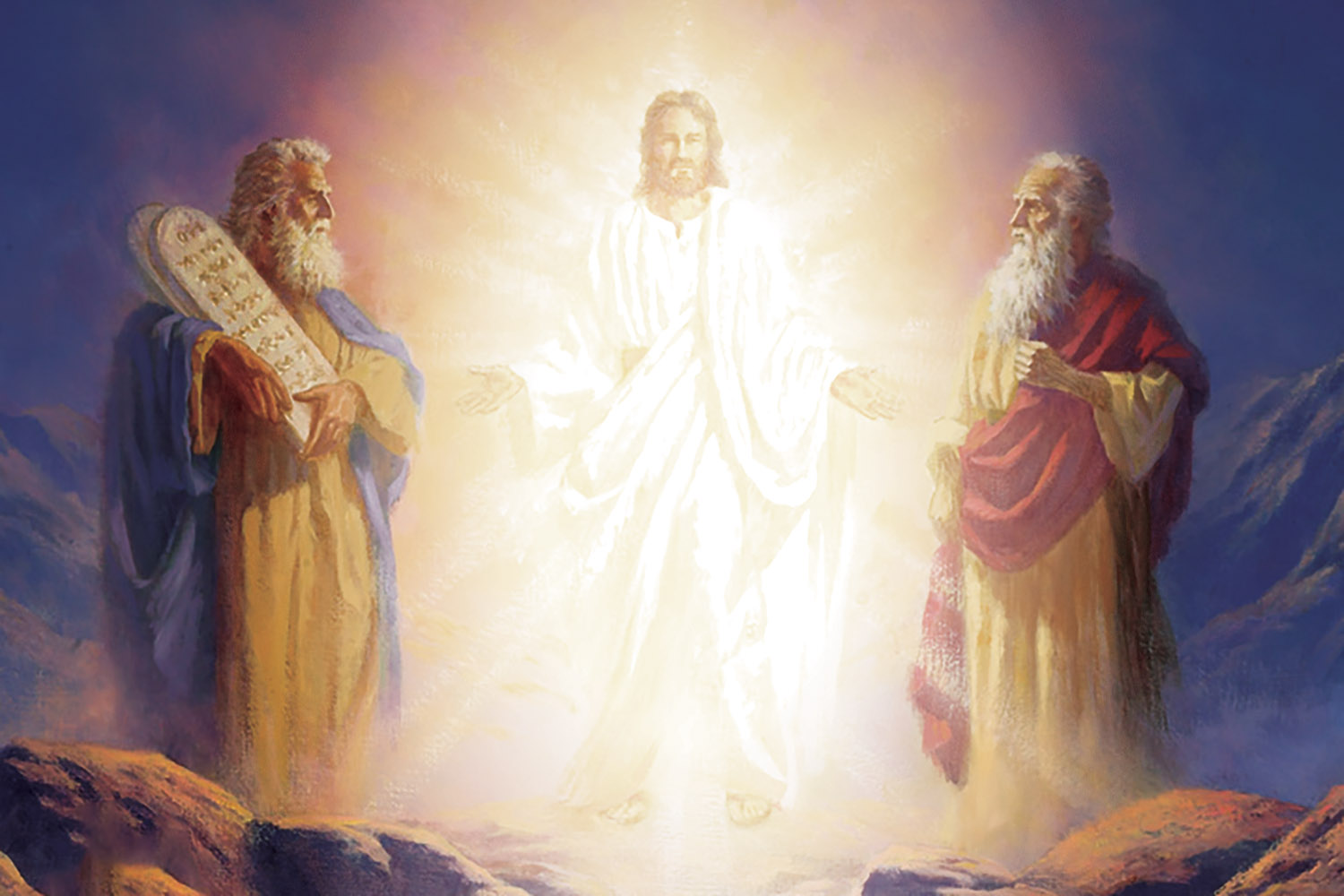
The Gospel reading for this Second Sunday of Lent is about the “transfiguration” of Jesus.

It’s about how the primitive Christian community’s understanding of Jesus and his significance changed following their experience of what they came to call his “resurrection.”

After that experience, whatever it was, they came to see him clearly as the New Moses and the New Elijah. As such he would introduce a New Order that would embody liberation of society’s most marginalized (Moses) and outspoken confrontation against the given imperial order (Elijah).

Jesus himself called that New Order the Kingdom of God.

It is what the world would look like if God were king instead of Caesar.

That vision should take on new meaning for Americans in the aftermath of Donald Trump’s disgraceful State of the Union Message last Tuesday. It should even embolden the profane response STFU.

Trump’s Un-transfigured World

If you watched the speech, you know what I mean.

It seemed like the dying gasp of the ruling Septuagenarian and Octogenarian classes.

It was a flailing, lie-filled proclamation of a Golden Age that never existed and that never will be if we follow the path the failed braggart president celebrated.

It was the opposite of God’s Kingdom – a world with room for everyone.

I mean, Trump’s SOTU celebrated division, wealth and power, and a militarism while targeting the poorest people on our planet. He had the staggering nerve to tone-deafly call them what the Epstein Files are revealing the political class itself to be: lawless rapists, pedophiles, robbers, drug dealers, gang members and murderers. And Trump’s crowd are blackmailers besides.

Making those allegations, the president revealed his own nakedness and that of his mindless Maga colleagues who mindlessly jumped to their feet to applaud the beauty of the Emperor’s non-existent robes.

Yes, the Files, the coverups, the sweetheart deals for Epstein and Maxwell, the redactions, the months-long failures to disclose, and the reduction of Pam Bondi’s Department of Justice to the President’s private law firm are revealing everything.

The Emperor indeed has no clothes. He’s shamelessly parading around stark naked and tiny.

And reminiscent of the Hans Christian Anderson story, it’s the little children he’s imprisoning (with their bunny ears and Spiderman backpacks) who proclaim the emperor’s embarrassing nudity.

No clothes! Naked!  Tiny. Or as Joseph N. Welch put it to Senator Joseph McCarthy “Have you no sense of decency, sir, at long last?”,

Jesus’ Transfigured World

The tale of Jesus’ Transfiguration tells an opposite story.

It’s the story of a poor construction worker – a former immigrant, a prophetic teacher of unconventional wisdom, the death row inmate whom empire jailed, tortured and submitted to imperial capital punishment – whose life and teaching revealed a New Order that was shining and pure because it had room for everyone.

And in today’s reading, it’s his transformed clothes and the spiritual company he keeps that tell the story.

Matthew puts it this way: “His face shone like the sun and his clothes became white as light. And behold, Moses and Elijah appeared to them, conversing with him.”

That is, the one whose imperialized class status would eventually reduce him to nakedness on Mt. Calvary is perceived by his first followers as magnificently clothed.

Even more, Matthew’s account of Jesus’ Transfiguration has him conversing with Moses and Elijah.

Moses, of course, is the great liberator of the enslaved and poor.

Elijah was the courageous prophet who not only spoke truth to power but resisted false gods who take the side of the rich and powerful rather than God’s truly chosen ones, the poor and oppressed.

Don’t Let the Democrats off the Hook

But none of this should let the Democrats off the hook just because some of them refused to attend the STFU SOTU affair. Don’t let them get away with just not being Trump.

It’s time for us to echo Zohran Mamdani, the most popular politician in the country.

In my novella, Against All Odds: How Zohran Mamdani Became President and Changed America Forever, I imagine a moment like this. Not because of special foresight, but because systems built on secrecy, oligarchy, militarism, and spectacle inevitably crack. In that story, hidden ledgers surface. Blackmail networks become visible. The machinery of power is exposed. The old guard responds the only way it knows how — with louder threats, more force, and louder applause.

Sound familiar?

But exposure alone is not liberation.

Which brings us back to the mountain of Transfiguration.

That scene depicted there is not mystical escapism. It is political theology. It declares that the authority of empire is provisional — that the true sovereignty belongs to the God who sides with slaves, captives, resident aliens, and the poor.

Luke makes the program explicit: “He has anointed me to preach good news to the poor… to proclaim liberty to captives… to set at liberty those who are oppressed.”

That’s a rival social order.

And if the imperial system is unraveling before our eyes — if its nakedness is becoming visible — then what must follow is not nostalgia or revenge, but reconstruction.

In Against All Odds, the answer to systemic collapse is not personality cult or partisan fury, but the institution of a Republic of Care. It is clarity. It is the articulation of a simple, material program centered on ordinary people’s lives. Among others, the items in such a program would include:

  • Affordability
  • Universal health care
  • Full employment
  • Higher wages
  • Free education through college
  • Environmental protection
  • Expanded voting rights
  • An end to oligarchic distortions like the Electoral College
  • Strict term limits in every branch of government
  • Drastic reductions in military spending.
  • No endless wars
  • Immigration reform rooted in dignity
  • The dismantling of structures whose primary function is coercion at home and abroad.

In liberationist terms, none of that is utopian dreaming. Mamdani’s election proved that. The reforms just listed are what happen when the needs of the poor become the criteria of policy.

Conclusion

Trump’s embarrassing speech was the voice of Caesar defending a crumbling temple.

The Transfiguration is the unveiling of another possibility altogether.

Empires grow louder when they weaken. They shout about enemies. They celebrate force. They promise greatness. That is what dying systems do.

But the biblical tradition suggests something else: when Pharaoh hardens his heart, liberation accelerates. When Ahab clings to power, Elijah’s voice sharpens. When Rome crucifies, resurrection faith spreads.

Lent invites us to see clearly — to recognize naked empire and to imagine, without apology, a transfigured order grounded in justice for the poor.

Our petite impotent emperor is exposed.

The question now is whether we have the courage to climb the mountain with Peter, James and John to see what comes next.

Lent, Empire, and the God We Worship

Readings for the first Sunday of Lent: Genesis 2: 7-9, 3: 1-7; Psalm 51: 3-6,12-13, 17; Romans 5: 12-19; Matthew 4: 1-11.

Today is the first Sunday of Lent. Its readings begin with the creation myth in Genesis. They conclude with the famous story of Jesus’ temptations in the desert.

But let me begin not in Eden or in the wilderness, but in Washington, Brussels, and Tel Aviv — and in the shadow places of our own national story.

We live in a country that represents roughly 4.5 percent of the world’s population yet assumes a decisive voice in nearly every corner of the globe. We maintain military installations across continents. We speak of “rules-based international order” while reserving to ourselves the authority to determine when rules apply.

The war in Ukraine grinds on amid NATO expansion despite promises to the contrary. Gaza has become a landscape of genocide even as our government supplies arms and diplomatic cover.

Regime-change interventions in Iraq, Libya, and Afghanistan have left instability that outlives the speeches that justified them. And at home, the Epstein scandal remains a symbol of elite circles that appear shielded from consequences that would crush ordinary people.

Whatever one’s political alignment, it is difficult to deny that we inhabit an imperial moment.

That is why the Gospel today matters. Because the final temptation Jesus faces is not about private morality. It is about his rejection of empire.

How Animals Became Human

But before we get to the desert, we must pass through Genesis. And Genesis is stranger than we usually allow. It’s a sacred myth about how the animals became human.

Nonetheless, we were taught — many of us in catechism classrooms that did not encourage too many questions — that this story explains how a perfect world fell apart because of disobedience. But biblical scholarship has long suggested something more subtle and more interesting. The story reads less like a fall from perfection and more like the painful emergence of moral consciousness.

God forms the human being from the soil — adamah — and breathes into it. The human is an earth creature animated by divine breath. The animals are already there. What distinguishes this creature is not biology but awareness.

The serpent does not tempt with gluttony. The fruit is “desirable for gaining wisdom.” The promise is that “you will be like gods, knowing good and evil.” The issue is not appetite; it is autonomy. It is the claim to define good and evil independently of the Giver of breath.

And here is where the text becomes theologically uncomfortable. The God portrayed in Genesis can sound petty and jealous. (In fact, as biblical scholars Mauro Biligno and Paul Wallis have suggested, the plural Elohim in today’s reading might not refer to God at all, but to “Powerful Ones” pretending to divine identity. But that’s another story.) In any case, the prohibition from on high appears arbitrary. The threat — “you shall die” — sounds disproportionate. If we read the story naïvely, we are left with a deity who seems insecure about competition.

Many Christians resolve that discomfort by refusing to wrestle with the text. We flatten it. We moralize it. We turn it into a children’s story about disobedience and punishment. That is the fundamentalism many of us were raised on — including in Catholic form — a fundamentalism that often ignores biblical scholarship and historical context in favor of simple certainty.

But the deeper issue in Genesis is not that God fears competition. It is that humans actually do become like God. In the end the Powerful Ones (Elohim) admit  “The man has now become like one of us, knowing good and evil.” However, the moment the earth creature claims ultimate moral sovereignty, alienation follows. Shame. Blame. Fear. Violence. The story is mythic, but it describes something real: despite God-like powers, when creatures enthrone themselves as divine, relationships fracture.

The serpent’s whisper — “you will be like gods” — does not remain in the garden. It scales upward into civilizations.

Empires are what happen when that whisper becomes policy.

Jesus’ Temptations in the Desert

Which brings us to the desert. Matthew tells us that Jesus is led by the Spirit into the wilderness to be tempted. The temptations escalate. First, appetite: turn stones into bread. Reduce humanity to consumption. Then spectacle: throw yourself from the temple and force divine validation. Manipulate religion to secure legitimacy. And finally, the decisive offer: all the kingdoms of the world and their magnificence — in exchange for worship.

This is the climax. Empire is offered as destiny.

And here the contrast with Genesis becomes luminous. The first humans grasp at godlike autonomy. Jesus refuses it. He refuses to reduce life to bread. He refuses to weaponize God. And he refuses political domination secured by kneeling before a lesser power.

“The Lord your God shall you worship, and him alone shall you serve.”

That sentence is not pious abstraction. It is a political declaration. It means that no nation, no military alliance, no economic system, no leader can claim ultimate allegiance. It means that empire — however benevolent it imagines itself — is not God.

This is precisely where much contemporary Christianity falters. Christian fundamentalism, whether Protestant or Catholic, often aligns itself enthusiastically with imperial power. It baptizes national projects. It equates military strength with divine blessing. It reads Scripture in a way that reinforces dominance rather than questions it. The same tradition that once rejected liberation theology for being “too political” now blesses drones, sanctions, and occupation without hesitation.

And yet the Gospel we read today shows Jesus rejecting the very thing many Christians defend.

He rejects empire as diabolical.

Paul & Psalms

Paul’s letter to the Romans reframes the story. Through one human being came sin — the pattern of grasping autonomy. Through another came obedience — the pattern of trust. The contrast is not between sexuality and purity, or rule-breaking and rule-keeping. It is between self-deification and worship.

Psalm 51’s cry — “Create in me a clean heart” — becomes, in this context, a plea for undivided allegiance. A clean heart is not one that never doubts. It is one that refuses to kneel before false gods.

Lenten Conclusion

Lent, then, is not about chocolate or minor self-denials. It is about allegiance. It is about whether we will continue participating in systems that assume the right to dominate the earth and dictate history — or whether we will align ourselves with the one who refused.

If Genesis tells the story of animals becoming human through moral awareness, the desert tells the story of a human refusing to become a god.

And that refusal leads to a cross, because empire does not tolerate rivals or dissent.

We begin Lent in a world intoxicated with power. The kingdoms are still on offer. They are offered to nations. They are offered to churches. They are offered to each of us in smaller ways — security in exchange for silence, comfort in exchange for complicity.

The question is not whether temptation exists. The question is before whom we will kneel.

Dust breathed upon by God does not need to become divine. It needs only to remain faithful.

And that, perhaps, is the most subversive act of all.

The Commandments and the Epstein Revelations: Whom Does God’s Law Really Protect?

Readings for the Sixth Sunday in Ordinary Time: Sirach 15:15-20; Psalm 119; 1 Corinthians 2:6-10; Matthew 5:17-37

Let me say it straight out: the Epstein affair is not primarily about sex. It is about law. It is about whether the commandments — and the legal systems supposedly derived from them — apply equally to everyone.

For decades, Jeffrey Epstein moved among billionaires, politicians, royalty, financiers, academics, and cultural elites. His crimes were known. Complaints were made. Investigations occurred. Yet he received an extraordinary plea deal. Associates remain shielded. Documents remain sealed. Networks remain largely untouched.

Meanwhile, poor defendants fill prisons for far lesser crimes – and in the case of immigrants and asylum seekers, for no crimes at all. Petty theft, drug possession, probation violations, and “illegal” border crossings — these are prosecuted with relentless enforcement of law.

If you want a relevant commentary on such two-tiered systems of “justice,” look no further than today’s liturgical readings. They are explosive in their contemporary application.

Sirach: God Commands No Injustice

 Start with Sirach 15: 15-20. There the book’s author says: “If you choose, you can keep the commandments… He has set before you fire and water… life and death.”

At first glance, that sounds like individual moral exhortation. Choose good. Avoid evil. But Sirach adds something devastating: “No one does he command to act unjustly; to none does he give license to sin.”

That line destroys every attempt to sanctify unjust systems like ours. I mean in the United States, injustice is routinely protected by law. After all, Epstein’s plea deal in 2008 was legal. The shielding of his powerful associates has been legal. Non-disclosure agreements are legal. Sealed records are legal.

But Sirach says God commands no injustice.

If the law functions to shield predators when they are rich and well-connected while punishing the poor with mechanical severity, then the issue is not simply moral failure. It is structural perversion.

Liberation theology (i.e. non-literalist biblical interpretation supported by modern scripture scholarship) reminds us that “choice” is structured. The poor do not choose within the same field of protection as billionaires. There, fire and water are not distributed evenly. Life and death are not equally accessible.

The commandment is not merely “Don’t sin.” The deeper question is: Does the legal order reflect God’s refusal to legalize injustice?

Psalm 119: Blessed Are Those Who Follow the Law

Now look at today’s responsorial psalm. It’s refrain proclaims: “Blessed are they who follow the law of the Lord.”

But what is the law for?

As José Porfirio Miranda and Norman Gottwald argue, the Decalogue emerged not as abstract piety but as social protection. It arose among people resisting royal systems that accumulated land, wealth, and power in elite hands.

Both theologians remind us that biblical law was a shield for subsistence households. “You shall not steal” originally meant: the powerful may not confiscate the livelihood of the vulnerable. “You shall not covet” meant desire backed by power must be restrained.

In that light, now ask the uncomfortable question: when billionaires operate in networks of mutual protection and the law seems reluctant to expose them fully, is that still Torah? Or is it what the prophets called “corruption at the gate?”

Psalm 119 blesses those who follow God’s law — not those who manipulate civil law to protect privilege.

Paul: The Wisdom of the Rulers

In the same spirit of Sirach and Psalm 119, Paul speaks of “a wisdom not of this age, nor of the rulers of this age… who are passing away.” He also adds something chilling: “None of the rulers of this age understood this; for if they had, they would not have crucified the Lord of glory.”

The cross was a legal execution. It was state-sanctioned. It was justified under Roman law and enabled by religious authority.

That’s Paul’s point.

The rulers always believe their system is rational and necessary. Franz Hinkelammert reminds us that ruling ideologies present themselves as inevitable. Markets are inevitable. Elite networks are inevitable. Certain people are untouchable.

When the Epstein affair reveals how proximity to wealth and power appears to blunt accountability, we are witnessing what Paul calls “the wisdom of this age.” A wisdom that protects itself.

The rulers crucified Jesus legally. Legality is not the same as justice.

Jesus: Fulfilling the Law by Protecting the Vulnerable

In Matthew’s Gospel, Jesus declares:
“I have not come to abolish the law but to fulfill it.”

Then he radicalizes it. “You have heard it said, ‘You shall not kill.’ But I say to you, whoever humiliates…”

Jesus’ point is that dehumanization precedes violence. When victims are dismissed because they lack status, when their testimony is doubted because they are young, poor, or socially marginal, contempt is already at work.

“You have heard it said… You shall not commit adultery. But I say to you, whoever looks with lust…”

Could these words be more pertinent to the Epstein Affair? In a world where wealthy men are allowed to treat vulnerable underage girls and women as property, lust backed by power means coercion. Jesus targets the interior logic of such domination.

His teaching on divorce does the same thing. It sides with the economically vulnerable spouse. Legal permission did not equal justice.

Notice the pattern: every intensification of the commandment in today’s readings closes loopholes that allow the powerful to exploit the weak.

That is fulfillment of the law. If a legal system permits exploitation through influence, money, and secrecy, it has not fulfilled the law. It has hollowed it out.

Two Systems

The Epstein affair is not an anomaly. It is a revelation.

It reveals what liberation theology has long argued: sin is social as well as personal. Structures can be sinful. Systems can crucify.

When poor defendants encounter swift prosecution while elite networks encounter delay, protection, and opacity, we are not witnessing isolated moral failure. We are witnessing two systems.

Sirach sets before us life and death. The death-dealing system is one where law bends upward. The life-giving system is one where law protects the vulnerable first:

  • “Blessed are they who follow the law of the Lord.”
  • Blessed are those who refuse to equate legality with justice.
  • Blessed are those who demand that commandments function as protection for the powerless.
  • Blessed are those who see through the “wisdom” of powerful elites

Jesus did not abolish the commandments. He sharpened them until they pierced hypocrisy.

Before us remain fire and water. The question is not whether we personally avoid wrongdoing.

The question is whether we will accept a system where justice is negotiated by wealth — or insist that the law once again become what it was meant to be: protection and good news for the poor.

A Gospel for Palestinians under Siege

Readings for the 20th Sunday in Ordinary Time: JER 38: 4-10; PS 40: 2-4, 18; HEB 12:1-4; LK 12: 49-53

Today’s gospel excerpt presents real difficulties for a thoughtful homilist. That’s because it shows us an apparently confrontational Jesus — one who sounds completely revolutionary. It raises an uncomfortable question: why would the Church choose such a passage for Sunday worship? What are we supposed to do with a Jesus who doesn’t sound like the soft-focus “Prince of Peace” in our stained-glass windows?

In the context of Zionist genocide and starvation of Palestinians, perhaps this is providential. Maybe this gospel can help us understand a truth that polite Christianity often avoids: people living under the heel of settler colonialism supported by empire — even people of deep faith — sometimes find themselves pulled toward resistance that is anything but gentle.

We forget that Jesus and his community were not free citizens in a democracy. They were impoverished, heavily taxed subjects of an occupying army. Roman power loomed over their fields, their marketplaces, their synagogues. By today’s international standards, they were an occupied people with the legal right to resist.

And in Luke’s gospel today, Jesus says, without apology:

“I have come to set the earth on fire, and how I wish it were already blazing… Do you think that I have come to bring peace on earth? No, I tell you, but rather division.”

In Matthew’s parallel account, the language sharpens:

“Do not suppose that I have come to bring peace. I did not come to bring peace, but a sword.”

These are not the soundbites that make it into Christmas cards. They make us ask: what happened to “Turn the other cheek” and “Love your enemies”?

Some scholars, like Reza Aslan, suggest that Jesus’ nonviolence applied primarily within his own oppressed community, while his stance toward the Roman occupiers was far less accommodating. Others, like John Dominic Crossan, argue that Jesus was unwaveringly committed to nonviolent resistance, and that later gospel writers softened or altered his message to make it more palatable in times of war.

Either way, the backdrop remains the same: an occupied land, a foreign military presence, a people dispossessed. In that context, fiery words about “division” and “swords” are not abstract theology. They are the language of a people under siege, the language of survival.

This is where the parallels to our world are hard to miss. Today, in the land we call Israel-Palestine, we see a modern occupation with its own walls, checkpoints, home demolitions, and armed patrols. We see Palestinian families pushed off their land in the name of “security.” We see the weight of military might pressing down on those who have little power to push back.

This is not to glorify violence but to say that this kind of daily humiliation, dispossession, and threat inevitably breeds anger, desperation, and — for some — the temptation to meet force with force. The gospel today, like the headlines from Gaza and the West Bank, confronts us with the messy, often tragic choices that emerge under occupation.

As Christians, we have to wrestle with this. Would we cling to a nonviolent ethic, like the Jesus Crossan describes? Or, living under bulldozers and armed patrols, would we find ourselves understanding — perhaps even empathizing with — those who choose other paths?

Jesus’ words today refuse to let us take the easy way out. They call us to name the real causes of conflict — not some vague “ancient hatred,” but the concrete realities of military domination, settler colonialism, and American imperialism. They challenge us to imagine what peace would require: not simply the silencing of the oppressed, but the dismantling of systems that oppress them in the first place.

Because if we only condemn the flames without questioning the spark, we miss the deeper gospel truth: that justice is the only soil in which true peace can grow.

What Will You Regret When You Die?

An AI-Assisted Homily on Overwork, Jesus, and Choosing the Better Part

Readings for 16th Sunday in Ordinary Time: Genesis 18:1-10a; Psalm 15: 2-5; Colossians 1:24-28; Luke 10: 38-42


Facing the Final Question

What will you regret most when you’re dying?

Chances are, like most people, it won’t be that you didn’t work hard enough. Instead, you’ll wish you’d spent more time with your loved ones—more dinners with friends, more laughter, more life.

“Every male patient I nursed said the same thing: they missed their children’s youth and their partner’s companionship.”
Hospice Nurse

Women often expressed the same sorrow, though many—especially from older generations—hadn’t been the household breadwinners. Still, the verdict was nearly universal: we’ve built lives around the treadmill of work, and at the end, that’s what we mourn.


A Culture Addicted to Work

Let’s be honest: our culture worships overwork.

Especially in the United States, where the average worker puts in three more hours per week than their European counterparts. That’s nearly a month more labor every year.

And when it comes to vacation time? The average American takes less than six weeks off per year. The French take nearly twelve. Swedes? Over sixteen.

Into this burnout culture comes today’s Gospel reading from Luke—a bracing call to step back and reconsider our priorities. A reminder that Jesus, too, challenged the grind.


Jesus, the Counter-Cultural Radical

We often forget just how radical Jesus was.

Deepak Chopra, in The Third Jesus, reminds us that Christ actually instructed his followers not to worry about money, food, or the future.

“Do not worry about your life, what you will eat or drink; or about your body, what you will wear.”
— Jesus (Matthew 6:25)

And today’s Responsorial Psalm adds more layers. The “Just Person” is praised for refusing to lie, slander, or take bribes. That all sounds virtuous—nothing shocking there.

But then comes the line:

“They lend not money at usury.”

Wait—what? Lending at interest is considered robbery in the Bible. Imagine if Christians and Jews actually followed that commandment. Our entire debt-driven economy would have to be reimagined.


Rethinking Martha and Mary

Now let’s talk about Mary and Martha.

Most traditional sermons interpret the story spiritually: Martha represents worldly busyness, while Mary models a quiet, contemplative life devoted to prayer.

But that interpretation misses the human, grounded context of the Gospel.

In Un Tal Jesús (“A Certain Jesus”) by María and José Ignacio López Vigil—a powerful retelling of the Gospels popular across Latin America—Jesus is portrayed as joyful, deeply human, and radically present.

In their version, this story doesn’t take place in a quiet house, but in a noisy Bethany tavern run by Lazarus, with Martha and Mary hustling behind the scenes. Passover pilgrims are crowding in. It’s hot, chaotic, and full of life.

Martha is working furiously. Mary? She’s seated beside Jesus—laughing.


Jesus Tells Riddles

Jesus: “What’s as small as a mouse but guards a house like a lion?”
Mary: “A key! I guessed it!”

Jesus: “It’s as small as a nut, has no feet, but climbs mountains.”
Mary: “A snail!”

Jesus: “Okay, one more. It has no bones, is never quiet, and is sharper than scissors.”
Mary: “Hmm… I don’t know.”
Jesus: “Your tongue, Mary. It never rests!”

They’re cracking jokes, swapping riddles, enjoying one another.
Not praying. Not planning. Not “producing.” Just being.

Martha, frustrated and overworked, finally bursts out:
“Jesus, tell my sister to help me!”

And he answers gently but firmly:
“Mary has chosen the better part.”


Jesus and the Sacredness of Play

That might sound scandalous to us—Jesus dismissing work?

But it’s entirely consistent with his teachings. Jesus valued community over productivity, joy over profit, presence over anxiety.

And that should make us pause.

What if we took that seriously?

What if we reorganized our lives—and our economy—around the idea that play, rest, joy, and social connection are sacred?

What if we voted for leaders who supported:

  • Shorter workweeks
  • Guaranteed time off
  • Universal income
  • Job sharing
  • A culture centered around well-being instead of output?

In the End, What Really Matters?

Because when we reach the end, we won’t say:

“I wish I’d worked more overtime.”
“I should’ve answered more emails.”
“I’m glad I missed those birthday dinners.”

We’ll long for the laughter we didn’t share, the walks we skipped, the stories we never heard, the moments we missed with the people we loved most.


So, What Will You Choose?

Mary or Martha?

Work or presence?

Breadth of life or depth of joy?

“Mary has chosen the better part.”

We can too.

Let’s not wait until the deathbed to realize it.

Pope Leo: Please Go to Gaza; Celebrate Mass in Khan Yunis!

Readings for the Solemnity of Saints Peter and Paul, Apostles: ACTS 12:1-11; PSALM 34: 2-9; 2 TIMOTHY 4: 6-8, 17-18; MATTHEW 16; 13-19.

Every morning as I watch Amy Goodman’s “Democracy Now,” I feel sickened by the reports from Gaza. No doubt that most reading these words have similar experiences. And why not?

In Gaza as everyone knows genocidal Zionists are systematically causing the deaths of untold thousands of children and their mothers. The Zionist monsters starve, bomb, and even gun down their victims as they line up at distribution sites where food is used as bait. The brutes are causing a manmade drought intentionally aimed at depriving infants of water for the formula they cannot live without.

You know the result.

The Zionists do all that in blatant contravention not merely of all human values and international law, but of the Jewish tradition itself. Their genocidal atrocities also contradict the teachings of the one Christians identify as the greatest of the Jewish prophets and whom they worship as the incarnation of God himself.

For that reason, it’s impossible for me to understand how any of that can be squared with the teachings of Yeshua and his critical understanding of his beloved Jewish tradition. It’s impossible for me to comprehend how self-proclaimed pro-life Christians (so concerned about unborn fetuses) can stand by in silence and even applaud when tens of thousands of children along with their mothers, fathers, and grandparents are slaughtered before their very eyes.

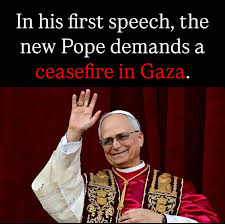
Where’s the specifically Christian protest from Yeshua’s followers? Apart from his general calls for a ceasefire, how come the new pope isn’t showing more leadership on this question?  

Contrast their and his relative silence with the prophetic words of Episcopal bishop Mariann Edgar Budde directly confronting her president and vice president on behalf of the most vulnerable in her own country. She was vilified and dismissed by Christians and Jews as disrespectful and overly political.

However, she was only following in Yeshua’s footsteps. After all, he confronted the leaders of his day as hypocrites, whited sepulchers, snakes, and broods of vipers (MT. 23:1-39). And he in turn was only following the examples of great Jewish prophets like Amos, Isaiah, and Elijah. All of them today would be called anti-Semitic, and “self-hating Jews.”

I write such painful words because this Sunday’s “Solemnity of Saints Peter and Paul” celebrates another pair of self-hating Jews. Their following of Yeshua caused them to be seen as enemies of their people and of the Roman imperial power of their day. As a result, they were imprisoned and were ultimately victims of capital punishment.

And they in turn were only following the example of Yeshua himself as I’ve already said. He suffered ostracism, imprisonment, torture, and execution for his own unstinting opposition.

But wouldn’t outspokenness be dangerous for a new pope who’s just getting his papacy off the ground? Wouldn’t it be too polarizing and politically alienating for him to speak directly to Netanyahu, Trump and Vance the way Bishop Budde did? Even more, wouldn’t it be unthinkable for him to actually go to Gaza on papal pilgrimage?

In the context I’ve just described, the readings for the day suggest that those who claim to inherit the tradition of Peter and Paul and of Yeshua’s prophetism should never fear danger, ostracism, or political alienation. They should be the first to put their lives on the line, to risk imprisonment and even death to oppose those who prove unfaithful to the holy Jewish faith. Today’s readings assure the Divine Spirit of the universe will always have their backs.

The first reading from the Acts of the Apostles describes Peter’s harrowing escape from prison. The second reading has Paul claiming that he was “rescued from the lion’s mouth.” That was a clear reference to the famous story of Daniel in the lion’s den.

Yes, the founders of what became Christianity were the enemies of their days’ Jewish authorities – the same “leaders” who were also the sworn enemies of the One identified in today’s selection from the Gospel of Matthew as “the Christ” – i.e., as God’s anointed one.

Of course, Yeshua’s outspokenness brought him to death row too. He passed through the torture chamber where he was nearly beaten to death and crowned with thorns – afterwards only to be hung on a cross – the form of agonizing death that the Romans reserved for enemies of their emperors every bit as cruel and lacking in moral principle as Netanyahu, Trump, and Biden.

In fact, that’s the heart of the Christian tradition – identification with the poor, the oppressed, the imprisoned, tortured, and executed. That’s the meaning of the belief that God manifested the divine essence most fully among the poorest of the poor. God’s Self was maximally revealed in a construction worker, on death row, in a victim of torture, and assassination by the state. Contemporary theologians speak of such revelation in terms of God’s “preferential option for the poor.”

But there’s the difference between Peter, Paul, and Yeshua on the one hand and Pope Leo on the other. All three of the former were impoverished nobodies. They were poor Jewish workers standing up for their comrades in the face of oppression by what Romans characterized as the wealthiest, most militarily powerful empire in the history of the world. (Sound familiar?)

Unlike Yeshua, Peter, and Paul, the newly elected Pope Leo is not a nobody. Unquestionably, he potentially possesses one of the most powerful voices of moral conscience in the world.

Imagine if he used it with Yeshua’s outspokenness on behalf of those martyred children in Gaza!

Imagine if Pope Leo displayed the courage and commitment of his alleged predecessor, Peter or that of St. Paul. Imagine if he showed the fortitude of Bishop Budde or of Greta Thunberg and her colleagues who were recently turned back from bringing food and medical aid to starving Gazans. Compared to the pope, Budde and Thunberg are nobodies too.

So, imagine if Pope Leo decided that his first papal pilgrimage would be to Gaza. Imagine if he celebrated Mass in the ruins of the refugee camp in Khan Yunis? No one could ignore it. The Zionist and American perpetrators of genocide would be completely humiliated.

There’d have to be a ceasefire during his visit. Food aid would be released.

Imagine if he stayed in Gaza till hostilities finished.

That’s why I plead: Pope Leo, in the name of your predecessor, St. Peter, in the name of Paul, and above all in the name of the great Jewish prophet Yeshua, please go to Gaza! Use your power to put a stop to the monstrous slaughter!

On Faith, Wokeness, & DEI

Readings for the Sixth Sunday in Ordinary Time: Jeremiah 19:5-8; Psalm 1:1-6; 1 Corinthians 15: 12, 16-20; Luke 6: 17, 20-26

This Sunday’s readings reject the anti-DEI, anti-Wokeness memes of what Marianne Williamson calls the Trump/Musk power couple.

The selected texts remind us that the natural order is one of diversity, universal love, and complete inclusion (DEI) that prioritizes the needs of women, children, immigrants, and former slaves. As we’ll see, the tradition is outspokenly anti-rich and demands reparations.

The readings also suggest the truth recognized in all major faith traditions that awakening to such reality (rather than remaining asleep) is the whole point of the human project aimed at transcending childish egocentrism and ethnocentrism. The point is what our black brothers and sisters call being “woke.” Even more, it’s to achieve world centrism and ultimately cosmic centrism that understand and respect the unity of all creation.

By contrast, putting oneself first, putting one’s country first, idolizing wealth and the power it brings are all condemned in the teachings of Yeshua.

In other words, the Judeo-Christian tradition represented in today’s readings roundly rejects the villainizing of DEI and wokeness. Even more, they call Yeshua’s followers to a class consciousness and a fundamental option for the world’s poor and oppressed against the rich whom Yeshua condemns in no uncertain terms.

Let me show you what I mean in terms of class consciousness and the warfare of the rich against the poor.

Class Warfare

Whereas in the past it might have been possible to argue that we live in a classless society, that is no longer the case. The accession of Donald Trump to the office of president has rendered such argument moot. The man has declared war on the poor.

Think about the brazenness of it all.

I mean, after the display at Trump’s inauguration, it is now impossible for anyone to deny that Elon Musk and other billionaires play powerful roles in calling the shots. The shot callers include Donald Trump himself, Musk, Mark Zukerberg, Jeff Bezos, Tim Cook of Apple, and Sundar Pichai of Google. All of them were there occupying prominent seats the day that Trump took office. At times it even appears that Elon Musk, the world’s richest man, rather than Mr. Trump is our country’s president. Our system is undeniably plutocratic.

And what is the basic argument of these people? Simply put, it is that THE RICH DON’T HAVE ENOUGH MONEY, WHILE THE UNDESERVING POOR AND MIDDLE CLASS HAVE TOO MUCH MONEY.

They’re convinced that the world’s and our country’s problems are caused by the poorest people on the planet. Accordingly, we’re expected to believe that:

  • In a country of 320 million people, 12 to 15 million impoverished, undocumented, hardworking, tax-paying refugees are “invaders” and bringing us all down.
  • The U.S. with 4.5% of the world’s population (along with its European fellow colonialists) has a God-given right to control the entire planet.
  • Those formerly colonized in Latin America, Africa, and Asia should be sanctioned for uniting (e,g,, in BRICS+) to seek non-violent rectification of the colonial system that has impoverished them for more than 500 years.
  • The wealthy South African cohorts of their erstwhile countryman, Elon Musk, are now victims of black South Africans who must be sanctioned for treating them unfairly.
  • Uniformity, inequity, and exclusion are American and Christian values as opposed to diversity, equity, and inclusion.
  • It’s ludicrous to awaken (become woke) to the absurdity of it all.

Let me say that again: All of this (and so much more) provides unmistakable evidence of the wealthy’s conviction that THE RICH DON’T HAVE ENOUGH MONEY, WHILE THE POOR HAVE TOO MUCH MONEY.

Think about it a bit further. To increase their money supply, the billionaires want lower taxes, less government regulation of their businesses, and continued subsidies to their corporations maintained or increased. Correspondingly, they want “wasteful” programs like those funding Medicaid, HeadStart, food stamps, and public schooling curtailed or eliminated. Even Social Security is questioned. For the rich, minimum wages are an abomination as are unions and the so-called “right” to collective bargaining. The rich see all such government programs and organizing as wasteful, i.e., as excessively enriching the lives of the undeserving poor.

Yes: For the upper class, THE RICH DON’T HAVE ENOUGH MONEY, WHILE THE POOR HAVE TOO MUCH MONEY. That’s what they believe! It can’t be said often enough.

It’s all a declaration of class warfare.

Today’s Readings

Today’s readings contradict all that. Look at my “translations” and summaries immediately below. Compare them with the originals here to see if I got them right.

Jeremiah 17:5-8: In the early 6th century BCE, the great prophet Jeremiah foretold the defeat of his people by the Babylonians (modern day Iraq) because of Judah’s social injustices and moral decay. Of course, his message of doom brought him death threats and cancellation. In today’s reading he says: We who pretend to be God’s People are cursed because we’ve prioritized the wisdom of the world (flesh) over the insights of the heart. Our failure to recognize the rhythms of history makes us like a dried-up bush in a parched desert. Only our hearts’ return to the Divine Mother-Father and to the Mosaic Covenant (that prioritizes the needs of the poor, widows, orphans, and immigrants) will restore our identity as a mighty tree planted near clear running water. 

Psalm 1: 1-6: Yes, God’s law commands care for the poor, the widows, the orphans and immigrants. These are God’s “Chosen People” just as Israel once was when it too was poor and enslaved in Egypt. Then their hope was in the Great I Am rather than in the wisdom of Egyptian slavers with their wicked, sinful, and insolent oppression of Yahweh’s chosen. Never forget that. Such mindfulness will insure prosperity for all. Be encouraged too by the fact that the rich and powerful oppressors will inevitably be blown away like chaff in the wind. Blessed be the hope of the poor!

1 Corinthians 15: 12, 16-20: Yeshua’s return from the realm of the dead cannot be denied without destroying the faith and hope of the poor. He is the quintessential avatar of the poor and oppressed brought back to life from “death” that is no more than a temporary slumber. Alleluia!!

Luke 6: 17, 20-26: In the Gospel of Luke, Matthew’s “Sermon on the Mount” is delivered “on a stretch level ground.” Also, Matthew’s “Blessed are the poor in spirit” becomes a more down-to-earth “Blessed are you who are poor.” In both cases however, the penniless Yeshua promised ultimate political triumph, abundant food, joy, and heaven on earth to the poor, the hungry, the tearful, despised, excluded, insulted, and demonized. (He promises reparations!) Moreover, he cursed the overfed, apparently joyful rich and famous. In Yeshua’s Great Reversal, the rich are destined to be hungry, disconsolate, in tears, and disgraced. (Take that Messrs. Pilate, Herod, and Revs. Anas and Caiaphas! Take that Messrs. Musk and Trump and Rev. Huckabee!)

Conclusion

In an interview with NPR, Evangelical Christian leader Russell Moore said that several pastors had told him disturbing stories about their congregants being upset when the ministers read from the “Sermon on the Mount ” where as we’ve just seen (in Luke’s “Sermon on the Plain”) Yeshua favors the poor over the rich.

“Multiple pastors tell me, essentially, the same story about quoting Jesus in the Sermon on the Mount – [and] to have someone come up after to say, ‘Where did you get those liberal talking points?”

Moore added: “And what was alarming to me is that in most of these scenarios, when the pastor would say, ‘I’m literally quoting Jesus Christ, the response would be, ‘Yes, but that doesn’t work anymore. That’s weak.”

But here are Yeshua’s words:

“Blessed are you who are poor,
                        for the kingdom of God is yours.
            Blessed are you who are now hungry,
                        for you will be satisfied.
            Blessed are you who are now weeping,
                        for you will laugh.
            Blessed are you when people hate you,
                        and when they exclude and insult you,
                        and denounce your name as evil
                        on account of the Son of Man.
Rejoice and leap for joy on that day!
Behold, your reward will be great in heaven.
For their ancestors treated the prophets in the same way.
            But woe to you who are rich,
                        for you have received your consolation.
            Woe to you who are filled now,
                        for you will be hungry.
            Woe to you who laugh now,
                        for you will grieve and weep.
            Woe to you when all speak well of you,
                        for their ancestors treated the false prophets in this way.”

Like Bishop Budde, Jesus’ Wokeness Infuriated His Neighbors

Readings for the Third Sunday in Ordinary Time: Nehemiah 8:2-4a, 5-6, 8-10; Psalm 19: 8,9, 10, 15; I Corinthians 12: 12-14, 27; Luke 1: 1-4, 4: 14-21

Last Tuesday Episcopal Bishop Mariann Edgar Budde infuriated Donald Trump and JD Vance at Trump’s inaugural prayer service at the National Cathedral in Washington. She did so by echoing in her sermon the Spirit of Yeshua of Nazareth whom this Sunday’s Gospel reading depicts as delivering his own inaugural address to his former neighbors in his hometown of Nazareth.

Bishop Budde’s words asked Mr. Trump “in the name of our God” to “have mercy” on LGBTQ people and immigrants targeted by his policies. Her words chimed with those of her Master who in his programmatic words proclaimed his work as directed towards outsiders – the poor, the blind, the imprisoned, oppressed, and indebted.

Evidently, Messrs. Trump and Vance prefer their version of God and a Jesus who puts America first. They seem to consider Americans (and Zionists) as somehow “chosen” by a God who joins them in despising those with non-binary sexual orientations. Instead of welcoming strangers (as Bishop Budde put it in tune with oft-repeated biblical injunctions) their God would build walls and evict them from our midst.

Ironically, the Trump/Vance position is not far from that articulated by Ezra, Israel’s 6th century BCE priest and scribe who invented the concept of a genocidal Israel as God’s chosen one. (You can read a summary of Ezra’s words immediately below.)

So, predictably, Mr. Trump and his followers (like Yeshua’s contemporaries rejecting him) wasted no time in vilifying Bishop Budde.

Instead, she deserves our admiration and imitation as a woman of vast integrity and courage. Let me show you what I mean.

Today’s Readings

Nehemiah 8:2-4a, 5-6, 8-10

Following the Jews’ return from the Babylonian exile (586-538), the Jewish priest and scribe, Ezra rewrote the Hebrew’s largely oral traditions that eventually became their Bible. He unified those narratives about mysterious beings called “Elohim.”  These were human or perhaps extraterrestrial “Powerful Ones,” some good-willed, some malevolent, who had never been universally considered divine. In Hebrew oral tradition, they had variously been called by names such as “Elohim,” “El,” “El Shaddai,” “Ruach,” Baal, and Yahweh. Ezra unified and rewrote those traditions as if all of them were about Israel’s now “divine” Powerful One (Yahweh). The tales included divinely authorized genocides of Palestinians (identified in biblical texts as Canaanites, Hittites, Amorites, Perizzites, Hivites, Jebusites, Geshurites, Maacaathites, and Philistines). All of them had lived in the “Holy Land” long before the arrival of the ex-slave invaders from Egypt who ruthlessly decimated their numbers in the name of their Powerful One. In Nehemiah chapter 8, Ezra is depicted as spending half a day reading his conflated narrative [now called “The Law” (Torah)] to Israel’s “men, women, and those children old enough to understand.” The new narrative brings everyone to tears as a nationalistic and exclusive consciousness dawns that Yahweh-God had chosen them as his special people.

Psalm 19: 8,9, 10, 15

Despite the genocides, the people praised Yahweh’s words as simple, perfect, refreshing, trustworthy, wise, illuminating, pure, eternal, true, and completely just. They identified Ezra’s words as Spirit and Life.

I Corinthians 12: 12-14, 27  

Yeshua, however, never called his Heavenly Father “Yahweh.” Instead, he (and his principal prophet Paul) understood God as a Divine Parent, the Creator of all things, the “One in whom we live and move and have our being” (Acts 17:28). Yeshua (and Paul) rejected the idea of “Special People” in favor of all humanity as comprising One Human Body. For both men, no part of that Body (even the least presentable) was better or more important than any other. For Paul and Yeshua, Jews and non-Jews were the same. So were slaves and free persons. In fact, for Yeshua’s followers, those the world considers less honorable should be treated “with greater propriety.”

Luke 1: 1-4, 4: 14-21

In the first sermon of his public life, Yeshua addressed his former neighbors. He was asked to read from the scroll of the prophet Isaiah (a contemporary of Ezra) who dissented from genocides and mistreatment of captives. Here’s what Yeshua read:

The Spirit of the Lord is upon me,
because he has anointed me
to bring glad tidings to the poor.

He has sent me to proclaim liberty to captives
and recovery of sight to the blind,
to let the oppressed go free,
and to proclaim a year acceptable to the Lord.

Rolling up the scroll, he handed it back to the attendant and sat down,
and the eyes of all in the synagogue looked intently at him.
He said to them,
“Today this Scripture passage is fulfilled in your hearing.”

When his neighbors heard his words, they wanted to kill him. Who did he think he was?! Everyone knows God favors the rich, not the poor. Just look at the Great Ones’ gaudy lifestyles and possessions. And those people in prison deserved to be there. Once freed, they’d threaten us all. And besides, the blind were sightless because of some sin they or their parents had committed. They deserved their lot in life. As for “the oppressed . . . There are no “victims.” Everyone knows that. Victimology is a hoax. Who did this Yeshua think he was?! Let’s kill him.

Conclusion

Yes, Yeshua, like Bishop Budde confronted his contemporaries to champion the One in whom we live and move and have our being.” For Yeshua that Divine One considers all humankind a single indivisible body. For him this meant incorporating those his world wanted to amputate as outsiders, invaders, criminals, and as official enemies like Samaritans, tax collectors, street walkers, the poor, imprisoned, the sightless, oppressed and indebted.

In Yeshua’s spirit, Bishop Budde urges incorporation of immigrants, LGBT outcasts, and official enemies such as the Palestinians, Russians, Chinese, Iranians, North Koreans, Venezuelans, Nicaraguans, Cubans, Syrians, Iraqis, Afghans, Somalis, Sudanese, Libyans, etc. etc. None of them is our enemy. All of them, she says with Yeshua and Paul, are closer to us than our brothers and sisters. They are parts of our own bodies. None can be amputated.

Such universalism, such wakefulness always infuriates those who would divide and rule over us. It angers as well ordinary people (like Yeshua’s neighbors) who have been brainwashed into accepting prevailing nationalistic understandings of the Bible’s often genocidal “God.”

Today’s readings call us to wake up! Bishop Budde’s got it right. Trump and Vance are heretics.

Sunday Homily: Jesus As Prophetic Bread of Life

Bread & Puppet’s rendition of El Salvador’s martyred archbishop, Oscar Romero

Readings for the 19th Sunday in Ordinary Time: I Kgs. 19:4-8; Eph. 4:30-5:2; Jn. 6:41-51

This Sunday’s readings are about prophets and bread.

They remind me of a recent visit my wife Peggy and I made to Glover Vermont’s Bread and Puppet Museum along with two of our eight grandchildren, Eva (age 15) and Orlando (12). The Museum presented the work of true prophets, Elka and Peter Schumann who, like today’s readings consistently connected prophecy with hard-to-chew bread. (Elka died two years ago at the age of 85).

The Schumann’s Prophetic Puppets

I’m sure many of you have heard of Bread and Puppet. The Schumanns founded that theater in 1963 as an act of political protest. Originally their issue was poor housing conditions in New York City. Since then, their giant puppets – some more than 20 feet high – have made spectacular appearances at protests, parades, and demonstrations everywhere.  

Over the years, Bread and Puppet’s focus expanded beyond housing concerns to include the Vietnam War, climate change, Nicaragua and the Contras, El Salvador, Archbishop Romero, liberation theology, Israel’s crimes in Palestine, and the general failure of capitalism. Every summer hundreds of volunteers have participated in the theater’s elaborate outdoor pageants highlighting those issues.

As a result, touring the museum last month and seeing hundreds of the Schumanns’ puppets represented a painful review of U.S. crimes over the past half century. Despite those sad reminders, the puppets also embodied an inspiring display of insight, creativity, commitment, joy, and courage. The Schumanns’ giant puppets have provided a truly prophetic deepening our collective consciousness.

The Schumann’s Nourishing Bread

However, the mammoth puppets were so stunning and arresting that it’s easy to forget the part that bread played in the Schumanns’ work. After all, the name of their company is Bread and Puppet.” (And homemade bread was served at all Theater performances.)

Elka Schumann herself made the connection in a 2001 film about her work. The documentary was produced by her daughter Tamar and DeeDee Halleck. Elka said:

“We have a grinder over there, and we grind the grain ourselves. And the bread is not at all like your supermarket bread. You really have to chew it. You really have to put some work into it. But then you get something very good for that. And when our theater is successful, we feel it’s the same way. You’ve got to think. It doesn’t like tell you everything. It’s not like Wonder Bread: It’s just like there it is, here’s the story, this is what it means. You’ve got to do some figuring yourself in the theater, in our theater. And if the play is successful, then at the end you probably feel it was worth the work.”

Elka’s words underline the essentials of good theater, good art, good religion. They don’t tell you everything. You must put in some work trying to figure out the message, to unpack it all. Good theater, good religion is not like eating white bread from Piggly Wiggly.

Jesus’ Bread

As mentioned earlier, that aspect of theater and faith is important to note this particular Sunday, since the day’s readings highlight the connections between bread, prophets, and the teachings of Yeshua, the construction worker from Nazareth who like the Schumanns’ puppets was truly larger than life.

What Jesus taught in his illustrative parables – in fact, what’s found throughout the Bible – challenges us to think and question our own lives, the values of our culture, and our too easy “understandings” of life and “God.” That’s what the Schumanns were doing too.

Think about the prodigal son, Jesus’ response to the woman about to be stoned for adultery, his dialog with Pontius Pilate about the nature of truth, and the issues raised by the fact that Jesus was executed as a rebel against Rome. Think about the prophet’s dying prayer for his enemies, his injunction to treat others as we would like to be treated, his “beatitudes'” centralizing purity of intention, poverty, gentleness, bereavement, imprisonment, mercy, peacemaking, and passion for justice. At every turn his words and deeds are challenging and (if you puzzle over them) difficult but rewarding to digest.

Understood in terms of rejecting Wonder Bread’s superficiality, all those elements in the accounts of Jesus’ words and deeds should give “Americans” pause. They should call into question the very notion of patriarchy, our worship of the rich, our wars against the world’s poor, our attitudes towards empire and capital punishment, as well as our very denial of truth’s possibility (which Gandhi boldly identified with God).

That sort of hard-to-chew bread forms the backdrop implied in today’s readings. See for yourself. Here are my “translations.” You could find the originals here to tell if I got them right.

I Kings 19: 4-8

Prophets are lonely people
Living on the edge of
Death and despair.
Elijah was no different.
He even prayed for death
On his way to Mt. Sinai.
Instead, generous Spirits
Fed him with bread and water
Twice!
He didn't have to eat again
For the remaining 40 days
Of his journey
To God's holy mountain.

Psalm 34: 2-9

Elijah's miraculous bread
Gave him a taste of
Life's Supreme Goodness
Directed especially
Towards the threatened
And afflicted poor.
The taste of bread
Replaces their shame
And distress
With joy and confidence
In Life's protective Source.

Ephesians 4: 30-5:2

So, Elijah
Should never have been sad.
In fact,
For those filled with God's Spirit
(And bread!)
There can be no room for sadness
Bitterness, fury, anger,
Shouting, reviling or malice.
There is space only for
Kindness, compassion,
Forgiveness and love
That mirror
Life's own abundance
And inherent generosity.

John 6: 42-51

John's community of faith
Identified Jesus' teaching
With the bread
That fed Elijah.
In fact,
They called Jesus himself
"The Bread of Heaven."
Consuming his teachings
Would strengthen them
For "the journey without distance"
(From heart to head).
This still upsets outsiders
Unable to overcome
Fundamentalist literalism
That yet confuses
The Bread of Life
With Wonder Bread,
And fairy tales
And spiritual nourishment
With gross cannibalism

Conclusion

When I was a kid, I actually liked Wonder Bread. In fact, I still kind of do. Don’t you? I mean it’s a bit sweet; it’s easy to chew; it’s a nice base for peanut butter and jelly, and it goes down easy. It’s comfort food. My well-intentioned mother fed it to me and my three siblings without a second thought. I ate it the same way.

But then most of us got more conscientious about what we put into our bodies. With Elka Schumann, we realized that Wonder Bread didn’t really nourish us. So, we turned to bread that (initially at least) was less familiar and that required more chewing and changing of taste-preferences – a bit more work – maybe not as strong as Elka’s bread, but more substantial nonetheless.

For many of us who have stuck with faith as a source of meaning, it’s been the same. We outgrew the beliefs that no longer nourished. We woke up to the fact that Jesus’ teachings need adult interpretation that demands thought and decision about those issues I mentioned earlier — patriarchy, grossly unequal wealth distribution, perpetual wars precisely against the world’s poor, empire, capital punishment, and about agnosticism concerning the Truth that parallels our denial of what we know to be genuine relative to the great issues of our day.

Instead, we’ve reduced “faith” to childish fairy tales that none of us can believe. We’ve made it into Wonder Bread. And this at a time in history when acceptance of life’s essential unity – proclaimed not only by Elijah and Jesus, but by all the world’s great religious traditions – is necessary for our species’ very survival.

In the words of John, the Evangelist, I’m trying to say we need the Bread of Heaven, the Bread of Life now more than ever. We don’t need comfort food.

Thank you, Elka and Peter Schumann for using your puppets and bread to drive that truth home.