To Make a Nation Great Again: Trump’s Cabinet vs. Jesus’ (Sunday Homily)

fishermen

Readings for 3rd Sunday in Ordinary Time: IS 8: 23-9:3; PS 27: 1, 4, 13-14; I COR 1: 10-13, 17; MT 4: 12=23

Well, it’s happened. Donald Trump is our new president. We saw the know-nothing real estate magnate, casino king, reality show star, and unrepentant assailant of women sworn in last Friday at noon. Many of us are still in shock.

As everyone knows, the new president’s announced program is to make America great again. His cabinet picks evidence his strategy. It’s to run the country “like a business.”

Look at them all. Every one sitting around the table where decisions will be made about our lives and the fate of the planet comes from the 1%. They are all billionaires, multi-millionaires, generals and Christian fundamentalists. (One of them boasts that killing is fun.) Ironically, they claim to prefer biblical science to what our world’s finest minds (including Pope Francis) tell us about the errors of “the American Way.” Evidently, for Mr. Trump the best and the brightest are the richest, most venal, and violent.

The new president’s cabinet picks reveal his underlying philosophy. It’s austerity for the poor (and the planet) complemented by welfare for the rich. They want to defund public schools, Medicare, Medicaid, and the EPA. They oppose raising the minimum wage. Meanwhile, they want to drastically lower tax rates for themselves. It’s the tired old “trickle-down” theory revisited with a vengeance, even though it’s been completely discredited. In his apostolic exhortation, “The Joy of the Gospel,” Pope Francis called the ideology homicidal (53), ineffective (54), and unjust at its root (59).

Yet many Christians (even Catholics) voted for Trump and see him as somehow the instrument of God!

Providentially, all of that is extremely relevant to the readings for this Third Sunday in Ordinary Time (and first in the Extraordinary Time of the Donald).  That’s because today’s Gospel reading in effect records Jesus’ selection of his own “cabinet picks” as he begins his campaign to make his country great again. Today’s reading from Matthew records his selection of the first of his twelve apostles – the successors to the great patriarchs of Israel.

It’s no stretch to say that Jesus’ program was to “Make Israel Great Again.” In his day, the country could have no such pretensions. (In fact, it probably never was great.) It was a poor backwater – an obscure province of the Roman Empire.

Yet its prophets remembered days of prosperity, when God seemed to be on Israel’s side.

Those were all times of liberation from oppression specifically by the rich and powerful – the ancient analogs of Mr. Trump’s cabinet. The first glorious period followed after Yahweh freed slaves from Egypt under the leadership of Moses and Joshua. Another came in the 6th century, when the Persian monarch, Cyrus the Great, released captives from the long Babylonian Captivity of 70 years.

A third time of liberation and joy is the one Isaiah references in today’s first reading. The ecstasy he describes came in the 8th century BCE, when leaders from Israel’s Northern Kingdom returned home after a captivity (under Assyria) of some 20 years. Then, he says, bitterness and sorrow were turned to joy – specifically, for orphans, widows and resident aliens.

The bitterness began, Isaiah notes, in the regions where the tribes of Zebulun and Naphtali lived.  That was in the region that by Jesus’ time became known as Capernaum – the city in the Galilee that Jesus adopted as his own (MT 9:1). Significantly, in today’s Gospel excerpt, Matthew has Jesus beginning his public career in the very place where Israel had first become oppressed – in that region of Zebulun and Naphtali.

Matthew’s point is hard to miss: Jesus has come to end all (especially foreign) forms of oppression with his announcement of the advent of God’s Kingdom. It would be a reality mirroring what the world would be like if God were king instead of Caesar. Prostitutes and beggars, n’er do wells, the halt and the lame would enter that kingdom, Jesus promised, before the rich and professionally holy (MT 21:31).

The Kingdom would represent a system that favored workers rather than rich landlords, bankers, and oligarchs. “Blessed are you poor,” Jesus would say, “for yours is the Kingdom of God” (LK 6:20). “Woe to you rich, you have had your reward” (LK 6:24). “How hard it is for the rich to enter the kingdom of God” (MT 19: 16-24). All of these statements betray an approach that might be described as “percolate-up” rather than “trickle-down.”

So does Jesus’ selection of the New Israel’s 12 patriarchs. From the viewpoint of the world, it’s almost comic. In today’s reading, Jesus chooses ignorant, illiterate working men as successors to Old Testament saints like Joseph and Benjamin, Zebulun, Naphtali, and their eight revered brothers. In their place, Jesus installs smelly fishermen Peter, James, and John. Later he’ll add a reformed tax collector, and at least one insurgent against the Roman occupiers. Women who had no political power at all would be central in his band of followers.

All of that gives us a God’s eye view of how to make Israel, America – the world – great. Apparently, according to the divine order, it’s not by making the rich richer. To repeat: unlike Donald Trump, Jesus doesn’t begin by enlisting the services of his country’s great landlords, its generals, or its bankers. (As a poor peasant himself, the carpenter from Nazareth didn’t even have that option!) Instead, he starts from below, where all truly effective social change must start.

All such reflections give direction to those attempting to follow the Master from Capernaum today. Our readings call us to join Pope Francis and other critical thinkers in rejecting all forms of trickle-down theory. As the pope reminds us, history and common sense lead to that rejection.

Today’s Gospel supplies a more profound reason for doing so: trickle-down is not the way of the Jesus’ God whose universe is not run like a business, but is a gift system. The world itself is an expression of God’s generosity to all of us. And something is drastically wrong when workers and their children go hungry, when people are forced into prostitution to make ends meet, and when beggars cannot find work.

Something is also profoundly out-of-order when would-be followers of Jesus support politicians convinced that the way to make a country great is by giving even more wealth to the obscenely rich, while forcing austerity measures on the poor.

It’s Time for USians to Grow Up and Become Citizens of the World (Epiphany Sunday Homily)

flynn-islam

Readings for Epiphany Sunday: Is. 60:1-6; Ps. 72: 1-2, 7-8, 10-11, 12-13; Eph. 3:2-3a, 5-6; Mt. 2: 1-12

Lately we’ve been hearing a lot of:

  • Make America great again!”
  • “God bless America – land of the free and home of the brave!”
  • American Exceptionalism.
  • “U.S.A., U.S.A.!”
  • “America’s the greatest country in the world.”
  • “America’s the world’s indispensable nation.”
  • Collin Kaepernick should stand for the national anthem.

Additionally, our “leaders” have decided to ignore the world’s best and wisest minds by rejecting climate science and its warning about the greatest threat the human race has ever faced.

I mean hyper-patriotism and rejection of wise men (and women) seem to be the order of the day. And it has its religious dimension as well: it’s as if even USian Christians actually believe that God loves them more than Syrians, Mexicans, Iraqis, or Ethiopians. It’s as if God loves Christians more than Muslims, Hindus, Buddhists or Jews. Witness Michael Flynn, Donald Trump’s pick for National Security Advisor. He has described Islam itself and its 1.7 billion followers as a “vicious cancer” that has to be excised. In Flynn’s little mind, the wisdom of that Great Religion is completely ignored.

The message of today’s celebration of Jesus’ Epiphany contradicts all of that – the hyper-patriotism, the othering of foreigners, and any attempt to fit the divine into narrow religious categories. Today’s readings challenge Jesus-followers to grow up – to transcend our blind ethnocentrism, recognize the truth of science, expand our horizons and at last become citizens of the world.

Remember: the word “epiphany” means the appearance or manifestation of God – a revelation of who God really is. Accordingly, today’s feast recalls the time when wise men (1st century scientists) from the East recognized in Jesus the long-awaited manifestation of the Universal God announced in today’s reading from the prophet Isaiah. Isaiah and today’s responsorial Psalm 72 tell us clearly that God is not what ethnocentric believers expected or even wanted. S/he loves everyone equally, not just Jews, much less USians.

That’s part of why Herod “and all Jerusalem with him” were “troubled” when they unexpectedly met the travelers who were seeking the world-centric and cosmic-centered manifestation of God that Isaiah had foreseen. The God Herod and the Jerusalem establishment knew was like the one worshipped by “America-first” Usians. He loved and favored Jews, the Hebrew language, and the Holy Land. He was pleased by Jewish customs and worship marked by animal sacrifice and lots of blood.

So Herod and Jerusalem were “troubled” when the foreigners came seeking the Palestinian address of a newborn king. The astrologers claimed that the very cosmos (the Star!) had revealed God’s Self to them even though they were not Jews. Evidently, the wise men had cosmic-centered consciousness. They realized God not only transcended themselves and their countries, but planet earth itself. All creation somehow spoke of God.

The prophet Isaiah, Psalm 72, and Paul’s letter to the Ephesians agree with the Wise Men. All of them speak of a Divine Being who is universal, not belonging to a particular nation or religion. This God is recognizable and intelligible to all nations regardless of their language or culture. The Divine One brings light to the thick darkness which causes us to limit God to privileged nations, races, and classes. The universal God brings peace and justice and champions of the poor, oppressed, lowly and afflicted. The newly manifested deity leads the rich (like the three astronomers) to redistribute their wealth to the poor (like Jesus and his peasant parents). This God wants all to have their fair share.

Matthew’s story says that Jesus manifested such a God. Jesus was the complete revelation of the God of peace and social justice – a world-centered, a cosmic-centered God.

Herod’s and Jerusalem’s response? Kill him! A universal God like that threatened Jerusalem’s Temple and priesthood. The Epiphany meant that such a God was not to be found there exclusively. This God would not be tied down to time or place. What then would become of priestly status, temple treasure, the Jerusalem tourism industry?

Epiphany also threatened Herod’s position. Recognizing a divinity who led the rich to transfer their treasure to the poor threatened class divisions. A God on the side of the poor would embolden the lazy and unclean to rebel against those who used religion to keep the under-classes in line and resigned to their lot in life.

No, there could only be one solution: ignore Nature’s cosmic message, present a friendly face to these stupid foreigners, derive the crucial information from them, and then kill off as many impoverished babies as possible hoping in the process to stop God’s threatening, unacceptable Self-disclosure.

Symbolically (and lamentably), Herod’s and Jerusalem’s response to the “troubling” cosmic-consciousness of the Eastern wise men mirrors that of our culture and church. Both keep us at the stage of childish ego-centrism – or at best, at the stage of ethno-centrism, which makes us see the other and the other’s understanding of God as somehow foreign and threatening. Both culture and faith prevent our inner child from growing up. Ironically, that’s a kind of infanticide. It’s a form of psychological murder that freezes us at immature stages of consciousness and so prevents us from developing along the lines celebrated in today’s feast of Epiphany.

Epiphany calls us to wake up – to grow up and to return home as the Magi did “by another way” that was not the way of ethnocentrism, wealth, power-over or cooperation with kings, priests and empire.

Mary’s “Virginity”: Its Warning about Donald Trump and Sexual Assault by the Military (Sunday Homily)

sexual-assault

 Readings for 4th Sunday in Advent: IS 7:10-14; PS 24 1-6; ROM 1: 1-7; MT 1: 18-24.

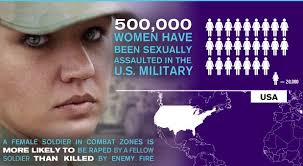
Do you ever wonder what effect Donald Trump’s proclivity for sexual assault might have on the problem of military rape? After all, his racist, sexist, and xenophobic comments along with his personal behavior have already emboldened copycat words and actions by many of his followers including schoolchildren. Will Mr. Trump similarly embolden enlisted men and officers to follow the example of their Commander-in-Chief?

That question becomes relevant on this Fourth Sunday of Advent because the readings for today emphasize Jesus’ “virgin birth.” Such emphasis resurrects a persistent tradition identifying Mary’s “miracle” as the result of military rape.

If that tradition were true, what light would it shed on the problem of rape in the military in connection with the example of its Commander-in-Chief?

Let me put that question in context by offering some background for today’s reading from Matthew along with a reference to the selection from Isaiah traditionally seen as a prophecy of Jesus’ virginal conception.

To get from here to there, try to understand the situation of Joseph and Mary as young marrieds in a context of imperial aggression. They’re a teenage couple; they are poor and living in an occupied country. Joseph is a jack-of-all-trades – that’s what the Greek word we translate as “carpenter” meant in first century Palestine. Like everyone from his class, he was unemployed most of the time. But he’d fix your leaking roof if you hired him. When he could, he’d harvest grapes and wheat for local landlords.

And he was probably deeply involved with the local insurgency against Roman occupation. (Nearly every impoverished patriot is in such situations.) Additionally, the only commentary we have on Joseph’s character is Matthew’s single word “just.” He was a just man. (By the way, his son, James – the one who headed the Jerusalem church following his brother’s death – was also known as “James the just.”) In the Hebrew culture of Jesus’ day, justice meant taking the side of the powerless. It appears to have been a central value Joseph passed on to his children.

As resisters, Joseph’s kind would have been considered terrorists by the Romans. In fact, the very year in which Jesus was likely born (6 BCE) Galilee’s countryside would have been crawling with Roman soldiers fighting against people like Jesus’ supposed father. The occupiers were busy laying siege to the city of Sepphoris, the capital of Galilee – a mere hour’s walk from Joseph’s village.

There the insurgency had taken a decisive stand against Rome’s puppet, King Herod. And like Americans in Iraq’s Fallujah under “Mad Dog” Mattis, the Romans were determined to make an example of the city by laying it waste utterly. Before their final offensive, that involved night raids, kicking in doors, and raping young Jewish girls. (All forces of occupation – including our own today – know the drill.)

In any case, according to that persistent tradition about her “virginity,” that’s where Mary came in. She was a young teenager about 12 or 14. Although she eventually became Joseph’s “dream girl” (MT 1:18-25), she was probably linked with him by the village matchmaker perhaps when they were both still toddlers. They had not yet begun to live together, because they were probably waiting for Mary to come officially “of age” – able to bear children.

Be that as it may, Mary suddenly finds herself pregnant out of wedlock. Can you imagine her worry? Innumerable teenage girls can relate to her panic – and disgrace. Obviously, Mary did not want to be just another of her community’s “virgins.” [Matthew’s term “parthenos” (virgin) to refer to Mary was often connected with children of unknown paternity. Such offspring were disparagingly called “virgins’ kids.” “Virgin” is what (behind their hands) local matrons called an unwed mother.]

According to the story, Joseph too shared Mary’s disgrace and embarrassment. He wanted a divorce (i.e. release from his commitment to marry). And he probably demanded it with the anger and recrimination that are inevitably associated with the dreaded “d” word.

Joseph’s anger, suspicion, and thoughts about divorce may also have come from his hatred of the Romans. (And here comes that persistent tradition about Mary’s “virginity.”) It even remembers the rapist’s name. According to Celsus’ “True Doctrines” written about 178 C.E., the rapist was called “Panthera.” That was also the name of one of the Roman legions involved in that siege of Sepphoris.

Such suspicious circumstances around Jesus’ questionable conception also find some support in John’s gospel, where Jesus is called a “Samaritan” (8:48). That was a harsh term equivalent to our “bastard.” Additionally, Mark refers to Jesus simply as “Son of Mary” (6:3) – a quite unusual reference in a culture where children were identified by their father’s name.

With all of that in mind, and if Celsus’ tradition has merit, it’s easy to understand how the thought of taking up with a girl defiled by a Roman “pig” (what Jews called the occupiers) probably turned Joseph’s stomach. No wonder he wanted a divorce.

That is, if the tradition has merit . . .  You see, we can take our pick here. And that brings me to the point about the historical veracity of the stories around Jesus’ birth: all of the traditions are entirely questionable as far as historical fact is concerned.

For instance, the familiar account of Jesus’ virgin birth is found only in two of the canonical gospels (Matthew and Luke). Mark and John make no mention of it. That means that they either didn’t know about the tradition, or Mark and John didn’t think it important enough to include. (By the way, if Jesus’ conception was as miraculous as we’ve always been taught, how likely is either of those alternatives?)

And then there’s that business – recounted in today’s first reading – about Isaiah’s supposed prediction of Jesus’ virginal conception. Matthew takes Isaiah’s words completely out of context.

Actually, Isaiah’s not referring to Jesus at all, but to his own time more than 500 years earlier. And the Hebrew term he uses is not the equivalent of “virgin.” That’s a mistranslation. The word the prophet employs simply means “young girl.” Isaiah’s prediction is that a “young girl” of his own time will conceive. The prophet’s words had nothing to do with Jesus or virgin birth.

The point here is we’re not dealing with “history” in the story of Jesus’ virgin birth. Instead we’re confronted with a miraculous “birth story,” – a literary genre that characterizes accounts of virtually all “Great Men” in the ancient world. Its point is that God’s Spirit entered into Jesus from the very outset – long, long before his actual birth.

In that light, historically speaking, rape is a much more likely explanation of Jesus’ conception than intervention by the Holy Spirit. Think about it. That’s simply a fact.

How then was Jesus begotten? If Joseph was his father, we understand how Jesus was so concerned with social justice. And through this pre-birth story we can hear (once again!) a summons to learn from Joseph the way Jesus and his brother James did. It’s also a reason for re-evaluating our culture’s drumbeat of indoctrination against “terrorists.” Jesus came from a family the Romans would have considered terrorist.

If Panthera humiliated Jesus’ mother (and Joseph), and Jesus was the product of rape – and if rape is an inevitable strategy of war – then that’s an additional reason for pressuring the U.S. military to aggressively investigate and punish perpetrators of military rape. It’s also a reason for refusing to honor the U.S. military in general, for opposing war, working for peace, and appreciating Jesus’ solidarity with the poorest of the poor.

Finally, it’s yet another cause for reflection on the unsuitability of Mr. Trump as Commander-in-Chief. Predictably, his example will embolden soldiers to objectify, demean and rape the ones the president-elect termed“fat pigs, dogs, slobs, and disgusting animals.” It is certain that the Roman military made similar characterizations of Jewish girls like Jesus’ mother.

The bottom line here is that (as Pope Francis would have it) if we’re not resisting war, military culture in general, its Commander-in-Chief and working for peace, our observation of this Christmas season is pure theater and sham.

Trump’s Republicans Are “The Most Dangerous Organization in the History of the World” (Sunday Homily)

climate-change

Readings for First Sunday in Advent: IS 2: 1-5; PS 122: 1-9; ROM 13: 11-14; MT 24: 37-44

It’s impossible for thoughtful homilists not to be stopped dead in their tracks by the opening words of today’s Gospel selection.

Jesus said to his disciples:
“As it was in the days of Noah,
so it will be at the coming of the Son of Man.                                                                                       In those days before the flood,
they were eating and drinking,
marrying and giving in marriage,
up to the day that Noah entered the ark.
They did not know until the flood came and carried them all away.
So will it be also at the coming of the Son of Man. . .”

Of course, everyone knows the Noah tale. There God warned the great patriarch that a huge flood was coming to destroy the earth, because its inhabitants had become so violent.

Presumably, Noah shared such forewarnings with his contemporaries – or at least with those wondering why he was constructing so mammoth a vessel. Apparently no one listened. You might even say they were in denial about the coming deluge. But the disaster came anyway and swept them all away.

Jesus’ words seem unmistakably pertinent to themes of climate change today — particularly in a context where USians have just elected a climate change denier to the White House and have given control of all branches of government to a party of “representatives” who refuse to recognize that humans can or should do anything about predicted natural disasters that threaten to completely replicate the catastrophe recounted in the legend of Noah and his Ark.

Such denial has rendered the Trump-led Republican Party (in the words of Noam Chomsky) “the most dangerous organization in the history of the world.”  And that includes Hitler’s Nazis. Even aside from their not possessing nuclear weapons, the Nazis did not have the power to destroy all of human life even if they wanted to. The Republicans do.

And they are completely dedicated to that project. They are racing as fast as possible towards the destruction of organized human life. In the meantime, their allegiance to the fossil fuel industry and unwillingness to fund alternative sources of energy will undoubtedly produce millions of refugees from low-lying coastal regions throughout the world. The resulting influx of refugees from sea-level rise will render any exclusionary “walls” impotent and useless.

Jesus’ words in today’s Gospel reading become even more pointed since they connect the Noah story with imperialism — another great producer of refugees. The device for doing so is the Master’s reference to “the Son of Man.” That’s the character that the Book of Daniel invokes as the judge of all the empires that had conquered Israel – from Egypt to the Greeks. In his own day, Jesus apparently identified himself with that judge in relation to his people’s imperial enemy in first century Palestine, viz. the Roman Empire. Colonial violence, Jesus promises, will be Rome’s downfall.

Besides their suicidal climate change denial, Republicans , of course (like their Democratic counterparts), are champions of empire and U.S military supremacy.

Today because of their denial and dedication to empire, Trump and his party have taken Rome’s place as an even more dangerous Enemy of Humankind. Jesus words call us to “wake up” and recognize that danger.

All of us, the Noah reference suggests, must awaken and pray for a holy insomnia that refuses to accept as somehow “normal” the most dangerous organization in the history of the world.

If we don’t take to the streets and refuse to join Republicans’ rush to the precipice, there will surely come. . . LA DELUGE!

Donald Trump and Torture (Sunday Homily)

torture-trump

Readings for 32nd Sunday in Ordinary Time: 2 MC 7: 1-12, 9-14; PS 17:1, 5-6, 3, 15; 2 THES 2:11-3:5; LK 20: 27-38.

One of the wonderful aspects of the Judeo-Christian tradition is how so much of it reflects the consciousness of the poor and oppressed, while at the same time giving expression to a “preferential option for the poor.” That’s a gift for us in a culture that generally despises poor people, oppresses the world’s impoverished majority, and spins the news in ways that ignore the poor and reflect a decided “preferential option for the rich.”

This morning’s first reading is especially valuable for us who live in a system where a candidate for president, Donald Trump, advocates torturing poor people who rebel against American imperialism. He has promised, to bring back water boarding.  He’s said, “I would bring back water boarding, And I would bring back a hell of a lot worse than water boarding.”

Before Abu Grahib, a statement like that would have been unthinkable. Torture is against international law. It contradicts Article 5 of the UN Declaration of Human Rights which identified the right not to be tortured as a fundamental human right. At least since the end of World War II, torture has been considered one of those intrinsic evils about which there simply could be no debate.

However, ever since Abu Ghraib gave the lie to George W. Bush’s famous prevarication, “The United States doesn’t do torture” – ever since our government redefined the word to exclude even waterboarding – it has become apparent that Bush (and so many others of our “thought-leaders”) was lying. So today, it’s possible for a presidential candidate to propose measures worse than water boarding – perhaps cutting out of tongues and removal of limbs – as measures Americans admire and advocate..

But what do tortured terrorists actually think about while having limbs removed and tongues cut out? Read today’s selection about the Maccabee brothers and find out.

The Maccabees were members of a heroic family of guerrilla fighters who in the mid- 2nd century BCE terrorized the invading Greek forces of Antiochus IV Epiphanes. (Actually, “Maccabee” wasn’t the family’s name; it was more a nom de guerre for an entire resistance movement. The word meant “Hammer” – the Hammer Gang – so-called because of its delight in pounding to mincemeat the invaders of their beloved homeland. The term “Maccabee” was similar to “al Qaeda,” when it simply meant “the list” – a reference to the Rolodex of assets the CIA used when it employed al Qaeda back when they were “freedom fighters” against the Russians in Afghanistan.)

For his part, the Seleucid king, Antiochus, was fiercely anti-Semitic. He considered the Jews historically and culturally backward. For him and his empire’s advancement, Jews had to be brought into the 2nd century BCE even if it meant their kicking and screaming the whole way.

Today we might understand Antiochus’ project as “modernizing” the Jews – as Hellenizing them for purposes of imperial control. Evidently the Seleucid king subscribed to the position that if empire can persuade conquered peoples to adopt its patterns of thinking and especially of imagining God, the task of imperial administrators is made that much easier.

Many Jews agreed with the program of Antiochus. After all, the Greeks’ empire seemed invincible. If the empire couldn’t be beat, it was better to join it willingly. So these “Hellenized Jews” stopped circumcising their sons, and changed their diets even to include eating pork. They became more Greek than the Greeks.

They also became the targets of Maccabee “terrorist” attacks. In today’s terms, such Hellenized Jews would be the targets blown up by Maccabee suicide bombers in marketplaces located in Jewish but Greek-loving neighborhoods. (Even if the Maccabee targeting may have been more selective than that, it is certain that Hellenized Jews were as much the objects of Maccabee terror as were the Seleucid forces themselves.)

In countering such extremism, Antiochus IV proscribed the Jewish religion as itself criminal and illegitimate. This was very similar to the way many “Americans” consider Islam. So Greek troops burnt and otherwise desecrated copies of the Torah in much the same way as our “Christian” troops are frequently caught burning or urinating on the Holy Koran and on corpses of Muslim resistance fighters.

Though the Greeks considered the Maccabean forces to be terrorist, faithful Jews admired them as national heroes and servants of God. They understood that the Maccabees were fighting a Holy War against the much more powerful Seleucids. It was David against Goliath all over again.

In any case, according to today’s selection from Second Maccabees, seven brothers of the gang’s leadership were finally arrested (along with their mother) by the Greek invaders. (This would have been reported to Greeks “back home” as a great triumph – “Senior Leaders” captured making “our troops” and “our world” much safer.)

Then the torture and the screaming start.

According to today’s reading, all eight are beaten with whips and instruments designed to tear open their flesh. Then following standard operating procedures still practiced today, other enhanced interrogation techniques were used to torture the brothers one after the other in the presence of their blood-drenched mother, herself near death. The purpose here, of course, was to induce the woman to divulge names, places, and plans that she was privy to as the wife of the one who started the Jewish resistance to the Seleucids.

But what does she do? And what about her sons?

In a word, they are all – mother as well as her sons – completely defiant.

“What do you expect to achieve by questioning us” one of the brothers shouts? “We are ready to die rather than transgress the laws of our ancestors.”

Even at the point of death he spits out the words: “You accursed fiend” (I wonder what expletive he really used!), “you are depriving us of this present life, but the King of the world will raise us up to live again forever. It is for his laws that we are dying.”

Another of the brothers sees that his torturers are actually enjoying their work. (The text refers to cutting out his tongue and amputating his hands as “cruel sport.” Does that remind you of Abu Ghraib?) So he sticks out his tongue and stretches out his hands inviting them to do their work. “It was from Heaven that I received these,” he says. “I’d rather lose them than offend Yahweh” (read Allah).

“Even the king and his attendants marveled at the young man’s courage,” the text says. Far from being intimidated, the freedom-fighter “regarded his suffering as nothing.”

Just before dying, another of the tortured brothers undergoing the very same cruelties says: “It is my choice to die at the hands of men with the hope God gives of being raised up by him; but for you, there will be no resurrection to life.” As indicated by those words, conviction of a happy eternity moved these guerrilla fighters to embrace death willingly. (Seventy-two virgins, anyone?)

So what goes on in the heads of the tortured? Disdain for their torturers. Defiance. Show of courage. Love for the motherland. Hope.

And what is the response from the people they die for? Admiration. Elevation of martyrs and the tortured to sainthood. Motivation to follow their example.

And ultimately victory for the tortured and assassinated. . .  I mean, against all odds, the Jewish resistance – the Hammer Terrorists – did succeed in evicting the Greeks from their homeland.

As I was saying, this reading should cause us to reevaluate our attitude towards terrorism, terrorists, and the scandal of debating the pros and cons of torture. It should cause us to reevaluate any thoughts of voting next Tuesday for the would-be torturer-in-chief, Donald Trump.

(Sunday Homily) Amy Goodman Shows Us How to “Pray Always”

dog-standing-rock

Readings for 29th Sunday in Ordinary Time: EX 17: 8-13; PS 121: 1-8; 2 TM 3:14-4:2; LK 18: 1-8;

Amy Goodman is in trouble. She’s the television journalist my wife and I had dinner with last summer. She’s the host of “Democracy Now: the War and Peace Report” – a daily news hour on the Pacifica Radio and Television network.

In the face of mainstream media’s refusal to cover significant grassroots events and issues, Ms. Goodman’s program has been called “probably the most significant progressive news institution that has come around in some time” (by professor and media critic Robert McChesney.) In addition to sources such as OpEdNews, Information Clearing House, and Alternet, “Democracy Now” is an invaluable fountain of information about issues that touch all of our lives.   Amy’s program is an example of what can be accomplished for peace and social justice in the face of overwhelming odds.

Anyway, Amy is in trouble. Or should I say that judges in the North Dakota legal system are in trouble. I mean the court’s black robes there are about to tangle with a woman who is stronger and more committed than all of them put together.

The issue at hand is a charge of criminal trespassing against Ms. Goodman. It stems from her coverage of Native American protests against the Dakota Access Pipeline – a nearly 2000 mile, multi-billion dollar construction stretching through North and South Dakota, Iowa, and Illinois. The pipeline cuts across Sioux Tribe sacred sites and burial grounds at their Standing Rock Reservation. Defense of those holy grounds has brought together thousands of Native Americans from across the country and Latin America, as well as indigenous peoples from around the world.

On Labor Day weekend this year, while Amy was covering that resistance, security forces of Energy Transfer Partners (ETP), the pipeline’s builders, set dogs on the Standing Rock “Protectors” (they refuse the name ” protestors”). She filmed a dog whose mouth was dripping with Protectors’ blood.

Amy’s honest reporting (protected by our Constitution’s First Amendment) proved offensive to ETP, their security forces, and to the local police. Hence the charges.

_____

Please keep all of that in mind as we attempt to understand today’s liturgy of the word. In the context of an unjust legal system, our readings raise the question of what it means to “pray always.” Jesus says it means persistently demanding justice. Amy embodies that meaning.

Actually, the readings compare what might be termed men’s intermittent way of praying with women’s unrelenting persistence. For instance, in today’s readings, men shockingly pray that God might intervene to slaughter their enemies.

In contrast, the woman in today’s gospel is in it for the long haul. She indefatigably confronts the power structure of her day as her way of “praying always.” That is, like Amy Goodman, she persistently works to bring her world into harmony with God’s justice. According to Jesus, that’s what prayer means.

Take that first reading from Exodus. . .  Did it make you raise your eyebrows? It should have. It’s about God facilitating mass slaughter. It tells the story of Moses praying during a battle against the King of Amalek. It’s a classic etiology evidently meant to explain a chair-like rock formation near a site remembered as an early Hebrew battleground.

“What means this formation?” would have been the question inspiring this explanatory folk tale. “Well,” came the answer, “Long ago when our enemy Amelek attacked our people, Moses told Joshua to raise an elite corps of fighters. During the course of the ensuing battle, Moses watched from this very place where we are standing accompanied by his brother Aaron and another assistant called Hur.

Moses raised his hands in prayer during the day-long battle. And as long as he did so, Joshua’s troops got the better of Amalek’s. But Moses would get tired from time to time; so he’d lower his hands. When he did so, Amalek’s troops got the better of Joshua’s.

“To solve the problem, Aaron and Hur sat Moses down on this stone you see before us. They held up his arms during the entire battle. That strategy saved the day. Joshua won his battle “mowing down Amelek and his people.”

So here we have a God who responds to ad hoc prayers and reverses history so that one group of his children might “mow down” another group of people he supposedly loves. That’s a pretty primitive concept of prayer (and of God), don’t you agree?

In today’s gospel, Jesus has another approach to prayer. For him, prayer is not an ad hoc affair – about changing God’s mind. Rather, “praying always” represents the adoption of an attitude — a way of life — that consistently seeks justice for the oppressed. Praying always means living from a place that won’t let go of justice concerns like those that drive Amy Goodman.

To illustrate that point for his own time, Jesus tells a comic parable about a persistent woman. (Remember, he’s speaking to people who have no power in a legal system, which, like ours favors the wealthy and powerful.)

“Imagine a judge,” Jesus said. “He’s like most of the judges we know. He doesn’t give a damn about the God of the poor, and he doesn’t care what people like us think of him.” (Already Jesus’ audience is smiling seeing a funny story coming.)

“But then along comes this widow-woman. Like all of us, she’s poor, and as usual, the judge pays no attention to her.” (Jesus’ audience recognizes the syndrome; they nod to each other.)

“But this woman’s a nagger,” Jesus says. (Now his audience is snickering and chuckling.)

“She just won’t let go. And she’s strong and aggressive besides. She comes back day after day insisting that she get justice against her adversary. And as the days go by, she gets more and more insistent – and threatening. So much so that the judge starts getting worried about his own safety.

(Laughter from the crowd . . .)

“’While it is true,’ the judge says to himself, ‘that I neither fear God nor respect any human being, because this widow keeps bothering me I shall deliver a just decision for her lest she finally come and strike me.’”

In other words, this macho judge is afraid of this poor widow; he’s afraid she’ll come and beat him up!

Can you imagine Jesus saying that without smiling broadly – and without the crowd roaring in laughter?

Anyway, here’s Jesus point: “If an unjust judge responds to the prayer of the poor like that, how do you suppose the All-Parent will respond when we ask for justice? The All-Parent will respond swiftly, Jesus says, because that’s who God is – the one who (as Martin Luther King put it) has established an arc of history that bends towards justice.

Prayer, then, is about reminding ourselves of that fact, trusting and having faith that in the long run justice and truth will prevail. Taking that position and acting upon it in the face of overwhelming evidence to the contrary, takes great faith that’s harder and harder to find.

So Jesus ends his parable with the rhetorical question, “When the Son of Man returns, do you think he’ll find that kind of faith anywhere?”

What I’m suggesting here is that today we’re more likely to find that kind of faith, that kind of prayer, that kind of persistence in women rather than men. The example of Amy Goodman and her “War and Peace Report” inspires us to renounce ideas of a God who calls us to “mow our enemies down.” It inspires us to view prayer not as a now-and-then petition, but as a lifestyle based on a struggle for justice.

In any case, Amy Goodman seems even more determined than the widow in Jesus’ parable. In prosecuting her, the pro-ETP justice system has bitten off more than it can chew.

Thank God for persistent women! We men have so much to learn from them. A good start towards doing so would be to watch “Democracy Now” every day. It’s on line. Check it out.

Was Mary Magdalene the First Pope? (Sunday Homily)

hieros gamos

Readings for the eleventh Sunday in Ordinary Time: 2SM 12:7-10, 13; PS 32: 1-2, 5, 7, 11; GAL 2: 16, 19-21; LK 7: 36-8:3

As much as we love Pope Francis, many of us have been disappointed by his consistent refusal to consider ordaining women to the Catholic priesthood. In the light of such irritating consistency, the pope would do well to reconsider today’s Gospel reading.

I say that because it offers a compelling argument not merely admitting women to the priesthood, but to the highest office in the church – the papacy itself. It does so by presenting Mary Magdalene as performing an undeniably priestly function far beyond any recorded of Yeshua’s apostles. Doing so brings to mind the Master’s supreme elevation of Mary Magdalene found in patriarchally-suppressed sources outside the canonical Gospels. There Yeshua designates Mary as superior even to Peter.

Consider the episode Luke records.

Yeshua has been invited to the house of a Pharisee for dinner. For Jews Pharisees were defenders of the father-rule system the Church and Pope Francis have made their own. But in this case, the “host” proves to be inhospitable in terms of Jewish custom. He obviously sees the carpenter from Nazareth and his uncouth fisherman friends as riff-raff. He omits giving them the traditional greeting, and doesn’t even offer them water to wash their feet. Evidently he considers the band from Nazareth unclean – dirty people who won’t even know the difference.

Then the hero of the story appears to set things right. She’s a woman whose gender relegated her to unquestionably second class status. She is Mary of Bethany (whom scholars identify with Mary Magdalene). And she does something extraordinary. She does what Nathan the prophet recalled in today’s first reading that he did for David. She anoints Yeshua as the Christos – the Christ, designating (and making) him God’s chosen one. This is the priestly act I referred to earlier.

Mary’s act is absolutely extraordinary. Remember, the term “Christos” (or Christ) itself means “anointed.” And in the gospels there is only one anointing of Yeshua the Christ. And, as we see, it occurs at the hands of Mary Magdalene, not of some male priest. In other words, the Magdalene in today’s gospel acts as prophet and priestess on a level arguably above Nathan’s role recalled in today’s reading from 2nd Samuel.

And there’s more. The Magdalene appears in public with her head uncovered and hair flowing – a condition appropriate for a woman of Yeshua’s time only in the presence of her husband. And besides anointing Yeshua, she performs what can only be described as an extremely intimate act. She continually kisses his feet with her lips and washes them with tears of love.

But how could a woman perform such an act? Why would Yeshua allow it? After all, according to Jewish law, women were not even permitted to say ritual prayers at home, much less perform religious rites of such central import as identification and anointment of the Christ.

That is, not according to Jewish law. . . However, according to universally recognized pre-patriarchal traditions, such election by a priestess was not only permitted but essential for any sacred king. There according to the rite of hieros gamos or sacred marriage, the priestess would anoint the priest-king. By virtue of her act (often consummated by ritual sex), the anointed would be flooded with power of the god. Conversely, without the power conferred by the woman, the king would remain powerless and have no knowledge of himself or of the gods. These facts would have been evident to Yeshua’s contemporaries.

Why has this history and the prophetic role of Mary Magdalene in identifying (and consecrating) the Christ been hidden from us all these years? Feminist scholars tell us that patriarchal misogyny – anti-woman sentiment – is the answer.

And negativity towards women is written all over today’s excerpt from Luke’s Gospel. There the evangelist emphasizes the sinfulness of the Magdalene as that of the other women in Yeshua’s company.

Luke describes Mary as “a sinful woman in the city,” and “a sinner.” He has Yeshua tell those seated at table that “many sins have been forgiven her,” and say to the woman, “Your sins are forgiven.” So we won’t miss the point, Luke gratuitously describes Mary Magdalene as the one “from whom seven demons had been cast out.” And finally, women in Yeshua’s company are described as formerly sick and possessed.

Nevertheless, Luke feels compelled to note what everyone in his community would have known: women like the Magdalene and Joanna and Susanna and the “many others” who followed Yeshua were financial supporters of Yeshua and “The Twelve.”

But Luke reveals no corresponding negativity towards the male leaders of the early church. He doesn’t call the apostles “free-loaders.” Neither does he parallel his description of the women as sinners by recalling that one of the 12, Peter, was identified with Satan himself by Yeshua. Nor does he recall that a key apostle, Judas, actually betrayed Yeshua or that all of the twelve but one (unlike the Master’s women followers) abandoned him in his hour of greatest need. Instead, Luke simply mentions “the twelve,” who by the evangelist’s omissions are implicitly contrasted with the “sinful” women.

Above all, Luke omits the description of Mary Magdalene which we find in the church-suppressed Gospel of Thomas. There she is described as “the apostle of apostles” – no doubt because of her key role in identifying and anointing Yeshua as the “Christos,” and because she was the one to whom the resurrected Yeshua appeared before showing himself to any of “the twelve.”

In fact the Gospel of Thomas says explicitly:

“. . . the companion of the Savior is Mary Magdalene. But Christ loved here more than all the disciples, and used to kiss her often on her mouth. The rest of the disciples were offended . . . They said to him, “Why do you love her more than all of us?’”

Here the word for “companion” is koinonos which refers to a consort of a sexual nature. Moreover in other suppressed writings, Magdalene emerges as Yeshua’s star pupil and the center of his attention. He praises her as “one whose heart is raised to the kingdom of heaven more than all thy brethren.” He predicts that she “will tower over all my disciples and over all men who shall receive the mysteries.” Additionally, following Yeshua’s ascension, it is Magdalene who comes to the fore to encourage the disheartened apostles to man-up and get on with the business of understanding and living out the teachings of the Master.

These words and the Magdalene’s functioning as prophet and priest should be extremely meaningful for contemporary women – and patriarchs blind to women’s leadership in the early church. They highlight the way at least one female disciple of extraordinary talent and charisma was not only marginalized but denigrated in the patriarchal church right from the beginning. And that denigration has continued in church circles and beyond to our very day.

Put otherwise, besides shedding light on the distant past, today’s readings expose the extreme weakness of contemporary ecclesiastical “fathers” in their exclusion of women from the priesthood and from other forms of church leadership. They also uncover the perversity of their other anti-woman pronouncements regarding topics such as contraception, abortion, and women’s rights in general.

In short today’s liturgy of the word helps us see beyond the “official story” to discern the fact that female leadership in the Christian community is nothing new. It is the males – the ones we call “father” – who are the interlopers and charlatans.

Clearly, Pope Francis, should change his mind on women’s ordination.

Christmas Is Blasphemy: Take Jesus Out of Christmas!

Starbucks

Recently two very different religious leaders – one considered left of center, and the other a fundamentalist – converged in agreement about the meaninglessness of Christmas. And they both hit the nail on the head. Christmas is bunk. It’s blasphemous to associate Jesus with the holiday.

From the left, Pope Francis called the Christian world’s upcoming Christmas celebration a “charade.” He said there’d be parties, gift exchanges, and family gatherings in the name of celebrating Jesus’ birth, but it would all be absurd pretense.

That’s what charade means: an absurd pretense intended to create a pleasant or respectable appearance.

And the pope is right. Starting around Thanksgiving, so-called Christians pretend to honor “the Prince of Peace” – the one who took no one’s life, but sacrificed his own rather than take up arms – the one who was himself a political refugee, conceived out-of-wedlock, brown-skinned, poor, and living under imperial occupation – the one who would be a victim of torture and capital punishment – who was all the things that good Christian supporters of Donald Trump and of the U.S. War on Terror hate and despise.

That’s right. our culture hates Jesus and all he really stands for.

And that’s where the fundamentalist preacher comes in.  He agrees with the pope – well kind of . . .

About the same time Pope Francis was talking charade, Rev. Joshua Feuerstein, denounced Starbucks for hating Jesus. The good reverend was outraged by the coffee giant’s holiday cups which display no specific reference to Jesus. That’s a sign, Feuerstein said, that Starbucks agrees with the movement to remove Christ from Christmas. Starbucks hates Jesus. So let’s boycott Starbucks!

On the one hand, could anything be more absurd? The world is burning. Our way of life is destroying God’s creation. Our country is waging war against the poor everywhere – in Afghanistan, Iraq, Libya, Yemen, Somalia . . . . We supply weapons to all sides in the endless war our “leaders” have declared. And our man is worried about Starbucks’ plain red drinking cup! He denounces Starbucks for simply recognizing what is: Jesus has long since been removed from Christmas.

On the other hand, there’s wisdom in Rev. Feuerstein’s accusations. And it’s not just Starbucks that “hates Jesus;” it’s our entire culture – including our churches. In that sense, Feuerstein agrees with Francis. However hating Jesus has nothing to do with coffee cups. As I said, it means despising those Jesus identified with in the Gospel of Matthew (25:31-46) – the poor immigrant refugee from our endless bombing campaigns, the hungry street person, the homeless refugee, the imprisoned desperado, the coatless person we pass on our way into Starbucks.

That’s the one our culture hates – mostly led by “Christians.”

So what to do to avoid making this Christmas an empty charade? How avoid the blasphemy of pretending that Christmas has anything at all to do with Jesus?

I hardly know how to answer that question. I suppose we can start by recognizing that Christmas is a winter festival and nothing more.

But that’s not nothing. Winter festivals are great. They’re fun.  Every culture has them. They are times for ice sculptures, bright lights, reunions with family, for feasting, drinking, parties and exchanges of gifts. All of that distracts us from the oncoming season’s dark and cold.

That’s the way it was in ancient Rome too. Rome had its Saturnalia. In fact, December 25th was the birthday of the Sun God, Mithra, who was a favorite with Roman legionnaires. In that sense, Mithra’s birthday was a military holiday – a celebration of empire and its wars – the antithesis of everything Jesus stood for.

So let’s end the charade. Have fun.  Eat, drink, and be merry. That’s what winter festivals are about. And forget the blasphemy of associating Jesus with any of it.

Raise your red cup and toast a happy feast of Mithra!

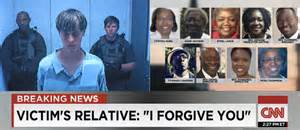
(Sunday Homily) Dylann Roof Will Surely Go to Heaven

Dylan Roof

Readings for 13th Sunday in Ordinary Time: WIS 1:13-15; 2: 23-24; PS 30: 2, 4-6, 11-13; 2COR 8: 7, 9, 11-13-15; 2 TM 1: 10; MK 5: 21-43.

Today’s readings are about death. They contain claims that are absolutely astounding, challenging, and almost too good to be true – especially in the light of last week’s massacre of nine black church goers during a Bible Study class at the historic Emanuel AME church in Charleston, South Carolina.

There the twenty-one year old perpetrator, Dylann Roof, slaughtered the people with whom he had been discussing the Bible just moments before. He had to kill them, he told a survivor, because “You rape our women and you’re taking over our country. And you have to go.”

Immediately, the entire country responded with horror. Many vilified the shooter as they found out about his racist Facebook postings, his easy access to firearms, and his flaunting of the Confederate Battle Flag. They argued about whether he should be executed as a terrorist or as a hate crime killer.

South Carolina, Alabama and other states flying the Confederate Battle Flag talked about removing it from their State Houses. Some discussed honoring the victims by passing omnibus legislation to address South Carolina’s racist structures involving health care, voting rights, housing and education.

President Obama got more personal. He said racism is in our DNA – an inheritance from our past that is difficult to erase.

Surviving families went deeper still. They forgave Dylann Roof choking as they did so through their tears of mourning.

Others asked, “What have we become as a nation?”

All of these reactions are familiar. We witnessed similar phenomena after Sandy Hook and Columbine.

It’s what human beings do in the face of brutality, violence and massacre. We blame; we soul-search. And sometimes forgive. Sometimes we even recognize complicity in the crime and resolve to change.

Those last reactions – forgiveness, soul-searching, and conversion – are justified by today’s readings. As I say, they address the astounding Judeo-Christian belief about death. Few of us can truly accept them. Once again: they seem too good to be true.

The first reading from the Jewish Testament’s Book of Wisdom startles us immediately by proclaiming: “God did not make death.” Instead he fashioned all things to have being. Specifically, human beings were formed imperishable by God. Death is experienced only by those who believe in the devil.

What? God did not make death? We are imperishable? Belief in death comes from the devil? Hold on; there’s more.

Today’s Alleluia verse becomes more specific still. It tells us to cheer up because “Christ has destroyed death” entirely. It has no reality at all.

Then in today’s Gospel, Jesus illustrates that truth. He equates death with mere sleep. There is nothing to cry about he tells those mourning the “tragic,” “premature” death of a 12 year old girl. She is merely sleeping. And then he grabs her by the hand and shows he’s right.

Do we really believe such statements? Is that Jesus story a child’s tale? Do we really believe that God did not make death? Do we believe that Christ has destroyed it?  Is death no more than sleep? Is death a mere illusion – moving from one room to another?

Those who are Christians routinely claim say yes. We even go further. Our belief says that “death” is not the end. Instead it is the greatest, happiest moment in life. For with it, life does not end. It goes on in ways so magnificent, so full of peace and wisdom and joy as to make it difficult to describe and impossible to comprehend.

That’s the faith we claim. Again, it seems too good to be true.

But if that’s what we believe, our faith has practical consequences regarding Dylann Roof and others like Dzhokhar Tsarnaev, Richard Speck, and even Adolf Hitler. The conclusions are these (as inspired by Neale Donald Walsch’s Conversations with God):

  • All those killers did no harm or damage to the ones whose deaths they caused. The souls of those they killed were released from earthly bondage, like butterflies emerging from a cocoon.
  • Their deaths are thought to be “untimely” only by those who believe that anything in God’s universe can happen when it is not supposed to. Given who God is, nothing can possibly be untimely.
  • The people left behind mourn the dead only because they do not know the joy into which those souls entered.
  • The killers themselves remain loved by God and will go to heaven, whatever that means. (There is no other place for them to go. Dante’s inferno was his creation, not God’s. To repeat the metaphor: death itself is the “devil’s” creation.)
  • Their actions were mistakes, those of unevolved human beings. The proper faith-inspired response to them is not punishment, but God’s response: forgiveness, healing, correction, re-education, and eventual reintegration back into the fullness of life.
  • None of them acted alone. Germany produced Adolf Hitler; millions thought he was right. South Carolina and the United States created Dylan Roof; many sympathize with his racism. We all bear responsibility for his actions. In a sense, we are all Dylann Roof. Killing innocents is killing innocents whether it’s in Charleston, Baghdad, Ferguson, or Guantanamo.
  • In God’s perfect universe, the function of Dylann Roof, Dzhokhar Tsamaev, Richard Speck, and even Adolf Hitler is to force us to face who we are and what we want to become. We claim we live in the land of the free, home of the brave, in a democracy where all are equal. Some even hold that we are a Christian nation. Few of us admit subscribing to racism. But then a Dylan Roof forces us to look in the mirror and reassess. Suddenly Confederate Battle Flags come down and politicians are discussing omnibus legislation.

From a faith perspective, Dylann Roof has become our teacher.  His lesson is the reverse of what Jesus, the Buddha, Krishna and Pope Francis have taught. The latter all reveal to us the splendid human beings every one  of us (even Dylann Roof) can become. The former shows us where we are headed if we refuse to change course.

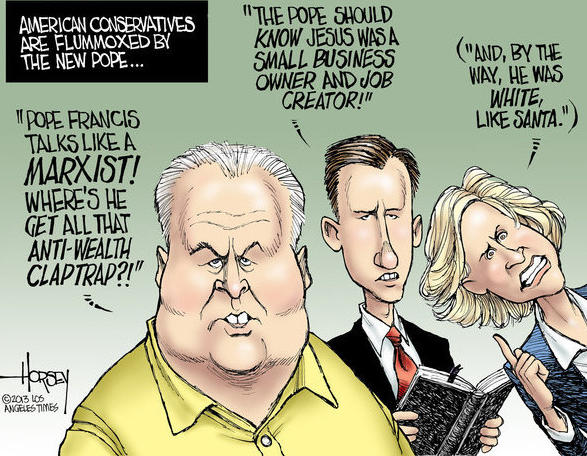
(Sunday Homily) The Parable of the Talents: Pope Francis as Drop-Out vs. Paul Ryan as Inside Investor

Pope & Rush

Readings for 33rd Sunday in Ordinary Time: PRV 31: 10-13, 19-20, 30-31, PS 128: 1-5; I THES 5: 1-8; MT 25: 14-30. http://www.usccb.org/bible/readings/111614.cfm

Today’s gospel story, the familiar “Parable of the Talents,” is about economics. It’s about the world of investment and profit-taking without real work. It’s also about dropping out and refusing to cooperate with the dynamics of finance, interest and exploitation of the working class.

The parable contrasts obedient conformists with a counter-cultural rebel. The former invest in an economic system embodied in their boss – “a demanding person harvesting where he did not plant and gathering where he did not scatter.” In other words, the boss is a hard-ass S.O.B. who lives off the work of others. The conformists go along with that system which to them has no acceptable alternative.

Meanwhile, the non-conformist hero of the parable refuses to go along. And he suffers the predictable consequences for doing so. Like Jesus and his mentor, John the Baptist, the non-conformist is marginalized into an exterior darkness which the rich see as bleak and tearful (a place of “weeping and grinding of teeth”). However, Jesus promises that exile from the system represents the very kingdom of God. It is filled with light and joy.

In contemporary terms, today’s gospel selection could hardly be more pertinent. It contrasts two current understandings of the contested terrain that is today’s Christianity. One understanding endorses our polarized economic system where “everyone who has is given more so that they grow rich, while the have-nots are robbed even of what they have.”

That concept is embodied today in a “devout Catholic” like House budget chair, Paul Ryan. The other finds its personification in Pope Francis, the head of the church Ryan’s party has all these years relied on for support.

In sharp contrast to Ryan’s faith in the capitalist system, Pope Francis himself is trying mightily to drop out of it. He’s like the servant in today’s parable who buried his talent in the ground refusing to invest it in a corrupt system that invariably widens the gap between the rich, like Ryan, and the poor the pope is attempting to champion.

A year ago Ryan seemed to recognize the contradiction. Then his first response to the pope’s criticism of capitalism (in the apostolic exhortation, “The Joy of the Gospel”) was defensive and dismissive. Referring to the pope as “the guy,” he said “The guy is from Argentina, they haven’t had real capitalism in Argentina.” Apparently Ryan meant that the pope doesn’t really understand the joys of the free market which the U.S.-backed generals shoved down Argentinian throats all during their infamous “dirty war” (1976-1983).

Lately though, a chastened Ryan has become more conciliatory. Last month he claimed that he and the pope are really on the same page. “I love this pope,” Ryan now says. “I’m a big fan of this pope. What he’s trying to do is he’s trying to invite lay Catholics into public policy, into a debate. He’s not trying to settle the debate. He’s trying to start the debate.”

More specifically, the congressman now reads the pope to be “down with a free market that means more participation. I think what he’s [against] is crony capitalism … where the powerful pick the winners and losers [and] influencing government gets to decide who wins and who loses in the marketplace.”

In other words, Ryan now holds that he and the pope are both “down with” the congressman’s own resistance to minimum wage increases, with his union-busting, and cuts to social security. All of these are proposed in Ryan’s “Roadmap for America’s Future.”

For his part, Pope Francis couldn’t be clearer about rejecting the elements of Ryan’s “Roadmap.” As recently as October 28th, Francis urged action to secure the basic entitlements the poor deserve. These include rights to land, housing and work as well as to higher wages, unions and social security – all of which are abhorrent to Republicans.

Francis even connected being Catholic with communism. “It’s strange,” the pope said, that “if I talk about this, there are those who think that the Pope is Communist. . . The fact that the love for the poor is in the center of the gospel is misunderstood.” Fighting for the poor, he added, doesn’t make me a communist; it makes me Catholic.

Obviously, the statement suggests significant overlap between Marx’s critique of free market capitalism and the social teachings of the church. The pope’s words certainly don’t sound like a ringing endorsement of the free market.

And how should Catholics express their love for the poor? Clearly not by endorsing the dynamics of the free market Ryan and his real mentor, Ayn Rand, lionize. In the “Joy of the Gospel” (JG) – published a year ago at this time – the pope identifies the unfettered markets so dear to Rand’s and Ryan’s hearts (along with their “trickle-down” ideologies) as homicidal (JG 53), ineffective (54) and unjust at their roots (59). He sees “each and every human right” (including education, health care, and “above all” employment and a just wage (192) as intimately connected with “defense of unborn life” (213).

And it gets worse for Ryan’s position. His party, of course, loves the free trade agreements that are at the heart of the corporate globalization the pope deplores. One wonders how the congressman reconciles his advocacy of, for instance, the Trans-Pacific Partnership (TPP) with the pope’s words at Cagliari, Sardinia on September 22 of 2013. Then the pope proclaimed, “We don’t want this globalized economic system which does us so much harm.”

These are not the statements of someone merely attempting to start a debate about capitalism as we know it. The debate is settled in the pope’s mind. He has condemned the system. And in doing so, Pope Francis has established himself (along with the Dali Lama) as the foremost moral leader of our time. He alone has the courage to call us away from the worship of Market and Money.

The alternative, he assures us, is not a world of darkness, weeping and grinding of teeth. It is a kingdom of light and joy.

It is time for Jesus’ would-be followers to join that conversation – about getting from here to there in the name of the gospel.