Readings for the Third Sunday in Lent: Exodus 3: 1-8a, 13-15; Psalm 103: 1-11; 1st Corinthians 10: 1-6, 10-12; Matthew 4: 17 ; Luke 13: 1-9
Because the readings for this Third Sunday of Lent celebrate the identity of the biblical God as the champion of the poor and oppressed, they should offer encouragement to war victims in Ukraine but especially in Yemen where the United States is acting far more brutally than Putin.
Today’s selections should therefore give pause to American followers of Moses and Yeshua. Typically, we have no trouble lamenting what’s happening in Ukraine’s “white people’s war” involving middle class people who “look and live like us.”
Generally, however, we are less perceptive about the immeasurably greater slaughter of black and brown Muslims taking place at the hands of our own government in Yemen.
Ironically, in Ukraine our politicians and the media would have us believe we’re on principle against invasion of a sovereign state and indiscriminate slaughter by a cruel tyrant. In Ukraine, we present ourselves as champions of democracy and peace.
However, in Yemen the U.S. is supporting a vastly more deadly and indiscriminate invasion of a sovereign state by an ally (Saudi Arabia) that is specifically anti-democratic and led by a head of state more openly barbaric even than Vladimir Putin.
To get what I mean and its implications for adherents of the Judeo-Christian tradition as presented in this Sunday’s readings, please consider our day’s historical context in the light of today’s liturgy of the word. Then consider what people of faith should do about all of it.
Our Context
Of course, there is no need to rehearse the horrific scenes from Kiev and Mariupol. For the past four weeks they’ve assaulted our eyes and have broken our hearts on behalf of the victims of Russia’s merciless assaults.
Ironically, however, virtually no one in the mainstream media (MSM) connects those atrocities with what our own government has done and continues to sponsor in Yemen.
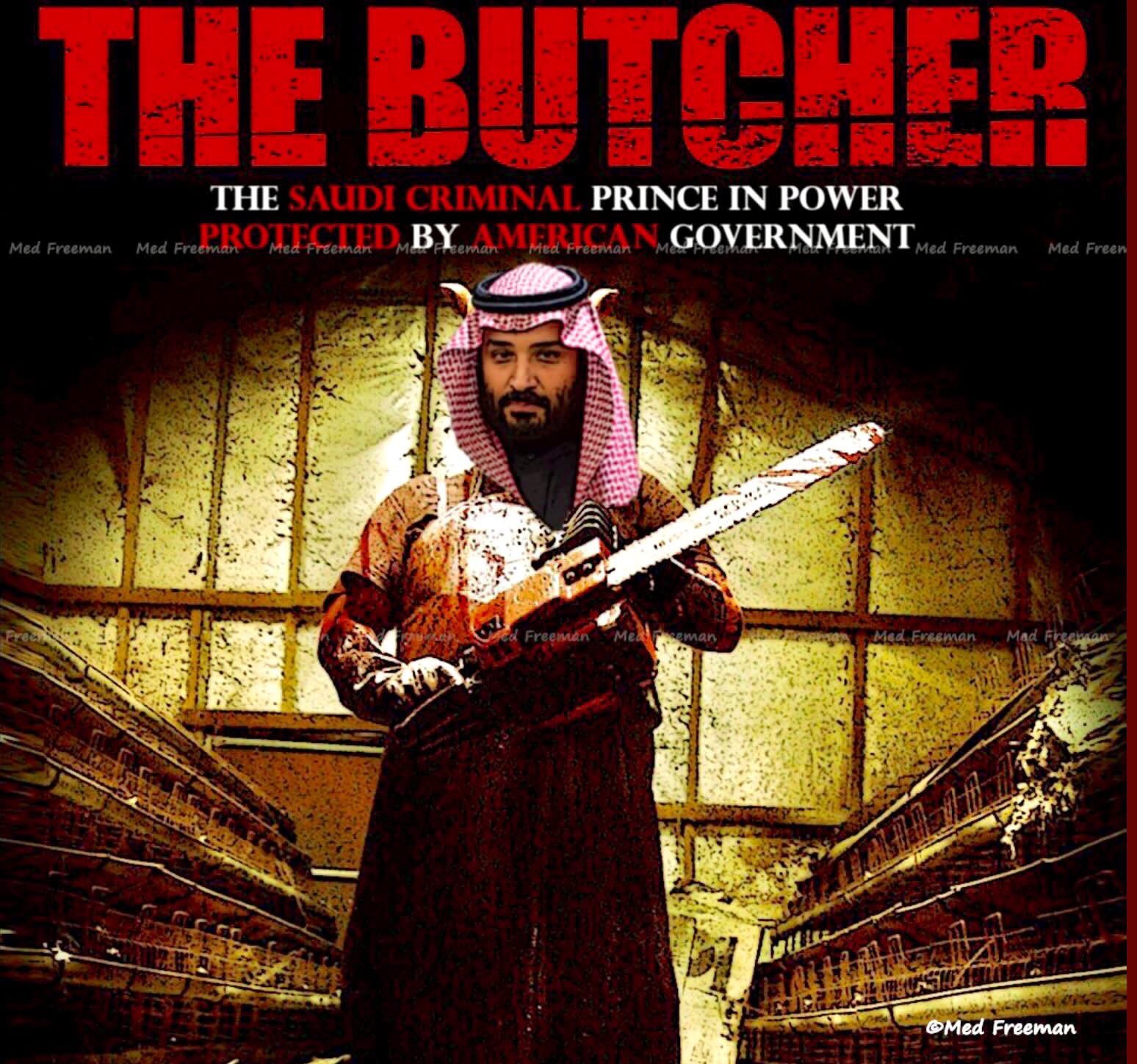
There, “we” have been supporting the country’s invasion by neighboring Saudi Arabia’s Mohammed bin Salman (MBS). He, of course, is a royal prince who (as I said) is specifically against democracy.
For instance, just last week, he had 81 men beheaded in just 12 hours. The executed had no legal representation. Many of the charges against them amounted to thought crimes.
Additionally, a couple of years ago, MBS had his hitmen butcher with surgical bone saws the Washington Post journalist, Jamal Khashoggi.
More to my point here: for the past seven years, MBS, perhaps the richest man in the Middle East, has waged a genocidal war on Yemen, making it the poorest country in the world. In the process, (with full American support) he has created what the UN’s World Food Program has identified as genocide and the world’s greatest humanitarian crisis. — far greater than Ukraine.
Over those seven years, MBS has come to the aid of Yemeni oligarchs who have kept the country’s rich oil wealth for themselves. The Saudi crown prince thinks that’s a good idea. So, supplied and guided by the U.S., he’s been bombing, blockading, and starving the children of Yemen and their parents. The brutal process has claimed more than 100,000 lives. An additional 85,000 Yemenis are dead as the result of the famine and cholera epidemic produced by our war.
And what is it that the opponents of MBS and the United States are seeking? According to a Newsweek report, rebel groups (the Houthis) are fighting “for things that all Yemenis crave: government accountability, the end to corruption, regular utilities, fair fuel prices, job opportunities for ordinary Yemenis and the end of Western influence.”
Today’s Readings
As I mentioned at the outset, today’s liturgy of the word focuses on the character of Israel’s and Yeshua’s God as the protector of the poor and oppressed – the champion of those like the people in Ukraine and especially in Yemen.
In fact, as you’ll see below, the first reading recounts the vocation story of Israel’s great rebel leader, the prophet Moses. When Moses asks God’s name, the Source of Everything says, She is the liberator of the poor and oppressed. The second reading from St. Paul’s letter to a Christian community in Greece expands on that theme.
Then today’s final selection from the Christian Testament presents Yeshua as doing exactly what I’m attempting in this homily. He raises two “current events” connected with the hegemonic force of his own day, the Roman Empire. Of course, it was the invader of Yeshua’s homeland Israel.
In one event the infamous Pontius Pilate, the brutal Roman procurator in charge of Palestine had just slaughtered several Jewish insurgents in the act of offering sacrifice in Jerusalem’s temple. They were honoring the liberating God of Moses.
Meanwhile, another group of insurgents tunneling under a Roman armory (it seems with a plan to steal its arms cache) had caused the tower’s weak foundations crumble and fall not only on top of the tunnellers but people in nearby houses as well. According to Maria Lopez Vigil and her brother, Jose Ignacio, the armory was located in the Tower of Siloam.
In response, Yeshua expresses sympathy for its resisters. “They’re no more sinners than the rest of us,” he says. “All of us are ‘guilty’ of wanting to be rid of the Roman invaders. But actions like Pilate’s and the fate of those undermining the Tower of Siloam foreshadow a more general slaughter that will inevitably take place in response to such “direct action.”
In effect, Yeshua says, “Those who resist the hated Romans by resorting to arms are (understandably) bloodthirsty too. And if we follow their example, we’ll all drown in a bloody deluge.” Or as Yeshua put it, “I tell you, if you do not change your minds, you will all perish as they did!”
And time is running short, he adds with today’s parable about a fig tree. The bloody deluge has been building for at least three years, he says. We have maybe another twelve months before the chickens of the deadly cycle of violence come home to roost. Without replacing violent resistance to Roman butchery with non-violent tactics, we’ll all be cut down like a barren fig tree.
(Jesus’ prediction of bloodbath, of course, eventually came true, but not as soon as he thought. The Romans would defeat the Zealot uprising in the year 70, and definitively squash all Jewish rebellion in 132. Jesus was right however about the extent of the slaughter. It was horrific resulting in the deaths of more than a million Jews. Such disaster is inevitable, Jesus teaches for all who “live by the sword.”)
His words, of course, have implications for our nation which like none other has lived by the sword ever since its foundation.
The Readings Translated
With all of that in mind, here are my “translations” of today’s powerful readings. Please check out the originals here to see if I got them right.
Exodus 3: 1-8a, 13-15

A stuttering shepherd
Tending his father-in-law’s beasts
In the barren desert
Encounters a bush
On fire
But unconsumed.
Fantastically,
The stammering one
Hears a voice
From the raging flames
Frightening him
Out of his wits,
Crumbling the man
To the desert floor
But calling on Moses
In the name of
The Great “I Am”
To lead A motley horde
Of slaves
To freedom, prosperity
And abundance.

“This,” says the voice
“Remains the unchanging
Will and identity
Of your people's God –
The Liberator Of the poor
And oppressed
Everywhere.”

Psalm 103: 1-11

Yes, the Great “I Am”.
Is the champion
Of the downtrodden
Throughout the world
Hungering and thirsting
For justice.
Yahweh is
Kind and merciful
Gracious and loving
Kinder than anyone
Can even imagine
The giver of abundance
The physician
Who cures, forgives
And saves the enslaved
From destruction.

Who cannot love
Such a One?

1st Corinthians 10: 1-6, 10-12

Certainly, Paul did
Whose God
He recalls
Protected His fugitive people
With cloud, fire
Desert and sea
From pursuing
Egyptian slave holders
And then fed
The liberated ones
In the desert
With manna
And water
Drawn from a rock
(Foreshadowing Jesus himself.)

While complainers
(“What, manna again?”)
Perished
Preferring instead
The fleshpots and security
Of Egyptian captivity.

For your own good,
Paul warns,
Don’t be like them!

Matthew 4: 17

I mean,
Leave behind
Enslavement
With all its predictability
And false security
Choosing instead
The insecure
But imminent realm
Of God’s New Future
With all its promised
Freedom, prosperity
And abundance.

Luke 13: 1-9

That’s the realm
Yeshua based
His entire life upon.
He contrasted it
With Pilate’s Cruel slaughter
Of insurgent Jews
Simply trying
To worship
Their Great “I Am”
And 18 other
Revolutionaries
Tunnelling under
A Roman armory
That collapsed upon them
At Siloam.

“No,” Jesus cautioned
“Choose Yahweh’s
Non-violent Order,
Along with
Complete abandonment
Of (sinless) religious naivety
And equally understandable
And innocent
Revolutionary derring do.
Otherwise,
You’ll have no future
At all.

And time’s running out,”
He warned,
“You’ve got maybe a year
Before you’ll reach
The point of no return.”
Conclusion
As you’ve just seen, the readings for this Third Sunday of Lent call us to repentance – to change of mind about empire, brutal invaders, occupiers, and what to do about all of it.
Followers of the biblical heroes, Moses and Yeshua, are summoned to examine their own consciences about how we see and respond to “current events.” We’re called to repentance.
Many would say that the tragic events unfolding in both Ukraine and in Yemen can be laid at the doorstep of the United States, the bloody successor of the Roman Empire that plagued Yeshua and his people.
Regardless of “the fog of war” that might impede such perception for many regarding Ukraine, the case of Yemen should be crystal clear. It should help us realize that our country’s leaders are not in the least interested in democracy, the deaths of innocents, preventing genocide, or opposing brutality of national leaders considered “friends.”
Instead, the guiding interests of U.S. “leadership” are money, oil, and maintaining hegemony, whatever the cost in human lives. History shows that to realize those interests they’ll ally with anyone – with butchers like MBS, with Nazis like Ukraine’s Azof Battalion, with the Mafia, drug dealers, ISIS, or the devil himself.
Events in Ukraine and Yemen should be forcing us to such shocking conclusions. They should be driving us all towards non-violent revolution — and towards publicizing and resisting U.S. aggression, warmongering and policy hypocrisies on every front.
That is, according to the teachings of Moses and Yeshua, the proper response for believers is unrelenting clarity of thought and analysis, along with non-violent resistance. And we’d better act quickly. As Yeshua warns, time is running out for us too..

 About Things That Matter