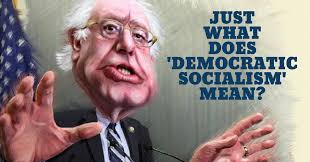
Sanders’ Real Plan: As Much Market as Possible/As Much Planning as Necessary

Last Tuesday (March 10th), opinion columnist, Thomas Friedman published and OpEd In the New York Times. It was entitled “Joe Biden, Not Bernie Sanders Is the True Scandinavian.”

There, Friedman argued that despite Mr. Sanders’ frequent references to Denmark as the standard for “democratic socialism,” the country is actually a hotbed of free market capitalism. Hence, Biden’s more balanced views on trade, corporations and unions make him more “Scandinavian” than his rival. Hence too, Biden’s free market capitalism is vastly preferable to Sanders’ socialism with its proposal of a totally planned economy.

To prove his point, Friedman’s crucial focus was not so much on Denmark as on three well-worn rhetorical questions addressed to the senator from Vermont:

  1. Does money grow on trees or does it come from heroic capitalist risk-takers who deserve their profits because of the jobs they provide? And shouldn’t they be rewarded accordingly?
  2. Aren’t at least some capitalist entrepreneurs admirable, or are they all examples, as Sanders would have it, of “corporate greed and corruption?”  
  3. What’s better at producing jobs and prosperity, a free enterprise economy or one based on central planning? (It was here that the question of Denmark came sharply to the fore.)

All three questions were entirely disingenuous and misleading. Let me explain.

In Praise of Risk Takers

To begin with (and to answer Friedman’s first question) money obviously doesn’t grow on trees and capitalist risk-takers do, of course, play an important role in the provision of jobs and prosperity. And risk deserves corresponding reward. All true.

However, what Friedman neglects to mention is that capitalists aren’t alone in highly productive risk-taking. No, far from being passive beneficiaries of entrepreneurial courage and largesse, workers and the risks they take clearly confer huge benefits on their employers. Hence, if their employers’ gambles deserve reward, so do their own.

By this I mean not only the obvious – viz. that capitalist enterprises would never succeed without workers. I mean as well that the capitalist system actually forces employees to be more adventuresome risk-takers than their employers. While the latter typically risk only their money, workers within the system risk their very lives and the existential welfare of their families.

Think about it. In preparing themselves to enter the world of work, college students bet four years or more of their lives as well as thousands of dollars in borrowed money on the wager that their “major” (be it Economics, Business, English, Math, Science, Pre-Med, etc.) will actually someday land them a job. That’s a gamble that benefits not only employers, but the rest of us as well.

Moreover, if they’re fortunate enough to land a job, the graduates’ work often forces them to change location to places far from their families and friends. That too involves leave-takings, courage and high-stakes risk.

And if their gamble does not pay off (unlike their employers) there’s no Chapter 11 for them to invoke. Thanks to politicians like Joe Biden, they still have to pay back those college loans, and/or live far from the support of their extended families.

It’s similar for those who do not go to college. Every day, countless numbers of them risk their very lives in jobs whose dangers are far more threatening than losing money in a failed business venture. So, if roofers fall from a great height, if fishermen are swept overboard, or if carpenters cut off a finger or hand, they often have no benefits to sustain them while recovering or to insure their eventual return to the workforce. All of that represents acceptance of risk that benefits employers.  It contributes far more to economic prosperity than dangers involved in the process of securing loans in the comfort of a banker’s office or in a simple telephone call.

So, no, Mr. Friedman, money does not grow on trees. It comes from employers risking their money. However, in at least equal measure it derives from the risks taken by their employees. The latter deserve guaranteed reward that can fittingly come from government’s repaying them with as much abundance as it currently extends to their employers.

A Corrupt System

As for Friedman’s question about greed and corruption. . .  Is Sanders correct in saying that all capitalists are somehow consumed by avarice?

Of course not. And it’s clearly deceptive to accuse Mr. Sanders of saying so. And this even though we have ample evidence that many capitalists (including our current president) are indeed wildly greedy and deeply unethical.

The truth is that many more of them are no more acquisitive and dishonest than the rest of us.

However, the capitalist system itself is indeed corrupt. That’s because it rewards immorality in the form of underpaying workers, environmental destruction, and acceptance of huge income inequalities in the face of widespread hunger and poverty.

For starters, consider how the dynamics of an unregulated wage market forces workers to accept the lowest remuneration possible. This is especially true in job categories deemed “unskilled.” Because of such classification, and absent minimum wage guarantees, capitalist theory rewards such occupations (belonging to waitpersons, cleaners, grocery clerks, vegetable pickers, etc.) with wages as close as possible to what’s absolutely necessary to keep body and soul together. (It’s why, for instance, Wal-Mart workers often end up qualifying for food stamps – a form of socialism, as Mr. Sanders rightly observes.)

Generous employers who decide to exceed the market-determined minimum will typically find themselves undersold by competitors who more obediently follow the dictates of unfettered markets. Because of wage differentials with their rivals, the generous ones will soon find themselves shuttering their enterprises and witnessing from afar the success of their more tight-fisted counterparts.

It’s similar with the environment. Competitive market forces reward producers who choose to externalize their costs. Meanwhile, market forces penalize conscientious manufacturers who for example, put scrubbers on their smokestacks or filters on corrosive effluents otherwise polluting nearby bodies of water.

This is because the use of environmentally friendly technologies cost money. They necessarily raise costs of production. They disadvantage those who implement them as they compete with their marketplace opponents who lack environmental conscience. Such destructive outcomes result not from personal greed and corruption, but from systemic failure.

And finally, in an unregulated market, the underpayment of workers along with the externalization of environmental costs (as well as colonial theft of resources) inevitably and historically results in wide income gaps that can only be described as unconscionable.

To illustrate this point, it suffices to cite a single now-familiar statistic that Mr. Sanders often does call out: three American entrepreneurs own as much wealth at the bottom half of U.S. wage earners. And this in a context where an estimated 48.8 million Americans, including 16.2 million children, live in households that lack the means to feed themselves on a regular basis.

Almost anyone with a conscience would be justified in calling such a system “greedy and corrupt.” However, the application of those epithets is justified not principally by the shortcomings of entrepreneurs, but by the capitalist system itself.  

Capitalism vs. Socialism    

And that brings us to Thomas Friedman’s final question to Bernie Sanders. Despite its acknowledged shortcomings, isn’t capitalism the best we can do? Is Sanders really claiming that planned economies are more productive than their free market alternatives?

Of course, Mr. Sanders says no such thing. This is because despite their rhetoric of “democratic socialism” and “free market economy,” the senator from Vermont no more champions an entirely planned economy than Friedman does an economy without any regulation at all.

In reality, both have no alternative but to advocate some form of mixed economy. That’s because mixed economies are the only game in town. Except for black markets (which almost everyone recognizes as criminal), no economy in the world can function without heavy regulation. And Mr. Sanders’ version of “democratic socialism” is nothing more than Rooseveltian New Dealism, which ironically was required during the 1930s to save capitalism itself.

More specifically, the New York Times columnist praises Denmark’s “broad social safety net” its “expanded welfare state, high level of taxation, as well as its spirit of cooperation between all stakeholders. All these taken together with free markets explain for him the country’s enviable living standards.

For his part, what Sanders demands repeatedly is not the dissolution of corporations, but that they play by the rules and pay their fair share of taxes.       

None of this implies however that Friedman and Sanders want the same mixed economies.

Instead, they differ in argument about whom the economies they favor should be mixed in favor of. Friedman wants an economy mixed in favor of the opulent risk-takers he lionizes along with the rest of mainstream media and education. Ignoring worker risk-taking, he evidently believes in shopworn trickle-down theory.

Nevertheless, Friedman’s economic class has shown again and again that it is not averse to socialism when the stock markets crash, when their opulent sea-side homes are destroyed by natural disasters, or when national survival demands “war socialism” complete with ration cards and patriotic slogans about sharing.

Sanders on the other hand, wants an economy mixed directly in favor of working classes and the impoverished. Rather than trickle-down, his ideal might be called percolate-up. It’s a theory that (in watered-down form) has actually worked throughout Europe in the form of post-WWII welfare states, in Denmark, and (yes!) in the United States under FDR.

Conclusion

So, what’s the formula that might deliver the world from the ills of low wages, environmental destruction, and huge income gaps between rich and poor?

In the light of the inevitability of mixed economy, any answer to that question must strike a compromise between economies mixed in favor of the rich and those mixed in favor of working classes and the poor.

The formulation of that compromise would run as follows: “As much market as possible with as much planning as necessary.”

Yes, maximize incentives that might motivate capitalists to innovate, produce, and create jobs. That’s what Thomas Friedman, Joe Biden, and Denmark’s entrepreneurial classes seek.

But also recognize and implement the interventions in the marketplace necessary to ensure the emergence of a world with room for everyone. That’s really all Bernie Sanders is after: As much market as possible, with as much planning as necessary to ensure that kind of capacious planet.

In the end, this is not a debate about who or what is more Scandinavian. It’s about recovering what experience under FDR and Europe’s welfare states have shown is entirely feasible.


France’s Yellow Vests: Their Program Should Be Our Program

As I reported recently, I spent my Christmas vacation tracking down and studying France’s “Yellow Vest” movement. In December, New York Times columnist Thomas Friedman did something similar. However, as expressed in his piece, “The End of Europe,” his conclusions mirror old threadbare thinking about social transformation. Most tellingly, while honoring the voices of the Yellow Vests as grassroots activists, Friedman’s responses exclude the very democratic input the Yellow Vests demand. Instead, he looks to government and business leaders to save what he termed “the idea of Europe.”    

My own conclusions are the reverse. I see the Yellow Vests as advocating a democratically radical, comprehensive and bottom-up approach to what distresses our world. In fact, the issues and demands of the Yellow Vests suggest proven reforms that are clearly feasible, since they’ve worked in the past. The economic and political restructurings implicit in their working-class demands could save our planet and create the other world that all progressives sense is possible. Consciously or unconsciously, the Yellow vests propose a program worthy of support by us all.    

Friedman & the Yellow Vests

According to Friedman, France represents the last barrier against the disintegration of Europe itself. Across the European Union (EU), England is committing collective suicide (because of Brexit), Germany is turning inward, and Italy (along with Greece) is in full rebellion against EU austerity measures. Meanwhile, the United States incipient withdrawal from the world increasingly leaves the continent without its traditional life insurance policy against “predatory threats from the East.” That insurance is needed now more than ever in a world where Russia is again asserting its power, and where China promises to become the center of the world.

However, Friedman says, the Yellow Vest Movement reveals that France itself is in danger of disintegration. The movement has arisen because the country’s working poor and anxious middle class have not benefitted from the liberal order of political-economy characterized by globalization, technological development, and mass migration of workers from the former Soviet Union and from France’s colonial empire. In the face of such developments, the poor have been completely marginalized, while robotics, artificial intelligence, outsourcing and competition from Chinese imports have made it increasingly difficult for middle class wage-earners to sustain accustomed life styles.

For France, all of this has been complicated by the ineptitude of its president Emmanuel Macron. On Friedman’s analysis, Macron has done the right things, but in an arrogant top-down, “let them eat cake” manner. The right things have included giving tax breaks to the rich, while imposing austerity (and job re-training programs) on workers. Austerity has meant raising taxes on diesel fuel, reducing pensions, and making it easier for employers to fire their workers.

In other words, Friedman approves of the very policies that have given rise to the “Yellow Vests” in the first place. For him, it’s just that austerity’s necessarily bitter pill wasn’t administered with the proper bedside manner.

And, according to the New York Times columnist, there is no apparent alternative. In the face of globalization, he holds that old solutions (simply cutting or raising taxes) cannot work. Instead, he vaguely calls for cities and local leaders to become “more nimble.” In his words, that means forming coalitions of business leaders, educators, and small entrepreneurs who can compete locally, regionally, nationally and globally.

That’s it. That’s Friedman’s analysis and solution.

Entirely absent from his considerations is any mention of “Yellow Vests” (i.e. working class) involvement in the solutions he finds so elusive.  That is, Friedman’s own approach, like that of Macron is entirely top-down. Like Macron he seems tone deaf to the “Yellow Vest” demand for inclusion in decision-making processes.

Necessary Changes in Consciousness

But what would such inclusion entail?

It would first of all necessitate changes in the very consciousness exhibited in the Friedman piece. These changes would include recognition of:

  • The Fundamental Failure of Capitalism: Friedman begins his article by celebrating capitalism. He writes “Ever since World War II, the liberal global order. . . has spread more freedom and prosperity around the world than at any other time in history. . .” Granted, such triumphalism might have been defensible (for those ignoring, for example, U.S. interventions in the Global South) before the dawn of the climate and immigration crises. However, today its uncritical hubris is embarrassing as the system’s train of destruction stretching back to capitalism’s dawning are seen as threatening the very continuation of human life as we know it. We can now see that capitalism has not really been successful. Quite the opposite. Persisting in lionizing the system while ignoring its run-away destruction prevents serious analysts from imagining the fundamental changes necessary to address the system’s basic failure. Apparently, it prevented Friedman from doing so.
  • Yellow Vest Criticism of Neo-liberalism: What consciously or unconsciously irks the international working class about neo-liberal globalization is the fact that the reigning economic model accords rights to capital that it steadfastly denies or severely restricts in the case of labor. It grants capital the right to cross borders wherever it will in pursuit of low wages and high profits. Meanwhile, it insists that labor, an equally important element of the capitalist equation, respect borders and/or severe restrictions on its mobility. Evidently, this is because the authors of the system (politicians, corporate boards, and lawyers) realize that freer movement of labor especially from the East or Global South would outrage constituents and consumers within industrialized countries in the developed world. The “Yellow Vests” prove that such outrage has taken hold in France and threatens to spread across the continent as workers from Europe’s former colonies extend and appropriate for themselves the logic of “free trade” heretofore acted upon only by capitalists and denied to labor. The immigration crisis is the result.

Necessary Reforms

As noted earlier, the Friedman article throws up its hands in surrender before the changes he describes as perhaps signaling the end of Europe. He writes, “Here is what’s really scary, though. I don’t think there are national solutions to this problem — simply cut taxes or raise taxes — in the way there were in the past.” So (to repeat) our author is left with the standard neo-liberal policies earlier described – trickle-down tax cuts for corporations and austerity for workers – implemented by the usual suspects with no mention of worker input.

None of that will work for the Yellow Vests. They want their voices heard. They want democracy at all levels. Such democratic ideal suggests changes far beyond the tired nostrums offered by Friedman – or perhaps even imagined by the French protestors themselves. These might include:

  • Democratized International Trade Agreements: Trade agreements like the European Union or NAFTA for that matter need to be negotiated with workers taking part. That means that the real EU question isn’t whether or not Great Britain should renegotiate its Brexit. The real issue is the reformulation of the EU Charter itself. The whole thing has to be rethought with the circle of negotiators widened to include all stakeholders. This means going beyond politicians, corporate heads, and lawyers to include trade unionists, environmentalists, indigenous peoples, educators, social workers, women, and representatives of children. In the process, each stake-holding group must have equal votes to complement their intellectual input. The same holds true for NAFTA.
  • Democracy at Work: Workers like the Yellow Vests spend most of their lives at work. Hence, their demands for democracy suggest, that any concept of self-governance must be broadened from the exercise of voting franchise every few years to include democracy at work. In its most effective form, democracy there takes the form of worker-owned cooperatives, where workers decide what to produce, where to produce it, and what to do with the profits. Enterprises of this type would never elect to pollute their neighborhoods, to pay outlandish salaries to administrators, to move their firm to a foreign country, or to lay off workers because of technological advance (all Yellow Vest complaints). Introducing such change is entirely possible. For instance, since 1985 Italy has taken steps to favor cooperative ownership. According to the country’s Marcora Law any company going out of business must extend to workers the right of first refusal in the case of a firm’s transfer of ownership.
  • Democratization of the New Technology: Democratic movements like the Yellow Vests need not be Luddite vis a vis the introduction of new technology. Instead, they might welcome any “labor saving” technologies. However, the point of such introduction would not be to down-size the labor force, but to shrink time spent on-the-job. For too long computers and artificial intelligence have been used by employers to cut labor costs and increase profits rather than to expand worker free time. By contrast, worker-friendly technological policies could make widespread job-sharing possible to eliminate unemployment. Four-hour workdays could replace present overwork. It could become possible to work only 6 months per year, or to take sabbaticals every few years without any reduction in pay.
  • A Green New Deal: Part of eliminating unemployment entails implementation of a Green New Deal (GND) to address climate chaos in ways that mirror Roosevelt’s original New Deal to combat the disastrous effects of the Great Depression. Prominent among the GND’s provisions must be the contemporary equivalent of the old Civilian Conservation Corps – this time to accomplish the environmental ends that the economy’s private sector is unwilling or unable to achieve.  
  • A Marshall Plan for the Former Colonies: To reverse the influx of immigrant workers, the former colonial powers must stop the wars and environmental policies that end up creating refugees and migrants in the first place. This means, first of all, ending their resource-wars and the failed war-on-terrorism. Secondly, however, the old colonists need to implement a New Marshall Plan in Latin America, Africa, and South Asia, where centuries-long resource-extraction policies have created the very poverty, hunger, and unemployment that has transformed the Global South from a natural paradise to a cauldron of social inequities. Besides being a remedy for the migration crisis, a grand Marshal Plan for the Global South is a matter of reparations.
  • Implementation of the NIEO: Specifically, reparations should entail something like the implementation of the New International Economic Order (NIEO) demanded by the Group of 77 within the United Nations in 1974. The New Order would grant Global South countries the power to control multinational investments within their borders. Recognizing that no country has ever achieved “development” as a mere supplier of raw materials to already industrialized countries, the order would require the latter to make large transfers of capital to the former colonies in the form of money and technology. It would also guarantee stable prices for raw materials from previously colonized nations in exchange for finished products (like tractors and computers), with the prices for the latter indexed to the established value of the raw materials.
  • Implementation of A New World Information and Communication Order (NWICO): As recognized by the UNESCO McBride Report in 1980, the former colonies need not only a new economic order, but one in which special attention is given to the international flow of information. The Global South needs a world information system that gives its inhabitants themselves the ability to portray and understand their own reality rather than being dependent on their former keepers for information about their lives, cultures and politics.     
  • Deep Cuts in Military Spending: All of this would be financed by higher taxes on the world’s 1% and by developed world cuts in military spending. Such increases and cuts would (1) recognize that the present war on terror is an utter failure, and (2) divert money now spent on attacking countries in the less developed world to constructive projects there such as rebuilding homes, schools, hospitals, power plants and water purification systems. Arguably, this would do more to combat terrorism than wars and bombing campaigns which many see as aggravating the problem of global terror. Again, this is a question of reparations.  

Conclusion

The elegance of the just-listed responses to France’s Yellow Vests and to the crisis of the neo-liberal order the protestors are rebelling against is that they are not new. In the cases of the New Deal and Marshall Plan, they enjoy a proven track record. At the same time, the prescriptions are much more detailed than the abstract cliches reflected in Thomas Friedman’s endorsements of neo-liberal austerity and “more nimble” decision-makers drawn from the professional classes.

Instead, the suggestions just listed have been with us since the 1930s (in the case of the New Deal), since the 1940s with the Marshall Plan, and since the mid’70s and early ‘80s with the proposed NIEO and NWICO. For their part, as Richard Wolff points out, worker co-ops have been hugely successful, for instance in the Mondragon Corporation in Spain and throughout the world, including France and the United States. Across the globe, worker cooperatives already employ 250 million people and in 2013 represented $3 trillion in revenue. Meanwhile, a huge body of literature from the 1960s and early ‘70s described a world in which computers and robotics would be used not to one-sidedly increase corporate profits, but to provide lives of leisure and enjoyment for ordinary people.

None of this is unrealistic, dreamy or impractical. In other words, we have the Yellow Vests to thank for helping us recall that another world is not only possible, but that we’ve already experienced it!

I Join the Ys Men’s Club in Westport

This morning I attended my first meeting of Westport’s Ys Men’s Club here in our new hometown of Westport CT. I didn’t know what to expect. I was imagining a group of 10-20 men meeting in a church basement.

I was right about the basement part. We met in the Weston Congregational Church equivalent.

But my numbers were way off.

I discovered that the Ys Men’s Club here was founded 42 years ago. It is highly organized, and now has a local membership of over 400 seniors like me. About 250 were present for the meeting this morning.

It was standing room only because the guest speaker was Chris Brubeck, one of Dave Brubeck’s four sons. And, as I’ll tell you below, his presentation was delightful.

The meeting started at 9:00 with coffee and doughnuts. As I was consuming my decaf and half a chocolate doughnut, I met several members, including the membership chair of the club. One man I met told me that 15 years ago, he and his wife had made the same move as Peggy and I have just made. They moved to Westport to live next to their grandchildren and grow up with them. He said it was the best decision they had ever made. He assured me that it would be the same for me.

Everyone else I met had one first question: “What are you interested in?”

I had looked at the long list of club activities. And from them I selected golf and discussion current events as strong interests. I said I was moderately interested in a book club – depending on what the group might be reading.

When I informed the membership chair of my current events interests, he soon had me talking with the convener of that group. I was told it meets Mondays from 8:45-10:00 at a nearby seniors’ center. Next week, the convener said, they’ll be discussing Thomas Friedman’s NYT column on the Yellow Vest Movement in France.

That seemed especially providential, since I had just returned (last weekend) from France, where I devoted a lot of time to reading about and tracking down Gilet Jaunes.  In fact, on my return, I published an article on them here on my blog, on OpEdNews, and as my monthly column in the Lexington Herald-Leader. So, I’m really looking forward to Monday’s meeting, where I hope to share some of those just-published thoughts. That will be a good way of breaking into this Ys Men’s club.

As for Chris Brubeck . . . He regaled us with stories of his father Dave, their family, and Chris’ own career.

He played a couple of base trombone solos for us and showed us the amazingly low notes he could hit with his instrument. Chris grew up in nearby Wilton. He studied with jazz and classical masters – including at Interlochen MI, the great summer music camp where Peggy and I had sent two of our children, and where last summer we saw the Glen Miller band and the Beachboys. The summer before last, we attended a Diana Ross concert there as well.

The highlight of Chris Brubeck’s presentation was a couple of performance tapes he shared with us.  One was of a piece he had written for three violins – with each violinist playing a different music style. That was just amazing for a Suzuki parent like me to watch.

The best one, however, was of the celebration of his father’s career at the Kennedy Center just before Dave Brubeck died at the age of 91. President Obama and Michelle were in attendance. Chris told us that in the run-up to the event, Dave had asked that his four sons (each, of course, a great jazz musician in his own right) might play together at the event. Chris said that Dave (that’s how he referred to his father) was crestfallen when he was told “No, we just can’t do that.”

Well, those who made that refusal had other plans. They wanted to delight and surprise the Great Man. So, on the night in question, the Army jazz band, along with Herbie Hancock and other jazz stars did a stunning performance of “Take Five.” One after another three groups took up the theme. Then, as the piece de resistance, Brubeck’s sons were introduced. The old man was dumbfounded. When the curtain went up on his sons, he blurted out in surprise “Son of a b__tch!” Luckily, he was un-miked. But watching his lips form the words was both hilarious and charming.

The prospect of working and playing with Westport’s Ys Men is an unexpected bonus on top of the wonder of growing up here with my grandchildren.