My Tarot Journey from Priest to Satanist

Well, it’s happened. My practice of Tarot reading has converted me into a satanist.

On the one hand Tarot has caused me to recognize that the God I was raised to worship (and to preach as a priest) is more like the devil depicted in Tarot’s 15th Major arcana card.

And on the other hand, the cards have helped me see that the devil represents a suppressed aspect of my dark side that (in the understanding of Carl Jung) contains a kind of gold I’m being called to mine. In some sense, Satan is my friend.

All of this has led me to reject the God of my youth (and to some extent of my priesthood) while embracing as a quasi-friend Satan himself.

Let me explain.

I

The Devil Card

To begin with, here’s the Devil as depicted in the Rider, Waite, Smith (RWS) Tarot Deck.

What do you see here?

Straight away, I notice that its number 15 stands for a trifecta of strife (3 X 5 – with 5 being the Tarot’s number of conflict). The card depicts conflict with (1) the world, (2) the flesh, and (3) the devil himself.

Next, I see that black is the card’s dominant color – representing one’s dark side, death, destruction, and negativity.

The main figure in the card is a satyric monster half man and half beast. His face is fear-inspiring with monstrous horns jutting from his head. His right hand is raised in a mudra which says, “what you see is what you get.”

An inverted pentagram (which in upright form represents virtue and good) forms the monster’s “halo,” but in its inverted form is just the opposite.

In the card’s depiction, the monster reigns over a naked man and an unclothed woman. The heads of both are horned – a clear connection to the horned devil’s mind. The female figure’s tail is tipped with grapes, a vineyard sign of pleasure and intoxication. The tail of her gender opposite is inflamed directly from the torch the devil holds inverted in his left hand. The man’s passions are on fire in the presence of the disrobed woman.

Both the man and the woman are chained by their necks to the pillar from which the monster presides. The chains are loose and could easily be removed. But evidently, the humans either don’t perceive this or don’t want to escape their bondage.

In summary, the card portrays the human body and sexuality as somehow problematic. Both are intimately connected with the Spirit of Evil, with enslavement, and ambiguity about the whole affair. 

II

God As Enemy

Personally, the more I contemplate the card, the more I see Christianity’s traditional God rather than the devil. That God was presented as creator, lawgiver, judge, condemner, and punisher.

He was fear-inspiring, wasn’t he? After all, his principal concern was understood as connected with the “sins of the flesh.” And he made us all feel guilty (or at least uncomfortable) with sexual thoughts, words, and deeds.

All of that flew in the face of common-sense recognition of sex and propagation of the species as humanity’s second most powerful drive (after self-preservation).

It was as if devilish priests and theologians had transformed an unparalleled good into an unparalled evil to keep penitents under their control, coming to confession, and paying for the indulgences that Martin Luther and others found so odious.

III

Satan As Friend

Don’t be turned off by the idea of Satan as friend. It’s quite biblical. For instance, in the book of Job, Satan is portrayed as God’s counsellor. He’s a realist who for instance (in the Book of Job) bets the Divine One that if Job comes on extremely hard times, he will abandon his virtue and show his true colors as just another fair-weather saint.

For his part, Carl Jung saw the devil as representing aspects of God. The former as well as the latter is part of the Life Force. As a psychological phenomenon the devil embodies suppressed dark forces that are part of every human personality. In Jung’s sense, he’s the “Left Hand of God.”

Think of what we’ve been taught about the “Seven Deadly Sins.” Tradition has it that they’re pride, greed, envy, anger, lust, sloth, and gluttony. None of us wants to acknowledge that such forces are inevitable parts of our personalities. So, we spend a great deal of time pretending they belong to others but not to us. We spend our life force suppressing their influence on us. Inevitably though they bubble to the surface and express themselves periodically.

Jung calls us not only to face our inner destructive forces, but to embrace them. There’s gold in our dark side, he teaches.

What did he mean by that? Yes, he acknowledges that in the extreme any one of the Seven Deadly Sins can destroy our lives. But under conscious control, they can also enrich us with the gold they contain. For instance, properly acknowledged, accepted, and controlled

  • Pride can be a source of self-esteem that preventing one from acquiescing to abuse by the disrespectful.
  • Greed under control can cause workers to organize in pursuit of higher wages and safer working conditions.
  • A productive amount of Envy can drive us to imitate the Christ, and saintly figures like Gandhi, King, Malcolm, Dorothy Day, Rosa Parks, and Mother Theresa. 
  • Justified Anger can lead us to demonstrate against the genocide now perpetrated by Zionists and the United States in Palestine. 
  • Lust can help us appreciate the gift of sex and the pleasure it brings.
  • Holy Sloth can keep us from endorsing our culture’s worship of “productivity,” the rat race, and overwork. It can drive workers to organize for more time off, longer vacations, and family leave for new parents.   
  • Gluttony can help us become slow food cooks and appreciators of wines and spirits. It can turn us against fast food saturated with sugar and salt.

IV

Conclusion

So, the next time the devil card turns up in your Tarot reading, don’t be frightened. It can serve as a reminder that God is not primarily creator, lawgiver, judge, condemner, and punisher. All of that is diabolical. Instead, the Divine One is the total of all the energy in the universe and in the universe of universes. That includes the energy of consciousness even to the extent that She is aware of each one of us and can be addressed as Thou. She wants only the fullness of life for each of us.

On the other hand (God’s Left Hand?) Satan is in some sense our brother and friend. True, he is never satisfied with temperance, harmony, and balance (Tarot’s 14th major arcana card). However, there is gold in his Seven Deadly Sins. With controlled expression, they can drive us towards healthy self-esteem, just recompense for our work, the idealism of imitating the Christ, unwillingness to endorse genocide, an appreciation of sexual pleasure, the joy of doing nothing, and appreciation of the gifts of food and drink.  

Gustavo Gutierrez and Liberation Theology’s Critical Faith Theory

The Great Gustavo Gutierrez died this week. He transitioned as a 96-year-old giant whose A Theology of Liberation: History, Politics, and Salvation (1971) popularized and spurred the most important theological movement of the last 1700 years (i.e. since Constantine in the 4th century). In fact, liberation theology (LT) might well be described as responsible for the West’s most influential intellectual and social developments of the last 175 years (i.e. since the publication of the Communist Manifesto in 1848). United States and Vatican fierce opposition to LT testifies to its impact.

Think about it. Without liberation theology it is impossible to account for Salvador Allende’s rise to power in 1973 or the triumph of Nicaragua’s Sandinistas in 1979, or the power the FMLN in El Salvador had and continues to enjoy today. The Zapatista movement in Mexico is also intimately connected with liberation theology. Even more, without reference to liberation theology, it’s impossible to fully understand the rise of new left governments throughout Latin America. All of them are indebted to liberation theology and its power to motivate the grassroots.

Perhaps more surprisingly: apart from LT, one cannot fully understand the prominence of conservative evangelicals in the United States. That’s because (as we’ll see below) political support for their movement was part of the Reagan administration’s strategy to defeat liberation theology which the White House and the Pentagon termed a national security threat. Their fear of LT mirrored that of the Vatican which ended up cooperating with Washington’s war against it.

Many are convinced that Washington’s and Rome’s anti-LT war was successful. That’s because the U.S. systematically assassinated its prophets along with hundreds of thousands of its adherents in a massive conflict that Noam Chomsky called “the first religious war of the 21st century.”  The sheer terrorism of the U.S. response plus an equally systematic offensive against LT within the Catholic Church itself deprived liberation theology of its best leaders, misinformed and intimidated the grassroots, and silenced many more. Nonetheless LT has changed the world. It has changed the church and Christianity in general.

But what is liberation theology? And why was it so threatening to the powers-that-be, both political and ecclesiastical? What steps were taken to defeat it? And why should believers be so grateful to theologians like Gustavo Gutierrez?   

 Liberation Theology Defined

Simply put, liberation theology is reflection on the following of Jesus of Nazareth from the viewpoint of the poor and oppressed. More accurately, it is reflection on the following of Jesus the Christ from the viewpoint of those among the poor who are committed to their own liberation. That is, LT begins from a place of commitment – to a world with room for everyone. In itself, it represents a popular movement, a solidarity movement for social justice.

Liberation from what? In a word, from colonialism and from the neo-colonialism represented today by the forces of corporate globalization. Those forces have nearly half the world living on $2 a day or less. They’ve concentrated the world’s wealth in the hands of a sliver of 1% of the world’s population. According to UN statistics, eight billionaires own as much as 50% or humanity. As a result, at least 25,000 people including 10,000 children die of preventable starvation each day. In the eyes of liberation theology’s protagonists, that’s sinful and runs entirely contrary to the teachings of Jesus of Nazareth.

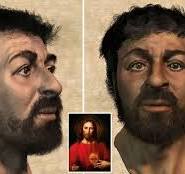
And what were those teachings? (This is the heart of liberation theology.) They were first of all those of a man recognized by the impoverished protagonists of liberation theology as someone like themselves. He looked like them. According to experts in the field of forensic archeology, he resembled poor mestizos everywhere in Latin America. He probably stood about 5’1’’ and weighed about 110 pounds. His skin was brown. He was a laborer, not a scholar; his hands were calloused.

Ironically, Jesus also possessed characteristics that mainstream Christians often find repulsive and ungodly. He was the son of an unwed teenage mother (Mt. 118-22; Lk. 1:26-38). He was homeless at birth (Lk.2:7).  If we are to believe Matthew’s account, Jesus became an immigrant in Egypt (Mt. 2:13-15). The good people of his day called him a drunkard and the companion of prostitutes. They expelled him from his synagogue because he didn’t seem to care about the 10 Commandments, especially the most important one – the Sabbath law. (For a Jew such excommunication and the shunning it entailed were like a death sentence.) The religious authorities said he was a heretic and possessed by the devil. The occupying Roman authorities identified him as a terrorist. They arrested him. And he ended up a victim of torture and of capital punishment carried out by crucifixion – a means of execution the Romans reserved specifically for insurgents. He was not the kind of person mainstream Christians usually admire. He was far too liberal to merit their approval.

Jesus was clearly a feminist. Many of his disciples were women. He spoke with them in isolated places. He actually forgave a woman caught in adultery, while implicitly criticizing the hypocrisy of patriarchal law which punished women for adultery and not men. And Jesus refused to recognize his contemporaries’ taboos around segregations. He crossed boundaries not only dividing men from women, but Jew from gentile, lepers from non-lepers, and rich from poor.     

He couldn’t have been more liberal. In a sense he was an anarchist. He honored no law that failed to represent the loving thing to do. His attitude towards the law is best summarized in his pronouncement about the Sabbath. “The Sabbath was instituted for human beings,” he said, “human beings weren’t made for the Sabbath.” This was pure humanism placing human beings above even God’s holiest law. Again, it was anarchistic.

Jesus’ teachings were politically radical as well. They centered on what today is called social justice. As such they infuriated his opponents but were wildly inspiring to the poor and oppressed. His proclamation was not about himself, but about what he called “The Kingdom of God.” That was the highly charged political image he used to refer to what the world would be like if God were king instead of Caesar. In that kingdom everything would be turned upside-down. The first would be last; the last would be first. The rich would be poor; the poor would be rich.

Subsequent reflection by followers of Jesus in the Book of Revelation teased all of that out and drew the conclusion that with the dawning of God’s kingdom, the Roman Empire would be destroyed and replaced by a new heaven and a new earth entirely unlike empire. There (as indicated in the Acts of the Apostles) wealth would be distributed from each according to his ability to each according to his need. There would be room for everyone. If that sounds like communism, it’s because, as the Mexican exegete Jose Miranda points out, the idea of communism originated with Christians, not with Marx and Engels.  

U.S. Opposition to LT

Those connections with Marxist analysis go a long way towards explaining resistance to LT by the U.S. government as well as within the Catholic Church.

That liberation theology dared to enter the mythological arena the right had long dominated virtually without rival astounded and infuriated the empire. Peasants throughout the subjugated world found the new explanations of God, Jesus and the gospels entirely empowering. Everywhere throughout Latin America they formed biblical circles, and those circles issued in social movements for justice.

In response, the Rockefeller Report of 1969 already identified liberation theology as a threat to the national security of the United States. By 1987, the Latin American Military Chiefs of Staff meeting in conference in Mar del Plata, Argentina, devoted several pages of their final report to liberation theology and the threat it posed to regional stability.  In between, in 1979 the first Santa Fe Document advised the incoming Reagan administration that it had to do something decisive about the threat posed by liberation theology. The administration heeded the advice, and responded both militarily and ideologically.

Reagan’s military strategy against liberation theology issued in a bloody war pitting the United States against the Catholic Church in Latin America whose bishops meeting in conference in Medellin Colombia had together dared to affirm a “preferential option for the poor” as their official position. To combat that commitment, the U.S. did exactly what Rome had done in the first three centuries of our era – and for the same reason: faithfully following Jesus who called empire into question and motivated the poor to assert their rights in this world as children of the God of life.

And both the Roman response and the U.S. response to Jesus and his followers resulted in blood baths. Many of us are well acquainted with the best-known martyrs: Camilo Torres, Archbishop Romero, the Salvadoran team of liberation theologians killed at San Salvador’s Central American University in 1989, the U.S. women religious murdered years earlier in that same country, and Che Guevara. (Yes, Che. His spirituality was secular, but it was no less spiritual or liberationist than any of the others.) And then the unending list of martyrs in this war against the Catholic Church – 200,000 in Guatemala, more than 100,000 in Nicaragua, 90,000 in El Salvador, and literally untold killings and disappearances in Honduras.

In every case, the carnage was a response to social movements inspired by liberation theology. Again, as Chomsky points out, official U.S. military documents show that liberation theology was a major target of those wars. In fact within those same official documents, the Army boasts specifically about defeating LT.

As for Reagan’s ideological response to liberation theology . . . .  On his accession to power, CIA psyops began funding conservative alternatives to liberation theology in Latin America and in the U.S. So did business concerns that saw the leftward drift of Latin America as a threat to their presence there. Domino’s Pizza and Coors Brewery were prominent among the cases in point. As a result, evangelicals throughout the region grew rapidly in number, and the recipients of those funds in the United States increasingly identified with Republicans, the “hand that fed them.”

So, the television programs of Jerry Falwell, Pat Robertson, Jim and Tammy Baker, Jimmy Swaggart, and others were beamed into every poor barrio, población, and favela. Right wing churches sprang up everywhere feeding and expanding an already robust evangelical presence in areas once completely dominated by the Catholic Church. The reactionary message was always the same – a depoliticized version of Christianity whose central commitment involved accepting Jesus as one’s personal savior and rejecting communism including the type allegedly represented by the theology of liberation.

All this points up the extreme importance of LT. including being indirectly responsible for the rise of the religious right in the United States.

On the other hand however, and on the other side of the aisle, so to speak, the Obama presidency represented the first U.S. president directly influenced by liberation theology. For 20 years, Barack Obama was part of the congregation of Jeremiah Wright – identified by James Cone, the father of black liberation theology, as the latter’s foremost contemporary embodiment.   

Nevertheless, Reagan’s two-front strategy (military and ideological) worked. Revolutionary gains in El Salvador, Guatemala, and most prominently, in Nicaragua were halted and reversed. Militarily, the “Guatemala Solution” was the template. It entailed using military and paramilitary death squads to kill everyone remotely connected with guerrilla movements. According to the Reagan strategy, that included priests, nuns, lay catechists and ministers of the word influenced by liberation theology. The theological strategy worked as well. The slogan promulgated by the Salvadoran military said it all, “Be a patriot; kill a priest.”

Our Debt to Gustavo Gutierrez 

Gustavo Gutierrez was by no means the founder of liberation theology. However, he is said to have coined the term in 1968 after the bishops of Latin America adopted as their own LT’s understanding of the Christ event as expressing God’s “preferential option for the poor.” The poor are God’s chosen people, liberationists explained, as testified by the divine choice to incarnate as the poor peasant earlier described.

In a sense then, Gutierrez and the movement he popularized represents a kind of “Critical Faith Theory” comparable to contemporary academia’s “Critical Race Theory.” Like the latter in relation to race, liberation theology seeks to reverse the traditional employment of religion and the Judeo-Christian tradition as tools of oppression meant to drug, pacify, infantilize, and depoliticize their adherents.

In that sense, LT is a kind of anti-theology.  

Thank you Saint Gustavo Gutierrez for your life and work.

The Coming Election: I’m Sitting This One Out

Just this morning I received an appeal from a colleague of mine at OpEdNews where I’m a senior editor. He begged those on his mailing list to please vote for Kamala Harris. He said that allowing Donald Trump to be elected would be disastrous not only for the United States, but for the world. So, please, please vote for the sitting Vice President.

Believe me, I completely understand where my friend is coming from. I too dread the thought of four more years of yet another Trump presidency. For that reason, I’d never vote for him. Neither would I ever vote for a Republican. They’re just too much in the pockets of our country’s richest 1%.

However, I’ve come to realize that the same has become true for the Democrats. They too serve the interests of that same 1%. They’re just Republican Lite. With their colleagues across the aisle, they’ve formed a kind of Uni-Party.  

I mean, like the Republicans, the Democrats have shown that they don’t really care about working people, except at election time. The Blues like the Reds care only about their donors.

Think about it: neither party gives a damn about what you or I think concerning Palestinians, raising the minimum wage, fairly taxing the rich and corporations, universal health care, free college tuition, homelessness, cancellation of debt for college graduates, gun legislation, nuclear arms control, closing federal lands to oil interests, a green New Deal, repairing our country’s collapsing infrastructure, high-speed rail, or solving the root problems of immigration. The list goes on. Yes, Democrats sometimes pay lip service to such issues. But that’s about as far as it goes.

Moreover, Democratic foreign policy is indistinguishable from the Republicans. There’s hardly a sliver of difference between them on Israel, Ukraine, or China. Nothing about diplomacy and its inherent need for compromise. Instead, for both parties, foreign policy has been reduced to three elements. Everyone must follow U.S. directives or face bombing, sanctions, and/or regime change. That’s it! Bombing, sanctions, and regime change.

(To give him his due however, at least Donald Trump has promised to end the Ukraine nonsense – the issue that has overridden everything else for the Biden presidency since 2022. Since that time, the U.S. has spent more than $175 billion on Ukraine. $175 billion!!  That’s enough to solve all the problems listed above. But all the while Democrats have joined Republicans in claiming that there’s not enough money for addressing those issues  – not even for FEMA in the wake of Helene and Milton.)

What I’m saying is America has become a failed state. Its system is not worth participating in. Bent on having our 4.5% of the world’s population controlling the entire thing, it’s completely corrupt. Moreover, completely controlled by money and the military industrial complex, it can’t be reformed. Even if Democrats wanted to address the problems listed above, the Republicans would never let them. Realizing this, instead of owning their working-class identity, the former have decided to become more like the latter. Republican Lite! The result is a completely frozen irreformable system.

And don’t tell me that we can vote ourselves out of this mess. Again, the system won’t let us. I mean, no one’s even talking about eliminating the Electoral College, are they? So, we keep getting “leaders” unsupported by the country’s majority. Seven “swing states” determine the whole thing reducing the rest of us to mere spectators. We’re left wondering which sock puppet the voters in Ohio, Michigan, Nevada, Arizona, Georgia, North Carolina, and Pennsylvania will choose. I live in Connecticut, a solidly blue state. Why should I vote? It’s all a charade.

But here let me slow down. None of what I’ve written so far represents my decisive reason for sitting out this election. It’s simply this: I CAN’T VOTE FOR GENOCIDERS.

Can you?

For me it’s a moral issue. I just can’t do it anymore than I could have voted for that mustached man in Germany nearly a century ago.

For me, apartheid is non-negotiable. Settler colonialism is non-negotiable. But above all, GENOCIDE IS NON-NEGOTIABLE. I can’t support any government committing genocide. And that’s what a Harris presidency promises to continue. So will a Trump presidency.

End of discussion.

But who knows? Perhaps a Trump victory will at last cause Democrats to ask themselves why. It might drive them to realize that Republican Lite doesn’t cut it for working people. It might lead Democrats to unabashedly become the party of Roosevelt’s New Deal, of election reform, higher wages, universal health care, a Green New Deal, just taxation, loan forgiveness, defunding Israel’s genocide, nuclear disarmament, and enlightened immigration policy (that connects asylum seekers with failed U.S. policies such as the War on Drugs and the North American Free Trade Agreement).

Don’t hold your breath though. And buckle up. It’s going to be a rough ride.

Immigrants Are Everywhere And They’re Demanding Reparations; They’ll Replace Us; And They Should!

Last week my wife and I spent three days in Venice. For me it was a return visit.

Fifty-two years ago, I traveled there twice with a very dear friend. So, this time round brought back a flood of happy memories.

My 2024 visit was highlighted by hours spent at the Biennale art exhibition in and near the city’s Arsenale Gardens. It’s theme was “Stranieri Ovunque” (Foreigners Everywhere).

The displayed sculptures, paintings, films, fabrics, and other objets d’art celebrated rather than lamented the planet-wide population exchanges we’re all witnessing. The displays elicited deep reflections on contemporary debate about immigrants, borders, and attempts to keep “foreigners” out of Europe and the United States.

It all made me think not only about immigration, but about colonialism and reparations.

On the one hand, across the entire world we’re witnessing seemingly irresistible waves of immigrants traveling from the global south to Europe and the United States. On the other hand, those former colonial powers are contesting such movements in the name of preserving their (predominantly white) cultures and economies from foreign invaders.

The colonial powers are worried about being “replaced” in their own countries.

Attempts at preservation evoke restrictive measures such as laws, walls and increased militarization of borders. They also involve propaganda campaigns that villainize immigrants from the former colonies as invaders, criminals, and agents of economic destruction bent on taking jobs from their working-class victims.

More specifically, the propaganda would have e.g., “Americans” believe that immigrants cause their economic problems such as unemployment, job loss, and lower wages. Such reasoning has it that in our 2024 population of 350 million people, U.S. economic problems are created by 12 million of the poorest people in the world seeking refuge across “our” sacred borders. 12 million is about 3.4% of 350 million. Economically speaking, that’s an insignificant percentage – especially when those involved have virtually zero political power.

So, the concern immigration raises is not only absurd, it also misdirects public attention from the real causes not only of our economic problems and of immigration itself. Those causes include colonialism and capitalism with its practice of offshoring the very jobs that once created a prospering middle class in Europe and the United States. In other words, current economic problems are and have always been caused by the richest people among us rather than by the poorest.

More precisely, it’s all associated with colonialism – i.e. with the centuries’ long practice of western Europeans invading and plundering the homelands of those now seen as threatening Europe and the United States.

Recall that the last 500 years have seen “westerners” migrating to the Global South (Africa, Latin America, and South Asia), stealing its land and treasures, and enslaving its peoples while often taking up residence and in the process destroying economies, cultures, indigenous art, and languages.

The further result has been the creation of “underdeveloped” countries whose purloined wealth fueled the economic development of Europeans inhabiting lands (like England) that are by comparison small, resource poor and sparsely populated.

Additionally, the industrial “development” supported by the colonial system has caused an unprecedented warming of the environment that has taken its worst toll in the Global South. There formerly productive agricultural land has been robbed of its fertility by the resultant changes in temperature and rainfall as well as by forest fires.

The very existence of entire island nations is threatened by rising sea levels caused by global warming.

Likewise, invading capitalists drove peasants from their subsistence milpas and small farms through colonial practices that precisely ignored property lines and borders while often redrawing them altogether.

Additionally, “foreign aid” in the form of food giveaways and subsidies to giant agricultural firms consistently made it impossible for small indigenous farmers to compete with their invaders from the north. How can a local farmer sell her crops in the face of “foreign aid” (dumping) whose very purpose is to drive her out of business?

And when local populations tried to remedy such problems by electing governments to meet their own needs rather than those of their exploiters, the latter either initiated regime change or directly fought wars against them — all to reverse people-centered programs in the name of fighting socialism and communism.

So now the shoe’s on the other foot. Floods of people from Latin America, Africa, and South Asia are returning the favor. Whether they’re conscious of it or not, they’re voting with their feet to demand reparations for the wealth the colonialists stole from them.

In other words, whether to give reparations for the plunder of colonialism is not up to the colonizers to decide. The exploited are at our doorstep to take back what was unjustly stolen. They are the deciders.

And there’s no stopping them. You can pass all the laws you want. You can build your walls.

You can militarize your borders.

But those we’ve wronged are still going to come. And they’ll bring their languages, clothing, foods, religions, music, art, and large families.

The Great Replacement is inevitable. The Great Replacement is just. It’s karma. The chickens are coming home to roost.

What goes around comes around.

The earth belongs to everyone!

From Italy

Greetings from Rome!

Apologies for not attending to my blog for so long.

I’ve been busy getting ready for this two-month trip as well as rehabbing from my knee operations and another unexpected surgery. I’ve also been preoccupied with Tarot readings for an increasing number of clients – not to mention readings for my immediate family.

All six of us (including my son-in-law) have birthdays in the span of a single month – from September 6th to October 5th. And this year I’ve decided to give each family member a 10-card Tarot reading. It’s been a lot of fun, but has taken time, since each reading (including visual representations of each card) runs to about a dozen pages.

With that behind me, I can now return to blogging.

So, again, greetings from the Eternal City.

Peggy and I are here visiting our son Brendan, his wife Erin, and their three children, Genevieve (4), Madeleine (2), and Sophie (8 months). We want to get to know those kids.

You may recall that Brendan works for the State Department. He operates out of the embassy in Rome and is doing quite well following previous postings in Mexico, Afghanistan, and Pakistan.

You might also realize that in a sense, this visit represents my “return to the scene of the crime.” I mean, as a newly ordained priest, my first assignment was to get my doctorate in moral theology here in Rome. So, between the years 1967 and 1972, I obtained my licentiate in systematic theology at the Atheneum Anselmianum and that doctorate at the Academia Alfonsiana.

Those five years changed my life.

Having educated me for 12 years (from a callow high school freshman in Silver Creek, New York to an ordained priest in Milton, Massachusetts) the intent of the Society of St. Columban (my sponsoring organization) was for me to return from Rome and teach moral theology in its major seminary.

However, studying post-Vatican II theology and living abroad for five years radically changed my world vision and understandings of God, Jesus, church, priesthood, politics, etc. Consequently, without my knowing it, the rector of our Rome house eventually wrote to the Columbans’ Superior General that I was “too dangerous” to teach in the organization’s major seminary.

So much for that.

In any case, I’ve written about all that elsewhere in these pages behind the “personal” button in my blog’s table of contents.

I won’t bore you with repetition.

So let me do so instead by simply noting that:

  • We’re here.
  • We’ve been generously received by our hosts.
  • The grandkids are a lot of fun.
  • I’ve forgotten most of my Italian (confusing it with similar languages I’ve learned in the meantime, viz., Portuguese and Spanish).
  • At this very moment, Peggy and I find ourselves aboard a high-speed train heading from Rome to Turin, where we’ll attend a conference on the world’s food system.
  • Afterwards, we’ll spend three nights in Venice.
  • Then we’ll return to Rome and the adventures that await us there and elsewhere in the country.
  • And oh (by the way) around Thanksgiving and our planned trip home, the two of us will return to Spain’s Granada for a week. That’s where we spent about a year in 2022-23. It will be great to reconnect with friends there.

Till next time arrivederci!