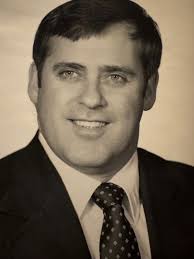
In Memoriam: Tom Shea (1938-2024)

I lost a dear friend last week. His passing made me cry. 

His name was Tom Shea and I knew him for 70 years – ever since I entered St. Columban’s high school seminary in 1954 at the age of 14. Tom was 16 then, a junior while I was a freshman. Even in such a small school of only about 100 students, juniors didn’t have much to do with freshmen.

Still however, I admired him greatly. Everybody did. He was so smart and such a great athlete. He was a strong-armed quarterback, a terrific basketball guard, a hard-throwing pitcher, excellent at any racket sport, especially good at ice hockey, a super golfer, and even (I was told) a respectable Irish hurler. He was also a crafty poker and bridge player. With all that, he never took himself that seriously and had a great sense of humor.

However, I didn’t really get to know Tom till I got to the major seminary years after high school. Even there it took a while. At the age of 21, I arrived still working on my bachelor’s philosophy degree. Meanwhile, at 23 Tom had already begun his 4 years of graduate theology work. By the time I began my theological studies, he was almost ready for ordination. That happened for him in 1964. He was ordained on December 22nd of that year – 60 years (almost to the day) before his final transition.

Besides playing with and against him on various athletic fields, the only time I remember speaking seriously with Tom in the major seminary was during the Second Vatican Council (1962-1965). I asked him for advice on what to read to catch up with the drastic changes occurring because of that historic event. I forget what he told me. But I remember following his instructions.

Because Tom was so smart, our missionary group, the Society of St. Columban, had singled him out for professorship in the seminary. They wanted him to teach Sacred Scripture. So, after his ordination, they sent him off to Catholic University in Washington, DC to get a preliminary master’s degree in theology. After two years there, he’d go on to Rome (and Jerusalem) for his terminal degree in biblical studies.

That’s when Tom and I really connected.

I was ordained in 1966. And as with Tom, the Columbans wanted me to teach in the major seminary. My field would be moral theology instead of biblical studies. But Tom and I would go off to Rome together to study – he for 3 years, and I for 5.

And oh, what a ride that would be! In Europe, we’d vacation together, ski many of Europe’s great resorts, and as brothers and colleagues sort out the details of our personal and political lives.

It began with both of us living at St. Columban’s major seminary in Milton, MA the summer before we left for the Eternal City. That was in 1967. I forget what Tom was doing in Milton. I was completing a summer course in Hebrew at Harvard. But every night the two of us drove over to Boston’s West Roxbury to play basketball with “the brothers.” We were the white boys who could ball with any of them. (I remember one night the Celtics’ Satch Sanders was there watching.)

The basketball connections continued in Rome. Both of us ended up playing in something like a G League there for a team affiliated with Rome’s professional club, Stella Azzurra. We scrimmaged against them a time or two. And it was all great fun — a great way to learn Italian culture and make Italian friends. Our Stella Azzurra team was coached by Altero Felice who later had a basketball arena named after him. We considered Altero a good friend and father figure.

While in Rome, Tom and I were also invited by Giulio Glorioso [the Italian equivalent (we were told) of Babe Ruth] to play baseball for the Rome team. (We had worked out with them one spring.) I remember the Saturday afternoon Giulio came to the Columban residence to try to persuade us to play ball that summer.

For better or worse, we passed up that offer in favor of studying German two of our summers in Europe at the University of Vienna. (German at that time was still considered essential for any serious theologian or scripture scholar.)

In a sense, both Tom and I grew up in Rome. Following Vatican II, everything was called into question. Over Pasta e Faggioli and salsiccia dinners in the Columban house at Corso Trieste 57, the 20 or so of us graduate students (all ordained priests from Ireland, Great Britain, Australia, New Zealand, Scotland, Tasmania – and we two Yanks) debated fundamental topics never open to question before Vatican II: God (Is there such a being?), Jesus (Was he somehow God? But how?), the nature of the church (Was Luther a heretic or a saint?), the priesthood (Was it necessary?). And what about mandatory celibacy? The discussions were unforgettable and life-changing.

Our friendship continued and deepened to eventually include our wives, Dee (Tom’s bride) and Peggy (mine). We spent several year-end celebrations together. And once we got together in Costa Rica for a long weekend at an all-inclusive resort. Peggy and I attended the wedding of their eldest son, Tommy in Chicago. Tom and Dee came to our daughter Maggie’s wedding in 2007 in Kentucky. Peggy and Dee remain fast friends.

The four of us got together for the last time a year-and-a-half ago in Florida. By then Tom had already been slowed by heart and lung problems. But his sense of humor never faded. Neither did his life-long interest in and commitment to spiritual growth.

Yes, Tom Shea was a close friend of mine. We grew up together for nearly three-quarters of a century, often acting as each other’s counsellor, advisor and confessor — every minute accompanied by stories and laughter.  As Peggy recently pointed out to me, his down-to-earth wisdom and example saved  me  in effect from a closed system and lonely life that otherwise would have throttled me.

So, thank you, Tom Shea for being such a good fellow traveler. You were wise, generous, humble, and always brilliant. I’m grateful for the gift of your impactful life. We’ll see each other again soon, I know.

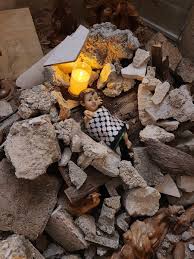
It’s Christmas & Jesus Remains Buried in the Rubble

It’s Christmas again.
And Jesus is still under the rubble
In Gaza
(Just like last year).

He’s on an operating table
There
Having his infant arms and legs
Sawed off
Without anesthesia.
Screaming for his
Already dismembered mother
Who’s been blown away
By the U.S. and Israel.
He’ll never kiss her again
Or feel her warm embrace.

All but forgotten
By holiday revelers
With mindless
“Merry Christmases!!”

Meanwhile Zionists weaponize the Bible
So the slaughter might continue.
Christians do the same
Singing maudlin carols
They don’t understand
And buying silly trinkets
In Wal-Mart.
As if God were Santa Claus,
A billionaire,
Or a racist killer.

Worse still:
As if God were
A genocidal Amerikan!

It’s as if Yeshua were not
Piss poor
And homeless at birth
Considered by imperialists
As no more than an “animal”
Among stable asses and oxen,
The son of a disgraced
Unwed teenage mother,
An underpaid construction worker,
A drunken friend of prostitutes
Houseless as an adult
The sworn enemy
Of the Jewish power establishment
And the rich
That wanted that child
From nowheresville
Slaughtered.

(Good Christians don't like people like that)

As if Yeshua were just another
Palestinian street rat,
And not
An unwelcome refugee in Egypt,
A terrorist in Roman eyes,
Their inmate on death row,
A victim of torture
And capital punishment.

“Good riddance,”
The Romans said
Just like us.

And the whole world
Wasn’t watching then either.
Few noticed
Or cared.

But should we open our eyes
We’d see a Yeshua
So much more
Than that.

He came to serve the poor.
He said.
God’s kingdom would be theirs
So would the entire earth.
Not Elon’s or Gates’ (Luke 6:24)
Or Amerika’s
Who’s blindness and arrogance
Deserves eternal damnation
Rather than the accolades
The world bestows on
Such fools
Along with Herod and Pilate
Anas and Caiaphas.

______

The pastor of Bethlehem’s
Christmas Church said
Something like that
In his own Christmas sermon
This year
Just like the one
Few noticed
When he said it
Last year.

Here’s his Xmas creche
Here’s Pope Francis with his Jesus 
In a keffiyeh-lined crib:
This year
Listen
To these holy men
And to Yeshua’s silenced voice
In the Sacred Land
Of Palestine.

Once again,
The real
Christmas Story
Is unfolding
There
Before our very eyes.

Syria: Another Regime Change Operation by the U.S. & Israel

I’m always disappointed with Democracy Now’s (DN) coverage of Syria. Its reporting on the fall of the country’s president, Bashar al-Assad was no exception. It described Assad’s deposition as primarily a triumph of freedom and the will of a brutally repressed people.

Absent from DN’s narrative was the straightforward truth that the fall of Assad was the fruit of another regime change operation. It was part of the U.S. plan announced in 2001 to depose seven governments in five years, viz., Iraq, Afghanistan, Libya, Somalia, Sudan, Syria, and Iran.

Though the American timetable was overly optimistic, with the change of regime in Syria, the U.S. has succeeded in hitting six of its seven targets. Only Iran’s government remains in place.

Let me show you what I mean by summarizing DN’s account, contrasting it with its counter narrative, and sketching the way U.S. regime change operations work.

The Official Syrian Story

For years DN’s usually critical founder, Amy Goodman, has for some reason sided with the United States and Israel by uncritically repeating their official story about the Zionists’ neighbor to the north. It tells us that:

  • Bashar al Assad is a brutal dictator who succeeded his dictator father to rule Syria with an iron fist for the last half century and more.
  • He has not only claimed absolute power in Syria,
  • But has run an extensive secret prison system there (a “human slaughterhouse”) where captives are systematically mistreated, tortured, and held without charge.
  • His use of chemical weapons against those objecting to his rule is well documented by independent witnesses such as the Syrian Civil Defense Organization,  the “White Helmets.”
  • For all these reasons, the U.S. and Israel have long held that “Assad must go.”
  • Moderate rebels” have recently transformed that imperative into facts on the ground. Thankfully, they have successfully overthrown the hated dictator.
  • Since his removal from office, his brutality and consequent unpopularity have received ample testimony and denunciation by ordinary Syrians who are universally celebrating his fall from power.
  • Thus the U.S. and Israel (as champions of democracy, just war, and humane incarceration, and as opponents of torture and the killing of innocent civilians) have triumphed once again in yet another mid-east country.
  • The triumph mirrors what they have accomplished so idealistically and benevolently in Iraq, Afghanistan,  Libya, Lebanon, Sudan, Somalia and other countries benefitting from their wars fought for democracy and peace.

That’s the official line DN’s Amy Goodman consistently presents and/or implies.

A More Complete Picture

However, what Goodman’s account fails to explore are its following contradictions that would have us forget that:

  • The foreign powers advocating and celebrating the end of Assad’s cruelty (i.e., Israel and the U.S.) are the current perpetrators of genocide in Palestine. Arguably, that deprives them of ability to convincingly champion human rights in any forum. It demonstrates that they have no concern about civilian deaths, secret prisons, unjust torture, democracy, freedom, or peace.
  • In fact (according to George Galloway) during its war on terror, the U.S. used Syrian prisons as black sites to which they rendered “terrorists” for torturous interrogation.  
  • Moreover, the “moderate” agents fulfilling the U.S. and Israel’s imperative to remove Asad from power are successors to the very “terrorists” responsible for al-Qaeda’s 9/11 attacks 23 years ago).
  • That is, while designating Syria as a “state sponsor of terrorism,” the U.S. has once again allied itself with al-Qaeda as it had in Afghanistan during Russia’s war there (1979-1989).
  • Additionally, the U.S. has crippled the Syrian economy by illegally occupying its eastern oil fields since 2014 effectively stealing its oil revenue since then.
  • While Israel has similarly occupied its neighbor’s Golan Heights.
  • Syria’s economy and population have suffered severe hardships under a U.S. sanctions regime that started in 2011 and whose effects worsened following a massive earthquake in February of 2023. For years they’ve had to function on the provision of a single hour of electricity each day.  

Civil Discontent in Syria

As for the testimony of Syrians applauding and celebrating the fall of Asad . . ..  It too demonstrates the effectiveness of standard American policy against designated enemies whose political “regimes” the U.S. wishes to change. That policy never deviates from the following procedure:

  1. Vilify the regime leader as the latest incarnation of Hitler.
  2. Under the pretext of punishing him, use sanctions, economic blockades, bombing, propaganda, bribery, election interference, terrorism, and internal subversion whose real purpose is to make the lives of locals so miserable
  3. That they will arise,
  4. Overthrow the regime in question,
  5. And celebrate the victory as the triumph of democracy.

This is the standard policy followed not only against Syria, but against official enemies such as Cuba, Nicaragua, and Venezuela.

The subversion invariably causes the threatened governments to adopt their own counter-policies that the U.S. and its allies then describe as authoritarian, oppressive, and brutal. The policies include imprisonment of compromised political opponents, jailing and mistreatment of terrorists (no harsher btw than the mistreatment of prisoners in Israel and the U.S.), and restrictions on (usually foreign allied) press along with fifth column civil and religious organizations. All these government actions provide further evidence of the illegitimacy of the regimes in question.

They also provide well-meaning news sources like Democracy Now with reasons to uncritically repeat imperialist talking points.

Conclusion

Listening to Democracy Now’s account of a people’s triumph in Syria after more than a half century of dictatorship made me think of Cuba. As a friend of the revolution there and as a frequent visitor to the island, I couldn’t help thinking how in the case of a successful uprising there (God forbid!), a similar sort of account might be concocted.

There’d be the same people dancing for joy in Havana’s streets and the same people saying on camera how relieved they are that the hated regime had been deposed. There’d also be the same ex-pat Cuban professors from prestigious U.S. universities sharing the joy and supplying historical details about the brutalities of Castro’s legacy.

Misinformed viewers would be led to conclude “Thank Goodness Cubans are finally free!”

But if the current Syrian template were followed, those viewers would never be stimulated to question the official story. They’d never be reminded of the disastrous effects of 60 years of sanctions, blockade, and acts of terrorism against the state. They’d never know about attempted assassinations of the country’s president. Neither would they think critically about the effect of anti-Cuban propaganda on their own psyches.

The point I’m trying to make here is that questions should always be raised about official stories concerning designated enemies of discredited imperialist countries like the United States and Israel.

They should be asked as well when perpetrators of genocide decry the human rights record “dictators” carefully selected from a long list of tyrants routinely supported by the complaining parties and when the black sites and “slaughterhouses” of the offending dictators have been used by their accusers themselves.

Yes, critical reporters should be able to identify such contradictions.

Simply repeating “the official story” helps no one.

Democracy Now is usually better than that.

Western Neocons Quake as Trump Threatens Peace in Ukraine

Donald Trump’s landslide victory last month and his repeated promise to end war in Ukraine has Washington neocons quaking in their boots. How can they save their beloved Project Ukraine and prevent peace from breaking out on Russia’s border?

That’s the question Foreign Affairs (FA) tackled this week in an article by Elie Tenenbaum and Leo Litra. It’s entitled “Ukraine’s Security Now Depends on Europe.” The piece was marked by significant departure from the familiar “official story” on Ukraine. Yet it retained enough of that story’s elements to virtually render impossible reasoned discussion about ending the Ukrainian debacle.

The Official Story

To begin with, the FA article tells the story that aficionados of Foreign Affairs, the New York Times, and Washington Post have been programmed to accept. Taking its cue from the White House, the story holds that Putin is the aggressor in Ukraine. He cannot be trusted, lies habitually, routinely breaks promises, and remains unconstrained by international law.

Accordingly, everyone knows that his attack on Ukraine was unprovoked, and that Russia had been raining missiles on terrorized Ukrainian armed forces in the Donbas since 2014. It was Putin who backed out of the Minsk Accords as well as voiding the Istanbul peace framework in March of 2022. Putin also obstinately refuses to consider peace negotiations even though his army has suffered casualties by the hundreds of thousands – far more than his Ukrainian opponents. Moreover, Russia’s economy is crumbling while its citizens generally do not support the war effort.

That’s the Official Story. It’s the one largely repeated by Tenenbaum and Litra.

A Competing Narrative   

However, the story’s elements are contradicted point by point by highly credible scholars, diplomats, ex-military and CIA officials and independent journalists. A short list of the latter includes John Mearsheimer, Jeffrey Sachs, Colonel Douglass MacGregor, Scott Ritter, Ray McGovern, Alexander Mercouris, Brian Berletic, and Chris Hedges.

All these maintain that a U.S.-led NATO provoked the war in Ukraine after completely ignoring Vladimir Putin’s peace proposal advanced in December of 2021. Moreover, Russia’s invasion mirrors what the United States would do – in fact what it has done – in similar circumstances. Recall the 1962 Cuban Missile Crisis. Remember America’s many violent invocations of the Monroe Doctrine to protect its interests in its Latin American “backyard” by direct invasion, proxy wars, and bloody regime changes.

According to the analysts just mentioned, it is the U.S. and NATO that lie habitually and cannot be trusted. In fact, the whole Ukrainian conflict is based on a broken promise by U.S. Secretary of State, James Baker, to Soviet President Mikhail Gorbachev in 1990. It said that NATO would not expand even “one inch” towards Russia.

Then (as admitted by German ex-prime minister Angela Merkel) NATO further tricked Russia into signing the Minsk Accords to provide time for Ukraine to build up its military for confrontation with its neighbor. According to Merkel, NATO had no intention of observing either Minsk I or Minsk II.  

Additionally, in December of 2021, when Russia offered NATO those terms to prevent the Kremlin’s invasion of Ukraine, the U.S. refused to even consider the proposal. Two months later, after only one month of Russia’s “Special Military Operation,” and after Ukraine and Russia had initialed accords to ensure the former’s territorial integrity in exchange for neutrality on Ukraine’s part, NATO persuaded its protégé to fight on rather than finalize the accord.

The result of such deceptions has been complete catastrophe for Ukraine. Russia’s strategy of attrition has claimed more than 600,000 lives and seriously wounded 100,000 more. As a result, Ukraine is running out of men, its economy is in freefall, and Russian troops are moving relentlessly westward by kilometers every day. Meanwhile, Russia’s economy is flourishing despite the war generally supported by its citizens. There is no way Ukraine can bring Project Ukraine to a successful conclusion.

Cracks in the Official Story

Up until recently, NATO’s official story held unmovable sway. However, the FA article considered here exhibits important concessions to the unofficial account. For instance, Tenenbaum and Litra admit that: by all accounts Ukraine is losing the war as Russian troops rapidly move towards Kyiv. In fact, it seems nearly impossible to reverse this desperate situation since Ukraine and its allies have not only run short of weapons but also, of soldiers who are getting killed and wounded at unsustainable rates. Additionally, the Russian air force and air defense mechanisms are unmatched by Ukraine. Kremlin’s troops also far outnumber the Ukrainians while using and replacing their weapons at a scale Ukrainian allies cannot match.

In this dire situation, it is time for negotiations on terms NATO (not Russia) must dictate to possibly include: (1) vastly increased and decades-long economic and military aid to Ukraine, (2) a ceasefire that temporarily freezes current positions of both the Russian and Ukrainian front lines, (3) granting Ukraine NATO membership before hostilities cease or postponing the country’s entry into NATO for 10 to 20 years, (4) the deployment of a NATO peacekeeping force to ensure the frozen hostilities, and/or (5) more extensive intervention by multinational NATO land, sea, and air forces to act as a Security Shield or Guarantor Force against future Russian threats.    

The problem is however (even for Tanenbaum and Litra) that absent a “significant military defeat or internal political change,” Moscow will never accept such terms, but is likely to insist instead on settling the war on the battlefield.

Nonetheless the authors hold that the Russian president may come to the negotiation table because: his Special Military Operation is unpopular at home. His army has suffered tremendous battlefield losses. His stockpile of Soviet Era weapons is rapidly diminishing. The Russian economy is overheating while public spending, inflation, and interest rates are exploding.

Conclusion

Do you see how the Official Story is weakening and now finds itself on the shakiest of grounds? It has finally made important concessions to its unofficial counterpart. It admits that Ukraine is losing the war, that it is getting weaker, and Russia is getting stronger.  

On the other hand, FA’s insistence on the remnants of the Official Story render virtually impossible intelligent discussion of Ukraine’s future. Depending on one’s source of information – mainstream or alternative – it becomes a kind of “he said, she said” debate over details that are becoming increasingly irrelevant. Practically speaking, it matters little now who started the war, who backed out of agreements first, who’s lying, and who’s telling the truth. What matters now are facts on the ground. And all of them favor Russia.

So, given new agreement on the conflict’s inevitable direction, and given the promises of Mr. Trump, it remains unclear why Ukraine would continue sacrificing its soldiers for no good end.

After all, Ukraine lacks leverage in any negotiations that include proposals for Ukrainian inclusion in NATO. Membership now or ten years from now is a non-starter as far as the more powerful Russians are concerned. Russians are in the driver’s seat now and it must be remembered that a major purpose of their SMO was to prevent Ukraine from joining NATO.

Also, it is unclear why Tanenbaum and Litra think that a NATO peacekeeping force would be acceptable to Mr. Putin. Why not China and North Korea?