Circumstantial Evidence and the Epstein Affair: What Trump, Maxwell, and Western Intelligence Reveal

Like many Americans who have not yet surrendered their capacity for outrage, I’ve been haunted by the Jeffrey Epstein Affair. It refuses to go away—not because corporate media wish to pursue it (they manifestly do not), but because it cuts to the rotten core of empire itself.

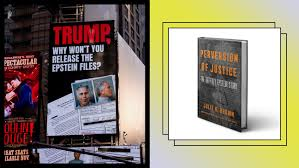
For years now, we’ve been promised the release of the “Epstein files”—thousands of pages of testimony and hours of videotape implicating political leaders, judges, corporate moguls, Hollywood celebrities, and clergy. We’re told they exist. We’re also told—by the very elites most likely ensnared—that there’s “nothing to see here.” The truth, however, seems closer to what insiders have whispered: that those files contain enough evidence to topple governments across the Western world.

What has especially caught my attention is the strange “reluctance” to release those files publicly, and the curious way the story itself has been managed. Instead of honest transparency, we have smoke screens: Epstein dies in custody under suspicious circumstances; Ghislaine Maxwell is shuffled quietly from high-security to minimum-security prison; Donald Trump alternately promises to release Epstein’s files, then dismisses the whole thing as a “hoax.”

Why?

Because the evidence points not only to sexual predation, but to the use of sex, blackmail, and child trafficking as tools of statecraft—involving not just corrupt billionaires, but also the intelligence agencies of the United States, Israel, and the United Kingdom.


Epstein, Maxwell, and Intelligence

Let’s be clear: Jeffrey Epstein was no mere “hedge fund manager.” His wealth was largely unexplained, his client lists opaque. Multiple sources—including Alexander Acosta, the U.S. Attorney who gave Epstein his infamous “sweetheart deal” in Florida—have testified that Epstein “belonged to intelligence.” Acosta was told explicitly: back off, Epstein was “above your pay grade.”

But which intelligence service? All signs point to several.

  • Mossad (Israel): Ghislaine Maxwell’s father, Robert Maxwell, was long known to be a Mossad asset. His daughter continued that role, serving as Epstein’s partner in recruiting, grooming, and trafficking underaged girls. Several credible reports suggest Epstein and Maxwell’s operation doubled as a Mossad “honey trap”—a means of collecting dirt for purposes of blackmail on powerful Western leaders.
  • CIA (United States): Epstein’s New York townhouse was reportedly wired floor to ceiling with hidden cameras. Who collected and stored that footage? Who protected him after each arrest threat? The CIA had both motive and opportunity: control through blackmail has always been central to its toolkit. (BTW, in her recent interview with Deputy Attorney General, Todd Blanch, Ms. Maxwell denied that there were any recording devices in Epstein’s New York mansion — a claim that is easily refuted.)
  • MI6 (Britain): Epstein’s circle overlapped heavily with British aristocracy, including Prince Andrew. The United Kingdom’s intelligence services, like their American and Israeli counterparts, benefited from access to compromising materials and plausible deniability through “private” networks.

In other words, Epstein’s operation was not an aberration. It was systemic—a private-public partnership between elites and intelligence agencies designed to entrap and control.


Trump’s Place in the Web

So where does Donald Trump fit in? The circumstantial evidence is overwhelming:

  1. Friendship with Epstein: Trump himself admitted they were close. Photographs and flight logs confirm this. They partied together in the 1980s and 90s—often in the presence of girls who were clearly underage.
  2. Connections to Organized Crime and Intelligence: Trump’s “mentor,” Roy Cohn, was not just a Mafia lawyer but also a fixer with CIA ties. Trump inherited from Cohn both his ruthlessness and his network.
  3. The Access Hollywood and Carroll Cases: Trump’s own recorded boasts of sexual assault, along with civil judgments against him for sexual abuse, demonstrate a pattern of predation that makes his involvement with Epstein’s underage network plausible, even likely.
  4. Obstruction of Evidence: Trump promised as president to release the Epstein files but instead allowed the FBI to redact his own name from them. His sudden dismissal of the entire affair as a “hoax” is not the language of innocence but of guilt management.
  5. Ghislaine Maxwell’s Treatment: Under Trump, Maxwell was moved to a lower-security facility and treated more like an informant than a convicted trafficker. Why? Perhaps because she knows too much, and her silence needed to be purchased with privileges.

Circumstantial Evidence and the Law

Of course, defenders say all of this is “only circumstantial.” But American courts have long recognized that circumstantial evidence can be just as probative as direct evidence. After all, few crimes of power leave smoking guns. What we have instead are:

  • Patterns of association.
  • Unexplained wealth and protection.
  • Testimonies suppressed.
  • Defendants obstructing evidence.
  • Intelligence agencies circling like vultures.

These, taken together, paint a picture no less damning than a video recording.


The Larger Stakes

What makes this affair explosive is not merely whether Donald Trump is guilty of pedophilia. It is that the entire Western system—Washington, London, Tel Aviv—may be implicated in using sexual blackmail as a governing tool.

Ordinary people may not follow Russiagate, gerrymandering, or campaign finance reform. But they understand rape. They understand pedophilia. They understand that leaders who use children in blackmail operations have crossed a line that should end not only their careers but also the legitimacy of the system they serve.

If the Epstein files are ever released unredacted, the consequences could be revolutionary.

That is precisely why they remain hidden.

And precisely why we must demand their unveiling.

Notes and Sources

  • Alexander Acosta’s statement about Epstein “belonging to intelligence” – The Daily Beast, July 2019.
  • Gordon Thomas, Robert Maxwell: Israel’s Superspy (2003).
  • Whitney Webb, One Nation Under Blackmail, Vols. 1–2 (2022).
  • Vicky Ward, “Jeffrey Epstein’s Sick Story Played Out for Years in Plain Sight,” Vanity Fair, July 2019.
  • BBC, “Prince Andrew and Jeffrey Epstein: What You Need to Know,” November 2021.
  • Flight logs and photos released in U.S. District Court (Southern District of New York) filings, 2019.
  • Wayne Barrett, Trump: The Deals and the Downfall (1992).
  • Access Hollywood tape, October 2016.

Ryan Coogler’s Mythical Horror Film “Sinners” (with spoiler alert)

Ryan Coogler’s 2025 vampire horror film has already shattered box office records for the genre. Coogler, of course, is the acclaimed director of Creed, Black Panther, and its sequel Black Panther: Wakanda Forever.

Under his direction, Sinners has quickly emerged as a contender for Academy Awards. The film unfolds as a startling parable about white supremacy, the Ku Klux Klan, and the transformative power of music—specifically Delta Blues—as a force of resistance and exorcism.

Its allegorical nature is signaled immediately in a brief prologue: “There are legends of people born with a gift of making music so true, it can pierce the veil between life and death conjuring spirits from the past and the future. . ..” From the outset, viewers are alerted that what follows is not merely a story but a mythic enactment, one that reveals hidden and uncomfortable truths alongside enduring strengths.

At the heart of the narrative is Sammie, a gifted young blues musician whose talent verges on the supernatural. The son of a Baptist minister, he is known as “Preacher Boy.” His cousins—identical twin gangsters “Smoke” and “Stack” (both portrayed by Michael B. Jordan)—return to their Mississippi hometown from Chicago in 1932 with plans to open a juke joint. There, however, they encounter a form of evil more insidious than anything they experienced working for Al Capone in the North: a vampire embodiment of the Ku Klux Klan, led by a mysterious Irishman named Remmick.

As a bloodthirsty Klansman driven by racism and greed, Remmick embodies the white supremacist urge to exploit and destroy Black cultural achievements. His Irish music lures listeners, yet his touch alone is enough to infect victims, transforming them into vampires. Their numbers grow at a terrifying pace.

Inside the juke joint, however, Preacher Boy counters with his own magic. His blues conjure ancestral spirits, who appear in traditional African garb, mingling with dancers in an atmosphere charged with sweat, alcohol, and raw sexuality. Recalling the evening years later, Preacher Boy—portrayed in this sequence by blues legend Buddy Guy—reflects, “it was the best day of my life.”

Everything reaches its climax in a violent confrontation: vampires swarm the juke joint, leading to its destruction and a final showdown between Preacher Boy and Remmick. For a time, it seems the Klansmen have prevailed. Yet Preacher Boy ultimately defeats Remmick, while “Smoke” kills the leader of the local Klan chapter. In this way, Preacher Boy’s power as an exorcist is at least partially affirmed.

Still, Sinners resists any one-dimensional reading. Its parable connects the African American struggle against white vampirism with broader histories of oppression and survival, including:

  • The resistance of Native Americans, who as survivors of genocide developed means to neutralize “white blood-suckers.”
  • The brutalities of slavery and the cotton economy.
  • The prison chain gang system and the terror of lynching.
  • The complex roles of mixed-race women, some of whom could “pass” as white, alongside their Aunt Jemima counterparts, confined to domestic labor yet equally sexual.
  • Competing spiritual traditions—those of colonial missionaries, Black Baptists, the Klan, Native Americans, Voodoo, and even Satan worship.
  • The place of Chinese immigrants, often positioned as bridges between Black and white communities.

For those who can stomach its gore, Sinners is both horrifying and revelatory. It insists that horror has been central to the Black historical experience—every bit as present as the beauty and resilience expressed through music. As Coogler himself explains, the Delta blues were created by artists “living under a back-breaking form of American apartheid,” and he describes the genre as “our country’s most important contribution to global popular culture.”

In that light, the film’s brutality is not gratuitous but emblematic. As a vampire horror story, Sinners is gruesome, but African American history has been far bloodier. Compared to that reality, the horror on screen feels restrained.

See for yourself.

A Gospel for Palestinians under Siege

Readings for the 20th Sunday in Ordinary Time: JER 38: 4-10; PS 40: 2-4, 18; HEB 12:1-4; LK 12: 49-53

Today’s gospel excerpt presents real difficulties for a thoughtful homilist. That’s because it shows us an apparently confrontational Jesus — one who sounds completely revolutionary. It raises an uncomfortable question: why would the Church choose such a passage for Sunday worship? What are we supposed to do with a Jesus who doesn’t sound like the soft-focus “Prince of Peace” in our stained-glass windows?

In the context of Zionist genocide and starvation of Palestinians, perhaps this is providential. Maybe this gospel can help us understand a truth that polite Christianity often avoids: people living under the heel of settler colonialism supported by empire — even people of deep faith — sometimes find themselves pulled toward resistance that is anything but gentle.

We forget that Jesus and his community were not free citizens in a democracy. They were impoverished, heavily taxed subjects of an occupying army. Roman power loomed over their fields, their marketplaces, their synagogues. By today’s international standards, they were an occupied people with the legal right to resist.

And in Luke’s gospel today, Jesus says, without apology:

“I have come to set the earth on fire, and how I wish it were already blazing… Do you think that I have come to bring peace on earth? No, I tell you, but rather division.”

In Matthew’s parallel account, the language sharpens:

“Do not suppose that I have come to bring peace. I did not come to bring peace, but a sword.”

These are not the soundbites that make it into Christmas cards. They make us ask: what happened to “Turn the other cheek” and “Love your enemies”?

Some scholars, like Reza Aslan, suggest that Jesus’ nonviolence applied primarily within his own oppressed community, while his stance toward the Roman occupiers was far less accommodating. Others, like John Dominic Crossan, argue that Jesus was unwaveringly committed to nonviolent resistance, and that later gospel writers softened or altered his message to make it more palatable in times of war.

Either way, the backdrop remains the same: an occupied land, a foreign military presence, a people dispossessed. In that context, fiery words about “division” and “swords” are not abstract theology. They are the language of a people under siege, the language of survival.

This is where the parallels to our world are hard to miss. Today, in the land we call Israel-Palestine, we see a modern occupation with its own walls, checkpoints, home demolitions, and armed patrols. We see Palestinian families pushed off their land in the name of “security.” We see the weight of military might pressing down on those who have little power to push back.

This is not to glorify violence but to say that this kind of daily humiliation, dispossession, and threat inevitably breeds anger, desperation, and — for some — the temptation to meet force with force. The gospel today, like the headlines from Gaza and the West Bank, confronts us with the messy, often tragic choices that emerge under occupation.

As Christians, we have to wrestle with this. Would we cling to a nonviolent ethic, like the Jesus Crossan describes? Or, living under bulldozers and armed patrols, would we find ourselves understanding — perhaps even empathizing with — those who choose other paths?

Jesus’ words today refuse to let us take the easy way out. They call us to name the real causes of conflict — not some vague “ancient hatred,” but the concrete realities of military domination, settler colonialism, and American imperialism. They challenge us to imagine what peace would require: not simply the silencing of the oppressed, but the dismantling of systems that oppress them in the first place.

Because if we only condemn the flames without questioning the spark, we miss the deeper gospel truth: that justice is the only soil in which true peace can grow.

Rescuing Faith from Capitalism: A Theological Response to Project 2025

Readings for 18th Sunday in Ordinary Time: Ecclesiastes 1:1-2, 2:21-23; Psalm 90 3-6, 13, 14, 17; Colossians 3: 1-5, 9-11; Luke 12: 13-21

I’ve recently been invited to join the Arc of Justice Alliance (AJA). It’s a new progressive think-and-action movement designed to offer a coordinated, long-term alternative to the far right’s increasingly authoritarian agenda.

No doubt you’ve heard of the Republican Project 2025. Backed by the Heritage Foundation and other major right-wing institutions, it’s a blueprint for seizing executive power, dismantling federal regulatory structures, militarizing domestic politics, and further entrenching white Christian nationalism. It is as serious as it is terrifying.

The Arc of Justice Alliance is our answer. It recognizes a hard truth: for over 50 years, the U.S. right has invested billions into building a machine—media networks, policy mills, judicial pipelines, and ideological training camps for candidates. Progressives, by contrast, have often been merely defensive, scattered and uncoordinated. That’s changing now. AJA is bringing together scholars, activists, spiritual leaders, artists, and organizers to craft a long-term vision for democratic justice, human rights, and environmental sanity.

But here’s something that may surprise you: one of the right’s most potent weapons has been theology.

The Republican machine has spent decades coopting the Judeo-Christian tradition, turning it into a moral fig leaf for capitalism, nationalism, and even genocidal violence. Faith has been hijacked—not just by televangelists, but by policy strategists who know how powerful religion can be in shaping hearts and winning votes.

The results? A public religion that celebrates guns over peace, capitalism over compassion, and settler colonialism— in Palestine and elsewhere—over human dignity.

As a liberation theologian, I’ve been invited by AJA to help reclaim the authentic Judeo-Christian tradition. To rescue the voices of the prophets—from Moses to Jesus to Paul—from those who’ve turned them into champions of empire. We’re done letting Jesus be portrayed as a flag-waving American whose top moral priorities are deregulated markets, gun rights, and misogyny.

This week’s liturgical readings couldn’t be more timely. They mock the cult of wealth accumulation and call for spiritual liberation from materialist obsession. Ecclesiastes calls it “vanity” to work endlessly, lose sleep over your earnings, and die before enjoying anything. Psalm 90 reminds us life is brief—we might not wake up tomorrow. Paul tells us to set our minds on things beyond consumerism, and Jesus, in the Gospel of Luke, outright laughs at the man who builds bigger barns while ignoring his soul.

These aren’t just pious musings. They’re indictments.

They expose what capitalism demands of us: exhaustion, anxiety, competition, disconnection. They also expose what it consistently fails to deliver: peace, community, purpose, or justice.

Here’s the deeper issue: capitalism isn’t just an economy—it’s a theology. It teaches that your worth is your wealth. That you are alone, in competition, in a world of scarcity. That power, not compassion, is what keeps you safe. That “salvation” is financial security.

But the deeper tradition—the one the AJA seeks to reclaim—teaches something radically different.

It teaches that our lives matter not for what we earn, but for how we love. That justice, not greed, is the heartbeat of the universe. That our deepest wealth is found in community. That joy is a collective act of resistance.

And crucially, it teaches that we must name and dismantle the systems—economic, political, and religious—that keep us enslaved to fear and false gods.

That’s why we’re building the Arc of Justice Alliance. Not just as an intellectual exercise, but as a spiritual and moral response to empire. We are building a machine of our own—not to mirror the right’s authoritarianism, but to match its discipline and exceed it in vision.

So let’s stop pretending the Gospel is about prosperity. Let’s stop letting capitalism wear a halo.

Let’s laugh, like Jesus did, at the absurdity of endless accumulation. Let’s build networks of joy, resistance, and solidarity. Let’s speak clearly, act boldly, and remember what freedom really looks like.

This is what the moment demands. And this is what the AJA stands for.

Please join us!