Sunday Homily: Pope Francis & St. Peter – Throwing Rocks at Empire Then and Now

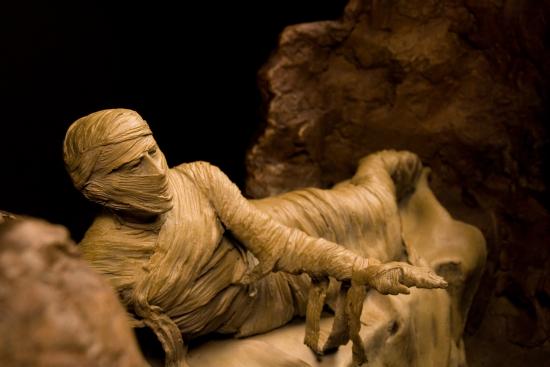
Stone thrower

Readings for the Solemnity of Sts. Peter and Paul: Acts 12: 1-11; PS 34: 2-9; 2TM 4: 6-8, 17-18; MT 16: 13-19, http://www.usccb.org/bible/readings/062914-day-mass.cfm

Pope Francis is at it again. He’s throwing stones at the U.S. Empire. (Details to follow.) Today’s liturgy of the word tells us that in doing so Francis is following in the footsteps of St. Peter, the” rock-thrower” of whom tradition tells us Pope Francis the successor.

The liturgy promises that joining Francis and Peter in their resistance to empire, while accepting the mysterious keys to God’s kingdom can release us from even the most impregnable imperial prison. This should give all of us encouragement as we struggle against the powerful “beast” whose policies would rather see behind bars people like Francis, Peter and many reading this homily.

To begin with, think about our prophet-pope. Three weeks ago, he reaffirmed what has become a theme of his papacy. Without mentioning the United States by name, he condemned the economic system “America” and its European partners champion.

He also condemned the wars the U.S. prosecutes and weaponizes. According to the pope, far from advancing freedom or democracy, the purpose of such war is to maintain a system of greed based on the worship of money. As such, that system is the cause of scandalous inequalities and unemployment across the globe – even as exposed by French economist, Thomas Picketty in his best-selling Capitalism in the Twenty-first Century.

Here are the pope’s actual words:

“We discard a whole generation to maintain an economic system that no longer endures – a system that to survive has to make war, as the big empires have always done. But since we cannot wage the Third World War, we make regional wars. And what does that mean? That we make and sell arms. And with that the balance sheets of the idolatrous economies — the big world economies that sacrifice man at the feet of the idol of money — are obviously cleaned up.”

As indicated earlier, those words can be understood as following the anti-imperial rock-throwing tradition of Simon the apostle. After all the nom de guerre of that particular insurgent was “Peter,” a name some say meant “rock-thrower” – probably a reference to his prowess at hurling stones at Roman soldiers who occupied his homeland of Galilee. Peter was an insurgent not unlike those who have plagued U.S. misadventures in Iraq and Afghanistan. In today’s gospel, Matthew turns rock-throwing into an anti-imperial metaphor describing the foundation of the Jesus Movement.

The evangelist does so by having Jesus raise three Socratic questions about God’s reign contrasted with Caesar’s – always the focus of Jesus’ teaching.

Jesus’ first question sets an “apocalyptic” tone for the other two. The question represents a marker telling us that what follows will be highly political – a criticism of the imperial order Jesus and his friends found it so painful to live under. (The literary form “apocalypse” always entailed critique of empire.)

So seemingly out of the blue, the carpenter-rabbi asks, “Who do people say the ‘Son of Man’ is?” The question refers us, not to Jesus, but to a revolutionary character introduced in the Book of Daniel – written during the occupation of Palestine under the Greek emperor, Antiochus IV Epiphanes. Daniel’s character was “the Human One.” The book’s author sets that figure in sharp contrast to “the Beasts” (including a lion, a leopard and an iron-toothed dragon) who represent the imperial oppressors of Israel from the Egyptians through the Assyrians, Babylonians, Medes, Persians, and Greeks. In Jesus’ context, the Roman occupiers were the latest bestial incarnation. Everyone knew that.

According to Daniel’s author, the Human One would establish God’s compassionate (humanistic) order destined to replace all savage imperial arrangements. The resulting Kingdom would be friendly not to the royalty, the generals, “our troops,” or the 1%, but to those the biblical tradition identifies as God’s favorites – the widows, orphans, and undocumented foreigners. (This Sunday’s responsorial psalm calls such people the poor, the lowly, fearful, ashamed and distressed. They are the ones, the responsorial says, whom God can be counted on to rescue.)

In answer to Jesus’ question about the Son of Man’s identity, his disciples answer, “Some say he was John the Baptist, others Elijah, still others Jeremiah or one of the prophets.”

Then Jesus asks, “what about me? Who do you think I am in the apocalyptic context I’ve just set – at this particularly pregnant moment when all of us are breathlessly expecting a change in World Order? That’s Jesus’ second question this morning.

Not surprisingly, Peter takes the bait. “You are the messiah,” he responds, “the Son of God.” With these words, the Jewish fisherman is not making a scholar’s metaphysical statement about Jesus’ “consubstantiality” with “the Father.” Rather, he’s distinguishing Jesus from the Roman emperor – the most prominent claimant to the titles, “Messiah” and “Son of God.” Yes, both “Messiah” and “Son of God” were imperial titles. Everyone knew that too.

This makes Peter’s statement highly political. It identifies Jesus as the true head of the New Order which prophets like John the Baptist, Elijah and Jeremiah painted as the Dream of God. In words more relevant to our own time, Peter’s “confession of faith” is like saying “You, Jesus, are the real President, and your order has nothing to do with the United States or ‘America.’ In fact, it turns the values of empires – be they Rome or the United States – completely on their heads.”

Jesus’ response? (And this is the implied third question raised by Jesus – about Peter’s identity.) “You’re right, Simon. They don’t call you ‘Rock Thrower’ for nothing. And you’ve just thrown the most devastating rock of your life – this time at the Roman Empire itself. God’s kingdom puts the last first, the poor above the rich, and prostitutes and tax collectors ahead of priests and rabbis.

Jesus’ further comment shows that Peter has not merely thrown a rock; his understanding of God’s “preferential option for the poor” has moved a mountain. Recognizing Jesus and his priorities as the alternative to empire’s bestial order provides the foundation for the entire Jesus Movement.

It provides the KEY to the very kingdom of heaven. And the key is this: all human acts, whether they bind others (as empires always do) or free them (as Jesus’ followers are called to do) have cosmic significance. “What you bind on earth,” Jesus says, is bound in heaven. What you loose upon earth is loosed in heaven.” To repeat: empire’s nature is to bind the poor. In contrast, Jesus’ followers are called to loosen the bonds of those the empire identifies as “the least.” No effort on behalf of human liberation is insignificant. Despite appearances, they are stronger than those of empire.

As if to illustrate the overwhelming power of God’s loosening over imperial bondage, today’s opening reading from the Acts of the Apostles recounts the miraculous release of Peter from prison. (Prisoners, of course, are also prominent among God’s favorites.) Like our situation today as we attempt to oppose the beast of empire, Peter’s seemed particularly hopeless to say the least. Rome’s puppet, Herod, was waging a major persecution of Jesus’ followers – for their Christ-like opposition to his patron, Caesar. In the process, prominent community leaders have been killed.

Peter himself has been arrested and is awaiting trial. He’s guarded by 16 heavily armed soldiers. He’s restrained by twice as many chains as normal. As he sleeps, one guard stands vigilant to Peter’s right, another to his left. Guards are also posted outside the prison door. The entire city is locked by an iron gate.

And yet Peter escapes. An “angel” (a representative of the cosmic power Jesus referred to) comes to Peter’s rescue. Almost as in a dream, he passes through one obstacle after another. And suddenly the “powers of heaven” set him free.

Joseph Stalin once famously belittled papal power by asking, “And how many divisions does the pope have?” The answer in today’s gospel –“innumerable.” Pope Francis’ words will have their effect, because their point is to loosen the bonds restraining the world’s poor. In the long run, empire’s power is doomed.

Be like Francis then. Resist neo-liberalism and the wars that force its policies on the world. Speak the truth. Work for justice.

History, the cosmos – God is on our side!

That’s the message of today’s liturgy of the word.
Cuba: the Most Important Country in the World!

Malecon

Early in my just-ended three-week visit to Cuba, my wife and I were strolling along Havana’s stunning Malecon walkway which stretches for miles along Havana’s northern coast. It was mid-afternoon on a Friday. We couldn’t help noticing how the seafront was more gorgeous than ever.

Both Peggy and I had been to Cuba many times, but it had been seven years since our last visit. In the meantime, buildings along the Malecon had taken on new coats of paint. Greens and whites, reds, golds, oranges, and blues sparkled in the sunlight alongside as yet unpainted decrepit apartment buildings. As ever, clotheslines of bed sheets, shirts, blouses and underwear flapped from balconies in the sea breeze.

Yes, we couldn’t help noticing, things had changed drastically since our last visit. And it wasn’t only the paint and scaffolding outside the buildings under reconstruction.

Tourists were everywhere. Even those “Hop-on, Hop-off” double-deck tour busses which we had seen in Europe passed at regular intervals. Havana’s atmosphere wordlessly conveyed an optimism we had not witnessed since we began visiting Cuba in 1997.

Sharing observations like that, we suddenly heard someone call out to us.

“Hey, where are you from?” The young man addressing us was Cuban, tall, black and smartly dressed in jeans, Nike T-shirt and sneakers. His wife was lighter skinned and similarly dressed. Both were friendly and smiling. Seeing the couple reminded us that Cuba has a largely Afro-descendent population.

“We’re from the United States,” I replied.

“Oh, the U.S.!” The young man smiled broadly. “We love the United States; the U.S. is the greatest country in the world!” His wife shook her head In agreement.

“No,” I contradicted, “Cuba is the greatest country in the world.”

“That’s where you’re wrong, my friend,” the young man said still smiling. “Cuba is the greatest country in Latin America. The United States is the greatest country in the world!”

The encounter spoke volumes about the new Cuba that impressed us so as we walked the Malecon. The exchange offered a snapshot of an economy that is rebounding from a deep depression, of a people who are friendly, proud and patriotic, and of Cuban aspirations to U.S. levels of consumption. That aspiration contains both promise and threat.

But before I get to that, let me tell you more about our visit. . . .

This time we were in Cuba as part of a Berea College summer school course. We called the course “Cuba: Resilience and Renovation.” Ours was a fact-finding study. What has Cuba been? What will it become? Those were our questions. Thirteen students engaged the conversation along with my daughter and her husband, and several friends. It was great fun.

Our course took us from Havana eastward to Varadero, Santa Clara, Matazanas, Camaguey, and Santiago de Cuba. We filled our days with conferences involving academics and government officials including a representative of the U.S. Interests Section (the U.S. quasi-embassy in Havana).

We found ourselves chatting with people on the street; some of us went into their homes. We met students, social activists, feminists, representatives of the LGBT community, farmers, co-op representatives, merchants, Santeria practitioners, Baptist ministers, medical personnel, hospital patients, children and the elderly in a day-care centers, and members of a Committee in Defense of the Revolution.

On a couple of occasions, I spoke with a fellow OpEdNews contributor – “Guillermo Tell,” a Russian ex-pat who has lived in Havana for 27 years. He reminded me of Cuba’s on-going problems with bureaucracy and of the dangers of “reforms” that could end up selling-out the hard won gains of the Revolution. (More on that later.)

Then there were those casual conversations with Cubans on the street, in night clubs and along the Malecon where Habaneros crowd each evening and especially on weekends for music, dance, love, conversation and arguments about baseball and politics.

We even found our way to a ringside table at the Tropicana nightclub, to a performance of the Buena Vista Social Club, and a children’s theater presentation on the Cuban Five that rivaled anything we’ve seen on Broadway.

Usually however our focus was the Revolution, socialism, and Cuba’s prospects for the future.

And what did we find out? Simply this: Cuba is the most important country in the world. Ernesto Cardenal said that of Nicaragua in the 1980s. And he was right. Nicaragua was then the most prominent center of resistance to U.S. imperialism. Today (and for the past 55 years) Cuba fills that role like none other. Alone in the world, it is demonstrating that Third World Countries can accomplish so much with so little even in the face of pitiless opposition from the most powerful country in the world. Cuba is showing the world a way into a future that accommodates itself to the new globalization – but on its own terms. In doing so, it has already surpassed Latin American darlings of development such as Costa Rica. It has already surpassed the United States in quality of life.

Are you surprised by that? Let me tell you what I mean – and here I address Cuban patriotism and the revolutionary gains evoked by our sidewalk encounter. Those elements are what make Cuba so important even in the face of the seduction by “the greatest country in the world.”

First think about Costa Rica. Peggy and I have lived there on and off for the last 25 years. To begin with, Havana is much more beautiful than Costa Rica’s capital, San Jose. Havana’s seafront, colonial structures, its comparative cleanliness and hospitality far exceed what we’ve found in San Jose which is dirty and bleak by comparison. The latter has nothing like Havana Vieja – the old city whose restorations, museums and newly proliferated restaurants have created a tourist center that rivals anything we have seen in Europe.

Cuba’s Varadero seacoast is cleaner, more orderly, more extensive and luxurious than Costa Rica’s famed Manuel Antonio or Guanacaste’s Flamingo Beach resorts. Cuba’s highways are better than Costa Rica’s pot-holed thruways.

Yet, on the basis of independent surveys and assessments, Costa Rica bills itself as the “happiest country in the world.” I suspect Cubans are happier still.

And that brings me to the reasons why and to my claim about the U.S. and comparative qualities of life. Am I really saying that Cuba has surpassed not only Costa Rica but the U.S. in those terms? Yes – despite the impressions of that young man accosting us on the street.

Or let me put it this way: what do we value most in life? Few, I think, would respond: money, competition, meaningless work with increasing hours with fast-diminishing rewards. Few would list fast food, shopping malls, movies, luxury cars and vast homes at the head of our must-have lists.

Even abstractions like U.S. “freedom” (in our system that imprisons and executes more than any other country in the industrialized world), “democracy” (where voter-suppression is the order of the day), “free speech” (where the mainstream media ignores issues important to the poor and middle class), and “rule of law” (where universal surveillance, torture, police-impunity and extrajudicial killings are common) have become increasingly meaningless.

Instead most of us would say: “What I care most about are my children and grandchildren. I care about my health and that of my family. I care about the well-being of the planet we’ll leave to our descendants. Education is important. And I want safety in the streets. I’d even like to have some years of retirement toward the end of my life.”

In all of those terms – addressing what most humans truly care about – Cuba far outstrips the United States. Consider the following:

 * Education in Cuba is free through the university and graduate degree levels.
 * Health care and medicine are free.
 * Cuban agriculture is largely organic.
 * 80% of Cubans are home-owners.
 * Cuban elections are free of money and negative campaigning. (Yes, there are elections in Cuba – at all levels. Please see my last blog entry.)
 * Nearly half of government officials are women in what some have called “the most feminist country in Latin America.”
 * Drug dealing in Cuba has been eliminated.
 * Homelessness is absent from Cuban streets.
 * Streets are generally safe in Cuba
 * Gun violence is non-existent.

But what about Cuba’s notoriously low incomes for professional classes? They have doctors and teachers earning significantly less than hotel maids and taxi drivers who have access to tourist dollars. Professionals, it is often said, earn between $20 and $60 per month. Taxi drivers can earn as much in a single day.

There’s no denying, the growing income gap is a problem. It’s one of the most vexing issues currently under discussion by the Renewal Commission that is now shaping Cuba’s future after years of consultation with ordinary Cubans nation-wide.

And yet the income gap has to be put into perspective. That’s supplied by noting that Cubans do not live in a dollar economy, but in a peso arrangement where prices are much lower than they are for tourists. One also attains perspective by taking the usually cited $20 monthly wage and adding to it the “social wage” all Cubans routinely receive. And here I’m not just talking about the basket of goods insured by the country’s (inadequate) ration system. I’m referring to the expenses for which “Americans” must budget, but which Cubans don’t have. That is, if we insist on gaging Cuban income by U.S. dollar standards, add to the $20 Cubans receive each month the costs “Americans” incur monthly for such items as

 * Health insurance
 * Medicines
 * Home mortgages or rent
 * Electricity and water
 * School supplies and uniforms
 * College tuition and debt
 * Credit card interest
 * Insurances: home, auto, life
 * Taxes: federal, state, sales
 * Unsubsidized food costs

The point is that those and other charges obviated by Cuba’s socialist system significantly raise the wages Cubans receive far above the level normally decried by Cuba’s critics – far above, I would say, most Third World countries.

None of this, however, is to say that Cuba (like our own country) does not have serious problems. Its wealth-gap though infinitely less severe than in the United States holds potential for social unrest. And hunger (as in the U.S.) is still a problem for many.

To address such challenges and to responsibly integrate itself into today’s globalized economy, Cuba seems to be embracing:

 * A reduction of the government bureaucracy that my friend Guillermo Tell so despises.
 * Changing the state’s role from that of owner of the means of production to manager of the same.
 * Increasing the role of cooperatives in all sectors of the economy.
 * Connecting wages with productivity.
 * Expanding the private sector in an economy based on the general principle, “As much market as possible, and as much planning as necessary” (to insure a dignified life for all Cubans).
 * Elimination of subsidies to those who don’t actually need them.
 * Establishing income “floors” and “ceilings” rendering it impossible for Cubans to become excessively rich or poor.
 * Introducing an income tax system in a country that has no culture of taxation – itself a tremendous challenge. (So tremendous, a friend told me, that a tax system is “impossible” for Cubans even to contemplate.)
 * Perhaps even more difficult: establishing some kind of “wealth tax” a la Thomas Picketty (whom, I’ve been assured, the Economic Planning Body is studying).
 * Incentives to repopulate the countryside with a view to ensuring Cuba’s food sovereignty.

Those are the general directions. Actual decisions will be “transcendent” more than one person at the heart of the process told me. They will be made according to a world vision that is “entirely new.”

Breathlessly, we await the results. They will determine whether Cuba continues to be the change which our deepest concerns indicate most would like to see in the world.

What I’m saying is that Cuba’s resistance to imperialism, its willingness to address real problems (like climate change and income inequalities) rather than ignore or deny them – all of these are what make Cuba “most important.”

They are the reason Cuba might well be poised to become “the greatest country in the world.”

Off to Cuba: Won’t Be Blogging till End of May

cubaembargo

All of us are stoked. Peggy and I and 14 Berea College students are leaving for three weeks in Cuba beginning on Monday (May 5th). We’ll return on the 25th. So I probably won’t be writing here till then.

Last Wednesday night, Thursday evening, as well as Friday morning and afternoon, Dr. Cliff Durand — the co-founder of the Center for Global Justice in San Miguel de Allende, Mexico — helped us all understand what we’re getting into. Cliff has been leading delegations to Cuba for the last 25 years. He’s an honorary member of the faculty at the University of Havana.

Here are some of the salient ideas he shared:

1. One cannot understand Cuba’s revolution without understanding neo-colonialism. Neo-colonialism refers to the dynamics of control whereby “former” colonies continue to be governed by their colonial masters even after “independence.” The control remains because the now-liberated colony continues its economic relationships with its “mother country.” Of necessity, these relationships foster a dependency similar to that which characterized the original colonial relationship.

2. In other words, former colonies find it impossible to break free from domination by their colonial masters unless they also break free from the capitalist system which of necessity has local governors placing the interests of their international partners ahead of their own citizens. Put otherwise, there is an indissoluble link between revolution, independence, and capitalism’s alternative, socialism.

3. Cuba is the first country in the world to engage in a revolution as a neo-colonial state. Although after 1902 it had freed itself from the domination of Spain, it did so only to become an economic appendage of the United States. Dependency and control by the United States was the form neo-colonialism took in Cuba.

4. The Cuban Revolution of 1959, led by a trained lawyer (Fidel Castro) and a medical doctor (Che Guevara) opened the way to a new experiment in human dignity and social justice. The experiment’s adoption of socialism promised to free Cuba from the dependency international capitalism uniformly imposed on former colonies.

5. Cuba has proven resilient in the face of a 50 year economic embargo imposed by its former neo-colonial “mother country”–the United States. The economic support of the former Soviet Union made it possible for Cubans to enjoy a “middle class” way of life that made Cuba the envy of the Third World.

6. Though characterized in the U.S. as “subsidies,” the Soviet contributions to the Cuban economy were seen in Cuba as “fair trade.” Economic relationships indexed the prices of Cuban raw materials (sugar, tobacco, nickel . . .) to those of the finished products (tractors, refrigerators, spare parts . . .). In fact, this represented an implementation of the New International Economic Order (NIEO) petitioned in 1973 by the entire former colonial world in reparation for the exploitation experienced under colonialism. (Nations of the Global South also demanded transfer of capital and technology — also provided by the USSR to Cuba.)

7. Cuban Democracy: Cuba has a parliamentary system with no political parties, which are seen as divisive. The Communist party is not an electoral organization; it sponsors no candidates. Rather it is the depository of the ideals of the Cuban revolution. In the Cuban form of democracy, elections are held at the municipal, provincial and national levels. At the national level, “Mass Organizations” (five federations of (1) workers, (2) women, (3) small farmers, (4) students, and (5) Committees for the Defense of the Revolution) nominate candidates. (Mass organizations are like 5 political parties sharing commitment to cooperation rather than competition.) All the organizations enjoy equal representation in the Cuban parliament. Forty-seven percent of the delegates there are women. The National Assembly (parliament) elects a Council of State, which then elects a president and vice-president. According to frequent independent polls, well over 80% of the Cuban population supports this system.

8. The Cuban Revolution has passed through five identifiable stages:

o 1960s Revolutionary Fervor: Here the revolutionary government implemented land reform, nationalization of industries and virtually the entire Cuban economy. The U.S. economic embargo (specifically intended to produce hunger, sickness, and social chaos) necessitated alliance with the Soviet Union. During this early period moral incentives worked to unite the people in a common social project. Che and Fidel enjoyed great trust on the part of Cubans.

o 1970s Adoption of Soviet-Style Central Planning: Here Cuba followed the example of the Soviet Union, the only model of socialism available. More specifically, it adopted the agricultural methods of the Green Revolution with its heavy dependence on chemical pesticides and fertilizers. The entire agricultural system was organized into state farms. (This was later admitted to have been a major mistake).

o 1985 Rectification: In the face of excessive bureaucracy and inefficiencies, the entire Cuban population participated in a national dialog to suggest remedies. The process was interrupted by the collapse of the Soviet Union. Overnight Cuba lost 80% of its trading partners. A decade-long period mirroring the experiences of the world’s “Great Depression” (1929-’45) set in for Cuba.

o 1990s “Special Period”: Contrary to the experience following the collapse of socialism throughout Eastern Europe, and despite the extreme hardships of its Great Depression, Cuba did not experience an uprising aimed at regime change. Neither did the government eliminate social programs to deal with the crisis. Instead it strengthened its social safety net and set a goal of “equal distribution of scarcity. “ In the face of extreme impoverishment, the government introduced reforms including:

§ First moving to a dollarization of the Cuban economy and then to the establishment of a convertible currency (CUC)

§ Opening the country to foreign investment

§ Opening itself to trade on the world market

__________

§ Meanwhile ordinary Cubans coped by increasingly living off remittances from relatives the United States.

§ Stealing from government sources and selling the stolen goods on the black market.

§ Engaging in jineterismo (prostitution) – which had been eliminated by the Revolution.

__________

§ U.S. response to the Cuban crisis was its attempt to intensify its catastrophe by aggravating scarcities to induce desperation on the part of ordinary people. The Torricelli and Helms-Burton Acts sought to punish U.S. trading partners for any commerce with Cuba. These responses transformed the Trade Embargo of 1961 into a virtual blockade of Cuba.

o 2007- 2022 Renovation of Socialism: In this process of nation-wide and on-going consultation, more than 163,000 meetings involving 9 million participants (in a population of 11 million) have produced millions of proposals which have been reduced to 313 policy guidelines aimed at reduction of state payrolls, increasing opportunities for self-employment, and rooting out corruption.

o The most important reform is the establishment of urban co-operatives in 2012. With this new economic structure, the emphasis in decision making changed from a “top down” model to one of local participation. Co-operatives get their start-up money from Cuban banks, contributions of members, and remittances. The co-ops must:

o Have at least 3 members with each member having one vote

o Be self-governing independent of the state

o Respond to market dynamics

o Do business with state and private entities

In summary, Dr. Durand observed that socialism is not as good as capitalism at producing consumer goods that inflate gross national product statistics. However, socialism is far better at producing social goods shared by all (not primarily by the wealthy). These social benefits include extended life spans, low infant mortality, universal health care, free education from pre-school through the university, and happiness in general (as measured in identical polls taken in Cuba and the United States).

As you can see, Dr. Durand’s presentations were informative, stimulating and challenging. We’re all looking forward to finding out more during our coming three week trip to Cuba.

I’ll report back at the end of May.

(Sunday Homily) Christianity Is Communism! Jesus Was a Communist!

jesus-communist
Readings for 2nd Sunday of Easter: Acts 2:42-47; PS 118: 2-4, 13-15, 22-24; IPT 1:3-9; JN 20: 19-31. http://usccb.org/bible/readings/042714.cfm

My wife, Peggy, and I are going to Cuba again. A week from tomorrow, we’ll be leading a group of Berea College students on a three-week study tour of the island. We’ll be especially interested in having students come to grips with its history, political economy, sustainable agricultural practices, and its form of democracy, its education and health care systems.

Both of us have traveled to Cuba many times before. But today’s liturgy of the word fittingly puts this particulars trip into theological perspective.

It reminds us that even despite the contrary claims of its leaders, the socio-economic project that Cuba represents is essentially Christian. That’s because, as Mexico’s Jose Miranda reminds us, communism originated in Christianity. It doesn’t come from Marx and Engels.

In fact, Christianity is communism. And Christian communism is what we find described in today’s lead-off reading.

Think about what we read there – a description of life among Jesus’ first followers after the experience they called his “resurrection”:

“All who believed were together and had all things in common; they would sell their property and possessions and divide them among all according to each one’s need.”

Luke the evangelist repeats that refrain later in his “Acts of the Apostles” when he writes:
“Now the whole group of those who believed were of one heart and soul, and no one claimed private ownership of any possessions, but everything they owned was held in common . . . There was not a needy person among them, for as many as owned lands or houses sold them and brought the proceeds of what was sold. They laid it at the apostles’ feet, and it was distributed to any as had need.” (Acts 4:32-36).

There you have it. The early Christians:

 * Lived communally
 * Rejected private property
 * Including land and houses
 * Instead held everything in common
 * Pooling all their resources
 * And distributing them “from each according to ability to each according to need.”
 * As a result, they eliminated poverty from their midst.

Did you catch the operative words: they divided their property “among all according to each one’s needs?” To repeat, those are the words of the Bible not of Marx or Engels. In other words the formula “from each according to his ability to each according to his need” comes straight from the Acts of the Apostles. They have nothing to do with atheism. On the contrary, they have everything to do with faith.

They have everything to do with following Jesus who himself was a communist. He’s the one who said, “Every one of you who does not renounce all he has cannot be my disciple” (Luke 14:3).

Jesus, not Marx, is the one who set concern for those in need as the final criterion for judging the authenticity of one’s life. He said, “I was hungry and you gave me to eat; I was thirsty and you gave me to drink, was a stranger and you took me in, was stripped naked and you clothed me; sick and you visited me, imprisoned and you came to see me” (MT 25: 35-36). Everything, Jesus insists, depends on recognizing his presence in the poor and oppressed and responding accordingly.

Of course it’s often pointed out that the Christian experiment in communism was short-lived. Jesus’ followers soon backed off from their early idealism. That observation is supposed to invalidate their communistic lifestyle as impossibly utopian and therefore no longer applicable as Christians’ guiding North Star. In fact, this objection is taken as justifying the persecution of the communism the text idealizes and recommends!

But the same argument, of course, would apply to the Ten Commandments in general or to the Sermon on the Mount – or to the U.S. Constitution for that matter. In our day (and in the course of their histories) all of those statements of ideals have only sporadically been lived out in practice. Should we throw them out then? Should we persecute those espousing the Sermon on the Mount ideals or observance, for instance, of the Fourth Amendment? Few in the Christian community or in the U.S. political world would make that argument.

Others anxious to distance themselves from the communistic ideals of early Christianity would point out that the communal life adopted by Jesus’ first followers was voluntary not imposed from above. In doing so, they point to another passage in Luke’s Acts of the Apostles. That’s the one involving Ananias and Saphira – a couple whose life is exacted for claiming to have sold their property while actually keeping some of it back for themselves.

Referring to their property, Peter says to Ananias, “Was it not still yours if you kept it, and once you sold it was it not yours to dispose of?” (Acts 5:4) But (again as Miranda points out) what was optional was not selling their property – Christianity’s indispensable condition. What was optional was the choice to become a disciple of Christ. Choosing the latter option required practicing communism – and that under pain of death!

As for economic systems imposed from above. . . . Can you name one that isn’t?

How many of us have really chosen to live under capitalism? “None of us” is the answer. That’s because to make an informed choice, one must know the alternative. However, our families, schools, churches and civic organizations, our films and novels and news programs mostly conspire together to vilify alternatives and keep them hidden.

Besides that, our government and military have made sure that experiments in alternatives (like the one implemented in Cuba) fail or are portrayed as failures – lest their “bad example” undermine capitalist claims to be the only viable system.

Even worse, our church leaders (who should know better) jump on the anti-communist band wagon and present Jesus as a champion of a system he would despise. Church people speak and act as if Luke’s passage from Acts had read:

“Now the whole group of those who believed lived in fierce competition with one another, and made sure that the rights of private property were respected. They expelled from their midst any who practiced communalism. As a consequence, God’s ‘invisible hand’ brought great prosperity to some. Many however found themselves in need. The Christians responded with ‘tough love’ demanding that the lazy either work or starve. Many of the unfit, especially the children, the elderly and those who cared for them did in fact starve. Others however raised themselves by their own bootstraps, and became stronger as a result. In this way, the industrious increased their land holdings and banked the profits. The rich got richer and the poor, poorer. Of course, all of this was seen as God’s will and a positive response to the teaching of Jesus.”

When are we going to stop this bastardization of Christianity?

First of all we must face it: Jesus was a communist; so were his earliest followers after his death!
What then should are would-be followers of Yeshua the Christ to do? At least this:

 * Read Jose Miranda’s manifesto, Communism in the Bible.
 * If we can’t bring ourselves to sell what we have, give it to the poor, and live communally, at least conspire with like-minded people to share tools, automobiles, gardens – and perhaps even jobs and homes in an effort to reduce poverty and our planetary footprints.
 * “Out” the “devout Catholic,” Paul Ryan and other congressional “Christians” whose budgets attempt to balance federal accounts by increasing the ranks of the poor whose poverty the communism of the early Christian community successfully eliminated.
 * Pressure our government to get off Cuba’s back and allow it to experiment in prophetic ways of living that can save our planet.
 * I’m sure you can add to this list.
* Please do so below.

(Easter Sunday Homily) Did Jesus Really Rise from the Dead? Here’s the Answer of Pope Francis

pope-easter

Readings for Easter Sunday: ACTS 10: 34A, 37-43; PS 118 1-2, 16-17, 22-23, COL 3L 1-4; JN 20: 1-9. http://usccb.org/bible/readings/042014.cfm

On this Easter Sunday, it’s appropriate to address the reality of Jesus’ resurrection. Did he really rise from the dead? Or is that doctrine simply a remnant of childhood like belief in the Easter Bunny or Santa Claus? And for those of us concerned with social justice, what can the Bible’s resurrection stories possibly mean?

This reflection tries to address those questions.

In response to the one about the factuality of Jesus’ resurrection, let’s look at what the Christian tradition itself tells us. It indicates that the resurrection accounts are not based on the physical resuscitation of a corpse. The experiences there were more visionary and likely metaphorical.

As for the sociopolitical meaning of Jesus’ rising from the dead, Pope Francis addresses that question quite meaningfully in his Apostolic Exhortation, Evangelii Gaudium. We’ll get to that presently.

First however consider the nature of the resurrection traditions themselves. They were inspired by women and emerged from the bleakest depths of despair not unlike what many progressives might be feeling today as our fondest hopes appear further than ever from fulfillment – as a rogue U.S. empire wreaks havoc and its savage economy destroys the planet.

Think about it.

Following Jesus’ death, his disciples returned to business as usual – fishing most prominently. It was their darkest hour. Yeshua, the one on whom they had pinned their hopes for the liberation of Israel from Roman domination was dead. Their world had ended.

But then unexpectedly, women among them reported an experience which effectively raised Jesus back to life (MT 28:1-10; MK 16: 1-8; LK 24:1-11). He was more intensely present, they said, than before his execution. Their tales changed everything.

But what was the exact nature of the resurrection? Did it involve a resuscitated corpse? Or was it something more spiritual, psychic, visionary and prophetic?

In Paul (the only 1st person report we have – written around 50 C.E.) the experience of resurrection is clearly visionary. Paul sees a light and hears a voice, but for him there is no embodiment of the risen Jesus. When Paul reports his experience (I COR 15: 3-8) he equates his vision with the resurrection manifestations to others claiming to have encountered the risen Christ. Paul writes “Last of all, as to one untimely born, he appeared also to me.” In fact, even though Paul never met the historical Jesus, he claims that he too is an “apostle” specifically because he shared the same resurrection experience as the companions of Jesus who were known by that name. This implies that at best the other resurrection appearances might also be accurately described as visionary rather than as physical.

The evangelists support this conclusion. The earliest Gospel account of a “resurrection” is found in Mark, Ch. 16. There a “young man” (not an angel) announces Jesus’ resurrection to a group of women (!) who had come to Jesus’ tomb to anoint his body (16: 5-8). But there is no encounter with the risen Jesus. In fact, Mark’s account actually ends without any narrations of resurrection appearances at all. (According to virtually all scholarly analysis, the “appearances” found in chapter 16 were added by a later editor.)

In Mark’s original ending, the women are told by the young man to go back to Jerusalem and tell Peter and the others. But they fail to do so, because of their great fear (16: 8). This means that in Mark not only are there no resurrection appearances, but the resurrection itself goes un-proclaimed. This in turn indicates either that Mark didn’t know about such appearances or did not think them important enough to include!

Resurrection appearances make their own appearance in Matthew (writing about 80) and in Luke (about 85) with increasing detail. But always there is some initial difficulty in recognizing Jesus. For instance Matthew 28: 11-20 says, “Now the eleven disciples went to Galilee, to the mountain to which Jesus had directed them. And when they saw him they worshipped him; but some doubted.” So the disciples saw Jesus, but not everyone present was sure they did. In Luke 24: 13-53, two disciples walk seven miles with the risen Jesus without recognizing him until the three break bread together.

Even in John’s gospel (published about 90) Mary Magdalene (the woman with the most intimate relationship to Jesus) thinks she’s talking to a gardener when the risen Jesus appears to her (20: 11-18). In the same gospel, the apostle Thomas does not recognize the risen Jesus until he touches the wounds on Jesus’ body (JN 26-29). When Jesus appears to disciples at the Sea of Tiberius, they at first think he is a fishing kibitzer giving them instructions about where to find the most fish (JN 21: 4-8).

All of this raises questions about the nature of the “resurrection.” Once again, it doesn’t seem to have been resuscitation of a corpse. What then was it? Was it the community coming to realize the truth of Jesus’ words, “Whatever you do to the least of my brethren, you do to me” (MT 25:45) or “Wherever two or three are gathered together in my name, I am there in their midst” (MT 18:20)? Do the resurrection stories reveal a Lord’s Supper phenomenon where Jesus’ early followers experienced his intense presence “in the breaking of the bread” (LK 24:30-32)?

Regardless of whether one believes in resurrection as resuscitation of Jesus’ dead body or as a metaphor about the spiritual presence of God in communities resisting empire and serving the poor, the question must be answered, “What does resurrection mean?”

It’s here that Pope Francis helps us. In The Joy of the Gospel (JG), he relates the resurrection accounts, (whatever their factual basis) to our own despair – just as real and hopeless as that of Jesus’ bereft disciples. Francis writes to encourage us who might be worn down and hopeless in the face of a world:

• Pervaded by consumerism and pleasure-seeking without conscience (JG 2)
• Governed by merciless competition and social Darwinism (53)
• Economically organized by failed “trickle-down” ideologies which idolize money (54, 55)
• Controlled by murderers (53) and thieves (57, 189)
• Torn apart by wars and violence (99)
• Rooted in growing income inequality which is the root of all social ills (202), including destruction of the environment and its defenseless non-human animate life (215)

In the face of all that, here’s what Francis says:

“Christ’s resurrection is not an event of the past; it contains a vital power which has permeated this world. Where all seems to be dead, signs of the resurrection suddenly spring up. It is an irresistible force. Often it seems that God does not exist: all around us we see persistent injustice, evil, indifference and cruelty. But it is also true that in the midst of darkness something new always springs to life and sooner or later produces fruit. On razed land life breaks through, stubbornly yet invincibly. However dark things are, goodness always re-emerges and spreads. Each day in our world beauty is born anew, it rises transformed through the storms of history. Values always tend to reappear under new guises, and human beings have arisen time after time from situations that seemed doomed. Such is the power of the resurrection.” (276)

Here the pope says that the power and meaning of Jesus’ resurrection is not found in the past. Neither is there reference here to the resuscitation of the Lord’s body. Instead, the pope explains the resurrection in terms of a story that calls attention to the persistent power of Life itself:

* Of nature and spring after a long cold winter
* Of goodness in a world that seems governed by evil
* Of light where darkness reigns unabated
* Of justice where injustice is simply taken for granted
* Of beauty where ugliness is worshipped as its opposite
* And of hope over despair.

No need for despondency, the pope says. Despite appearances, Life and its irresistible forces are on our side! They will not – they cannot – be controlled even by imperial agents of death as powerful as the Rome that assassinated Jesus or the United States whose economic and military policies are butchering the planet.

Even post moderns, skeptics and agnostics can embrace a story with a spring time message like that.

Resurrection is a law of the universe. That’s the pope’s message.

So despite everything, be happy! it’s spring! Life goes on! Jesus has indeed risen!

Palm Sunday Homily: Parish Renewal Inspired by Pope Francis

Jesus Christ Superstar

Holy Week begins today with Palm Sunday. Fittingly, last evening my wife and I attended a splendid Berea College production of Webber and Rice’s “Jesus Christ Superstar.” The familiar score and story had me tearing from the overture on.

Of course, “Jesus Christ Superstar” is a brilliant musical that captures the final events in Jesus’ life. As in today’s liturgical readings, the play takes us from Jesus’ triumphant entry into Jerusalem, to his cleansing of the city’s Temple, his betrayal by Judas, his trials before the Sanhedrin, Pilate and Herod. It finishes with his death on the cross and a reprise of Judas’ questions about Jesus’ place in history and among the world’s other spiritual geniuses.

Through it all we agonize with Judas about accepting blood money and with Mary Magdalene about her unrequited love. We shake our heads at Jesus’ uncomprehending, self-interested and cowardly disciples. We’re amazed at the fickleness of the crowd and by Jesus’ compassion, indecision, fear of death, and forgiveness of his executioners.

The rock musical score is haunting. The lyrics are hip and inspiring. I found it amazing that the story though repeated so often retains the power to move its audiences. I felt grateful to Lloyd Webber and Tim Rice for their audacity in making the tale so accessible and meaningful to contemporaries.

Similar feelings have been evoked this Lent by Pope Francis’ Apostolic Exhortation, “The Joy of the Gospel.” That too was on my mind as I watched “Jesus Christ Superstar.” That’s because during this year’s Lent, members of my parish community have been studying the pope’s publication.

Through it, I think Pope Francis is calling us to do something like what Webber and Rice have done – make Jesus and the church once again relevant to a world that has long since dismissed them as quaint and detached from daily life.

As we’ve studied “The Joy of the Gospel,” all of us have marveled at Francis’ own courage, boldness and audacity. Almost from the beginning, our group has asked each other, “But what should we do in this parish in response to the pope’s general directions?”

At Lent’s conclusion, I suggest we reprise that question. So I’ve put together a proposal about responding to “The Joy of the Gospel” in the context of our Berea Kentucky parish, St. Clare’s Catholic Church. Think of it as a kind of capstone to the Lenten reflections I’ve shared here over the last six weeks. Then tell me what you think of it. Is it feasible? Is it relevant? What else or instead might we do?

Here’s the modest proposal.

Towards a Program for Implementing Pope Francis’ Directions for Parish Renewal at St. Clare’s

Whereas,
– In his Apostolic Exhortation, “The Joy of the Gospel” (JG), Pope Francis has called for a “new chapter” in the history of the Catholic Church and for the church to embark on a “new path” (JG 1, 25),

– On which things cannot be left as they presently are, (25)

– But must include new ways of relating to God, new narratives and new paradigms (74),

– Along with new customs, ways of doing things, times, schedules, and language (27),

– With emphasis on better prepared and delivered homilies (135-159),

– And expanded roles for women who are recognized as generally more sensitive, intuitive, and otherwise skilled than men (103, 104),

– Along with outreach to Christians of other denominations who share unity with Catholics on many fronts (246)

And whereas
– The pope identifies the struggle for social justice and participation in political life as “a moral obligation” that is “inescapable” (220, 258),

– And sees “each and every human right” [including education, health care, and “above all” employment and a just wage (192)] as intimately connected with “defense of unborn life” (213),

– While completely rejecting war as incapable of combatting violence which is caused by “exclusion and inequality in society and between peoples” (59),

– And by unfettered markets and their “trickle-down” ideologies which are homicidal (53), ineffective (54) and unjust at their roots (59),

And whereas,
– The pope’s call to change is addressed to everyone (not primarily to pastors and bishops) (33),

– And since responses must be governed by the principle of decentralization (16, 32),

– And are (under this principle) to issue mainly from parishes (not in Rome or the diocesan chancery) because of parishes’ highly flexible character and sensitivity to the needs of the local people (28),

– Whose inventiveness is limited by little more than the openness and creativity of the pastor and the local community (28),

– Who are instructed to act boldly, and without inhibition or fear (33),

– In implementing processes of reform (30) adapted to particular churches (82),

– Whose initiatives are to be respected by local bishops (31),

IT SEEMS NOT ONLY FITTING BUT IMPERATIVE THAT THE PARISH OF ST. CLARE ANSWER THE POPE’S CALL, ASSERT ITS LAY LEADERSHIP AND ADOPT THE FOLLOWING MEASURES OF REFORM.

* On the first weekend of September 2014, sponsor a three-evening “Tent Revival” on the front lawn of St. Clare’s church – focusing on “The Joy of the Gospel,” under the leadership of an invited speaker like Matthew Fox.

* Following the revival, assign to all parish members the reading of Pope Francis’ “The Joy of the Gospel.”

* Move the time of the main Sunday Mass from 9:00 to 10:00 to enable parishioners to attend a weekly “Sunday School” (from 9:00-9:50) at which the pope’s Exhortation will be discussed.

* Move the weekly “Spanish Mass” from 11:00 to 12:00 to make room for the new Sunday school initiative.

* Take advantage of the uniqueness of St. Clare parish with its presence of several former women religious, at least three ordained priests (in addition to the pastor), theologians, artists, musicians, scholars, and activists.

* Within that context, somehow “call out” the charisms present within the parish and brainstorm with those involved about employing their gifts to renew parish life.

* In accordance with the recognition of special giftedness of the St. Clare community, change customs around Sunday homilies by establishing a rotating schedule involving our parish’s trained homilists (especially women) – and including the pastor – to preach at Sunday Masses.

* Instruct homilists to relate their 2014-2015 homilies not only to the Sunday readings, but to “The Joy of the Gospel.”

* Instruct homilists as well to include in any treatment of the abortion issue, complementary calls to resist war, capital punishment, free market policies that cause world hunger, cut-backs in social services, etc.

* At election time, develop and distribute “voting guides” evaluating candidates on the basis of Pope Francis’ criteria of the inter-connectedness of all human rights, rejection of war, unequal distribution of wealth, and defense of unregulated markets.

* Institute and prominently advertise a parish counseling service to dissuade young people from entering the armed forces.

* Plan a large group trip to the fall 2014 “Call to Action” Conference including the pastor.

* On return from the “Call to Action Conference,” devote at least one “Sunday School” session to presentations about the conference.

* On an experimental basis in lay leadership, ecumenism and in changing paradigms of worship and ways of relating to God with new narratives and paradigms, sponsor a once-per-month lay-led ecumenical communion service paraliturgy. This would feature bold experiments in music, dance, and forms of prayer. It would take place at 3:00 Sunday afternoons in addition to and/or as a substitute for attendance at Sunday’s new 10:00 Mass.

* Insert prominently in our parish bulletin and in all official parish publications, the following statement of inclusivity. “All Are Welcome: In keeping with the inclusivity of the Christian tradition as emphasized in Pope Francis’ Apostolic Exhortation, “The Joy of the Gospel,” with its emphasis on the dignity and worth of all people, St. Clare’s parish values and embraces diversity. Employment, membership, and participation in any church activity are open to all without regard to ethnicity, race, skin color, gender, sexual orientation, gender identity, age, disability or religion. (This is a slightly modified version of the statement of inclusivity of Berea’s Union Church.)

* Begin planning for and implementing all of this immediately assigning target dates to particular items above and those to be added subsequently.

* Revise or re-create a statement like this “Proposal for Renewal” to present in written and oral form to our diocese’s new bishop on the occasion of his first visit to St. Clare’s parish.

So what do you think?

Sunday Homily: “Lazarus come forth!” Pope Francis Brings Jesus Back to Life

Lazarus

Readings for the Fifth Sunday of Lent: EZ 37: 12-14; PS 130: 1-8; ROM 8:8-11; JN 11: 1-45 http://usccb.org/bible/readings/040614.cfm

A few weeks ago, Fortune Magazine identified Pope Francis as first among the World’s “Fifty Best Leaders.” President Obama did not even make the list. Bono and President Clinton were among the top ten.

Whatever the magazine’s reasons for selecting the pope, it’s clear that the “Francis Effect,” is real. Seventy-seven percent of Catholics say they have increased their church donations since the new pope took office. Francis has brought the Catholic Church back from the dead. More importantly, he has returned to life the Jesus of the gospels whom conservatives have long since hijacked and buried – the very one our world’s poor majority needs as never before.

That’s relevant this fifth Sunday of Lent where our readings have Ezekiel coining the highly political metaphor of God’s “raising the dead” to refer to Israel’s impending liberation from its own despair during its Babylonian Captivity. Ezekiel’s metaphor reappears in today’s gospel reading where John the evangelist’s presents his familiar parable about Jesus raising Lazarus from the grave where Jesus’ friend lay moldering for more than three days.

Consider the hopelessness of Ezekiel’s Israel. His sixth century was the saddest of times – the era of his nation’s Great Exile. The Hebrews had been defeated and humiliated by Babylon (modern day Iraq). Its leaders and a large portion of its populace had been abducted to that enemy state. The exiles felt as if they had been slaughtered culturally. They were far from home, controlled by foreign masters, and apparently abandoned by God.

But the prophet Ezekiel did not share his people’s general despair. So in an effort to regenerate hope, he coined the idea of resurrection. Ezekiel loved that concept. [Recall his Vision of Dry Bones (EZ 7: 1-14).] For Ezekiel resurrection was a political metaphor that promised a new vital future despite appearances to the contrary. Israel, he said, would be liberated from Babylon, return home and experience rebirth. They would come back to life.

In his Apostolic Exhortation, The Joy of the Gospel (JG), Pope Francis embraces not only Ezekiel’s spirit, but that of Jesus raising Lazarus from the dead. To repeat, he actually revivifies Jesus and the Gospel. The pope does so by rescuing them both from conservative forces whose version of Christianity has held center stage for the last 35 years. It’s the version, the pope strongly implies, that has metaphorically killed the Jesus of the Gospels, who proclaimed the imminent arrival of God’s Kingdom which belongs to the poor, not to the rich whom the conservatives prioritize.

Like Ezekiel, Jesus made his proclamation when all appearances indicated that Israel was dead. It was entirely under the heel of Roman jackboots and there seemed no escape. Yet Jesus described a horizon of hope that enlivened the spirits of the poor who were crushed by the Romans and by their rich Jewish collaborators who headed the temple establishment.

In such dire straits, Jesus proclaimed a new future where everything would be turned upside down. He said audacious things. In God’s realm, he insisted, the poor would be in charge. The last would be first, and the first would be last. The rich would be poor and the poor would be well–fed and prosperous. The powerless and gentle would have the earth for their possession. Jesus’ unemployed and famished audiences couldn’t hear enough of that!

So he elaborated. He told parable after parable – all about the kingdom and its unstoppable power. It was like leaven in bread – unseen but universally active and transforming. It was like the mustard seed – a weed that sprouted up everywhere impervious to eradication efforts. It was like a precious pearl discovered in the ash bin – like a coin a poor woman loses and then rediscovers. His metaphors, similes and parables were powerful.

To repeat, Pope Francis strongly implies that socio-economic conservatism has murdered the Jesus I’ve just described. It has done so by its “preferential option for the rich.” It embraces free-market capitalism, trickle-down theory, and cut-backs in health care, education, and anti-poverty programs. Conservatives complement such horrors with huge tax-breaks for the country’s 1%. All of this is was chillingly represented last week by “devout Catholic,” Paul Ryan whose budget promised to sock it to the poor and middle class, while enriching military industrialists along with his affluent friends.

The Joy of the Gospel makes it clear that no one can support policies like Ryan’s and claim at the same time to be a follower of Jesus.

In other words, Ryan and the pope are on completely different pages. While conservatives have buried the Gospel Jesus, Pope Francis calls him back to life. He stands before Jesus’ grave and shouts “Come Forth!” Even Fortune Magazine recognizes the resulting miracle.

Consider the Pope’s anti-conservative incantation that brings Jesus back to life. It runs like this:

• Wealth does not belong to the rich, but to the world’s poor (JG 57, 184).

• But the world economy as now structured concentrates wealth among an ever-shrinking minority of the rich (56).

• Wealth must therefore be redistributed (189, 204,215).

• Such redistribution must take place by government intervention in the free market, which (in contradiction to failed “trickle-down” theory) cannot by itself eliminate poverty (54).

• The rich who are unwilling to redistribute wealth to its true owners (the poor) are thieves (57, 189).

• More than that, they are murderers, since the world economy as presently configured is homicidal (58).

• This is a question of being pro-life (213).

• Favoring life certainly includes concern for the unborn (213).

• But “. . . defense of the unborn is closely linked to the defense of each and every other human right” (213).

• Human rights include the right to food and shelter, education, health care, employment , and a just wage (191, 192)

• Respecting human rights involves renunciation of war and preparation for war (60).

• It also connects with environmental stewardship – defense of soil, insects, birds, fish, and the seas (215).

And so the tomb opens. And a Jesus who has been buried more than three decades stumbles out. And in doing so, he renews the faith of so many of us who had given up on the church.

Our faith is renewed because we recognize in Francis’ Jesus the embodiment of one of life’s fundamental truths: utopian visions of the good and true and beautiful can never be killed, even though they might appear lifeless and be pronounced dead by those who once loved them.

What should we do as a result of encountering the Jesus Francis has resurrected?

• Be bold in appropriating the vision of Pope Francis that is not at all idiosyncratic within the Catholic tradition. In fact, it represents the authentic teaching of the Catholic Church from Leo XIII to Vatican II and was even articulated by John Paul II and Benedict XVI.

• Accordingly and courageously incorporate into progressive political discourse the language and powerful ideas of the Judeo-Christian tradition. It can move people today just as it did in the times of Ezekiel and Jesus.

• Join Francis in refusing to cede the field of religion to the reactionary forces of neo-liberal conservatism.

• Expose that conservatism for the destructive fraud it is.

• More particularly, expose Paul Ryan and other Bible thumping Republicans as the heretics they are as they defend the interests of the rich and starve the poor in the name of the Gospel.

• Insist that our pastors get on board with Pope Francis in universalizing his pro-life vision to foreground issues of hunger, war and peace, capital punishment, full employment, universal health care, affordable housing, environmental protection. . . .

Francis reminds us that united with our neighbors, we too, the People of God, possess the power to raise the dead.

So as we stand before the grave of God, the church, and Jesus, let’s echo the pope’s cry: “Jesus, come forth!”

Sunday Homily: Gospel Principles to Heal 9/11 Blindness

Architects & Engineers

Readings for 4th Sunday of Lent: I SAM 16: 1B, 6-7, 10-13A; PS 23: 1-6; EPH 5: 8-14; JN 9: 1-14 http://usccb.org/bible/readings/033014.cfm

The Liturgy of the Word for this fourth Sunday of Lent centralizes the themes of blindness, seeing, light and darkness. For me, those topics raise questions about being sightless in our contemporary culture. With us, it’s a nearly universal condition. In fact, you might say that ours is a culture that actually rewards blindness and punishes those who can see. For instance:

• We “Americans” can’t allow ourselves to even imagine the implications of admitting that a right-wing coup took place in our country in the year 2000 when conservative Supreme Court justices overruled the popular electoral will. So we pretend that was normal. We refuse to see what actually happened.

• Meanwhile, politicians assure their electoral futures by asking us to close our eyes to their own crimes while they highlight those of the enemy du jour. For example, they want us to wring our hands over Vladimir Putin’s annexation of Crimea, while ignoring routine and less warranted U.S. interventions from Grenada to Libya.

• Then there are the climate-change deniers. They refuse to recognize the human causes of climate chaos while reaping billions in profit as the world disintegrates before our sightless eyes.

• Additionally, we allow ourselves to be more easily persuaded by explanations of the CIA and NSA (part of whose acknowledged mission is to deceive) than by whistle-blowers like Edward Snowden, Chelsea Manning and Julian Assange who simply release what government says about itself. Somehow we’ve been convinced that the official sources have authority and integrity, while the whistle-blowers are suspect.

• Above all, our culture is blind to what our own eyes told us took place on September 11th 2001, when three World Trade Center (WTC) buildings collapsed in demolition style after a few hours of localized fires of quite ordinary intensity as far as such tragic conflagrations go.

I say “above all” because the events of 9/11/01 have truly changed our world and continue to do so. They have been used to justify “works of darkness” like those Paul alludes to in today’s second reading from Ephesians. Though Paul shrinks from even mentioning them by name, today we might say that they include the War on Terrorism itself along with Afghanistan, Iraq, Libya, racial profiling, drone warfare, torture, water boarding, rendition, Guantanamo, NSA spying, intrusive airport pat-downs . . . .

It’s all justified by 9/11. Paul implies that no one who performs such works is worthy of belief. They operate in secret and in the dark. “Expose them,” Paul urges.

And what needs to be exposed about 9/11? Clearly it’s the weakness of the “official story” we’ve all memorized so well. It says that in the case of two of the WTC buildings, fires feeding off the planes’ jet fuel caused steel girders to melt or weaken to the breaking point. Higher floors fell on top of lower ones, and the buildings pancaked smoothly to the ground. This explanation is accepted even though fires caused by jet fuel cannot even approach the temperatures necessary for such melt-down.

This is not to mention Trade Center Building # 7 that wasn’t even impacted by an airplane and whose demolition style crumbling remains unexplained to this day. Nor need we mention the testimonies of Scientists for 9/11 Truth, the “group of scientific professionals calling for a new, independent, and scientific investigation of the events of September 11, 2001.”

This is not a claim that the U.S. government was necessarily behind the events of 9/11/01. Rather, what’s called for is addressing unanswered questions posed by the scientists just mentioned as well as by scholars of the stature and theological sensibilities of David Ray Griffin.

Griffin is the Process theologian who has devoted the latest phase of his stellar career to raising consciousness about the need to 9/11’s unanswered questions because of the indisputably key role that the tragedy continues to play in “American” political life. He connects 9/11 directly with Jesus and his Kingdom values. I’m sure that, like me, he would see today’s readings as linked to 9/11 blindness.

In 9/11 context, consider today’s readings one by one. They establish principles for dealing with all official stories, explanations and denials.

The first reading tells us that political considerations like the ones just mentioned are not out-of-place in reflections like this. Samuel’s unlikely selection of David from among older and more “worthy” candidates to rule over Israel reminds us that the All Parent is deeply concerned with politics and just governance. In the political realm, Her ways cannot be dictated by what is apparent to merely human wisdom. They always involve preferential option for the least. God’s habit is to turn cultural perceptions upside-down.

The excerpt from Paul’s letter to his friends in Ephesus expands that theme. It identifies Jesus precisely as the one who gives sight to “the least” previously living in the darkness of their contemporary culture governed by falsehood, evil and injustice. Paul says that such darkness is exposed and dispelled by Jesus who brings a bright light that makes everything visible and produces all kinds of goodness, truth and justice.

Then in today’s gospel selection, Jesus shows what it means to bring light. He cures a man born blind. John tells the story through a series of seven interviews involving the poor man. In the process, the formerly sightless beggar doesn’t merely regain the physical ability to see. He also obtains an in-sight that helps him stand up to authorities whose “official” interpretations of Jesus’ healing contradict the blind man’s own senses.

The interviews involve Jesus’ disciples, a conversation with the blind man’s neighbors, three exchanges with Pharisees, interrogation of the blind man’s parents, and a final encounter Jesus himself. In the course of the interactions, the story of the blind man’s cure is recounted three times with delightful elements of magic, humor and irony. The repetition is necessary because the Pharisees, the story’s authority figures, refuse to admit that an ordinary person’s act of seeing can reveal more truth than their official theologized denials and a priori explanations.

So the Pharisees try to convince the cured blind man that he’s lying; he wasn’t really blind at all. They try to get the man’s parents to support their allegations. When that doesn’t work, the Pharisees try to discredit Jesus. He’s a sinner, they say, because he doesn’t observe the Sabbath.

But the beggar refuses to cave in. He insists on believing his own senses, especially sight. “I don’t know much about theology,” he repeats, “but I do know that I was blind and now I see.”

Be like the healed blind man, is the message here. Don’t believe the agents of darkness.

Today’s gospel story goes even further with that instruction. It presents Jesus as not merely turning Pharisaic perceptions upside down, but more generally his culture’s blind spots about truth itself. Those convictions are mirrored in the question of Jesus disciples at the beginning of the episode. Along with Jesus, they see the man born blind. So they ask, “Is this man’s condition the result of his own sin or that of his parents?”

By the end of the story Jesus answers their query with a statement worthy of a Zen master. He says that blindness is no sin at all. It’s seeing that’s sinful. To “clarify,” Jesus adds, “I came into this world for judgment, so that those who do not see might see, and those who do see might become blind.”

In other words, the story is meant to raise the question, what kind of blindness is virtuous and what kind of seeing is sinful? For Jesus, the Pharisees’ claim to clear sightedness is actually blindness. The blind man’s admission that he was formerly blind and that Jesus cured him represents clarity of vision.

With all that in mind, here are the quasi-principles for post 9/11 discernment that today’s readings suggest:

• Sacred Scripture is indeed concerned with political realities.

• From the faith perspective, official explanations are probably false.

• We should not believe those who perform works of darkness.

• Kingdom consciousness turns official “reality” upside-down.

• Those whom dominant culture dismisses as blind probably have clearer insight than their “betters.”

• We should believe what we see with our own eyes regardless of what the agents of darkness tell us.

In a world shaped by our dear “leaders’” entirely suspect account of 9/11, accepting those gospel principles would drive us to join David Ray Griffin and the 9/11 Truth Movement as they call for a new, independent, and scientific investigation of the events of September 11, 2001.

Curing our nation of 9/11 blindness would deprive our masters of a powerful pretext to justify their works of darkness. That deprivation would truly change everything.

Sunday Homily: Pope Francis to Women: The Next Pope Should Be One of You!

Francis Women

Readings for 3rd Sunday of Lent: EX 17:3-7; PS 95: 1-2, 6-9; ROM 5: 1-3, 5-8; JN 4: 5-42. http://www.usccb.org/bible/readings/032314.cfm (Parenthetical numbers in today’s homily refer to Pope Francis’ Apostolic Exhortation, The Joy of the Gospel.)

The Lenten project of my parish in Kentucky has a group of about 25 parishioners studying Pope Francis’ Apostolic Exhortation, The Joy of the Gospel (JG). All of us have been inspired by its positive tone and its call for “changing everything” (JG 27). We’re encouraged by the words of the text and by what discussion causes to emerge from the spaces between the lines. And we’re finding what the pope says about women to be surprising and hopeful. In fact it suggests that women should run the church from top to bottom!

That’s relevant to today’s gospel reading – the familiar story of Jesus and the Samaritan woman at the well. The story says a lot about Jesus and his “preferential option” for women. It also exemplifies once again how the women in Jesus’ life were more perceptive and courageous leaders than the rather dull, timorous men with whom he surrounded himself.

Pope Francis, if not exactly on the same page as Jesus, is only a few paragraphs behind. He might even lag a sentence or two behind his own reasoning processes.

Before I explain, recall today’s gospel episode.

Jesus finds himself in Samaria among “those people” the Jews hated. Since the reasons for the hatred were located in Israel’s distant past, many Jews probably remained foggy about the exact reasons for their anti-Samaritanism. No matter: they had no doubts that Samaritans were despicable. [Just to remind you: Samaritans were the ones in Israel’s Northern Kingdom who seven centuries earlier had intermarried with Assyrian occupiers. Like “collaborators” everywhere, Samaritans were considered unpatriotic traitors. Religiously they were seen as enemies of God – apostates who had accommodated their religious beliefs to those of foreign occupation forces. (Grudges connected with foreign occupation and religion die hard.)]

In any case, in today’s gospel we have the counter-cultural Jesus once again on the social margins transgressing his people’s most cherished taboos. It’s not bad enough that he is in Samaria at all. He’s there conversing alone with a woman, and a Samaritan woman at that! (What kind of self-respecting rabbi would do either?) And besides, it’s a loose woman who’s his partner in conversation. She has a shady past that continues to darken her life. She’s been married five times and is currently living with a man without benefit of wedlock.

Yet the compassionate Jesus eschews moralism and instead of scolding chooses this marginal woman to reveal his identity in ways more direct than to his male disciples. With no word of reproach, he tells her clearly, “I am the Messiah, the source of ‘living water’ that quenches thirst forever.” After her literalist failures to grasp Jesus’ spiritual imagery, the woman finally “gets it.” She calls her neighbors and shares the good news: “Come see a man who told me everything I have done. Could he possibly be the Christ?”

In sharing her good news, the Samaritan woman not only illustrates the privileged position of women in early Christian traditions (like the Gospel of John), she epitomizes as well the corresponding “missionary” role that Pope Francis centralizes in the Apostolic Exhortation that my friends and I have been discussing during Lent. There we find that, following Jesus, Pope Francis expresses a “preferential option” for women. He even suggests that women should be in charge before male priests and bishops.

I know; I know . . . You’re probably thinking, “But aren’t women the weak point of the pope’s ‘Exhortation?’”

True: that’s what everyone said immediately following its publication last November. Commentators said that Francis simply endorsed the position of his two conservative predecessors and excluded women from the priesthood. That said it all, they declared. It’s right there in black and white: the exclusively male priesthood is not open to discussion (104).

But there was more – lots more.

That is, while Francis’ rather wishful (and, of course, impossible) thinking clearly says “the reservation of the priesthood to males . . . is not a question open to discussion” (104), his prohibition actually downgrades the priesthood and bishops in the process, while raising to unprecedented heights the position of women precisely as women.

The pope’s reasoning runs like this:

1. Why should women consider the priesthood so important? After all, it’s just one ecclesiastical function among others. That function is simply to “administer the sacrament of the Eucharist.” Apart from that, the priest has no real power or special dignity (104).

2. Real Christian power and dignity come from baptism, not from ordination – or in the pope’s words: “The ministerial priesthood is one means employed by Jesus for the service of his people, yet our great dignity derives from baptism, which is accessible to all.” These words pull priests off their traditional pedestals and return them to the rank and file of “the People of God” along with other servants of their peers.

3. Even more, according to the pope, women enjoy a dignity above bishops simply in virtue of their gender. The pope sets the stage for this conclusion by stating, “Indeed, a woman, Mary, is more important than the bishops” (104).

4. Moreover, Mary “is the icon of womanhood” itself (285). That is, by looking at her, we see the idealized position that women should occupy – above both priests and bishops.

5. According to Francis, this realization opens the door to women assuming unprecedentedly powerful positions in the church.

6. He writes, “. . . we need to create still broader opportunities for more incisive female presence in the church (103). So he urges “pastors and theologians . . . to recognize more fully what this entails with regard to the possible role of women in decision-making in different areas of the Church’s life” (104).

As one of those theologians the pope references, I suggest that his words in other parts of his Exhortation direct us to put women in charge of the church as a whole – including the papacy itself. After all:

• “The church is a mother, and . . . she preaches in the same way that a mother speaks to her child” (139). (Why then expect men to preach like a woman?)

• The faith of the church is like Mary’s womb (285). (This means that faith nourishes Christians in a uniquely feminine way.)

• “. . . (E)very Christian is . . . a bride of God’s word, a mother of Christ, his daughter and sister . . .” (285). (“Every Christian!” Is it possible to issue a clearer invitation to men – including the hierarchy – to recognize their own feminine qualities so essential to Christian identity? And who can better exemplify and evoke those qualities than women leaders?)

• The “female genius” (with its “sensitivity, intuition and other distinctive skill sets”) equips women more than men to be the out-going missionaries the pope’s Exhortation centralizes (103).

• And since “missionary outreach is paradigmatic for all the Church’s activity” (15), it seems that women “more than men” are uniquely equipped to embody the essence of what the church should be doing in the world.

My conclusion from all of this is simple. Regarding women, Pope Francis is far more radical than most realize (perhaps including himself). In fact, Francis’ “preferential option for women” actually mirrors Jesus’ choice expressed so fully in today’s gospel. There Jesus chooses a woman as an apostle (“one sent”) and preacher. Her simple words referencing her own uniquely feminine experience (“everything I’ve ever done”) persuade her village neighbors to meet Jesus and spend time with him. They then draw their own conclusions. They say, “We no longer believe because of your word; for we have heard for ourselves . . .”

All of this indicates that truly following the rabbi from Nazareth means thinking for ourselves and moving even beyond the pope’s perception of his words’ implications. Those words imply that the church and its mission are more feminine than masculine. They suggest that if only men (because of their physical resemblance to Jesus) can perform the newly demoted function of priest, then women’s physical resemblance to Mary uniquely qualifies them for offices “more important than the bishops.”

In the church hierarchy, what’s above a bishop? A cardinal, of course. And the pope is always drawn from the College of Cardinals. Hmm . . . .

Move over, Francis, make way for Pope FrancEs THE FIRST!

Sunday Homily: Is Liberation Theology Obsolete? Insights of the Enlightened Jesus

Enlightened Jesus

Readings for 2nd Sunday of Lent: GN 12:1-4A; PS 33: 4-5, 18-19, 20, 22; 2 TM 1: 8B-10; MT 17: 1-9 http://www.usccb.org/bible/readings/031614.cfm

Have you ever gone through a period when you profoundly question how you’re spending your life? I’m thinking especially about suspicions that you might not be giving enough attention to your interior life – to your enlightenment.

Today’s gospel reading about Jesus’ transfiguration before his friends on a mountaintop with Moses and Elijah raises the issue. Matthew’s account presents a literally en-lightened Jesus. He’s suddenly filled with light. His face shines like the sun; his garments become white as snow. The story points towards enlightenment as the purpose of life with all other matters being secondary. . . .

Personally, Jesus’ transfiguration makes me wonder about all the things I do that distract me from the pursuit of personal enlightenment — distractions from meditation, my mantra, and the other spiritual disciplines the Great Masters tell us are necessary to attain union with God..

I’ll get back to that in a moment.

But let me contextualize my reflections by confessing my own recurring doubts about finding myself on mistaken path of activism. I mean lately I’ve been wondering if in my thinking, teaching and writing I’m too concerned with politics, economics, and issues of oppression and liberation – too influenced, perhaps, by liberation theology. In fact, over the past six months those wonderings have been surfacing with renewed intensity.

I blame it on India.

And why not? Four months spent in such an exotic atmosphere with its sea of people, intense traffic, dime-a-dozen gurus, wild auto-rickshaws, cows on the street, colorful temples, poverty, spicy food, and wonderfully kind people will raise questions about everything.

On top of that there was yoga every day, past life review, learning prana yama (breath control), and living inter-generationally with my daughter, her husband and three children under five. All of that can cause one to question everything.

Above all, a ten day silent Vipassana retreat with its strict “noble silence,” and 10 hours of meditation each day (100 hours in 10 days) will do the trick. So – to repeat – I find myself questioning everything, including all the things I’ve held important in life. I question what I’ve taught my students over my forty years in the college classroom – you know, about economic systems, on the history of colonialism, liberation theology, and the development of the Jesus tradition.

By the way, I am back teaching again. (That’s been my principal form of activism all my life.) And suddenly my life threatens to become very busy, involved, and outward-turned. Oh, right now it’s not nearly the way it was when I was teaching full time. Currently I teach a two-hour class on Monday, and then I have a day off. Wednesdays there’s another two-hour class followed by four days off. That’s not so bad at all, I’m sure you agree. The point is, however, that teaching has me back on campus.

So a couple of weeks ago, one of the deans saw me there walking across Berea’s quadrangle. He thought, “There’s the man I’ve been looking for.” And pretty soon he’s asking me about directing and administering a prison project Berea’s been asked to join.” (It’s the “Bard Prison Initiative” which offers college degrees to inmates.) The dean asked me if I’d be interested.

I said yes. And now I find myself recruiting Berea teachers to take part – helping prisoners in the Northpoint Training Center/Prison in Danville Kentucky to obtain a Berea College degree. So I’m back organizing and attending meetings. True: it’s a wonderful opportunity in so many ways. But it’s filling up my plate which had become delightfully manageable after I retired from Berea College and stopped my teaching in Costa Rica.

What about meditation then, I wonder? What about the pursuit of enlightenment as (at my age) I’m increasingly aware that the moment of death getting closer and closer? Will new responsibilities distract me from such concerns?

Once again, my questions are intensified by what I learned about Jesus specifically in India. There people kept telling me that during his “hidden life” or “lost years,” Jesus had spent time on the subcontinent. They said that between the ages of 12 and 30, Jesus traveled to India and studied under Buddhist masters who schooled him in the ways of Gautama who lived 500 years earlier.

Though virtually no Christian scholars give such tales any credence, many Indian spiritual guides simply take it for granted that Jesus’ time in India. They even point to documents discovered in a Tibetan monastery that offer “proof” of Jesus’ years there.

Even apart from such evidence they ask: how else can we explain Jesus’ teachings about divine sonship and identity with the “Lord of All”? After all, those teachings agree with the tenets of Indian mysticism, viz. (1) that there’s a spark of the divine within us all, (2) that such divinity can be realized (i.e. expressed in life), (3) that it is the purpose of life to do so, and (4) that once we see the divine spark within ourselves we inevitably recognize it as well in every other human being and in all creatures of the earth.

Though I agree with the literal contrary opinions of the scholars just mentioned, I also believe that Jesus did, in a sense, travel to India. He did so, I’d say, in the way that all mystics travel the world – by tuning into the Universal Spirit in whom we live and move and have our being. That Spirit leads mystics wherever they find themselves to reach the same conclusions about the divine that resides within us all. It’s as though they all sat at the Buddha’s feet – or at the feet of the Enlightened Jesus – without ever leaving home. In that sense, Jesus did indeed travel to India.

And that brings me to today’s gospel and the answer it holds to questions about how to invest one’s life – and about the obsolescence of liberation theology. In the gospel, Peter, James and John find themselves at the feet of the enlightened Jesus. They’re on the ground prostrated. But significantly, Moses and Elijah are there too.

That last element (the presence of Moses and Elijah) answers (I think) my question about balancing activism and the pursuit of enlightenment. The two prophetic giants represent the entire Hebrew Tradition: “The Law” (Moses) and “The Prophets” (Elijah).

Moses was the great liberator who led a slave rebellion against Egypt’s pharaoh 1200 years before the birth of Jesus. Like Jesus and his companions, Moses ascended a mountain to receive God’s revelation. Elijah was the 9th century BCE prophet who specialized in speaking truth to power. Both Jesus and his mentor, John the Baptist, were considered reincarnations of Elijah.

Jesus “conversing” with Moses and Elijah represents the conviction of the early church that a strong continuity existed between the Jewish Testament’s “old story” and the new one embodied in the Enlightened Jesus.

Accordingly, Jesus was the new liberating Moses. His law of love and compassion epitomized the fulfillment of Sinai’s covenant. Jesus was the new courageous Elijah – uncompromising in his siding with the poor – the widows, orphans, and immigrants.

As both the new Moses and Elijah reincarnated, the transfigured and enlightened Jesus insists on the indispensability of activism informed by transforming spirituality. And he does so in the face of acute knowledge about his fast-approaching premature death. (Jesus references that in the concluding words in today’s gospel episode: “Tell no one of this vision until the Son of Man has been raised from the dead.”)

What can all of that mean for us today – on this second Sunday in Lent? I think it means:

• We have to learn from Indian masters and the East in general about the importance of seeking enlightenment through cultivation of the interior life. There’s a “division of labor” among the world’s Great Religious Traditions. India’s contribution about spirituality is far better developed than the West’s and Christianity’s. The Enlightened Jesus (fresh from his own trip to India) calls us to daily meditation this Lent. There’s no other way to enlightenment.
• At the same time, Jesus’ conversation with Moses and Elijah highlights Christianity’s part in the global division of humanity’s search for the divine. Side with the poor; take on their cause as your own. Do what you can (by way of phone calls, contributions, lobbying, and teaching) to stop the deportation of immigrants, to restore food stamps and unemployment benefits for the hungry and jobless – to see the world from the margins and periphery. The message is something like that.
• Finally, Jesus’ ever-present awareness of “the prophet script” requiring his own early death reminds us that the work of following our Master can never stop – there’s no retirement from it. The proximity or remoteness of death offers no excuse to relax.

Working without ceasing to change ourselves and the world is the very purpose of life. Jesus’ transfiguration, I believe, suggests all of that.