Ash Wednesday Reflection

Lent begins tomorrow. March 6th is Ash Wednesday.

But what does that mean for activists who are aspiring to follow in the footsteps of the great prophet, dissident, teacher of unconventional wisdom, story-teller, mystic, and movement founder, Yeshua of Nazareth?

The question is obscured by long centuries of covering up those identities in favor of Jesus’ overwhelming identification as “Son of God.” Son of God swallows up all the rest and makes it difficult, if not impossible to engage in what Thomas a Kempis called “The Imitation of Christ.”

But for the moment, suppose we set aside “Jesus the Christ,” and concentrate on that man his mother named Yeshua. He lived in a time not unlike our own, in a province occupied by an empire similar to ours. He found those conditions unbearable and devoted his public life to replacing the “Pax Romana” with what he called the “Kingdom of God.” There the world would be governed not by those wearing Roman jackboots, or by the law of the strongest, but by compassion and gift – even towards those his culture saw as undeserving.

The latter was “Good News” for the poor and oppressed among whom he found himself and his friends – laborers, working girls, beggars, lepers infected with a disease not unlike AIDS, and those fortunate enough to have government work as toll gatherers. He ate with such people. He drank wine with them. Some said he got drunk with them (MT11:19). He defended such friends in public. And he harshly criticized their oppressors, beginning with his religion’s equivalents of popes, bishops, priests, ministers, and TV evangelists. “Woe to you rich!” he said. “White-washed tombs!” he called the religious “leaders” (LK 6:24, MT 23:27).

What does it mean to follow such an activist and champion of the poor this Ash Wednesday March 6th, 2019?

I would say it means first of all to ask that question and to pray humbly for an answer.

Other questions for this Lent: Does following Jesus mean taking a public stance against empire and “church” as he did? Does it mean praying for the defeat of U.S. imperial forces wherever they wage their wars of expansion and aggression? Does it mean discouraging our daughters and sons from participating in a disgrace-full military? Does it mean leaving our churches which have become the white-washed tombs of a God who through failed church leadership has lost credibility and the vital capacity to effectively summon us beyond our nationalism, militarism, and addiction to guns and violence? Does it mean lobbying, making phone calls on behalf of and generally supporting those our culture finds undeserving and “unclean?”

Does it mean for Catholics that we somehow make our voices heard all the way to Rome demanding that Pope Francis save the church from itself by healing the wounds of the pedophilia crisis, reversing the disaster of “Humanae Vitae’s” prohibition of contraception, allowing women to become priests, and eliminating mandatory celibacy as a prerequisite for ordination?

Yes, I think, it means all of those things. But Lent also calls for self-purification from the spirit that arrogantly locates all the world’s evils “out there” in “those people.” In its wisdom, the grassroots church of Hildegard of Bingen, Francis of Assisi, of Daniel and Phil Berrigan, Dorothy Day, Martin Luther King, Oscar Romero, Ignacio Ellacuria, Jean Donovan, and Matthew Fox calls us to deepen our interior lives for purposes of sharpening our discernment about how to contribute towards replacing empire with God’s Kingdom. All of those saints, remember, were condemned by the hierarchy just the way Yeshua was in his own day.

Six weeks is a relatively long time for the purification necessary to eliminate undesirable patterns in our lives and to replace them with habits exemplified in the lives of the saints just mentioned. It’s plenty of time for working on our addictions to the pursuit of pleasure, profit, power, and prestige. Each of us knows what behaviors in our own lives are associated with those categories. So, it’s time to get to work.

As for myself . . . besides using this period for training my senses, I intend to recommit myself with renewed fervor to my daily practice of meditation, my mantram (“Yeshua, Yeshua”), spiritual reading, slowing down, one-pointed attention, spiritual companionship, and putting the needs of others first – the eight-point program outlined by Eknath Easwaran in his book Passage Meditation. Over the past two years, I’ve been keeping a spiritual journal to make sure I stay focused.

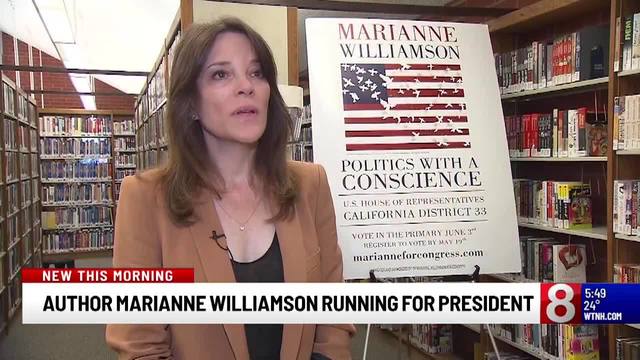
For the past two years, I’ve also been taking A Course in Miracles (ACIM) as explained by now-presidential candidate, Marianne Williamson. I’m going through the manual’s 365 lessons for a second time and find it absolutely challenging. It’s helping me distance myself further from the world’s shadows projected in our Plato’s-Cave-world. It’s giving me, what I described in another context, a set of “magic glasses” that confer a world-vision 180 degrees opposite the one that reigns here in the United States.

During Lent, I’ll continue my ACIM work – including redoubled efforts on behalf of Marianne Williamson’s candidacy. Regardless of what one might think of her chances of success, her message needs to be taken seriously. In the end, it’s about replacing politics driven by fear with policy shaped by the compassion of Jesus and the most admirable people in history. (Marianne’s candidacy forces the question on believers: Do we really believe Jesus’ words? Do we?)

I hope anyone reading this will feel free to offer other suggestions. I’m sure you agree that these are extraordinary times. They call for extraordinary political and spiritual commitment. In the spirit of Yeshua and all those saints I mentioned, we need to pool our resources.  
Marianne Williamson’s Campaign Harnesses the Miraculous Power of Critical Consciousness

The Washington Post recently ran a long article on Marianne Williamson’s presidential campaign. It was the first acknowledgement of Ms. Williamson’s political efforts that I’ve seen in the mainstream print media.

The article was written by Anna Peele who not only introduced her readership to Marianne Williamson. She also indicated how Ms. Williamson offers an essential element no other Democratic candidate can possibly supply. 

In fact, Marianne Williamson’s candidacy addresses the psychological and spiritual concerns at the root of voters’ issues regardless of their party affiliation or religious orientation including those self-identifying as “spiritual but not religious” and even agnostic and atheistic.

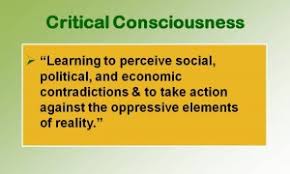
By doing so, Williamson effectively rescues for the left the power of spirituality that has been the exclusive province of right-wing Republicans for the last 50 years and more. Unlike Republican Christians who use religion to defend the status quo, Ms. Williamson links profound spirituality and critical consciousness at their deepest levels. The consciousness ends up distancing itself 180 degrees away from our country’s reigning ideology about history, economics, politics, and personal responsibility.

At the beginning of her article, Ms. Peele admitted she had never previously heard of Marianne Williamson, whom she first understood in terms of a “self-help author and motivational speaker” as well as the spiritual advisor of Oprah Winfrey. Peele was intrigued by Williamson’s own job-description as “creating miracles” – something the author admits she wanted to believe in, especially given the state of our nation and world under President Trump.

Seeking that miracle, Peele confessed during her first encounter with Williamson that she was anxious about our country’s future. She mentioned her own anger and fear.

She was surprised by Williamson’s response. It was in summary: “Toughen up. We’re not porcelain dolls, you know. We need to get real and absorb with courage and endurance the hard knocks delivered up by Trump’s kind. After all, we’re following in the footsteps of Civil Rights heroes and the suffragettes who risked their lives resisting the old policies currently resurrected in today’s Oval Office. It’s time to roll up our sleeves and get to work!”

Peele’s admits that she found that initial exchange actually inspiring. It bordered, she said, on the very miracle she had been seeking. The journalist’s vision, she says, had changed – of both Marianne and her campaign. (And that by the way, is what the term “miracle” means in Williamson’s vocabulary – a radical transformation of perception. It’s about developing critical consciousness.)

From there, Peele’s article describes Williamson’s January 28th formal announcement of her candidacy and her basic theme. It’s that America’s real problem is not with the likes of Donald Trump, but with us, our juvenile preoccupations with our personal lives, our resulting political disengagement, and our surrender of political terrain to corporations and the one-percenters.  “It is time for us to rise up, the way other generations have. Cynicism is just an excuse for not helping. Whining is not an option . . . We need to identify the problems in this country. Then we need to identify with the problem solvers.”

Williamson identifies herself as one of those problem solvers. In fact, she portrays her upbringing and 30- year career as a spiritual teacher as uniquely qualifying her for addressing the fundamentally spiritual problem underneath our country’s current dysfunction. No one else, she says, demonstrates that qualification or of even recognizes the problem as such.

Now 66 years old, Williamson comes from a Jewish family headed by a stay-at-home mother and by a father who practiced immigration law. When his daughter was just 13, Mr. Williamson took his entire family to Vietnam during the height of the war. His intention, Williamson says, was to “make sure the military-industrial complex would not ‘eat my kids’ brains’.” She never forgot that childhood lesson about the reality of war and its horror. It made her but a life-long anti-war activist.

But Marianne Williamson is not just some aging hippie activist with a past devoted to sex, drugs, and rock-and-roll. That was only part of it, she quips. “The rest of the day, we stopped a war.”

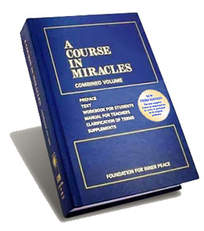
In 1975, Williamson’s activism found its theoretical grounding in what has since become a spiritual classic, A Course in Miracles (ACIM).  The book was allegedly “channeled” by Helen Schucman, who described the dictating voice as that of Jesus, the Christ. Williamson calls the book “basically Christian mysticism.” (I would call it a course on developing critical consciousness.) In any case, the book changed her life. On its basis, she began a spiritual practice that gave her that earlier-mentioned radical vision of the world.

Eventually, Williamson composed what she calls “ACIM Cliff Notes” – A Return to Love.

Oprah Winfrey loved it. It became a New York Times best-seller. And Williamson’s new career as a spiritual teacher was born. However, her spiritual teaching distinguished itself from others like Eckhart Tolle (whom Williamson considers an enlightened spiritual master) and Deepak Chopra by its continued commitment to the brand of anti-war social justice deeply instilled by her father.  

Williamson’s activism led her to launch Project Angel Food in 1989. It delivered meals to HIV/AIDS patients too ill to feed themselves. In 2014, she ran for Congress in California’s 33rd district. In 2010, 2012, 2015 and 2017, she organized “Sister Giant” seminars to raise political consciousness especially among women and to motivate them to run for public office.

In 1997, Williamson demonstrated her political acumen by publishing Healing the Soul of America. It’s a 256-page book that has become (in its 20th anniversary edition) her basic stump speech. In Healing, she exhibits her knowledge of American history, her firm grasp of economic realities, and her acute sensitivity to “the signs of the times.” Williamson writes, “When this book was first published in 1997, I wrote that there was a storm ahead, or an awakening ahead. Alas, that storm is upon us. But even now, in the midst of our national turmoil, there is an awakening as well.”

Ironically, a sort of awakening led to the election of Donald Trump in 2016. In Williamson’s analysis, that outcome was an expression of deep popular despair on the part of a population worried for decades about making ends meet, sending their children to college, and paying skyrocketing medical bills. “It was either going to be an authoritarian populist or it was going to be a progressive populist,” she says. “Now, the person we got is clearly a con artist and someone who lacks basic respect for democratic norms.”

Donald Trump however isn’t the problem according to Williamson; he’s merely a symptom of an underlying condition that other candidates are not qualified to heal. Those others, Ms. Williamson is fond of saying, approach the presidency as technical administrators. They even talk about running the government “like a business.” But government is not a business to be governed by some bottom line. Instead, it’s more like a family where all the children are equally important.

Moreover, the job of president isn’t primarily administration. (There are plenty of well-qualified technicians that presidents can nominate to fill cabinet posts.) No, the chief task of the president is setting a tone; it’s motivation, inspiration, and supplying vision. Franklin Roosevelt realized that. “The role of the president, at this time in our history,” Williamson says, “has more of a visionary function. FDR said that the administrative functioning of the president is secondary; the primary role of the president is moral leadership.”

None of this is to say that Marianne Williamson is vague about policy proposals. She shares many of them with the others just referenced:

  • A Green New Deal
  • Medicare for all
  • Increase in minimum wage
  • Gun control
  • Criminal justice reform
  • Overhaul of public education
  • Raising taxes on the rich

To this list now familiar among progressive candidates, Williamson dares to add the issue of reparations to the black community for the wounds of slavery to which she traces so many of our nation’s current ills. Such repair, she estimates, would cost $100 billion to be administered across fields by a board of African-American leaders over a period of 10 years. Williamson says that without addressing the problem of racism and its fundamental causes, the soul of our country will remain deeply traumatized.

Despite the mine field that the reparations proposal represents, the Post article observes that Marianne Williamson would be a formidable debate opponent for someone like Donald Trump. Unlike the latter, she can speak eloquently for hours without written texts of teleprompters.

After every lecture, she answers questions of all sorts from audiences about faith, politics, religion, race relations, economic problems – and the meaning of life. She’s never at a loss for words. Moreover, by her own account, she’s used to being called a “lightweight thinker, New Age con artist, a b_ _ _ _ — if you really know her.” Can you imagine, Anna Peele suggests, Marianne answering one of Trump’s insults with a magnanimous reflection on the state of his own soul? Wouldn’t that would be fun to witness?

As Williamson puts it, Trump “is a master of false narrative. And if you come back at him with anything other than the deepest truth, he will eat you alive. But if you do respond from a place of deepest truth, he is completely disempowered. I plan to speak to the consciousness of the American mind. Where he has harnessed fear, I’m seeking to harness love. Where he has harnessed bigotry and racism and anti-Semitism and homophobia, I’m seeking to harness dignity and decency and compassion. And that does not defeat. It overrides.”

Anna Peele’s Washington Post article suggests (correctly, I think) that our country needs the change in consciousness and communication of deepest truth of which Marianne Williamson speaks. By addressing that level, she promises to answer a need that the left has traditionally proven incapable of confronting.

That inability has not hampered the political right. They’ve understood the power of faith to motivate people to political action. On the left, African-Americans have a similar understanding, though in the opposite political direction. The same is true of liberation theologists in the Global South – and (dare I say it) of militant Muslims.

In summary, Mary Ann Williamson’s use of the term “miracle” for the achievement of critical consciousness along with her courageous invocation of spiritual traditions from her own Judaism as well as from Christianity, Islam, Buddhism, and New Age understandings of Ultimate Reality promises to enrich enormously the upcoming selection of Donald Trump’s progressive opponent.

And she may prevail. As Anna Peele attests, Ms. Williamson is good at creating miracles.    

Announcing: A New Series on Presidential Candidate, Marianne Williamson

[The quadrennial election-season is upon us. Accordingly, today’s posting is the first in a series on Marianne Williamson and her candidacy for President of the United States. The series will explore parallels between her platform (as articulated in her 20th anniversary edition of “Healing the Soul of America”) on the one hand and “A Course in Miracles” (ACIM) on the other. Postings to follow will also connect ACIM and Williamson’s policies with liberation theology – the most important theological development of the last 1500 years, and the inspiration for the Global South’s most effective social movement since the middle of the 19th century. The thesis here will be that Marianne Williamson is actually a U.S. liberation theologian, but in the tradition of 19th century abolitionists, as well as that of women suffragists, Martin Luther King, and Mohandas Gandhi. As such, her candidacy promises our country the revolutionary impetus that liberation theology provided for the profound socio-political changes Latin America has experienced over the last six decades.  Apart from more formal explanations of this thesis, the latter’s point will be made in the form of weekly Sunday homilies reflecting on the narratives of Jesus’ words and deeds as presented in each week’s liturgical readings.]

Marianne Williamson for President! She’s a Liberation Theologian

On Monday, January 28th, Marianne Williamson declared herself a candidate for President of the United States. In making her declaration, this great spiritual leader, who has a larger social media following than any Democratic candidate declared so far, implicitly proposed addressing in 21st century, non-religious ways the spiritual hunger that Williamson and others in the “higher consciousness community” consider endemic to the human condition, whether that hunger is recognized or not.

However, the difference between Williamson and others in that community is that she consistently applies her spiritual insights to the public sphere. And as we shall see shortly, she does so in a manner that completely respects the convictions of Christians, Jews, Muslims, Sikhs – and atheists, along with those who describe themselves as “spiritual but not religious.”

Because of its inclusive approach, Ms. Williamson’s candidacy promises to build on the accomplishments of 19th century abolitionists, and on those of 20th century women suffragists, and participants in the American civil rights movement. The abolitionists and many suffragists were highly committed Quakers. And, of course, King was a Baptist minister.  Following in their footsteps, Williamson promises to at last offer progressives (and the country at large) entry into a sphere that conservatives – Christian fundamentalists to be exact – have controlled at least since the 1980s. It’s the essential realm of faith and spirituality.

Failure to enter that sphere has hamstrung the left whose “enlightened” tendency has been to reject and ridicule rather than embrace what many consider the deepest dimension of being human. That tendency has not simply cost progressives votes on election day. Even more fundamentally, it has incapacitated them by its implied blindness to the spiritual hunger shared even by humans in general. Put otherwise, Williamson is confronting the right on its own turf.

In daring to do so, she is boldly following in the footsteps of Martin Luther King who demonstrated the ability of faith to awaken critical thinking capacities belonging to ordinary people. King as well as Malcolm X, and the abolitionists that preceded them all tapped into the undeniable power that religious language, symbols and metaphors possess to actually motivate ordinary people to work for social justice and profound political change. The same, of course, is true of Mahatma Gandhi and the liberation theologians of the Global South. In fact, I’ll argue in future postings that Marianne Williamson could easily be classified as a liberation theologian.

Before I get to that however, please recognize that during her campaign Williamson does not plan to wear her identity as spiritual teacher on her sleeve. And that’s her strength too. Instead, she’ll employ her spiritual consciousness and conviction fostered by years of spiritual discipline to guide her campaign in the right direction which will inevitably call for deep psychological – not to say – spiritual – transformation for all of us.

Recently, she described that transformational direction in an extended interview with CNN’s John Berman. Williamson said her most prominent issues would be:

  • Medicare for All
  • A permanent tax cut for the middle class
  • Free education for all children (including tuition for public colleges)
  • Government support for children’s services
  • A Green New Deal

Those, of course, are proposals similar to what have been proposed by Elizabeth Warren and Bernie Sanders, whom Williamson supported in 2016.

Why then run, Berman asked, before Sanders and Warren have officially announced? Won’t her campaign be somewhat redundant in the face of two veteran politicians who, he intimated, have a much better chance of getting elected?

Williamson’s response was significant in that it clearly underlined not so much her competitive edge even over candidates like those just mentioned, but the added value her candidacy represents. Ms. Williamson wants to expand the conversation, she said, to address the psychological and spiritual issues underlying what she sees as the severe disease that mortally threatens the American body politic. As long as those remain unaddressed, conversation and policy proposals, however excellent and whatever their sources, will remain at less-helpful superficial levels. It will be like watering the leaves of a plant, when its roots remain dry and shriveling.

And what root causes is Williamson referring to? Basically, she says, it’s an amoral economic system. It is capitalism-as-we-know-it that has focused on short term gains while allowing market forces instead of common-sense spiritual principles (as elementary as the Golden Rule and democracy) to assume their irreplaceable and decisive roles in the organization of our country’s politics.

Such assumption now has millions of children living in chronic despair and trauma. (Williamson always begins with child welfare.) The system has also created layers of racism and fostered wars across the planet. It has made our country destructively expert at waging wars but unwilling to wage peace.

Williamson reminded her interviewer that Franklin Roosevelt considered the administrative aspects of the presidency as secondary to the moral leadership the position affords. She pointed out that her 35 years of naming and addressing such moral dimensions of public policy is what qualifies her to exercise the moral leadership F.D.R. referenced. That’s Williamson’s competitive edge. It’s her added value. It’s what no other Democratic candidate offers so clearly.

When asked about paying for her program, Williamson chuckled. She asked: Isn’t it interesting that interviewers always raise that tired canard? When it comes to giving a $2 trillion tax break to billionaires, very few, she said, will ask, “Where will the money come from?” Even less do they raise that question when it comes to fighting wars – not even wars like the one against Saddam Hussein in Iraq that was entirely illegal and based on lies.

Marianne Williamson had a similar response when asked about the reparations she advocates for African-American descendants of slaves. She’s proposing a fund of $100 billion for the purpose. It would be paid out over a period of 10 years to finance economic and educational projects to benefit the community in question.

There are precedents for this she added. After World War II, Germany paid out $89 billion in reparations to Jewish organizations in the country. President Reagan signed into law the American Civil Liberties Act to similarly repair harm done to every survivor of the internment camps set up for the Japanese-Americans during the same World War. Moreover, following our nation’s Civil War, General Tecumseh Sherman proposed giving every freed slave 40 acres and a mule. Instead, former slaves were given the Black Code Laws that plagued them till the mid-1960s. It’s time, Ms. Williams said, to make good on Sherman’s reparational promise which was never kept.

From all of this, you can see that Marianne Williamson with her huge social media following is a serious candidate. For people of faith and advocates of social justice without a shred of religious faith, she presents a strong antidote to the religious right that has cornered the field of language, symbols, and metaphors by which most people in the world make sense of the world.

Williams knows that field inside-out. She recognizes that surrendering that field to reactionary forces is what renders progressives relatively weak before the 75% of Americans who identify as Christians. In the spirit of the abolitionists, women suffragists, and civil rights activists – in the spirit of Gandhi and liberation theologians – she wants to reclaim that turf and the specifically moral influence missing in the Democratic White House since the FDR era.

(Next week: My Meeting with Marianne Williamson. )

Marianne Williamson to Explore Presidential Candidacy: Encourage Her to Run

Readings for “Christ the King:” Dn.7:13-14; Ps. 93:1-5; Rv. 1:5-8; Jn. 18:33b-37 http://www.usccb.org/bible/readings/112518.cfm

Last week, the great spiritual teacher, Marianne Williamson announced that she is considering throwing her hat into the ring as a Democratic candidate for the U.S. presidency. Marianne, you remember, is probably the foremost teacher of A Course in Miracles(ACIM), which she describes as basic Christian mysticism.

I was heartened by Ms. Williamson’s announcement, not only at the prospect of her running, but because of the way her candidacy promises to change political conversation within the Democratic Party and nationally, where “devout” Christians have transformed Jesus into a harmless national mascot.

Even more proximately, Marianne’s announcement connects directly with the spirit of this Sunday’s readings for the feast of “Christ the King,” where Jesus distinguishes his kingdom from that of “the world.” Marianne’s candidacy will surely get us discussing that distinction.

So, let’s consider Williamson’s announcement and then its connection with today’s readings.

Here is her formal declaration of exploratory candidacy:

Do you see what I mean about changing political tone? Williamson’s words stand on its head the sad realities of Donald Trump’s “Make America GreatAgain” campaign.

We are no longer a country “of the people, by the people and for the people,” she says. Instead we’ve become a country of the few, by the few, and for the few.

In the face of that hard reality, we must return to our founding principles and to the spirit of the abolitionists, women suffragists, and of the civil rights movement. This will entail not only quantitative changes in our circumstances, but qualitative changes in our souls. It will mean becoming activists exercising the responsibility of engaged citizens committed to taking our country back to its original principles and truths which even the Founders of our nation did not dare implement.

It will be so interesting to see how all of that comes off in the debates between Democratic candidates. I’m betting that Marianne’s unusual emphasis on the deeply spiritual will strike a sympathetic chord reflected in what she calls “true American exceptionalism” rooted in ethical principle –the perfect antidote to Mr. Trump’s faux patriotism rooted in violence.

In fact, the differences between Marianne and the Donald represent mirror images of those between Jesus and Pontius Pilate depicted in today’s gospel reading.

Consider the narrative.

There, John the Evangelist has Jesus declaring the non-violent nature of his kingdom during his interrogation before the Roman governor. Standard interpretations of the scene (such as in Mel Gibson’s “The Passion of the Christ”) present Pilate as a spiritually sensitive intellectual. He’s a seeker looking for a way to set Jesus free. However, he’s too weak to assert his authority in the face of powerful and hateful Jewish leaders.

Problem is: that picture is profoundly at odds with the historical record. There Pilate’s character is described as consistently devious and cruel – the way many of us would describe Donald Trump. Philo, Flavius Josephus, and Tacitus, all tell us that Pontius Pilate was an absolutely brutal man.

As scripture scholar, John Dominic Crossan says, the “trial before Pilate” was probably pro forma at best – possibly even a fabrication of the early church to shift blame for Jesus’ death from the Romans to the Jews. After all, by the time John wrote his gospel in the final decade of the first century, Christians were anxious to court favor with Rome. In the meantime, they had been excommunicated from Judaism, and had nothing to lose by alienating Jews.

So, Pilate reduced Jesus to a victim of torture and capital punishment. And that’s really the point. I mean our faith tells us that Jesus was the kind of king who reigns in the Kingdom of God where everything is turned upside down.  Jesus’ kingdom, God’s Kingdom, is truly “not of this world.”

That’s also the message of A Course in Miracles– which is (as I said) basic Christian mysticism. Again and again it states that the world’s wisdom stands 180 degrees opposite the Wisdom of God.  

Crucially on that score, Jesus distinguishes the non-violence of his kingdom’s citizens from the violence of empire. The guiding ethic in God’s Kingdom is not an eye for an eye and a tooth for a tooth. It is forgiveness. Or as Jesus put it, “If my kingdom were of this world, my followers would be fighting to keep me from being handed over . . .” No, in the Kingdom of God, non-violence reigns.

What are the implications of that type of kingship for military budgeting, for post-9/11 perpetual war, and nuclear weapons-modernization?   Marianne will insist on spelling them out.

As for the personal character of Jesus’ kingship . . .  In the eyes of Roman imperialists, Jesus represented the dregs of humanity. He was a Jew – a people the Romans despised. He was poor and probably illiterate. He was unemployed and traveled about with slackers who had given up gainful employment. At least one of his companions (Simon the Zealot) was a self-declared insurrectionist. Jesus was known as a glutton, drunkard and companion of sex workers. And he was irreligious. The holy men of his own people had excommunicated him and accused him of being possessed by the devil.  Some king indeed!

What are the implications of that type of kingship for U.S. policies on immigration, torture, prison reform, and concern for the poor? Marianne will help us face those too.

Moreover, according to today’s first reading from the Book of Daniel, this king as “Son of Man” refuses to support empire. Instead, he will stand in judgment over all of them from the Egyptians to the Romans and beyond even to American Empire. Such regimes are beastly – a lion, a bear, a leopard, and a 10-horned monster with iron teeth.

In contrast to such horrors, Daniel promises that God’s kingdom will finally be headed by a human being – “one like a Son of Man” – or by “the human one” as some translations put it. Revealingly, “Son of man” is the title gospel-writers have Jesus adopting and applying to himself. He is a humanist, not a beast.  His highest value is love of God expressed in love of neighbor – especially of widows, orphans, immigrants and refugees.

Watch the stunned silence of self-proclaimed Christian candidates when during their debates Marianne contrasts Jesus’ wisdom with their insane “realism” which would have us fight unending wars, modernize our nuclear arsenal, exclude immigrants, and equivocate about the dangers of climate change.

And yet, Jesus’ mystic followers from John the Evangelist to A Course in Miracles call us to reject such policies.

As the great Catholic theologian, Karl Rahner, put it, Christians will either become mystics or all of us will all cease to be. Marianne Williamson agrees.

To repeat: it will be interesting to how her candidacy plays out. At the very least, it will change the conversation.

Please encourage Marianne Williamson to run!

My Meeting with Marianne Williamson

Marianne

[This is my second blog entry in a series on the relation between liberation theology and A Course in Miracles (ACIM).]

More than a year ago, I met Marianne Williamson directly for the first time. I say “directly” because at the time I felt I already knew her. I had read her book, A Return to Love, which Marianne herself describes as ACIM Cliff Notes. And every Tuesday evening from 7:30-9:30, my wife, Peggy, and I watched Marianne’s livestream lectures from the Marble Collegiate Church in New York City. On top of that, I had been a student of A Course in Miracles for more than a year. (I’ll say more about that presently.)

In any case, at Peggy’s invitation, the great spiritual teacher and eloquent interpreter of A Course in Miracles came to Berea College as a convocation speaker. As expected, she charmed and inspired us all with her insightful connections between ACIM and the crisis of leadership and truth discernment in the age of Donald Trump whose presidency had begun just two months earlier. Her message emphasized that spirituality and higher consciousness have political consequences.

The evening of Marianne’s presentation, Peggy had arranged a lovely dinner at Berea’s Boone Tavern Hotel. In a group of fifteen or so Berea faculty, the president of Berea college and I were the only males present. Conversation was light and filled with small-talk until Marianne asked us all to introduce ourselves with some brief words about our personal spiritual journeys.

When it came my turn, I shared my background as a former Catholic priest. I spoke of my training in meditation as part of my seminary experience. I confessed that I had eventually abandoned meditation’s practice, but how a Christmas gift from Peggy in 1997 had renewed my commitment to its twice-daily practice.

The gift, I said, was a book by Eknath Easwaran called Passage Meditation. It explained how to meditate and recommended Easwaran’s “Eight Point Program” that changed my life. His eight points included meditation, spiritual reading, selection and use of a personal mantram, slowing down, one-pointed attention, training of the senses, putting the needs of others first, and practicing community with similarly committed friends.

I also mentioned that professionally I considered myself a liberation theologian. Marianne asked what I meant by that. I answered as I always do in a single sentence. I said: Liberation theology is reflection on the following of Christ from the viewpoint of the poor and oppressed who are socially aware in the sense of knowing who their oppressors are and of being willing to work for oppression’s end. Its emergence since the Second Vatican Council (1962-’65) represents, I claimed, the most important theological development of the past 1500 years. It is the most significant social movement of poor people since the publication of the Communist Manifesto in 1848.

That evening Peggy and I drove Marianne and her secretary, Wendy, from Berea to the Cincinnati airport two hours distant from Berea. The whole time, the four of us discussed A Course in Miracles and liberation theology. Marianne expressed interest in the latter and as we parted for the evening mentioned that perhaps the two of us might collaborate in writing a downloadable web series she was planning specifically about Jesus and connections between his person and the gospels on one hand and A Course in Miracles on the other. I was thrilled by the prospect.

At that point, I had been working with A Course in Miracles for almost a year. And it was profoundly changing my understanding of everything – of God, the world, truth, Jesus, the spiritual life in general – and myself and my life’s purpose. In that sense, the book was an answer to my prayers, for I had long experienced a burning desire to deepen my spiritual life and practice. I was surprised by ACIM’s impact.

(Next week: ACIM: Its Content)

“A Course in Miracles” Meets Liberation Theology: A New Series on This Blog

ACIM Image

Introduction

Today I begin a series on the spiritual classic, A Course in Miracles (ACIM). I feel the need to share these thoughts, because the book has exercised such a strong and beneficial influence on my life since, under the tutelage of Marianne Williamson, I began studying it a couple of years ago.

My hope is that these blog entries will acquaint readers with the richness of A Course in Miracles, which Williamson describes as “basically Christian mysticism.” After all, according to the great Catholic theologian, Karl Rahner, such spirituality remains the last best hope for saving Christianity. Rahner, said “The Christian of the future will be a mystic or will not exist at all.”

The same might be said for the world in general: either it will attain mystical consciousness of creation’s basic unity, or the world itself will cease to exist. That is, far from being irrelevant, mysticism as understood by all the world’s Great Religions as well as by serious human beings who consider themselves “spiritual but not religious” is the only thing that can save us now.

My hope in writing these pieces is also that the articles to follow might lay the foundation for a book I intend to write. It will connect ACIM with liberation theology, which I consider the most important theological development of the last 1500 years, and the most significant social movement since the publication of The Communist Manifesto in 1848.

The connection, I believe, is necessary, since without it, the Christian mysticism presented in A Course in Miracles – despite Marianne Williamson’s brave efforts – runs the risk of skimming over the most pressing socio-economic problems facing our contemporary world. I’m referring to the so-called war on terrorism, the threat of nuclear war, and the omnicide represented by human-induced climate chaos. I want this series to centralize those problems directly in the light of liberation theology’s historical Jesus.

Put otherwise, what I will recommend here is an engaged mysticism based on the magnificent insights of ACIM. But I intend to link them directly to the even more magnificent teachings and practices of Christian mysticism’s inspiration, Jesus, the prophet from Nazareth as understood by those he addressed historically during his brief life on earth – his poor and oppressed neighbors in imperialized Palestine more than 2000 years ago.

Jesus’ neighbors were like their counterparts in today’s Global South – brown and black people, impoverished by colonialism, considered terrorists by their imperial masters, and tricked by religious leaders who lay in bed with the rich and powerful.

It was to these nobodies that Jesus of Nazareth spoke when he announced the program he called the Kingdom of God. He said, “The Spirit of the Lord is on me, because he has anointed me to proclaim good news to the poor. He has sent me to proclaim freedom for the prisoners and recovery of sight for the blind, to set the oppressed free.” (LK 4:18). Notice the people addressed here: the poor, the imprisoned, the oppressed and blind.

To repeat: the problem with Christian mysticism even as presented in ACIM is that it too quickly spiritualizes those categories. In doing so, it forgets the actual condition of those listening to Jesus for the first time. They were illiterate peasants seated before one of their own who articulated their fondest hopes.

Those hopes centered not on abstract spiritual enlightenment, but on a homeland free from imperial invaders who raped their mothers, wives, sisters and daughters and who tortured and crucified their insurgent fathers, husbands, sons and brothers. That was Jesus’ audience. And when his words are interpreted with them in mind, they take on a meaning that is revolutionary in every sense. They turn everything upside-down.

The same is true of A Course in Miracles. When its words are interpreted with the historical Jesus and his Jewish audience in mind, they take on a revolutionary meaning that inverts the world’s “truth” that (the course reminds us) stands 180 degrees opposite the truth of God. For starters, consider what that means relative to the practice of Jesus:

• The religious world tells us that God is neutral and loves everyone the same. The Judeo-Christian tradition itself along with God’s choice to incarnate as a poor person, and the programmatic words of Jesus quoted above, all express God’s “preferential option for the poor.” The poor and oppressed are God’s chosen people. They are special in God’s eyes.
• The world says that capitalism and private property represent the height of human economic development. In contrast, Jesus appearing in the Jewish prophetic tradition, held that the earth belongs to everyone. Private property as understood by capital’s apologists is a distortion of God’s plan.
• Similarly, the world maintains that market mechanisms of supply and demand will solve every problem. Jesus, on the other hand, proclaimed a Jubilee Year. As explained in the Bible, its intention was to reverse market distortions by having property lost to creditors and bankers revert back to its original (poor) owners. That was Good News for landless farmers.
• The world claims that the poor are guilty and deserve their lot in life. Jesus’ incarnation as a poor person directly contradicts such conviction. As noted above, the incarnation itself says the poor are God’s special people.
• The world lionizes the history of emperors, kings, generals, popes and bankers. Jesus had harsh words for all such oppressors. The historical memory guiding his life was that of a God whose first revelatory act in history was the liberation of slaves from bondage in Egypt.
• The world claims the right to use violence (even nuclear) against the insurgents it deems “terrorists.” Meanwhile, Jesus himself showed sympathy towards those Rome considered terrorists. In fact, he himself was executed as a terrorist by the Romans. He incorporated into his inner circle at least one Zealot insurrectionist and advocated a social program that paralleled in many ways (such as land reform) the program of the Zealot Party.
• The world (at least in the Global North) interprets religion as a mind-centered collection of beliefs compatible with nationalism and war. Jesus transcended all of that. He was a genuine mystic who crossed boundaries in the name of universal divine love and human brotherhood.

My hope is that this series will highlight contradictions like those and will embody the intersection between two splendid revolutionary sources – A Course in Miracles on the one hand, and liberation theology on the other.

So, let me get on with my project. In my next posting, I’ll begin by sharing my remarkable encounter with Marianne Williamson. Then I’ll move on to explanations of A Course in Miracles as explained by Marianne and to liberation theology as understood in the Global South. All of that will prepare for entries that will connect specific parts of ACIM with Jesus the Christ.

Aging Miraculously: Life’s too Short to Give Up on Faith & Activism!

Aging

I’m currently enrolled in an extremely thoughtful on-line course about aging led by the great spiritual teacher, Marianne Williamson. The course is called “Aging Miraculously.”

As I approach my 77th birthday, Marianne is stimulating me to rethink this Third Act of my life. Her course is making me less willing to “retire” from it all as one mistakenly identified with this rapidly changing body. I’m more anxious to “re-fire” the spirit I truly am – the Self that never ages. I’m realizing that the time I have left on earth is far too short for me to surrender to the life of an elderly spectator.

Such awareness was reinforced last night during a conversation with five dear friends of mine. The youngest pair among us were in their mid-60s; the rest of us were in our late 70s and early 80s. (Even writing those words frightens me!)

In any case, there we were reviewing the ills of the world:

  • Trump
  • The gradual disappearance of democracy
  • Its replacement with plutocracy and authoritarianism
  • Class warfare: the unending wars of the world’s richest (the U.S. the E.U., Israel, Saudi Arabia) against the planet’s most impoverished (e.g. in Palestine, Somalia, Yemen, Afghanistan, Iraq, Syria. . .)
  • Terrorism

The question of faith came up and its power to change all of that.

Now, mind you, all of us in the conversation identified ourselves as followers of Jesus of Nazareth. Nevertheless, my friends (none of them taking Marianne’s course) seemed convinced that faith has no power to alter the problems we were busy rehearsing.

Selfish human nature reigns supreme, one friend insisted. It’s unredeemable. So nothing can ever really change – except for the worse. What we do in church is meaningless as far as engagement with the world is concerned. No one really understands any of it anyway. But that’s the best we can do. It’s naïve and a waste of time and energy to think otherwise. We must settle for the mediocre.

And, in any case, we’re all old! So all that’s left for us is to finish out the few years we have left with our low expectations intact – just enjoying the moment and (cocktails in hand) being happy. Our work is over. God expects no more from us. The world’s problems are no longer ours. They belong to our children. And good luck to them with that!

With Marianne’s instruction in mind, I wanted to shout: “Stop, stop! Cancel! I don’t want to hear that! Precisely because I’m a community elder, I have no time left for such small-time thinking and pessimism.

“In fact, it’s all an insult to God. We’re talking about faith here. – about the power of God and of God’s Word to change the world and its consciousness that condemns us, our children, our grandchildren, and the very planet to destruction. Don’t you see that despite the faith we claim, we’re denying that power? We’re arrogantly claiming that we and the world’s thinking and technology somehow have more clout than God himself – that the Almighty stands impotent before the likes of The Donald, Mad Dog Mattis, our computers, robots – and desperate fears!

“I refuse to believe that. Please stop! Cancel!

“And besides: the power of faith to change the world has been undeniably demonstrated. It’s just that as successfully propagandized, relatively comfortable white “Americans” we’ve bought into the “official story” as narrated on Fox News.  It wants us to believe that it’s all hopeless.

“We’ve fallen into their trap!

“However, the fact is that the world has already been changed dramatically by faith-in-action. And for more than 60 years, it’s scared the hell out of the fearful little people at the top. Since the Civil Rights Movement (beginning with Brown in 1954), they’ve been desperate to cram that genie of faith-inspired human liberation back into its bottle. But it simply won’t fit.

“Since Vatican II (1962-’65) and the emergence of liberation theology at Medellin (1968), backward church authorities (like Paul II and Benedict XVI) have been doing the same thing – with the same result. The genie is loose forever. Thank God.

“I’m referring to the undeniable fact that the Civil Rights Movement and liberation theology have changed the world. Without them, you can’t explain Black Lives Matter or the pink tide that has swept Latin America in the past 20 years. You can’t explain the Zapatistas in Mexico, the Bolivarian Revolution of Hugo Chavez, Standing Rock in the Dakotas, the revival of the women’s liberation movement, or LGBTQ activism.

“Without recognizing the power of faith to change the world, you can’t explain movements for independence in Palestine and throughout the Islamic world. Face it: what’s happening there is intimately involved with faith!

“And it is precisely those movements that have given birth to a counter-revolution waged by the fearful little people who pretend to lead us. Don’t be misled: the right wing co-optation of faith has not arisen spontaneously from selfish human nature. Instead, it was part of the well-funded Nixon Southern Strategy to distort Christian faith to counter a growing black power that faith itself had inspired among African Americans everywhere. All of that eventually resulted in the Tea Party and the control of the GOP by Christian conservatives.

“Moreover, fostering and bankrolling evangelicals throughout Latin America (and here at home) was part of Reagan’s response to liberation theology. Already in 1969, Nelson Rockefeller had identified it as a danger to national security. Similarly, the rise of ISIS and Islamic fundamentalism has been nourished by counter-revolutionary forces in Saudi Arabia and the United States. It was Zbigniew Brzezinski who originally assured fighters in Afghanistan that their resistance to Russia had Allah on their side.

“As community elders, we should know all of that. We’ve lived through it. We are products of the hope-filled ‘60s. More importantly, the Catholics among us are products of Vatican II and liberation theology and of the unlimited horizons of faith those movements opened. As a result, we have experience, knowledge, and (hopefully) wisdom unavailable to our children, grandchildren, and to the young in general.

“Keeping those memories and hopes alive represent our specific contributions to saving the world. But time is running out.  To retire now without passionately sharing what we’ve learned is not just irresponsible. It deprives us of the joy that comes from fulfilling our very life’s purpose.

“What’s left of this particular incarnation is too short for wasting it on despair and surrender. It’s too short to live as though we are primarily aged bodies rather than the ever-youthful, experienced, informed, and wise Selves that God has created.

“It’s time to get on with Act Three and to finish the performance with a flourish and deep bow.”