President Obama Should Have Said: “George Zimmerman Could Have Been Me!”

Obama Zimmerman

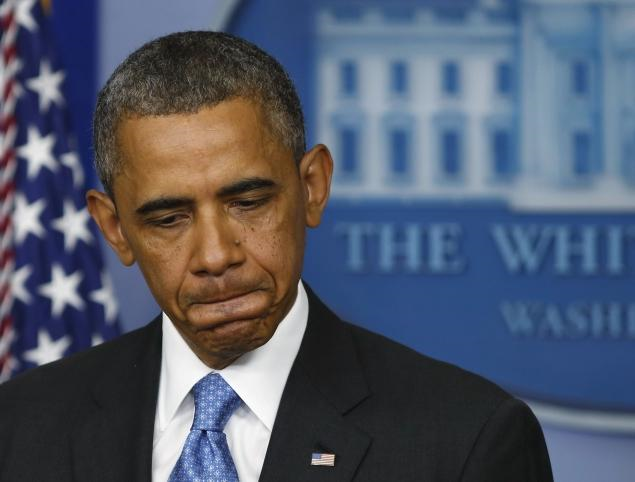
Last Friday President Obama startled Washington reporters and the world by expressing his thoughts about the Trayvon Martin verdict. That decision acquitted George Zimmerman of criminal guilt for killing an unarmed teenager in Sanford, Florida.

In his remarks, Mr. Obama spoke sentimentally of his own experience of racism, and about the dangers of Stand Your Ground laws. He cited the need to consider context in order to understand African-American rage over the Zimmerman verdict. Famously he said Trayvon Martin could have been him 35 years ago.

In fact, the President would have spoken more honestly had he identified with George Zimmerman.

Professor Cornel West (Union Theological Seminary) suggested that in an interview on “Democracy Now.” True, he found the Zimmerman verdict disturbing not simply because Trayvon Martin’s death went unpunished, but because it revealed what has been termed a “George Zimmerman Mentality.” That mind-set shaped by racism, fear, suspicion, and vigilantism has long afflicted our country in general and whites in particular even in this supposedly post-racial era.

More specifically, West charged that Stand Your Ground laws based on States Rights are ultimately aimed at controlling the black community. I would add that they are the modern equivalent of legalized lynching. In practice, the laws permit armed whites who feel themselves threatened by dark-skinned people to shoot those they deem threats to their security. Whites standing their ground have no legal requirement to retreat from the situation even if an escape route is available. The Zimmerman mentality represents lethal violence as a preferred option rather than a last resort.

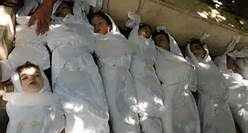
Ironically, the Stand Your Ground, shoot-first attitude happens to be a key element of Mr. Obama’s own drone program. Sharing Zimmerman’s attitude of fear and racism, its “signature strikes” have been responsible for the deaths of at least 221 totally innocent dark-skinned children who happened to be nearby when Mr. Obama chose to fire his own weapon at those merely suspected of being or associating with “terrorists.” In effect, all of those children were Trayvon Martins who would be alive today had they not been in the wrong place at the wrong time when a man with a weapon perceived a threat from a profiled target.

Such observations made me wonder what key passages in Mr. Obama’s remarks would have sounded like if they were slightly altered to substitute references to Muslims, suspected terrorists, and innocent victims of drones for his original words about Trayvon Martin and African-Americans.

With those substitutions key sections of Mr. Obama’s text would have read as follows (I have placed my additions in italics to distinguish them from the President’s actual words):
______

“The reason I actually wanted to come out today is not to take questions, but to speak to an issue that obviously has gotten a lot of attention over the course of the last week, the issue of the 221 children I have recently killed by my drone policy. . .

“First of all, you know, I — I want to make sure that, once again, I send my thoughts and prayers, as well as Michelle’s, to the families of the drone victims, and to remark on the incredible grace and dignity with which they’ve dealt with the entire situation. I can only imagine what they’re going through, and it’s — it’s remarkable how they’ve handled it. . .

“But I did want to just talk a little bit about context and how people have responded to it and how people are feeling. You know, when Trayvon Martin was first shot, I said that this could have been my son. On second thought, I would have done better to identify with George Zimmerman. Another way of saying that is that I am George Zimmerman today.

“And when you think about why, in the Muslim community at least, there’s a lot of pain around what happened here, I think it’s important to recognize that the Muslim community is looking at this issue through a set of experiences and a history that — that doesn’t go away. . . .

“And you know, I don’t want to exaggerate this, but those sets of experiences inform how the Muslim community interprets what happened one night in _________ (Name the country – Afghanistan, Iraq, Pakistan, Somalia . . .). And it’s inescapable for people to bring those experiences to bear. . . .

“Now, this isn’t to say that the Muslim community is naive about the fact that Muslim young men are disproportionately involved in resistance to U.S. policy, that they are disproportionately both victims and perpetrators of violence. It’s not to make excuses for that fact, although Muslims do interpret the reasons for that in a historical context.

“We understand that some of the violence that takes place in poor Muslim communities around the world is born out of a very violent past in relation to the United States, and that the poverty and dysfunction that we see in those communities can be traced to a very difficult history.”
______

Now the substitutions I’ve made may strike you as awkward. But I’m sure you get my idea.

The point is that Mr. Obama has no moral ground to stand on in lamenting George Zimmerman’s violence or the ridiculous nature of Stand Your Ground Laws. Rather than identifying with Trayvon Martin, the President would have done better to note his similarities to George Zimmerman. Rather than wringing his hands over Stand Your Ground laws, the President should have recognized the identical logic that informs his own drone murders.

Mr. Obama thinks like Zimmerman; he profiles like that vigilante; he patrols the world with Zimmerman’s lethal intent. Even more to the point, the President pulls the trigger even more quickly and irresponsibly than the armed vigilante from Sanford.

President Obama is the poster child for the George Zimmerman Mentality, for Stand Your Ground and its disdain for dark skinned people.

Why I’m Not Celebrating July 4th This Year

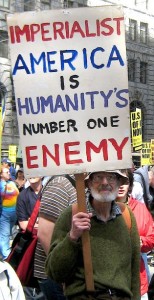
Anti-Americanism

I remember in 1972, I was asked to give a 4th of July speech in some church context which I’ve since forgotten. I was a 32 year old Roman Catholic priest then. And my remarks were critical of the U.S. role in Vietnam and in the Third World in general.

Before I began however, an officer from the local VFW led everyone in the Pledge of Allegiance. I remember how he prefaced his part with a long July 4th introduction. He praised the flag for being “unsullied in emblemizing mankind’s struggle for freedom, unparalleled in standing in defense of human rights and the pursuit of justice, blessed by God above all others as the flag of his New Chosen People.”

It was enough to turn my stomach.

My nausea was induced by what I knew the U.S. was doing in Vietnam, Laos and Cambodia. Like everyone else, I knew about Mai Lai, Agent Orange, the Phoenix Program, the Pentagon Papers and merciless illegal bombings of civilians.

My revulsion was also fired by my growing awareness of what the United States was doing in the Third World in general and especially in Latin America where the liberation theology I was studying was powerfully shaping consciousness throughout the hemisphere. Its insistence on historical and structural analysis had caused a paradigm shift in my own perception. Increasingly, I was seeing the United States as the Sandinista Anthem would later phrase it, “the enemy of mankind.”

Somehow I got through my speech without having anyone walk out. I still wonder why.

These days I’m feeling even more alienated than I did more than 40 years ago. Contemporary realities have actually turned me against July 4th celebrations.

Afghanistan, Iraq, Abu Ghraib and the use of drone technology to execute U.S. citizens and anyone in the world without due process are only part of the syndrome this time around. It’s what we’ve recently learned from Ed Snowden, Bradley Manning and Julian Assange that make flag-waving and Pledges of Allegiance so repulsive. Now when I see fireworks, I can only think of Dick Cheney and the “Shock and Awe” pyrotechnics we all saw on CNN when Our Great Country used lies and false pretenses to attack a sovereign nation that had never done us any harm. As Allen Greenspan said in effect, Iraq’s curse and crime was having huge supplies of high grade crude.

As for celebrating our Great Constitution, Snowden’s revelations coupled with a mere reading of the Fourth Amendment are enough to give anyone pause: “The right of the people to be secure in their persons, houses, papers, and effects, against unreasonable searches and seizures, shall not be violated, and no warrants shall issue, but upon probable cause, supported by oath or affirmation, and particularly describing the place to be searched, and the persons or things to be seized.” Yes, the Constitution’s fine; but increasingly it’s a dead letter.

Similarly, my willingness to celebrate American democracy is tempered these days by memories of the 2000 “election” of George W. Bush through the intervention of his brother who happened to be governor of Florida with the power to deliver the White House to his dear sibling. The machinations of brother Jeb and a crony Supreme Court would have been comical in any Banana Republic scenario. Having it occur in the United States was more than embarrassing. Subsequent insistence on our privilege to monitor and invalidate elections elsewhere in the world has made us the international laughing stock we’ve hoped to make countries like Venezuela and Iran.

And then there’s Republican redistricting, voter suppression, Citizens United, and the recent SCOTUS evisceration of the Voting Rights Act. What’s that you say about free elections?

The crowning glory of all this embarrassment is our country’s willingness to end life as we know it on Planet Earth by blocking every serious attempt to reverse climate change. President Obama’s recent tepid declarations notwithstanding, the U.S. persists in catastrophic denial of what every serious scientific study reiterates: we are on the road to destruction with the “America” blazing the trail.

Our country’s willingness to end life as we know it on our marvelous planet (not to mention our wars and arms industry) is reason enough to believe that Mother Earth would be better off if the U.S. just dropped off the map. Think about it: the earth would be better off without the United States’ pollution, wars and “Way of Life.”

That’s why I’ll do no flag waving or banner display. I’ll recite no Pledges of Allegiance, nor stand for the Star Spangled Banner. Patriotic speeches and other jingoistic claptrap will draw no applause from me.

It’s all gotten so bad and such a matter of public record that it might even make my VFW friend turn over in his grave.

Rios Montt Is a Born Again Christian! A Prominent ‘Christianist’ Cleric Supported His Genocide. Should He Be Droned Next?

pat-robertson_thumb

In all the analysis of the Rios Montt trial and conviction for genocide, it is rarely even mentioned that the General was a born again Christian. He was directly and vocally supported not only by Ronald Reagan and Elliot Abrams, but by prominent clerics like Pat Robertson.

Robertson’s support of Montt was not casual. Nor was it ignorant of Montt’s tactics. In reference to those atrocities, Nikolas Kozloff of Counterpunch writes:

“Far from denouncing such practices, Robertson rushed to defend Rios Montt. ‘Little by little the miracle began to unfold,’ he wrote of the regime. ‘The country was stabilized. Democratic processes, never a reality in Guatemala, began to be put into place.’ Robertson also praised Rios Montt for eliminating death squads, despite recent estimates that tens of thousands were killed by death squads in the second half of 1982 and throughout 1983. Most damning of all, even as Rios Montt was carrying out the extermination of the Mayan population, Robertson held a fundraising telethon for the Guatemalan military. The televangelist urged donations for International Love Lift, Rios Montt’s relief program linked to Gospel Outreach, the dictator’s U.S. church. Meanwhile, Robertson’s Christian Broadcasting Network reportedly sponsored a campaign to provide money as well as agricultural and medical technicians to aid in the design of Rios Montt’s first model villages.”

Hmm. . . . Aid and comfort to a perpetrator of genocide, defense of its practice, fund-raising on its behalf, concealment of concentration camps as “model villages” . . . Those sound like the crimes that justify the droning of “Islamist” clerics. But there’s been not a word about this connection in the U.S. mainstream press, much less from our government officials.

The hypocrisy of it all is not surprising to me. It is exactly what I’ve come to expect from personal experience of Guatemala and of Central America in general. There during the ‘70s and ‘80s Evangelicals and the U.S. media supported dictators throughout the region. Moreover, far from being seen as the accomplices of terror, the Evangelicals were favored by the U.S. government in its fight against Roman Catholic liberation theology. Remember, Montt’s atrocities occurred during what Chomsky calls “the first religious war of the 21st century” – the war of the United States against the Catholic Church in Latin America.

My personal experience makes all of this unforgettable for me. For the last 20 years and more, I’ve been associated with an evangelical term-abroad program for North American students in Central America. My job was to teach our students about liberation theology.

Each semester we would take students to Guatemala to visit the killing fields there. For a period, Rios Montt was always among the speakers interviewed by our students. So were professors at the Evangelical Seminary in Guatemala City. To a man, they supported Rios Montt amid the charges of genocide that always swirled around him. They echoed Robertson’s defense and/or denial of the on-going genocide. They spoke glowingly of Montt’s quasi-sermons delivered with great passion each Sunday morning as he explained his policies in terms of the Bible.

On one occasion, a student of ours summoned the courage to ask “President” Montt the question that was on everyone’s mind: “There are charges,” he said, “that you were behind mass killings of Mayan Indians. Now that it’s over, do you have any regrets about your policy?”

The ex-president’s face grew angry. He stepped from behind the podium and shook his finger at our student. “Listen,” he thundered. “I did what I did because God told me to do it! To ‘regret’ my actions would be a sin against God!”

That’s the kind of man Christianist clerics like Robertson supported. That’s the kind of Christian jihadist outlook that motivated genocide.

Now imagine what would happen to “Islamist” clerics responsible for aiding, advising and supporting Muslim acts of terrorism exactly like Montt’s, in exactly the way the Christianist cleric, Pat Robertson did.

In fact, little imagination is required. Think of the fate of Anwar al-Awlaki, the U.S. citizen and Muslim cleric who recently was listed as droned by the Obama national security state. His “crimes” in relation to Islamic terrorism allegedly mirrored those of Robertson in his support of Rios Montt. The C.I.A. not only killed Awlaki, but later murdered his 16 year old son in the same way.

Could it be that Rev. Robertson and some members of his family will be droned next? Hmm . . . .

Leaving the Priesthood: Why Priests? Why God? (Sunday Homily)

thebodyofchrist

Readings for the Solemnity of the Most Holy Body and Blood of Christ: Gn. 14: 18-20; Ps. 101: 1-4; I Cor. 9: 23-26; Lk. 9: 11B-17. http://www.usccb.org/bible/readings/060213.cfm

Today is the Solemnity of the Most Holy Body and Blood of Christ. I can’t review the prescribed readings without relating them to the question of the Roman Catholic priesthood which I embraced as my vocation from the age of 14 when I entered the junior seminary to my ordination on December 22, 1966, to when I finally the formal priesthood ten year later.

The readings remind me of why I entered the priesthood, and why I left. (If interested, see my blog entries on the topic under the “Personal” button just below the blog masthead.)

My reasons for entering the priesthood are connected with the vision of Melchizedek referenced in today’s first reading from Genesis and in the responsorial Psalm 101. Melchizedek was the first one called “priest” in the Jewish Testament.

The idea of a great priesthood going back to early biblical times was the one impressed on me when I first became aware of priests at St. Viator’s Catholic grammar school on Chicago’s Northwest Side. There I was taught for nine years by the wonderful Sisters of St. Joseph who were responsible for my earliest ideas about priests and God. (I remember those sisters each by name – Helen Clare, Mary Jane, Loyola, Rose Anthony, Mary Paul, Rita Marie, Cyril, Irma – every morning in my prayers.)

Those good sisters encouraged me to attend Mass each day, and to become a “Knight of the Altar” eventually advancing me to the exalted rank of “Vice Supreme Grand Knight.” That had me “serving Mass” regularly and watching the priest at close range rehearse each morning the narrative Paul recalls in today’s second reading. “On the night before he died,” Paul says, “Jesus took bread into his hands, blessed it, broke it, and gave it to his disciples saying ‘Take this all of you and eat it. This is my body, which will be given up for you’.”

The St. Joseph sisters told me that those words transformed bread into the very body of Jesus. Similar words changed wine into Christ’s blood. The Mass, the sisters taught, was a “sacrifice” – the re-presentation of Jesus death on the cross. It was the “holy sacrifice of the Mass” making present for us each morning Jesus’ heroic act which his Father’s justice demanded because of the sin of our first parents, Adam and Eve.

Priests not only had the power to change bread and wine into the body and blood of Christ, they could also forgive sins in the Sacrament of Penance. Moreover they participated in Christ’s “sacrifice” by giving up marriage and family in order to imitate Jesus and dedicate themselves more completely to the service of God.

I believed those things with all my heart. I wanted to please God. Nothing else could possibly be as important. I loved the sisters who taught me; I admired fathers Burke and Fitzpatrick. It all made me want to be a priest. That’s why I decided to enter the seminary.

My reasons for leaving the priesthood are connected with Luke’s account of the feeding of the 5000 related in today’s gospel reading.

You see, during 13 years of preparation for the priesthood – four in St. Columban’s high school seminary in Silver Creek New York, four in the Columban College in Milton, Massachusetts, one in our “spiritual year” (a kind of novitiate) in Bristol, Rhode Island, and four more years of theological training also in Milton – my ideas matured.

Especially those final years in the major seminary, with their daily classes in biblical studies, raised questions for me. So did the Second Vatican Council, which ran its course (1962-1965) just as I was approaching ordination in 1966. The Council and the debates surrounding it seemed to call into question everything the sisters had taught me. Those questions were sharpened for me when I was sent to Rome for more study (1967-’72) following ordination.

The Rome I found was still electric with the aftershock of Vatican II. The questions I had vaguely become aware of in the seminary were now shouting in my ears each day as I attended class and widened my study and reading to include Protestants and non-Christians including atheists. And besides, my uncertainties within spread as my own experience of life outside stretched beyond the hothouse atmosphere of the seminary where I had lived during my most formative years.

How exactly was the Mass connected with Calvary and Jesus’ sacrifice? After all, what Paul recounts was a final meal shared by Jesus and his friends, not some kind of sacrifice. And why did God require the death of his son anyway? That didn’t seem very loving or God-like. And by the way, why mandatory celibacy for priests? (I had learned that the reasons had more to do with protection of church property from the potential claims of pastors’ heirs than with the following of Jesus who might well have been married anyway.)

In the end, I realized that “priesthood” and sacrifice are misplaced in Christianity. True, the early church used the imagery of “sacrifice” to make sense out of Jesus execution by Rome. But that was an image – a metaphor – which the church subsequently and inappropriately took literally – just as it did the words attributed to Jesus at the Last Supper.

In fact, I concluded, that was the root of so much of what was wrong with the church – taking metaphor and interpreting it literally. Metaphor, image, myth and story I realized, were beautiful and necessary elements of human expression. They are the only language we have at our disposal for thinking and speaking about the Transcendent, the divine. But to take metaphors literally distorts and misleads.

And that brought me to the question of God himself. First of all I realized that God was not a “himself;” that too was imagery bequeathed by the extremely patriarchal culture found in the Bible. And so were the ideas I had inherited which put God “up there” as a person in the sky. God was not a person, I realized. “Person” is a category completely wrapped up in human experience. “Existence” was similar; it was too human and finite to apply to the divine. I found myself agreeing with the theologians I was reading who observed that it is truer to say God does not exist than that “he” does. Was I becoming an atheist?

Not really. I was coming to embrace the truth of Paul’s words about God’s subtlety and omnipresence: God is “the one in whom we live and move and have our being” (Acts 17:28). We live in God. We are part of God just as we are of our parents. We best relate to God in meditation and contemplation rather than as Knights of the Altar.

What then of the Mass? Today’s gospel reading gives us a clue about its nature. “The Lord’s Supper” is a recollection of the fact that when human beings share bread and wine, God happens. That’s what Jesus meant by those words at the Last Supper as recalled by Paul this morning.

Sharing food and the most palpable experience of God is what the feeding of the 5000 in today’s gospel s about. It’s what church is about. When strangers gather in small groups intimate enough for everyone to introduce themselves and get to know one another (in today’s reading, Jesus put the number at 50), Church happens. Sharing happens. God happens.

In the end, then, since there is no need for sacrifice, there is no need for priesthood. We ourselves are the body and blood of the Lord for each other. The Lord is the one in whom we live and move and have our being. Jesus provides the example of the consciousness of unity with God that each of us can make our own. Jesus’ example of sharing and self-giving shows us how to get from here to there.

Coming to those realizations caused me to leave the priesthood – and to continue my vocation in its present form.

Have you made a similar journey? What were its steps? Please share.
(Discussion follows)

Second Thoughts about Pope Bergoglio: A Liberation Pope or Just More Blah, Blah?

Bergoglio-foot-washing

I’m still trying to figure out the new pope, Francis I. Initially, I was very skeptical and even negative about his election. After all he was carrying all that baggage from Argentina’s “dirty war.” And some incidents there made me see Francis as just another right-winger in the tradition of his immediate predecessors, Benedict XVI and John Paul II. Tongue partly planted in cheek, I called for his resignation.

Gradually however, I’ve come to question my rush to judgment. True, the new pope faltered with early missteps regarding women. He seemed to reiterate Benedict XVI’s admonition to U.S. women religious to focus more on the issues of contraception, abortion, and same-sex marriage, rather than on social justice for the poor and electoral politics. He even warned a group of sisters against becoming “spinsters” or “old maids” (depending on the translation) rather than fruitful celibates.

But then he went to that women’s prison on Holy Thursday and drew fire from conservatives for including women among those whose feet he washed that day. I concluded that the jury is still out concerning Francis and women. Like most of us males, he clearly has room to grow.

As I wait for the jury’s verdict, two recent incidents have led me towards a more positive evaluation in the court of my own mind. To begin with, Leonardo Boff, a leading liberation theologian who had been silenced by the Ratzinger-Wojtyla team, surprised me by his own positive assessment. He even identified the new pope as a “field” liberation theologian as opposed to a “desk” theologian. Despite his reservations in the past about liberation theology, Bergoglio, Boff said, was truly committed to the poor. Boff was hopeful that the Argentinian might change the direction of the Vatican policy of suspicion and rejection over the last 30 years towards the “preferential option for the poor” so central in the thought of activists committed to the welfare of the world’s poor majority.

Then a couple of weeks ago, a second occurrence made me think Boff might have a point. The pontiff made some surprisingly critical remarks about capitalism and ethics to a group of new ambassadors to the Vatican.

Here are some excerpts. They are worth quoting at length:

“. . . We must also acknowledge that the majority of the men and women of our time continue to live daily in situations of insecurity, with dire consequences. . . The financial crisis which we are experiencing makes us forget that its ultimate origin is to be found in . . . the denial of the primacy of human beings! We have created new idols. The worship of the golden calf of old (cf. Ex 32:15-34) has found a new and heartless image in the cult of money and the dictatorship of an economy which is faceless and lacking any truly humane goal.

The worldwide financial and economic crisis seems to highlight . . the gravely deficient human perspective, which reduces man to one of his needs alone, namely, consumption. Worse yet, human beings themselves are nowadays considered as consumer goods which can be used and thrown away. We have started a throw-away culture.

This tendency is . . . being promoted! In circumstances like these, solidarity, which is the treasure of the poor, is often considered counterproductive, opposed to the logic of finance and the economy. While the income of a minority is increasing exponentially, that of the majority is crumbling. This imbalance results from ideologies which uphold the absolute autonomy of markets and financial speculation, and thus deny the right of control to States, which are themselves charged with providing for the common good. A new, invisible and at times virtual, tyranny is established, one which unilaterally and irremediably imposes its own laws and rules . . . The will to power and of possession has become limitless.

Concealed behind this attitude is a rejection of ethics, a rejection of God. Ethics, like solidarity, is a nuisance! It is regarded as counterproductive: as something too human, because it relativizes money and power; as a threat, because it rejects manipulation and subjection of people: because ethics leads to God, who is situated outside the categories of the market. God is thought to be unmanageable by these financiers, economists and politicians, God is unmanageable, even dangerous, because he calls man to his full realization and to independence from any kind of slavery. . . I encourage the financial experts and the political leaders of your countries to consider the words of Saint John Chrysostom: “Not to share one’s goods with the poor is to rob them and to deprive them of life. It is not our goods that we possess, but theirs” (Homily on Lazarus, 1:6 – PG 48, 992D).

. . . There is a need for financial reform along ethical lines that would produce in its turn an economic reform to benefit everyone. . . Money has to serve, not to rule! The Pope . . . has the duty, in Christ’s name, to remind the rich to help the poor, to respect them, to promote them. . . .

The common good should not be simply an extra, simply a conceptual scheme of inferior quality tacked onto political programs. . . . In this way, a new political and economic mindset would arise that would help to transform the absolute dichotomy between the economic and social spheres into a healthy symbiosis. . . .Are you surprised by those words? Here the pope is saying that:

1. The wealth gap between the rich and poor is completely unacceptable.
2. It is caused by unfettered markets which reduce people to consumers subordinate to material production.
3. Free markets are heartless, inhumane and idolatrous.
4. Remedying that problem necessitates government interference in the marketplace.
5. . . . based on an ethics of solidarity taking its lead from the poor and prioritizing human welfare and the common good over untargeted economic growth.
6. Solidarity ethics find their origin in God who calls all humans to liberation from slaveries and idolatries of all kinds.
7. So governments must overcome their reluctance to correct the wealth-concentrating tendencies of free markets,
8. . . . and the attitude which sees ethical and theological concerns as counter-productive when they
prioritize the needs of the poor over the profits of financiers and the moneyed classes.
9. Avoidance of these responsibilities makes governments complicit with the crimes of robbery from the poor who (rather than the rich) are the true owners of the resources of God’s creation.
10. Economics and social justice should not be understood as standing in opposition to one another, but as mutually nourishing.

I find the pope’s words encouraging and quite promising. True, most popes (even J.P.II and Ratzinger) made isolated statements in tune with the comments just quoted. And taken as a body, the social teachings of the Catholic Church from Leo XIII’s Rerum Novarum (1891) to Vatican II’s “Church in the Modern World” (Gaudium et Spes, 1965) are progressive enough though they remain the church’s “best kept secret.”

Yet, the words I’ve quoted come from a new pope who (as Boff notes) has demonstrated his concern for the poor in practical ways, and has embodied a preference for simple living, And that might be sufficient reason for hope the pope’s words will define his papacy rather than simply being more papal “blah, blah.”

The jury’s still out.

Announcing a New Wednesday Series on Critical Thinking: is anyone interested?

Critical thinking

During the last couple of weeks my blogs have addressed the Boston Marathon bombings. I’ve suggested the application of elementary principles to clarify thinking about such tragedies. One of them I’ve termed the “principle of reciprocity.” The meaning I’ve assigned the term has to do with the application of a single standard to all cases involving response to tragedies like the Boston bombing on the one hand and U.S. drone attacks on the other.

Reciprocity is related to judgments about nuclear weapons. If the U.S., Israel, Pakistan, and India are allowed to possess them, so should North Korea and Iran. The principle of reciprocity holds that what I judge as good for me should be good for you as well; what is bad for me is bad for you. Any child can understand such a guideline. It’s what we learned in Kindergarten and Sunday school.

Yet our “leaders” seem incapable of grasping what is perfectly clear even to children.

The principle of reciprocity and its implicit challenge to “American” exceptionalism has elicited energetic response on the part of some who have read the blogs as anti-American, insensitive and judgmental. Those responses in turn have led me to perceive a need on my part to explain in a more detailed manner just where I am coming from. The idea would be to help others come to grips with their own principles of critical thought. (We all have them whether we’re aware of it or not.)

You see, over my 36 years of teaching at Berea College in Kentucky, I’ve taught many courses on critical thinking. And this has led me to bring to consciousness my own approach to the discipline. That approach has centralized what I’ve learned in my years of study under Third World thinkers – especially under liberation theologians in Brazil, Costa Rica, Nicaragua, Cuba, and Zimbabwe.

If you’re wondering what I mean by “liberation theology,” just click on the entries in that category located just below the masthead of this blog site. In a single sentence, “liberation theology” is reflection on the following of Jesus of Nazareth from the viewpoint of those committed to the liberation of the world’s poor and oppressed. I consider it the most important theological development of the last 1700 years and the most important intellectual movement of the last 150 years – going back to the publication of the Communist Manifesto in 1848.

I guess what I’m saying is that my understanding of critical thinking comes from a faith perspective.

In any case, inspired by what I’ve learned, my teaching has led me to develop ten principles for critical thinking. I’ve used feature film clips to illustrate what I’m talking about. I’d like to share those principles and clips with readers in bite-sized portions, in Wednesday blogs over the next several weeks.

I hope there will be an audience out there to follow along. If so, please make a simple “I’m on board” comment below. If there’s no audience, at least my entries will serve as a vehicle for talking to myself in order to clarify my own thinking.

The same holds true for my observations about Hitler, his victory in what liberation philosopher,Enrique Dussel calls “the Second Inter-capitalist War,” and the resurfacing of Hitlerism in the United States over the last 35 years. During the coming weeks, on Fridays, I’d like to give an account of that sad and highly threatening process and its relevance to our own day. Is anyone out there interested in following a series on the topic? I wonder.

None of this would change what I consider the anchor of this blog site. In my view, what holds the whole thing down are my Sunday homilies. My project there is to do my small part to rescue interpretation of the Christian tradition from the political right and religious fundamentalists, and to provide reflections on Sunday liturgical readings from the viewpoint of liberation theology as referenced above.

If any of this interests you, please sign up as a “follower” of this blog, so that you’ll receive automatic notification of the Monday, Wednesday, and Friday posts. If you’re reluctant to sign on as a “follower,” do something to remind yourself to check in from time to time. Your critical feedback will be greatly appreciated.

I await responses.

None of Us Can Change the World, So We’d Better Get Busy!

Gandhi

The other day a good friend and I were discussing the state of the world. Our conversation touched on the Boston Marathon bombing, the Bangladesh factory collapse, drone warfare, Guantanamo, the increasing concentration of media ownership, and the sorry state of the Roman Catholic Church. My friend remarked on the futility of attempting to do anything to change the world situation. Better to simply tend your garden, he said, rather than wasting psychic energy and physical effort to affect what cannot be changed.

I must confess that I found myself agreeing with my conversation partner more than not. It all seems so futile when we consider the overwhelming power of money, the state, the military, and of education and media propaganda whose predominantly conservative purpose is to keep things the way they are.

Suitably depressed, I took up my spiritual reading before going to bed. I’m currently pouring over, perhaps for the fifth time, Eknath Easwaran’s commentary on the Bhagavad Gita. In The End of Sorrow, the first of his three volume work (The Bhagavad Gita for Daily Living), Easwaran addresses the question of “detachment.” By that he means being free from anxiety or depression about the results of anything we do. What I read seemed intimately related to my exchange with my dear friend.

Easwaran points to the example of Gandhi:

“Prior to Gandhi, even people who had seen and grieved over the political bondage of India could not bring themselves to act because they thought the situation was impossible. They could not act because even before taking the first step they were already caught in results. We too, when faced with problems, have a tendency to think, ‘There is nothing we can do about it.’ . . . Wherever we find a wrong situation – in our personal life, in our country’s life, or in our world’s conflicts – we all have a duty to work to correct it.”

The words hit home. It’s giving up in the face of seemingly overwhelming odds that so strongly tempts us (me!). It’s just so easy to give up.

But as Kevin Trudeau reminds us, the temptation gives us far more credit for knowing our situation than our actual condition warrants. Coming from a completely secular and otherwise questionable perspective, Trudeau says we’re like people looking at a computer screen, but seeing only the bottom right hand corner – perhaps an inch square. We just don’t see what’s going on in the rest of the screen at all. But we make decisions and value judgments, we go in and out of depression as though we were all-knowing. We react and get attached to results as though our lives were not mere blips on the cosmic screen.

Thankfully, we don’t know very much. And our brief lives don’t offer much perspective on the effects of our actions. I’m reminded of what Mao Tse- tung’s is reputed to have answered when asked whether he thought the French Revolution was successful or not. “Too soon to say,” was his response.

It’s definitely too soon to say what the effects of our actions are or those of Dorothy Day, Daniel Berrigan, Bradley Manning, or John XXIII.

My friend is right. Results are out of our hands. But the person of faith, like Gandhi and those others I’ve just mentioned pushes ahead, doing what’s possible, leaving the results in the hands of the One who directs the universe. Only She sees the whole screen.

I take some comfort in that.

Drones, the Marathon Bombing And Today’s Liturgy of the Word (Sunday Homily)

I got into trouble with a lot of people over the last week or ten days. It all goes back to the Boston Marathon bombing on April 15th. The very next morning I found myself writing a blog entry that drew fire from friends who go back with me nearly sixty years, and even from my family members. I had written that the Marathon Bombing paled in comparison with the havoc and destruction the United States’ drone policy creates in the world virtually every day.

For instance, last week in the Senate hearing on that policy, a young Yemeni activist, Farea Al-Muslimi, gave testimony about the destruction in his village brought about by a drone attack that had occurred a few weeks earlier. [Do yourself a favor and see the video of his testimony (above); it went viral last week.] Women and children were killed by the drone apparently intended to eliminate a single person who might easily have been apprehended by local police. Instead, the missile launching killed indiscriminately. In the resulting carnage, the young man said, you couldn’t distinguish the bodies of women and children from their animals which had also been killed in the raid. The human victims had to be buried with their animals as though there were no difference between them.

According to the young activist, drones hovering over villages like his own, ready to release their deadly cargo are a form of terrorism. They have for Yemenis become the new face of the United States, and have caused great anger and hatred towards our country. Drones are what Yemenis now think of when they hear “America.” They represent a highly effective recruiting tool for what Americans understand as “terrorists.”

This means that in the activist’s own village, the drones accomplished in an instant what the propaganda of Islamic jihadists had been unable to do after years of effort.

It was this sort of testimony that I had in mind when I wrote the morning after the Marathon bombing. I was also inspired by the kind of faith-consciousness communicated by the readings in this morning’s liturgy of the word. Those readings call us to embrace an awareness of the unity of the entire human race. All are our sisters and brothers, the readings emphasize; Yeminis are as important to God as we are. Put otherwise, all four readings call us beyond the nationalism that makes us so sensitive to violence directed towards our own people, while ignoring or down-playing much greater terror our country directs towards those we consider “foreign” or “other.”

In fact, today’s liturgy of the word might well be considered a hymn of praise to the God of Love who cherishes everyone and everything equally. The first reading from the Acts of the Apostles highlights the expansion of the understanding of God’s Chosen People. Paul and Barnabas extend the concept from the Jews to non-Jews – i.e. to gentiles. God’s people are found not merely in Israel, but in strange sounding places like Lystra, Pisidia, Pamphylia, Perga, Attalia, and Antioch.

The author of the Book of Revelation concurs with Paul’s interpretation. In his utopian vision of the “end of time,” John of Patmos hears a loud voice proclaiming, “God’s dwelling is with the human race.” Did you hear that? God’s People are found not just in Israel (or in “America”), but are co-extensive with the entire human race. People of all nations constitute God’s Chosen, John says. In other words, God considers everyone God’s beloved simply in virtue of their being human.

However, John “loud voice” also suggests that God is especially partial to the poor and oppressed. God wishes that tearful people stop crying. God’s kingdom is an entirely new dispensation without premature death, mourning, wailing, or pain. The suggestion here is an understanding of God’s chosen people as those within the human race who suffer the most. (As a nation, Americans, it seems, are not in that category.)

Does this mean that in our assessment of world events, the suffering should be given greater attention than the well-off?

Moreover, God’s love extends beyond humans to all of physical creation. The responsorial psalm describes God as generous, merciful, slow to anger, exceedingly kind, and good to all. That “all” includes everything God has made. In the psalmist’s words, God is “compassionate to all his works.”

Finally, today’s brief gospel reading suggests that the vocation of Christians is to mirror God’s universal love specifically as reflected in Yeshua ben Joseph – who accepted his own death at the hands of the violent rather than defend himself or take the lives of others .

Yeshua’s followers, John the evangelist suggests, must be willing to love in the same way Jesus loved. We must be ready to give our lives for “the least of our brothers and sisters” – to die ourselves before taking the lives of poor Yemenis, Pakistanis, Afghanis, Iraqis, Somalis . . . . (That’s what the words of the gospel seem to propose!)

But there’s a warning with all this talk of God’s universal love. Nationalism is strong. Criticizing it evokes energetic resistance. This is the thrust of Paul’s words in today’s first reading when he says that “It is necessary to undergo many hardships to enter the Kingdom of God.” Evidently some within the emerging Christian community wanted to stick with the old narrow notion of “God’s People” limiting it to a single nation. They thought of the community of Yeshua as a reformed wing of Judaism. As the reading from Acts tells us, they resisted Paul’s more expansive reinterpretation, sometimes violently.

Something similar can happen today when the suffering of “those others” are equated or even prioritized over the suffering of our compatriots.

Nonetheless, today’s readings remind us that in God’s eyes there are no “others.” If they are human, if they are part of God’s creation, they are God’s children every bit as important as “Americans.” Their suffering (especially when it originates from our hands) should be prioritized over our own.

That’s where I was coming from last week.

The Holocaust Museum And the Search for Truth

jesus_in_abu_ghraib

What keeps us from recognizing the truth when it’s staring us in the face? That’s the question that occurred to me as I visited the Holocaust Museum last week when I was in DC. The answer is complex. Dealing with its ramifications challenges us to remember what we learned in kindergarten and what many of us were taught in church.

Last week’s visit was my second time through the Holocaust Museum. Its four floors of display, film, recordings, and horrific material memorabilia are dedicated to keeping alive the nightmare of the systematic murder of millions of communists, socialists, Jews, trade union leaders, priests, ministers, nuns, homosexuals, gypsies, and disabled along with other “dysfunctionals” and enemies of the state.

This time Peggy and I along with our youngest son, Patrick (age 26) spent most of our time on the fourth floor. It details Hitler’s rise to power. How did the German people allow that to happen, I wondered? They were Europeans. They were “modern,” producers of great philosophers, theologians, poets, novelists, musicians, scientists, and industrialists. Even more puzzlingly, they were largely Christian living in a major birth-center of the Reformation.

And yet they allowed the prison-camp system to emerge. They allowed Hitler to declare war on the world. The majority claimed ignorance of the gassings and incinerations. But surely, no one was unaware of the vilification of the ovens’ victims. Hitler’s speeches were filled with denunciations of “Jewish madness.” The phrase not only reflected anti-Semitism, but was code for the political left inspired at its core by the Jewish Testament – those communists and socialists that Hitler (and the ruling classes across Europe and the United States) hated and feared more than anything else.

And when Hitler declared war on the world, good Christian Germans lined up to fight for God and country. As Elie Wiesel reminds us, Catholic prison guards gassed Jews during the week, and then went to confession on Saturday and received Holy Communion at Mass on Sunday.

Reviewing all of that in the Holocaust Museum made me uncomfortably aware that the specter of Adolf Hitler is stalking our world today. It actually pains me to say that this time the shadow is cast by the United States. As I write, the “Americans” have established the control of the world that Hitler sought. In effect, Hitler (or more accurately Hitlerism) won that Second Inter-capitalist War.

In fact, since 9/11 the U.S. has declared a Hitler-like war on the world. It recognizes no inhibiting law, and will brook no rival. Its law of the jungle prevails. The war’s enemy: the poor who demand a fair share of the resources located where they live. Acting as the Hessian armed force of multinational financial interests, the United States identifies, arrests, tortures, and eliminates those who insist that the oil, minerals, natural resources, and agricultural produce of their countries belongs to them and not to the foreign interests on whose behalf the United States polices the world.

Part of the police-world the “Americans” have established is unending war; another is the world-wide prison system like the one at Guantanamo Bay, Cuba. The prisons are entirely reminiscent of Auschwitz, Buchenwald, Belsen, and Dachau, though government secrecy keeps us in the dark about the true extent of the clandestine hell-holes. They are centers of torture and degradation that beggar description. They are filled with Muslims, not with Jews. (Ironically Palestinian Jews are spearheading the attack on Muslims. It’s not for nothing that the Palestinians are called “the Jews’ Jews.”)

As for the unending war, according to the highly decorated ex-CIA agent John Stockwell, over the last 60 years, “The Third World War against the Poor” has claimed far more lives than the horrendously iconic figure of six million. In Vietnam alone more than 2 million Vietnamese were slaughtered. In Iraq, the figure of pointlessly butchered reaches beyond 1 million in a war of aggression which the U.N. terms the highest of international crimes.

And yet, our contemporaries, like the good Christians of Berlin and Cologne, are mostly in denial about the extent of the police state that has taken form especially since 9/11. Most deny (at least by their silence) the very existence of secret prisons, torture of suspects, the plain fact of political prisoners, death squads, and systemic cruelty.

Where does that denial come from? Where did it come from as Hitler rose to power? Part of the answer is that the process of take-over was gradual. It took years as Hitler advanced from army corporal, to political prisoner, to best-selling author of “Mein Kampf,” to Member of Parliament, to Chancellor, to dictator.

Similarly, the mission creep of the U.S. National Security State has been gradual as we’ve seen our government claim (and be granted by the judiciary) the right to spy on its citizens, search them without probable cause, imprison them without charge, torture them without limit, and ultimately kill them without trial. In the face of all that, like our German counterparts, most of us have stood dumbly by and have even applauded our oppressors as they expropriate us of our constitutionally guaranteed rights.

Another source of denial is the disruption that truth-telling causes in our own lives. As Paul Craig Roberts has recently pointed out, telling the truth disturbs career trajectories and can even disrupt family relationships. That makes fathers and mothers, ministers and priests, politicians and pundits close their eyes and moderate their speech. Roberts says,

“The power elite, especially the liberal elite, has always been willing to sacrifice integrity and truth for power, personal advancement, foundation grants, awards, tenured professorships, columns, book contracts, television appearances, generous lecture fees and social status. They know what they need to say. They know which ideology they have to serve. They know what lies must be told—the biggest being that they take moral stances on issues that aren’t safe and anodyne. They have been at this game a long time. And they will, should their careers require it, happily sell us out again.”

What to do about this state of affairs? For one we must learn to think critically. At the very least, that means applying daily to what we see and hear the “law of reciprocity.” It’s something even a child of seven can understand, though it seems beyond the capacities of our “leaders” to grasp.

One meaning of the law of reciprocity is that what is good for me is good for you; what is bad for you is bad for me. This means that if the U.S. would consider it unacceptable for Pakistanis to drone their enemies on “American” soil, it unacceptable to drone “American” enemies on Pakistani soil. If it’s wrong for Iranians to have nuclear weapons, it is also wrong for Israel or the United States to have them.

The law of reciprocity makes one wonder what the United States would do if a foreign drone so much as appeared unbidden in American airspace much less if it did its destructive work on the ground.

Besides observing the elements of what we were all taught in kindergarten, it would also help to heed what most of us have heard in church all our lives. That those German prison guards could do their crematorium work during the week and receive communion on Sundays seems somehow contradictory to the teachings of Jesus, don’t you think?

What about the guards at Guantanamo or Abu Ghraib, the soldiers in Fallujah or Haditha, or the drone pilots sitting at the consoles in their air-conditioned theaters? How are they different from the Germans we condemn?

Help me figure this one out. The question is disrupting my life.

The Boston Marathon Bombing: Our Wake-Up Call

Pakistan Drone Victims

Last Tuesday I shocked some of my blog readers by observing that the carnage of the Boston Marathon bombing paled in comparison with the mayhem the U.S. inflicts daily on anyone who happens to be near designated enemies in places like Afghanistan, Iraq, Pakistan, Syria, Yemen, Libya and elsewhere. My observations were dismissed by some as “incredibly insensitive” and as the “garbage” comments of an armchair philosopher unacquainted with the brutality of “those Jihadists.” One former army chaplain accused me of having a screw loose somewhere.

Be that as it may, I was in reality simply trying to highlight the double standard most of us have internalized concerning our own victimhood when tragedy strikes close to home. We wring our hands and ask “Why us?” Meanwhile we exhibit little compassion for those our country’s policies punish with the equivalents of Boston Marathon bombings virtually every day. Our media regularly ignore those tragedies and so insult our country’s victims with the mainstream media’s (and our) own brand of incredible insensitivity.

The implication of ignoring the suffering of the victims of U.S. policy is that “American” lives and children are more valuable than the lives and offspring of “those others.” We seem convinced that our “holy wars” are somehow different from their jihads. Any fool, we imply (and sometimes state) would see that we are good and they are evil. We are, after all, the exceptional, indispensable nation.

That conviction of American exceptionalism seems impervious to fact and memory. It allows U.S. perpetrators of human rights abuses such as wars of aggression, death squads, drone killings, torture, imprisonment-without-charge, voter suppression, and incarceration of whistle-blowers to pontificate about those same human rights violations when they occur in other countries.

Consider the following:

• The Obama administration is currently withholding its recognition of the results of last week’s election of Nicolas Maduro as president of Venezuela. Maduro was the personal choice of U.S. bête noir, Hugo Chavez. Standing alone in its refusal to recognize his electoral victory (except for the arch-conservative Spanish administration) and despite assurances of international election observers and the Venezuelan National Election Commission, the United States solemnly insists that Venezuelans deserve a complete recount of every single vote.

Apparently, the Obama folks have forgotten the 2000 election of George W. Bush when its country’s own government refused to perform a recount, even though the eventual loser had verifiably received more votes than the winner. That victor was finally selected not by popular vote but by the Supreme Court dominated by his cronies.

In the light of such irregularities, not to mention gerrymandering, legalized vote-buying sanctioned by “Citizens United,” voter suppression of minorities, and refusal to set up the paper trail the Venezuelan system has so firmly established, wouldn’t you think our government would recognize that it’s lost all moral ground to lecture others about or adjudicate “free and fair” elections? No – not when inconvenient truths can be successfully flushed down George Orwell’s memory hole. Despite evidence to the contrary, Americans are still convinced their election system is the world’s gold standard. Go figure.

• The week before last Beyonce and Jay-Z decided to celebrate their 5th wedding anniversary in Cuba. Their decision drew immediate response from Miami expatriates of Cuba who descried the couple’s implied support for such an egregious violator of human rights as Cuba.

Apparently, the objectors had forgotten that the U.S. has a higher percentage of its population in prison than Cuba or any other nation in the world for that matter. Additionally, the “Americans” maintain a world-wide system of secret jails for political prisoners. Practically all of the 166 incarcerated in Guantanamo Bay, Cuba are currently on hunger strike protesting their inhuman treatment there. The “American” torture and even murder of its political prisoners is better documented than any alleged mistreatment of prisoners in Cuba or anywhere else you might care to name.

And yet, U.S. patriots somehow feel free to lecture Cuba about respect for human rights. Can you say “denial;” can you say “1984” or “memory hole?” Once again, despite overwhelming evidence to the contrary, Americans are still convinced that the United States is somehow the world’s leading defender and observer of human rights.

• Last week the Obama administration’s press secretary, Jay Carney sanctimoniously justified (with a straight face) the refusal of visas to 18 Russian citizens. The banned individuals were all linked to the case of Sergei Magnitsky, a whistle-blower lawyer who had exposed widespread corruption and theft of national resources by high officials in the Russian government. Magnitsky had died in prison while awaiting trial. His death sparked congressional passage of the “Magnitsky Act” to protect whistle-blowers – in Russia.

Carney intoned,

“This administration is committed to working with the Congress to advance universally recognized human rights worldwide, and we will use the tools in the Magnitsky Act and other available legal authorities to ensure that persons responsible for the maltreatment and death of Mr. Magnitsky are barred from traveling to the United States and doing business here.”

Apparently, Carney wants us to forget the fact that untold (literally) numbers of incarcerated individuals have died in U.S. political prisons – many of them directly under torture. He wants us to forget that the Obama administration has virtually transformed whistle-blowing (i.e. the exposure of government and military crimes) from an act of virtue to a felony.

More specifically, Carney’s consigned to the memory hole the fact that the Obama administration has indicted more whistle-blowers than all previous administrations combined. In doing so he has criminalized the prophetic act of speaking truth to power. This is best illustrated in the case of Bradley Manning, the U.S. Army whistle-blower who obeyed his conscience and Army regulations by going public with the war crimes he observed. His reward? Imprisonment without charge, torture, and a possible life sentence. Here again we’re expected to believe that the United States respects “universally recognized human rights worldwide.” We really respect them universally only in places like Russia.

You see, it’s not just that official hand-wringing over the Boston Marathon Bombing highlights U.S. hypocrisy concerning the injuries and deaths of the innocent people it’s responsible for killing; it’s that such hypocrisy has become a way of life. It has blinded U.S. citizens to the fact that their country is not at all exceptional except in its disregard for universal human rights and international law.

It’s time for “Americans” to realize that their country long ago lost any moral ground they once believed it occupied. It’s time for politicians to observe humble and repentant silence about human rights, election validity, and whistle-blowers.

As it turns out, the Marathon Bombing is only a faint “retail” reflection of the wholesale mayhem the United States routinely wreaks in every corner of the planet. Cuba is a paragon of virtue compared to the U.S. Nicolas Maduro owns far more legitimacy than did George Bush who committed those war crimes Bradley Manning has been punished for exposing.

The Marathon Bombing was a wake-up call.