Pope Francis on Misplaced Safety Concerns: Where’s the Caution on Climate Change?

pope-refugees-2

The chances of a U.S. citizen being killed by a terrorist are slimmer than being struck by lightning. That remains true even after the Paris massacre of last November 13th.  In fact, according to The Economist, the chances of dying at the hands of terrorists are actually one in twenty million. So you’re far more likely to die from a car accident, airplane crash, post-surgery complications, or from gun violence than from terrorism.

Meanwhile, the likelihood of millions dying from the effects of climate change is about 97 in 100. That figure refers to the percentage of climate scientists who tell us that human inaction on the climate front will result in disastrous, planet-wide catastrophe.  (By the way, 97% is about the same percentage as medical researchers who say that smoking causes cancer.)

And yet, in the wake of the recent Paris massacre, politicians call for absolute caution about the acceptance of refugees while siding with the 3% of scientists denying human responsibility for climate change.

On the refugee question, Governor Robert Bentley of Alabama put it this way, “If there’s even the slightest risk that they’re not the kind of people that we wish them to be,” we must exclude Iraqi and Syrian refugees from our state.

And Bentley is not alone. At least 31 governors (almost all of them Republican) have expressed similar determination to prevent refugees from entering their states. Governor Greg Abbot of Texas said, “I will not roll the dice and take the risk on allowing a few refugees in simply to expose Texans to that danger” of some refugee committing a terrorist act. “Better safe than sorry,” adds Republican Speaker of the House, Paul Ryan, who describes himself as “a devout Catholic.”

The Catholic reference is important, because the position of Pope Francis is exactly the reverse of the Republicans’ who overwhelmingly identify themselves as fervent Christians. The pope has called for opening doors to refugees from Syria and Iraq.  He has reminded believers that Jesus himself was a refugee from state violence and that his mother experienced the same terror suffered by Iraqis, Syrians, Somalians and others.

Meanwhile, in his landmark encyclical on climate change, Pope Francis urged extreme caution about climate change. There he quotes the 1992 Rio Declaration on the climate crisis:

“. . . (W)here there are threats of serious or irreversible damage, lack of full scientific certainty shall not be used as a pretext for postponing cost-effective measures” (186).

So who’s right, Paul Ryan and his Republican colleagues or Pope Francis?

That is, given the 1 in 20 million chance of being killed by a terrorist on the one hand, and the near certainty of millions dying from human-induced climate change on the other, is the pertinent popular phrase Ryan’s “Better safe than sorry?  Or is it “Penny wise and pound foolish?”

Perhaps it is both.

Think about that for a minute.

Sunday Homily: Pope Francis’ Address to Congress Was Much More Stinging than You Thought

Blood Money

Readings for 32nd Sunday in Ordinary Time: IKgs. 17: 10-16; Ps. 146:7-10; Heb. 9: 24-28; Mk. 12: 38-44

It has been more than a month since Pope Francis visited the United States and gave his stinging address to the U.S. Congress.

No doubt you recall the occasion. The pope used his time to call for the end of capital punishment. He identified the motivation behind the U.S.-led arms industry simply as “money” – “money drenched in blood.”

The pope also lionized:

  • Abraham Lincoln who described capitalists as those who “generally act harmoniously and in concert to fleece the people.”
  • Martin Luther King who called the United States the greatest purveyor of violence in the world.
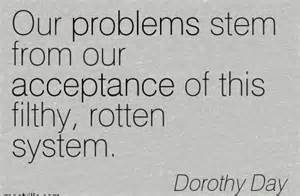
  • Dorothy Day who rejected capitalism a “rotten putrid system” and
  • Thomas Merton who described American politicians as a bunch of gangsters.

It was a masterful critique filled with irony – polite, but devastating for anyone who was listening closely.

Unfortunately, few commentators were tuned in sufficiently to pick up the subtlety. For them Francis was a nice old man praising “the land of the free and the home of the brave,” and closing with “God bless America” – without the pundits realizing, of course, that “America” pointedly includes the pope’s beloved Argentina devastated for decades by U.S. policy, and an entire continent oppressed by the United States for Francis’ entire life. Like everyone in Latin America, Francis knows all of this very well.

The lesson here is that when prophets speak, we’d best be alert to nuance and implication.

That lesson is applicable to today’s familiar story of the “widow’s mite.” It’s easy to miss the point, since it’s obscured by interpretations of homilists with no stomach for subtlety.

The episode comes right after Jesus and his disciples had all taken part in (and perhaps led) a demonstration against the temple priesthood and the thievery of their system from the poor. I’m talking about Jesus’ famous “cleansing of the temple.” That event sealed Jesus’ fate. The temple priesthood would soon be offering the reward for his capture that Judas would accept.

Following the assault on the temple, Jesus continues instructing his disciples on the corruption of the Temple System. To do so, he takes a position, Mark says, “opposite” (i.e. in opposition to) the temple treasury. The treasury was the place where Jews paid the tithe required by the law as interpreted by the priesthood Jesus despises. It was a “flat tax” applying the same to rich and poor.

Ever class-conscious, Mark points out that “many rich people” somehow made it clear to all that they were putting in large sums. Then a poor widow came along and furtively put in a penny. Jesus calls attention to the contrast: “large sums” vs. “two small copper coins, which are worth a penny.”

“It’s all relative,” Jesus says.  “Truly I tell you, this poor widow has put in more than all those who are contributing to the treasury. For all of them have contributed out of their abundance; but she out of her poverty has put in everything she had, all she had to live on.” Jesus then leaves the temple in disgust.

There are two ways for homilists to explain this incident in the context of today’s Liturgy of the Word. Remember, it began with a reading from I Kings and its story of the great prophet Elijah and the widow of Zarephath.

Elijah was hungry. He encountered a single mom gathering sticks to make a fire to eat her last meal with her son. They were starving, and she had only a handful of flour and a few drops of oil to make some bread before she and her son would die of hunger. The prophet asks that instead she make him some food. Obediently, she does so. And strange to say, after feeding Elijah, the widow discovers that her flour and oil never run out. She somehow has an endless supply. She and her son are saved.

Then in today’s second reading, Jesus is contrasted with the temple priesthood. The temple priests, the author of Hebrews says, were required to repeatedly offer sacrifices in the Temple year after year. In contrast, Jesus entered the heavenly “Holy of Holies” but once, offering there not the blood of bulls and lambs, but his own blood. Jesus is the true high priest.

The standard way of treating these readings runs like this: (1) The widow of Zarephath gave the Holy Man all she had to live on and was materially rewarded as a result; (2) the widow in the temple donated to the temple priests “all she had to live on” and was rewarded with Jesus’ praise; (3) follow the examples of the widow feeding Elijah and the widow giving her “mite;” (4) donate generously to your priest (a successor of the Great High Priest in Hebrews) and you will be richly rewarded either here, in heaven, or in both places.

That’s a standard treatment we have all heard. However, it has severe problems. To begin with, it ignores the liturgical response to the Elijah story taken from Psalm 146. That excerpt from Psalms sets a back-drop for the entire Liturgy of the Word and provides a key for interpreting not only today’s readings, but the entire Bible. The psalm reminds us that the poor are God’s Chosen People. God’s concern for the poor is not with their generosity towards God but with God’s securing justice for them. As the psalm says, God gives food to the hungry, sets captives free, gives sight to the blind, protects immigrants, and sustains the children of single moms. God loves those concerned with justice for the poor, the Psalm says. God loves prophets like Elijah and Jesus. On the other hand, God thwarts the ways of the wicked – those who, like the scribes and high priests (as well as members of the U.S. Congress), exploit God’s favored poor.

All of that represents a “red thread” running through the entire Judeo-Christian tradition. It offers us a key for interpreting the story of Elijah as well. It changes the emphasis of the story from the widow’s generosity, to God’s provision of food for the hungry and God’s concern for the children of single mothers.

With that key in mind, we are alerted to circumstances in today’s gospel story that summon us to interpret it differently from the standard treatment.

We are reminded that the episode takes place in an elaborate context of Jesus’ assault on the temple system. In effect, the context is Jesus’ symbolic destruction of the temple itself. Yes, there was that “cleansing” I referenced. But there was also Jesus’ prediction of the deconstruction of the building itself. “Not one stone will be left here upon another; all will be thrown down” (13:1-2). Then there was that strange incident of Jesus cursing a fruitless fig tree as he was entering the temple precincts (11:12-14; 20-24).  The fig tree was the symbol of Israel. Here again Jesus pronounces a judgment on an entire system that had become corrupt and forgetful of the poor who are so central to God’s concern.

That judgment is extended in Jesus’ teaching immediately before the episode of the widow’s mite.  Again, Jesus takes a position “opposed” to the temple treasury and says, “Beware of the scribes . . . They devour widows’ houses and for the sake of appearance say long prayers.” As scripture scholar, Ched Myers points out, Jesus was probably referring to the practice of turning over to scribes the estates of deceased husbands. The surviving wives were considered incapable of administering a man’s affairs. For his troubles, the scribe-trustee was given a percentage of the estate. Understandably fraud and embezzlement were common. In this way, religion masked thievery from society’s most vulnerable.

With Jesus’ accusation ringing in their ears, a case-in-point, a poor widow, arrives on the scene. She pays her tithe – the flat tax – and leaves penniless. Jesus can take no more. He storms out of the temple.

According to this second interpretation, Jesus is not praising the generosity of the widow. Instead, he is condemning the scribes, the priests, the temple and their system of flat taxation. Jesus’ words about the widow represent the culminating point in his unrelenting campaign against hypocrisy and exploitation of the poor by the religious and political leadership of his day.

That was Pope Francis’ point too in his address to the U.S. Congress: In effect he came to the defense of the widow’s impoverished counterparts on death row or living under the threat of bombs and drones proliferated by an arms industry motivated by worship of money drenched in blood.

In effect, Pope Francis berated the gangsters arrayed before him – every one of them guilty of fleecing the poor, destroying their homes and fields – all to support a system as rotten and putrid as the one Jesus symbolically deconstructed.

As Mark has Jesus saying, “Whoever has ears to hear, let them hear!” (MK 4:9)

Pope Francis Tells Kim Davis to “Stay Strong” and Nullifies His Entire U.S. Trip!

Pope & Kim

Since Pope Francis’ historic visit to the U.S., states have executed three death row inmates. The White House has promised further arms sales to Egypt and Saudi Arabia. Our military has continued daily airstrikes in Syria. It has bombed a Doctors without Borders hospital in Afghanistan. Yet another mass shooting facilitated by out-of-control arms manufacturers and their government servants has shocked us all. At the same time, preliminary work on the Keystone XL pipeline has continued unabated.

In his congressional address, the pope condemned all such actions in no uncertain terms.

Meanwhile, defying all expectations, the pontiff chose not to address specifically abortion, contraception and gay marriage. Those matters, he has said, have been over-emphasized while the essence of Jesus’ Gospel (Good News to the poor) has been correspondingly downplayed. In fact, Francis has described the Church’s pelvic concerns as “obsessions.”

Nonetheless, since the pope’s departure virtually the only lasting conversation has circled around two words spoken to Kim Davis, the county clerk from Kentucky, who has refused to issue marriage licenses to gay couples.

Apparently at the invitation of the conservative Vatican Nuncio (ambassador), Ms. Davis appeared in a reception line, had her case briefly explained to the pope, shook his hand, and heard two words: “stay strong.” Those two words have overshadowed the thousands of sentences spoken by the pope in Washington, New York, and Philadelphia.

“Stay strong” was enthusiastically embraced by the mainstream media (MSM) as if it were the most significant papal utterance between September 22nd and September 25th. Apparently, it relocated commentators on familiar, comfortable ground far from the decidedly annoying “bold cultural revolution” advocated by the gentle visitor from the Vatican.

Later while on the plane back to Rome, the pope was pointedly asked about government officials who refuse to discharge a duty if they feel it violates conscience. In keeping with church tradition, the pope replied, “Conscientious objection must enter into every juridical structure because it is a right.”

The MSM seized upon that pronouncement as a further expression of papal support for Kim Davis.

Only a few applied the pronouncement’s logic to Kim Davis herself, who has been divorced three times and married four. Following the logic of “conscientious objection,” it would be much more consistent for Christian administrators in Rowan County to refuse all of Ms. Davis’ petitions for divorce which Jesus condemned as adulterous. (He said absolutely nothing about homosexuality.)

Much less did the MSM bother to apply the pope’s words about conscientious objection to whistle blowers in general or in particular to Chelsea Manning, Edward Snowden, the work of WikiLeaks, or to military personnel refusing orders. Once again, that would have moved the discussion into decidedly uncomfortable territory. It would have been too “political.”

In the meantime, national leaders, led by the United States, largely refuse to “become strong,” much less “stay strong” on matters of capital punishment, and weapons of mass destruction.  They’ve continued our headlong plunge towards the abyss represented by climate chaos – the lion in the room that threatens to devour us all.

According to Pope Francis, it’s towards taming that lion that focus and concern should be directed — instead of towards meaningless sideshows.

Pope Francis Criticizes Capitalism as a “Putrid, Rotten System”

filthy system

In a recent interview, Chris Hedges criticized Pope Francis for not being radical enough in his criticism of capitalism. He said that in the end, the pope was merely advocating charity and not real systemic change.

Hedges is an award-winning journalist, activist, author, and Presbyterian minister. He is one of our culture’s most courageous writers and prophetic critics. He is always worth listening to. So I was surprised by his remarks.

The interview gave the impression that the pope not only should have been stronger in his criticism of capitalism; he should have denounced it as such, and offered some alternative.

My personal response is that the pope actually has done all three – during his six-day trip to the United States, and especially in his landmark encyclical, Laudato Si’. During his visit here, he offered an extremely harsh denunciation capitalism. He scathingly criticized its “American” embodiment as violent and a form of gangsterism. And finally, in Laudato Si’, he offered a workable alternative.

Think about the pope’s criticism of capitalism-as-we-know-it.

Begin by understanding that it is historically short-sighted to argue that something called “capitalism” actually exists and needs reformation. The system has long since been reformed. In the midst of the Great Depression, it became clear to everyone that capitalism in its pure form (private ownership of the means of production, free and open markets, and unlimited earnings) was simply not workable.

So under the influence of John Maynard Keynes and others, the New Deal in the U.S. and the more extensive welfare states of Europe incorporated elements of socialism (public ownership of the means of production, controlled markets, and limited earnings). In other words, economies became mixed (some private ownership and some public, some controlled markets and some free, and earnings limited by progressive income tax).

The problem is that the new mixed economy was blended in favor of the rich. The theory was “trickle-down.” If the rich prospered, the rising tide of their prosperity would lift all boats.

Another problem surfaced with the Reagan and Thatcher counter-revolutions during the 1980s. Reagan called the New Deal a “fifty-year mistake.” So he focused on eliminating or shrinking the elements of socialism that had crept into economies everywhere since the emergence of the welfare state. It’s that counter-reformation that Pope Francis has criticized in polite terms as the excrement of evil personified.

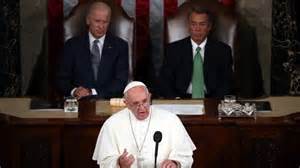
He elaborated his point during his address to the U.S. Congress on September 24th when he referred to economic system we know as “filthy,” “rotten,” and “putrid.” He called the Wall Street speculators “hypocrites.” Moreover, the pope directly confronted the members of his audience by calling the system they represented “the greatest purveyor of violence” in the world today. And he called the politicians seated before him a bunch of gangsters.

Yes he did.

Of course the polite, soft-spoken, and gentle pontiff was a gracious enough guest to do none of those things directly. He did so instead by offering Dorothy Day, Martin Luther King and Thomas Merton as embodiments of our country’s greatest values.

It was Dorothy Day who is remembered as saying, “We need to overthrow . . . this rotten, decadent, putrid industrial capitalist system which breeds such suffering in the whited sepulcher of New York.”

It was King who called the United States itself, “the greatest purveyor of violence in the world today.”

And it was Thomas Merton, the apostle of non-violence, who classified U.S. politicians and military leaders among the world’s gangsters when he said, “The world is full of great criminals with enormous power, and they are in a death struggle with each other. It is a huge gang battle . . .”

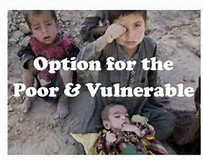
Moreover, Pope Francis did not leave his audience merely reeling from such heavy blows un-complemented by clear systemic alternatives to the filthy rotten arrangement he addressed. Instead, the pontiff called for a deep restructuring of capitalism-as-we-know-it. This would involve turning the present system’s preferential option for the rich precisely on its head, replacing it with his favorite guideline, the “preferential option for the poor.” Even more particularly, restructuring would require a central international legislative body endowed with power to override national economic practices judged to be environmentally unsound.

Both recommendations are found in Laudato Si’ which the pope cited in his congressional address. Both have already been implemented world-wide.

To begin with, the New Deal, the Great Society and (even more so) Europe’s introduction of the welfare state already represent arrangements which forefronted the needs of the working classes and poor. The reform measures were at the very least strong gestures towards economies mixed in favor of the poor rather than of the Wall Street rich. Such reforms demonstrated that another economic order is indeed possible.

As for the world body with power to enforce environmental legislation, the World Trade Organization (WTO) already has it, though perversely in its present form. According to the provisions of the North American Free Trade Agreement (and of the proposed Trans-Pacific Partnership), multinational corporations (MNCs) now have the power to sue before the WTO and invalidate U.S. environmental protection standards if those laws can be shown to diminish a corporation’s expected profits.

What the pope is proposing is an international body that turns the WTOs mandate upside-down.  The body the pope proposes would have binding power to protect the environment from the depredations of MNCs – i.e. is to eliminate their profits if they result from environmental destruction.

So I respectfully suggest that Chris Hedges is mistaken when he says Pope Francis pulled punches in his address before the U.S. Congress. And the pontiff has offered an alternative. As an honored guest, he gently delivered knock-out blows clearly observable to attentive listeners.

It remains for prophets like Hedges and others to highlight and reinforce them and in this way to advance us towards the Other World Pope Francis would convince skeptics is possible.

The Pope’s Address to Congress: First Impressions

Pope Congress 2

It was a fabulous speech by the world’s leading spiritual and thought-leader, who has just produced our century’s most important public document, Laudato Si’, the papal encyclical on the environment.

Pope Francis addressed not just the dignitaries in the Senate chambers, but all of us – parents struggling to support families, social activists, the elderly and the young.

The pope emphasized communitarian values: dialog, the common good, solidarity, cooperation, sharing, and the Golden Rule.

He held up for emulation four counter-cultural heroes he understood as embodying the most admirable of “American” values. They weren’t Rockefeller, Reagan, Jobs, or even FDR. Instead they were:

  1. Abraham Lincoln: the champion of liberty for the oppressed
  2. Martin Luther King: the advocate of pluralism and non-exclusion
  3. Dorothy Day: the apostle of social justice and the rights of the poor
  4. Thomas Merton: the Cistercian monk who embodied openness to God and the capacity for inter-faith dialog.

Of course, Lincoln and King were victims of assassination for championing the rights of African Americans.

Day and Merton vigorously resisted what Dorothy Day called “this filthy, rotten system.” (As is well-known, she was also an unwed mother whose first pregnancy ended in abortion.)

Following the examples of The Four, the pope called for the end of:

  • Fundamentalisms of every kind – including economic fundamentalisms
  • Political polarizations that prevent opposing parties from dialog and cooperation
  • Exclusion of immigrants by a nation of immigrant descendants
  • Capital punishment and its replacement by programs of rehabilitation
  • The global arms trade and arms sales in general along with the wars and violence they stimulate
  • Violent conflict and its replacement by difficult but essentially diplomatic process of dialog
  • The human roots of climate chaos and the related problems of poverty
  • Unlimited and directionless development of technology

Throughout this gentle but radical speech, the audience seemed to be waiting for the other shoe to drop – i.e. for the pope to mollify his conservative critics by addressing their favorite “religious issues” contraception, abortion, gay marriage. But the shoe never hit the floor.

At two points the pope about to untie his footwear. In mid-speech, he stated that we must protect and defend human life at every stage of its development. This lured his audience into a standing ovation.

However, the illustration of his point was not abortion, but capital punishment. Punishment for crime, Francis said, must never exclude hope and rehabilitation. We must end the death penalty, he asserted, since every life is sacred.

Then towards the end of his address, Francis spoke of his anticipated presence at this weekend’s Philadelphia Conference on the family. Families, he said, are threatened as never before, both from within and without.

But then, instead of addressing gay marriage, the pope spoke of the “most vulnerable” in this context – not the unborn, but “the young” threatened by violence, abuse and despair. Many of them hesitate to even start families, he lamented – some because of their own lack of possibilities. Others demur because they have too many possibilities. “Their problems are our problems,” the pope said. We must address them and solve their underlying causes.

It was a masterful speech. It continually lured conservatives into standing ovations for issues they constantly oppose: the end of the capital punishment, protection of the environment, openness to immigrants, the end of arms sales of all kinds. The address summoned legislators to their real responsibility – pursuing the common good, the chief aim, the pope said, of all politics.

The pope’s basic message was be daring and courageous – like the counter-cultural activists, Lincoln, King, Day, Merton, and (I would add) Pope Francis!

Pope Urges Catholic Parishes to Take in Refugees

pope-refugees-2

I woke up this morning to a promising Washington Post headline. It read: “Pope Urges Europe’s Catholics to take in Syrian refugees.” There he goes again, I thought.

The article described how Pope Francis “has called on ‘every’ parish, religious community, monastery and sanctuary to take in one refugee family – an appeal that, if honored, would offer shelter to tens of thousands.”

Of course the vast majority of such migrants are “illegal” in the eyes of governments where the invited parishes, etc. are located.

The pope implied that Jesus’ attitude towards “the stranger” overrides such legislation. The Master’s words in MT 25:35 have him identifying with immigrants (and the hungry, naked, homeless, and imprisoned) and basing the entire final judgment on the way we treat such people. He says: “. . . I was hungry and you gave me something to eat, I was thirsty and you gave me something to drink, I was a stranger and you invited me in,”

The pope’s appeal comes at a time when immigration along with climate change is a hotly contested issue not only in Europe, but here in the United States.

Of course, the entire panoply of Republican candidates (including the six of them who claim to be “devout Catholics”) consists not only of climate change deniers, but of candidates trying to outdo one another on the issue of excluding immigrants from our borders. Catholic candidates include Jeb Bush, Chris Christie, Bobby Jindal, Rick Santorum, Marco Rubio and George Pataki. Now they specifically diverge from the Pope not just on climate change, but on immigration as well.

Just yesterday, another ardent Christian, Sarah Palin, brought climate change and immigration together in typical GOP fashion. She told CNN that refugees from Mexico not only “better be legal,” but should be made to speak “American,” rather than “Mexican.” She sides with Donald Trump’s plan to build an exclusionary wall along the border. She also aspires to be Mr. Trump’s Secretary of Energy – a position she would embrace enthusiastically “because energy is my baby – oil and gas and minerals, those things that God has dumped on this part of the Earth for mankind’s use. . .”

Of course, Pope Francis words yesterday put him on the side of immigrants and against exclusionists. He invites his flock of 1.2 billion to follow suit. He also expressly rejects Palin’s reading of God’s mind about why the Creator “dumped” gas, oil, and minerals on Earth.

According to his eco-encyclical, Laudato Si’, using the narratives of Genesis to encourage “the unbridled exploitation of nature” is an incorrect interpretation of the Bible (67). “Clearly,” the pope adds, the Bible has no place for a tyrannical anthropocentrism that would encourage the “drill, baby, drill” approach regardless of its effects on the planet (68).

But the pope’s words about welcoming immigrants struck even closer to home.  For years I’ve been wondering what it might take to awaken Catholics to the revolutionary power of the Gospel.

In my own Catholic parish, we find ourselves mired in a detached, decontextualized version of faith that ignores the world’s real problems.

Pope Francis represents the exact opposite trend. Yet despite his invitation to “change everything” issued in The Joy of the Gospel nearly two years ago, and in spite of the urgency of Laudato Si’, nothing at our local level changes.

Yesterday’s papal invitation shows us how to get off the dime. He suggests something practical for every parish to do: welcome at least one immigrant family from the detention centers on our own borders. House and feed them. Be a prophetic example to the exclusionists. Join with other (non-Catholic) churches to do the same.

The infrastructure is there: churches that are used for just a few hours each week, parish basements and halls that are similarly idle most of the time. Also, many of us have space in our own homes – or own second houses – that might similarly provide housing for Jesus presenting himself to us as an immigrant.

Our little parish of St. Clare in Berea, Kentucky has a Peace and Social Justice Committee of 20 highly committed people. We’re meeting next Sunday to plan our gala “Watch Party” on September 27th to see the Pope’s address our Congress and the U.N.

Now in the light of the pope’s invitation to open our buildings to immigrant families, we have something else to discuss and act upon.

Accepting Pope Francis’ invitation could move our parish to truly begin “changing everything.”

Can you imagine what would happen, if the families we accepted were Muslim instead of Christian?

Thank you, Pope Francis.

“Laudato Si’” and Its Preferential Option for the Poor (Part Three): the Guiding Principle for Restructuring the World Economy

option for poor

This is the last installment in a three-part series on Pope Francis’ new encyclical, Laudato Si’. It attempts to place in historical perspective what might well be the most important document yet produced in the 21st century. It also tries to explain the meaning and centrality of the encyclical’s guiding principle, its “preferential option for the poor.”  This third part addresses the meaning and centrality of that option.

In his critique of capitalism-as-we-know-it (reviewed in Part Two of this series), Pope Francis called explicitly for “structural change” in the world economy.  He said, “Let us not be afraid to say it: we want change, real change, structural change.”

But what “structural change” does the pope have in mind?

Evangelii Gaudium and Laudato Si’ offer the answer. Their “preferential option for the poor” provides the guiding principle and turns the present economic order exactly on its head. This implies that if the present order is possible, so is its opposite.

That is to say that the present neo-liberal order is structured according to a “preferential option for the rich.”  Its sponsoring question is how can we make sure that the banks, corporations, and 1% prosper? Economists explain such concern by various “trickle-down theories.”  If priority is accorded the welfare of the rich, the theorists say, the wealth produced will trickle down creating a “rising tide that lifts all boats.”  [The pope rejects such theories out-of-hand as historically disproven. In “Evangelii Gaudium” he even calls them homicidal (53), ineffective (54) and unjust at their roots (59).]

By way of contrast, the pope’s “preferential option for the poor” begins at the bottom of the economic pyramid. Its sponsoring question is how can we insure that farmers have land, that workers have jobs, and that everyone is decently housed?

Laudato Si’ goes even further. It expands moral concern beyond human beings to all forms of life. It asks how we can insure the survival of the planet in the face of global warming, water and air pollution, massive extinctions, disappearance of rainforests, wasted food, waste in general, uncontrolled urbanization, rampant crime and loss of human meaning.

None of this means abandoning market dynamics altogether.

It does mean, however, controlling them according to the principle some have expressed in the words, “as much market as possible and as much planning as necessary.” This means maximizing market forces, but controlling them as necessitated by prioritization of the needs of the poor including the environment – once again by the preferential option for the poor.

In practice this entails at least the following: governments (1) intervening in the marketplace to insure the rights of all to jobs with living wages, housing, education, and health care, along with land for small farmers, (2) similarly regulating market forces to protect the global environment and all life forms from the most primitive to the highest, and (3) thereafter turning economies over to carefully monitored and controlled market forces.

Impossible you say? Not at all. To repeat: if economies can be structured according to a preferential option for the rich, they can be restructured to prioritize the needs and rights of the poor and the environment.

That’s the Global South hope and conviction Laudato Si’ embodies: another world is indeed possible.

Conclusion   

Will Laudato Si’ have its desired effect? That, of course remains to the seen. However, it undeniably has in Pope Francis a powerful proponent.

That is, despite remaining Stalinist skepticism, Pope Francis might well be the most powerful man in the world. Certainly, he is the planet’s most influential moral leader. What empower him, of course, are not the military divisions in which Josef Stalin placed confidence, but his extraordinary consciousness of the unity of all creation expressed repeatedly in his every pronouncement and especially in his recent encyclical. What sets him apart from the Obamas and Putins of the world is his equally unusual courage, compassion, charisma, and credibility.

Additionally, the pope has surpassing constituency. He heads a community of 1.2 billion followers. And this does not even count the untold millions of non-Catholics who admire him and his thought leadership.

With such support, the powerful message of Laudato Si’, and his plans to bring that message to the U.N. and U.S. Congress in September, as well as to influence the Climate Summit in Paris next September, who knows what changes will result? Who knows how he will influence the U.S. general elections in 2016?

In other words, Francis may stand on the brink of surpassing the stature of Leo XIII and John Paul II in terms of changing the world.

Defenders of the old order are already shaking in their boots.

“Laudato Si’” and Its Preferential Option for the Poor (Part Two): Pope Francis’ Critique of Capitalism

Dung of Devil

This is the second installment in a three-part series on Pope Francis’ new encyclical, Laudato Si’. Overall, the series attempts to place in historical perspective what might well be the most important document yet produced in the 21st century. It also tries to explain the meaning and centrality of the encyclical’s guiding principle, its “preferential option for the poor.”  This second part addresses Pope Francis’ critique of capitalism-as-we-know-it.

Pope Francis’ Critique of Capitalism

The first entry in this series on Laudato Si contextualized the significance of its author’s origins in the Global South. It argued that till Francis, Catholic social teaching had largely focused on Western and Eastern Europe. The social pronouncements of Italian popes were largely concerned with the problems of Western Europe and the threatened loss of the working class to the allures of socialism and communism. Beginning with Leo XIII’s Rerum novarum, the Italians set the stage for the introduction of Europe’s extensive welfare state.

With the election of a Polish and subsequently of a German pope, papal focus shifted to Eastern Europe and the dethroning of communism there. Pope John Paul II and his right hand man, Josef Ratzinger (later to become Benedict XVI) cooperated with the Reagan administration (and specifically with the CIA’s William Casey) in facilitating the collapse of the Soviet Union.

With that demise achieved, it appeared to most that capitalism had won a definitive victory. Corporate globalization stood virtually unchallenged.

However, all of this changed with the ascent of Argentina’s Jorge Bergoglio to the papal throne in 2013. As the first pope from Latin America, Pope Francis has repeatedly called capitalism’s “final victory” into question. No longer focusing on Europe (western or eastern), he shifted focus to the Global South, to the poverty colonialism and unfettered capitalism had caused there.

He focused on connections between deregulated markets and the rape of the Earth Mother indigenous Catholics of the Andes called Pachamama. Without apology, he espoused a “preferential option for the poor,” and spoke clearly about the rejection of the neoliberal globalized order lionized by the corporate elite.

Such sentiments were nowhere more clearly expressed than in the speeches delivered by Pope Francis during his summer “homecoming” trip to Latin America. In written form, they were evident in his landmark encyclical on the environment, Laudato Si’ and in his Apostolic Exhortation, Evangelii Gaudium.

Addressing the World Meeting of Popular Movements in Santa Cruz, Bolivia, Francis traced today’s global problems back to their origins in European colonialism beginning in 1492. But he also identified new forms of colonialism exercised through corporations, loan agencies, “free trade” treaties, and imposition of “austerity measures.”

Such actors and policies subordinate states to outside powers which also exercise control through misguided policies ostensibly aimed at controlling drug trafficking, political corruption, and terrorism. More subtly, external powers colonize, destroy local cultures and foster cultural uniformity through communications monopolies, which the pope described as “ideological colonialism.”

“Let us say NO to forms of colonialism old and new,” he said.

The pope was completely outspoken. He went on to criticize capitalism-as-we-know-it as “an invisible thread” connecting problems of world poverty, worker exploitation, landlessness among farmers, homelessness, and destruction of the natural environment. That system imposes the mentality of profit at any price without concern for its impact on displaced peasants and workers or for its destructive effects on “Mother Earth.”

This is indeed capitalism-as-we-know-it.

The system, he said “is by now intolerable: farm workers find it intolerable, laborers find it intolerable, communities find it intolerable, peoples find it intolerable … The earth itself – our sister, Mother Earth, as Saint Francis would say – also finds it intolerable.”

Though some have criticized the pope for stepping outside his area of competence, his condemnation of the reigning economic system is specifically biblical, theological, and moral.

Like the prophets of the Jewish Testament, he identifies “the existing system” with idolatry, the most serious of biblical sins. In his strongest condemnation yet, Francis quoted the 4th century sage, Basil of Caesarea, calling today’s capitalism “the dung of the devil” – i.e. the excrement of evil personified. Stronger language can hardly be imagined.

Theologically, Francis echoed Latin America’s liberation theology speaking Christian faith as “revolutionary,” because it challenges “the tyranny of Mammon.” The existing system, the pope said, “runs counter to the plan of Jesus.” He said the system now in place and Jesus’ hoped-for Kingdom of God have different aims.

Morally, then, the pope called working against capitalism-as-we-know-it – “working for just distribution of the fruits of the earth and human labor” – a “moral obligation.” For Christians, he said, “it is a commandment.” Here the pope echoed what he said in “Evangelii Gaudium,” where he identified the struggle for social justice and participation in political life as “a moral obligation that is “inescapable.”

(Next installment: the “other world” Francis sees as possible)