Women (Not Jesus) Work the “Miracle” of Loaves & Fishes (Sunday Homily)

Enough Food
Readings: 2 Kgs. 4:42-44; Ps. 145: 10-11, 15-18; Eph. 4:1-6; Jn. 6: 1-15

Thirty thousand children die every day of absolutely preventable causes associated with hunger. Mostly they die from diarrhea connected with unsafe drinking water.

Thirty-six million people in all die every year from those same easily remediable causes. That’s like the death toll from 300 jumbo jets crashing each day for a year, with no survivors, and with most of the victims children and women.

Can you imagine 300 jumbo jets crashing every day? Of course, you can’t. Just three jumbo jets crashing on a single day would throw the airline industry into complete panic. It would recognize that something was deeply wrong with the system. More regulation would be demanded by everyone.

And yet, with hunger, the equivalent of one hundred times those crashes with the horrendous figures I just mentioned happen each day, throughout each year, and no one in authority will say that the system is defective. In fact, we celebrate it as the very best possible. Politicians commonly champion less regulation rather than more. They believe the free market is the solution to all of the world’s problems.

But is unregulated market the answer to world hunger? According to the U.N., the problem of world hunger is not lack of food production, but its faulty distribution. Through no fault of their own, but through the fault of the reigning market system, people in hungry countries just don’t have the money to buy food. According to the same U.N., a mere 4% tax on the world’s richest 250 people would solve that problem.

Each year those 250 people receive as much income as the world’s nearly 3 billion people who live on $2 a day or less. Taxing the 250 by a mere 4% would provide enough to make the hunger I’m referencing disappear – and not just hunger, but unsafe drinking water itself, along with illiteracy, poor housing, and lack of medical care.

That sounds so easy. But such a tax is not even discussed – not even by Christians like us who profess to be “pro-life” and concerned about defenseless human life forms – at least before they’re born. In defense of the unborn, such Christians want to force women to bring all pregnancies to term. However, they see forcing the super-rich to part with an infinitesimal portion of their great wealth an unfair limitation on the wealthy’s freedom – even if it is to save thousands of already born children each day.

In the face of such intransigence (not to say hypocrisy) on the part of those who see the free market as the solution to everything, many in hungry countries have turned to the violence of revolution or terrorism in efforts to change the system.

So, our question becomes: free market or violence against that system? Which way did Jesus approve?

Today’s gospel reading indicates that Jesus approved of neither. Instead, he offers a third alternative – a non-violent system of sharing led by his followers with women in the forefront.

Let me explain what I mean.

Today’s Gospel reading comes from John the Evangelist. Bread holds an extraordinarily prominent and symbolic place for him. But note that in John’s version of Jesus feeding bread to 5000 men, there is no mention of the women and children inevitably in the crowd. (As we’ll see, Mark’s version of this story importantly centralizes their presence.)

It is also important to note that there is no mention of a “miracle” in either John’s or Mark’s account.

Instead, the story goes like this: People have followed Jesus “to the other side” of the Lake of Galilee. They are hungry. Testing him, Jesus asks Phillip where to buy bread for so many. Phillip has to confess that the market system cannot even begin to feed them all. There’s nowhere to buy, and even then, a year’s wages would be insufficient to give each person even a morsel. To reiterate: in the story, the market system proves incapable of meeting the challenge. Jesus and the women in the crowd are about to offer an alternative.

[Before we get to that, however, let me offer an aside about men. Armed violence, of course is the traditional “manly” way of dealing with almost any problem, isn’t it? However, John the Evangelist underlines Jesus’ rejection such “manliness” – even though the Master evidently gives revolution and insurrection much more consideration than the market alternative he considered briefly with Phillip.

Think about it. In John’s account, the time is near the Passover feast of national liberation – a traditional period of civil unrest in Jesus’ Palestine. Moreover, the episode we’re considering takes place in the desert – the time-honored place of insurrectionary resistance. Revolution is evidently on the minds of the 5000.

Jesus knows, John says, that the men want to make him king by means of violence. Perhaps that’s the whole reason they’ve stalked Jesus and cornered him in his desert get-away. In any case, after a day-long dialog with Jesus, the intention of the 5000 evidently remains unchanged.

Nevertheless, instead of acceding to “manly” impulses, Jesus enacts a parable about how to deal with the frustration of unmet needs that drives men to violence. By contrast, he adopts a typically female solution to the immediate problem of hunger. What he demonstrates might be called “The Kingdom Sharing System.” It begins by first establishing personal friendships and ends by sharing.]

To begin with, Jesus has everyone relax – to sit down on the soft grass that nature has provided. In Mark’s account of this same event, the evangelist notes that Jesus divided the huge crowd into small groups of ten or so each. That gave all present a chance to introduce themselves and exchange pleasantries.

Then a child shows the way. A small boy brings forward five loaves and two fish and places them before Jesus. Jesus calls everyone’s attention to what the child had done. And that starts a “miracle of sharing.” The crowd is touched. People begin to offer one another the plenty collectively present among them, but that everyone was apparently reluctant to share.

The abundance was surely there, thanks to the way women work. I mean, can you imagine a Jewish mother going on a day-long trip to the desert without packing a lunch for her husband and children? Of course not. In fact, there’s such abundance that even after everyone has eaten, 12 baskets remain to bring back to those not present to witness this “miracle of enough.” The dramatized parable’s point is: that’s the way the Kingdom of God works. (And note how women must have been central to it all.)

What’s the lesson in all of this? First of all (as today’s responsorial psalm says) it’s God’s will that everyone might have enough to eat. Bread is God’s gift to us all, without exception. And whether people eat or not shouldn’t be dependent on their ability to buy. In fact, if someone is hungry, humans and their market system are the sinfully responsible ones.

The bottom line here is that the way to satisfy hunger is not by depending on blind market forces or by waging violent, manly revolution. Rather it is exemplified by the child in the story and the women in the crowd. That’s the way that Jesus calls us to deal with the problem of hunger with which our reflections began this morning.

And it’s Jesus’ followers, people like you and me who should be following the women who typically lead the way.

How best can we best enact “The Kingdom Sharing System” in our hungry world? (Discussion follows.)

Don’t Worry about Russians Rigging Our Elections: Long Ago, U.S. Politicians Beat Them to the Punch!

Steele.jpg
Readings for 16th Sunday in Ordinary Time: Jer. 23:1-6; Ps. 23: 1-3, 3-4, 5, 6; Eph. 2: 13-18; Mk. 6: 30-34

Everyone’s talking about election hacking these days. In the country’s latest reprise of “the Russians are coming,” we’re all in turmoil about Putin’s interference in U.S. elections.

However, don’t you find it highly ironic politicians on all sides are so worried about “Russian hacking,” while virtually none of them is addressing much more significant forms of election rigging? I’m talking about the criminal fixes arranged by the U.S. officials themselves?

More specifically, these include the retention of the outdated electoral college itself, outrageous gerrymandering of voting districts, super delegates at nominating conventions, voter suppression’s many forms (from voter IDs to felony disenfranchisement laws), Koch brother funding of candidates’ election campaigns (as in Citizens United), and the use of highly hackable computerized technology that miscounts and discounts millions of votes each election cycle. (No wonder so many of us decide on election day, “Why bother?”)

The upshot of it all is that we end up with a system controlled at all levels by a minority party that doesn’t want everyone to vote. That’s because its members could never be elected to the presidency (and its control of the judiciary) if voters exercised their franchise in anything like the numbers in other industrially-developed countries.

And so, we end up with a crisis of political leadership with one-percenters like Donald Trump and George W. Bush running things – and with corporate-funded Barrack Obama trailing not very far behind.

I bring all of this up because the theme of today’s Liturgy of the Word is political leadership.

The liturgical image for doing so is shepherding. That pastoral metaphor brings to mind characteristics of presence, watchfulness, protection, and overriding concern for the sheep of the flock. I’m confident you’d agree that the political leaders I mentioned earlier in no way embody those qualities.

The first reading from the Prophet Jeremiah joins us in lamenting the absence of political leaders with the qualities just mentioned. Instead of uniting people, and drawing them together, the would-be leaders even in Jeremiah’s day (all men, of course) were dividing and scattering them as effectively as our own. Through Jeremiah God promises to appoint new governance to reverse that syndrome.

Today’s reading from the Gospel of Mark elaborates the theme. It focuses on Jesus’ own practice of spiritual shepherding. Jesus fulfills the promise of Jeremiah by drawing his apprentice shepherds from an entirely new class of people – not from the tribe of Levi and its inherited priesthood, not from the royal palace – not from the one-percenters of his day – but from the marginalized and decidedly unroyal and unpriestly in the traditional sense. Jesus chooses illiterate fishermen, day-laborers, and possibly real working shepherds. By all accounts women also prominently filled shepherding roles in Jesus’ practice.

Finally, the responsorial psalm and Paul’s letter to the Christian community at Ephesus remind us of the reason for shepherds at all – not the preservation of tradition, much less of patriarchy. Rather, shepherds are there to embody compassion. They exist for the welfare of the sheep.

In Paul’s words, leaders are to foster the emergence of a new kind of person. In the familiar phrasing of Psalm 23, that new version of humanity is not over-worked, but rested, and lives in pleasant surroundings, without fear, lacking nothing, with plenty to eat and drink. Shepherds are there for the sake of righteousness, justice, and compassion. (Read Psalm 23 again with that in mind.)

So, given our broken electoral system, how do we get from here to there – to something approaching the biblical vision just described?

Well, I’ve just read a wonderful book that suggests the path ahead. But, get ready: it involves hard work for all of us. The book is called Grassroots, Geeks, Pros, and Pols. It’s written by OpEdNews editor, Marta Steele, and is a magisterial study of the corruption of our electoral system.

To begin with, Steele suggests that we must face up to the facts that:

• The Founding Fathers rejected the notion of democracy (cf. Federalist Paper # 10).
• Their assertion that “all men are created equal” was meant to establish their right to expropriate Native Americans and African slaves of their land and resources. (This is documented in Chapter 13 of my new book, The Magic Glasses of Critical Thinking).
• Instead, the Founders believed (as John Jay said) that the country should be run by those who own it.
• Both the anti-democracy and elite-ownership traditions find their clearest contemporary expression in Paul Weyrich’s statement in 1980 about Republicans not wanting everyone to vote based on their realization that if everyone did cast a ballot, a Republican president would never again darken the White House door (cf. Steele 233).
• Computerized voting machines overwhelmingly favor that minority otherwise unelectable party by miscounting and discounting thousands of votes in each state and millions nation-wide (Steele passim).
• Knowledge of such purposeful malfunctions tempts citizens (like me) to eschew voting itself. And this, of course, plays right into the minority’s hands.
• The only way to restore voter confidence is to revert to paper ballot technology (because it’s better and works) with safeguards against traditional ballot box stuffing methods.
• More specifically, the answer is to:

* Eliminate the electoral college in favor of direct popular vote (Why is virtually no one even discussing this?)
* Abolish gerrymandering by making redistricting a bi-partisan process subject to the approval of an effective Federal Election Commission (see below).
* Establish uniform, nation-wide electoral standards and procedures overseen, not by the states, but by the previously-referenced and truly empowered bi-partisan Federal Commission whose goal is maximizing voter turn-out as well as increasing voter confidence in the electoral process by its transparent certification process.
* Get private money out of the electoral process in favor of public funding.
* Outlaw voting machines altogether and replace them with paper ballots.
* More specifically, implement a system of automatic and verifiable voter registration; revert to the practice of universal hand-counted paper ballots; establish a national voting holiday period (from Saturday to Tuesday), with ballots hand-counted by senior Boy Scouts and Girl Scouts on Wednesday.

All of this should remind us that according to Jesus’ highly political metaphor, the Kingdom of God meant “a political system as God would arrange it.” Today’s readings call attention to the fact that such arrangement centralizes human welfare, grassroots leadership, and ardent compassion for all. It places the welfare of “the sheep” at center and includes provision of food, drink, healthy environment, and needed rest. Those are not the goals of our political minority. However, to attain goals like that, “shepherds” must be present, watchful and caring.

To repeat, today’s electoral system gives us nothing similar. And that’s not Mr. Putin’s fault. It’s the fault of our broken system and its unbiblical discouragement of grassroots focus. To fix it will require great commitment and work by all of us.

Marta Steele’s Grassroots, Geeks, Pros, and Pols complements today’s readings by thoroughly describing the problem and by offering suggestions about how to fix it.

Do yourself a favor: follow up on today’s readings by consulting the book.

Amos & Jesus Agree: America’s Not the Greatest Country in the World!

Greatest Country

Readings for 15th Sunday in ordinary time: Am. 7:12-15; Ps. 85:9-10, 11-2, 13-14; Eph. 1:3-14; Mk. 6:7-13

Do any of you remember the HBO series “Newsroom?” It lasted only a couple of seasons. However, I found it interesting and watched it faithfully.

As far as I’m concerned, the series’ highlight came when lead actor, Jeff Daniels, delivered a speech about then-current dismal state of our country. I’m sure many of you have seen it. It seems more relevant today than it did in 2012.

As a news anchorman of the stature and credibility of Walter Cronkite, Daniels’ character is badgered into answering the question “Can you say why America is the greatest country in the world?” Here’s how he answered:

Whew! That’s hard for most of us to hear, isn’t it? It’s almost as if the speaker were viewing the United States the way foreigners often do – or at least as someone highly sympathetic to the uneducated, infants, the poor, sick, imprisoned, and the victims of imperialistic wars. He seems to be saying that the experience of such people represents the measure of greatness.

I raise the “Newsroom” speech today because of today’s first reading from the Book of Amos. He was a prophet whose most famous speech was very like the one we just saw.

I mean his words were similar in that they were offensive to patriotic ears and centralized the experience of the poor. And they were delivered by an outsider. As we saw in today’s first reading, Amos’ words also evoked such negative response that they led the chief priest of Israel to lobby for the deportation of the prophet.

And what did Amos say?

Well, he was a very clever speaker. He did his prophetic work towards the end of the 8th century B.C.E. That was after the death of Solomon, when the Hebrew people had split into two kingdoms. The northern one was “Israel;” the southern one was “Judah.” Often the two were at war with one another. Yes, the “People of God” were that deeply divided even then.

Amos came from Judah, the southern kingdom. He went up north, to Israel, and confronted the people there. And he tricked his audience into agreeing with him that all their official enemies were really bad – the Aramites, Philistines, Moabites, and especially Judah, that kingdom to the south. God is extremely angry with these people, Amos promised. They would all be soundly thrashed.

“And they all deserve it!” his audience would have agreed.

And then the prophet turned the tables on his listeners. “But you know the nation that will be punished more harshly than all of them put together, don’t you? You know who the worst of all is, I’m sure.” (By now he now had his audience in the palm of his hand.)

“Who?” they asked eagerly.

“YOU!” the prophet shouted. “The nation of Israel has been the worst of all because of your treatment of the poor. You have shorted them on their wages. You have sold them into slavery. Your rich have feasted and lived in luxury, while those closest to God’s heart, the poor, have languished in hunger and poverty. In punishment, the Assyrians will invade your country and reduce all of you to the level of the lowest among you.

Of course, the prophet lost his audience at that point. They didn’t want to hear it.

It was almost as if the Daniels character in “Newsroom” had responded like this to the question “Can you say why America is the greatest country?” No, I take that back. It’s almost as if some foreigner – one of our designated enemies, say from Iraq or Afghanistan, answered the question by saying:

“Well, America surely isn’t Nazi Germany, and it’s not the Soviet Union. Those places were hell on earth, weren’t they? They caused havoc in the world; I’m sure we’d all agree. Those countries were truly the enemies of humankind. Neither is America Saddam’s Iraq, or Kaddafi’s Libya. It’s none of those. But you know what? AMERICA IS A LOT WORSE! And that’s because of the way it treats not only its own poor, but the way it savages the poor of other countries. Treatment of the poor is God’s criterion for greatness. And America falls flat before it!”

My point is that it sometimes takes someone who doesn’t share our cultural values and especially our class loyalties to help us see ourselves in something like the way God sees us. Those outside our culture often perceive us more clearly than we see ourselves.

Do you think Amos’ concern for the poor (the Bible’s real People of God) might be also centralized in today’s Gospel? I think it is. Mark seems to be reminding his audience (40 years after Jesus’ death) that the poor represent the touchstone for Christian authenticity.

In the Gospel reading, Jesus sends off his 12 apostles two by two as his emissaries. They are to drive out unclean spirits and demons and to cure the sick. Can you even imagine them doing that? They were just fishermen, maybe a traveling merchant or two, a former tax collector – all of them likely illiterate – not public speakers at all. Who would ever listen to such people?

And yet Mark pictures Jesus sending them off in pairs to preach his message: “Repent; the Kingdom of God is at hand.” These are the same disciples who Mark tells us later never really grasped what Jesus was all about. And yet here they are preaching, curing the sick and driving out demons.

Such considerations lead scripture scholars to conclude that these words were probably never spoken by the historical Jesus. Instead they were added later by a more developed church. (Early Christians evidently believed so strongly in Jesus’ post-resurrection presence that they thought the risen Christ continued addressing their problems even though those difficulties were unknown to him and his immediate followers while he walked the earth. So they made up stories like this one.)

And what was the message to those later followers? It seems to have been this: “Remember where we came from. We’re followers of that poor man from Nazareth. So, stay close to the poor as Jesus did: walk; don’t ride. Steer clear of money. Don’t even worry about food. The clothes on your back are enough for anyone. Others will give you shelter for the night.” (This passage from Mark almost pictures Jesus’ followers like Buddhist monks with their saffron robes and begging bowls.)

Mark’s message to his community 40 years after Jesus — and to us today — seems to be: “Only by staying close to the poor can you even recognize the world’s unclean spirits. So concealed and disguised are they by material concerns and by things like patriotism and religious loyalties. Therefore, don’t be seduced by identification with the rich, your own culture, and what they value — sleek transportation, money, luxurious food, clothes and homes.”

Surrendering to such seductions, Mark seems to be saying, is to depart from the instructions of Jesus. We’d say it is a recipe for loss of soul on both the individual and national levels as described by Amos and “Newsroom’s” Jeff Daniels.

But identification with the poor is hard, isn’t it? It’s hard to be the voice of the voiceless as both Amos and Jesus were. It’s difficult to walk instead of ride, to have less money, to share food and housing with others. It’s hard to make political and economic choices on the basis of policy’s impact on the poor rather than the rich.

For that reason, Jesus sends his apostles off not as individuals, but in pairs. The message here is that we need one another for support. This is also true because adopting counter-cultural viewpoints like those of Amos, Jesus, and the “Newsroom” anchorman evoke such negative response.

What do you think? Are we Christians really called to centralize concern for the poor, to simplify our lifestyles, and run the risk of being judged enemies of the state as Amos, Jesus and early Christians were?

If so, how can we support one another in doing that? (Discussion follows.)

Most Christians Hate People like Jesus: (Homily for 14th Sunday in Ordinary Time)

SON OF GOD
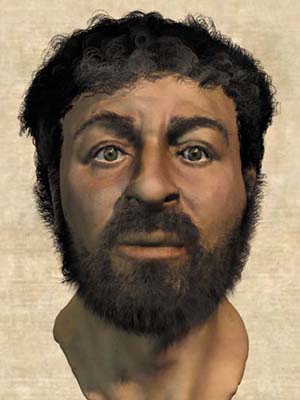
(Forensic archeologists’ estimation of what Jesus probably looked like)

Readings for 14th Sunday in Ordinary Time: Ps. 123; Ez. 2:2-5; 2 Cor. 12:7-10; Mk. 6:1-6

Today’s liturgy is about prophecy, and about how difficult it is to be a prophet. Prophets are usually vilified and hated. That was the case with Ezekiel whose vocation story we find in today’s first reading. There he is warned that many will reject what God tells him to say. After all, his message was so shocking and blasphemous. At the beginning of the 6th century B.C.E., Ezekiel said that God’s People had strayed so far from Yahweh that the Babylonians would come and destroy the Temple – the very dwelling place of God. That was like predicting the death of God. In modern terms, it was atheistic.

Jesus of Nazareth was also hated right from the start. Today’s second reading shows that. There Jesus finds himself a “prophet without honor” in his home town and even among his own family members. Nazareth saw him as a hometown boy who (as they say in Kentucky where I come from) had “gotten above his raisin’s.”

Who did he think he was trying to teach them anything? He was that kid whose nose they had wiped growing up. He wasn’t a scholar. In fact, he could barely read. He was just a working stiff carpenter. He was the son of that woman, Mary. Who knows who his father was? (By the way, the townspeople’s identification Jesus by his mother’s name in today’s reading and not by his father’s, was extremely insulting. It indicated that his father was unknown. It was like calling him a bastard or S.O.B.) So Jesus was rejected by his neighbors and relatives in no uncertain terms. It is told that following his first sermon in Nazareth, they actually tried to kill him.

And it got worse from there. Like Ezekiel, Jesus too predicted the destruction of the Temple – a successor to the one that was rebuilt after the Babylonians did what Ezekiel said they would – level it to the ground. When they heard Jesus’ prophecy about God’s dwelling place, everyone who mattered scorned him – the scribes, Pharisees, Sadducees, the Temple high priests, the Romans. In their eyes, Jesus had turned against religion. Even his disreputable mother and the brothers and sisters mentioned in today’s Gospel accused Jesus of losing his mind. They thought he had gone absolutely crazy.

As far as the powerful were concerned, Jesus had not only gotten above his raisin’s; he was not merely (in modern terms) atheistic; he was an agent of the devil himself. Jesus was possessed. That was the worst insult anyone in Jesus’ culture could deliver. It would be like calling him a terrorist or Communist today. In fact, the Romans did consider Jesus a terrorist. That’s indicated by the form of execution they used on him. Crucifixion was reserved for insurgents and terrorists. Politically and historically, it speaks volumes to say that Jesus was crucified. (What did he do to make the Romans classify him as they did?)

And yet Jesus was wildly popular among the poor and powerless outside of Nazareth. He was one of them. He looked like them. As pictured above, he was unimposing – probably about 5’1” and weighing about 110 pounds (if we are to believe forensic archeologists). His skin was brown. His hands were calloused. And his message was tailored especially for the poor. His initial sermon in Nazareth began: “The Spirit of the Lord is on me, because he has anointed me to preach good news to the poor. He has sent me to proclaim freedom for the prisoners and recovery of sight for the blind, to release the oppressed.” That was Jesus’ program – a message of liberation for the poor.

Jesus’ message then was not about himself. It centralized what he called “the Kingdom of God.” His was a utopian vision of what the world would be like if God were king instead of Caesar. In that realm everything would be turned upside down. The poor would be rich; the rich would be poor; the last would be first, and the first would be last. Prostitutes would enter the kingdom; the religious leaders would trail after them. No wonder Jesus’ message resonated so well among the downtrodden, the poor and sex workers. No wonder, he was feared and vilified by the rich, powerful and respectable.

And no wonder that kind of Jesus is virtually unknown today. The fact is, he continues to be hated even by those who call themselves “Christian.” I mean, we still don’t like scruffy or poor. We don’t like small, brown, working class or barely literate. We don’t like prostitutes. We don’t like utopian. And we don’t believe, as Jesus did, that another world is possible. So if Jesus came among us, we’d probably respond like his hometown crowd. We’d be like Ezekiel’s audience described in our first reading – “rebellious,” “obstinate,” and “stubborn.” We’re not only unreceptive to people like Jesus. We’re positively hostile – ironically in the name of Christianity itself.

Why is that? It’s because Christianity was hijacked way back in the 4th century. At that point and for various reasons too complicated to rehearse now, it became the official religion of the Roman Empire. To achieve that status, the scandalous prophetic faith of Jesus had to be domesticated beginning with Jesus himself. So the champion of the poor was transformed from a counter-cultural outlaw to a “King” – and yes, to a “God” resembling quite closely those war-deities the Romans worshipped like Jupiter and Mithras.

Jesus’ message then became not about God’s Kingdom, not about the “other world” that is possible here and now, but about himself and that familiar “other world” up in the sky to be inherited when we die. Being Christian became about “accepting Jesus as your personal savior,” about being a Good American, and supporting a military whose chief task, by the way, is to keep people like Jesus in their place. That kind of Jesus, that kind of message was acceptable to the Romans and their successors as well as to the equivalents of the scribes, Pharisees, Sadducees, and High Priests. It was acceptable because it was anti-Kingdom as Jesus understood it. Christians don’t like that Kingdom.

Such considerations are not trivial. They are necessary not only for rescuing Christianity from its centuries-long perversions; they are required for saving our very world. I mean Christianity has been turned upside-down and its ship needs to be righted. Ever since the 4th century, Jesus and the church have been used by the forces of conservatism (those who would keep the world as it is) to subdue the weak and support the wars of the powerful against those without public power. It’s happening now before our very eyes.

But who can believe that? We are so brainwashed! Believing that would mean honoring the poor and turning against the rich and against empire. It would mean loving and honoring scruffy, small, poor, brown, working class, utopian, disreputable, illegitimate, and illiterate. It would mean seeing the prostitutes as holier than the pope! In Paul’s terms in today’s second reading, following the Jesus rejected by his townspeople entails finding salvation in what the world rejects as weak and without honor. And which of us can do that in the “most powerful country in the world,” where “pride” is not the leader in the list of Seven Deadly Sins, but an honored boast? “U.S.A.! U.S.A.!”

No, we just don’t like people like Jesus. Repentance (for me at least) means reversing all of that. What would such reversal entail? And what does repentance mean for you in the light of today’s readings? (Discussion follows)

Jesus Was a Radical Feminist: Homily for 13th Sunday in Ordinary Time

Bleeding Woman

Sunday’s Readings: Wisdom 1:13-16, 2:23-24; Ps. 30:2, 4-6, 11-13; 2Cor. 8:7, 9, 13-16; Mk. 5:21-43

My wife, Peggy, is a radical feminist. As director of the Women and Gender Studies Program at Berea College in Kentucky, she has always been so.

Whenever we discuss world issues, my tendency is to trace their roots to capitalism. Peggy’s is to find their origins in patriarchy. Capitalism itself, she says, is founded on patriarchy. Until we realize that and address the influence of patriarchy, nothing can really change.

She goes on. Ironically, patriarchy has men making decisions for women on issues that impact females much more directly than males – matters such as contraception, maternity leave, funding for childcare, abortion, wage disparity between men and women, the Equal Rights Amendment, and wages for housework. All of that, she adds, has to change.

I find Peggy’s logic and criticism compelling. This morning’s gospel reading indicates that Jesus would too.

In fact, the gospels in general show Jesus himself to be a radical feminist. In addressing specifically female issues, he favored women who spoke for themselves and courageously exercised their own initiative. Jesus even praised women who disobeyed laws aimed against them precisely as women. He ended up preferring the disobedient ones to females who were passive captives of the religious patriarchy. To repeat: we find an example of such radical feminism on the part of Jesus in today’s reading from the Mark’s gospel.

First of all, consider Mark’s literary strategy. In today’s reading he creates a “literary sandwich” – a “story within a story.” The device focuses on two kinds of females within the Jewish faith of Jesus’ day. In fact, Mark’s gospel is liberally sprinkled with doublets like the one just described. When they appear, both stories are meant to play off one another and illuminate each other.

In today’s doublet, we find two women. One is just entering puberty at the age of 12; the other has had a menstrual problem for the entire life span of the adolescent girl. (Today we’d call her condition a kind of menorrhagia.) So, to begin with the number 12 is centralized. It’s a literary “marker” suggesting that the narrative has something to do with the twelve tribes of Israel – and in the early church, with the apostolic leadership of “the twelve.” The connection with Israel is confirmed by the fact that the 12-year old in the story is the daughter of a synagogue official. As a man in a patriarchal culture, he can approach Jesus directly and speak for his daughter.

The other woman in the doublet has no man to speak for her; she has to approach Jesus covertly and on her own. She comes from the opposite end of the socio-economic spectrum from the 12-year old daughter of the synagogue leader. The older woman is without honor. She is poor and penniless. Her menstrual problem has rendered her sterile, and so she’s considered technically dead by her faith community.

Her condition has also excluded her from the synagogue. In the eyes of community leaders like Jairus, the petitioning father in the story, she is “unclean.” (Remember that according to Jewish law, all women were considered unclean during their monthly period. So, the woman in today’s drama is exceedingly unclean. She and all menstruating women were not to be touched.)

All of that means that Jairus as a synagogue leader is in effect the patriarchal oppressor of the second woman. On top of that, the older woman in the story has been humiliated, exploited, and impoverished by the male medical profession which has been ineffective in addressing her condition.

In other words, the second woman is the victim of a misogynist religious system which, by the way, saw the blood of animals as valuable and pleasing in God’s eyes, but the blood of women as repulsively unclean.

Nonetheless, it is the bleeding woman who turns out to be the hero of the story. Her faith is so strong that she believes a mere touch of Jesus’ garment will suffice to restore her to life, and that her action won’t even be noticed. So, she reaches out and touches the Master. Doing so was extremely bold and highly disobedient to Jewish law, since her touch would have rendered Jesus himself unclean. She refuses to believe that.

Instead of being made unclean by the woman’s touch, Jesus’ being responds by exuding healing power, apparently without his even being aware. The woman is cured. Jesus asks, “Who touched me?” The disciples object, “What do you mean? Everybody’s touching you,” they say.

Finally, the unclean woman is identified. Jesus praises her faith and (significantly!) calls her “daughter.” (What we therefore end up finding in this literary doublet are two Jewish “daughters” – yet another point of comparison.)

While Jesus is attending to the bleeding woman, the first daughter in the story apparently dies. Jesus insists on seeing her anyhow. When he observes that she is merely asleep, the bystanders laugh him to scorn. But Jesus is right. When he speaks to her in Aramaic, the girl awakens and is hungry. Mark records Jesus’ actual words. The Master says, “Talitha Kumi,” i.e. “Wake up!” Everyone is astonished, and Jesus has to remind them to feed her.

What does all the comparison mean? The doublet represented in today’s Gospel addresses issues that couldn’t be more female – more feminist. The message here is that bold and active women unafraid of disobeying the religious patriarchy will save our world from death. It will awaken us from our death-like slumber.
“Believe and act like the bleeding woman” is the message of today’s Gospel. “Otherwise our world will be for all practical purposes dead.”

Could this possibly mean that feminist faith like that of the hero in today’s Gospel will ultimately be our salvation from patriarchy? Is our reading calling us to a world led by women rather than the elderly, white, out-of-touch men who overwhelmingly claim hold elective office?

My Peggy would say yes.

Today’s Gospel, she would say, suggests that it’s time for men to stop telling women how to be women – to stop pronouncing on issues of female sexuality whether it be menstruation, abortion, contraception, same-sex attractions, or whether women are called by God to the priesthood.

Correspondingly, it’s time for women to disobey such male pronouncements, and to exercise leadership in accord with their common sense – in accord with women’s ways of knowing. Only that will save our world which is currently sick unto death.

Talitha Kumi! It’s time to wake up.

Embrace Insanity: Jesus’ Family Thought He Was Crazy Too

Readings for 10th Sunday in Ordinary Time

Satan

It’s been a busy time for us lately. Since my last entry here, Peggy and I have moved out of our house in Berea, Kentucky. Our ultimate goal is to appropriate our new home in Westport, Connecticut, where we’ll be living down the street from our four grandchildren. But because a renter is still living in our new digs, we won’t be able to move in till after Labor Day. So, in the meantime, our stuff will be in storage somewhere. And we’ll be living at our summer cottage in Michigan.

In any case, we spent a week packing. We had a big going-away party including a Cuban band and dancing. Then the movers came and took everything. We journeyed to Westport for our granddaughter’s school concert (she’s in 3rd grade). Then, Peggy and I attended two days of the Left Forum in New York City, where I tried to peddle my new book (The Magic Glasses of Critical Thinking) and listened to the likes of Chris Hedges, Richard Wolff, Michael Hudson, Silvia Federici, and Bernie Sanders’ wife.

Suitably inspired, we traveled to our Canadian Lakes property in the center of the Michigan Mitten. Our sons came and will be with us here for visiting and golf till next Tuesday. Our daughter, her husband, the four grandkids, and Peggy’s best friend from college along with one of her grandchildren also came for the weekend.

It’s been a whirlwind of packing, driving, inspiration, eating, drinking, visiting, golf, and conversation – terrific in every way.

It’s the conversation, I want to focus on here, especially in the light of what I heard at the Left Forum – and of today’s Gospel reading. At times, our exchanges have been lively and confrontational. My sons, my son-in-law and I always end up disagreeing about almost everything having to do with politics and economics. According to them:

• The U.S. economy is fine.
• Poverty, especially in the United States is the fault of poor people.
• Capitalism is the best possible economic system.
• The failure of alternatives (as in Cuba and Venezuela) prove their point.

According to me:

• Our economy is a disaster, especially since it is intrinsically dependent on war, environmental destruction, and worker exploitation across the planet.
• Poverty is widespread in the United States, the richest country in the history of the world, where workers’ wages haven’t risen significantly in more than 40 years, while corporate profits have gone through the roof.
• Our unfettered version of capitalism along with our cult of militarism under the leadership of pathological criminals in Washington and state legislatures is leading the world to certain destruction.
• Countries such as Cuba and Venezuela demonstrate the success of U.S. policy towards the former colonies trying desperately to free themselves from imperial hegemony. That policy has the CIA, NSA, and the United States military:
o Repeatedly intervening in those countries’ elections, politics,
economies, and media
o Thereby creating inevitable havoc
o And subsequently blaming the chaos on the local leaders and the “failures” of alternatives to the U.S. version of white, capitalist, imperialist, patriarchy
• The pattern should be apparent to anyone with the least bit of historical awareness.

The men in my family think I’m crazy.

And that brings me to today’s Gospel. It comes from the pen of Mark the evangelist who invented the literary form we call “gospel.” Today’s selection offers us one of his characteristic literary “sandwiches.” That is, he introduces a story, inserts a seemingly unrelated filler, and then concludes the initial story to make its point.

In today’s version, the first piece of bread is his announcement that Jesus’ mother and brothers set out to rescue their son and sibling from himself; they believe he’s gone crazy. Then comes a long apparently unrelated piece about Satan and his house divided against itself. The final piece of bread has Jesus rejecting his family of origin in favor of those who follow his crazy teachings.

In Mark’s words, here’s the way the story goes:

“Jesus came home with his disciples. . . (H)is relatives . . . set out to seize him, for they said, “He is out of his mind.” . . . The scribes . . . said, “He is possessed . . .”

Summoning them, he began to speak to them in parables. “How can Satan drive out Satan? If a kingdom is divided against itself, that kingdom cannot stand. . .”

His mother and his brothers arrived. . . A crowd seated around him told him, “Your mother and your brothers and your sisters are outside asking for you.” But he said to them in reply “Who are my mother and my brothers? . . . (W)hoever does the will of God is my brother and sister and mother.”

Do you see what I mean? Here’s the sandwich construction:

• Jesus’ family (along with the Jewish scribal establishment) think Jesus is insane and diabolical.
• Jesus declares that such accusations are themselves insane, since he is in fact working to subvert the Kingdom of Satan and establish God’s reign.
• So, he rejects his adversarial family (and scribal establishment) in favor of those who join him in undermining Satan’s rule.
• Those who embrace his “insanity,” Jesus asserts, constitute his true family.

Such teaching should encourage those who are trying to follow Jesus. Since the world’s wisdom is 180 degrees opposed to God’s wisdom, Jesus followers will always be perceived as subversive, ideological, possessed and insane. If we are not seen that way, we are, in fact, outside Jesus’ family whose membership is a matter of faith rather than blood.

Our task as Jesus’ family is to divide Satan’s kingdom and bring it to its knees, not to achieve reconciliation with it or its defenders.

How the Eucharist Transforms Us (Not Bread) into the Body of Christ

One Loaf

This Sunday Catholics celebrate the Solemnity of the Most Holy Body and Blood of Christ. Before the Second Vatican Council (1962-’65), it was called Corpus Christi (Latin for “the Body of Christ”).

It’s a day when restorationist priests will preach “Catholic” fundamentalist and literalist notions of Jesus’ “Real Presence” in the “Blessed Sacrament” that even St. Augustine rejected way back in the 4th century. He wrote: “Can Christ’s limbs be digested? Of course, not!”

Most thinking Catholics have come to similar conclusions. But rather than see the beautiful symbolism of the Eucharist’s shared bread, many of them have simply rejected the ideas of “Holy Sacrifice” and “Real Presence” as childhood fantasies akin to belief in Santa Claus and the Tooth Fairy.

To my mind, that’s tragic. That’s because such rejection represents a dismissal of Jesus’ insightful and salvific teaching about the unity of all creation. In an era of constant global war, that teaching is needed more than ever. It’s contained in the Master’s words, “This is my body . . . this is my blood . . . Do this in remembrance of me?”

Let me explain.

To begin with, according to contemporary historical theologians like Hans Kung, the Great Reformers of the 16th century had it right: The Eucharist of the early church was no sacrifice. It was a commemoration of “The Lord’s Supper.” The phrase however does not refer to “The Last Supper” alone. Instead it references all the meals Jesus shared with friends as he made meal-sharing rather than Temple sacrifice the center of his reform movement, from the wedding feast at Cana (JN2:1-12), through his feeding of 5000 (MK 6:31-44) and then of 4000 (MK 8: 1-9), through his supper at the Pharisee’s home (LK 7:36-50), and with the tax collector Zacchaeus (LK 19:1-10), through the Last Supper (MK 14:12-26), and Emmaus (LK 24:13-35), and his post-resurrection breakfast with his apostles (JN 21:12). Jesus treated shared meals as an anticipatory here-and-now experience of God’s Kingdom.

But why? What’s the connection between breaking bread together and the “salvation” Jesus offers? Think about it like this:

Besides being a prophet, Jesus was a mystic. Like all mystics, he taught the unity of all life.

“Salvation” is the realization of that unity. In fact, if we might sum up the central insight of the great spiritual masters and avatars down through the ages, it would be ALL LIFE IS ONE. That was Jesus’ fundamental teaching as well.

That was something even uneducated fishermen could grasp. It’s a teaching accessible to any child: All of us are sons (and daughters) of God just as Jesus was. Differences between us are only apparent. In the final analysis, THERE IS REALLY ONLY ONE OF US HERE. In a sense, then we are all Jesus. The Christ-Self (or Krishna-Self or Buddha-Self) is our True Self. God has only one Son and it is us. When we use violence against Muslims and immigrants, we are attacking no one but ourselves. What we do to and for others we literally do to and for ourselves.

That’s a profound teaching. It’s easy to grasp, but extremely difficult to live out.

Buddhists sometimes express this same insight in terms of waves on the ocean. In some sense, they say, human beings are like those waves which appear to be individual and identifiable as such. Like us, if they had consciousness, the waves might easily forget that they are part of an infinitely larger reality. Their amnesia would lead to great anxiety about the prospect of ceasing to be. They might even see other waves as competitors or enemies. However, recollection that they are really one with the ocean and all its waves would remove that anxiety. It would enable “individual” waves to relax into their unity with the ocean, their larger, more powerful Self. All competition, defensiveness, and individuality would then become meaningless.

Something similar happens to humans, Buddhist masters tell us, when we realize our unity with our True Self which is identical with the True Self of every other human being. In the light of that realization, all fear, defensiveness and violence melt away. We are saved from our own self-destructiveness.

Similarly, Buddhists use the imagery of the sun. As its individual beams pass through clouds, they might get the idea that they are individuals somehow separate from their source and from other sunbeams which (again) they might see as competitors or enemies. But all of that is illusory. All light-shafts from the sun are really manifestations emanating from the same source. It’s like that with human beings too. To repeat: our individuality is only apparent. THERE IS REALLY ONLY ONE OF US HERE.

In his own down-to-earth way, Jesus expressed the same classic mystical insight not in terms of waves or sunbeams, but of bread. Human beings are like a loaf of bread, he taught. The loaf is made up of many grains, but each grain is part of the one loaf. Recognizing the loaf’s unity, then breaking it up, and consuming those morsels together is a powerful reminder that all of life — all of us – are really one. In a sense, that conscious act of eating a single loaf strengthens awareness of the unity that otherwise might go unnoticed and uncelebrated.

Paul took Jesus’ insight a step further. In his writings (the earliest we have in the New Testament) he identifies Christ as the True Self uniting us all. Our True Self is the Christ within. In other words, what Jesus called “the one loaf” Paul referred to as the one Body of Christ.

All of Jesus’ followers, the apostle taught, make up that body.

Evidently, the early church conflated Jesus’ insight with Paul’s. So, their liturgies identified Jesus’ One Loaf image with Paul’s Body of Christ metaphor. In this way, the loaf of bread becomes the body of Christ. Jesus is thus presented as blessing a single loaf, breaking it up, and saying, “Take and eat. This is my body.”

And there’s more – the remembrance part of Jesus’ “words of institution.” They are connected with Paul’s teaching about “The Mystical Body of Christ.” His instruction is found in I COR: 12-12-27:

“12 There is one body, but it has many parts. But all its many parts make up one body. It is the same with Christ. 13 We were all baptized by one Holy Spirit. And so, we are formed into one body. It didn’t matter whether we were Jews or Gentiles, slaves or free people. We were all given the same Spirit to drink. 14 So the body is not made up of just one part. It has many parts. . .
You are the body of Christ. Each one of you is a part of it.”

Here it’s easy to see the beauty of Paul’s image. We are all members of Christ’s body (Paul’s fundamental metaphor for that human-unity insight I explained). As individual members, we each have our functions – as eye, ear, nose, foot, or private parts. However, the fact that we live separately can lead us to forget that we are all members of the same body. So, it helps to RE-MEMBER ourselves occasionally – to symbolically bring our separate members together. That’s what “re-membering” means in this context. That’s what the Eucharist is: an occasion for getting ourselves together – for recalling that we are the way Christ lives and works in the world today.

In the final analysis, that’s the meaning of Jesus’ injunction: “Do this to RE-MEMBER me. And then afterwards – as a re-membered Christ, act together as I would.”

Do you see how rich, how poetic, how complex and mysterious all of that is – ocean waves, sunbeams, bread, Christ’s body, re-membering?

It’s powerful. The Eucharist is a meal where the many and separate members of Christ’s body are re-membered so they might subsequently act in a concerted way in imitation of Christ.

That’s why it’s important to recover and make apparent the table fellowship character of The Lord’s Supper. It is not a Jewish or Roman sacrifice; it is a shared meal.

The world our grandchildren will inherit needs everything symbolized by all of that. The Eucharist is not childish fantasy. It’s a counter-cultural challenge to our era’s individualism, ethnocentrism, and perpetual war.

Keep that in mind this Sunday, when your priest lectures you on “the real presence.” The real presence is us.

With Dr. King, We Must ‘Break the Silence’

Worse than ISIS

Readings for Third Sunday of Easter: Acts 3: 15, 17-18; PS 4: 2, 4, 7-9; I JN 2: 1-5A; LK 34: 24-32; LK 24: 35-48

With so much talk of war these days, it’s time to follow the example of Dr. Martin Luther King and once again break silence about our country’s evil character. Yes: it’s character is evil! We’re a war-mongering country, a terrorist country. As King said 51 years ago this month, we’re “the world’s greatest purveyor of violence.”

It’s time to face up to the fact that the United States has been taken over by Christianists far more violent than the Islamists we excoriate. To wit: “we” stand ready to risk all-out nuclear war with Russia. “Our” reason? An alleged chemical weapons attack by Bashar al-Assad, the president of Syria. Our indisputable proof? None at all! It’s Iraq all over again!

And the hell of it is that to these Christian extremists, nuclear holocaust – the destruction of the planet – is acceptable, even desirable, because it will assure the Second Coming of the very Jesus who is presented in today’s Gospel selection as the great bringer of peace.

Just to be clear: No Muslims threaten the world with equivalent religious extremism.

(BTW If you think that statements like the above are unfair, because not all — not even the majority — of Christians hold such beliefs, think about how Muslims feel, when the views of their extremists are similarly universalized.)

In their zealotry, the fundamentalists in Washington somehow ignore the fact that the first words of the risen Jesus repeated in today’s Gospel (as they were in last week’s reading), are “Peace be with you.” They ignore the Jesus who was completely non-violent. He preached the Golden Rule. He said we should love our enemies. He accepted his own death rather than defend himself, his friends, or family. He died praying for his enemies.

Moreover, the Christianists in Washington are completely hypocritical. In the name of the international law, they’re outraged by the “dozens” perhaps killed in the alleged Syrian chemical weapons attacks. Meanwhile, they’ve killed more than a million Iraqis in a completely illegal war. Daily, they assassinate suspected terrorists, including American citizens, with death squads now mechanized as drones.

Meanwhile in Yemen, the poorest country in the Middle East, and in clear violation of international restrictions and the U.S. Constitution, those same Christian extremists have caused the deaths of thousands and threaten the lives of millions.

More specifically, since 2014, they have been responsible for the deaths of 10,000 and for the injury of 40,000 more. They’ve caused a devastating cholera epidemic and a famine that the UN describes as “the worst humanitarian crisis in the world.”

It’s all been the result of a U.S.-supported Saudi bombing campaign that directly targets hospitals, water supply sources, and sewage treatment plants – all prohibited be international law. In the process, the U.S. supplies those medieval Saudi kings with weapons, targeting information, and airborne refueling services. Pure terrorism!

Face it: our crimes in Yemen represent a far, far worse violation of international law than the alleged chemical weapons attack in Syria.

Yes: today, King’s words ring truer than ever. We continue to be “The world’s greatest purveyor of violence!” We’re a terrorist nation.

And how do the Christianists get around Jesus’ clear words? Typically, they spiritualize today’s Gospel greeting. “Peace be with you.” They say it refers to the interior peace that passes understanding.

How reminiscent of the Nazis who went to Mass, meditated and enjoyed “inner peace” on Sundays, while for the rest of the week they stoked ovens where they incinerated communists, socialists, blacks, homosexuals, and Jews!

Inner peace is fine. However, reality in the belly of the beast suggests that such spiritualizing is out-of-place. We need to be reminded that inner tranquility is impossible for citizens of a rogue nation. None of us should enjoy inner peace today.

Rather than giving us comfort, pastors should be telling us that there can be no interior peace for terrorist Christian fundamentalists. They — our nation’s officials — are traitors to the Risen Christ!

Focusing on a utopian interior peace and denouncing transgressions of international law while butchering children across the globe is simply obscene.

It’s time for all of us to face up to the facts. It’s time to join the martyred Dr. King in breaking our silence!

Scrap Thomas’ Denialism Before It’s Too Late: We’re in a Situation Worse than Nazi Germany

Hitler bishops

Readings for 1st Sunday after Easter: ACTS 4:32-35; PS 118L 2-4, 13-15, 22-24; 1JN 5: 1-6; JN 20: 19-31

Last Sunday, which was both Easter and April Fools’ Day, I published my monthly column in the Lexington Herald-Leader. It pulled no punches. As a matter of fact, I was surprised that the Leader’s editors decided to print it.

My column contrasted the fact that fully 70-75% of Americans claim to be followers of Christ. They say they believe in Jesus’ resurrection – in the triumph of life over death. And yet, as a culture, we remain necrophobic, necrophilic, and entirely denying the direction of history announced in Jesus’ resurrection.

On the one hand, we’re overwhelmingly afraid of death. Despite the words of our national anthem, ours is not the home of the brave. Quite the opposite. Even our police officers are granted unrestricted license to kill if they simply allege, “I feared for my life.” Evidently, they’re all dreadful necrophobes.

On the other hand, we Americans love death and killing. The movies we patronize are about almost nothing else. Our constant solution to almost any problem you care to name is “Arm them!” “Fight them!” “Kill them!” “Nuke ’em!”

Yet, face it: Jesus could endorse none of that. He was completely non-violent and courageous in facing death. Along with every spiritual genius I can think of, he said we should treat others exactly the way we would want to be treated – because they are us. In effect, he taught that killing another person amounts to suicide.

So, Jesus refused to take up arms to save himself, his friends, or his family. If you live by the sword, he promised, you will die by that same instrument. Jesus prayed for his executioners. He said we should love our enemies, not kill them.

As a collective faith community, Christians are sadly in denial about the clear political meaning of those facts. No follower of Jesus should ever take up arms. The irony is that accepting that reality alone has the power to save our species and planet.

My column went further. Echoing Noam Chomsky, it alleged that the U.S. has been taken over by the most dangerous organization in the history of the world – viz. by the Republican Party. Despite its Christian pretensions, its positions on climate change and nuclear war make it worse, I said, than the forces of Attila the Hun, worse than ISIS, the Taliban, or Hitler’s Nazis.

The Republicans and supporting conservative Democrats place greed for money over the lives of our children and grandchildren. How dare they! Who gave those greedy few the authority to decide for 7 billion people? Why aren’t we all up in arms – precisely in Jesus’ name?

Usually when I publish such thoughts in the Leader, readers’ responses are quite vehemently negative. But do you know what happened this time? Not a single negative comment. Instead I received a whole series of supportive e-mails and word-of-mouth comments completely agreeing with my sentiments.

“You really let it all hang out there, Mike,” was a typical remark, “but I agree with every word you wrote.”

What can that mean, I wonder. If so many of us believe that our country has been taken over by forces more insidious than Hitler’s, and if Jesus is who his words and actions say he is, how can we stand by idly and watch it happen? Are we, the people, about to rebel? Are we approaching a tipping point? Have we gone beyond the denial that is no longer tenable?

Such questions are relevant in the light of the Gospel reading for this First Sunday after Easter. It’s about a man in denial about Jesus’ identity. The man meets the risen Christ (the champion of life over death), recognizes God in him, and changes profoundly as a result.

Of course, I’m referring to the original doubting Thomas. His nickname was “the twin” perhaps because he’s our twin in cowardice and hopefully in faith. Recall his story. Pray that it can be ours as well. If not, our “Christian”-dominated culture is beyond redemption.

The disciples are there in the Upper Room where they had so recently broken bread with Yeshua the night before he died. And they are all afraid. John says they are afraid of “the Jews.” However, it seems, like us, they fear death more than anything else. They dread it because they are convinced that death spells the end of everything they hold dear – their ego-selves, families, friends, culture, and their small pleasures. Besides that, they are afraid of the pain that will accompany arrest – the isolation cells, the beatings, torture, the unending pain, and the final blow that will bring it all to a close. Surely, they were questioning their stupidity in following that failed radical from Galilee.

So, they lock the doors, huddle together and turn in on themselves.

Nevertheless, the very fears of the disciples and recent experience make them rehearse the events of their past few days. They recall the details: how Yeshua so bravely faced up to death and refused to divulge their names even after undergoing “the third degree” – beatings followed by the dreaded thorn crown, and finally by crucifixion. All the while, he remained silent refusing to name the names his Roman interrogators were looking for. He died protecting his friends. Yeshua was brave and loyal.

His students are overwhelmingly grateful for such a Teacher. . .

Then suddenly, the tortured one materializes there in their midst. Locks and fears were powerless to keep him out. They all see him. They speak with him. He addresses their fears directly. “Peace be with you,” he repeats three times. Yeshua eats with them just as he had the previous week. Suddenly his friends realize that death was not the end for the Teacher. He makes them understand that it is not the end for them either – nor for anyone else who risks life and limb for the kingdom of God. No doubt everyone present is overwhelmed with relief and intense joy.

“Too bad Thomas is missing this,” they must have said to one another.

Later on, Thomas arrives – our fraternal double in fear and disbelief. His absence remains unexplained. Something had evidently called him away when the others evoked Jesus’ presence by their prayer, recollections, and sharing of bread and wine. Like us, he hasn’t met the risen Lord.

“Jesus is alive,” they tell our twin. “He’s alive in the realm of God. He took us all with him to that space for just a moment, and it was wonderful. Too bad you missed it, Thomas. None of the rules of this world apply where Yeshua took us. It was just like it was before he died. Don’t you remember? Yeshua brought us to a realm full of life and joy. Fear no longer seems as reasonable as it once did. He was here with us!”

However, Thomas remains unmoved. Like so many of us, he’s is a literalist, a downer. He’s an empiricist looking for the certainty of physical proof. Thomas is also a fatalist; he evidently believes that what you see is what you get. And for him there has been no indication that life can be any different from what his senses have always told him. Life is tragic. Death is stronger than life; it ends everything. And that means that Yeshua is gone forever. Who could be so naïve as to deny that?

Our twin in unfaith protests, “In the absence of physical proof to the contrary, I simply cannot bring myself to share your faith that another way of life is possible. And make no mistake: Yeshua’s enemies haven’t yet completed their bloody work. They’re after us too.”

Can’t you see Thomas glancing nervously behind him? “Are you sure those doors are locked?”

Then lightning strikes again. Yeshua suddenly materializes a second time in the same place. Locks and bolts, fear and terror – death itself – again prove powerless before him.

Yeshua is smiling. “Thomas, I missed you,” he says. “Look at my wounds. It’s me!”

Thomas’ face is bright red. Everyone’s looking at him. “My God, it is you,” he blurts out. “I’m so sorry I doubted.”

“Don’t worry about it,” Yeshua assures. “You’re only human, and I know what that’s like, believe me. I too knew overwhelming doubt. Faith is hard. On death row, my senses told me that my Abba had abandoned me too. I almost gave up hope. It’s like I’m your twin.

“But then I decided to surrender. And I’m happy I did. My heart goes out to you, Thomas. My heart goes out to all doubters. I’ve been there.

“However, it’s those who can commit themselves to God’s promised future in the absence of physical proof that truly amaze and delight me. Imagine trusting life’s goodness and an unseen future characterized by non-violence! Imagine trusting my word that much, when I almost caved in myself? That’s what I really admire!

“My prayer for you, Thomas, and for everyone else is that you’ll someday experience the joy that kind of faith brings. Working for God’s peace – for fullness of life for everyone – even in the face of contrary evidence – that’s what faith is all about. May it be yours.”

My point in writing that Easter Sunday article was something similar.

If 70-75% of us truly followed Jesus and left behind both our necrophobia and necrophilia, we’d get out in the streets and bring down the arrogant impostors who have seized power in this country. None of them would be able to resist such numbers in revolt.

Pray that Thomas’ transformation and faith might be ours as well, and that a tipping point has been reached or is on the way. The future of our world literally depends on it.

We need to overcome the faithless denial our love of violence and death suggests. That’s the call of today’s Gospel.

Easter Sunday: Pope Francis & the Deep Meaning of Jesus’ Resurrection

Pope Francis
Readings for Easter Sunday: ACTS 10: 34A, 37-43; PS 118 1-2, 16-17, 22-23, ICOR 3L 1-4; JN 20: 1-9.

On this Easter Sunday, it’s appropriate to address the reality of Jesus’ resurrection. Did he really rise from the dead? Or is that doctrine simply a remnant of childhood like belief in the Easter Bunny or Santa Claus? And for those of us concerned with social justice, what can the Bible’s resurrection stories possibly mean?

This reflection tries to address those questions from the viewpoint of Pope Francis.

In response to the question about the factuality of Jesus’ resurrection, let’s look at what the Christian tradition itself tells us. It indicates that the resurrection accounts are not based on the physical resuscitation of a corpse. The experiences portrayed in tradition were more visionary and likely metaphorical.

As for the sociopolitical meaning of Jesus’ rising from the dead, Pope Francis addresses that question quite meaningfully in his Apostolic Exhortation, Evangelii Gaudium. Life is stronger than death, he reminds us. Despite appearances, vital forces will always triumph in the end. But we’ll get to that presently.

First however consider the nature of the resurrection traditions themselves. They were inspired by women and emerged from the bleakest depths of despair not unlike what many progressives might be feeling today as our fondest hopes appear further than ever from fulfillment – as a rogue U.S. empire wreaks havoc and its savage economy destroys the planet.

Think about it.

Following Jesus’ death, his disciples returned to business as usual – fishing most prominently. It was their darkest hour. Yeshua, the one on whom they had pinned their hopes for the liberation of Israel from Roman domination was dead. Their world had ended.

But then unexpectedly, women among them reported an experience which effectively raised Jesus back to life (MT 28:1-10; MK 16: 1-8; LK 24:1-11). He was more intensely present, they said, than before his execution. Their tales changed everything.

But what was the exact nature of the resurrection? Did it involve a resuscitated corpse? Or was it something more spiritual, visionary and prophetic?

In Paul (the only 1st person report we have – written around 50 C.E.) the experience of resurrection is clearly visionary. Paul sees a light and hears a voice, but for him there is no embodiment of the risen Jesus. When Paul reports his experience (I COR 15: 3-8) he equates his vision with the resurrection manifestations to others claiming to have encountered the risen Christ. Paul writes “Last of all, as to one untimely born, he appeared also to me.” In fact, even though Paul never met the historical Jesus, he claims that he too is an “apostle” specifically because he shared the same resurrection experience as the companions of Jesus who were known by that name. This implies that at best the other resurrection appearances might also be accurately described as visionary rather than as physical.

The earliest Gospel account of a “resurrection” is found in Mark, Ch. 16. There a “young man” (not an angel) announces Jesus’ resurrection to a group of women (!) who had come to Jesus’ tomb to anoint his body (16: 5-8). But there is no encounter with the risen Jesus. In fact, Mark’s account actually ends without any narrations of resurrection appearances at all. (According to virtually all scholarly analysis, the “appearances” found in chapter 16 were added by a later editor.)

In Mark’s original ending, the women are told by the young man to go back to Jerusalem and tell Peter and the others. But they fail to do so, because of their great fear (16: 8). This means that in Mark not only are there no resurrection appearances, but the resurrection itself goes un-proclaimed. This in turn indicates either that Mark didn’t know about such appearances or did not think them important enough to include!

Resurrection appearances make their own appearance in Matthew (writing about 80) and in Luke (about 85) with increasing detail. But always there is some initial difficulty in recognizing Jesus. For instance, Matthew 28: 11-20 says, “Now the eleven disciples went to Galilee, to the mountain to which Jesus had directed them. And when they saw him they worshipped him; but some doubted.” So, the disciples saw Jesus, but not everyone present was sure they did. In Luke 24: 13-53, two disciples walk seven miles with the risen Jesus without recognizing him until the three break bread together.

Even in John’s gospel (published about 90) Mary Magdalene (the woman with the most intimate relationship to Jesus) thinks she’s talking to a gardener when the risen Jesus appears to her (20: 11-18). In the same gospel, the apostle Thomas does not recognize the risen Jesus until he touches the wounds on Jesus’ body (JN 26-29). When Jesus appears to disciples at the Sea of Tiberius, they at first think he is a fishing kibitzer giving them instructions about where to find the most fish (JN 21: 4-8).

All of this raises questions about the nature of the “resurrection.” Once again, it doesn’t seem to have been resuscitation of a corpse. What then was it? Was it the community coming to realize the truth of Jesus’ words, “Whatever you do to the least of my brethren, you do to me” (MT 25:45) or “Wherever two or three are gathered together in my name, I am there in their midst” (MT 18:20)? Do the resurrection stories reveal a Lord’s Supper phenomenon where Jesus’ early followers experienced his intense presence “in the breaking of the bread” (LK 24:30-32)?

Regardless of whether one believes in resurrection as resuscitation of Jesus’ dead body or as a metaphor about the spiritual presence of God in communities resisting empire and serving the poor, the question must be answered, “What does resurrection mean?”

It’s here that Pope Francis helps us. In The Joy of the Gospel (JG), he relates the resurrection accounts, (whatever their factual basis) to our own despair – just as real and hopeless as that of Jesus’ bereft disciples. Francis writes to encourage us who might be worn down and hopeless in the face of a world:

  • Pervaded by consumerism and pleasure-seeking without conscience (JG 2)
  • Governed by merciless competition and social Darwinism (53)
  • Economically organized by failed “trickle-down” ideologies that idolize money (54, 55)
  • Controlled by murderers (53) and thieves (57, 189)
  • Torn apart by wars and violence (99)
  • Rooted in growing income inequality which is the root of all social ills (202), including destruction of the environment and its defenseless non-human animate life (215)

In the face of all that, here’s what Francis says:

“Christ’s resurrection is not an event of the past; it contains a vital power which has permeated this world. Where all seems to be dead, signs of the resurrection suddenly spring up. It is an irresistible force. Often it seems that God does not exist: all around us we see persistent injustice, evil, indifference and cruelty. But it is also true that in the midst of darkness something new always springs to life and sooner or later produces fruit. On razed land life breaks through, stubbornly yet invincibly. However dark things are, goodness always re-emerges and spreads. Each day in our world beauty is born anew, it rises transformed through the storms of history. Values always tend to reappear under new guises, and human beings have arisen time after time from situations that seemed doomed. Christ’s resurrection everywhere calls forth seeds of that new world; even if they are cut back, they grow again, for the resurrection is already secretly woven into the fabric of this history . . . May we never remain on the sidelines of this march of living hope! (276, 277)

Here the pope says that the power and meaning of Jesus’ resurrection is not found in the past. Neither is there reference here to the resuscitation of the Lord’s body. Instead, the pope explains the resurrection in terms of a story that calls attention to the persistent power of Life itself:

* Of nature and spring after a long cold winter

* Of goodness in a world that seems governed by evil

* Of light where darkness reigns unabated

* Of justice where injustice is simply taken for granted

* Of beauty where ugliness is worshipped as its opposite

* Of hope over despair

* And of activists who refuse to stand on the sidelines

No need for despondency, the pope says. Despite appearances, Life and its irresistible forces are on our side! They will not – they cannot – be controlled even by imperial agents of death as powerful as the Rome that assassinated Jesus or the United States whose economic and military policies are butchering the planet.

Even post moderns, skeptics and agnostics can embrace a story with a message like that.

After all, it’s spring! Life goes on! Jesus has indeed risen!