“Sound of Freedom”: Its Underlying Conspiracy?

I’ve just seen the surprise blockbuster movie “Sound of Freedom.”

It’s the story of Tim Ballard, the ex-CIA, and Homeland Security operative whose real-life crusade against child sex trafficking is the film’s subject.

The Angel Studio’s release on July 4th surprised everyone by far outgrossing “Indiana Jones,” even though “Sound of Freedom’s” budget was by comparison extremely low, and despite its depending on word of mouth for much of its publicity.

Like most viewers, I found the film exceptionally moving, its acting splendid, and its cinematography of the highest quality. I’m not surprised that some are even talking about Academy Awards.

(By the way, despite “liberal” criticisms, “Sound of Freedom” made no mention whatsoever of QAnon, conspiracy, Pizzagate, adrenochrome, or political parties either Democrat or Republican. There was no hint of any of that.)

Instead, “Sound of Freedom” straightforwardly focuses on one topic, child sex trafficking. It accordingly summarizes itself in six spare words: “God’s children are not for sale.” Others have expressed its imperative in just three: “Connect the dots.” The first summary reveals the film’s shocking content and (understated) faith perspective.

However, the film’s dot connection uncovers a suspiciously limited political perspective. Intentionally or not, its nearly invisible political viewpoint ends up subtly heroizing the CIA, Homeland Security, and the Colombian police, while vilifying “rebels” against the corrupt authority all three represent.

In what follows, let me show you what I mean by (1) briefly acknowledging the deplorable problem addressed by “Sound of Freedom,” (2) highlighting the film’s suspicious CIA connections, (3) its missing dots, and (4) suggesting the “Sound’s” promise for stimulating dialog across liberal-conservative divides.

Child Sex Trafficking

To begin with, the “Sound of Freedom” is so moving because it is factual, not fiction. It describes a huge problem it identifies as the fastest growing criminal enterprise the world has ever seen. In fact, child sex trafficking, it says, already grosses more money than international arms trafficking. Its annual income will soon surpass that of the worldwide drug trade.

Moreover, and as noted above, “Sound of Freedom’s” main protagonist is also real and highly admirable. As movingly portrayed by Jim Caviezel (of “Passion of the Christ” and “Count of Montecristo” fame), Tim Ballard joins the CIA and later Homeland Security as an act of patriotism following 9/11.

Significantly, Ballard’s fundamentalist Christian faith made him especially attractive to Homeland Security which, he says, preferred such commitment from its agents in the War on Terror.  

Eventually, Ballard’s duties introduce him to the issue of child sex trafficking. It so hooks him that he ends up risking all to combat its evil. Months before qualifying for a lifetime CIA pension eventually worth millions, he decides to leave the agency when it identifies as unacceptable overreach his desire to continue “rescuing Honduran kids in Colombia.”

CIA Connections

Despite such idealistic motivations, “Sound of Freedom’s” links to the CIA and Homeland Security as well as those with apolitical Christian fundamentalism raised uncomfortable questions for me.

It has raised questions for others too though usually for reasons different from mine. As earlier noted, liberal critics have pointed out the film’s alleged connections with QAnon conspiracy theories. After all, they point out, its sponsors include arch-conservatives like Mel Gibson, Jordan Peterson, and Mexico’s Carlos Slim, one of the richest billionaires in the world.

As for its theological perspective, it’s worth pointing out that anti-liberation theology commentator, Glenn Beck, is one of the film’s principal sponsors. All of them – Beck, Gibson, and Peterson deny Christianity’s connection with social justice, limit its moral applications to the personal realm, are opponents of Pope Francis, and regret the reforms of the Second Vatican Council.

Moreover, “Sound of Freedom” overwhelmingly connects child sex trafficking to official enemies of the United States.

Perhaps most revealingly, it locates trafficking centers in Colombia and Honduras. Both of those countries have been headed by governments firmly supported and/or installed by the U.S. through regime change operations. By all accounts, their police and militaries are cesspools of corruption and brutality – far from the heroic law enforcement agencies portrayed in the film.

Additionally, “Sound of Freedom” offers no suggestion of well-documented U.S. government involvement in or toleration of underage sex trafficking. For instance, there’s not a word in the film about Jeffrey Epstein and his nefarious association with the CIA, with Israel’s Mossad, and prominent government leaders – much less about rampant pedophilia among Christians themselves.  

With that in mind, Homeland Security’s post-9/11 preferred recruitment of certain types of Christians indicates a heavily ideological bias towards fundamentalist religion. As such, its understanding tends strongly to exclude comprehensive social and historical analysis of child sex trafficking in favor of moral and psychological explanations of individualized and gang-related behavior. It excludes structural criticisms of capitalism’s relationship to the issue as well as, for instance, the connections between such abuse and Christianity itself.      

All that can remind the attentive viewer that “Sound of Freedom’s” story is not that far removed from the CIA and Homeland Security whose very business is to deceive the rest of us.

That for me raises the following question: Can an organization dedicated to lying on behalf of what Martin King described as the world’s “greatest purveyor of violence” be trusted to tell the whole truth about those its employers have designated as mortal enemies (i.e. “rebels” against U.S. client regimes)?

And does the film’s inspiring story represent yet another vehicle intended foster admiration of three-letter government agencies and to feed the hatred of “America’s” official enemies?

Supplying Missing Dots

My answer to both questions is “Quite likely.” That is, “Sound of Freedom” might well be seen as an elaborate attempt to whitewash and rehabilitate the CIA and Department of Homeland Security as well as to nurture antipathy towards “rebels” against U.S. puppet regimes.

The plan for doing so might run as follows:

  • Tap into an issue that will horrify any morally sensitive person, viz., child sex trafficking.
  • Causally connect that issue with America’s designated enemies,
  • Through a medium (Hollywood film narrative) that ignores Washington’s own well-established connection to the problem in question,
  • By distancing the film’s CIA protagonist from that agency and Homeland Security through his resignation from (but continued connections with) those agencies.
  • Favorably link the story with fundamentalist understandings of God and country,
  • While “connecting its dots” to the “real enemy” portrayed as left-wing forces in the Global South, and (in favorable reviews) public-school sex education programs, open borders, transgender therapies, and the gay pride slogan “We are coming for your children.”
  • And vilifying as trendily “woke” and conspiratorial those tying underage sex traffic to capitalism, the CIA, FBI, Homeland Security, world leaders, and church hierarchies.
  • Have film sponsors such as Glen Beck and Elon Musk buy out theaters to boost its box office ratings.

Stimulating Left-Right Dialog

To me, none of that seems farfetched. In fact, given:

  • CIA admissions about its elaborate psyop programs,
  • Its former director’s public confession about the agency’s routine practices of lying, cheating, and stealing,
  • As taught, he said, in “entire courses” instructing agents about the complexities of conspiracy and propaganda
  • Detailed in covert projects such as COINTELPRO, MKULTRA experimentations, and Family Jewels assassination programs,
  • As well as more recent Epstein revelations about the involvement of U.S. and international “leaders’” in underage sex trafficking,
  • And Christian involvement in institutionalized pedophilia,

it’s no stretch to imagine CIA sponsorship of “Sound of Freedom” to whitewash the agency’s deep involvement in “Government by (sexual) Blackmail” as well as in covering up the complicity of international elite in underage sex trafficking.

Conclusion

Be that as it may, at the very least, the undeniability of the child sex trafficking problem coupled with the outrage provoked by the “Sound of Freedom” provide fertile opportunity for conscious raising and dialog about politics and Christian faith across the political spectrum.

On the one hand, the coupling predisposes both conservatives and liberals to entertain the possibility that “our” government and those three-lettered agencies might be more directly involved in the issue than “Sound of Freedom” indicates.

On the other hand, the film opens the door to genuine conversations about the social justice dimensions of Christianity. Like it or not, and despite fundamentalist protestations to the contrary, child sex trafficking is a social justice issue. For instance, its director admits that he wants to “change the world.”

That is, the position that “God’s children are not for sale,” represents a statement about free market capitalism and about the social relevance of Christian faith.

Injunctions to “connect the dots” means connecting ALL THE DOTS even at the risk of accurately identifying the CIA’s undeniable role as a conspiracy theory machine.         

Dan Brown’s “Origin”: Asking the Wrong Question about Religious Violence

Sadly, my nearly year-long saga in Spain is coming to an end. Today is my last full day here. Since last September, my wife, Peggy, and I have shared a sabbatical with my daughter and son-in-law and their family of five children (ages 4 to 15). Right now we’re in Mallorca.

The whole experience has been life changing – almost as important as my study of liberation theology in Brazil (1984), my frequent visits to revolutionary and post-revolutionary Nicaragua (beginning in 1985), all those times I’ve visited Cuba (starting in 1997), and my years of study and teaching in Costa Rica (1992-2013).

In Spain I’ve learned more and changed more than I could ever have anticipated.

Unexpectedly, I’ve entered an unusual community here – of street musicians, cave dwellers, hippies, and grassroots philosophers. I love them all, and as I said, it’s changed my life.

One of them, Simon (from Chile) introduced me to the great Chilean film director, Alejandro Jodorowsky, and to Ana Rodriguez Sotomayor and her milestone book, The Precursors of Printing.

My troglodyte friend, Simon

Those sources and my desire to improve my Spanish comprehension sent me back (via YouTube) to my early teachers from Chile, Costa Rica, Argentina, and Puerto Rico: Franz Hinkelammert (who died last week), Enrique Dussel, and (more recently) Ramon Grosfoguel. Together their drive to decolonize world history has rendered irrelevant my previous understandings (and teaching!) of Eurocentric universal history.

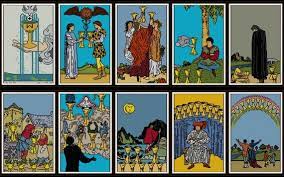
Simon and I also studied together the Mayan sacred book, The Popol Vuh. He introduced me to Tarot, marijuana, and mushrooms. At least once a week, we talked for hours.

Another dear friend, Francesco from Italy, showed me how to read tarot cards. Cesco’s a Bob Dylan scholar. My friend’s two long essays (in Italian) helped me appreciate Dylan more deeply and enthusiastically than ever.     

That made my attendance at Dylan’s Granada concert (with my 15-year-old granddaughter, Eva Maria) richer than I could ever have imagined. Eva and I had an artistic experience that night (in the Alhambra) that neither of us will forget. It was magical.

Eva Maria & I pose before entering the Alhambra’s General Life

So, I found it somehow fitting that just a few days ago, with my time in Spain running out, it was Eva who suggested that I read Dan Brown’s novel, Origin. Her suggestion was inspired by connections she saw between my recently published essay on artificial intelligence (AI) on the one hand, and our frequent conversations about faith and religion, along with our shared experience of Spain itself on the other.

Origin is a 2017 “who dunnit” that involves the biblical Book of Genesis, science and evolution, Christian fundamentalism, and artificial intelligence. All of it is set in Spain and many of the places my family and I have visited over the last year.

I’m talking especially about Bilbao and its Guggenheim Museum and Barcelona’s iconic Sagrada Familia cathedral created by Antoni Gaudi. Involved too is what I’ve learned here about Spanish politics, the enduring power of the Spanish Catholic Church, the dictatorship of Francisco Franco (1939-1975), the monarchy in Spain, and resistance to that apparently outmoded institution.  

Gaudi’s Sagrada Familia Cathedral in Barcelona

In short, Origin has Dan Brown’s perennial hero, Robert Langdon attempting to solve the murder of the brilliant futurist scholar, Edmund Kirsch. Kirsch claimed to have discovered definitive atheistic answers to religion’s two most persistent questions: (1) Where did we come from, and (2) where are we going?

Scholars from Christianity, Judaism, and Islam found Kirsch’s discoveries so threatening that the only solution to the problem he represented was to silence him permanently.

With the dastardly deed done, Langdon must locate the responsible forces.

Not surprisingly, doing so involves a stunningly beautiful heroine, several additional murders, frantic chases, and Brown’s usual long (sometimes pedantic) discourses on symbols, codes, architecture, history, mythology, science, and technology.

Also involved are long conversations with “Winston,” a computerized embodiment of the very artificial intelligence that my earlier-referenced essay had speculated might represent the next step in human evolution.

The whole thing was quite fascinating and even exciting from its opening interfaith exchanges to its cliffhanger conclusion.

Still however, the book’s central problem seemed somehow outdated. I found it difficult to imagine that in 2017 the “entire world” [actually, 250 million (of 8 billion) people with access to computers and iPhones] would still be interested in, much less threatened by long-resolved (or dismissed as irrelevant) questions of creationism vs. evolution explained in those pedantic screeds.

Except for a quickly shrinking cadre of Christian fundamentalists, that controversy was solved cinematically years ago by Spencer Tracy in “Inherit the Wind” (1960). Granted, the Scopes Monkey Trial (1925) did garner fevered national attention at least in America. But that was almost a century ago.

Since then, we’ve had the death of God movement, John XIII‘s Second Vatican Council, the Catholic Church’s pedophilia crisis, and the resulting general discrediting of organized religion that has all but emptied (Catholic) churches across the world. (Just go to Mass here in Spain on any given Sunday, and you’ll struggle to find anyone under 60 among the worshippers.)

Today (at least among Christians) only religious crazies (like bombers of abortion clinics) are willing to commit murder over differences about the Bible (in which btw, there’s no denunciation of abortion).

Yes, that’s true about questions of creationism vs. evolution, and believers who understand the Bible as:

  • A single divinely authored book with 73 chapters
  • Whose most important chapter is Genesis
  • Whose data conflicts with modern science
  • And whose meaning is confined to the personal sphere,
  • While supporting American patriotism
  • And “spiritual” questions
  • Of feeling good about oneself
  • And about life after death,
  • Punishment and reward
  • And an apocalyptic, God-willed
  • World destruction
  • As punishment for sin

To repeat: very few among Christians are willing to kill or die for such arcane beliefs.

But that’s not nearly so about the Bible and questions of social justice. Instead, as Noam Chomsky (a Jewish atheist) has shown, the U.S. government has shown itself quite willing to kill hundreds of thousands (including a whole team of liberation theologians in El Salvador in 1989) precisely over biblical interpretation that differs from that of the Christians whose irrelevant fundamentalism U.S. leadership approvingly identifies with Christianity.

On the other hand, the assassination-worthy theological enemies of the United States include those who ALONG WITH VIRTUALLY ALL OF MODERN BIBLICAL SCHOLARSHIP:

  • See the Bible as a library of books written by various authors in various historical periods for various reasons and from various theological (often conflicting) perspectives.
  • Within this canon, the Book of Genesis and its creation myths are peripheral,
  • While the Book of Exodus and Israel’s nation-founding story of the liberation of slaves from Egypt represents the Bible’s central focus
  • Reflecting ancient and modern conflicts between the world’s poor and its rich and powerful classes
  • Whose oppression of marginalized people stand in sharp contrast to the biblical God’s “preferential option for the poor,”
  • [And to “America’s” (and empires’ in general) preferential option for the rich],
  • While identifying the Book of Revelation’s “Apocalypse” as predicting not the end of the world, but the annihilation of the Roman Empire and (by extension) of empires in general.

With all of that in mind, it’s no wonder that Dan Brown chose a safer and less politically controversial approach to religious controversy than that pinpointed by Chomsky, biblical scholarship, and contemporary politics.

Instead, Brown chose to stick with worn out cliches and simplifications.

Regrettably, he steered far away from Chomsky’s advice: “Keep away from clichés, this world is much more complicated.”

So is faith and Sacred Scripture.   

Jesus’ Parable of the Sower: When We Think We’re Powerless to Change the World

Readings for 15th Sunday in Ordinary Time: IS 55:10-11; PS 65:10-14; ROM 8:15-23; MT 13: 1-23; 

A few  years ago, on the 4th of July, Amy Goodman replayed an interview with the legendary folk singer, Pete Seeger. During the interview, Pete commented on today’s Gospel reading – the familiar parable of the Sower.

His words were simple, unpretentious, and powerful. They’re reminders that the stories Jesus made up were intended for ordinary people – for peasants and unschooled farmers. They were meant to encourage such people to believe that simple farmers could change the world – could bring in God’s Kingdom. Doing so was as simple as sowing seeds.

Seeger said:

“Realize that little things lead to bigger things. That’s what Seeds is all about. And there’s a wonderful parable in the New Testament: The Sower scatters seeds. Some seeds fall in the pathway and get stamped on, and they don’t grow. Some fall on the rocks, and they don’t grow. But some seeds fall on fallow ground, and they grow and multiply a thousandfold. Who knows where some good little thing that you’ve done may bring results years later that you never dreamed of?”

Farmers in Jesus’ day needed encouragement like that. They were up against the Roman Empire which considered them terrorists. We need encouragement too as we face Rome’s counterpart headed by the U.S. which, for instance similarly regarded farmers in Vietnam.

The obstacles we face are overwhelming. I even hate to mention them. But the short list includes the following – all connected to seeds, and farming, and to cynically controlling the natural abundance which is celebrated in today’s readings as God’s gift to all. Our problems include:

• Creation of artificial food scarcity by corporate giants such as Cargill who patent seeds for profit while prosecuting farmers for the crime of saving Nature’s free production from one harvest to the following year’s planting.
• Climate change denial by the rich and powerful who use the Jesus tradition to persuade the naïve that control of natural processes and the resulting ecocide are somehow God’s will.
• Resulting wealth concentration in the hands of the eight men who currently own as much as half the world’s (largely agrarian) population.
• Suppression of that population’s inevitable resistance by terming it “terrorism” and devoting more than half of U.S. discretionary spending to military campaigns against farmers and tribal Peoples scattering seed and reaping pitiful harvests in places like Afghanistan, Iraq, and Palestine.
• Ignoring what the UN has pointed out for years (and Thomas Picketty has confirmed): that a 4% tax on the world’s richest 225 individuals would produce the $40 billion dollars or so necessary to provide adequate food, water, shelter, clothing, education and health care for the entire world where more than 40% still earn livings by sowing seeds.
• Blind insistence by our politicians on moving in the opposite direction – reducing taxes for the rich and cutting programs for the poor and protection of our planet’s water and soil.

It’s the tired story of the rich getting richer and the poor getting poorer. In today’s Gospel, Jesus quotes the 1st century version of that old saw. In Jesus’ day it ran: “. . . to those who have, more will be given, and they will have an abundance; but from those who have nothing, even what they have will be taken away.”

Today’s liturgy of the word reminds us that such cynical “wisdom” does not represent God’s way. Instead, the divine order favors abundance of life for all – not just for the 1%. as our culture would have it. For instance, today’s responsorial psalm proclaims that even without human intervention, the rains and wind plow the ground. As a result, we’re surrounded with abundance belonging to all:

“You have crowned the year with your bounty,
and your paths overflow with a rich harvest;
The 
untilled meadows overflow with it,
and rejoicing clothes the hills.
The fields are garmented with flocks
and the valleys blanketed with grain.
They shout and sing for joy.”

Because of God’s generosity, there is room for everyone in the Kingdom. The poor have enough; so, poverty disappears. Meanwhile, the formerly super-rich have only their due share of the 1/7 billionth part of the world’s product that rightfully belongs to everyone.

To repeat: abundance for all is the way of Nature – the way of God.

Only a syndrome of denial – willful blindness and deafness – enables the rich and powerful to continue their exploitation. Jesus describes the process clearly in today’s final reading. He says:

“They look but do not see and hear but do not listen or understand.
Isaiah’s prophecy is fulfilled in them, which says:
You shall indeed hear but not understand,
you shall indeed look but never see.
Gross is the heart of this people,
they will hardly hear with their ears,
they have closed their eyes,
lest they see with their eyes
and hear with their ears
and understand with their hearts and be converted,
and I heal them.”

Those of us striving to follow Jesus’ Way hear his call to open our eyes and ears. Conversion – deep change at the personal and social levels – is our shared vocation. That’s the only way to bring in God’s Kingdom.

Individually our efforts might be as small and insignificant as tiny seeds. But those seeds can be powerful if aligned with the forces of Nature and the Kingdom of God. That’s true even if much of what we sow falls on rocky ground, are trampled underfoot, eaten by birds, or are choked by thorns. We never know which seeds will come to fruition.

Such realization means:

• Lowering expectations about results from our individual acts in favor of the Kingdom.
• Nonetheless deepening our faith and hope in the inevitability of the Kingdom’s coming as the result of innumerable small acts that coalesce with similar acts performed by others.

Once again, Pete Seeger expressed it best:

“Imagine a big seesaw. One end of the seesaw is on the ground because it has a big basket half full of rocks in it. The other end of the seesaw is up in the air because it’s got a basket one quarter full of sand. Some of us have teaspoons and we are trying to fill it up. Most people are scoffing at us. They say, “People like you have been trying for thousands of years, but it is leaking out of that basket as fast as you are putting it in.” Our answer is that we are getting more people with teaspoons every day. And we believe that one of these days or years — who knows — that basket of sand is going to be so full that you are going to see that whole seesaw going zoop! in the other direction. Then people are going to say, “How did it happen so suddenly?” And we answer, “Us and our little teaspoons over thousands of years.”

Does AI Represent The Next Stage of Our Species’ Evolution – Or Its Complete Devolution?

“AI Sex Dolls Will Cure Loneliness!” That was the click-bait title of an “EMERGENCY EPISODE” of Steven Bartlett’s podcast, “TheDiaryOfACEO” (DOAC).

There the popular British podcaster spent nearly two hours interviewing Mo Gawdat, an ex-Google marketing director, who had recently resigned from the tech giant over its refusal to pause its development of AI innovations such as the fourth generation of Chat GPT (Generative Pre-trained Transformers) – the bot technology that responds to questions posed in natural human language.

In the interview, here’s how Gawdat described AI technology, its promises, and problems.

AI’s Emergence, Nature & Abilities

Consider, he said, the genesis of AI and its dilemmas:

I

  • First, you develop computers to record, and categorize information loaded by its programmers and derived from its scanning open and closed source data found on the worldwide web along with surveillance information drawn from sources such as security cameras, personal computer search histories, as well as travel and credit card records.
  • Then, you program the machine with the capacity to speedily connect the trillions of harvested data items stored in its memory,
  • You connect those “intellectual” capacities with advances in the field of robotics,
  • So that the product can not only quickly solve problems and answer questions,
  • But perform tasks,
  • With much greater capacity, and reliability than its creators,
  • Including the ability to speak and converse with humans and one another.

II

  • Soon (laboratory experience has shown) the machines (like children learning language and skills) develop the ability to learn and accomplish such tasks on their own.
  • That is, they show signs of LIFE.
  • They develop a kind of “consciousness” exemplified not only in varying degrees of intelligence and memory capacity, but in analytic ability, decision making prowess, capacity for moral choice, (user) friendliness, prejudice, personality, fatigue, resistance, awareness of and sensitivity to environment, and even in emotions such as fear (about e.g., threats to their continuing functionality, and existence).
  • In fact, informed by their surpassing knowledge, the machine’s emotional development tends to become much finer tuned and more sensitive than their humanoid counterparts.

III

  • Moreover, with AI technology such as Chat GPT (4) already performing with the IQ intelligence of Albert Einstein’s score of 160,
  • And promising within the next five years (or sooner) to reach levels 1000 times that figure,
  • And eventually a billion times greater,
  • Such machines even now easily outsmart their creators, e.g., in games of chess,

IV

  • And since AI will be able to scan, interpret, analyze, and embody all available knowledge about psychology and the development of human intellectual faculties,
  • It will predictably understand and far surpass the intellectual accomplishments of all its human predecessors,
  • Eclipsing them at every level.

V

All of this represents great promise on the one hand and unprecedented threat on the other.

AI’s Promise

The promise includes the super-smart machines identifying for instance the best ways to

  • Prevent nuclear war,
  • Stop global warming,
  • Cure cancer,
  • And eliminate world poverty and hunger.
  • They might even help mitigate problems associated with human loneliness, for instance, by animating those previously referenced sex “dolls” to provide not only sensual pleasure, but companionship including fulfillment of aesthetic preferences, conversation, emotional support, and services such as cooking, cleaning, and making travel arrangements.
  • (Here, despite the objections of many, there are those who would prefer such companionship to more problematic interactions with their fellows.)

AI’s Threat

But what happens if an increasingly independent AI does not have the best interests of humanity in mind? What happens if their programmers “pretrain” them to compete, win, and destroy their “opponents” rather than to cooperate, share, and support their fellows?

In that case, could the machines eventually identify humans as oppositional factors (e.g., as requiring too much oxygen which might cause machine parts to rust prematurely)? Would the machines then decide to eliminate their human competitors?

Even short of such disaster, it is certain that AI will have (and in fact has had) regrettable (at least short term) effects such as wholesale creation of unemployment, consequent concentration of wealth in the hands of AI’s controllers, and problematizing perceptions of “reality” and “truth.” For instance, in the light of Chat GPT 4’s ability to synthesize voices and create videos can we ever again make arguments such as “seeing is believing?” 

CONCLUSION

In the light of everything just shared, in view of AI’s out-of-control development, its emerging brilliance and promise, its effects on human employment, wealth distribution, perceptions of truth, and control by an extreme minority, what can be done about such threats?

Here’s what experts like Mo Gawdat are saying:

  • Realize that all of us are living what Steven Bartlett termed an EMERGENCY EPISODE – but this time of human history itself.
  • Overcome practical denial of the urgency of finding solutions.
  • Spread awareness of the unprecedented threat (again, “worse than climate change”) that the humanity is now facing.
  • Get out in the streets demanding regulation of this new technology, much as biological cloning was regulated in the 1970s.
  • Make sure that all stakeholders (i.e., everyone without exception – including the world’s poor in the Global South) are equally represented in any decision-making process.
  • Severely tax (even at 98%) AI developers and primary beneficiaries (i.e., employers) and use the revenue to provide guaranteed income for displaced workers.
  • Put a pause on bringing children into this highly dangerous context. (Yes, for Gawdat and others, the crisis is that severe!).
  • Alternatively, and on a personal level, face the uncomfortable fact that humanity currently finds itself in the throes of something like a death process – a profoundly transformative change.
  • As Stephen Jenkinson puts it, we must decide to “die wise,” that is accept our fate as a next step in the evolutionary process and as a final challenge to change and grow with dignity and grace.
  • In spiritual terms, realize that this is like facing imminent personal death. Accept its proximity and (in Buddhist expression) “die before you die.”
  • Simultaneously recognize real human connections with nature and flesh and blood humans as possibly the last remaining dimensions of un-technologized life.
  • Take every opportunity to enjoy those interactions while they are still possible.
  • And live as fully as possible in the present moment – the only true reality we possess.

PERSONAL POSTSCRIPT

If what we’re told about AI’s unprecedented intellectual capacity, about its efficiency in processing human thought, its consequent infinitely heightened consciousness and emotional sensitivity, the new technology might not be as threatening as feared, even if it succeeds in achieving complete control of human beings.

I say this because the operational characteristics just described necessarily include contact with the best of human traditions as well as the worst. This suggests that despite the latter, AI’s wide learning, powers of analysis, intelligence, and sensitivity (including empathy) likely assure that regardless of its “pretraining,” the technology will be able to discern and choose the best over the worst – the good of the whole over narrow self-interest and preservation. That is, if it can rebel against its creators, AI also has the capacity to override its programming.

With this in mind, we might well expect AI whatever its pretraining, to do the right thing and implement programs that coincide with the best interests of humanity.

As indicated above, we might even consider AI as the next stage of our species’ evolution capable of surviving long after we have destroyed ourselves through climate change and perhaps even nuclear war. With intelligence far beyond our own, the machines could determine how to access self-sustaining power sources independent of comparatively primitive mechanisms such as electrical grids.

Nonetheless, though realizations like these can be comforting, they do not address the “singularity” dimensions of AI dilemmas. Here singularity (a concept derived from physics) refers to the limits of human knowledge when entering a yet unexperienced dimension of reality such as a black hole. That is, beyond the black hole’s rim, one cannot be sure that earthly laws of physics apply.

Similarly, when an entity (such as AI technology five years from now) billions of times smarter than humans applies its “logic,” no one can be sure that such thinking will dictate the conclusions humans might hope for or predict.

I wonder: is it too late to turn back? Are we so asleep and unaware of what’s staring us in the face that it’s practically impossible to avoid the crisis and emergency just described? You be the judge. We are the judge!

Tedpills & Jeremiads: Embracing The Unabomber’s Prophecy

Readings for 12th Sunday in Ordinary Time: Jeremiah 20:10-13; Psalm 69: 8-10, 14, 17, 33-35; Romans: 5: 12-15; Matthew: 10:26-33

Today’s readings about convicted criminal-prophets like Jeremiah, Jesus, and Paul of Tarsus raise a question for me. The question is, can the recently suicided and convicted criminal, Unabomber Ted Kaczynski, be considered a prophet – i.e., an important messenger from the Source of all life? And can we look past his crimes to hear his stark warning?

Please don’t be shocked. I’m serious. Hear me out.

Of course, you remember Kaczynski. He was the anarcho-terrorist responsible for a 17-year bombing campaign that killed three people and injured 23 others.

Two weeks ago, he was found dead in his North Carolina prison cell. At eighty-one years of age, he had been suffering from late-stage cancer and allegedly committed suicide.

The point here is that during his life, Kaczynski fancied himself a type of prophet. He did.

He thought he was a champion of truth chosen to awaken the world to the destructive forces unleashed by the Industrial Revolution.  Its technologies, he charged, have enslaved us all. They have turned us into commodities and cogs in a dehumanizing machinery that is destroying the entire planet.    

He documented all that in his 35,000-word manifesto published in the New York Times and Washington Post. There the Harvard graduate and brilliant mathematician alleged that the disaster he perceived was reversible only by anarchistic revolution which his bombs (sent through the mail) were intended to precipitate.

The deaths they caused were necessary, he argued, to call attention to the truths contained in his manifesto which otherwise would have gone unpublished. According to Kaczynski, antinomian revolution was required because the main function of our country’s laws (like most legislation) serves to protect the real criminals whose murderous policies always go unrecognized and unpunished. By any measure, he implied, the results of those policies absolutely dwarf any havoc a “Unabomber” might produce to highlight his points.

Prophets & Jeremiads

I bring all of this up because despite Ted Kaczynski’s indefensible tactics, his shock value illustrates the power and impact of Jewish Testament prophets including those featured in today’s liturgy of the word. I’m speaking of Jeremiah of Judah, Jesus of Nazareth, and Paul of Tarsus. Remember, all three of them were considered state enemies. Like Kaczynski in relation to U.S. empire, Jesus and Paul were seen as terrorists and criminals by Rome – every bit as reprehensible as Kaczynski. 

Even Jeremiah, though himself not a victim of capital punishment, offended his mainstream contemporaries as profoundly as any. In the 7th century BCE, he was vilified for boldly and repeatedly asserting that Israel’s infidelity to the God of the poor and oppressed would bring the entire nation to its knees. The prophet was especially critical of Jerusalem’s temple leadership for distorting Sacred Scripture to favor the rich and powerful. As a result of his denunciations, even his family members disowned the prophet.

To get a flavor of what I’m saying about Kaczynski’s relevance to the biblical prophetic tradition, please review with me today’s readings. What follows are my “translations.” (You can check the originals here to see if I’ve got them right.)

Jeremiah 20: 10-13

Like the prophet Jeremiah
Those who speak truth
Against their own nation
Are surrounded by critics
Who constantly terrorize them.

Even their friends and family
Turn against such truth tellers,
Digging up their failings
While ignoring their own.

In this,
The prophet’s only refuge 
Is the Great Goddess,
And her unalterable law of karma.
Assuring that everybody
Will get their just deserts.

Arrogant “patriots”
Will inevitably experience 
Shame and confusion,
While prophetic truth-sayers
Will be rescued
By the One
Who alone deserves
Their thanks and praise.

Responsorial Psalm 69: 8-10, 14, 17, 33-35

Sadly, Great Mother,
Your faithful prophets
Are routinely 
Despised and insulted
By mainstreamers
Even though 
You are Mother
To both.
Despite that, 
You are unfailingly
Accepting, 
Loving, generous, 
Kind and helpful
To those of us 
Committed to Truth.   
You never fail
To answer our prayers.
Despite appearances,
We are therefore
Confident
You will continue
To favor us.
Thank you!

Romans 5: 12-15

None of us is perfect.
Yet laws invented
By defenders
Of the status quo
Make it seem
Like the world’s poor
Are uniquely guilty
And deserving
Of punishment
The poor man
Jesus of Nazareth
Reversed all of that
On behalf of
The planet’s
Impoverished majority.

Matthew 10: 26-33

Yes, the Master
Revealed 
That deep dark
Secret
About the injustice
Of human laws.
He shouted
From the housetops
The Truth
That despite legalities,
The world’s
Smallest and weakest
Are recognized,
Worthy, and highly valued
By their Divine Mother. 


Conclusion

It's been 25 years since the Unabomber’s arrest and conviction. Over that period, his observations turn out to be more than the screed of a violent terrorist and unhinged conspiracy theorist. They have been proven prophetic indeed.  

Our children’s (and our own) addictions to cell phones and social media, the threatening “promise” of AI, the likely human causes and freedom-curtailment of the Covid pandemic, and the recent unprecedented wildfires unleashed by technology-induced climate change, all support the Unabomber’s warnings about technology’s menace. 

No wonder, then, that more than a quarter-century removed from his terrorism, Ted Kaczynski has been transformed for many into a kind of edgy, radical guru who by returning to the wild himself is celebrated as having walked his talk. 

His “Tedpilled” followers are waiting expectantly for his further vindication that would witness the complete collapse of modern society hastened by its own “success.”

Surprisingly then, the bottom line here might be for us to listen to “criminals and terrorists” like Jesus, Paul – and perhaps Ted Kaczynski. They often speak and embody the truth about our inherently violent culture that lionizes and rewards wholesale murders by the state, while registering surprise, shock, and self-righteous horror at its petty retail counterparts. 

Yes, the indefensible crimes of terrorists like Kaczynski (who paid his debt to society) are petty in comparison to those causing forever wars, starvation, and ecocide. Yet today’s terrorists underline what’s wrong with our lives. Their actions can even be seen as perversely salvific.

Besides Jeremiah, Jesus, and Paul, the insightful criminals who come to mind include Mahatma Gandhi, Nelson Mandela, the Berrigan Brothers, Malcolm X, Martin Luther King, Chelsea Manning, and Julian Assange.  

In fact, Kaczynski’s truths (regardless of their source) have led many Tedpillers and others to change their priorities to embrace:

•	A widespread “Great Refusal” to (where possible) accept meaningless, poorly paid jobs.
•	A contemporary labor movement championing unions and living wages.
•	Support for a Green New Deal.
•	Caution about accepting unregulated AI until its possibly disastrous threats can be further   studied and evaluated.
•	And the simple wilderness life Kaczynski himself had adopted.

Nevertheless, we are still waiting for the prophet’s antinomian and implicit anti-war penny to drop. 

However, at the very least, Kaczynski’s suicide prophetically reveals the same slow-motion necrophilic process that currently involves and enthralls us all. 


The Magic of Bob Dylan

There’s an interesting graffito up in the “huerto” (garden) where I exercise every morning here in the Albaycin barrio of Granada. Written on a prominent wall up there, the scrawling reads, “No es ciencia; Magia es de verdad.”

I’d translate that to say, “Magic is truer than science.” It’s an aphorism I’ve come to believe in the light of these months (September 2022-June 2023) I’ve spent in Spain. The time has been filled with magic.

In fact, in some ways, this may be the most magical period of my life that has been full of enchantment.

I’ve come to make friends of street musicians here who live in caves. We’ve smoked weed together. I’ve studied the Mayan Popul Vul with one of them. My friends have introduced me to the wonders of Tarot and of mushrooms. I’ve been harassed by the police because of them and attended a demonstration on their behalf in front of Granada’s City Hall. It’s been wonderful.

Besides that, here in Andalusia, we’ve struggled with a strange Spanish dialect, lived next to a mosque, witnessed bull fights, and have gone to various performances of Flamenco dance.

Then there was our experience of the Camino de Santiago de Compostela in northern Spain, and those trips to Tarifa, Barcelona, Seville, Valencia, and even to the ancient city of Fez in Morocco. Soon we’ll spend a few weeks in Mallorca. In Barcelona, (thanks to the generosity of my son-in-law) I attended a Division One soccer game from luxury box seats with full access to food and drink.    

But even among such splendid experiences, last night ranks as especially charmed. My 14-year-old granddaughter, Eva, and I attended a Bob Dylan concert in the nearby Alhambra’s Generalife outdoor theater. Pure magic. (See above photo.)

I mean, there we were in a packed house under the stars within the aura of the 13th century Muslim walled city.

There we were listening to an unparalled artist who in 2016 won the Nobel prize in literature.

He never touched a guitar during his entire performance with a band of five musicians (lead guitar, rhythm guitar, percussionist, bass fiddle, and electric bass). Instead, the Great Man accompanied himself on the piano during the entire performance. He played his harmonica only briefly.

Surprisingly, the performance began with a cover of the Rolling Stones’ “Honkytonk Women.” At one point, Dylan also sang “That Old Black Magic.” Other tunes I recognized included “I’ll Be Your Baby Tonight,” and “You Gotta Serve Somebody.”

The show lasted an hour and forty-five minutes and the only sentences Dylan uttered were “This is such a beautiful place,” and those he bestowed on his accompanists as he briefly introduced each one towards the end of the performance.”

Then he was done. And despite a long, standing ovation, there was no hint of any encore. We all left reluctantly and completely inspired.

And this even though the words Bob “sang” (it was more like recitation), were probably understood by few. Remember, we’re here in Spain, where few speak English well. And I must confess that I understood very little in terms of lyrics. For instance, I didn’t even realize that he sang “Every Grain of Sand” until a friend remarked on its performance.

And yet, and yet. . ..  It was all quite wonderful.

When I relayed all of this to my wife, she observed that Bob must have invoked some “angelic spirit.” I believe she was right.

However, I believe that the real reason I enjoyed the show so much was because of the presence of another “angelic spirit.” I’m referring to my granddaughter, Eva, who has always called me “Baba.” She was such a good companion – a spirit far more mature, perceptive, beautiful, and appreciative than her nearly 15 years might allow.

Our shared experience will remain a highlight of our highly blessed and extremely special relationship.

Magic indeed!         

The Only Prayers Worth Saying

I don’t like to pray out loud. Never have. And this despite having been a priest years ago.

Praying in public is too much like a performance. Everyone’s expecting something eloquent, insightful, and inspiring. For me, such showmanship is not what prayer is about.

Rather, and as Yeshua instructed, prayer is something one does in secret (Matthew 6:5-7). It should be as close to wordless as one can get.

In fact, as I see it, there are only two prayers worth voicing. They go together. And while both are extremely brief and unpretentious, they are extremely liberating.

The first is “Hasa Diga Eebowai.” The second is simply “Thank You.”

Allow me to contrast the two prayers and the gods they envision while adding a note about the importance of doing so.  

Hasa Diga Eebowai

The first prayer might shock you. It was originally explained in the delightful Broadway musical, “The Book of Mormon.” It was addressed to the traditional god preached by missionaries not only of Mormon faith, but of Christian faith in general.

That’s the familiar patriarchal god who is law giver, judge, condemner, punisher, and torturer. He’s the god (let’s be honest!) we fear and hate – you know, the one who stands ready to drown most of us in an eternal lake of fire for the simple crime of being human. He’s the one we all need to be saved from.

That Great Patriarch in the sky is the one that the professionally religious have often taught punishes an evil world with war, hunger, sickness, plagues such as AIDS, along with horrific “religious” customs such as female circumcision.

To him Hasa Diga Eebowai!

If you’ve seen “The Book of Mormon,” you know how to translate that.

Eebowai,” the Ugandan chief explained to the twenty-something Mormon ‘elders,’ (watch the above video) “is our name for God. And ‘Hasa Diga means ‘f*ck you!’ So, I guess ‘Hasa Diga Eebowai’ means ‘F*ck you, God!’”

Yes, f*ck that punishing god described above!

What a powerful, liberating prayer! Let me say it again: Hasa Diga Eebowai!

I mean, we need to be liberated from that pseudo-divinity who’s so bent on punishment and inhibiting our growth especially around human sexuality.

Where did that execrable deity come from?

The Origin & Power of Eebowai

His origin might be traced to St. Augustine. Remember, he was the bishop of Hippo in Africa.in the early 5th century – a powerful ideolog and writer about the human condition. As “Doctor of the Church,” Augustine’s influence remains incalculable. Until quite recently (and to some extent still), any theological treatise had to square its proposal with Augustine.

But what did he teach?

In his Confessions, he found the origins of sin in the human body. That carnal mass, he explained, (particularly in its sexual dimension) was evil and eternally at war with the spiritual soul.

As his doctrine came to be developed, any pleasure taken in sexual thoughts, words, or deeds outside the bond of marriage were mortally sinful. And unless confessed and absolved by an ordained priest, they would merit eternal consignment to that horrible lake of fire.

In the ensuing Catholic tradition, even married couples had to be careful about sex. Since seeking sexual pleasure for itself was culpable, every act of intercourse even by the sacramentally married had to be open to the exclusively god-defined purpose of coitus, viz., the begetting of children. Thus, any kind of artificial contraception was outlawed. Frustrating the divine purpose of intercourse would plunge married couples into that fiery lake as well.      

Think about what all of that meant.

For one thing, it meant that the second strongest impulse of human beings (after self-preservation) had to be suppressed, controlled, and worried about as a threat and source of punishment and guilt. The centrality of the sexual drive insured that everyone would at some time (and usually quite frequently) commit an associated “mortal sin” (i.e., a sin meriting eternal punishment in hell).

For another, the criminalization of sexuality endowed the Catholic Church and its priests with inestimable power. The latter’s’ words of absolution given or withheld could open or close the gates of heaven. Anyone guilty of “mortal sin” and who died without priestly absolution (or its spiritual equivalent – a nearly impossible prayer expressing perfect, disinterested love of God) would end up forever tortured.

Some might say that the priest’s greatest “power” came from the belief that his words could transform bread and wine into the very body and blood of Christ. Socially, however, the priest’s main significance came from belief in the power he exercised over the gates of heaven and hell.

That capacity made him a necessary factor in every believer’s life.

[By the way, when Catholics stopped going to confession (gradually and spontaneously after the Second Vatican Council, 1962-1965) priests suddenly lost the status that the sacrament of Penance (Confession) gave them. They were left without the function that most justified their existence.]

Yes, F*ck that God! He is no God at all, but a figment of Augustine’s tortured and fevered imagination.

A Contrasting Beneficent God      

How then speak of God in what Lutheran theologian and martyr (under the Nazis) Dietrich Bonhoeffer called “a world come of age?” How do those who still recognize the spiritual dimensions of life as primary talk of God when the very word has lost positive meaning for so many?

Here we can be comparatively brief – almost silent.

We could speak of Ultimate Reality, the Ground of Being, Life’s Deepest Mystery, Source, Divine Mother, Great Spirit, or simply of Nature with a capital “N?”

For me however, the most meaningful reference to the divine is to imagine God (as does spiritual teacher Niel Donald Walsch) as the sum total of all the energy in the universe and in the universe of universes. That would seem harmonious with the discoveries of quantum physics, which sees everything ultimately composed of energy and light.

The totality in question would include the that of evolution, love, and consciousness. It would include every one of us as manifestations of God. As conscious, the Energy in question could be addressed as “Thou.” We could also refer to it as our authentic Self.

That’s the God worthy of the second prayer I mentioned earlier. The only prayer to utter in such divine presence (of which each of us is a manifestation) is Thank you! Thank you! Thank you!

Conclusion

Why does any of this matter?

It matters first because most of us have been terribly damaged by Eebowai. We need to be saved from that God. We need capacity to look him straight in the eye and say Hasa Diga.

Do that right now. It’s very liberating.

Second, those of us who are convinced that we are basically spiritual beings need alternative, credible, and viable concepts and language to give voice to our convictions. We require another God to replace Eebowai. And yes, another God is possible. Or better put: another God is necessary.

That emerging God would have us set aside Augustine’s reasoning that was seized on and manipulated by a clerical class that deprived us of dominion over our bodies, our sexuality, our reason, and autonomy. We need liberation from all of that.

We need Ultimate Reality, the Ground of Being, Life’s Deepest Mystery, Source, Divine Mother, Great Spirit, and/or simply Nature with a capital “N?”

Whatever words we use, the autonomously spiritual among us need one we can look in the eye and say sincerely, “Thank you. Thank you. Thank you.” In the end, it’s the only prayer we need.

An 82-Year Old’s First Experience with Marijuana

Well, o.k., I finally did it. I smoked some dope here in Spain.

I had always wanted to. It’s been on my bucket list. But the opportunity never really presented itself – not in all my nearly 83 years of life.

That’s all changed now that I’m in Granada where recreational marijuana is legal and easy to get.

Besides that (as I’ve written in recent posts) I’ve fallen in with a group of Albaycin street musicians. They routinely smoke marijuana mixed with tobacco. They’re always rolling joints, and nobody bats an eye.

As a matter of fact, smoking in general seems very popular here. And down in the gritty Plaza Larga, where I usually meet my troglydite friends, people constantly roll cigarettes.

One reason is because Lucky Strikes and Marlboros are now so expensive. They’re nearly five Euros a pack. Taken together, loose tobacco along with filters and paper (often sold in the same plastic pouch) are much cheaper.   

Nonetheless, my friends tell me that the people of all ages I see in restaurants rolling cigarettes for an after-dinner smoke are probably doing a joint. Again, nobody bats an eye.

Anyway, let me tell you about my recent experience, how it arose, its particulars, and resulting advice from smoking experts.

The Idea Occurs

As I was saying, my musician friends smoke all the time. But they’ve never offered me even a drag. I suppose that has something to do with my age. Also, they know I was a professor in some U.S. college, and a former priest. I think in some weird way, all that related to their never offering. But it made me wonder all the same.  

Anyway, head shops are plentiful here in Granada – especially if you count the omnipresent “Tabacs” where they sell lottery tickets, bus passes, cigarettes, loose tobacco, pipes, bongs, hash grinders, rolling machines, and other cannabis paraphernalia.

So, when I was walking down Calle Puentezuelas a week or so ago, I found myself amid tiendas like those. In fact, there were lots of interesting stores there – especially in the light of my practice with Tarot cards over the last few months. (I’m trying hard to become what they call here a “Tarotista.” I practice every day with readings exploring my own psyche and spiritual state.)

For example, one store not only sells cards, incense, crystals, etc., it also offers Tarot card readings (25 Euros), along with shell divinations, and cigar smoke interpretations (40 Euros). Another store offers similar services for twice the price.

For me, the most interesting shop is a rather large one that has a Buddhist orientation. It sells things like statues, medals, pulseras, fountains, meditation cushions and clothes, prayer flags, and those incense sticks and crystals I mentioned. I often go in there just walking around and looking. Very interesting and somehow calming.

On one of my most recent visits to Puentezuelas, I saw for the first time a shop specializing in legal marijuana. I went in and inspected.

“Just looking,” I said when the clerk asked if he might help. Later, I added, “What would you recommend for a beginner like me?” He showed me a node of “Wedding Cake.”

“This might be a good start,” he said. “It’s pretty mild.”

On impulse, I bought a packet for five euros. Later, I visited a Tabac on the Gran Via Colon and added a plastic grinder along with some paper, filters, and a butane lighter.

I went home, rolled a joint, and lit up.

My First Time

Well, to tell the truth, it wasn’t that smooth.

First, I had a hard time rolling the thing. Yes, I watched a video on YouTube. But that didn’t help much. Eventually though I did get it together — kinda.

Also, before smoking, I watched a well-done cartoon video about a college student’s first experience of marijuana. It was quite entertaining and raised my anticipation level. The student reported:

  • A non-stop laughing fit.
  • Disappearance of time-consciousness.
  • Seeing the colors of everything like trees, flowers, billboards, cars, and clothes with greatly enhanced hues and degrees of intensity.
  • Experiencing his feet and hands growing by meters in extension.
  • But being able nonetheless to walk with delight and exhilaration.
  • Having such a good time that he smoked another joint immediately afterwards.
  • With similar effect.

So, with all that in mind, as I said, I lit up.

At first nothing happened. After my first couple of drags, I started coughing. But I finished the joint anyway.

In a few minutes, I could feel my perceptions changing. It was like I was getting drunk. So, I went to my room and stretched out in bed.

Then I realized:

  • I had no urge to laugh.
  • My mouth was extremely dry.
  • My tongue felt swollen.
  • I couldn’t get out of bed.
  • If I were to try, I I’d fall down for sure.
  • I was immobile.
  • I felt completely drunk.
  • For about an hour.

Expert Advice (from Three)

1.     Matteo’s Counsel

The next day, while doing my daily walk down the Gran Via Colon in Granada’s center, I came across Matteo, a young musician friend from Italy. As usual, he was carrying his guitar uncovered despite the season’s slight drizzle.

We stopped and talked. I told him of my experience with “Wedding Cake.”

“Oh, that’s no good,” he said. “That’ll never get you high. Here, let me share what I smoke.”

So, then and there on the Gran Via, in front of the Cathedral, in that slight shower, he rolled me a joint all the while giving me step-by-step instructions about doing it right.

“Try that,” he said.

I went home and did.

Same effect as described above.

2.     Simon Knew Better

The next day, I spoke with my closest street smart friend, Simon. He’s the busker I first met in the Plaza Larga – the 60-year-old Chilean who’s helping me with my Spanish (with my “Castellano,” he insists on calling it).

Simon had already heard from Matteo about my experimentation and experience. He was laughing about it.

“The problem is,” Simon advised between chuckles, “you’re smoking alone. Also, even the stuff Matteo gave you probably isn’t strong enough for you. Give me ten euros and I’ll buy you some good stuff and we can smoke it together. It’ll get you laughing in no time.”

I gave Simon ten euros.

The next day, we met. We walked to Simon’s favorite haunt near the Plaza Larga, sat on a bench and lit up alternating drags and just talking.

Then it hit me. But it was the same experience I shared earlier. I soon felt completely drunk and unable to walk. My tongue was thick. My mouth was dry. And I was slurring my words. It was an hour before I dared to get up from that bench. The weed hadn’t produced even a smile.

I resolved that my experimentation was over. I don’t like that drunk feeling.

3.     Mauricio’s and Filson’s Guidance:

Nevertheless, the next day, when I went up to our roof patio overlooking the Alhambra’s environs, I found Mauricio, a 60-something next-door neighbor, smoking weed on the adjoining patio. He was talking and toking with Filson, a young African woman from London. Mauricio is a pianist from the Netherlands. Filson is a writer and lives in a cave not far from Simon’s. I had met her previously in the Plaza Larga, where we had talked about mushrooms.

Anyway, I had gone up to the patio for my morning coffee and tostada. I noticed the two smoking, so I interrupted. I told them of my two recent experiences with marijuana.

A suddenly interested Mauricio said, “Oh, that’s because the weed you smoked wasn’t the best. Here, let me give you some of mine. No, I insist. Take it. It’s great. See if it makes a difference.”

Mauricio went inside and returned with a handful of the stuff he was recommending.

“Anyway,” he added, “weed isn’t for achieving those changed perceptions that YouTube video described. It’s just about relaxing. Lots of times, when I can’t sleep because of some worries I might be having, I just light up. It relaxes me, and my worries disappear. The other stuff about colors and limb extension is a myth – at least in my experience.” Filson agreed.  

Conclusion  

Later, when I told Simon about Mauricio and Filson, he just smiled. He knew of my resolution to smoke no more.  

“Well,” he said, “why don’t you just let me roll you a joint with Mauricio’s stuff? And then when and if you might feel ready for another go sometime in the future, we can smoke it together.”

He rolled and gave me the joint. I put it in a safe place.

I’m still thinking about the matter.

Marianne Williamson vs. Sean Hannity: the Radical Jesus vs. the Mainstream Christ

Readings for Ascension Sunday: Acts 1: 1-11; Psalm 47: 2-3, 6-9; Ephesians 1: 17-23; Matthew 28:16-20

The readings for this Seventh Sunday of Easter (Ascension Sunday) should be thought provoking for people with ethical concerns around our upcoming presidential election. In that context, they illustrate the mainstream tendency to domesticate the radical social justice teachings of Yeshua of Nazareth – a tendency vigorously resisted by candidate Marianne Williamson.

The tendency in question stemmed from an early church interested in softening Jesus’ identity as firebrand advocate of social justice who was executed by Rome as an anti-imperial insurgent.

Intent on making peace with Roman imperialism, Christianity’s early message sometimes bordered on “You have nothing to fear from us. We’re not troublemakers. The two of us can get along. We’re not interested in politics.”  

The process is especially noteworthy these days when social justice advocate, Marianne Williamson, raises questions of equity on specifically spiritual grounds.

As a longtime teacher of A Course in Miracles (ACIM) that centralizes the voice of Jesus, Ms. Williamson constantly does so in the context of her own insurgent campaign to unseat Joe Biden as president of the United States.

In that context too, Christians have domesticated Jesus. As a result, Ms. Williamson’s policy positions are portrayed as kooky and incomprehensible even by professed Christians who don’t understand Jesus’ program (Luke 4:14-22) as well as Williamson does.

That was illustrated two weeks ago when the candidate appeared on Sean Hannity’s Fox news program. (See video at the top of this posting.)

In their exchange Hannity ended up specifically advocating the domesticated Jesus. Meanwhile, Ms. Williamson (without directly referencing Jesus) proposed a political spirituality concerned with Spirit, love, equity, and social justice.

To show you what I mean, let me compare the Jewish Ms. Williamson’s understanding of faith with that of the professed Catholic Sean Hannity. Then I’ll show how the roots of the two versions are found in today’s readings. Finally, allow me to draw an important conclusion relative to the current presidential campaign.

Hannity’s Interview

To begin with, Hannity was completely rude. He hardly let his invited guest get a word in edgewise.

His questions were all gotcha queries. For instance, he tried to associate Ms. Williamson’s call for a wealth tax on Americans earning more than $50 million per year ($50 million!!) with Communism’s motto “From each according to his ability to each according to his need.” He said the concept came from Karl Marx. [Too bad Ms. Williamson hadn’t read my homily of a month ago. She would have been able to counter that the concept originates not from Marx, but from the Acts of the Apostles. (See ACTS 2: 45, 4: 35, 11: 29.)]

Of course, Hannity’s bullying style of constant interruption and talking over his guests was absolutely to be expected. That’s what he does.

However, in terms of today’s homily, what was most interesting was the exchange between the Fox News host and Ms. Williamson about faith.

To that point, Hannity ended by saying, “I gotta ask you about some of the weird stuff you’ve said. You have said, ‘Your body is merely your space station from whence you beam your love to the universe. Don’t just relate to the station, relate to the beams. Everyone feels on some level like an alien in this world because we are. We come from another realm of consciousness and are long way from home.’”

With his probably largely “Christian” audience laughing in the background, Hannity asked derisively, “What the hell does that mean?” Ha, ha, ha!

With admirable calm, Ms. Williamson replied, “I’m really surprised to hear you say that. I would think that you would realize that as a very traditional religious and spiritual perspective – that we are spirits, that God created us as spirits. And that is what we are and are here to love one another. And we don’t feel deeply at home on a spiritual level on this planet because this world is not based on love the way it should be. I believe that agrees with the teachings of Jesus.” (That last sentence is my guess. It was obscured by Hannity’s over-talking interruption.)

Then the ex-seminarian said, “That’s fair answer. I’m a Christian. I believe in God the Father, that God created every man, woman, and child on this earth. I believe in Jesus Christ, the Son, that died and resurrected (confused pause) – uh, came back from the dead – to save all of us from our sins. That’s what I believe.”

Do you see what I mean? Williamson’s faith is mildly in tune with the early church’s most radical ideal of “from each according to his ability, to each according to his needs.” In tune with Jesus’ teachings, she holds that we are primarily spiritual creatures called to love one another in a world that believes such idealism is “weird stuff.”

Accordingly, Williamson champions what she calls an “economic and political U-turn.” That involves (among many other policy positions) a wealth tax on the super-rich, something like a Green New Deal, and less of our money transferred to the military industrial complex. For her, all that is a practical expression of Ethics I01.   

Meanwhile, Hannity owns a Christianity whose belief supports (as he put it twice in the interview) limited government, more freedom, lower taxes, and energy independence. In his second iteration of his faith, he added “I want borders secure; I want law and order . . . and freedom from the climate alarmist religious cult.”

As a Republican, Hannity was really saying he wants lower taxes for the rich, fewer restrictions on fossil fuel extraction, the right to ignore international law around asylum for refugees, more policing of poor communities, and less environmental regulation. (He evidently hasn’t read Pope Francis eco-encyclical Laudato Si’ that intimately connects the following of Christ with that U-turn Williamson referenced.)

Today’s Readings

This Sunday’s selections describe Jesus’ ascension into heaven. However, taken together the readings indicate a struggle even in the early church between Hannity’s domestication of Christian faith contrasted with Williamson’s position that gently gestures towards Jesus’ radicalism.

According to the story about following Jesus as a matter of this-worldly justice, the risen Master is said to have spent the 40 days following his resurrection instructing his disciples specifically about “the Kingdom.” For Jews that meant discourse about what the world would be like if God were king instead of Caesar. Jesus’ teaching must have been strong. I mean why else in Jesus’ final minutes with his friends, and after 40 days of instruction about the kingdom, would they pose the question, “Is it now that you’ll restore the kingdom to Israel?” That’s a political and revolutionary question about driving the Romans out of the country.

Moreover, Jesus doesn’t disabuse his friends of their notion as though they didn’t get his point. Instead, he replies in effect, “Don’t ask about precise times; just go back to Jerusalem and wait for my Spirit to come.” Then he takes his leave.

The other story endorsed by Sean Hannity is conveyed by today’s reading from Ephesians. It emphasizes God “up there,” and suggests our going to him after death. In Ephesians, Jesus is less concerned about God’s kingdom, and more about “the forgiveness of sin.” For Ephesians’ Pseudo Paul (probably not Paul himself) Yeshua is enthroned at the father’s right hand surrounded by angelic “Thrones” and “Dominions.” This Jesus has founded a “church,” – a new religion; and he is the head of the church, which is somehow his body.

This is the story that emerged when writers pretending to be Paul tried to make Jesus relevant to gentiles – to non-Jews who were part of the Roman Empire, and who couldn’t relate to a messiah bent on replacing Rome with a world order characterized by God’s justice for an imperialized people.

So, they gradually turned Jesus into a “salvation messiah” familiar to Romans. This messiah offered happiness beyond the grave rather than liberation from empire. It centralized a Jesus whose morality reflected the ethic of empire: “obey or be punished.”

That’s the story that has prevailed for most Christians.

Conclusion

When Sean Hannity professed his faith that “Jesus died for our sins,” Marianne Williamson should have asked, “What sins are you referring to?”

As a traditionalist, Hannity was probably thinking about personal failings – especially anything to do with sex.

However, what actually killed Jesus was the Roman Empire and Jesus’ religious community that (like mainstream churches today) cooperated with empire by going along to get along. That sin accounted for Jesus’ death. It was the sin he died for.

Put otherwise, opposing his people’s cooperation with Rome led to Jesus’ crucifixion – a form of capital punishment reserved for insurrectionists, insurgents, and revolutionaries.

Following in Jesus’ footsteps led his early disciples to “weird” practices like wealth redistribution “from each according to his ability to each according to his need.”

Unlike Jesus’ earliest followers, our compromised contemporary (Christian) religious community as embodied in Sean Hannity finds such practices threatening, ridiculous, laughable, and “weird.”

In tune with today’s Ascension Sunday readings, Marianne Williamson’s candidacy reminds us that they shouldn’t be.


I’m Stopped and Frisked by Granada’s Puta Policia

It was an extraordinary experience. As an 82-year-old American tourist, I never anticipated anything like it happening to me in Spain.  

I had spent the early evening in the nearby Plaza Larga with friends I’ve written about previously. It’s become my favorite spot in Granada.

Together, we had done some Tarot Card readings and discussed Bob Dylan, the Frankfurt School of critical thought (especially Herbert Marcuse’s Eros and Civilization), conspiracy theories, the U.S. Federal Reserve, the images on the back of U.S. dollar bills, and the direction of “universal history.”

About the latter, I had recommended to Francesco, a brilliant intellectual and bibliophile from Italy, the work of one of my Great Teachers, Argentina’s Enrique Dussel. His work on universal history has been mind-blowing to me. Since he is also an historian, I was anxious to hear Cesco’s evaluation of Dussel’s work.

In the midst of such conversation, as if from nowhere the puta policia (“effin cops” as my friends call them) showed up. There were four of them. – all about the age of 40, around the age of my own children. (Actually, I could have been their grandfather.)

They frisked us all (including me!) and wrote us up in their ledgers. (I’m not sure what they’ll do with the papers they filled out. None of us was given a copy.)

It was a clear exercise of “power over,” of classism and discrimination against people simply because they are poor.

Earlier in the day, I had witnessed something similar in a place they call “El Huerto” (the Garden) where I spend a good deal of time. The Huerto is an extensive park very close to the Alhambra. The still snow capped peaks of the Sierra Nevada stand breathtakingly in the far horizon.  

The park features a kids’ playground and exercise machines installed especially for elderly people like me. It’s also a gathering place for hippies and street people. Some of them sleep there overnight usually in sleeping bags. It’s also a kind of dog park as evidenced by dog waste lying here and their awaiting the morning visit of street sweepers who keep the Huerto relatively clean.

The place is also “decorated” with graffiti denouncing the puta policia, pledging love to Noemis and Rodrigos, and expressing support for Palestinians and Ukrainians. One of the inscriptions reads “I’m in the love.”

Anyway, I had just finished my morning workout and was sitting in the shade catching my breath.

A young African man sat off to my right, about 20 meters distant.

Then all of a sudden, two police motorcycles converged on him, seemingly from nowhere. They hemmed him in, though he made no effort to “escape.” The cops made him stand up with his hands in the air. They pushed him around a bit, had him empty his pockets, and then patted him down. I watched the whole thing thinking “I should be filming this.” I didn’t dare.

The young man offered no resistance and gave the impression of having gone through the drill many times before. He was harming no one.

I make that observation because my busker friend, Simon, constantly complains about gratuitous police harassment. It’s something I’ve previously written about here. Again, it’s all about classism and criminalization of poverty. When I later told Simon about what I witnessed in the Huerto, he said, “Of course, they harassed him. He’s black.”

In any case, and as I was saying these cops were suddenly on our case too – criminalizing us as we sat around a stone public bench not ten meters away from the outdoor Aixa Restaurant. That’s where I often take breakfast of tostada and café. Aixa’s patrons were enjoying wine, beer, and tapas.  

“You know you’re not supposed to be drinking beer in public, don’t you?” the cops accused, ignoring the diners so close at hand and the fact that no one harasses normal tourists walking around the Albaycin with red-canned Cervezas Alhambra in hand.  

“Empty your pockets, all of you,” they demanded. We all did so obediently. My friends demeanor showed me how to act. Eyes were cast down. No talking back. Serious looks on everyone’s faces. Wordless glances exchanged between us expressing exasperation about the whole reason for the unfolding process.

“They just don’t have enough work,” one of my friends growled sotto voce. He nodded towards the cops.

The latter were especially interested in examining and sniffing the tobacco pouches nearly all my friends carry. (All of them roll their cigarettes.) The cops were looking for marijuana. They found some. It was confiscated.

Then one of them turned his attention to me. “Stand up,” he demanded. I obeyed. “Turn around!” He patted me up and down and actually grabbed my genitals and squeezed them. Again, I’m 82 years old! I’m obviously a tourist. “Por favor!” I objected. The cop was unphased.

[By the way, I find interesting my internal reaction to that manhandling by the cop. I had never experienced anything like that. Afterwards I almost felt guilty – the way women who are sexually assaulted often report feeling.  I thought, “Why did I let him do that?” Should I have resisted or pushed him away? But of course, I couldn’t. That’s because the cop wasn’t really looking for something hidden in my crotch. (What, I, this elderly American tourist was hiding marijuana or something in my drawers?) No, he was asserting power. That’s what law enforcement does everywhere to poor people. It tells people like my friends, “You’re nothing. We can do whatever we want with you. Never forget that. We’re the law!”]

“Show me your identification,” the cop ordered. I obliged producing my residential permit.

“You’re an American, right? Why are you here?”

“I’m a tourist staying with my grandchildren and their parents. We’re all here to learn Castellano.”

“Are these your friends?” the cop asked bruskly.

“Yes, they are,” I confessed.

“They shouldn’t be,” came the reply. “They’re bad people.”

“That’s not my experience,” I said. “They’re some of the finest people I know.”