Three years ago, I posted this must-see video. It’s Joyner Lucas‘ hip-hop dialog between a white man and a black man. When I reviewed it again in the current context of uprisings against police violence, I couldn’t help seeing its continued currency and the need to post it again.
See what you think.
I only wish that there had been a third participant in the dialog — someone who might helped the principals see that their anger is misdirected. They are not each other’s enemies.
No, the real enemy is the system of capitalism run by the 0.1%. Its underlying ideology of extreme individualism, and vicious competition keeps everyone’s eyes off the ball by pitting blacks and whites against one another. Meanwhile, the system enriches the few while failing miserably to provide adequate jobs, wages, education, housing and health care for the majority.
This is an example of the system’s “divide and conquer” strategy that works every time.
Through your comments, please share your reflections.
Readings for 13th Sunday in Ordinary Time: 2 KINGS 4: 8-11, 14-16A; PSALM 89: 2-3, 16-19; ROMANS 6: 3-4, 8-11; MATTHEW 10: 37-42
Today’s first reading from the Jewish Testament’s Second Book of Kings sets the tone for this Sunday’s reflection. It is about a privileged woman (from biblical Shunem) who is given a new lease on life by creating a room “upstairs” for a prophetic presence and voice. Doing so brings her new life beyond anything she had dared hope for.
Her situation taken in conjunction with our day’s other readings can be understood as calling us all to clear space in our minds for recognizing our own inner prophets. Currently, that means attuning our consciousness to the oracular nature of the shouts and denunciations raised in our streets. The black voices resonating there are far more perceptive and informed – more prophetic – than anything we hear from white politicians and talking heads on TV. In effect, the tumult in the streets calls us to recognize the truth of black supremacy.
To see what I mean, let’s think about prophecy as referenced in today’s liturgy of the word. Then consider the analytical advantage native to the truly exceptional among us (our African American sisters and brothers). Finally, let’s entertain suggestions for creating suitable space in the upper reaches of our minds for black prophets who possess the power to change our nation’s collective life.
Prophetism
The reading about the Shunamite woman comes from the part of 2nd Kings that details the words and deeds of the great prophet Elijah and his successor Elisha. For our purposes today, those details are not important.
What is important is to rethink the category of prophet. Most lump the term together with something like fortune teller. They think prophets are primarily concerned with the future.
But that’s where they’re wrong. Biblical prophets were not principally concerned with the future. They were not fortune tellers. Instead, they were understood as spokespersons for God. Though some functioned as court advisors, most were primarily defenders of the poor and oppressed – the real “chosen people” of Israel’s God throughout the Jewish Testament.
As such, prophets had their eyes firmly fixed on the present. Their task was twofold. It was first of all to denounce and secondly to announce. Prophetic denunciation targeted kings, rich landowners, bankers, the royal classes in general, and temple officials. The habitual crime of the well-off was their systemic exploitation of poor peasants and laborers, and those forced into debt peonage. In fact, if you examine the parables of Jesus, you’ll find most of them addressing the situations of such people. Yes, Jesus appeared in the prophetic tradition.
The second prophetic task was to announce a new future for the oppressed. For the prophets, another world was possible. Another God was possible. Jesus called that other world “the kingdom of God.” The phrase and its parabolic descriptions in stories like the Prodigal Son and Good Samaritan captured what the world would be like if God were king instead of Caesar.
That God was “Father” to the poor, their “Good Shepherd,” the Great Liberator of people like those Jesus himself befriended – prostitutes, beggars, insurgents, lepers, foreigners, drunkards, the hungry and thirsty, social outcasts, children, and repentant tax collectors.
Besides being a prophet, Jesus himself was a poor man – a day laborer (not a priest or rabbi) who had been an immigrant in Egypt as a child. From the beginning of his public life, he was under surveillance and investigation by the authorities. They identified him as a terrorist and subversive. He finished as a victim of state torture and capital punishment.
All of that means that (according to Christian faith) God chose the socially marginalized and rejected as the vehicle for revealing the true meaning and purpose of human life. It’s as if (according to divine epistemology) the poor are somehow more connected with Life itself.
African American Exceptionalism
What could that mean for our actual world that’s now on fire with insurrection? And here, let me emphasize that I’m not just referring to Minneapolis, but to the rebellions that Twin City has evoked across the country and across the planet. Does it all suggest that African Americans know more than the rest of us? Does it suggest that as a people, they’re more perceptive – more prophetic – than the rest of us?
Cuba’s great poet and historian Roberto Fernandez Retamar thought so.
I remember 20 years ago when he addressed my class (about half of them African American) when we were in Havana for a month studying “The African Diaspora in Cuba.”
In his riveting presentation, he described the descendants of African slaves as the world’s most exceptional people. They are, he said, the strongest, most beautiful and most intelligent humans on earth.
Professor Retamar reasoned as follows:
Slave traders in Africa began by selecting the sturdiest, best looking and smartest specimens to sell to their slaver counterparts in the New World. (It’s the way the market works.)
On the Middle Passage to distribution points like Cuba, up to half of those so carefully selected perished; only the strongest survived.
Then on auction blocks in places like Charleston and New Orleans, none but those with the best characteristics and strongest bodies were again selected by discerning slave buyers. (They examined teeth, hair and limbs as if the slave wares were horses.)
Only the best and brightest of those so purchased survived the harsh conditions of slavery to reproduce and have their offspring once again culled and selected.
The repetition of such processes for 300 years produced the super-race of people that continues to exhibit admirably courageous survival characteristics to this very day. Despite all the obstacles, they’re the authors of the unparalleled moral achievements embodied in slave rebellions, the abolitionist movement, and in civil rights struggles – the most spiritually-grounded, inspiring and influential causes in the history of the world.
Moreover, African American achievements in the arts, especially in music including spirituals, jazz, rock ‘n’ roll, and hip-hop rank with the highest contributions that westerners have made to world culture. The black community’s tremendous athletic achievements are second to none.
Yes, Dr. Retamar concluded, the African diaspora represents the best and brightest of the human race. They are the most beautiful, strongest and smartest of humans. Their wise and perceptive prophetic presence is based on an American experience that is truly exceptional. It has much to teach us about what blacks are especially privy to – about the nature of Life Itself and the unending struggle for justice.
Today’s Readings
With all of that in mind, please reread today’s liturgical selections. As I said, they’re about making room for prophets (like Elisha and the ones in our streets) in the upper reaches of our minds. What follows are my “translations” of the readings. You can read the originals here to see if I got them right.
2 KINGS 4: 8-11, 14-16A: Despite obstacles of wealth and power, even the privileged can make room for prophets who speak for the poor. But to do so, the rich must carefully create space in the upper reaches of their clouded minds. “Up on the Roof,” they should cultivate quiet, rest, and space for reading and enlightenment. Such provision will free their inner prophet and yield new and unexpectedly welcome life.
PSALM 89: 2-3, 16-19: So, repair to your own “upper room” every day and there discover transcendent security, strength, joy, fidelity, and commitment to God’s justice. Doing so will even confer ability to discern political leaders who exhibit such qualities.
ROMANS 6: 3-4, 8-11: In fact, the whole point of following Jesus the Christ is to die to the comfortable but misleading wisdom of the world and rise to God’s new life as exemplified in the poor man, Yeshua. That life is lived entirely for justice despite the world’s threats.
MATTHEW 10: 37-42: Notwithstanding such intimidations then, be open to prophetic voices. Depart from familial truisms even as taught by your parents and (ironically) as accepted by successfully indoctrinated children. Such departures represent the only way to find your True Self. But be forewarned: the state will incriminate and crucify you even for giving a cup of cold water to thirsty oppressed people. Do it anyway and learn to live with the resulting fulfillment and happiness.
Conclusion
Today, we are called to imitate the Shunamite woman who welcomed the prophet Elisha.
She prepared space for him, and provided him with a bed, table, chair, and lamp. She welcomed him to her dining room, fed him, and made him feel at home.
Today’s liturgy of the word calls us to do something similar. It suggests that we use this time of COVID-19 respite to make room for our inner prophet who turns out to be black and (because of a unique experience of oppression) is especially insightful and aligned with the divine purposes of the universe.
This is the time to figuratively enter that space in our attic, to turn on its lamp, to meditate and read something like Howard Zinn’s People’s History of the United States. While we’re at it, we might watch something like “The Help,” “Malcolm X,” “Amistad,” or “Glory.”
Today’s readings (and our very times) call us to rethink everything, turn it upside down, see it with new eyes, and perhaps recognize the truth of black supremacy.
Readings for 12th Sunday in Ordinary Time: JEREMIAH 20: 10-13; PSALM 69:8-17, 33-35; ROMANS 5: 12-15; MATTHEW 10: 26-33
Today’s readings can be seen as centralizing the term “jeremiad.” In that light, and despite its usually dismissive connotations, I hope you’ll consider what I’m about to say as belonging to that prophetic category. I make it my own in a spirit of desperation generated by the trouble we all observe in our streets these days following the murder of George Floyd. What follows is entirely consistent with a liberation theology perspective — the most important theological development in the last 1500 years.
Jeremiads
According to online dictionaries, “jeremiad” refers to a sermon or another work that accounts for the misfortunes of an era as a just penalty for great social and moral evils but holds out hope for changes that will bring a happier future.
The word derives from the name of the biblical prophet, Jeremiah whose words set the tone for today’s liturgy of the word. Taken together, the day’s readings might be considered commentary on his opening denunciation of his own country, Judah.
By way of context, you should know that Jeremiah did his work during the Babylonian Exile (roughly, 597 – 538 BCE), when his country’s elite had been abducted to what is modern day Iraq. Jeremiah attributed that defining tragedy to the infidelity of Judah’s leadership to their covenant with their God. Above all, it mandated care for the nation’s poor, its widows, and orphans.
Instead, its kings and upper classes were busy lining their own pockets while neglecting the very ones their religious traditions identified as God’s favorites. For Jeremiah, that neglect represented a rejection of God’s very self. It accordingly merited a half century of exile from the Holy Land and God’s special presence there.
With all of that in mind, please read today’s biblical selections. To repeat, they will lay the groundwork for my contemporary jeremiads that might be addressed to the United States. What follows are my “translations” of the readings. You can read them for yourself here to see if I got them right.
Today’s Readings
JEREMIAH 20: 10-13: I am surrounded by state terrorists. They monitor my slightest missteps using a sophisticated surveillance apparatus and sting operations that seek revenge for my damning accusations. But I remain undeterred. My rich persecutors are the ones who will end up confused and shamed. YHWH, the champion of the poor, will see to that.
PSALMS 69: 8-17, 33-35: In fact, nothing can stop any genuine prophet from siding with the poor: not public shame, not family ostracization, not insults or curses. Bolstered by divine kindness, mercy and love, all prophets speak words of comfort to the impoverished and imprisoned. In this, God’s spokespersons are one with the Source of Life itself that fills the seas and skies and the very hearts of humanity.
ROMANS 5: 12-15: The prophet, Paul of Tarsus, was no different from Jeremiah. Shockingly, he identified Law itself as the source of the world’s evil – a tool of the rich and powerful to control God’s favorites (the poor and despised) with feelings of guilt and shame. For Paul, Jesus the Christ – the greatest of the anarchistic prophets — rendered all such law obsolete.
MATTHEW 10: 26-33: In that spirit, Jesus advised absolute refusal to accept the regulations, cover-ups and “state secrets” of the rich and powerful. Their every utterance should be disclosed for the lie it is. Speak truth then, even in the face of death threats. It is far better to lose your life, Jesus said, rather than surrender to lies of Rulers from Hell. Follow the example of prophets who though typically assassinated, preserved their integrity by telling the truth of a loving God committed to the poor and oppressed.
Jeremiads for America
So, in the spirit of those words from Jeremiah, Paul and Jesus the Christ, let’s review some of the most profound reasons for the police riots in our streets. I feel confident our three prophets would say that taken together, the following half-dozen propositions describe elements that have shaped our national reality of damning racism and police state violence. Our readings direct us to face up to these defining truths and take our lead from those vilified by mainstream culture – our nation’s indigenous, descendants of slaves, and the Latinx community.
“America” was founded by scoundrels, not heroes: Face it: the so-called “Founding Fathers” were not heroic. They were outright colonialists who tired of sharing the spoils of their Grand Larceny with royal godfathers back home in England. Washington, Hamilton, and the rest wanted it all for themselves and their class. As liberation theologians argue, their Jeffersonian declaration that “all men are created equal” was intended principally to establish the fact that settlers were equal with the “Indians” and so could steal their land and resources which, they argued, were up for grabs according to the law of the strongest and that of capitalist “efficiency.”
It all began with unbelievable genocide: In American Holocaust, David E. Stannardputs the number of indigenous Americans killed from the time of Columbus’ invasion to Wounded Knee (in the 1890s) at 100 million. It remains the most massive act of genocide in human history.
Primitive accumulation of capital came from the unpaid work of millions of slaves: Three hundred years of such labor created huge fortunes and laid the groundwork for America’s industrial revolution.
Huge swaths of “America” were stolen from Mexico: In 1845, the U.S. absorbed nearly half of Mexico – Texas first, and then [after the Mexican American War (1846-’48)], what became Arizona, California, Colorado, Nevada, New Mexico, Utah, and Wyoming. So, it’s not that Mexicans are crossing “our border;” rather, the border crossed them.
Probably, about 90% of the nation’s police force is criminal: The evidence or police brutality displayed in our streets these days leads one to think that not much has changed since 1973. That’s when NYPD police insider, Frank Serpico, estimated that about 10% of police officers are honest; about 10% are absolutely corrupt, and the other 80% wish they weren’t. In fact, ninety percent of the cops we’ve seen on our TV screens exhibit what can only be described as unconstitutional criminal activity. Virtually all of them cover up, condone evidence-planting, and make excuses for crimes of their colleagues that we’ve all seen with our own eyes. In other words, virtually all of them are liars.
Our nation remains the greatest purveyor of violence in the world: This characterization by Martin Luther King is as true today as it was when he made the allegation in 1967. As the most violent nation on earth, the United States represents the origin of most of the planet’s problems. If it fell off the face of the earth, the planet would be better off.
Of course, the list of propositions like those could go on infinitum. Our nation continues to exist in profound denial about its continued racism and overwhelming corruption. Democracy in America has virtually disappeared through gerrymandering, voter suppression, crooked voting machines, and campaign contributions that amount to legalized bribery. All levers of power now reside in the hands of oligarchs supported by a racist “justice system” that has also been captured by the wealthy elite – all the way up to the Supreme Court.
Glimmer of Hope
Besides echoing prophetic jeremiads, what I’ve just said are simply home truths. By themselves they’ll surprise almost no one who is paying attention. Yet (at least for me) taken together they illustrate the fact that (far from being exceptionally good) our country is deeply, deeply flawed by a profound racism, corruption, and supporting violence that put us nearly beyond human possibility of redemption.
Ironically, however (as always in the biblical tradition that Jesus endorsed) it’s in society’s marginalized classes that hope is to be found.
At this particular historical moment, it’s the nation’s black community that embodies our last best prospect. It’s what makes America truly distinct and great. I’m referring to abolitionism, the civil rights movement, and heroes like Sojourner Truth, Frederick Douglass, Fannie Lou Hamer, Ella Baker, Martin Luther King, and Malcolm X. They were more highly principled and greater heroes than Washington, Jefferson or Hamilton. Their work for social justice has influenced liberation struggles across the planet. It has inspired other achievements that make America great – such as the drive for women’s liberation, the gay rights struggle, and the environmental movement.
Conclusion
Yes, this has been a jeremiad homily against a dying nation blinded to its false premises by systemic racism. Today’s readings and the prophetic traditions they represent remind us that what makes America great are those who have resisted and continue to resist all representations of white supremacy. The real heroes – the truly Great Americans – are our country’s indigenous remnant as embodied for example in the Standing Rock water protectors. They’re the slavery and prison abolitionists, women suffragists and feminists. Above all, at this moment, they’re the Black Lives Matter activists inspired by their Civil Rights Movement forebears.
The prophet Jeremiah himself, along with his counterparts, Jesus and Paul call us to accept such uncomfortable facts and join forces with those equally prophetic agents of hope.
I’ve participated in two unrelated Zoom groups in the past couple of weeks where the same pair of probing questions were asked: What’s Really Happening? And What about looting?
One group was composed mostly of editorial board members of the online publication, OpEdNews (OEN). The other was a “Mindfulness Dialog” meeting in my local faith community, the Talmadge Hill Community Church here in Westport Connecticut.
Of course, the shared questions were prompted by the COVID-19 pandemic in conjunction with the general uprising throughout the country (and world) incited by the brutal police murder of yet another unarmed African American, George Floyd.
In the OEN meeting, the spirit behind the discussion searched for invisible powers (perhaps Deep State?) that have us all under house arrest and why? Who’s benefitting from all this was the underlying theme. Cui bono? And why the general rebellion on a scale that Americans haven’t seen since 1968?
My church group took another tack. There, the questions became what is Life Itself teaching us by the whole process – the pandemic, the uprising, and the violence? What is the Great Inter-Being that some of us call “God” asking us to learn and transform?
As I see it, the framings of both meetings were inseparable. It’s true that Mother Inter-Being is teaching us something. But she’s also calling us to think critically and structurally precisely about what bell hooks has described as the “white supremacist capitalist imperialist patriarchy.” That whole interlocking system is firmly based on violence and looting on a gargantuan scale that makes burning buildings and flaming police vehicles insignificant by comparison.
Pandemic Evolution
Begin with the pandemic. As seen by my church group (and by senior OEN editor, Meryl Ann Butler) it’s a virus and accordingly represents an indispensable part of the evolutionary process directly related to life’s fundamental progressions.
This virus’ name is “corona,” the Latin word for crown. In metaphysical perspective, its message is therefore addressed to our minds where the crown of humanity currently lies so uneasily. “Corona” is also connected with the heart, as in the adjective “coronary.” In this perspective then, the message of the Great Cosmic Mother is addressed to both heart and mind.
And what might she be communicating at such profound levels? Could it be that the way of life we post-moderns have chosen remains at odds with those she has established? That wouldn’t be surprising, given that it’s consistent with the Natural World’s other insistent warnings that humans have chosen largely to ignore. These include human-induced climate chaos, droughts, floods, devastating forest conflagrations, rising sea levels, species extinctions, vanishing topsoil, waste disposal problems, atmospheric pollution, and the human suffering associated with each of those elements. Supported by climate scientists across the planet, desperate Cassandras of every stripe – from Pope Francis and the Dali Lama to Greta Thunberg – have foretold inevitable disaster.
Now it’s happening. The difference this time is that the coronavirus has secured the attention of the entire world all at the same time! Unmistakably, we’re all being told again that the dominant civilization is on the wrong evolutionary track.
Revolt vs. Neoliberalism
That consciousness had already sunk in across the world well before the advent of COVID-19. Remember, it was entirely in flames at the conclusion of 2019.
Recall the inferno of rebellion. Demonstrations and street riots had erupted in Hong Kong, Warsaw, Budapest, Istanbul and Moscow. Angry masses protested in Pakistan, Indonesia, Saudi Arabia and Lebanon. Similar phenomena surfaced in Venezuela, Ecuador, Mexico, and Bolivia. Then there were the Yellow Vests in France, and Brexit in Great Britain, and recurring protests in Greece. The list of hot spots also included Algeria, Argentina, Egypt, Haiti, Puerto Rico, Iraq, and Afghanistan.
Now, with the murder of George Floyd, the worldwide rebellion has finally reached the shores of the United States. Like the self-immolation of a Tunisian street vendor in 2010, like the subway fare hike in Chile, the police murder of George Floyd put a torch to the tinder of discontent that’s long been lying around awaiting the first incendiary spark.
The kindling in question included the frustrations of a nation-wide lockdown that has subjected everyone to a strain of cabin fever even more contagious than the coronavirus itself. The lockdown in turn caused the greatest economic downturn since the onset of the Great Depression more than 85 years ago. The resulting unemployment surged towards 1933 levels of 25%, with twice that number unemployed in black and brown communities. Breadlines had sprung up everywhere, and people experienced food scarcity and hunger in a country where even before the lockdown 40 million Americans were described as food insecure.
Government response to the crisis proved even more frustrating. Even in the midst of a worldwide pandemic, it was constitutionally unable to reform its healthcare system. Instead it awarded generous bailouts to the already wealthy and crumbs (if anything) for the working classes. Jeff Bezos, the richest man on the planet, had his income rise by 20 to 30 billion in the first two months of the lockdown. Meanwhile, many workers saw their jobs disappear – some of them permanently.
Those paying attention knew it didn’t have to be that way. As economist Richard Wolff points out for instance, pre-crisis unemployment in Germany stood at 5%. Currently, the rate is 6%. That’s because (thanks to strong labor unions and powerful socialist parties) corporate bailouts there were conditioned on employers agreeing not to fire their workers. As part of the same package, the German government covered up to 80% of the workers’ income. It was similar in France. By contrast, here in the United States there were no such preconditions for the nation’s largest employers. Bezos and others were given carte blanche relief. Their income soared, while pink-slipped workers often wondered where their family’s next meal would come from.
The convergence of pandemic, lockdown, unemployment, poverty, hunger and government’s impotent malfeasance confined working people to a pressure cooker that was bound to explode. Even if protestors were unaware of all its elements, even if they thought it was all about George Floyd and police brutality, there was really much more at work to send the cooker’s gauge beyond the red danger zone. Put otherwise: the explosion we’re witnessing represents an uprising, a rebellion, not mere police riots.
Les Misérables React
With all those pressures at work, it should not have surprised anyone if a small minority of protestors engaged in property destruction and looting. The reasons justifying (yes, justifying) the petty thievery, breaking of windows, burning of buildings, slashing of tires and throwing of stones should be obvious to everyone. Let me list just a few. They include the facts that:
Charges of looting are highly suspect: Everyone knows that police and other official sources regularly employ agents provocateurs. As others have pointed out, it is virtually impossible to distinguish looters from officials masquerading as such for purposes of discrediting protestors in general.
Property destruction is the American way: From official statements of “leaders” like Barack Obama, Donald Trump and various police chiefs, you’d think all of them were committed followers of Jesus, King, and Gandhi. You’d think they were all pacifists. On the contrary, our government’s official response to almost any international problem you care to name is that “all options are on the table.” And “all” means bombing, droning, sending in troops, killing on a massive scale, and even threatening nuclear war. Of course, every one of those options includes destruction of lives and property on massive and (in the case of nuclear weapons) total scales. So, it’s quite amusing to see government officials wringing their hands over broken windows and burning police cars.
The rich have just looted our treasury: The CARES ACT’s immediate response to the coronavirus pandemic prioritized taxpayer-backed loans and tax breaks to the already rich. At the same time it neglected the pressing needs of the poorest among us (e.g. the homeless and undocumented) while offering crumbs to the rest of us. Some have described the measures as those of a fire department entering your burning home, forgetting about the fire and stealing your most valued possessions. That’s looting.
In a context of lockdown, looting has been long expected: This is what I refer to as a “Les Miz Moment.” Recall that in Victor Hugo’s play, Jean Valjean is imprisoned, tortured, and hunted relentlessly for stealing a loaf of bread. Hungry desperate people do desperate things. Stealing food or a TV from behind a broken display window is less than nothing when compared with the stealing and looting that historically undergirds our country’s primitive wealth accumulation.
Historically, our country’s economy is based on looting: It all began with genocidal looting of an entire hemisphere from Native Americans. Remember, African Americans are here in the first place because of the looting of millions of their very lives beginning in 1619. Mexicans had huge parts of their country snatched from them in 1848. And afterwards prosperous Mexican farmers saw whites routinely attack, destroy, and loot their property and homes with impunity. In 1921, white mobs in Tulsa, Oklahoma killed hundreds of African Americans as they burnt down the city’s prosperous “Black Wall Street.” The list of such outrages is long and bloody.
It is a form of restitution: Looting represents a poor man’s largely unconscious reparation in a country that refuses to entertain the massive restoration that is systemically due our nation’s black and brown inhabitants.
Looting works: The argument can be easily made that until windows are broken and property destroyed, no one pays attention to “peaceful protestors.” On this, please see the debate on the subject recently moderated by Glen Greenwald.
Conclusion
So, what’s going on?
The murder of George Floyd ignited tinder just waiting for some spark to set it aflame. Obviously, we’re witnessing a rebellion against police brutality particularly as aimed at poor black and brown citizens.
But OEN editors and contributors were also correct: the counter-rebellion involves nefarious forces associated with our government and its armed forces. It’s all part of a last-gasp defense of a quickly disintegrating neo-liberal economic system and the actual worldwide rebellion against its order.
Part of it too is a mostly unconscious, but nonetheless genuine cry for reparations for unaddressed longstanding grievances. And on an even larger (metaphysical) scale, the trouble in streets across the planet can be credibly seen as a desperate response to a message from that Great Interbeing some of us call “God.”
Regardless of what you might call it, we had all better listen and respond before it’s too late.
Readings for Trinity Sunday: Exodus 34: 4B-6, 8-9; Daniel 3: 52-56; 2nd Corinthians 13: 11-13; John 3: 16-18
You’ll never convince me that theology is unimportant or irrelevant to politics.
Early last week, President Trump had Lafayette Park cleared of protestors for a Bible-waving photo-op in front of St. John’s Church. Evidently, his specifically theological point was to assure everyone that God is somehow on his side and that of the DC police in their fight with the peaceful protestors he called “thugs” and “terrorists.” The president implied that God supports his and the cops ham-handed attempts to quell the general uprising sparked throughout the country (and the world) by the brutal murder of George Floyd, yet another unarmed black man executed by the police state Mr. Trump now heads.
The presidential photo-op underscored not only the tone-deaf cynicism of the current occupant of the White House. It highlighted as well, the identity of the three-personed God he and his white “Christian” supporters actually worship. It’s not the God of Jesus.
I bring that up, because today is Trinity Sunday – a day that calls attention to the mysterious Christian belief that almost no one can coherently explain. It’s the faith that there are three persons in one God: Father, Son, and Holy Spirit.
Today in these remarks, I’m setting aside any concern with obscure, esoteric explanations of that rich mystery so often trivialized into some sort of mathematical problem. (It has been well explained most recently by Richard Rohr in his The Divine Dance. Highly recommended.)
My point instead is to redirect its understanding in a more immediate way intimately connected with what’s happening now in our city streets. It is to explore the mysteries of the real Trinity that we Americans actually worship. It’s a divinity Americans call on to solve any problem you might imagine. I’m talking about the deity called Violence. Yes, as what Dr. King called “the greatest purveyor of violence in the world,” our nation worships Violence Itself.
Our reverence for this quasi-divine being is revealed in our vicious cultures of police and military so evident in our cities these days. It’s revealed in our worship of guns, in our “defense” budgets, in our films, and in the wars our nation more than any other on the planet initiates and sustains throughout the world.
Like the traditional Trinity, our God of Violence also has three manifestations. There is Violence the Father, Violence the Son, and Violence the Evil Spirit. Let me try to explain.
Trinitarian Violence
Violence the Father: This is the invisible power that shapes all of our lives. Sociologists refer to his domain in terms of “structural violence.” He is the creator of every society’s status quo – the form of mayhem that begets most of its other manifestations. This violent divinity is the one in whom we Americans live and move and have our being; he’s like the air we breathe; we don’t even notice his presence. Yet our simple participation in the world-as-we-know-it transforms us into his votaries.
Worldwide, this is the God who allows 15,000 children to die each day of absolutely preventable poverty and hunger. Most commonly, they are victimized by ailments as simple as diarrhea caused by contaminated water. But all those children die at our system’s hand just as surely and predictably as if executioners put guns to their heads and pulled the trigger 15,000 times every 24 hours. The God of the status quo endorses every shot.
Violence the Father also underwrites ghettoes, decrepit schools, food deserts, and structural unemployment. He makes sure drinking water is contaminated by lead, that borders are closed to refugees and asylum seekers, and that the air in poor communities is unbreathable.
For the police, he’s the patron of “qualified immunity.” That’s the legal doctrine that encourages law enforcement crime. In practice, it guarantees that police will never be convicted of any crime unless their attorneys prove unable to turn up a single cop anywhere in the world who wouldn’t have acted similarly in a similar situation. What a joke!
Americans love Violence the Father. We’re convinced his order is the best human beings can achieve. After all, we live in “the greatest country in the world.” [We say that with a straight face, even though (if we opened our eyes) we would see clearly that other better countries are all over the map. However, our fundamentalist religious brainwashing masquerading as “patriotism” just won’t let us go there.]
Violence the Son: This is the second person of the unholy trinity worshipped throughout America. Violence the Son is the offspring of the Father – his only (i.e. inevitably) begotten son. He embodies the self-defensive, but ultimately auto-destructive response of perhaps 5% of the protestors in our streets during these days of rage and rebellion. They are the marginalized, despised and brutalized who have abandoned hope of systemic reform by going through the channels. They’ve given up on Dr. King’s and on Jesus’ non-violent resistance.
If the truth be told, many of them are heroic by standards widespread in our country, where precious few subscribe to non-violence. Often, these devotees consider themselves spiritual descendants of the U.S. Founding Fathers. Remember how those sometime heroes bravely defended the right to take up arms against any government or police force that denies rights to life, liberty and the pursuit of happiness. In their Declaration of Independence, the founders wrote “. . . whenever any form of government becomes destructive of these ends, it is the right of the people to alter or to abolish it, and to institute a new government. . .”
Yet, the attitude of these followers of Violence the Son, though apparently heroic, is self-destructive. That’s because it inevitably incurs a response from the militarized state that is overwhelming and absolutely destructive. It’s that response of police brutality that has horrified us all over the past ten days. It’s the third-level violence — that of the Unholy Spirit.
Violence the Evil Spirit:
This is the spirit of fear, racism, vengeance, and false patriotism that inspires police and military over-response to the small number of protestors who worship Violence the Son. And, as I just said, the response in question is devastating. Worldwide, this Spirit routinely leads the United States to mercilessly slaughter any who dare raise a fist against first-level structural crimes inspired by Violence the Father. Think of the hundreds of thousands butchered throughout Central America during the 1980s, when the U.S. crushed peasant response to U.S. neocolonialism, regime change, torture and assassination in Guatemala, Nicaragua, El Salvador, and Honduras.
But closer to home, think of last week’s spectacles of police cars running over those exercising their Second Amendment rights. We all saw those committed to “protect and serve” instead slashing tires, tear gassing, pepper spraying, and tasering peaceful protestors. We saw them crack open the head of a 75-year-old man in Buffalo. As agents provocateurs, they smashed windows, set fire to police cars, and left piles of bricks strategically placed for use by activists inclined to throw them.
It’s at the altar of this evil spirit that the NYPD worships along with other infamous blue-clad gangsters throughout the country. By their actions, they’ve revealed the truth of Frank Serpico’s telling description of New York City police. Ten percent of them, he said, are honest. Ten percent are absolutely corrupt. And the other 80% wish they weren’t. In other words, 90% of our nation’s police forces are proving themselves to be brutally crooked especially towards people of color. And virtually all of them are committed to protecting each other’s backs no matter what. And that means that virtually all of them are liars and criminals.
And why not? They all worship our trinity’s third person – the Spirit of Violence itself.
Conclusion
Yes, what I’m saying is that almost all of us end up offering incense not to Christianity’s Holy Trinity of Father, Son, and Holy Spirit. Instead, the God most of us worship is Violence pure and simple. In fact, most in our country would laugh in your face if you suggested adopting and implementing Jesus’ words about love and forgiveness of enemies. No, we prefer to hate and kill them – in the name of God. For most of us, anger and violence are stronger and more realistic than any ethic endorsed by the one honored in that church Mr. Trump used as a prop. As a people, Americans love Violence.
Today’s Trinity Sunday observance and the teachings of Jesus in general call us away from all that. They ask us to repudiate our idolatry of Violence – Father, Son and Evil Spirit – and to join peaceful protestors all over the world – in the Holy Spirit of Jesus himself. That Spirit remains 180 degrees opposed to our country’s allegiance to the status quo and its violent police state Trinity.
Like every other basketball fan, I’ve just finished watching ESPN’s ten-episode series, “The Last Dance.” It was about the 1997-’98 championship year of Michael Jordan and the Chicago Bulls’ – their sixth such triumph in eight years.
The series took on special meaning for me, since at the same time, I was reading the late Allan G. Johnson’s book, The Gender Knot: unraveling our patriarchal legacy. Johnson’s analysis made me realize that I was witnessing in the Jordan video saga the stark exposure of the same system Johnson was explaining in his book. Feminist scholar, bell hooks, calls it the “white supremacist, capitalist, imperialist patriarchy.” That’s the oppressive paradigm in which all of us – men and women alike – live and move and have our being. Hooks and Johnson agree on that point.
But Johnson goes further. He suggests guidelines for escaping the paradigm to make room for its replacement. Following Episode 10 of “The Last Dance,” I found myself wishing Michael Jordan and the Chicago Bulls had followed their direction. If they had, we might today be living in a very different world.
Before I get to that, consider first The Gender Knot, and then “The Last Dance.” Together they reveal our patriarchal dilemma.
The Gender Knot
The main thought of The Gender Knot is that every one of us is influenced by a powerful force called patriarchy. It represents our culture’s fundamental paradigm – its unspoken social arrangement and set of assumptions – this one driven by men’s fears and their need to control. It promotes male privilege by being male dominated, male identified, and male centered. It’s what undergirds capitalism, racism, classism, and, of course, sexism.
For Johnson, patriarchy sets the rules of the game. It’s like we’re playing “Monopoly” barely aware that its instructions force us to adopt attitudes and activities that would be disturbing in other situations. “Sorry to drive you into bankruptcy,” we might find ourselves saying, “but those are the rules of the game.”
Understood in this sense, patriarchy governs the jokes men tell, our banter with other men. It governs male self-images as we compare ourselves with peers, competitors, co-workers, friends, characters in movies and on the field of play. It also governs workplace interactions between labor and management.
For many, that thesis in itself might be familiar. What was not as familiar (to me at least) is Johnson’s more penetrating insight that patriarchy is not primarily about men’s fearful and controlling relationships with women.
Instead, patriarchy is chiefly about relations among men. Psychologically, it’s about men justifying and protecting our “manly” and strong self-image before other men whose scrutiny hovers over every aspect of life – on the athletic field, at the bar, in the stadium, in the bedroom, and on the job. In all of these venues, we judge ourselves through a patriarchal gaze. At the deepest level, then, it’s other men we fear – how they might threaten, ridicule, replace, or even rape us.
Economically, it’s about how they might fire us from our jobs after our work has made them rich.
Jordan’s Last Dance
Those watching “The Last Dance” with such analysis in mind can see it played out in the series.
It brings us into the hyper-male context of locker room, court, fawning reporters, and fans. (Virtually no women have significant roles in any of the episodes.) It’s an entirely man’s world and so provides a kind of petri dish for observing and testing Johnson’s theory about men’s fears and desire to control. It also provides a context for analyzing the bigger patriarchal issue of white supremacist capitalism.
At the psychological level, “The Last Dance” displays situations where males must continually prove their fleeting manly worth through attitudes and activities that would be disturbing in other situations. The rules of the basketball world turn them into super patriarchs – openly, proudly (but also fearfully) competitive, aggressive, greedy, self-promoting, belligerent, domineering, vengeful, trash-talking, and preening – again, in an exclusively man’s world completely devoid of women and children.
All of that is true especially of Michael Jordan, the principal focus of the ESPN series. Under the threat of inevitably waning powers and the advent of younger rising stars, he’s driven to constantly prove he’s the best by vanquishing and humiliating all comers. He has to defend his position as GOAT (greatest of all time) by winning more scoring championships, All Star Game nominations, MVP awards, Olympic gold medals, and (above all) NBA championships than any other player.
And that brings us to the economic aspect of “The Last Dance” and its unwitting depiction of the white supremacist capitalist patriarchy. . .
Though universally admired, Jordan’s a kind of tyrant on the job. In labor terms, he’s the ultimate foreman. As a result, grown giants of men – Michael’s teammates – alternately cower and obsequiously smile under M.J.’s judgmental gaze. His leadership style embodies the fear and control Johnson identifies as patriarchal system’s underlying values. So, he berates his teammates, makes fun of them, gets up in their faces, laughs at them, calls them names, and (on one occasion at least) punches them out – all for the sake of more efficient production.
Ironically, Jordan is particularly hard on his boss, Jerry Krause, the General Manager of the Chicago Bulls. Jordan constantly taunts him for being fat and short – at 5’6, a full foot below his tormentor. But like a kid bullied in the school yard, Krause too does the sheepish smiley thing, rolls over and takes it.
However, beneath it all, Krause, perhaps the most unathletic person in the story, is actually its most powerful patriarch. Yes, he’s fat, short and white in a world of giant African American supermen. Yes, they make fun of him and resent his taking credit for the Bulls’ success and for his vendetta against Phil Jackson, the team’s popular coach.
But in the end, it’s Krause along with Jerry Reinsdorf (the Bulls’ owner) who’s the boss – the one who finally decides to break up the greatest basketball team of all time. And this despite his “workers’” desires and those of millions of fans.
And the reason? In episode ten, Reinsdorf explains why. It’s the money. It’s profit. Referring to some of his frontline players, he said, “Now after the sixth championship, things are beyond our control, because it would have been suicidal to bring back Pippen, Steve Kerr, Rodman and (unintelligible). Their market value was going to be too high. They weren’t going to be worth the value they’d be getting in the market . . . So, . . . I realized we were going to have to go into a rebuild. . .”
In other words, the reason for not pursuing a seventh world championship was that that the organization would have to pay the workers too much. So, white ownership and management (Reinsdorf and Krause) bit the bullet. Or, rather, they forced their African American workers and the consumers of their product to do so.
But that’s the point. It’s the way the racist capitalist patriarchy works. It delivers to a few (usually white) men absolute power over the many. If it were up to the workers, if it were up to the consumers, the Bulls would have gone on to compete for and probably win a fourth consecutive championship. But it wasn’t profitable to the powerful few. So, it didn’t happen.
So much for consumer sovereignty. So much for workers’ rights.
Lines of Greatest Resistance
Confronted with such dynamics both psychological and economic, Johnson’s Gender Knot asks its central question: What would it take to shift the entire paradigm even as so clearly depicted in “The Last Dance?” What can be done to transform the white supremacist, capitalist, patriarchal paradigm both psychologically and economically?
Johnson’s answer: take the line of greatest resistance. That’s because, like all paradigms, the very purpose of patriarchy’s system is to shunt all of us towards lines of least resistance. Its intention in all spheres is to make it easy for us to go along to get along.
On the other hand, effective resistance means:
Following Gandhi and embodying the paradigm we’d like to see the world adopt.
Realizing that most of humanity’s 250,000 years were lived under matrifocal, matrilineal, non-capitalist societies.
Therefore, rejecting the myth that patriarchal capitalism is somehow inevitable and permanent.
Giving up the comforting idea that there’s nothing we can do to synchronize our lives and decisions with history’s ineluctable paradigm shift.
Rejecting the related myth that change is meaningless or irrelevant unless we’re around to see it. (We can’t use our human lifespan to judge social progress.)
Embracing in every sphere every chance to interrupt the flow of “business as usual.”
Daring to make people feel uncomfortable.
Beginning each day with the question, “What risk for change will I take today?”
To that end, adopting the slogan “Organize, organize, organize.”
Conclusion
The great Larry Bird once described Michael Jordan as “God pretending to be Michael Jordan.” Indiana Pacers legend, Reggie Miller, called him “Black Jesus.” Such transcendent references make me think. . .
Imagine if the collection of black workers called the Chicago Bulls led by their highly driven and charismatic foreman had shared the consciousness explained in The Gender Knot. What if they had organized, interrupted the flow of business as usual, and taken (admittedly large in their case) risks for change in the white supremacist system of capitalist patriarchy?
What if Michael Jordan had used his charisma and marvelous talents in the service of Johnson’s suggestions? What if the Bulls had not simply rolled over for the two Jerrys — Krause and Reinsdorf? What if they had employed their unprecedented status and star power in the eyes of millions worldwide to similarly raise public consciousness about the patriarchal paradigm that oppresses us all.
What if Jordan and company had just said “No!? We’re embracing and appropriating our own power. What’s more, we’re going to organize the NBA Players’ Association into a collective worker-owned cooperative run by us, for us, and for our fans? After all, you owners need us more than we need you. You’re history!”
It would have been revolutionary – and not just for the NBA.
That’s what might have been. But it’s not just fantasy. Changes like that are entirely possible. The fact is that workers united have far more power than Michael Jordan’s Chicago Bulls ever had.
And as both The Gender Knot and “The Last Dance” suggest, the white supremacist, capitalist, patriarchy is more vulnerable than it seems.
Readings for Pentecost Sunday: ACTS 2: 1-11; PSALMS 104: 1, 24, 29-34; I CORINTHIANS 12: 3-7, 12-13; JOHN 20: 19-23
Today is Pentecost Sunday – the originally Jewish harvest festival that comes 50 days after Passover. The day’s readings remind us that from the beginning Jesus’ Jewish followers were working-class internationalists. Despite their lack of what the world calls “sophistication,” they recognized a unified divine order where barriers of language, nationality, and differentiating wealth were erased.
Before I get to that, let me connect that central fact with perhaps the prominent international and class-based concern in our contemporary context. I’m referring to the demonstrations in Hong Kong and an emerging new cold war between the United States and China. Our Pentecostal readings suggest we should be standing with the Chinese government and not with our own.
China and Hong Kong
Last week I shared a summary of an important debate about China between Matt Stoller and Kishore Madhubani. The debate’s question was: Is China merely a competitor of the United States or is it an adversary or even an enemy? Doesn’t China’s suppression of free speech and free press, of religion and of democracy make it an enemy?
My article held that, all things considered, China is a more genuine defender of human rights than the United States. I won’t repeat my argument here, but it turned on the distinction between bourgeois human rights (private property, contract observance, free speech, free press, and freedom of religion) and socialist rights to work, food, shelter, clothing, health care, and education.
Since the publication of my column, its relevance was highlighted by renewed demonstrations in Hong Kong. There despite a COVID-19 lockdown with its social distancing requirements, demonstrators came out in force last Sunday. They were protesting against new legislation in the territory that would allow officers of the law to arrest protestors for speaking out against the local government or authorities in Beijing.
Whom to Support?
So, the question became how should progressives respond? Even granted the distinctions between bourgeois and working-class rights, shouldn’t leftists seeking consistency and coherence, be on the side of the Hong Kong protestors? After all, they’re described as “pro-democracy.”
Despite such description, my answer would be a resounding “No.”
The main reason for my saying that is related to the class concerns reflected in the above distinctions between bourgeois and working-class rights. The fact is, all demonstrations are not the same. Some are organized against oppressive systems such as capitalism and its prioritization of wealth accumulation and contract obligations on the one hand and its marginalization of workers’ needs to eat, be decently clothed and housed, and to have dignified work and a healthy environment on the other. The Yellow Vest Movement in France and the Water Protectors’ demonstrations against the Keystone XL Pipeline in North Dakota offer examples of protests against capitalist exploitation.
In contrast, other demonstrations are reactionary and directed against specifically working-class reforms. Participants typically support colonialism and imperialism. The thousands in the streets of Hong Kong and Venezuela offer prime examples of such protests. Hong Kong protestors’ waving of Union Jacks signals their preference of the status quo ante of British colonialism. Their appeals for U.S. intervention (with U.S. flags unfurled) express support for imperialism.
(Of course, especially under the guidance of foreign interventionist forces such as the CIA and its sister National Endowment for Democracy (NED), other lower-class social forces such as unemployed and underpaid workers (Marx’s lumpen proletariat) can also be organized by their betters to direct their anger at the class enemy of their bourgeois organizers — in this case, the Chinese government in Beijing.)
The bottom line here, however, is that to be consistent, progressives must oppose not only prioritization of wealth accumulation by financiers, but also anything connected with colonialism and imperialism.
To repeat: not all demonstrations, not all clamoring for “human rights” are created equal. Class-consciousness provides an indispensable tool for distinguishing the causes and demonstrations that progressives should support from those we should oppose.
Pentecost Readings
With all of that in mind, let’s turn our attention to the readings for this Pentecost Sunday. Let’s read them with the same class consciousness I’ve just referenced. Here are my “translations.” You can examine them here to see if I got them right.
ACTS 2: 1-11: Fifty days after Jesus’ New Manifestation as one with all the poor, executed and other victims of imperialism, his fearful working-class followers suddenly found themselves filled with the same consciousness Jesus had. They internalized the Master’s conviction that poor people like themselves could embody his vanguard consciousness heralding the completely new world order Jesus called God’s “Kingdom.” Suddenly on fire and filled with courage, these poor, illiterate fishermen electrified huge crowds from “every nation under heaven.” Despite language barriers their impoverished and oppressed audience understood that God was on their side.
PSALMS 104: 1, 24, 29-34: Jesus shared his Spirit with the poor in order to renew the face of the earth – this earth (not heaven above) filled with magnificent creatures of all types. They’ve all been put here to make everyone (not just the wealthy) happy and joyful. We who identify with the poor are entirely grateful.
I CORINTHIANS 12: 3-7, 12-13: It is the Holy Spirit of Jesus that makes us recognize that he, not any oppressive Caesar, is in charge here on earth. The Spirit’s gifts have been given for the Common Good not for private gratification or foreign control. In fact, all of us are one – as if we comprised a single body. Nationalities are irrelevant. Slavery of any kind is completely passé.
SEQUENCE: So, may we too receive Jesus’ Spirit this very day. May we recognize it in the poor, in our hearts, in the light of our new understanding, in the gifts we’ve received, and in just rewards for our labor. Yes, we’ve been wounded, desiccated and made to feel guilty. We rejoice to know that poverty and misery are not the will of some God “up there.” The Holy Spirit’s will is abundance for all. Thank you!
JOHN 20: 19-23: Following his execution, in his New (resurrected) Manifestation, the meaning of Jesus’ execution by empire became apparent. Having internalized his Spirit, his friends recognized his wounds as badges of solidarity with the poor, tortured victims of imperial powers. They threw off guilt and embraced world peace instead.
Conclusions
Think of today’s readings as they relate to Hong Kong. . . Though recorded two generations after the fact, the Jerusalem events portrayed were extraordinarily revealing. They had people of the lowest classes (no doubt, under the watchful eye of Rome’s occupying forces) – probably illiterates – claiming to be spokespersons for God. And this, not even two months after the execution of Jesus the Christ, who had been executed as a terrorist by Roman authorities. What courage on their part!
The readings, then, remind us of whose side the biblical All Parent is on. In contemporary terms, it’s not the side of financiers, bankers, imperialists or colonialists. Rather, it’s the side of those the world’s powerful consider their sworn enemies – the poor, illiterate, unemployed, underpaid, tortured and executed victims of colonialism and empire.
However, those latter categories represent the very classes that socialism (even “with Chinese characteristics”) rescued from their landlord oppressors in 1949 and that have been under western siege there ever since. Under socialism, the impoverished in China are the ones who have seen their wages and standard of living massively improve over the last thirty years.
Improvements of this type under communist leadership are totally unacceptable to the United States and the “allies” it has absorbed into what it proudly describes as its empire. That empire always opposes socialism and will stop at nothing to make it fail.
Such realizations lead to the following observations about Hong Kong in particular:
As shown by the display of Union Jack and American flags and by signs invoking the intervention of President Trump, the demonstrations in Hong Kong are neo-colonialist, neo-imperialist and neoliberal in their understandings of human rights.
They are seeking the bourgeois “democratic rights” that overridingly prioritize private property and the integrity of commercial rights over the socialist rights championed by the Chinese Communist Party—food, shelter, clothing, jobs, health care, and education.
The fact that ex-CIA chief, Mike Pompeo, is leading the charge in Hong Kong should give everyone pause. (This, especially in the light of Pompeo’s boast and endorsement of “lying, cheating, and stealing” as CIA standard operating procedure.)
In fact, and on principle, any Trump administration defense of human rights should probably drive those with social justice concerns to defend the other side.
Or at the very least, Pompeo’s and the Trump administration’s diverse response to demonstrations in Hong Kong on the one hand and to the (working class) Yellow Vests in France and to indigenous Water Protectors in North Dakota on the other, should raise serious questions.
Closing Note
The bottom line here, however, is that all demonstrations and protests are not created equal. The Pentecost gathering in Jerusalem was a poor people’s international meeting of “every nation on the face of the earth.” It celebrated the Spirit of a poor worker who was a victim of torture and capital punishment by imperial Rome. Its claim was that the Divine World Spirit is on the side of the imperialized, colonized, tortured and executed. “Socialism with Chinese characteristics” is far more in line with that tradition than is neoliberal capitalism.
Progressive followers and/or admirers of Jesus the Christ should keep that in mind as they watch events in Hong Kong unfold.
As noted frequently in these pages, China has gradually become the most prominent bete noire of American empire. As such it has displaced Russia which had successfully reprised that role for at least the previous four years.
China’s new status has raised the question for many: Is it truly an adversary of the U.S. — or even an enemy? Or is China simply America’s latest very challenging competitor?
Recently, Pulitzer Prize- winning journalist, Glen Greenwald attempted to answer those questions. He moderated a highly informative 90-minute debate on China between Matt Stoller and Kishore Madhubani.
Stoller presented a bill of particulars against China. He is a fellow at the Open Markets Institute and the author of Goliath: The Hundred Year War Between Monopoly Power and Democracy.
Madhubani, on the other hand, described China in more sanguine terms. Madhubani is a Singaporean academic and former President of UN Security Council (2001-2004). He also served as Singapore’s Permanent Representative to the U.N. (1984-’89, 1998-2004). He’s the author of Has China Won? The Chinese Challenge to American Primacy.
What follows is a quick-and-easy outline of the arguments presented first by Stoller and secondly by Madhubani. I conclude briefly with my own perspective that takes issue with both debaters. Each of them along with Glen Greenwald, erroneously accept without question the categorization of China as a violator of human rights. In reality, I argue, China is more a human rights champion than the United States itself.
I
Matt Stoller: China is Not Merely A Competitor
A.Though not exactly an enemy or adversary, China is a threatening bad actor.
B.Witness China’s Growing Economic Power Globally:
1. In a very short time has transitioned from a severely underdeveloped country to the 2nd most powerful economy in the world.
2. It’s now the #1 trading partner of more than 100 countries.
3. It is a firm ally of the world’s economic elite from Wall Street to Brussels.
4. Its low wages and lack of worker protection have led U.S. and other international corporations to relocate American jobs to China.
C. Witness China’s Repression:
1. It does not share West’s values of free speech, free press, freedom of religion, and democratic voting.
2. Since the 1980s China has been “hiding its power and biding its time,” but is now openly demonstrating its intention to export its oppression as shown in China’s:
a) Increased military spending
b) Building of a new centrally controlled internet architecture
c) Export of sophisticated surveillance systems
d) Undermining of international institutions such as the WHO
e) Retribution against those who even mention its oppression of Muslim minorities or its coverup of the Coronavirus outbreak
f) Treatment of Uyghurs in concentration camps
g) Police violence vs. those seeking greater freedom in Hong Kong
h) Long-standing military threats against Taiwan
i) Building of artificial islands in the South China Sea beyond internationally recognized maritime borders
j) Installation of military weapons there
k) Bullying of Philippine fishing vessels
l) Naval forays into the Indian Ocean ostensibly to combat piracy, but really to expand its capacity for military operations
m) Buying up of newspapers serving the Chinese diaspora in order to eventually coerce and control its members too
D. Witness the statements of Xi Jinping who has stated that:
1. Socialism with Chinese characteristics is “blazing a new trail” for other countries seeking to modernize, while preserving their own sovereignty.
2. China is seeking a future where it will “win the initiative and have the dominant position.”
E. What to Do about the China Threat?
1. Re-appropriate the values we say we honor, viz. freedom of press, religion, speech, assembly
2. Break up the alliance between China and the international economic elite
3. Punish U.S. companies that offshore jobs
4. Diversify U.S. supply chains
5. Bring production back to the U.S. and to democratic countries
6. Work with China on collective problems such as climate change
7. Show by these reforms that our system is better than the Chinese alternative
II
Kishore Madhubani: China Is Neither Hostile nor A Bad Actor
A.    In General
      1.     Competitors are not enemies.
      2.     One should not insult competitors or even adversaries.
      3.     There is no reason to regard China as a hostile country or as a   threat to the United States.
      4.     China has 0% chance of conquering the United States which has 6000 nuclear weapons, while China has 300. The U.S. spends five times more on its military than China does.
      5.     The U.S. has 300 military bases throughout the world (some very close to China’s borders); China has no foreign bases and (unlike America) fights no wars outside its boundaries.
      6.      The post-WWII world order characterized by U.S. hegemony was highly artificial given the location and comparative size of the U.S. population.
      7.     China and India with their huge populations and ancient cultures are now assuming their normal, rightful places in the world.
      8.     Before WWII, both China and India had been prevented from adopting those positions chiefly by colonialism.
      9.      The Chinese government enjoys the support of the majority of its people. (Without that approval it would be impossible to control 1.4 billion people.)
      10.      In fact, 130 million Chinese leave China each year and then return home. There are no Chinese refugees.

B.    Chinese Ambitions:
      1.     Unlike the USSR under Khrushchev, China never boasts that its system will replace that of the U.S. or other countries.
      2.     Its leaders believe their system is good for China without claiming its aptitude for other contexts.
      3.     They just want China to be strong with its own population prospering in an external environment conducive to that end.

C.     What about Repression in Hong Kong?
      1.     It’s true that Chinese citizens do not have the same rights to free speech as Americans.
      2.     But they have more such freedom than previously.
      3.     Remember, that during 150 years of British colonialism, there was no democracy or freedom of speech in Hong Kong.
      4.     Chinese authorities are especially sensitive about Hong Kong because it’s a symbol of British oppression and of its having forced China to accept opium commerce centered there in 1842.

D.    What about Oppression of the Uyghurs?
      1.     Remember that the Muslim world is going through a major transformation – struggling to modernize and reinterpret relations between religion and politics.
      2.     Remember too that when the western countries came together in the UN to condemn the treatment of Muslims in China, not a single Muslim country supported the resolution, while a large number of those countries supported China.
      3.     Instead, Muslim countries agreed that the U.S. should:
          a)     Stop bombing Islamic countries (President Obama dropped 26,000 bombs on seven Muslim countries in one year).
          b)     Try to help the Chinese deradicalize and modernize the Uyghurs in China.

E.     What about Chinese threats to American labor?
      1.It’s true that China’s low wages, lack of labor protections, and absence of labor rights is attractive to American producers.
      2.However, it is a mistake to blame China for the loss of jobs.
      3.After all, China did not force U.S. manufacturers to move.
      4.China joined the WTO at the invitation of the United States.
      5.We must also remember that the relatively recent and sudden introduction of 200 million new workers into the system of globalized capitalism is only the latest expression of the “creative destruction” endemic to and celebrated by that system.
      6.Sweden and Germany saw the creative destruction coming. To prepare for it, they invested heavily in the retraining of their workforces to equip them for participation in the new economy. The U.S. did not.

F.     What the U.S. should do:
      1.Distinguish between defending America’s primacy and defending the American people; the two are quite different.
      2.Stop fighting wars in the Middle East and focus on the welfare of its own people.
      3.Remember that it is no paragon of respect for human rights. For instance, it is the 1st modern country to reintroduce torture.
      4.Keep in mind the figure “Six billion” – i.e. of the number of people who live outside both the United States & China. They’re much more sophisticated, well-informed, and nuanced in their understandings than previously. They don’t buy the American good guys/bad guys dichotomy.
III
Evaluation
My overall response to the Greenwald interview is one of deep appreciation. It brought together two very articulate, well-prepared, and authoritative proponents of comprehensive arguments most often advanced about the nature of China’s participation in the global community.
At the same time, I found myself disappointed that both Greenwald and Madhubani accepted right-wing framing of the position that China is a violator of human rights in contrast to westerners’ valuing free speech along with freedom of religion, press, assembly and the right to vote.
Certainly, there is no question about China’s repression in the areas of speech, religion, and press. But that does not deprive it of any possibility of claiming to be a champion of human rights.
The fact is that the UN Declaration of Human Rights as well as its other official statements present the world with a long list of such entitlements ranging from the ones just mentioned to the rights to jobs, food, shelter, clothing, health care, to children’s rights.
Another fact is that no country in the world honors all human rights. Instead, all of them (according to whether they fancy themselves “capitalist” or “socialist”) prioritize human rights.
Capitalists accord first place to having commercial and legal contracts honored. They then list freedoms of speech, religion, press and the right to vote as their other preferences. However, if trade contracts are under threat, capitalists quickly dispense with all those other rights – as is demonstrated by their support of repressive regimes such as Saudi Arabia, Egypt, Brazil and the Philippines.
As for the rights to food, shelter, and clothing (as enshrined in the UN Declaration of Human Rights) the United States has never recognized any of them as such (having refused to sign the enacting protocols). According to all U.S. administrations such “rights” are merely “aspirations.”
Priorities in socialist countries such as China and Cuba are different. For them the rights to food, shelter, clothing, education, health care, and jobs hold primacy of place. Freedom of press, speech, and religion, as well as voting rights are dispensable as long as those preferred rights remain under siege.
I only wish Greenwald and Madhubani had made those distinctions. It would have helped the audience understand that indeed China does not respect human rights, while the United States does.
But (even more importantly for purposes of critical thinking in this country) listeners would also have understood that China indeed respects human rights while the United States does not.
It is therefore unseemly for westerners to beat China with the human rights club. Too bad that Greenwald and Madhubani didn’t recognize that impropriety.
(Here are some timely thoughts written by my life’s partner, Peggy Rivage-Seul. She is professor emerita of Women and Gender Studies at Berea College, where she taught for more than 30 years.)
The Zapatistas in Chiapas, Mexico warned us long ago that “another world is necessary.” To make this happen we must exit from the development paradigm of the neoliberal new world order and return to a future of non-violent relationships between ourselves and the planet we call home. Another world has indeed arrived, and perhaps it will soon lead to the vision the Zapatistas have articulated over the past twenty-five years.
Where are we exactly? We are in a globalized moment of social isolation. Unless we are living with our closest relatives, we have lost physical contact with those we love—our children, our grandchildren, our friends, our church, our colleagues, our neighbors. We can no longer break bread with our communities.
How do we make sense of this new social isolation in the world? There are many explanations, undergirded by ideologies that shape the way we perceive our global circumstances. Perhaps most popular is the notion that a virus has either escaped a laboratory created for bio-weaponry against humanity or it has evolved on its own in response to our poor stewardship of our natural resources. Mother Earth has to do some house cleaning because the “developed countries” have not heeded the call to slow down its demands on the earth. The planet warned us through climate changes and catastrophes, but the wealthy among us have prevailed in their global denial of the need to change the way we live.
We are all vulnerable—some of us more than others. Those of us who believe in Adam Smith’s idea that the environment and laborers are expendable can accept that the earth is purging the global population of its poor and elderly who no longer serve the capitalist enterprise. And the earth has been given a respite to re-gather her energies for even more domination and exploitation in the new world to come. There are many sub-scenarios about the “deep state” trying to wrest control of the entire world population, and the “fake news” that there really is a virus at work in our bodies. These are the tales that fill our days.
But there is another story. Eight years ago began a movement in the cosmos: our solar system passed through a portal that leads to another dimension of living much closer to the Zapatista vision for world happiness. This passage is from the third dimension of the material world of capitalist growth to the fourth and fifth dimensions where humans behave at much higher frequencies with strong spiritual values of love and cooperation.
Like the change from pony express mail to cell phone texting, our collective crossing over to these higher dimensions creates an exponential change in our thinking and actions. In the fifth dimension, we can process information with much more efficiency. Working a higher vibrations, both problems and solutions occur at much greater speed. In this new world, the cultural values of the 20th century no longer serve us.
Wars are passe and violence toward one another is not tolerated. Co-creation for the good of everyone replaces capitalism for the privileged few, oppression gives way to liberation, etc. Most importantly, the mindset of globalized industrialism no longer functions and those unable to make the leap in consciousness will wither on the vine in the third dimension, unable to meet the requirements for living on the new earth.
Underlying this vision of a fifth dimension is a belief in the capacity of humans to claim their direct connection to a divine reality and to live the values of love and justice, cooperation and sharing, joy and sorrow. These values have been alive (and ignored by the developed world) in the ancient traditions of indigenous communities the world over.
The transition from the astrological Piscean Age to the new Aquarian era is made easier as we go back to the future by reclaiming the lessons of Zapatismo. There, we understand that as our consciousness changes and our frequencies rise, we see each other as one family moving into a world where there is room for everyone.
We are no longer individuals competing for scarce resources to survive. We are in this together. “I” becomes “We” as we make instantaneous connection to the source of life that is Spirit. We belong to the earth as much as earth belongs to us. My community becomes the entire world population. We all have a place at the table of life.
We’ve been fighting the War on Drugs for more than 100 years. And we’re no closer to “winning” it than we were a century ago. That’s the unsurprising message of Johann Hari’s well-written, insightful and even gripping account of the Drug War called Chasing the Scream.
It is, however, the book’s surprising message that likely made Noam Chomsky find the book “wonderful” and impossible to lay aside. It’s probably what made “Democracy Now’s” Amy Goodman call it “astounding.” British comedian, ex-addict and social commentator, Russell Brand said Chasing the Scream was “intoxicatingly thrilling as crack, without destroying your teeth.” He added that “It will change the drug debate forever.”
In fact, that’s what Hari’s book did for me personally; it changed entirely the way I think about drugs of all kinds from marijuana to heroin, crack and Oxycontin. It made me realize (and this is the surprising part) that most drug consumers, even of those last three just mentioned substances, are not addicts. More than 90% of them, even if they get high every weekend (and maybe on Wednesdays too), continue to hold responsible jobs, are good family members and serve their communities just as well as most of the rest of us.
That’s because drug addiction is not caused by principally by chemical hooks. Contrary to what we’ve been told ever since “Reefer Madness,” merely smoking marijuana or injecting heroin or crack – merely consuming Oxycontin as a pain reliever or even just to get high – won’t ipso facto hook you.
No, it’s the underlying loneliness you might be experiencing; it’s the emptiness of your life or the breakdown of your key relationships that drives one to compensate by seeking relief in drugs. Moreover, the drug you’ll probably turn to for coping with such human problems will not be found on that list of prohibited controlled substances. Yet it’s the one that’s proven most destructive of all. It’s alcohol.
And alcohol is legal, and government controlled. Its taxation is a major source of revenue for the state. Additionally, alcoholism is not generally treated as a crime, but as a disease. It is treated most effectively by offering its victims community support and counselling of the type they find in Alcoholics Anonymous.
That was among the hard lessons learned here in the United States during the era of Prohibition. Then it was found that declaring alcohol illegal gave rise to a black market controlled by the worst elements of society that eventually burgeoned into gangs headed by super-criminals like Al Capone. Removing prohibition and treating alcoholics with understanding and compassion ended most of that.
After travelling the world from the streets of New York to Mexico, Switzerland, Uruguay and points between, a skeptical Johann Hari gradually came to the conclusion that treating drugs similarly, i.e. by removing prohibition, would have a similar effect in terms of fighting the scourge of gang violence and drug addiction.
The gangs would disappear or be greatly reduced in number and power. And the 10% of drug takers whose use of now controlled substances has become problematic would have their addictions taken care of with counselling and psychiatric help intended to assist their recovery process, and if necessary, find them employment and housing.
More specifically, the success of parallel programs in countries as disparate as Switzerland (where drugs were decriminalized, but their sale not legalized) and Uruguay (whose project has been to both decriminalize and legalize drug use) shows that the relatively small percentage of problematic addicts are not best served by imprisonment. Instead, best practices achieve superior results by making drugs readily available to patients in dignified and controlled settings staffed by trained medical personnel including counsellors and life coaches. Such treatment continues as long as needed – until affected patients decide they no longer need drugs. And most do eventually come to that decision.
The distinction between decriminalization and legalization is important. To decriminalize drug use means that users will no longer be treated as delinquents. They can, for instance possess a supply of opiates sufficient to meet their needs for as many as ten days.
Switzerland has adopted policy of this nature. It treats addicts like hospital outpatients, offers them their drug of choice in circumstances supervised by medical personnel, and makes counselling available as well. However, as Hari points out, failure to legalize sale of drugs means that drug distribution outside government facilities remains in the hands of drug gangs. Nonetheless, Switzerland’s decriminalization procedures have greatly reduced problematic drug use which so often involves theft, robbery, prostitution, and violence.
Uruguay’s approach aspires to be more comprehensive. It has moved towards both decriminalizing and legalizing drug use of all kinds. This means a reversion to something like the situation in the United States before 1914, when heroin was first outlawed. This all-inclusive approach includes treating less potent drugs like marijuana in the same way as tobacco and liquor here in the United States. Heroin, crack, opiates and amphetamines on the other hand, would be treated like prescription drugs, with the state offering all sorts of programs to help stop usage. Unsurprisingly, legalization slightly increases drug use. Significantly, however, it reduces the already mentioned street crime and bankrupts drug gangs.
This is a key point in Hari’s book, viz. that the prohibition of drugs – the War on Drugs itself – represents the equivalent of underwriting the illicit drug industry. It makes it possible. The War on Drugs guarantees the emergence of a whole economic sector controlled only by smugglers and illicit drug pushers. The industry also includes peasant farmers who grow marijuana and poppies as well as other workers who process, pack, and load the contraband on ships, planes, and trucks.
By design or not, the drug industry is also responsible for spawning a hugely lucrative counter-commerce. This includes government officials, detective agencies, police across the planet, and enormous prison staffs. Their participation in the drug war is funded by billions of taxpayer dollars and is responsible for the employment of millions. Consequently, threatened elimination of these anti-narcotic agencies represents a mortal threat to all those jobs. If drugs were legalized, many would be profoundly disappointed at the loss of their livelihoods.
The point is that none of the parties – certainly not the drug lords and their employees, but also not the anti-drug warriors – wants to see the end of anti-drug campaigns. Hence, the Drug War has no prospect of ending. It’s a key part of the world economy.
Yet, the legalization of drugs and the treatment of addicts as patients rather than as criminals is the only proven way of lessening problematic drug use while eliminating the power of drug cartels and gangs.
In the end, as Johann Hari points out, what’s required is a complete change of attitude towards drug consumption and the consequent cessation of the Drug War. Societies everywhere must realize that overcoming addiction means overcoming its social causes. It means rechanneling the billions of dollars now wasted on the failed century-long Drug War into restructuring society to make it more caring, loving, and supportive. It entails shaping a culture where happiness is sought in family connections, loving friendships, and in enriched community relationships rather than in endless, pointless and unsatisfying consumption. It means making it possible for people to have stable homes, well-rewarded employment, caring neighborhoods.
Reading Chasing the Scream invites readers to imagine a world without the Drug War. It would be a world:
With greatly reduced crime and a shrunken prison system
Where police forces could be downsized and rehabilitated in the eyes of poorer communities as a welcome rather than a threatening presence
Where countries like Mexico would be freed from control by drug cartels
Where refugees from those countries would be dramatically reduced or eliminated, thus greatly impacting immigration problems and the perceived need for expensive border walls.
Where the billions upon billions of dollars currently spent in a clearly unsuccessful war on drugs including those huge police forces, overcrowded prisons, and enormous bureaucracies intended to administer it all could be rechanneled to help the merely 10% percent of drug users whose usage is problematic.
In short, cessation of the Drug War, decriminalization and legalization of drugs of all kinds, would reshape our world in ways that would reduce and/or eliminate many of its most vexing problems.
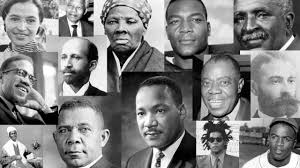

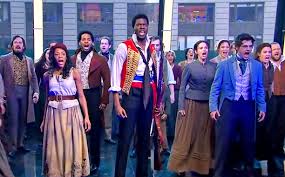


 About Things That Matter