“Mary Magdalene” Saves My Lent

I didn’t feel good about my Lent this year – until Holy Week. I don’t know why, but my heart just wasn’t in it till then. However, beginning on what used to be called Holy Week’s “Spy Wednesday,” a whole series of events unfolded that returned me to the spirit that should have characterized the previous 40 days. Its highlight was experiencing an extraordinary film that I want to recommend here. It’s called simply “Mary Magdalene.” It raises questions about women’s leadership in today’s Catholic Church.

What I did just before seeing the film prepared me. It began on Wednesday when I watched an Italian production of “Jesus Christ, Superstar.” The next night brought a brief celebration of Maundy Thursday at our new non- denominational Talmadge Hill Community Church. The following morning, I took part in a two hour “way of the cross” through the town of nearby Darien. Immediately afterwards, came a “Tre Ore” observance at the town’s Episcopal Church. The recollection of Jesus’ three-hours on the cross was marked by long periods of silence broken by seven sermons delivered by ministers from a whole variety of area churches. (At times the latter seemed like a sermon slam, with the clear winner the entry delivered jointly in dialog by our own two pastors from Talmadge Hill.)

Then on Holy Saturday, Peggy and I took in “Mary Magdalene,” directed by Australian, Garth Davis. For me, it was Holy Week’s capstone. To begin with, Joaquin Phoenix embodied the best Jesus-representation that I’ve seen so far. It was understated, believable, sensitive, compassionate, and challenging. Phoenix’s mien and demeanor reminded me of the Jesus forensic archeologists have estimated looked like this:

But it is Mary Magdalene (played by an unglamorous, but beautiful Rooney Mara) who supplies the eyes through which viewers finally see the peasant from Galilee. She’s a midwife, we learn. Far from the one defined as a prostitute by Pope Gregory the Great in the late 6th century, she rejects intimate relationships with men. “I’m not made for marriage,” Mary explains to the shock of her scandalized father, brothers and suitor. “Then, what are you made for?” they demand. All of them join together and nearly drown her as they attempt to exorcise the demons responsible for her refusal to submit to marital patriarchy.

Nevertheless, Mary persists and eventually tags along with those following Jesus – the only woman among the band of men called apostles. She herself is baptized by Jesus. She also pays closer and more perceptive attention to Jesus’ words than the others. She even gently corrects her male companions, suggesting that their interpretation of the Kingdom of God entailing violent revolution might be mistaken. Peter’s comment about such impertinence is “You weaken us.” But in the end, Mary quietly retorts, “I will not be silenced.”

Soon Jesus commissions Magdalene to baptize women.  As a result, they end up following the Master in droves. From then on, we see Mary habitually walking next to Jesus as he treks across Palestine’s barren landscape from Galilee through Cana and Samaria on his way to Jerusalem. At the last supper, after washing Jesus’ feet, she sits at his right hand. Clearly, she’s in charge and a leader of men nonpareil.

At one point in the journey to the Holy City, Mary unmistakably demonstrates her unique leadership. She implicitly reminds viewers of the words John the Evangelist attributes to Jesus, “The one who believes in me, the works that I do shall (s)he do also; and greater works than these shall (s)he do . . . (JN 14:12) For after witnessing Jesus restore a dead man to life, Mary herself emulates the healer’s ritual and restores to life a score of people left for dead by the brutal Roman occupation forces. None of the males among Jesus’ followers even dares such close imitation of Christ.

Then there is Magdalene’s relationship with a young smiling, cheerful, and very sympathetic Judas. He came to follow Jesus after his wife and child had been brutally killed by the Romans. So, he hears Jesus’ words about God’s Kingdom as a promise that Jesus will inspire and lead a retributive rebellion against Rome. But after Jesus’ participation in a direct-action demonstration in Jerusalem’s temple, Judas appears worried that Jesus is losing resolve and direction. So, in an evident effort to force Jesus’ hand, the apostle cooperates in Jesus’ arrest and collects the reward on his head. Judas fully expects that his teacher’s plight will mobilize his followers to the uprising Judas confidently anticipates. When that doesn’t happen, Judas is filled with despair. He returns home. The next we know, he’s hanging from the lintel of his hovel’s doorway.

Of course, there is no uprising. Jesus is arrested, tortured, and crucified. Afterwards, his limp body is placed in the lap of his mother. He’s then buried. While the other apostles flee, distancing themselves from the corpse, Magdalene faithfully sleeps on the ground outside the tomb. In the morning, she’s awakened by Jesus’ voice. He’s clothed in martyr’s white. Without uttering a word, she quietly sits on the ground next to him, convinced that he has come back to life.

So, she returns to the site of the last supper and tells Peter and the others her good news. They refuse to believe her. It’s at this point that Mary says those words, “I will not be silenced.”

According to Pope Francis, that refusal and her bringing of Good News to the apostolic leadership has merited for her the title of “apostle of apostles.” She is more important than any of them.

As you can see, I’m grateful to “Mary Magdalene” for salvaging my Lent. However, her story makes me wonder about the absence of female leadership in Francis’ church.

How about you? See the film and decide for yourself.

Notre Dame in Flames: Its Image Evokes the Resurrection Our World Requires

It was religion in flames. It was a reminder of the conflagration engulfing our very planet. It should have clarified the relevance of the resurrection story that Christians across the world defiantly celebrate this Easter Sunday. It made me think of female prophets like Alexandria Ocasio Cortez and presidential candidate Marianne Williamson.

Notre Dame in Flames

Of course, I’m referring to the recent conflagration within the Cathedral of Notre Dame. Everyone’s heart went out to the people of Paris as they sang hymns to Mary while helplessly watching her beloved basilica burning on the other side of the Seine. We’re told that even the fire-fighters sang to the Grande Dame while dousing the inferno and risking their lives to rescue relics of Jesus’ true cross and crown of thorns. The spectacle brought the world to tears.

How like the rest of us, I thought, as we witness the Catholic church (and religion in general) hopelessly ablaze! Pedophilia, patriarchy, the antipathy of our children towards the faith that we elders once embraced so fervently have all contributed to the disaster. So has the successful counter-revolution waged by two reactionary popes (John Paul II and Benedict XVI) against the hopes enkindled by the ecumenical movement and Vatican II. Then there’s the heresy of know-nothing religious fundamentalists attempting to counter the creative ferment of liberation theology and of science itself . . . They’ve all done their parts to bring down the new church that John XXIII (and so many of us) once hoped for. Instead, the institution now lies in ruins, in putrid irrelevance. The strewn ashes embody our bleak despair. Only a miracle on the scale of Jesus’ resurrection can save us now.

A World Burning

But the combustion of Notre Dame presents only the palest reflection of our despondency before our very world in flames. That too was imaged forth in the cathedral’s conflagration. The climate chaos caused by our mad consumerism and worship of mammon, weapons, and war has set the planet ablaze. So, we stand there on the opposite shore of our own Seine, our mouths agape, the flames flickering against our mirrored eyes as we stand witness in hopeless impotence and despair. The stench of the ruins, the loss of our treasure, the cost of rebuilding . . . It’s all too much to think about. Mary help us!

And she does! She along with her sister prophetesses bring news of resurrection – just as they did for the male followers of Jesus’ who wallowed in the despondency following that first Good Friday. Yes, the women are here once again to save us with their news of resurrection and its impossible future!

What seems dead can return to life, they all insist. Another America is possible shouts the infant terrible, Alexandria Ocasio-Cortez. Another world is possible Sweden’s teenaged Greta Thunberg repeats for all with ears to hear. Yet more: another God is possible proclaims Marianne Williamson with her invitation to a New Age characterized by the miracle of revisioning EVERYTHING. Naomi Klein, Maria Lopez Vigil, and (from their graves) Dorothy Day, Harriet Tubman, all those suffragettes, and Rosa Parks echo the message. In fact, an entire army of latter-day Jean D’Arcs broadcast the Good News that despite what the world tells us, resurrection – radically new life – is indeed possible. It’s the redivivus message of the goddess Miriam herself – of our Lady, of Notre Dame in flames.

If you want to actually see the hopeful vision of resurrection for America, watch again Alexandria Ocasio-Cortez’s video published just last week. Through the fascinating art of Molly Crabapple, AOC calls us to face head-on the sad facts of our planet’s Good Friday. Nearly 50 years ago those facts were researched, but cynically obscured and denied by Exxon and its supporting cast of male politicians. All that time they foresaw that without resurrection, disasters like Puerto Rico (devastated by a Hurricane named Maria!!) inevitably represents our common future.

AOC reminds us that devastation caused by an entire system requires systemic reform. That includes a new economy with decent salaries and the type of benefits the industrialized world once took for granted and aspired to – affordable schooling, healthcare for all, meaningful work, comfortable retirement – all in a context where polluters are assigned responsibility for the destruction caused by their decades-long denial allowing them to privatize profits while socializing costs. They owe us! Reparations are due!

Yes, the crisis of climate chaos changes EVERYTHING!

Moreover, it’s all been done before just as our young prophetess insists. In the face of the Great Depression’s and World War II’s lesser crises, FDR put together the original New Deal.

It changed the entire economy. It recognized that unions, full employment, environmental protection, decent jobs, recreation, art, music, dignified retirement, and strict regulation of greedy corporatists were all part of the clean slate the country and world needed to survive.

And it worked!  Our nation and the western economies prospered as never before, as countries across the industrialized world implemented what came to be called the welfare state.

Religion Flaming Out

For her part, Marianne Williamson calls us to re-vision the God of resurrection who makes fundamental change possible. Like no other presidential candidate, she puts her finger exactly on the spiritual transformation required to change everything. We need another God, she says in effect. Not the imperial one foisted upon us since Constantine in the 4th century. That’s an idol. What we need is the God of Jesus: the champion of working people, widows, orphans, and immigrants. We need the God reflected in the teachings of the one who taught that whatever we do to the least of the brethren, we do to him.

Yes, that’s the God of the Bible – a divinity who remains foreign to most. It’s as if we have all been imprisoned in Plato’s Cave. Nothing that the world (and very little that the church) tells us is true, especially about God. Another God is possible, Williamson insists. That God’s vision is 180 degrees opposite that described by our desperate politicians through their media minions. It’s the direct opposite of most of the drivel we hear from the pulpit.

And it’s here that Williams joins Ocasio-Cortez. Insisting that the resurrection we celebrate today is indeed real, Marianne calls us to support something like the Green New Deal. It promises new life for us here and now, including Medicare for all, gun control, higher minimum wages, the overhaul of public education, criminal justice reform, raising taxes on the rich, and repairing damage done by our history of racism.

Conclusion

“Impossible!!” the world shouts with one accord. “It’s too costly. Making changes like the GND proposed by our prophetesses would take decades. Such alterations could never be accomplished by 2030.”

And yet, when the world saw Notre Dame in flames, the money poured in. Already more than a billion dollars have been pledged. Artists and artisans from across the world have pledged their labor. And whereas initial estimates were that it would take 100 years to rebuild Notre Dame, France’s President Macron now assures us that the cathedral will be back to normal, even more beautiful than before in only five years!

That’s what happens when human beings commit themselves to achieving the impossible. As Marianne continually repeats, “There is no order of difficulty in miracles.” And she’s right. Miracles – fundamental changes in perception – are indeed possible. Our times demand them.

Yes, resurrection can happen. Easter calls us to make it happen to save our planet – and our church.

Alexandria Ocasio-Cortez on the Green New Deal: A Must-Watch Video

Here in Connecticut, Peggy and I are part of a Climate-Change activist group that is just getting off the ground. We’re planning on supporting the Green New Deal that I’ve written about earlier here and here and here.

In that connection, here’s the best short video I’ve come across on the topic. It’s co-written and narrated by Alexandria Ocasio-Cortez (D-NY), the most dynamic new member of the House of Representatives. Please watch it and see if it confers understanding of the GND as it invites you to get on board with this important movement.

Christians Supporting Donald Trump: How Luke’s Passion Narrative Prepared the Way

Readings for Palm Sunday: LK 19:28-40; IS 50: 4-7, PS 22: 8-9, 12-20, 23=24, PHIL 2:6-11, LK 22: 14-23:58.

It’s puzzling to see white Evangelicals rallying around Donald Trump. He’s the one who owns casinos and strip clubs, who has been married three times and brags about sexually assaulting women. 

How is it possible for white evangelicals to support such a person whose policies favor the rich and punish the poor, who despises immigrants, advocates torture, and whose appetite for profit seems insatiable.

After all, Jesus was a poor laborer who criticized the rich in the harshest of terms. He and his family knew what it was like to be unwelcome immigrants (in Egypt). He himself was a victim of torture, not its administrator. Far from a champion of empire, he was executed as a terrorist and enemy of Rome.  His followers were not about accumulating wealth but shared what they had according to ability and need.

When you think of it, all of this seems antithetical to not only to Trumpism, but to the declared positions of virtually the entire Republican Party. They’re all imperialists. All of them are friends of the one-percent. They all want to increase military spending — apparently without question or limit.

How did all of that happen?

Today’s Palm Sunday readings provide some clues. Luke’s Passion Narratives reveal a first century Christian community already depoliticizing Jesus in order to please Roman imperialists. The stories turn Jesus against his own people as though they were foreign enemies of God.

Think about the context of today’s Palm Sunday readings.

Note that Jesus and his audiences were first and foremost anti-imperialist Jews whose lives were shaped more than anything else by the Roman occupation of their homeland. As such, they weren’t waiting for a Roman-Greco “messiah” who, like the Sun God Mithra, would die and lead them to heaven. They were awaiting a Davidic messiah who would liberate them from the Romans.

So, on this Palm Sunday, what do you think was on the minds of the crowds who Luke tells us lined the streets of Jerusalem to acclaim Jesus the Nazarene? Were they shouting “Hosanna! Hosanna!” (Save us! Save us!) because they thought Jesus was about to die and by his sacrificial death open the gates of heaven closed since Adam’s sin by a petulant God? Of course not. They were shouting for Jesus to save them from the Romans.

The palm branches in their hands were (since the time of the Maccabees) the symbols of resistance to empire. Those acclaiming Jesus looked to him to play a key role in the Great Rebellion everyone knew about to take place against the hated Roman occupiers.

And what do you suppose was on Jesus’ mind? He was probably intending to take part in the rebellion just mentioned. It had been plotted by the Jews’ Zealot insurgency. Jesus words at the “Last Supper” show his anticipation that the events planned for Jerusalem might cause God’s Kingdom to dawn that very weekend.

Clearly Jesus had his differences with the Zealots. They were nationalists; he was inter-nationalist who was open to gentiles. The Zealots were violent; Jesus was not.

And yet the Zealots and Jesus came together on their abhorrence of Roman presence in the Holy Land. They found common ground on the issues of debt forgiveness, non-payment of taxes to the occupiers, and of land reform. Within Jesus’ inner circle there was at least one Zealot (Simon). Indications might also implicate Peter, Judas, James, and John. And Jesus’ friends were armed when he was arrested. Whoever cut off the right ear of the high priest’s servant was used to wielding a sword – perhaps as a “sicarius” (the violent wing of the Zealots who specialized in knifing Jews collaborating with the Romans).

But we’re getting ahead of our story. . . Following his triumphant entry into Jerusalem, Jesus soon found himself and his disciples inside the temple participating in what we’d call a “direct action” protest. They were demonstrating against the collaborative role the temple and its priesthood were fulfilling on behalf of the Romans.

As collaborators, the temple priests were serving a foreign god (the Roman emperor) within the temple precincts. For Jesus that delegitimized the entire system. So, as John Dominic Crossan puts it, Jesus’ direct action was not so much a “cleansing” of the temple as the symbolic destruction of an institution that had completely lost its way.

It was this demonstration that represented the immediate cause of Jesus’ arrest and execution described so poignantly in today’s long gospel reading.

Following the temple demonstration, Jesus and his disciples became “wanted” men (Lk. 19:47). At first Jesus’ popularity affords him protection from the authorities (19:47-48). The people constantly surround him eager to hear Jesus’ words denouncing their treasonous “leaders” (20:9-19), about the issue of Roman taxation (20:20-25), the destruction of the temple (21:1-6), the coming war (21:20-24) and the imminence of God’s Kingdom (21:29-33).

Eventually however, Jesus has to go underground. On Passover eve he sends out Peter and John to arrange for a safe-house to celebrate the feast I mentioned earlier. The two disciples are to locate the “upper room.” They do so by exchanging a set of secret signs and passwords with a local comrade.

Then comes Jesus’ arrest. Judas has betrayed Jesus to collect the reward on Jesus’ head – 30 pieces of silver. The arrest is followed by a series of “trials” before the Jewish Council (the Sanhedrin), before Pilate and Herod. Eventually, Jesus is brought back to Pilate. There he’s tortured, condemned and executed between two other insurgents.

Note that Luke presents Pilate in way completely at odds with what we know of the procurator as described for example by the Jewish historian Josephus. After the presentation of clear-cut evidence that the Nazarene rabbi was “stirring up the people,” and despite Jesus’ own admission to crimes against the state (claiming to be a rival king), Pilate insists three times that the carpenter is innocent of capital crime.

Such tolerance of rebellion contradicts Crossan’s insistence that Pilate had standing orders to execute anyone associated with lower class rebellion during the extremely volatile Passover festivities. In other words, there would have been no drawn-out trial.

What’s going on here? Two things.

First of all, like everyone else, Luke knew that Jesus had been crucified by the Romans. That was an inconvenient truth for Luke’s audience which around the year 85 CE (when Luke wrote) was desperately trying to reconcile with the Roman Empire which lumped the emerging Christian community with the Jews whom the Romans despised.

Luke’s account represents an attempt to create distance between Christians and Jews. So, he makes up an account that exonerates Pilate (and the Romans) from guilt for Jesus’ execution. Simultaneously, he lays the burden of blame for Jesus’ execution at the doorstep of Jewish authorities.

In this way, Luke made overtures of friendship towards Rome. He wasn’t worried about the Jews, since by the year 70 the Romans had destroyed Jerusalem and its temple along with more than a million of its inhabitants. After 70 Jewish Christians no longer represented the important factor they once were. Their leadership had been decapitated with the destruction of Jerusalem.

Relatedly, Jesus’ crucifixion would have meant that Rome perceived him as a rebel against the Empire. Luke is anxious to make the case that such perception was false. Rome had nothing to fear from Christians.

I’m suggesting that such assurance was unfaithful to the Jesus of history. It domesticated the rebel who shines through even in Luke’s account when it is viewed contextually.

And so what?

Well, if you wonder why Christians can support Donald Trump . . . if you wonder why they so easily succumb to empires (Roman, Nazi, U.S.) you’ve got your answer. It all starts here – in the gospels themselves – with the great cover-up of the insurgent Jesus.

And if you wonder where the West’s and Hitler’s comfort with xenophobia in general and anti-Semitism in particular come from, you have that answer as well.

The point here is that only by recovering the obscured rebel Jesus can Christians avoid the mistake they made 80 years ago. Then instead of singing “Hosanna” to Jesus, they shouted “Heil Hitler!” to another imperialist torturer, xenophobe, and hypocrite.

The readings for Palm Sunday present us with a cautionary tale about these sad realities.

Socialism’s Specter Revives in China’s Belt and Road Initiative

The Chinese are coming! The Chinese are coming! This time they’re here to spread socialism not by war and invasion, but by good example, economic development and cultural exchange. And in the process, they are eating our lunch. They are demonstrating that it is possible for poor and troubled economies to develop as quickly as China’s by following the latter’s example of mixing the best elements of capitalism and socialism to benefit working class people rather than primarily the rich and elite.  Their efforts are showing every sign of success.

Progressives should take heart. Socialism’s specter is once again on the prowl.  

Specifically, I’m referring to the Belt and Road Initiative (BRI) that actually looks like a Chinese version of a new Marshall Plan for countries representing 65% of the world’s population. Many of the countries involved would otherwise be unable to afford such development.

Particulars of the BRI include Chinese export of construction materials, especially iron and steel and their use to erect a huge power grid with wind and solar focus. The materials are being used to construct highways, rail facilities and sea ports to the benefit of Europe, Asia, the Middle East, and Latin America. The BRI will also include cultural exchanges and educational assistance. It will eventually account for 40% of the world’s domestic product.

That’s the impressive swath China’s trillion-dollar infrastructure-based development strategy that has been in place for the past six years – since it was announced by the country’s president, Xi Jinping in 2013. In his words, the Belt and Road Initiative is “a bid to enhance regional connectivity and embrace a brighter future.”

However, many in the west are not buying that rosy description. To them the BRI seems like a new form of colonialism. Since much of it is based on loans, critics have even described it as a “debt trap” intended to create dependency in order to reduce participating countries to the status of vassals of an imperial Chinese state.

Ironically, such criticisms actually reflect the patterns of western colonialism and neocolonialism whose “foreign aid” has in fact intentionally continued the traditional underdevelopment of the former colonies in Latin America, Africa, and South Asia. The critique also overlooks the fact that the Chinese plan is based on Marxist principles which are inherently anti-colonial and international rather than imperial and national.

In practice, all of this has yielded a system often described as state capitalism. That is, the Chinese state (like every other economy in the world!) has a mixed economy that (as I mentioned earlier) incorporates the best elements of capitalism and socialism. This gives the Chinese a huge publicly- owned sector along with a smaller, but still large private sector strictly regulated by the state. Crucially, however, and unlike our own mixed economy, the Chinese version aims at mixing its economy not in favor of the elite, but in favor of the working classes.

This is in strict accord with Marxist theory, which recognizes that capitalism is a necessary stage in the history of economic development. It cannot be skipped, because capitalism is required for the development of productive forces that are sine qua non preconditions for the transition to full-blown socialism.

Moreover, the whole world has been watching. We’ve seen China’s implementation of a worker-friendly state-capitalist form of economy as responsible for 80% of the poverty-reduction the world has experienced over the past two or three generations. That is, China has been more successful in reducing poverty than capitalism or any country subscribing to neoliberalism’s trickle-down model. The latter, of course, favors the 1% and expects 95% of the world’s population to endure austerity measures in order to pay the social costs for capitalism’s dysfunctions. None of that is lost on denizens of poor countries.

And now through the Belt and Road Initiative, those same less developed former colonies as well as the poorer countries of the EU are given opportunity to follow China’s example economically and even politically.

Regarding politics, the Chinese example and initiative are demonstrating that a one-party state like China’s might work better at least in some contexts than what we in the west understand by “democracy.” Surprisingly, for the west (where there appears to be a tacit agreement never to allow us to hear anything positive about competing systems) the Chinese version of political organization has proven to yield governance far more meritocratic, flexible and legitimate than our own.

Its meritocracy insures that no one will rise to national leadership in China who has not come through the ranks and demonstrated outstanding leadership capabilities at each step along the way. The whole process takes about 30 years. This means that by Chinese standards, someone like George W. Bush or Barrack Obama (much less Donald Trump) would not qualify to govern even a small province in China. They simply lack the experience and resulting knowledge that in China are prerequisite for assuming greater responsibilities.

Such leadership has made the Chinese system far more flexible in terms of reform than our own. Thus, in China the revolution began with the country following the Soviet model of development. That changed with the Cultural Revolution (1966-1976) which extended the revolution’s benefits to rural populations. This in turn was followed by Deng Xiaoping’s opening to the west around 1977, by entrance into the World Trade Organization years later, and now by Xi Jinping’s Belt and Road Initiative. Every one of those changes was profound and quickly made. Western capitalism has proven incapable of similar flexibility even in the face of climate chaos that threatens planetary life as we know it.

Moreover, in terms of public approval the Chinese system is proving much more legitimate than western models based on periodic elections. Increasingly, those latter models are corrupted by money. As in the United States, often inexperienced politicians (even comedians and reality show personalities) are elected by pluralities below 50%. A month or so after elections, their approval ratings can sink below 40%. This is because those elected prioritize the needs of their corporate donors rather than those of the people they’ve theoretically been elected to serve. As a result, we’ve increasingly lost faith in democracy-as-we’ve-experienced-it. In many elections, only a minority of Americans even bother to vote.

Meanwhile in China, Pew polling has nearly 80% of the population satisfied with the country’s direction. An even greater majority expects their lives to get better in the near future. Those numbers are testimony to government legitimacy far beyond what we experience in the United States.

So, while western governments and their economies lionize the past and strive to implement 18th century free-market policies, China’s Belt and Road Initiative is offering a different option.

And it’s doing so under the principles of internationalism and anti-colonialism based on sound Marxist theory. That theory has not only taken huge strides towards lessening world poverty; it has provided the world with an example of unprecedented economic dynamism. It’s no wonder that socialism these days is getting a new lease on life. It’s no wonder that its’ specter is once again haunting the world.

Jesus Was Not Preoccupied with Sex: Neither Should the Church Be!

Readings for 5th Sunday of Lent: Is. 43:16-21; Ps. 126:1-6; Phil. 3: 8-14; Jn. 8: 1-11.

Not long ago, Catholic journalist and historian, Gary Wills coined an insightful phrase, “The Big Crazy.”  Yes, he was talking about the pedophilia scandal. But his point was more general than that. Wills was referring to the Church’s insane obsession with a long list of cringe-worthy and curious topics that for him included “masturbation, artificial insemination, contraception, sex before marriage, oral sex, vasectomy, homosexuality, gender choice, abortion, divorce, priestly celibacy, male-only priests.”

The list is curious because today’s Gospel reading shows that Jesus didn’t share such prudish concern. And this despite the fact that the religious leaders of his day leaned in that direction – at least regarding women and adultery. Consequently, in the eyes of the priests and scribes of his day, Jesus would have been far too liberal, understanding and forgiving of sexual frailty – far too feminist. His attitude seemed to be: “What’s good for the goose is good for the gander.”

Here’s what I mean: Jewish law punished adultery with death by stoning. That was a biblical requirement. However, the Jewish patriarchy applied that law differently to men and women. A man, they said, committed adultery only when he slept with a married woman. But if he slept with a single woman, a widow, a divorced woman, a prostitute or a slave, he remained innocent. A woman, on the other hand committed adultery if she slept with anyone other than her husband.

Jesus calls attention to such hypocrisy and double standards in today’s gospel episode. All the elements of last week’s very long parable of the Prodigal Son are here. Jesus is teaching in the temple surrounded by “the people” – the same outcasts, we presume, that habitually hung on his every word.

Meanwhile, the Scribes and Pharisees are standing on the crowd’s edge wondering how to incriminate such a man?

As if ordained by heaven, an answer comes to them out of the blue. A woman is hustled into the temple. She’s just been caught in flagrante – in the very act of adultery. What luck for Jesus’ opponents!

“Master,” they say, “This woman has just been caught in the act of adultery. As you know, the Bible says we should stone her. But what do you say?” Here Jesus’ enemies suspect he will incriminate himself by recommending disobedience of the Bible’s clear injunction. After all, he is the Compassionate One. He is especially known for his kindness towards women – and others among his culture’s most vulnerable. He is the friend of prostitutes and drunkards.

But instead of falling into their trap, Jesus simply preaches a silent parable. He first scribbles on the ground. Only subsequently does he speak — but only 18 words, “Let the one among you who is without sin be the first to throw a stone at her.”

A wordless parable . . .  

What do you suppose Jesus was scribbling on the ground? Was he writing the names of the guilty hypocrites who had cheated on their wives? Was he writing the laws the Scribes and Pharisees were violating? Some say he was simply drawing figures in the dust while considering how to reply to his opponents?

The first two possibilities seem unlikely. How would this poor country peasant from Galilee know the names of the learned and citified Scribes and Pharisees? It is even unlikely that Jesus knew how to write at all. That too was the province of the Scribes. The third possibility – that Jesus was absent-mindedly drawing figures in the dust – is probably closer to the mark.

However, it seems likely that there was more to it than that. It seems Jesus was performing some kind of symbolic action – that mimed parable I mentioned. By scribbling in the dust, he was wordlessly bringing his questioners down to earth. He was reminding them of the common origin of men and women?

Both came from the dust, Jesus seems to say without words. The creation stories in Genesis say both men and women were created from dust and in God’s image – equal in the eyes of God. “In God’s image God created them. Man and woman created he them,” says the first creation account (Genesis 1:27). By scribbling in the dust, Jesus was symbolically moving the earth under the feet of the Scribes and Pharisees. He was asserting that they had no ground to stand on. They were hypocrites.

Then his 18-word pronouncement offers Jesus’ own standard for judging the guilt of others even in the fraught field of sexuality. According to that standard, one may judge and execute only if he himself is without sin. This, of course, means that no one may judge and execute another.

And that brings us back to Gary Will’s “Big Crazy.” Jesus’ silent rearranging of “ground” along with his 18 words seem to call into question the very foundation of the bishops’ right to authoritatively pronounce on any sexual matters. They, after all, are the guilty ones who denied, covered-up, and excused sexual deviance on the part of the clergy they were responsible for overseeing – and whose overriding (public) concern has centered on sexual purity. Does that not dictate that the bishops and their priests have no ground to stand upon in the field of sexual morality? Isn’t it time for them to silently slink away along with their Scribe and Pharisee counterparts, and to replace judgmentalism with Jesus’ relative silence, forgiveness and compassion?

Jesus’ mime also directs all of us to reconsider our double standards and preconceptions about men and women in general. It reverses a prayer every first century Jewish man was to recite each morning. The prayer went, “Blessed are you, Lord, for making me a Jew and not a Gentile, for making me free and not a slave, and for making me a man and not a woman.”

Certainly, Jesus was taught that prayer by his pious father, Joseph. Perhaps for most of his life, Jesus recited that prayer on a daily basis. But something must have happened to him to change his faith. We’ll never know what that “something” or someone was.

After all, if Jesus thought like the Catholic bishops I mentioned, he would have thrown the first stone. He alone in that group was without sin. He would have thought, “Forgiving this woman will seem like condoning adultery. And condoning adultery might lead to abortions of the pregnancies that result. Not throwing the first stone will also lessen the authority of the Bible which clearly justifies punishing women for adultery. I’ve got to do it.”

Luckily for the woman taken in adultery (and for the rest of us), Jesus wasn’t a fundamentalist – or a Roman Catholic bishop. He recognized the equality of men and women. He recognized that what’s good for the goose is good for the gander.

That proverb has incredibly wide application, doesn’t it?

Why I’m Supporting Marianne Williamson’s Run for President

Readings for Fourth Sunday in Lent: Jos. 5:9A, 10-12; Ps. 34:2-7; 2 Cor. 5: 17-21; Lk. 15: 1-3, 11 32.

Recently, two very good friends challenged me about supporting Marianne Williamson’s run for president. “She has no chance,” they objected. “You should be supporting Bernie instead.”

Their remarks coupled with today’s familiar Gospel account of Jesus’ Parable of the Prodigal Son have prompted me to explain myself. The parable particularly as re-created by the French Nobel laureate, Andre Gide, is about a person like Marianne Williamson who eventually identified and escaped the oppressive reality we all take as normal. In Gide’s interpretation, Jesus’ parable is like Plato’s Allegory of the Cave.

So, today I want to describe what we might call the “deep politics” of Marianne Williamson. After all, it’s her spirituality (her deep politics) that first drew me to support her candidacy. Because of her more than 30 years of work as a spiritual teacher, we can know her more deeply than any other presidential candidate. And that’s important. Our interior lives – our thoughts and values – are finally shaped by our relationship with what we consider ultimately important. They are shaped by what some of us term “God.”

So, let me first talk about Marianne’s deep politics and then connect it with Gide’s interpretation of the Prodigal Son.

To begin with, I’m supporting Marianne Williamson because she represents the most radical candidate in the field “of thousands,” as she often jokes. Using the term “radical” here, I’m referring to its etymological meaning which derives from the Latin word radix meaning “root.”

Alone in the crowded field of Democratic candidates Marianne puts her finger on what’s really ailing our nation. It’s not primarily an economic or military problem. No, at root, it’s a deeply spiritual malady. Yes, ours is a spiritual problem!

The problem is that rather than “free and brave,” we’re all scared out of our wits. We subscribe to values that are 180 degrees opposed to those identified as ultimate by all the world’s great wisdom traditions – be they Christian, Jewish, Muslim, Hindu, Buddhist or atheistic. At their deepest level, all of those traditions converge identifying compassion rather than fear as the supreme human value.

Ms. Williamson says it clearly: fear (which is the opposite of compassion) has us captive. Fear has us identifying Russians, Chinese, Muslims, immigrants, refugees, LGBT community members, poor people in general, and even (at our borders) children and babies as somehow our enemies fundamentally unlike us and threatening us at every turn.

None of that is true, Marianne says. It’s quite the opposite. All of us have far more in common than anything that can possibly separate us. In fact – as she puts it – “There is really only one of us here.” We are not only sisters and brothers, we are really a single person. What I do to you, I do to myself.

That’s really the authentic teaching of Jesus, isn’t it? That’s the meaning of his words, “Love your neighbor as yourself.” We must love our neighbor because our neighbor is our self.

As Williamson explains, that conviction is what moved the abolitionists, the suffragettes, the civil rights campaigners and many who brought the Vietnam War to an end. It’s no accident, she says, that so many of the abolitionists and suffragettes were Quakers, that Martin Luther King was a Baptist preacher, and that anti-war activists like the Berrigan brothers were Catholic priests. Those are the great heroes of the land we call “America.” Like Marianne herself, they all recognized our fundamentally spiritual nature.

So, none of us should say all of this is too idealistic. Instead, we should realize that, in effect, Marianne Williamson is challenging Americans to live up to their faith claims. After all, 70% of us claim to be Christian. Then there are the Jews, Muslims, Hindus, Buddhists I already mentioned, as well as atheists and those claiming to be “spiritual but not religious.” As I said, all of those traditions, at their most profound level, converge in calls to liberty, equality, and fraternity.

And that brings me to Jesus’ Parable of the Prodigal Son and its connection with Marianne Williamson’s deep politics. In what I’m about to say, I’m taking my cue from John Dominic Crossan’s book The Power of Parable: how fiction by Jesus became fiction about JesusThere, Crossan suggests challenging Luke’s parable as excessively patriarchal. After all, the story is about a bad boy who realizes the error of his ways and returns home to daddy and daddy’s patriarchy with its familiar rules, prohibitions, and tried and true ways of doing things.

Crossan asks, what if the prodigal left home and never looked back? Would he have been better off? Would we be better off by not following his example as described today by Luke – by instead separating from the patriarchy and leaving home for good?

Andre Gide actually asked that question back in 1907 when he wrote “The Return of the Prodigal Son.” In his version, Gide expands the cast of the parable’s characters to five, instead of the usual three. Gide adds the father’s wife and a younger son. The latter, bookish and introspective, becomes the story’s central figure who escapes his father’s walled estate never to return.

According to Crossan, Gide tells his version of Jesus’ parable through a series of dialogs between the returned prodigal and his father, his older brother, his mother, and lastly, his younger brother. In his dialog, the father reveals that the older brother is really in charge of the father’s household. According to daddy, the brother is extremely conservative. He’s convinced that there is no life outside the walls of the family compound. It’s the older son who must be obeyed there. (Are you hearing overtones of Plato’s parable?)

For his part, the older brother, reinforces what the father said. “I am his sole interpreter,” the elder son claims, “and whoever would understand the father must listen to me.” In other words, the elder brother has owned the authority which the father has surrendered to him.

Then the mother comes forward. She tells the prodigal about his younger brother. “He reads too much,” she says, and . . . often perches on the highest tree in the garden from which, you remember, the country can be seen above the walls.” One can’t help detect in the mother’s words a foreboding (or is it a suppressed hope) that her youngest son might go over the wall and never come back.

And that’s exactly what the younger son decides to do. In his dialog with the returned prodigal, he shares his plan to leave home that very night. But he will do so, he says, penniless – without an inheritance like the one his now-returned brother so famously squandered.

“It’s better that way,” the prodigal tells his younger sibling. “Yes leave. Forget your family, and never come back.” He adds wistfully, “You are taking with you all my hopes.”

The younger son turns for the door. His brother cautions him, “Be careful on the steps . . .”

Gide’s version of Jesus’ parable returns me to Marianne Williamson, and how in these pivotal times she has followed the youngest son in Gide’s parable and calls the rest of us to go over the wall with her – to escape Plato’s cave and pass into the “other world” that is possible if only we take seriously the spiritual teachings of the world’s great traditions. Making that transition, she says, means becoming economically literate, re-learning American history, and internalizing what used to be called “Civics.”

So, don’t expect Ms. Williamson to directly invoke her spirituality during her presidential campaign. She’s won’t stump as some kind of preacher or moralist like Pat Robertson or Mike Huckabee. Unlike those other two, Marianne is no come-lately to political analysis and policy recommendations. In fact, twenty years ago in her prescientHealing the Soul of America, she predicted the crisis we’re now experiencing in the person of Donald Trump. No, Williamson will stick to her policy positions – Medicare for all, a Green New Deal, college-debt forgiveness, raising the minimum wage, drastically reducing the inflated military budget, making reparations for slavery, and establishing a cabinet-level secretariat for children and youth.

But aren’t those what (since Bernie) have become the standard positions of progressive Democrats? Of course, they are. But in Marianne’s case, such positions are grounded in a vision honed and sharpened over more than 30 years of forging connections between her deep spirituality and her deep politics.

And that personal reality, that long-term genuineness is precisely what’s required for our world to abandon the destructive reality of business-as-usual – to go over the wall of our father’s compound, to leave Plato’s Cave.

The very profundity of her “deep politics” is precisely why I’m supporting the candidacy of Marianne Williamson. If you’re similarly intrigued, and want to hear her voice in the Democratic debates, please go here and contribute at least $1.00. She needs 65,000 donors to be included.

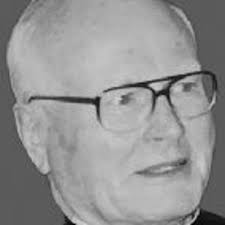
In Memoriam: Dan McGinn

I got word that a very important person in my life died on March 6th. His name is Fr. Dan McGinn. Like me, he was a member of the Society of St. Columban. Dan was 15 years older than me. He came from Council Bluffs, Iowa. Before I met him, he had been a missionary in Japan for seven years. I studied with him in Rome from 1968 through 1972.

Dan and I hit it off as soon as he arrived at Corso Trieste 57, my second year in Rome. There, while I was studying moral theology at the Academia Alfonsiana, he worked in the Vatican – at the Secretariat for Non-Christians.

Dan usually sat directly across from me at our long dining room table, where the 20 or so men stationed with us in Rome ate three times each day. Three of us were Yanks, the others were Micks, Aussies, Brits and New Zealanders.

It was there that we all had such lively and memorable conversations about our studies, the church, theology, politics, and world events in general. Dan usually took great delight in playing the provocateur. The resulting discussions were intense. In fact, I’ve never experienced anything as consistently stimulating since those heady days following the Second Vatican Council (1962-’65).

Dan used to say that if he ever became a bishop (fat chance!), he’d do the expected and adopt an episcopal coat of arms for himself. He never described the shape of the shield he’d design.

But he was clear about the motto he’d have emblazoned on the banner below it. It would read, he said, “No More Bullshit!”

That was the kind of priest Dan was. He was a rebel. And, I guess, so was I. In many ways, I wanted to be like Dan. I considered him my mentor.

More than anything else, he taught me how to say Mass. I remember the first time I concelebrated with him in our chapel at the Columban house. There were probably five of us participating, and Dan had the lead role. He astonished me. He made the whole thing up.

No reading of prayers. No following the prescribed and inviolable eucharistic scripts. Instead, everything was ad-lib. For instance, even at the consecration – the most sacred part of the Mass – Dan said something like: “On the night before he died, Jesus was there in the Upper Room eating supper with his friends. He took a piece of bread and broke it like this (Dan broke the host) and asked them, ‘Do you see how I’m breaking this bread? This is the way my body will be broken for you. Yes, I love you all that much. This is my body which will be given up for you.’”  The form varied each time Dan said it.

It all struck me as so natural – as the way the Mass must have been celebrated before the Roman obsessive-compulsives established such complete control. I resolved then and there that I’d celebrate my Masses like Dan from then on. And that’s what I did.

Even when I got back to the states and worked in Kentucky for the Christian Appalachian Project (CAP), that’s the way I celebrated Mass. And, like me, most of the people in the parishes I served there found it all so natural, very meaningful and completely acceptable. Even now, I marvel that I got away with that.

Dan also helped me when (towards the end of my time in Rome) I found myself re-evaluating my decision to remain a priest. I broke the news to him during a retreat we were on together at the Mundo Migliore Center at Roca di Papa on the edge of Rome. I remember walking together and discussing my “crisis,” and Dan’s advising that it might be a good idea for me to do a year of discernment before taking a final decision. I followed his advice and spent that year I just mentioned working in central Kentucky with the Christian Appalachian Project.

After I finally left the active priesthood and was working at Berea College, I spoke with Dan a few times on the phone. He told me once that he thought President G.W. Bush was “absolutely the worst we’ve ever had.” (At the time, of course, neither of us knew it could go down-hill a lot  further.)

During those years, I also got on Dan’s mailing list for the poetic political commentary he wrote on what amounted to his blog. Then, at the reunions the Columbans held every three years or so at their former seminary-turned-retirement-home in Bristol Rhode Island, I visited Dan each time I attended – once with my wife, Peggy. At one point he was volunteering as a docent at a local museum.

My last encounter with Dan McGinn came last summer during our most recent Columban reunion. By then he was confined to a nursing home. He no longer remembered me, nor our time in Rome. I found that both sad and threatening. He had been so bright, so engaged, so witty and daring. I admired him so.

With that deep admiration, dear Dan, I send you off. Thank you for your friendship and for being such a good priest. Thank you for teaching me how to celebrate Mass. Thank you for your kind guidance. Know that I’ve tried to adopt your motto as my own. I’m trying to remain, like you – committed to a “no more bullshit” life. You succeeded at that for sure! Thanks again.

New Zealand Prime Minister Ardern’s Example of Lenten Repentance

Readings for 3rd Sunday of Lent: Ex. 3:1-8A, 13-15; Ps. 103: 1-4, 6-8, 11; I Cor. 10:1-6, 10-12; Lk. 13: 1-9

The entire world was shocked last week when a right-wing gunman and admirer of Donald Trump slaughtered at least 50 worshippers in two mosques in Christchurch, New Zealand.

At the same time, the world edified when the New Zealand prime minister, Jacinda Ardern, the world’s youngest head of state, donned a hijab in a sign of solidarity with the Muslim community. The Muslim worshippers, she said “are us.”  She resolved immediately to change her country’s gun laws (in defiance of the international gun lobby) including a ban on assault weapons.

Her response contrasted sharply with that of President Trump following a similar massacre in Pittsburgh’s Tree of Life Synagogue last October. Then, instead of calling for solidarity and disarmament, the president famously advised placing armed guards at synagogue doors.

Prime Minister Ardern’s words and symbolic action were a demonstration of the very type of repentance to which the non-violent Jesus called his own community (and us!) in the puzzling episode recounted in today’s Gospel reading for this third Sunday of Lent.

To make his point, Jesus comments on two contemporary tragedies that were “in the news of the day” as prominently as last week’s New Zealand catastrophe. Then he adds an explanatory parable underlining the time-urgency of his summons to non-violence. All three elements are highly relevant to Christchurch and our president’s and our culture’s tendency to solve everything with violence.

The similarities between Christchurch and the Gospel’s first-mentioned tragedy are undeniable. Like what happened in New Zealand, it involved the slaughter of worshippers by reactionary outsiders who despised their victims’ religious faith. Some Galileans (no doubt identified as insurgents) were killed by Roman soldiers while offering sacrifice in the temple.

Jesus asks, “Do you think that because these Galileans suffered in this way because they were greater sinners than all other Galileans?” Then he answers his own question, “By no means! But I tell you, if you do not repent, you will all perish as they did!”

The second tragedy had eighteen people killed by the collapse of a tower located in the section of East Jerusalem called Siloam. In this case, it seems that a tower had fallen by chance and killed some innocents.

Regarding that second tragedy, Jesus asks, “Or those eighteen people who were killed when the tower at Siloam fell on them— do you think they were guiltier than everyone else who lived in Jerusalem? By no means! But I tell you, if you do not repent, you will all perish as they did!”

But what does Jesus expect his audience to repent from? Does he want them to stop being insurgents against Rome? Does he want them to be more faithful to the Ten Commandments or something?

As Jesus would say, “By no means!”

How then do these two events connect?

To get the connection, put the incidents in context. There they become statements about violence, counter-violence and the need for non-violent resistance. Again, that contextualization sheds light on the Christchurch tragedy and our own culture’s worship of guns, as well as the permission it gives our military to kill people in their mosques and schools, at their funerals and weddings.

This approach takes seriously the political intent of the news item shared with Jesus at the very outset. Luke tells us, “Some people told Jesus about the Galileans whose blood Pilate had mingled with the blood of their sacrifices.”

No doubt, this was not news to Jesus. The opening words of today’s gospel were not meant to communicate news but to complain about the Roman occupiers. Those introducing the topic were looking for sympathy and agreement. Jesus does not disappoint.

Pilate, of course, would have claimed that his temple victims were insurgents against the Roman occupation; they were “guilty” as terrorists, he would have said. That was his official line.

Jesus says, “Don’t believe it” – as if his audience were tempted to believe Roman lies. “Do you think they were guilty?” Jesus asks. “By no means,” he answers.

Here Jesus is agreeing with his Galilean compatriots. If the ones Pilate killed were terrorists, he says, so are all Galileans; we’re all guilty in Pilate’s eyes. None of us wants the Romans here, Jesus implies. After all, it wasn’t the Galileans who threw the first stone; it was Pilate and the Roman soldiers who did so by invading Israel’s sovereign territory.

But then Jesus suddenly takes another tack. He connects Pilate’s butchery with another headline of his day – an act of counter-violence taken by the “Zealot” forces Pilate was attempting to punish. (Zealots were the revolutionary force committed to ousting the Roman occupiers from Palestine.) Pilate’s action, Jesus suggests, started the cycle of violence that evoked a disaster at Siloam at a spot near the Fountain of Ezekias. Siloam was the location of a small arsenal, where the Romans kept their swords, shields, battering rams and other weapons.

According to Maria and Ignacio Lopez-Vigil, a group of Zealot insurgents had tried to dig a tunnel up to the tower with hopes of seizing the weapons and turning them against the Romans. But the tower’s foundation was already in a state of decay, and the tunnel caused the entire construction to suddenly collapse. The falling tower claimed the lives of several Galilean families who had built their houses near the arsenal.

Jesus point: Pilate is certainly a bloodthirsty man. None of us want him or his armies on our soil. However, those who resist the hated Romans by resorting to arms are bloodthirsty too. And if we follow their example, we’ll all drown in a bloody deluge. Or as Jesus put it, “I tell you, if you do not repent, you will all perish as they did!”

And time is running short, he adds with his parable about a fig tree. The bloody deluge has been building for at least three years. We have maybe another twelve months before the chickens of the deadly cycle of violence come home to roost. Without repentance, without replacing violent resistance to Roman butchery with non-violent tactics, we’ll all be cut down like a barren fig tree. (Later on, remember, Jesus himself demonstrates the kind of non-violent direct action he had in mind, with his “cleansing” of Jerusalem’s temple.)

Jesus’ prediction of bloodbath, of course, eventually came true, but not as soon as he thought. The Romans would defeat the Zealot uprising in the year 70, and definitively squash all Jewish rebellion in 132. Jesus was right however about the extent of the slaughter. It was horrific resulting in the deaths of more than a million Jews. Such disaster is inevitable, Jesus teaches for all who “live by the sword.”

What does all of this say to us today? The message is quite relevant. It reminds us first of all that empire represents the systematized oppression of the poor and defenseless by the rich and powerful. That was true of Rome; it’s true of U.S. empire today. We’re still killing those identified as insurgents in their churches and mosques. In fact, our soldiers do it every day. And far from being outraged, we applaud them as heroes.

Secondly, this passage calls us to non-violence and warns us about where the cycle of violence will inevitably lead. Christchurch NZ provides a window into the world created by the worship of guns. Another window is provided by Afghanistan and Iraq, Vietnam, Hiroshima, the Cold War, and the general impoverishment of our country and world brought on by so-called “defense” spending. All of it has us drowning in a deluge of blood. And it promises to get worse and eventually destroy us all. How much time do we have before our chickens come home to roost – three years, one year. . .?

Christians represent about 30% of the world’s inhabitants. There are more than two billion of us. Imagine the world we’d create if we insisted on following the call to non-violence represented by Jesus’ words in this morning’s gospel!

Imagine the country we’d create if our politicians followed the example of Jacinda Ardern ‘s identification with the Muslim community instead of following the divisive policies of Donald Trump and endorsing the genocidal violence of our armies.

Don’t Be Cowed by the Right: Support the Green New Deal

With everybody finally talking about the Green New Deal, progressives should make sure that remains in the national spotlight. They should focus their efforts on improving and promoting the proposal which is now in early draft mode.

However, many seem reluctant to do so. Apparently intimidated by establishment nay-sayers, liberals have instead more often conceded to the shop-worn tropes of climate-change deniers and neo-liberal advocates of trickle-down economic theory. President Trump has characterized the proposal as “socialist.” House Speaker, Nancy Pelosi dismissed it “the green dream or whatever.” 

Such dismissiveness has some progressives repeating the right-wing canard that GND provisions like the following have no connection with fighting climate change:

  • Family-sustaining wage guarantees, especially for displaced workers
  • Enhanced Social Security for the elderly
  • Free higher education and the cancelling of student debt
  • Universal health care with adequate family medical leave
  • Affordable, energy-efficient housing for all
  • Remedies for systemic injustices among the poor, elderly, and people of color

In dismissing those provisions as “irrelevant to climate change,” “unrealistic” and “only aspirational,” liberals and progressives have been apparently cowed by climate-change deniers or at least to those whose remedies would principally benefit corporations, politicians, lawyers, and the infamous 1% instead of our country’s majority. Rather than fully commit to wind, solar, and geo-thermal technologies, the former would prefer retaining present economic arrangements while taxing, sequestering, and trading carbon pollutants.

Despite such diversions, the argument here is that the GND represents the best available response to the climate-change crisis. It deserves the full support of progressives because:

  • It’s already prominently “on the table;” everyone’s talking about it.
  • It boldly confronts the failed neoliberal economic model at its root – capitalism-as-we-know-it – supplying a green jobs-program-with-benefits that, in the past, have normally been associated with decent employment.
  • Far from being off the wall, its provisions are intimately connected with the inevitable dislocations produced by adoption of a carbon-neutral economy.
  • It has successful historical precedent.
  • The funding for its implementation is readily available.

The GND Is on the Table

I recently attended a meeting of climate change activists where some participants spoke as if we are still searching for some means of getting people to recognize and respond to the problem of climate change. Participants wondered, should we endorse the recommendations of the Sierra Club, or perhaps of 350.Org, or maybe the Environmental Defense Fund? It was suggested that we take the best recommendations from such NGOs and select the ones we’d like to endorse.

It was even proposed that our group author a “manifesto” in hopes that a celebrity like Oprah Winfrey might get behind it.

All such approaches fail to recognize that the problem of climate change is already very much on the table and has huge popular support. It’s there because we all know about the unprecedented multi-billion-dollar disasters like hurricane Maria and the uncontrollable California wildfires that have afflicted us in recent months.

And just since the beginning of the new year, a whole series of dispiriting reports have emerged from the scientific community to underline the point. The studies have scientists warning us that our window for response is closing rapidly. Current estimates are that we have no more than a dozen years before we reach the point of no return on a run-away train headed for a disastrous precipice. That’s the crisis staring us in the face as our train’s engineer commands: “Full speed ahead.”

All of that has already elicited massive support for the Green New Deal proposed by Senator Markey (D-MA) and Representative Ocasio-Cortez (D-NY). Unlike any alternatives, the GND now has scores of co-sponsors in Congress. Every Senate Democrat running for president has endorsed it. The easy-to-understand proposal has 80% of Americans supporting its provisions.

GND and Capitalism

Perhaps the real reason for progressives’ fears about the Green New Deal is that its proponents dare to identify the elephant in the room – capitalism-as-we-know-it. Understandably intimidated by McCarthyism along with 75 years of pro-capitalist propaganda, liberals have a hard time following suit. They shy away from any positions that might be caricatured as critical of capitalism. They bend over backwards to assure debate-opponents that they are not (as one member of our activist group put it) “crazy socialists.”

Progressives need to put those fears aside. We need to follow the bold example of the youngest and most dynamic member of the House of Representatives and that of one of our most senior senators; neither ever backs down in the face of such epithets. In that, both AOC and Bernie Sanders are increasingly joined by Americans under the age of 35. According to Gallup polls, the majority of them prefer socialism over capitalism.

In any case, the Green New Deal is not socialist. Instead, it is merely a green jobs program with the kind of benefits that used to go along with every decent job. In fact, those benefits are what every employer and government official demands for himself or herself – including health care, sound retirement, and remuneration sufficient to buy a house and send their children to college without incurring life-long debt.

Moreover, all the benefits in question are associated with the severe dislocations associated with transition to a carbon-neutral economy: universal health care to remediate problems caused by the fossil fuel economy; universal post-secondary education to equip workers to participate productively in the new high-tech culture; low-cost energy-efficient housing that will accommodate those forced to move from old fossil-fuel-related jobs to new green employment opportunities perhaps far from their current homes; and reparation for the long-standing practice of locating polluting industries in poor and minority communities.

None of that is off the wall or disassociated from combatting climate change effectively.

New Deal Precedent

All the controversy is like what happened with Roosevelt’s original New Deal.

Back then, with their focus fixed firmly on Wall Street, Republicans objected to the apparent overreach of FDR’s proposals. What, they asked, do Social Security, legalized unions, unemployment insurance, minimum wages, and the “alphabet soup” of programs like the WPA (Works Progress Administration) with its FMP (Federal Music Project) and FTP (Federal Theater Project) have to do with reviving the Stock Market? To them such enactments seemed completely off-the-wall. They wanted top-down solutions that would focus on Wall Street – bail-outs, tax breaks, and government subsidies.

However, for Roosevelt and his constituencies none of the New Deal programs were far-fetched. What Republicans failed to acknowledge (but what Roosevelt saw clearly) was that those living on Main Street needed to believe that response to the national crisis of depression would take them into account as well as the rich who had little need of government assistance. Wage-earners needed jobs with benefits. They needed laws to improve their living standards. They needed a tax code benefitting them rather than the already wealthy. Enactment of programs based on those convictions got FDR elected four times in a row. After Lincoln, he’s generally remembered as the greatest American president.  

Funding the GND

But how will we pay for the Green New Deal?

In short, it should be financed in the same way FDR paid for his original program – by drastically increasing taxes on those most able to afford them. In Roosevelt’s time (and up until the 1960s) the highest tax bracket was 91% on incomes over $400,000. AOC has suggested a 70% tax on incomes over $10 million.

The truth is that enactment of some version of the GND with its transition away from carbon-based energy provides another rich income-source as well. The Green New Deal promises to make wars-for-oil obsolete. The elimination of such adventures will also go a long way towards eliminating blow-back in the form of international terrorism. As a result, our government should be able to shrink its military budget by at least 50% and to reinvest the resulting resources in GND programs.

Conclusion

Yes, we’ve finally arrived at a point where Americans have a proposal before them that they can both understand and whose provisions they overwhelmingly support. It’s got the public’s attention. So, progressives should make it their business to support its general direction and to take part in refining its provisions. Everybody needs to get involved in that project: wage earners, mothers, fathers, children, the unemployed and homeless, and not merely the usual suspects, viz. politicians, lawyers, economists, and business leaders.

Widespread citizen involvement should have progressives pushing for hearings on the GND throughout the country and well before the Democratic presidential debates. Then the suggestions of local meetings should be collated and processed into a final form that the majority can get behind.

To reiterate: this is not merely or even principally the job of professional politicians, but of our national community. After all, the Green New Deal is by no means a finished product.

The bottom line is that progressives should not be intimidated by gas-lighting nay-sayers, technocrats, politicians and lobbyists. Remember, their precise point is to discourage as unrealistic what the world needs to effectively meet the unprecedented emergency presented by climate change.

The Green New Deal is best understood as a green jobs program with benefits. It’s what we all need; it’s what we all deserve.