Ash Wednesday Reflection

Lent begins tomorrow. March 6th is Ash Wednesday.

But what does that mean for activists who are aspiring to follow in the footsteps of the great prophet, dissident, teacher of unconventional wisdom, story-teller, mystic, and movement founder, Yeshua of Nazareth?

The question is obscured by long centuries of covering up those identities in favor of Jesus’ overwhelming identification as “Son of God.” Son of God swallows up all the rest and makes it difficult, if not impossible to engage in what Thomas a Kempis called “The Imitation of Christ.”

But for the moment, suppose we set aside “Jesus the Christ,” and concentrate on that man his mother named Yeshua. He lived in a time not unlike our own, in a province occupied by an empire similar to ours. He found those conditions unbearable and devoted his public life to replacing the “Pax Romana” with what he called the “Kingdom of God.” There the world would be governed not by those wearing Roman jackboots, or by the law of the strongest, but by compassion and gift – even towards those his culture saw as undeserving.

The latter was “Good News” for the poor and oppressed among whom he found himself and his friends – laborers, working girls, beggars, lepers infected with a disease not unlike AIDS, and those fortunate enough to have government work as toll gatherers. He ate with such people. He drank wine with them. Some said he got drunk with them (MT11:19). He defended such friends in public. And he harshly criticized their oppressors, beginning with his religion’s equivalents of popes, bishops, priests, ministers, and TV evangelists. “Woe to you rich!” he said. “White-washed tombs!” he called the religious “leaders” (LK 6:24, MT 23:27).

What does it mean to follow such an activist and champion of the poor this Ash Wednesday March 6th, 2019?

I would say it means first of all to ask that question and to pray humbly for an answer.

Other questions for this Lent: Does following Jesus mean taking a public stance against empire and “church” as he did? Does it mean praying for the defeat of U.S. imperial forces wherever they wage their wars of expansion and aggression? Does it mean discouraging our daughters and sons from participating in a disgrace-full military? Does it mean leaving our churches which have become the white-washed tombs of a God who through failed church leadership has lost credibility and the vital capacity to effectively summon us beyond our nationalism, militarism, and addiction to guns and violence? Does it mean lobbying, making phone calls on behalf of and generally supporting those our culture finds undeserving and “unclean?”

Does it mean for Catholics that we somehow make our voices heard all the way to Rome demanding that Pope Francis save the church from itself by healing the wounds of the pedophilia crisis, reversing the disaster of “Humanae Vitae’s” prohibition of contraception, allowing women to become priests, and eliminating mandatory celibacy as a prerequisite for ordination?

Yes, I think, it means all of those things. But Lent also calls for self-purification from the spirit that arrogantly locates all the world’s evils “out there” in “those people.” In its wisdom, the grassroots church of Hildegard of Bingen, Francis of Assisi, of Daniel and Phil Berrigan, Dorothy Day, Martin Luther King, Oscar Romero, Ignacio Ellacuria, Jean Donovan, and Matthew Fox calls us to deepen our interior lives for purposes of sharpening our discernment about how to contribute towards replacing empire with God’s Kingdom. All of those saints, remember, were condemned by the hierarchy just the way Yeshua was in his own day.

Six weeks is a relatively long time for the purification necessary to eliminate undesirable patterns in our lives and to replace them with habits exemplified in the lives of the saints just mentioned. It’s plenty of time for working on our addictions to the pursuit of pleasure, profit, power, and prestige. Each of us knows what behaviors in our own lives are associated with those categories. So, it’s time to get to work.

As for myself . . . besides using this period for training my senses, I intend to recommit myself with renewed fervor to my daily practice of meditation, my mantram (“Yeshua, Yeshua”), spiritual reading, slowing down, one-pointed attention, spiritual companionship, and putting the needs of others first – the eight-point program outlined by Eknath Easwaran in his book Passage Meditation. Over the past two years, I’ve been keeping a spiritual journal to make sure I stay focused.

For the past two years, I’ve also been taking A Course in Miracles (ACIM) as explained by now-presidential candidate, Marianne Williamson. I’m going through the manual’s 365 lessons for a second time and find it absolutely challenging. It’s helping me distance myself further from the world’s shadows projected in our Plato’s-Cave-world. It’s giving me, what I described in another context, a set of “magic glasses” that confer a world-vision 180 degrees opposite the one that reigns here in the United States.

During Lent, I’ll continue my ACIM work – including redoubled efforts on behalf of Marianne Williamson’s candidacy. Regardless of what one might think of her chances of success, her message needs to be taken seriously. In the end, it’s about replacing politics driven by fear with policy shaped by the compassion of Jesus and the most admirable people in history. (Marianne’s candidacy forces the question on believers: Do we really believe Jesus’ words? Do we?)

I hope anyone reading this will feel free to offer other suggestions. I’m sure you agree that these are extraordinary times. They call for extraordinary political and spiritual commitment. In the spirit of Yeshua and all those saints I mentioned, we need to pool our resources.  
Marianne Williamson’s Campaign Harnesses the Miraculous Power of Critical Consciousness

The Washington Post recently ran a long article on Marianne Williamson’s presidential campaign. It was the first acknowledgement of Ms. Williamson’s political efforts that I’ve seen in the mainstream print media.

The article was written by Anna Peele who not only introduced her readership to Marianne Williamson. She also indicated how Ms. Williamson offers an essential element no other Democratic candidate can possibly supply. 

In fact, Marianne Williamson’s candidacy addresses the psychological and spiritual concerns at the root of voters’ issues regardless of their party affiliation or religious orientation including those self-identifying as “spiritual but not religious” and even agnostic and atheistic.

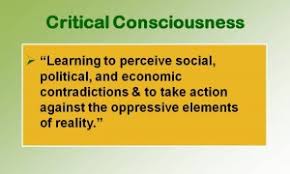
By doing so, Williamson effectively rescues for the left the power of spirituality that has been the exclusive province of right-wing Republicans for the last 50 years and more. Unlike Republican Christians who use religion to defend the status quo, Ms. Williamson links profound spirituality and critical consciousness at their deepest levels. The consciousness ends up distancing itself 180 degrees away from our country’s reigning ideology about history, economics, politics, and personal responsibility.

At the beginning of her article, Ms. Peele admitted she had never previously heard of Marianne Williamson, whom she first understood in terms of a “self-help author and motivational speaker” as well as the spiritual advisor of Oprah Winfrey. Peele was intrigued by Williamson’s own job-description as “creating miracles” – something the author admits she wanted to believe in, especially given the state of our nation and world under President Trump.

Seeking that miracle, Peele confessed during her first encounter with Williamson that she was anxious about our country’s future. She mentioned her own anger and fear.

She was surprised by Williamson’s response. It was in summary: “Toughen up. We’re not porcelain dolls, you know. We need to get real and absorb with courage and endurance the hard knocks delivered up by Trump’s kind. After all, we’re following in the footsteps of Civil Rights heroes and the suffragettes who risked their lives resisting the old policies currently resurrected in today’s Oval Office. It’s time to roll up our sleeves and get to work!”

Peele’s admits that she found that initial exchange actually inspiring. It bordered, she said, on the very miracle she had been seeking. The journalist’s vision, she says, had changed – of both Marianne and her campaign. (And that by the way, is what the term “miracle” means in Williamson’s vocabulary – a radical transformation of perception. It’s about developing critical consciousness.)

From there, Peele’s article describes Williamson’s January 28th formal announcement of her candidacy and her basic theme. It’s that America’s real problem is not with the likes of Donald Trump, but with us, our juvenile preoccupations with our personal lives, our resulting political disengagement, and our surrender of political terrain to corporations and the one-percenters.  “It is time for us to rise up, the way other generations have. Cynicism is just an excuse for not helping. Whining is not an option . . . We need to identify the problems in this country. Then we need to identify with the problem solvers.”

Williamson identifies herself as one of those problem solvers. In fact, she portrays her upbringing and 30- year career as a spiritual teacher as uniquely qualifying her for addressing the fundamentally spiritual problem underneath our country’s current dysfunction. No one else, she says, demonstrates that qualification or of even recognizes the problem as such.

Now 66 years old, Williamson comes from a Jewish family headed by a stay-at-home mother and by a father who practiced immigration law. When his daughter was just 13, Mr. Williamson took his entire family to Vietnam during the height of the war. His intention, Williamson says, was to “make sure the military-industrial complex would not ‘eat my kids’ brains’.” She never forgot that childhood lesson about the reality of war and its horror. It made her but a life-long anti-war activist.

But Marianne Williamson is not just some aging hippie activist with a past devoted to sex, drugs, and rock-and-roll. That was only part of it, she quips. “The rest of the day, we stopped a war.”

In 1975, Williamson’s activism found its theoretical grounding in what has since become a spiritual classic, A Course in Miracles (ACIM).  The book was allegedly “channeled” by Helen Schucman, who described the dictating voice as that of Jesus, the Christ. Williamson calls the book “basically Christian mysticism.” (I would call it a course on developing critical consciousness.) In any case, the book changed her life. On its basis, she began a spiritual practice that gave her that earlier-mentioned radical vision of the world.

Eventually, Williamson composed what she calls “ACIM Cliff Notes” – A Return to Love.

Oprah Winfrey loved it. It became a New York Times best-seller. And Williamson’s new career as a spiritual teacher was born. However, her spiritual teaching distinguished itself from others like Eckhart Tolle (whom Williamson considers an enlightened spiritual master) and Deepak Chopra by its continued commitment to the brand of anti-war social justice deeply instilled by her father.  

Williamson’s activism led her to launch Project Angel Food in 1989. It delivered meals to HIV/AIDS patients too ill to feed themselves. In 2014, she ran for Congress in California’s 33rd district. In 2010, 2012, 2015 and 2017, she organized “Sister Giant” seminars to raise political consciousness especially among women and to motivate them to run for public office.

In 1997, Williamson demonstrated her political acumen by publishing Healing the Soul of America. It’s a 256-page book that has become (in its 20th anniversary edition) her basic stump speech. In Healing, she exhibits her knowledge of American history, her firm grasp of economic realities, and her acute sensitivity to “the signs of the times.” Williamson writes, “When this book was first published in 1997, I wrote that there was a storm ahead, or an awakening ahead. Alas, that storm is upon us. But even now, in the midst of our national turmoil, there is an awakening as well.”

Ironically, a sort of awakening led to the election of Donald Trump in 2016. In Williamson’s analysis, that outcome was an expression of deep popular despair on the part of a population worried for decades about making ends meet, sending their children to college, and paying skyrocketing medical bills. “It was either going to be an authoritarian populist or it was going to be a progressive populist,” she says. “Now, the person we got is clearly a con artist and someone who lacks basic respect for democratic norms.”

Donald Trump however isn’t the problem according to Williamson; he’s merely a symptom of an underlying condition that other candidates are not qualified to heal. Those others, Ms. Williamson is fond of saying, approach the presidency as technical administrators. They even talk about running the government “like a business.” But government is not a business to be governed by some bottom line. Instead, it’s more like a family where all the children are equally important.

Moreover, the job of president isn’t primarily administration. (There are plenty of well-qualified technicians that presidents can nominate to fill cabinet posts.) No, the chief task of the president is setting a tone; it’s motivation, inspiration, and supplying vision. Franklin Roosevelt realized that. “The role of the president, at this time in our history,” Williamson says, “has more of a visionary function. FDR said that the administrative functioning of the president is secondary; the primary role of the president is moral leadership.”

None of this is to say that Marianne Williamson is vague about policy proposals. She shares many of them with the others just referenced:

  • A Green New Deal
  • Medicare for all
  • Increase in minimum wage
  • Gun control
  • Criminal justice reform
  • Overhaul of public education
  • Raising taxes on the rich

To this list now familiar among progressive candidates, Williamson dares to add the issue of reparations to the black community for the wounds of slavery to which she traces so many of our nation’s current ills. Such repair, she estimates, would cost $100 billion to be administered across fields by a board of African-American leaders over a period of 10 years. Williamson says that without addressing the problem of racism and its fundamental causes, the soul of our country will remain deeply traumatized.

Despite the mine field that the reparations proposal represents, the Post article observes that Marianne Williamson would be a formidable debate opponent for someone like Donald Trump. Unlike the latter, she can speak eloquently for hours without written texts of teleprompters.

After every lecture, she answers questions of all sorts from audiences about faith, politics, religion, race relations, economic problems – and the meaning of life. She’s never at a loss for words. Moreover, by her own account, she’s used to being called a “lightweight thinker, New Age con artist, a b_ _ _ _ — if you really know her.” Can you imagine, Anna Peele suggests, Marianne answering one of Trump’s insults with a magnanimous reflection on the state of his own soul? Wouldn’t that would be fun to witness?

As Williamson puts it, Trump “is a master of false narrative. And if you come back at him with anything other than the deepest truth, he will eat you alive. But if you do respond from a place of deepest truth, he is completely disempowered. I plan to speak to the consciousness of the American mind. Where he has harnessed fear, I’m seeking to harness love. Where he has harnessed bigotry and racism and anti-Semitism and homophobia, I’m seeking to harness dignity and decency and compassion. And that does not defeat. It overrides.”

Anna Peele’s Washington Post article suggests (correctly, I think) that our country needs the change in consciousness and communication of deepest truth of which Marianne Williamson speaks. By addressing that level, she promises to answer a need that the left has traditionally proven incapable of confronting.

That inability has not hampered the political right. They’ve understood the power of faith to motivate people to political action. On the left, African-Americans have a similar understanding, though in the opposite political direction. The same is true of liberation theologists in the Global South – and (dare I say it) of militant Muslims.

In summary, Mary Ann Williamson’s use of the term “miracle” for the achievement of critical consciousness along with her courageous invocation of spiritual traditions from her own Judaism as well as from Christianity, Islam, Buddhism, and New Age understandings of Ultimate Reality promises to enrich enormously the upcoming selection of Donald Trump’s progressive opponent.

And she may prevail. As Anna Peele attests, Ms. Williamson is good at creating miracles.    

President Marianne Williamson?? Yes, That Miracle Can Happen!

Readings for 5th Sunday in Ordinary Time: IS 6:1-2A, 3-8; PS 138: 1-8; ICOR 15: 1-11; LK 5: 1-8

In today’s Gospel reading, we encounter Jesus’ radical message of social justice and of the abundance-for-all that results from accepting his insights. Significantly for this series on the presidential candidacy of Marianne Williamson, her program parallels that of the Master whose miraculous teaching has constituted the center of her own career for the last 30 years and more.

Before I get to that, however, allow me a word about miracles and Marianne’s presidential campaign.  

For starters, she herself is very clear about one thing: without a miracle, our country (and the world) is doomed. But that doesn’t mean her thinking is negative or pessimistic.

That’s because (and this is crucial) Marianne’s use of the term “miracle” does not reference marvels contrary to the laws of nature. Instead, her understanding of the word is something more significant even than the “miraculous” catch of fish reported in today’s Gospel reading. By miracle she means a profound change in consciousness. It’s a change in attitude from one governed by fear and guilt to an outlook inspired by love and forgiveness. As I said, without that change, we’re all finished.

Think about it. Isn’t it true that fear and guilt absolutely govern our lives? We’re taught to be very afraid of the Russians, Iranians, the Taliban, ISIS, Muslims, immigrants, climate change, nuclear holocaust, poverty, the police, gun violence, and death. And standard answers to such threats always include denial and violence in the form of war, more guns, sanctions, walls, prisons, weapons-modernization-programs, and an unlimited consumerism that has us drowning in our own waste.

In fact, it’s precisely that fearful thinking that continues to inform the candidacies of our country’s political classes (Democrats as well as Republicans). All of them except Marianne Williamson are imprisoned in old thought patterns. All of them are locked into political group think which typically dismisses Marianne’s approach as “unrealistic,” “impractical,” “inexperienced,” too idealistic.

Ignored is the fact that their own “realistic” thinking has brought us to the brink of extinction. Their “practical” consciousness has given us the war in Iraq and at least six other countries, the resulting uptick in terrorism, a planet on fire, world hunger in the face of enormous food waste, homeless populations freezing to death outside abandoned buildings, huge wealth disparities, the threat of nuclear war, more prisoners than anywhere else in the word, and a whole host of other problems.

All of those catastrophes, Marianne tells us, will remain without solution absent the miracle – absent the change in consciousness – that her campaign represents. She’s fond of quoting Einstein who said that the same kind of thinking that brought us into a crisis cannot extricate us from its predicament.

Now get ready: For Marianne, the answer to all those perceived threats is love and forgiveness. Yes, she actually dares to say that – to say what Jesus said!  But for Williamson, both love and forgiveness are understood in terms of realizing the unity of all human beings. In other words, only a switch in consciousness from seeing others as separate to envisioning humankind’s underlying unity can save us.

Can you imagine seeing ISIS, the Taliban, Muslims, immigrants, refugees, people of all races, religions and skin colors – and Mother Earth Herself – as truly related to us at an intimate level?

Actually, it’s more than that. As Marianne tells us repeatedly, “There is really only one of us here.” All those demonized groups are us. That’s the meaning of Jesus’ teaching about loving our neighbor as ourselves. Our neighbor is our self. When we hate and kill him or her, we’re hating ourselves. We’re committing suicide!

Radicality like Marianne’s is precisely what today’s liturgical readings call us to. They remind us that followers of Jesus (and about 75% of Americans claim to be that) should not shy away from love and forgiveness in the form of wealth redistribution and reparations to exploited classes. No, it’s the heart of our faith. It’s the only realistic solution to our problems, both personal and political.

Consider today’s Gospel story. According to Luke, the crowds of those following Jesus are so thick that he has to get into a boat, a little bit from shore to address the people.

Thanks to what we read from Luke two weeks ago, we know who was in the crowd and why they were so enthusiastic. They were poor people responding to Jesus’ proclamation of a Jubilee Year. (For Jews, Jubilee, “the year of the Lord’s favor,” was good news for the poor. That’s because every 50 years it called for radical wealth redistribution in Israel. Debts were forgiven, slaves were set free, harvests were left un-gleaned and land was returned to its original owners.)  

Recall that using the words of Isaiah, Luke had Jesus summarize his Jubilee message like this: “The Spirit of the Lord is upon me, because he has anointed me to bring good news to the poor. He has sent me to proclaim release to the captives and recovery of sight to the blind, to let the oppressed go free, and to proclaim the year of the Lord’s favor.”  

Yes, Jubilee represented biblical law. But it was honored more in the breach than in the observance. Astoundingly, Jesus was calling for its revival. Hence the overwhelming crowd. 

Not accidentally, Isaiah’s words are a description not only of Jesus’ highly popular program, but of Marianne Williamson’s presidential agenda. It embodies Jubilee Spirit by advocating:

  • Concern for our society’s and the world’s dispossessed (Good News to the poor)
  • Prison reform (Release of captives)
  • Health care (Recovery of sight to the blind)
  • An end to neocolonial wars (Letting the oppressed go free)
  • Reparations to descendants of African slaves (Jubilee)
  • Wealth redistribution that has the rich paying their fair share (Jubilee)
  • Forgiveness of student loans (Jubilee)

Next Jesus demonstrates the counter-intuitive abundance-for-all that inevitably results when his program is implemented. He tells his friends to go out into deeper waters and cast their nets despite the fact that their previous efforts had yielded no results. [Marianne constantly stresses the need for us to “go deeper” if we’re ever to go about Healing the Soul of America (the title of the 20th anniversary edition of her 1997 book.)]

Following Jesus’ instruction, the fishermen net a catch so great that it threatens to tear their nets apart and sink both of their boats. The message: abundance is the result of following Jesus’ program prioritizing “good news to the poor.” Abundance doesn’t trickle down from the elite; it percolates up from the poor.

And, of course, that latter point is underlined by Jesus’ final words in today’s reading, “Do not be afraid. From now on you will be catching men.” In other words, Jesus confirms his “preferential option for the poor” by selecting working class fishermen – not the rich and elite – as his first disciples.

Like Marianne Williamson (and all who miraculously overcome the fear Jesus references), Peter, James, and John leave everything (including evidently the fish they’ve just caught) and follow Jesus into the unknown.

Their audacious act, their detachment from fear, possessions, the past, and the relative wealth they’ve just attained all demonstrate their readiness for further expansions of consciousness – for further miracles.

In our own day, Marianne Williamson’s unusual presidential candidacy summons us to similar changes – to similar miracles.

Yes, it’s true: it may take a miracle to get her elected. But that’s her point. It will also take a profound change in consciousness to save our world.

Let’s work for both wonders. Let’s expect both. We desperately need to change our minds. We desperately need a woman like Marianne Williams as president.