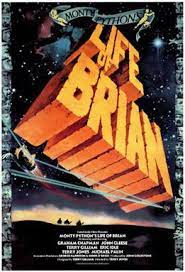
Imperialism, Israel, Hamas, and “Life of Brian”

Over the Thanksgiving holiday, our family watched together one of our favorite films, “Life of Brian.”

It’s the comic story of Brian Cohen, a Jewish man born on the same night as Jesus of Nazareth in an adjoining stable. Like the historical Jesus (described for instance in books like Reza Aslan’s Zealot), Brian becomes part of a political resistance movement intent on expelling Roman occupiers from the Jewish homeland.

Setting comedy aside, what struck me this time while watching the film were its undeniable and highly ironic echoes of the current struggle in Palestine between Jewish colonial settlers there and resistance movements such as Hamas, Hezbollah, and al Fatah. That’s because the movie successfully portrays the overbearing nature of Roman imperialism itself, the consequent resistance of Israel’s people, and the power of Rome’s “divide and rule” tactics bolstered by highly effective imperial propaganda.

I find the same techniques employed today in Israel’s struggle with Hamas. Like the Romans in the first century, the settler-colonial regime in Israel seeks to impose its will on indigenous Palestinians by overwhelming force of arms. The Zionists employ imperialism’s traditional “divide and rule” strategy. They also disseminate powerful propaganda that to this day convinces many of the benign nature of colonial robbery and oppression.

Let me show you what I mean.

The Life of Brian 

As already indicated, “Life of Brian” portrays a biography that parallels in many ways the life of the prophet, Jesus of Nazareth. Both along with thousands of other Jewish insurgents suffered crucifixion under Rome’s cruel imperialism. (Remember, crucifixion was a form of capital punishment reserved for insurgents, revolutionaries, and related “terrorists.”)

Despite that threat, Brian decides to join one of the many Jewish resistance movements that characterized early first century Israel. Young and naïve, he seems unsure of his exact motivation. But it’s somehow connected with trying to impress a girl in the movement called Judith.

Because of his “success” in covering Jerusalem’s walls with anti-Roman graffiti, Brian soon finds himself gradually moving up in the ranks of The Jewish Resistance Front. He also becomes associated with resistance preachers who, like Jesus, find anti-Roman inspiration in Judaism’s religious traditions. People gradually come to regard him as a prophet.  

Somewhat reluctantly fulfilling that role and after many narrow escapes from the pursuing Roman occupiers, Brian is finally arrested. In the end, he’s crucified like Jesus who, of course, found himself identified as a prophet as well.

Divide and Rule

In terms of understanding Roman and today’s Zionist imperialism, “Life of Brian” places high emphasis on Rome’s infamous tactics of “divide and rule.” This means setting resistance groups against one another, so that they end up identifying comrades in arms as enemies rather than their real oppressors, the foreign occupiers themselves. To the bemusement of the Roman occupiers, “The Jewish Resistance Front” finds itself at odds with “The People’s Front of Judea,” “The Front for Jewish Resistance,” and with “Jews against Roman Occupation.”

The effectiveness of “divide and rule” is portrayed in a key scene in “Life of Brian” where members of two opposition movements meet on their way to a kidnapping (a traditional resistance tactic employed even today by Hamas). In any case, the two groups end up fighting each other over whose idea it was to employ the tactic. Meanwhile the Roman military observes the encounter from afar– as if they were unaware of Rome’s deliberate complicity in sowing discord among resistance movements.

Similarly, “Life of Brian” portrays the complete effectiveness of propaganda both in our contemporary world and even among those suffering directly under foreign occupation. In the contemporary world, our schools portray Rome as somehow benign and beneficial to the occupied. In doing so, our teachers forget the telling words of the Briton insurgent, Calgacus (as recorded by Tacitus). Calgacus reportedly said “ubi solitudinem faciunt pacem appellant.” (They create a desert and call it peace.) The Romans were brutal.

According to “Life of Brian,” that propaganda’s effectiveness was accepted even by those directly experiencing the brutality. In one memorable scene, a resistance leader gives a speech whose central question asks, “What have the Romans ever done for us?”

In response the leader’s audience end up listing one after another, benefits such as sanitation, the aqueducts, education, safe streets, wine, and peace. In so doing, they put the leader to shame. He must admit such benefits of the Roman Empire.

Forgotten in all of this is that the benefits listed overwhelmingly belonged to the imperial center, Rome itself, and typically not to remote and “backward” provinces. The Romans weren’t interested in educating Jewish provincials. Any roads they built were meant to ensure quick passage by Roman Legions responding to outbreaks of Jewish rebellion.

Above all, Jews could hardly consider streets patrolled by Roman occupiers as somehow “safe.” Nor could they consider their occupiers as bringers of peace. Again, the Romans had no respect for Jewish life. Recall that in the end (70 CE) the Romans absolutely wiped Jerusalem and its temple off the map. They killed more than a million Jews and enslaved 97,000 more. Safe streets for Jews was not high on their list of priorities. What the Romans called peace was the tranquility of the graveyard.   

Imperialism in Contemporary Israel

Figures like the ones just cited remind one of the brutalities of today’s Zionist occupiers of Palestinian territory. In a few short weeks since October 7, 2023, the settler-colonialists have slaughtered more than 14,000 Palestinians – half of them children, women, and the elderly.

At the same time, forgotten in all of this is the history of Israel’s “creation” of Hamas as a force against other Palestinian resistance movements such as Hezbollah and al Fatah. Yes, by all accounts, Hamas is a Zionist product. It represents their implementation of Rome’s infamous “divide and rule” strategy.

Similarly, Zionist propaganda has persuaded many beyond Palestine of the following absurdities, viz., that:

  • Zionists illegally occupying Palestinian territories have the right to self-defense. As illegal occupiers, they do not.
  • Meanwhile, those illegally occupied do not have the right to self-defense. UN Charter Article 51 says they do.
  • We should unquestioningly believe Zionist accounts of Hamas’ attacks on Jewish settlements on October 7th, 2023, even if the only sources of those accounts are Israeli officials who have repeatedly lied to us before.
  • The alleged brutalities of Hamas attacks nullify the application of international law forbidding population transfer, collective punishment, the bombing of hospitals, schools, and United Nations facilities.
  • Cutting off food, water, and electricity are legitimate military tactics.
  • All Palestinians (including babies and children) are somehow legitimate targets of Zionist bombs and artillery fire.

Conclusion

After watching Monty Python’s “Life of Brian,” the conclusion I’ve reached is that imperialism is imperialism. On the one hand, it is a system of robbery intended to transfer resources from resource-rich provinces to a resource-poor imperial centers such as Rome. As such, imperialism has no humanitarian intent.

On the other hand, imperialism (like Zionists in Palestine) establishes location in an area rich in resources (like the Middle East floating on its ocean of oil). In the latter case, the purpose is to protect the resource in question from control by those to whom the resource belongs (viz., the Arab nations).

The imperial tactics that ensure such resource transfer and control are those depicted in “Life of Brian.” They involve setting resistance movements against one another and spreading propaganda that has the rest of us (and even some of the colonized) believing that the oppressors are world benefactors, and that their indigenous opponents are somehow terrorists.

As I see it, “Life of Brian” should awaken viewers to such absurdities.

Simply put, empire is empire. Robbery is robbery. Propaganda is propaganda.

The film warns us: open your eyes; identify your real enemies; don’t believe the lies.
The Church’s Disastrous Domestication of Jesus (Sunday Homily)

King of the Universe

Readings for the feast of “Our Lord Jesus Christ, King of the Universe”: 2 SM 5: 1-3, PS 122: 1-5; COL 1: 12-20; LK 23: 35-43. http://usccb.org/bible/readings/112413.cfm

Today the Catholic Church celebrates the feast of “Our Lord Jesus Christ, King of the Universe.” The contrast between the feast’s grandiose title and the readings prescribed for the occasion illustrate a basic reason behind the irrelevance of the church (and Jesus) to the post-modern world. It’s irrelevant to the social and economic transformations necessary to redeem the church’s overwhelmingly Third World membership from globalized oppression.

The contrast I’m referring to involves the great makeover of Jesus of Nazareth changing him from the leader of an anti-imperial revolutionary movement into a pillar of the exploitative status quo.

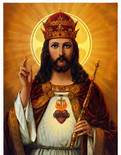
Let me put it this way: through 4th century sleight of hand, the Jesus who sided with the poor and those oppressed by empire – the one who promised a new heaven and earth belonging to the simple and poor, and who was executed as a terrorist by Rome – was made to switch sides. He was co-opted and domesticated – kicked upstairs into the royal class. He became not only a patron of the Roman Empire, but a “king” complete with crown, purple robes, scepter and fawning courtiers.

Following that transformation, kings and popes (now themselves transformed into gaudy temporal rulers) claimed to govern by divine right on behalf of Jesus as his representatives and vicars. In this way, the poor and oppressed (who then and now constitute the world’s majority) lost their paradigmatic leader, example and advocate. Jesus became instead a key part of the apparatus oppressing them.

Reza Aslan’s recent best-seller, Zealot, attempts to rescue the revolutionary historical Jesus from the distortions of the royal classes just mentioned. Aslan connects his salvage project specifically with today’s account of Jesus’ crucifixion in Luke, Chapter 23. In doing so, the author pays particular attention to Jesus’ cross, to the Roman inscription identifying Jesus as “King of the Jews,” and to the dialog between Jesus and the two “thieves” presented as sharing his fate.

According to Aslan, all three – cross, inscription and dialog – mark Jesus as a dangerous revolutionary “terrorist” rather than a domesticated upholder of the given order. That terrorist remains as threatening to today’s dominant empire, the U.S.A., as he was to imperial Rome. So he continues to be erased from history and by “feasts” like today that mask his true identity.

Take the cross first. It was the mode of execution reserved primarily for insurrectionists against the Roman occupation of Palestine. The fact that Jesus was crucified indicates that the Romans believed him to be a revolutionary terrorist. How could it have been otherwise, Aslan asks? After all, Jesus was widely considered the “messiah” – i.e. as the one, like David in today’s first reading, expected to lead “The War” against Israel’s oppressors.

Moreover, he proclaimed the “Kingdom of God,” a highly politicized metaphor which could only be understood as an alternative to Roman rule. It would return Israel, Jesus himself promised, to Yahweh’s governance and accord primacy to the poor and marginalized. The Romans drew logical conclusions. Put otherwise, the Roman cross itself provides bloody testimony to the radical threat the empire saw personified in Jesus.

That threat was made specific in the inscription the Romans placed over the head of the crucified Jesus. It read, “King of the Jews.”

Typically, those words are interpreted as a cruel joke by the Roman procurator, Pontius Pilate – as if he were simply poking fun at those who saw Jesus as the worthy successor of Israel’s beloved King David.

However, according to Reza Aslan, nothing humorous was intended by the inscription. Instead it was a titulus. Every victim of crucifixion had one – a statement of the reason for his execution. The motive for Jesus’ crucifixion was the same as for the many others among his contemporaries who were executed for the same crime: aspiring to replace Roman rule with home rule – with an Israel governed by Jews instead of Romans. The titulus on Jesus’ cross, along with the cross itself identify him as the antithesis of what he eventually became, a Roman tool.

And then there are those two thieves. Aslan says they weren’t “thieves” at all. That’s a mistranslation, he points out. A better translation of the Greek word, lestai , would be “bandits” – the common designation in the first century for insurrectionists. And there probably weren’t just two others crucified the day Jesus was assassinated. There may have been a dozen or more.

And, no, the whole world wasn’t watching either. As scripture scholar John Dominic Crossan observes, Jesus would have represented hardly a blip on the screen of Pontius Pilate. And Jews would have averted their eyes from the spectacle depicted in this morning’s gospel. They wouldn’t want to see “one more good Jew” suffering the fate of so many heroic patriots.

In this context the dialog between Jesus and two of the terrorists crucified with him takes on great significance. Actually, it documents the beginning of the process I described of changing Jesus’ image from insurrectionist to depoliticized teacher.

Think about it. Luke’s account of Jesus’ words and deeds was first penned about the year 85 or 90 – 20 years or so after the Roman-Jewish War (66-70 C.E.). By then the Romans had utterly defeated the Jews, destroyed Jerusalem and its temple as well as slaughtered the city’s population including practically all of the eyewitnesses of Jesus’ messianic campaign. Virtually the only Christians left standing were foreigners – gentiles living in population centers like Rome, Alexandria and Antioch. Few of these had any understanding of or sympathy for Judaism much less for Jewish politics and its liberation movements.

Besides that, in the war’s aftermath, both Jews and Christians sought to distance themselves from the socio-political expectations that had brought on the disaster of the Jewish War. So Judaism tried to transform itself from a Temple-centered religion to one focused on the local synagogue and rabbinic teaching – both overwhelmingly concerned with simply preserving the culture and identity of a people in diaspora.

For their part, Christians became anxious to show the Roman world that it had nothing to fear from their membership.

One way of doing that was to distance the dying Jesus from the Jewish insurgents and their terrorist actions against their oppressors. So in Luke’s death-bed dialog among three crucified revolutionaries, one of the terrorists admits that Jesus is “under the same sentence” as he and his comrade in arms. Given what Aslan said about crucifixion, that fact was undeniable. All three had been sentenced as insurrectionists.

But now comes the distancing between Jesus and Israel’s liberation movements. Luke has the “good thief” (read good terrorist) say, “. . . indeed we have been condemned justly, for the sentence we received corresponds to our crimes, but this man has done nothing criminal.”

In other words, Luke (writing for a post-war Roman audience) dismisses insurrection as “criminal,” and removes Jesus from association with such crime – a fact endorsed, Luke asserts, by insiders like the honest lestai crucified with Jesus. Luke’s message to Rome: the killing of Jesus was a terrible mistake; he meant no harm to Rome. And neither do we, his followers.

Loss of the radical revolutionary Jesus is not a trivial matter in terms of Christianity relevance to a world ruled by a nation that styles itself as Rome’s worthy successor. Like its ancient archetype, the U.S. (and a majority of first-world Christians) found the historical Jesus so threatening, that it determined that Jesus’ followers deserved the same fate as their crucified Master. For this we have the evidence of the war that the U.S. fought against liberation theology when it first emerged following the conclusion of the Second Vatican Council (1963-65).

Liberation theology committed the unforgiveable sin represented by this homily. It was guilty of connecting the Jesus of history described by scholars like Aslan to post-colonial independence movements and struggles against the neo-colonialism spearheaded by the U.S. and its oligarchical clients in the Third World.

In that struggle Pope John Paul II and his henchman, Josef Ratzinger, threw in their lot with a neo-imperial Ronald Reagan. It was deja-vu all over again: Reagan as Pilate and J.P.II and Ratzinger as the temple priesthood. It was the deja-vu of the church melding its interests with Rome towards the end of the 4th century.

More specifically, the two reactionary popes looked the other way and actively supported Reagan’s policies that assassinated hundreds of thousands of Christians (200,000 in Guatemala alone!) who found the radical Jesus threateningly relevant to their struggles in Latin America, Africa, and South Asia.

To balance liberation theology’s threat, Reagan patronized Evangelical Christians who eventually morphed into the Tea Party. It finds Aslan’s understanding of Jesus anathema. Meanwhile, John Paul II and Ratzinger “cleaned house,” eliminating every single progressive bishop from the hierarchy and transforming seminaries into hot houses to nurture a pre-Vatican II reactionary clergy.

Recently Pope Francis delivered a long-winded, very general and content-less speech to the National Council of Bishops in Brazil. That group used to head a church that was a hot-bed of liberation theology I’ve been describing here. The term was never mentioned in the new pope’s remarks. Instead, he presented John Paul II and Pope Ratzinger as champions of Vatican II.

He’ll have to do better than that to fulfill his aspiration towards making the church relevant to the poor he professes to care so much about.

He’ll have to confess the Church’s sins against liberation theology and revive the cult of the historical Jesus – instead of the depoliticized imperial “King of the Universe” today’s feast calls to mind.

Hating THE SIN, but Loving the Sinners (Twenty-Fourth Sunday in Ordinary Time)

Today’s readings: Is. 50:5-9a; Ps. 116: 1-6, 8-9; Jas. 2: 14-18; Mk. 8:27-35

I often have spirited political debates with my grown children. My contributions to such debates have often been critical of the U.S. So my sons half in jest often accuse me of “hating America.”

Really though, I love the United States. It’s my home; it’s the country I know best; it’s simply beautiful; its people, its artists, its inventors have given so much to the world. Its Civil Rights Movement and Women’s Liberation Movement have set examples for emancipation campaigns throughout the entire world. As the song says, it all makes me feel “Proud to be an American.”

And yet there is some truth in what my sons say. While I love America, I have trouble with “Amerikkka.”  That, I suppose, is like saying “I love the sinner, but hate the sin.” I say that because in this case “Amerikkka” stands for the imperial United States. And here I’m referring to the nation described in the following film clip by John Stockwell. He’s the former and much-decorated CIA station chief in Angola who has “gone public” with his story about what the United States has actually done in the world for the last forty years. He describes a “Third World War” against the poor – a war responsible for the death of more than 6 million of the world’s poor. Listen to what he has to say; its information is what I have in mind in those conversations with my sons.

What Stockwell says is quite shocking, isn’t it? I’ve shared it with you today, because the liturgy’s Gospel selection is about empire and Jesus’ non-violent resistance to it. It’s about his hating the sin of empire, while refusing to do harm to the sinners who support it.  That’s the real focus of today’s Gospel. Its key elements are (1) Jesus’ harsh words to Simon Peter, (2) his self-identification as the “Son of Man,” and (3) his insistence that his followers must oppose empire no matter what the cost.

For starters, take Jesus’ harsh words to Simon Peter. He’s impatient with Peter, and in effect tells him to go to hell. (That’s the meaning of his words, “Get behind me, Satan.”) Why does he speak to Peter like that? To answer that question, you have to understand who Peter is.

Simon was likely a Zealot. Zealots were fighters in the Jewish resistance movement against the Roman occupation of Palestine. They were committed to expelling the Roman occupiers from Palestine by force of arms. Scholars strongly suspect that Simon Peter was a Zealot. For one thing, he was armed when Jesus was arrested. His armed status (even after three years in Jesus’ company!) also raises the possibility that he may have been a sicarius (knifer) – one among the Zealots who specialized in assassinating Roman soldiers. Notice how quick Simon was to actually use his sword; he was evidently used to knife-fighting. In John 18:10, he tries to split the head of one of those who had come to arrest Jesus. However his blow misses only slicing off the intended victim’s ear.  Put that together with Simon’s nom de guerre, “Peter” which arguably meant “rock-thrower,” and you have a strong case for Peter’s zealotry.

In any case, when Jesus asks Peter “Who do you say that I am?” Peter’s response, “You are the Messiah” means “You’re the one who will lead us in expelling the hated Romans from this country by force of arms.”

Now consider where Jesus is coming from. (This is the second key element of today’s Gospel.) Because his primary identity is not being Jewish but being human, he forbids Peter to call him “Messiah.” In effect he says “Look,” “like the “Human One” (Son of Man) Daniel wrote about, I’m as much an enemy of foreign occupation as you are.  But unlike you, I’m not going to be part of killing the brothers and sisters who share my humanity. Yes, I’m saying that the Romans and ‘our’ Temple collaborators are our brothers and sisters! Killing them is like killing ourselves. It’s even like trying to kill God. So, I won’t be introducing the glorious Israel you’re thinking about. It’s just the opposite; the Romans are actually end up torturing and killing me! And I’m willing to accept that.”

All of that was too much for Peter. To stand by and let the Romans torture and kill Jesus seemed crazy to him – especially when Jesus’ following was so strong and militant. [Recall that two chapters earlier in Mark, Jesus had met all day with 5000 men in the desert. (Can you imagine how the ever-watchful Romans would have viewed such a meeting? Today what kind of drone strikes would be unleashed in Afghanistan against participants gathered like that?) Recall too that (according to John 6:15) at the end of that day’s meeting a resolution was passed to make Jesus king by force. Of course, Jesus had rejected that proposal and had walked out on the meeting. But evidently Simon here still wasn’t getting it; there was still hope that Jesus might change his mind.

But no, here was Jesus reiterating that his resistance to Rome and its Temple collaborators was to be uncompromisingly non-violent. For the Rock Thrower, the equation “Messiah” plus “non-violence” simply couldn’t compute.  So he blurts out his own “Don’t say things like that!”

And this brings me to that third point I indicated at the outset – Jesus’ invitation to each of us to follow him to the cross. In today’s reading he says that those wishing to follow him must take up crosses. Now the cross was the special form of execution the Romans reserved for insurgents. So Jesus words seem to mean that his followers must be anti-imperial and run the risks that go along with insurgency.

What can that mean for us today – for those of us who have chosen to join this emerging ecumenical Christian Base Community meeting here in Richmond, Kentucky? Jesus’ words, I think, call us to a “paradigm shift” concerning the United States, ourselves, and this emerging Christian Base Community.

Jesus teaching means first of all that we have to recognize our own situation as “Americans.”  We’re not living in the greatest country in the world. We are indeed living in the belly of the brutal imperial beast.  While loving our fellow Americans, we have to (as they say) “hate THE SIN” – of being imperialists, of being  Amerikkka.

Secondly, Jesus’ words about embracing the cross challenge us as individuals to figure out how closely we really want to follow the Jesus of Mark’s Gospel. If we agree that Jesus is Daniel’s “Human One” destined to live out the “prophetic script,” then our claim to follow him has consequences. It means each of us is called to follow not only Jesus but Daniel, John the Baptist, Gandhi, King, Romero, Rachel Corrie and the impoverished people the United States kills each day in the many countries it occupies. Jesus’ words this morning leave little room for escape or denial. It’s not, of course, that we seek martyrdom. However, we must live the prophetic script those others followed and be ready for arrest – and even torture and execution – should it come to that.

Thirdly, all of these considerations have implications for the Christian Base Community we’re attempting to form here in the belly of the beast. In our community’s attempt to follow Jesus more closely, can we determine a prophetic project that we can all support? What might the project be? The question has particular importance in the context of the approaching General Election. Should our little community become directly involved in the campaign?  Should we bring the Occupy Movement to Madison County or take on the Climate Change issue? What about Mountain Top Removal?  Should we join forces with Kentuckians for the Commonwealth, with Sustainable Berea, with the Central Kentucky Council for Peace and Justice? Today’s Gospel implicitly calls us to a serious conversation about all of that.

In answering such questions, we must realize that circumstances have changed here over the last eleven years. We’re losing our rights to protest. It’s much more dangerous than it once was. When we resist state terrorism, we now risk arrest, being tazed, peppers sprayed, or tear gassed. We risk going to jail and all that suggests. Are we up to that challenge? Do we really want to follow a Jesus who says we must take up crosses?

No doubt, these are hard words and challenges. And surely we’re tempted with Peter to take Jesus aside and tell him to be more reasonable. Like Peter, we find denial comfortable.

Inevitably though I think we’ll hear Jesus say as he did to Peter: “Take it or leave it. Follow me to the cross. There’s no other way into the Kingdom.”

(Discussion follows.)

Don’t miss Monday’s posting on Mary Magdalene as Egyptian priestess and consort of Jesus