“We Love Americans—but Not Their Leaders”: The Message Democrats Refuse to Learn

A brilliant Iranian-produced video has been making the rounds online. It’s simple—disarmingly so. In some versions it’s rendered in LEGO animation, in others with straightforward narration. But its central message lands with unusual force:

“We love Americans—but not their leaders.”

That line deserves careful attention. Because in a political culture saturated with noise, it cuts through with something rare: clarity.

More than that, it exposes a fundamental weakness at the heart of Democratic messaging in this country.

For years now, the Democratic Party’s primary appeal has boiled down to a single claim: “We’re not Trump.” And to be sure, that distinction matters. Donald Trump’s authoritarian impulses, his open contempt for democratic norms, and his appeal to the ugliest strains of American political life are real and dangerous.

But here’s the problem: “We’re not Trump” is not a vision. It’s a contrast. And at this point in our history, contrast is not enough.

The viral video makes that painfully clear. Its power lies in a distinction most political leaders—Democrats included—refuse to make: the difference between a people and the system that governs them.

It says, in effect, that ordinary Americans are not the problem. They are not hated abroad, not even by those we’re taught to fear. Instead, what people around the world distrust—often with good reason—are the policies and power structures that operate in Americans’ name.

That insight turns our usual narrative upside down.

We are accustomed to hearing that “they hate us for our freedoms,” or that foreign adversaries represent some deep cultural or civilizational threat. But the video suggests something far more unsettling—and far more plausible. It suggests that ordinary people across national boundaries have more in common with each other than with their own political and economic elites.

That idea is not new. It echoes through the work of liberation theologians and critical thinkers who have long insisted that the real divide in our world is not between nations, but between those who benefit from systems of domination and those who suffer under them. What’s new is seeing that insight distilled into a form that millions can grasp in a matter of minutes.

And that is precisely why it resonates. That’s because it speaks to lived experience.

Americans know—at least at some level—that something is deeply wrong. They see endless wars justified in the name of freedom. They see economic systems that reward a tiny elite while leaving millions struggling. They see political leaders, from both parties, who promise change and deliver continuity.

Under those conditions, the claim “We’re not Trump” begins to sound less like a solution and more like an evasion.

The unspoken question becomes unavoidable: Not Trump? Then what, exactly?

If Democrats want to answer that question credibly, they will have to do something they have so far resisted. They will have to break not only with Trumpism, but with the broader system that made Trump possible—and that continues to function quite comfortably without him.

That means acknowledging truths that are politically inconvenient.

It means admitting that war-making is not a Republican monopoly. It means recognizing that corporate influence distorts Democratic governance no less than Republican. It means confronting the reality that empire—however politely described—has been a bipartisan project for decades.

Without that reckoning, Democratic appeals will continue to fall flat, especially among younger voters who have grown up watching these patterns repeat.

This is where movements outside the party structure—groups like the Arc of Justice Alliance—have an opportunity that establishment Democrats seem unwilling to seize.

They can say what others won’t.

They can affirm solidarity not just with Americans, but with ordinary people everywhere—those in Iran, in Gaza, in Russia, in Ukraine—who are so often reduced to abstractions in geopolitical narratives. They can refuse the easy logic that demands we choose sides between competing powers while ignoring the human cost on all sides.

Most importantly, they can tell the truth about the system itself.

That truth is not complicated, even if it is uncomfortable. It is simply this: the structures that generate violence, inequality, and fear are deeply embedded. They do not change automatically when one party replaces another. And they will not be transformed by rhetoric that defines itself only in opposition to the latest political villain.

The viral video points toward a different kind of politics—one grounded not in fear, but in recognition. It invites Americans to see themselves as others see them: not as enemies, but as potential allies trapped within a system that often acts against their own deepest interests.

That is a message worth hearing.

But it is also a message that carries an implicit challenge. Because once we accept the distinction between people and power, we can no longer hide behind it. We are forced to ask where we stand—and what we are willing to say.

“We’re not Trump” is a start. But it is a small one.

The moment demands more: a willingness to say not only what we oppose, but what we reject—and what we are prepared to build in its place.

Until that happens, videos like this one will continue to do what our political leaders will not: tell a truth that is both simple and, for that very reason, difficult to ignore.

U.S. Divide & Rule Strategy vs. China’s Unifying Belt & Road Initiative

Readings for Pentecost Sunday: Genesis 11: 1-9; Psalm 104: 1-2, 24, 35, 27-30; Romans 8: 22-27; Acts 2: 1-11.

Last week Russia’s Vladimir Putin got the red-carpet treatment when he and virtually his entire government leadership met with Xi Jingping and his governing counterparts for a two-day summit in Beijing.

The collective west was apoplectic in response.

What were these two villains up to? Surely, they’re conspiring to take over the world.

The Washington Post fretted about connections between Russia and China on the one hand and with Iran and North Korea on the other.

But of course, what transpired last week in China is far bigger than any of that. It’s not just a worrisome alliance between the countries just mentioned. Ultimately, it’s a question of pacts between China, Russia, and the entire Global South (aka the Global Majority) that’s now taking practical form in BRICS+. And the threat there is not primarily military. It’s economic.

It’s the fearful (to the west) specter of a world order of cooperation, mutual benefit, and majority rule replacing that of western neocolonial empire with its ancient “divide and rule” tactics.

In the context of this Pentecost Sunday homily, you might even call such replacement “spiritual,” “biblical,” or (yes) “Pentecostal.”

Let me show you what I mean by elucidating what the west can’t understand about Russia and China’s shared project, about the difference between that project and the one favored by the collective west, and finally about the connections between all of that and today’s readings for this Pentecost Sunday.

The Project of the Collective West 

What the collective west cannot understand about China is that its worldview is radically different from its own.

Especially since the Reagan-Thatcher era, the west has returned to the Hobbesian and social Darwinian superstition that human beings are primarily individuals constantly at one another’s throats.

They’ve become convinced that humans are basically selfish and locked in a “war of all against all.” Hence, “forever wars” are normal and the best we can do.

Westerners have also come to believe that government is somehow the enemy, that its size must be reduced to such an extent that it (as Grover Norquist said) can be drowned in a bathtub. This means that market regulation and taxation must be reduced to a minimum.

Even more importantly, the prevailing western belief system holds that its somehow natural and divinely ordained that just 4.2% of the world’s population (i.e. the United States) should run the world. White people are exceptional. In traditional terms, the DICTATORSHIP of the collective west’s bourgeoisie (of the G7) is part of the natural order.

As a result, any threat to such hegemony must be crushed.

Westerners take all that as self-evident truth forgetting that IT’S JUST A POINT OF VIEW – that btw happens to perfectly support huge wealth disparities and favorable profit margins of the military industrial complex. They forget that there are alternatives – other viewpoints that happen to be working far better than the positions just listed.

The Project of Russia and China

And that brings us back to Beijing.

China, Russia, and the Global Majority have a different approach to political economy. And virtually no one in the west gets it.    

And it is here that China leads the way. It is led by a workers’ party that as such seeks to replace the “divide and rule” dictatorship of the bourgeoisie with the leadership of working classes and their political representatives.

This simply means that the Chinese Communist Party (CCP} aspires to walk a fine line that prioritizes the welfare of the majority over that of corporations, billionaires, and of a state entirely beholden to their interests.  The CCP has the final word. It protects local currency. Without stifling private enterprise, it protects its majority from the dictatorship of the bourgeoisie.

Accordingly, the CCP for example easily exercises eminent domain to advance projects (e.g. high-speed rail) deemed necessary to serve the common good. The CCP recognizes and suppresses as “corruption” egregious exercise of power on the part of the billionaire classes.

In short, Chinese political theory rejects “divide and rule” in favor of common good, multi-polarity, national sovereignties, and international cooperation. It seeks a world with room for everyone, with abundance for all, and where independent nations trade freely for mutual benefit. It is a world governed by international law directed by the United Nations. That’s the vision of “socialism with Chinese characteristics.”

Pie in the sky, you say?

Not really. Witness China’s success in eliminating extreme poverty in record time. Witness the success of its Belt and Road initiative. Witness all the countries lining up to join BRICS +.

For China, the west’s “divide and rule” gives way to multipolarity and cooperation. In contrast to the United States’ forever wars and its 700 military bases throughout the world, China hasn’t fired a shot outside its borders in more than 40 years and has only one military base outside its borders.

Today’s Readings
And that brings us to the readings for this Pentecost Sunday. They too contrast “divide and rule” strategies with those of mutual understanding.

What follows are my “translations” of the readings. Check out the originals here to see if I’ve got them right.

Genesis 11: 1-9: So, you think the “divide and rule” principle came from the Romans? If so, you’re wrong. “Divide and rule” came from the mysterious “Powerful Ones” (the biblical Elohim) who once ruled this earth. Where they came from no one knows. Perhaps from another planet or from all those leagues under the sea. In any case, they were terribly threatened by the humans they needed to supply them with the beef, gold and young virgins. (Powerful Ones always seem to require those.) So, when the Elohim saw humans cooperating to build cities with skyscrapers reaching to the heavens, the Powerful Ones intervened. They somehow made it impossible for people to understand each other. Suddenly they were divided into incomprehensible language groups. Ever since, other Powerful Ones (yes, like the Romans and the “Americans”) have aggressively adopted their own “divide and rule” strategies. They invent borders along with cultural, religious, and racial identities to keep humans apart lest they discover the immense power of universal cooperation.

Psalm 104: 1-2, 24, 35, 27-30: Far from dividing humans, Yahweh’s Great Spirit wills a New Earth whose creatures share the same breath and live in complete harmony, not division. Yahweh’s earth provides abundance for all including food and every good thing imaginable. Everything belongs to humans as a gift from Yahweh. She is indeed to be praised.

Romans 8: 22-27: This abundant Spirit of God is on our side as we earthlings struggle to replace the results of the Powerful Ones’ “divide and rule” strategies with God’s New Earth and its abundance for all. That shared plenty is what we’re all hoping for even though it’s hard to see in this purposely divided world. Resist! Be strong! Believe! Hope! God’s New Earth is possible! Another world is on the horizon. It is necessary.

Acts 2: 1-11: Fifty days after Yeshua’s assassination, his Spirit of community replaced the Elohim’s “divide and rule” scheme. With the descent of Yeshua’s Spirit, all language barriers vanished. Parthians, Medes, and Elamites, inhabitants of Mesopotamia, Judea and Cappadocia, Pontus and Asia, Phrygia and Pamphylia, Egypt and the districts of Libya near Cyrene, as well as travelers from Rome, both Jews and converts to Judaism, Cretans and Arabs, all understood that they shared a single Spirit uniting them all. They vowed to resume building the City of God –TOGETHER.

Conclusion

Yes, today’s readings suggest that China, Russia, and the Global Majority represented by BRICS + are on the right track. The United States and the collective West are not.

If Planet Earth is to survive, something like China’s approach to government, national sovereignty, common good, abundance for all, international cooperation, and multipolarity must replace Hobbes, social darwinism, forever wars, minority dominance, and divide and rule.

Ironically, the CCP is closer to the spirit of Pentecost than the “Christian” west.

Imperialism, Israel, Hamas, and “Life of Brian”

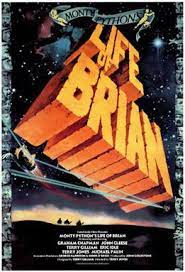
Over the Thanksgiving holiday, our family watched together one of our favorite films, “Life of Brian.”

It’s the comic story of Brian Cohen, a Jewish man born on the same night as Jesus of Nazareth in an adjoining stable. Like the historical Jesus (described for instance in books like Reza Aslan’s Zealot), Brian becomes part of a political resistance movement intent on expelling Roman occupiers from the Jewish homeland.

Setting comedy aside, what struck me this time while watching the film were its undeniable and highly ironic echoes of the current struggle in Palestine between Jewish colonial settlers there and resistance movements such as Hamas, Hezbollah, and al Fatah. That’s because the movie successfully portrays the overbearing nature of Roman imperialism itself, the consequent resistance of Israel’s people, and the power of Rome’s “divide and rule” tactics bolstered by highly effective imperial propaganda.

I find the same techniques employed today in Israel’s struggle with Hamas. Like the Romans in the first century, the settler-colonial regime in Israel seeks to impose its will on indigenous Palestinians by overwhelming force of arms. The Zionists employ imperialism’s traditional “divide and rule” strategy. They also disseminate powerful propaganda that to this day convinces many of the benign nature of colonial robbery and oppression.

Let me show you what I mean.

The Life of Brian 

As already indicated, “Life of Brian” portrays a biography that parallels in many ways the life of the prophet, Jesus of Nazareth. Both along with thousands of other Jewish insurgents suffered crucifixion under Rome’s cruel imperialism. (Remember, crucifixion was a form of capital punishment reserved for insurgents, revolutionaries, and related “terrorists.”)

Despite that threat, Brian decides to join one of the many Jewish resistance movements that characterized early first century Israel. Young and naïve, he seems unsure of his exact motivation. But it’s somehow connected with trying to impress a girl in the movement called Judith.

Because of his “success” in covering Jerusalem’s walls with anti-Roman graffiti, Brian soon finds himself gradually moving up in the ranks of The Jewish Resistance Front. He also becomes associated with resistance preachers who, like Jesus, find anti-Roman inspiration in Judaism’s religious traditions. People gradually come to regard him as a prophet.  

Somewhat reluctantly fulfilling that role and after many narrow escapes from the pursuing Roman occupiers, Brian is finally arrested. In the end, he’s crucified like Jesus who, of course, found himself identified as a prophet as well.

Divide and Rule

In terms of understanding Roman and today’s Zionist imperialism, “Life of Brian” places high emphasis on Rome’s infamous tactics of “divide and rule.” This means setting resistance groups against one another, so that they end up identifying comrades in arms as enemies rather than their real oppressors, the foreign occupiers themselves. To the bemusement of the Roman occupiers, “The Jewish Resistance Front” finds itself at odds with “The People’s Front of Judea,” “The Front for Jewish Resistance,” and with “Jews against Roman Occupation.”

The effectiveness of “divide and rule” is portrayed in a key scene in “Life of Brian” where members of two opposition movements meet on their way to a kidnapping (a traditional resistance tactic employed even today by Hamas). In any case, the two groups end up fighting each other over whose idea it was to employ the tactic. Meanwhile the Roman military observes the encounter from afar– as if they were unaware of Rome’s deliberate complicity in sowing discord among resistance movements.

Similarly, “Life of Brian” portrays the complete effectiveness of propaganda both in our contemporary world and even among those suffering directly under foreign occupation. In the contemporary world, our schools portray Rome as somehow benign and beneficial to the occupied. In doing so, our teachers forget the telling words of the Briton insurgent, Calgacus (as recorded by Tacitus). Calgacus reportedly said “ubi solitudinem faciunt pacem appellant.” (They create a desert and call it peace.) The Romans were brutal.

According to “Life of Brian,” that propaganda’s effectiveness was accepted even by those directly experiencing the brutality. In one memorable scene, a resistance leader gives a speech whose central question asks, “What have the Romans ever done for us?”

In response the leader’s audience end up listing one after another, benefits such as sanitation, the aqueducts, education, safe streets, wine, and peace. In so doing, they put the leader to shame. He must admit such benefits of the Roman Empire.

Forgotten in all of this is that the benefits listed overwhelmingly belonged to the imperial center, Rome itself, and typically not to remote and “backward” provinces. The Romans weren’t interested in educating Jewish provincials. Any roads they built were meant to ensure quick passage by Roman Legions responding to outbreaks of Jewish rebellion.

Above all, Jews could hardly consider streets patrolled by Roman occupiers as somehow “safe.” Nor could they consider their occupiers as bringers of peace. Again, the Romans had no respect for Jewish life. Recall that in the end (70 CE) the Romans absolutely wiped Jerusalem and its temple off the map. They killed more than a million Jews and enslaved 97,000 more. Safe streets for Jews was not high on their list of priorities. What the Romans called peace was the tranquility of the graveyard.   

Imperialism in Contemporary Israel

Figures like the ones just cited remind one of the brutalities of today’s Zionist occupiers of Palestinian territory. In a few short weeks since October 7, 2023, the settler-colonialists have slaughtered more than 14,000 Palestinians – half of them children, women, and the elderly.

At the same time, forgotten in all of this is the history of Israel’s “creation” of Hamas as a force against other Palestinian resistance movements such as Hezbollah and al Fatah. Yes, by all accounts, Hamas is a Zionist product. It represents their implementation of Rome’s infamous “divide and rule” strategy.

Similarly, Zionist propaganda has persuaded many beyond Palestine of the following absurdities, viz., that:

  • Zionists illegally occupying Palestinian territories have the right to self-defense. As illegal occupiers, they do not.
  • Meanwhile, those illegally occupied do not have the right to self-defense. UN Charter Article 51 says they do.
  • We should unquestioningly believe Zionist accounts of Hamas’ attacks on Jewish settlements on October 7th, 2023, even if the only sources of those accounts are Israeli officials who have repeatedly lied to us before.
  • The alleged brutalities of Hamas attacks nullify the application of international law forbidding population transfer, collective punishment, the bombing of hospitals, schools, and United Nations facilities.
  • Cutting off food, water, and electricity are legitimate military tactics.
  • All Palestinians (including babies and children) are somehow legitimate targets of Zionist bombs and artillery fire.

Conclusion

After watching Monty Python’s “Life of Brian,” the conclusion I’ve reached is that imperialism is imperialism. On the one hand, it is a system of robbery intended to transfer resources from resource-rich provinces to a resource-poor imperial centers such as Rome. As such, imperialism has no humanitarian intent.

On the other hand, imperialism (like Zionists in Palestine) establishes location in an area rich in resources (like the Middle East floating on its ocean of oil). In the latter case, the purpose is to protect the resource in question from control by those to whom the resource belongs (viz., the Arab nations).

The imperial tactics that ensure such resource transfer and control are those depicted in “Life of Brian.” They involve setting resistance movements against one another and spreading propaganda that has the rest of us (and even some of the colonized) believing that the oppressors are world benefactors, and that their indigenous opponents are somehow terrorists.

As I see it, “Life of Brian” should awaken viewers to such absurdities.

Simply put, empire is empire. Robbery is robbery. Propaganda is propaganda.

The film warns us: open your eyes; identify your real enemies; don’t believe the lies.