Readings for the 20th Sunday in Ordinary Time: JER 38: 4-10; PS 40: 2-4, 18; HEB 12:1-4; LK 12: 49-53
Today’s gospel excerpt presents real difficulties for a thoughtful homilist. That’s because it shows us an apparently confrontational Jesus — one who sounds completely revolutionary. It raises an uncomfortable question: why would the Church choose such a passage for Sunday worship? What are we supposed to do with a Jesus who doesn’t sound like the soft-focus “Prince of Peace” in our stained-glass windows?
In the context of Zionist genocide and starvation of Palestinians, perhaps this is providential. Maybe this gospel can help us understand a truth that polite Christianity often avoids: people living under the heel of settler colonialism supported by empire — even people of deep faith — sometimes find themselves pulled toward resistance that is anything but gentle.
We forget that Jesus and his community were not free citizens in a democracy. They were impoverished, heavily taxed subjects of an occupying army. Roman power loomed over their fields, their marketplaces, their synagogues. By today’s international standards, they were an occupied people with the legal right to resist.
And in Luke’s gospel today, Jesus says, without apology:
“I have come to set the earth on fire, and how I wish it were already blazing… Do you think that I have come to bring peace on earth? No, I tell you, but rather division.”
In Matthew’s parallel account, the language sharpens:
“Do not suppose that I have come to bring peace. I did not come to bring peace, but a sword.”
These are not the soundbites that make it into Christmas cards. They make us ask: what happened to “Turn the other cheek” and “Love your enemies”?
Some scholars, like Reza Aslan, suggest that Jesus’ nonviolence applied primarily within his own oppressed community, while his stance toward the Roman occupiers was far less accommodating. Others, like John Dominic Crossan, argue that Jesus was unwaveringly committed to nonviolent resistance, and that later gospel writers softened or altered his message to make it more palatable in times of war.
Either way, the backdrop remains the same: an occupied land, a foreign military presence, a people dispossessed. In that context, fiery words about “division” and “swords” are not abstract theology. They are the language of a people under siege, the language of survival.
This is where the parallels to our world are hard to miss. Today, in the land we call Israel-Palestine, we see a modern occupation with its own walls, checkpoints, home demolitions, and armed patrols. We see Palestinian families pushed off their land in the name of “security.” We see the weight of military might pressing down on those who have little power to push back.
This is not to glorify violence but to say that this kind of daily humiliation, dispossession, and threat inevitably breeds anger, desperation, and — for some — the temptation to meet force with force. The gospel today, like the headlines from Gaza and the West Bank, confronts us with the messy, often tragic choices that emerge under occupation.
As Christians, we have to wrestle with this. Would we cling to a nonviolent ethic, like the Jesus Crossan describes? Or, living under bulldozers and armed patrols, would we find ourselves understanding — perhaps even empathizing with — those who choose other paths?
Jesus’ words today refuse to let us take the easy way out. They call us to name the real causes of conflict — not some vague “ancient hatred,” but the concrete realities of military domination, settler colonialism, and American imperialism. They challenge us to imagine what peace would require: not simply the silencing of the oppressed, but the dismantling of systems that oppress them in the first place.
Because if we only condemn the flames without questioning the spark, we miss the deeper gospel truth: that justice is the only soil in which true peace can grow.
Readings for 18th Sunday in Ordinary Time: Ecclesiastes 1:1-2, 2:21-23; Psalm 90 3-6, 13, 14, 17; Colossians 3: 1-5, 9-11; Luke 12: 13-21
I’ve recently been invited to join the Arc of Justice Alliance (AJA). It’s a new progressive think-and-action movement designed to offer a coordinated, long-term alternative to the far right’s increasingly authoritarian agenda.
No doubt you’ve heard of the Republican Project 2025. Backed by the Heritage Foundation and other major right-wing institutions, it’s a blueprint for seizing executive power, dismantling federal regulatory structures, militarizing domestic politics, and further entrenching white Christian nationalism. It is as serious as it is terrifying.
The Arc of Justice Alliance is our answer. It recognizes a hard truth: for over 50 years, the U.S. right has invested billions into building a machine—media networks, policy mills, judicial pipelines, and ideological training camps for candidates. Progressives, by contrast, have often been merely defensive, scattered and uncoordinated. That’s changing now. AJA is bringing together scholars, activists, spiritual leaders, artists, and organizers to craft a long-term vision for democratic justice, human rights, and environmental sanity.
But here’s something that may surprise you: one of the right’s most potent weapons has been theology.
The Republican machine has spent decades coopting the Judeo-Christian tradition, turning it into a moral fig leaf for capitalism, nationalism, and even genocidal violence. Faith has been hijacked—not just by televangelists, but by policy strategists who know how powerful religion can be in shaping hearts and winning votes.
The results? A public religion that celebrates guns over peace, capitalism over compassion, and settler colonialism— in Palestine and elsewhere—over human dignity.
As a liberation theologian, I’ve been invited by AJA to help reclaim the authentic Judeo-Christian tradition. To rescue the voices of the prophets—from Moses to Jesus to Paul—from those who’ve turned them into champions of empire. We’re done letting Jesus be portrayed as a flag-waving American whose top moral priorities are deregulated markets, gun rights, and misogyny.
This week’s liturgical readings couldn’t be more timely. They mock the cult of wealth accumulation and call for spiritual liberation from materialist obsession. Ecclesiastes calls it “vanity” to work endlessly, lose sleep over your earnings, and die before enjoying anything. Psalm 90 reminds us life is brief—we might not wake up tomorrow. Paul tells us to set our minds on things beyond consumerism, and Jesus, in the Gospel of Luke, outright laughs at the man who builds bigger barns while ignoring his soul.
These aren’t just pious musings. They’re indictments.
They expose what capitalism demands of us: exhaustion, anxiety, competition, disconnection. They also expose what it consistently fails to deliver: peace, community, purpose, or justice.
Here’s the deeper issue: capitalism isn’t just an economy—it’s a theology. It teaches that your worth is your wealth. That you are alone, in competition, in a world of scarcity. That power, not compassion, is what keeps you safe. That “salvation” is financial security.
But the deeper tradition—the one the AJA seeks to reclaim—teaches something radically different.
It teaches that our lives matter not for what we earn, but for how we love. That justice, not greed, is the heartbeat of the universe. That our deepest wealth is found in community. That joy is a collective act of resistance.
And crucially, it teaches that we must name and dismantle the systems—economic, political, and religious—that keep us enslaved to fear and false gods.
That’s why we’re building the Arc of Justice Alliance. Not just as an intellectual exercise, but as a spiritual and moral response to empire. We are building a machine of our own—not to mirror the right’s authoritarianism, but to match its discipline and exceed it in vision.
So let’s stop pretending the Gospel is about prosperity. Let’s stop letting capitalism wear a halo.
Let’s laugh, like Jesus did, at the absurdity of endless accumulation. Let’s build networks of joy, resistance, and solidarity. Let’s speak clearly, act boldly, and remember what freedom really looks like.
This is what the moment demands. And this is what the AJA stands for.
An AI-Assisted Homily on Overwork, Jesus, and Choosing the Better Part
Readings for 16th Sunday in Ordinary Time: Genesis 18:1-10a; Psalm 15: 2-5; Colossians 1:24-28; Luke 10: 38-42
Facing the Final Question
What will you regret most when you’re dying?
Chances are, like most people, it won’t be that you didn’t work hard enough. Instead, you’ll wish you’d spent more time with your loved ones—more dinners with friends, more laughter, more life.
“Every male patient I nursed said the same thing: they missed their children’s youth and their partner’s companionship.” — Hospice Nurse
Women often expressed the same sorrow, though many—especially from older generations—hadn’t been the household breadwinners. Still, the verdict was nearly universal: we’ve built lives around the treadmill of work, and at the end, that’s what we mourn.
A Culture Addicted to Work
Let’s be honest: our culture worships overwork.
Especially in the United States, where the average worker puts in three more hours per week than their European counterparts. That’s nearly a month more labor every year.
And when it comes to vacation time? The average American takes less than six weeks off per year. The French take nearly twelve. Swedes? Over sixteen.
Into this burnout culture comes today’s Gospel reading from Luke—a bracing call to step back and reconsider our priorities. A reminder that Jesus, too, challenged the grind.
Jesus, the Counter-Cultural Radical
We often forget just how radical Jesus was.
Deepak Chopra, in The Third Jesus, reminds us that Christ actually instructed his followers not to worry about money, food, or the future.
“Do not worry about your life, what you will eat or drink; or about your body, what you will wear.” — Jesus (Matthew 6:25)
And today’s Responsorial Psalm adds more layers. The “Just Person” is praised for refusing to lie, slander, or take bribes. That all sounds virtuous—nothing shocking there.
But then comes the line:
“They lend not money at usury.”
Wait—what? Lending at interest is considered robbery in the Bible. Imagine if Christians and Jews actually followed that commandment. Our entire debt-driven economy would have to be reimagined.
Rethinking Martha and Mary
Now let’s talk about Mary and Martha.
Most traditional sermons interpret the story spiritually: Martha represents worldly busyness, while Mary models a quiet, contemplative life devoted to prayer.
But that interpretation misses the human, grounded context of the Gospel.
In Un Tal Jesús (“A Certain Jesus”) by María and José Ignacio López Vigil—a powerful retelling of the Gospels popular across Latin America—Jesus is portrayed as joyful, deeply human, and radically present.
In their version, this story doesn’t take place in a quiet house, but in a noisy Bethany tavern run by Lazarus, with Martha and Mary hustling behind the scenes. Passover pilgrims are crowding in. It’s hot, chaotic, and full of life.
Martha is working furiously. Mary? She’s seated beside Jesus—laughing.
Jesus Tells Riddles
Jesus: “What’s as small as a mouse but guards a house like a lion?” Mary: “A key! I guessed it!”
Jesus: “It’s as small as a nut, has no feet, but climbs mountains.” Mary: “A snail!”
Jesus: “Okay, one more. It has no bones, is never quiet, and is sharper than scissors.” Mary: “Hmm… I don’t know.” Jesus: “Your tongue, Mary. It never rests!”
They’re cracking jokes, swapping riddles, enjoying one another. Not praying. Not planning. Not “producing.” Just being.
Martha, frustrated and overworked, finally bursts out: “Jesus, tell my sister to help me!”
And he answers gently but firmly: “Mary has chosen the better part.”
Jesus and the Sacredness of Play
That might sound scandalous to us—Jesus dismissing work?
But it’s entirely consistent with his teachings. Jesus valued community over productivity, joy over profit, presence over anxiety.
And that should make us pause.
What if we took that seriously?
What if we reorganized our lives—and our economy—around the idea that play, rest, joy, and social connection are sacred?
What if we voted for leaders who supported:
Shorter workweeks
Guaranteed time off
Universal income
Job sharing
A culture centered around well-being instead of output?
In the End, What Really Matters?
Because when we reach the end, we won’t say:
“I wish I’d worked more overtime.” “I should’ve answered more emails.” “I’m glad I missed those birthday dinners.”
We’ll long for the laughter we didn’t share, the walks we skipped, the stories we never heard, the moments we missed with the people we loved most.
Today is Good Friday. This morning’s New York Times (NYT) correctly identified the day as “part of the holiest week in the Christian calendar.”
It also recalled President Trump’s campaign promise to “bring back Christianity.” According to him and his first lady that means following “the living Son of God who conquered death, freed us from sin, and unlocked the gates of Heaven for all of humanity.” The pair wants this to be “one of the great Easters ever.”
The article went on to recall how Mr. Trump’s aspirations were following and expanding the lead of George W. Bush who established the first White House Office of Faith Based and Community Initiatives in the early 2000s.
Mr. Trump’s “personal pastor,” Paula White-Cain who heads the Office affirms its ability “to weigh in on any issue it deems appropriate.” Chief among them, she said, were the desire to “eradicate anti-Christian bias” including deviation from the position that there are two sexes, male and female. Such concerns have afforded the Faith Office “unprecedented access” for faith leaders to “officials in intelligence, domestic policy and national security.”
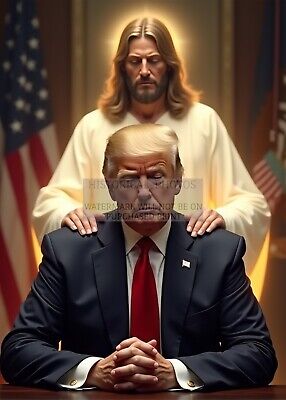
Accordingly, Mr. Trump has often met with pastors from states like Colorado and Pennsylvania. On returning home, those reverends have shared photos taken with the president sometimes with heads bowed in prayer, imposing hands of blessing on the president’s head, or with Mr. Trump joining them in singing hymns.
All of this led the NYT article and accompanying video to identify the White House as “one of the safest places in the world to be a Christian.” In fact, one of the Christian pastors interviewed for the piece said that “he doesn’t see any rails on the limits of the faith office.”
Good Friday Perspective
As a Jesus scholar and theologian, I found all this quite ironic, false, and heretical. In my view it is reminiscent of Germany of the 1930s, when Christian pastors and Catholic bishops routinely endorsed the leader of the Third Reich, who also affirmed allegiance to the Jesus reflected in Mr. and Ms. Trump’s profession of faith.
The reality was, however, that Hitler’s Germany and the policies supported by Trump’s MAGA crowd reveal an actual hatred for Jesus mourned and celebrated this Good Friday. After all he was the son of an impoverished unwed teenage mother who was houseless at birth. He was an immigrant in Egypt. He was an unemployed construction worker. He was a harsh critic of the Jewish political and religious establishment, of the Roman Empire, and of the rich in general. He said that the future belonged to the poor, the non-violent, and those persecuted for justice sake. He ended his life as a victim of imperial torture and capital punishment.
Conclusion
So, if there are no rails, no limits, on Mr. Trump’s faith office how about lowering them for pastors like Episcopal Bishop Mariann Edgar Budde? (Remember how she infuriated Donald Trump and JD Vance at Trump’s inaugural prayer service at the National Cathedral in Washington. She did so merely by pleading with Mr. Trump to “have mercy” on LGBTQ people and immigrants targeted by his policies.)
If there are no rails, how about lowering them for rabbis, ministers, priests, and faithful demanding that Mr. Trump stop the Hitlerian genocide he’s committing in Zionist Israel?
If there are no rails, how about implementing policies that recognize and honor Jesus in the children of poor unwed teenage mothers, in the houseless, in immigrants, in the working class, in opponents of the rich and powerful, in those protesting the hypocrisy of Jewish Zionists, in U.S.-supported torture facilities, and on death row.
Only changes like those can convince followers of the historical Jesus that the White House is “one of the safest places in the world to be a Christian.” Only changes like those can make this “one of the great Easters ever.”
Readings for the Sixth Sunday in Ordinary Time: Jeremiah 19:5-8; Psalm 1:1-6; 1 Corinthians 15: 12, 16-20; Luke 6: 17, 20-26
This Sunday’s readings reject the anti-DEI, anti-Wokeness memes of what Marianne Williamson calls the Trump/Musk power couple.
The selected texts remind us that the natural order is one of diversity, universal love, and complete inclusion (DEI) that prioritizes the needs of women, children, immigrants, and former slaves. As we’ll see, the tradition is outspokenly anti-rich and demands reparations.
The readings also suggest the truth recognized in all major faith traditions that awakening to such reality (rather than remaining asleep) is the whole point of the human project aimed at transcending childish egocentrism and ethnocentrism. The point is what our black brothers and sisters call being “woke.” Even more, it’s to achieve world centrism and ultimately cosmic centrism that understand and respect the unity of all creation.
By contrast, putting oneself first, putting one’s country first, idolizing wealth and the power it brings are all condemned in the teachings of Yeshua.
In other words, the Judeo-Christian tradition represented in today’s readings roundly rejects the villainizing of DEI and wokeness. Even more, they call Yeshua’s followers to a class consciousness and a fundamental option for the world’s poor and oppressed against the rich whom Yeshua condemns in no uncertain terms.
Let me show you what I mean in terms of class consciousness and the warfare of the rich against the poor.
Class Warfare
Whereas in the past it might have been possible to argue that we live in a classless society, that is no longer the case. The accession of Donald Trump to the office of president has rendered such argument moot. The man has declared war on the poor.
Think about the brazenness of it all.
I mean, after the display at Trump’s inauguration, it is now impossible for anyone to deny that Elon Musk and other billionaires play powerful roles in calling the shots. The shot callers include Donald Trump himself, Musk, Mark Zukerberg, Jeff Bezos, Tim Cook of Apple, and Sundar Pichai of Google. All of them were there occupying prominent seats the day that Trump took office. At times it even appears that Elon Musk, the world’s richest man, rather than Mr. Trump is our country’s president. Our system is undeniably plutocratic.
And what is the basic argument of these people? Simply put, it is that THE RICH DON’T HAVE ENOUGH MONEY, WHILE THE UNDESERVING POOR AND MIDDLE CLASS HAVE TOO MUCH MONEY.
They’re convinced that the world’s and our country’s problems are caused by the poorest people on the planet. Accordingly, we’re expected to believe that:
In a country of 320 million people, 12 to 15 million impoverished, undocumented, hardworking, tax-paying refugees are “invaders” and bringing us all down.
The U.S. with 4.5% of the world’s population (along with its European fellow colonialists) has a God-given right to control the entire planet.
Those formerly colonized in Latin America, Africa, and Asia should be sanctioned for uniting (e,g,, in BRICS+) to seek non-violent rectification of the colonial system that has impoverished them for more than 500 years.
The wealthy South African cohorts of their erstwhile countryman, Elon Musk, are now victims of black South Africans who must be sanctioned for treating them unfairly.
Uniformity, inequity, and exclusion are American and Christian values as opposed to diversity, equity, and inclusion.
It’s ludicrous to awaken (become woke) to the absurdity of it all.
Let me say that again: All of this (and so much more) provides unmistakable evidence of the wealthy’s conviction that THE RICH DON’T HAVE ENOUGH MONEY, WHILE THE POOR HAVE TOO MUCH MONEY.
Think about it a bit further. To increase their money supply, the billionaires want lower taxes, less government regulation of their businesses, and continued subsidies to their corporations maintained or increased. Correspondingly, they want “wasteful” programs like those funding Medicaid, HeadStart, food stamps, and public schooling curtailed or eliminated. Even Social Security is questioned. For the rich, minimum wages are an abomination as are unions and the so-called “right” to collective bargaining. The rich see all such government programs and organizing as wasteful, i.e., as excessively enriching the lives of the undeserving poor.
Yes: For the upper class, THE RICH DON’T HAVE ENOUGH MONEY, WHILE THE POOR HAVE TOO MUCH MONEY. That’s what they believe! It can’t be said often enough.
It’s all a declaration of class warfare.
Today’s Readings
Today’s readings contradict all that. Look at my “translations” and summaries immediately below. Compare them with the originals here to see if I got them right.
Jeremiah 17:5-8: In the early 6th century BCE, the great prophet Jeremiah foretold the defeat of his people by the Babylonians (modern day Iraq) because of Judah’s social injustices and moral decay. Of course, his message of doom brought him death threats and cancellation. In today’s reading he says: We who pretend to be God’s People are cursed because we’ve prioritized the wisdom of the world (flesh) over the insights of the heart. Our failure to recognize the rhythms of history makes us like a dried-up bush in a parched desert. Only our hearts’ return to the Divine Mother-Father and to the Mosaic Covenant (that prioritizes the needs of the poor, widows, orphans, and immigrants) will restore our identity as a mighty tree planted near clear running water.
Psalm 1: 1-6: Yes, God’s law commands care for the poor, the widows, the orphans and immigrants. These are God’s “Chosen People” just as Israel once was when it too was poor and enslaved in Egypt. Then their hope was in the Great I Am rather than in the wisdom of Egyptian slavers with their wicked, sinful, and insolent oppression of Yahweh’s chosen. Never forget that. Such mindfulness will insure prosperity for all. Be encouraged too by the fact that the rich and powerful oppressors will inevitably be blown away like chaff in the wind. Blessed be the hope of the poor!
1 Corinthians 15: 12, 16-20: Yeshua’s return from the realm of the dead cannot be denied without destroying the faith and hope of the poor. He is the quintessential avatar of the poor and oppressed brought back to life from “death” that is no more than a temporary slumber. Alleluia!!
Luke 6: 17, 20-26: In the Gospel of Luke, Matthew’s “Sermon on the Mount” is delivered “on a stretch level ground.” Also, Matthew’s “Blessed are the poor in spirit” becomes a more down-to-earth “Blessed are you who are poor.” In both cases however, the penniless Yeshua promised ultimate political triumph, abundant food, joy, and heaven on earth to the poor, the hungry, the tearful, despised, excluded, insulted, and demonized. (He promises reparations!) Moreover, he cursed the overfed, apparently joyful rich and famous. In Yeshua’s Great Reversal, the rich are destined to be hungry, disconsolate, in tears, and disgraced. (Take that Messrs. Pilate, Herod, and Revs. Anas and Caiaphas! Take that Messrs. Musk and Trump and Rev. Huckabee!)
Conclusion
In an interview with NPR, Evangelical Christian leader Russell Moore said that several pastors had told him disturbing stories about their congregants being upset when the ministers read from the “Sermon on the Mount ” where as we’ve just seen (in Luke’s “Sermon on the Plain”) Yeshua favors the poor over the rich.
“Multiple pastors tell me, essentially, the same story about quoting Jesus in the Sermon on the Mount – [and] to have someone come up after to say, ‘Where did you get those liberal talking points?”
Moore added: “And what was alarming to me is that in most of these scenarios, when the pastor would say, ‘I’m literally quoting Jesus Christ, the response would be, ‘Yes, but that doesn’t work anymore. That’s weak.”
But here are Yeshua’s words:
“Blessed are you who are poor, for the kingdom of God is yours. Blessed are you who are now hungry, for you will be satisfied. Blessed are you who are now weeping, for you will laugh. Blessed are you when people hate you, and when they exclude and insult you, and denounce your name as evil on account of the Son of Man. Rejoice and leap for joy on that day! Behold, your reward will be great in heaven. For their ancestors treated the prophets in the same way. But woe to you who are rich, for you have received your consolation. Woe to you who are filled now, for you will be hungry. Woe to you who laugh now, for you will grieve and weep. Woe to you when all speak well of you, for their ancestors treated the false prophets in this way.”
Readings for the Third Sunday in Ordinary Time:Nehemiah 8:2-4a, 5-6, 8-10; Psalm 19: 8,9, 10, 15; I Corinthians 12: 12-14, 27; Luke 1: 1-4, 4: 14-21
Last Tuesday Episcopal Bishop Mariann Edgar Budde infuriated Donald Trump and JD Vance at Trump’s inaugural prayer service at the National Cathedral in Washington. She did so by echoing in her sermon the Spirit of Yeshua of Nazareth whom this Sunday’s Gospel reading depicts as delivering his own inaugural address to his former neighbors in his hometown of Nazareth.
Bishop Budde’s words asked Mr. Trump “in the name of our God” to “have mercy” on LGBTQ people and immigrants targeted by his policies. Her words chimed with those of her Master who in his programmatic words proclaimed his work as directed towards outsiders – the poor, the blind, the imprisoned, oppressed, and indebted.
Evidently, Messrs. Trump and Vance prefer their version of God and a Jesus who puts America first. They seem to consider Americans (and Zionists) as somehow “chosen” by a God who joins them in despising those with non-binary sexual orientations. Instead of welcoming strangers (as Bishop Budde put it in tune with oft-repeated biblical injunctions) their God would build walls and evict them from our midst.
Ironically, the Trump/Vance position is not far from that articulated by Ezra, Israel’s 6th century BCE priest and scribe who invented the concept of a genocidal Israel as God’s chosen one. (You can read a summary of Ezra’s words immediately below.)
So, predictably, Mr. Trump and his followers (like Yeshua’s contemporaries rejecting him) wasted no time in vilifying Bishop Budde.
Instead, she deserves our admiration and imitation as a woman of vast integrity and courage. Let me show you what I mean.
Today’s Readings
Nehemiah 8:2-4a, 5-6, 8-10
Following the Jews’ return from the Babylonian exile (586-538), the Jewish priest and scribe, Ezra rewrote the Hebrew’s largely oral traditions that eventually became their Bible. He unified those narratives about mysterious beings called “Elohim.” These were human or perhaps extraterrestrial “Powerful Ones,” some good-willed, some malevolent, who had never been universally considered divine. In Hebrew oral tradition, they had variously been called by names such as “Elohim,” “El,” “El Shaddai,” “Ruach,” Baal, and Yahweh. Ezra unified and rewrote those traditions as if all of them were about Israel’s now “divine” Powerful One (Yahweh). The tales included divinely authorized genocides of Palestinians (identified in biblical texts as Canaanites, Hittites, Amorites, Perizzites, Hivites, Jebusites, Geshurites, Maacaathites, and Philistines). All of them had lived in the “Holy Land” long before the arrival of the ex-slave invaders from Egypt who ruthlessly decimated their numbers in the name of their Powerful One. In Nehemiah chapter 8, Ezra is depicted as spending half a day reading his conflated narrative [now called “The Law” (Torah)] to Israel’s “men, women, and those children old enough to understand.” The new narrative brings everyone to tears as a nationalistic and exclusive consciousness dawns that Yahweh-God had chosen them as his special people.
Psalm 19: 8,9, 10, 15
Despite the genocides, the people praised Yahweh’s words as simple, perfect, refreshing, trustworthy, wise, illuminating, pure, eternal, true, and completely just. They identified Ezra’s words as Spirit and Life.
I Corinthians 12: 12-14, 27
Yeshua, however, never called his Heavenly Father “Yahweh.” Instead, he (and his principal prophet Paul) understood God as a Divine Parent, the Creator of all things, the “One in whom we live and move and have our being” (Acts 17:28). Yeshua (and Paul) rejected the idea of “Special People” in favor of all humanity as comprising One Human Body. For both men, no part of that Body (even the least presentable) was better or more important than any other. For Paul and Yeshua, Jews and non-Jews were the same. So were slaves and free persons. In fact, for Yeshua’s followers, those the world considers less honorable should be treated “with greater propriety.”
Luke 1: 1-4, 4: 14-21
In the first sermon of his public life, Yeshua addressed his former neighbors. He was asked to read from the scroll of the prophet Isaiah (a contemporary of Ezra) who dissented from genocides and mistreatment of captives. Here’s what Yeshua read:
“The Spirit of the Lord is upon me, because he has anointed me to bring glad tidings to the poor. He has sent me to proclaim liberty to captives and recovery of sight to the blind, to let the oppressed go free, and to proclaim a year acceptable to the Lord.“ Rolling up the scroll, he handed it back to the attendant and sat down, and the eyes of all in the synagogue looked intently at him. He said to them, “Today this Scripture passage is fulfilled in your hearing.”
When his neighbors heard his words, they wanted to kill him. Who did he think he was?! Everyone knows God favors the rich, not the poor. Just look at the Great Ones’ gaudy lifestyles and possessions. And those people in prison deserved to be there. Once freed, they’d threaten us all. And besides, the blind were sightless because of some sin they or their parents had committed. They deserved their lot in life. As for “the oppressed . . . There are no “victims.” Everyone knows that. Victimology is a hoax. Who did this Yeshua think he was?! Let’s kill him.
Conclusion
Yes, Yeshua, like Bishop Budde confronted his contemporaries to champion the One in whom we live and move and have our being.” For Yeshua that Divine One considers all humankind a single indivisible body. For him this meant incorporating those his world wanted to amputate as outsiders, invaders, criminals, and as official enemies like Samaritans, tax collectors, street walkers, the poor, imprisoned, the sightless, oppressed and indebted.
In Yeshua’s spirit, Bishop Budde urges incorporation of immigrants, LGBT outcasts, and official enemies such as the Palestinians, Russians, Chinese, Iranians, North Koreans, Venezuelans, Nicaraguans, Cubans, Syrians, Iraqis, Afghans, Somalis, Sudanese, Libyans, etc. etc. None of them is our enemy. All of them, she says with Yeshua and Paul, are closer to us than our brothers and sisters. They are parts of our own bodies. None can be amputated.
Such universalism, such wakefulness always infuriates those who would divide and rule over us. It angers as well ordinary people (like Yeshua’s neighbors) who have been brainwashed into accepting prevailing nationalistic understandings of the Bible’s often genocidal “God.”
Today’s readings call us to wake up! Bishop Budde’s got it right. Trump and Vance are heretics.
It’s Christmas again.
And Jesus is still under the rubble
In Gaza
(Just like last year).

He’s on an operating table
There
Having his infant arms and legs
Sawed off
Without anesthesia.
Screaming for his
Already dismembered mother
Who’s been blown away
By the U.S. and Israel.
He’ll never kiss her again
Or feel her warm embrace.

All but forgotten
By holiday revelers
With mindless
“Merry Christmases!!”

Meanwhile Zionists weaponize the Bible
So the slaughter might continue.
Christians do the same
Singing maudlin carols
They don’t understand
And buying silly trinkets
In Wal-Mart.
As if God were Santa Claus,
A billionaire,
Or a racist killer.

Worse still:
As if God were
A genocidal Amerikan!

It’s as if Yeshua were not
Piss poor
And homeless at birth
Considered by imperialists
As no more than an “animal”
Among stable asses and oxen,
The son of a disgraced
Unwed teenage mother,
An underpaid construction worker,
A drunken friend of prostitutes
Houseless as an adult
The sworn enemy
Of the Jewish power establishment
And the rich
That wanted that child
From nowheresville
Slaughtered.

(Good Christians don't like people like that)

As if Yeshua were just another
Palestinian street rat,
And not
An unwelcome refugee in Egypt,
A terrorist in Roman eyes,
Their inmate on death row,
 A victim of torture
And capital punishment.

“Good riddance,”
The Romans said
Just like us.

And the whole world
Wasn’t watching then either.
Few noticed
Or cared.

But should we open our eyes
We’d see a Yeshua
So much more
Than that.

He came to serve the poor.
He said.
God’s kingdom would be theirs
So would the entire earth.
Not Elon’s or Gates’ (Luke 6:24)
Or Amerika’s
Who’s blindness and arrogance
Deserves eternal damnation
Rather than the accolades
The world bestows on
Such fools
Along with Herod and Pilate
Anas and Caiaphas.

______

The pastor of Bethlehem’s
Christmas Church said
Something like that
In his own Christmas sermon
This year
Just like the one
Few noticed
When he said it
Last year.

Here’s his Xmas creche
Here’s Pope Francis with his Jesus
In a keffiyeh-lined crib:
This year
Listen
To these holy men
And to Yeshua’s silenced voice
In the Sacred Land
Of Palestine.

Once again,
The real
Christmas Story
Is unfolding
There
Before our very eyes.
Well, it’s happened. My practice of Tarot reading has converted me into a satanist.
On the one hand Tarot has caused me to recognize that the God I was raised to worship (and to preach as a priest) is more like the devil depicted in Tarot’s 15th Major arcana card.
And on the other hand, the cards have helped me see that the devil represents a suppressed aspect of my dark side that (in the understanding of Carl Jung) contains a kind of gold I’m being called to mine. In some sense, Satan is my friend.
All of this has led me to reject the God of my youth (and to some extent of my priesthood) while embracing as a quasi-friend Satan himself.
Let me explain.
I
The Devil Card
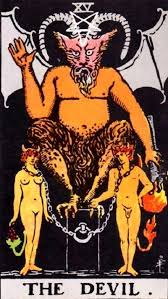
To begin with, here’s the Devil as depicted in the Rider, Waite, Smith (RWS) Tarot Deck.
What do you see here?
Straight away, I notice that its number 15 stands for a trifecta of strife (3 X 5 – with 5 being the Tarot’s number of conflict). The card depicts conflict with (1) the world, (2) the flesh, and (3) the devil himself.
Next, I see that black is the card’s dominant color – representing one’s dark side, death, destruction, and negativity.
The main figure in the card is a satyric monster half man and half beast. His face is fear-inspiring with monstrous horns jutting from his head. His right hand is raised in a mudra which says, “what you see is what you get.”
An inverted pentagram (which in upright form represents virtue and good) forms the monster’s “halo,” but in its inverted form is just the opposite.
In the card’s depiction, the monster reigns over a naked man and an unclothed woman. The heads of both are horned – a clear connection to the horned devil’s mind. The female figure’s tail is tipped with grapes, a vineyard sign of pleasure and intoxication. The tail of her gender opposite is inflamed directly from the torch the devil holds inverted in his left hand. The man’s passions are on fire in the presence of the disrobed woman.
Both the man and the woman are chained by their necks to the pillar from which the monster presides. The chains are loose and could easily be removed. But evidently, the humans either don’t perceive this or don’t want to escape their bondage.
In summary, the card portrays the human body and sexuality as somehow problematic. Both are intimately connected with the Spirit of Evil, with enslavement, and ambiguity about the whole affair.
II
God As Enemy
Personally, the more I contemplate the card, the more I see Christianity’s traditional God rather than the devil. That God was presented as creator, lawgiver, judge, condemner, and punisher.
He was fear-inspiring, wasn’t he? After all, his principal concern was understood as connected with the “sins of the flesh.” And he made us all feel guilty (or at least uncomfortable) with sexual thoughts, words, and deeds.
All of that flew in the face of common-sense recognition of sex and propagation of the species as humanity’s second most powerful drive (after self-preservation).
It was as if devilish priests and theologians had transformed an unparalleled good into an unparalled evil to keep penitents under their control, coming to confession, and paying for the indulgences that Martin Luther and others found so odious.
III
Satan As Friend
Don’t be turned off by the idea of Satan as friend. It’s quite biblical. For instance, in the book of Job, Satan is portrayed as God’s counsellor. He’s a realist who for instance (in the Book of Job) bets the Divine One that if Job comes on extremely hard times, he will abandon his virtue and show his true colors as just another fair-weather saint.
For his part, Carl Jung saw the devil as representing aspects of God. The former as well as the latter is part of the Life Force. As a psychological phenomenon the devil embodies suppressed dark forces that are part of every human personality. In Jung’s sense, he’s the “Left Hand of God.”
Think of what we’ve been taught about the “Seven Deadly Sins.” Tradition has it that they’re pride, greed, envy, anger, lust, sloth, and gluttony. None of us wants to acknowledge that such forces are inevitable parts of our personalities. So, we spend a great deal of time pretending they belong to others but not to us. We spend our life force suppressing their influence on us. Inevitably though they bubble to the surface and express themselves periodically.
Jung calls us not only to face our inner destructive forces, but to embrace them. There’s gold in our dark side, he teaches.
What did he mean by that? Yes, he acknowledges that in the extreme any one of the Seven Deadly Sins can destroy our lives. But under conscious control, they can also enrich us with the gold they contain. For instance, properly acknowledged, accepted, and controlled
Pride can be a source of self-esteem that preventing one from acquiescing to abuse by the disrespectful.
Greed under control can cause workers to organize in pursuit of higher wages and safer working conditions.
A productive amount of Envy can drive us to imitate the Christ, and saintly figures like Gandhi, King, Malcolm, Dorothy Day, Rosa Parks, and Mother Theresa.
Justified Anger can lead us to demonstrate against the genocide now perpetrated by Zionists and the United States in Palestine.
Lust can help us appreciate the gift of sex and the pleasure it brings.
Holy Sloth can keep us from endorsing our culture’s worship of “productivity,” the rat race, and overwork. It can drive workers to organize for more time off, longer vacations, and family leave for new parents.
Gluttony can help us become slow food cooks and appreciators of wines and spirits. It can turn us against fast food saturated with sugar and salt.
IV
Conclusion
So, the next time the devil card turns up in your Tarot reading, don’t be frightened. It can serve as a reminder that God is not primarily creator, lawgiver, judge, condemner, and punisher. All of that is diabolical. Instead, the Divine One is the total of all the energy in the universe and in the universe of universes. That includes the energy of consciousness even to the extent that She is aware of each one of us and can be addressed as Thou. She wants only the fullness of life for each of us.
On the other hand (God’s Left Hand?) Satan is in some sense our brother and friend. True, he is never satisfied with temperance, harmony, and balance (Tarot’s 14th major arcana card). However, there is gold in his Seven Deadly Sins. With controlled expression, they can drive us towards healthy self-esteem, just recompense for our work, the idealism of imitating the Christ, unwillingness to endorse genocide, an appreciation of sexual pleasure, the joy of doing nothing, and appreciation of the gifts of food and drink.
Bread & Puppet’s rendition of El Salvador’s martyred archbishop, Oscar Romero
Readings for the 19th Sunday in Ordinary Time: I Kgs. 19:4-8; Eph. 4:30-5:2; Jn. 6:41-51
This Sunday’s readings are about prophets and bread.
They remind me of a recent visit my wife Peggy and I made to Glover Vermont’s Bread and Puppet Museum along with two of our eight grandchildren, Eva (age 15) and Orlando (12). The Museum presented the work of true prophets, Elka and Peter Schumann who, like today’s readings consistently connected prophecy with hard-to-chew bread. (Elka died two years ago at the age of 85).
The Schumann’sProphetic Puppets
I’m sure many of you have heard of Bread and Puppet. The Schumanns founded that theater in 1963 as an act of political protest. Originally their issue was poor housing conditions in New York City. Since then, their giant puppets – some more than 20 feet high – have made spectacular appearances at protests, parades, and demonstrations everywhere.
Over the years, Bread and Puppet’s focus expanded beyond housing concerns to include the Vietnam War, climate change, Nicaragua and the Contras, El Salvador, Archbishop Romero, liberation theology, Israel’s crimes in Palestine, and the general failure of capitalism. Every summer hundreds of volunteers have participated in the theater’s elaborate outdoor pageants highlighting those issues.
As a result, touring the museum last month and seeing hundreds of the Schumanns’ puppets represented a painful review of U.S. crimes over the past half century. Despite those sad reminders, the puppets also embodied an inspiring display of insight, creativity, commitment, joy, and courage. The Schumanns’ giant puppets have provided a truly prophetic deepening our collective consciousness.
The Schumann’sNourishing Bread
However, the mammoth puppets were so stunning and arresting that it’s easy to forget the part that bread played in the Schumanns’ work. After all, the name of their company is Bread and Puppet.” (And homemade bread was served at all Theater performances.)
Elka Schumann herself made the connection in a 2001 film about her work. The documentary was produced by her daughter Tamar and DeeDee Halleck. Elka said:
“We have a grinder over there, and we grind the grain ourselves. And the bread is not at all like your supermarket bread. You really have to chew it. You really have to put some work into it. But then you get something very good for that. And when our theater is successful, we feel it’s the same way. You’ve got to think. It doesn’t like tell you everything. It’s not like Wonder Bread: It’s just like there it is, here’s the story, this is what it means. You’ve got to do some figuring yourself in the theater, in our theater. And if the play is successful, then at the end you probably feel it was worth the work.”
Elka’s words underline the essentials of good theater, good art, good religion. They don’t tell you everything. You must put in some work trying to figure out the message, to unpack it all. Good theater, good religion is not like eating white bread from Piggly Wiggly.
Jesus’ Bread
As mentioned earlier, that aspect of theater and faith is important to note this particular Sunday, since the day’s readings highlight the connections between bread, prophets, and the teachings of Yeshua, the construction worker from Nazareth who like the Schumanns’ puppets was truly larger than life.
What Jesus taught in his illustrative parables – in fact, what’s found throughout the Bible – challenges us to think and question our own lives, the values of our culture, and our too easy “understandings” of life and “God.” That’s what the Schumanns were doing too.
Think about the prodigal son, Jesus’ response to the woman about to be stoned for adultery, his dialog with Pontius Pilate about the nature of truth, and the issues raised by the fact that Jesus was executed as a rebel against Rome. Think about the prophet’s dying prayer for his enemies, his injunction to treat others as we would like to be treated, his “beatitudes'” centralizing purity of intention, poverty, gentleness, bereavement, imprisonment, mercy, peacemaking, and passion for justice. At every turn his words and deeds are challenging and (if you puzzle over them) difficult but rewarding to digest.
Understood in terms of rejecting Wonder Bread’s superficiality, all those elements in the accounts of Jesus’ words and deeds should give “Americans” pause. They should call into question the very notion of patriarchy, our worship of the rich, our wars against the world’s poor, our attitudes towards empire and capital punishment, as well as our very denial of truth’s possibility (which Gandhi boldly identified with God).
That sort of hard-to-chew bread forms the backdrop implied in today’s readings. See for yourself. Here are my “translations.” You could find the originals here to tell if I got them right.
I Kings 19: 4-8

Prophets are lonely people
Living on the edge of
Death and despair.
Elijah was no different.
He even prayed for death
On his way to Mt. Sinai.
Instead, generous Spirits
Fed him with bread and water
Twice!
He didn't have to eat again
For the remaining 40 days
Of his journey
To God's holy mountain.

Psalm 34: 2-9

Elijah's miraculous bread
Gave him a taste of
Life's Supreme Goodness
Directed especially
Towards the threatened
And afflicted poor.
The taste of bread
Replaces their shame
And distress
With joy and confidence
In Life's protective Source.

Ephesians 4: 30-5:2

So, Elijah
Should never have been sad.
In fact,
For those filled with God's Spirit
(And bread!)
There can be no room for sadness
Bitterness, fury, anger,
Shouting, reviling or malice.
There is space only for
Kindness, compassion,
Forgiveness and love
That mirror
Life's own abundance
And inherent generosity.

John 6: 42-51

John's community of faith
Identified Jesus' teaching
With the bread
That fed Elijah.
In fact,
They called Jesus himself
"The Bread of Heaven."
Consuming his teachings
Would strengthen them
For "the journey without distance"
(From heart to head).
This still upsets outsiders
Unable to overcome
Fundamentalist literalism
That yet confuses
The Bread of Life
With Wonder Bread,
And fairy tales
And spiritual nourishment
With gross cannibalism
Conclusion
When I was a kid, I actually liked Wonder Bread. In fact, I still kind of do. Don’t you? I mean it’s a bit sweet; it’s easy to chew; it’s a nice base for peanut butter and jelly, and it goes down easy. It’s comfort food. My well-intentioned mother fed it to me and my three siblings without a second thought. I ate it the same way.
But then most of us got more conscientious about what we put into our bodies. With Elka Schumann, we realized that Wonder Bread didn’t really nourish us. So, we turned to bread that (initially at least) was less familiar and that required more chewing and changing of taste-preferences – a bit more work – maybe not as strong as Elka’s bread, but more substantial nonetheless.
For many of us who have stuck with faith as a source of meaning, it’s been the same. We outgrew the beliefs that no longer nourished. We woke up to the fact that Jesus’ teachings need adult interpretation that demands thought and decision about those issues I mentioned earlier — patriarchy, grossly unequal wealth distribution, perpetual wars precisely against the world’s poor, empire, capital punishment, and about agnosticism concerning the Truth that parallels our denial of what we know to be genuine relative to the great issues of our day.
Instead, we’ve reduced “faith” to childish fairy tales that none of us can believe. We’ve made it into Wonder Bread. And this at a time in history when acceptance of life’s essential unity – proclaimed not only by Elijah and Jesus, but by all the world’s great religious traditions – is necessary for our species’ very survival.
In the words of John, the Evangelist, I’m trying to say we need the Bread of Heaven, the Bread of Life now more than ever. We don’t need comfort food.
Thank you, Elka and Peter Schumann for using your puppets and bread to drive that truth home.
Readings for 13th Sunday in Ordinary Time: Wisdom 1:13-16, 2:23-24; Ps. 30:2, 4-6, 11-13; 2Cor. 8:7, 9, 13-16; Mk. 5:21-43
Last month my brilliant 15-year-old granddaughter shocked students in her high school freshman class by giving a speech about menstruation. Yes, menstruation! She called her talk “Bleeding in Silence: The Hidden Epidemic of Period Poverty.” (For those interested, I’ve pasted Eva’s words to the bottom of this posting.)
Eva’s speech was about how the patriarchal system fundamentally misunderstands how women’s bodies function. And in our man’s world, it’s women who pay the price for such ignorance. For instance, it influences the cost of “feminine hygiene products” and their availability while imposing unspoken prohibitions about even mentioning menstrual periods much less openly discussing and coping with them.
Eva’s presentation began with a video of interviews of male family members during a party over her school’s Easter break. On camera, she simply asked us “What do you understand by the word ‘menstruation?” It was surprising how quickly inarticulate, seemingly embarrassed, and (let’s face it) ignorant our responses were, even by those who (like me) should know better.
A principal conclusion of Eva’s speech was that lamentably, men know very little about how female bodies work. Women, of course know much more. Moreover, this disparity has major social repercussions when overwhelmingly male state administrators in a completely patriarchal system impose legislation about what they barely understand. e.g., about abortion, contraception sex education, and easy and cheap access to those hygiene products.
For instance, relative to abortion, the legislation ignores the fact that 70-75% of fertilized eggs end up aborting spontaneously. They’re unceremoniously flushed down toilets across the world in the menstrual period immediately following fertilization. Yet, a recent decision by the Alabama Supreme Court holds that all those unknown and unrecognized embryos are somehow “children.” At least that’s the implication of the court’s determination that frozen embryos are babies. How offensive to common sense is that? How contrary to what every woman implicitly knows.
I bring all of that up on this Thirteenth Sunday in Ordinary Time because today’s selection from the Gospel of Mark centralizes a woman with a menstrual problem. It implies criticism of ignorant patriarchal laws regulating it, while strongly affirming a particular woman’s courageous decision to transgress those restrictions in favor of her own faith and common sense.
Jesus & Menstruation
In short, today’s reading uses the issue of menstruation to show how Jesus favored women who spoke for themselves and courageously exercised their own initiative even in the face of specific patriarchal legislation forbidding such agency. It has him even curing and praising a woman who disobeys precisely misogynistic laws. He ends up prioritizing her needs over those of a young female who was a passive captive to the religious patriarchy.
To make those points, Mark the evangelist creates what might be termed a “literary sandwich” – a “story within a story.” The device focuses on two kinds of females within the Jewish faith of Jesus’ day. In fact, Mark’s gospel is liberally sprinkled with doublets like the one just described. When they appear, both stories are meant to play off one another and illuminate each other.
In today’s doublet, we find two women. One is just entering puberty at the age of 12; the other has had a menstrual problem for the entire life span of the adolescent girl. (Today we’d call her condition a kind of menorrhagia.)
So, to begin with the number 12 is centralized. It’s a literary “marker” suggesting that the narrative has something to do with the twelve tribes of Israel – and in the early church, with the apostolic leadership of “the twelve.” The connection with Israel is confirmed by the fact that the 12-year-old in the story is the daughter of a synagogue official. As a man in a patriarchal culture, he can approach Jesus directly and speak for his daughter.
The other woman in the doublet has no man to speak for her; she must approach Jesus covertly and on her own. She comes from the opposite end of the socio-economic spectrum from the 12-year- old daughter of the synagogue leader.
The older woman is without honor. She is poor and penniless. Her menstrual problem has rendered her sterile, and so she’s considered technically dead by her faith community. Her condition has also excluded her from the synagogue. In the eyes of community leaders like Jairus (the petitioning father in the story) she is “unclean.” (Remember that according to Jewish law, all women were considered unclean during their monthly period. So, the woman in today’s drama is exceedingly unclean. She and all menstruating women were not to be touched.)
All that means that Jairus as a synagogue leader is in effect the oppressor of the second woman. On top of that the older woman in the story has been humiliated and exploited by the male medical profession which has been ineffective in addressing her condition. In other words, the second woman is the victim of a misogynist religious system which saw the sacrificial blood of animals as valuable and pleasing in God’s eyes, but the blood of women as repulsively unclean.
Nonetheless, it is the bleeding woman who turns out to be the hero of the story. Her confidence in Jesus is so strong that she believes a mere touch of his garment will suffice to restore her to health, and that her action won’t even be noticed.
So, she reaches out and touches the Master. Doing so was extremely bold and highly disobedient to Jewish law, since her touch would have rendered Jesus himself unclean. She refuses to believe that.
So instead of being made unclean by the woman’s touch, Jesus’ being responds by exuding healing power, apparently without his even being aware. The woman is cured. Jesus asks, “Who touched me?” The disciples object, “What do you mean? Everybody’s touching you,” they say.
Finally, the unclean woman is identified. Jesus praises her faith and (significantly!) calls her “daughter.” So, what we end up finding in this literary doublet are two Jewish “daughters” – yet another point of comparison.
While Jesus is attending to the bleeding woman, the first daughter in the story apparently dies. Jesus insists on seeing her anyhow. When he observes that she is merely asleep, the bystanders laugh him to scorn. But Jesus is right. When he speaks to her in Aramaic, the girl awakens and is hungry. Everyone is astonished, and Jesus must remind them to feed her.
Mark’s Message for Us
What does all the comparison mean? The doublet represented in today’s Gospel addresses issues that couldn’t be more female – more feminist. The message here is that bold and active women unafraid of disobeying the religious or civil patriarchy in matters that women understand better than men. “Prioritize and act like the bleeding woman” is the message of today’s Gospel.
Could today’s gospel be telling us that bold and specifically feminist faith that sides with the poor and oppressed (like the hero of today’s Gospel) will be the salvation of us all who are moribund? Are women precisely as women today’s real faith leaders, rather than the elderly, white, out-of-touch men who overwhelmingly claim to lead in every sphere even those where women know far more.
Conclusion
Today’s Gospel suggests that it’s time for men to stop telling women how to be women – to stop pronouncing on issues of female sexuality whether it be menstruation, abortion, contraception, same-sex attractions, or whether women are called by God to the priesthood. Correspondingly, it’s time for women to disobey such male pronouncements, and to exercise leadership in accord with their common sense – in accord with women’s ways of knowing. Only that will save our national community which is currently sick unto death.
_______
Bleeding in Silence: The Hidden Epidemic of Period Poverty
By Eva Lehnerd Reilly
Whether they know the term or not, all women are necessarily aware of the realities of “Period Poverty.” Nonetheless, the concept remains completely foreign and even incomprehensible to most men. As a result, little is done to eliminate the problems the phrase represents. The phrase “Period Poverty” is defined as the lack of access to safe and hygienic menstrual products during monthly periods and accessibility to basic sanitation services or facilities as well as menstrual hygiene education.
Additionally, period poverty has social dimensions that include the stigmas surrounding this natural female process. To explain the problem, what follows will explore international dimensions of this issue, connect the phrase with patriarchy, misogyny and human rights and make recommendations for its elimination. This essay is arguing “Period Poverty” is a world health issue thus by refusing to acknowledge it we are proving that we still live in a society that is patriarchal, misogynist, and locked in an aggressive denial of the rights of women.
An International Problem
This issue affects billions of people worldwide in ways including stigma, dependence on transnational companies producing the necessary hygienic products, and the lack of understanding and acknowledgement of the problem. Stigma is one of the largest problems surrounding period poverty. Many countries and people believe wildly untrue period-related information. According to the Korean Journal of Family Medicine, Nepal “continues to believe in dangerous, incorrect ideas, for example, using tampons causes women to lose their virginity, or handling food while menstruating causes it to spoil the food.
Social stigma on menstruation remains even in more advanced nations: in the United States, 58% of women are ashamed of having a period, and 51% of men believe that it is improper to discuss periods at work.” (Jaafar, Hafiz, et al., 2023). The fact that stigma is so present in all different circles around the world shows how grand an issue this is and how many people are affected by it.
This is also an economic issue because women are dependent on transnational companies. Global Research and Consulting Group Insights explains that: “Multiple countries in the world impose the ‘tampon tax’ on menstrual products, frequently targeted as ‘luxury goods.’ This categorization enhances the chances that economic disparities, limit access to period products, and perpetuates the view that they are not a ‘necessity.’”(Ricardo da Costa, 2023). This tax is implemented often in particularly lower-income, less developed countries but it is far from unique to developing countries. In fact, GRC found that the elimination of the “tampon tax” in California would likely reduce government revenue by 55 million dollars. This shows how women’s reliance on companies to provide basic hygiene products is problematic because the government is trying to make financial gains by providing resources that should never be charged for in the first place.
Probably the largest problem of them all is the lack of awareness and understanding surrounding period poverty and the menstrual cycle in general. A Plan International study found that one in five boys and young men think that periods should be kept a secret. Furthermore, they associate this term with words like ‘messy,’ ‘gross,’ and ‘embarrassing.’ This tells us that the taboos set in place by society are greatly affecting young people and discouraging them from learning and understanding this issue. This is leading to the rise of a new wave of sexism.
Periods and Patriarchy
The term “patriarchy” refers to social conditions ruled by fathers–or more generally by men. In
The Creation of Patriarchy, Gerda Lerner determines that this comes from lessons taught in childhood. She says that the “absolute authority of a father over his children provided men with a conceptual dominance of dependency, due to the helplessness of youth.” (Lerner, 90). Relative to period poverty, this fundamental condition has led some women to joke that if male biology included menstruation, they would likely be excused from work days before and during the entire menses process, plus they would be given a week off to recover. Additionally, menstrual hygiene products would be low or no cost, not subject to taxation, and as available as toilet paper and paper hand towels in every washroom.
In our patriarchal society no such accommodations are available for more than half our nation’s population. That’s period poverty. However, this goes farther than just the patriarchy. The issue is also affected greatly by misogyny, a term meaning hatred of women. This is revealed in attitudes surrounding mood swings, jokes about periods and even dates back to religious texts calling women ‘unclean’ during this time.
Particularly, in the third Book of the Pentateuch or Torah, known as Leviticus, it states that a woman undergoing menstruation is perceived as unclean for seven days and whoever touches her shall be unclean until evening (Leviticus 15:19). This is simply outrageous and goes to show how our society is so deeply rooted in these feelings of hatred towards women and disgust towards natural occurrences.
Finally, access to period products is a human right. A human right is what belongs to human beings simply because of being human; it does not have to be earned, it is an entitlement. All women, simply because of being women, have menstrual periods. They therefore have rights connected with their inevitable circumstances. These include rights to free or very low-cost feminine hygiene products, widespread availability of such products and freedom from blame, ridicule, or penalty for time off for personal care during their periods. Now that we have established this, how can we fix this?
Practical Recommendations
The Journal of Global Health Reports found that 500 million people lack access to menstrual products and hygiene facilities and since half the population is female and over half of university students are female, this issue can no longer be ignored. Men need to be part of the solution. We need to all work together to ensure a positive and supportive environment that allows menstruating people to participate in all aspects of life (e.g., going to school/work, and sport). In a Plan International study of over 300 men, 49% said their education on periods was poor or non-existent and just under one third (32%) said that talking about periods made them feel uncomfortable, increasing to 53% in the youngest respondents aged 16-18 years. This shows that many people (men in particular) are not receiving adequate education leading to misinformation and increased stigma associated with menstruation.
The takeaway is that we are in desperate need of a far greater and earlier education about periods in schools. There are three things to note surrounding this being a world health issue: 1) Poor menstrual hygiene often causes physical health risks, 2) globally, 1.7 billion people live without basic sanitation services, 3) girls with disabilities disproportionately do not have access to the facilities and resources they need for proper menstrual hygiene. The former Chief of Water, Sanitation and Hygiene at UNICEF said it best: “Meeting the hygiene needs of all adolescent girls is a fundamental issue of human rights, dignity, and public health.” (Rodriguez, Global Citizen). With all that in mind, allow me to conclude my argument.









 About Things That Matter