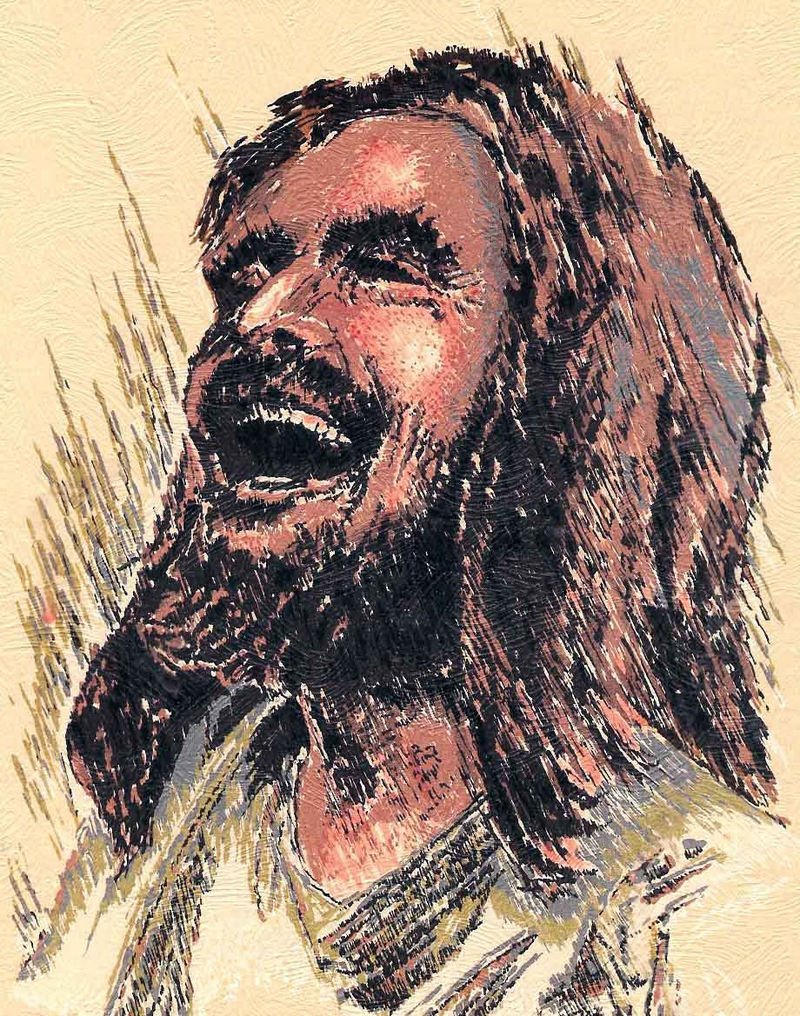
(Sunday Homily) Is God Speaking to Us through Our Muslim Sisters and Brothers?

Islam

Readings for 20th Sunday in Ordinary Time: Is. 66: 18-21; PS. 117: 1-2; HEB. 12: 5-7, 11-13; LK. 13: 22-30.

Messages from God can come from the most unlikely places – even from our enemies and those our culture considers inferior and evil. That’s the teaching I find in today’s liturgy of the word. There God speaks to Babylonians through Jews, and to Romans through Christians. This suggests to me that God might be evangelizing Americans today through Muslims.
_____
Consider our first reading from Isaiah.

Imagine yourself a Babylonian in the 6th century BCE. You belong to an empire – one of the most powerful nations the world has ever seen.

In 586 your people conquered a small insignificant nation called “Israel.” Its leaders have been taken captive, and for more than three generations (586-516) have remained prisoners of your country. They are your enemies. You despise them as inferior, superstitious and violent.

Now towards the end of the 6th century, one of their “holy men,” someone called “Isaiah,” claims that those captives, those refugees, those “fugitives” as Isaiah calls them, are agents of the single God of the Universe. They have been sent specifically to call you away from your polytheistic worship of your Gods, Anshar, Ea and Enlil, and to recognize that there is only one God. They call him Yahweh. This God has special care specifically for refugees, slaves and outcasts in general.

For you, recognizing that entails releasing the prisoners your government has held captive for so long.

Even more, Isaiah says you and your proud people are being called to actually worship that God of refugees, political prisoners, and slaves! That means putting their needs first, while subordinating your own.

As Babylonian, you find all of this incredible and obviously insane.
______
Now to grapple with today’s gospel selection from Luke, imagine that you are a Roman living towards the end of the 1st century CE.

You belong to an empire recognized to this day as the greatest the world has ever known. As with the Babylonians more than 500 years earlier, Palestine and its Jewish people are provincial possessions of the empire; they are your captives. Roman legions continue to occupy Palestine whose haughty people resist their occupiers at every turn.

“Jews are nothing but terrorists, every one of them,” you think.

Among the most infamous of those terrorists was a man called Jesus of Nazareth. You’ve learned that he was a Jewish peasant crucified by Rome about the year 30 CE. You’ve heard that a new kind of religion has formed around that so-called “martyr.” In fact, his followers acclaim him by a title belonging to the Roman emperor alone – Son of God. To you that sounds absolutely seditious.

In any case, this Jesus asserted that the God he called “father” was blind to people’s national origins. He told a parable (in today’s gospel) whose refrain from a thinly veiled God figure was, “I do not know where you are from.” Apparently Jesus meant that in God’s eyes no nation – not even Rome – is superior to any other.

You wonder, was Jesus blind? No nation superior to any other? Did Jesus not have eyes to see Rome’s power, its invincible army, and feats of engineering – the aqueducts, the roads, the splendid buildings and fountains?

According to Jesus, Israel itself is not above other nations in the eyes of God. Nor are his own followers better than anyone else. Even those who drank with him and shared meals with him could not on that account claim special status in God’s eyes.

In fact, the only “superiors” are what Jesus called “the least” – his kind of people: artisans, peasants, the unemployed, beggars, prostitutes, lepers, immigrants, women and children. As in today’s reading from Luke, Jesus calls these people “the last.” In God’s eyes, they are “the first,” he said. Meanwhile those who are first in the eyes of Rome, Israel, and even of his followers end up being outcasts.

Worse still, many Romans, especially slaves and criminals, are embracing this new religion. Some in the Empire’s capital city are already worrying that if not stopped, this worship of an executed criminal from a marginal imperial province might undermine the religion of the Roman Gods, Jupiter, Mithra and of the emperor himself.

How absurd, you think, that Romans could be schooled in matters theological by riff-raff, Jews, and terrorist sympathizers.
_____

Finally, imagine that you are an American today. Many think that your country is the proud successor of Babylon and Rome. In fact, the United States may have surpassed Rome’s greatness. Certainly, it has the most powerful military machine the world has ever known. It has the capacity to destroy the earth itself, should its leaders take that decision.

Some attribute America’s greatness to its embrace of the faith of Jesus of Nazareth and to its partnership with Israel, the biblical People of God. As a result the U.S. has become the light of the world, the “city on a hill that cannot be hidden” (Mt. 5: 14-16). America can do no wrong.

This is not to say that its leaders aren’t fallible. They make their share of mistakes and even commit crimes. Yes, they torture, support dictators across the planet, imprison a higher percentage of their citizens than anyone else, drop atomic bombs, even threaten the extinction of human life as we know it, and have declared a state of permanent war against virtually the entire world.

But as a nation, the United States, you continue to believe, is idealistic; it stands for democracy, freedom and equality. As a result, America continues to enjoy God’s special protection.

Nevertheless, there are those in your midst who say that none of this is true. They are like the descendants of Abraham, Isaac and Jacob living in 6th century Babylon. They are like the first Christians who refused allegiance to Rome. They are the foreigners found in U.S. prisons all around the world – in places like Guantanamo Bay and Abu Ghraib.

By and large, those prisoners, those (in Isaiah’s terms) “fugitives” and exiles share a religious faith (Islam) that is as difficult for most Americans to understand as it was for Babylonians to understand Jews or for Romans to understand Christians. The faith of those held captive by America today is largely the faith of poor people called “terrorists” by your government – just as were the Jews and early followers of Jesus.

However, closer examination shows that Allah is the same as the Jewish God, Yahweh. Moreover Muslims recognize Jesus as the greatest of God’s biblical agents.

With that in mind, you realize that Muslims routinely invoke their faith to resist U.S. imperial rule. And they are critical of the use of Judaism and Christianity to justify oppression of their brothers and sisters in Palestine, Iraq, Afghanistan, Pakistan, Yemen, Bahrain, Somalia, throughout the rest of Africa and elsewhere.

Could it be that these exiles, captives, fugitives, “terrorists,” might be your empire’s equivalents of 6th century Jews in relation to Babylon and of 1st century Christians vis-a-vis Rome? Could they possibly be God’s agents calling us Americans away from heartless imperialism and to the worship of the true God (even if called “Allah”)?

Are our Muslim captives reiterating the words of Jesus in this morning’s gospel: God is oblivious to people’s national origins and to physical ties to Jesus? The Master “does not know where we are from” even if we’ve shared table with him. It makes no difference if we’re Jews or Christians, Babylonians, Romans, Americans, or Muslims.

Only the treatment of “the least” is important in God’s eyes. And for us Americans, those “least,” those “last” happen to be the poor of the Islamic world against whom our government has declared permanent war. And what is their God’s demand? It’s simple: Stop the war on us and our religion!

Is their God – our God – trying to save us – and the planet from the crimes of American Empire?

The fates of Babylon and Rome hang over us all like Damocles’ sword.


Did Jesus Justify Armed Resistance to Roman Imperialism? What about Insurgent Resistance to U.S. Imperialism? (Sunday Homily)

Jesus-Said-Video-Preview.jpg

Readings for the 20th Sunday in Ordinary Time: JER 38: 4-10; PS 40: 2-4, 18; HEB 12:1-4; L 12: 49-53

Today’s gospel excerpt presents problems for any serious homilist. That’s because it introduces us to an apparently violent Jesus. It makes one wonder; why does the Church select such problematic passages for Sunday reading? What’s a pastor to make of them?

On the other hand, perhaps it’s all providential. That is, today’s gospel might unwittingly help us understand that even the best of imperialism’s victims (perhaps even Jesus) are drawn towards reactive, revolutionary, or self-defensive violence. After all, Jesus and his audiences were impoverished victims of Roman plunder. By the standards most Christians today accept, they had the right to defend themselves “by any means necessary.”

Here’s what I mean. Without apology, today’s reading from Luke has the ‘Prince of Peace” saying, “I have come to set the earth on fire, and how I wish it were already blazing . . . Do you think that I have come to establish peace on the earth?  No, I tell you, but rather division.”

In a parallel passage, Matthew’s version is even more direct. He has Jesus saying, “Do not suppose that I have come to bring peace to the earth. I did not come to bring peace, but a sword.”

Is that provocative enough for you?

What’s going on here? What happened to “Turn the other cheek,” and “Love your enemy?”

There are two main answers to the question. One is offered by Muslim New Testament scholar, Resa Aslan, the other by Jesus researcher, John Dominic Crossan. Aslan associates the shocking words attributed to Jesus in this morning’s gospel directly with Jesus himself. Crossan connects them with the evangelists, Luke and Matthew who evidently found Jesus’ nonviolent resistance (loving enemies, turning the other cheek) too difficult to swallow for people living under the jackboot of Roman imperialism.

For his part, Aslan points out that the only God Jesus knew and the sole God he worshipped was the God of Jewish scripture. That God was a “man of war” (Exodus 15:3). He repeatedly commands the wholesale slaughter of every foreign man, woman, and child who occupies the land of the Jews. He’s the “blood-spattered God of Abraham, and Moses, and Jacob, and Joshua (Isaiah 63:3). He is the God who “shatters the heads of his enemies” and who bids his warriors to bathe their feet in their blood and leave their corpses to be eaten by dogs (Psalms 68: 21-23). This is a God every bit as violent as any the Holy Koran has to offer.

For Aslan, Jesus’ words about turning the other cheek and loving enemies pertained only to members of the Jewish community. They had nothing to do with the presence of hated foreigners occupying and laying claim to ownership of Israel, which in Jewish eyes belonged only to God. Accordingly, Jesus words about his commitment to “the sword” expressed the hatred he shared with his compatriots for the Roman occupiers.

In other words, when it came to Roman imperialists, Jesus was not a pacifist. He issued no call for nonviolence or nonresistance. Quite the opposite.

John Dominic Crossan disagrees. For him the earliest layers of tradition (even the “Q” source in Matthew and Luke) reveal a champion of non-violent resistance. In fact, the Master’s earliest instructions to his disciples tell them to travel freely from town to town. But in doing so, they are to wear no sandals, carry no backpack, and no staff. He instructs: “Take nothing for the journey–no staff, no bag, no bread, no money, no extra shirt” (LK 9:3).

Crossan finds the prohibition against carrying a staff highly significant. The staff, of course, was a walking stick. However, it was also a defensive weapon against wild animals – and robbers.

So with this proscription Jesus seems to prohibit carrying any weapon – even a purely defensive one like the staff all travelers used.

Apparently, that was too much for the evangelist, Mark. Recall that he wrote the earliest of the canonical gospels we have – during or slightly before the Great Jewish Rebellion against Rome (66-70 CE). Matthew and Luke later copied and adapted his text for their own audiences – one Jewish (in the case of Matthew), the other gentile (in the case of Luke). Mark remembers Jesus’ directions like this: “He instructed them to take nothing but a staff for the journey–no bread, no bag, no money in their belts” (MK 6:8).

Notice that Mark differs from what Crossan identifies as the earliest Jesus traditions upon which Matthew and Luke depended. Instead of prohibiting carrying a staff, Mark’s Jesus identifies the staff as the only thing Jesus’ disciples are allowed to carry. Evidently, that seemed more sensible to a pragmatic Mark than the words Jesus probably spoke. I mean, everyone needs to at least protect themselves from violent others.

Matthew and Luke prove even more pragmatic. By the time we get to them (almost two generations after Jesus’ death and fifteen or twenty years after Mark), we find their Jesus commanding that his disciples carry, not just a staff, but a sword – an offensive, lethal weapon. Matthew even portrays Jesus’ right-hand-man, Peter, actually armed with a sword the night Jesus was arrested. Jesus has to tell him: “Put away your sword. Those who live by the sword will perish by the sword” (MT 26:52). (It makes one wonder if Peter was absent the day Jesus gave instruction about turning the other cheek and loving one’s enemies. Or is Aslan correct about Jesus’ militancy?)

In other words, on Crossan’s reading, it is the gospel authors, not Jesus himself, who subscribe to belief in the blood-spattered God of the Jewish Testament. Jesus’ God was the Forgiving One who recognized no one as enemy, and who (as his later actions showed) refused to defend himself. His dying words were about forgiving his executioners.

Crossan reasons that this more pacifist Jesus is probably the authentic one, precisely because his words (and actions) contradict so radically the Jewish tradition’s violent God.

So whose words do we encounter in today’s gospel? Can we attribute them to the historical Jesus or to his disciples who found themselves unable to accept the Master’s radical non-violence?

Whatever our answer, the shocking words we encounter today remind us that even people of great faith (Mark, Matthew, Luke – or perhaps even Jesus himself) despise imperial invaders. Their arming themselves and fighting revolutionary wars (like the 66-70 Uprising) are completely understandable.

In any case, by gospel (and Koranic?) standards such rebellion is more justified than the entirely unacceptable violence of imperial invasion.

Does any of this shed light on ISIS response to U.S. Middle Eastern invasions, bombings, torture centers and dronings? As a Christian, what would be your response if foreigners did in our country what U.S. soldiers and pilots are doing in Arabia? Would you be a non-violent resister as Crossan says Jesus was? Or would you take up arms – the way violent insurgents have done in Iraq, Afghanistan, Libya, Yemen, Ethiopia, and elsewhere?

Which Jesus do you follow? Can you understand religious people who in the face of United States imperialism say: “I have come to set the earth on fire, and how I wish it were already blazing . . . Do you think that I have come to establish peace on the earth?  No, I tell you, but rather division.”

Jesus Is Cutting Your Lawn! (Sunday Homily)

immigrant-jesus

Readings for 18th Sunday in Ordinary Time: Wis. 18: 6-9; Ps. 33: 1, 12, 18-20, 22; Heb. 11: 1-2, 8-19; Lk. 12: 32-48.

Today’s liturgy of the word invites us to consider the hot-button issue of immigration. The issue is contentious because conservatives in our country generally oppose immigration reform. More accurately, they tie changes in the legal status of immigrants to strengthening border security with Mexico and the building of walls along our southern border to keep undocumented immigrants out. Until such measures are foolproof, conservatives generally promise to oppose reform of immigration laws.

That’s ironic because Evangelical Christians make up the strongest component of the U.S. conservative party, the GOP. So the dominant attitude of that party on immigration ends up militating against American Christians’ brothers and sisters in faith. After all, according to a recent study by the Pew Research Center’s Forum on Religion & Public Life, an estimated 83 percent, or 9.2 million, of the 11.1 million people living in the United States illegally are Christians from Latin America and the Caribbean.

Our readings this morning call into question such exclusionary attitudes about immigration. They suggest that far from excluding immigrants, insisting on observance of law, and building walls to keep them out, Christian response to immigrants should take the form of welcoming, wealth-sharing and service.

Let me show you what I mean.

To begin with, today’s first passage from the Book of Wisdom underlines the point that the biblical People of God were all immigrants. They were unwanted strangers whose ancestors had come to Egypt to escape famine in Palestine. Remember those Bible stories of Joseph and his brothers? Read them again (Genesis 37-50). Those legends explain how the families of Jacob’s sons came to be enslaved in Egypt in the first place. As you no doubt recall, Joseph’s brothers sold him into Egyptian slavery.

However, in Egypt, Joseph landed on his feet and eventually became the Pharaoh’s Minister of Agriculture. That meant that when famine struck Joseph’s former homeland, his brothers were forced to come hats-in-hand to beg food from the very one they had betrayed. However, when they came into Joseph’s presence, his own brothers didn’t recognize him. In one of the most beautiful stories in all of world literature, the unrecognized Joseph finally discloses his true identity. Instead of punishing them for their betrayal, Joseph feeds his brothers and invites them to join him in Egypt.

In other words, Joseph’s response to immigrants and refugees was to recognize them as members of his own family and to welcome them “home.”

In today’s second reading, Paul digs further into Israel’s past only to find that Abraham himself (the original father of Israel) was himself an immigrant. He entered a land that God decided was to belong to Abraham and his descendants though the ones dwelling there didn’t share that secret understanding. (The Canaanites, of course, thought Canaan belonged to them.)

So Abraham and his sons were forced to live in poor housing – in tents, Paul recalls for us. All the while, however (like most immigrants) they dreamt of better lodging “with foundations.”

Meanwhile Yahweh saw to it that Abraham’s family grew prodigiously. They begat and begat until they seemed to everyone to be “as numerous as the stars of the sky;” they were as plentiful as grains of sand on the beach. Such legendary fertility eventually came to be seen as threatening and led one pharaoh to order the death of all of the Hebrew immigrant boys (Ex. 1:22). By Yahweh’s special intervention, Moses alone was saved from such genocidal population control.

Again, this was Israel’s God protecting immigrants as his chosen people. That’s the point today’s responsorial psalm underlines with its refrain, “Blessed the people the Lord has chosen to be his own.” Ironically those people were persecuted immigrants.

Then in today’s Gospel, Jesus presents a riddle about the identity of his faithful servants. Jesus asks, “Who, then, is the faithful and prudent steward whom the master will put in charge of his servants to distribute the food allowance at the proper time?” His answer has implications for immigration reform measures.

In any case, you can imagine a lengthy interchange between Jesus and his audience about his riddle. No doubt, some identified “faithful and prudent stewards” with those who kept the absolute letter of the law. Others probably cited the Jewish purity code and said fidelity meant keeping the bloodline pure; it meant keeping foreigners out of the Holy Land and preventing inter-marriage with gentiles. Still others may have responded in economic terms. For them the faithful and prudent steward was probably the one who defended Jewish livelihood by keeping foreigners from taking Jewish jobs.

Jesus’ own response is different. He replies in terms of generosity, as well as in terms of service with its “law of abundance.” Jesus also invokes the law of karma. God’s faithful servants are those who sell what they have and give it to the poor. They are not the ones who are served, but those who serve. Meanwhile those who mistreat God’s servants will reap what they sow.

Above all, notice that the emphasis in Jesus’ words today is on service. His riddle brings us entirely from the “upstairs” culture of dominance into the “downstairs” culture of servants. The steward is the head servant. He’s in charge of others, but his service consists in distributing food allowances to his fellow servants. Even the Master ends up serving. When he returns from the wedding, his servants don’t wait on him. Rather as an expression of gratitude, he brings them upstairs, sits them at table and waits on everyone! (How consoling is that?! The “law of abundance” says that what we receive in life is determined by our own generosity.)

Similarly, we can’t mistreat others without harming ourselves. The law of karma decrees that we reap what we sow. Jesus endorsed that law in today’s reading. More specifically Jesus says that those who mistreat God’s servants will find themselves similarly mistreated. Here Jesus gets quite graphic: to the degree that they beat others, they themselves will be beaten. Again, it’s the law of karma; and it’s inescapable.

What does Jesus’ riddle have to do with immigration? First of all, remember it’s told by a former immigrant. According to Matthew’s story, Jesus lived in Egypt when Mary and Joseph sought refuge from Herod’s infanticide. Yes, Matthew’s Jesus must have known first-hand the experience of being an unwanted immigrant. In Egypt he spoke with a Jewish accent. Or maybe his family didn’t even bother to learn Egyptian.

Remember too that the riddle about faithful servants is posed by the Jesus who identifies with “the least of the brethren.” He said that whatever we do to the least, he considers done to him. In terms of today’s considerations, does that mean that what we do to immigrants, we do to Jesus?

As for Jesus’ response to his own riddle, it reminds us to receive immigrants as we would our Master returning home – yes, as our Master, Jesus himself – the one who ends up serving us! Again, Jesus identifies with the least of our brothers and sisters.

Does that mean that Jesus appears to us today in our service industries and in the informal economy where immigrants work as our kids’ nannies, our house cleaners, as construction workers, hotel maids, and gardeners?

At this very moment might Jesus be out there cutting my lawn, roofing my house or cleaning my bathroom?

When our border guards beat “illegals” (and worse!) are they beating Jesus?

And what does that mean for their karma – and for ours?

Those are riddles worth discussing and solving!

The way we answer will determine the side we come down on in the immigration debate.
(Discussion follows)

Jesus and Abraham Call Us to Abandon the Bible’s “Psychopath in the Sky” (Sunday Homily)

Love Enemies

Readings for the 17th Sunday in Ordinary Time: Gn. 18:20-32; Ps. 138:1-3, 608; Col. 2:12-14; Lk. Ll:1-13.

Today’s readings about Abraham bargaining with God and about Jesus teaching his followers to pray raise some vital questions about God’s personality and existence. Abraham’s compassionate God seems to conflict with the warlike God who appears elsewhere in the Bible.

So who’s right? Should we be afraid of God? Or can we trust the very Ground of Our Being? Is God warlike and punitive or kind and forgiving? If he’s our “Daddy” (that’s what “Abba” means in Jesus’ prayer: “Our Daddy who transcends everything”) does our experience show him to be abusive or loving? Today’s readings help us wrestle with those questions. In fact, they call us to a holy atheism.

But before I get to that, let me frame my thoughts.

A few days ago, it was reported that an airstrike led by the United States in Syria killed more civilians than perished in the Bastille Day killing of 84 people in the city of Nice following a celebratory fireworks display.

But whereas the Nice slaughter evoked general consternation, sympathy, and compassion, the U.S. killings elicited very little public notice here. The general feeling seems to be that our killings of civilians are somehow tolerable because the strikes protect Americans from the terrorists actually targeted in what are described as wayward airstrikes.

That’s the logic our government has adopted as it represents our country where 78-85% of the population claims to follow the one who refused to defend himself and gave his life that others might live. The logic of most American Christians says that killing innocents – even children – is acceptable if it saves American lives. Apparently, that’s the American notion of salvation: better them than us.

However that way of thinking is not what’s endorsed in today’s liturgy of the word. (And here I come back to those questions I raised earlier about God’s personality and existence.) There in Sodom and Gomorrah, Yahweh refuses to punish the wicked even if it means that as few as 10 innocents would lose their lives in the process.

Better-us-than-them is not the logic of Jesus who in teaching his disciples to pray tells them that God is better than us. God gives bread to anyone who asks. Yahweh acts like a loving father. He forgives sin and gives his children what they ask for. In fact, God shares his Spirit of love and forgiveness – he shares Jesus’ spirit of self-sacrifice – with anyone who requests it.

Elsewhere, Jesus says something even more shocking. Yahweh doesn’t even prefer the good over the wicked, he says. He showers his blessings (not bombs!) on everyone. Or as Jesus himself put it, God makes the sun rise on the virtuous and the criminal; his rain benefits those we consider evil as well as those we classify as good (Mt. 5:45). We should learn from that God, Jesus says, and be as perfect like him (Mt. 5:48). In fact, we should consider no one “the enemy” not even those who threaten us and kill us even as Jesus was threatened and killed (Lk. 6: 27-36).

How different is that from the way most of us think and act? How different is that from the God we’ve been taught to believe in?

Yes, you might say, but what about those other passages in the Bible where God is fierce and genocidal? After all, the Great Flood must have killed many good people and even children. And God did that, didn’t he? What about his instructions (more than once) to kill everyone without distinction. For example the Book of Joshua records: “Thus Joshua struck all the land, the hill country and the Negev and the lowland and the slopes and all their kings. He left no survivor, but he utterly destroyed all who breathed, just as the LORD, the God of Israel, had commanded (Joshua 10:40). What about the Book of Revelation, which many Christians argue predicts God’s total destruction of the world? What about that violent, pitiless, threatening God? Is that the “Abba” of Jesus?

Good questions. They’re good because they make us face up to the fact that the Bible is ambiguous about God. No, let me put it more strongly. The Bible isn’t just ambiguous about God. It’s often plain wrong – at least If we adopt the perspective of Jesus and Abraham in today’s readings.

After all, Abraham’s God is not genocidal; Joshua’s is. Jesus’ God is not genocidal; Joshua’s is. Those Gods are not compatible. One of them must be false. Or as Jack Nelson Pallmeyer writes in his book Is Religion Killing Us? “Either God is a pathological killer or the Bible is sometimes wrong about God.”

Today’s readings show us that both Abraham and Jesus agree.

The Abraham story is about a man gradually rejecting Nelson’s Psychopath in the sky. Israel’s furthest back ancestor comes to realize that God is merciful, not punitive or cruel. Or as the psalmist puts it in today’s responsorial, God is kind, true, and responsive to prayer. God protects the weak and lowly and is distant from the powerful and haughty. In today’s reading from Genesis, we witness Abraham plodding slowly but surely towards that conclusion.

It’s the realization eventually adopted by Jesus: God is a kind father, not a war God. If Abraham’s God won’t tolerate killing 50 innocent people, nor 45, 40, 30, 20, or even 10, Jesus’ God is gentler still. That God won’t tolerate killing anybody – not even those threatening Jesus’ own life.

All of that should be highly comforting to us. It has implications for us, politically, personally and liturgically.

Politically it means that followers of Jesus should be outraged by anyone connecting Jesus with our country’s perpetual war since 9/11, 2001. A bombing program that kills the innocent with the targeted flies in the face of Abraham’s gradually-dawning insight about a merciful God. The war itself makes a complete mockery of Jesus’ total non-violence and the words of the prayer he taught us. Those supporting “America’s” “better them than us” attitude are atheists before Jesus’ God and the one depicted in the Abraham story.

Personally, what we’ve heard this morning should drive us towards an atheism of our own. It should cause us to review and renew our understandings of God. Impelled by today’s readings, we should cast as far from us as we can any inherited notions of a pathological, punishing, cruel, threatening and vindictive God. We need that holy atheism. Let’s pray for that gift together.

And that brings us to today’s liturgy. In effect, we’ve gathered around this table to hear God’s clarifying word, and symbolically act out the peaceful world that Jesus called “God’s Kingdom.” We’ve gathered around this table to break bread not only with each other, but emblematically with everyone in the world including those our culture considers enemies.

I mean if God is “Our Father,” everyone is our sister, everyone, our brother. It’s just that some couldn’t make it to our family’s table today. But they’re here in spirit; they’re present around this altar. They are Taliban and ISIS; they are Iraqis, Afghanis, Yemenis, and Somalis; they are Muslims and Jews; they include Edward Snowden and Tamir Rice. They include those children killed in U.S. bombing raids. They are you and I!

All of us are children of a loving God. Jesus’ “Lord’s Prayer” says that.

Now that’s something worth celebrating.

The Irrelevance of Religion in the Eyes of Jesus (Sunday Homily)

Good Sam Pic

Readings for 15th Sunday in Ordinary Time: DT. 30: 10-14; Ps. 69: 14, 17, 30-31, 34, 36-37; Col. 1: 15-20; Lk. 10: 25-37.

What do you think? Does God care about religion? Does She need it? Do we? Does She even care if we’re Christian, Muslim, Jew or atheist?

Today’s Gospel reading – the familiar parable of “The Good Samaritan – seems to answer “no” to all of those questions.

The tale addresses the problems of crime and violence and of proper human response. Surprisingly, the recommended response is not “religious” at all, but humanitarian. It is unadorned motherly compassion by a specifically irreligious actor.

Jesus makes that point by creating a fictional account where the hero is despicable in the eyes of his audience. He is a Samaritan. Meanwhile, the villains of the piece are religious leaders – a priest and a Levite (virulent enemies of the Goddess religions that biblical patriarchs detested). .

In Jesus’ time, Samaritans were social outcasts belonging to a group of renegade Jews who (by Jesus’ time) had been separated from the Jewish community for nearly 1000 years. They were seen as having polluted the Jewish bloodline by intermarrying with the country’s Assyrian conquerors about 700 years earlier. Female goddesses figured prominently in the religions of ancient Assyria.

As a result, Jewish priests and Levites considered Samaritans “unclean;” they were traitors, enemy-sympathizers, heretics and even atheists. They rejected Jewish understandings of the patriarchal Yahweh and the Temple worship that went along with them. For priests and Levites, Yahweh was interested in temple sacrifice and abstract law.

And yet the Good Samaritan is found to be more worthy, more pleasing in God’s eyes than the priest or Levite, who enjoyed great prestige among Jews as “men of God.”

Yes, Jesus prefers the Samaritan because his actions speak much louder than the religious orthodoxy of Israel’s holy men or than the word “Samaritan” would allow. The outcast expresses typically female compassion; so Jesus approves.

In this way, Jesus’ story calls his audience (and us!) to transcend socially prescribed categories, patriarchy, and even religion in dealing with problems of crime and violence. In fact, the crimes addressed in the parable are not primarily robbery and physical abuse. They are indifference, denial, and patriarchy’s religious hypocrisy.

The solution to such crimes along with robbery and violence is not found in religion, theology or temple sacrifices. It lies simply in compassionate action – in “being there” for victims.

As always, then, Jesus’ words invite us to reconsider our very understanding faith, and our favorite categories of “good” and “evil” — and the identity of God Herself.

Perhaps religion is not that important for followers of Jesus after all — nor to the Great Cosmic Mother..

Would Jesus Celebrate Independence Day?

Jesus Revolutionary

 Readings for 14th Sunday in Ordinary Time: Is. 66: 10-14c; Ps. 66: 1-7, 16, 20; Gal. 6: 14-15; Lk. 10: 1-12, 17.

Sometimes I wonder if I’m on the right path. Do you ever think that about yourself? I’m talking about wondering if your whole “take” on the world is somehow off base.

My own self-questioning has been intensified by my blogging over the last 15 months. For instance I recently wrote a piece on why I refused to celebrate the 4th of July. My thesis was that the U.S. has lost its way, turned the Constitution into a dead letter, and made its claims to democracy meaningless. We are rapidly moving, I said, in the direction of Nazi Germany. All of that is contrary to the Spirit of 1776. So there’s no point in celebrating Independence Day as if Edward Snowden and Chelsea Manning didn’t exist.

One person kind enough to comment said she lost all respect for me as a result of what I had written. Others have told me that my message is just a poor man’s left-wing version of the ideological nonsense spouted by Sean Hannity and Rush Limbaugh. Even people close to me have referred to what I write as diatribes, screeds, and rants. I hope that’s not true.

What is true is that as a theologian, I’m attempting to write “About Things That Matter” (as my blog title puts it) from a self-consciously progressive (i.e. non-conservative) perspective – or rather from a theological perspective that recognizes that following Jesus is counter-cultural and requires a “preferential option for the poor” — not the option for the rich that “America” and its right wing versions of Christianity embrace.

I adopt this position in a national context that I recognize as anti-gospel – materialistic, individualistic, extremely violent, and pleasure-oriented. Or as my meditation teacherEknath Easwaran says, our culture refuses to recognize that we are fundamentally spiritual beings united by the divine core we all share. At heart, we are 99% the same in a culture that tells us we’re 100% unique. Jesus’ values are not the American values of profit, pleasure, power, and prestige.

Instead what Yeshua held as important is centered around the Kingdom of God – a this-worldly reality that turns the values of this world on their head. The Kingdom embodies a utopian vision that prioritizes the welfare of the poor and understands that the extreme wealth Americans admire is a sure sign that those who possess it have somehow robbed others of their due.

As a possessor of extreme wealth myself (on a world-scale) each time I read the gospels – or the newspaper – I feel extreme discomfort. In other words, it’s Jesus’ Gospel that makes me think I’m on the wrong track. But it’s not the one critics have in mind when they suggest I temper my positions.

Instead, consideration of Jesus’ words and deeds convince me that I’m not radical enough. I do not yet occupy a position on the political spectrum respectful enough of the poor. I’ve forgotten that life outside God’s Kingdom (“Jerusalem”) is “Exile” in God’s eyes (as today’s first reading recalls). The liberation from slavery referenced in this morning’s responsorial psalm has lost its central place in my spirituality.

Our culture might say, that by all this I mean that I’m not far enough “left.” Be that as it may. The truth is that insofar as my daily life doesn’t reflect Jesus’ utopian values, I should feel uncomfortable.

Today’s second and third readings reinforce my discomfort. They highlight the conflict between the values of Jesus and those of “the world” – of American culture in our case. In fact, the world finds it hard to understand Jesus’ real followers at all. And why not? For all practical purposes, our culture denies the very existence and /or relevance of spirituality to everyday life – at least outside the realm of the personal.

In today’s excerpt from his Letter to Galatia, Paul says the world considers the Christian life not even worth living. That’s what Paul means when he says that in Christ he is crucified to the world (i.e. in the world’s opinion). He means that as far as the world is concerned, he as a follower of Jesus is already dead because of his rebellion against the values of Rome. Crucifixion, after all, was the form of torture and capital punishment reserved for insurgents against the Empire.

But then Paul turns that perception on its head. He writes that his accusers are wrong. In reality, it is life lived according to Roman values that is not worth living. Paul says, “As far as I’m concerned, the world has been crucified.” He means that what Rome considers life is really death – a dead end. It constitutes rebellion against God’s Kingdom, the antithesis of Rome.

In today’s Gospel selection Jesus describes the lifestyle of those committed to God’s Kingdom. He sends out 72 community organizers to work on behalf of the Kingdom giving specific instructions on how to conduct themselves. They are to travel in pairs, not as individuals. (Companionship is evidently important to Jesus.) Theirs is to be a message of peace. “Let your first words be ‘peace’ in any location you frequent,” he says. He tells his followers to travel without money, suitcase or even shoes. He urges them to live poorly moving in with hospitable families and developing deep relationships there (not moving from house to house). They are to earn their bread by curing illness and preaching the inevitability of God’s Kingdom which the world routinely rejects as unrealistic.

Jesus’ followers are to spread the word that the world can be different. God should be in charge, not Caesar. Empire is evil in God’s eyes. So peace should replace anger and violence; health should supplant sickness; shared food and drink should eliminate hunger. Those are Jesus’ Kingdom values.

And the world rejects them. Not only that, Jesus’ “lambs among wolves” imagery recognizes that the world embodies an aggressive hostility towards followers of Jesus. It would devour them – so different are its values from the Master’s.

So maybe it shouldn’t surprise any of us when we’re accused of being extreme – as communists or utopians or hippies – if we’re attempting to adopt the values of Jesus.

After all, they thought Jesus was crazy. They thought he had lost his faith. They considered him a terrorist and an insurgent.

Then in the fourth century, Rome co-opted Jesus’ message. Ever since then, we’ve tamed the Master.

As our culture would have it, Jesus would have no trouble celebrating July 4th.

Am I mistaken?

Jesus’ Response to Terrorism vs. Ours (Sunday Homily)

Cross

Readings for 12th Sunday in Ordinary Time: ZEC. 12:10-11; 13:1; Ps. 63: 2=6, 8-9; Gal. 3: 26-29; Lk. 9:18-24

Why are we Christians so afraid of own deaths while at the same time so indifferent to the horrors we inflict on innocent others? Our attitude stands sharply condemned in today’s Liturgy of the Word.

To begin with, think about our nationwide hysteria to the horrendous massacre in the Orlando nightclub last week. Contrast that understandable reaction with our collective yawn in the face of the American bombing of the Doctors without Borders trauma hospital in Kunduz, Afghanistan in October of last year. The attack killed at least 30 people, including 13 medical staff, 10 patients and 7 unidentified people.

And Kunduz was not an isolated incident. Orlando-gauge tragedies are a daily phenomenon under completely illegal U.S. drone and bombing campaigns that kill far more innocent civilians than so-called “combatants.”

But there are no Hands across the Continents movements for the victims of our government’s terrorism. Rather there is hardly any notice in the mainstream media or awareness by U.S. citizens – no teddy bears, shrines, candles, and love notes. Just excuses on the part of the killers.

And even Christians go along with the too-familiar process as though supporting such mayhem were not only patriotic, but in accord with our faith.

All of that reveals a near obsession with saving our own lives at the expense of others – just the opposite of what’s required of believers in today’s Gospel reading.

There Luke tells us that Jesus has just emerged from a period of solitary prayer. That experience has evidently brought the Master face-to-face with his fundamental God-identity – an identity Paul tells us in the second reading, is shared by all of us who are, the apostle reminds us, “children of God” just like Jesus. Since we exist “in Christ,” Paul implies, we can learn something from the experience of Jesus and from the attitudes he expressed in his words and actions. We should be able to see ourselves “in Christ.”

In any case, Jesus has just encountered the God within. According to the responsorial from Psalm 63, that God is not only powerful and glorious, but our ultimate source of help, support, and joy in life’s greatest difficulties. For that God each of us should be thirsting, the Psalmist says, like parched ground for water. In fact, God’s kindness is more valuable than life itself. Or as the psalmist puts it, God’s kindness is “a greater good than life.” This seems to mean that it’s more important for believers to be kind (i.e. non-violent) than to survive.

With those insights in mind, Jesus decides to share them with his disciples. So he asks a leading question about identity: “Who do the crowds say that I am?” (Jesus really wants his friends to face who they are!) The disciples have a ready response. After all, everyone is talking about Jesus. “Some say you are John the Baptist returned from the dead,” they say. “Others say you are Elijah or one of the prophets come back to life.”

“But who do you say I am?” Jesus insists.

Peter speaks for the others. “You are God’s anointed,” he says – “the Messiah.”

Jesus knows what Peter has in mind. For a Jew living under the Roman jackboot, “Messiah” could mean only one thing – the leader of The War against Rome.

So Jesus says, “Don’t call me that! I am not the Christ you imagine! No, I’m a human being like the rest of you.

“Yes, I’m as much against the Roman enemy as you are.” Like the ‘Son of Man’ in the Book of Daniel, I reject all the enemies of our people in the name of Yahweh our God. I am a patriot just like you – and the prophet Daniel. But rather than use violence to conquer our enemies, I am willing to lose my life even if it means crucifixion at the hands of Rome. They cannot kill my real Self; I will rise again and again despite the way they terrorize us all. In the final analysis the God within all of us cannot be defeated.

“And there’s more. All of you must all be prepared to follow my example – even if it means rejection by the religious establishment and a cross imposed by our foreign enemies. In fact, I tell you all, anyone who tries to save his or her life will lose it.

“Don’t you realize that by killing others, you are killing your Self? You are murdering the God within. But those who follow my example of non-violent resistance will actually save their Selves. They will preserve their in-born unity with the divine core shared by all of God’s children. Don’t be afraid to follow my example of non-violent resistance. You will emerge victorious in the end.”

That, I think, is what Jesus means in this morning’s gospel with his talk about losing life and saving it = with his words about denying self and carrying one’s cross. Suffering, terrorism, and even national enslavement are not the end of the world.

Yes, even national enslavement! The prophet Zachariah makes that point in today’s first reading. Writing at the end of the 6th century BCE, he addresses an Israel defeated and enslaved in Babylon for more than 50 years. They survived, he reminds them. And somehow they’re better off than before. They’ve been purified as if by a gushing fountain.

Of course, the attack in Orlando portends nothing like national defeat by “terrorists.” Such threats to our homeland are remote and relatively insignificant. Americans are more likely to be hit by lightning or killed in an auto accident than by a terrorist attack.

Instead, it is our country’s response to terrorism that threatens us with defeat – responses like the massacre in Kunduz and the killing of civilians in drone attacks. According to Jesus and Zachariah, accepting life’s lessons administered by a foreign enemy might even lead to national purification.

Paradoxically, however, doomed efforts to save our lives through violence will bring about the end we so fearfully seek to avoid.

As Jesus himself put it: “. . . those who want to save their life will lose it, and those who lose their life for my sake (that is, as a result of living ‘in Christ’) will save it.”

Jesus’ instruction today makes it incumbent on all of us to resist our country’s unending wars and state-sponsored terrorism.

(Sunday Homily) Jesus Meets with Terrorists in the Desert

Loaves & Fishes

Readings for the Solemnity of the Most Holy Body and Blood of Christ: GN14: 18-20; PS 110: 1-4; I COR 11: 23-26; LK 9: 11B-17.

In this morning’s Gospel episode, a group of 5000 men— presumably with something to hide – meet in in a secret, out-of-the-way place.

The secrecy is entirely appropriate at this time of revolution against the Romans, their country’s hated occupying force. That context requires it. If such a gathering were discovered, the Roman Pigs (MK 5: 1-13) would surely attack and wipe out all present without a trace of pity. It’s been their consistent track record.

The desert context also evokes in everyone’s mind the halcyon years their ancestors spent in the desert following their liberation from Egypt. It reminds them that deliverance from foreign domination is the very core of their faith heritage. As well, the wasteland context recalls the recently martyred prophet, John the Baptizer who lived among the rocks, sand, wild creatures, heat and cold.  In absentia, his own wildness is the unspoken inspiration for this assembly.

Naturally, many of the men present are armed. They are part of the resistance, the Insurrection. Virtually everyone in the country supports them. They are celebrated as heroes.

This day, one of those sympathizers known for his fiery rhetoric spends hours speaking. It’s the worker-rabbi, Yeshua, the carpenter from Nazareth. He is the heir apparent of the assassinated Baptizer. Like John, Yeshua is a social revolutionary hated by the Scribal Establishment. The same is true for the priestly caste and Roman occupiers. They all think “the Master” is a terrorist – an armed Zealot like many in his audience. In fact it is certain that several in his inner circle bear arms (LK 22:38, JN 18:10). They are suspected of being sicarii – patriotic assassins of Roman soldiers.

In the past, Yeshua has routinely excoriated the rich who collaborate with the oppressors of their own people. He has encouraged the destitute. Today is no different. Over and over he has told his oppressed followers “The Kingdom of God is yours.”

All are familiar with that metaphor – “the Kingdom of God.”  It describes what Israel would look like if it were ruled by their tribal God, Yahweh, rather than by filthy goyim. Everything will be reversed in the Kingdom, Jesus has said. The rich will weep; the poor will laugh. The first will be last; the last, first.

“The Kingdom of God” is not about some “heaven up there,” Yeshua insists. “Don’t let anyone tell you different. It is about this world of body and blood, bread and wine.

“Eventually, it will be about my body and blood,” he has also predicted on several occasions. With such words he has signaled his fearless embrace of his “prophetic script.” Like prophets before and after him, he knows his inevitable fate. The Powers and Principalities simply cannot abide prophets or liberators. They call all such resisters “terrorists“ and butcher them without a second thought.

“But my death,” Yeshua has assured, “will be like a seed giving rise to others like me. There have been many before. Many will emerge after my death. Everyone has a duty to resist oppression. Take long quaffs of my blood,” he has said. “Death suffered struggling for God’s justice is nothing to fear.”

Like most revolutionary groups, the assembly this day is highly organized. After Yeshua finishes speaking, it disarticulates into 100 groups of 50 for discussion. A subsequent plenary centralizes the far-reaching conclusions of a group of fishermen especially close to the prophet Yeshua. The fishermen propose a New World Order where wheat farmers share bread and fishermen distribute the fruits of their labor for free. Such sharing, they’ve concluded is the answer to hunger and poverty. It would yield abundance for all with plenty left over.

And that’s what happens on this day. When everyone shares the lunches they’ve brought with them, 12 baskets of bread and fish are left over.

“It’s a miracle,” everyone agrees.

And it’s true: selfless sharing is revolutionary. It’s the nature of God’s Kingdom.

Pope Francis, Donald Trump and the Revelation of Pentecost (Sunday Homily)

Trump & Frank

Readings for Pentecost Sunday: ACTS 5: 2-11; PS 104: 1, 24, 29-31, 34; 1COR 12: 3B-7, 12-13; JN 20: 19-23.

So who do you think is more outspoken, Donald Trump or Pope Francis? Which one should followers of Jesus listen to?

That question was sharpened a few weeks ago, when Pope Francis implied that Donald Trump is not a Christian. Responding to a reporter’s question, the pontiff lit up the internet when he said about Trump, “Anyone, whoever he is, who only wants to build walls and not bridges is not a Christian.” Francis added, “Vote, don’t vote, I won’t meddle. But I simply say, if he says those things, this man is not a Christian.”

The pope’s comment came at the end of Francis’ six-day trip to Mexico. There he celebrated Mass with 300,000 faithful in attendance near the Mexican-U.S. border. He used the occasion to decry the “human tragedy” of worldwide migrations of people fleeing violence, war and the effects of climate change. The pope’s analysis, of course, conflicts with Mr. Trump’s who sees immigrants as rapists, drug-dealers, and terrorists.

Francis’ comments drew a quick response from The Donald. He called the pope’s charges outrageous and accused him of being a pawn of the Mexican government.

While Francis’ words were surprising and the response predictable, both provide occasion for a Pentecost reflection on what it means to be a baptized and confirmed Christian in a world awash with refugees from U.S. bombings and the effects of neo-liberal overconsumption.

That’s because the emphasis in today’s readings is precisely on internationalism. The Kingdom of God, the readings tell us, has no borders. It is open to everyone regardless of nationality, race, occupation or gender. Moreover, the Kingdom of God is a matter of this world – of the Body of Christ.  It is not about some disembodied reality up in the sky.

That twofold message starts with today’s opening reading from the Acts of the Apostles with all those strange identity references that readers usually stumble over. Jews, we are told who were present on that first Pentecost were “Parthians, Medes, and Elamites, inhabitants of Mesopotamia, Judea and Cappadocia, Pontus and Asia, Phrygia and Pamphylia, Egypt and the districts of Libya near Cyrene, as well as travelers from Rome, both Jews and converts to Judaism, Cretans and Arabs.”

Then in today’s second reading, Paul goes even further. God’s Kingdom, he says, isn’t just for Jews. In fact in God’s eyes national distinctions, economic status, and gender identity have been erased for those who accept the Gift of God’s Spirit. Paul writes: “For in one Spirit we were all baptized into one body, whether Jews or Greeks, slaves or free persons, and we were all given to drink of one Spirit.” Elsewhere (Galatians 3:28) he puts it even more directly: “There is neither Jew nor Gentile, neither slave nor free, nor is there male and female, for you are all one in Christ Jesus.”

Paul’s message was a consistent theme in the life of Jesus. He healed and forgave, loved and taught Jews, Gentiles, Samaritans, street walkers, lepers, tax collectors, and even on occasion members of the Roman occupying forces.

Notice too Paul’s words about “body” insert the reception of Jesus’ Spirit into the earthly realm of real life and politics. True, Paul speaks of “spiritual gifts,” but he even more emphatically insists that those gifts must be “manifest” in “service” meant to “benefit” others. We are members of Christ’s “Body,” Paul tells us. That is, we are all somehow living “in Christ” – in God, we might say. The question is, do we recognize that reality or not?

In today’s Gospel, Jesus reminds us more specifically where in the world we encounter his embodied spirit. It happens first of all in the community of peacemakers. Jesus’ first words after his resurrection are about peace. “Peace be with you,” he says.  Then he immediately shows his pierced hands and side to his friends. In doing so he seems to remind his followers that he will forever be found in the victims of war and imperialism. That includes refugees from imperialist wars and excess consumption as well as in victims of torture and capital punishment like Jesus himself.

Is such understanding of Pentecost too political? Donald Trump might think so. Pope Francis does not. Francis himself has pointed out that Aristotle was correct in saying that human beings are political animals. So to be branded “political” is to have one’s humanity recognized. The pope said he is proud to be branded political.

So would-be followers of Jesus are presented with a choice on this particular Pentecost.  Are we to follow Pope Francis or Donald Trump? The choice is ours.

More accurately, do we recognize that we are living not “in America,” but “in Christ?”  Do we recognize (as John Oxenham put it more than 100 years ago) that

1 In Christ there is no east or west,
in him no south or north,
but one great fellowship of love
throughout the whole wide earth.

2 In Christ shall true hearts everywhere
their high communion find;
his service is the golden cord
close-binding humankind.

3 Join hands, disciples of the faith,
whate’er your race may be.
All children of the living God
are surely kin to me.

Ascension Sunday: What’s The Purpose of Christianity? (Sunday Homily)

Ascension

Readings for Ascension Sunday: Acts 1: 1-11; Ps. 47: 2-3, 6-9; Eph. 1: 17-23; Lk. 24: 48-53

This is Ascension Sunday. For us Catholics, it used to be “Ascension Thursday.” It was a “holy day of obligation.” That phrase meant that Catholics were obliged to attend Mass on Thursday just as they were on Sunday. To miss Mass on such a day was to commit a “mortal sin.” And that meant that if you died before “going to confession,” you would be condemned to hell for all eternity.

So until the years following the Second Vatican Council (1962-1965) Catholics would fill their churches on Ascension Thursday in the same numbers (and under the same threat) that made them come to Mass on Sundays. That’s hard to imagine today.

I suppose that difficulty is responsible for the transfer of the commemoration of Jesus’ “ascension into heaven” from Thursday to Sunday. I mean it wasn’t that the church changed its teaching about “holy days of obligation.” It didn’t. Catholics simply voted with their feet. They stopped believing that God would send them to hell for missing Mass on Ascension Thursday or the feast of the Blessed Virgin’s Assumption (August 15th), or All Saints Day (November 1st) or on any of the other “holy days.” Church once a week was about as much as the hierarchy could expect.

But even there, Catholics stopped believing that God would punish them for missing Mass on Sunday. So these days they more easily attend to other matters on Sunday too. They set up an early tee time or go for a hike in the woods. Afterwards they cut the lawn or go shopping at Wal-Mart. That kind of “servile work on Sundays” or shopping used to be forbidden “under pain of sin” as well. And once again, it isn’t church teaching that has changed. Catholics have just decided that the teachings don’t make sense anymore, and have stopped observing them.

And apparently they do so in good conscience. So you won’t find them running to confession after missing Mass or working and shopping on Sunday. In fact, that’s another way Catholics have voted with their feet. For all practical purposes, they’ve stopped believing in Confession – and largely in many of the mortal sins they were told would send them to hell – like practicing contraception or even getting a divorce.

I remember Saturday evenings when I was a kid (and later on when I was a priest). People would line up from 4:00-6:00, and then from 7:00 -9:00 to “go to Confession.” And the traffic would be steady; the lines were long. No more! In fact, I personally can’t remember the last time I went to confession. And no priests today sit in the confessional box on Saturday afternoons and evenings waiting for penitents to present themselves.

What I’m saying is that the last fifty years have witnessed a tremendous change in faith – at least among Catholics. Our old faith has gone the way of St. Christopher and St. Philomena and “limbo” all of which have been officially decertified since Vatican II.

In fact, since then the whole purpose of being a Catholic (Christianity) has become questioned at the grassroots level. More and more of our children abandon a faith that often seems fantastic, childish and out-of-touch. Was Jesus really about going to heaven and avoiding hell? Or is faith about trying to follow the “Way” of Jesus in this life with a view to making the world more habitable for and hospitable to actually living human beings?

That question is centralized in today’s liturgy of the word. There the attentive reader can discern a conflict brewing. On the one side there’s textual evidence of belief within the early church that following Jesus entails focus on justice in this world – on the kingdom. And on the other side there are the seeds of those ideas that it’s all about the promise of “heaven” with the threat of hell at least implicit. The problem is that the narrative in today’s liturgy of the word is mixed with its alternative.

According the story about following Jesus as a matter of this-worldly justice, the risen Master spent the 40 days following his resurrection instructing his disciples specifically about “the Kingdom.” For Jews that meant discourse about what the world would be like if God were king instead of Caesar. Jesus’ teaching must have been strong. I mean why else in Jesus’ final minutes with his friends, and after 40 days of instruction about the kingdom would they pose the question, “Is it now that you’ll restore the kingdom to Israel?” That’s a political and revolutionary question about driving the Romans out of the country.

Moreover Jesus doesn’t disabuse his friends of their notion as though they didn’t get his point. Instead he replies in effect, “Don’t ask about precise times; just go back to Jerusalem and wait for my Spirit to come.” That Spirit will “clothe you in justice,” he tells them. Then he takes his leave.

Presently two men clothed in white (the color of martyrdom) tell the disciples to stop looking up to heaven as if Jesus were there. He’s not to be found “up there,” they seem to say. Jesus will soon be found “down here.” There’s going to be a Second Coming. Jesus will complete the project his crucifixion cut short – restoring Israel’s kingdom. So the disciples who are Jews who think they’ve found the Messiah in Jesus return in joy to Jerusalem and (as good Jews) spend most of their time in the Temple praising God, and waiting to be “clothed in Jesus’ Spirit” of liberation from Roman rule.

The other story (which historically has swallowed up the first) emphasizes God “up there,” and our going to him after death. It’s woven into the fabric of today’s readings too. Here Jesus doesn’t finally discourse about God’s kingdom, but about “the forgiveness of sin.” After doing so, he’s lifted up into the sky. There Paul tells his readers in Ephesus, he’s enthroned at the Father’s right hand surrounded by angelic “Thrones” and “Dominions.” This Jesus has founded a “church,” – a new religion; and he is the head of the church, which is his body.

This is the story that emerged when Paul tried to make Jesus relevant to gentiles – to non-Jews who were part of the Roman Empire, and who couldn’t relate to a messiah bent on replacing Rome with a world order characterized by God’s justice for a captive people. So it gradually turned Jesus into a “salvation messiah” familiar to Romans. This messiah offered happiness beyond the grave rather than liberation from empire. It centralized a Jesus whose morality reflected the ethic of empire: “obey or be punished.” That’s the ethic we Catholics grew up with and that former and would-be believers find increasingly incredible, and increasingly irrelevant to our 21st century world.

Would all of that incredibility and irrelevance change if the world’s 2.1 billion Christians (about 1/3 of the world’s total population) adopted the this-worldly Jesus as its own instead of the Jesus “up there?” That is, would it change if Christians stopped looking up to heaven and focused instead on the historical Jesus so concerned with God’s New World Order of justice for the poor and rejection of empire?

Imagine if believers uncompromisingly opposed empire and its excesses – if what set them apart was their refusal to fight in empires wars or serve its interests. How different – and more peaceful – our world would be!

A sensitive discerning reading of today’s liturgy of the word, a sensitive and critical understanding of Jesus’ “ascension” presents us with that challenge. How should we respond?

(Discussion follows.)