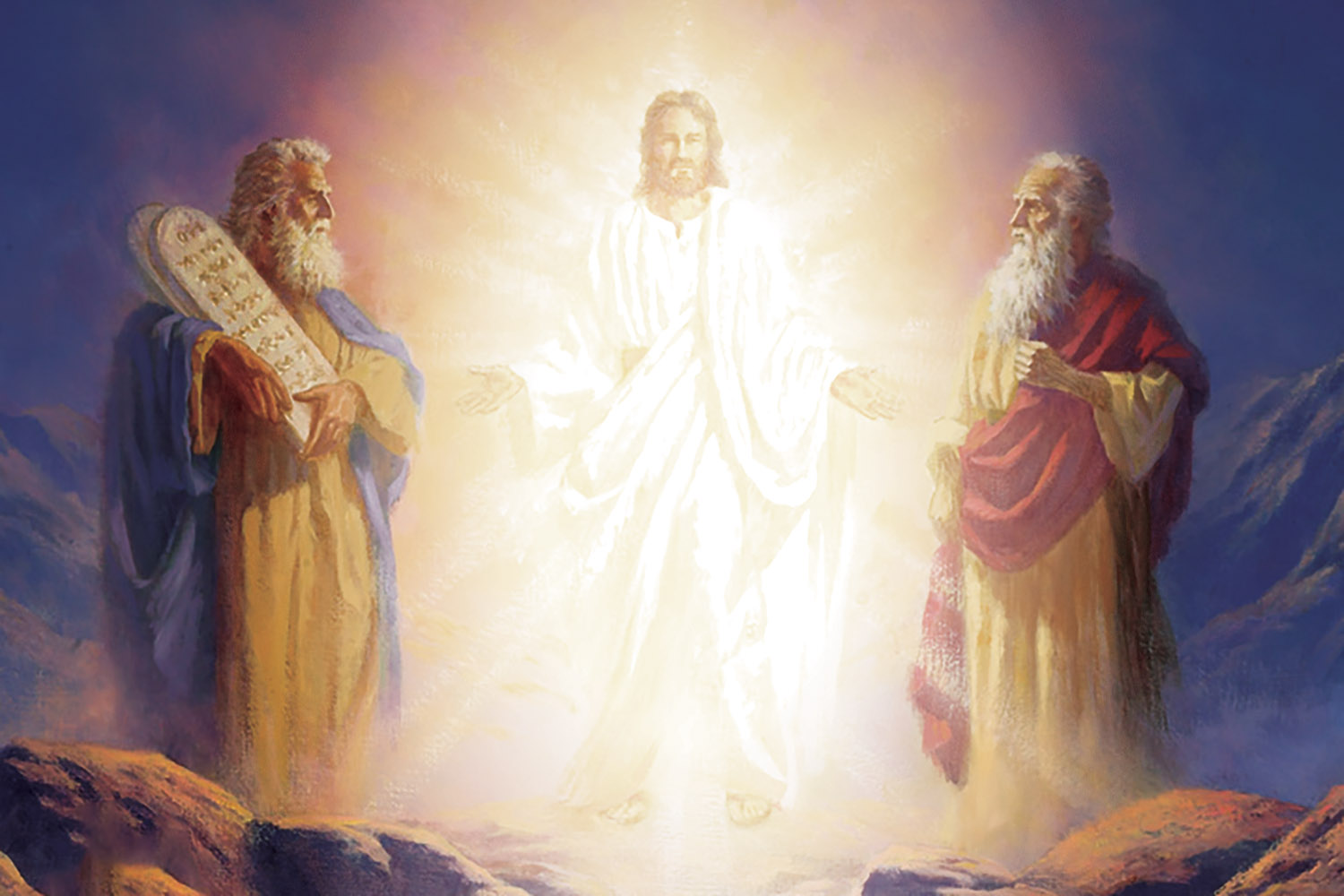
Palm Sunday: Jesus and the Politics of Empire

Readings for Palm Sunday: John 12:12-16; Isaiah 50:4-7; Psalm 22:17-24; Philippians 2:6-11; Mark 14–15

This year we enter Holy Week while the world watches scenes of immense human suffering. In Gaza’s genocide, entire neighborhoods have been reduced to rubble and thousands of children have been buried beneath the debris of bombs.

In Iran, threats of widening war grow louder each day, with our country once again demonstrating its willingness to ignore international law and rain destruction on distant populations in the name of security, stability, and geopolitical dominance. The language used to justify such violence is familiar: order must be preserved, enemies must be crushed, and empires must defend their interests.

A Revolutionary Demonstration

Against that backdrop we hear the readings for Palm Sunday. The contrast could hardly be sharper. The story begins with a procession—crowds shouting, palms waving, cloaks spread on the road. Jesus rides into Jerusalem on a donkey while the people cry out, “Hosanna! Blessed is he who comes in the name of the Lord.”

For many Christians this scene has been domesticated into a harmless religious pageant. Children wave palm branches. Congregations sing joyful hymns. The political edge of the story disappears.

But in its original setting, Palm Sunday was anything but harmless.

Jerusalem at Passover was a tense and dangerous place. The Roman Empire ruled the region through military force and economic exploitation. The Temple establishment collaborated with the occupiers, helping maintain order among the population. Passover itself commemorated Israel’s ancient liberation from imperial Egypt, which meant the festival carried explosive political symbolism. The Roman authorities knew this. Every year they reinforced their garrisons to prevent revolt.

Into this volatile situation comes Jesus.

The Gospel story describes a demonstration in which people wave palm branches and shout “Hosanna, Son of David.” Those details matter. In Jewish history palms were symbols of national liberation. They had been waved during the successful revolt of the Maccabees two centuries earlier. To raise palms during Passover was to recall a moment when a foreign empire had been defeated.

The chant “Hosanna”—“Save us!”—carried similar meaning. Addressing Jesus as “Son of David” invoked the memory of Israel’s ancient kings and the hope that God would once again deliver the people from foreign domination.

Even the donkey was political theater. Roman generals entered cities on war horses after military victories. Jesus deliberately stages a counter-procession: a working class king riding a peasant’s animal, representing an entirely different vision of power.

In other words, Palm Sunday was not simply a religious celebration. It was a dramatic public protest against imperial domination.

The authorities understood that immediately. Within days Jesus would be arrested, tortured, and executed by the Roman state using a form of capital punishment reserved for insurgents: crucifixion.

This political dimension of the story is essential if we are to understand the rest of Holy Week. Jesus was not killed because he preached kindness or interior spirituality. Rome crucified him because his message and actions threatened the stability of empire.

Palm Sunday Today

That should force us to examine our own historical moment.

We live in a world still organized around imperial power. Military alliances, economic sanctions, and overwhelming military force are used to maintain global hierarchies of wealth and influence. Our own country claims the right to intervene anywhere always with devastating consequences for civilian populations.

The suffering we witness today—from Gaza to Yemen to Sudan, from Ukraine to Iran—is inseparable from those structures of power. The victims are always the same: the poor, the displaced, the children, the elderly. The language used to justify the violence consistently echoes the rhetoric of ancient empires. Security must be protected. Order must be maintained. Resistance must be crushed.

But the biblical tradition consistently stands with those who suffer under such systems. It stands against systems like our own.

Isaiah, in today’s reading, speaks of the servant who refuses to turn back even when struck and humiliated. Psalm 22 gives voice to a victim surrounded by violent enemies. Paul’s letter to the Philippians describes Christ emptying himself, taking the form of a slave rather than grasping power.

These texts reveal a God who sides not with imperial might but with those crushed beneath it.

That is why Jesus’ vision of the “Kingdom of God” was so dangerous. It promised what biblical scholars often call the Great Reversal. In that kingdom the last would be first and the first last. The hungry would be filled while the rich would be sent away empty. Power would flow downward toward those who had been excluded and oppressed.

Empires including America’s cannot tolerate that kind of vision. Their stability depends on maintaining existing hierarchies. And so prophets who speak of reversal—whether in ancient Jerusalem or in our own world—inevitably find themselves marginalized, silenced, or worse.

Which Jesus Do We Follow?

Palm Sunday therefore asks us a difficult question: Which Jesus do we follow?

Is it the harmless spiritual teacher who promises inner peace while leaving unjust systems untouched? Or is it the historical Jesus who rode into Jerusalem as part of a protest movement against empire, proclaiming a radically different social order?

The answer matters.

Because if the Jesus just described is the real one, then discipleship cannot be separated from questions of justice, war, and the suffering of the vulnerable. Following him means asking uncomfortable questions about the systems in which we ourselves live. It means refusing to baptize violence simply because it is carried out by our own government or allies.

Against Despair

It also means refusing despair. Holy Week ends not with the cross but with resurrection. The powers of empire believed they had eliminated a dangerous troublemaker. Instead they unleashed a movement that at its best has continued to challenge systems of domination for two thousand years.

So as we wave our palms today, we should remember what those branches originally signified: a people’s hope that God’s justice would one day overcome the violence of empire.

That hope remains as urgent now as it was on the road into Jerusalem.
Jesus’ Words: “Lazarus Come Forth” — Their Meaning in Gaza — and Iran

Despite distractions provided by the carpet bombings of Trump’s Epstein War in Iran, the genocide in Gaza continues.

For the past two years it has confronted us with images almost too painful to watch. Entire neighborhoods reduced to rubble. Hospitals destroyed. Families digging through shattered concrete searching for loved ones.

Human-rights organizations report that thousands remain buried beneath collapsed buildings—men, women, and children entombed by the violence of heartless slaughter.

The irony is difficult to miss. The state carrying out this devastation identifies itself as the homeland of the “People of God,” heirs to the biblical tradition that again and again insists that God’s special concern is for the poor, the widow, the orphan, and the foreigner.

Yet today the land of the prophets has become the site of mass graves of those very categories of victims buried under concrete and dust. In such a moment the Gospel summons we hear today presses itself upon us with frightening relevance: “Lazarus, come forth.” What could such words addressed to the dead possibly mean when so many lie buried under the rubble of war?

For an answer, consider the story’s details. They are a command to resist empire – Rome’s then and the condominium represented by Israel and the United States today.

Today’s Gospel

Today’s Gospel—the raising of Lazarus—may appear at first to be simply a miracle story. Jesus raises his friend Lazarus from the tomb after four days of death. But the narrative is much more than a display of supernatural power. In the Gospel according to John, the raising of Lazarus is the turning point that seals Jesus’ fate.

Notice what happens immediately after the miracle. The authorities in Jerusalem convene an emergency meeting. Their concern is not theological but political: “If we let him go on like this, everyone will believe in him, and the Romans will come and destroy our place and our nation.” In other words, belief in Jesus is ipso facto inimical to empire. 

Here’s why.

Jerusalem at the time was a colonial city under Roman occupation. Imperial troops controlled the land. Local elites—both political and religious—had learned to maintain their own authority by cooperating with that imperial system. They managed the Temple economy, collected taxes, and preserved order on Rome’s behalf. In return they enjoyed prestige, wealth, and protection.

Religion and empire were joined at the hip.

Jesus and the entire prophetic tradition he embodied contradicted that juncture. It’s as simple as that.

Israel’s Prophets (Including Jesus)

The prophets of Israel had seen this arrangement many times before.

Again and again, they warned that the covenant was never meant to enrich the powerful — much less gentile imperialists. The law of Moses insisted that society must protect those with the least power: the poor, the widow, the orphan, and the resident alien. Those four groups appear constantly in the Hebrew Scriptures because they represent people who cannot defend themselves.

Whenever rulers forgot them, the prophets spoke.

Amos for example thundered against those who “sell the righteous for silver and the poor for a pair of sandals.” Isaiah condemned leaders who accumulated land while the poor lost everything. Jeremiah denounced kings who built luxurious palaces through forced labor.

Those prophets were not enemies of their nation. They were faithful Israelites calling their society back to its founding vision. But because their words threatened the powerful, they were treated as dangerous troublemakers – in today’s terms, as “anti-Semites.”

Jesus stands squarely in that prophetic line.

Like the prophets before him, Jesus’ ministry constantly returns to the same themes: good news for the poor, release for captives, healing for the broken. He heals without payment, eats with social outcasts, and proclaims a God who prefers mercy to sacrifice. In him the ancient prophetic voice speaks again.

The raising of Lazarus becomes the moment when that voice can no longer be tolerated.

Why? Because Lazarus is more than a man returning to life. He represents what happens when those who have been buried—socially, politically, economically—begin to rise again. When the forgotten begin to breathe, when the oppressed stand up, when those written off as dead reclaim their dignity—systems built on injustice begin to tremble.

“Anti-Semitism” Weaponized

Throughout history, whenever prophetic voices expose injustice, the powerful rarely answer the criticism itself. Instead, they attack the critic. Jeremiah was accused of weakening the nation in time of war. Amos was expelled from the royal sanctuary because his preaching threatened the ruling class. Jesus himself is now declared a threat to public order.

From that day forward, the Gospel tells us, they decide to kill him.

We see similar dynamics in our own time. Criticism of violence, occupation, or injustice—particularly when directed toward the policies of the Israeli state—is often dismissed with the charge of “anti-Semitism.” The term properly refers to hatred of Jews as a people, and such hatred is sometimes real. But when the accusation is used to silence moral criticism of Zionist genocide, it becomes something else entirely: a political shield protecting power from accountability.

The prophetic tradition refuses such shields.

Its loyalty is never to rulers, governments, or empires. Its loyalty is to the God of justice who demands protection for the poor, the widow, the orphan, and the foreigner.

And that brings us back to the question with which we began.

The Threat of Resurrection

What does “Lazarus, come forth!” mean in a world where thousands lie buried beneath the rubble of Gaza – and Tehran?

It cannot simply mean a miraculous resuscitation of individuals. The Gospel is pointing toward something larger. The command is addressed to all who have been buried by systems of domination—those crushed by war, poverty, and political violence. It is a summons to life, dignity, and resistance against the forces that entomb human beings.

That is why the miracle becomes so dangerous.

Because once the dead begin to rise, the powerful begin to panic.

In fact, the irony deepens as the Gospel story continues. Not only do the authorities decide to kill Jesus. Later we are told they also plan to kill Lazarus himself—because his very existence is evidence that something new has begun.

Life is breaking out of the tomb.

Conclusion

The story of Lazarus therefore prepares us for what lies ahead. The conflict between prophetic truth and imperial power will soon reach its climax.

The cross was Rome’s instrument for eliminating those who threaten the system.But the Gospel insists that even the cross cannot bury the truth forever.

Because once the dead begin to rise, it becomes impossible to keep them in their graves.

Our call on this Fifth Sunday of Lent is clear: don’t allow yourself to be gaslit or intimidated. Recognize the burial of the innocent for the genocide it is. Name it.

Don’t be intimidated by weaponized charges of “anti-Semitism.”

Wells, Walls, and Manufactured Thirst

Readings for the Third Sunday of lent: Exodus 17:1–7, Romans 5:1–2, 5–8, John 4:5–42.

The readings for this Third Sunday of Lent deal with the very human question of thirst. They raise the question, what are we thirsting for — ultimately?

Our politicians give us a glib answer. They tell us that our thirst is for security — from the threatening humans that surround us. The nation is dying we are told. We have lost our greatness. We are being overrun. Scarcity is closing in.

“Make America Great Again” is not just a slogan; it is an appeal to a deep anxiety — the fear that there is not enough: not enough jobs, not enough cultural cohesion, not enough safety, not enough control.

And so we are offered a diagnosis: the crisis is immigration. The problem is those people (who happen to be the poorest in the world!). The solution is walls, expulsions, exclusion. We are invited to believe that national greatness depends on tightening the circle.

But step back for a moment. The United States has 4 percent of the world’s population and consumes roughly a quarter of its resources. The “crisis” is narrated as though the most powerful nation in human history were a fragile victim of desperate families crossing deserts.

That story itself deserves scrutiny. It feels eerily similar to another story we heard today.

Thirst in the Desert

In Exodus 17, the people have escaped Egypt — escaped forced labor, escaped imperial extraction, escaped brick quotas. But once in the wilderness, they panic. There is no water. And fear rewrites memory. “Why did you bring us out of Egypt?” they ask. “Were there not enough graves there?”

Notice what is happening. A people freed from empire begin to long for the security of empire. Scarcity produces nostalgia. Anxiety produces accusation. Moses becomes the problem. Freedom itself becomes suspect.

And they ask the piercing question: “Is the Lord in our midst or not?”

That question echoes beneath our own political rhetoric. Is God present in pluralism, in equity, in inclusion? Is God present in demographic change? Is God present in movements of displaced people seeking survival? Or is God only present in the imagined stability of a past we have sanctified?

At Massah and Meribah, the people’s fear does not disqualify them. Yahweh brings water from rock. Not from Pharaoh’s storehouses. Not from a border wall. From a rock in the desert. The provision comes not through renewed control, but through trust in a God who sides with vulnerable people.

The biblical tradition has always insisted that this is the decisive revelation: God is known in history through concrete acts of sustenance for those escaping bondage. Not through slogans of greatness, but through water in the wilderness.

The Woman at the Well

Then we move to John’s Gospel, and the political charge intensifies.

Jesus is in Samaria — enemy territory. Centuries of ethnic hatred stand between Jews and Samaritans. Purity codes, historical grievances, competing temples. If ever there were a border crisis, this was it. And yet Jesus does not reinforce the boundary. He crosses it.

He asks a Samaritan woman for a drink.

It is astonishing. The one who will speak of “living water” begins by placing himself in need before someone religiously and socially marginalized. He does not begin with a lecture about law and order. He begins with vulnerability.

And this woman — doubly stigmatized as Samaritan and as female — becomes the first missionary in John’s Gospel. She leaves her jar and runs to her town: “Come and see.”

Our Real Thirst

What if the real thirst in our society is not for greatness, but for encounter? What if the deeper crisis is not immigration, but isolation? What if we have mistaken demographic change for existential threat because we have forgotten how to sit at wells with strangers?

“Living water,” Jesus says, becomes a spring within — not hoarded, not policed, not weaponized. It flows outward.

The irony is painful. The people who once wandered as refugees in the desert now fear refugees at their gates. The descendants of immigrants fear immigration. The community that drinks from a rock fears sharing water.

And beneath it all is that ancient question: “Is the Lord in our midst or not?”

If God is only with the secure, then fear makes sense. But if God is the One who hears slaves, who provides water for rebels, who speaks across enemy lines, then perhaps the presence of the stranger is not a threat but a test.

Paul, in Romans, says that “the love of God has been poured into our hearts.” Poured. Abundance language. Not scarcity language. Not zero-sum logic. Poured out while we were still estranged, still flawed, still confused.

Conclusion

Lent invites us to examine our thirst honestly. Are we thirsty for justice — or for dominance? For community — or for control? For security — or for solidarity?

Greatness, in the biblical sense, is never about territorial assertion. It is about fidelity to the God who brings water from rock and who offers living water at a contested well.

The wilderness is frightening. Demographic change is unsettling. Empires promise certainty. But the Gospel suggests that life springs up not from walls, but from wells.

The bush still burns. The rock still flows. The well is still there.

The only question is whether we will drink — and whether we will let others drink too.

Donald Trump’s Nakedness, His STFU SOTU Speech

Readings for the Second Sunday of Lent: Genesis 12: 1-4a; Psalm 33: 4-5, 18-19, 20,22; 2 Timothy 1: 8b-10; Matthew 17: 1-9

The Gospel reading for this Second Sunday of Lent is about the “transfiguration” of Jesus.

It’s about how the primitive Christian community’s understanding of Jesus and his significance changed following their experience of what they came to call his “resurrection.”

After that experience, whatever it was, they came to see him clearly as the New Moses and the New Elijah. As such he would introduce a New Order that would embody liberation of society’s most marginalized (Moses) and outspoken confrontation against the given imperial order (Elijah).

Jesus himself called that New Order the Kingdom of God.

It is what the world would look like if God were king instead of Caesar.

That vision should take on new meaning for Americans in the aftermath of Donald Trump’s disgraceful State of the Union Message last Tuesday. It should even embolden the profane response STFU.

Trump’s Un-transfigured World

If you watched the speech, you know what I mean.

It seemed like the dying gasp of the ruling Septuagenarian and Octogenarian classes.

It was a flailing, lie-filled proclamation of a Golden Age that never existed and that never will be if we follow the path the failed braggart president celebrated.

It was the opposite of God’s Kingdom – a world with room for everyone.

I mean, Trump’s SOTU celebrated division, wealth and power, and a militarism while targeting the poorest people on our planet. He had the staggering nerve to tone-deafly call them what the Epstein Files are revealing the political class itself to be: lawless rapists, pedophiles, robbers, drug dealers, gang members and murderers. And Trump’s crowd are blackmailers besides.

Making those allegations, the president revealed his own nakedness and that of his mindless Maga colleagues who mindlessly jumped to their feet to applaud the beauty of the Emperor’s non-existent robes.

Yes, the Files, the coverups, the sweetheart deals for Epstein and Maxwell, the redactions, the months-long failures to disclose, and the reduction of Pam Bondi’s Department of Justice to the President’s private law firm are revealing everything.

The Emperor indeed has no clothes. He’s shamelessly parading around stark naked and tiny.

And reminiscent of the Hans Christian Anderson story, it’s the little children he’s imprisoning (with their bunny ears and Spiderman backpacks) who proclaim the emperor’s embarrassing nudity.

No clothes! Naked!  Tiny. Or as Joseph N. Welch put it to Senator Joseph McCarthy “Have you no sense of decency, sir, at long last?”,

Jesus’ Transfigured World

The tale of Jesus’ Transfiguration tells an opposite story.

It’s the story of a poor construction worker – a former immigrant, a prophetic teacher of unconventional wisdom, the death row inmate whom empire jailed, tortured and submitted to imperial capital punishment – whose life and teaching revealed a New Order that was shining and pure because it had room for everyone.

And in today’s reading, it’s his transformed clothes and the spiritual company he keeps that tell the story.

Matthew puts it this way: “His face shone like the sun and his clothes became white as light. And behold, Moses and Elijah appeared to them, conversing with him.”

That is, the one whose imperialized class status would eventually reduce him to nakedness on Mt. Calvary is perceived by his first followers as magnificently clothed.

Even more, Matthew’s account of Jesus’ Transfiguration has him conversing with Moses and Elijah.

Moses, of course, is the great liberator of the enslaved and poor.

Elijah was the courageous prophet who not only spoke truth to power but resisted false gods who take the side of the rich and powerful rather than God’s truly chosen ones, the poor and oppressed.

Don’t Let the Democrats off the Hook

But none of this should let the Democrats off the hook just because some of them refused to attend the STFU SOTU affair. Don’t let them get away with just not being Trump.

It’s time for us to echo Zohran Mamdani, the most popular politician in the country.

In my novella, Against All Odds: How Zohran Mamdani Became President and Changed America Forever, I imagine a moment like this. Not because of special foresight, but because systems built on secrecy, oligarchy, militarism, and spectacle inevitably crack. In that story, hidden ledgers surface. Blackmail networks become visible. The machinery of power is exposed. The old guard responds the only way it knows how — with louder threats, more force, and louder applause.

Sound familiar?

But exposure alone is not liberation.

Which brings us back to the mountain of Transfiguration.

That scene depicted there is not mystical escapism. It is political theology. It declares that the authority of empire is provisional — that the true sovereignty belongs to the God who sides with slaves, captives, resident aliens, and the poor.

Luke makes the program explicit: “He has anointed me to preach good news to the poor… to proclaim liberty to captives… to set at liberty those who are oppressed.”

That’s a rival social order.

And if the imperial system is unraveling before our eyes — if its nakedness is becoming visible — then what must follow is not nostalgia or revenge, but reconstruction.

In Against All Odds, the answer to systemic collapse is not personality cult or partisan fury, but the institution of a Republic of Care. It is clarity. It is the articulation of a simple, material program centered on ordinary people’s lives. Among others, the items in such a program would include:

  • Affordability
  • Universal health care
  • Full employment
  • Higher wages
  • Free education through college
  • Environmental protection
  • Expanded voting rights
  • An end to oligarchic distortions like the Electoral College
  • Strict term limits in every branch of government
  • Drastic reductions in military spending.
  • No endless wars
  • Immigration reform rooted in dignity
  • The dismantling of structures whose primary function is coercion at home and abroad.

In liberationist terms, none of that is utopian dreaming. Mamdani’s election proved that. The reforms just listed are what happen when the needs of the poor become the criteria of policy.

Conclusion

Trump’s embarrassing speech was the voice of Caesar defending a crumbling temple.

The Transfiguration is the unveiling of another possibility altogether.

Empires grow louder when they weaken. They shout about enemies. They celebrate force. They promise greatness. That is what dying systems do.

But the biblical tradition suggests something else: when Pharaoh hardens his heart, liberation accelerates. When Ahab clings to power, Elijah’s voice sharpens. When Rome crucifies, resurrection faith spreads.

Lent invites us to see clearly — to recognize naked empire and to imagine, without apology, a transfigured order grounded in justice for the poor.

Our petite impotent emperor is exposed.

The question now is whether we have the courage to climb the mountain with Peter, James and John to see what comes next.

The Commandments and the Epstein Revelations: Whom Does God’s Law Really Protect?

Readings for the Sixth Sunday in Ordinary Time: Sirach 15:15-20; Psalm 119; 1 Corinthians 2:6-10; Matthew 5:17-37

Let me say it straight out: the Epstein affair is not primarily about sex. It is about law. It is about whether the commandments — and the legal systems supposedly derived from them — apply equally to everyone.

For decades, Jeffrey Epstein moved among billionaires, politicians, royalty, financiers, academics, and cultural elites. His crimes were known. Complaints were made. Investigations occurred. Yet he received an extraordinary plea deal. Associates remain shielded. Documents remain sealed. Networks remain largely untouched.

Meanwhile, poor defendants fill prisons for far lesser crimes – and in the case of immigrants and asylum seekers, for no crimes at all. Petty theft, drug possession, probation violations, and “illegal” border crossings — these are prosecuted with relentless enforcement of law.

If you want a relevant commentary on such two-tiered systems of “justice,” look no further than today’s liturgical readings. They are explosive in their contemporary application.

Sirach: God Commands No Injustice

 Start with Sirach 15: 15-20. There the book’s author says: “If you choose, you can keep the commandments… He has set before you fire and water… life and death.”

At first glance, that sounds like individual moral exhortation. Choose good. Avoid evil. But Sirach adds something devastating: “No one does he command to act unjustly; to none does he give license to sin.”

That line destroys every attempt to sanctify unjust systems like ours. I mean in the United States, injustice is routinely protected by law. After all, Epstein’s plea deal in 2008 was legal. The shielding of his powerful associates has been legal. Non-disclosure agreements are legal. Sealed records are legal.

But Sirach says God commands no injustice.

If the law functions to shield predators when they are rich and well-connected while punishing the poor with mechanical severity, then the issue is not simply moral failure. It is structural perversion.

Liberation theology (i.e. non-literalist biblical interpretation supported by modern scripture scholarship) reminds us that “choice” is structured. The poor do not choose within the same field of protection as billionaires. There, fire and water are not distributed evenly. Life and death are not equally accessible.

The commandment is not merely “Don’t sin.” The deeper question is: Does the legal order reflect God’s refusal to legalize injustice?

Psalm 119: Blessed Are Those Who Follow the Law

Now look at today’s responsorial psalm. It’s refrain proclaims: “Blessed are they who follow the law of the Lord.”

But what is the law for?

As José Porfirio Miranda and Norman Gottwald argue, the Decalogue emerged not as abstract piety but as social protection. It arose among people resisting royal systems that accumulated land, wealth, and power in elite hands.

Both theologians remind us that biblical law was a shield for subsistence households. “You shall not steal” originally meant: the powerful may not confiscate the livelihood of the vulnerable. “You shall not covet” meant desire backed by power must be restrained.

In that light, now ask the uncomfortable question: when billionaires operate in networks of mutual protection and the law seems reluctant to expose them fully, is that still Torah? Or is it what the prophets called “corruption at the gate?”

Psalm 119 blesses those who follow God’s law — not those who manipulate civil law to protect privilege.

Paul: The Wisdom of the Rulers

In the same spirit of Sirach and Psalm 119, Paul speaks of “a wisdom not of this age, nor of the rulers of this age… who are passing away.” He also adds something chilling: “None of the rulers of this age understood this; for if they had, they would not have crucified the Lord of glory.”

The cross was a legal execution. It was state-sanctioned. It was justified under Roman law and enabled by religious authority.

That’s Paul’s point.

The rulers always believe their system is rational and necessary. Franz Hinkelammert reminds us that ruling ideologies present themselves as inevitable. Markets are inevitable. Elite networks are inevitable. Certain people are untouchable.

When the Epstein affair reveals how proximity to wealth and power appears to blunt accountability, we are witnessing what Paul calls “the wisdom of this age.” A wisdom that protects itself.

The rulers crucified Jesus legally. Legality is not the same as justice.

Jesus: Fulfilling the Law by Protecting the Vulnerable

In Matthew’s Gospel, Jesus declares:
“I have not come to abolish the law but to fulfill it.”

Then he radicalizes it. “You have heard it said, ‘You shall not kill.’ But I say to you, whoever humiliates…”

Jesus’ point is that dehumanization precedes violence. When victims are dismissed because they lack status, when their testimony is doubted because they are young, poor, or socially marginal, contempt is already at work.

“You have heard it said… You shall not commit adultery. But I say to you, whoever looks with lust…”

Could these words be more pertinent to the Epstein Affair? In a world where wealthy men are allowed to treat vulnerable underage girls and women as property, lust backed by power means coercion. Jesus targets the interior logic of such domination.

His teaching on divorce does the same thing. It sides with the economically vulnerable spouse. Legal permission did not equal justice.

Notice the pattern: every intensification of the commandment in today’s readings closes loopholes that allow the powerful to exploit the weak.

That is fulfillment of the law. If a legal system permits exploitation through influence, money, and secrecy, it has not fulfilled the law. It has hollowed it out.

Two Systems

The Epstein affair is not an anomaly. It is a revelation.

It reveals what liberation theology has long argued: sin is social as well as personal. Structures can be sinful. Systems can crucify.

When poor defendants encounter swift prosecution while elite networks encounter delay, protection, and opacity, we are not witnessing isolated moral failure. We are witnessing two systems.

Sirach sets before us life and death. The death-dealing system is one where law bends upward. The life-giving system is one where law protects the vulnerable first:

  • “Blessed are they who follow the law of the Lord.”
  • Blessed are those who refuse to equate legality with justice.
  • Blessed are those who demand that commandments function as protection for the powerless.
  • Blessed are those who see through the “wisdom” of powerful elites

Jesus did not abolish the commandments. He sharpened them until they pierced hypocrisy.

Before us remain fire and water. The question is not whether we personally avoid wrongdoing.

The question is whether we will accept a system where justice is negotiated by wealth — or insist that the law once again become what it was meant to be: protection and good news for the poor.

A Gospel for Palestinians under Siege

Readings for the 20th Sunday in Ordinary Time: JER 38: 4-10; PS 40: 2-4, 18; HEB 12:1-4; LK 12: 49-53

Today’s gospel excerpt presents real difficulties for a thoughtful homilist. That’s because it shows us an apparently confrontational Jesus — one who sounds completely revolutionary. It raises an uncomfortable question: why would the Church choose such a passage for Sunday worship? What are we supposed to do with a Jesus who doesn’t sound like the soft-focus “Prince of Peace” in our stained-glass windows?

In the context of Zionist genocide and starvation of Palestinians, perhaps this is providential. Maybe this gospel can help us understand a truth that polite Christianity often avoids: people living under the heel of settler colonialism supported by empire — even people of deep faith — sometimes find themselves pulled toward resistance that is anything but gentle.

We forget that Jesus and his community were not free citizens in a democracy. They were impoverished, heavily taxed subjects of an occupying army. Roman power loomed over their fields, their marketplaces, their synagogues. By today’s international standards, they were an occupied people with the legal right to resist.

And in Luke’s gospel today, Jesus says, without apology:

“I have come to set the earth on fire, and how I wish it were already blazing… Do you think that I have come to bring peace on earth? No, I tell you, but rather division.”

In Matthew’s parallel account, the language sharpens:

“Do not suppose that I have come to bring peace. I did not come to bring peace, but a sword.”

These are not the soundbites that make it into Christmas cards. They make us ask: what happened to “Turn the other cheek” and “Love your enemies”?

Some scholars, like Reza Aslan, suggest that Jesus’ nonviolence applied primarily within his own oppressed community, while his stance toward the Roman occupiers was far less accommodating. Others, like John Dominic Crossan, argue that Jesus was unwaveringly committed to nonviolent resistance, and that later gospel writers softened or altered his message to make it more palatable in times of war.

Either way, the backdrop remains the same: an occupied land, a foreign military presence, a people dispossessed. In that context, fiery words about “division” and “swords” are not abstract theology. They are the language of a people under siege, the language of survival.

This is where the parallels to our world are hard to miss. Today, in the land we call Israel-Palestine, we see a modern occupation with its own walls, checkpoints, home demolitions, and armed patrols. We see Palestinian families pushed off their land in the name of “security.” We see the weight of military might pressing down on those who have little power to push back.

This is not to glorify violence but to say that this kind of daily humiliation, dispossession, and threat inevitably breeds anger, desperation, and — for some — the temptation to meet force with force. The gospel today, like the headlines from Gaza and the West Bank, confronts us with the messy, often tragic choices that emerge under occupation.

As Christians, we have to wrestle with this. Would we cling to a nonviolent ethic, like the Jesus Crossan describes? Or, living under bulldozers and armed patrols, would we find ourselves understanding — perhaps even empathizing with — those who choose other paths?

Jesus’ words today refuse to let us take the easy way out. They call us to name the real causes of conflict — not some vague “ancient hatred,” but the concrete realities of military domination, settler colonialism, and American imperialism. They challenge us to imagine what peace would require: not simply the silencing of the oppressed, but the dismantling of systems that oppress them in the first place.

Because if we only condemn the flames without questioning the spark, we miss the deeper gospel truth: that justice is the only soil in which true peace can grow.

Like Bishop Budde, Jesus’ Wokeness Infuriated His Neighbors

Readings for the Third Sunday in Ordinary Time: Nehemiah 8:2-4a, 5-6, 8-10; Psalm 19: 8,9, 10, 15; I Corinthians 12: 12-14, 27; Luke 1: 1-4, 4: 14-21

Last Tuesday Episcopal Bishop Mariann Edgar Budde infuriated Donald Trump and JD Vance at Trump’s inaugural prayer service at the National Cathedral in Washington. She did so by echoing in her sermon the Spirit of Yeshua of Nazareth whom this Sunday’s Gospel reading depicts as delivering his own inaugural address to his former neighbors in his hometown of Nazareth.

Bishop Budde’s words asked Mr. Trump “in the name of our God” to “have mercy” on LGBTQ people and immigrants targeted by his policies. Her words chimed with those of her Master who in his programmatic words proclaimed his work as directed towards outsiders – the poor, the blind, the imprisoned, oppressed, and indebted.

Evidently, Messrs. Trump and Vance prefer their version of God and a Jesus who puts America first. They seem to consider Americans (and Zionists) as somehow “chosen” by a God who joins them in despising those with non-binary sexual orientations. Instead of welcoming strangers (as Bishop Budde put it in tune with oft-repeated biblical injunctions) their God would build walls and evict them from our midst.

Ironically, the Trump/Vance position is not far from that articulated by Ezra, Israel’s 6th century BCE priest and scribe who invented the concept of a genocidal Israel as God’s chosen one. (You can read a summary of Ezra’s words immediately below.)

So, predictably, Mr. Trump and his followers (like Yeshua’s contemporaries rejecting him) wasted no time in vilifying Bishop Budde.

Instead, she deserves our admiration and imitation as a woman of vast integrity and courage. Let me show you what I mean.

Today’s Readings

Nehemiah 8:2-4a, 5-6, 8-10

Following the Jews’ return from the Babylonian exile (586-538), the Jewish priest and scribe, Ezra rewrote the Hebrew’s largely oral traditions that eventually became their Bible. He unified those narratives about mysterious beings called “Elohim.”  These were human or perhaps extraterrestrial “Powerful Ones,” some good-willed, some malevolent, who had never been universally considered divine. In Hebrew oral tradition, they had variously been called by names such as “Elohim,” “El,” “El Shaddai,” “Ruach,” Baal, and Yahweh. Ezra unified and rewrote those traditions as if all of them were about Israel’s now “divine” Powerful One (Yahweh). The tales included divinely authorized genocides of Palestinians (identified in biblical texts as Canaanites, Hittites, Amorites, Perizzites, Hivites, Jebusites, Geshurites, Maacaathites, and Philistines). All of them had lived in the “Holy Land” long before the arrival of the ex-slave invaders from Egypt who ruthlessly decimated their numbers in the name of their Powerful One. In Nehemiah chapter 8, Ezra is depicted as spending half a day reading his conflated narrative [now called “The Law” (Torah)] to Israel’s “men, women, and those children old enough to understand.” The new narrative brings everyone to tears as a nationalistic and exclusive consciousness dawns that Yahweh-God had chosen them as his special people.

Psalm 19: 8,9, 10, 15

Despite the genocides, the people praised Yahweh’s words as simple, perfect, refreshing, trustworthy, wise, illuminating, pure, eternal, true, and completely just. They identified Ezra’s words as Spirit and Life.

I Corinthians 12: 12-14, 27  

Yeshua, however, never called his Heavenly Father “Yahweh.” Instead, he (and his principal prophet Paul) understood God as a Divine Parent, the Creator of all things, the “One in whom we live and move and have our being” (Acts 17:28). Yeshua (and Paul) rejected the idea of “Special People” in favor of all humanity as comprising One Human Body. For both men, no part of that Body (even the least presentable) was better or more important than any other. For Paul and Yeshua, Jews and non-Jews were the same. So were slaves and free persons. In fact, for Yeshua’s followers, those the world considers less honorable should be treated “with greater propriety.”

Luke 1: 1-4, 4: 14-21

In the first sermon of his public life, Yeshua addressed his former neighbors. He was asked to read from the scroll of the prophet Isaiah (a contemporary of Ezra) who dissented from genocides and mistreatment of captives. Here’s what Yeshua read:

The Spirit of the Lord is upon me,
because he has anointed me
to bring glad tidings to the poor.

He has sent me to proclaim liberty to captives
and recovery of sight to the blind,
to let the oppressed go free,
and to proclaim a year acceptable to the Lord.

Rolling up the scroll, he handed it back to the attendant and sat down,
and the eyes of all in the synagogue looked intently at him.
He said to them,
“Today this Scripture passage is fulfilled in your hearing.”

When his neighbors heard his words, they wanted to kill him. Who did he think he was?! Everyone knows God favors the rich, not the poor. Just look at the Great Ones’ gaudy lifestyles and possessions. And those people in prison deserved to be there. Once freed, they’d threaten us all. And besides, the blind were sightless because of some sin they or their parents had committed. They deserved their lot in life. As for “the oppressed . . . There are no “victims.” Everyone knows that. Victimology is a hoax. Who did this Yeshua think he was?! Let’s kill him.

Conclusion

Yes, Yeshua, like Bishop Budde confronted his contemporaries to champion the One in whom we live and move and have our being.” For Yeshua that Divine One considers all humankind a single indivisible body. For him this meant incorporating those his world wanted to amputate as outsiders, invaders, criminals, and as official enemies like Samaritans, tax collectors, street walkers, the poor, imprisoned, the sightless, oppressed and indebted.

In Yeshua’s spirit, Bishop Budde urges incorporation of immigrants, LGBT outcasts, and official enemies such as the Palestinians, Russians, Chinese, Iranians, North Koreans, Venezuelans, Nicaraguans, Cubans, Syrians, Iraqis, Afghans, Somalis, Sudanese, Libyans, etc. etc. None of them is our enemy. All of them, she says with Yeshua and Paul, are closer to us than our brothers and sisters. They are parts of our own bodies. None can be amputated.

Such universalism, such wakefulness always infuriates those who would divide and rule over us. It angers as well ordinary people (like Yeshua’s neighbors) who have been brainwashed into accepting prevailing nationalistic understandings of the Bible’s often genocidal “God.”

Today’s readings call us to wake up! Bishop Budde’s got it right. Trump and Vance are heretics.

Palm Sunday Reflection: The Revolutionary Jesus

Readings for Palm Sunday: John 12: 12-16; Isaiah 50: 4-7; Psalm 22: 17-24; Philippians 2: 6-11; Mark 14: 15-47

Today is Palm Sunday. For Christians, it begins “Holy Week” which recalls Jesus’ triumphant entry into Jerusalem (Palm Sunday), his Last Supper (Holy Thursday), his torture and execution (Good Friday), and his resurrection from the dead as the culmination of a long history that began with the liberation of Hebrew slaves from Egypt (Holy Saturday).

As just noted, the saga begins today by recalling what the Christian Testament remembers as the day when Jesus was greeted by chanting throngs as he entered the city seated on a donkey while the crowds waved palm branches and shouted “Hosanna.” They spread their cloaks before the animal that bore him to the temple precincts where he famously evicted money changers and vendors of sacrificial animals.

The event is full of political significance for those of us whose government has proudly inherited the mantle of the Roman Empire. That’s because the supposed events of Palm Sunday were probably part of a much larger general demonstration of faithful Jews including Jesus against the oppression that is part and parcel of all imperial systems including our own. As such, today’s narrative calls us to resistance of U.S. Empire as Rome’s contemporary successor.

To understand what I mean, consider (1) the significance of the Jerusalem demonstration itself and the role that palms played in its unfolding, (2) the demonstration’s chant “Hosanna, Son of David” and (3) the meaning of all this for our own lives.

Jerusalem Direct Action  

For starters, think about what actually happened in Jerusalem during that first Demonstration of Palms.

Note at the outset that if the event wasn’t a whole-cloth invention of the early church, it’s highly unlikely that Jesus would have entered Jerusalem as a universally acclaimed figure. That’s because the gospels make it clear that all during his “public life,” Jesus confined his activities of healing and speaking to small villages where his audiences were poor illiterate peasants.

Given their small numbers, poverty and the expenses of travel and lodging, their massive presence in Jerusalem would have been highly unlikely. This meant that Jesus’ profile would have remained exceedingly low in larger cities and nearly non-existent in his nation’s capital city, Jerusalem. He would have been largely unknown there.

Again, if the event happened at all, it is more likely that the part Jesus and his disciples played in it was marginal and supportive of a larger parade and demonstration supported by well-organized revolutionaries such as Judah’s Zealot cadres whose raison d’etre was the expulsion of the occupying forces from Rome.

This also means that the demonstration’s climax with its “cleansing of the temple” would probably have represented a much larger assault on the sacred precincts where only large numbers of protestors would have stood any hope of impact rather than an individual construction worker supported by 12 fishermen.

(Remember, the residence of the Roman procurator, Pontius Pilate, was actually attached to the temple itself. So were the barracks of Jerusalem’s occupying force. The annex was called the Fortress Antonia. During the Passover holidays, everyone there would have been on high alert rendering any small demonstration – and probably any large one — virtually impossible. If the temple itself were not crawling with Roman soldiers, they would have been surveilling the whole scene.)

But even if Jesus were welcomed by the frantic crowds as depicted in the gospels, the event would have been precisely intended to be seen by the Romans as highly political and perhaps even decisive in defeating their hated occupation and bringing on in its place what Jesus described as the Kingdom of God.

(Jesus’ high hopes surrounding the incidents of this final week in his life are suggested by the words Mark records at the Last Supper in today’s gospel reading: “I shall not drink again the fruit of the vine until the day when I drink it new in the kingdom of God.” In other words, Jesus evidently thought that the events of this first “holy week” would signify a political turning point for Jews in their struggle against Rome. Their uprising would finally bring in God’s kingdom.)

Jesus’ Anti-Imperialism

In any case and whatever its historical merits, Jesus’ entry into Jerusalem is presented as anti-imperial. The waving of palms, the chanting of the crowd, and Jesus’ mount all tell us that. In Jesus’ time, the waving palms on patriotic occasions (like Passover) was like waving a national or revolutionary flag. That had been the case ever since the successful rebellion led by the Jewish revolutionary Maccabee family against the Seleucid tyranny of Antiochus IV Epiphanes 150 years earlier.

So, crowds greeting Jesus with palms raised high while chanting “Hosanna, Son of David” (save us!) would have meant “Hail to the Son of David, who will lead us to regain our freedom from the Romans, the way the Maccabees led the revolution against the Seleucid tyrant!” Jesus’ choice of a traditionally royal donkey as his mount would only have underscored that message. Only kings rode donkeys in processions.    

All of this means that the story of “Palm Sunday” as presented in today’s reading depicts an overt threat to the imperial system of Rome supported by Jerusalem’s Temple establishment.

Anti-Imperialism Today

So, what’s my point in emphasizing the political dimensions of Palm Sunday? Simply put, it’s to call attention to the fact that followers of Jesus must be anti-imperial too.

That’s because imperialism as such runs contrary to the Hebrew covenant that protected the poor and oppressed, the widows, orphans, and resident non-Jews from the depredations of local elites and outside military powers.

And that’s what empire represents in every case. It’s a system of robbery by which militarily powerful nations victimize the less powerful for purposes of resource transfer from the poor to the already wealthy.

Such upward redistribution of wealth runs absolutely contrary to the profound social reform promised in Jesus’ notion of the Kingdom of God. There, everything would be reversed downward. The first would be last; the last would be first (Matthew 20:16). The hungry would be fed and the rich would suffer famine (Luke 1: 53). The rich would become poor, and the poor would be rich. The joyful would be saddened and those in tears would laugh (Luke 6: 24-25).

Contradicting those grassroots aspirations is the very purpose of U.S. empire today with its endless wars, nuclear arms, bloated Pentagon budgets, and glorification of the military. All of that is about supporting the status quo and preventing Jesus’ Great Reversal.

That’s why American armed forces maintain more than 800 military bases throughout the world. All of them are engines of stability in a world of huge inequalities. (Btw, do you know how many foreign bases China maintains? One!!) Maintaining stability in a world crying out for change is why the U.S. is currently fighting seven wars (Afghanistan, Iraq, Libya, Syria, Somalia, Yemen, Niger – and who knows where else) with no end in sight. (Today’s designated enemy, China, is fond of pointing out that it hasn’t dropped a single bomb on foreign soil for 40 years.)

Conclusion

Recently, a conservative church friend of mine told me that his primary identity is as a follower of Jesus. I found that wonderfully inspiring.

On second thought however, I wondered which Jesus he was referring to. Was it to the revolutionary Jesus of Palm Sunday? Or did his Jesus support U.S. empire? Did he promise individualized prosperity as the result of following him? Was his Jesus politically involved? Or did he simply ignore politics in favor of internal peace and a promised heaven after death?

The questions are crucial. There are so many Jesuses of faith. And, of course, we’re all free to choose our favorite. By the same token however, we have to explain how an “other-worldly” Jesus would have appealed to his impoverished audiences like those depicted in today’s gospel. My guess is that an other-worldly guru would have had zero appeal to them.

Why would such a Jesus have been seen as threatening to Rome? Again, he would not have been.

Yes, there are many Jesuses of faith. However, there was only one historical Jesus. And it seems logical to me that the historical Jesus must be the criterion for judging which Jesus of faith we accept — if any.

Today’s recollection of the parade down Jerusalem’s main street, with crowds waving revolutionary symbols, and its assault on the sacred temple precincts (including Roman barracks) remind us that the historical Jesus stood against empire. Like every good Jew of his time, Jesus not only hoped for empire’s overthrow, but worked to that end with its promised Great Reversal.

No wonder Jesus was so popular with his poor and oppressed neighbors. No wonder Rome executed him as an insurgent. No wonder that particular Jesus seems so foreign to us who now live in the belly of empire’s beast. No wonder he remains so despicable to our religious and political mainstream.

GOP Attacks on Higher Learning: What’s Education for Anyway? And How about Religion?

Readings for the Third Sunday of Advent:Isaiah 61: 1-2A, 10-11; Luke 1: 46-48, 49-50, 53-54; 1 Thessalonians 5: 16-24; John 1: 6-8, 19-28.

Last week, Americans were treated to a high-level display of hypocrisy, double standards, and pure ignorance regarding higher learning. The spectacle occurred during a House Education Committee hearing about on-campus demonstrations supporting Palestinians in Gaza.

The procedure raised questions not only about alleged anti-Semitism and Islamophobia, but also about the very purpose of higher education.

For me in the context of biblical readings for this third Sunday of Advent, the hearing also touched issues of faith and its dictates regarding the conflict in Gaza. As we’ll see, today’s readings suggest that Christians should stand with Palestinians in their conflict with an Apartheid state turned genocidal – and against the United States now unquestionably revealed (in the words of Scott Ritter) as “the world’s bad guy.”

Let me deal with each of those points successively.

The Hearing & Anti-Semitism 

During the hearing just referenced, rightwing congress member Elise Stefanik (R NY) grilled Harvard president Claudine Gay, her MIT counterpart Sally Kornbluth, and University of Pennsylvania president Liz Magill about allowing pro-Palestinian demonstrations on their campuses.

According to Ms. Stefanik, the demonstrations ran the danger of threatening pro-Zionist students.

Ignoring her own history of alleged anti-Semitic positions as well as her votes funding the Zionist genocide of Gazans, the congresswoman’s questioning deceptively linked the term “intifada” to advocacy of extermination of Jews.

Similarly ignoring Zionist claims to “Greater Israel” extending from the Jordan River to the Mediterranean Sea, the congresswoman’s questioning implied that any use of the phrase “from the River to the Sea” uniquely threatened Jewish students. Clearly, Congresswoman Stefanik, along with many Democrats, was anxious to restrict pro-Palestinian speech on Campus.

For their part, the university presidents at last week’s hearing were correspondingly anxious to protect first amendment guarantees on their campuses in today’s context where any talk of Palestinian rights is interpreted as anti-Semitic.   

The whole affair had commentators like Omer Bartov, a professor of Holocaust and genocide studies at Brown University, viewing the presidents’ grilling and its fallout as an attempt by champions of Zionism to distract from actual genocide (of Palestinians in Gaza) while centralizing highly marginal hypothetical speech about repeating Hitler’s horrendous genocide of Jews.

Meanwhile, right-wing commentators on Fox News offered outright condemnation of the three women presidents’ unwillingness to give a simple “yes” or “no” answer to loaded questions about a complex constitutional issue of free speech.

According to Bill Bennett, the former Secretary of Education under Ronald Reagan, the whole affair illustrated, how American education at all levels has declined into what some have called “cesspools of liberal propaganda.”  

Education’s Purpose

All this raises questions about the purpose of education in general and of higher education in particular. What is it for?

What do you think?

The relatively new prevailing answer equates the university’s function with pre-professional training. If courses don’t directly prepare students for “the world of work,” they’re a waste of time.

That approach, of course, discards traditional approaches to learning in general as preparation for living meaningful lives that transcend considerations of jobs and income in favor of free discussion and representation of all points of view – even those advocating genocide.

This more traditional approach unabashedly believes that free speech and debate will broaden students’ horizons. And doing so will inevitably challenge students to move from positions of egocentrism and ethnocentrism, from narrow tribalism and patriotism to something like world-centrism and even to cosmic consciousness.

In fact, many educators (like me) would say that’s the whole purpose of education – to help students and professors grow beyond egocentrism and ethnocentrism towards world centrism (where all humans are seen as brothers and sisters) and even to the mystical viewpoint that concludes “there is really only one of us here.”

In fact, reaching that cosmic vision is arguably the whole purpose of life. At least that seemed to be the position of all the world’s great religious traditions including their Judeo-Christian branch. Reaching that point of course would automatically exclude wars of any kind on the grounds that they are all suicidal.

Today’s Readings

And that brings me to the biblical selections for this third Sunday of Advent. Transcending even academic “objectivity,” today’s passages call us to take sides. They call us to side with the Palestinians against their apartheid colonial butchers.

For the readings reveal what scripture scholars call our Great Mother-Father God’s “preferential option for the poor.” They reveal that the Great Spirits themselves take sides. They demand justice for the poor (like the children of Gaza and their mothers) in their struggle against the rich [like the Apartheid Zionists and their genocidal IDF with its (U.S.-supplied) planes, bombs, missiles, and tanks].

Let me show you what I mean by “translating” today’s liturgical selections. Please read the originals here to see if I got them right.

Isaiah 61: 1-2A, 10-11

If you’re possessed by the Holy Spirit, if you have Christ consciousness, you must imitate the Great Mother herself. You must make a “preferential option for the poor.” It prioritizes healing hearts broken by imperial powers. Begin by recognizing the fact that poverty and debt render the poor hostages and prisoners of the rich. However, just like the wealthy, poor husbands and their brides deserve their own sparkling jewels. Put otherwise, wealth redistribution is a simple matter of divine justice which imitates the abundance and generosity of Nature herself.     

Luke 1: 46-48, 49-50, 53-54

Yeshua’s mother recognized all this. Myriam was a poor peasant herself. And yet she, rather than some rich woman, was chosen as the mother of the long-awaited Messiah. So, she militantly praised the Divine One for feeding the hungry while specifically rejecting the rich. She glorified the Great Source for standing with Myriam’s people when they were unjustly occupied by imperial Rome.

1 Thessalonians 5: 16-24

Paul of Tarsus experienced Myriam’s consciousness as well. It expressed, he said, the Spirit of Yeshua himself whose prophetic program was identical with Isaiah’s (Luke 4:18). Yes, Paul said, Yeshua’s “preferential option for the poor” represents the criterion separating authentic interpretations of the Lord’s message from those of deceptive charlatans. The latter “solve” problems by war, rather than by peace which respects soul, body, spirit, and the absolute integrity of human community.    

Isaiah 61:1

Lest you forget, we repeat: Christ’s Good News is addressed primarily to the poor, not the rich.

John 1: 6-8, 19-28

That’s what John the Baptizer recognized too. He was poor people’s alternative High Priest. His Temple was the Jordan’s wilderness, not Herod’s urban Temple. Yet, neither John, nor Elijah before him, nor any of the great prophets was anywhere near as radical as Yeshua. John merely baptized with water; Yeshua, his disciple, would administer a baptism that conferred the very Spirit of God – the fiery Spirit that preferred the poor to the rich.

Conclusion

Like secular universities, religious people within the Judeo-Christian tradition should never censor free speech. That’s because good-willed people hold all kinds of opinions. Even advocates of genocide deserve places at the table, in congressional hearings, at teach-ins, discussion groups, and bull sessions. Our Constitution’s First Amendment (every bit as important as the Second) demands that.

But today’s readings invite subscribers to the Judeo-Christian tradition to go further still. They summon followers of Isaiah, Myriam, Paul, and Yeshua to stand with the poor and powerless – with victims of empire and colonialism. The readings urge adoption of the divine “preferential option for the poor” by imagining what today is impossible, but as our aspirational North Star. And that means standing with Gazans against their genocidal oppressors.

To me at least, that further means:

  • Getting informed about the tragedy unfolding before our eyes.
  • Recognizing and naming the crime of genocide even when its perpetrators were once victims of genocide themselves.
  • Denouncing all violations of international law as such including indiscriminate attacks upon and wholesale slaughter of children, women, and the elderly.
  • Also including policies of collective punishment, carpet bombing, destructions of medical facilities, use of chemical weapons (such as white phosphorous) and assassinations of teachers, doctors, and members of the press.
  • Identifying “national leaders” like Israel’s Netanyahu and U.S. “Genocide Joe Biden” as international criminals.
  • Calling for the latter’s arrest and trial by the international court. (If that can be done for Russia’s President Putin for much lesser crimes, why not for Netanyahu and “Genocide Joe?”)
  • Similarly identifying Apartheid Israel and its enabler the United States of America as criminal nations.
  • Calling for their expulsion from a restructured United Nations that strips a nation representing 4.2% of the world’s population from overriding the will of the overwhelming majority of the U.N.’s membership.

Xi Jinping To Biden: You Can Do Multipolarity The Hard Way or the Easy Way; It’s Your Choice!

Readings for the 33rd Sunday in Ordinary Time: Proverbs 31: 10-13, 19-20, 30-31; Psalms 128: 1-5; 1st Thessalonians 5: 1-6; Matthew 25: 14-3

What do you do about an economic system you no longer believe in? What if it’s just interested in the monetary bottom line – making money without doing any real work. What if it shows no concern for women and their children?

Do you simply go along with something like that?

The readings for this Sunday show that it’s an age-old question.

Last week’s meeting between Joe Biden and China’s president, Xi Jinping raised it again.

Let me show you what I mean.

Biden Meets Xi

So, they finally met. Xi Jinping and old man Biden in San Francisco. That happened last Thursday at the insistent request of U.S. president’s team.

According to Alexander Mercouris, Xi showed up on his own terms predetermining where the summit would take place, making sure the streets would be cleaned up, and that there would be no anti-China demonstrations. China also set the meeting’s agenda.

Before that, however, the Chinese president gave two speeches to high level representatives of the U.S. business community, including Elon Musk and Bridgewater CEO, Ray Dalio. At both, he received standing ovations for saying that China’s doors are open for mutually beneficial business deals.

And the point of those agreements would not be to advance “America First,” or “China First” agendas, but to benefit everyone on the planet – prioritizing women and children.

China’s system, Xi implied, is not about favoring the wealthy according to some trickle-down theory. It’s about improving the lives of everyone, beginning with the least – as shown by China’s elimination of extreme poverty in its own context.  

Perhaps despite all that, the U.S. business community liked what it heard. Again, those standing ovations. It likes Xi. It knows which side its own bread is buttered on.  

But then came Xi’s meeting with Biden. What happened there?

Well, according to the Chinese readout as summarized by Mercouris, President Xi gave our old man a stern lecture.

America and China are at an unprecedented crossroads, Xi said. The U.S. can either take the path of cooperation or of opposition. The choice is up to America since it’s responsible for most of the world’s turmoil. Its response to virtually every problem is military.

According to Xi, choosing cooperation will help both countries prosper and the entire world as well. The path of opposition promises to end in tragedy for everyone.

China has its own problems, Xi went on. It has no desire to replace America as world hegemon. However, in our planet’s new multi-polar context, it will not abide U.S. interference in China’s internal affairs.

For instance, tensions between China and Taiwan will inevitably be resolved according to their shared timetable. The U.S. should therefore stop arms shipments to Taiwan. The latter is, after all, recognized as part of China by the State Department itself. Trying to further widen any gap between Taiwan and China promises those tragic consequences that Xi had referenced earlier.

And what was old man Biden’s response?

Platitudes and false smiles. Nothing about lifting sanctions or cancelling plans for more arms shipments to Taiwan. Just something about American and Chinese military officials maintaining communication and vague references to cooperation on climate change.

Then, after marveling at the luxurious design of Xi’s Chinese-made limousine, Biden bid his counterpart adieu smiling broadly. As Xi’s car drove away, the old man gave a triumphant fist pump as if he had accomplished something significant.

Subsequently, “our leader” convened a brief press conference where he promptly dismissed Xi as a “dictator.”

So much for diplomacy, not to mention maturity – from an octogenarian!

Today’s Readings

To repeat: I bring all of that up because today’s readings centralize something like the choice Xi Jinping described – between on the one hand something like the American hard, unfeeling exploitative economic system where the rich reap where they did not sow and on the other hand, a system like China’s that takes care of women and children.

That is, according to today’s liturgy of the word, prioritizing human need entails centralizing the role of women. Meanwhile, systems that primarily serve the rich are condemned in Jesus’ famous Parable of the Talents.

See for yourself. Here are my “translations” of today’s readings. You can find the originals here.

Proverbs 31: 10-13, 19-20, 30-31

Deeply centered women are the anchors of the world – far more than the superficially beautiful and apparently charming. The value of virtuous women is beyond precious jewels. They not only benefit their own families with food and clothing; they also recognize and share what they have with the marginalized and poor. In fact, homemakers should be paid for housework and given high positions in government.

Psalms 128: 1-5

Whether they know it or not, such women and those they care for are blessed. They are following the Divine Mother’s path. The gardens they cultivate (actual and metaphorical) overflow with rich foods. Face it: they are responsible for the very continuance and prosperity of humanity. The men in their lives should honor them accordingly.

I Thessalonians 5: 1-6

In fact, women’s pregnancy processes provide an apt image for the Divine Mother’s New World that we all anticipate. The enlightened among us (as opposed to those living in darkness) can already feel that the labor pangs are about to begin. Alert and clear-headed, the light-bearers stand ready like midwives to assist in the birthing.  

Matthew 25: 14-30

Such assistance in service of our Mother’s New Reality calls for departure from business as usual – from a system that rewards the 1% who do no actual work, but who rely on investments that end up enriching the already affluent while further impoverishing and punishing the poor and exploited.

Parable of the Talents

As I was saying, the readings just reviewed are about economic systems – one that treats its beneficiaries like the family they are, the other that prioritizes money and profit. The first three readings from Proverbs, Psalms and 1st Thessalonians reflect the values of a tribal culture where women’s productive capacity was still highly valued.

On the other hand, Jesus’ Parable of the Talents centers on the male world of investment and profit-taking without real work. In the end, the story celebrates dropping out and refusing to cooperate with the dynamics of finance, interest, and exploitation of the working class.

Taken together, the readings put one in mind of the contrast between China’s more people-oriented economy over against the U.S. exclusively profit-oriented system.

More specifically, Jesus’ parable contrasts obedient conformists with counter-cultural rebellion like the one embodied in Xi Jinping’s “Socialism with Chinese Characteristics.” The former invest in an economic system embodied in their boss – “a demanding person” the parable laments, “harvesting where he did not plant and gathering where he did not scatter.”

In other words, like neo-liberal capitalism itself, the boss is a hard-ass S.O.B. who lives off the work of poor women farmers like those celebrated in the Proverbs selection. The conformists go along with that system to which they can imagine no acceptable alternative.

Accordingly, the servant who is entrusted with five talents (more than 2 million dollars!) gains 2 million more and the one given two talents doubles his money as well. 

Meanwhile, the non-conformist hero of the parable (like China) refuses to adopt a system where, as Jesus puts it, “everyone who has is given more so that they grow rich, while the have-nots are robbed even of what they have.”

Because of his decision to drop out, the rebel suffers predictable consequences. Like Jesus and his mentor, John the Baptist, the non-conformist is marginalized into an exterior darkness which the rich see as bleak and tearful (a place of “weeping and grinding of teeth”).

However, Jesus promises that exile from the system of oppression represents a first step towards the inauguration of the very Kingdom of God. It is filled with light and joy.

Conclusion

China has taken more than that first step. It has rejected the U.S. model of world hegemony in favor of a multi-polar world.

If you don’t believe that, just think of China’s elimination of extreme poverty for almost a billion human souls. Its Belt and Road Initiative (now enrolling at least 150 countries) is a model of what the U.S. used to celebrate as “foreign aid,” but without strings attached or connection to regime change.

And all of this as well without juvenile fist pumps, name-calling, or sanctions that expel the disobedient into that darkness outside with its wailing and grinding of teeth.   

Yes, we need a change of economic systems – and of leadership that shows the maturity, patience, and diplomacy of Xi Jinping.