Gustavo Gutierrez and Liberation Theology’s Critical Faith Theory

The Great Gustavo Gutierrez died this week. He transitioned as a 96-year-old giant whose A Theology of Liberation: History, Politics, and Salvation (1971) popularized and spurred the most important theological movement of the last 1700 years (i.e. since Constantine in the 4th century). In fact, liberation theology (LT) might well be described as responsible for the West’s most influential intellectual and social developments of the last 175 years (i.e. since the publication of the Communist Manifesto in 1848). United States and Vatican fierce opposition to LT testifies to its impact.

Think about it. Without liberation theology it is impossible to account for Salvador Allende’s rise to power in 1973 or the triumph of Nicaragua’s Sandinistas in 1979, or the power the FMLN in El Salvador had and continues to enjoy today. The Zapatista movement in Mexico is also intimately connected with liberation theology. Even more, without reference to liberation theology, it’s impossible to fully understand the rise of new left governments throughout Latin America. All of them are indebted to liberation theology and its power to motivate the grassroots.

Perhaps more surprisingly: apart from LT, one cannot fully understand the prominence of conservative evangelicals in the United States. That’s because (as we’ll see below) political support for their movement was part of the Reagan administration’s strategy to defeat liberation theology which the White House and the Pentagon termed a national security threat. Their fear of LT mirrored that of the Vatican which ended up cooperating with Washington’s war against it.

Many are convinced that Washington’s and Rome’s anti-LT war was successful. That’s because the U.S. systematically assassinated its prophets along with hundreds of thousands of its adherents in a massive conflict that Noam Chomsky called “the first religious war of the 21st century.”  The sheer terrorism of the U.S. response plus an equally systematic offensive against LT within the Catholic Church itself deprived liberation theology of its best leaders, misinformed and intimidated the grassroots, and silenced many more. Nonetheless LT has changed the world. It has changed the church and Christianity in general.

But what is liberation theology? And why was it so threatening to the powers-that-be, both political and ecclesiastical? What steps were taken to defeat it? And why should believers be so grateful to theologians like Gustavo Gutierrez?   

 Liberation Theology Defined

Simply put, liberation theology is reflection on the following of Jesus of Nazareth from the viewpoint of the poor and oppressed. More accurately, it is reflection on the following of Jesus the Christ from the viewpoint of those among the poor who are committed to their own liberation. That is, LT begins from a place of commitment – to a world with room for everyone. In itself, it represents a popular movement, a solidarity movement for social justice.

Liberation from what? In a word, from colonialism and from the neo-colonialism represented today by the forces of corporate globalization. Those forces have nearly half the world living on $2 a day or less. They’ve concentrated the world’s wealth in the hands of a sliver of 1% of the world’s population. According to UN statistics, eight billionaires own as much as 50% or humanity. As a result, at least 25,000 people including 10,000 children die of preventable starvation each day. In the eyes of liberation theology’s protagonists, that’s sinful and runs entirely contrary to the teachings of Jesus of Nazareth.

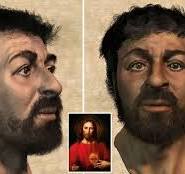
And what were those teachings? (This is the heart of liberation theology.) They were first of all those of a man recognized by the impoverished protagonists of liberation theology as someone like themselves. He looked like them. According to experts in the field of forensic archeology, he resembled poor mestizos everywhere in Latin America. He probably stood about 5’1’’ and weighed about 110 pounds. His skin was brown. He was a laborer, not a scholar; his hands were calloused.
Ironically, Jesus also possessed characteristics that mainstream Christians often find repulsive and ungodly. He was the son of an unwed teenage mother (Mt. 118-22; Lk. 1:26-38). He was homeless at birth (Lk.2:7).  If we are to believe Matthew’s account, Jesus became an immigrant in Egypt (Mt. 2:13-15). The good people of his day called him a drunkard and the companion of prostitutes. They expelled him from his synagogue because he didn’t seem to care about the 10 Commandments, especially the most important one – the Sabbath law. (For a Jew such excommunication and the shunning it entailed were like a death sentence.) The religious authorities said he was a heretic and possessed by the devil. The occupying Roman authorities identified him as a terrorist. They arrested him. And he ended up a victim of torture and of capital punishment carried out by crucifixion – a means of execution the Romans reserved specifically for insurgents. He was not the kind of person mainstream Christians usually admire. He was far too liberal to merit their approval.

Jesus was clearly a feminist. Many of his disciples were women. He spoke with them in isolated places. He actually forgave a woman caught in adultery, while implicitly criticizing the hypocrisy of patriarchal law which punished women for adultery and not men. And Jesus refused to recognize his contemporaries’ taboos around segregations. He crossed boundaries not only dividing men from women, but Jew from gentile, lepers from non-lepers, and rich from poor.     

He couldn’t have been more liberal. In a sense he was an anarchist. He honored no law that failed to represent the loving thing to do. His attitude towards the law is best summarized in his pronouncement about the Sabbath. “The Sabbath was instituted for human beings,” he said, “human beings weren’t made for the Sabbath.” This was pure humanism placing human beings above even God’s holiest law. Again, it was anarchistic.

Jesus’ teachings were politically radical as well. They centered on what today is called social justice. As such they infuriated his opponents but were wildly inspiring to the poor and oppressed. His proclamation was not about himself, but about what he called “The Kingdom of God.” That was the highly charged political image he used to refer to what the world would be like if God were king instead of Caesar. In that kingdom everything would be turned upside-down. The first would be last; the last would be first. The rich would be poor; the poor would be rich.

Subsequent reflection by followers of Jesus in the Book of Revelation teased all of that out and drew the conclusion that with the dawning of God’s kingdom, the Roman Empire would be destroyed and replaced by a new heaven and a new earth entirely unlike empire. There (as indicated in the Acts of the Apostles) wealth would be distributed from each according to his ability to each according to his need. There would be room for everyone. If that sounds like communism, it’s because, as the Mexican exegete Jose Miranda points out, the idea of communism originated with Christians, not with Marx and Engels.  

U.S. Opposition to LT

Those connections with Marxist analysis go a long way towards explaining resistance to LT by the U.S. government as well as within the Catholic Church.

That liberation theology dared to enter the mythological arena the right had long dominated virtually without rival astounded and infuriated the empire. Peasants throughout the subjugated world found the new explanations of God, Jesus and the gospels entirely empowering. Everywhere throughout Latin America they formed biblical circles, and those circles issued in social movements for justice.

In response, the Rockefeller Report of 1969 already identified liberation theology as a threat to the national security of the United States. By 1987, the Latin American Military Chiefs of Staff meeting in conference in Mar del Plata, Argentina, devoted several pages of their final report to liberation theology and the threat it posed to regional stability.  In between, in 1979 the first Santa Fe Document advised the incoming Reagan administration that it had to do something decisive about the threat posed by liberation theology. The administration heeded the advice, and responded both militarily and ideologically.

Reagan’s military strategy against liberation theology issued in a bloody war pitting the United States against the Catholic Church in Latin America whose bishops meeting in conference in Medellin Colombia had together dared to affirm a “preferential option for the poor” as their official position. To combat that commitment, the U.S. did exactly what Rome had done in the first three centuries of our era – and for the same reason: faithfully following Jesus who called empire into question and motivated the poor to assert their rights in this world as children of the God of life.

And both the Roman response and the U.S. response to Jesus and his followers resulted in blood baths. Many of us are well acquainted with the best-known martyrs: Camilo Torres, Archbishop Romero, the Salvadoran team of liberation theologians killed at San Salvador’s Central American University in 1989, the U.S. women religious murdered years earlier in that same country, and Che Guevara. (Yes, Che. His spirituality was secular, but it was no less spiritual or liberationist than any of the others.) And then the unending list of martyrs in this war against the Catholic Church – 200,000 in Guatemala, more than 100,000 in Nicaragua, 90,000 in El Salvador, and literally untold killings and disappearances in Honduras.

In every case, the carnage was a response to social movements inspired by liberation theology. Again, as Chomsky points out, official U.S. military documents show that liberation theology was a major target of those wars. In fact within those same official documents, the Army boasts specifically about defeating LT.

As for Reagan’s ideological response to liberation theology . . . .  On his accession to power, CIA psyops began funding conservative alternatives to liberation theology in Latin America and in the U.S. So did business concerns that saw the leftward drift of Latin America as a threat to their presence there. Domino’s Pizza and Coors Brewery were prominent among the cases in point. As a result, evangelicals throughout the region grew rapidly in number, and the recipients of those funds in the United States increasingly identified with Republicans, the “hand that fed them.”

So, the television programs of Jerry Falwell, Pat Robertson, Jim and Tammy Baker, Jimmy Swaggart, and others were beamed into every poor barrio, población, and favela. Right wing churches sprang up everywhere feeding and expanding an already robust evangelical presence in areas once completely dominated by the Catholic Church. The reactionary message was always the same – a depoliticized version of Christianity whose central commitment involved accepting Jesus as one’s personal savior and rejecting communism including the type allegedly represented by the theology of liberation.

All this points up the extreme importance of LT. including being indirectly responsible for the rise of the religious right in the United States.

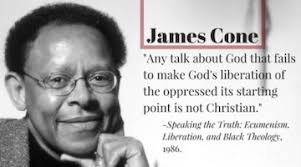
On the other hand however, and on the other side of the aisle, so to speak, the Obama presidency represented the first U.S. president directly influenced by liberation theology. For 20 years, Barack Obama was part of the congregation of Jeremiah Wright – identified by James Cone, the father of black liberation theology, as the latter’s foremost contemporary embodiment.   

Nevertheless, Reagan’s two-front strategy (military and ideological) worked. Revolutionary gains in El Salvador, Guatemala, and most prominently, in Nicaragua were halted and reversed. Militarily, the “Guatemala Solution” was the template. It entailed using military and paramilitary death squads to kill everyone remotely connected with guerrilla movements. According to the Reagan strategy, that included priests, nuns, lay catechists and ministers of the word influenced by liberation theology. The theological strategy worked as well. The slogan promulgated by the Salvadoran military said it all, “Be a patriot; kill a priest.”

Our Debt to Gustavo Gutierrez 

Gustavo Gutierrez was by no means the founder of liberation theology. However, he is said to have coined the term in 1968 after the bishops of Latin America adopted as their own LT’s understanding of the Christ event as expressing God’s “preferential option for the poor.” The poor are God’s chosen people, liberationists explained, as testified by the divine choice to incarnate as the poor peasant earlier described.

In a sense then, Gutierrez and the movement he popularized represents a kind of “Critical Faith Theory” comparable to contemporary academia’s “Critical Race Theory.” Like the latter in relation to race, liberation theology seeks to reverse the traditional employment of religion and the Judeo-Christian tradition as tools of oppression meant to drug, pacify, infantilize, and depoliticize their adherents.

In that sense, LT is a kind of anti-theology.  

Thank you Saint Gustavo Gutierrez for your life and work.

My Granddaughter Eva Gives a Speech about Her Grandfather

Here’s a picture of Eva and me at Granada’s Alhambra, where nearly a year ago the two of us attended a Bob Dylan Concert.

This past year, my 15-year-old granddaughter Eva completed her freshman year at Northfield Mount. Hermon college-preparatory school in Gill, Massachusetts. She finished at the very top of her class. And even more impressively received an A+ in a Philosophy and Religion course where the teacher is famous for never giving an A grade. In any case, part of that course’s requirement was for students to give a concluding speech on the topic “Who Am I?” The written text had to contain three text references.

With Eva’s permission, I’m posting her speech because (to my surprise) it was about her grandfather — about me whom she’s always called “Baba.” Here’s what she said.

Who Am I?

Who am I? Everything you know about me can be traced back in some way or another to my grandfather, Baba. He always had way more faith in me than anyone else I know. Without him I would not be globally aware, I would not understand religion (particularly Christianity and Catholicism) the way I do, I would not have the public speaking and argumentative skills that I do and, in general, I would not be myself. He trusted eleven-year-old me with the economic systems and had me memorize definitions like: Capitalism is private ownership at the means of production, a free and open market and unlimited earnings. Or: Marxism is the philosophy of Karl Marx that states that capitalism necessarily exploits its workers, the workers will inevitably rebel and capitalism will be replaced with socialism which will evolve into communism. Basically, he taught me about the world. I owe my entire personality to him.

Ever since I was a toddler I have thought that he is just about the coolest person of all time. We played Candy Land and foosball and he never once noticed when I cheated! He gave second-grade me books to read like The Autobiography of Malcolm X and Howard Zinn’s A People’s History of the United States which made me feel smart and adult-like. We went on long walks through the neighborhood and I would scooter beside him to keep up. We still go on walks together to this day, though I ditched the scooter in about third grade. He has always treated me like my opinion matters equally to any adult. My relationship with him is probably the most meaningful thing in my life. It sounds weird to say an 84-year-old man is my best friend but it’s true.                                                                                                                                                           

When I first told my therapist about him and our relationship I remember so clearly she smiled grimly and said, “wow, it’s going to be awful for you when he dies.” I know it’s inevitable. Baba talks about it all the time. Unfortunately our walk goes by the cemetery which always brings that topic bubbling to the surface. I usually start crying. As the Stoics say, “we must appreciate that nature is an order transcending our efforts, and that [] [] death [is] to be respected.” (Samuelson 159). While I am not a Stoic, I agree that it’s important to be aware of the fact of death and respect it as an inevitable and important part of life because it’s part of being human. Part of loving is losing and part of joy is sadness. That doesn’t make it any easier.

For my 15th birthday, Baba was super excited about the present he had gotten me. He would not stop telling me that he had a surprise that I was going to love. The surprise? This yellow envelope. In it is a profile he wrote of his own mother, my great grandmother, and reading it was so impactful. It says that my great grandmother “retained a serenity which focused on the elements of life that do not change: God, family, domestic peacemaking, and optimism.” (Rivage-Seul 1). For some reason learning more of my history and imagining the generations before me was so powerful to me. I know that religion was a huge part of her life and my grandfather’s as well. Baba was a Catholic priest for ten years. As a non-religious person, I find this to be simply fascinating. Even though I don’t identify with Catholicism the way he does, because of him I appreciate theology and have a deep understanding of religion. Baba has taught me to agree with a lot of theological arguments like James Cone’s. For example, the idea that suffering is a profound theological problem and that “the more [] people struggled…the more they found in the cross the spiritual power to resist the violence they so often suffered” (Cone 22). These sorts of messages about liberation theology have been really influential to me and I know about them because of Baba.

Three weeks ago I found out that he was in the hospital. He was diagnosed with early sepsis. To say I was terrified would be the understatement of the world. I texted my grandmother at least three or four times a day asking how he was, I called him every evening to make sure he was doing alright. Luckily he’s doing incredibly right now. He is home and healthy. I absolutely cannot wait to see him again. The point is, though, I was seriously concerned for his health. For the first time I genuinely had to imagine what my life would be like if Baba weren’t with me every step of the way, supporting me, guiding and just being on my side. I hated it. 

Imagine losing an arm. You can technically live without it but your quality of life would decrease and you wouldn’t be the same person since that experience would be traumatic and painful. That, for me, is what losing Baba would be like. He is so crucial to my being. I need Baba the way I need my arms and legs. I need his support; I need to know he’s there for me and in my corner whenever I am upset or nervous. I am myself because of Baba. I am myself with Baba. Without Baba I am someone else. And I don’t like her.

I know he won’t always be around but because of that I don’t take him for granted. I don’t take anyone for granted. Thank you, Baba, for shaping your favorite granddaughter into the person she is.

Black Liberation Theology & Zionist Genocide of Gazans

Black History Month has me rereading the late James Cone’s seminal work, The Cross and the Lynching Tree. Cone, of course, is the father of black liberation theology. I’m finding his work especially relevant to the ongoing genocide of Gazans at the hands of white supremacist Zionist Jews.

A central theme of Cone’s writing, public lectures, and teaching focuses on the difference between white versions of Christianity and their black counterpart. He puts that difference succinctly by alleging that whites have used the Bible to oppress blacks and others, while the latter have used that same Bible as a powerful tool to resist that oppression.

The ongoing slaughter in Gaza coupled with the statements of genocidal intent expressed by Benjamin Netanyahu and other Israeli officials have led me to conclude that something similar might be said of Zionists both in Israel and in the U.S. Recently they have used the Bible to ground their genocide of Palestinian children and their mothers. Meanwhile, Islamic Gazans use the Bible along with their Holy Koran to justify their (sometimes violent) resistance.

Who’s right? And what does Cone – what does liberation theology – say about such controversy?

Let’s see.

Consider first how Zionists are using the Bible. Next think about the approach of theologians like James Cone, and how the contrast between the two approaches applies to the Hamas attack of October 7th and Israel’s genocidal response in Gaza. Finally compare the oppressive violence that Zionists have used against Gazans with the violence of Hamas against their overlords. Theologians like Cone as well as his heroes Malcolm X and Martin King find the latter more justifiable than the former.   

Zionist Use of the Bible  

Consider the Zionists’ use of the Bible first.

Early on, Mr. Netanyahu invoked the biblical account of their ancient leaders claiming divine authority to carry out genocide against Israel’s archenemy, the Amalekites (I Samuel 15:1-9). The Gazans are the contemporary equivalent of Israel’s ancient foe, he said. They deserve the same fate of absolute obliteration – i.e. genocide.  

The Prime Minister’s words were turned into a war anthem adopted by the IOF (Israeli Occupation Force). They shocked the world in a video showing them singing and dancing to the words of that anthem calling for the slaughter of Gazans, today’s Amalekites.

Both Netanyahu’s words and the video of the soldiers’ rally were used recently by South African prosecutors in their presentations before the International Court of Justice (ICJ). There the prosecutors alleged that both Netanyahu’s words and the soldiers’ behavior provided convincing evidence of Israel’s intentional violations of the Genocide Convention.

On the one hand, the presentation of such evidence led the ICJ to conclude that the South African charges merit further court deliberation about Israel’s possible conviction for military actions that provide prima facie evidence of being genocidal.

On the other hand, the evidence in question (Netanyahu’s words and the IOC anthem) offers proof positive that (according to Cone’s allegations) white colonial Europeans continue to use the Bible to justify horrendous oppression of their victims.

But what about the Gazans and their use of the Bible? What does liberation theology say about that?

Liberation Theologians & The Bible

For liberation theologians like James Cone, all human beings are loved by the biblical God about whose nature there is evident difference of opinion and controversy throughout sacred scripture. That is, the Bible contains many contradictory understandings of God. In effect, it presents readers with a “battle of the gods.”

For instance, some texts present him (sic) as petty and jealous. Still other texts show him as the national God of the Jews. In that capacity, he is often a God of war like the one demanding the slaughter of the Amalekites.

The Hebrew prophetic tradition presents a very different God. He’s one who in today’s Zionist parlance might be accused of anti-Semitism. That’s because he is often highly critical and fiercely condemnatory of Israel. He frequently punishes them. On at least two occasions he allows their enemies to cart them off for generations-long exiles in Assyria (722-652) and Babylon (586-516).

Again, the prophetic tradition seconds the divine “anti-Semitic” tradition just mentioned. It’s that tradition in which Jesus appears. The Gospel narratives about him along with his preaching and parables sometimes even centralize Jewish enemies (such as “The Good Samaritan”) as heroes while condemning Jewish priests, scribes, Pharisees, and kings. With that in mind, contemporary Zionists would no doubt characterize Jesus as a “self-hating Jew.”

For Jesus, ethnic identity even became entirely immaterial. One thing alone is important, for him, love of God and love of neighbor (Matthew 22:36-40). Connections to Abraham, Jesus says, are no more significant than connections to a stone (Matthew 3: 9-10).

In fact, for the prophets in general (and for liberation theologians like James Cone), what is overwhelmingly central to morality is treatment of widows, orphans, and resident aliens. The prophets constantly remind their fellow religionists that all of them were once slaves in Egypt. They should never forget that. Accordingly, favorable treatment of slaves, aliens, widows, and orphans is the very touchstone of Israel’s identity. In fact, the prophet Jesus makes treatment of “the least of the brethren” the sole criterion of judgment about the final worth of one’s life (Matthew 25: 31-46).

Liberation theologians summarize all of this by asserting that God has made a “preferential option for the poor.” That is, when push comes to shove, and while God loves everyone, the Divine One sides with the poor and oppressed in their struggles against the rich and powerful.

For followers of the Jewish Jesus, that divine preference is evident in the fact that he chose to fully reveal himself not as a king, prince, or rich person, but in the poorest of the poor.  He surfaced in the working class as a construction worker from the nowheresville called Nazareth. He was conceived by an unwed teenage mother. In his youth, he lived as an immigrant in Egypt (Matthew 2: 13-15). He was accused of being a drunkard and a friend of prostitutes (Matthew 11:19). His family thought he was insane (Mark 3:21). He finished disgraced and a victim of torture and capital punishment.

And very significantly for James Cone, forensic archeologists point out that Jesus was probably black and unimposing. He was probably about 5’1” in height and weighed just over 100 pounds. Probably, they say, looked like the figure (below) on the left, not the familiar one on the right. To repeat, it is quite probable that Jesus was literally black. Cone affirms that he was at least figuratively or poetically black. He came from and sided with the poor and oppressed.

Liberation Theology & Violence

Furthermore, it isn’t all that clear that Jesus was a pacifist and non-violent. For instance, all Gospel lists of his apostles identify one of them as “Simon the Zealot.” “Zealot” was the name of patriots in Jesus’ Palestine who resisted Roman occupation by killing Jewish collaborators with Roman occupation. How could “Jesus meek and mild” have associated himself with murderers like that?

On top of that, all four Gospel traditions record that at least one of Jesus’ closest disciples was armed when Jesus was arrested (John 18:10-11). Jesus must have known that. Moreover, the friend in question knew how to use his weapon; he swung it at one of those who came to arrest Jesus and cut off the man’s ear.

Elsewhere, Jesus is remembered as saying, “Don’t think that I have come to bring peace, but the sword” (Matthew 10: 34-36). In another place, he says “Let the man who has no sword, sell his cloak and buy one” (Luke 22:36). And finally, as I said, Jesus was evidently perceived by the Romans as a revolutionary. In any case, they executed him by crucifixion, the means of capital punishment they reserved for violent insurrectionists. He was crucified between two other insurrectionists (not “thieves”}. Jesus must have done something(s) that gave the occupiers the impression that he was in insurrectionist too.

And that brings us back to Gaza, Hamas, and its use of violence on October 7, 2023. Would the revolutionary Jesus have supported such mayhem?

Here’s where distinctions made by liberation theologians {and by James Cone’s primary black hero, Malcolm X} come in. Malcolm was all for peace – but not in response to the oppressor’s aggression. “If someone hits you in the face,” Malcolm would say, “hit him back.” Black people have the right to defend themselves, he was fond of saying, “by any means necessary.”

Liberation theologians like Cone agree. And they go further. They teach that all forms of violence are not the same. At least one form is justifiable; others are not. So, before one can determine possible justification, one must identify its type. Four of them must be considered in any given analysis. Consider them in the context of Israel’s war against Gaza.

  1. The first type of violence is structural and is indefensible. It takes the form of elements such as laws and customs, restrictions, and prohibitions that adversely affect a given population such as inhabitants of the Gaza Strip. European colonialists’ gift of Palestine to white European Jews in 1948 was violent. It resulted in the forced displacement of Palestinians by the hundreds of thousands. Their houses were stolen or destroyed by the Jewish invaders from Germany, Poland, Russia, Lithuania, Latvia, Estonia, and even from the United States. Palestinians who resisted were often simply murdered by the invaders. Moreover, apartheid laws later imposed on Palestinians by Israel’s settler colonists are also violent. Most of the world hasn’t even recognized this structural form of violence as the “original sin” it represents. However, liberation theologians like James Cone do. This form of violence by the powerful against the powerless is never acceptable.
  2. The second type of violence is the truly justifiable violence of self-defense. This is what Malcolm referred to when he spoke of hitting back. It’s a form of violence that the UN recognizes as legitimate in Article 51 of its Charter. Accordingly, people living under occupation have the right to defend themselves against occupying forces. The latter, however, have no right to self-defense. They are robbers, thieves, and murderers. These are the convictions behind the Hamas attacks of October 7th, 2003. Liberation theologians like James Cone agree. This second form of violence is legitimate. However, its adoption is rarely wise. It can be suicidal because it leads to a third type of violence which is always overwhelming.
  3. The third type of violence is reactionary. It is the overwhelming police and military response of those imposing the first type of violence. This third type is on display at this very moment in Gaza. There cowardly Israeli occupation forces have killed more than 27,000 Gazans – more than half of them children and their mothers – in response to Hamas’ employment of the second type of violence. In this case, the response is so overwhelming that according to the ICJ, it provides prima facie evidence of genocide. Obviously, this type of violence cannot be truly justified since it represents restoration of the “order” imposed by violence’s first level. Nonetheless, in most cases such police and military violence is accepted by most as somehow normal.
  4. The fourth type of violence is terroristic. Terrorism is defined as the unlawful use of violence and intimidation, especially against civilians in the pursuit of political aims. Nation states such as Israel and the United States routinely define uprisings against their illegal occupations as “terrorism.” According to them, Hamas is terrorist while Israel and the United States stand for law and order. However, theologians like James Cone maintain that the world’s principal terrorists are states like those just mentioned. They are the ones who impose structural violence and respond with reactionary violence. Their routine murders of those defending their families, homes, and cultures against colonialism’s “legal” crimes are the primary forms of terrorism afflicting our world. By comparison, the violence of groups like Hamas (or even the perpetrators of 9/11) is minor. In other words, though terrorism is never justified, its main perpetrators are those who impose the colonialism of white supremacy in all its forms, not those who resist them.

Conclusion

Yes, the Bible’s Battle of the Gods continues to our day. All of us are involved whether we’re believers or not. But believers especially are called to make up their minds about the nature of the God they believe in and about the nature of the violence they find themselves supporting.

All of this means critical evaluation of Netanyahu’s attempts to biblically justify Zionists’ ongoing genocidal attacks in Gaza and the West Bank. Liberation theologians like James Cone contend that the Prime Minister’s invocation of a genocidal God is a typically white supremacist interpretation. As such it runs completely contrary to Israel’s prophetic tradition and its concerns for the impoverished, widows, and orphans. It runs completely contrary to the words of the Jewish prophet from Nazareth, “Whatever you do to the least of my brethren, you do to me.”

One thing we do know, in the biblical portrayal of its battle of the Gods, the God of the Jewish prophets and the Jewish Jesus is emphatically not the god of I Samuel 15:1-9.

Instead, the divine one is the God of the construction worker from Nazareth, living in a country occupied by invading Europeans, and who gave the invaders reason to believe he supported the Resistance the Romans feared and hated.

In fact, the white European occupiers hated the second level of violence so much that in the year 70 CE, they acted just like Netanyahu and his genocidal army. They reduced Jerusalem and its environs to the same condition we see in Gaza today.

What Joe Biden Should Learn from Obama’s Autobiography: Listen to Jeremiah Wright

I’ve just finished Barack Obama’s remarkable autobiography, A Promised Land. Its biblical title invites reflection about the theological orientation and resulting policies of the man the book portrays. By his own testimony, that direction was originally set by Jeremiah A. Wright, Mr. Obama’s former pastor at Trinity United Church of Christ on Chicago’s South Side.

James Cone, the father of Black liberation theology has described Dr. Wright as Black liberation theology’s foremost contemporary exponent. So, in Mr. Obama, the United States experienced not only its first Black president, but its first chief executive to have been shaped spiritually by liberation theology.

With all of that in mind, the point of the following review of The Promised Land will be that had Mr. Obama employed what he learned at the feet of Jeremiah Wright, his policies would have been markedly different from their actual forms. Practically speaking, they would have more resembled those of Franklin Delano Roosevelt than a continuation of the neoliberal legacy of Bill Clinton. They would have set the country on a profoundly different and more widely beneficial trajectory from the one we are currently following.

Professed devout Catholic, Joe Biden, should take note. The radical biblical tradition espoused not only by Wright and Cone, but by King and William Barber – i.e., championed by thought leaders among Mr. Biden’s most crucial constituents – won’t support a return to “normalcy.” It requires policies that prioritize the needs not of Wall Street, but of the poor. It demands departure from Barack Obama’s business as usual.     

Liberation Theology

And that brings me precisely to liberation theology.

In case you’ve forgotten, liberation theology is reflection on the following of Yeshua the Christ from the viewpoint of the poor and oppressed committed to improving their collective life economically, politically, socially, and spiritually.

Its Judeo-Christian orientation is about political and economic starting points and end points.

Sociologically speaking, it begins (as OpEdNews’ Rob Kall would say) from the “bottom up.” In the case of the Jewish tradition, it starts with the liberation of slaves in Egypt by a Life-Force they called “Yahweh.” It ends with Yahweh’s pledge to give the enslaved (as Mr. Obama’s book title reminds us) “A Promised Land.”

In its Christian form, the tradition starts with a poor houseless child who grows into a prophet. He promises dispossessed victims of the Roman Empire the end point of “the kingdom of God.” By this he meant a world where God is king instead of Caesar – a world with room for everyone. For liberation theology, that’s the North Star – the guiding vision meant to shape all of life, economically, politically, socially, and spiritually – a world where no one is excluded or marginalized

Following that star, liberation theology emphasizes what the Christian Testament’s Paul of Tarsus calls “the wisdom of God” contrasted sharply with “the wisdom of the world” (I Cor. 2: 1-16).  In modern terms, the wisdom of the world is trickle-down; it begins with the well-off. It holds that if the wealthy prosper, the tide that lifts their luxury yachts will lift all boats. By contrast, God’s bottom-up wisdom begins with the well-being of the poor.

Unfortunately, the policies, Mr. Obama describes in A Promised Land ended up reflecting the former over the latter.     

Jeremiah Wright’s Influence on Mr. Obama

That reflection contrasts dramatically with what scandalized America’s right wing when it first encountered Jeremiah Wright’s liberation theology. The discovery occurred soon after they realized that Barack and Michelle Obama not only were parishioners of a fiercely radical black pastor, but that he had officiated at their wedding (A Promised Land 23).

That sent conservatives scurrying to unearth evidence of Wright’s (and by extension Obama’s) unacceptably extreme viewpoints. In fact, what their excavations uncovered nearly terminated Mr. Obama’s political ambitions (140).

That’s because (true to liberation theology’s form) Wright’s words explicitly foregrounded the experience of the poor as victims of what he called U.S. terrorism. His sermons often traced it from the genocide of Native Americans, through the enslavement of Africans, to Middle Eastern policies that, he said, invited the tragic events of 9/11/2001. It led him to refer to his country as the “USA of KKK,” and to conclude, “Not God bless America,” but “God damn America” (140).

Despite all of that, and notwithstanding his eventual repudiation of his former pastor, President Obama’s testifies in A Promised Land that Rev. Wright remained an important part of his consciousness (142).  And so, throughout his narrative, the former chief executive gives indications of critical truths often reminiscent those voiced (albeit more forcefully) by his one-time pastor. For instance, Mr. Obama recalls that:

Personally

  • As part of a generation willing to question the U.S. government (456), he frequently found Wright’s black liberation theology inspiring and as channeling the understandable rage of black people in general (119, 141).
  • Not only did Rev. Wright’s disturbing insights become part of his consciousness, but so did the radical thought of W.E.B. Dubois, Martin Luther King, John Lewis, Bob Moses, Fannie Lou Hamer and Diane Nash (11) – along with those of the Hindu Mahatma Gandhi and the belatedly revered socialist, Nelson Mandela (598).
  • He realized that despite the convictions of many liberals, America’s race problems are far from being solved (128).
  • He felt impatient with having to soften blunt truths that whites find disturbing (121).
  • He himself had often experienced police harassment (395).

Internationally

  • He found sympathy with the assessment of critics like Wright that America’s “. . . ideals have always been secondary to conquest and subjugation, a racial caste system and rapacious capitalism, and that to pretend otherwise is to be complicit in a game that was rigged from the start” (xv).
  • In fact, after World War II, the U.S. had “. . . bent global institutions to serve Cold War imperatives or ignored them altogether . . . meddled in the affairs of other countries, sometimes with disastrous results;” and its “. . . actions often contradicted the ideals of democracy, self-determination and human rights. . .” (329).
  • America’s war in Vietnam was no less brutal than the Soviet Union’s repression of Hungary (469).
  • The criminal U.S.-supported Shah of Iran and his feared SAVAK secret police were typical of murderous client regimes supported by America in the Global South following World War II (310, 450-1).
  • The Shah’s regime was part of U.S. Mideast policy that needlessly alienated Muslims throughout the world. That policy tolerated corruption and repression in the region and routinely humiliated Palestinians (358).
  • China represents an attractive alternative (to the United States’) model for the developing world (481).
  • That’s true especially after so many Global South countries embraced the illusory “wisdom” of the Washington Neoliberal Consensus and thus followed America over a fatal precipice (330).

Obama’s Repudiation of Wright (and radical change)

Despite such insights, Mr. Obama’s presidential ambitions not only made it necessary for him to repudiate Jeremiah Wright, but evidently to adopt a series of policies that contradicted the tenets of liberation theology. His policies prioritized the welfare of the rich over those of the working class and poor. Accordingly, the president ends up admitting that:

  • Because of the financial crisis, he did not follow through on his campaign promises to U.S. workers (177).
  • For him, the financial markets (presumably as opposed to wage earners) were the only audience that really mattered (304).
  • His interventions alone were responsible for saving bankers from wage earners’ justified anger and retaliation (297).
  • Resulting white working-class anger, e.g., in Pennsylvania about jobs lost through such neoliberal policies, was justified (144).
  • In retrospect, bank nationalization and prosecution of crooked bankers might have been a better solution to the Crisis of 2008 than the bailouts favored by his economic team (280, 296, 305). 
  • By avoiding that solution and bowing to bankers’ interests, Obama consciously missed a once-in-a-generation chance to reengineer the overall economy in a bottom-up way reminiscent of FDR’s New Deal (304).
  • He could have done so, because of his 70% approval rating coupled with the super majority he possessed in the Congress at the outset of his first term (225, 378, 243).

Nowhere in his autobiography does Mr. Obama reveal his repudiation of Wright’s outspokenness than in the case of the Deepwater Horizon oil tragedy of 2010. There, BP Oil had unleashed the most devastating oil spill in the history of offshore drilling. It lasted for 87 days and pumped out into the ocean at least 20,000 (and possibly 50,000) barrels of oil daily (569).

As time wore on and scientists and engineers scrambled to cap the leaks, Republicans increasingly blamed the president for the failure to do so. They even referred to it as “Obama’s Katrina” (569).

What Mr. Obama’s best instincts told him to say in response was reminiscent of Wright’s candor – this time in favor of perhaps the earth’s most oppressed being, Mother Earth Herself. According to the former president, he should have said:

“. . . the only way to truly guarantee that we didn’t have another catastrophic oil spill in the future was to stop drilling entirely; but that wasn’t going to happen because at the end of the day we Americans loved our cheap gas and big cars more than we cared about the environment except when a complete disaster was staring us in the face, and in the absence of such disaster, the media rarely covered efforts to shift America off fossil fuels or pass climate change legislation, since actually educating the public would be boring and bad for ratings; and the one thing I could be certain of was that for all the outrage being expressed at the moment about wetlands and sea turtles and pelicans, what the majority of us  were really interested in was having the problem go away, for me to clean up yet one more mess decades in the making with some quick and easy fix, so that we could all go back to our carbon-spewing, energy-wasting ways without having to feel guilty about it” (570-71).

Again, that’s what, Obama admits, he wanted to say: stop drilling altogether, get rid of your big SUVs, pay the true price of gasoline, and pass courageous climate change legislation despite effects on the “American Way of Life.”

Instead, the president describes his Casper Milquetoast response with the following words: “. . . I somberly took responsibility and said it was my job to ‘get this fixed.’”

Missed Opportunities

In other words, in contrast to liberation theology’s and Jeremiah Wright’s “preferential option for the poor,” Obama’s policy preference supported the corporate status quo. He short-changed those represented by what he elsewhere describes as “his kind of crowd” from the days when he worshipped at Trinity United – “democracy activists, heads of nonprofits and community organizers working at a grassroots level on issues like housing, public health, and political access” (466).

That in a nutshell encapsulates Obama’s choice not to follow the outspokenness not only of Jeremiah Wright, but of FDR’s ghost with whom POTUS #44 wistfully compares himself throughout his memoir (177, 239, 240, 264, 388, 524, 547, 549).

Following Roosevelt, Mr. Obama’s legacy could have been different. He could have bailed out wage earners instead of the bankers. He could have instituted a 21st century New Deal prioritizing health care, infrastructure renewal, clean energy technology, and a green counterpart to the Civilian Conservation Corps.

Moreover, Barack Obama was more up to selling those programs than any president within living memory. He was better equipped for game-changing fireside chatting than even Roosevelt himself. No chief executive since FDR enjoyed his natural charm, charisma or eloquence.

Yet by his own admission, he wasted what that other Roosevelt called his “bully pulpit” by failing to persuade the American people to support legislation in their own best interests regarding single-payer health care, immigration reform, clean energy, nuclear disarmament, and cessation of endless wars (594).

Conclusion

None of this is to say that his own words in A Promised Land reveal President Barack Obama as somehow nefarious or intentionally two-faced. As presidents go, he emerges as a decent man. And no one can deny the significance of his enormous achievement as the first black man to overcome the tremendous obstacles barring election to the highest office in the land. Moreover, once in office, #44 acquitted himself with impeccable moral integrity (595). His staff worked extremely hard. Mr. Obama was the kind of boss most of us would like to work for – upbeat, sensitive, inclusive and willing to laugh at himself (534). He is also a gifted writer.

Neither is any of this to say that Mr. Obama should have been as outspoken as Jeremiah Wright. Such style might be appropriate for a prophetic pastor on Chicago’s south side, but it’s surely not the way to get elected president.

As a theologian however, I find it regrettable that the former president so completely cut himself off from the lessons learned at the feet of his early mentor. (And this is where Catholic Joe Biden has something to learn from his boss’ admitted regrets.) Had President Obama quietly embraced Dr. Wright’s lessons, had he ignored the Geithners, Emanuels, and Sommers, had he prioritized the needs of the poor, had he offered us another New Deal, we’d likely be living in a far greener country with far less wealth disparity, injustice and anger ( 522, 524).

And judging by Mr. Roosevelt’s success with the electorate, the Democrats would today enjoy much firmer standing in the White House and halls of Congress.    

Biblically speaking, Barack Obama would have brought us all that much closer to A Promised Land.

The Biblical Call to Woke, Politically Correct Identity Politics

Readings for 14th Sunday in Ordinary Time: Zechariah 9: 9-10; Psalm 145: 1-2, 8-14; Romans 8: 9-13; Matthew 11: 25-30

Whatever the world believes and does, choose to believe and do the opposite. That’s because the Truth that some call “God” is found 180 degrees opposite to what the world claims as true. That’s the message of today’s liturgy of the word.

So, take heart if as a follower of the Christ, they accuse you of advocating identity politics, deride you as a social justice warrior, woke, politically correct, a conspiracy theorist, or a whatabouter. Leaving aside their distorted meanings, all of those categories should actually be embraced by critical persons of faith who take this Sunday’s readings to heart.  

In today’s key selection, Paul refers to accusations like the above as “flesh,” because they insistently judge according to external appearances and directly contradict the teachings of Moses and Jesus. Such judgments routinely gas light activists demonstrating for social justice across the world. For instance, followers of Rush Limbaugh tell awakened Black Lives Matter demonstrators to go back to sleep. They admonish “conspiracy theorists” to simply accept White House narratives. They ridicule “social justice warriors” as pathetic Don Quixotes impotently jousting at windmills. And they say progressives, “snowflakes” should be embarrassed about their annoying “political correctness” and whataboutism.       

However, today’s reading from the prophet Zechariah calls for political strategy that penetrates below such superficiality at every turn. In the process, he longs for political leaders whose laser vision will reject the outer manifestations that tell us that things are fine the way they are. For instance, his ideal ruler will refuse military display and instead sponsor programs of national disarmament. That, of course, flies in the face of “American” cultural ideals of bluster, toughness, and aggression.

Finally, in our Gospel reading, Jesus promises that adopting contrary unfleshly values will result in easy, restful and unburdened existence for everyone.

Flesh Merchants

Before we get to those separate readings, begin by contrasting the wisdom of the world’s flesh merchants with the general vision recommended (as we’ll see below) in today’s selections. Think about the dominant culture’s superficial dismissal of social justice warriors, the “woke,” of everything that smacks of political correctness, or conspiracy theories or whataboutism. Those caught up in fleshly appearances want progressives to feel guilty about the critical thinking implied in each of those categories understood in the light of faith.

  • The Struggle for Social Justice: Our era’s flesh merchants generally ridicule what they call “social justice warriors” as naïve bleeding hearts. However, the truth is that the struggle for social justice lies at the heart of the Judeo-Christian tradition. It all began with the liberation of slaves from Egypt. The Hebrew Covenant prioritized the needs of widows, orphans and immigrants. It instituted permanent land reform measures and periodic wealth redistribution. Jesus advocated replacement of Rome’s empire with what he called the Kingdom of God – a world where God’s truth and love replaced Caesar’s looting, lies and oppression. All the great followers of Jesus were social justice warriors. Think Bartolome de las Casas, Sojourner Truth, Martin Luther King, Dorothy Day, and today’s William Barber.
  • Wokeness: Following in the footsteps of such prophets, all of us are called to permanent spiritual insomnia. In fact, Buddhism is entirely based on the concept. It teaches that the whole purpose of life is to wake up from the slumber that is endemic to dominant cultures everywhere. Plato’s “Allegory of the Cave” had a similar message. Any follower of the Judeo-Christian tradition is called to wake up.
  • Identity Politics: Notwithstanding its Buddhist and classical derivations, the term “woke” comes from the African American community. That origin reminds us that any struggle for social justice must begin with heightened awareness and affirmation of specific identity as an oppressed people. That’s why James Cone, the father of black liberation theology, jarringly insists that God is black. He’s referring to a divine preference for the unfairly “burdened” (as today’s Gospel selection puts it) in any age. It’s what lies at the heart of Pope Francis’ repeated allusions to God’s “preferential option for the poor.” It’s with the impoverished that followers of Moses and Jesus are called to unambiguously identify spiritually and politically. 
  • Political Correctness: This is perhaps the most distorted and denigrated of the concepts considered here. Originally, it was a self-critical tool used by political activists to make sure that their speech and action were consistent with their principles. More recently however, the term has been appropriated and trivialized by opponents of social justice to refer to any infringement of a dominant group’s supposed right to speak and act without considering the consequences for members of a subordinate class. Obviously, such “freedom” is out of step with the just-referenced preferential option for the poor. On the contrary, all would-be followers of Jesus the Christ are called to bring their speech and actions into correct alignment with their faith.    
  • Conspiracy Theory: Like political correctness, the original concept of conspiracy theory had no insulting overtones. In fact, conspiracy is a legal category referring to two or more people planning to commit a crime. Lawyers and prosecutors theorize about conspiracies all the time. And, of course, Jesus’ assassination resulted from a conspiracy between Jerusalem’s temple priests and the Roman imperial state. That fact alone should make his followers especially sensitive to conspiratorial plots. (BTW, one prominent conspiracy theory holds that following the Kennedy assassination, the CIA appropriated a negative understanding of the term conspiracy theorists precisely to discredit critics of the highly questionable Warren Report – and subsequently of every other CIA operation.) Bottom line here: no one familiar with history, much less Christianity, should be intimidated by accusations of being conspiracy theorists. Such allegations are meant to inhibit critical thinking.   
  • Whataboutism: The Wikipedia Dictionary defines whataboutism as any attempt to discredit an opponent’s position by charging them with hypocrisy without directly refuting or disproving their argument. Actually, in our U.S. context, it’s most often a refusal to take seriously right-wing accusations against designated enemies such as Russia, China, or Venezuela for crimes routinely committed by the United States itself. It recognizes that “America” has no ground to stand on in its accusations of election-interference, persecution of Muslims, or corruption in high office. That’s because our country’s officials routinely engage in such activities themselves and embody unsurpassed corruption at every level. It’s all in the spirit of Jesus’ words, “Why do you look at the speck of sawdust in your brother’s eye and pay no attention to the plank in your own eye?” Like Jesus, whatabouters are concerned with hypocrisy.

Today’s Readings

With all of this in mind, here are my “translations” of the readings that inspire today’s reflection. Please read them for yourselves here to see if I’ve got them right. I take them all as issuing a call to depart entirely from the dominant culture’s way of thinking and acting in the areas just designated.

Zechariah 9: 9-10: The world leader we’re all waiting for won’t come driving a Sherman Tank, Cadillac or a Rolls Royce.  Rather, she’ll arrive on a bicycle. Moreover, she’ll achieve peace by eliminating the entire military-industrial complex. No more war for this non-violent champion! 

Psalm 145: 1-2, 8-14: When she comes, we’ll all join in grateful thanksgiving to our Great Cosmic Mother. We’ll praise her for her grace, patience, goodness, kindness and compassion. We’ll finally realize that might is found precisely in what the world considers weakness – in the fallen and heavily burdened. 

Romans 8: 9-13: On that happy day, everyone on earth will understand their spiritual unity with everyone else regardless of externals – “flesh” including its color. We’ll see that at core, all of us share the loving Spirit that animated Jesus the compassionate Christ. Fullness of life, he taught, lies in a direction 180 degrees away from the fleshy exterior reality to which the world so insistently limits our attention.   

Matthew 11: 25-30: Yes, the worldly wise and learned tell us that “reality” is defined by what we can see and feel and that might makes right. However, the unpretentious nobodies of the world who follow Jesus know much more. In their humility, disarmed non-violence, and refusal to compete, they share the very mind of God. They’ve discovered the secret of an easy, restful and unburdened existence.

Conclusion

I suppose what I’ve been seeing in today’s biblical readings are implications that call into question our culture’s superficiality – something Paul called “flesh.” I hear the readings warning us against the dominant culture and its rejection of much deeper (spiritual) values firmly founded in the Judeo-Christian tradition.

I’m talking about commitment to social justice, and the identity politics that sides with the poor and oppressed. I’m referring to awakening from cultural slumber and the adoption of woke ways of thinking and acting that are politically correct in terms of coherence between theory and action. My reference is also to judicious suspicion of official stories mouthed by “leaders” who have repeatedly lied to us – even in the face of their accusations about conspiracy theories. All of this, I’m saying, entails complete rejection of hypocrisy hiding behind deflecting complaints of whataboutism.

I at least feel great relief to recognize culturally imposed guilt tripping for what it is. I’m happy to embrace my efforts to be an awakened politically correct social justice warrior identified with the poor and oppressed and alert to conspiracies by the rich and powerful.

All of these are proud labels embodied in countless heroes most of us profess to admire – people like Moses, Sojourner Truth, Gandhi, Martin King, Dorothy Day, William Barber, and Jesus himself. We’re in very good company.