Gustavo Gutierrez and Liberation Theology’s Critical Faith Theory

The Great Gustavo Gutierrez died this week. He transitioned as a 96-year-old giant whose A Theology of Liberation: History, Politics, and Salvation (1971) popularized and spurred the most important theological movement of the last 1700 years (i.e. since Constantine in the 4th century). In fact, liberation theology (LT) might well be described as responsible for the West’s most influential intellectual and social developments of the last 175 years (i.e. since the publication of the Communist Manifesto in 1848). United States and Vatican fierce opposition to LT testifies to its impact.

Think about it. Without liberation theology it is impossible to account for Salvador Allende’s rise to power in 1973 or the triumph of Nicaragua’s Sandinistas in 1979, or the power the FMLN in El Salvador had and continues to enjoy today. The Zapatista movement in Mexico is also intimately connected with liberation theology. Even more, without reference to liberation theology, it’s impossible to fully understand the rise of new left governments throughout Latin America. All of them are indebted to liberation theology and its power to motivate the grassroots.

Perhaps more surprisingly: apart from LT, one cannot fully understand the prominence of conservative evangelicals in the United States. That’s because (as we’ll see below) political support for their movement was part of the Reagan administration’s strategy to defeat liberation theology which the White House and the Pentagon termed a national security threat. Their fear of LT mirrored that of the Vatican which ended up cooperating with Washington’s war against it.

Many are convinced that Washington’s and Rome’s anti-LT war was successful. That’s because the U.S. systematically assassinated its prophets along with hundreds of thousands of its adherents in a massive conflict that Noam Chomsky called “the first religious war of the 21st century.”  The sheer terrorism of the U.S. response plus an equally systematic offensive against LT within the Catholic Church itself deprived liberation theology of its best leaders, misinformed and intimidated the grassroots, and silenced many more. Nonetheless LT has changed the world. It has changed the church and Christianity in general.

But what is liberation theology? And why was it so threatening to the powers-that-be, both political and ecclesiastical? What steps were taken to defeat it? And why should believers be so grateful to theologians like Gustavo Gutierrez?   

 Liberation Theology Defined

Simply put, liberation theology is reflection on the following of Jesus of Nazareth from the viewpoint of the poor and oppressed. More accurately, it is reflection on the following of Jesus the Christ from the viewpoint of those among the poor who are committed to their own liberation. That is, LT begins from a place of commitment – to a world with room for everyone. In itself, it represents a popular movement, a solidarity movement for social justice.

Liberation from what? In a word, from colonialism and from the neo-colonialism represented today by the forces of corporate globalization. Those forces have nearly half the world living on $2 a day or less. They’ve concentrated the world’s wealth in the hands of a sliver of 1% of the world’s population. According to UN statistics, eight billionaires own as much as 50% or humanity. As a result, at least 25,000 people including 10,000 children die of preventable starvation each day. In the eyes of liberation theology’s protagonists, that’s sinful and runs entirely contrary to the teachings of Jesus of Nazareth.

And what were those teachings? (This is the heart of liberation theology.) They were first of all those of a man recognized by the impoverished protagonists of liberation theology as someone like themselves. He looked like them. According to experts in the field of forensic archeology, he resembled poor mestizos everywhere in Latin America. He probably stood about 5’1’’ and weighed about 110 pounds. His skin was brown. He was a laborer, not a scholar; his hands were calloused.
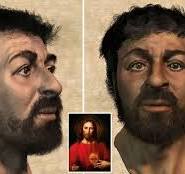
Ironically, Jesus also possessed characteristics that mainstream Christians often find repulsive and ungodly. He was the son of an unwed teenage mother (Mt. 118-22; Lk. 1:26-38). He was homeless at birth (Lk.2:7).  If we are to believe Matthew’s account, Jesus became an immigrant in Egypt (Mt. 2:13-15). The good people of his day called him a drunkard and the companion of prostitutes. They expelled him from his synagogue because he didn’t seem to care about the 10 Commandments, especially the most important one – the Sabbath law. (For a Jew such excommunication and the shunning it entailed were like a death sentence.) The religious authorities said he was a heretic and possessed by the devil. The occupying Roman authorities identified him as a terrorist. They arrested him. And he ended up a victim of torture and of capital punishment carried out by crucifixion – a means of execution the Romans reserved specifically for insurgents. He was not the kind of person mainstream Christians usually admire. He was far too liberal to merit their approval.

Jesus was clearly a feminist. Many of his disciples were women. He spoke with them in isolated places. He actually forgave a woman caught in adultery, while implicitly criticizing the hypocrisy of patriarchal law which punished women for adultery and not men. And Jesus refused to recognize his contemporaries’ taboos around segregations. He crossed boundaries not only dividing men from women, but Jew from gentile, lepers from non-lepers, and rich from poor.     

He couldn’t have been more liberal. In a sense he was an anarchist. He honored no law that failed to represent the loving thing to do. His attitude towards the law is best summarized in his pronouncement about the Sabbath. “The Sabbath was instituted for human beings,” he said, “human beings weren’t made for the Sabbath.” This was pure humanism placing human beings above even God’s holiest law. Again, it was anarchistic.

Jesus’ teachings were politically radical as well. They centered on what today is called social justice. As such they infuriated his opponents but were wildly inspiring to the poor and oppressed. His proclamation was not about himself, but about what he called “The Kingdom of God.” That was the highly charged political image he used to refer to what the world would be like if God were king instead of Caesar. In that kingdom everything would be turned upside-down. The first would be last; the last would be first. The rich would be poor; the poor would be rich.

Subsequent reflection by followers of Jesus in the Book of Revelation teased all of that out and drew the conclusion that with the dawning of God’s kingdom, the Roman Empire would be destroyed and replaced by a new heaven and a new earth entirely unlike empire. There (as indicated in the Acts of the Apostles) wealth would be distributed from each according to his ability to each according to his need. There would be room for everyone. If that sounds like communism, it’s because, as the Mexican exegete Jose Miranda points out, the idea of communism originated with Christians, not with Marx and Engels.  

U.S. Opposition to LT

Those connections with Marxist analysis go a long way towards explaining resistance to LT by the U.S. government as well as within the Catholic Church.

That liberation theology dared to enter the mythological arena the right had long dominated virtually without rival astounded and infuriated the empire. Peasants throughout the subjugated world found the new explanations of God, Jesus and the gospels entirely empowering. Everywhere throughout Latin America they formed biblical circles, and those circles issued in social movements for justice.

In response, the Rockefeller Report of 1969 already identified liberation theology as a threat to the national security of the United States. By 1987, the Latin American Military Chiefs of Staff meeting in conference in Mar del Plata, Argentina, devoted several pages of their final report to liberation theology and the threat it posed to regional stability.  In between, in 1979 the first Santa Fe Document advised the incoming Reagan administration that it had to do something decisive about the threat posed by liberation theology. The administration heeded the advice, and responded both militarily and ideologically.

Reagan’s military strategy against liberation theology issued in a bloody war pitting the United States against the Catholic Church in Latin America whose bishops meeting in conference in Medellin Colombia had together dared to affirm a “preferential option for the poor” as their official position. To combat that commitment, the U.S. did exactly what Rome had done in the first three centuries of our era – and for the same reason: faithfully following Jesus who called empire into question and motivated the poor to assert their rights in this world as children of the God of life.

And both the Roman response and the U.S. response to Jesus and his followers resulted in blood baths. Many of us are well acquainted with the best-known martyrs: Camilo Torres, Archbishop Romero, the Salvadoran team of liberation theologians killed at San Salvador’s Central American University in 1989, the U.S. women religious murdered years earlier in that same country, and Che Guevara. (Yes, Che. His spirituality was secular, but it was no less spiritual or liberationist than any of the others.) And then the unending list of martyrs in this war against the Catholic Church – 200,000 in Guatemala, more than 100,000 in Nicaragua, 90,000 in El Salvador, and literally untold killings and disappearances in Honduras.

In every case, the carnage was a response to social movements inspired by liberation theology. Again, as Chomsky points out, official U.S. military documents show that liberation theology was a major target of those wars. In fact within those same official documents, the Army boasts specifically about defeating LT.

As for Reagan’s ideological response to liberation theology . . . .  On his accession to power, CIA psyops began funding conservative alternatives to liberation theology in Latin America and in the U.S. So did business concerns that saw the leftward drift of Latin America as a threat to their presence there. Domino’s Pizza and Coors Brewery were prominent among the cases in point. As a result, evangelicals throughout the region grew rapidly in number, and the recipients of those funds in the United States increasingly identified with Republicans, the “hand that fed them.”

So, the television programs of Jerry Falwell, Pat Robertson, Jim and Tammy Baker, Jimmy Swaggart, and others were beamed into every poor barrio, población, and favela. Right wing churches sprang up everywhere feeding and expanding an already robust evangelical presence in areas once completely dominated by the Catholic Church. The reactionary message was always the same – a depoliticized version of Christianity whose central commitment involved accepting Jesus as one’s personal savior and rejecting communism including the type allegedly represented by the theology of liberation.

All this points up the extreme importance of LT. including being indirectly responsible for the rise of the religious right in the United States.

On the other hand however, and on the other side of the aisle, so to speak, the Obama presidency represented the first U.S. president directly influenced by liberation theology. For 20 years, Barack Obama was part of the congregation of Jeremiah Wright – identified by James Cone, the father of black liberation theology, as the latter’s foremost contemporary embodiment.   

Nevertheless, Reagan’s two-front strategy (military and ideological) worked. Revolutionary gains in El Salvador, Guatemala, and most prominently, in Nicaragua were halted and reversed. Militarily, the “Guatemala Solution” was the template. It entailed using military and paramilitary death squads to kill everyone remotely connected with guerrilla movements. According to the Reagan strategy, that included priests, nuns, lay catechists and ministers of the word influenced by liberation theology. The theological strategy worked as well. The slogan promulgated by the Salvadoran military said it all, “Be a patriot; kill a priest.”

Our Debt to Gustavo Gutierrez 

Gustavo Gutierrez was by no means the founder of liberation theology. However, he is said to have coined the term in 1968 after the bishops of Latin America adopted as their own LT’s understanding of the Christ event as expressing God’s “preferential option for the poor.” The poor are God’s chosen people, liberationists explained, as testified by the divine choice to incarnate as the poor peasant earlier described.

In a sense then, Gutierrez and the movement he popularized represents a kind of “Critical Faith Theory” comparable to contemporary academia’s “Critical Race Theory.” Like the latter in relation to race, liberation theology seeks to reverse the traditional employment of religion and the Judeo-Christian tradition as tools of oppression meant to drug, pacify, infantilize, and depoliticize their adherents.

In that sense, LT is a kind of anti-theology.  

Thank you Saint Gustavo Gutierrez for your life and work.
Controlling History’s Narrative: Who Speaks for God Today?

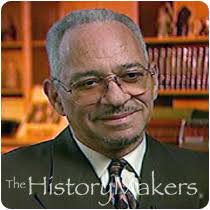
Rev. Jeremiah Wright

Readings for 4th Sunday in Ordinary Time: Deuteronomy 18: 15-20; Psalm 95: 1-9; I Corinthians; 7: 32-35; Mark 1: 21-28

Today’s readings once again raise the central biblical question of prophets and prophecy.

We should read them carefully remembering that prophets are not fortune tellers focused on the future. They were and today remain social critics focused on present injustices committed against the original beneficiaries of Life’s covenant with Moses – the poor and oppressed (widows, orphans, and resident aliens). Insofar as they predict the future, the prophets’ threat is usually that neglect of the poor will lead to national tragedy.

 Yeshua the Christ, of course, appeared in the prophetic tradition which is always confused by the fact that the Great Mother’s spokespersons are inevitably contradicted by their fake counterparts. This Sunday’s readings highlight that point.

 Prophets Then

I was reminded of all this last week during a Zoom “Talk Back” responding to our pastor’s Sunday sermon on the fictional story of the prophet Jonah. That tale was centralized a week ago in the liturgy of the word. Towards the end, the pastor herself asked the question, “Who today is speaking the harsh truth that the Book of Jonah expressed?”

(As we saw last week the little Jonah parable (only 48 verses) is about a reluctant prophet who eventually has to face the fact that those imagining themselves to be the People of God (Israel) were quite the opposite. Meanwhile those whom Israel viewed as their corrupt enemies (Assyrians) were more responsive to God’s word.

In my own response to our pastor’s question, I observed “That would be like our hearing during the Cold War that Russians (communists) were more on God’s side than Americans. Today, it would be like being told the same thing about the Chinese or Muslims, or (worse still) al-Qaeda and other terrorist groups.”

Yes, that’s the way the Book of Jonah would have been heard in the middle of the 8th century BCE – as the Assyrian hordes massed on Israel’s borders ready to descend on “God’s People.” Eventually, they’d come (as Lord Byron would put it) “like the wolf on the fold.” They’d destroy the Northern Kingdom and take large masses of its people off to the Assyrian capital, Nineveh – as slaves. The book of Jonah dares to identify Assyrians as godly.

Imagine if some prophetic preacher today actually echoed Jonah saying, “You American exceptionalists believe that you’re especially pleasing to God. The exact opposite is true. In fact, your designated ‘enemies,’ Muslims, the Russians, the Chinese, and those you imagine as terrorists are actually God’s favorites.”

How hard would that be for Americans to hear?

Prophets Now

But (to answer our pastor’s question directly) there actually have been and are religious prophets among us who have said such things and who are saying them today. I’m thinking of Malcolm X, Martin Luther King, Jeremiah Wright, William Barber II, the Rev. Liz Theoharis, Dorothy Day, and even Pope Francis. Here’s what they’ve said in the name of God:

  • Malcolm X: “I’m not standing here speaking to you as an American, or a patriot, or a flag-saluter, or a flag-waver — no, not I. I’m speaking as a victim of this American system. And I see America through the eyes of the victim. I don’t see any American dream; I see an American nightmare.”
  • Martin Luther King: The United States is “the greatest purveyor of violence in the world today.”
  • Jeremiah Wright: “When it came to treating her citizens of African descent fairly, America failed. . . The government gives them the drugs, builds bigger prisons, passes a three-strike law and then wants us to sing “God Bless America“. No, no, no, not God Bless America. God damn America. . . as she tries to act like she is God, and she is supreme”
  • William Barber II: “. . . I, too, am an atheist. . . if we were talking about the God who hates poor people, immigrants, and gay folks, I don’t believe in that God either.” 
  • Liz Theoharis: “Jesus led a poor people’s campaign.”
  • Dorothy Day: “Our problems stem from our acceptance of this filthy rotten system.”
  • Pope Francis: “This system is by now intolerable: Farmers find it intolerable; laborers find it intolerable; communities find it intolerable; people find it intolerable.”

Those are not voices most of us are accustomed to hearing as representative of a Christian message that has been completely dominated by right-wingers who have effectively silenced the political voice of the one Christians pretend to recognize as the greatest of all prophets. They silence Yeshua’s authentic voice by focusing exclusively on the fiction of American Exceptionalism and on personal “salvation.”   

The Prophet Yeshua

Instead, the very life of Yeshua the Christ was highly political from start to finish. He literally embodied God’s prioritization of the needs of the poor while specifically condemning the rich and powerful of his day. That’s why he had to be assassinated at a very young age — same as Malcolm, Martin Luther King, Fred Hampton. . .

Think of it this way: Isn’t it true that Christian belief holds that Yeshua was the fullest revelation of God? If so, isn’t it therefore significant that the revelation site supposedly chosen by God was a poor man from the working class? Isn’t it theologically meaningful that he was born out-of-wedlock to a teenage mother (LK 1:34), was houseless at birth (LK 2:7), experienced immigrant status as an asylum seeker (MT 2: 13-15), traveled with a band of young people who had no visible means of support, was thought insane by his mother and close relatives (MK 3:21), was identified as a terrorist by the most powerful nation then on earth, and finished a victim of its torture and capital punishment?

I’d say that believers should find all of that extremely revealing.  

Moreover, the highly political Yeshua is reported to have made radical statements about wealth and poverty, e.g.:

  • “The Spirit of the Lord is on me, because he has anointed me to proclaim good news to the poor. He has sent me to proclaim freedom for the prisoners and recovery of sight for the blind, to set the oppressed free, to proclaim the year of the Lord’s favor” (Luke 4:16-22)
  • “Blessed are you poor, yours is the Kingdom of God” (Luke 6:20).
  • “Woe to you rich, you have had your reward” (Luke 6:24).
  • “It is easier for a camel to pass through the eye of a needle than for a rich man to enter the Kingdom of God” (Matthew 19:24).
  • “So therefore, whoever of you does not renounce all that he has cannot be my disciple” (Luke 14:33)
  • “If you want to be whole, go and sell your possessions and give to the poor, and you will have treasure in heaven; and come, follow me” (Matthew 19:21).

Still more, his followers took their teacher literally as they practiced a kind of primitive communism:

  • “All the believers were together and had everything in common. They sold property and possessions to give to anyone who had need” (Acts 2: 44-47).
  • Now the full number of those who believed were of one heart and soul, and no one said that any of the things that belonged to him was his own, but they had everything in common” (Acts 2: 32).

All of that identifies Yeshua as a great prophet in the tradition of Moses, the liberator of slaves in Egypt, of Amos who defended the poor and criticized the rich, of Karl Marx, the last of the great Jewish prophets, and of the contemporary troublemakers listed above.

Today’s Readings

Keep all of that in mind as you review today’s liturgy of the word which centralizes the question, “Who are the true prophets among us?” What follows are my “translations.” You can find the originals here to see if I’ve got them right.

 
 Deuteronomy 18: 15-20:
 More than 500 years
 After the Great Prophet’s Death
 Moses was remembered
 As predicting the advent
 Of another Great One
 For a people deathly afraid
 Of hearing God’s voice directly.
 Problem was:
 There’d be false prophets too
 Claiming to speak 
 In the name of Yahweh,
 But actually representing 
 False gods
 Whom, if listened to
 Would bring to believers
 Severe punishment. 
 (Hmm.
 Where does that leave us?)
  
 Psalm 95: 1-9
 It leaves us confused
 And in danger
 Of letting our own self-interest
 Harden our hearts
 To the authentic voice
 Of our loving Mother-Father God
 Our firm refuge
 Benefactor and guide.
 Her wonderful handiwork
 In creation itself
 Reveals more
 Than any prophet’s words.
 So, believe and embrace
 What you see
 With your own eyes.
 
 I Corinthians 7: 32-35
 The case of St. Paul
 Illustrates our confusion
 About what to believe – 
 What our eyes tell us
 Or the words 
 Of an anxious 
 Celibate prophet
 Like Paul
 Who’s been interpreted 
 To say that
 Eros is somehow “improper”
 And a huge “distraction”
 For anyone serious
 About what’s truly important.
 (For, doesn’t Life Itself teach
 That Eros is
 A primary source
 Of God’s revelation
 About the nature of Life
 And Love?)
  
 Mark 1: 21-28
 Jesus, on the other hand
 Had no such reservations.
 His followers believed
 Him to be the Great Prophet
 Predicted by Moses.
 He taught astonishing truths
 With authority and certainty
 Unlike the temple scribes
 (And the doubt-filled Paul).
 He terrified unclean spirits
 While delighting
 The (married) women and men
 Who hung on his every word.  

Conclusion

The disparity between the nationalistic and exclusively personal understandings of the prophet Yeshua on the one hand and the highly political nature of his life and discourse on the other is extremely important to confront.

That’s because (as Caitlin Johnstone has recently reminded us) those who control cultural narratives control the world. And no narrative is more important to history’s control than the religious one we’ve just considered. That’s because religious faith addresses life’s most fundamental questions – the ones so thrillingly addressed by the prophets we’ve considered here: about the nature of life; our relations with one another, human connections with the environment, about foreigners, power, love, money, and justice.

I’ll even venture to say that religious story supplies the popular “philosophy” of most people in the world. It organizes their experiences. They might not know much about history, economics, or political parties, but they know what they’ve been told about the Bible, the Bhagavad-Gita, or the Holy Koran.

To ignore this truism is tragically to surrender an essential tool of social justice to its enemies. On the other hand, exposing the radical social justice character of the Judeo-Christian narrative while challenging its domestication by false prophets represents an essential element of any attempts to shape the world by controlling its narrative.

Even completely secular social justice warriors should take note.

What Joe Biden Should Learn from Obama’s Autobiography: Listen to Jeremiah Wright

I’ve just finished Barack Obama’s remarkable autobiography, A Promised Land. Its biblical title invites reflection about the theological orientation and resulting policies of the man the book portrays. By his own testimony, that direction was originally set by Jeremiah A. Wright, Mr. Obama’s former pastor at Trinity United Church of Christ on Chicago’s South Side.

James Cone, the father of Black liberation theology has described Dr. Wright as Black liberation theology’s foremost contemporary exponent. So, in Mr. Obama, the United States experienced not only its first Black president, but its first chief executive to have been shaped spiritually by liberation theology.

With all of that in mind, the point of the following review of The Promised Land will be that had Mr. Obama employed what he learned at the feet of Jeremiah Wright, his policies would have been markedly different from their actual forms. Practically speaking, they would have more resembled those of Franklin Delano Roosevelt than a continuation of the neoliberal legacy of Bill Clinton. They would have set the country on a profoundly different and more widely beneficial trajectory from the one we are currently following.

Professed devout Catholic, Joe Biden, should take note. The radical biblical tradition espoused not only by Wright and Cone, but by King and William Barber – i.e., championed by thought leaders among Mr. Biden’s most crucial constituents – won’t support a return to “normalcy.” It requires policies that prioritize the needs not of Wall Street, but of the poor. It demands departure from Barack Obama’s business as usual.     

Liberation Theology

And that brings me precisely to liberation theology.

In case you’ve forgotten, liberation theology is reflection on the following of Yeshua the Christ from the viewpoint of the poor and oppressed committed to improving their collective life economically, politically, socially, and spiritually.

Its Judeo-Christian orientation is about political and economic starting points and end points.

Sociologically speaking, it begins (as OpEdNews’ Rob Kall would say) from the “bottom up.” In the case of the Jewish tradition, it starts with the liberation of slaves in Egypt by a Life-Force they called “Yahweh.” It ends with Yahweh’s pledge to give the enslaved (as Mr. Obama’s book title reminds us) “A Promised Land.”

In its Christian form, the tradition starts with a poor houseless child who grows into a prophet. He promises dispossessed victims of the Roman Empire the end point of “the kingdom of God.” By this he meant a world where God is king instead of Caesar – a world with room for everyone. For liberation theology, that’s the North Star – the guiding vision meant to shape all of life, economically, politically, socially, and spiritually – a world where no one is excluded or marginalized

Following that star, liberation theology emphasizes what the Christian Testament’s Paul of Tarsus calls “the wisdom of God” contrasted sharply with “the wisdom of the world” (I Cor. 2: 1-16).  In modern terms, the wisdom of the world is trickle-down; it begins with the well-off. It holds that if the wealthy prosper, the tide that lifts their luxury yachts will lift all boats. By contrast, God’s bottom-up wisdom begins with the well-being of the poor.

Unfortunately, the policies, Mr. Obama describes in A Promised Land ended up reflecting the former over the latter.     

Jeremiah Wright’s Influence on Mr. Obama

That reflection contrasts dramatically with what scandalized America’s right wing when it first encountered Jeremiah Wright’s liberation theology. The discovery occurred soon after they realized that Barack and Michelle Obama not only were parishioners of a fiercely radical black pastor, but that he had officiated at their wedding (A Promised Land 23).

That sent conservatives scurrying to unearth evidence of Wright’s (and by extension Obama’s) unacceptably extreme viewpoints. In fact, what their excavations uncovered nearly terminated Mr. Obama’s political ambitions (140).

That’s because (true to liberation theology’s form) Wright’s words explicitly foregrounded the experience of the poor as victims of what he called U.S. terrorism. His sermons often traced it from the genocide of Native Americans, through the enslavement of Africans, to Middle Eastern policies that, he said, invited the tragic events of 9/11/2001. It led him to refer to his country as the “USA of KKK,” and to conclude, “Not God bless America,” but “God damn America” (140).

Despite all of that, and notwithstanding his eventual repudiation of his former pastor, President Obama’s testifies in A Promised Land that Rev. Wright remained an important part of his consciousness (142).  And so, throughout his narrative, the former chief executive gives indications of critical truths often reminiscent those voiced (albeit more forcefully) by his one-time pastor. For instance, Mr. Obama recalls that:

Personally

  • As part of a generation willing to question the U.S. government (456), he frequently found Wright’s black liberation theology inspiring and as channeling the understandable rage of black people in general (119, 141).
  • Not only did Rev. Wright’s disturbing insights become part of his consciousness, but so did the radical thought of W.E.B. Dubois, Martin Luther King, John Lewis, Bob Moses, Fannie Lou Hamer and Diane Nash (11) – along with those of the Hindu Mahatma Gandhi and the belatedly revered socialist, Nelson Mandela (598).
  • He realized that despite the convictions of many liberals, America’s race problems are far from being solved (128).
  • He felt impatient with having to soften blunt truths that whites find disturbing (121).
  • He himself had often experienced police harassment (395).

Internationally

  • He found sympathy with the assessment of critics like Wright that America’s “. . . ideals have always been secondary to conquest and subjugation, a racial caste system and rapacious capitalism, and that to pretend otherwise is to be complicit in a game that was rigged from the start” (xv).
  • In fact, after World War II, the U.S. had “. . . bent global institutions to serve Cold War imperatives or ignored them altogether . . . meddled in the affairs of other countries, sometimes with disastrous results;” and its “. . . actions often contradicted the ideals of democracy, self-determination and human rights. . .” (329).
  • America’s war in Vietnam was no less brutal than the Soviet Union’s repression of Hungary (469).
  • The criminal U.S.-supported Shah of Iran and his feared SAVAK secret police were typical of murderous client regimes supported by America in the Global South following World War II (310, 450-1).
  • The Shah’s regime was part of U.S. Mideast policy that needlessly alienated Muslims throughout the world. That policy tolerated corruption and repression in the region and routinely humiliated Palestinians (358).
  • China represents an attractive alternative (to the United States’) model for the developing world (481).
  • That’s true especially after so many Global South countries embraced the illusory “wisdom” of the Washington Neoliberal Consensus and thus followed America over a fatal precipice (330).

Obama’s Repudiation of Wright (and radical change)

Despite such insights, Mr. Obama’s presidential ambitions not only made it necessary for him to repudiate Jeremiah Wright, but evidently to adopt a series of policies that contradicted the tenets of liberation theology. His policies prioritized the welfare of the rich over those of the working class and poor. Accordingly, the president ends up admitting that:

  • Because of the financial crisis, he did not follow through on his campaign promises to U.S. workers (177).
  • For him, the financial markets (presumably as opposed to wage earners) were the only audience that really mattered (304).
  • His interventions alone were responsible for saving bankers from wage earners’ justified anger and retaliation (297).
  • Resulting white working-class anger, e.g., in Pennsylvania about jobs lost through such neoliberal policies, was justified (144).
  • In retrospect, bank nationalization and prosecution of crooked bankers might have been a better solution to the Crisis of 2008 than the bailouts favored by his economic team (280, 296, 305). 
  • By avoiding that solution and bowing to bankers’ interests, Obama consciously missed a once-in-a-generation chance to reengineer the overall economy in a bottom-up way reminiscent of FDR’s New Deal (304).
  • He could have done so, because of his 70% approval rating coupled with the super majority he possessed in the Congress at the outset of his first term (225, 378, 243).

Nowhere in his autobiography does Mr. Obama reveal his repudiation of Wright’s outspokenness than in the case of the Deepwater Horizon oil tragedy of 2010. There, BP Oil had unleashed the most devastating oil spill in the history of offshore drilling. It lasted for 87 days and pumped out into the ocean at least 20,000 (and possibly 50,000) barrels of oil daily (569).

As time wore on and scientists and engineers scrambled to cap the leaks, Republicans increasingly blamed the president for the failure to do so. They even referred to it as “Obama’s Katrina” (569).

What Mr. Obama’s best instincts told him to say in response was reminiscent of Wright’s candor – this time in favor of perhaps the earth’s most oppressed being, Mother Earth Herself. According to the former president, he should have said:

“. . . the only way to truly guarantee that we didn’t have another catastrophic oil spill in the future was to stop drilling entirely; but that wasn’t going to happen because at the end of the day we Americans loved our cheap gas and big cars more than we cared about the environment except when a complete disaster was staring us in the face, and in the absence of such disaster, the media rarely covered efforts to shift America off fossil fuels or pass climate change legislation, since actually educating the public would be boring and bad for ratings; and the one thing I could be certain of was that for all the outrage being expressed at the moment about wetlands and sea turtles and pelicans, what the majority of us  were really interested in was having the problem go away, for me to clean up yet one more mess decades in the making with some quick and easy fix, so that we could all go back to our carbon-spewing, energy-wasting ways without having to feel guilty about it” (570-71).

Again, that’s what, Obama admits, he wanted to say: stop drilling altogether, get rid of your big SUVs, pay the true price of gasoline, and pass courageous climate change legislation despite effects on the “American Way of Life.”

Instead, the president describes his Casper Milquetoast response with the following words: “. . . I somberly took responsibility and said it was my job to ‘get this fixed.’”

Missed Opportunities

In other words, in contrast to liberation theology’s and Jeremiah Wright’s “preferential option for the poor,” Obama’s policy preference supported the corporate status quo. He short-changed those represented by what he elsewhere describes as “his kind of crowd” from the days when he worshipped at Trinity United – “democracy activists, heads of nonprofits and community organizers working at a grassroots level on issues like housing, public health, and political access” (466).

That in a nutshell encapsulates Obama’s choice not to follow the outspokenness not only of Jeremiah Wright, but of FDR’s ghost with whom POTUS #44 wistfully compares himself throughout his memoir (177, 239, 240, 264, 388, 524, 547, 549).

Following Roosevelt, Mr. Obama’s legacy could have been different. He could have bailed out wage earners instead of the bankers. He could have instituted a 21st century New Deal prioritizing health care, infrastructure renewal, clean energy technology, and a green counterpart to the Civilian Conservation Corps.

Moreover, Barack Obama was more up to selling those programs than any president within living memory. He was better equipped for game-changing fireside chatting than even Roosevelt himself. No chief executive since FDR enjoyed his natural charm, charisma or eloquence.

Yet by his own admission, he wasted what that other Roosevelt called his “bully pulpit” by failing to persuade the American people to support legislation in their own best interests regarding single-payer health care, immigration reform, clean energy, nuclear disarmament, and cessation of endless wars (594).

Conclusion

None of this is to say that his own words in A Promised Land reveal President Barack Obama as somehow nefarious or intentionally two-faced. As presidents go, he emerges as a decent man. And no one can deny the significance of his enormous achievement as the first black man to overcome the tremendous obstacles barring election to the highest office in the land. Moreover, once in office, #44 acquitted himself with impeccable moral integrity (595). His staff worked extremely hard. Mr. Obama was the kind of boss most of us would like to work for – upbeat, sensitive, inclusive and willing to laugh at himself (534). He is also a gifted writer.

Neither is any of this to say that Mr. Obama should have been as outspoken as Jeremiah Wright. Such style might be appropriate for a prophetic pastor on Chicago’s south side, but it’s surely not the way to get elected president.

As a theologian however, I find it regrettable that the former president so completely cut himself off from the lessons learned at the feet of his early mentor. (And this is where Catholic Joe Biden has something to learn from his boss’ admitted regrets.) Had President Obama quietly embraced Dr. Wright’s lessons, had he ignored the Geithners, Emanuels, and Sommers, had he prioritized the needs of the poor, had he offered us another New Deal, we’d likely be living in a far greener country with far less wealth disparity, injustice and anger ( 522, 524).

And judging by Mr. Roosevelt’s success with the electorate, the Democrats would today enjoy much firmer standing in the White House and halls of Congress.    

Biblically speaking, Barack Obama would have brought us all that much closer to A Promised Land.