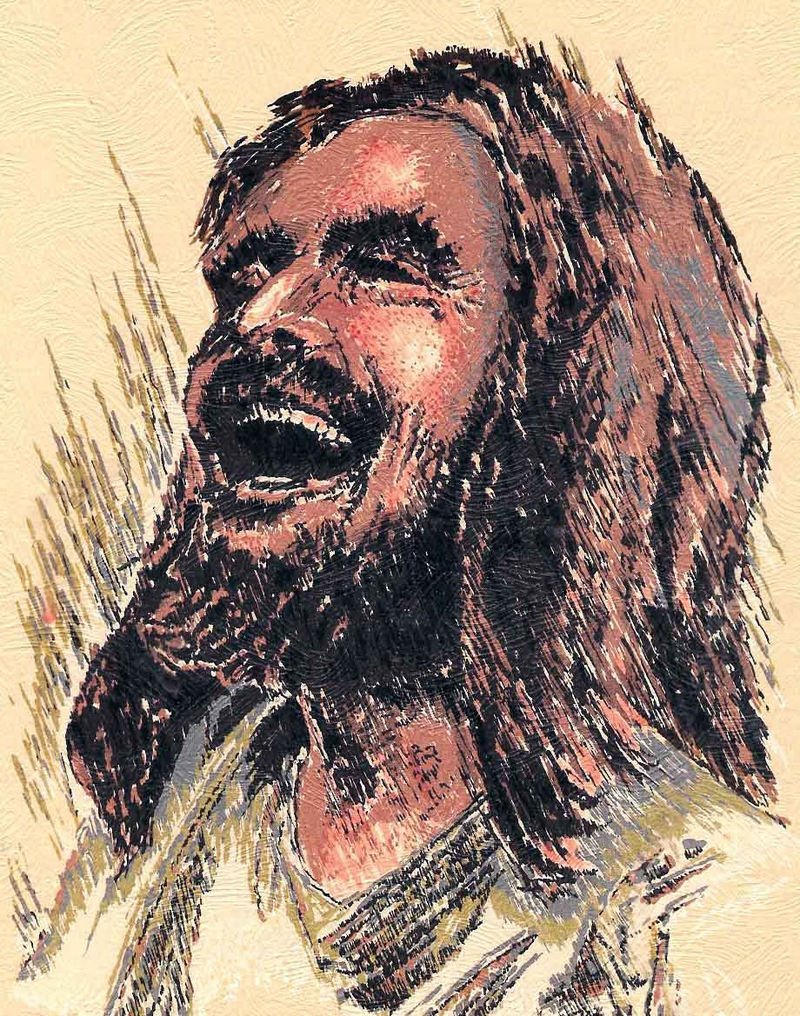
Is God Speaking to Us through Our Muslim Enemies? (Sunday Homily)

Allah-the-only-true-god

Readings for 20th Sunday in Ordinary Time: Is. 66: 18-21; PS. 117: 1-2; HEB. 12: 5-7, 11-13; LK. 13: 22-30. http://usccb.org/bible/readings/082513.cfm

Messages from God can come from the most unlikely places – even from our enemies and those our culture considers inferior and evil. That’s the teaching I find in today’s liturgy of the word. There God speaks to Babylonians through Jews, and to Romans through Christians. This suggests to me that God might be evangelizing Americans today through Muslims.
_____
Consider our first reading from Isaiah.

Imagine yourself a Babylonian in the 6th century BCE. You belong to an empire – one of the most powerful nations the world has ever seen.

In 586 your people conquered a small insignificant nation called “Israel.” Its leaders have been taken captive, and for more than three generations (586-516) have remained prisoners of your country. They are your enemies. You despise them as inferior, superstitious and violent.

Now towards the end of the 6th century, one of their “holy men,” someone called “Isaiah,” claims that those captives, those refugees, those “fugitives” as Isaiah calls them, are agents of the single God of the Universe. They have been sent specifically to call you away from your polytheistic worship of your Gods, Anshar, Ea and Enlil, and to recognize that there is only one God. They call him Yahweh. This God has special care specifically for refugees, slaves and outcasts in general.

For you, recognizing that entails releasing the prisoners your government has held captive for so long.

Even more, Isaiah says you and your proud people are being called to actually worship that God of refugees, political prisoners, and slaves! That means putting their needs first, while subordinating your own.

As Babylonian, you find all of this incredible and obviously insane.
______
Now to grapple with today’s gospel selection from Luke, imagine that you are a Roman living towards the end of the 1st century CE.

You belong to an empire recognized to this day as the greatest the world has ever known. As with the Babylonians more than 500 years earlier, Palestine and its Jewish people are provincial possessions of the empire; they are your captives. Roman legions continue to occupy Palestine whose haughty people resist their occupiers at every turn.

“Jews are nothing but terrorists, every one of them,” you think.

Among the most infamous of those terrorists was a man called Jesus of Nazareth. You’ve learned that he was a Jewish peasant crucified by Rome about the year 30 CE. You’ve heard that a new kind of religion has formed around that so-called “martyr.” In fact, his followers acclaim him by a title belonging to the Roman emperor alone – Son of God. To you that sounds absolutely seditious.

In any case, this Jesus asserted that the God he called “father” was blind to people’s national origins. He told a parable (in today’s gospel) whose refrain from a thinly veiled God figure was, “I do not know where you are from.” Apparently Jesus meant that in God’s eyes no nation – not even Rome – is superior to any other.

You wonder, was Jesus blind? No nation superior to any other? Did Jesus not have eyes to see Rome’s power, its invincible army, and feats of engineering – the aqueducts, the roads, the splendid buildings and fountains?

According to Jesus, Israel itself is not above other nations in the eyes of God. Nor are his own followers better than anyone else. Even those who drank with him and shared meals with him could not on that account claim special status in God’s eyes.

In fact, the only “superiors” are what Jesus called “the least” – his kind of people: artisans, peasants, the unemployed, beggars, prostitutes, lepers, immigrants, women and children. As in today’s reading from Luke, Jesus calls these people “the last.” In God’s eyes, they are “the first,” he said. Meanwhile those who are first in the eyes of Rome, Israel, and even of his followers end up being outcasts.

Worse still, many Romans, especially slaves and criminals, are embracing this new religion. Some in the Empire’s capital city are already worrying that if not stopped, this worship of an executed criminal from a marginal imperial province might undermine the religion of the Roman Gods, Jupiter, Mithra and of the emperor himself.

How absurd, you think, that Romans could be schooled in matters theological by riff-raff, Jews, and terrorist sympathizers.
_____

Finally, imagine that you are an American today. Many think that your country is the proud successor of Babylon and Rome. In fact, the United States may have surpassed Rome’s greatness. Certainly, it has the most powerful military machine the world has ever known. It has the capacity to destroy the earth itself, should its leaders take that decision.

Some attribute America’s greatness to its embrace of the faith of Jesus of Nazareth and to its partnership with Israel, the biblical People of God. As a result the U.S. has become the light of the world, the “city on a hill that cannot be hidden” (Mt. 5: 14-16). America can do no wrong.

This is not to say that its leaders aren’t fallible. They make their share of mistakes and even commit crimes. Yes, they torture, support dictators across the planet, imprison a higher percentage of their citizens than anyone else, drop atomic bombs, even threaten the extinction of human life as we know it, and have declared a state of permanent war against virtually the entire world.

But as a nation, the United States, you continue to believe, is idealistic; it stands for democracy, freedom and equality. As a result, America continues to enjoy God’s special protection.

Nevertheless, there are those in your midst who say that none of this is true. They are like the descendants of Abraham, Isaac and Jacob living in 6th century Babylon. They are like the first Christians who refused allegiance to Rome. They are the foreigners found in U.S. prisons all around the world – in places like Guantanamo Bay and Abu Ghraib.

By and large, those prisoners, those (in Isaiah’s terms) “fugitives” and exiles share a religious faith (Islam) that is as difficult for most Americans to understand as it was for Babylonians to understand Jews or for Romans to understand Christians. The faith of those held captive by America today is largely the faith of poor people called “terrorists” by your government – just as were the Jews and early followers of Jesus.

However, closer examination shows that Allah is the same as the Jewish God, Yahweh. Moreover Muslims recognize Jesus as the greatest of God’s biblical agents.

With that in mind, you realize that Muslims routinely invoke their faith to resist U.S. imperial rule. And they are critical of the use of Judaism and Christianity to justify oppression of their brothers and sisters in Palestine, Iraq, Afghanistan, Pakistan, Yemen, Bahrain, Somalia, throughout the rest of Africa and elsewhere.

Could it be that these exiles, captives, fugitives, “terrorists,” might be your empire’s equivalents of 6th century Jews in relation to Babylon and of 1st century Christians vis-a-vis Rome? Could they possibly be God’s agents calling us Americans away from heartless imperialism and to the worship of the true God (even if called “Allah”)?

Are our Muslim captives reiterating the words of Jesus in this morning’s gospel: God is oblivious to people’s national origins and to physical ties to Jesus? The Master “does not know where we are from” even if we’ve shared table with him. It makes no difference if we’re Jews or Christians, Babylonians, Romans, Americans, or Muslims.

Only the treatment of “the least” is important in God’s eyes. And for us Americans, those “least,” those “last” happen to be the poor of the Islamic world against whom our government has declared permanent war. And what is their God’s demand? It’s simple: Stop the war on us and our religion!

Is their God – our God – trying to save us – and the planet from the crimes of American Empire?

The fates of Babylon and Rome hang over us all like Damocles’ sword.

Jesus Is Cutting Your Lawn! (Sunday Homily)

immigrant jesus

Readings for 18th Sunday in Ordinary Time: Wis. 18: 6-9; Ps. 33: 1, 12, 18-20, 22; Heb. 11: 1-2, 8-19; Lk. 12: 32-48. http://www.usccb.org/bible/readings/081113.cfm

Today’s liturgy of the word invites us to consider the hot-button issue of immigration. The issue is contentious because conservatives in our country generally oppose immigration reform. More accurately, they tie changes in the legal status of immigrants to strengthening border security with Mexico and the building of walls along our southern border to keep undocumented immigrants out. Until such measures are foolproof, conservatives generally promise to oppose reform of immigration laws.

That’s ironic because Evangelical Christians make up the strongest component of the U.S. conservative party, the GOP. So the dominant attitude of that party on immigration ends up militating against American Christians’ brothers and sisters in faith. After all, according to a recent study by the Pew Research Center’s Forum on Religion & Public Life, an estimated 83 percent, or 9.2 million, of the 11.1 million people living in the United States illegally are Christians from Latin America and the Caribbean.

Our readings this morning call into question such exclusionary attitudes about immigration. They suggest that far from excluding immigrants, insisting on observance of law, and building walls to keep them out, Christian response to immigrants should take the form of welcoming, wealth-sharing and service.

Let me show you what I mean.

To begin with, today’s first passage from the Book of Wisdom underlines the point that the biblical People of God were all immigrants. They were unwanted strangers whose ancestors had come to Egypt to escape famine in Palestine. Remember those Bible stories of Joseph and his brothers? Read them again (Genesis 37-50). Those legends explain how the families of Jacob’s sons came to be enslaved in Egypt in the first place. As you no doubt recall, Joseph’s brothers sold him into Egyptian slavery.

However, in Egypt, Joseph landed on his feet and eventually became the Pharaoh’s Minister of Agriculture. That meant that when famine struck Joseph’s former homeland, his brothers were forced to come hats-in-hand to beg food from the very one they had betrayed. However, when they came into Joseph’s presence, his own brothers didn’t recognize him. In one of the most beautiful stories in all of world literature, the unrecognized Joseph finally discloses his true identity. Instead of punishing them for their betrayal, Joseph feeds his brothers and invites them to join him in Egypt.

In other words, Joseph’s response to immigrants and refugees was to recognize them as members of his own family and to welcome them “home.”

In today’s second reading, Paul digs further into Israel’s past only to find that Abraham himself (the original father of Israel) was himself an immigrant. He entered a land that God decided was to belong to Abraham and his descendants though the ones dwelling there didn’t share that secret understanding. (The Canaanites, of course, thought Canaan belonged to them.)

So Abraham and his sons were forced to live in poor housing – in tents, Paul recalls for us. All the while, however (like most immigrants) they dreamt of better lodging “with foundations.”

Meanwhile Yahweh saw to it that Abraham’s family grew prodigiously. They begat and begat until they seemed to everyone to be “as numerous as the stars of the sky;” they were as plentiful as grains of sand on the beach. Such legendary fertility eventually came to be seen as threatening and led one pharaoh to order the death of all of the Hebrew immigrant boys (Ex. 1:22). By Yahweh’s special intervention, Moses alone was saved from such genocidal population control.

Again, this was Israel’s God protecting immigrants as his chosen people. That’s the point today’s responsorial psalm underlines with its refrain, “Blessed the people the Lord has chosen to be his own.” Ironically those people were persecuted immigrants.

Then in today’s Gospel, Jesus presents a riddle about the identity of his faithful servants. Jesus asks, “Who, then, is the faithful and prudent steward whom the master will put in charge of his servants to distribute the food allowance at the proper time?” His answer has implications for immigration reform measures.

In any case, you can imagine a lengthy interchange between Jesus and his audience about his riddle. No doubt, some identified “faithful and prudent stewards” with those who kept the absolute letter of the law. Others probably cited the Jewish purity code and said fidelity meant keeping the bloodline pure; it meant keeping foreigners out of the Holy Land and preventing inter-marriage with gentiles. Still others may have responded in economic terms. For them the faithful and prudent steward was probably the one who defended Jewish livelihood by keeping foreigners from taking Jewish jobs.

Jesus’ own response is different. He replies in terms of generosity, as well as in terms of service with its “law of abundance.” Jesus also invokes the law of karma. God’s faithful servants are those who sell what they have and give it to the poor. They are not the ones who are served, but those who serve. Meanwhile those who mistreat God’s servants will reap what they sow.

Above all, notice that the emphasis in Jesus’ words today is on service. His riddle brings us entirely from the “upstairs” culture of dominance into the “downstairs” culture of servants. The steward is the head servant. He’s in charge of others, but his service consists in distributing food allowances to his fellow servants. Even the Master ends up serving. When he returns from the wedding, his servants don’t wait on him. Rather as an expression of gratitude, he brings them upstairs, sits them at table and waits on everyone! (How consoling is that?! The “law of abundance” says that what we receive in life is determined by our own generosity.)

Similarly, we can’t mistreat others without harming ourselves. The law of karma decrees that we reap what we sow. Jesus endorsed that law in today’s reading. More specifically Jesus says that those who mistreat God’s servants will find themselves similarly mistreated. Here Jesus gets quite graphic: to the degree that they beat others, they themselves will be beaten. Again, it’s the law of karma; and it’s inescapable.

What does Jesus’ riddle have to do with immigration? First of all, remember it’s told by a former immigrant. According to Matthew’s story, Jesus lived in Egypt when Mary and Joseph sought refuge from Herod’s infanticide. Yes, Matthew’s Jesus must have known first-hand the experience of being an unwanted immigrant. In Egypt he spoke with a Jewish accent. Or maybe his family didn’t even bother to learn Egyptian.

Remember too that the riddle about faithful servants is posed by the Jesus who identifies with “the least of the brethren.” He said that whatever we do to the least, he considers done to him. In terms of today’s considerations, does that mean that what we do to immigrants, we do to Jesus?

As for Jesus’ response to his own riddle, it reminds us to receive immigrants as we would our Master returning home – yes, as our Master, Jesus himself – the one who ends up serving us! Again, Jesus identifies with the least of our brothers and sisters.

Does that mean that Jesus appears to us today in our service industries and in the informal economy where immigrants work as our kids’ nannies, our house cleaners, as construction workers, hotel maids, and gardeners?

At this very moment might Jesus be out there cutting my lawn, roofing my house or cleaning my bathroom?

When our border guards beat “illegals” (and worse!) are they beating Jesus?

And what does that mean for their karma – and for ours?

Those are riddles worth discussing and solving!

The way we answer will determine the side we come down on in the immigration debate.
(Discussion follows)

Combat Greed (and illness): Boycott McDonald’s, Wal-Mart, Subway . . . (Sunday Homily)

McDonalds

Readings for the 18th Sunday in Ordinary Time: Ecc. 1:2, 2: 21-23; Ps. 90; 3-6, 12-14, 17; Col. 3: 1-5, 9-11; Lk. 12: 13-21. http://www.usccb.org/bible/readings/080413.cfm

This week’s liturgy of the word focuses on greed, its idolatrous nature, and how death (the Great Leveler) puts greed in stark perspective.

According to the prophet, Qoheleth, the shortness of life renders “empty” (vain) any life devoted to amassing wealth. Life is not about money, Paul agrees in this morning passage from Colossians. It’s about following Jesus by bringing forth our true Self which is identical with the God who dwells within each of us. But our time for doing so is short. As the Psalmist puts it in today’s responsorial, our days are numbered; that realization alone, he says, should give us wisdom. Then in today’s gospel selection, Jesus contrasts such wisdom with the foolishness of human surrender to the economics of growth. Paul even terms such greed “idolatry,” the ultimate biblical sin.

Those readings have driven me to think about greed in my own life. It makes me think about my own approaching death and what I do each day to hasten its arrival. At the public level, I’m driven to consider today’s headlines about fast-food workers and the difference in pay between them and their ultimate bosses. It makes me think about resisting greed at both levels (personal and corporate) in very practical, effective ways. Let me explain.

Last week I traveled from our summer home in Michigan back to our permanent residence in Berea, Kentucky. When I arrived home, the cupboard was bare – no food. So I set out to get something to eat for supper. Problem was, our local health food store, “Happy Meadows,” was closed.

Fast food options like McDonald’s, Wendy’s, and Subway called to me. Despite nearly forty years of sharing board with a dedicated vegetarian, the urge to eat meat is still strong. However, I was too haunted by what I’ve learned from “Food Inc.” and similar films, books and articles. Their images of factory farms and the cruel mistreatment of cattle, pigs, and chickens can never be erased from my consciousness. In their light, eating dead animals raised on feed lots and super-cramped pens, and then killed for my platter almost turned my stomach. I just couldn’t bring myself to eat meat.

I remembered that Walgreens and Rite Aid sold packaged fast food. So I went to the drugstore to look around. As I probably should have foreseen, the food offerings there were . . . well, highly drugged. I mean I easily found non-meat offerings on the Walgreens shelves – items like Kraft Mac & Cheese; I found vegetarian frozen pizza, and other similar items. But they were mostly full of fats. And as I looked at some lists of ingredients, I found many I couldn’t even pronounce. Chemicals were often high up on the lists, meaning their presence was rather intense. “Why would I put that stuff in my body?” I thought. “Do I want to get fat and sick?” So I walked out still hungry, still searching for something to eat.

I drove to Subway remembering their veggie sub. The young man behind the counter asked, “May I help you?”

“Just looking,” I said.

I scanned the brightly lit menu over his head. There it was, the Veggie Sub. Should I get the six-inch or the twelve-inch? I looked at the young man again. There he was with his plastic gloves in place smiling and eager to serve me.

Then I remembered. This kid is making $7.35 an hour. Whether he’s aware of it or not, his comrades all across the country are striking to double that wage to $15.00 an hour. They’re walking off the job in places like New York City, Chicago, St. Louis, Milwaukee, Kansas City, Detroit and Flint, Michigan. They’re demanding not just a living wage but the right to unionize. Unionization would mean the end of the Fast Food Industry’s routine practice of “short-working” employees, i.e. preventing them from putting in enough weekly hours to qualify for the benefits that come with full-time employment.

Those striking workers don’t want me here, I thought. So I turned on my heel and left.

Soon I found myself cruising the aisles of Save a Lot. I bought some pasta, and some sauce. I picked up a head of broccoli (Dole! Ugh!). I returned home to throw my supper together.

The little episode helped me come face-to-face with greed – again the topic of today’s liturgy of the word. I had to confront my own greed and that of the corporations that dominate our culture.
My particular greed manifests itself at least three times a day at the table. There my actions say a whole lot: I want meat. I want its flavored grease. I want salt. I want sugar. I want convenience. I want instant gratification.

My spiritual teacher, Eknath Easwaran, would say all of that means, “I want a heart attack. I want diabetes. I want cancer. I want to die as soon as I can.”

My well-ingrained tendencies also imply that “I don’t care about justice or workers who put in forty hours or more (often on two or more jobs) and who still cannot put together a dignified life without Food Stamps. I don’t care that they want to unionize and they’re asking me to boycott McDonald’s, Wal-Mart, and other corporate giants who underpay their workers while amassing obscene fortunes for themselves.

To those workers (and their bosses), the words of Qoheleth apply:

“Here is one who has labored with wisdom and knowledge and skill,
and yet to another who has not labored over it,
he must leave property.”

Usually, these words are taken to apply to the rich who are thought to labor long hours without really enjoying life. In the end, they leave their property to their heirs who benefit from their now-deceased relative’s work.

However, with the Bible’s overwhelming “preferential option for the poor,” I think the words apply even more fittingly to workers like the one in Subway and those in McDonald’s, Wal-Mart, Wendy’s, etc. Those “associates” labor with wisdom, knowledge and skill and then get underpaid. The wealth they produce (their property) goes to their fat-cat bosses. Meanwhile the rest of us are forced to subsidize those fat-cats by making up the difference (in food stamps, Medicaid, WIC Programs, etc.) between the wages the bosses pay their workers and the true living wage those workers deserve.

Yes, so-called “welfare programs” are more directed towards the rich than the poor. For working people such “welfare” should be replaced by a living wage.

Qoheleth says such selfishness and greed creates empty lives, anxiety, sorrow, grief and sleepless nights for all concerned both rich and poor.

A friend of mine constantly reminds me that little can be done to change the world. We just have to go along with the way things are, he often says. Sometimes I think he’s right.

However, today’s liturgy of the word reminds us that he might not be completely correct. At least we can do something about underpaid fast food and big box workers. That’s not trivial. We can relieve the “vanity,” the emptiness of their lives by joining them in their efforts to unionize and achieve a living wage.

We can abstain from the products of McDonald’s, Subway, Wal-Mart and similar corporations – and perhaps even become more healthy in the process.

Our presence here at the Lord’s Supper says we’re willing to do that, so that all may share in the gift of God’s bread with dignity and joy.

Am I right in saying that? What do you think?
(Discussion follows.)

We Are Called to Atheism by Abraham and Jesus! (Sunday Homily)

drone victims

Readings for the 17th Sunday in Ordinary Time: Gn. 18:20-32; Ps. 138:1-3, 608; Col. 2:12-14; Lk. Ll:1-13. http://www.usccb.org/bible/readings/072813.cfmhttp://www.usccb.org/bible/readings/072813.cfm

Today’s readings about Abraham bargaining with God and about Jesus teaching his followers to pray raise some vital questions about God’s personality and existence. Abraham’s compassionate God seems to conflict with the warlike God who appears elsewhere in the Bible.

So who’s right? Should we be afraid of God? Or can we trust him? Is God warlike and punitive or kind and forgiving? If he’s our “Daddy” (that’s what “Abba” means in Jesus’ prayer: “Our Daddy who transcends everything”) does our experience show him to be abusive or loving? Today’s readings help us wrestle with those questions. In fact, they call us to a holy atheism.

But before I get to that, let me frame my thoughts.

Last week the government of Pakistan released a classified document revealing that scores of civilians had been killed in dozens of CIA drone strikes between late 2006 and 2009. That period mostly covered the final years of the Bush administration. However as we all know, such strikes have increased under the presidency of Barrack Obama.

Citing the leaked report, the London Bureau of Investigative Journalism said “Of 746 people listed as killed in the drone strikes outlined in the document, at least 147 of the dead are clearly stated to be civilian victims, 94 of those are said to be children.”

Meanwhile, the United States has consistently denied that significant numbers of civilians have been killed in drone strikes. It claims that “no more than 50 to 60 ‘non-combatants’ have been killed during the entire, nine-year-long drone campaign.” Our government argues that such numbers are tolerable because the strikes protect Americans from the terrorists actually killed in the drone operations.

That’s the logic our government has adopted as it represents our country where 78-85% of the population claims to follow the one who refused to defend himself and gave his life that others might live. The logic of most American Christians says that killing innocents – even children – is acceptable if it saves American lives. Apparently, that’s the American notion of salvation: better them than us.

However that way of thinking is not what’s endorsed in today’s liturgy of the word. (And here I come back to those questions I raised earlier about God’s personality and existence.) There in Sodom and Gomorrah, Yahweh refuses to punish the wicked even if it means that as few as 10 innocents would lose their lives in the process.

Better-us-than-them is not the logic of Jesus who in teaching his disciples to pray tells them that God is better than us. God gives bread to anyone who asks. Yahweh acts like a loving father. He forgives sin and gives his children what they ask for. In fact, God shares his Spirit of love and forgiveness – he shares Jesus’ spirit of self-sacrifice – with anyone who requests it.

Elsewhere, Jesus says something even more shocking. Yahweh doesn’t even prefer the good over the wicked, he says. He showers his blessings (not bombs!) on everyone. Or as Jesus himself put it, God makes the sun rise on the virtuous and the criminal; his rain benefits those we consider evil as well as those we classify as good (Mt. 5:45). We should learn from that God, Jesus says, and be as perfect like him (Mt. 5:48). In fact, we should consider no one “the enemy” not even those who threaten us and kill us even as Jesus was threatened and killed (Lk. 6: 27-36).

How different is that from the way most of us think and act? How different is that from the God we’ve been taught to believe in?

Yes, you might say, but what about those other passages in the Bible where God is fierce and genocidal? After all, the Great Flood must have killed many good people and even children. And God did that, didn’t he? What about his instructions (more than once) to kill everyone without distinction. For example the Book of Joshua records: “Thus Joshua struck all the land, the hill country and the Negev and the lowland and the slopes and all their kings. He left no survivor, but he utterly destroyed all who breathed, just as the LORD, the God of Israel, had commanded (Joshua 10:40). What about the Book of Revelation, which many Christians argue predicts God’s total destruction of the world? What about that violent, pitiless, threatening God? Is that the “Abba” of Jesus?

Good questions. They’re good because they make us face up to the fact that the Bible is ambiguous about God. No, let me put it more strongly. The Bible isn’t just ambiguous about God. It’s often plain wrong – at least If we adopt the perspective of Jesus and Abraham in today’s readings.

After all, Abraham’s God is not genocidal; Joshua’s is. Jesus’ God is not genocidal; Joshua’s is. Those Gods are not compatible. One of them must be false. Or as Jack Nelson Pallmeyer writes in his book Is Religion Killing Us? “Either God is a pathological killer or the Bible is sometimes wrong about God.”

Today’s readings show us that both Abraham and Jesus agree.

The Abraham story is about a man gradually rejecting Nelson’s Psychopath in the sky. Israel’s furthest back ancestor comes to realize that God is merciful, not punitive or cruel. Or as the psalmist puts it in today’s responsorial, God is kind, true, and responsive to prayer. God protects the weak and lowly and is distant from the powerful and haughty. In today’s reading from Genesis, we witness Abraham plodding slowly but surely towards that conclusion.

It’s the realization eventually adopted by Jesus: God is a kind father, not a war God. If Abraham’s God won’t tolerate killing 50 innocent people, nor 45, 40, 30, 20, or even 10, Jesus’ God is gentler still. That God won’t tolerate killing anybody – not even those threatening Jesus’ own life.

All of that should be highly comforting to us. It has implications for us, politically, personally and liturgically.

Politically it means that followers of Jesus should be outraged by anyone connecting Jesus with our country’s perpetual war since 9/11, 2001. A drone program that kills the innocent with the targeted flies in the face of Abraham’s gradually-dawning insight about a merciful God. The war itself makes a complete mockery of Jesus’ total non-violence and the words of the prayer he taught us. Those supporting “America’s” “better them than us” attitude are atheists before Jesus’ God and the one depicted in the Abraham story.

Personally, what we’ve heard this morning should drive us towards an atheism of our own. It should cause us to review and renew our understandings of God. Impelled by today’s readings, we should cast as far from us as we can any inherited notions of a pathological, punishing, cruel, threatening and vindictive God. We need that holy atheism. Let’s pray for that gift together.

And that brings us to today’s liturgy. In effect, we’ve gathered around this table to hear God’s clarifying word, and symbolically act out the peaceful world that Jesus called “God’s Kingdom.” We’ve gathered around this table to break bread not only with each other, but emblematically with everyone in the world including those our culture considers enemies.

I mean if God is “Our Father,” everyone is our sister, everyone, our brother. It’s just that some couldn’t make it to our family’s table today. But they’re here in spirit; they’re present around this altar. They are Taliban and al-Qaeda; they are Iraqis, Afghanis, Yemenis, and Somalis; they are Muslims and Jews; they include Edward Snowden and Trayvon Martin. They include those children killed in U.S. drone strikes. They are you and I!

All of us are children of a loving God. Jesus’ “Lord’s Prayer” says that.

Now that’s something worth celebrating.

Forget Martha; Be Like Lazy Mary and Jester Jesus (Sunday Homily)

Moreno

Readings for the 16th Sunday in Ordinary Time: Gn. 18: 1-10A; Ps. 15: 2-5; Col. 1: 24-28; Lk. 10: 38-42. http://usccb.org/bible/readings/072113.cfm

What do you think you’ll regret most as you lay dying? If you’re like most, it will be that you spent too much time at your day job – too much time working and not enough time socializing and enjoying life. Study after study affirms that.

Commenting on this regret, one Hospice nurse said:

“This came from every male patient that I nursed. They missed their children’s youth and their partner’s companionship. Women also spoke of this regret, but as most were from an older generation, many of the female patients had not been breadwinners. All of the men I nursed deeply regretted spending so much of their lives on the treadmill of a work existence.”

I’ll bet almost everyone reading this can relate to those words and would like to avoid final regrets about overwork.

Problem is: our culture sets overwork as an ideal. In fact, we’re taught to prize overwork. This is especially true of “American” culture where unlike our European counterparts, we spend an average of three hours per week more on the job. That adds up to something like a month more of work each year than our Europeans sisters and brothers. Most important, Americans take fewer (and shorter) vacations. The average American takes off less than six weeks a year; the average Frenchman almost 12. Swedes take the longest vacations – 16 ½ weeks per year.

Today’s gospel reading from Luke urges us to correct our tendency to overwork before it’s too late. In doing so, it directs our attention to the counter-cultural nature of Jesus’ teachings.

Yes, Jesus was extremely counter-cultural. We shouldn’t forget that. As Deepak Chopra points out (in his The Third Jesus), the Sermon on the Mount, which captures the essence of Jesus’ wisdom, has him explicitly telling his disciples not to earn a living, save money, plan ahead or worry about the future. Of course, most of us don’t listen to Jesus when he says things like that.

And did you notice the description of the “Just Person” in today’s responsorial psalm? Man or woman, they harm no one, do not slander, speak ill of no one, and refuse to accept bribes. All of that raises no eyebrow. We yawn: none of that seems particularly counter-cultural.

But how about, “They lend not money at usury?” What about that? Yes, lending at interest is considered robbery and is forbidden in the Bible. (What if all Christians (and Jews) kept that commandment? Our world with its economy based on credit and interest, would be entirely different.)
The world would also be different – our lives would not be the same – if we acted like Mary instead of Martha.

The misdirection of traditional sermons obscures that possibility. Customarily homilists understand the story of Martha and Mary in a strictly spiritual sense. Their commentaries use the two sisters to compare the active and the contemplative lives – as though poor Martha stood for lay people having to wait on others with no time for prayer like the more otherworldly Mary. Martha’s sister “choses the better part” like a contemplative “religious” eschewing “the world of work” and spending their time pondering the spiritual teachings of Jesus and living a life rapt in prayer and contemplation.

I used to think that too – until I read Un Tal Jesus (“A Certain Jesus”) written by Maria Lopez Vigil and her brother, Jose Ignacio. (The book has been translated into English under the title Just Jesus.) The authors are Cuban and now live in Nicaragua. Maria is a former nun; Jose Ignacio, a former priest.

Together the Lopez-Vigils created a series of radio programs broadcast all over Latin America. The shows dramatized the four gospels and presented a very human Jesus – the one who emerges from recent scholarship on the historical Jesus.

In Un Tal Jesus, Jesus is black, has a winning smile, and a very down-to-earth sense of humor. (The photo at the top of this blog entry shows Jesus as depicted in the Lopez-Vigil’s book.) The human Jesus portrayed in that radio series scandalized many and inspired even more throughout the Latin world and beyond.

As the Lopez-Vigils envision it, today’s episode takes place in a Bethany tavern owned by Lazarus, the brother of Martha and Mary. It’s a place of eating, drinking and lodging for travelers. It’s a place of laughter, joking, over-eating and drunkenness. And Jesus is right there in the middle of it all.

Passover is approaching, and the inn is full of pilgrims. It’s steamy, noisy, and loud. Martha is on the job, waiting on tables and controlling the rest of the staff. Meanwhile Mary (whom scholars increasingly identify with Mary Magdalene, Jesus closest female companion) is distracted by conversation with Jesus, who is bantering with his friends.

And what are they talking about? Religion? God? Spirituality? No, they’re joking. Jesus is posing riddle after riddle. And Mary finds it completely entertaining. In part, their dialog goes like this:

Jesus: What’s as small as a mouse but it guards the house like a lion. One, two, three: Guess what it is!
Mary: Small as a rat…and…it’s a key! I guessed it, I guessed it!
Jesus: Listen to this one: It’s as small as a nut, has no feet but can climb a mountain.
Mary: Wait… a nut going up the mountain…a snail!…Ha, ha, ha, tell me another one!
Jesus: You won’t guess this one right. Listen well: It has no bones, it is never quiet, with edges sharper than scissors.
Mary: It has no bones… I don’t know…
Jesus: It’s your tongue, Mary, which never rests!

Well, Mary and Jesus might have found that sort of patter entertaining, but Martha did not. She’s in charge of the inn and is worried about her guests waiting impatiently for their food while bread is burning in the oven. So she makes her complaint to Jesus: “Stop your chatter and let my sister do her job!” It’s then that Jesus makes that remark about Mary’s choosing the better part. She’s chosen socializing and play over work.

Does that scandalize you – Jesus distancing himself from work? Well, it seems completely consistent with what I said about Jesus earlier. It coincides with his general approach to work, money, profit, saving, and anxiety about the future.

What difference would it make in our own lives if we accepted that message: socializing, community, and fun are more important than work? What difference would it make in our culture if, in a context of widespread unemployment we elected candidates advocating “spreading the work around,” spreading the money around, shortening the work week, and affording us more time with friends and family, eating, drinking, joking, and playing?

What difference would it make to us on our death beds?

What do you think?

(Discussion follows)

When the Government Turns Criminal: Edward Snowden and the Good Samaritan (Sunday Homily)

Snowden

Readings for 15th Sunday in Ordinary Time: DT. 30: 10-14; Ps. 69: 14, 17, 30-31, 34, 36-37; Col. 1: 15-20; Lk. 10: 25-37. http://www.usccb.org/bible/readings/071413.cfm

In his recent book about the parables of Jesus (The Power of Parable: How Fiction by Jesus Became Fiction about Jesus), John Dominic Crossan poses the question: What happens to your world when the “best” people act badly and only the “worst” do what is right?

That scenario seems to be playing itself out in the case of Edward Snowden.

Snowden, you recall, is the NSA contractor and CIA employee who last month disclosed a vast secret program of U.S. government spying on its own citizens and on individuals, corporations, and governments throughout the world.

The program (Prism by name) seems to violate the Fourth Amendment of the U.S. Constitution which reads: “The right of the people to be secure in their persons, houses, papers, and effects, against unreasonable searches and seizures, shall not be violated, and no Warrants shall issue, but upon probable cause, supported by Oath or affirmation, and particularly describing the place to be searched, and the persons or things to be seized.”

Snowden made his disclosures three months after James Clapper, the Director of U.S. intelligence had denied its existence in testimony (under oath) before the Senate Committee overseeing the U.S. intelligence program. Snowden’s disclosures also followed hot on the heels of President Obama’s publically expressed concern that China was illegally spying on the U.S. in exactly the same way (though on a smaller scale) that the U.S. turns out to have been spying on China and its own allies.

For his troubles in exposing such lies, hypocrisy, and violations of the Constitution, Snowden himself has been designated a spy, traitor, and enemy of the United States – categories applied to its worst enemies. As a pariah in his own country, he has fled the United States and sought asylum in various countries including China, Russia, Cuba, Nicaragua, Venezuela, Ecuador, and Bolivia. Snowden (and human rights organizations such as Amnesty International) alleges that if extradited to the U.S. he is unlikely to receive a fair trial, but instead to be tortured and indefinitely imprisoned like other whistleblowers such as Bradley Manning.

All of the countries just mentioned have histories less-than-friendly to U.S. interests, which they have each described as criminally imperialistic. Other “good” countries such as France and Germany have (under great pressure from the United States) refused Snowden asylum.

Meanwhile, James Clapper has not been charged with perjury, and President Obama has managed to deflect attention away from constitutional violations to the search for the fugitive Snowden.

In other words, the Snowden Affair presents us with a “Spy,” “Traitor,” and “Terrorist Sympathizer” obeying his conscience in his exposure of government crime. He has done the right thing. Meanwhile, the President of the United States, himself a constitutional lawyer, has been caught violating the Constitution, and the Director of Intelligence has been exposed as a perjurer. And on top of that, friendly countries often lauded by the United States as models of democracy refuse to respect International Law governing asylum seekers. Only the “bad countries” are willing to honor that law.

In this situation, the question Crossan posed earlier finds uncomfortable relevance: “What happens to your world if a story records that your “best” people act badly and only your “worst” person acts well?”

As I said, Crossan asks that question in the section of his book commenting on “The Good Samaritan” which is the focus of the gospel selection in today’s Liturgy of the Word.

The parable, of course, is very familiar. Almost all of us know it nearly by heart. Typically sermons find its point in simply calling us to be “follow the Samaritan’s example, treat everyone as your neighbor, and help those you find in trouble.”

That’s a good point, of course. But Jesus’ own intention went beyond simply providing an example of a good neighbor. More profoundly, it focused on the hypocrisy of “the good” and the virtues of designated enemies. As such, the story calls us to transcend those socially prescribed categories and look at actions rather than words of both the “good” and “bad.”

More specifically, the hero of Jesus’ story is a Samaritan. According hero status to such a person would be unthinkable for Jesus’ listeners. After all, Samaritans were social outcasts belonging to a group of renegade Jews who (by Jesus’ time) had been separated from the Jewish community for nearly 1000 years. They had also polluted the Jewish bloodline by intermarrying with the country’s Assyrian conquerors about 700 years earlier.

Jews considered Samaritans “unclean;” they were traitors, enemy-sympathizers, heretics and even atheists. They rejected Jewish understandings of Yahweh and the Temple worship that went along with it.

And yet in the story, Jesus finds the Samaritan to be more worthy, more pleasing in God’s eyes than the priest or Levite. That’s because the Samaritan’s actions speak much louder than the word “Samaritan” would allow. He is compassionate; so Jesus approves.

In the meantime, the priest and the Levite lack compassion. Their actions condemn them.

They say that slightly more than 50% of the American people think Edward Snowden is a traitor and spy. And this despite the fact that his accusers have advanced no evidence to that effect – and despite polls that indicate a solid majority believing that the government’s surveillance program is objectionable if not clearly unconstitutional.

Today’s parable invites us to reconsider – not just Snowden, but our very understanding of the world and its categories of “good” and “evil.”

Perhaps we’re looking for the real criminals, traitors, spies, and terrorists in exactly the wrong places.

Would Jesus Celebrate July 4th?

american-jesus-195x300

Readings for 14th Sunday in Ordinary Time: Is. 66: 10-14c; Ps. 66: 1-7, 16, 20; Gal. 6: 14-15; Lk. 10: 1-12, 17-20. http://www.usccb.org/bible/readings/070713.cfm

Sometimes I wonder if I’m on the right path. Do you ever think that about yourself? I’m talking about wondering if your whole “take” on the world is somehow off base.

My own self-questioning has been intensified by my blogging over the last 15 months. For instance I recently wrote a piece on why I refused to celebrate the 4th of July. My thesis was that the U.S. has lost its way, turned the Constitution into a dead letter, and made its claims to democracy meaningless. We are rapidly moving, I said, in the direction of Nazi Germany. All of that is contrary to the Spirit of 1776. So there’s no point in celebrating Independence Day as if Edward Snowden and Bradley Manning didn’t exist.

One person kind enough to comment said she lost all respect for me as a result of what I had written. Others have told me that my message is just a poor man’s left-wing version of the ideological nonsense spouted by Sean Hannity and Rush Limbaugh. Even people close to me have referred to what I write as diatribes, screeds, and rants. I hope that’s not true.

What is true is that as a theologian, I’m attempting to write “About Things That Matter” (as my blog title puts it) from a self-consciously progressive (i.e. non-conservative) perspective – or rather from a theological perspective that recognizes that following Jesus is counter-cultural and requires a “preferential option for the poor” — not the option for the rich that “America” and its right wing versions of Christianity embrace.

I adopt this position in a national context that I recognize as anti-gospel – materialistic, individualistic, extremely violent, and pleasure-oriented. Or as my meditation teacher Eknath Easwaran says, our culture refuses to recognize that we are fundamentally spiritual beings united by the divine core we all share. At heart, we are 99% the same in a culture that tells us we’re 100% unique. Jesus’ values are not the American values of profit, pleasure, power, and prestige.

Instead what Yeshua held as important is centered around the Kingdom of God – a this-worldly reality that turns the values of this world on their head. The Kingdom embodies a utopian vision that prioritizes the welfare of the poor and understands that the extreme wealth Americans admire is a sure sign that those who possess it have somehow robbed others of their due.

As a possessor of extreme wealth myself (on a world-scale) each time I read the gospels – or the newspaper – I feel extreme discomfort. In other words, it’s Jesus’ Gospel that makes me think I’m on the wrong track. But it’s not the one critics have in mind when they suggest I temper my positions.

Instead, consideration of Jesus’ words and deeds convince me that I’m not radical enough. I do not yet occupy a position on the political spectrum respectful enough of the poor. I’ve forgotten that life outside God’s Kingdom (“Jerusalem”) is “Exile” in God’s eyes (as today’s first reading recalls). The liberation from slavery referenced in this morning’s responsorial psalm has lost its central place in my spirituality.

Our culture might say, that by all this I mean that I’m not far enough “left.” Be that as it may. The truth is that insofar as my daily life doesn’t reflect Jesus’ utopian values, I should feel uncomfortable.

Today’s second and third readings reinforce my discomfort. They highlight the conflict between the values of Jesus and those of “the world” – of American culture in our case. In fact, the world finds it hard to understand Jesus’ real followers at all. And why not? For all practical purposes, our culture denies the very existence and /or relevance of spirituality to everyday life – at least outside the realm of the personal.

In today’s excerpt from his Letter to Galatia, Paul says the world considers the Christian life not even worth living. That’s what Paul means when he says that in Christ he is crucified to the world (i.e. in the world’s opinion). He means that as far as the world is concerned, he as a follower of Jesus is already dead because of his rebellion against the values of Rome. Crucifixion, after all, was the form of torture and capital punishment reserved for insurgents against the Empire.

But then Paul turns that perception on its head. He writes that his accusers are wrong. In reality, it is life lived according to Roman values that is not worth living. Paul says, “As far as I’m concerned, the world has been crucified.” He means that what Rome considers life is really death – a dead end. It constitutes rebellion against God’s Kingdom, the antithesis of Rome.

In today’s Gospel selection Jesus describes the lifestyle of those committed to God’s Kingdom. He sends out 72 community organizers to work on behalf of the Kingdom giving specific instructions on how to conduct themselves. They are to travel in pairs, not as individuals. (Companionship is evidently important to Jesus.) Theirs is to be a message of peace. “Let your first words be ‘peace’ in any location you frequent,” he says. He tells his followers to travel without money, suitcase or even shoes. He urges them to live poorly moving in with hospitable families and developing deep relationships there (not moving from house to house). They are to earn their bread by curing illness and preaching the inevitability of God’s Kingdom which the world routinely rejects as unrealistic.

Jesus’ followers are to spread the word that the world can be different. God should be in charge, not Caesar. Empire is evil in God’s eyes. So peace should replace anger and violence; health should supplant sickness; shared food and drink should eliminate hunger. Those are Jesus’ Kingdom values.

And the world rejects them. Not only that, Jesus’ “lambs among wolves” imagery recognizes that the world embodies an aggressive hostility towards followers of Jesus. It would devour them – so different are its values from the Master’s.

So maybe it shouldn’t surprise any of us when we’re accused of being extreme – as communists or utopians or hippies – if we’re attempting to adopt the values of Jesus.

After all, they thought Jesus was crazy. They thought he had lost his faith. They considered him a terrorist and an insurgent.

Then in the fourth century, Rome co-opted Jesus’ message. Ever since then, we’ve tamed the Master.

As our culture would have it, Jesus would have no trouble celebrating July 4th.

Am I mistaken?

Fire from Heaven: “Collateral Murder,” Bradley Manning and Edward Snowden (Sunday Homily)

Readings for 13th Sunday in ordinary time: I Kg. 19:16B, 19-21; Ps. 16: 1-2, 5, 7-11; Gal. 5:1, 13-19; Lk. 9: 51-62. http://usccb.org/bible/readings/063013.cfm

The film clip you have just seen has been dubbed “Collateral Murder.” It chronicles a series of attacks by the U.S. Army in Baghdad on July 12, 2007. The attacks directed 30 mm cannon fire at a group of nine to eleven mostly unarmed men – apart from one who carried an AK-47 and another who was holding a grenade launcher. Two in the group were war correspondents for Reuters News Service. Their cameras were mistaken for weapons. After the attack took place, Iraqi civilians arrived on the scene and attempted to aid the wounded. They too were killed. Children in the van which their father stopped to help were also shot. The film was taken by a camera mounted on the gun sights of two AH-64 Apache helicopters.

In 2007, Reuters requested the footage of the airstrikes under the Freedom of Information Act. Their request was denied. Instead the military reported that the shooters in the film had come under attack and were following strict Rules of Engagement.

However in April of 2010, U.S. Army Private, Bradley Manning, released the footage (along with other revealing documents) to the internet whistle-blower website, WikiLeaks. Manning said he wanted to expose crimes whose details routinely crossed his desk as a U.S. Army Intelligence officer. His intention was to bring those specifics to the attention of the American people, and stimulate debate about U.S. military policy and tactics. He judged that policy and its implementation to be largely immoral and contrary to international law. This was true, he said, especially in the criminal war in Iraq which the U.S. entered on false pretenses against a nation that represented no threat to its well-being. Manning found especially shocking the cavalier chatter of those he saw as murderers. Manning’s action also implied that Iraqi citizens had the right to arm themselves against such aggressors brutally invading their sovereign country without provocation.

For his trouble, Private Manning was arrested in July 2010 and held in solitary confinement for more than a year in the Marine Corps Brig in Quantico, Virginia. His treatment there was described as “torture” by more than one international human rights agency. In February of 2013, Manning pleaded guilty to 10 of the 22 charges against him. He is currently being tried for alleged crimes that could bring a sentence of life imprisonment and even the death penalty.

I bring those details up this morning because inflicting death from the skies seems particularly relevant to our readings about Elijah and Jesus. There the concept of “fire from heaven” is associated with Elijah, invoked by James and John, and rejected by the non-violent Jesus. The readings raise questions about Christians’ routine support for wars – especially illegal ones – and about our attitudes towards prophetic disturbers of our peace such as Bradley Manning and (most recently) Edward Snowden. Snowden, of course, is the CIA employee who recently leaked details of mass surveillance programs directed against ordinary citizens like you and me. The programs appear to violate Fourth Amendment protections against unreasonable search and seizure.

You see, all of them – Elijah, Jesus, Manning, and Snowden have been judged by the State to be trouble-makers. In fact, Elijah was specifically called “the troubler of Israel” by King Ahab (I Kg. 18:17). In retort Elijah replied as perhaps Pvt. Manning would to President Obama. The prophet said in effect, “Now there’s a case of the pot calling the kettle black. You, dear King (or Mr. President), are the real trouble-maker. I am merely pointing that out.”

It was later on, when Ahab’s successor, his son Ahaziah, sent soldiers to arrest Elijah, that the prophet called down fire from heaven to kill the fifty arresting officers. Elijah was a fierce man.

That’s the way James and John wanted Jesus to be. It was the way they imagined God to be – fierce, vengeful, and blood-thirsty. It’s the way unquestioning supporters of “our troops” appear to picture God today. But Jesus refused to reprise Elijah’s vengeance. He rejected the prophet’s violent conception of God.

Instead, the divine as embodied in and described by Jesus is more reminiscent of the Yahweh who appears in today’s responsorial Psalm 16. There God is described as the protective refuge of the afflicted, the one who holds human destiny in his loving hands, the God who shows the way to fullness of life and lasting joy. Jesus’ God was not a war God. Instead, the divine for Jesus evoked self-sacrifice in the face of attack.

All of this means that the cost of discipleship for the followers of Jesus is high – especially when speaking truth to political power as both Elijah and Jesus made a habit of doing.

Jesus says as much in this morning’s gospel. Discipleship, he insists, requires adopting Jesus’ own posture of non-violent resistance which rejected the “fire from heaven” approach of Elijah, James and John. It entails being decisive, leaving home and family, crossing borders, and in the end not having anywhere to rest one’s head. Once we put our hands to that plow, Jesus says, there must be no turning back.

Regardless of their spiritual motivation, that in fact is the price being paid today by Bradley Manning and Edward Snowden as they oppose tyranny in the spirit of Elijah, but especially of the non-violent Jesus.

To put it in terms of Paul’s Letter to Galatia, both Manning and Snowden are living “according to the Spirit.” They are engaged in non-violent resistance to acts of deceit and murder. They are serving Truth and opposing “the father of lies.”

God is truth. Or as Gandhi put it, “Truth is God.” Living according to God’s truth means resisting “flesh,” which was Paul’s term for the way of the world that Jesus found so offensive. To repeat, that is what Pvt. Manning and Edward Snowden are doing. And they are paying the price Jesus said was inevitable in this morning’s gospel. They are homeless and hunted by the same kind of arrogant powers that were mobilized against Elijah and Jesus.

Few of us have the courage of a Manning or Snowden. At the very least, however, they deserve our support against those who would turn our world into the Surveillance State so presciently described in George Orwell’s 1984. Manning and Snowden have put their hand to the plow, and for them there is no turning back.

Recently in my travels I saw a sign in the airport reading, “If you see something, say something.” I thought, “Yeah, unless the one you’re reporting is your boss, the President or the head of the CIA, or other officials engaged in mayhem like that portrayed in ‘Collateral Murder’.” Then if you “say something” you’ll be called a terrorist, traitor and thief.

Tellers of truth like Elijah, Jesus, Bradley Manning and Ed Snowden saw what is true, reported it, and suffered the consequences which are always the lot of prophets. They opposed fire from the sky. They all live(d) according to the Spirit and rejected business as usual (“flesh”).

Thank God for all of them! My God give us the courage to support them and follow their examples!

Move Over, Pope FrancIs, and Bring on FrancEs I!! (Fathers’ Day Sunday Homily)

Anointing

Readings for the 11th Sunday in Ordinary Time:2 SM 12:7-10, 13; Ps. 32: 1-2, 5, 7, 11; Gal. 2: 16, 19-21; Lk. 7:36-8:3. http://www.usccb.org/bible/readings/061613.cfm

Today is Father’s Day. So, happy Father’s Day to all of us who merit the title “father.”

However, I must observe that despite the male focus which our culture gives this June 16th, today’s readings end up being quite critical of men and patriarchy. They reveal the misogyny of western culture and of the Christian tradition right from the beginning. Unwittingly, they also make a strong case for female leadership in the church even to the point of suggesting female leadership for the entire enterprise. Sorry, dads!

Start with the first reading. There Nathan condemns the great father-figure, David for his own male chauvinism and for his disregard of all the gifts the prophet says he himself gave David in God’s name.

Nathan recalls that as prophet he himself anointed David king over both Israel and Judah. Nathan rescued David from his rival, Saul. The prophet gave him the Lord’s dwelling and a harem to live with David in his palace. All these including David’s many wives, Nathan says, were gifts from God. (So much for Yahweh’s “traditional family values” allegedly favoring domestic arrangements with one father and one mother.)

And what was David’s response to all the favors conferred by Nathan? Adultery and murder. He used his power as king to steal the wife of one of his generals, Uriah the Hittite. Then in effect, he “rendered” Uriah to the Ammonites to have him killed, while preserving his own “deniability” for the crime. But neither Yahweh nor Nathan was fooled.

Of course, the woman’s in question was the famous Bathsheba who eventually gave birth to King Solomon, who ended up succeeding David as King of Israel instead of David’s eldest son, Adonijah.

In fact the section of 2nd Samuel in which this episode is found is referred to as “the succession narratives,” because it answers the question “why is it that Solomon is sitting on the throne instead of David’s eldest living son, Adonijah?”

Solomon is on the throne, the story says, because of David’s theft of Bathsheba and killing of Uriah, and the curse of Nathan which resulted: “The sword will never depart from your house.” That is, all of David’s sons, but Solomon were condemned to die violent deaths. According to this tradition, God’s sole “blessing” for the eventually penitent king is limited to the boon that he himself will not be killed. Father-rule – the patriarchy – does not come out well in this first reading.

Neither is today’s gospel selection kind to patriarchy. Jesus has been invited to the house of a Pharisee for dinner. For Jews Pharisees were defenders of the father-rule system But in this case, the “host” proves to be an inhospitable man in terms of Jewish custom. He obviously sees the carpenter from Nazareth and his uncouth fisherman friends as riff-raff. He omits giving them the traditional greeting, and doesn’t even offer them water to wash their feet. Evidently he considers the band from Nazareth unclean – dirty people who won’t even know the difference.

Then the hero of the story appears to set things right. She’s a woman whose gender relegated her to unquestionably second class status. She is Mary of Bethany (whom scholars identify with Mary Magdalene). And she does something extraordinary. She does what Nathan the prophet recalled in today’s first reading that he did for David. She anoints Jesus as the Christos – the Christ, designating (and making) him God’s chosen one.

This is extraordinary, since the term “Christos” (or Christ) itself means “anointed.” And in the gospels there is only one anointing of Jesus the Christ. And it occurs at the hands of Mary Magdalene, not of some male priest. In other words, the Magdalene in today’s gospel acts as prophet and priestess on a level arguably above Nathan’s role recalled in the reading from 2nd Samuel.

And there’s more. The Magdalene appears in public with her head uncovered and hair flowing – a condition appropriate for a woman of Jesus’ time only in the presence of her husband. And besides anointing Jesus, she performs what can only be described as an extremely intimate act. She continually kisses his feet with her lips and washes them with tears of love.

But how could a woman perform such an act? Why would Jesus allow it? After all, according to Jewish law, women were not even permitted to say ritual prayers at home, much less perform religious rites of such central import as identification and anointment of the Christ.

That is, not according to Jewish law. However, according to “pagan” law such election by a priestess was not only permitted but essential for any sacred king. There according to the rite of hieros gamos or sacred marriage, the priestess would anoint the priest-king and by virtue of her act (often consummated by ritual sex), the anointed would be flooded with power of the god. Conversely, without the power conferred by the woman, the king would remain powerless and have no knowledge of himself or of the gods. These facts would have been evident to Jesus’ contemporaries.

Why has this history and the prophetic role of Mary Magdalene in identifying (and consecrating) the Christ been hidden from us all these years? Feminist scholars tell us that patriarchal misogyny – anti-woman sentiment – is the answer.

And negativity towards women is written all over today’s excerpt from Luke’s gospel. There the evangelist emphasizes the sinfulness of the Magdalene as that of the other women in Jesus’ company.

Luke describes Mary as “a sinful woman in the city,” and “a sinner.” He has Jesus tell those seated at table that “many sins have been forgiven her,” and say to the woman, “Your sins are forgiven.” So we won’t miss the point, Luke gratuitously describes Mary Magdalene as the one “from whom seven demons had been cast out.” And finally, women in Jesus’ company are described as formerly sick and possessed.

Nevertheless, Luke feels compelled to note what everyone in his community knew: women like the Magdalene and Joanna and Susanna and the “many others” who followed Jesus were his financial supporters of Jesus and “the twelve.”

But Luke doesn’t call the apostles “free-loaders.” Neither does he parallel his description of the women as sinners by recalling that one of the 12, Peter, was identified with Satan himself by Jesus. Nor does he recall that a key apostle, Judas, actually betrayed Jesus or that all of the twelve but one (unlike the Master’s women followers) abandoned him in his hour of greatest need. Instead, Luke simply mentions “the twelve,” who by the evangelist’s omissions are implicitly contrasted with the “sinful” women.

Above all, Luke omits the description of Mary Magdalene which we find in the church-suppressed Gospel of Thomas. There she is described as “the apostle of apostles” – no doubt because of her key role in identifying and anointing Jesus as the “Christos,” and because she was the one to whom the resurrected Jesus appeared before showing himself to any of “the twelve.”

In fact the Gospel of Thomas describes says:

“. . . the companion of the Savior is Mary Magdalene. But Christ loved here more than all the disciples, and used to kiss her often on her mouth. The rest of the disciples were offended . . . They said to him, “Why do you love her more than all of us?'”

Here the word for “companion” is koinonos which refers to a consort of a sexual nature. Moreover in other suppressed writings, Magdalene emerges as Jesus’ star pupil and the center of his attention. He praises her as “one whose heart is raised to the kingdom of heaven more than all thy brethren.” He predicts that she “will tower over all my disciples and over all men who shall receive the mysteries.” Additionally, following Jesus’ ascension, it is Magdalene who comes to the fore to encourage the disheartened apostles to man-up and get on with the business of understanding and living out the teachings of Jesus.

These words and the Magdalene’s functioning as prophet and priest should be extremely meaningful for contemporary women – and us patriarchs so fond of “Father’s Day. They highlight the way at least one female disciple of extraordinary talent and charisma was not only marginalized but denigrated in the church right from the beginning. And that denigration has continued in church circles and beyond to our very day.

Put otherwise, besides shedding light on the distant past, today’s readings expose the extreme weakness of contemporary ecclesiastical “fathers” in their exclusion of women from the priesthood and from other forms of church leadership. They also uncover the perversity of their other anti-woman pronouncements regarding topics such as contraception, abortion, and women’s rights in general.

In short today’s readings help us see beyond the “official story” to discern the fact that female leadership in the Christian community is nothing new. It is the males – the ones we call “father” – who are the interlopers and charlatans.

Mover over, Francis; bring on Pope FrancEs I!

“The Walking Dead” R Us (Sunday Homily)

The-Walking-Dead

Have you been following the cable TV series “The Walking Dead?” It’s already in its fifth season, and at one point at least, it was the most-watched dramatic telecast series in basic cable history. I see the show as connected with today’s readings about widows, dead children, and how to bring the dead back to life.

In the TV series, sheriff’s deputy, Rick Grimes, awakens from a coma to find a changed world. The apocalypse has happened. Normal life has broken down completely, and the world is dominated by zombies. They are flesh-eaters or “biters.”

So Grimes becomes a “walker” (i.e. a survivor as opposed to a zombie) as he sets out to find his family. Along the way he encounters many other like himself. Those encounters and the flight from the zombies, whose bite is infectious, constitute the premise of each show’s episode.

Many reviewers have attributed the popularity of “The Walking Dead” to its reflection of life in our 21st century. They see our own world largely populated by people who if not walking dead themselves, are at least asleep on their feet.

And it’s worse than that. Today’s walking dead, they say, actually live off the flesh of others. That’s because what we call “life” depends on economic and military systems that cause the hunger-related deaths of people in far off countries as well as the destruction of Mother Earth.

That is, we’re dependent on those who supply us with cheap food, housing and clothes, while the commodities’ producers themselves are paid insufficiently to keep body and soul together. The result is that 21,000 children under five die each day from diarrhea and other absolutely preventable causes. In a sense, according to these critics, when we eat cheap food, we are actually eating those children.

And yet, most of us are totally unaware. As zombies we don’t think about the children whose lives we devour. Our vacant eyes see only the superficial – as though dollar signs had taken the place of our eye-balls. We’re taught to value only what those dollar signs see and measure. Dollar signs can’t penetrate below surface appearances. They isolate us from fellow-felling.

We are the walking dead. Think about that the next time you watch the series.

Can the Walking Dead process be reversed? Today’s liturgy of the word suggests that it can if we follow the examples of Elijah, Paul and Jesus.

Elijah, you recall, was the great prophet of Israel who lived during the 9th Century BCE. In today’s reading from the First Book of Kings, Elijah has found refuge in the home of a widow. The widow’s child, who is young enough to be sitting in her lap, dies from unexplained causes – probably associated with hunger.

The widow immediately blames the prophet. She evidently thought that giving refuge to a “man of God” would protect her from misfortune. She complains, “Why have you done this to me, O man of God.”

Apparently stung by the widow’s complaint, Elijah uses a strange ritual to restore life to her child. Three times he stretches himself on top of her little son while praying, “Let breath return to this child.” Suddenly the widow’s son starts breathing again, and Elijah restores him to his mother.

What was the meaning of his ritual? Was Elijah somehow identifying with the dead toddler? Was he doing something like mouth-to-mouth resuscitation?

Hold those questions.

We encounter another widow and her son in today’s reading from Luke. It has Jesus meeting a funeral procession. The crowd is accompanying a widow who has lost her only son. Unlike the case confronted by Elijah, this son is older – Jesus calls him “young man.”

And Luke takes time to mention that the crowd following the coffin was large. Might it have been one of those “demonstration funerals,” we’re used to seeing in Palestine, Iraq, and Afghanistan? I mean where victims of occupation armies use the occasion to express anti-imperial rage. Remember, Jesus’ Palestine was occupied by Rome. And Nain (where this miracle took place) was in the Galilee, a hotbed of anti-Roman insurgency.

I raise the question because in revolutionary settings like Jesus’, occupation forces (like the ones created by the U.S. in Iraq and Afghanistan) routinely identify young men of military age as legitimate targets for the occupiers. The foreign troops kill such men in what our government calls “signature strikes.” I mean this particular widow’s son might well have been killed by Rome. In that hypothesis, Jesus’ restoration of life to the fallen insurgent would have had great political import in terms of Jesus’ relation to the resistance.

In any case, Jesus’ act certainly had important social meaning in the context of Israel’s patriarchy. The mother after all is a widow. And in her male-dominated society, she’s left entirely without means of support. No wonder she is crying.

Jesus is touched by the woman’s tears. Luke says he was filled with compassion for the widow. “Do not weep,” he says. And he touches the coffin. Then Jesus addresses the corpse, “Young man, I tell you arise.” Immediately, Luke tells us, the young man sat up and “began to speak.”

What do you suppose were his first words? Maybe he shouted the Aramaic equivalent of “Viva la revolucion!” or “God is Great!” We’re only told what the people in the funeral procession said, “A great prophet has arisen in our midst. God has visited his people!”

Paul recalls his own visit from God in today’s second reading. And in Paul’s case, there is no doubt that his visit was associated with rejection of empire. Paul had worked for Rome, he reminds his readers. Or more accurately, he worked for the Sanhedrin, the Jewish court that cooperated hand in glove with Palestine’s occupiers.

The Sanhedrin had used Paul to hunt down Jesus’ followers. The court wanted them dead for the same reason they and Palestine’s occupiers had wanted Jesus dead – because both they and Jesus were seen as part of the Jewish resistance to Rome. So Paul was hunting down his fellow-Jews and turning them over to the Sanhedrin. In other words, Paul was a widow-maker. He was a killer of the sons belonging to the widows he made.

Then came Paul’s famous conversion on the road to Damascus. He had a vision and heard Jesus’ voice asking, “Why are you persecuting me?” Those words told him that Jesus and the widows Paul was making, as well as the widows’ sons he was killing, were identical. There was a Jesus-presence in all of them, Paul realized.

What do these readings mean for us today?

I’m suggesting that they yield principles for us as we seek escape from the zombie consciousness that prevents us from seeing our own cannibalism and widow-making as walking dead shuffling through those aisles in Kroger and Wal-Mart.

Do we wish to return to the land of the living? Elijah says, identify with those 21 thousand children our eating habits devour each day. Stretch yourselves over their dead bodies, the prophet suggests. Breathe life back into them. Identify with the children is the Elijah principle.

Do we want to walk the path of Jesus rather than the one dictated by our culture? Let compassion be your guide, Jesus suggests. Compassion for widows and orphans was Jesus’ guiding principle as it was for all the great biblical prophets.

And that includes compassion for our widowed Mother Earth. The patriarchy has abandoned her. She has been left to fend for herself and she watches her offspring die. I mean, species after species is disappearing at the hands of the same economic and military systems that kill those 21,000 toddlers each day. Our widowed Mother Earth needs our compassion too. Jesus’ example calls us to action impelled by that sentiment.

And what action might that be?

Paul’s conversion supplies an answer this morning. Stop cooperating with empire, it tells us. Eat lower on the food chain. Stop shopping in the big boxes. Resist the wars empire depends on to keep those boxes filled. Stop honoring the military and encouraging sons and daughters to “sacrifice” themselves on behalf of the corporations that require war and widow-making to retain and increase market shares.

In summary, today’s readings call us away from business as usual. They tell us that we don’t have to be zombies. They ask us all to leave behind our lives of lethargy and sleep. The readings invite us to imitate Elijah and his identification with a dead child. They ask us to be like Jesus in his compassion for a suffering single mom. Paul tells us to dis-identify with empire. The readings urge us to become “Walkers” on the Jesus path of compassion.