Gustavo Gutierrez and Liberation Theology’s Critical Faith Theory

The Great Gustavo Gutierrez died this week. He transitioned as a 96-year-old giant whose A Theology of Liberation: History, Politics, and Salvation (1971) popularized and spurred the most important theological movement of the last 1700 years (i.e. since Constantine in the 4th century). In fact, liberation theology (LT) might well be described as responsible for the West’s most influential intellectual and social developments of the last 175 years (i.e. since the publication of the Communist Manifesto in 1848). United States and Vatican fierce opposition to LT testifies to its impact.

Think about it. Without liberation theology it is impossible to account for Salvador Allende’s rise to power in 1973 or the triumph of Nicaragua’s Sandinistas in 1979, or the power the FMLN in El Salvador had and continues to enjoy today. The Zapatista movement in Mexico is also intimately connected with liberation theology. Even more, without reference to liberation theology, it’s impossible to fully understand the rise of new left governments throughout Latin America. All of them are indebted to liberation theology and its power to motivate the grassroots.

Perhaps more surprisingly: apart from LT, one cannot fully understand the prominence of conservative evangelicals in the United States. That’s because (as we’ll see below) political support for their movement was part of the Reagan administration’s strategy to defeat liberation theology which the White House and the Pentagon termed a national security threat. Their fear of LT mirrored that of the Vatican which ended up cooperating with Washington’s war against it.

Many are convinced that Washington’s and Rome’s anti-LT war was successful. That’s because the U.S. systematically assassinated its prophets along with hundreds of thousands of its adherents in a massive conflict that Noam Chomsky called “the first religious war of the 21st century.”  The sheer terrorism of the U.S. response plus an equally systematic offensive against LT within the Catholic Church itself deprived liberation theology of its best leaders, misinformed and intimidated the grassroots, and silenced many more. Nonetheless LT has changed the world. It has changed the church and Christianity in general.

But what is liberation theology? And why was it so threatening to the powers-that-be, both political and ecclesiastical? What steps were taken to defeat it? And why should believers be so grateful to theologians like Gustavo Gutierrez?   

 Liberation Theology Defined

Simply put, liberation theology is reflection on the following of Jesus of Nazareth from the viewpoint of the poor and oppressed. More accurately, it is reflection on the following of Jesus the Christ from the viewpoint of those among the poor who are committed to their own liberation. That is, LT begins from a place of commitment – to a world with room for everyone. In itself, it represents a popular movement, a solidarity movement for social justice.

Liberation from what? In a word, from colonialism and from the neo-colonialism represented today by the forces of corporate globalization. Those forces have nearly half the world living on $2 a day or less. They’ve concentrated the world’s wealth in the hands of a sliver of 1% of the world’s population. According to UN statistics, eight billionaires own as much as 50% or humanity. As a result, at least 25,000 people including 10,000 children die of preventable starvation each day. In the eyes of liberation theology’s protagonists, that’s sinful and runs entirely contrary to the teachings of Jesus of Nazareth.

And what were those teachings? (This is the heart of liberation theology.) They were first of all those of a man recognized by the impoverished protagonists of liberation theology as someone like themselves. He looked like them. According to experts in the field of forensic archeology, he resembled poor mestizos everywhere in Latin America. He probably stood about 5’1’’ and weighed about 110 pounds. His skin was brown. He was a laborer, not a scholar; his hands were calloused.
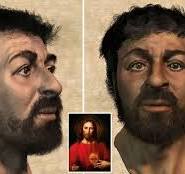
Ironically, Jesus also possessed characteristics that mainstream Christians often find repulsive and ungodly. He was the son of an unwed teenage mother (Mt. 118-22; Lk. 1:26-38). He was homeless at birth (Lk.2:7).  If we are to believe Matthew’s account, Jesus became an immigrant in Egypt (Mt. 2:13-15). The good people of his day called him a drunkard and the companion of prostitutes. They expelled him from his synagogue because he didn’t seem to care about the 10 Commandments, especially the most important one – the Sabbath law. (For a Jew such excommunication and the shunning it entailed were like a death sentence.) The religious authorities said he was a heretic and possessed by the devil. The occupying Roman authorities identified him as a terrorist. They arrested him. And he ended up a victim of torture and of capital punishment carried out by crucifixion – a means of execution the Romans reserved specifically for insurgents. He was not the kind of person mainstream Christians usually admire. He was far too liberal to merit their approval.

Jesus was clearly a feminist. Many of his disciples were women. He spoke with them in isolated places. He actually forgave a woman caught in adultery, while implicitly criticizing the hypocrisy of patriarchal law which punished women for adultery and not men. And Jesus refused to recognize his contemporaries’ taboos around segregations. He crossed boundaries not only dividing men from women, but Jew from gentile, lepers from non-lepers, and rich from poor.     

He couldn’t have been more liberal. In a sense he was an anarchist. He honored no law that failed to represent the loving thing to do. His attitude towards the law is best summarized in his pronouncement about the Sabbath. “The Sabbath was instituted for human beings,” he said, “human beings weren’t made for the Sabbath.” This was pure humanism placing human beings above even God’s holiest law. Again, it was anarchistic.

Jesus’ teachings were politically radical as well. They centered on what today is called social justice. As such they infuriated his opponents but were wildly inspiring to the poor and oppressed. His proclamation was not about himself, but about what he called “The Kingdom of God.” That was the highly charged political image he used to refer to what the world would be like if God were king instead of Caesar. In that kingdom everything would be turned upside-down. The first would be last; the last would be first. The rich would be poor; the poor would be rich.

Subsequent reflection by followers of Jesus in the Book of Revelation teased all of that out and drew the conclusion that with the dawning of God’s kingdom, the Roman Empire would be destroyed and replaced by a new heaven and a new earth entirely unlike empire. There (as indicated in the Acts of the Apostles) wealth would be distributed from each according to his ability to each according to his need. There would be room for everyone. If that sounds like communism, it’s because, as the Mexican exegete Jose Miranda points out, the idea of communism originated with Christians, not with Marx and Engels.  

U.S. Opposition to LT

Those connections with Marxist analysis go a long way towards explaining resistance to LT by the U.S. government as well as within the Catholic Church.

That liberation theology dared to enter the mythological arena the right had long dominated virtually without rival astounded and infuriated the empire. Peasants throughout the subjugated world found the new explanations of God, Jesus and the gospels entirely empowering. Everywhere throughout Latin America they formed biblical circles, and those circles issued in social movements for justice.

In response, the Rockefeller Report of 1969 already identified liberation theology as a threat to the national security of the United States. By 1987, the Latin American Military Chiefs of Staff meeting in conference in Mar del Plata, Argentina, devoted several pages of their final report to liberation theology and the threat it posed to regional stability.  In between, in 1979 the first Santa Fe Document advised the incoming Reagan administration that it had to do something decisive about the threat posed by liberation theology. The administration heeded the advice, and responded both militarily and ideologically.

Reagan’s military strategy against liberation theology issued in a bloody war pitting the United States against the Catholic Church in Latin America whose bishops meeting in conference in Medellin Colombia had together dared to affirm a “preferential option for the poor” as their official position. To combat that commitment, the U.S. did exactly what Rome had done in the first three centuries of our era – and for the same reason: faithfully following Jesus who called empire into question and motivated the poor to assert their rights in this world as children of the God of life.

And both the Roman response and the U.S. response to Jesus and his followers resulted in blood baths. Many of us are well acquainted with the best-known martyrs: Camilo Torres, Archbishop Romero, the Salvadoran team of liberation theologians killed at San Salvador’s Central American University in 1989, the U.S. women religious murdered years earlier in that same country, and Che Guevara. (Yes, Che. His spirituality was secular, but it was no less spiritual or liberationist than any of the others.) And then the unending list of martyrs in this war against the Catholic Church – 200,000 in Guatemala, more than 100,000 in Nicaragua, 90,000 in El Salvador, and literally untold killings and disappearances in Honduras.

In every case, the carnage was a response to social movements inspired by liberation theology. Again, as Chomsky points out, official U.S. military documents show that liberation theology was a major target of those wars. In fact within those same official documents, the Army boasts specifically about defeating LT.

As for Reagan’s ideological response to liberation theology . . . .  On his accession to power, CIA psyops began funding conservative alternatives to liberation theology in Latin America and in the U.S. So did business concerns that saw the leftward drift of Latin America as a threat to their presence there. Domino’s Pizza and Coors Brewery were prominent among the cases in point. As a result, evangelicals throughout the region grew rapidly in number, and the recipients of those funds in the United States increasingly identified with Republicans, the “hand that fed them.”

So, the television programs of Jerry Falwell, Pat Robertson, Jim and Tammy Baker, Jimmy Swaggart, and others were beamed into every poor barrio, población, and favela. Right wing churches sprang up everywhere feeding and expanding an already robust evangelical presence in areas once completely dominated by the Catholic Church. The reactionary message was always the same – a depoliticized version of Christianity whose central commitment involved accepting Jesus as one’s personal savior and rejecting communism including the type allegedly represented by the theology of liberation.

All this points up the extreme importance of LT. including being indirectly responsible for the rise of the religious right in the United States.

On the other hand however, and on the other side of the aisle, so to speak, the Obama presidency represented the first U.S. president directly influenced by liberation theology. For 20 years, Barack Obama was part of the congregation of Jeremiah Wright – identified by James Cone, the father of black liberation theology, as the latter’s foremost contemporary embodiment.   

Nevertheless, Reagan’s two-front strategy (military and ideological) worked. Revolutionary gains in El Salvador, Guatemala, and most prominently, in Nicaragua were halted and reversed. Militarily, the “Guatemala Solution” was the template. It entailed using military and paramilitary death squads to kill everyone remotely connected with guerrilla movements. According to the Reagan strategy, that included priests, nuns, lay catechists and ministers of the word influenced by liberation theology. The theological strategy worked as well. The slogan promulgated by the Salvadoran military said it all, “Be a patriot; kill a priest.”

Our Debt to Gustavo Gutierrez 

Gustavo Gutierrez was by no means the founder of liberation theology. However, he is said to have coined the term in 1968 after the bishops of Latin America adopted as their own LT’s understanding of the Christ event as expressing God’s “preferential option for the poor.” The poor are God’s chosen people, liberationists explained, as testified by the divine choice to incarnate as the poor peasant earlier described.

In a sense then, Gutierrez and the movement he popularized represents a kind of “Critical Faith Theory” comparable to contemporary academia’s “Critical Race Theory.” Like the latter in relation to race, liberation theology seeks to reverse the traditional employment of religion and the Judeo-Christian tradition as tools of oppression meant to drug, pacify, infantilize, and depoliticize their adherents.

In that sense, LT is a kind of anti-theology.  

Thank you Saint Gustavo Gutierrez for your life and work.
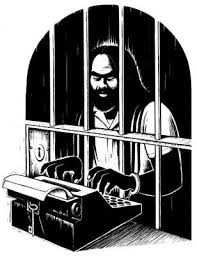
What If Mumia Abu-Jamal Were President: Communism in the Bible

Readings for 2nd Sunday of Easter: ACTS 2: 42-47; PSALMS 118: 2-4, 13-15, 22-24; 1st PETER: 1: 3-9; JOHN 20: 19-31

Last week, on Easter Sunday, I presented Jose Mujica as a model president. Mujica, I pointed out, was the president of Uruguay from 2010 to 2015. He had been a Marxist Tupamaros (Robinhood) guerrilla since his student days. He was arrested, imprisoned and tortured for 12 years – 3 of them spent in solitary confinement at the bottom of a well. As president, he introduced profound changes in Uruguayan politics. As I noted, he took steps towards the legalization of all drugs in an effort to defeat the country’s drug gangs.

But perhaps Mujica’s most impactful step came in the example he offered national chief executives everywhere in his rejection of the typical presidential lifestyle. He gave away 90% of his yearly salary to the poor and dedicated that money to providing housing for the country’s homeless. He sold the presidential limousine in favor of retaining his old Volkswagen beetle. He continued living with his wife in his run-down peasant farmhouse.

In my frustration over this year’s Hobson’s choice between Trump and Biden, I couldn’t help thinking: what if we chose a U.S. president who did something like that? What if, instead of looking for leadership to billionaires like Trump or lifelong politicians like Biden, we elected someone like Jose Mujica – a peasant, a worker, a radical thinker? How would that change American politics? How would that change the world?

What if we elected someone like Mumia Abu-Jamal? Abu-Jamal, of course, is the Marxist Black Panther journalist who had spent years as a political prisoner on death row. Allegedly he killed a Philadelphia police officer in 1981 – a charge he has always vehemently denied. In any case, he regularly publishes insightful, edgy comment from prison and is often interviewed on NPR and programs like “Democracy Now.” What if Mumia were our president?    

I raise those questions because they’re suggested by the readings for this second Sunday of Easter. They expose us to the shocking fact that resurrection for the first Christians turned everything completely upside-down. They actually embraced communism and recognized as their leader a worker, a victim of capital punishment from death row. Yes, they embraced the communist ideal that inspired both Mujica and Mumia Abu-Jamal.

Today’s Readings

The readings are brilliant and timely in that they not only give us an insight into the primitive Christian community. They also urge us to turn our politics upside-down. They do so first by offering an abstract description of the original Christian community, and then by fleshing out that description with narrative about a key encounter of a skeptic with the risen Christ who embodies the basis of the communist vision – identification with society’s victims and despised.

Here are my “translations” of those readings. You can find the originals here to see if I’ve got them right:  

ACTS 2: 42-47: The first Christians were communists. Following the teachings of Jesus, they prayerfully shared meals each day and all their possessions – from each according to ability to each according to need. Their example was so awe-inspiring that everyone loved them, and their numbers grew rapidly.

PSALMS 118: 2-4, 13-15, 22-24: Christian communalism was a dim reflection of the benevolence of Life Itself as demonstrated in nature and throughout human history. No one truly owns anything; it’s all GIFT. Though unrecognized by the world, renouncing private property is the rejected cornerstone of human community – the key to surmounting every human problem. Accepting this truth, even in the worst of times, those committed to justice manifest super-human strength, courage, and joy.

FIRST PETER: 1: 3-9: It’s as if they were all born again into a new creation filled with hope that is stronger than death itself. Talk about inheritance! Communal sharing has made us richer than kings and their vast storehouses of gold. We’ve experienced the very goal of history – even though the world’s opposition to our sharing obscures the fact that we are on the right path – the one blazed by Jesus himself (and the other great divine incarnations). There is no other portal to human happiness.  

JOHN 20: 19-31: Fear of the world, its violence and opposition to Jesus’ communalism has intimidated us into denying his way. Yes, we’re all denialists like the one they called “The Twin” (Didymus). He is our double in rejecting in absentia Jesus’ Holy Spirit of peace and forgiveness, of sharing and community that make peace possible. Correcting false perception means recognizing Christ himself in those the world has wounded and assassinated for daring to follow him.

Christian Communism

Please do read for yourselves today’s first reading, ACTS: 2: 42-47. It’s significant that on this week after Easter, the passage immediately directs us not to “spiritual” concern with heaven and the afterlife, but to material property, land and the primacy of the marginalized in organizing community life. Here’s a fuller description of the way the early Christians lived. You’ll find it in ACTS, Chapter 4:

“Now the whole group of those who believed were of one heart and soul, and no one claimed private ownership of any possessions, but everything they owned was held in common. With great power the apostles gave their testimony to the resurrection of the Lord Jesus, and great grace was upon them all. There was not a needy person among them, for as many as owned lands or houses sold them and brought the proceeds of what was sold. They laid it at the apostles’ feet, and it was distributed to each as any had need.” (Acts 4:32-35).

Note that the description immediately connects the interior lives of believers (heart and soul unity) with communizing the group’s possessions. They sold their land and houses, pooled the resulting resources and redistributed wealth on the basis of need. All of this was an expression, the passage says, of early Christian belief in the new way of life expressed in the term “resurrection.” Communism was the logical, practical expression of following Jesus’ teaching. Doing so brought the community grace, i.e. favor with God and with those outside their community.

How different that understanding is from what, in effect, we’ve been taught since infancy about capitalism as somehow God’s way. It’s as if the above passage read:

“Now the whole group of those who believed entered into competition with one another. They fiercely guarded their possessions and considered private property as sacred. With great power the apostles gave their testimony to the dog-eat-dog world Jesus described as God’s Kingdom. So, they all viewed the “needy” as lazy and unproductive. They evicted them when they defaulted on rent and then tore down their hovels to enrich themselves and develop gentrified neighborhoods. In this way, Jesus’ early followers became rich and prosperous, while the poor got their just deserts – poverty and misery.” 

I’m not exaggerating. That emphasis on private property, on the law of the jungle, and justifying a resulting gap between rich and poor is embraced by many Christians as if the godly life Jesus endorsed could be described exactly as above.

Jesus’ Place in Communism

Now switch your attention to the Gospel reading for today. It brings us inside the first Christian house church whose communism was described abstractly in the reading from the Acts of the Apostles. It shows Jesus’ closest followers affirming the enduring relevance of their hero as a leader remarkably like Mumia Abu-Jamal. He’s dark-skinned and condemned under false charges by the state. He not only comes from death row; he was actually a victim of torture and capital punishment. And yet, he somehow lives and continues to teach his way to community happiness!

Recall the scene. Jesus’ closest friends are in hiding, imprisoned by fear of the Romans who had just executed their great teacher and of their traitorous fellow countrymen – the Temple priests and scribal establishment – who cooperated with the foreign occupiers.

So, the doors are locked and bolted. Jesus’ inner circle feels threatened, lost and betrayed by their own naivete in following a quixotic revolutionary who had filled them with such hope for the arrival of the Kingdom of God.

Inevitably, however, conversation must have turned to Jesus, his teachings and to rehearsal of the tragic events of the Passover weekend just completed. And those memories evoke Jesus’ presence, even for the iconic skeptic, Thomas called Twin (Didymus) and “Doubting.”

Thomas is really our Twin in his reluctance to believe that salvation can come from an executed criminal – or, perhaps more accurately, that life is stronger than death. And yet, like Karl Marx, he discovers that the deliverance of the human race comes from below, from a despised member of the working class, not from above and the royal or priestly classes so admired by the mainstream.

Conclusion

Thomas’ reluctant faith and that of his community as presented in today’s readings, call us to a twofold realization. The first is that our entire way of life is on the wrong track. Happiness and the good life (escape from out profound unhappiness) are not found in individual pursuit of wealth as the capitalist story of Jesus would have it.

No, it’s found in radical sharing that has us orienting community life towards the welfare of the least among us – as was the practice of the first Christian community. (That is, as I’ve shown elsewhere, mixed economies are all we have. But they should be mixed in favor of the poor in percolate-up ways rather than in favor of the rich with trickle-down policies.)

The second Thomistic (and Marxist) realization is similar. It’s that we’ve been looking for community leadership in all the wrong places. Our leaders need to come not from David’s palaces, not from Temple priests, but from the streets, from carpenters’ workshops, and even from death row.

Imagine, if we embraced the communism exemplified in today’s readings as our guiding North Star. Imagine if instead of Trump or Biden, Jose Mujica or Mumia were our president. Imagine if we could overcome the denialism of our twin, Thomas the Doubter. That’s the kind of radicality followers of Jesus are called to.

Bernie Reminds Us that Christianity Is Communism & Jesus Was a Communist!

Bernie

Readings for the 1st Sunday after Easter: Acts 2:42-47; PS 118:2-4, 13-15, 22-29; I PT 1:3-9; JN 20:19-31

Recently, Mother Jones reported that self-identified socialist, Bernie Sanders, is the most popular politician in America. Almost 60 percent of Americans view the Vermont senator favorably.

Bernie’s even more popular among Democratic voters, blacks, and Hispanics. Eighty percent of Democrats, 73 percent of registered black voters, and 68 percent of registered Hispanic voters have favorable opinions of the 75 year old politician.

All of this signals an unbelievable achievement for an economic system we’ve been taught to hate. Long before the Second Inter-Capitalist War (1939-’45), and especially since then, Americans have been subjected to unrelenting anti-socialist propaganda from every side – school, church, media, politicians . . . And following the 1989 fall of the Soviet Union no one wanted to be even remotely associated with socialism, much less with communism.

But things have changed. Fifty-three percent of millennials now have a favorable view of socialism. Sixty-nine percent would cast their ballot for a socialist in a presidential election.

Again: in the light of all that negative indoctrination, that’s incredible. Even if poll-respondents are fuzzy about their understanding of socialism, the phenomena indicate that Americans are profoundly dissatisfied with socialism’s opposite, the reigning capitalist order.

All of that is relevant to today’s liturgy of the word, where the first reading reminds us that (as Mexico’s Jose Miranda says directly) socialism and even communism originated in Christianity. It doesn’t come from Marx and Engels.

In fact, Miranda goes further. He says Christianity is communism. And I think he’s right. Just look at today’s description of life among Jesus’ first followers after the experience they called his “resurrection”:

“All who believed were together and had all things in common; they would sell their property and possessions and divide them among all according to each one’s need.”

Luke the evangelist repeats that refrain later in his “Acts of the Apostles” when he writes:
“Now the whole group of those who believed were of one heart and soul, and no one claimed private ownership of any possessions, but everything they owned was held in common . . . There was not a needy person among them, for as many as owned lands or houses sold them and brought the proceeds of what was sold. They laid it at the apostles’ feet, and it was distributed to any as had need.” (Acts 4:32-36).

There you have it. The early Christians:

* Lived communally

* Rejected private property
* Including land and houses
* Instead held everything in common
* Pooling all their resources
* And distributing them “from each according to ability to each according to need.”
* As a result, they eliminated poverty from their midst.

Did you catch the operative words: they divided their property “among all according to each one’s needs?” To repeat, those are the words of the Bible not of Marx or Engels. In other words the formula “from each according to his ability to each according to his need” comes straight from the Acts of the Apostles. They have nothing to do with atheism. On the contrary, they have everything to do with faith.

They have everything to do with following Jesus who himself was a communist. He’s the one who said, “Every one of you who does not renounce all he has cannot be my disciple” (Luke 14:3).

Jesus, not Marx, is the one who set concern for those in need as the final criterion for judging the authenticity of one’s life. He said, “I was hungry and you gave me to eat; I was thirsty and you gave me to drink, was a stranger and you took me in, was stripped naked and you clothed me; sick and you visited me, imprisoned and you came to see me” (MT 25: 35-36). Everything, Jesus insists, depends on recognizing his presence in the poor and oppressed and responding accordingly.

Of course it’s often pointed out that the Christian experiment in communism was short-lived. Jesus’ followers soon backed off from their early idealism. That observation is supposed to invalidate their communistic lifestyle as impossibly utopian and therefore no longer applicable as Christians’ guiding North Star. In fact, this objection is taken as justifying the persecution of the communism the text idealizes and recommends!

But the same argument, of course, would apply to the Ten Commandments in general or to the Sermon on the Mount – or to the U.S. Constitution for that matter. In our day (and in the course of their histories) all of those statements of ideals have only sporadically been lived out in practice. Should we throw them out then? Should we persecute those espousing the Sermon on the Mount ideals or observance, for instance, of the Fourth Amendment? Few in the Christian community or in the U.S. political world would make that argument.

Others anxious to distance themselves from the communistic ideals of early Christianity would point out that the communal life adopted by Jesus’ first followers was voluntary not imposed from above. In doing so, they point to another passage in Luke’s Acts of the Apostles. That’s the one involving Ananias and Saphira – a couple whose life is exacted for claiming to have sold their property while actually keeping some of it back for themselves.

Referring to their property, Peter says to Ananias, “Was it not still yours if you kept it, and once you sold it was it not yours to dispose of?” (Acts 5:4) But (again as Miranda points out) what was optional was not selling their property – Christianity’s indispensable condition. What was optional was the choice to become a disciple of Christ. Choosing the latter option required practicing communism – and that under pain of death!

As for economic systems imposed from above. . .  Can you name one that isn’t?

How many of us have really chosen to live under capitalism? “None of us” is the answer. That’s because to make an informed choice, one must know the alternative. However, our families, schools, churches and civic organizations, our films and novels and news programs mostly conspire together to vilify alternatives and keep them hidden.

Besides that, our government and military have made sure that experiments in alternatives [like the one implemented in Cuba (1959) or Nicaragua (1979)] fail or are portrayed as failures – lest their “bad example” undermine capitalist claims to be the only viable system.

Even worse, our church leaders (who should know better) jump on the anti-communist band wagon and present Jesus as a champion of a system he would despise. Church people speak and act as if Luke’s passage from Acts had read:

“Now the whole group of those who believed lived in fierce competition with one another, and made sure that the rights of private property were respected. They expelled from their midst any who practiced communalism. As a consequence, God’s ‘invisible hand’ brought great prosperity to some. Many however found themselves in need. The Christians responded with ‘tough love’ demanding that the lazy either work or starve. Many of the unfit, especially the children, the elderly and those who cared for them did in fact starve. Others however raised themselves by their own bootstraps, and became stronger as a result. In this way, the industrious increased their land holdings and banked the profits. The rich got richer and the poor, poorer. Of course, all of this was seen as God’s will and a positive response to the teaching of Jesus.”

When are we going to stop this bastardization of Christianity?

First of all, we must face it: Jesus was a communist; so were his earliest followers after his death!

What then should are would-be followers of Yeshua the Christ to do? At least this:

* Read Jose Miranda’s manifesto, Communism in the Bible.

* If we can’t bring ourselves to sell what we have, give it to the poor, and live communally, at least conspire with like-minded people to share tools, automobiles, gardens – and perhaps even jobs and homes in an effort to reduce poverty and our planetary footprints.
* “Out” the “devout Catholic,” Paul Ryan and other congressional “Christians” whose budgets attempt to balance federal accounts by increasing the ranks of the poor whose poverty the communism of the early Christian community successfully eliminated.
* Pressure our government to get off Cuba’s back and allow it to experiment in prophetic ways of living that can save our planet.

I’m sure you can add to this list. Please do so below.