
Readings for the Fifth Sunday of Lent: EZ 37: 12-14; PS 130: 1-8; ROM 8:8-11; JN 11: 1-45 http://usccb.org/bible/readings/040614.cfm
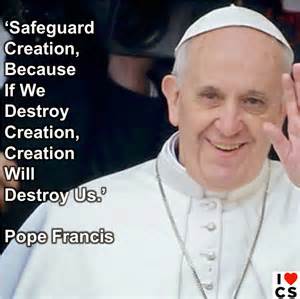
A few weeks ago, Fortune Magazine identified Pope Francis as first among the World’s “Fifty Best Leaders.” President Obama did not even make the list. Bono and President Clinton were among the top ten.
Whatever the magazine’s reasons for selecting the pope, it’s clear that the “Francis Effect,” is real. Seventy-seven percent of Catholics say they have increased their church donations since the new pope took office. Francis has brought the Catholic Church back from the dead. More importantly, he has returned to life the Jesus of the gospels whom conservatives have long since hijacked and buried – the very one our world’s poor majority needs as never before.
That’s relevant this fifth Sunday of Lent where our readings have Ezekiel coining the highly political metaphor of God’s “raising the dead” to refer to Israel’s impending liberation from its own despair during its Babylonian Captivity. Ezekiel’s metaphor reappears in today’s gospel reading where John the evangelist’s presents his familiar parable about Jesus raising Lazarus from the grave where Jesus’ friend lay moldering for more than three days.
Consider the hopelessness of Ezekiel’s Israel. His sixth century was the saddest of times – the era of his nation’s Great Exile. The Hebrews had been defeated and humiliated by Babylon (modern day Iraq). Its leaders and a large portion of its populace had been abducted to that enemy state. The exiles felt as if they had been slaughtered culturally. They were far from home, controlled by foreign masters, and apparently abandoned by God.
But the prophet Ezekiel did not share his people’s general despair. So in an effort to regenerate hope, he coined the idea of resurrection. Ezekiel loved that concept. [Recall his Vision of Dry Bones (EZ 7: 1-14).] For Ezekiel resurrection was a political metaphor that promised a new vital future despite appearances to the contrary. Israel, he said, would be liberated from Babylon, return home and experience rebirth. They would come back to life.
In his Apostolic Exhortation, The Joy of the Gospel (JG), Pope Francis embraces not only Ezekiel’s spirit, but that of Jesus raising Lazarus from the dead. To repeat, he actually revivifies Jesus and the Gospel. The pope does so by rescuing them both from conservative forces whose version of Christianity has held center stage for the last 35 years. It’s the version, the pope strongly implies, that has metaphorically killed the Jesus of the Gospels, who proclaimed the imminent arrival of God’s Kingdom which belongs to the poor, not to the rich whom the conservatives prioritize.
Like Ezekiel, Jesus made his proclamation when all appearances indicated that Israel was dead. It was entirely under the heel of Roman jackboots and there seemed no escape. Yet Jesus described a horizon of hope that enlivened the spirits of the poor who were crushed by the Romans and by their rich Jewish collaborators who headed the temple establishment.
In such dire straits, Jesus proclaimed a new future where everything would be turned upside down. He said audacious things. In God’s realm, he insisted, the poor would be in charge. The last would be first, and the first would be last. The rich would be poor and the poor would be well–fed and prosperous. The powerless and gentle would have the earth for their possession. Jesus’ unemployed and famished audiences couldn’t hear enough of that!
So he elaborated. He told parable after parable – all about the kingdom and its unstoppable power. It was like leaven in bread – unseen but universally active and transforming. It was like the mustard seed – a weed that sprouted up everywhere impervious to eradication efforts. It was like a precious pearl discovered in the ash bin – like a coin a poor woman loses and then rediscovers. His metaphors, similes and parables were powerful.
To repeat, Pope Francis strongly implies that socio-economic conservatism has murdered the Jesus I’ve just described. It has done so by its “preferential option for the rich.” It embraces free-market capitalism, trickle-down theory, and cut-backs in health care, education, and anti-poverty programs. Conservatives complement such horrors with huge tax-breaks for the country’s 1%. All of this is was chillingly represented last week by “devout Catholic,” Paul Ryan whose budget promised to sock it to the poor and middle class, while enriching military industrialists along with his affluent friends.
The Joy of the Gospel makes it clear that no one can support policies like Ryan’s and claim at the same time to be a follower of Jesus.
In other words, Ryan and the pope are on completely different pages. While conservatives have buried the Gospel Jesus, Pope Francis calls him back to life. He stands before Jesus’ grave and shouts “Come Forth!” Even Fortune Magazine recognizes the resulting miracle.
Consider the Pope’s anti-conservative incantation that brings Jesus back to life. It runs like this:
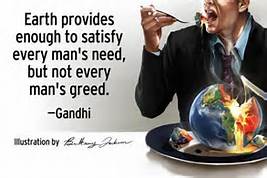
• Wealth does not belong to the rich, but to the world’s poor (JG 57, 184).
• But the world economy as now structured concentrates wealth among an ever-shrinking minority of the rich (56).
• Wealth must therefore be redistributed (189, 204,215).
• Such redistribution must take place by government intervention in the free market, which (in contradiction to failed “trickle-down” theory) cannot by itself eliminate poverty (54).
• The rich who are unwilling to redistribute wealth to its true owners (the poor) are thieves (57, 189).
• More than that, they are murderers, since the world economy as presently configured is homicidal (58).
• This is a question of being pro-life (213).
• Favoring life certainly includes concern for the unborn (213).
• But “. . . defense of the unborn is closely linked to the defense of each and every other human right” (213).
• Human rights include the right to food and shelter, education, health care, employment , and a just wage (191, 192)
• Respecting human rights involves renunciation of war and preparation for war (60).
• It also connects with environmental stewardship – defense of soil, insects, birds, fish, and the seas (215).
And so the tomb opens. And a Jesus who has been buried more than three decades stumbles out. And in doing so, he renews the faith of so many of us who had given up on the church.
Our faith is renewed because we recognize in Francis’ Jesus the embodiment of one of life’s fundamental truths: utopian visions of the good and true and beautiful can never be killed, even though they might appear lifeless and be pronounced dead by those who once loved them.
What should we do as a result of encountering the Jesus Francis has resurrected?
• Be bold in appropriating the vision of Pope Francis that is not at all idiosyncratic within the Catholic tradition. In fact, it represents the authentic teaching of the Catholic Church from Leo XIII to Vatican II and was even articulated by John Paul II and Benedict XVI.
• Accordingly and courageously incorporate into progressive political discourse the language and powerful ideas of the Judeo-Christian tradition. It can move people today just as it did in the times of Ezekiel and Jesus.
• Join Francis in refusing to cede the field of religion to the reactionary forces of neo-liberal conservatism.
• Expose that conservatism for the destructive fraud it is.
• More particularly, expose Paul Ryan and other Bible thumping Republicans as the heretics they are as they defend the interests of the rich and starve the poor in the name of the Gospel.
• Insist that our pastors get on board with Pope Francis in universalizing his pro-life vision to foreground issues of hunger, war and peace, capital punishment, full employment, universal health care, affordable housing, environmental protection. . . .
Francis reminds us that united with our neighbors, we too, the People of God, possess the power to raise the dead.
So as we stand before the grave of God, the church, and Jesus, let’s echo the pope’s cry: “Jesus, come forth!”






 About Things That Matter