Jesus’ Calls Followers to Practice What Marianne Williamson Calls a “Politics of Love”

Readings for 5th Sunday of Easter: Acts 14: 21-27; PS 145: 8-13; REV 21: 1-5A; JN 13: 31-35

The readings for this fifth Sunday of Easter centralize Jesus’ New Commandment, to “Love one another as I have loved you.” He also identifies the criterion for distinguishing his true followers from those who are not. He says, “This is how all will know that you are my disciples, if you have love for one another” – again, “as I have loved you.”

So, the question becomes how exactly did Jesus love those he interacted with? Was his love confined to the inter-personal sphere, or was it somehow political? And even if it was, is a politics of love practical? Or are we condemned to the political status quo based on fear and greed which our “Christian” culture has ironically convinced us is much more realistic than the love and compassion that Jesus seems to recommend?  

The answer to all of those questions was captured in our liturgical readings several weeks ago in Jesus’ first sermon as recorded by the evangelist called Luke. Jesus described his program in this way: “The Spirit of the Lord is on me, because he has anointed me to preach good news to the poor. He has sent me to proclaim deliverance to the captives and recovery of sight to the blind, to release the oppressed and to proclaim the year of the Lord’s favor.”

That final phrase “the year of the Lord’s favor” is key to answering the questions I just posed. It’s a reference to the Jubilee Year enshrined in Israel’s ancient tradition. That tradition, if nothing else, was highly political. As economist Michael Hudson has reminded us recently in his And Forgive Them Their Debts, Jubilee referenced a political and economic practice common not only in Israel, but throughout the ancient Middle East. It had kings and emperors (usually on the occasion of their assuming power) periodically creating a clean slate for everyone, especially the poor. During Jubilee, debts were cancelled, land was redistributed, slaves were freed, and amnesty was extended to prisoners. Jubilee prioritized the needs of the poor, not the rich. Its unfolding in Jesus’ public life involved non-violent resistance to temple authorities who had aligned themselves with Roman imperialism.

In other words, the unmistakable conclusion here is that if Christians are to love one another precisely in the way that Jesus loved them, their love must be unapologetically political and anti-imperial. They must practice a politics of love that prioritizes the needs of the poor, sick, indebted, imprisoned, and of those victimized by oppressors of all kinds.

In our own day, don’t you think that at least gestures towards the spirit of the Green New Deal as opposed to continuation of the status quo? I do.

But, you might ask, is a politics of love practical?  Or given the fallenness of the human race, isn’t it more realistic to practice our familiar politics based on fear and greed – to run the country like a business instead of like a family.  Isn’t it more sensible to appeal to self-interest, money and the bottom line?

In response, Marianne Williamson would ask, “Well, how’s that working out for you?”

In case we’ve forgotten, (and please notice the dollar figures in what follows) by prioritizing the values of fear and greed, our “leaders” have :

  • Committed to a program of perpetual war that’s costing us about $2 billion per day
  • Spent $2 trillion in just one of those wars (Iraq) while slaughtering hundreds of thousands of civilians (and perhaps more than a million) and creating ISIS in the process
  • Prevented refugees created by our wars and economic system from finding refuge in our country where all but a hand-full (Native Americans) are descended precisely from immigrants, refugees, and slaves forced by the rich to work here against their wills
  • Created a society in which 3 men own as much as the bottom 50% of the country
  • Given $2 trillion in additional tax breaks mostly to those men and their colleagues in the richest 0.1%
  • Decided to commit mass suicide by hanging on to an economic system that is destroying our planet despite our claims to love our children and grandchildren
  • Asserted proudly that, all evidence to the contrary, our system of political-economy somehow “works”

And that’s just the short list of the craziness of our culture’s commitment to fear and greed rather than to a politics of love and compassion that prioritizes (as did Jesus) the needs of the poor, education, health care, debt forgiveness, and anti-imperialism.

Clearly, we can do better than that. Clearly, it’s time to try something else.

But where, our culture asks, would the money come from to eliminate poverty and save the planet? Practically speaking, where would we find the money for a Green New Deal, for universal health care, for higher wages, for forgiving student loans, to remedy the epidemic of homelessness?

“Don’t make me laugh” says Marianne Williamson in her Politics of Love. She writes:  

“How would we pay for all that education and culture, health and safety” ask those who have no problem whatsoever paying for ill-begotten wars and tax cuts for the extremely wealthy. Such a question should be met by laughter from those who were never consulted as to how we would pay for a $2 trillion war in Iraq (which, among other things created ISIS) or a $2 trillion tax cut for the wealthiest among us (which, among other things, is already adding tour wealth inequality).”

No doubt, the Jesus of Jubilee would join in Williamson’s ironic laughter. Where will we get the money?

Please go back to the dollar figures I asked you to note above. Then allow me to count the ways. They include moving quickly to an energy economy not based on fossil fuels, and then:

  • Saving trillions when the energy-switch enables us to stop fighting and threatening wars fought for oil (think Iraq, Iran, Venezuela). Stopping those energy wars would enable us to cut the Pentagon budget in half.
  • Revoking the recent tax gifts to the rich. That too would provide trillions
  • Revising the tax code’s highest bracket to 75% annually freeing up billions in the process
  • Cutting off all subsidies to oil companies. That as well would save millions each year
  • Imposing the death penalty on Exxon and seizing its assets as a penalty for concealing and lying about its climate research. That alone would go a long way towards paying for any Green New Deal
  • Returning to workers the wages stolen by their corporate employers who for the past 40 years have kept the fruits of skyrocketing labor productivity for themselves while practically stiffing their employees.
  • Recovering from corporations like McDonalds and Amazon the cost of food stamps and other federal aid programs accessed over the years by their underpaid workers.
  • Identifying the beneficiaries of 250 years of unpaid slave labor and assessing penalties on the families and corporations involved for the wages not paid for all that forced labor. The money could be used to build respectable housing and palatial schools in black communities.
  • And here I’m probably only scratching the surface.

According to my way of looking at things, implementation of the above policies would actually pay for the Green New Deal without raising taxes on any but the super-rich whose extravagant lifestyles will remain mostly unaffected.

In any case, the point is that the politics of love highlighted in today’s readings is the only realistic way of saving our planet. And Marianne Williamson is the only presidential candidate willing courageously to say so.

Again, as Marianne puts it, (just as in the past) love is the only answer to our current problems. “It was love that abolished slavery, it was love that gave women suffrage, it was love that established civil rights, and it is love that we need now.”

(P.S. Marianne Williamson recently achieved the 65,000 unique contributions required for her to appear on the debate stage with other Democratic presidential candidates. But now that more than 20 are running, it’s necessary for her to poll at 1% in national opinion polls. She’s close to achieving that goal too, but needs financial help to get her name and identity before the public. Please help her by donating here. She only has till June 12th to reach this goal.)

Give A Dollar Today to Help Marianne Williamson Get on the Debate Stage

I’m currently reading presidential candidate Marianne Williamson’s new book A Politics of Love. As if I needed the reminder, it’s helping me see how completely off-base American politics is. Even more, it’s making me realize how necessary it is for Marianne to get on that debate stage. She is by no means a political lightweight. And she offers a deep philosophical (and, yes, spiritual) approach to politics beyond the capability of any other candidate. Her voice needs to be heard. It promises to shift the on-stage conversation to unexpectedly profound levels.

At its heart, Williamson’s deep politics identifies the gap between Americans’ professed beliefs in Christianity and democracy, and their de facto allegiance a system contradictorily rooted in fear, greed, dishonesty and violence. (If you doubt that, recall Mike Pompeo’s confession two weeks ago at Texas A&M.)

In any case, the system’s not working, is it? That’s Williamson’s basic point recommending her infinitely deeper and spiritually articulate approach to politics. Old style “experienced” politicians can’t address our nation’s problems at that level, much less repair the damage caused by their very experience. Or as Einstein put it, “The problems of the world will not be solved on the level of thinking we were at when we created them.”

Think about those problems as described in the Politics of Love. Our economy actually produces less and less. It maintains its patina of prosperity only by virtue of financialization that rewards hedge funders who simply move money from one rich man’s pocket to another’s. Corporation heads continue the cycle of fake prosperity by using money gained through lowered taxes to buy back their own stock. That creates a booming stock market whose artificially inflated stock prices allow those executives to rake in millions or billions, while workers’ wages stagnate, and our streets remain littered with homeless poor.

Internationally, vulture funds buy up poor countries’ debts and force already starving children to pay by having their parents accept austerity programs. Those who rebel against such policies are called “terrorists.” Automated international death squads in the form of drones execute them without a second thought.  

To maintain such ironic “order,” the country’s military budget wastes the billions that could otherwise be used to save a planet that’s disintegrating before our very eyes. Life-expectancy at home shrinks and children go to bed hungry in what’s supposed to be the richest country in the world. And while we justify those never-ending wars against enemies we ourselves have created, we can’t find resources to repair bridges, roads, and water supply systems.

As for remedying such problems, Ms. Williamson offers the best justification of the Green New Deal (GND) that I’ve come across. Without specifically mentioning it, she succeeds in explaining the GND’s insistence on extending its provisions beyond environmental restoration to higher wages, universal education, college-debt forgiveness, health care for all, and support for the arts and culture. For Williamson, all of these represent engines of prosperity and job creation ignored in standard economic models which identify business as prosperity’s principal fountainhead. The fact is however, that educators are more important to prosperity than entrepreneurs. Teachers therefore deserve subsidies more than businesses, which are completely dependent on schools for preparing workers. Yes, education is an irreplaceable engine of prosperity, but so is health care, art and culture. Sick workers are not productive. Those insensitive to art and culture are far less creative.   

Of course, none of this is new for readers of OpEdNews. What is new however, is a presidential candidate who has the courage to name and address the fundamental spiritual crisis at the root of the contradictions just listed.

However, when a candidate like Marianne Williamson appears on the scene, even sympathetic progressives are likely to dismiss her insistence on love and compassion as “new agey, soft, and unrealistic.” That only proves her point: our country’s real belief has nothing to do with government of, by and for the people. Much less is it connected with the politics of Jesus of Nazareth who maintained that only a New Age (He called it the Kingdom of God) can save us from our own self-destructiveness. Rolling our eyes at Marianne’s insistence on love and compassion only proves our lack of faith and a fundamental belief in death rather than in life. We’ve become authoritarian necrophiles.

But don’t get her wrong. Marianne’s not trying to shove Christianity, new or old, down anyone’s throat. However, along with the Green New Deal, Medicare for all, and cabinet-level offices for Peacemaking as well as for Children and Youth, she’s advocating a change in attitude from national self-centeredness and greed to international other-centeredness and generosity. Citizens of all stripes – from Christians to Muslims, to Jews, Buddhists, Hindus and atheists – should be able to support all of that.

But at this point, I’m not saying that it’s necessary for any of us to support Ms. Williamson’s candidacy. What is necessary is for her voice to be heard on the debate stage. As I said, she’s guaranteed to shift the conversation to where it needs to go – towards discussion of America’s spiritual crisis.

Currently, Marianne is about 1,485 individual contributions short of the 65,000 required for her to initiate that conversation. Even a contribution of $1.00 here will count. Please contribute now; her deadline is fast approaching. And please read Marianne’s Politics of Love. It might even convince you to support her candidacy in 2020.

Notre Dame in Flames: Its Image Evokes the Resurrection Our World Requires

It was religion in flames. It was a reminder of the conflagration engulfing our very planet. It should have clarified the relevance of the resurrection story that Christians across the world defiantly celebrate this Easter Sunday. It made me think of female prophets like Alexandria Ocasio Cortez and presidential candidate Marianne Williamson.

Notre Dame in Flames

Of course, I’m referring to the recent conflagration within the Cathedral of Notre Dame. Everyone’s heart went out to the people of Paris as they sang hymns to Mary while helplessly watching her beloved basilica burning on the other side of the Seine. We’re told that even the fire-fighters sang to the Grande Dame while dousing the inferno and risking their lives to rescue relics of Jesus’ true cross and crown of thorns. The spectacle brought the world to tears.

How like the rest of us, I thought, as we witness the Catholic church (and religion in general) hopelessly ablaze! Pedophilia, patriarchy, the antipathy of our children towards the faith that we elders once embraced so fervently have all contributed to the disaster. So has the successful counter-revolution waged by two reactionary popes (John Paul II and Benedict XVI) against the hopes enkindled by the ecumenical movement and Vatican II. Then there’s the heresy of know-nothing religious fundamentalists attempting to counter the creative ferment of liberation theology and of science itself . . . They’ve all done their parts to bring down the new church that John XXIII (and so many of us) once hoped for. Instead, the institution now lies in ruins, in putrid irrelevance. The strewn ashes embody our bleak despair. Only a miracle on the scale of Jesus’ resurrection can save us now.

A World Burning

But the combustion of Notre Dame presents only the palest reflection of our despondency before our very world in flames. That too was imaged forth in the cathedral’s conflagration. The climate chaos caused by our mad consumerism and worship of mammon, weapons, and war has set the planet ablaze. So, we stand there on the opposite shore of our own Seine, our mouths agape, the flames flickering against our mirrored eyes as we stand witness in hopeless impotence and despair. The stench of the ruins, the loss of our treasure, the cost of rebuilding . . . It’s all too much to think about. Mary help us!

And she does! She along with her sister prophetesses bring news of resurrection – just as they did for the male followers of Jesus’ who wallowed in the despondency following that first Good Friday. Yes, the women are here once again to save us with their news of resurrection and its impossible future!

What seems dead can return to life, they all insist. Another America is possible shouts the infant terrible, Alexandria Ocasio-Cortez. Another world is possible Sweden’s teenaged Greta Thunberg repeats for all with ears to hear. Yet more: another God is possible proclaims Marianne Williamson with her invitation to a New Age characterized by the miracle of revisioning EVERYTHING. Naomi Klein, Maria Lopez Vigil, and (from their graves) Dorothy Day, Harriet Tubman, all those suffragettes, and Rosa Parks echo the message. In fact, an entire army of latter-day Jean D’Arcs broadcast the Good News that despite what the world tells us, resurrection – radically new life – is indeed possible. It’s the redivivus message of the goddess Miriam herself – of our Lady, of Notre Dame in flames.

If you want to actually see the hopeful vision of resurrection for America, watch again Alexandria Ocasio-Cortez’s video published just last week. Through the fascinating art of Molly Crabapple, AOC calls us to face head-on the sad facts of our planet’s Good Friday. Nearly 50 years ago those facts were researched, but cynically obscured and denied by Exxon and its supporting cast of male politicians. All that time they foresaw that without resurrection, disasters like Puerto Rico (devastated by a Hurricane named Maria!!) inevitably represents our common future.

AOC reminds us that devastation caused by an entire system requires systemic reform. That includes a new economy with decent salaries and the type of benefits the industrialized world once took for granted and aspired to – affordable schooling, healthcare for all, meaningful work, comfortable retirement – all in a context where polluters are assigned responsibility for the destruction caused by their decades-long denial allowing them to privatize profits while socializing costs. They owe us! Reparations are due!

Yes, the crisis of climate chaos changes EVERYTHING!

Moreover, it’s all been done before just as our young prophetess insists. In the face of the Great Depression’s and World War II’s lesser crises, FDR put together the original New Deal.

It changed the entire economy. It recognized that unions, full employment, environmental protection, decent jobs, recreation, art, music, dignified retirement, and strict regulation of greedy corporatists were all part of the clean slate the country and world needed to survive.

And it worked!  Our nation and the western economies prospered as never before, as countries across the industrialized world implemented what came to be called the welfare state.

Religion Flaming Out

For her part, Marianne Williamson calls us to re-vision the God of resurrection who makes fundamental change possible. Like no other presidential candidate, she puts her finger exactly on the spiritual transformation required to change everything. We need another God, she says in effect. Not the imperial one foisted upon us since Constantine in the 4th century. That’s an idol. What we need is the God of Jesus: the champion of working people, widows, orphans, and immigrants. We need the God reflected in the teachings of the one who taught that whatever we do to the least of the brethren, we do to him.

Yes, that’s the God of the Bible – a divinity who remains foreign to most. It’s as if we have all been imprisoned in Plato’s Cave. Nothing that the world (and very little that the church) tells us is true, especially about God. Another God is possible, Williamson insists. That God’s vision is 180 degrees opposite that described by our desperate politicians through their media minions. It’s the direct opposite of most of the drivel we hear from the pulpit.

And it’s here that Williams joins Ocasio-Cortez. Insisting that the resurrection we celebrate today is indeed real, Marianne calls us to support something like the Green New Deal. It promises new life for us here and now, including Medicare for all, gun control, higher minimum wages, the overhaul of public education, criminal justice reform, raising taxes on the rich, and repairing damage done by our history of racism.

Conclusion

“Impossible!!” the world shouts with one accord. “It’s too costly. Making changes like the GND proposed by our prophetesses would take decades. Such alterations could never be accomplished by 2030.”

And yet, when the world saw Notre Dame in flames, the money poured in. Already more than a billion dollars have been pledged. Artists and artisans from across the world have pledged their labor. And whereas initial estimates were that it would take 100 years to rebuild Notre Dame, France’s President Macron now assures us that the cathedral will be back to normal, even more beautiful than before in only five years!

That’s what happens when human beings commit themselves to achieving the impossible. As Marianne continually repeats, “There is no order of difficulty in miracles.” And she’s right. Miracles – fundamental changes in perception – are indeed possible. Our times demand them.

Yes, resurrection can happen. Easter calls us to make it happen to save our planet – and our church.

Why I’m Supporting Marianne Williamson’s Run for President

Readings for Fourth Sunday in Lent: Jos. 5:9A, 10-12; Ps. 34:2-7; 2 Cor. 5: 17-21; Lk. 15: 1-3, 11 32.

Recently, two very good friends challenged me about supporting Marianne Williamson’s run for president. “She has no chance,” they objected. “You should be supporting Bernie instead.”

Their remarks coupled with today’s familiar Gospel account of Jesus’ Parable of the Prodigal Son have prompted me to explain myself. The parable particularly as re-created by the French Nobel laureate, Andre Gide, is about a person like Marianne Williamson who eventually identified and escaped the oppressive reality we all take as normal. In Gide’s interpretation, Jesus’ parable is like Plato’s Allegory of the Cave.

So, today I want to describe what we might call the “deep politics” of Marianne Williamson. After all, it’s her spirituality (her deep politics) that first drew me to support her candidacy. Because of her more than 30 years of work as a spiritual teacher, we can know her more deeply than any other presidential candidate. And that’s important. Our interior lives – our thoughts and values – are finally shaped by our relationship with what we consider ultimately important. They are shaped by what some of us term “God.”

So, let me first talk about Marianne’s deep politics and then connect it with Gide’s interpretation of the Prodigal Son.

To begin with, I’m supporting Marianne Williamson because she represents the most radical candidate in the field “of thousands,” as she often jokes. Using the term “radical” here, I’m referring to its etymological meaning which derives from the Latin word radix meaning “root.”

Alone in the crowded field of Democratic candidates Marianne puts her finger on what’s really ailing our nation. It’s not primarily an economic or military problem. No, at root, it’s a deeply spiritual malady. Yes, ours is a spiritual problem!

The problem is that rather than “free and brave,” we’re all scared out of our wits. We subscribe to values that are 180 degrees opposed to those identified as ultimate by all the world’s great wisdom traditions – be they Christian, Jewish, Muslim, Hindu, Buddhist or atheistic. At their deepest level, all of those traditions converge identifying compassion rather than fear as the supreme human value.

Ms. Williamson says it clearly: fear (which is the opposite of compassion) has us captive. Fear has us identifying Russians, Chinese, Muslims, immigrants, refugees, LGBT community members, poor people in general, and even (at our borders) children and babies as somehow our enemies fundamentally unlike us and threatening us at every turn.

None of that is true, Marianne says. It’s quite the opposite. All of us have far more in common than anything that can possibly separate us. In fact – as she puts it – “There is really only one of us here.” We are not only sisters and brothers, we are really a single person. What I do to you, I do to myself.

That’s really the authentic teaching of Jesus, isn’t it? That’s the meaning of his words, “Love your neighbor as yourself.” We must love our neighbor because our neighbor is our self.

As Williamson explains, that conviction is what moved the abolitionists, the suffragettes, the civil rights campaigners and many who brought the Vietnam War to an end. It’s no accident, she says, that so many of the abolitionists and suffragettes were Quakers, that Martin Luther King was a Baptist preacher, and that anti-war activists like the Berrigan brothers were Catholic priests. Those are the great heroes of the land we call “America.” Like Marianne herself, they all recognized our fundamentally spiritual nature.

So, none of us should say all of this is too idealistic. Instead, we should realize that, in effect, Marianne Williamson is challenging Americans to live up to their faith claims. After all, 70% of us claim to be Christian. Then there are the Jews, Muslims, Hindus, Buddhists I already mentioned, as well as atheists and those claiming to be “spiritual but not religious.” As I said, all of those traditions, at their most profound level, converge in calls to liberty, equality, and fraternity.

And that brings me to Jesus’ Parable of the Prodigal Son and its connection with Marianne Williamson’s deep politics. In what I’m about to say, I’m taking my cue from John Dominic Crossan’s book The Power of Parable: how fiction by Jesus became fiction about JesusThere, Crossan suggests challenging Luke’s parable as excessively patriarchal. After all, the story is about a bad boy who realizes the error of his ways and returns home to daddy and daddy’s patriarchy with its familiar rules, prohibitions, and tried and true ways of doing things.

Crossan asks, what if the prodigal left home and never looked back? Would he have been better off? Would we be better off by not following his example as described today by Luke – by instead separating from the patriarchy and leaving home for good?

Andre Gide actually asked that question back in 1907 when he wrote “The Return of the Prodigal Son.” In his version, Gide expands the cast of the parable’s characters to five, instead of the usual three. Gide adds the father’s wife and a younger son. The latter, bookish and introspective, becomes the story’s central figure who escapes his father’s walled estate never to return.

According to Crossan, Gide tells his version of Jesus’ parable through a series of dialogs between the returned prodigal and his father, his older brother, his mother, and lastly, his younger brother. In his dialog, the father reveals that the older brother is really in charge of the father’s household. According to daddy, the brother is extremely conservative. He’s convinced that there is no life outside the walls of the family compound. It’s the older son who must be obeyed there. (Are you hearing overtones of Plato’s parable?)

For his part, the older brother, reinforces what the father said. “I am his sole interpreter,” the elder son claims, “and whoever would understand the father must listen to me.” In other words, the elder brother has owned the authority which the father has surrendered to him.

Then the mother comes forward. She tells the prodigal about his younger brother. “He reads too much,” she says, and . . . often perches on the highest tree in the garden from which, you remember, the country can be seen above the walls.” One can’t help detect in the mother’s words a foreboding (or is it a suppressed hope) that her youngest son might go over the wall and never come back.

And that’s exactly what the younger son decides to do. In his dialog with the returned prodigal, he shares his plan to leave home that very night. But he will do so, he says, penniless – without an inheritance like the one his now-returned brother so famously squandered.

“It’s better that way,” the prodigal tells his younger sibling. “Yes leave. Forget your family, and never come back.” He adds wistfully, “You are taking with you all my hopes.”

The younger son turns for the door. His brother cautions him, “Be careful on the steps . . .”

Gide’s version of Jesus’ parable returns me to Marianne Williamson, and how in these pivotal times she has followed the youngest son in Gide’s parable and calls the rest of us to go over the wall with her – to escape Plato’s cave and pass into the “other world” that is possible if only we take seriously the spiritual teachings of the world’s great traditions. Making that transition, she says, means becoming economically literate, re-learning American history, and internalizing what used to be called “Civics.”

So, don’t expect Ms. Williamson to directly invoke her spirituality during her presidential campaign. She’s won’t stump as some kind of preacher or moralist like Pat Robertson or Mike Huckabee. Unlike those other two, Marianne is no come-lately to political analysis and policy recommendations. In fact, twenty years ago in her prescientHealing the Soul of America, she predicted the crisis we’re now experiencing in the person of Donald Trump. No, Williamson will stick to her policy positions – Medicare for all, a Green New Deal, college-debt forgiveness, raising the minimum wage, drastically reducing the inflated military budget, making reparations for slavery, and establishing a cabinet-level secretariat for children and youth.

But aren’t those what (since Bernie) have become the standard positions of progressive Democrats? Of course, they are. But in Marianne’s case, such positions are grounded in a vision honed and sharpened over more than 30 years of forging connections between her deep spirituality and her deep politics.

And that personal reality, that long-term genuineness is precisely what’s required for our world to abandon the destructive reality of business-as-usual – to go over the wall of our father’s compound, to leave Plato’s Cave.

The very profundity of her “deep politics” is precisely why I’m supporting the candidacy of Marianne Williamson. If you’re similarly intrigued, and want to hear her voice in the Democratic debates, please go here and contribute at least $1.00. She needs 65,000 donors to be included.

Ash Wednesday Reflection

Lent begins tomorrow. March 6th is Ash Wednesday.

But what does that mean for activists who are aspiring to follow in the footsteps of the great prophet, dissident, teacher of unconventional wisdom, story-teller, mystic, and movement founder, Yeshua of Nazareth?

The question is obscured by long centuries of covering up those identities in favor of Jesus’ overwhelming identification as “Son of God.” Son of God swallows up all the rest and makes it difficult, if not impossible to engage in what Thomas a Kempis called “The Imitation of Christ.”

But for the moment, suppose we set aside “Jesus the Christ,” and concentrate on that man his mother named Yeshua. He lived in a time not unlike our own, in a province occupied by an empire similar to ours. He found those conditions unbearable and devoted his public life to replacing the “Pax Romana” with what he called the “Kingdom of God.” There the world would be governed not by those wearing Roman jackboots, or by the law of the strongest, but by compassion and gift – even towards those his culture saw as undeserving.

The latter was “Good News” for the poor and oppressed among whom he found himself and his friends – laborers, working girls, beggars, lepers infected with a disease not unlike AIDS, and those fortunate enough to have government work as toll gatherers. He ate with such people. He drank wine with them. Some said he got drunk with them (MT11:19). He defended such friends in public. And he harshly criticized their oppressors, beginning with his religion’s equivalents of popes, bishops, priests, ministers, and TV evangelists. “Woe to you rich!” he said. “White-washed tombs!” he called the religious “leaders” (LK 6:24, MT 23:27).

What does it mean to follow such an activist and champion of the poor this Ash Wednesday March 6th, 2019?

I would say it means first of all to ask that question and to pray humbly for an answer.

Other questions for this Lent: Does following Jesus mean taking a public stance against empire and “church” as he did? Does it mean praying for the defeat of U.S. imperial forces wherever they wage their wars of expansion and aggression? Does it mean discouraging our daughters and sons from participating in a disgrace-full military? Does it mean leaving our churches which have become the white-washed tombs of a God who through failed church leadership has lost credibility and the vital capacity to effectively summon us beyond our nationalism, militarism, and addiction to guns and violence? Does it mean lobbying, making phone calls on behalf of and generally supporting those our culture finds undeserving and “unclean?”

Does it mean for Catholics that we somehow make our voices heard all the way to Rome demanding that Pope Francis save the church from itself by healing the wounds of the pedophilia crisis, reversing the disaster of “Humanae Vitae’s” prohibition of contraception, allowing women to become priests, and eliminating mandatory celibacy as a prerequisite for ordination?

Yes, I think, it means all of those things. But Lent also calls for self-purification from the spirit that arrogantly locates all the world’s evils “out there” in “those people.” In its wisdom, the grassroots church of Hildegard of Bingen, Francis of Assisi, of Daniel and Phil Berrigan, Dorothy Day, Martin Luther King, Oscar Romero, Ignacio Ellacuria, Jean Donovan, and Matthew Fox calls us to deepen our interior lives for purposes of sharpening our discernment about how to contribute towards replacing empire with God’s Kingdom. All of those saints, remember, were condemned by the hierarchy just the way Yeshua was in his own day.

Six weeks is a relatively long time for the purification necessary to eliminate undesirable patterns in our lives and to replace them with habits exemplified in the lives of the saints just mentioned. It’s plenty of time for working on our addictions to the pursuit of pleasure, profit, power, and prestige. Each of us knows what behaviors in our own lives are associated with those categories. So, it’s time to get to work.

As for myself . . . besides using this period for training my senses, I intend to recommit myself with renewed fervor to my daily practice of meditation, my mantram (“Yeshua, Yeshua”), spiritual reading, slowing down, one-pointed attention, spiritual companionship, and putting the needs of others first – the eight-point program outlined by Eknath Easwaran in his book Passage Meditation. Over the past two years, I’ve been keeping a spiritual journal to make sure I stay focused.

For the past two years, I’ve also been taking A Course in Miracles (ACIM) as explained by now-presidential candidate, Marianne Williamson. I’m going through the manual’s 365 lessons for a second time and find it absolutely challenging. It’s helping me distance myself further from the world’s shadows projected in our Plato’s-Cave-world. It’s giving me, what I described in another context, a set of “magic glasses” that confer a world-vision 180 degrees opposite the one that reigns here in the United States.

During Lent, I’ll continue my ACIM work – including redoubled efforts on behalf of Marianne Williamson’s candidacy. Regardless of what one might think of her chances of success, her message needs to be taken seriously. In the end, it’s about replacing politics driven by fear with policy shaped by the compassion of Jesus and the most admirable people in history. (Marianne’s candidacy forces the question on believers: Do we really believe Jesus’ words? Do we?)

I hope anyone reading this will feel free to offer other suggestions. I’m sure you agree that these are extraordinary times. They call for extraordinary political and spiritual commitment. In the spirit of Yeshua and all those saints I mentioned, we need to pool our resources.  

Marianne Williamson’s Campaign Harnesses the Miraculous Power of Critical Consciousness

The Washington Post recently ran a long article on Marianne Williamson’s presidential campaign. It was the first acknowledgement of Ms. Williamson’s political efforts that I’ve seen in the mainstream print media.

The article was written by Anna Peele who not only introduced her readership to Marianne Williamson. She also indicated how Ms. Williamson offers an essential element no other Democratic candidate can possibly supply. 

In fact, Marianne Williamson’s candidacy addresses the psychological and spiritual concerns at the root of voters’ issues regardless of their party affiliation or religious orientation including those self-identifying as “spiritual but not religious” and even agnostic and atheistic.

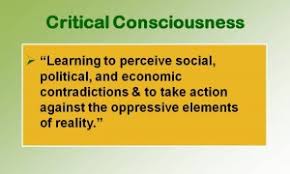
By doing so, Williamson effectively rescues for the left the power of spirituality that has been the exclusive province of right-wing Republicans for the last 50 years and more. Unlike Republican Christians who use religion to defend the status quo, Ms. Williamson links profound spirituality and critical consciousness at their deepest levels. The consciousness ends up distancing itself 180 degrees away from our country’s reigning ideology about history, economics, politics, and personal responsibility.

At the beginning of her article, Ms. Peele admitted she had never previously heard of Marianne Williamson, whom she first understood in terms of a “self-help author and motivational speaker” as well as the spiritual advisor of Oprah Winfrey. Peele was intrigued by Williamson’s own job-description as “creating miracles” – something the author admits she wanted to believe in, especially given the state of our nation and world under President Trump.

Seeking that miracle, Peele confessed during her first encounter with Williamson that she was anxious about our country’s future. She mentioned her own anger and fear.

She was surprised by Williamson’s response. It was in summary: “Toughen up. We’re not porcelain dolls, you know. We need to get real and absorb with courage and endurance the hard knocks delivered up by Trump’s kind. After all, we’re following in the footsteps of Civil Rights heroes and the suffragettes who risked their lives resisting the old policies currently resurrected in today’s Oval Office. It’s time to roll up our sleeves and get to work!”

Peele’s admits that she found that initial exchange actually inspiring. It bordered, she said, on the very miracle she had been seeking. The journalist’s vision, she says, had changed – of both Marianne and her campaign. (And that by the way, is what the term “miracle” means in Williamson’s vocabulary – a radical transformation of perception. It’s about developing critical consciousness.)

From there, Peele’s article describes Williamson’s January 28th formal announcement of her candidacy and her basic theme. It’s that America’s real problem is not with the likes of Donald Trump, but with us, our juvenile preoccupations with our personal lives, our resulting political disengagement, and our surrender of political terrain to corporations and the one-percenters.  “It is time for us to rise up, the way other generations have. Cynicism is just an excuse for not helping. Whining is not an option . . . We need to identify the problems in this country. Then we need to identify with the problem solvers.”

Williamson identifies herself as one of those problem solvers. In fact, she portrays her upbringing and 30- year career as a spiritual teacher as uniquely qualifying her for addressing the fundamentally spiritual problem underneath our country’s current dysfunction. No one else, she says, demonstrates that qualification or of even recognizes the problem as such.

Now 66 years old, Williamson comes from a Jewish family headed by a stay-at-home mother and by a father who practiced immigration law. When his daughter was just 13, Mr. Williamson took his entire family to Vietnam during the height of the war. His intention, Williamson says, was to “make sure the military-industrial complex would not ‘eat my kids’ brains’.” She never forgot that childhood lesson about the reality of war and its horror. It made her but a life-long anti-war activist.

But Marianne Williamson is not just some aging hippie activist with a past devoted to sex, drugs, and rock-and-roll. That was only part of it, she quips. “The rest of the day, we stopped a war.”

In 1975, Williamson’s activism found its theoretical grounding in what has since become a spiritual classic, A Course in Miracles (ACIM).  The book was allegedly “channeled” by Helen Schucman, who described the dictating voice as that of Jesus, the Christ. Williamson calls the book “basically Christian mysticism.” (I would call it a course on developing critical consciousness.) In any case, the book changed her life. On its basis, she began a spiritual practice that gave her that earlier-mentioned radical vision of the world.

Eventually, Williamson composed what she calls “ACIM Cliff Notes” – A Return to Love.

Oprah Winfrey loved it. It became a New York Times best-seller. And Williamson’s new career as a spiritual teacher was born. However, her spiritual teaching distinguished itself from others like Eckhart Tolle (whom Williamson considers an enlightened spiritual master) and Deepak Chopra by its continued commitment to the brand of anti-war social justice deeply instilled by her father.  

Williamson’s activism led her to launch Project Angel Food in 1989. It delivered meals to HIV/AIDS patients too ill to feed themselves. In 2014, she ran for Congress in California’s 33rd district. In 2010, 2012, 2015 and 2017, she organized “Sister Giant” seminars to raise political consciousness especially among women and to motivate them to run for public office.

In 1997, Williamson demonstrated her political acumen by publishing Healing the Soul of America. It’s a 256-page book that has become (in its 20th anniversary edition) her basic stump speech. In Healing, she exhibits her knowledge of American history, her firm grasp of economic realities, and her acute sensitivity to “the signs of the times.” Williamson writes, “When this book was first published in 1997, I wrote that there was a storm ahead, or an awakening ahead. Alas, that storm is upon us. But even now, in the midst of our national turmoil, there is an awakening as well.”

Ironically, a sort of awakening led to the election of Donald Trump in 2016. In Williamson’s analysis, that outcome was an expression of deep popular despair on the part of a population worried for decades about making ends meet, sending their children to college, and paying skyrocketing medical bills. “It was either going to be an authoritarian populist or it was going to be a progressive populist,” she says. “Now, the person we got is clearly a con artist and someone who lacks basic respect for democratic norms.”

Donald Trump however isn’t the problem according to Williamson; he’s merely a symptom of an underlying condition that other candidates are not qualified to heal. Those others, Ms. Williamson is fond of saying, approach the presidency as technical administrators. They even talk about running the government “like a business.” But government is not a business to be governed by some bottom line. Instead, it’s more like a family where all the children are equally important.

Moreover, the job of president isn’t primarily administration. (There are plenty of well-qualified technicians that presidents can nominate to fill cabinet posts.) No, the chief task of the president is setting a tone; it’s motivation, inspiration, and supplying vision. Franklin Roosevelt realized that. “The role of the president, at this time in our history,” Williamson says, “has more of a visionary function. FDR said that the administrative functioning of the president is secondary; the primary role of the president is moral leadership.”

None of this is to say that Marianne Williamson is vague about policy proposals. She shares many of them with the others just referenced:

  • A Green New Deal
  • Medicare for all
  • Increase in minimum wage
  • Gun control
  • Criminal justice reform
  • Overhaul of public education
  • Raising taxes on the rich

To this list now familiar among progressive candidates, Williamson dares to add the issue of reparations to the black community for the wounds of slavery to which she traces so many of our nation’s current ills. Such repair, she estimates, would cost $100 billion to be administered across fields by a board of African-American leaders over a period of 10 years. Williamson says that without addressing the problem of racism and its fundamental causes, the soul of our country will remain deeply traumatized.

Despite the mine field that the reparations proposal represents, the Post article observes that Marianne Williamson would be a formidable debate opponent for someone like Donald Trump. Unlike the latter, she can speak eloquently for hours without written texts of teleprompters.

After every lecture, she answers questions of all sorts from audiences about faith, politics, religion, race relations, economic problems – and the meaning of life. She’s never at a loss for words. Moreover, by her own account, she’s used to being called a “lightweight thinker, New Age con artist, a b_ _ _ _ — if you really know her.” Can you imagine, Anna Peele suggests, Marianne answering one of Trump’s insults with a magnanimous reflection on the state of his own soul? Wouldn’t that would be fun to witness?

As Williamson puts it, Trump “is a master of false narrative. And if you come back at him with anything other than the deepest truth, he will eat you alive. But if you do respond from a place of deepest truth, he is completely disempowered. I plan to speak to the consciousness of the American mind. Where he has harnessed fear, I’m seeking to harness love. Where he has harnessed bigotry and racism and anti-Semitism and homophobia, I’m seeking to harness dignity and decency and compassion. And that does not defeat. It overrides.”

Anna Peele’s Washington Post article suggests (correctly, I think) that our country needs the change in consciousness and communication of deepest truth of which Marianne Williamson speaks. By addressing that level, she promises to answer a need that the left has traditionally proven incapable of confronting.

That inability has not hampered the political right. They’ve understood the power of faith to motivate people to political action. On the left, African-Americans have a similar understanding, though in the opposite political direction. The same is true of liberation theologists in the Global South – and (dare I say it) of militant Muslims.

In summary, Mary Ann Williamson’s use of the term “miracle” for the achievement of critical consciousness along with her courageous invocation of spiritual traditions from her own Judaism as well as from Christianity, Islam, Buddhism, and New Age understandings of Ultimate Reality promises to enrich enormously the upcoming selection of Donald Trump’s progressive opponent.

And she may prevail. As Anna Peele attests, Ms. Williamson is good at creating miracles.    

Americans Love Jesus, but Hate His Politics

Readings for 7th Sunday in Ordinary Time: 1 SM 28: 2, 7-9, 12-13, 22-23; PS 103: 1-4, 8, 10, 12-13; I COR 15: 45-49; LK 6: 27-38

This Sunday’s instruction from Jesus stands on its own. Comment seems hardly necessary.

Instead, Jesus’ unadorned words should turn bright red the faces of all in our country who claim to be his followers. For they contradict our economic system and entire way of life driven as it is by the military-industrial complex, unending wars, and an economic system that victimizes the poorest among us, while enriching beyond belief a tiny minority.

Moreover, Jesus’ teachings call entirely into question the “realism” of mainstream politicians. Such realism ridicules anyone (like Marianne Williamson) who might have us adopt Jesus’ approach before it’s too late.

Think about that in the light of our readings from the Gospel of Luke these past few weeks. In case you’ve forgotten, here’s a summary of Jesus’ absolutely radical, highly political program found in the passages we’ve read. To begin with, he describes his entire purpose in this way:

“The Spirit of the Lord is upon me,
because he has anointed me 
to bring glad tidings to the poor.
He has sent me to proclaim liberty to captives
and recovery of sight to the blind,
to let the oppressed go free,
and to proclaim a year acceptable to the Lord.”

Notice the undeniable political thrust of Jesus’ teaching. He emphasizes bringing good news to the impoverished. He wants to clear out the prisons, to cure the disabled and liberate those oppressed (by the Roman empire that controlled Israel in Jesus’ day). Notice he is proclaiming a Jubilee Year with its debt forgiveness, release of slaves, and radical land reform. That’s Jesus’ agenda. It’s undeniably political; it’s directed towards the poor.

And just in case we might miss the point, our readings of just last week had Jesus continue like this:

“Blessed are you who are poor,
for the kingdom of God is yours.
Blessed are you who are now hungry,
for you will be satisfied.
Blessed are you who are now weeping,
for you will laugh . . .
But woe to you who are rich . . .
Woe to you who are filled now,
for you will be hungry.
Woe to you who laugh now,
for you will grieve and weep.
Woe to you when all speak well of you,
for their ancestors treated the false
prophets in this way.”

As I indicated last week, those words should shock us. Jesus’ words turn everything upside-down. It’s the poor who are God’s favored, not the rich. According to his promise, the poor will govern God’s Kingdom (a highly politicized image for what the world would be like if God were king instead of Caesar). By contrast, the rich, well-fed, the apparently happy and admired stand in God’s disfavor.

Read those words again. Imagine if our leaders insisted that they instead of the Ten Commandments be posted in front of our court houses and on school walls! “Blessed are you poor! Woe to you rich!”

But the evangelist still isn’t finished. Here’s what he has Jesus say in today’s Gospel selection:

“To you who hear, I say, love your enemies, do good to those who hate you, bless those who curse you, pray for those who mistreat you. To the person who strikes you on one cheek, offer the other one as well, and from the person who takes your cloak, do not withhold even your tunic. Give to everyone who asks of you, and from the one who takes what is yours do not demand it back. Do to others as you would have them do to you . . .  (L) end expecting nothing back . . .”

And yet, despite such clear instruction, here’s what our “Christian” criminals in Washington do (with scarcely a whimper of objection from us “believers”):

  • They spend more on war than the next 12 countries combined.
  • They’re currently fighting wars against poor people in Afghanistan, Iraq, Syria, and Ethiopia – having just destroyed Libya and previously most of the countries in Central America.
  • Against all the principles of international law, they’re tightening the screws on Venezuela causing hunger and shortages of medicine in order to spark rebellion against a government that has not attacked the United States.
  • They have their eyes set on regime change in Nicaragua and Cuba which have harmed the U.S. in no way at all.
  • They’re cooperating with Saudi Arabia in bombing to smithereens Yemen, the poorest country in the Middle East. (And virtually none of us can explain exactly why. Can you?)

With that in mind, doesn’t it seem true to say U.S. policy (especially towards the world’s poor) is 180 degrees opposed to what Jesus is reported to have said? It’s as if Jesus taught:

“To you who hear I say, hate your enemies. Annihilate those who disagree with you. Curse those who speak ill of you. Condemn those who retaliate against you. If someone defends himself by striking you back, waste him. And take everything from the person who tries to recover what you yourselves have stolen; put them in prison and throw away the key. Ignore those who seek alms from you; they’re just lazy freeloaders. And jail the one who takes what your system denies him making sure he pays back every cent with interest. Do others before they can do you. Lend at the highest rate of interest the market will bear – even if it causes women and children to starve.”

Just look at the world such departures from Jesus’ wisdom have produced!

Still, when someone (e.g. like Marianne Williamson) comes forward calling the nation to a radical spiritual change based on the elementary teaching found not only in Christianity but in all religions – viz. “Do unto others as you would have them do unto you” – she’s dismissed as “impractical,” “unrealistic,” and “new age”

No, that teaching is “old age.” It comes from Jesus! It represents his political program.

Isn’t it time for politicians to reverse course and follow the teachings of the spiritual Master they claim as the Savior of the world? For starters, truly following Jesus’ political program that we’ve reviewed these past few weeks would have us:

  • Assume leadership in the fight against climate change
  • Cut our defense budget by at least two-thirds
  • Withdraw from all foreign wars
  • Repair the damage done by those conflicts
  • Close our country’s military bases across the world
  • Forgive the debt of the former colonies
  • Completely reform our prison system from one dominated by punishment to one centered on rehabilitation
  • Make reparation to the descendants of former slaves
  • Renounce interference in foreign elections (as we would have others do in relation to our own voting system)
  • And so much more

You get the idea. I get the idea. Or maybe we can’t . . .

Billionaires Threaten a Hostile Takeover of the Catholic Church

Readings for 6th Sunday in Ordinary Time: JER 17:5-8; PS 1: 1-5; I COR 15: 12, 16-20; LK 6: 17, 20-21;

There’s a plot going on to neutralize Pope Francis. Even worse, it’s about neutralizing Jesus and his “preferential option for the poor” that has dominated our liturgical readings for the past several weeks.

This week’s readings are no exception. In fact, in today’s Gospel selection, that option for the poor receives its starkest expression so far. There, Luke the evangelist has Jesus say clearly that the poor are the object of God’s special favor, while the rich are not. In Luke’s version of the Sermon on the Mount, Jesus speaks frankly: “You poor are blessed.” He tells the rich just as clearly, “you are cursed.” And he does so for no other apparent reason than that the objects of Jesus’ blessing and cursing are poor and rich respectively.

Before I get to that, let me say a word about the plot I just mentioned.

What I’m talking about was reported in January’s Sojourner’s Magazine – the progressive Christian Evangelical monthly published by Jim Wallis. It all appeared there in a piece authored by Tom Roberts, the executive editor of the National Catholic Reporter. The article was entitled “How Right-Wing Billionaires Are Attempting a Hostile Takeover of the Catholic Church.”

There, Roberts described an aggressive project to establish what I would call an ecclesiastical “shadow administration” bent on usurping the authority of the church’s U.S. Conference of Catholic Bishops (USCCB). The undertaking is “financed by the Koch brothers, by Domino Pizza founder Thomas Monaghan, and a slew of other billionaires linked to the Knights of Columbus and conservative Catholic Cardinals – all of whom enjoy favor with Breitbart’s Steve Bannon and the Trump administration.

Seeking to replicate the rise of the Evangelical right in the 1980s, the group advocates a Catholic version of the prosperity gospel described by Roberts as “a hybrid of traditional pieties wrapped in American-style excess and positioned most conspicuously in service of free-market capitalism.” It is “. . . ‘in your face Catholicism’ . . . often expressed amid multi-course meals followed by wine and cigar receptions, private cocktail parties for the especially privileged, traditional Catholic devotionals, Mass said in Latin for those so inclined, ‘patriotic rosary’ sessions that include readings from George Washington and Robert E. Lee, and the occasional break for a round of golf.”

Doctrinally, the goal is to bury more deeply than ever what many have called “the best kept secret of the Catholic Church,” viz. its progressive social teachings. Since Pope Leo XIII’s 1891 encyclical, Rerum Novarum, those teachings have repeatedly criticized the abuses of both capitalism and socialism while advocating workers’ rights, labor unions, fair wages, social security, and (especially with Pope Francis) care for the earth in the face of human-caused climate chaos.

The billionaire cabal in question finds especially offensive not just Francis’ emphasis on social justice themes, but the 1983 pastoral by the USCCB questioning the morality of modern warfare and of nuclear weapons. They resent above all the bishops’ 1986 letter entitled “Economic Justice for All” which disagreed specifically with the economic policies of the group’s great hero, Ronald Reagan.

In place of such teachings, the billionaires in question think that the Catholic social narrative should focus exclusively on sexual issues: abortion, contraception, gay rights, and the rights of divorced and remarried people within the Catholic Church. They want the church to be more celebratory of individualism, entrepreneurship, and of free market fixes for society’s problems. Their goal is to shrink government in general and diminish its services to the poor and marginalized in particular.

Doesn’t that sound completely like the Republican agenda?

And with the Catholic Church currently weakened and reeling from its sex-abuse scandals, the billionaire conspirators are convinced that the time is completely ripe for their hostile takeover.

But could anything be further from the teachings of Jesus which a few weeks ago, our Gospel reading summarized as “good news to the poor?”

There, Jesus announced his program with the following words: “The Spirit of the Lord is upon me, because he has anointed me to bring glad tidings to the poor. He has sent me to proclaim liberty to captives and recovery of sight to the blind, to let the oppressed go free, and to proclaim a year acceptable to the Lord.”

This was a proclamation of a new order (what Jesus called “the Kingdom of God”) directed towards improving the lot of the poor, the imprisoned, the ill and oppressed. It was the proclamation of the Jewish “Jubilee Year,” where debts would be forgiven, slaves freed, and wealth redistributed.

Now in today’s Gospel reading, the Master expresses the same sentiment, only this time in even a more in-your-face manner. Here, it’s worth quoting the words Luke attributes to Jesus.

“Blessed are you who are poor,
for the kingdom of God is yours.
Blessed are you who are now hungry,
for you will be satisfied.
Blessed are you who are now weeping,
for you will laugh.
Blessed are you when people hate you,
and when they exclude and insult you,
and denounce your name as evil
on account of the Son of Man . . .
But woe to you who are rich,
for you have received your consolation.
Woe to you who are filled now,
for you will be hungry.
Woe to you who laugh now,
for you will grieve and weep.
Woe to you when all speak well of you,
for their ancestors treated the false
prophets in this way.”

Shocking words – all of them, don’t you agree? They are part of the great reversal in the new order proclaimed by Jesus. There, the values of the world will be turned on their heads. The poor will be in charge. They will have food to eat. Laughter will replace their tears.

But the rich will experience great misery (woe).  That’s because they have been led astray by false prophets like those cardinals participating in the billionaire hostile takeover of the Catholic Church. Those fake prophets console the super-rich with honeyed words about their specialness

But according to Luke’s Jesus, the rich may be enjoying those multi-course meals, private cocktail parties, cigar receptions and rounds of golf now. But when the Kingdom’s new order comes, they will find themselves hungry. They may be laughing now, but then they will weep and cry. Their false prophets may praise them now but come the new order, the wealthy will be cursed as the most wretched of men.

Obviously, Jesus’ teaching contradicts our culture’s worship of the rich. We think of the rich as heroic entrepreneurs. Jesus sees them as worthless wretches. We see the poor as losers. Jesus sees them as objects of God’s special favor.

In other words, Jesus turns our thinking upside down. As Marianne Williamson puts it: Jesus’ truth (God’s truth) is 180 degrees opposed to what our culture values and teaches.

That realization should be Christians’ fundamental guide in reading the news and thinking about world events. It should be the confident guide of our activist efforts.

Everything is the opposite of what our culture claims!

President Marianne Williamson?? Yes, That Miracle Can Happen!

Readings for 5th Sunday in Ordinary Time: IS 6:1-2A, 3-8; PS 138: 1-8; ICOR 15: 1-11; LK 5: 1-8

In today’s Gospel reading, we encounter Jesus’ radical message of social justice and of the abundance-for-all that results from accepting his insights. Significantly for this series on the presidential candidacy of Marianne Williamson, her program parallels that of the Master whose miraculous teaching has constituted the center of her own career for the last 30 years and more.

Before I get to that, however, allow me a word about miracles and Marianne’s presidential campaign.  

For starters, she herself is very clear about one thing: without a miracle, our country (and the world) is doomed. But that doesn’t mean her thinking is negative or pessimistic.

That’s because (and this is crucial) Marianne’s use of the term “miracle” does not reference marvels contrary to the laws of nature. Instead, her understanding of the word is something more significant even than the “miraculous” catch of fish reported in today’s Gospel reading. By miracle she means a profound change in consciousness. It’s a change in attitude from one governed by fear and guilt to an outlook inspired by love and forgiveness. As I said, without that change, we’re all finished.

Think about it. Isn’t it true that fear and guilt absolutely govern our lives? We’re taught to be very afraid of the Russians, Iranians, the Taliban, ISIS, Muslims, immigrants, climate change, nuclear holocaust, poverty, the police, gun violence, and death. And standard answers to such threats always include denial and violence in the form of war, more guns, sanctions, walls, prisons, weapons-modernization-programs, and an unlimited consumerism that has us drowning in our own waste.

In fact, it’s precisely that fearful thinking that continues to inform the candidacies of our country’s political classes (Democrats as well as Republicans). All of them except Marianne Williamson are imprisoned in old thought patterns. All of them are locked into political group think which typically dismisses Marianne’s approach as “unrealistic,” “impractical,” “inexperienced,” too idealistic.

Ignored is the fact that their own “realistic” thinking has brought us to the brink of extinction. Their “practical” consciousness has given us the war in Iraq and at least six other countries, the resulting uptick in terrorism, a planet on fire, world hunger in the face of enormous food waste, homeless populations freezing to death outside abandoned buildings, huge wealth disparities, the threat of nuclear war, more prisoners than anywhere else in the word, and a whole host of other problems.

All of those catastrophes, Marianne tells us, will remain without solution absent the miracle – absent the change in consciousness – that her campaign represents. She’s fond of quoting Einstein who said that the same kind of thinking that brought us into a crisis cannot extricate us from its predicament.

Now get ready: For Marianne, the answer to all those perceived threats is love and forgiveness. Yes, she actually dares to say that – to say what Jesus said!  But for Williamson, both love and forgiveness are understood in terms of realizing the unity of all human beings. In other words, only a switch in consciousness from seeing others as separate to envisioning humankind’s underlying unity can save us.

Can you imagine seeing ISIS, the Taliban, Muslims, immigrants, refugees, people of all races, religions and skin colors – and Mother Earth Herself – as truly related to us at an intimate level?

Actually, it’s more than that. As Marianne tells us repeatedly, “There is really only one of us here.” All those demonized groups are us. That’s the meaning of Jesus’ teaching about loving our neighbor as ourselves. Our neighbor is our self. When we hate and kill him or her, we’re hating ourselves. We’re committing suicide!

Radicality like Marianne’s is precisely what today’s liturgical readings call us to. They remind us that followers of Jesus (and about 75% of Americans claim to be that) should not shy away from love and forgiveness in the form of wealth redistribution and reparations to exploited classes. No, it’s the heart of our faith. It’s the only realistic solution to our problems, both personal and political.

Consider today’s Gospel story. According to Luke, the crowds of those following Jesus are so thick that he has to get into a boat, a little bit from shore to address the people.

Thanks to what we read from Luke two weeks ago, we know who was in the crowd and why they were so enthusiastic. They were poor people responding to Jesus’ proclamation of a Jubilee Year. (For Jews, Jubilee, “the year of the Lord’s favor,” was good news for the poor. That’s because every 50 years it called for radical wealth redistribution in Israel. Debts were forgiven, slaves were set free, harvests were left un-gleaned and land was returned to its original owners.)  

Recall that using the words of Isaiah, Luke had Jesus summarize his Jubilee message like this: “The Spirit of the Lord is upon me, because he has anointed me to bring good news to the poor. He has sent me to proclaim release to the captives and recovery of sight to the blind, to let the oppressed go free, and to proclaim the year of the Lord’s favor.”  

Yes, Jubilee represented biblical law. But it was honored more in the breach than in the observance. Astoundingly, Jesus was calling for its revival. Hence the overwhelming crowd. 

Not accidentally, Isaiah’s words are a description not only of Jesus’ highly popular program, but of Marianne Williamson’s presidential agenda. It embodies Jubilee Spirit by advocating:

  • Concern for our society’s and the world’s dispossessed (Good News to the poor)
  • Prison reform (Release of captives)
  • Health care (Recovery of sight to the blind)
  • An end to neocolonial wars (Letting the oppressed go free)
  • Reparations to descendants of African slaves (Jubilee)
  • Wealth redistribution that has the rich paying their fair share (Jubilee)
  • Forgiveness of student loans (Jubilee)

Next Jesus demonstrates the counter-intuitive abundance-for-all that inevitably results when his program is implemented. He tells his friends to go out into deeper waters and cast their nets despite the fact that their previous efforts had yielded no results. [Marianne constantly stresses the need for us to “go deeper” if we’re ever to go about Healing the Soul of America (the title of the 20th anniversary edition of her 1997 book.)]

Following Jesus’ instruction, the fishermen net a catch so great that it threatens to tear their nets apart and sink both of their boats. The message: abundance is the result of following Jesus’ program prioritizing “good news to the poor.” Abundance doesn’t trickle down from the elite; it percolates up from the poor.

And, of course, that latter point is underlined by Jesus’ final words in today’s reading, “Do not be afraid. From now on you will be catching men.” In other words, Jesus confirms his “preferential option for the poor” by selecting working class fishermen – not the rich and elite – as his first disciples.

Like Marianne Williamson (and all who miraculously overcome the fear Jesus references), Peter, James, and John leave everything (including evidently the fish they’ve just caught) and follow Jesus into the unknown.

Their audacious act, their detachment from fear, possessions, the past, and the relative wealth they’ve just attained all demonstrate their readiness for further expansions of consciousness – for further miracles.

In our own day, Marianne Williamson’s unusual presidential candidacy summons us to similar changes – to similar miracles.

Yes, it’s true: it may take a miracle to get her elected. But that’s her point. It will also take a profound change in consciousness to save our world.

Let’s work for both wonders. Let’s expect both. We desperately need to change our minds. We desperately need a woman like Marianne Williams as president.

Announcing: A New Series on Presidential Candidate, Marianne Williamson

[The quadrennial election-season is upon us. Accordingly, today’s posting is the first in a series on Marianne Williamson and her candidacy for President of the United States. The series will explore parallels between her platform (as articulated in her 20th anniversary edition of “Healing the Soul of America”) on the one hand and “A Course in Miracles” (ACIM) on the other. Postings to follow will also connect ACIM and Williamson’s policies with liberation theology – the most important theological development of the last 1500 years, and the inspiration for the Global South’s most effective social movement since the middle of the 19th century. The thesis here will be that Marianne Williamson is actually a U.S. liberation theologian, but in the tradition of 19th century abolitionists, as well as that of women suffragists, Martin Luther King, and Mohandas Gandhi. As such, her candidacy promises our country the revolutionary impetus that liberation theology provided for the profound socio-political changes Latin America has experienced over the last six decades.  Apart from more formal explanations of this thesis, the latter’s point will be made in the form of weekly Sunday homilies reflecting on the narratives of Jesus’ words and deeds as presented in each week’s liturgical readings.]

Marianne Williamson for President! She’s a Liberation Theologian

On Monday, January 28th, Marianne Williamson declared herself a candidate for President of the United States. In making her declaration, this great spiritual leader, who has a larger social media following than any Democratic candidate declared so far, implicitly proposed addressing in 21st century, non-religious ways the spiritual hunger that Williamson and others in the “higher consciousness community” consider endemic to the human condition, whether that hunger is recognized or not.

However, the difference between Williamson and others in that community is that she consistently applies her spiritual insights to the public sphere. And as we shall see shortly, she does so in a manner that completely respects the convictions of Christians, Jews, Muslims, Sikhs – and atheists, along with those who describe themselves as “spiritual but not religious.”

Because of its inclusive approach, Ms. Williamson’s candidacy promises to build on the accomplishments of 19th century abolitionists, and on those of 20th century women suffragists, and participants in the American civil rights movement. The abolitionists and many suffragists were highly committed Quakers. And, of course, King was a Baptist minister.  Following in their footsteps, Williamson promises to at last offer progressives (and the country at large) entry into a sphere that conservatives – Christian fundamentalists to be exact – have controlled at least since the 1980s. It’s the essential realm of faith and spirituality.

Failure to enter that sphere has hamstrung the left whose “enlightened” tendency has been to reject and ridicule rather than embrace what many consider the deepest dimension of being human. That tendency has not simply cost progressives votes on election day. Even more fundamentally, it has incapacitated them by its implied blindness to the spiritual hunger shared even by humans in general. Put otherwise, Williamson is confronting the right on its own turf.

In daring to do so, she is boldly following in the footsteps of Martin Luther King who demonstrated the ability of faith to awaken critical thinking capacities belonging to ordinary people. King as well as Malcolm X, and the abolitionists that preceded them all tapped into the undeniable power that religious language, symbols and metaphors possess to actually motivate ordinary people to work for social justice and profound political change. The same, of course, is true of Mahatma Gandhi and the liberation theologians of the Global South. In fact, I’ll argue in future postings that Marianne Williamson could easily be classified as a liberation theologian.

Before I get to that however, please recognize that during her campaign Williamson does not plan to wear her identity as spiritual teacher on her sleeve. And that’s her strength too. Instead, she’ll employ her spiritual consciousness and conviction fostered by years of spiritual discipline to guide her campaign in the right direction which will inevitably call for deep psychological – not to say – spiritual – transformation for all of us.

Recently, she described that transformational direction in an extended interview with CNN’s John Berman. Williamson said her most prominent issues would be:

  • Medicare for All
  • A permanent tax cut for the middle class
  • Free education for all children (including tuition for public colleges)
  • Government support for children’s services
  • A Green New Deal

Those, of course, are proposals similar to what have been proposed by Elizabeth Warren and Bernie Sanders, whom Williamson supported in 2016.

Why then run, Berman asked, before Sanders and Warren have officially announced? Won’t her campaign be somewhat redundant in the face of two veteran politicians who, he intimated, have a much better chance of getting elected?

Williamson’s response was significant in that it clearly underlined not so much her competitive edge even over candidates like those just mentioned, but the added value her candidacy represents. Ms. Williamson wants to expand the conversation, she said, to address the psychological and spiritual issues underlying what she sees as the severe disease that mortally threatens the American body politic. As long as those remain unaddressed, conversation and policy proposals, however excellent and whatever their sources, will remain at less-helpful superficial levels. It will be like watering the leaves of a plant, when its roots remain dry and shriveling.

And what root causes is Williamson referring to? Basically, she says, it’s an amoral economic system. It is capitalism-as-we-know-it that has focused on short term gains while allowing market forces instead of common-sense spiritual principles (as elementary as the Golden Rule and democracy) to assume their irreplaceable and decisive roles in the organization of our country’s politics.

Such assumption now has millions of children living in chronic despair and trauma. (Williamson always begins with child welfare.) The system has also created layers of racism and fostered wars across the planet. It has made our country destructively expert at waging wars but unwilling to wage peace.

Williamson reminded her interviewer that Franklin Roosevelt considered the administrative aspects of the presidency as secondary to the moral leadership the position affords. She pointed out that her 35 years of naming and addressing such moral dimensions of public policy is what qualifies her to exercise the moral leadership F.D.R. referenced. That’s Williamson’s competitive edge. It’s her added value. It’s what no other Democratic candidate offers so clearly.

When asked about paying for her program, Williamson chuckled. She asked: Isn’t it interesting that interviewers always raise that tired canard? When it comes to giving a $2 trillion tax break to billionaires, very few, she said, will ask, “Where will the money come from?” Even less do they raise that question when it comes to fighting wars – not even wars like the one against Saddam Hussein in Iraq that was entirely illegal and based on lies.

Marianne Williamson had a similar response when asked about the reparations she advocates for African-American descendants of slaves. She’s proposing a fund of $100 billion for the purpose. It would be paid out over a period of 10 years to finance economic and educational projects to benefit the community in question.

There are precedents for this she added. After World War II, Germany paid out $89 billion in reparations to Jewish organizations in the country. President Reagan signed into law the American Civil Liberties Act to similarly repair harm done to every survivor of the internment camps set up for the Japanese-Americans during the same World War. Moreover, following our nation’s Civil War, General Tecumseh Sherman proposed giving every freed slave 40 acres and a mule. Instead, former slaves were given the Black Code Laws that plagued them till the mid-1960s. It’s time, Ms. Williams said, to make good on Sherman’s reparational promise which was never kept.

From all of this, you can see that Marianne Williamson with her huge social media following is a serious candidate. For people of faith and advocates of social justice without a shred of religious faith, she presents a strong antidote to the religious right that has cornered the field of language, symbols, and metaphors by which most people in the world make sense of the world.

Williams knows that field inside-out. She recognizes that surrendering that field to reactionary forces is what renders progressives relatively weak before the 75% of Americans who identify as Christians. In the spirit of the abolitionists, women suffragists, and civil rights activists – in the spirit of Gandhi and liberation theologians – she wants to reclaim that turf and the specifically moral influence missing in the Democratic White House since the FDR era.

(Next week: My Meeting with Marianne Williamson. )